Article

Percolation Transitions in Edge-Coupled Interdependent Networks with Reinforced Inter-Layer Links


1
Institute of Information Technology, PLA Strategic Support Force Information Engineering University, Zhengzhou 450001, China
2
Institute of System Engineering, Academy of Military Sciences, Beijing 100091, China
3
Department of Information Systems Security, PLA Information Engineering University, Zhengzhou 450001, China
*
Authors to whom correspondence should be addressed.
Entropy 2024, 26(8), 693; https://doi.org/10.3390/e26080693
Submission received: 31 July 2024 / Revised: 9 August 2024 / Accepted: 12 August 2024 / Published: 16 August 2024
(This article belongs to the Section Complexity)

Abstract

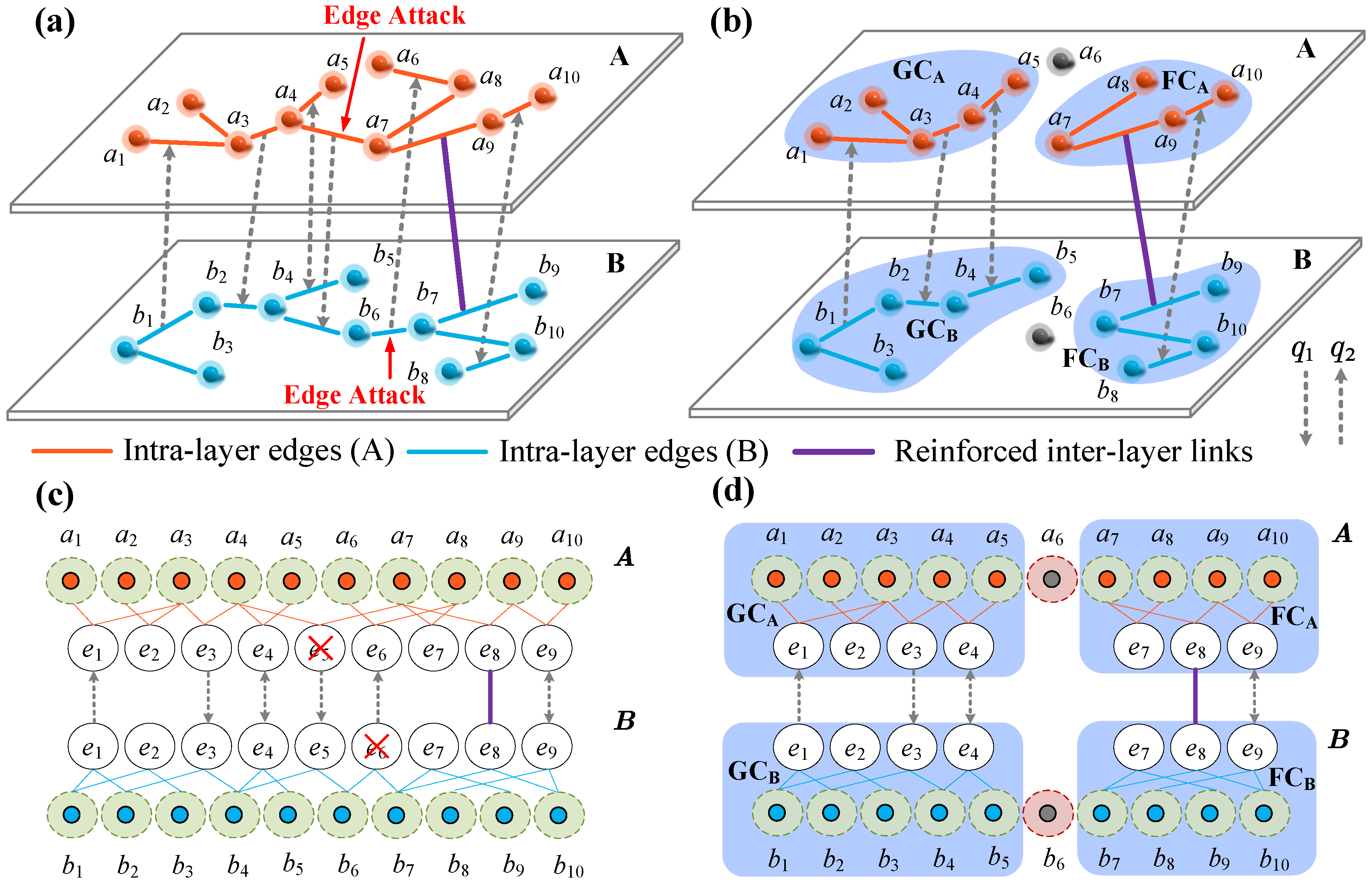
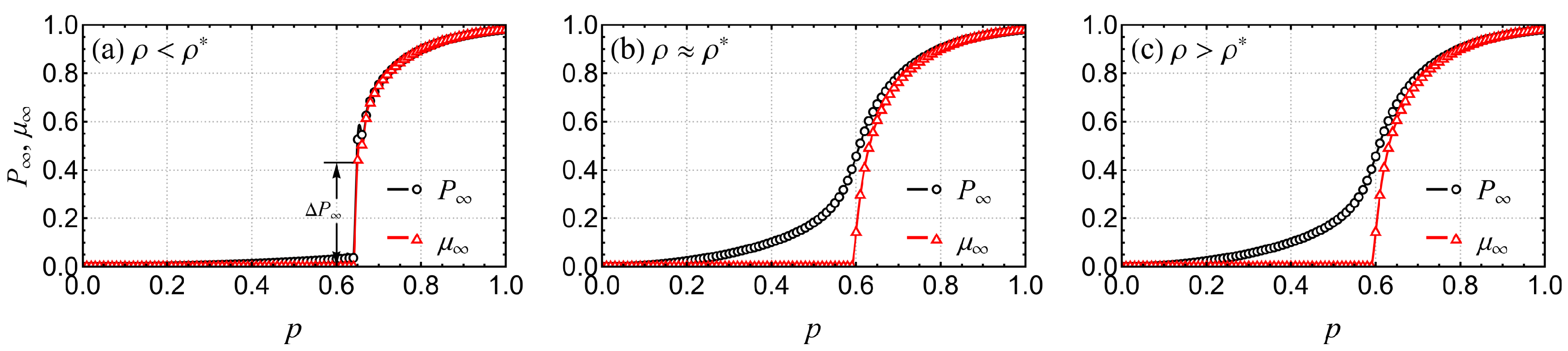
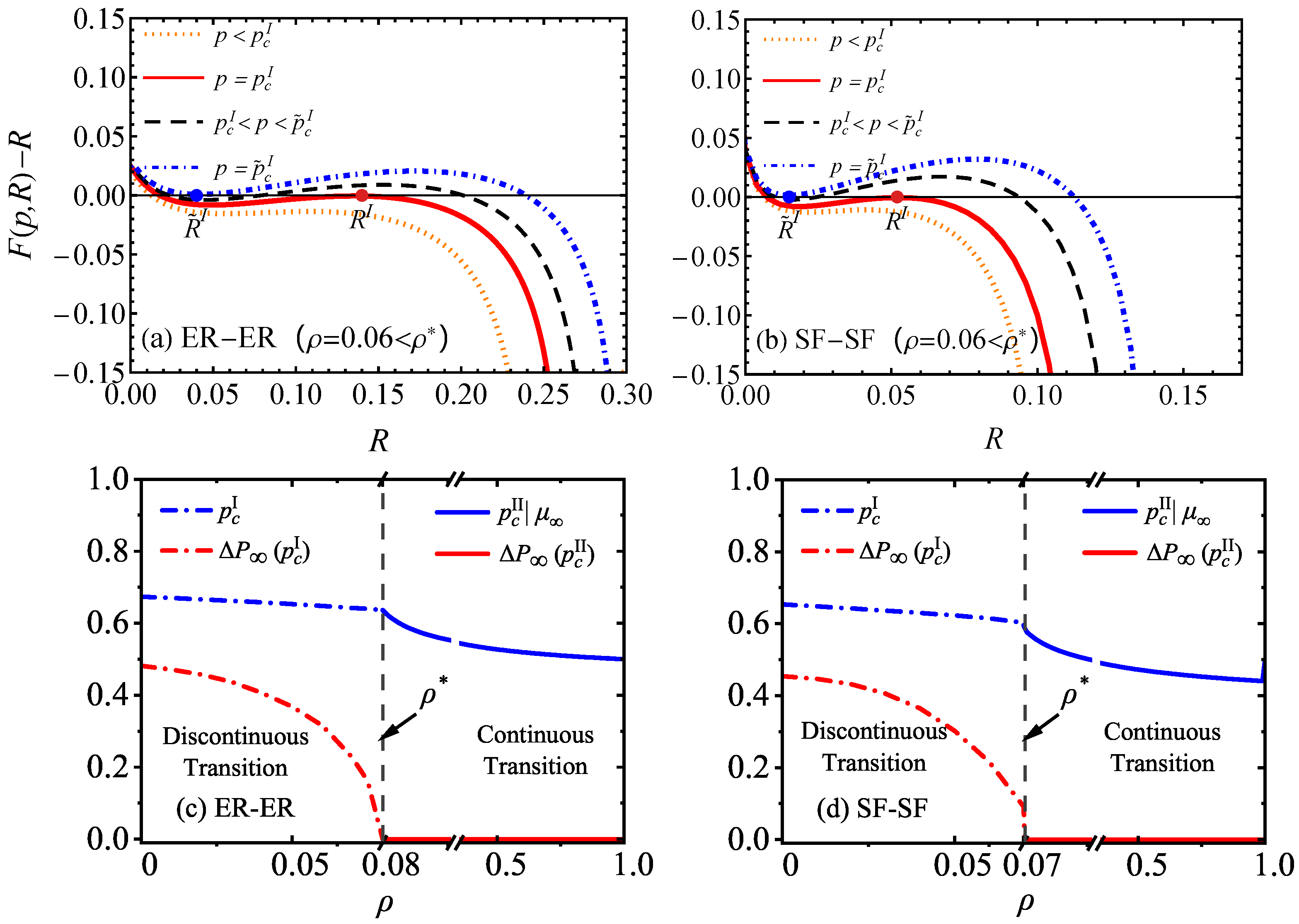
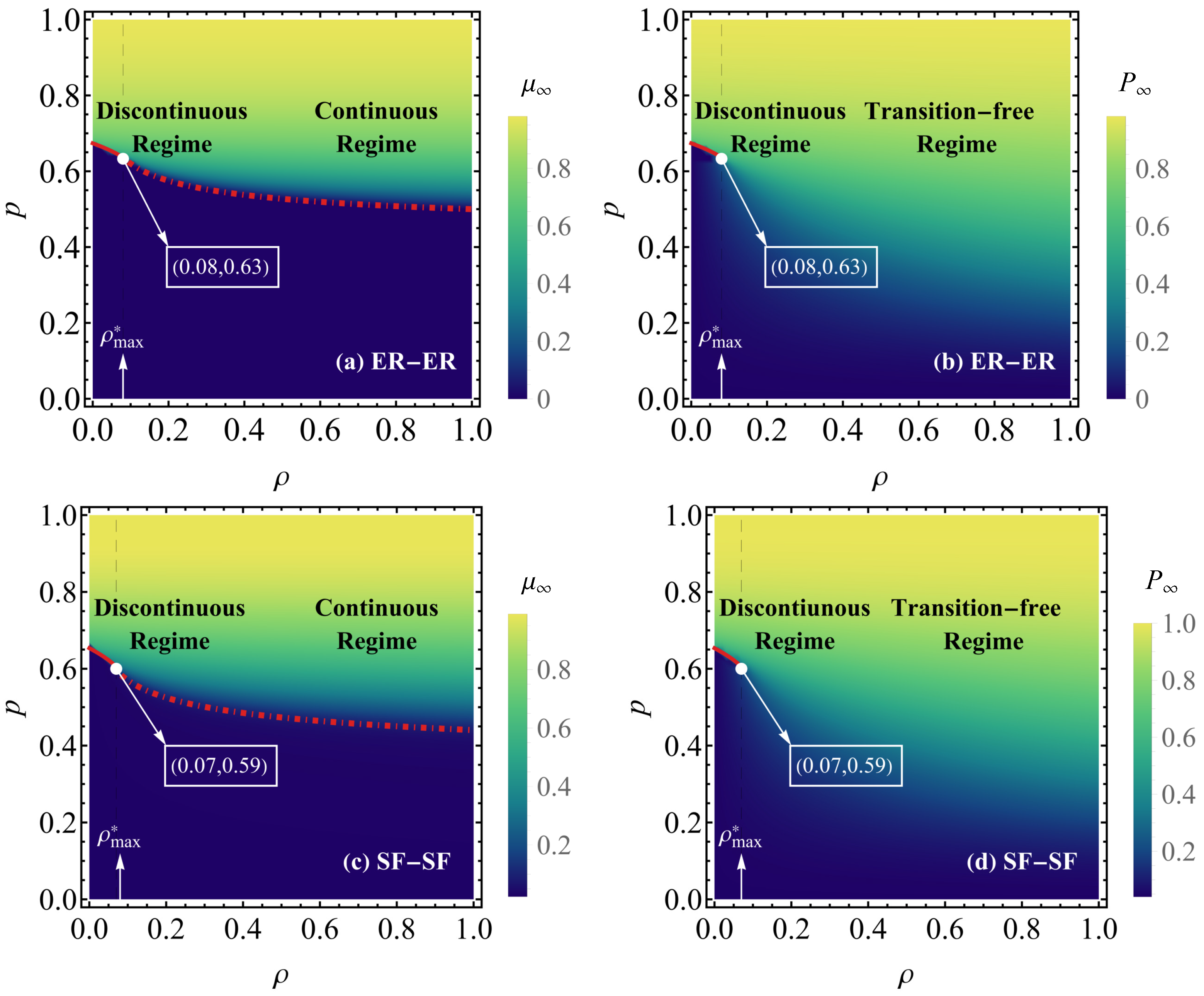
Prior research on cascading failures within interdependent networks has predominantly emphasized the coupling of nodes. Nevertheless, in practical networks, interactions often exist not just through the nodes themselves but also via the connections (edges) linking them, a configuration referred to as edge-coupled interdependent networks. Past research has shown that introducing a certain percentage of reinforced nodes or connecting edges can prevent catastrophic network collapses. However, the effect of reinforced inter-layer links in edge-coupled interdependent networks has yet to be addressed. Here, we develop a theoretical framework for studying percolation models in edge-coupled interdependent networks by introducing a proportion of reinforced inter-layer links and deriving detailed expressions for the giant and finite components and the percolation phase transition threshold. We find that there exists a required minimum proportion of the reinforced inter-layer links to prevent abrupt network collapse, which serves as a boundary to distinguish different phase transition types of a network. We provide both analytical and numerical solutions for random and scale-free networks, demonstrating that the proposed method exhibits superior reinforcement efficiency compared to intra-layer link reinforcement strategies. Theoretical analysis, simulation results, and real network systems validate our model and indicate that introducing a specific proportion of reinforced inter-layer links can prevent abrupt system failure and enhance network robustness in edge-coupled interdependent networks.
Keywords: robustness; phase transitions; edge-coupled interdependent networks; reinforced robustness; phase transitions; edge-coupled interdependent networks; reinforced