Article

Decoding the News Media Diet of Disinformation Spreaders

1
Department of Information Engineering and Computer Science, University of Trento, Via Sommarive 9, 38123 Povo, TN, Italy
2
CHuB, Fondazione Bruno Kessler, Via Sommarive 18, 38123 Povo, TN, Italy
*
Authors to whom correspondence should be addressed.
Entropy 2024, 26(3), 270; https://doi.org/10.3390/e26030270
Submission received: 31 January 2024 / Revised: 12 March 2024 / Accepted: 14 March 2024 / Published: 19 March 2024
(This article belongs to the Special Issue Entropy-Based Applications in Sociophysics)

Abstract

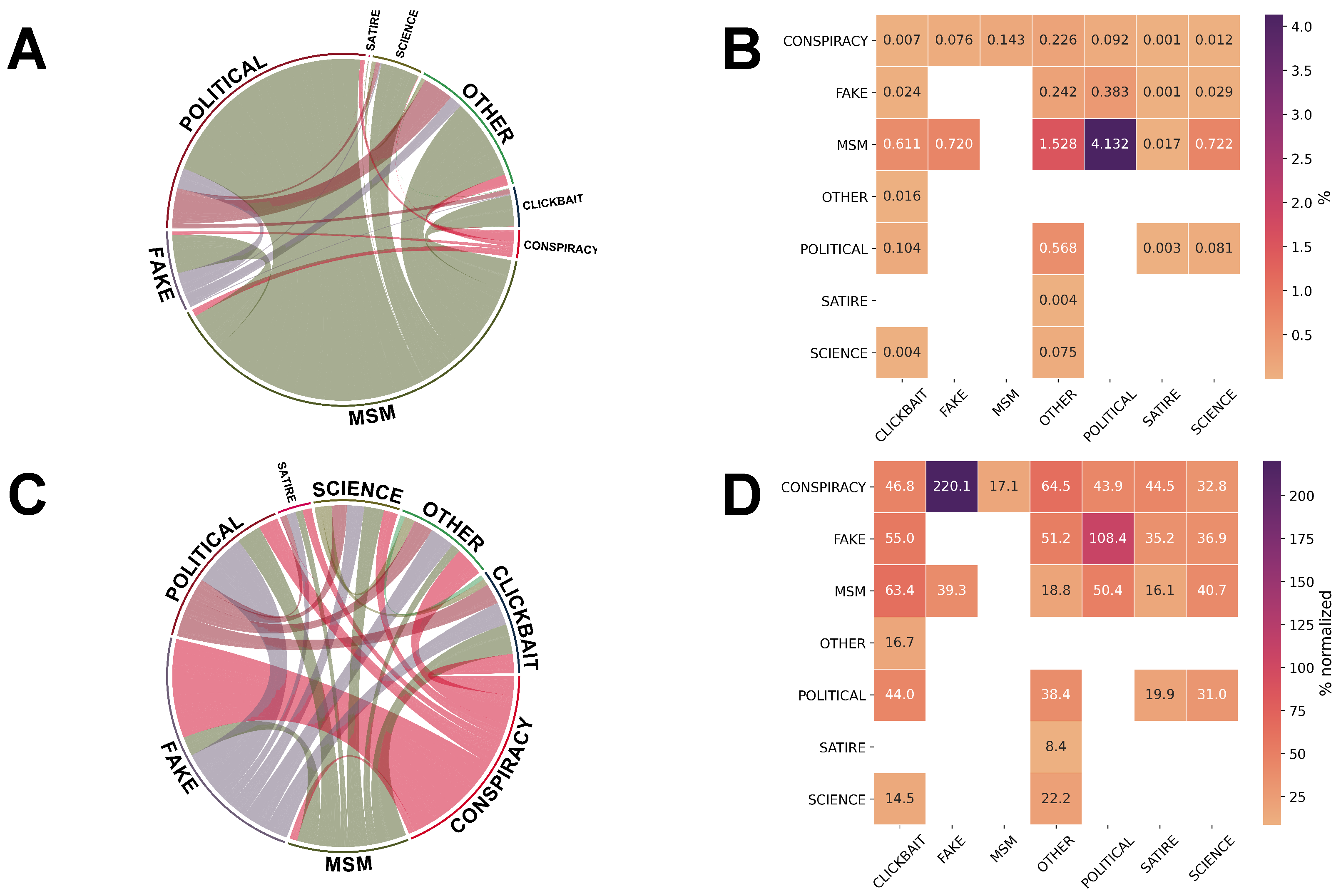
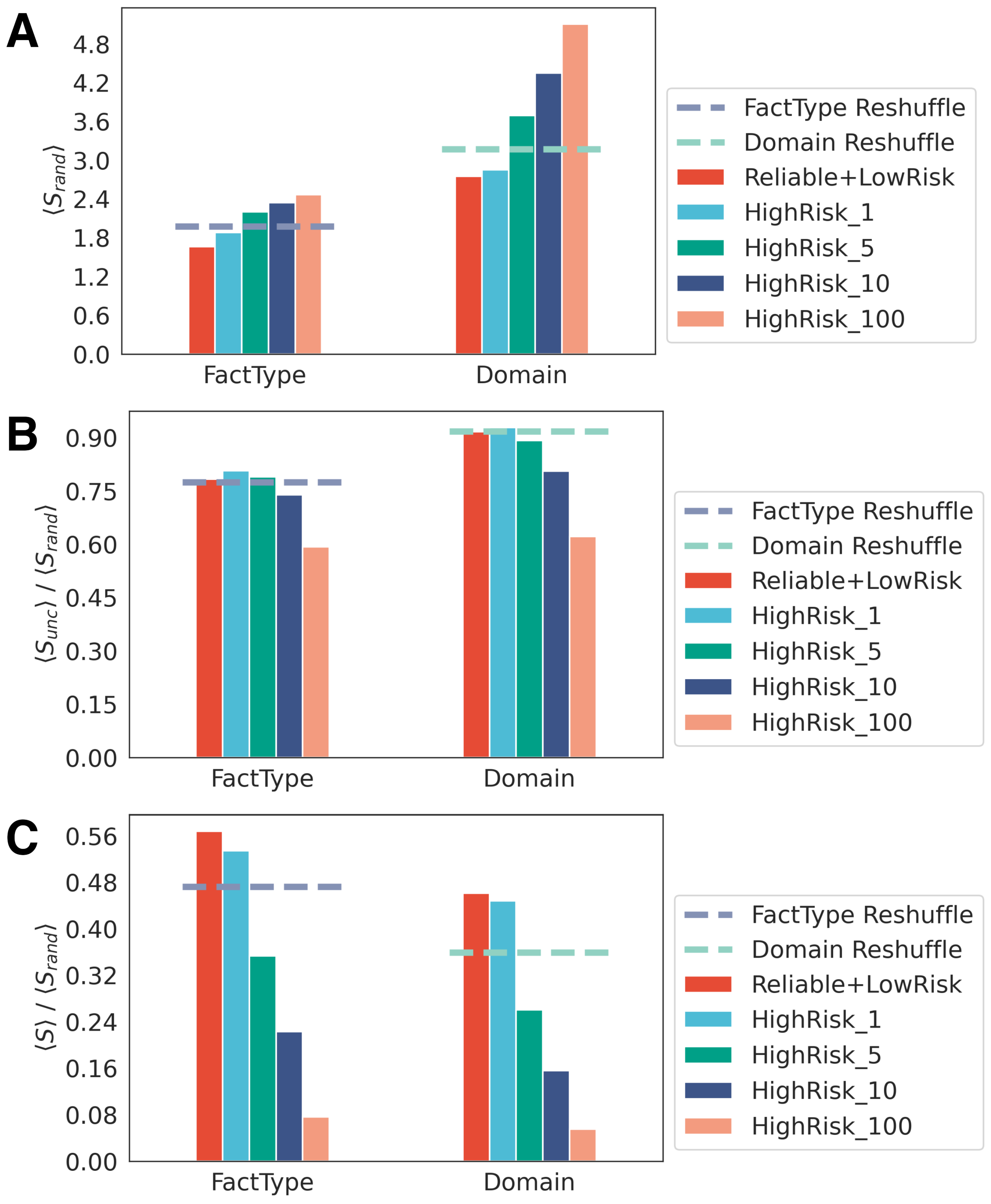
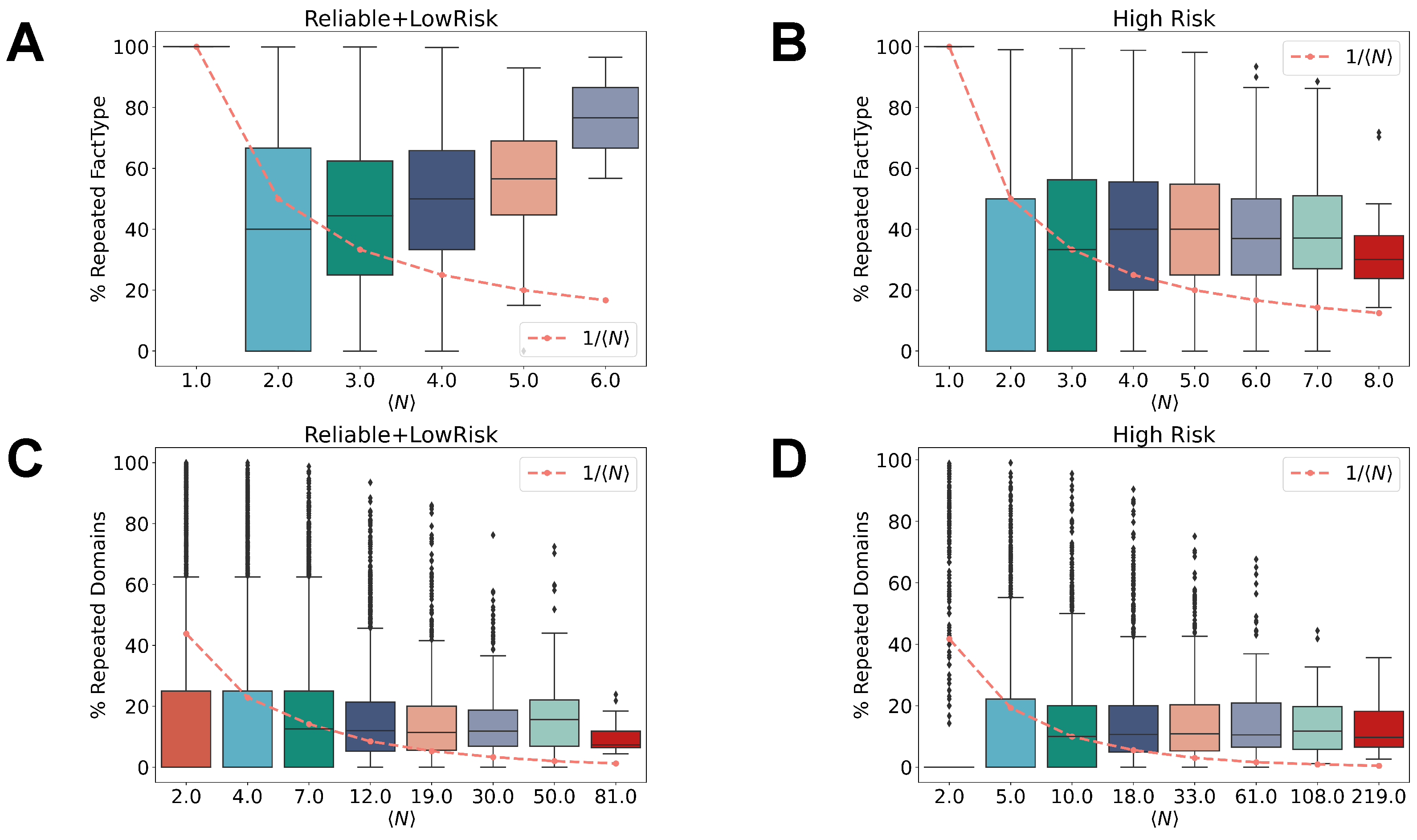
In the digital era, information consumption is predominantly channeled through online news media and disseminated on social media platforms. Understanding the complex dynamics of the news media environment and users’ habits within the digital ecosystem is a challenging task that requires, at the same time, large databases and accurate methodological approaches. This study contributes to this expanding research landscape by employing network science methodologies and entropic measures to analyze the behavioral patterns of social media users sharing news pieces and dig into the diverse news consumption habits within different online social media user groups. Our analyses reveal that users are more inclined to share news classified as fake when they have previously posted conspiracy or junk science content and vice versa, creating a series of “misinformation hot streaks”. To better understand these dynamics, we used three different measures of entropy to gain insights into the news media habits of each user, finding that the patterns of news consumption significantly differ among users when focusing on disinformation spreaders as opposed to accounts sharing reliable or low-risk content. Thanks to these entropic measures, we quantify the variety and the regularity of the news media diet, finding that those disseminating unreliable content exhibit a more varied and, at the same time, a more regular choice of web-domains. This quantitative insight into the nuances of news consumption behaviors exhibited by disinformation spreaders holds the potential to significantly inform the strategic formulation of more robust and adaptive social media moderation policies.
Keywords: misinformation; socio-technical systems; entropy; network science; computational social science misinformation; socio-technical systems; entropy; network science; computational social science