Article

Entanglement Witness for the Weak Equivalence Principle

1
Department of Physics and Astronomy, University College London, Gower Street, London WC1E 6BT, UK
2
Van Swinderen Institute, University of Groningen, 9747 AG Groningen, The Netherlands
3
School of Physics and Astronomy, University of Glasgow, Glasgow G12 8QQ, UK
*
Author to whom correspondence should be addressed.
Entropy 2023, 25(3), 448; https://doi.org/10.3390/e25030448
Submission received: 7 February 2023 / Revised: 28 February 2023 / Accepted: 1 March 2023 / Published: 3 March 2023
(This article belongs to the Special Issue Optomechanical Systems for Fundamental Physics)

Abstract

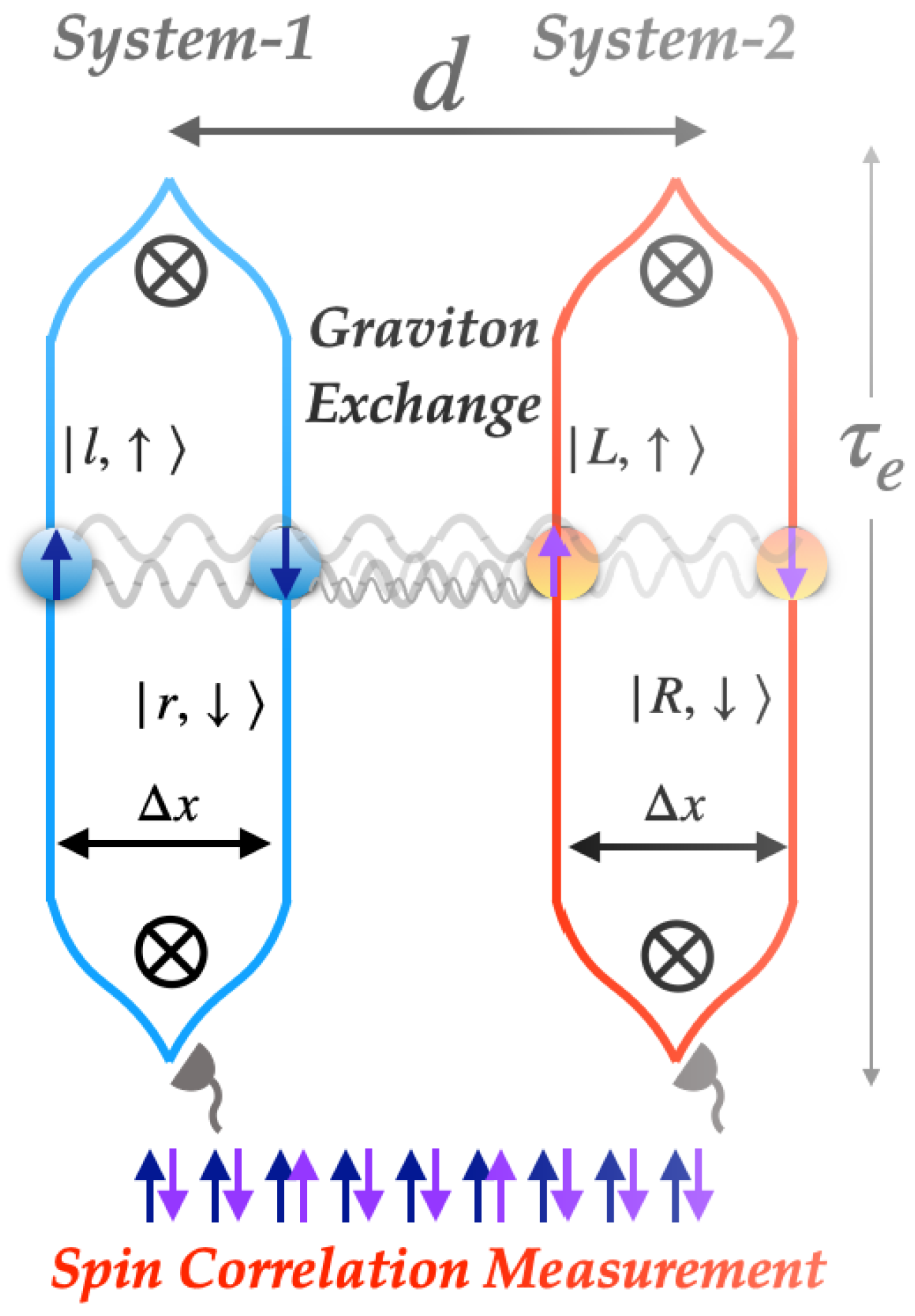
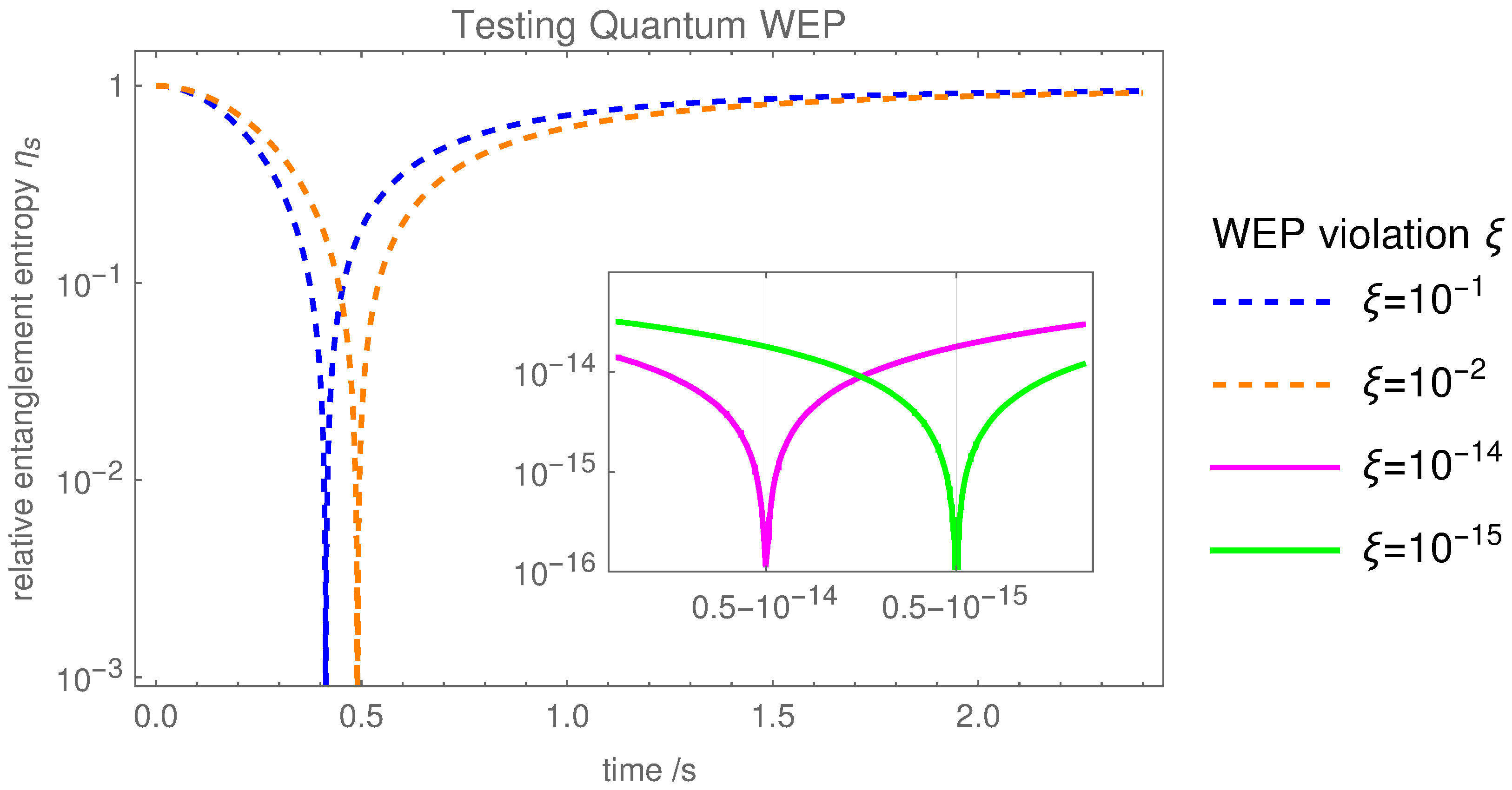
The Einstein equivalence principle is based on the equality of gravitational and inertial mass, which has led to the universality of a free-fall concept. The principle has been extremely well tested so far and has been tested with a great precision. However, all these tests and the corresponding arguments are based on a classical setup where the notion of position and velocity of the mass is associated with a classical value as opposed to the quantum entities.Here, we provide a simple quantum protocol based on creating large spatial superposition states in a laboratory to test the quantum regime of the equivalence principle where both matter and gravity are treated at par as a quantum entity. The two gravitational masses of the two spatial superpositions source the gravitational potential for each other. We argue that such a quantum protocol is unique with regard to testing especially the generalisation of the weak equivalence principle by constraining the equality of gravitational and inertial mass via witnessing quantum entanglement.
Keywords: equivalence principle; entanglement; quantum gravity equivalence principle; entanglement; quantum gravity