Article

An Enhanced Quantum K-Nearest Neighbor Classification Algorithm Based on Polar Distance

1
School of Cyber Science and Engineering, Zhengzhou University, Zhengzhou 450002, China
2
State Key Laboratory of Mathematical Engineering and Advanced Computing, Zhengzhou 450001, China
3
Songshan Laboratory, Zhengzhou 450001, China
*
Author to whom correspondence should be addressed.
These authors contributed equally to this work.
Entropy 2023, 25(1), 127; https://doi.org/10.3390/e25010127
Submission received: 4 December 2022 / Revised: 4 January 2023 / Accepted: 4 January 2023 / Published: 8 January 2023
(This article belongs to the Special Issue Advances in Quantum Computing)

Abstract

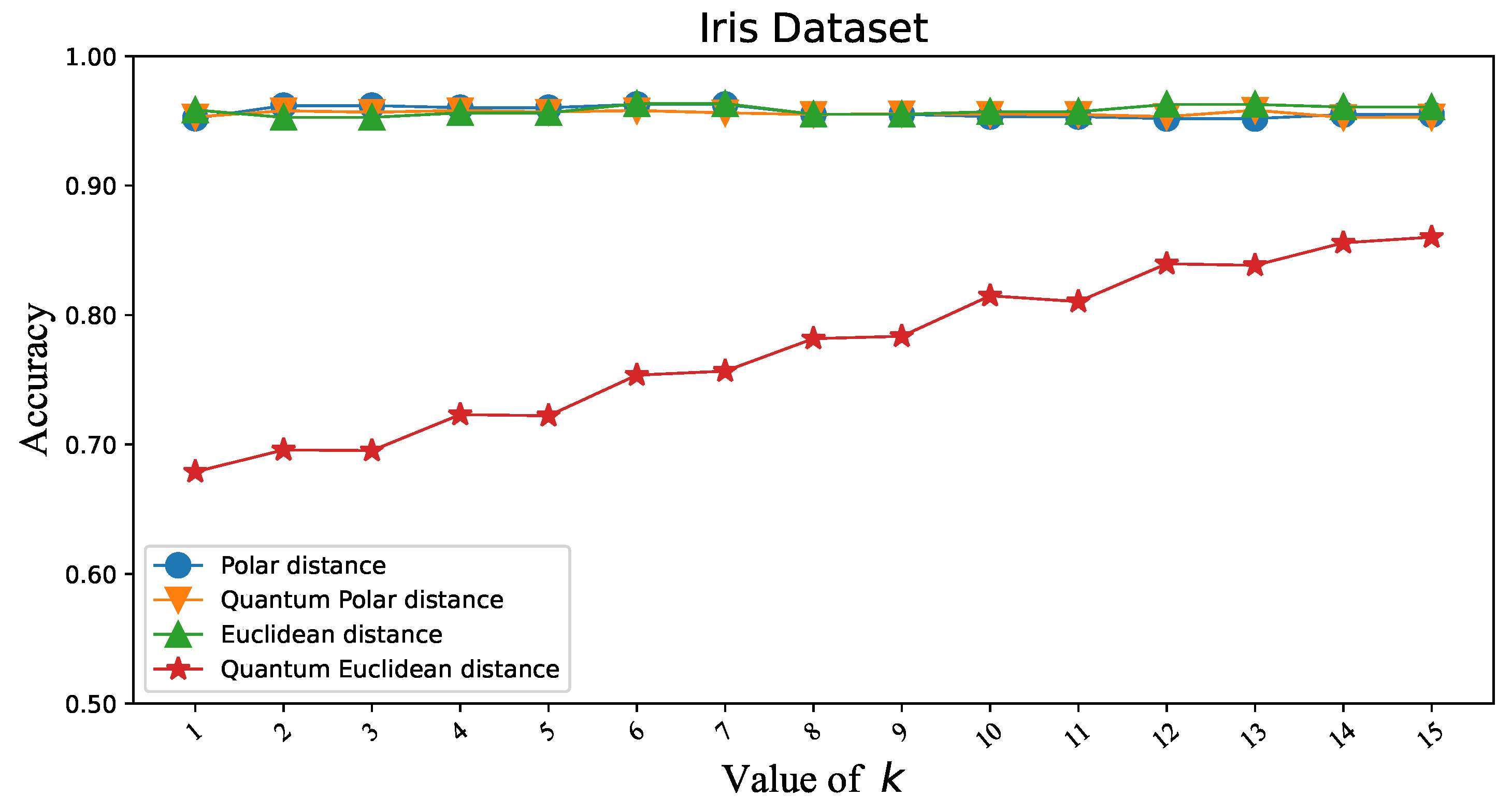
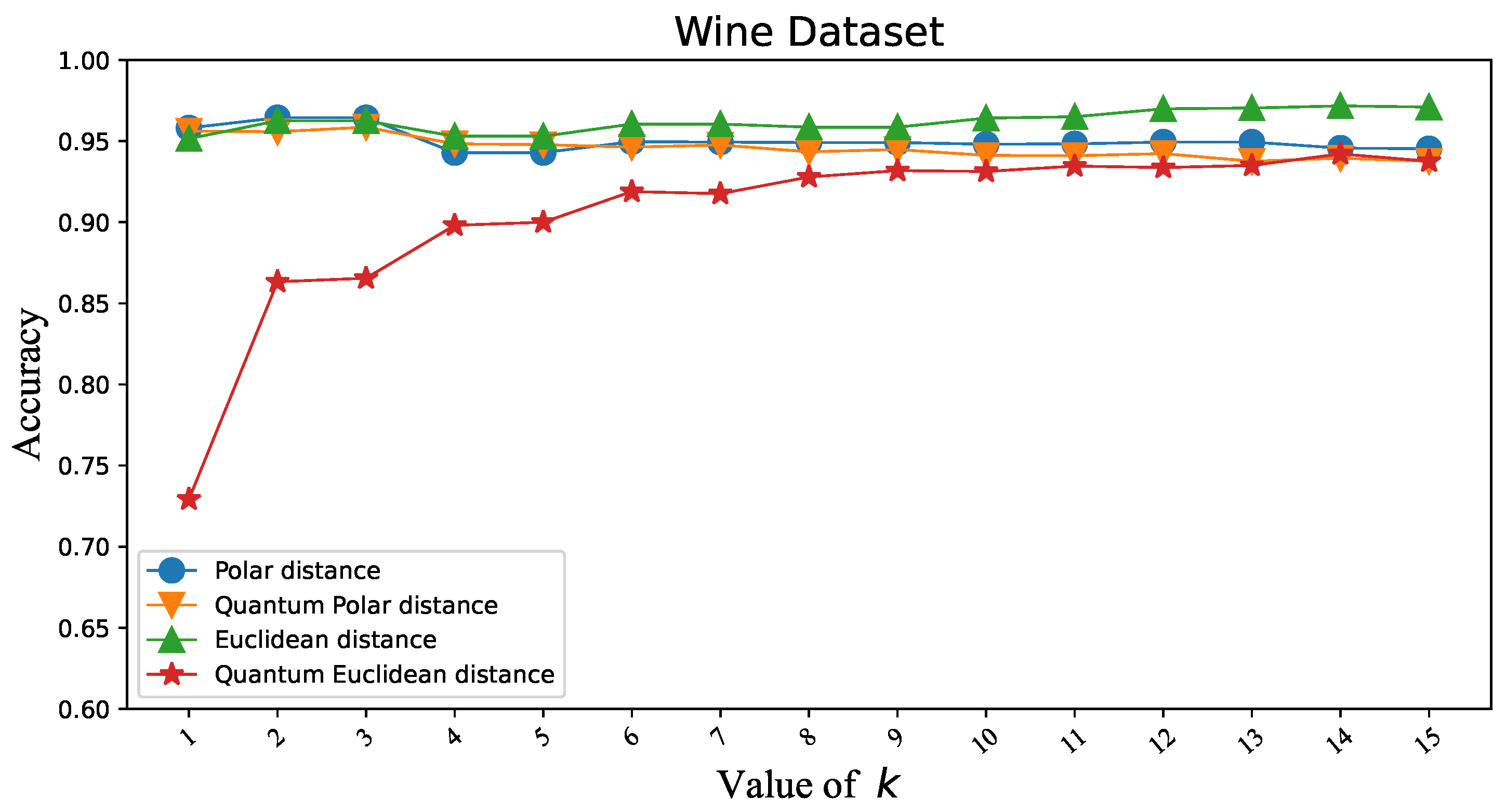
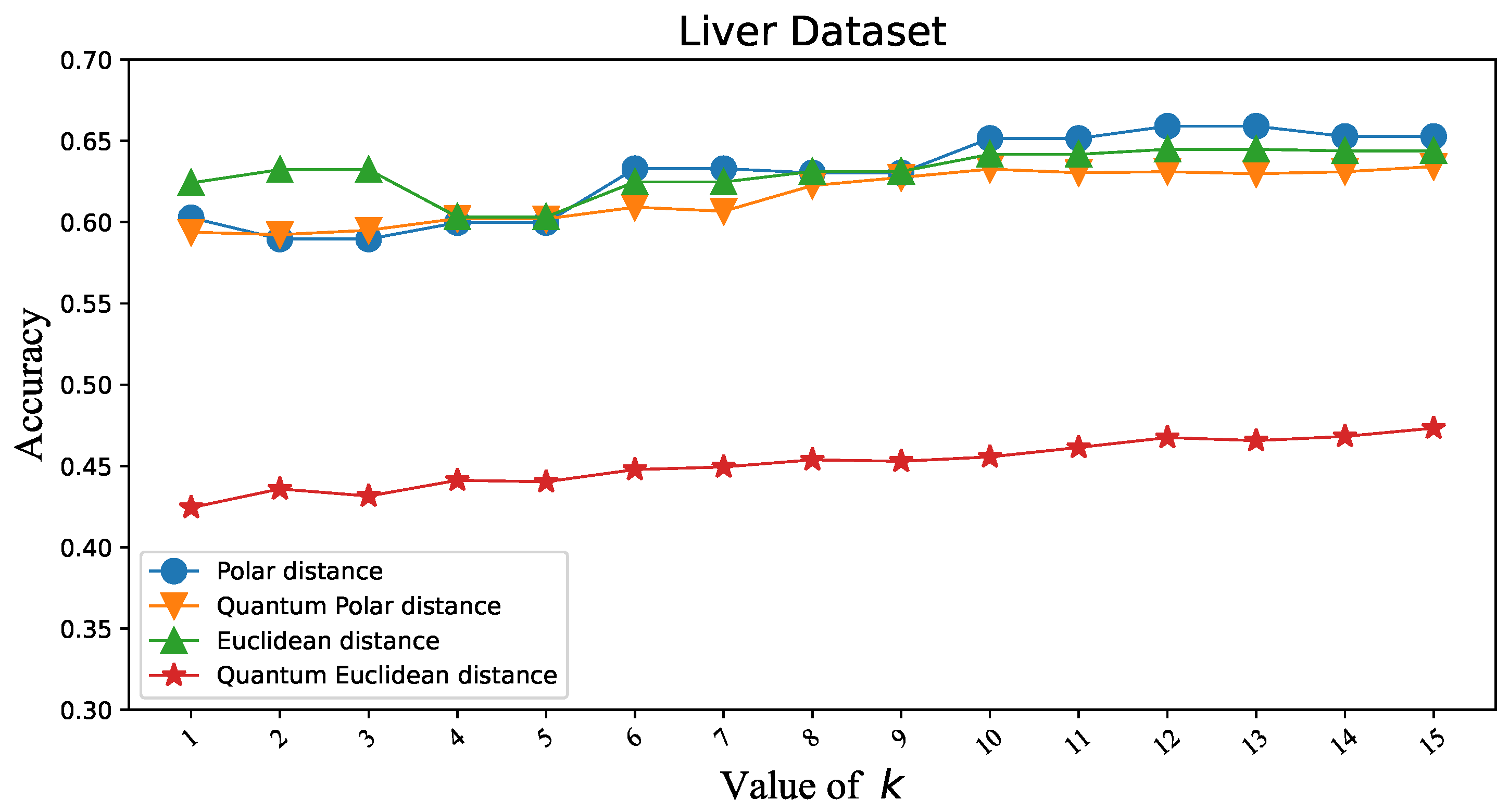
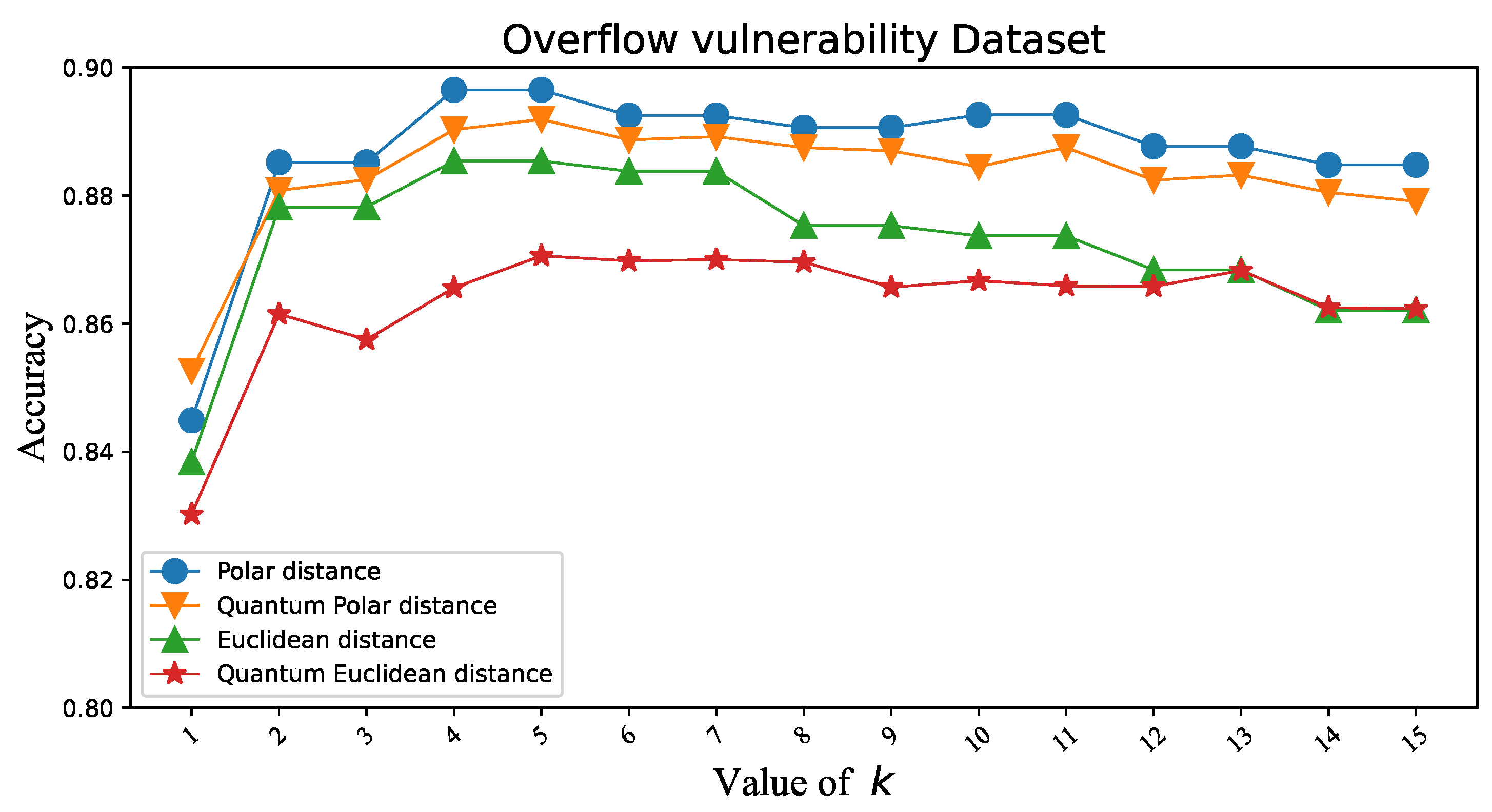
The K-nearest neighbor (KNN) algorithm is one of the most extensively used classification algorithms, while its high time complexity limits its performance in the era of big data. The quantum K-nearest neighbor (QKNN) algorithm can handle the above problem with satisfactory efficiency; however, its accuracy is sacrificed when directly applying the traditional similarity measure based on Euclidean distance. Inspired by the Polar coordinate system and the quantum property, this work proposes a new similarity measure to replace the Euclidean distance, which is defined as Polar distance. Polar distance considers both angular and module length information, introducing a weight parameter adjusted to the specific application data. To validate the efficiency of Polar distance, we conducted various experiments using several typical datasets. For the conventional KNN algorithm, the accuracy performance is comparable when using Polar distance for similarity measurement, while for the QKNN algorithm, it significantly outperforms the Euclidean distance in terms of classification accuracy. Furthermore, the Polar distance shows scalability and robustness superior to the Euclidean distance, providing an opportunity for the large-scale application of QKNN in practice.
Keywords: quantum computation; quantum machine learning; K-nearest neighbor algorithm; quantum K-nearest neighbor algorithm quantum computation; quantum machine learning; K-nearest neighbor algorithm; quantum K-nearest neighbor algorithm