Article

Unitary Evolution and Elements of Reality in Consecutive Quantum Measurements

by
Dmitri Sokolovski
1,2
1
Departmento de Química-Física, Universidad del País Vasco, UPV/EHU, 48940 Leioa, Spain
2
IKERBASQUE, Basque Foundation for Science, Plaza Euskadi 5, 48009 Bilbao, Spain
Entropy 2022, 24(7), 877; https://doi.org/10.3390/e24070877
Submission received: 9 June 2022 / Revised: 16 June 2022 / Accepted: 21 June 2022 / Published: 26 June 2022
(This article belongs to the Special Issue The Philosophy of Quantum Physics)

Abstract

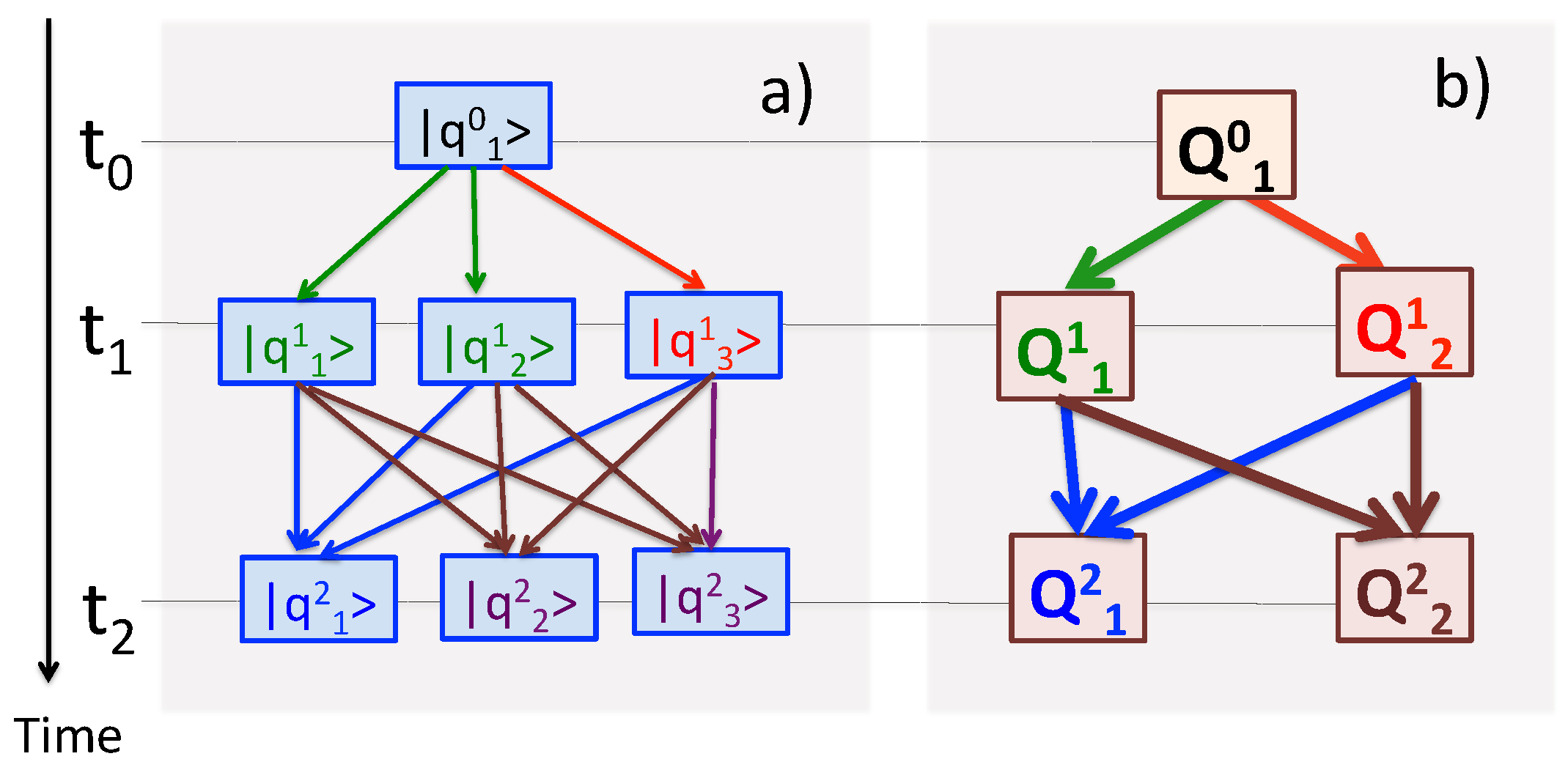
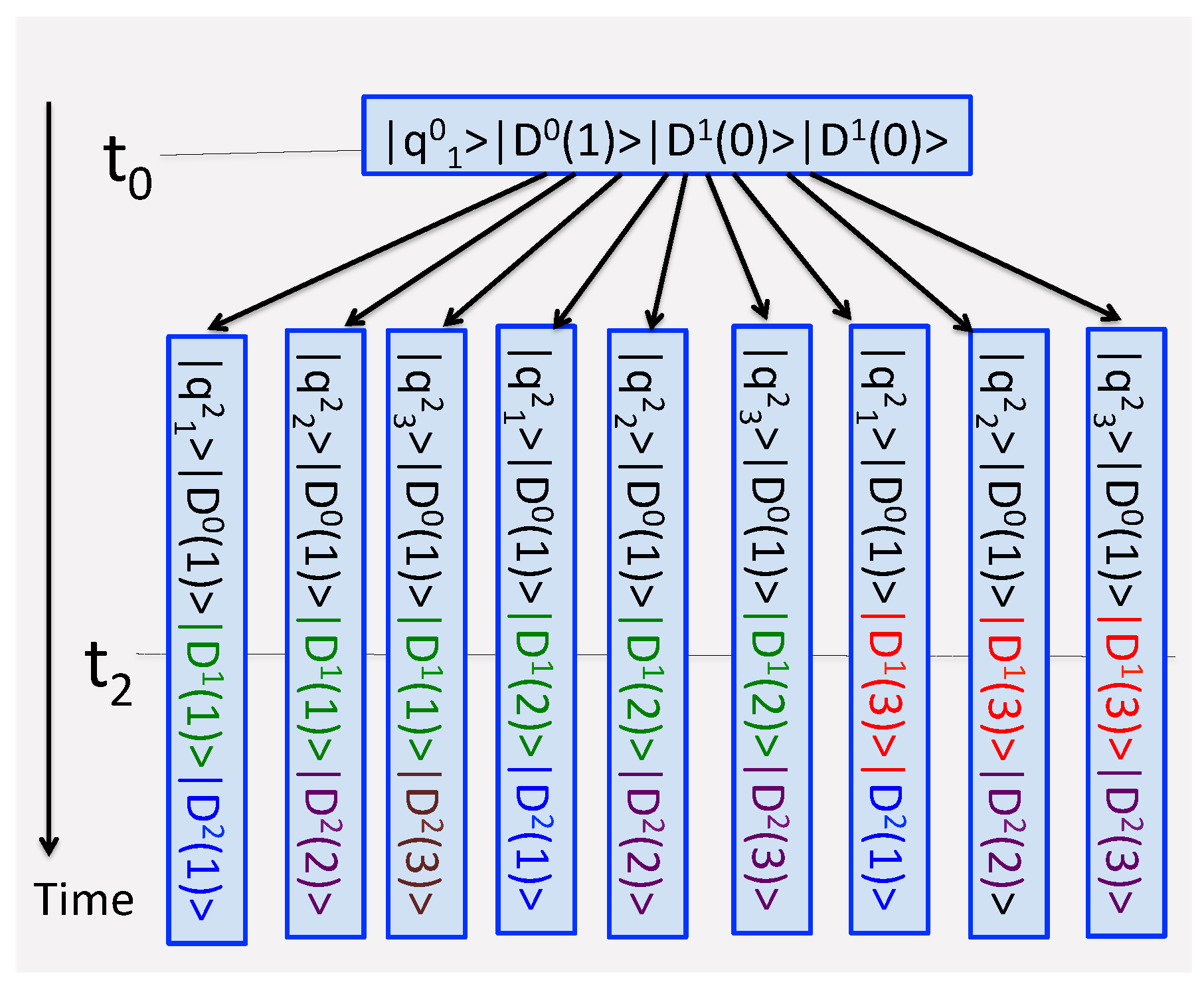
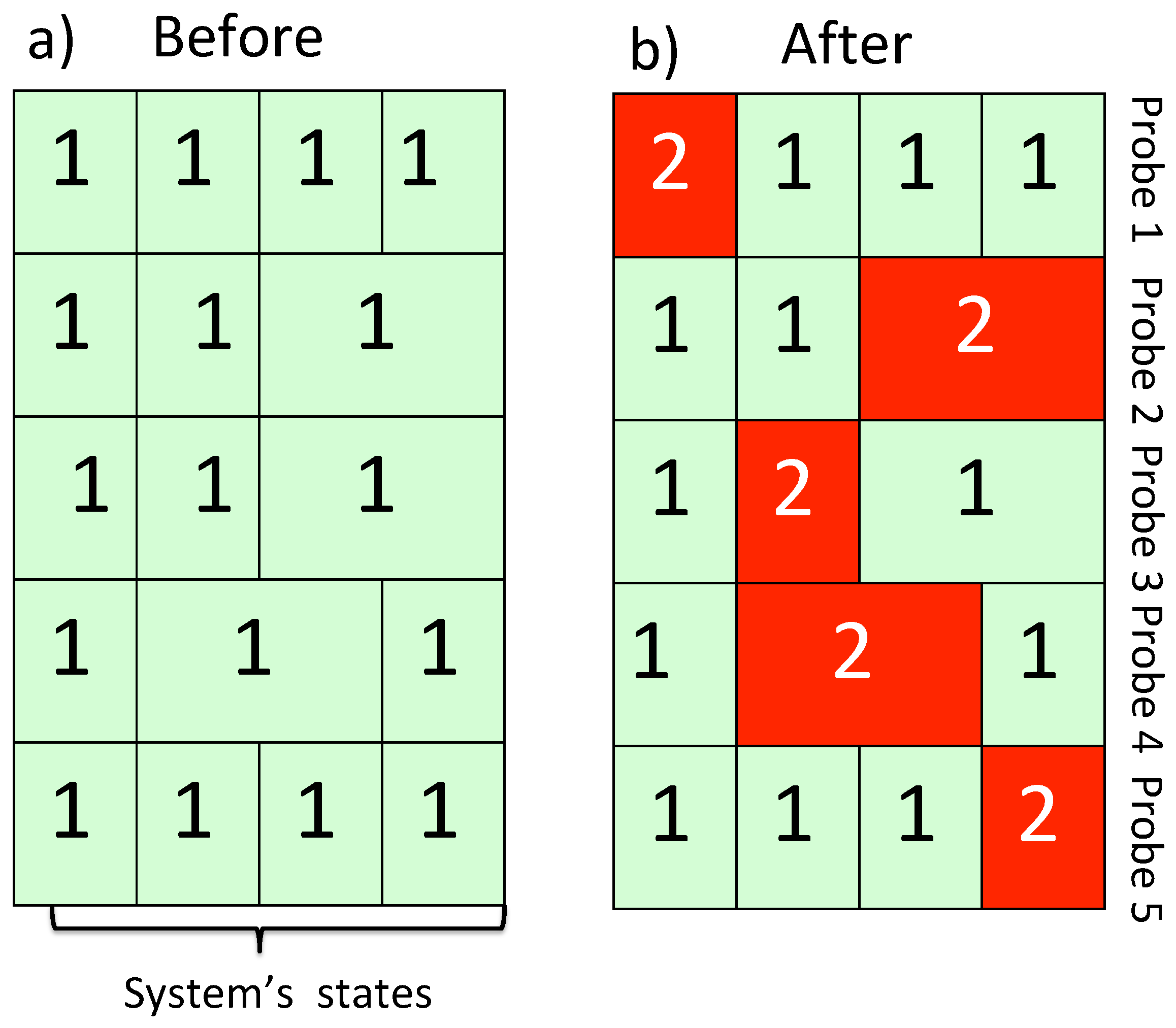
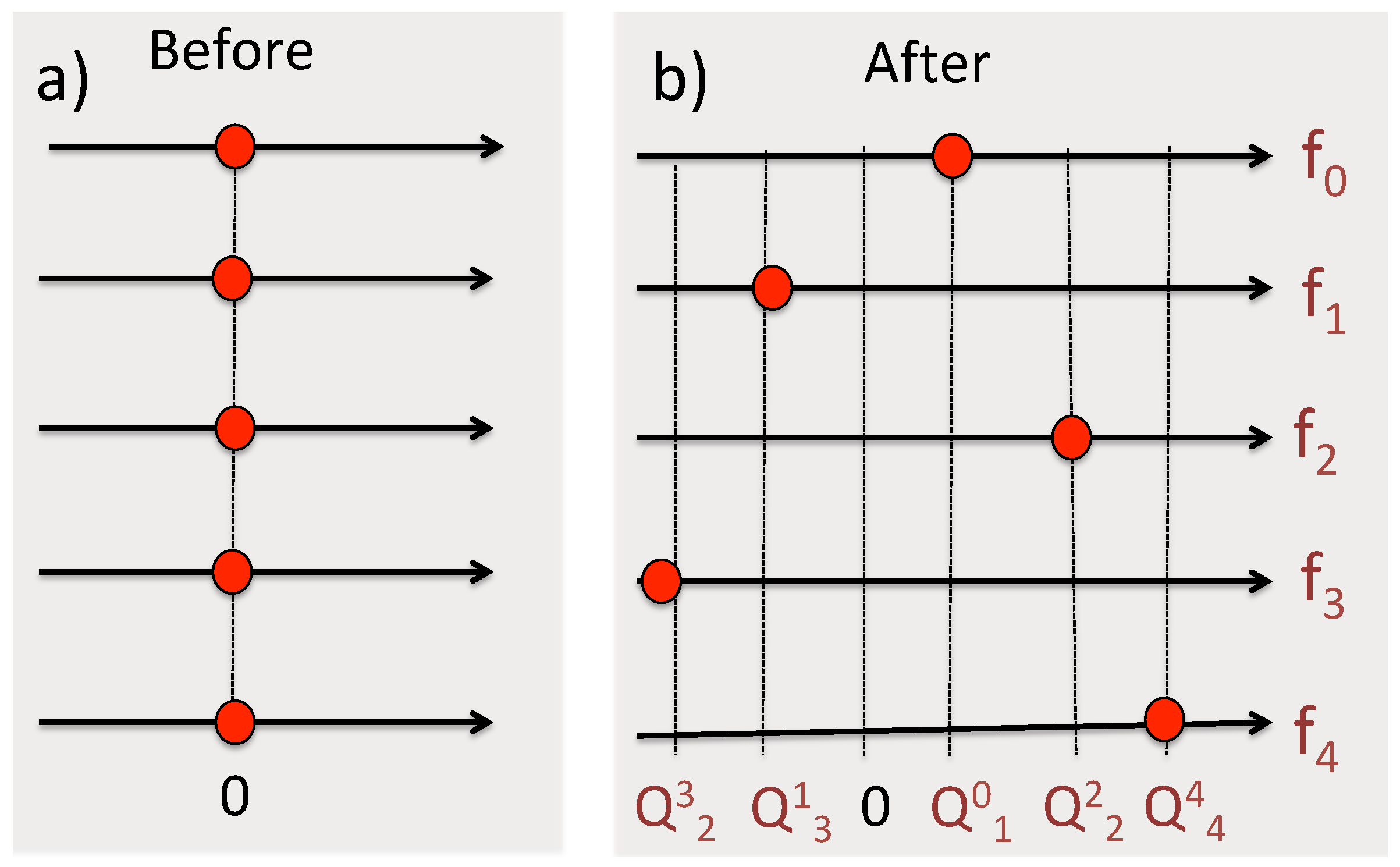
Probabilities of the outcomes of consecutive quantum measurements can be obtained by construction probability amplitudes, thus implying the unitary evolution of the measured system, broken each time a measurement is made. In practice, the experimenter needs to know all past outcomes at the end of the experiment, and that requires the presence of probes carrying the corresponding records. With this in mind, we consider two different ways to extend the description of a quantum system beyond what is actually measured and recorded. One is to look for quantities whose values can be ascertained without altering the existing probabilities. Such “elements of reality” can be found, yet they suffer from the same drawback as their EPR counterparts. The probes designed to measure non-commuting operators frustrate each other if set up to work jointly, so no simultaneous values of such quantities can be established consistently. The other possibility is to investigate the system’s response to weekly coupled probes. Such weak probes are shown either to reduce to a small fraction the number of cases where the corresponding values are still accurately measured, or lead only to the evaluation of the system’s probability amplitudes, or their combinations. It is difficult, we conclude, to see in quantum mechanics anything other than a formalism for predicting the likelihoods of the recorded outcomes of actually performed observations.
Keywords: quantum measurements; unitary evolutions; quantum elements of reality quantum measurements; unitary evolutions; quantum elements of reality