Article

Multi-Level Fusion Temporal–Spatial Co-Attention for Video-Based Person Re-Identification
1
School of Automation, Central South University, Changsha 410075, China
2
School of Information Technology and Management, Hunan University of Finance and Economics, Changsha 410205, China
*
Author to whom correspondence should be addressed.
Entropy 2021, 23(12), 1686; https://doi.org/10.3390/e23121686
Submission received: 19 October 2021 / Revised: 26 November 2021 / Accepted: 11 December 2021 / Published: 15 December 2021

Abstract

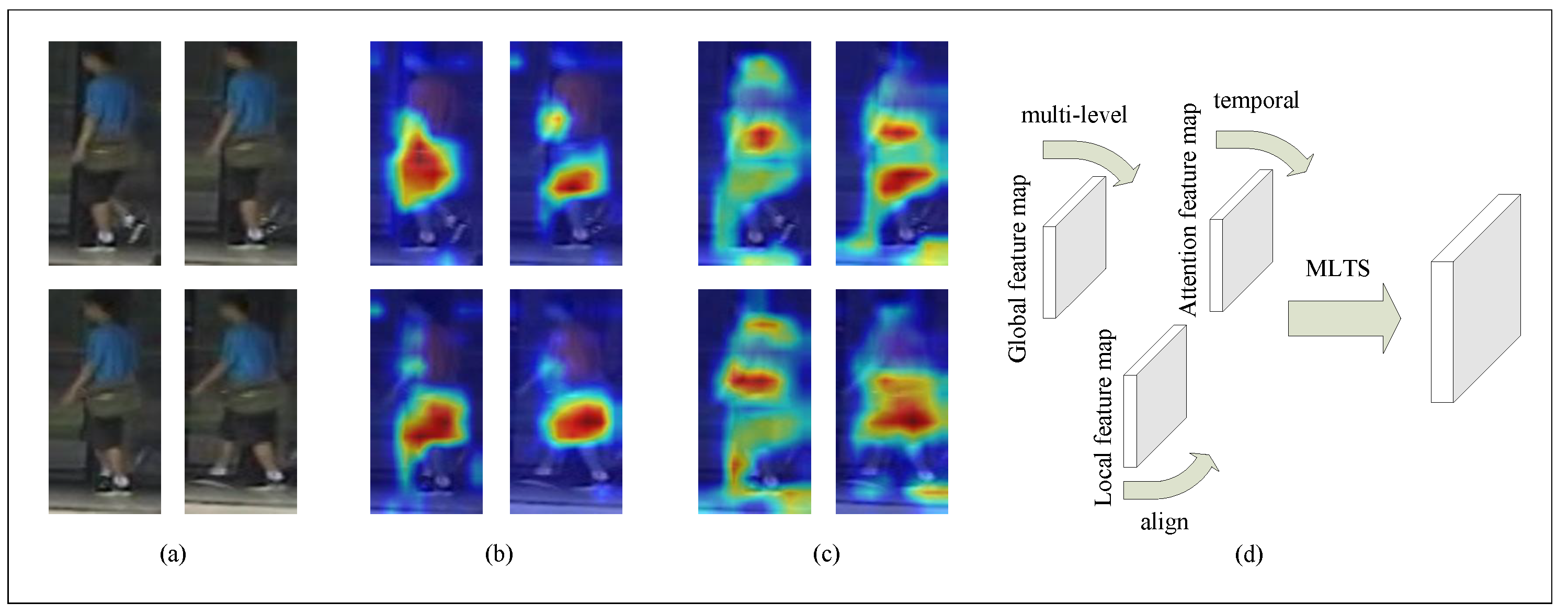
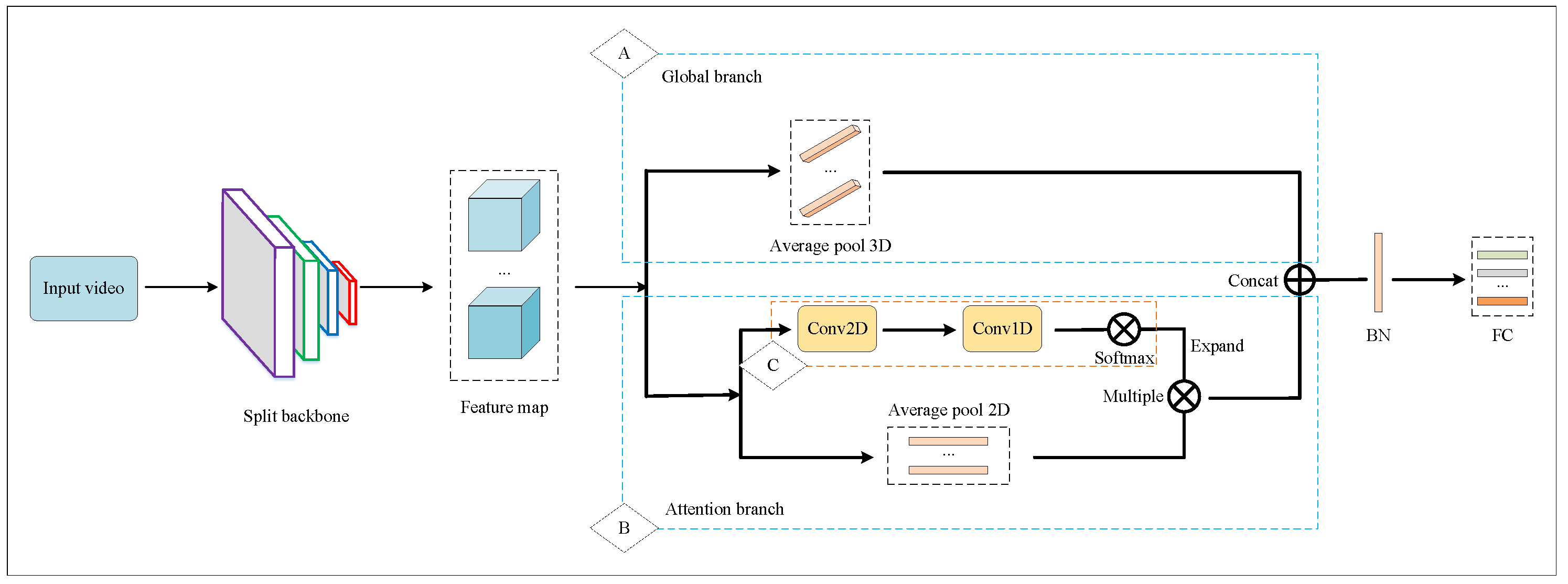
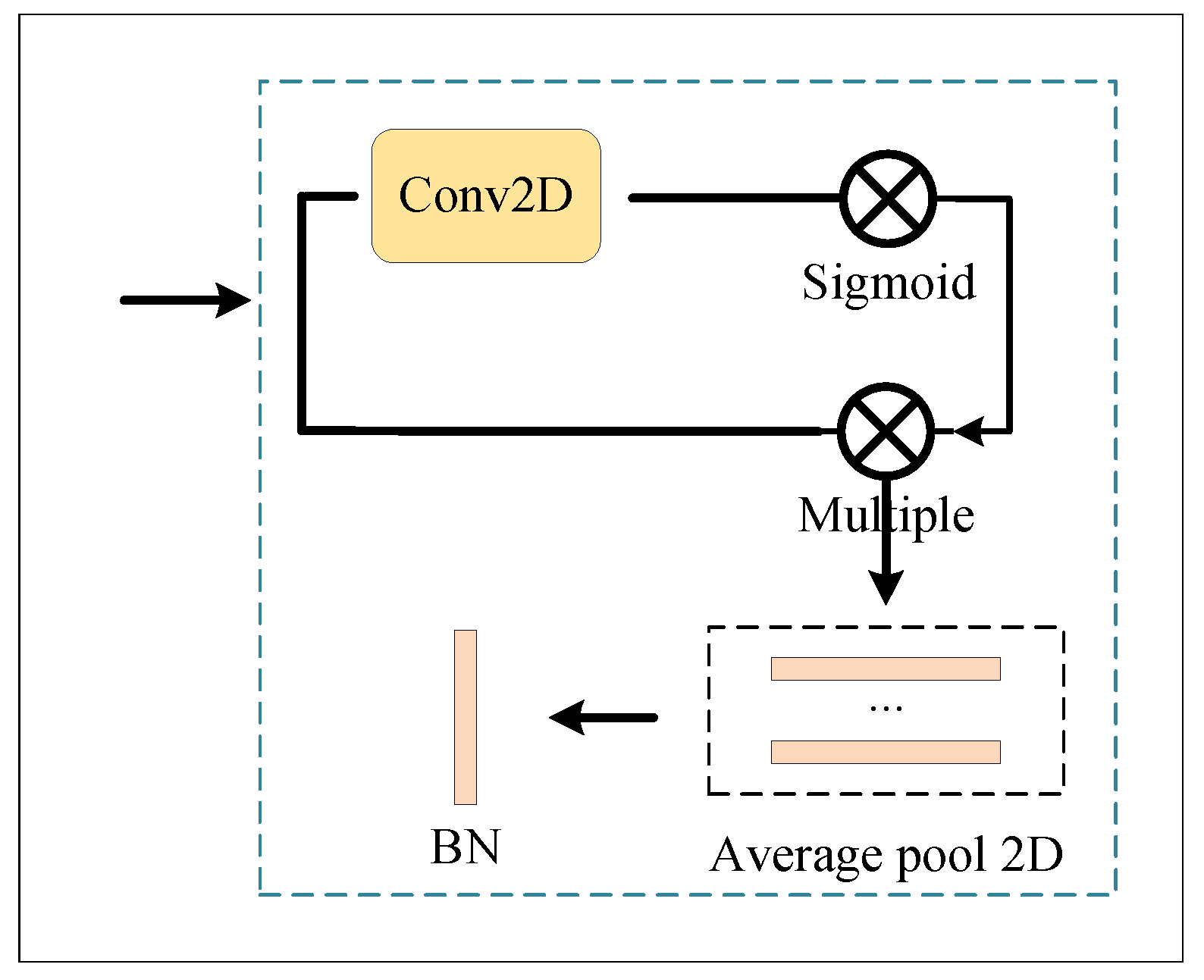
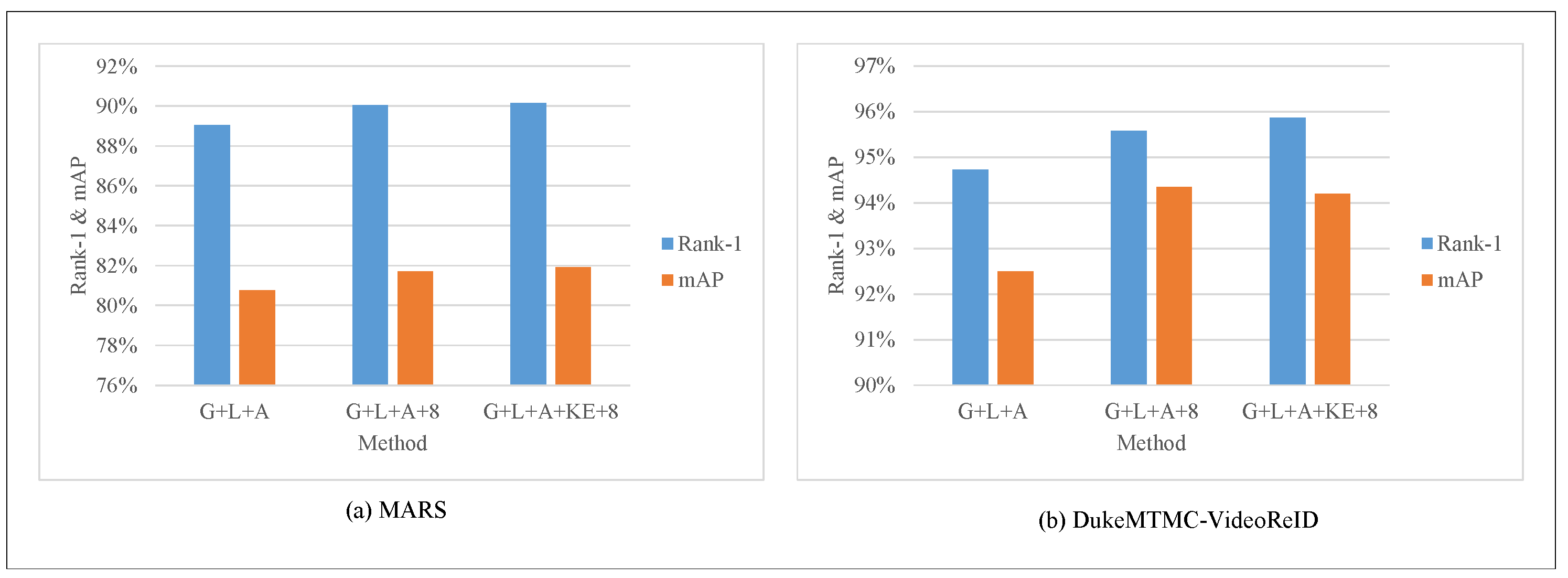
A convolutional neural network can easily fall into local minima for insufficient data, and the needed training is unstable. Many current methods are used to solve these problems by adding pedestrian attributes, pedestrian postures, and other auxiliary information, but they require additional collection, which is time-consuming and laborious. Every video sequence frame has a different degree of similarity. In this paper, multi-level fusion temporal–spatial co-attention is adopted to improve person re-identification (reID). For a small dataset, the improved network can better prevent over-fitting and reduce the dataset limit. Specifically, the concept of knowledge evolution is introduced into video-based person re-identification to improve the backbone residual neural network (ResNet). The global branch, local branch, and attention branch are used in parallel for feature extraction. Three high-level features are embedded in the metric learning network to improve the network’s generalization ability and the accuracy of video-based person re-identification. Simulation experiments are implemented on small datasets PRID2011 and iLIDS-VID, and the improved network can better prevent over-fitting. Experiments are also implemented on MARS and DukeMTMC-VideoReID, and the proposed method can be used to extract more feature information and improve the network’s generalization ability. The results show that our method achieves better performance. The model achieves 90.15% Rank1 and 81.91% mAP on MARS.
Keywords: video-based person re-identification; multi-level fusion; temporal–spatial co-attention; knowledge evolution video-based person re-identification; multi-level fusion; temporal–spatial co-attention; knowledge evolution