Next Article in Journal
Noise Reduction in Spur Gear Systems
Previous Article in Journal
Applying Text Analytics for Studying Research Trends in Dependability
Previous Article in Special Issue
Phytoplankton Temporal Strategies Increase Entropy Production in a Marine Food Web Model
Article

Dissipative Structures, Organisms and Evolution


1
Department of Chemistry, Wake Forest University, Winston-Salem, NC 27109, USA
2
Center for Ecological Study of Perception and Action, University of Connecticut, Storrs, CT 06269, USA
3
Department of Psychological Sciences, University of Connecticut, Storrs, CT 06269, USA
*
Author to whom correspondence should be addressed.
Entropy 2020, 22(11), 1305; https://doi.org/10.3390/e22111305
Received: 5 September 2020 / Revised: 28 October 2020 / Accepted: 10 November 2020 / Published: 16 November 2020
(This article belongs to the Special Issue Evolution and Thermodynamics)
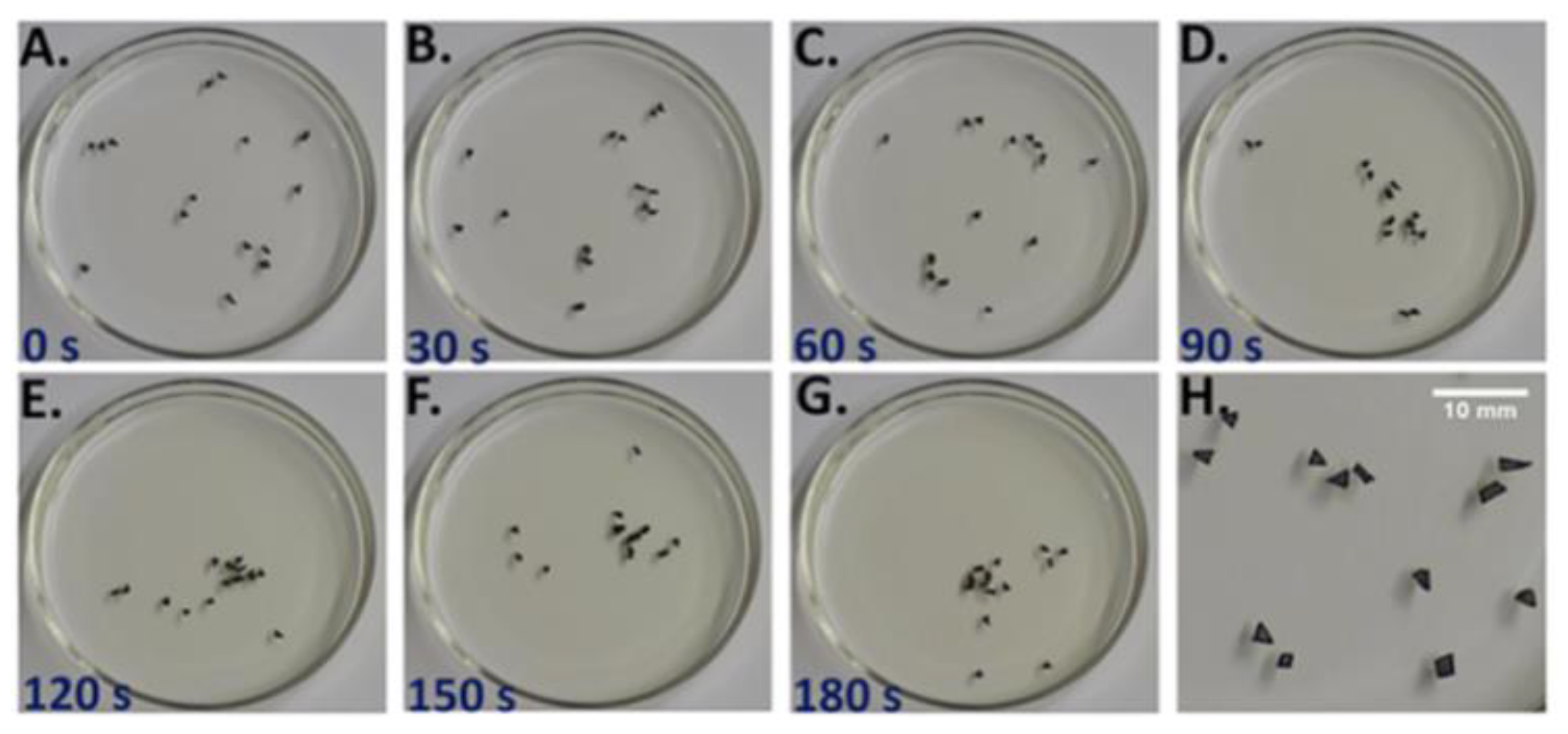
Self-organization in nonequilibrium systems has been known for over 50 years. Under nonequilibrium conditions, the state of a system can become unstable and a transition to an organized structure can occur. Such structures include oscillating chemical reactions and spatiotemporal patterns in chemical and other systems. Because entropy and free-energy dissipating irreversible processes generate and maintain these structures, these have been called dissipative structures. Our recent research revealed that some of these structures exhibit organism-like behavior, reinforcing the earlier expectation that the study of dissipative structures will provide insights into the nature of organisms and their origin. In this article, we summarize our study of organism-like behavior in electrically and chemically driven systems. The highly complex behavior of these systems shows the time evolution to states of higher entropy production. Using these systems as an example, we present some concepts that give us an understanding of biological organisms and their evolution. View Full-Text
Keywords: nonequilibrium thermodynamics; dissipative structures; organism; entropy production; evolution nonequilibrium thermodynamics; dissipative structures; organism; entropy production; evolution
Show Figures

Figure 1

MDPI and ACS Style

Kondepudi, D.K.; De Bari, B.; Dixon, J.A. Dissipative Structures, Organisms and Evolution. Entropy 2020, 22, 1305. https://doi.org/10.3390/e22111305

AMA Style

Kondepudi DK, De Bari B, Dixon JA. Dissipative Structures, Organisms and Evolution. Entropy. 2020; 22(11):1305. https://doi.org/10.3390/e22111305
Chicago/Turabian Style

Kondepudi, Dilip K., Benjamin De Bari, and James A. Dixon. 2020. "Dissipative Structures, Organisms and Evolution" Entropy 22, no. 11: 1305. https://doi.org/10.3390/e22111305
Find Other Styles
Note that from the first issue of 2016, MDPI journals use article numbers instead of page numbers. See further details here.

Article Access Map by Country/Region

1
Back to TopTop