1. Introduction
In a 2025 survey conducted by Salesforce of 6500 service professionals across 40 countries, nearly two-thirds (63%) of customer service organizations have implemented Artificial Intelligence (AI) in at least one service channel. Within the travel and hospitality industry specifically, AI integration has achieved a 15% reduction in service costs alongside a 19% increase in customer satisfaction [
1]. These findings underscore that firms are relying on AI-driven chatbot (ADC) systems gradually by increasingly deploying them to optimize cost efficiency and to ensure round-the-clock customer support [
2].
As these automated technologies become pervasive, researchers have increasingly emphasized the importance of examining chatbots not merely as functional tools, but as interactive communication interfaces that mediate Human–Computer Interaction (HCI) between corporations and consumers [
3,
4]. In this capacity, chatbots facilitate service communication by simulating human-like engagement. ADCs, which are defined as computer programs designed to converse with human customers over the internet [
5], maintain consistent and automated support by replicating anthropomorphic interactions. Leveraging Natural Language Processing (NLP), these systems interpret and respond to human language through text- or voice-based modalities [
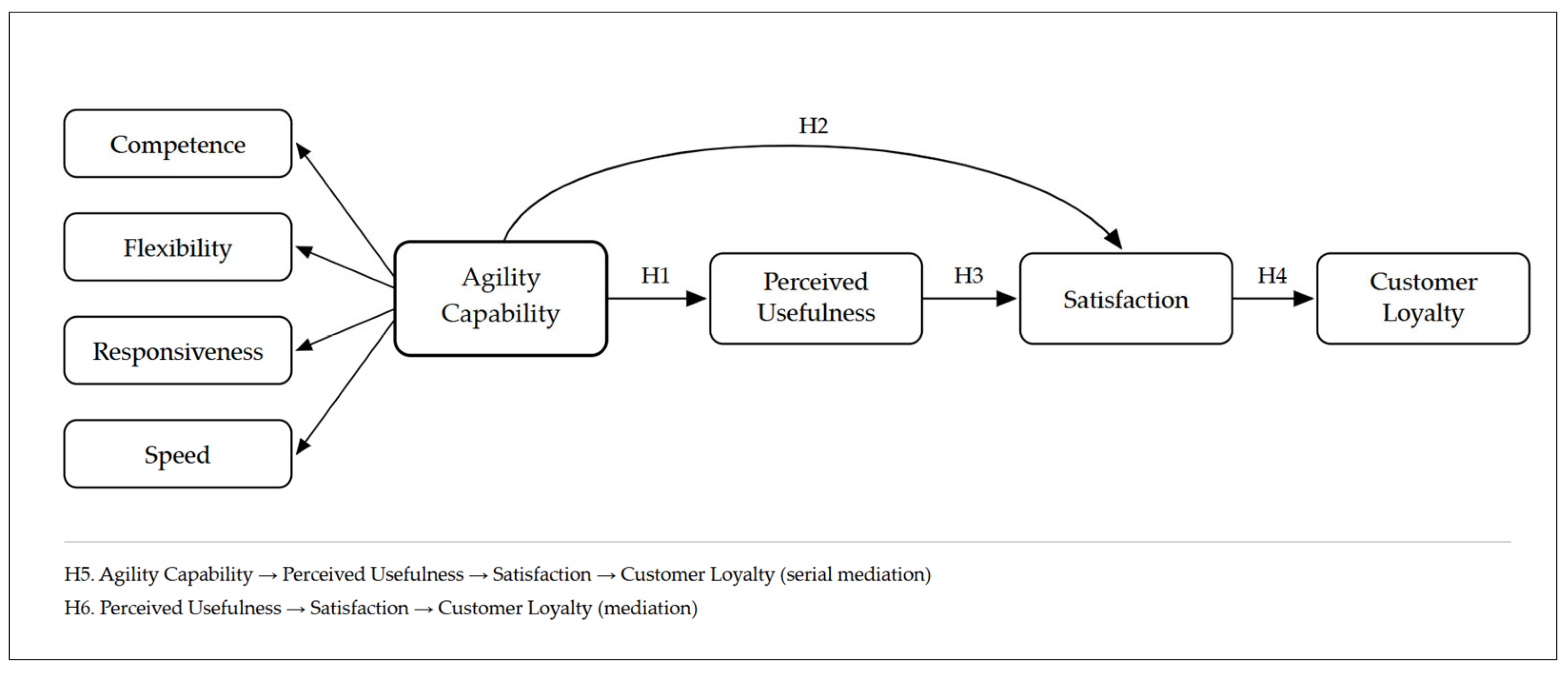
6]. Moreover, the strategic significance of ADCs lies in their capability to resolve a contemporary paradox in service operations beyond their automation: to maintain global scale while delivering personalized service. This tension defines the core challenge of agility capability through four essential pillars: competence, flexibility, speed, and responsiveness [
7,
8,
9]. By integrating these capabilities, ADCs can serve as the digital engine that allows an organization to resolve this tension—scaling operations without compromising precision [
10].
In rapidly changing service environments, organizational agility is increasingly associated with the ability to efficiently process information, adapt to customer needs in real time, and maintain consistent service quality through digital technologies [
11]. An ADC contributes to agility capability by automating repetitive interactions, accelerating response time, and supporting continuous customer engagement across multiple service channels [
12]. Furthermore, chatbots’ conversational and data-processing capacities enable organizations to respond flexibly to variable customer demands while sustaining operational efficiency and service consistency [
13].
The implementation of interactive ADCs is on the rise in a variety of industries, particularly in the hospitality and airline sectors, to facilitate customer inquiries, booking processes, and service management. Several studies have demonstrated that these ADC interactions exert a substantial influence on customers’ booking intentions and engagement with tourism and hospitality services [
14,
15,
16]. The effective interaction between ADC and customers can help narrow the “intention-behavior gap” by providing real-time assistance and personalized recommendations. This interaction has also reduced hesitation during the decision-making process [
17].
Empirical evidence further indicates that high-performing airline chatbots can improve customer satisfaction by 15 points during irregular operations while resolving issues 35% faster than traditional call centers [
18].
Moreover, within the hospitality industry, customers increasingly expect personalized treatment and emotionally responsive communication. In this context, ADCs function as a pivotal service touchpoint that shapes customers’ perceptions of professionalism, trust, and overall service quality [
19]. By delivering immediate and tailored interactions, ADC technologies can strengthen customer trust and enhance the overall service experience in the airline industry. AirAsia, KLM Royal Dutch Airlines, and Lufthansa, for instance, have adopted ADC systems to deliver fast, consistent support across the messaging apps and mobile channels their passengers already use. AirAsia’s strategic emphasis has been on minimizing customer wait times and managing large volumes of inquiries in 11 languages, leading to notable enhancements in both response speed and customer satisfaction [
20].
Concurrently, KLM stressed conversational and personalized interactions with its ADC, thereby enabling customers to search, book, and manage flights using familiar applications such as Messenger and voice assistants, specifically through the implementation of the Blue Bot service [
21]. In contrast, Lufthansa focused on real-time disruption management by assisting customers in handling delays, cancellations, and missed connections more efficiently during stressful travel situations [
22]. A close examination of these three cases reveals several common factors among them. These factors include the ability to provide instant responses, the capability for seamless integration with airline systems, 24/7 accessibility, and the ability to resolve problems without requiring prolonged waits that come with human agents. These examples demonstrate how ADCs can enhance operational efficiency while enhancing customer service quality. Overall, the adoption of ADCs highlights the growing importance of AI-driven communication tools in creating faster, more responsive, flexible, and customer-centered airline services.
Given the emergence and functions of ADCs in the airline industry, several research questions are identified:
How does an ADC in the airline industry affect customer experience outcomes such as customer loyalty?
Does the agility capability of ADCs in airlines influence customer loyalty through perceived usefulness and satisfaction?
How do airlines using ADCs develop them for the future as part of their business strategies?
Addressing these questions responds to three gaps in the current literature. First, prior research has predominantly treated the individual attributes of conversational agents—such as responsiveness or speed—as isolated predictors, without considering whether they form an integrated agility capability; in the absence of a higher-order conceptualization, the literature risks attributing to separate attributes what in fact reflects a common underlying capability. Second, although technological attributes are widely assumed to enhance customer loyalty, it remains underspecified whether this effect operates directly or is transmitted through customers’ cognitive and affective evaluations. Third, agility has been theorized primarily at the organizational level, and its manifestation in consumer-facing service technologies such as ADCs remains scarce.
The originality of this study lies in the fact that prior research has neither examined the utility of ADCs as mediated by perceived usefulness and satisfaction, in relation to customer loyalty, nor explored them based on the agility capability of ADCs in the airline industry.
It aims to investigate how the agility capability of ADCs impacts customer loyalty by examining the mediating effects of perceived usefulness and customer satisfaction in the airline industry through a quantitative structural equation model. Thereafter, this research explores how ADCs in airlines impact customer experience. The study consists of five main sections. First, the literature review explores the factors constituting agility capability and their significance in relation to perceived usefulness, customer satisfaction, and customer loyalty. Secondly, it presents the relationships among the variables and the hypotheses. Third, the methodology is described, including the survey design, Confirmatory Factor Analysis (CFA) for data analysis and Structural Equation Modeling (SEM) with emphasis on hypothesis outcomes. Lastly, this study thoroughly discusses the research findings and their academic and managerial implications.
5. Results
5.1. Data Analysis
Data collection was conducted using a Google survey distributed across a widely used Korean social media network, yielding 303 responses. Statistical analysis was performed using SPSS (Version 31) for descriptive statistics and internal reliability checking (Cronbach’s alpha). AMOS (Version 31) was then used for confirmatory factor analysis (CFA) to verify convergent validity, discriminant validity, and model fit, followed by structural equation modeling (SEM) to evaluate the hypotheses [
88,
89]. AMOS was also used to run correlation analysis to examine inter-construct correlations prior to model estimation and confirm the data’s readiness for SEM [
90].
The complete set of 303 samples was utilized in the analysis, which was conducted on the sample covariance matrix. Maximum likelihood estimation assumes multivariate normality and is known to be sensitive to departures from it. Consequently, all inferential tests reported below—including every direct, indirect, and total effect—have been obtained through bias-corrected bootstrapping with 2000 resamples. This procedure derives confidence intervals empirically from the observed data and therefore does not rely on the normality assumption. Throughout the paper, path coefficients are reported as standardized estimates (β), whereas standard errors and critical ratios are based on unstandardized estimates; unstandardized values may exceed 1.00 because the indicators are measured on differing metrics.
5.2. Descriptive Statistics
Table 2 shows the demographic distribution of the 303 respondents. The largest age groups among respondents were those in their 30s at 45% and 40s at 25%, with 91% identifying as Korean nationals. 69% of participants held a bachelor’s degree, and 21% held a master’s or doctoral degree, indicating a relatively well-educated respondent group.
Over half of the participants, 53%, were employed full-time, while 13% of the participants were self-employed, reflecting a respondent base with stable economic activity and the potential for significant purchasing power in the context of air travel. Korean full-service carriers were preferred by 77% of the surveyed when it came to their travel behaviors.
In terms of digital behavior, half of the respondents reported using the internet for more than five hours a day, while 22% spent 3–5 h online. This indicates a high level of digital activities among the participants, which may increase their familiarity with the internet, digital devices and AI-based technologies. Furthermore, 90% of respondents indicated familiar experience with AI chatbots, suggesting that most participants were already exposed to AI-driven interactions and therefore capable of providing informed evaluations regarding ADC in the airline industry. Given this study’s focus on how ADC capabilities shape satisfaction and loyalty, this high level of digital familiarity suggests that respondents were well positioned to evaluate ADC performance.
5.3. Confirmatory Factor Analysis
Prior to hypothesis testing, the measurement model was validated using CFA. The model’s integrity was assessed through internal consistency, convergent validity, and parameter stability. As illustrated in
Table 3, all Cronbach’s alpha values ranged from 0.820 to 0.931, substantially exceeding the 0.70 benchmark. Similarly, Composite Reliability (CR) values for all latent variables were above 0.825, confirming high internal reliability across all scales. Convergent validity was further substantiated through Average Variance Extracted (AVE) and Squared Multiple Correlations (SMC). Every latent construct achieved an AVE value greater than 0.612, surpassing the recommended 0.50 threshold. It indicates that the constructs account for a majority of the variance in their indicators. Additionally, SMC values were consistently above 0.488 (with the majority exceeding 0.60), confirming that the observed variables adequately represent their underlying constructs.
The standardized factor loadings ranged from 0.698 to 0.911, and all of them were statistically significant at the
p < 0.001 level. Although one loading was marginally below the 0.70 benchmark, it surpassed the more lenient 0.50 threshold recommended for acceptable convergent validity [
81]. These results confirm that the observed items reliably reflect their respective latent constructs.
Prior to assessing discriminant validity among the constructs in the research model, it is necessary to clarify the specification of agility capability. At the first-order level, the four agility dimensions were not empirically differentiated: inter-dimension correlations ranged from 0.756 to 0.961, and the HTMT ratio between flexibility and responsiveness approached unity (≈0.96;
Appendix A). The elevated values observed among the four dimensions are consistent with the theoretical premise that they constitute complementary manifestations of a single higher-order agility capability rather than empirically distinct constructs, thereby supporting the second-order specification adopted in this study (see
Section 3.1.5). Agility capability was therefore specified as a second-order reflective construct. As shown in
Table 4, all second-order loadings were significant and substantial (β = 0.870–0.993,
p < 0.001), and the construct demonstrated sound convergent validity (AVE = 0.861, CR = 0.961). Discriminant validity was accordingly assessed at this higher-order level, employing the square root of its AVE (0.928).
Discriminant validity was examined using three complementary criteria. First, based on the Fornell–Larcker criterion, the square root of the AVE for each construct was compared with its inter-construct correlations [
90]. As reported in
Table 5, all construct pairs satisfied this criterion except for the satisfaction–customer loyalty pair, whose correlation (0.948) exceeded the square roots of their respective AVEs (0.873 and 0.881). Second, discriminant validity was further examined using the heterotrait–monotrait (HTMT) ratio of correlations, computed from the item correlation matrix following [
91]. As shown in
Table 6, all HTMT values were below the conservative threshold of 0.90, except for the satisfaction–customer loyalty pair (HTMT = 0.948). For this pair, the HTMT-inference criterion [
92] was applied: the 95% bootstrap confidence interval (5000 resamples) was [0.918, 0.975], which did not include 1, indicating that the two constructs are empirically distinct. Third, a chi-square difference test [
93] showed that a constrained model merging satisfaction and customer loyalty into a single factor exhibited a significantly worse fit than the hypothesized two-factor model (Δχ
2 = 48.79, Δdf = 3,
p < 0.001).
These results provide support for the discriminant validity of the measurement model. While the HTMT-inference criterion and the chi-square difference test both indicate that satisfaction and customer loyalty are statistically distinguishable, the magnitude of their association (r = 0.948) warrants caution: the two constructs, though separable, share a substantial proportion of variance. This pattern aligns with existing service research, in which satisfaction and loyalty are theoretically and empirically closely linked. Accordingly, it suggests that the estimated satisfaction–loyalty path should be interpreted as reflecting a considerable conceptual proximity rather than a purely independent relationship.
5.4. Model Fit Indices
Table 7 presents the computed fit indices for this conceptual framework. All the fit indices were satisfactory, with some even exceeding the recommended criteria. The goodness-of-fit indices indicated that the proposed model adequately represents the empirical data (χ
2/df = 1.847, RMR = 0.028, GFI = 0.900, AGFI = 0.870). The incremental fit indices (NFI = 0.942, CFI = 0.972, RMSEA = 0.053) were within the recommended thresholds. Since all other indices satisfied their recommended criteria, the overall model fit was considered acceptable. These results indicate that the measurement model aligns with the established criteria for goodness-of-fit based on [
81,
94].
5.5. SEM (Structural Equation Modelling) Analysis
SEM results showed that all the hypothesized relationships from Hypotheses H1 to H4 were statistically significant, with t-values (C.R.) exceeding the 1.96 threshold (
p < 0.001). The overall structural model demonstrated sufficient explanatory power within the theoretical framework.
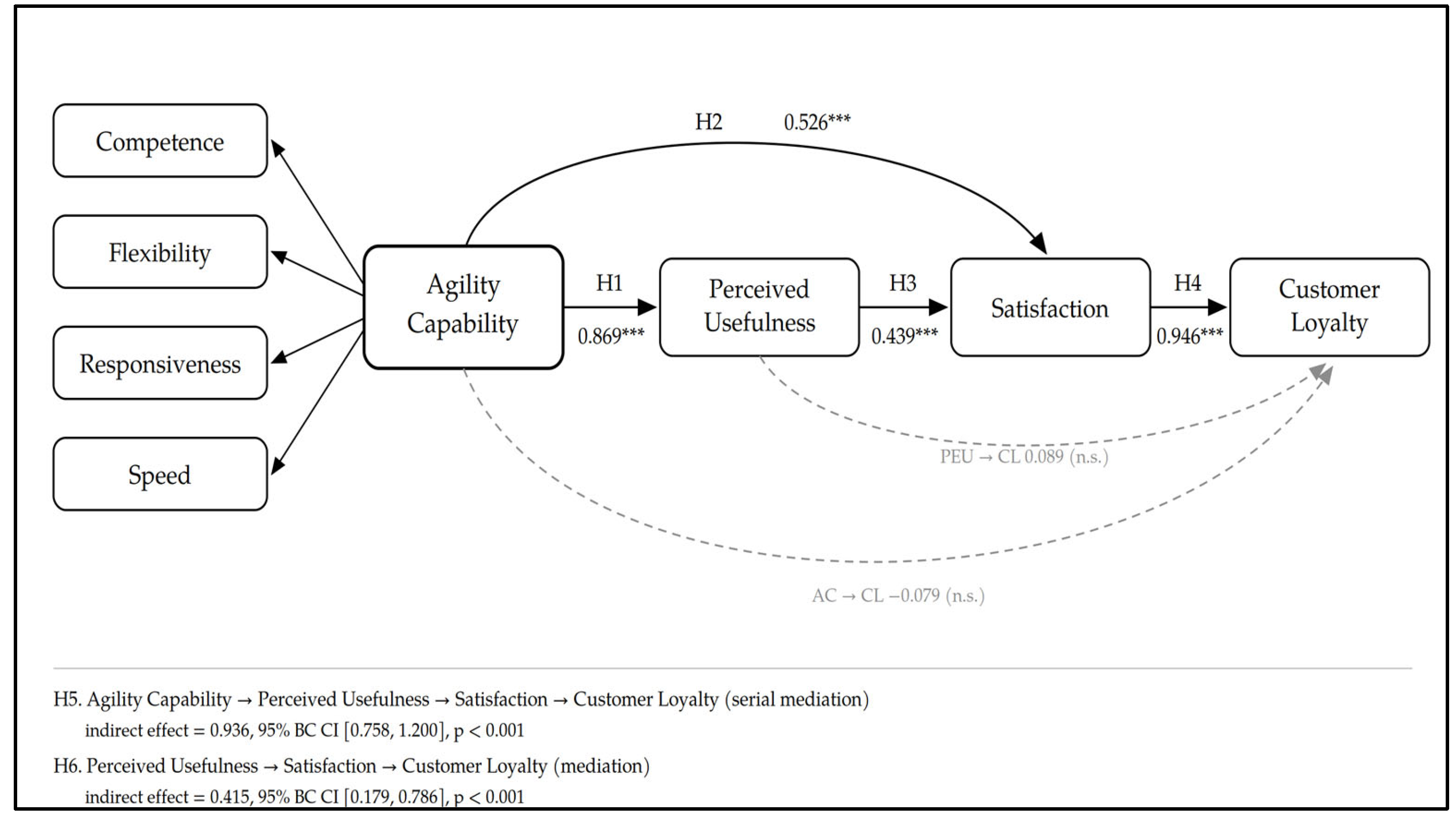
Table 8 illustrates the conceptual framework alongside the path analysis outcomes, while
Figure 2 maps these relationships visually.
Figure 2 depicts all four hypothesized direct paths that are significant. The results traced a sequential chain from agility capability to customer loyalty. Agility capability first shaped customers’ cognitive evaluation, exerting a strong effect on perceived usefulness (β = 0.869, SE = 0.045, t-value = 15.966,
p < 0.001). It then influenced satisfaction through two routes: directly (β = 0.526, SE = 0.070, t-value = 6.284,
p < 0.001) and indirectly via perceived usefulness, which significantly predicted satisfaction (β = 0.439, SE = 0.083, t-value = 5.266,
p < 0.001). Satisfaction was found to have a strong correlation with customer loyalty (β = 0.946, SE = 0.135, t-value = 7.279,
p < 0.001).
Direct paths from agility capability and perceived usefulness to loyalty were additionally estimated but were non-significant (β = −0.079, p = 0.420; β = 0.089, p = 0.335, respectively), indicating that satisfaction was the sole proximal predictor of loyalty.
5.6. Mediation Analysis
Bias-corrected bootstrapping (2000 resamples, 95% CI) was conducted to test the indirect mechanisms. The indirect effect of perceived usefulness on customer loyalty through satisfaction was significant (β = 0.415, 95% BC CI [0.179, 0.786], p = 0.001), as was the indirect effect of agility capability on satisfaction through perceived usefulness (β = 0.381, 95% BC CI [0.166, 0.620], p = 0.001). The total indirect effect of agility capability on customer loyalty was also significant (β = 0.936, 95% BC CI [0.758, 1.200], p = 0.001). Combined with the non-significant direct effects on loyalty, this indicates that agility capability is transmitted to loyalty entirely through perceived usefulness and satisfaction in sequence, supporting H5. Likewise, the significant indirect effect of perceived usefulness on loyalty through satisfaction, coupled with its non-significant direct effect, supports H6.
To classify the mediating role of perceived usefulness in the agility capability–satisfaction relationship, this study employs the analytical typology proposed by Zhao et al. [
95]. The direct effect of agility capability on satisfaction remained significant (H2: β = 0.439,
p < 0.001), and, as reported above, the indirect effect through perceived usefulness was likewise significant with a confidence interval excluding zero. Because both the direct and indirect paths were significant and shared the same sign, the results indicate complementary mediation rather than full mediation. This suggests that agility capability enhances satisfaction not only directly but also partly by improving customers’ perceived usefulness of the ADC, with a meaningful portion of its influence transmitted through this cognitive evaluation. Therefore, the mediation pattern differs by outcome: perceived usefulness complementarily mediates the effect of agility capability on satisfaction, whereas the effect of agility capability on customer loyalty is fully mediated by perceived usefulness and satisfaction in sequence.
6. Discussion
6.1. Theoretical Implications
The findings position the airline ADC’s agility capability, modeled here as a second-order construct, as the foundational antecedent of the entire service-outcome chain. Agility capability exerts a strong direct effect on perceived usefulness (β = 0.869, p < 0.001), confirming that a coherent, prompt, responsive, and competent conversational agent is first and foremost experienced as useful. The integrated capability shapes the passenger’s perception of how instrumentally valuable airline ADCs are.
Satisfaction emerges as the pivotal construct in the model, jointly shaped by two antecedents. Agility capability directly contributes to satisfaction (β = 0.526, p < 0.001), while perceived usefulness contributes to satisfaction even more strongly (β = 0.439, p < 0.001). This dual pathway indicates that the ADC’s inherent capability itself directly contributes to satisfaction beyond its instrumental value, suggesting that satisfaction is not solely a by-product of perceived usefulness. In other words, passengers are satisfied with the ADC not only because it proves useful, but because it responds in an agile and capable manner while resolving their travel queries.
The most theoretically consequential result is the full-mediation pattern surrounding customer loyalty. Neither agility capability (β = −0.079, p = 0.420) nor perceived usefulness (β = 0.089, p = 0.335) exerts a significant direct effect on loyalty. Instead, satisfaction is the sole significant driver of loyalty (β = 0.946, p < 0.001) and fully carries the influence of the upstream constructs. The bootstrapped indirect effects confirm this mechanism: agility capability reaches loyalty only through the mediating sequence of perceived usefulness and satisfaction (β = 0.936), and perceived usefulness reaches loyalty only through satisfaction (β = 0.415). Theoretically, this establishes satisfaction as an indispensable affective gateway: agility capability and perceived usefulness are necessary upstream conditions, but they alone are insufficient to ensure behavioral commitment. Its antecedents must first pass through the customer’s holistic evaluation of the experience.
These dynamics may be further elucidated considering the sample’s characteristics. 90 percent of respondents are familiar with ADCs and display a high level of digital fluency. In the aviation industry, accurate and high-quality resolution is critical for maintaining customer satisfaction and sustained loyalty. This emphasis on dependable resolution builds a solid relationship with customers and keeps them returning to the airline’s digital ecosystem.
The theoretical framework of this study extends the existing literature in the following ways. First, it extends established technology-adoption frameworks—specifically TAM and ECT—into the under-researched domain of airline IT infrastructure. Whereas prior studies have focused heavily on front-end consumer applications such as mobile booking apps and kiosks, this research is among the first in the South Korean context to empirically examine how ADCs influence the traveler experience. Second, by conceptualizing agility capability as a second-order construct and demonstrating a fully mediated mechanism in which satisfaction is the exclusive conduit to loyalty, the study delineates a clear structural route by which the agility capability of an ADC is converted into sustained customer loyalty.
6.2. Managerial Implications
From a practical perspective, the findings offer concrete guidance for industry executives navigating rapid digital transformation. First, this study provides a strategic roadmap for airline executives and customer-service or IT directors when allocating resources. Because agility capability functions as an integrated construct, managers are advised to invest in its dimensions as a coherent whole rather than optimizing any single feature in isolation. Aligning IT investment with the agility capability of ADCs directly strengthens perceived usefulness and satisfaction, laying the groundwork for sustainable service quality.
Second, the findings highlight that customer loyalty is secured only when the ADC’s capability is converted into genuine satisfaction. Agility capability and perceived usefulness influence loyalty exclusively through satisfaction. Technology is not merely deployed, but rather experienced and valued by customers. To that end, airlines should implement proactive, real-time feedback and support mechanisms that translate complex operational data into immediate, responsive communication—the behavioral core of agility capability. Such interactive ADCs can reduce the anxiety associated with air travel and enhance perceived traveler value, thereby strengthening long-term commitment. This is consistent with evidence that AI-driven technologies improve customer experience and value in the travel industry [
95].
6.3. Limitations
Despite the insights of this study, several limitations must be acknowledged.
First, this study relies on cross-sectional, self-reported survey data. Accordingly, the findings capture passengers’ perceptions and behavioral intentions at a single point in time rather than actual behavior or objective financial outcomes. Endogeneity cannot be excluded, as unobserved respondent characteristics may jointly influence perceived agility and the evaluative outcomes. A formal assessment such as the Gaussian copula [
96] approach was not conducted because it presumes non-normally distributed exogenous regressors, a condition not satisfied by the present Likert-scale indicators. Therefore, the structural model’s causal directions implied by the structural model should be interpreted as theoretically grounded associations rather than established causal effects. Additionally, the conclusions are confined to perceived usefulness, satisfaction, and loyalty intentions.
Second, the sample was heavily concentrated within the Korean market. While this provides deep insights into the Korean consumer’s experience, it may limit the generalizability of the findings to different regional contexts. The behavioral patterns of ADC usage may differ across markets, and the relative contribution of each dimension to the overall agility capability construct could vary in Western or other Asian contexts. As a result, the way agility capability influences perceived usefulness and satisfaction may vary across different cultural settings.
Third, 90% of respondents had experience with ADCs in other industries. This sample was also concentrated among respondents aged 30–49, whose high level of digital familiarity may further limit the generalizability of the findings to broader age groups. Given their high digital literacy, these respondents may exhibit a lower tolerance for system delays and higher expectations for immediate engagement. This characteristic may have shaped how the underlying dimensions come together to form the overall agility capability construct, potentially amplifying the weight of responsiveness-related aspects in that formation.
Fourth, the scope of this research was confined to a specific sector within the digital landscape of the airline industry. Given the variability of service quality dimensions across different industries [
97], it is important to carefully consider how to prioritize the variables in agility capability. In addition, recruitment relied on convenience sampling through social media, which may limit the generalizability of the findings. Future research employing probability-based sampling would enhance external validity.
Fifth, perceived value was initially examined as an outcome variable in this study. However, it could not be empirically distinguished from customer loyalty (r = 0.994; HTMT = 1.000) and was therefore excluded from the final model. Future research should measure this construct using behavioral or financial indicators, such as repurchase frequency or revenue contribution.
Finally, satisfaction and customer loyalty exhibited a very high correlation (0.948). Although formal tests supported their distinctiveness, the strong path from satisfaction to loyalty (β = 0.946) should be interpreted with this overlap in mind. Employing behavioral loyalty measures including observed repurchase or referral patterns would provide a sharper separation between affective satisfaction and behavioral commitment.
6.4. Future Research Directions
Future research should complement perceptual measures with objective performance data. Longitudinal or panel designs, combined with airline-side operational and financial records—such as actual repurchase behavior, service-channel cost data, and customer lifetime value—would allow the satisfaction–loyalty–profitability linkage, which could not be tested in the present model, to be examined with objective outcomes rather than perceptions alone.
Experimental or multi-wave designs would also strengthen causal inference regarding the effect of ADC agility capability on downstream outcomes. Additionally, it would serve to mitigate the endogeneity concerns inherent in single-source cross-sectional data. In circumstances where observational designs are unavoidable, instrumental-variable estimation—or the Gaussian copula approach applied to indicators meeting its distributional requirements—would permit a formal test of regressor exogeneity.
Subsequent research needs to conduct cross-cultural or multinational comparative studies to address this geographic constraint. Such comparisons would validate the global applicability of these findings and identify universal patterns of customer behavior by replicating this research model in regions with differing cultural dimensions and market structures. Succeeding studies should endeavor to obtain a more demographically diverse sample by recruiting international participants across a broader range of age groups, socioeconomic backgrounds, and digital proficiency levels. An exploration of the influence of digital literacy on the relationship between agility and perceived usefulness would provide a deeper view of the digital background.
To address this industry-specific limitation, future research should broaden the empirical scope by testing this framework across a wider array of digital service industries. Comparative analyses between highly transactional sectors and highly risk-sensitive sectors would clarify whether the influence of agility capability on customer outcomes is universal, or whether it is contingent upon the specific nature and perceived risk of the digital service.