1. Introduction
Live-service videogames, often described as Games as a Service (GaaS), have become one of the most consequential commercial environments of contemporary digital culture; in these settings, play, social interaction, identity work, and monetization no longer operate as separate layers. They are woven into the same ongoing experience. Persuasion, accordingly, tends to work less through explicit advertising messages than through interface arrangements that regulate attention, organize repetition, and make certain actions feel timely, natural, or rewarding. From the standpoint of electronic commerce research, this matters because spending is no longer confined to a single point of purchase. It is increasingly distributed across loops of progression, return, and socially visible participation.
This is evident in youth-oriented platform ecosystems, where avatars function as public surfaces of self-presentation and where fashion circulates simultaneously as aesthetics, identity, and symbolic capital. In such environments, clothing is not merely selected from a catalog. It is acquired, displayed, compared, and valued within socio-technical systems that connect self-expression to metrics, rarity, and repetition. The virtual wardrobe, in other words, becomes a retail infrastructure in its own right. It stores accumulated value, indexes participation, and makes cosmetic status legible to others. These dynamics are intensified in spaces such as Roblox, where play, sociability, and consumption are tightly interwoven.
Several strands of scholarship help illuminate this broader shift, although they often do so separately. Research on gamification has shown that rewards, progress indicators, and socially visible achievements can deepen engagement and encourage purchase-related behavior in digital environments, particularly among younger users [
1,
2,
3,
4]. Work on digital fashion, meanwhile, has argued that dressing an avatar is not simply a matter of product acquisition but a cultural practice of experimenting, collecting, displaying, and negotiating identity in networked environments [
5]. Other studies have focused on loot boxes and randomized rewards, stressing that when access to desirable items is mediated by probability, consumption becomes structured by expectation, repetition, and uncertainty, sometimes in ways that overlap with broader concerns about gambling-like design and youth vulnerability [
6,
7]. Finally, research on dark patterns and digital fairness has drawn attention to the ways interface design can steer users through prompts, countdowns, friction, and opaque price structures, raising questions of transparency, autonomy, and responsibility in digital markets [
8,
9,
10].
Despite the breadth of this literature, youth-oriented virtual fashion games have rarely been examined as immersive commerce environments in their own right, especially at the level of the interface. Much of the existing literature addresses virtual fashion as a cultural phenomenon, gamification as a marketing strategy, or loot boxes as a regulatory concern; less developed, however, is an interface-centered account of how these elements come together within a single playable environment. The analytical significance of this convergence becomes clear when acquisition is routed through unboxing flows, daily-return routines, visible rarity, rankings, boosters, and timers. In such contexts, monetization is better understood not as a discrete commercial interruption, but as part of the ordinary grammar of play.
DressGO offers a particularly useful case for examining this convergence. Developed by DRESSX on Roblox, the game sits at the intersection of live-service design, virtual fashion, youth-oriented platform culture, and randomized access to cosmetic goods. Public-facing materials position DressGO as DRESSX’s first Roblox game, launched with PUMA as a launch partner and framed around style, self-expression, digital identity, mystery-box acquisition [
11,
12]. These materials present fashion not as a static catalog of items to select directly, but as an evolving and probabilistic experience shaped by unboxing, repetition, and visibility. This makes the game especially revealing for the purposes of this study. In DressGO, fashion acquisition is not primarily organized around direct garment selection. It is structured through repetition, chance, and status visibility, turning the wardrobe into a cumulative outcome of play, waiting, and optimization.
Against this backdrop, the main objective of this article is to analyze how DressGO, a fashion game developed by DRESSX on Roblox, organizes immersive fashion commerce through gamified and persuasive interface design. Rather than treating purchase as a discrete transactional event, the study examines how monetization cues and purchase-oriented pathways are embedded in progression loops, cosmetic status, and habitual return within a platform-mediated retail environment. More specifically, it investigates how unboxing stages randomized acquisition as a sensory gateway to consumption; how daily rewards, quantified tasks, and progress indicators sustain retention and return; how rankings, rarity displays, and public metrics turn virtual fashion items into markers of social comparison and cosmetic distinction; and how accelerators, probability boosters, store prompts, and waiting timers frame payment as a practical response to delay and uncertainty. By bringing these mechanisms together, the article also addresses a wider question: how should randomized access, temporal friction, and comparative visibility be understood in relation to digital fairness, platform trust, and responsible interface design in youth-oriented immersive commerce?
Methodologically, the study adopts a qualitative case study and interface analysis based on a primary close-analysis corpus of 12 screenshots selected from an initial pool of 34 screenshots collected during six gameplay sessions in January 2026, covering the game’s core interaction loop. The aim is not to measure player outcomes or establish psychological causality. Instead, the analysis focuses on observable design choices and on the ways these choices structure preferred actions, reward expectations, and conversion pathways. This perspective is particularly useful in youth-oriented digital commerce contexts, where the legitimacy of monetization cannot be assessed only by asking whether payment exists, but also by examining how access, waiting, probability, and social visibility are arranged in the interface itself.
In doing so, the article makes three contributions. First, it contributes to immersive commerce research by showing how gamification, human–computer interaction, and symbolic fashion value converge within a youth-oriented virtual retail environment. Second, it contributes to interface and platform studies by identifying four operational mechanisms through which commerce is embedded in ordinary gameplay: staged unboxing as a sensory gateway to acquisition, daily rewards and quantified tasks as retention infrastructure, rankings and rarity displays as social comparison cues, and accelerators, probability boosters, and waiting timers as conversion pressure mechanisms. Third, it contributes to debates on digital fairness and responsible design by arguing that features often framed as engagement tools may also function as mechanisms of commercial pressure when they are combined within a single progression system.
The article is organized as follows.
Section 2 reviews the relevant literature and develops the analytical framework.
Section 3 describes the materials, corpus, and methods.
Section 4 presents the results of the interface analysis.
Section 5 discusses the findings in relation to immersive commerce, persuasive design, and digital fairness.
Section 6 concludes by summarizing the article’s contributions, limitations, and directions for future research.
2. Literature Review and Conceptual Framework
2.1. Live-Service Games, Platformization, and Persuasive Commerce
For the purposes of this article, the relevance of live-service games lies in the way they transform commerce from a discrete transaction into an ongoing system of participation. In these environments, commercial value is not produced only when a player purchases an item. It is also produced through repeated return, progression routines, reward expectations, and socially visible forms of achievement. This makes live-service environments especially relevant for electronic commerce research, because they show how attention, play, identity, and monetization can be organized within the same platform-mediated structure.
This perspective builds on a broader understanding of play as a rule-bound and socially meaningful activity [
13]. In games, rules do not only define what players can or cannot do; they also establish what counts as progress, what becomes desirable, and what is worth repeating. Bogost’s notion of procedural rhetoric is useful in this regard, because it explains how systems communicate values and preferred actions through rules, feedback, and interaction [
14]. Applied to DressGO, this means that virtual fashion consumption should not be analyzed only through the presence of purchasable items, but through the interface arrangements that shape acquisition, repetition, waiting, comparison, and optimization.
From an electronic commerce perspective, the transaction is therefore no longer the only meaningful unit of analysis. Value is generated through environments that keep users returning, comparing, collecting, and refining their choices over time. What is monetized is not only the item acquired, but the player’s continued participation in a cycle of anticipation, repetition, and reward. Live-service games are thus better understood not merely as entertainment products, but as platform-mediated commercial environments in which interface design, progression systems, and symbolic value are tightly intertwined.
This design-centered reading is especially useful for understanding immersive commerce. The relevant question is not simply whether players can buy, but how the design of the system makes spending feel ordinary, timely, and pragmatically justified within the flow of play. When interfaces repeatedly present acceleration, distinction, or improved odds as meaningful advantages, monetization no longer appears as an interruption. It becomes part of the everyday logic through which play is organized.
2.2. Gamification, Youth-Oriented Consumption, and Platform-Mediated Retail
Research on gamification has shown for some time that playful design elements such as points, progress bars, challenges, rankings, and rewards can increase engagement, perceived value, and purchase-related outcomes in digital environments [
1,
2,
3]. Hofacker et al. and Tobon et al., for instance, show that gamified structures can strengthen user motivation and deepen brand-related interaction, while Xi and Hamari underline how social visibility and community dynamics shape value creation in digital settings [
1,
2,
3]. What matters across this literature is a simple but important point: gamification does not merely make consumption more enjoyable; it changes how users interpret effort, progression, and reward.
This becomes even more significant in youth-oriented environments, where convenience, social influence, and habitual interaction play an outsized role in technology adoption and continued use. Seen through the lens of technology acceptance, it is not surprising that systems that are easy to use, socially validated, and continuously rewarding are particularly effective in encouraging repeated participation [
15]. More recent work focused on younger consumers reinforces this direction. Minh et al. show that gamified environments are linked to online buying behavior among young users [
4], while Li et al. note that contemporary branding strategies increasingly combine advertising, progression mechanics, and affective engagement instead of relying on discrete promotional messages [
16].
Recent work on mobile game design has similarly treated game features as structured factors that shape player conduct. Ma and Shao model mobile game design features through grounded theory and identify key design factors that influence interaction patterns in mobile gaming environments [
17]. This perspective informs the present article’s treatment of rewards, progression, visibility, and optimization as interface arrangements that organize action rather than as merely decorative gameplay elements. The relevance of this approach is reinforced by Hardwick et al., who use a think-aloud design with children aged 7–14 to show that harm in game monetization is often experienced as feeling misled or deceived by complex currencies, random rewards, and purchase cues, rather than only through the amount of money spent [
18].
For DressGO, this evidence strengthens the need for an interface-level analysis of how cost, probability, and reward cues are made legible to younger users.
In such settings, persuasion cannot be located only at the moment of purchase. It also operates through the broader architecture that organizes return, repetition, and opportunities for incremental spending. In retail environments mediated by platforms, the shop is often folded into an ongoing activity in which value is earned, displayed, and, at times, paid to optimize.
2.3. Virtual Fashion, Cosmetic Status, and Fashion as Play
Virtual fashion intensifies these dynamics because clothing in avatar-based environments is never just decorative. It is also a public sign of taste, self-presentation, and belonging. This is why the framework of fashion as play is particularly productive here. As Park and Chun argue, digital fashion is best understood not as a simple transfer of garments into virtual form, but as a broader practice that includes trying, collecting, combining, showing, and circulating style within shared environments [
5]. The virtual wardrobe becomes both a symbolic resource and a social infrastructure.
Recent work on avatar creation provides a more specific platform context for this argument. Fu et al. show that children aged 8–13 use avatar creation in social online games such as Roblox, Minecraft, and Fortnite for self-representation, identity experimentation, social needs, and in-game performance, while monetization design also shapes avatar-making practices [
19]. This matters for DressGO because the game links virtual fashion not only to aesthetic play, but also to a platform-based economy in which clothing, rarity, and acquisition routes mediate identity work.
Digital fashion has also become an increasingly relevant object of electronic commerce research. Zhang et al. examine consumers’ perceptions of digital fashion and purchase intention toward luxury brands’ digital fashion [
20]. Liu et al. analyze fashion brands’ strategic decisions to develop and sell digital products in the metaverse, highlighting the role of digital value, cost, pricing strategy, and brand strategy in platform-based digital expansion [
21]. These studies support the view that virtual fashion should be understood not only as a medium of visual self-expression, but also as a commercial infrastructure shaped by value, access, pricing, and platform strategy.
Cosmetic items gain additional significance when they are visible to others. As Brock and Johnson show in their work on cosmetic rewards, avatar appearance can function as a publicly legible sign of status and distinction [
22].
DressGO is a particularly revealing case because it presents virtual fashion in precisely these terms. DRESSX’s public materials describe the game as a space of style, self-expression, and digital identity, while the launch announcement frames PUMA as the launch partner and positions DressGO as DRESSX’s first Roblox game [
11]. FashionUnited likewise presents the release as a Roblox fashion game launched together with Puma [
12]. These industrial self-descriptions do not prove user effects, but they do clarify how the environment is framed; not as a static catalog, but as a fashion-play ecology organized around acquisition, progression, and display.
2.4. Conceptual Distinctions: Loot Boxes, Randomized Rewards, Persuasive Design, and Dark Patterns
For analytical clarity, this article distinguishes between loot boxes, randomized rewards, persuasive design, and dark patterns. Loot boxes are understood here as virtual containers or chance-based reward mechanisms that provide randomized items after being opened, sometimes through virtual currency or real-money-linked payment routes [
6]. Randomized rewards are broader: they include any probabilistic allocation of items, benefits, or outcomes, whether or not the mechanism is formally labelled as a loot box. Randomized access, by contrast, refers to the broader acquisition structure through which access to desired items is mediated by chance, repetition, rarity, and optimization. Persuasive design refers to interface arrangements that guide attention, repetition, choice, and perceived value without necessarily being deceptive. Dark patterns, by contrast, refer to a narrower and more problematic category of design choices that may impair autonomy, obscure cost, exploit urgency, or steer users toward actions that conflict with their interests [
8,
9,
10]. This distinction is important because DressGO does not need to be legally classified as gambling for its interface to raise questions about transparency, fairness, and youth-oriented monetization.
Loot boxes and other randomized acquisition systems have generated sustained academic attention because they blur the boundaries between play, shopping, and chance. Drummond and Sauer argue that these mechanics are psychologically comparable to gambling when users pay for randomized rewards [
6], and Kim et al. show in their review that loot-box purchasing is consistently associated with problematic gaming- and gambling-related indicators, even if the strength and form of the relationship vary across studies [
23]. At the same time, cultural analyses have shown that the importance of randomized cosmetic rewards is not reducible to uncertainty alone. Their value is also social, since the items obtained through chance circulate as visible signs of rarity and status [
22].
What matters for the present article is the way randomized access is embedded in a wider affective and temporal environment. Uncertainty is rarely presented in a dry, statistical form. It is staged through suspense, audiovisual feedback, repetitive interaction, and the promise of exceptionality. In youth-oriented settings, this can make the route to a desired item feel less like a purchase decision and more like a mixture of persistence, hope, and eventful play. That is why randomized monetization deserves to be analyzed not only as a pricing format, but as a design arrangement that organizes expectation.
The broader empirical context confirms that this is not a marginal issue. As
Table 1 shows, paid randomized rewards are widespread among younger populations, associated with emotional discomfort and problematic indicators, and increasingly documented in platform-specific studies of child-friendly games. Of particular relevance for DressGO, official UK data show that 63% of young people were aware that they could pay to open loot boxes and 27% had done so [
24]. Song et al. document UI manipulations, obscured purchase information, and psychological tactics in child-friendly Roblox games [
25]. ICPEN’s 2025 sweep found comparable patterns of urgency, return-for-reward prompts, and weak disclosure across hundreds of games [
26].
Read together, these findings support a more careful interpretation of cosmetic chance systems. They suggest that randomized acquisition is not a minor embellishment added to otherwise straightforward play, but part of a broader pattern in which scarcity, affect, and payment friction are deliberately arranged. That wider context gives analytical weight to the DressGO case without requiring the article to make causal claims that its own qualitative design cannot sustain.
2.5. Dark Patterns, Digital Fairness, and Platform Trust
The literature on dark patterns helps clarify why interface design must be treated as more than a neutral delivery layer. Zagal et al. showed early on that game interfaces can steer users toward actions that benefit the system rather than the player [
8], while Deterding et al. later argued for a more careful and critical vocabulary for describing manipulative design in games [
9]. The central insight running through this work is that design choices can shape conduct by making some actions unusually easy, emotionally salient, or cognitively opaque.
In youth-oriented digital environments, this concern becomes sharper because the line between engagement and pressure is often thin. A timer can be read as pacing, but it can also function as urgency. A currency system can be read as harmless abstraction, but it can also obscure real-world cost. A brightly signaled purchase button can be read as convenience, but it can also exploit inattention or impulse. This is where the idea of digital fairness becomes especially useful. It shifts the debate away from whether monetization is formally optional and toward whether the broader commercial environment remains transparent, proportionate, and respectful of user autonomy [
10].
Evidence from Roblox-specific studies and cross-national consumer-protection reports strengthens this perspective. Song et al. identify UI manipulation, obscured purchase information, layered currencies, and psychological tactics in child-friendly Roblox games [
25]. ICPEN documents urgency prompts, return-for-reward notifications, and limited loot-box disclosure across 439 games reviewed by 22 agencies [
26]. The cumulative picture is not one of a few isolated excesses, but of a wider design ecology in which visibility, uncertainty, and payment are closely intertwined. For a case such as DressGO, the key question is therefore not whether each individual element can be justified in isolation, but how the combination of rarity, timed return, social display, and paid optimization shapes the user’s practical path through the game.
Work on user-generated content games further extends this governance problem beyond age labels alone. Panchanadikar et al. argue that children’s safety in UGC environments requires attention to the ways play, creation, social interaction, and monetization are combined within platform infrastructures such as Roblox [
30]. This supports the present article’s focus on interface-level arrangements rather than on formal age classification alone.
Two additional studies sharpen this platform-governance dimension. Kou et al. examine child safety, monetization, and moderation on Roblox, showing that creators identify risks linked to deceptive design, gambling-like mechanics, scams, and the platform’s monetization model [
31]. Zhang et al. similarly show that predatory monetization in user-generated games extends beyond isolated microtransactions, operating through systems that may delay cost recognition, embed spending opportunities into social play and make commercial pressure part of the wider platform experience [
32]. Taken together, these studies support the present article’s focus on platform trust, interface visibility and payment-oriented pathways as design and governance issues.
2.6. Institutional Responses to Randomized Monetization and Persuasive Design
Academic concern over randomized monetization now sits alongside a growing body of institutional responses. What is striking is not that all regulators or organizations are saying exactly the same thing, but that a range of bodies have begun to converge on a familiar set of concerns: paid random items, intermediate currencies, urgency design, weak disclosure, and youth exposure. These responses do not all have the same legal status. Some are classification reforms, some are enforcement actions, some are parliamentary signals, and some are public enforcement reports. Taken together, they show that persuasive monetization in youth-oriented games is increasingly being treated as a matter of consumer protection and platform governance rather than merely a question of game balance or parental discretion.
Table 2 summarizes the most relevant developments for the present argument.
What matters analytically is the convergence. Australia’s classification reform [
33], the FTC’s intervention [
34], ICPEN’s international sweep [
26], the European Parliament’s position [
35], PEGI’s revised criteria [
36], and the New York lawsuit [
37] all point, in different ways, to a common problem field: randomized monetization directed at or accessible to younger users, often combined with opaque cost structures and engagement mechanics that encourage repeated participation. For DressGO, this does not mean that the case is legally identical to each of these examples. It means that the mechanisms observed in the game belong to a broader international debate on responsible interface design, platform trust, and digital fairness in youth-oriented immersive commerce.
The literature reviewed in this section therefore supports an interface-centered reading of DressGO as an immersive commerce environment organized around four dynamics: unboxing as sensory acquisition, quantified routines as habitual return, rarity and public display as status formation, and boosters or timers as conversion pressure. The next section explains how these dynamics were examined through a qualitative case study and interface analysis of the DressGO corpus.
3. Materials and Methods
3.1. Research Design and Analytical Orientation
This study adopts a qualitative single-case design focused on DressGO, a fashion game developed by DRESSX (Los Angeles, CA, USA) on Roblox. Following case study logic, the aim is not to estimate prevalence or test causal effects, but to examine how a bounded digital environment organizes a specific socio-technical phenomenon through its design [
38,
39]. More specifically, the article investigates how immersive fashion commerce is embedded in ordinary gameplay through randomized acquisition, return routines, social visibility, and conversion-oriented interface elements.
This orientation also explains why the article does not adopt a formal game-theoretic model. Approaches based on payoff matrices, minimax strategies, mixed strategies, or Nash equilibrium are appropriate when the objective is to model strategic interdependence among rational actors. The present study addresses a different object: the interface architecture through which a youth-oriented fashion game organizes acquisition, return, visibility, waiting, and monetization cues. A qualitative case study combined with interface analysis is therefore better suited to the research question, because the analysis concerns observable design arrangements, microcopy, visual hierarchy, temporal friction, reward cues, and conversion pathways rather than optimal strategic choices among players.
This methodological choice should not be understood as a weaker substitute for formal game-theoretic modelling, but as an analysis directed at a different analytical level of the game. Formal models ask what rational actors should choose when actors, strategies, payoffs, and strategic interdependence can be explicitly specified. The present study instead asks how the interface makes certain actions appear available, valuable, timely, socially meaningful, or practically efficient before any measurable user decision is recorded.
Recent Roblox-specific work has combined interviews and walkthrough analysis to examine how monetization designs manifest within child-friendly game interfaces, showing that qualitative approaches can reveal how UI manipulation, purchase information, social pressure, and psychological tactics are orchestrated in youth-accessible environments [
28]. Similarly, qualitative research using think-aloud protocols with children has shown that game monetization is often experienced through the legibility of currencies, rewards, purchase cues, and perceived manipulation, rather than only through the amount of money spent [
18]. The present article does not claim to measure player interpretation directly; rather, it uses qualitative interface analysis to examine the design conditions that precede such interpretation.
Accordingly, the “why” addressed by the analysis is not a claim about players’ internal motivations. It is an interface-level “why”: why certain actions are made salient, why return is framed as routine, why chance is made pleasurable, why rarity becomes socially meaningful, and why payment appears as a practical response to delay or uncertainty. Framing effects are therefore studied through observable design arrangements: labels such as “test your luck”, countdown timers, progress bars, rarity cues, booster offers, store prompts, and Robux/payment pathways. Questions of trust and social dynamics are addressed at the level of platform trust, public visibility, rankings, and status cues, rather than as measured interpersonal group behavior.
Within this design, the interface is treated not as a neutral visual surface, but as an arrangement of buttons, hierarchies, microcopy, icons, currencies, timers, rankings, and feedback cues that structure what the player notices, repeats, expects, and may be invited to purchase. In this sense, the analysis draws on multimodal, visual and interface-analysis approaches that understand screens and interaction sequences as organized environments of meaning and action rather than as mere containers of information [
40,
41].
The study is therefore interpretive and critical rather than experimental. It does not claim to determine whether DressGO causes problematic behavior or to measure player motivation directly. Instead, it examines the commercial functions performed by observable design choices within a live-service environment. The central methodological assumption is that persuasive design can be studied through the ways interfaces arrange progression, waiting, comparison, and choice architecture before any behavioral outcome is measured.
3.2. Case Selection and Unit of Analysis
DressGO was selected as an instrumental case because it condenses, within a single playable environment, several features that are central to this article: youth-oriented platform culture, virtual fashion, live-service progression, randomized access to cosmetic goods, visible rarity, recurrent return mechanics, and purchase-oriented optimization. This concentration allows the study to observe how immersive fashion commerce is organized through the combined arrangement of chance, repetition, social visibility, waiting, and payment-related pathways.
The selection is consistent with the qualitative orientation of the study. A formal game-theoretic model would require defined actors, strategies, payoffs, and strategic interdependence. DressGO is examined here as a designed interface environment in which action is framed before any measurable player choice is recorded. Wardrobe acquisition is routed through boxes, rarity tiers, repeated opening, return-based routines, public metrics, and purchasable accelerators. These elements allow the study to examine how fashion retail logics are embedded in an interactive environment structured by chance, habit, status visibility, framing effects, and payment-oriented optimization. Public metrics and rarity displays also make visible the platform-mediated social dynamics through which cosmetic value becomes comparable and socially legible.
For this reason, the unit of analysis is the interface event. This refers to a screen or short interaction sequence in which the game makes a particular progression route, reward mechanism, social cue, or conversion prompt visible. This definition keeps the analysis focused on how payment is articulated with ordinary actions across the user journey, including opening, returning, waiting, comparing, and optimizing. The category of the “interface event” therefore allows the analysis to capture framing effects, platform trust cues, social visibility, and payment-oriented pathways as parts of the same designed commercial architecture.
3.3. Primary Corpus and Data Collection
The initial observation pool consisted of 34 screenshots collected across six gameplay sessions conducted during January 2026, each lasting approximately 30 min. The total observation time was therefore approximately three hours. From this initial pool, 12 screenshots were retained for close analytical coding and formally logged in
Appendix A,
Table A1. The material was selected through purposive sampling [
42] because the goal was not statistical representativeness, but analytical coverage of the game’s main interaction cycle. Selection prioritized screens that concentrated one or more of the following: calls to action, reward signaling, daily-return structures, quantified tasks, rarity displays, social visibility, store steering, or purchase-oriented optimization prompts.
The gameplay sessions were conducted from Spain, within the European Union, using a laptop computer and a standard Roblox user account. No real-money purchases were made during the observation process. The purpose of the sessions was not to test conversion completion or user spending, but to document the interface pathways through which acquisition, reward, waiting, comparison, and monetization cues were made visible. Accordingly, the analysis records purchase-oriented prompts, virtual currency cues, store access points, boosters, multi-open offers, and timers as observable interface elements, without claiming that a transaction was completed or that players necessarily acted on these prompts. Detailed payment-route visibility, including currency, Robux, price, probability, and completed-purchase status, is reported separately in
Appendix A,
Table A2. Further details on data collection, corpus construction, selection criteria and supplementary verification material are provided in
Appendix A,
Table A3.
Table A3 summarizes the methodological parameters of the observation process, including gameplay conditions, corpus selection, exclusion criteria, coding responsibilities, observational notes, and the status of the supplementary verification material.
Only the screenshots retained for close analytical coding were formally logged in
Appendix A,
Table A1. The close-analysis corpus comprises 12 screenshots, labelled A1 to A12, each retained because it captured a distinct interface event within the observed acquisition-retention-comparison-conversion loop. The remaining 22 screenshots from the initial observation pool were not included in the close-analysis corpus because they did not add analytically distinct evidence to the main interaction cycle; the detailed exclusion criteria are summarized in
Appendix A,
Table A3. The selection therefore followed analytical coverage rather than statistical representativeness.
To clarify how the screenshots relate to the player journey, the corpus was divided into two complementary sets. The first includes entry and framing materials encountered through Roblox, such as the game presentation page and introductory elements that establish luck, box opening, and daily return as core expectations of the experience. The second includes in-game interface screens related to progression and monetization cues, such as daily reward panels, task modules, progress bars, opening rankings, rarity displays, store prompts, multi-open offers, probability boosters, and waiting timers.
To account for mechanisms that unfold temporally rather than within a single still image, the screenshots were complemented by short observational notes recorded at the time of capture. These notes were used to document features that a static image cannot fully preserve, including repeated taps, roulette-like motion, pacing of reveal animations, audiovisual reward feedback, and the timing of wait states. In this way, the study remains grounded in visual evidence while also accounting for the temporal behavior of the interface during interaction.
DressGO operates as a live-service environment, so the corpus is treated as a bounded snapshot of interface conditions observed during the January 2026 collection window rather than as evidence of a permanently stable configuration.
Table 3 documents the composition and analytical coverage of the primary corpus by mapping each retained capture to its interface event, its function in the acquisition-retention-comparison-conversion loop, the main reward/friction cue, and the operational mechanism label used in the subsequent coding framework.
3.4. Secondary Documentary Layer and Contextual Triangulation
Although the primary evidence of this article comes from the DressGO screenshot corpus, the study also draws on a secondary documentary layer composed of recent empirical studies and institutional documents on youth-oriented randomized monetization, Roblox-specific monetization design, persuasive interfaces, and digital fairness. Reviewed in
Section 2, these sources situate the case within a wider international discussion. They were selected because they jointly cover four dimensions relevant to the present analysis: empirical evidence on loot-box purchasing among young users, Roblox-specific findings on monetization design, cross-national consumer protection reporting, and recent institutional responses to randomized monetization and transparency.
Methodologically, these sources are not treated as direct evidence of DressGO itself, nor are they used to infer player effects or legal equivalence. Instead, they function as contextual triangulation. Their role is to place the observed interface mechanisms within a broader field of documented concerns, including loot-box purchasing among young users, layered virtual currencies, urgency-based monetization, weak disclosure practices, and regulatory or classification responses. This secondary layer is therefore interpretive and comparative in function. It situates the single case without treating it as representative of all Roblox fashion games or youth-oriented immersive commerce environments, while preserving the screenshot corpus as the article’s primary empirical foundation.
3.5. Analytical Procedure
The analysis was conducted in three stages:
In the first stage, each screenshot was described systematically in a descriptive observation matrix. This initial pass focused on the objective content of the screen: microcopy, visible buttons, the location and prominence of action cues, currencies, reward indicators, progress markers, rarity labels, timers, rankings, and any visible path toward the store or premium enhancement. At this stage, the goal was not yet interpretation, but traceable documentation of what the interface explicitly displayed and made salient.
In the second stage, the material was coded through a hybrid deductive–inductive procedure [
43,
44]. The deductive component came from the conceptual framework developed in the previous sections, especially the relationships among rhythm, scarcity, sociability, randomized access, and digital fairness. On that basis, four operational mechanisms were defined in advance:
- (i)
staged unboxing;
- (ii)
rhythmic retention through daily return and quantified tasks;
- (iii)
social comparison through rankings and rarity visibility;
- (iv)
conversion pressure through optimization and temporal friction.
The inductive component was then used to refine internal nuances within these categories. This included, for example, the softening role of cute aesthetics, the conversion of rarity into aspirational promise, the normalization of repeated opening through progress indicators, and the framing of waiting as an inconvenience that the interface presents as manageable through optimization or payment-related routes. This second stage made it possible to move from descriptive logging to patterned interpretation without losing contact with the observable material.
In the third stage, the coded material was synthesized interpretively. Rather than treating the 12 screenshots as isolated images, the analysis reconstructed them as parts of a single commercial loop. Entry screens prime luck and return as core expectations; unboxing transforms acquisition into an event; quantified progression stabilizes repetition; rankings and rarity labels turn cosmetic items into socially legible distinctions; and timers, store prompts, and boosters make payment appear as a practical response to delay or uncertainty. The aim of this final stage was to show how these elements work together as a coherent architecture rather than as disconnected features. This staged procedure was also designed to support reflexive and transparent digital game analysis, making explicit the object of analysis, corpus boundaries, selection criteria, coding categories, and reporting decisions [
45].
Table 4 presents the coding framework derived from this procedure, linking each operational mechanism to its conceptual emphasis, observable indicators, and analytical function in the analysis of the primary DressGO corpus.
3.6. Trustworthiness, Scope, and Ethical Considerations
To strengthen trustworthiness, the study maintained a consistent record of the primary corpus and coding decisions so that each interpretive claim could be traced back to locatable material. In qualitative terms, the appendix functions as an audit trail by pairing each image with descriptive and analytical identifiers. This does not eliminate interpretation, but it makes the analytical process more transparent and reviewable [
42,
46].
At the same time, the scope of the study remains deliberately limited. Because the evidence is interface-based, the article cannot establish how players interpret, resist, or act on these mechanisms in practice. No user interviews, spending records, telemetry, or experimental observations were collected. For that reason, the claims made in this article concern design architecture and commercial affordances, not player outcomes or clinical effects. The article argues that certain mechanisms organize monetization cues within progression, return, and status systems, but it does not claim to measure the behavioral consequences of those mechanisms directly.
No human participants were recruited for the study, and no personal data were systematically collected. The corpus consists of researcher-generated screenshots and observational notes based on publicly accessible gameplay. Where public identifiers appeared incidentally in rankings or interface displays, they were blurred in the presentation of figures. Accordingly, institutional review board approval and informed consent are not applicable to the present study.
4. Results
4.1. Corpus Overview and Analytical Organization
The primary corpus consists of 12 screenshots labeled A1 to A12, documented in
Appendix A,
Table A1, and mapped for analytical in
Table 3. Eight of these screenshots are reproduced in the main body of the article because they most clearly illustrate the four operational mechanisms identified in the analysis, while the remaining screenshots are referenced through their appendix identifiers. Read sequentially, the corpus does not function as a set of isolated interface moments. It shows a loop in which entry framing, unboxing, progression, social visibility, and monetization cues are connected within the same user journey.
Across the corpus, DressGO does not present fashion primarily as direct aesthetic selection. Wardrobe acquisition is instead organized through randomized access, return routines, quantified progression, comparative visibility, and purchase-oriented optimization cues. The results are organized in two steps: first,
Section 4.2 examines how the game frames the experience from the point of entry; then,
Section 4.3,
Section 4.4,
Section 4.5 and
Section 4.6 develop the four operational mechanisms through which immersive fashion commerce is embedded in ordinary gameplay.
Section 4.7 synthesizes these mechanisms as a connected interface loop.
4.2. Initial Framing of Play and Activation of the Loop
At the point of entry, DressGO frames the experience less as a styling environment based on direct garment selection than as a loop built around opening, luck, and return.
Figure 1 presents the main invitation to play through the phrase “OPEN BOXES AND TEST YOUR LUCK”, foregrounding randomized acquisition as a central promise of the game. This invitation is accompanied by a cute and anthropomorphic visual style that can soften the economic reading of the mechanic by making the box appear playful, friendly, and approachable.
The same entry point also anticipates the logic of improvement and acceleration. Rather than simply inviting users to dress an avatar, it prepares them to understand that progression depends on repeated box opening and on the optimization of that process. In this sense, the entry screen does more than advertise the game; it establishes the commercial grammar through which the rest of the experience becomes legible.
The return loop is activated immediately through a daily reward structure.
Figure 2 shows a “COLLECT YOUR DAILY REWARD” module that organizes continuity as an expected routine rather than as an optional extra. The interface does not merely reward presence; it teaches return as a normal condition of advancement. Appendix materials add a further nuance to this initial presentation by showing that wardrobe value is already ordered through visible hierarchies and aspirational categories. Even before the player enters deeper monetized pathways, the game frames fashion as something to be accumulated, upgraded, and socially valued.
4.3. Mechanism 1: Staged Unboxing as a Sensory Event
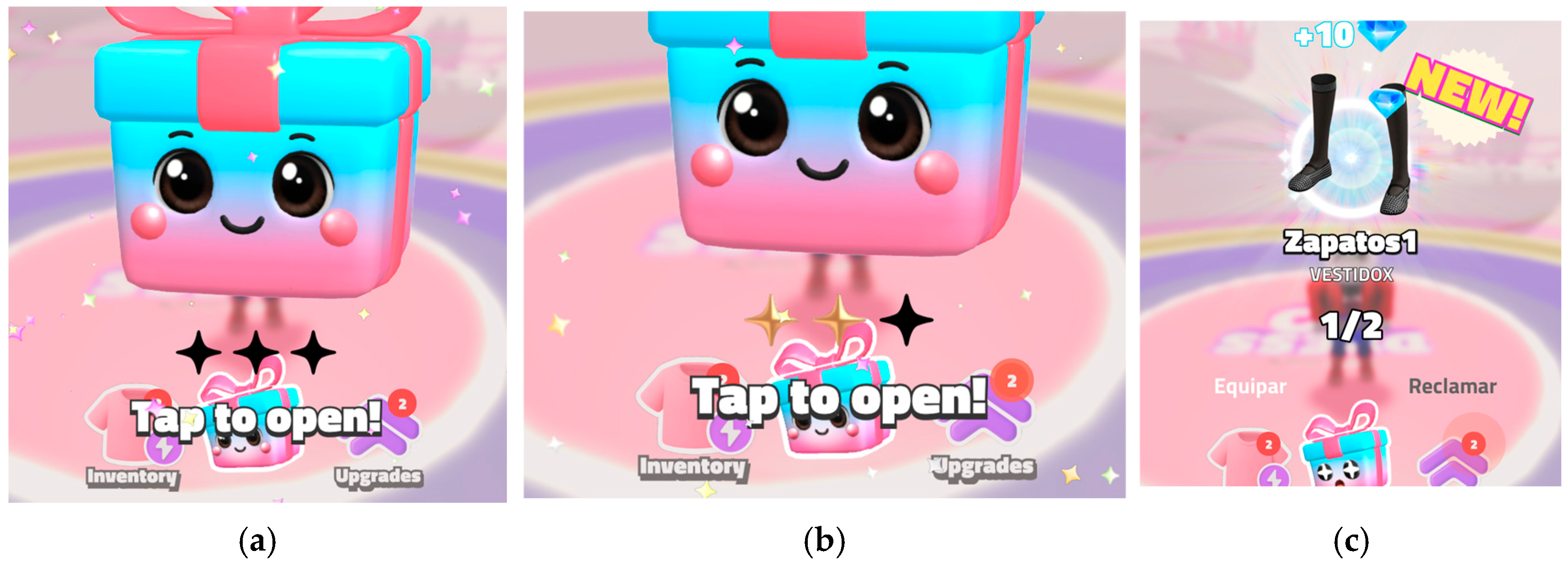
The first operational mechanism identified in the corpus is the staged transformation of randomized acquisition into a sensory event. The interface does not treat box opening as a simple transaction or a neutral delivery format for virtual items. Instead, it turns the act of opening into a small dramaturgy of anticipation. As shown in
Figure 3a–c, the unboxing sequence is staged as an interaction. The process begins with a tap-to-open prompt and continues through repeated input, visually reinforced by star-filling feedback before the reward is revealed. Observational notes recorded during gameplay indicate that this sequence was accompanied by roulette-like item cycling and reward feedback, even though the static screenshots can only capture selected moments of the interaction. The final result is then framed as an achievement rather than as a mere output.
This interaction then develops into a roulette-like reveal sequence in which items move across the screen and slow down before stopping. The deceleration prolongs suspense and makes waiting part of the reward structure itself. In analytical terms, the system displaces fashion acquisition from deliberate selection to managed uncertainty. The player is not primarily choosing what to wear but waiting to see what chance will grant.
The result is then framed as an achievement rather than as a mere output. The obtained item is presented with celebratory emphasis, novelty cues, and immediate reinforcement. Additional interface signals, including reward feedback and quantified markers attached to the item, strengthen the sense that opening has produced something both valuable and eventful. This combination of suspense, animation, and instant reward normalizes repetition. Opening again appears as a coherent next action because the interface has already defined acquisition as something to be experienced, not simply completed.
4.4. Mechanism 2: Rhythmic Retention and Quantified Progression
The second mechanism concerns retention through rhythm and quantified progression. The corpus shows that DressGO structures return not only through daily rewards, but through a more general regime of measurable activity in which opening becomes productive performance.
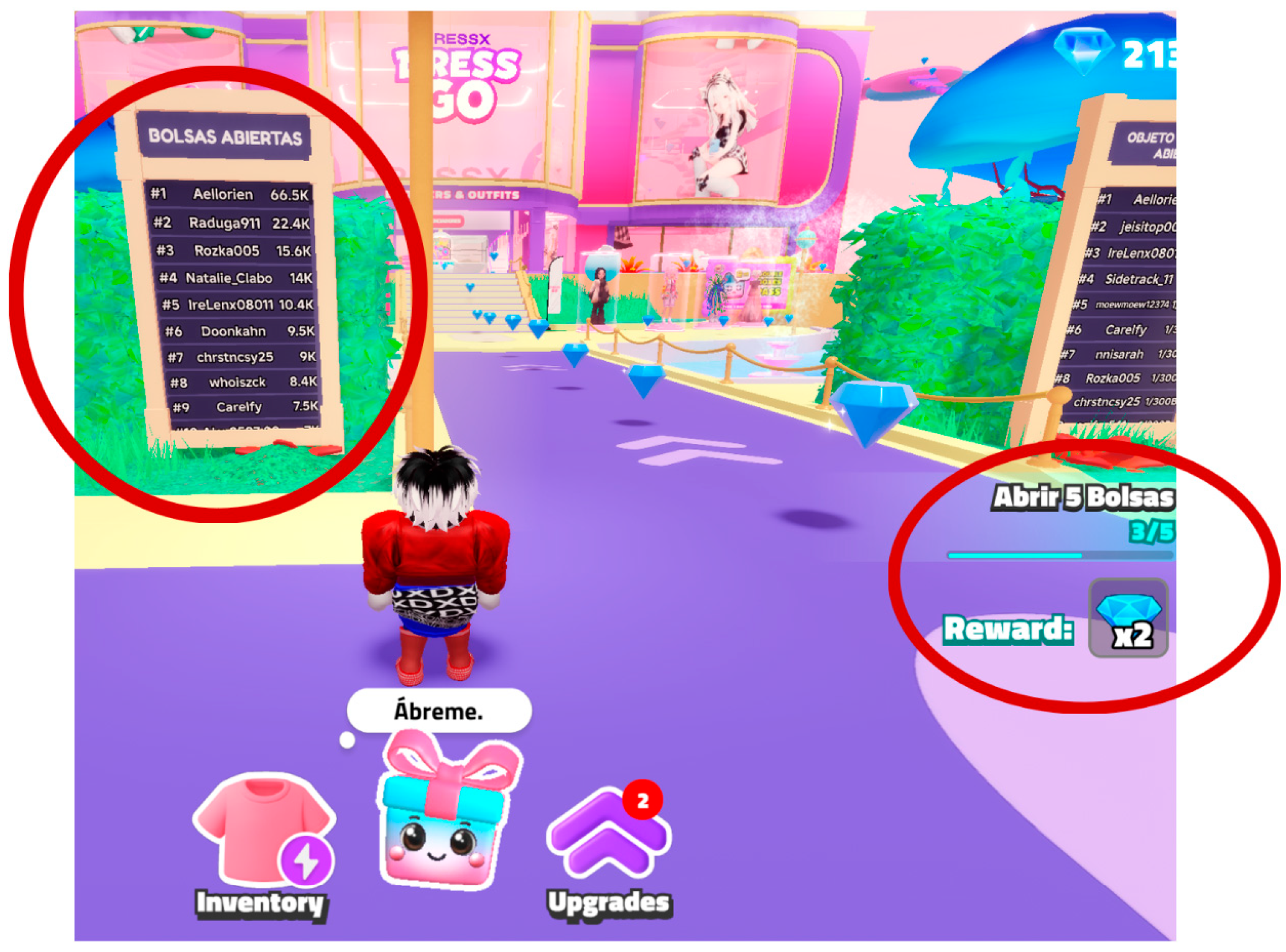
Figure 2 already introduces daily continuity as a routine, but
Figure 4 deepens this logic by placing the player within a quantified objective system. Here, the interface displays a concrete opening target, a progress bar, and a reward multiplier, turning repeated opening into an explicit metric of advancement.
This shift is significant because it changes the meaning of the action. Opening is no longer framed as an occasional or discretionary act. It becomes a task to be completed, a quota to be fulfilled, and a measurable contribution to progression. In the same visual environment, the persistent presence of gems and upgrade-related access points ties material advancement to economic visibility. Progress is therefore not only ludic; it is continuously linked to currency, accumulation, and improvement.
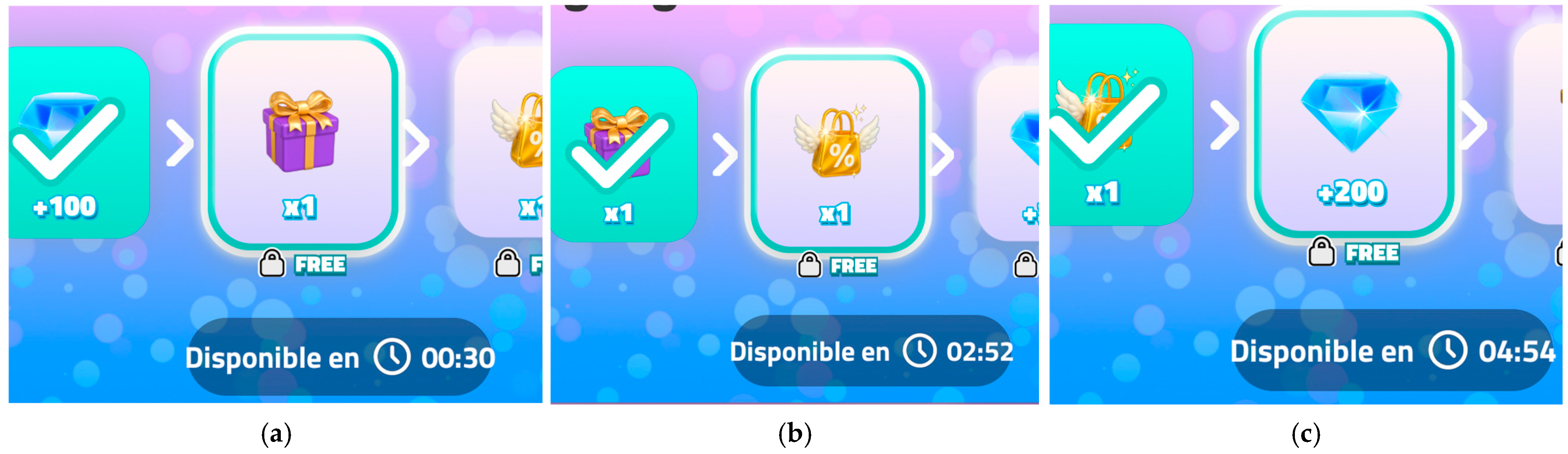
The appendix expands this mechanism by showing how the loop is first taught through low-friction reward access. A free-gift module marked by a prominent “FREE” button (see
Appendix A,
Figure A4, Capture A11) introduces recurrent claiming as a normal and low-cost behavior. This initial gratuity matters because it familiarizes the player with repetition before stronger forms of temporal regulation appear. In other words, the interface first teaches the routine as rewarding and convenient, and only later introduces the longer waits and optimization pressures that complicate that routine. Retention is thus built through a progression from ease to structure, not through a single isolated incentive.
4.5. Mechanism 3: Social Comparison and Cosmetic Status Through Visible Metrics
The third mechanism identified in the corpus is social comparison through the visibility of metrics, rarity, and cosmetic distinction. The screenshots show that DressGO does not keep acquisition private. Instead, it makes activity and rarity publicly legible, transforming virtual fashion into a socialized status system.
Figure 4 already contains a visible opening metric, which turns the volume of interaction itself into a sign that can be read socially. The interface thereby suggests that opening is not only something the user does, but something that can be counted, displayed, and implicitly compared.
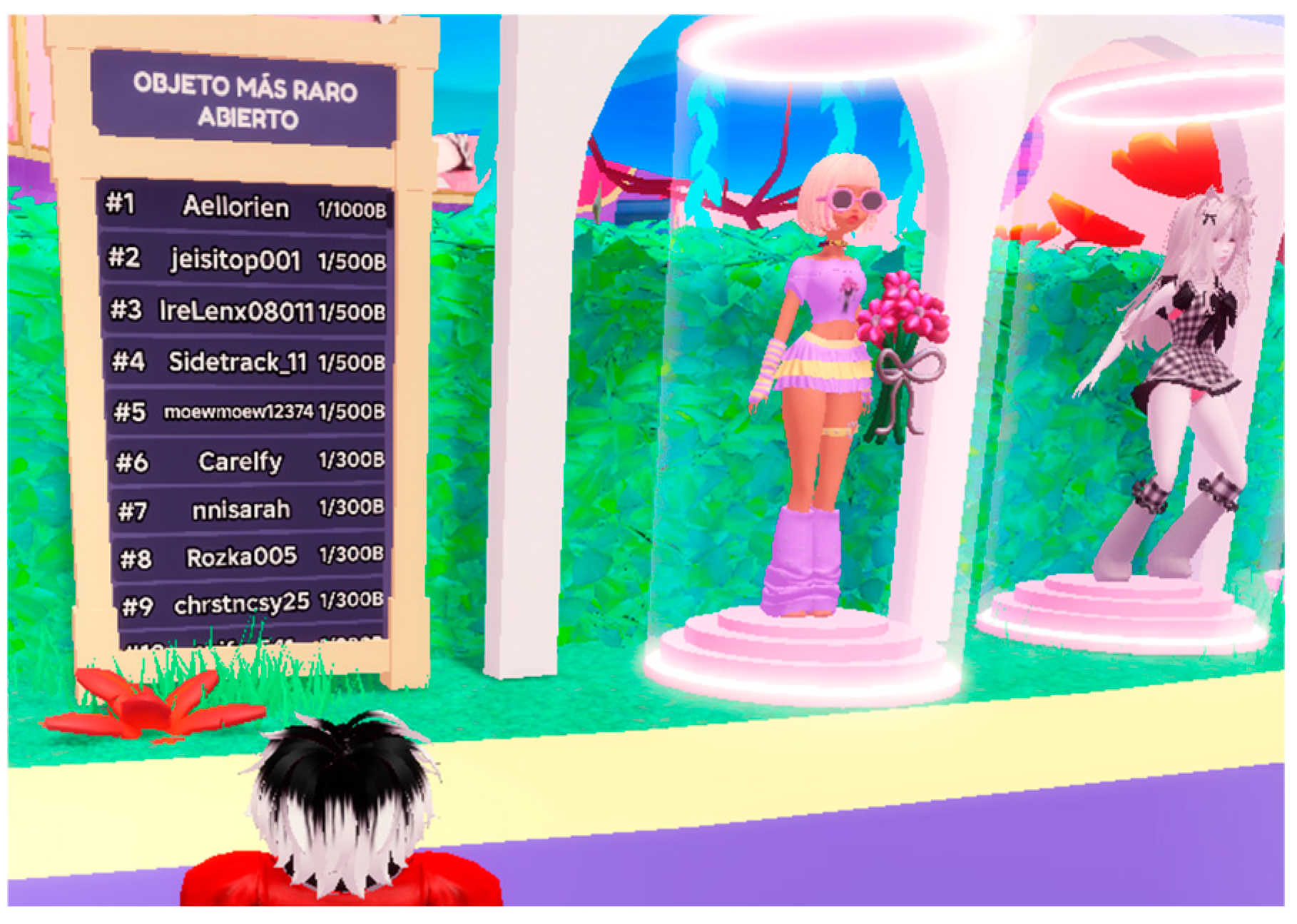
Figure 5 intensifies this logic by presenting rarity as publicly meaningful information. The interface highlights the rarest item obtained and displays extreme rarity ratios that exceed ordinary practical usefulness for immediate decision making. Their function is less informational than symbolic. They mark exceptionality, signal prestige, and reinforce the aspirational value of continuing to open. Rare items do not only matter because they are uncommon; they matter because the interface makes their uncommonness visible and interpretable.
Appendix materials reinforce this point by showing additional hierarchical categories that organize wardrobe value in visibly ranked terms. The wardrobe is therefore not presented as a neutral inventory. It is structured as a ladder of distinction. Under these conditions, sociability does not appear as a passive background context to fashion play. It functions as a comparative mechanism that organizes belonging and differentiation. Visibility turns acquisition into status, and status gives further meaning to repetition.
4.6. Mechanism 4: Purchase Orientation Through Optimization and Temporal Friction
The fourth mechanism concerns conversion pressure through the combined use of optimization and temporal friction. The corpus shows that monetization is not introduced only through explicit store access. It is woven into the interface as a practical solution to slowness, uncertainty, and interruption. Two complementary routes sustain this mechanism.
The first is optimization.
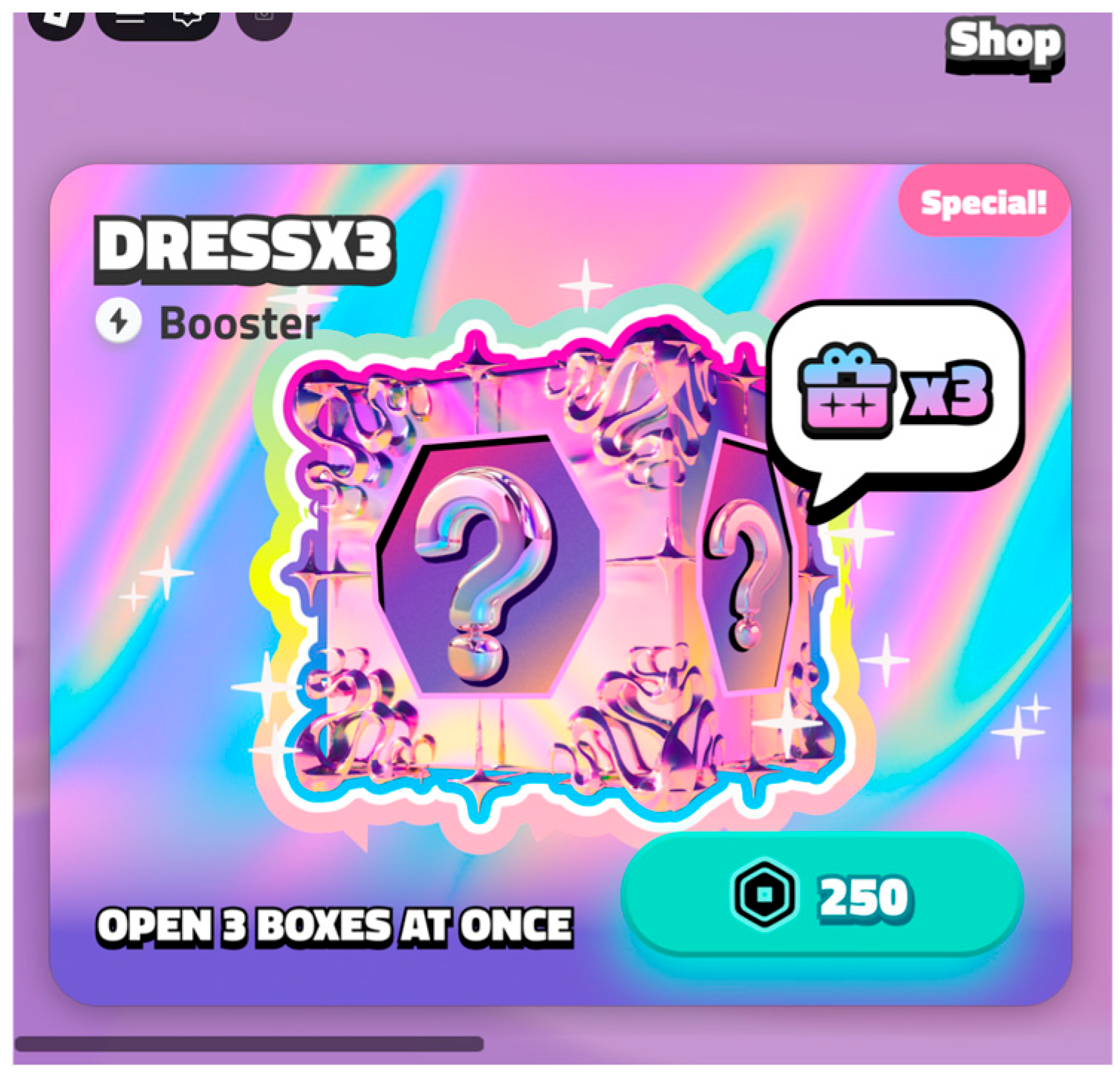
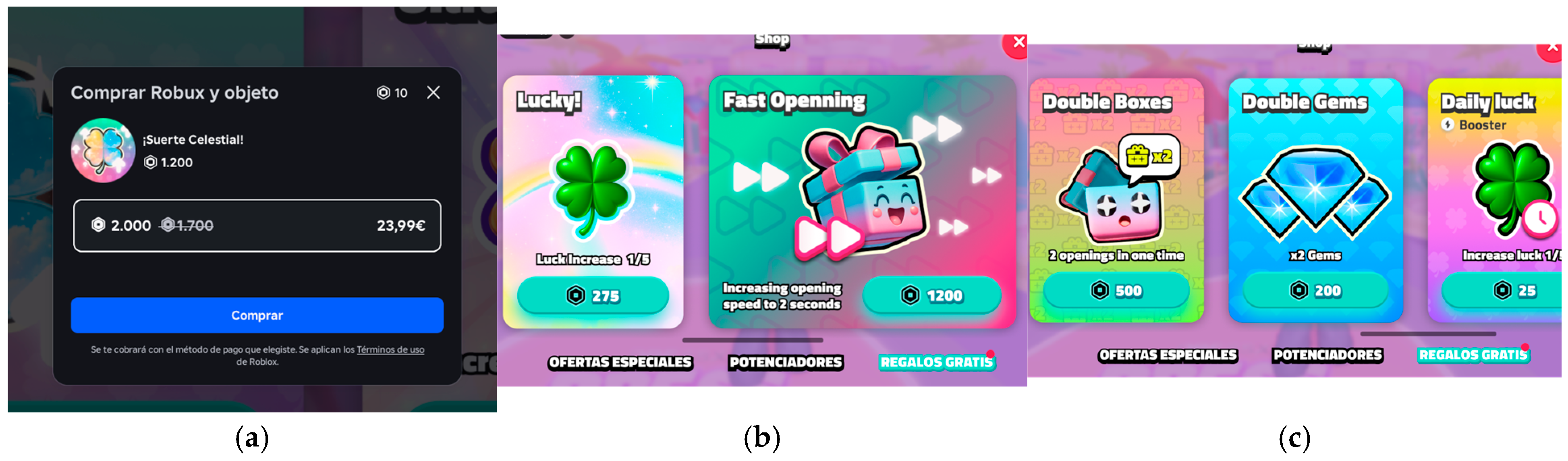
Figure 6 shows an offer to “OPEN 3 BOXES AT ONCE”, which sells speed and volume as operational advantages. The commercial proposition is not presented in strongly transactional language. Instead, it appears as efficiency. The user is invited to do more, faster, and with less delay.
Figure 7 extends this logic by offering probability improvement through luck boosters expressed in numerical or fractional terms. Here, the interface commercializes not only output volume, but the probability of achieving a better outcome. Rare fashion items are thus reframed as something that can be approached not just through patience or chance, but through paid optimization.
The second route is temporal friction. As shown in
Figure 8a–c, the free-gift module regulates access to recurrent rewards through a sequence of waiting states that increase over time. The interface first presents a short delay after reward collection, then extends the waiting period, and finally displays a longer timer that interrupts the rhythm of recurrent claiming. These waiting states turn time into a visible condition of access and help frame optimization, including payment-related options documented elsewhere in the corpus, as possible responses to delay.
This mechanism is reinforced by visual steering toward the store. The game does not treat the shop as a peripheral or optional area disconnected from play. Shop access is visually integrated into the routine interface and appears as part of the expected route through the system. Taken together with the booster/payment-route audit in
Appendix A, these features suggest that monetization in DressGO is organized less as a separate commercial interruption than as a set of embedded solutions: speed is framed as reducing delay, boosters as reducing uncertainty, and payment as relieving the inconvenience of waiting.
4.7. Cross-Mechanism Synthesis
When the 12 screenshots are read together, they reveal a stable and internally coherent loop. The point of entry frames luck as the core proposition and daily return as the expected rhythm. Unboxing transforms acquisition into a sensory event. Quantified tasks and progress markers turn repetition into measurable productivity. Visible rarity and public metrics turn obtained items into socially legible distinctions. Finally, timers, shop prompts, multi-open offers, and boosters frame payment-related options as possible response to slowness, uncertainty, and aspirational pressure.
The corpus therefore shows that DressGO does not isolate commerce from play. It embeds monetization cues in the ordinary structure of progression. Spending-related prompts are not presented primarily as a dramatic decision, but as a low-friction adjustment to an already established loop. This is important because it helps explain how virtual fashion consumption is normalized at the level of interface architecture: it is organized as part of routine play, continued momentum, and the maintenance of cosmetic status.
Overall, these findings indicate that DressGO operates as a unified persuasive interface ecology in which cosmetic acquisition, repetition, social visibility, and monetization cues are mutually reinforcing.
These four mechanisms provide the analytical basis for the section that follows. Staged unboxing informs the reading of randomized acquisition and uncertainty; rhythmic retention grounds the discussion of habit and return; rarity displays and public metrics support the interpretation of social comparison and cosmetic status; and boosters, multi-open offers, and timers provide the empirical basis for addressing price legibility, temporal friction, and payment-oriented optimization.
5. Discussion
5.1. DressGO as an Immersive Fashion Commerce Environment
The findings suggest that DressGO should not be understood simply as a fashion-themed game with optional monetization layered on top. Rather, it operates as an immersive commerce environment in which access to virtual fashion is reorganized around chance, habitual return, and public visibility. In this sense, the case extends research on gamification and digital consumption by showing that commercial persuasion can be embedded in progression itself, rather than attached to a separate moment of checkout or explicit advertising [
1,
2,
3]. What the player encounters is not a stable catalog of garments to browse and select, but a playable system in which opening, waiting, comparing, and optimizing become the ordinary conditions of acquisition.
This shift is especially important in relation to virtual fashion. As Park and Chun argue, digital fashion is better understood as a practice of experimentation, collection, display, and circulation than as a mere digital copy of clothing [
5]. The DressGO case supports that view, but also qualifies it. The wardrobe remains a medium of self-expression, yet the route to that wardrobe is not neutral. It is structured by a commercial architecture in which the item’s meaning depends not only on how it looks, but also on how it is obtained, how rare it is, and how publicly its rarity can be recognized. In that sense, the game transforms the wardrobe into both an expressive repertoire and a retail infrastructure.
The results also help clarify why immersive commerce is an especially useful concept here. DressGO does not isolate consumption from play; it folds consumption into the ordinary rhythm of play itself. Purchase prompts are not framed as dramatic or exceptional commercial decisions. Rather, the interface presents them as practical adjustments within an already familiar loop of return, progression, and social visibility. This is precisely why the case matters for youth-oriented digital commerce research: monetization becomes ordinary not because it is hidden, but because it is repeatedly embedded in the interface routines of play.
5.2. From Individual Features to a Persuasive Interface Ecology
Taken in isolation, the four mechanisms identified in
Section 4 may look familiar. Unboxing, daily rewards, rankings, boosters, and timers are all well-established features of live-service environments. What becomes more visible through the DressGO corpus, however, is their cumulative logic. Staged unboxing transforms acquisition into a small affective spectacle; daily rewards and quantified tasks stabilize return; rankings and rarity displays give cosmetic items public legibility; and accelerators, probability boosters, and waiting timers recode payment as an efficient response to delay or uncertainty. In other words, the system does not merely present fashion items as objects of acquisition; it organizes continuity as a commercially meaningful condition of play.
This cumulative reading helps move the discussion beyond a checklist approach to persuasive design. What matters is not only that the interface includes randomized rewards, or daily tasks, or visible rarity, but that these elements reinforce one another. Rhythm sustains habit, scarcity sustains aspiration, and sociability sustains comparative value. Once these elements are connected, monetization no longer appears as a foreign intrusion into play. It becomes the practical route through which players maintain momentum, reduce friction, or pursue status.
This interpretation is consistent with prior work on randomized monetization and persuasive systems. Drummond and Sauer frame paid random rewards as psychologically comparable to gambling under certain conditions [
6], while Kim et al. show that loot-box research has repeatedly linked these mechanics to problematic gaming- and gambling-related indicators [
23]. Sanmartín et al. add a more affective layer by documenting guilt, distress, and perceived loss of control associated with loot-box purchasing, especially in adolescent samples [
7]. At the same time, Roblox-specific evidence provided by Song et al. shows that child-friendly games can combine UI manipulation, obscured purchase information, and social pressure in ways that normalize spending [
25]. Read alongside these studies, DressGO appears less as an anomaly than as a compact and highly legible example of a broader design pattern.
What makes the case distinctive is the way these logics are translated into a virtual fashion setting. Cute aesthetics, wardrobe aspiration, and cosmetic self-expression soften the commercial harshness of chance-based acquisition. The persuasive force of the interface does not depend on aggressive visual pressure alone. It depends on making the loop feel playful, stylish, and socially meaningful.
5.3. Discussion-Based Triangulation of the Four Mechanisms
The four mechanisms identified in DressGO can be read more clearly when placed in dialogue with the external evidence reviewed earlier in the article. This triangulation does not mean that prior studies or institutional responses are treated as direct evidence of DressGO’s effects. Rather, they help situate the observed interface mechanisms within a wider field of concern around randomized monetization, youth-oriented persuasive design, digital fairness, and platform trust.
Table 5 summarizes this relationship by connecting each DressGO mechanism with its primary vector, case evidence, external corroboration, and key implication.
Seen through this triangulation, the four mechanisms identified in DressGO are best understood not as separate interface features, but as components of a persuasive ecology. The game first generates anticipation, then stabilizes repetition, then socializes cosmetic value, and finally introduces payment as a low-friction answer to delay or uncertainty. This sequencing matters because it shows how monetization is prepared long before the user reaches an explicit purchase prompt.
5.4. Theoretical Implications
The article makes three main theoretical contributions:
First, it contributes to immersive commerce research by showing that youth-oriented virtual retail can operate through an interactive environment in which purchase is displaced into progression loops. This pushes the discussion beyond storefront-based models of e-commerce and toward platform-mediated systems where attention, repetition, and symbolic display are themselves commercial resources.
Second, the study contributes to work on human–computer interaction and persuasive interface design by showing that gamified commercial pressure is often relational rather than isolated. The problem is not only that a game contains a timer, a reward, or a ranking. The problem is how such elements are combined into a single path that makes spending appear timely, useful, and socially justified. This is where the present case speaks directly to debates on dark patterns and manipulative design [
8,
9]. The most relevant question is not whether an individual feature seems acceptable on its own, but whether the surrounding design architecture may produce cumulative pressure on user conduct.
Third, the article extends the discussion of fashion as play. Park and Chun emphasize the cultural and expressive dimensions of digital dressing [
5], and the DressGO case confirms that virtual fashion is deeply tied to play, experimentation, and identity performance. At the same time, the findings show that fashion as play can be commercially reconfigured through probabilistic access and retention-based design. In DressGO, the wardrobe remains expressive, but that expressiveness is governed by access architecture. Fashion is not only played with; it is operationalized as a progression outcome.
5.5. Practical Implications for Digital Fairness and Responsible Interface Design
From a practical standpoint, the mechanisms identified in the results raise three connected issues for designers, platforms, and brands.
The first is cost legibility. When randomized rewards, layered currencies, multi-open offers, and probability boosters coexist within the same interface, the economic meaning of each action becomes harder to interpret, especially for younger users.
The second is temporal friction. The waiting-timer sequence documented in the corpus shows how delay can become part of the acquisition process. When this friction is paired with paid acceleration, payment is framed as a way to restore momentum rather than as a separate commercial decision.
The third is comparative exposure. Rankings, rarity displays, and public metrics do not simply inform; they make cosmetic outcomes visible and comparable, connecting virtual fashion value to status visibility and social comparison.
Taken together, these design elements connect the empirical findings to broader concerns about transparency, digital fairness, platform trust, and responsible interface design.
These concerns resonate with the institutional responses reviewed in
Section 2. The FTC’s action against HoYoverse, ICPEN’s 2025 sweep, Australia’s classification reform, the European Parliament’s 2025 report, and PEGI’s 2026 updated criteria all address different parts of the same problem field: youth exposure to randomized monetization, opaque pricing structures, urgency design, and reward-based return systems [
29,
33,
34,
35,
36]. The DressGO case does not collapse these frameworks into a single legal claim, nor does it imply that the game is equivalent to each cited enforcement example. What it does suggest is that youth-oriented fashion games belong within the same governance conversation.
For developers and brands, the implication is not that all gamification is inherently illegitimate. Rather, youth-oriented immersive commerce requires stronger standards of disclosure and proportion. Responsible design in this space would include clearer communication of odds, more direct price legibility, reduced reliance on escalating wait structures, and greater caution in linking social prestige to paid acceleration or high-volume opening. In practical terms, the question is no longer whether virtual fashion can be monetized, but how it can be monetized without making uncertainty, friction and payment-related cues do most of the persuasive work.
5.6. Interpretive Boundaries
These findings should nevertheless be interpreted with appropriate caution. Because the study is based on interface analysis rather than participant interviews, player activity logs, or spending data, it cannot determine how players actually interpret these mechanics, how often they spend, or whether they experience them as harmful in consistent ways. The article therefore does not claim to demonstrate direct effects on player conduct or clinical outcomes.
What it can show, however, is that the interface arranges a set of preferred pathways through which spending-related options are made plausible and convenient within the game’s symbolic economy. That level of analysis is valuable precisely because it captures the design architecture that precedes observable player action. It identifies the commercial conditions that connect youth-oriented play with monetized cosmetic aspiration.
The discussion suggests that DressGO is best understood not simply as a fashion-themed Roblox game, but as a persuasive retail environment that aestheticizes uncertainty, structures repetition and gives cosmetic value a social dimension. In doing so, it makes immersive commerce visible in one of its clearest contemporary forms: a wardrobe acquired not through straightforward choice, but through a managed process in which chance-based acquisition is reinforced by repeated return, while social comparison and payment-related options shape access to desirable items.
6. Conclusions
DressGO offers a revealing case of how youth-oriented immersive commerce can be organized through the ordinary grammar of play. Rather than presenting virtual fashion acquisition as a direct and isolated consumer choice, the game embeds monetization cues within a broader architecture of progression, repetition, visibility, and optimization. In this environment, virtual fashion is not simply selected; access is structured through opening, waiting, comparison, and optimization within interface structures that connect play to payment-related possibilities.
The analysis has shown that this architecture operates through four interrelated mechanisms. Staged unboxing turns acquisition into a sensory event structured by anticipation, repeated action, and reward feedback. Daily rewards, quantified tasks, and progress indicators stabilize return and make repetition feel productive. Rankings, rarity displays, and public visibility transform virtual items into socially legible markers of distinction and cosmetic status. Accelerators, probability boosters, store prompts, and increasing waiting timers frame payment-related options as practical responses to delay, uncertainty, and slowed progression. These mechanisms do not operate in isolation; together, they show how monetization cues in DressGO are integrated into the ordinary rhythm of play.
The article contributes to three related areas of research. For immersive commerce, it shows how youth-oriented virtual retail can organize consumption through progression systems rather than through straightforward storefront logic. For interface design and human–computer interaction research, it demonstrates how persuasive commercial pressure can emerge cumulatively from the interaction of rewards, rarity cues, timers, and optimization pathways. For virtual fashion studies, it reframes the wardrobe not only as a medium of self-expression, but also as a platform-mediated infrastructure of symbolic value, comparison, and commercial differentiation.
The case also has broader practical and normative implications. It suggests that randomized access, layered progression, and visible rarity should not be treated only as engagement features in youth-oriented digital environments. They also raise questions about transparency, price legibility, digital fairness, and responsible interface design. When payment-related options are framed as the most convenient response to friction and uncertainty, the boundary between playful participation and conversion-oriented design becomes harder to sustain. For that reason, immersive fashion commerce should be assessed not only in terms of creativity and engagement, but also in terms of proportionality, clarity, and protection for younger users.
6.1. Limitations
Several limitations should be acknowledged:
First, the empirical corpus is limited to 12 screenshots selected from an initial pool of 34 screenshots collected across six gameplay sessions in January 2026. This provides a focused and traceable snapshot of the game at a specific moment, but it does not allow the study to establish whether the same mechanics, offers, timers, or configurations remain stable over time. As with many live-service environments, interface arrangements may change through updates, events, or commercial adjustments.
Second, the study is based on observable interface evidence and does not include access to internal system data. It therefore cannot verify exact drop probabilities, full rarity parameters, segmentation strategies, conversion metrics, or spending figures. The article is consequently not designed to estimate prevalence, calculate economic performance, or model the commercial efficiency of the system.
Third, the study does not include direct evidence from players. No interviews, questionnaires, ethnographic follow-up, or experimental measures were conducted. For that reason, the article does not infer psychological effects, spending motivations, or behavioral consequences among young users. Its contribution is instead located at the level of design architecture: it identifies how the interface may organize spending-related pathways as routes to progression and status, without claiming to measure the user outcomes of that process.
Finally, because the analysis relies on screenshots and observational records, it cannot capture every possible variation in a dynamic system. Rotating banners, temporary events, limited-time offers, or changes in shop layout may alter the experience in ways that a bounded visual corpus cannot fully preserve. Although the appendix-based coding matrix improves traceability, interpretation remains qualitative and necessarily shaped by the conceptual framework adopted in the article.
6.2. Future Research Directions
Comparative analysis across titles and platforms would also be valuable. Comparing DressGO with other fashion games on Roblox, or with mobile fashion titles built around collection and monetized progression, would help clarify which design patterns are case-specific and which belong to a broader commercial trend in youth-oriented virtual fashion environments.
Future studies could combine interface analysis with behavioral logs, spending data, app-store or platform disclosures, and regulatory documentation in order to build a more layered account of persuasive monetization. Mixed-method approaches would be particularly useful for connecting observable design features with user behavior and governance concerns.
Finally, additional research could examine the role of brands within these systems more directly. Because DressGO links virtual fashion acquisition to branded content, future work could explore how brand partnerships interact with rarity, visibility, and randomized access, and whether branded virtual goods intensify aspirational value or alter perceptions of legitimacy and trust.
Overall, DressGO provides a compact but analytically productive example of how youth-oriented immersive commerce can operate through unboxing, return, comparison, and optimization. The case shows how virtual fashion retail can converge with persuasive interface design in ways that are commercially structured, culturally meaningful, and increasingly relevant to ongoing debates on digital fairness, platform trust, and responsible design.