1. Introduction
Agricultural supply chains inherently suffer from severe supply uncertainty, driven primarily by stochastic harvest yields [
1,
2] and significant quantity deterioration during logistical distribution [
3]. These unpredictable disruptions frequently lead to supply–demand mismatches, elevated transaction costs, and heightened operational risks for downstream buyers [
4]. To mitigate these negative impacts, formal contracts are widely utilized; however, they often incur high enforcement costs and struggle to adapt to rapid market changes [
5,
6]. Consequently, trust has long been recognized as a critical informal governance mechanism that complements formal contracts in stabilizing trading relationships [
7,
8,
9].
The rapid development of agricultural e-commerce platforms (such as Hema Fresh or Zfresh) provides a new operational paradigm for studying trust-based governance [
10]. In traditional offline agricultural supply chains, transactions are highly fragmented and information asymmetry is pervasive, making it difficult to continuously quantify or enforce “trust” [
11]. In contrast, e-commerce platforms feature high-frequency transactions and fully traceable digital footprints. This digital visibility enables platforms to continuously capture historical delivery data and implement dynamic, data-driven reputation evaluations, which serve as automated, institutional governance tools to coordinate decentralized participants [
12]. Furthermore, because fresh food e-commerce relies heavily on rapid delivery and strict quality commitments to online consumers, any upstream fulfillment failure immediately triggers severe stockout penalties, making reliable supply effort coordination critical [
13]. Despite its practical relevance, existing operations management research lacks a formal mathematical framework to evaluate how such an endogenous trust mechanism interacts with short-term operational decisions and long-term capacity investments.
To bridge this gap, our paper constructs a stochastic two-echelon supply chain model incorporating an endogenous trust-based punishment mechanism tailored to an e-commerce platform setting. We examine an e-commerce retailer) and an upstream supplier under random supply conditions. The retailer’s trust in the supplier continuously updates based on historical fulfillment ratios and directly determines the baseline delivery commitment threshold for the next cycle. If the realized delivery falls short of this threshold, the supplier incurs a financial penalty, linking reputation with economic incentives. To hedge against penalty risks, the supplier can invest in variable supply efforts (e.g., cold-chain improvements or smart-farming technologies), creating an analytical trade-off between variable input costs and reputation preservation. Building upon this baseline, we extend our framework to a dual-channel structure by introducing a higher-cost but capacity-stable backup supplier, capturing the multi-sourcing dynamics common among major e-commerce platforms. Furthermore, we develop a multi-period stochastic dynamic programming model to analyze the long-term asymptotic behavior and stability of this trust-governed system.
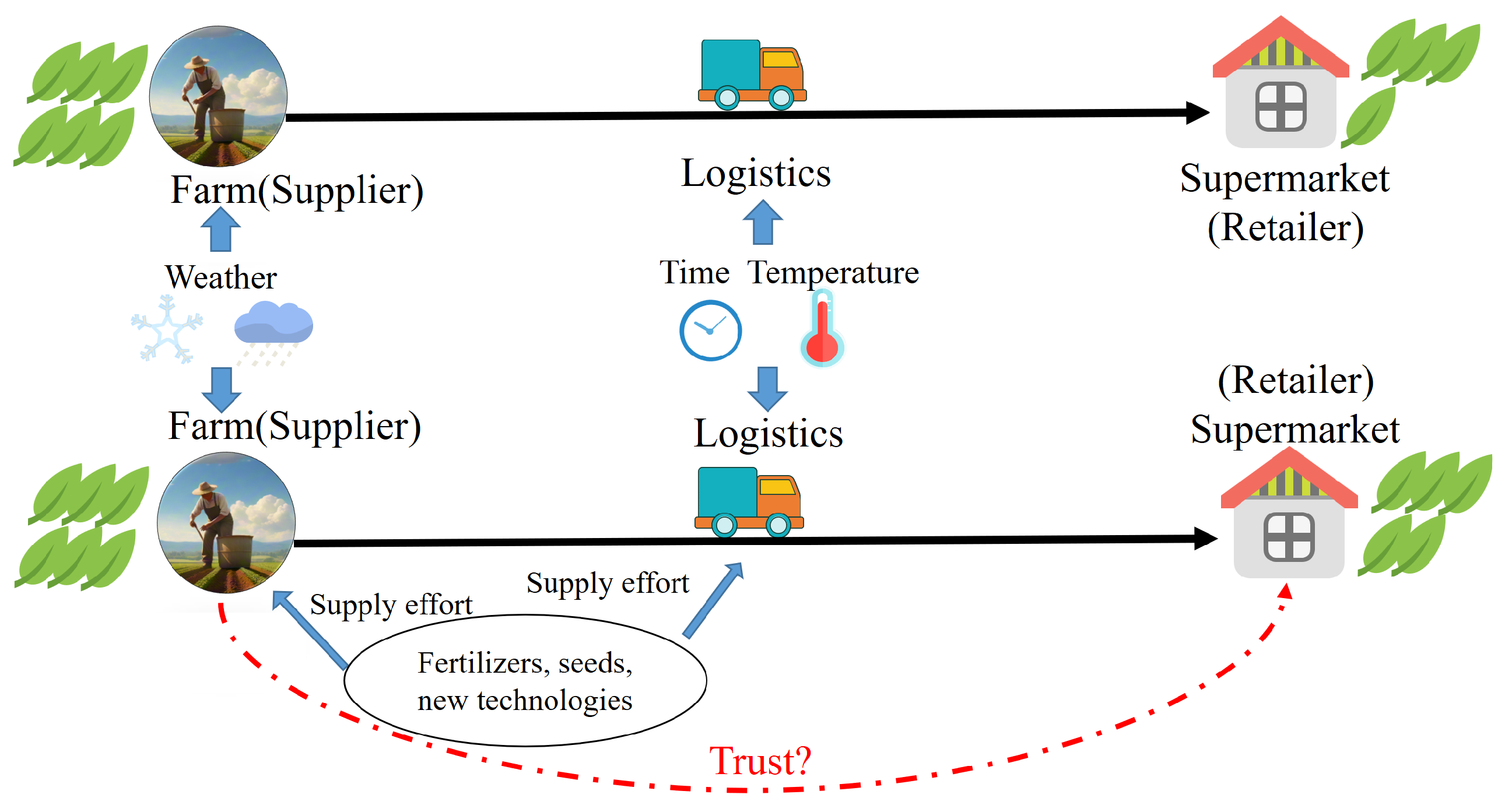
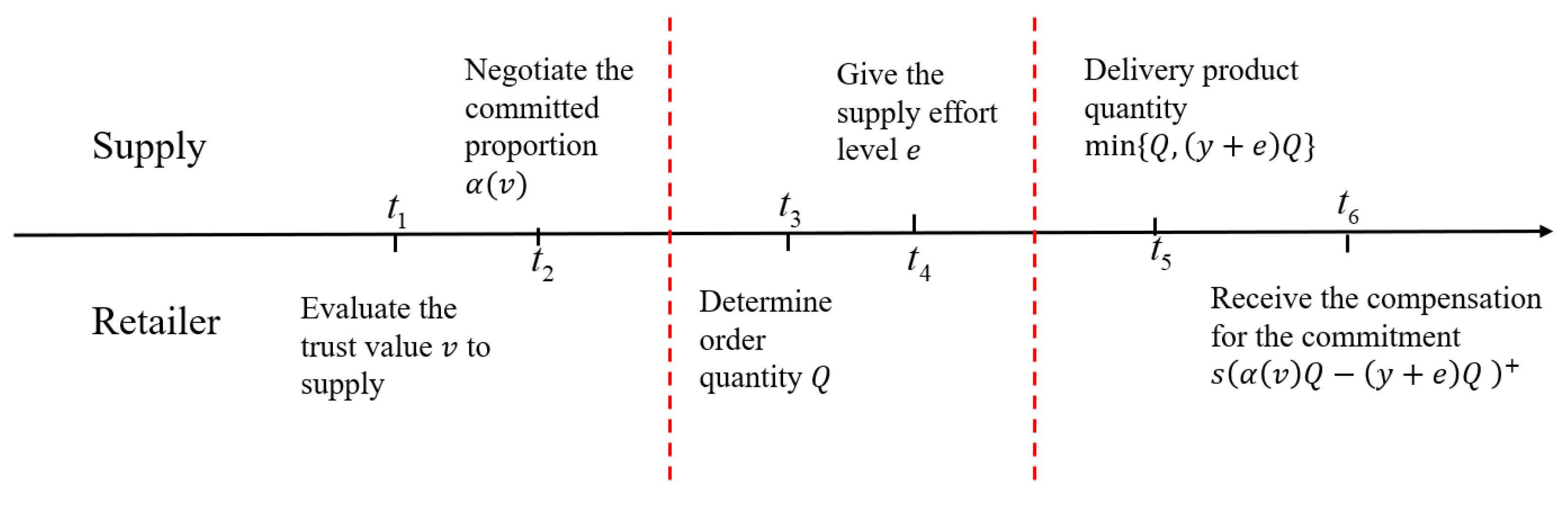
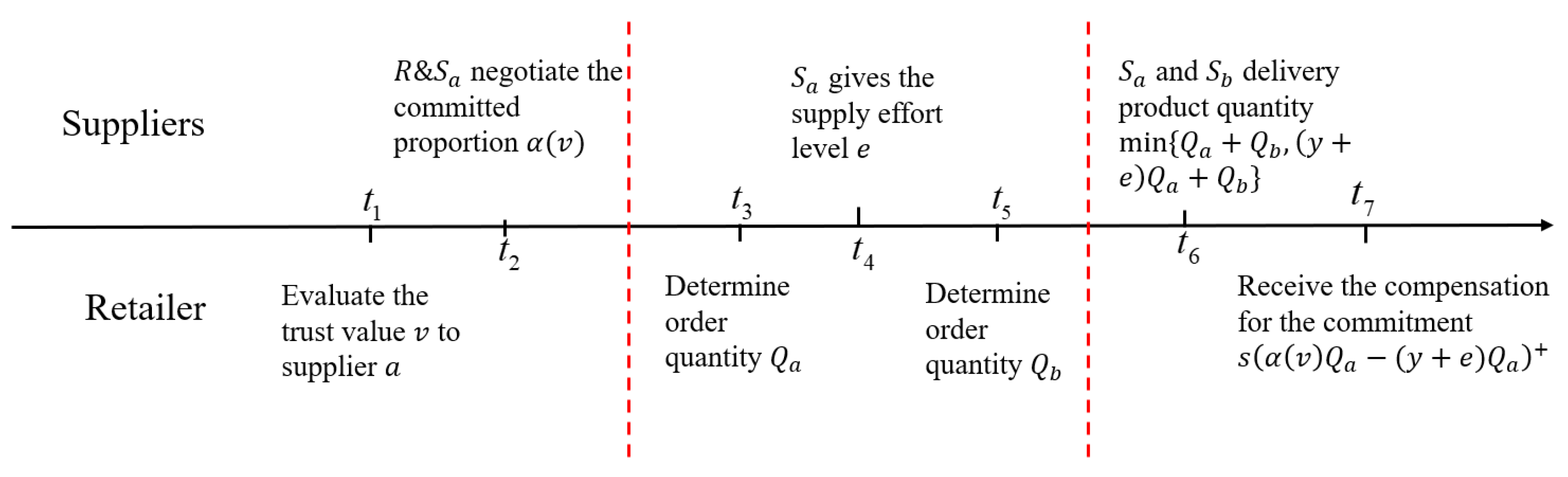
To visually encapsulate the interaction logic and decision sequences described above, the conceptual architecture of the trust-governed agricultural e-commerce supply chain investigated in this paper is structurally illustrated in
Figure 1.
To systemically evaluate the efficacy of this governance framework, this study primarily aims to resolve the following core research questions: (1) To mitigate supply uncertainty, what are the supplier’s optimal supply effort and the retailer’s purchasing plan? (2) What are the strategic choices of suppliers and the retailer under decentralized, centralized, and dual-channel decisions? (3) How does the trust relationship between suppliers and the retailer affect the decision-making and performance of the above supply chain?
By addressing these questions, the main theoretical and practical contributions of this paper are organized as follows. First, we develop a dynamic framework in which trust evolves endogenously based on observable fulfillment performance, thereby transforming trust from a latent relational concept into a state variable embedded in stochastic supply chain optimization. Second, we characterize the joint interaction between ordering decisions, supplier effort, and trust-based contractual constraints, revealing a non-trivial trade-off between coordination efficiency and effort incentives. Third, we extend the model to a dual-sourcing setting and show that trust reshapes sourcing allocation by altering perceived reliability across suppliers, generating a trust-mediated substitution effect. Fourth, we demonstrate that repeated interactions lead to stable supplier effort levels in the long run, while dual sourcing mitigates trust-induced moral hazard and improves supply chain stability.
The rest of this paper is structured as follows.
Section 2 reviews the literature on supply uncertainty, supply chain trust, and supply chain coordination.
Section 3 gives a detailed model description and hypothesis, and analyzes decisions made by the retailer and supplier under a decentralized supply chain and a centralized supply chain, respectively.
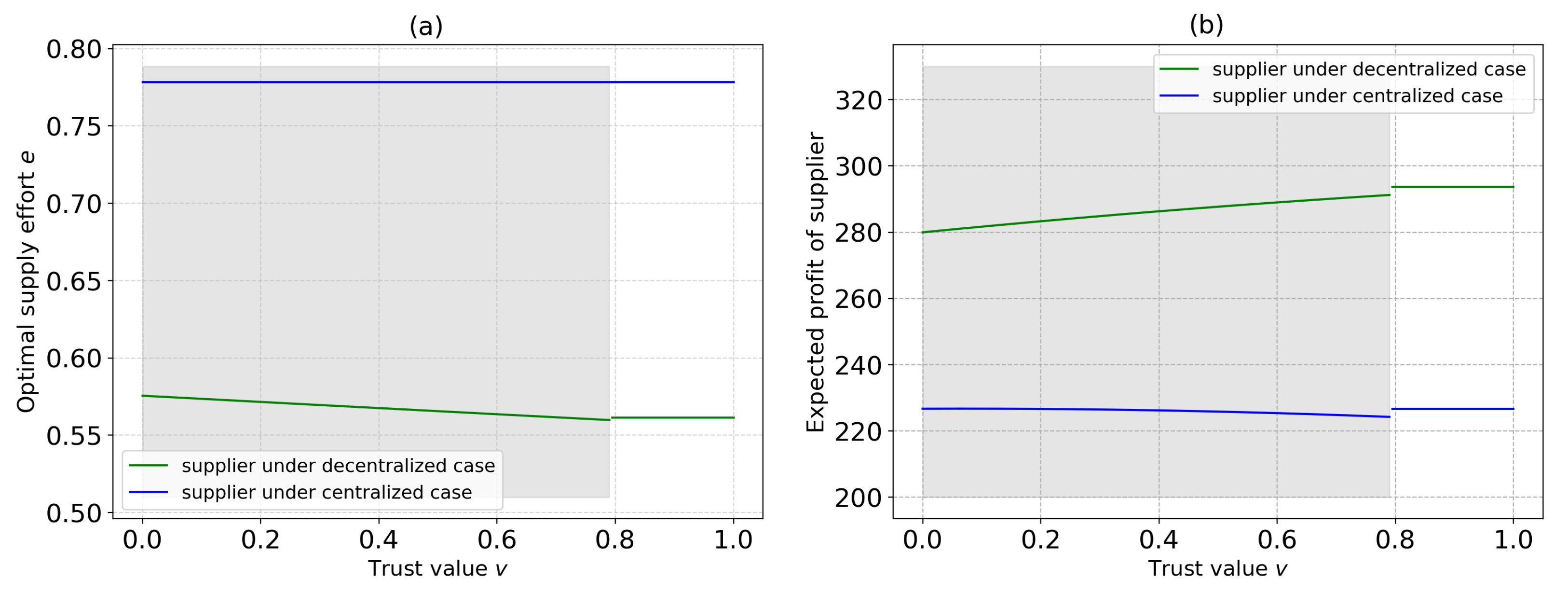
Section 4 analyzes the influence of trust value on optimal decisions by obtaining the numerical results of optimal decisions.
Section 5 provides a summary of this paper and the future research prospect. See the
Appendix A,
Appendix B,
Appendix C,
Appendix D and
Appendix E for relevant proof and supplementary analysis of this paper.
2. Literature Review
This paper is positioned at the intersection of three main research streams: supply uncertainty in agricultural supply chains, supply chain coordination mechanisms under uncertainty, and trust-based governance in supply chain management, while each stream offers valuable foundational insights, existing models typically analyze these dimensions in isolation, leaving the conceptual feedback loops between endogenous performance-dependent trust and stochastic operational scaling largely unexamined.
Supply uncertainty remains an inherent vulnerability in agribusiness operations, primarily driven by volatile weather conditions, biological growth variations, and post-harvest quantity deterioration during logistics distribution [
14]. Within the quantitative operations management literature, this supply-side friction is systematically formalized using the random supply paradigm, which conceptualizes the realized delivery or harvest quantity as a stochastic multiplicative variable scaling directly with the order or initial input size [
15]. A prominent line of inquiry employs proportional random yield distributions to capture unreliable production and procurement processes facing downstream trading entities [
16,
17]. For instance, models frequently utilize uniform or general stochastic scaling factors to simulate how a supplier’s planned capacity translates into highly volatile realized units [
18,
19]. However, this established paradigm operates under a restrictive transactional assumption: the baseline parameters governing supply reliability are treated as exogenous constants, failing to capture how downstream buyers continuously recalibrate their procurement expectations based on high-frequency operational execution.
To mitigate the adverse consequences of random supply—such as severe supply–demand mismatches and inflated transaction costs—a substantial body of literature focuses on supply chain coordination under uncertainty through contract design. Traditional approaches leverage risk-sharing mechanisms, such as revenue-sharing and buyback contracts, to align decentralized incentives and motivate upstream suppliers to expand their production efforts despite supply disruptions [
6,
20]. To establish a more robust cushion against catastrophic supply shocks, researchers have expanded single-channel baselines into multi-sourcing and dual-channel sourcing frameworks. This stream extensively evaluates the strategic integration of a reliable but premium-priced backup supplier to hedge against the random disruptions of an unreliable primary channel [
21,
22]. Optimal volume split and sourcing allocations in these dual-channel environments depend heavily on the correlation of random supplies, supplier capacity limits, and effective landed costs [
16,
23]. Nevertheless, this stream focuses almost exclusively on physical capacity hedging and mathematical volume allocation, leaving the informal relational governance that underpins continuous contracting completely unmodeled.
Parallel to formal operational contracts, behavioral operations research emphasizes trust-based mechanisms as critical informal governance tools that complement or substitute for high-enforcement formal agreements in stabilizing trading relationships [
7,
9]. Early analytical formalizations utilize behavioral preference coefficients or “cheap talk” paradigms to define trust as a latent parameter scaling relationship synchronization, supplier compliance, or consumer confidence [
24,
25]. In decentralized buyer–supplier setups, these soft parameters translate into behavioral reliance factors that smooth joint demand forecasting and capacity reservations under cost-sharing schemes [
26,
27]. Concurrently, researchers acknowledge the dual nature of relational governance, cautioning that excessive, unmonitored trust can breed organizational blind spots, thereby escalating supplier opportunism and structural inefficiencies [
28,
29]. Given the multi-period nature of procurement, recent work transitions from static coefficients toward mathematical trust-updating models to track time-varying reputation shifts across sequential transactions [
30,
31]. However, these dynamic trust frameworks generally abstract away from the physical logistics of supply chains. Stochastic supply degradations, multi-channel portfolio switching, and capacity effort investments are rarely embedded as core state variables, rendering the operational consequences of trust updates invisible.
A systematic cross-examination of these three streams reveals a major theoretical dichotomy: while traditional agricultural supply and coordination models provide sophisticated analytical tools for capacity hedging, they treat the relationship between trading partners as a static transaction parameter. Conversely, behavioral trust governance frameworks capture dynamic relational learning but omit the stochastic physical physics—such as random supply degradation, multi-channel effort coordination, and capacity limits—inherent to fresh agricultural delivery. Our paper explicitly bridges this gap by embedding trust not as an exogenous preference coefficient, but as an endogenous operational state variable that updates dynamically based on observable fulfillment performance. Unlike standard dual-sourcing models, our backup channel transitions from a simple volume buffer into a strategic relational discipline tool. Unlike standard behavioral models, we mathematically map the “dark side” of trust as a localized moral hazard that crowds out supplier effort inputs, establishing the long-term asymptotic convergence of the trust-governed system. The precise positioning of this study against these representative streams is summarized in
Table 1.
4. Multi-Period Extension Model
In the preceding section, we examined the optimal supply effort level and order quantities for a single period in both the basic and dual-channel cases. When it comes to decentralized decision-making, we perform a dynamic analysis involving the parameter v to ascertain the optimal decision. However, in the real world, the retailer’s trust in the supplier fluctuates based on order delivery outcomes. Therefore, we will investigate the impact of trust values on optimal decision-making in a multi-period context.
In multi-period trading, trust is an endogenous variable, which is obtained from the weighted average of trust in the previous trading and historical trading data. Let
represent the supply rate of an order in period
, where
indicates full supply at the time of delivery. The supplier invests an effort level
to enhance the supply level. Consequently, the actual supply rate of the order is the sum of supply rate
and supply effort level
, expressed as
. Additionally, the retailer’s trust in the supplier is influenced by this actual supply rate. We use the scalar
to denote the retailer’s trust value in the supplier at the start of period
t. Trust evolves as an exponentially smoothed moving average of the actual supply rate. The trust at the end of period
t (and the beginning of
) is
and
for all
t under the assumptions that the initial trust value satisfies
and
. In particular,
if
, and
if
. The constant parameter
characterizes the sharpness of the retailer’s memory and is henceforth referred to as market memory. A higher value of
corresponds to retailers with longer-lasting memories. By iterating Equation (
15), we have
This dynamic equation suggests that the actual supply rate per period has a persistent but diminishing impact. If
, then
is lower by
compared to the case when
, where
.
From
Section 3.1 and
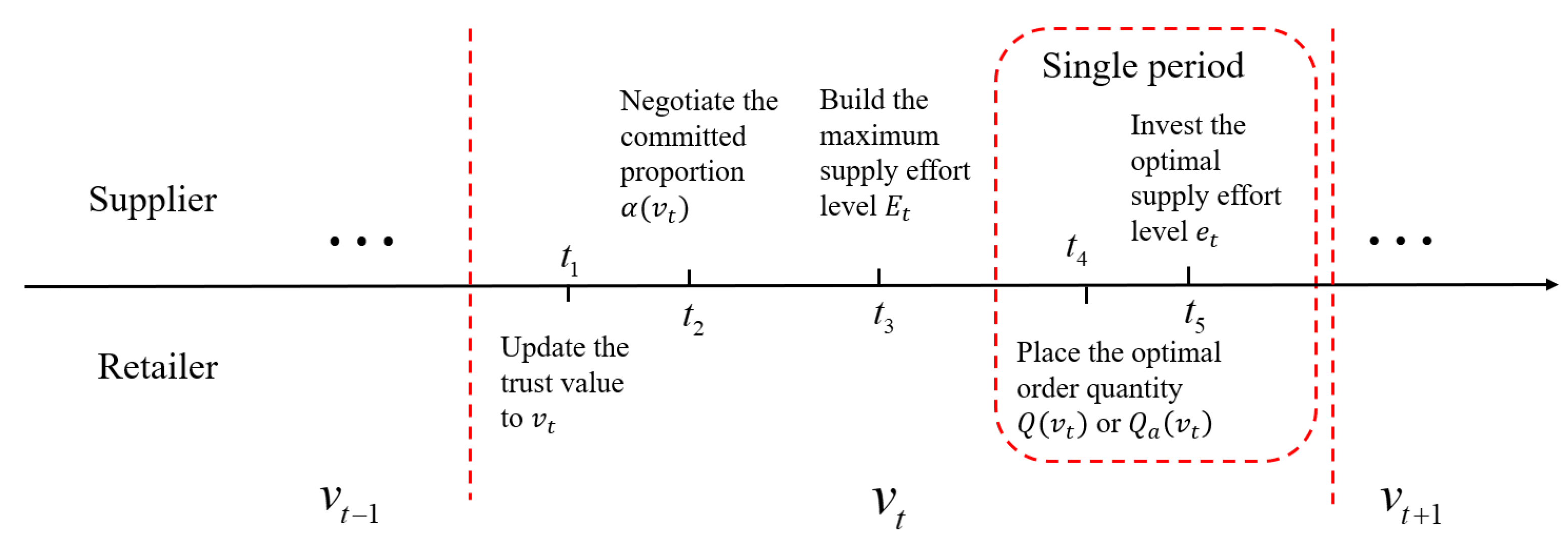
Section 3.2, we have learned that the retailer’s trust in the supplier influences the commitment proportion and, consequently, the optimal decisions for all parties within a single period. However, we must also consider the critical role of the maximum supply effort level in optimal decision-making. In multi-period scenarios, after negotiating the commitment proportion, the supplier has to establish a maximum supply effort level
. As the retailer places orders with the supplier, the retailer incentivizes the supplier to enhance the supply level. The supplier, in response, selects the optimal supply effort level from the supply effort feasible set
based on the product order magnitude and the commitment proportion. Let
be the maximum supply effort level in period
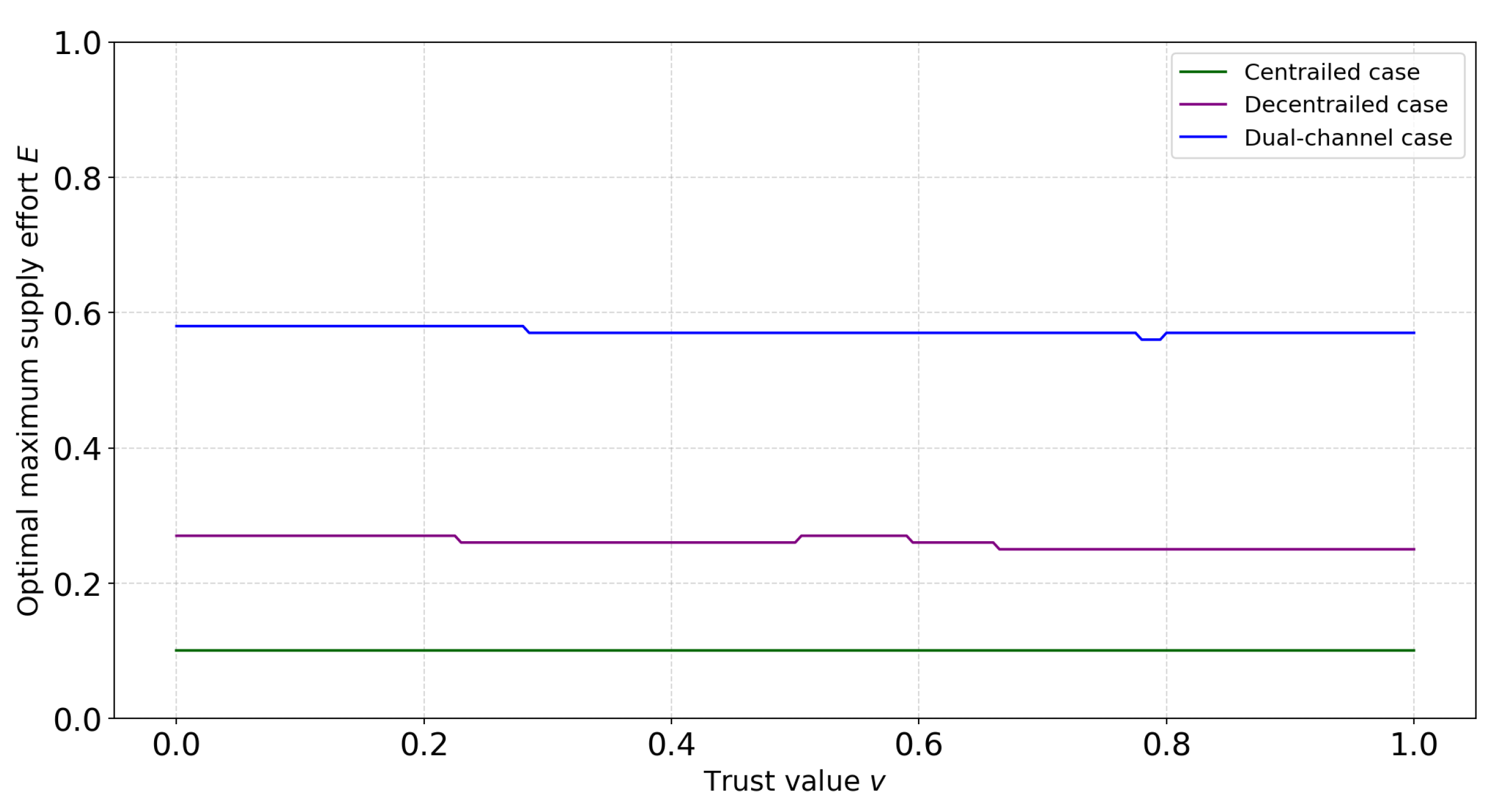
t. Next, we explore the optimal decisions of both parties under dynamic trust values in the multi-period. This decision-making process is visually illustrated in
Figure 4.
In the dynamic Stackelberg game, building on the theoretical results of a single period, the retailer can place the optimal order quantity
or
with a fixed trust value, while the supplier invests the optimal supply effort level
. Here,
or
is a function of the optimal order quantity
or
based on the trust value
. Furthermore, the supplier indirectly acquires trust information through the negotiated commitment proportion, establishes the maximum supply effort level
, and informs the retailer of this maximum supply effort level. After the transaction at period
t, the retailer updates the trust value to
according to Equation (
15).
To optimize the maximum supply effort level, we first determine the retailer’s optimal order quantity from both centralized and decentralized decision-making perspectives, taking the maximum supply level into account. In centralized decision-making, as Equation (
6), the feasible set
for order quantity
at the maximum supply effort level of the
t period is
In decentralized decision-making, from Equation (
3), the feasible set
for order quantity
or
at the maximum supply effort level of the
t period is
To determine the retailer’s optimal order quantity, we formulate the following optimization objectives in both basic and dual-channel cases. For the basic case, we have
where
represents the retailer’s expected profit
based on the trust value
and the maximum supply effort level
. Similarly,
represents the integrated supply chain’s expected profit
based on the maximum supply effort level
, where
is a continuous function of the order quantity from Equation (
6). In the dual-channel case, we have
where
represents the retailer’s expected profit
based on the trust value
and the maximum supply effort level
, where
is a continuous function of
.
By Equations (
19) and (
20), the retailer determines the optimal order quantity for the
t period, taking into account the trust value and maximum supply effort level. Subsequently, the supplier determines the optimal supply effort level, also considering the trust value and maximum supply effort level. Therefore, the supplier’s expected profits in the decentralized decision-making are denoted as
and the supplier’s expected profit in the centralized decision-making is given by
where
is a continuous function of
,
or
from Equation (
3), as well as of
and
, and
represents the supplier’s expected profit
based on the trust value
and the maximum supply effort level
.
Next, we investigate the properties of the function with respect to for each in the case . We present these results in Proposition 7.
Proposition 7. When or , for each case , the following claims holds:
(1) When , the optimal order quantity in the case b is non-increasing with .
(2) When , the supplier’s expected profit is non-decreasing with in the t-period, where represents the unlimited optimal effort level in period t.
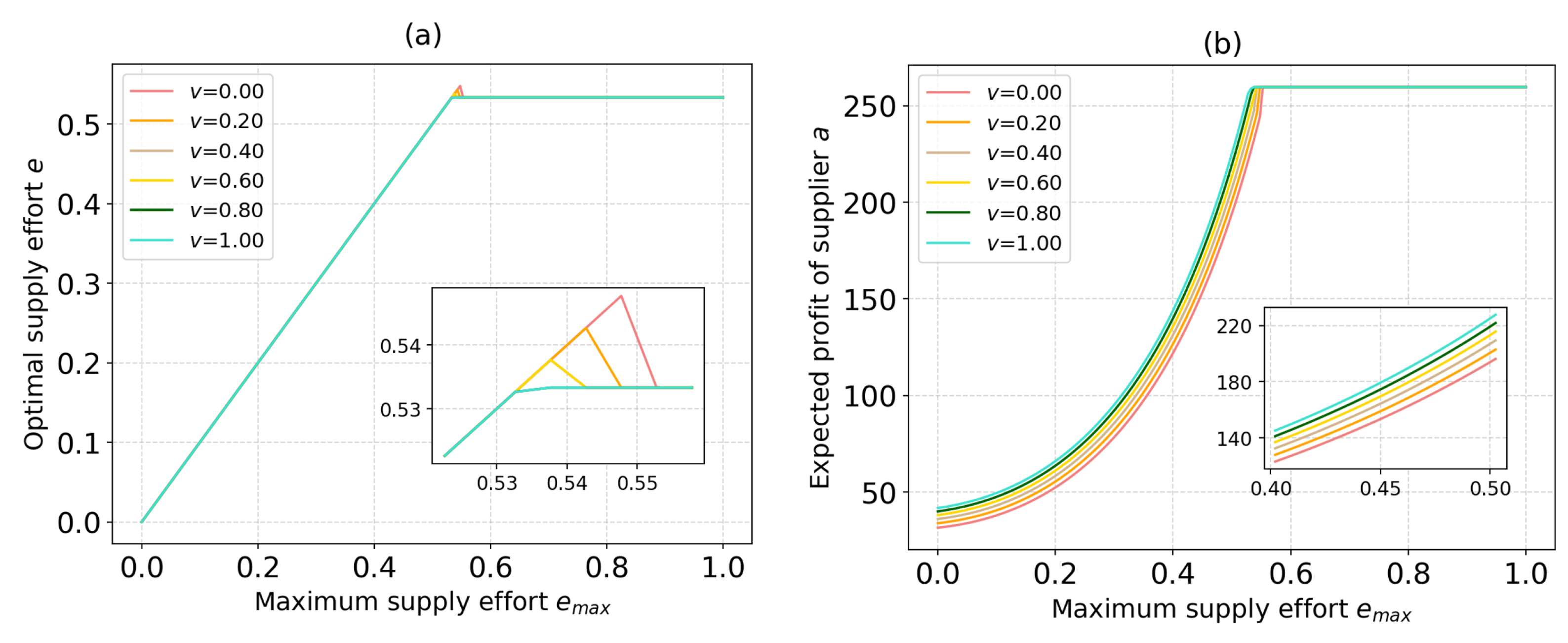
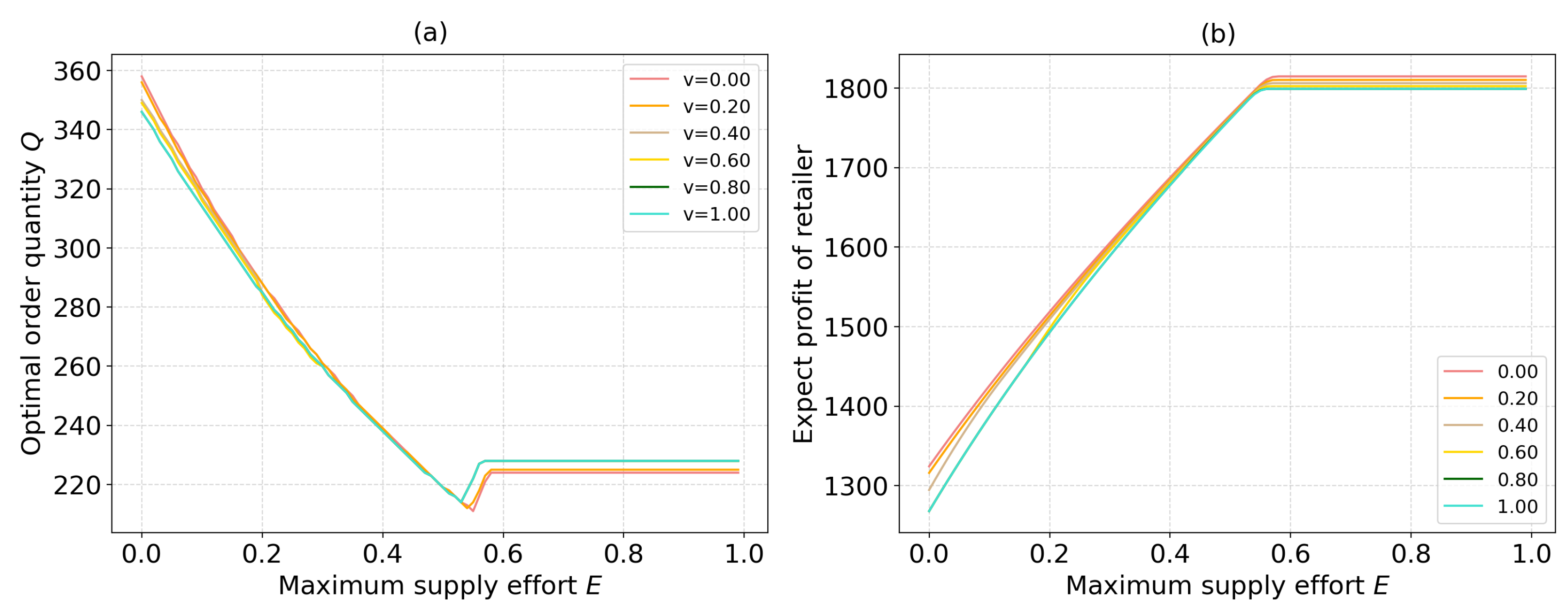
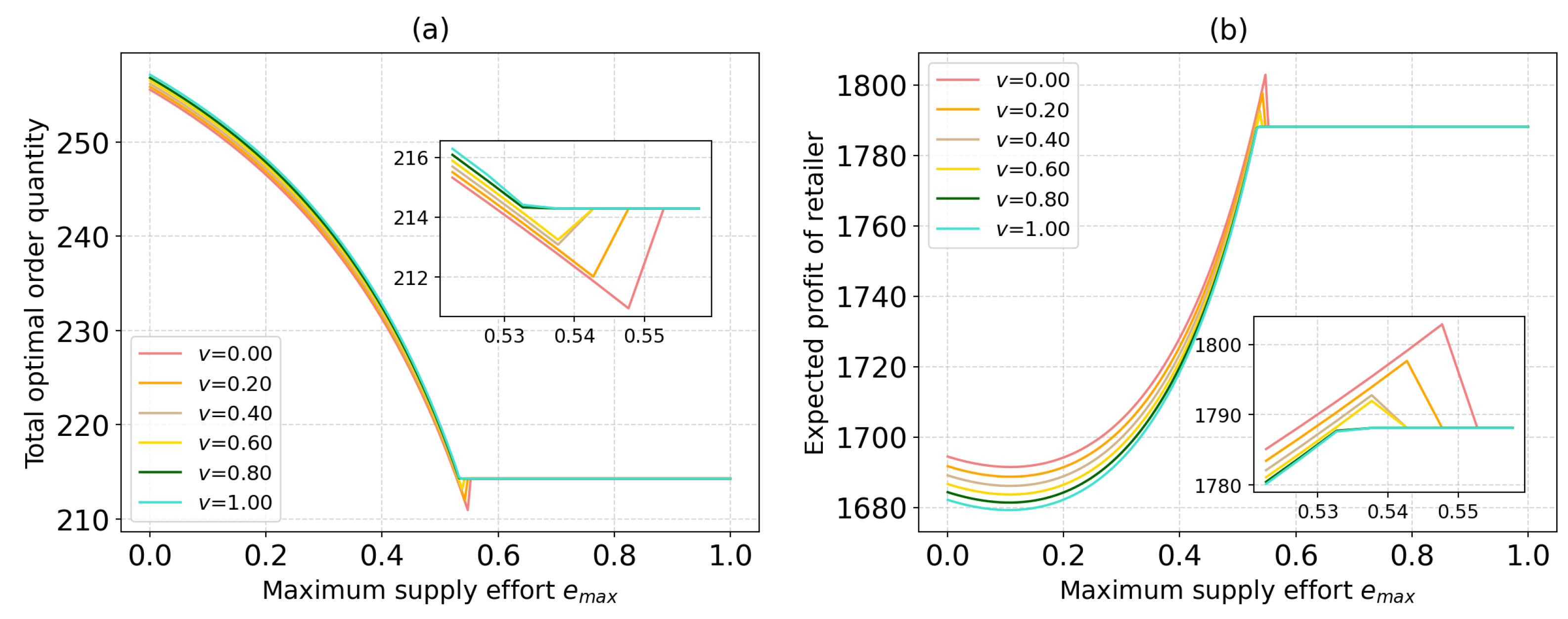
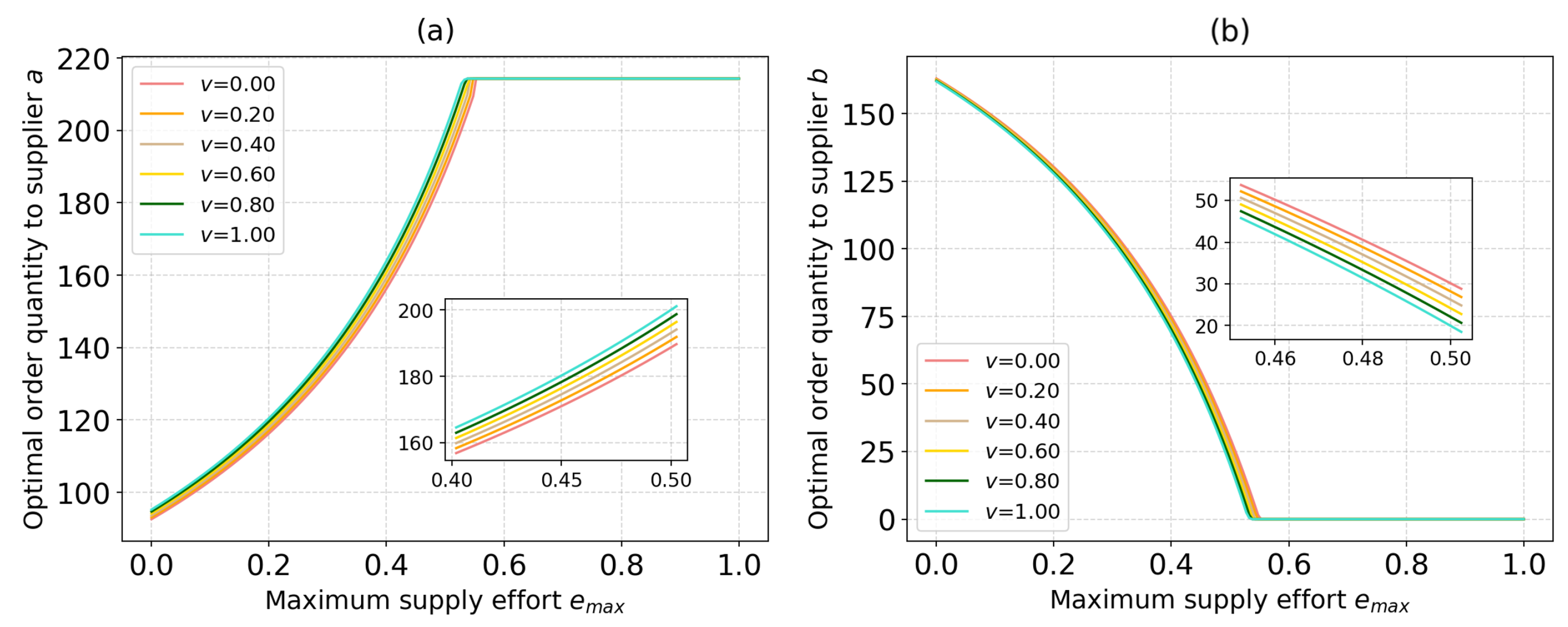
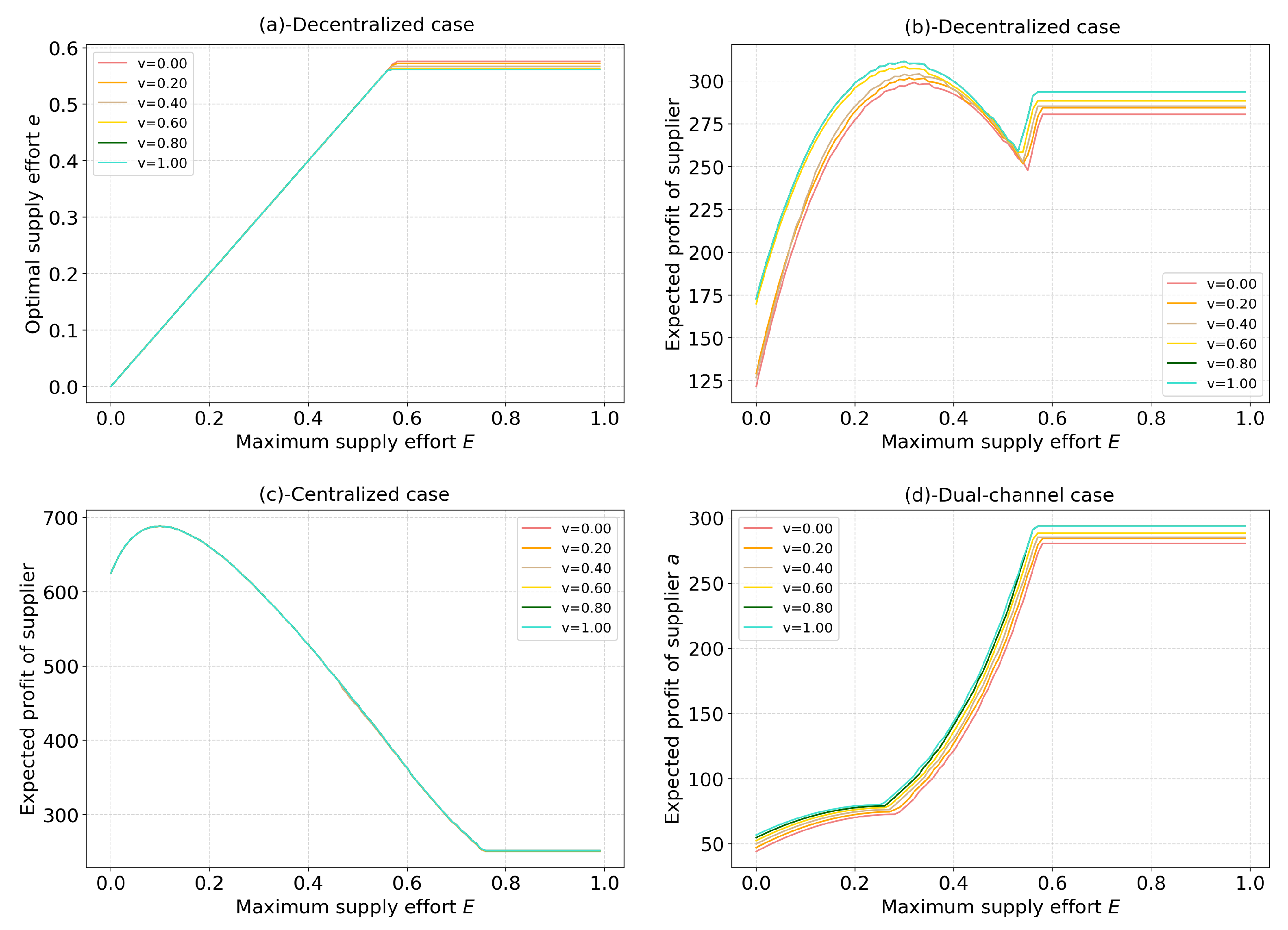
When the maximum effort level is too small (<), greater retailer trust in the supplier results in a smaller order quantity. This indicates that the supplier’s supply capacity is limited, leading the retailer to reduce their order quantity to share the supplier’s out-of-stock risk. Conversely, when the maximum supply effort level is sufficiently large (≥), the supplier’s expected profit consistently rises with the trust value . This suggests that through a trust negotiation mechanism, the retailer shares the supply risk with the supplier, thereby reducing the supplier’s compensation for stockout. This dynamic fosters a long-term relationship between both parties.
Let
represent the history from the start of period 1 to the beginning of period
t, where
. A policy for the supplier is an anticipative decision rule that specifies
for each
. We assume that the supplier is risk neutral, it uses geometric discounting with
as a single-period discount factor, and the expected value of the profit during period
t is credited at the beginning of period
t. Then, the supplier’s expected value is
where
represents the maintenance cost of maximum supply effort level in the case
i. Let
be termed the supplier’s value function and
is said to be an optimal policy for the supplier in the case
i if its expected value is maximal for each initial states
.
Given the initial trust value
v, the supplier’s dynamic optimization problem is to find a policy that maximizes Equation (
23). This problem corresponds to the following dynamic program.
where
represents a binary function that depends on both the trust value and the maximum supply effort level. The dynamic Equation (
24) reflects a tactical approach to determine the decision variable, which is the maximum supply effort level. An optimal policy with a strategic view is illustrated in the following proposition.
Proposition 8. For each case and a fixed initial state v, under Proposition 7-(ii), the following claims hold true:
(i) When and , the supplier’s value function is non-decreasing with respect to .
(ii) There exists an optimal deterministic policy and a unique value function for the supplier.
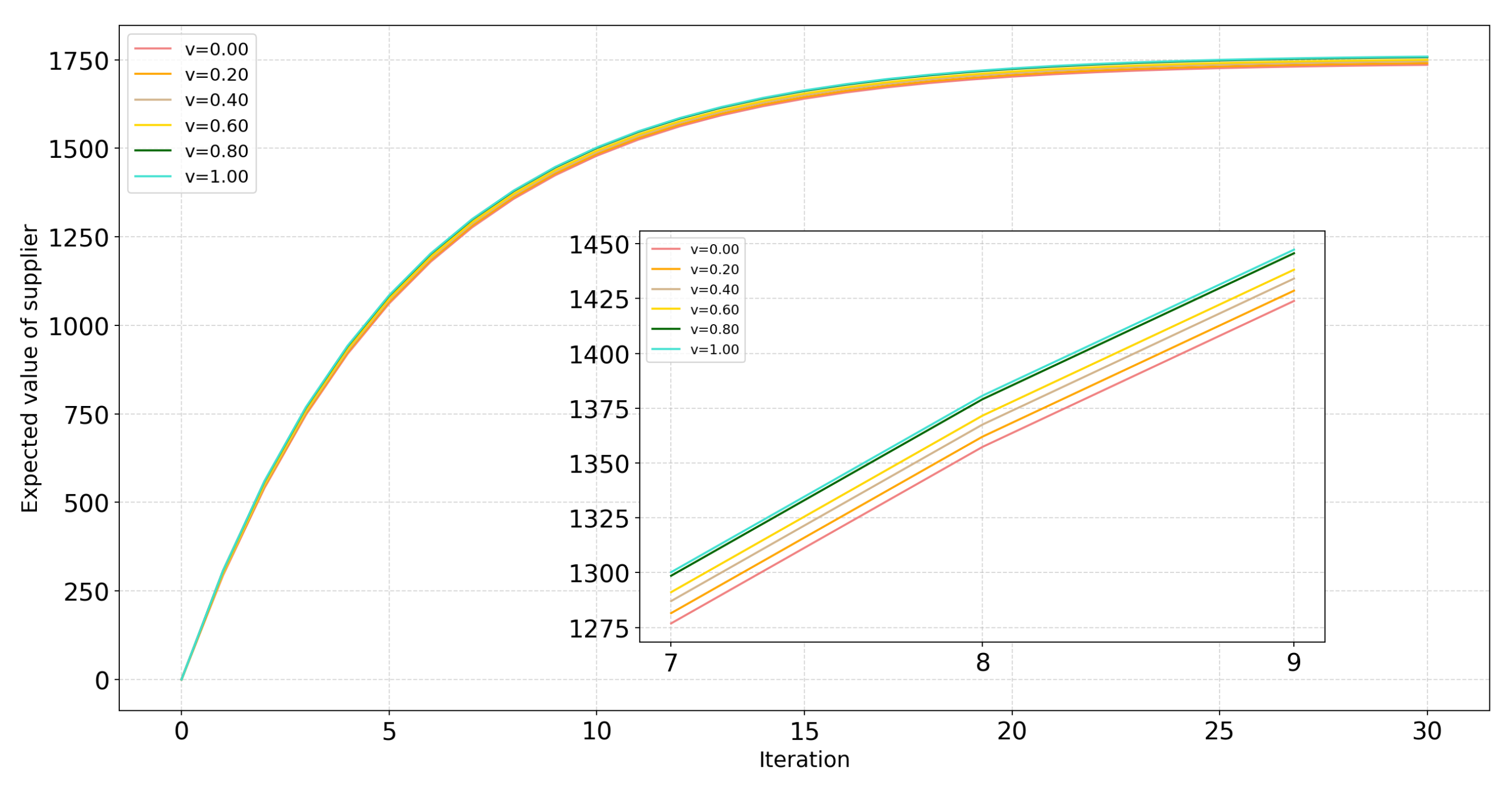
Proposition 8-(i) emphasizes that the supplier’s value function features the monotonicity, the same as their expected profit in a single period. It underscores that a retailer with a longer-lasting memory positively influences the value function in multi-period trading. Proposition 8-(ii) posits that the supplier strategically decides their maximum effort supply level, leading to a unique total expected discounted profit with a given initial state v. Additionally, the optimal policy remains stable and can be obtained through value iteration or policy iteration, facilitating the supplier in establishing a fixed supply effort level. Over successive trading periods, the retailer’s trust value in the supplier gradually stabilizes.