
Article

Artificial Intelligence vs. Social Media Influencer-Generated Content: A Comparative Study of Anthropomorphism in Shaping Tourist Destination Visitation Intention


by
Calvin Steve Nyagudi
1,2,* and
Wenbing Wu
1
1
School of Economics and Management, Beijing Jiaotong University, Beijing 100044, China
2
The Kenya Electricity Transmission Company Limited, P.O. Box 34942, Nairobi 00100, Kenya
*
Author to whom correspondence should be addressed.
J. Theor. Appl. Electron. Commer. Res. 2026, 21(6), 181; https://doi.org/10.3390/jtaer21060181
Submission received: 3 May 2026 / Revised: 3 June 2026 / Accepted: 4 June 2026 / Published: 8 June 2026
(This article belongs to the Topic Artificial Intelligence and Tourism Transformation)

Abstract

Technology-driven content is increasingly reshaping how tourists perceive and evaluate destinations, yet the underlying content evaluative processes remain insufficiently investigated. This study, therefore, integrates the Stimulus–Organism–Response (S–O–R) framework with Anthropomorphism Theory to examine how destination anthropomorphic content (DAC) relates to destination image (DI) and destination visitation intention (DVI) in digitally mediated environments. Using a cross-sectional survey design and multi-group Structural Equation Modeling, the study compares relationships across two information sources: AI- and social media influencer-generated content. The results show that DAC is positively associated with both DI and DVI across groups. Permutation-based multi-group analysis indicates that the differences in structural paths between AI and influencer groups are not statistically significant. This finding provides the basis for interpreting group comparisons, suggesting that the observed relationships do not differ meaningfully across content sources. While bootstrapping and effect size (f2) results indicate relatively stronger coefficients in the influencer group, these results are interpreted as descriptive tendencies rather than statistically confirmed differences. These findings suggest that tourists may respond positively to both human and technologically mediated agents’ content when human-like social cues are perceived. This study contributes to the growing discourse on AI and digital content in tourism by unveiling the critical concern of whether the content source matters in anthropomorphic perception. The study further extends the application of S–O–R in AI-mediated marketing contexts. The findings offer practical insights for destination marketers seeking to leverage both AI and influencer-based strategies in shaping tourist perceptions and intentions.

1. Introduction

With the development of digital technology, online sources have emerged as information sources for tourism planning activities [1]. Destination marketing stakeholders take opportunities of social media platforms and social media actors such as influencers [2,3,4] and Artificial Intelligence (AI) systems [5,6] to promote destination tourism. For instance, it is provided that social media influencers have emerged as a critical strategy to influence tourists’ visits [3,7,8]. Similarly, AI has emerged as a vibrant source of information for the elevation of the tourism experience [9,10,11] and enhancing destination image [6]; signifying that both sources remain critical in driving tourists’ perceptions and behavior. However, the type of online content that attracts the most attention from users and promotes visits to the destination remains a challenge for destination marketing stakeholders. Hence, it limits destination marketers in making informed decisions on which source of information should be leveraged to effectively attract tourists.
Tourists interact with online content to evaluate and make decisions on destination tourism. When interacting with content, tourists tend to attribute human-like characteristics, emotions, beliefs, and thoughts to destinations, a phenomenon known as anthropomorphism [6]. Anthropomorphism enhances tourists’ experiences, fosters a positive destination image [6], and increases destination intentions [12,13,14]. Anthropomorphizing fosters emotional connections between the destination and tourists. Thus, it smoothly enhances tourists’ perception of destinations [12]. This suggests that online content may exert a stronger influence on tourists’ perceptions of a destination’s image and their behavioral intentions when the destination is perceived as exhibiting hominoid traits and emotions such as welcomeness, happiness and peacefulness, as well as being portrayed as offering immersive experiences beyond physical structures and landscapes, including wild and adventurous elements.
However, the magnitude of relationships of online destination anthropomorphism content (DAC) on destination image (DI) and its subsequent effect on tourists’ intentions to visit destinations may vary depending on the source of content. Limited studies such as Wang [6] and Lee and Oh [12] have examined the effect of anthropomorphizing destinations. However, the studies did not consider the impact of the source of information. Therefore, this study focuses on exploring the influence of DAC emanating from different content sources, i.e., AI and social media influencers, on DI and destination visitation intention (DVI), as well as its underlying process. AI is currently utilized for the enhancement of tourist experience and intentions [13]. For instance, a recent study by [6] reveals a critical role of AI video-based destination anthropomorphism in influencing DI. Correspondingly, social media influencers have emerged as dependable sources of tourism information that enhance the experience and tourists’ intentions [3,7,8,15]. However, whether AI-generated and influencer-generated content demonstrate similar or significantly different relationship patterns with tourists’ perceptions and behavioral intentions remains insufficiently understood in the literature.
Thus, while advocating that both AI and influencers’ content may be utilized to enhance perceptions and intentions on destination tourism, it is imperative to understand the differences in the magnitude of influence when anthropomorphic content is used to market destinations. This is because people may tend to have different perceptions, emotions, beliefs and thoughts about destination content presented by AI and human influencers. Therefore, the level of intention towards the destination may differ. For instance, in the presence of low tourist–AI engagement [5], content from AI systems may lack emotional richness and credibility, which may result in less effectiveness in provoking strong anthropomorphic feelings and intentions. In addition, AI systems are claimed to provide misleading information and lack the quality to replace human ability [16]. Thus, regardless of tourists’ reliance on AI for destination information search, skepticism among tourists may exist; thus, they interact with other reliable sources for reassurance. Consequently, human influencers may be perceived as more authentic and credible sources of reliable information. Content from human influencers may often be evaluated as more credible and emotionally rich due to perceived relatability and parasocial interaction [17,18]. Nevertheless, recent advances in AI systems suggest that the historical gap between human and artificial communicators may be narrowing [19]. By increasingly simulating conversational responsiveness, personalization, and human-like social cues, AI systems can foster perceptions of social presence and relational engagement that may partially resemble those traditionally associated with human influencers. Consequently, while human influencers are generally expected to demonstrate stronger associations with tourists’ perceptions and behavioral intentions, it remains unclear whether these differences are sufficiently pronounced to produce statistically distinguishable outcomes in anthropomorphic destination marketing contexts across communication settings. Such insights are particularly relevant for destination marketing stakeholders, as they inform strategic resource allocation to effectively leverage the most impactful sources in driving tourists’ behavior.
Furthermore, a positive and solid DI acts as an attraction element for tourists [20] and thus, can provide a strong competitive advantage over other destinations [2]. DI may enhance tourist confidence, safety and sense of freedom, which may further influence intention [20,21,22]. DI is reported to mediate the effect of DI components (Cognitive, Unique and affective components) on tourists’ intention to revisit and recommend [23]. Thus, DI may assume a mediation role that can help to explain the DAC-DVI mechanist process in this study. Therefore, this study develops a predictive model that describes the impact of DAC on DI and DVI based on AI and influencer content as service-oriented destination advertising sources. Specifically, this study aimed to;
(i)
Examine the relationship between DAC and DVI across AI- and human influencer-generated content, and to assess whether the relationships differ significantly between the two information source categories.
(ii)
Examine the relationship between DAC and DI across AI- and human influencer-generated content, and to assess whether the relationships differ significantly between the two information source categories
(iii)
Investigate the mediation role of DI on the relationship between DAC and DVI.
To achieve these objectives, we conducted a cross-sectional survey. Our study was underpinned by Anthropomorphism Theory (AT) [24] and the Stimulus–Organism–Response (S–O–R) model [25]. Anthropomorphism justifies our suggested independent variable (DAC), suggesting that tourists may perceive destinations as human-like when exposed to emotional, personified or personalized AI content or influencer posts. Also, the S–O–R model explains the full relationship pathway in the model, suggesting that external stimuli (DAC) influence tourists’ internal state (DI), which then affects tourists’ behavior (DVI). This study advances the literature in destination marketing by introducing a model which explains the full pathway of the DVI process while considering the critical role of DAC sources, which is scarcely investigated in the service-oriented destination tourism marketing literature. Furthermore, this study offers practical insights for destination marketers, tourism boards, and digital content strategists. The results provide implications that guide proper allocation of resources to specific advertising sources (AI vs. human influencer) for destination marketing while stressing the critical importance of anthropomorphism consideration during content creation and configuration to enhance tourists’ DI and DVI in the digitally mediated environment.

2. Theoretical Underpinning

2.1. Anthropomorphism Theory

Anthropomorphism Theory (AT) [24] was adopted to examine how tourists behave towards destination digital content with humanoid traits. Anthropomorphism refers to the attribution of human-like characteristics, such as emotions, intentions, and personalities, to non-human entities such as destinations. The theory (AT) describes that people anthropomorphize non-human entities to make them more relatable, predictable, and socially meaningful. Anthropomorphisms are used to build emotional bonds between tourists and destinations [6] and enrich tourists’ behavior [26]. In this current study, AT is employed to explain how DAC, whether interacted with from human social media influencers or AI sources, shapes tourists’ perceptions (DI) and behavioral intentions (DVI). We presume that by digitally presenting a destination as, for example, being welcoming, having a soul, or acting like a guide, tourists are encouraged to interpret the destination as a social agent with more tourism benefits. These human-like portrayals facilitate emotional engagement, thereby enhancing affective evaluations, which further helps tourists to form a rich DI and an intention to visit the destination.
Numerous tourism and destination marketing studies have demonstrated the value of anthropomorphism. For instance, Wang [6] emphasized the pivotal role of video-based anthropomorphic content in enhancing a destination’s image. Also, Lee and Oh [12] suggest anthropomorphism communications as an effective way to enhance tourists’ behavior, such as visit intention. Similarly, Wang, Zheng [26] presented that compared with non-anthropomorphic slogans, anthropomorphic slogans strongly affect tourists’ responsibility behavior. Letheren, Martin [13] noted that personified messages, specifically when aligned with individuals’ anthropomorphic tendencies, can augment positive emotions, leading to more favorable destination attitudes and increased travel intentions. Unlike other studies, this current study compares the magnitude of influence between AI and human-influencer-based anthropomorphic content. Anthropomorphism is grounded in fundamental cognitive and social psychological processes that shape how individuals interpret non-human entities. As articulated by Epley, Waytz [24], these processes include agency detection, whereby individuals perceive an entity as capable of intentional action; mental state attribution, which involves inferring thoughts, emotions, and motivations; and sociality motivation, reflecting the inherent desire to establish social connection. Such perceptions may also be influenced by individual differences in anthropomorphic tendency. Jointly, these mechanisms explain why individuals come to perceive non-human targets as human-like, forming the theoretical foundation for understanding anthropomorphic perception in various contexts.
Therefore, we presume that, while both can deliver anthropomorphic cues, tourists’ internal evaluation process of perceived authenticity and emotional richness of content may differ. Therefore, this may influence the strength of the tourist’s response. Human influencers may better arouse the social affective processes underlying anthropomorphic cues due to perceived warmth, intention, and relatability. On the other hand, AI, though offers informational efficiency, may be perceived as not authentic and reliable, and elicit weaker social perceptions that can trigger intentions. While these factors (such as, of perceived authenticity and emotional richness) are not explicitly modeled in this study, they provide a theoretical basis for interpreting differences observed between AI and influencer content. Therefore, in this study, AT is vital to understanding the psychological foundation for explaining the process through which digital content can shape DI and DVI.

2.2. Stimulus–Organism–Response Model

The Stimulus–Organism–Response (S–O–R) model [25] was adapted in this study as the overarching framework to explain the psychological process through which DAC, that is delivered via either human influencers or AI systems, shapes tourist behavior. The model posits that external stimuli (S) induce internal affective or cognitive states (O), which then drive behavioral responses (R). Therefore, this model is integrated with AT to effectively explain the underlying process in the study model. DAC serves as an external marketing stimulus that induces emotional and cognitive responses by making destinations feel more human and socially engaging. Thus, AT is integrated as the psychological explanation of why this type of content (DAC) is powerful, as it activates social perception processes by enabling tourists to interpret destinations as social entities, thus enhancing engagement and emotional resonance. This anthropomorphized perception leads to the formation of richer and more favorable DI evaluations (such as warmth, excitement, etc.). In turn, a positive image increases tourists’ likelihood of destination visitation. This, therefore, fulfils the S–O–R logic path.
Several tourism studies, such as Chiengkul, Kumjorn [5] have applied the S–O–R model to explain AI adoption and emotional bond. Similarly, Hussain, Stephenson [27] adopted the S–O–R model to explain the influence of social media influencers on sustainable travel behavior. Also, Matiza and Slabbert [20] have successfully applied the S–O–R model to explain the digital marketing effects of celebrity influencers on international tourism conation. Although the S–O–R model has been widely applied in tourism and digital marketing research, its original conceptualization emerged from physical and atmospheric environments where environmental signals directly influenced emotional and behavioral responses. In online contexts, particularly AI-mediated communication environments, tourists interact with digitally generated content that is algorithmically produced, socially interpreted, and cognitively evaluated in more dynamic ways than traditional environmental stimuli. Thus, this study does not treat the S–O–R framework as a purely linear or deterministic mechanism, but rather as an adaptive heuristic for explaining how DAC may influence tourists’ internal evaluations and behavioral intentions. This perspective is particularly relevant in AI-driven tourism contexts, where perceived credibility, authenticity, human-likeness, and source awareness may simultaneously shape users’ cognitive and affective processing. This current study adapts the S–O–R model as a structural foundation while incorporating AT to explain how humanized content (stimuli) may influence internal processing (image) and behavior (visitation). Although the S–O–R framework usually conceptualizes stimuli as external environmental cues, DAC in the present study is treated as a perception-based psychological stimulus reflecting tourists’ subjective interpretation of anthropomorphic characteristics embedded within destination-related content. Accordingly, the stimulus component is understood not as an objectively manipulated media exposure, but as a cognitively and socially interpreted communication cue operating within digitally mediated tourism environments.
The combined framework provides a nuanced view of how and why tourists’ visit intentions may be influenced by online DAC. This dual theory integration enriches understanding of digital destination marketing strategies and offers practical insights into content effectiveness across human and AI sources.

3. Research Model and Hypothesis

3.1. Destination Anthropomorphic Content and Destination Visitation Intention

In the digital era, destination tourism marketing is gradually relying on rich content to engage potential tourists. Well-crafted content shapes image [6], which also drives behavioral outcomes such as intentions [12,22,23]. One emerging strategic approach is the use of DAC, where destinations are portrayed with humanoid traits, personalities and emotions [6]. Entrenched in AT [24], individuals naturally humanize non-human entities (destination in this study) to make them more relatable, foreseeable, and emotionally engaging. Thus, when destinations are presented in ways that evoke humanoid qualities, such as being welcoming and soulful, they become more emotionally appealing. This increases tourist–destination attachment and behavioral intentions, especially when conveying personality congruence with the tourist [28]. This being framed with the S–O–R model [25], anthropomorphic content acts as a stimulus that arouses emotional reactions, such as forming a favorable destination image (organism). This further triggers responses like visit intention. Prior research suggests that personality-driven advertisement, which can elicit emotional connections, can significantly impact tourists’ perceptions and behavior [6,13,22,26].
However, anthropomorphic content source may play a critical role in how it is perceived and processed by tourists. When content is engendered by human influencers, it is often evaluated as more authentic, credible and emotionally rich due to perceived relatability and parasocial interaction [29]. These qualities augment tourist emotional engagement, which is necessary for anthropomorphism to take effect. In addition, although AI platforms such as ChatGPT are accepted for travel information [11] they may be less effective in provoking strong anthropomorphic feelings. AI systems, such as AI-enabled chatbots, have been perceived to generate untrue information to inquiries, and are claimed to lack the quality that replaces human capabilities [16]. Therefore, while DAC is anticipated to positively influence DVI, the magnitude of this influence may differ by content source, which is scarcely investigated in destination marketing and anthropomorphism literature. Based on these arguments, we predict that a stronger magnitude may be pronounced when content is delivered by human influencers than by AI systems. This is likely due to the enhanced emotional attachment and trustworthiness associated with human-based stories, which more effectively stimulate the affective pathways delineated in the S–O–R model. We therefore propose that:
H1. 
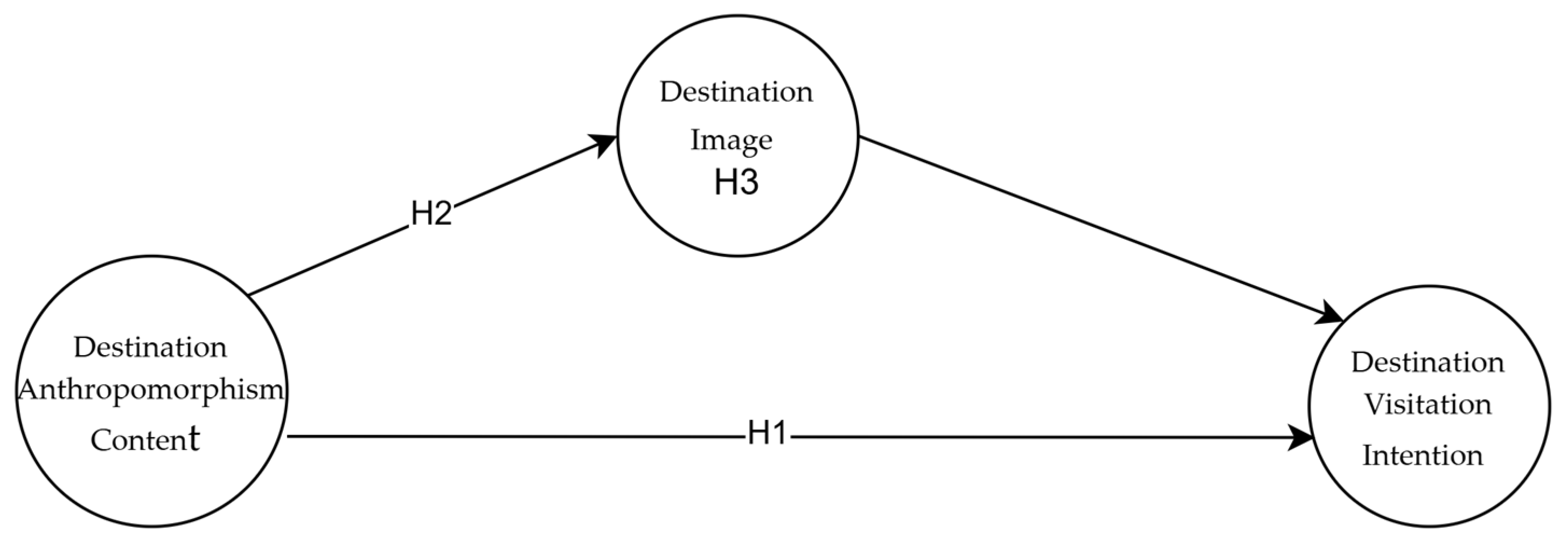
There is a positive relationship between DAC and Tourists’ DVI; however, this relationship is stronger when the content is delivered by human influencers compared to AI-based content.

3.2. Destination Anthropomorphic Content and Destination Image

Destination image is generally defined as the sum of a visitor’s beliefs, impressions and thoughts about a destination [30,31]. Destination image consists of attribute-based and holistic dimensions [32,33]. Attribute-based image involves perceptions of individual attributes that include specific physical or functional elements (such as facilities, prices, etc.) [33]. Holistic image describes a mental picture (imagery) of a destination based on overall impressions and general feelings [33]. These include overall emotional and affective impressions of a destination, often shaped by symbolic content and emotional cues.
Given the symbolic and emotionally resonant nature of anthropomorphism, this current study focuses on holistic destination image dimension. Since anthropomorphism involves assigning humanoid traits or personalities to non-human entities (destination in this study), it aligns more closely with holistic evaluations rather than cognitive assessments of discrete attributes of a destination (attribute-based image). Therefore, holistic image is a more conceptually appropriate construct for this study.
Destination image plays a foundational role in influencing tourist behavior [21,33]. DI is increasingly shaped by digital content, including influencer content, such as travel vloggers [34,35], and AI-based content [6]. To ensure building of DI, content is needed to embed features that arouse emotions and imagination [6,22], which a tourist can use to relate and predict the reality of the represented place. Thus, crafting destination content with humanoid traits can serve this purpose. As per AT [24], perceived human-like characteristics to non-human entities (e.g., destinations) enhance emotional connections, which foster affective evaluations such as image [6]. Based on the S–O–R model [25], DAC serves as a stimulus that activates internal organism processing (affective evaluations) that form DI. This emphasizes that anthropomorphism humanizes the destination, thus making it more memorable, relatable, and emotionally appealing.
Nevertheless, the effectiveness of DAC in shaping DI may depend significantly on the source of the content. Human influencers may be more effective than AI systems. Human influencers may smoothly transmit humanoid qualities and symbolic meanings that enhance the richness and depth of the image formed in the tourist’s mind due to their emotional expression, real tone, and authentic storytelling [36]. Moreover, AI systems may fall short of this capability. For instance, AI-enabled chatbots may generate misleading information in response to inquiries, leading to doubt about the accuracy and authenticity of the system [16]. Similarly, it was provided that non-human sources, such as virtual influencers, may suffer from issues of inauthenticity due to fabricated personas and sensory deficiencies [37]. This suggests that human-based sources may remain credible and authentic for information acquisition. Thus, while both AI- and human-based content can anthropomorphize destinations, the strength of their impact on DI is likely to differ. However, this concern has received less attention in the domain, thus warranting its importance for empirical investigation. We therefore propose that:
H2. 
There is a positive relationship between DAC and tourists’ DI; however, this relationship is stronger when the content is delivered by human influencers compared to AI-based content.

3.3. The Mediating Role of Destination Image

Understanding the psychological mechanisms through which marketing content influences DVI remains crucial. Thus, this study suggests that tourists may not instantly decide to visit a destination merely based on anthropomorphic messaging but rather may lean on the image constructed in their minds. This suggests that DI serves as a cognitive and emotional filter, translating anthropomorphic cues into meaningful evaluations of the place. This aligns with the S–O–R model [25], where DAC acts as a stimulus, which triggers tourists’ internal evaluations (DI) (organism) that ultimately drive behavioral response (DVI). Furthermore, drawing on AT [24], when a destination is personified, it becomes more relatable, emotionally engaging, and easier to evaluate.
Thus, anthropomorphism augments the symbolic and affective components of the image, strengthening tourists’ emotional connections and confidence in the destination. These psychological processes enhance the formation of a positive DI [6], which has been revealed to be a strong predictor of tourist behavior [22,23,33]. Despite growing interest in anthropomorphism in tourism marketing, limited empirical work has explored how such content indirectly affects tourist behavior through image formation. Particularly, as destination branding and marketing efforts increasingly rely on creative digital narratives, exploring destination image as a mediator bridges an important gap and provides a more nuanced understanding of how online personalized content enhances destination intention through image formation. Therefore, to advance the literature, we hypothesize that:
H3. 
DI mediates the relationship between DAC and DVI.
The above theoretical and empirical arguments suggest a research model as presented in Figure 1 below:

4. Method

4.1. Study Design, Sampling and Sample Size

This study adopted a cross-sectional survey design and used Structural Equation Modeling (SEM) with multi-group analysis to compare relationships between constructs across two naturally occurring groups (AI-generated content experience vs. human influencer content experience). Data was collected from tourists who intend to visit Kenya. The robust and evolving tourism sector in Kenya, with a strategic approach and digitalization of the tourism industry, makes this destination a compelling setting for this study [38,39]. For instance, inbound tourism has been increasing, from about 560,000 in 2020 to above 2.3 million in 2024. Also, the inbound tourism earnings increased to Kshs. 452.20 billion in the year 2024, compared to Kshs. 377.49 billion in 2023, translating to a growth of 19.79% [40]. Furthermore, the tourism industry contributes significantly to the economy; for example, in 2024, the industry supported more than 3 million wage employment [40]. This growth highlights Kenya’s appeal as a diverse destination, offering a range of experiences that include cultural heritage, wildlife safaris, and coastal tourism. Moreover, the adoption of digital platforms and Kenya’s aggressive tourism marketing campaigns has enhanced its global visibility. The integration of technology in tourism services, including the use of AI-driven tools and influencer marketing, has transformed how tourists interact with the destination [3,6], including Kenya [38,39,40]. These developments provide a rich context with diverse tourist demographics in the country to explore the influence of anthropomorphic content on tourists’ perceptions and visit intentions.
By using the priori sample size calculator (version 4.0) for structural equation models [41], a minimum required sample for this study was estimated. The effect size of 0.3, statistical power level of 0.9, with 4 variables (3 latent variables, and 1 binary variable—content source type), 13 items and a probability level of 0.5 was considered during sample estimation. Therefore, a sample size of 184 was recommended. A total of 417 responses were collected from the survey. All data were clear and suitable, which guaranteed hypothesis testing. Both convenience and purposive sampling were employed to exclusively include international and regional tourists. This maintained the study’s focus to test this predictive model based on survey data from non-resident tourists.

4.2. Instrumentation, Data Collection and Analysis Methods

The study adapted DAC items from Waytz, Cacioppo [42]. In this study, DAC is operationalized as perceived anthropomorphism, based on participants’ interpretation of anthropomorphic cues, rather than experimentally manipulated anthropomorphic content. To suit the DAC conceptualization purpose of the study, measurement items for holistic DI were adapted from Ting (Tina), Fang [33]. Furthermore, DVI was measured by using validated items from Chen, Shang [43] and Sivathanu, Pillai [44]. Before full rollout, a pilot test was conducted on 21 tourists to confirm the clarity and reliability of the items. The pilot test warranted the adaptation of five anthropomorphic items as the most relevant and context-specific items for the full survey, which also enhanced respondent engagement. A five-point Likert scale was used with 1—strongly disagree to 5—strongly agree. This enhanced greater variability in responses and allowed participants to express more nuanced perceptions and intentions.
We collected data from individuals originating from diverse countries who intend to visit Kenya and its tourism attractions. To establish a sample for this study, we partnered with private tour guiding companies that already had networks and contacts of potential tourists from different countries. Therefore, the companies assisted in sharing the questionnaire with prospective respondents in a convenient manner. To guarantee data quality and relevance, all respondents were purposefully screened, and only those who met the study’s inclusion criteria were retained for analysis. Potential respondents were asked to indicate whether they often interacted with influencers or AI content for destination information (within the recent two months). Thus, the question “Where have you often accessed destination (Kenya) information from?—One answer was required—Social Media Influencer or AI sources (e.g., ChatGPT, Meta AI, Google Assistant, travel bots, etc.) or others” was asked. Those who mentioned “others” were automatically dropped. Voluntary participation was requested from the participants, and thus, no gift or any kind of payment was issued to trigger participation in the study. Participants who were interested and willing to participate were involved in the study for the full survey. Furthermore, the anonymity of the respondents’ key details was ensured, and the collected data was solely used for the publication of this paper. Most of the respondents were from the USA, followed by Uganda, Tanzania, the UK, and then other countries (See Table 1). This aligned with the statistics of the Kenyan tourism sector performance report which highlights that the highest number of tourist arrivals to Kenya in 2024 was from the United States (12.8%, 306,501 tourists), followed by Uganda (9.4%, 225,559 tourists), then the United Republic of Tanzania (8.4%, 203,290 tourists), and then the UK [40]. This assortment provided a balanced and meaningful representation of Kenya’s tourism market, reflecting long-haul travel interest and regional tourism.
PLS-SEM was adopted for data analysis. The choice for PLS-SEM was based on different reasons, including logical formulation of the gaps and theoretical integration, which resulted in the exploratory research model. As opposed to CB-SEM, PLS-SEM is suitable for testing the predictive power of models as formulated in our study [45]. Additionally, our model involved testing the indirect relationship; hence, PLS-SEM is well-suited for mediation analysis and complex models [46,47]. Also, PLS-SEM is suitable for assessing both structural and measurement models [48].

5. Results

5.1. Measurement Model

Indicator reliability, internal consistency, convergent validity, and divergent validity were examined [46,49,50]. Indicator reliability was confirmed by loading values above 0.708. This signified that the measurement items were explained by more than 50% (see Table 2). Composite reliability and Cronbach’s alpha values, both above the minimum acceptable value of 0.700, confirmed the internal consistency of the model (See Table 3). Hence, the robustness of construct reliability was confirmed. Additionally, AVE values above 0.50 indicated that all adapted indicators were related and measured the same construct (See Table 3). Finally, HTMT values below 0.85 indicated that the constructs were distinct from each other (see Table 3).

5.2. Structural Model

To reduce the potential for common method variance, several procedural remedies were applied during survey design and data collection. This included assuring respondent anonymity, reducing evaluation apprehension, and carefully designing item wording to minimize ambiguity and social desirability bias. Additionally, during data analysis, Variance Inflation Factor (VIF) values of the inner model were examined. The VIF values lower than 3 suggested that the constructs were free from common method bias [46,49,51] (see Table 3). Model explanatory power was assessed by examining R2 values. The R2 values for DI and DVI were 0.456 and 0.408, respectively, indicating that DAC explains both DI and DVI to a moderate extent. Model predictive relevance was assessed by Q2. The values for Q2 were 0.452 and 0.251 for DI and DVI, respectively (see Table 3). Hence, indicating strong predictive relevance of the tested model.
Prior to conducting multi-group analysis, measurement invariance was assessed through Measurement Invariance of Composite Model (MICOM) procedures [52]. Configural invariance was established by ensuring that both groups (influencer vs. AI) were estimated by using the same construct indicators, model specifications, and algorithm settings. The establishment of compositional invariance was supported. Equality of means and variances was partially supported (see Table 4). This suggested partial measurement invariance, thus allowing meaningful multi-group comparisons [52]. However, this study emphasizes that since full measurement invariance was not established, comparisons of structural relationships across the two groups should be interpreted with appropriate caution.
Bootstrapping procedures with 10,000 subsamples were performed. Model paths were considered significant at the level of 0.05. The overall sample results revealed a positive and significant effect of DAC on DVI (β = 0.155, t = 2.563, p = 0.005). Similarly, a positive significant relationship between DAC and DVI when content is from influencer sources was revealed (β = 0.279, t = 3.316, p < 0.001). Furthermore, the relationship between DAC and DVI was found to be positive and significant when the content is from AI system sources (β = 0.113, t = 2.365, p = 0.006). The magnitude of the relationships was observed to be stronger when information is accessed from human influencer sources than from AI systems. The relationship between DAC and tourists’ DI was also revealed positive and statistically significant in circumstances where information is accessed from social media influencers (β = 0.685, t = 16.606, p < 0.001), and AI systems (β = 0. 682, t = 24.915, p < 0.001), and overall sample (β = 0.675, t = 25.945, p < 0.001). Nevertheless, magnitude was marked somewhat higher when the content is accessed from human influencers than from AI systems. This denotes that DAC is critical when intending to build DI, particularly the results of applying DAC for DI building will likely be high when human influencers are used to market the destination. All results are presented in Table 5.
The results from effect size analysis (f2) further provide additional insights into the practical importance of the investigated constructs within each group. According to the f2 results, even though interpreted as small effect, DAC reveals a higher effect size on DVI when content is from an influencer (f2 = 0.073) compared to AI systems (f2 = 0.012) (see Table 6). Also, compared to when content is from AI sources (f2 = 0.867), DAC reveals a higher effect size on DI when content is from influencer sources (f2 = 0.884) (see Table 6). Additionally, the effect size of DI on DVI was revealed to be higher in the influencer context (f2 = 0.313) compared to the AI context (f2 = 0.174) (see Table 6). These differences suggest that DAC may be more practically impactful when delivered by human influencer content compared to AI content.
Although bootstrap multi-group analysis results and f2 results indicate that magnitudes and effect sizes are larger in the influencer context, the permutation test for statistically significant differences in path coefficients between groups reveals that differences in path coefficients between groups does not reach statistical significance (β = −0.004, p = 0.447) for DAC → DI and (β = −0.166, p = 0.085) for DAC → DVI (see Table 7). This, therefore, emphasizes that the observed differences in path magnitudes and f2 values are interpreted as descriptive rather than confirmatory. Thus, the observed differences should be interpreted as indicative of practical relevance within the observed groups, rather than as confirmation of statistically significant differences between the groups. The findings, therefore, partially support H1 and H2 since the positive direct relationships were supported; however, the expected significant differences between AI and influencer groups were not statistically supported by permutation analysis.
Furthermore, the mediation of DI on the relationship between DAC and DVI was tested. A positive and statistically significant mediating effect of DI was found on the relationship between DAC and DVI when content is accessed from influencers (β = 0.296, t = 4.837, p < 0.001) and AI systems (β = 0.392, t = 6.813, p < 0.001). The significant mediation effect of DI was also found in the overall sample (β = 0.354, t = 8.131, p < 0.001) (see Table 5). Since the direct relationship of DAC and DVI was statistically significant, according to Zhao, Lynch [53], the results revealed a partial mediation effect. Thus, the mediation results suggest that building DI to catalyze DVI is critical even though DAC may solely influence DVI.

6. Discussion, Implications and Suggestions for Future Research

6.1. Discussion

This study examined the influence of DAC accessed from different sources, i.e., AI and social media influencers, on DI and DVI, as well as its underlying process. The results of this study offer important insights into how the source of anthropomorphic content impacts tourists’ DVI. DAC was found to have a positive overall relationship with visitation intention, stressing the value of human-like marketing in the tourism sector. This corroborates previous studies that recognize the critical role of anthropomorphism in the tourism and hospitality industry, such as Lee and Oh [12], Letheren, Martin [13], Hultman, Skarmeas [14] and Wang [6].
The bootstrapping multi-group analysis and effect size (f2) results indicated relatively stronger structural relationships within the influencer group compared to the AI-based content group. Specifically, DAC accessed through social media influencers showed comparatively stronger positive relationships with DVI and DI. This pattern is coherent with previous studies suggesting that human influencers may enhance perceived authenticity, social credibility, relatability, parasocial interaction, and emotional engagement in tourism communication [29,54,55]. Tourists may also perceive greater personal similarity and emotional connection with influencers [56], which may reinforce favorable anthropomorphic perceptions of destinations. These findings support previous studies that emphasize the critical role of human influencers in tourism [7,15,20]. Nevertheless, permutation multi-group analysis results revealed that the differences in path coefficients between the investigated groups were not statistically significant. Thus, although the influencer group exhibited relatively stronger coefficients and effect sizes, these differences should be interpreted as indicative tendencies rather than confirmatory evidence of statistically significant differences between the two content source categories. The findings, therefore, suggest that DAC functions positively across both influencer-mediated and AI-mediated communication environments, even though the relative salience of the relationships may vary across groups.
DAC accessed through AI-based sources also demonstrated positive relationships with both DI and DVI. This indicates the growing relevance of AI-mediated anthropomorphic communication in tourism marketing. These findings suggest that tourists may respond positively to AI-generated destination content when it conveys humanoid characteristics and socially engaging cues. The comparatively lower coefficients within the AI-based group may reflect concerns frequently associated with AI-generated content, including lower perceived authenticity, reduced emotional depth, or varying levels of trust and familiarity with AI technologies [5,6,16]. However, since the between-group differences were not statistically significant, the findings do not provide sufficient evidence to conclude that influencer-based DAC is categorically and exclusively more effective than AI-based DAC. Instead, the results suggest that DAC may influence tourists in broadly comparable ways across different digital information environments.
The findings further revealed significant positive relationships between DAC and DI across both groups. This indicates that when tourists perceive destination information as human-like, emotionally expressive, or socially relatable, more favorable DI may be formed. While the influencer group demonstrated relatively stronger relationships, the positive effects observed within the AI group further support the emerging persuasive potential of AI-generated anthropomorphic content, consistent with studies such as Wang [6]. These findings therefore suggest that anthropomorphic communication strategies may contribute positively to DI formation regardless of whether the content is accessed primarily through human influencers or AI systems.
Furthermore, a partial mediating effect of DI on the relationship between DAC and DVI, for both content generated by AI and influencer, was found. This implies that when tourists perceive a destination with humanoid characteristics, it enhances their cognitive and emotional image of the destination, which in turn fortifies tourists’ intention to visit. This aligns with previous studies emphasizing the crucial role of DI in shaping post-visit behavioral intentions [21,22,23,33]. Anthropomorphism may serve as a perceptual gateway, making the destination feel more familiar, emotional, or alive, thereby enhancing its image. Regardless of the source of content (AI or human influencer), if the content helps construct a favorable image, DVI becomes more likely to be influenced.
Overall, the findings suggest that individuals may respond positively to both human and technologically mediated agents when human-like social cues are perceived. Nevertheless, the findings should be interpreted within the non-experimental nature of the study, as group categorization reflected participants’ self-reported habitual content sources rather than controlled exposure to standardized content. Accordingly, the results reflect tourists’ perceived experiences with DAC across routine digital environments.

6.2. Theoretical Contribution

This study contributes to the growing literature on AI-mediated tourism marketing content by extending the understanding of how DAC shapes tourists’ cognitive and behavioral responses across contemporary digital environments. First, the study supports the applicability of the S–O–R framework within AI-mediated tourism communication settings by indicating that (DAC) positively associates with (DI) and (DVI) across both influencer-based and AI-based information environments. Rather than treating the S–O–R process as strictly deterministic, the findings suggest that tourists actively interpret anthropomorphic destination cues within socially and technologically mediated marketing communication contexts.
Second, the study advances AT by suggesting that DAC may operate in broadly comparable ways across both AI-mediated and human-mediated communication environments. Although the influencer group demonstrated relatively stronger structural relationships, the non-significant permutation results signify that tourists’ responses to anthropomorphic destination cues may increasingly transcend strict distinctions between human and AI information sources. This interpretation aligns with foundational literature suggesting that individuals often apply social and anthropomorphic responses to media technologies and non-human agents when human-like social cues are perceived [24,57]. Extending this perspective to the recent scholarship of artificial communicators such as virtual influencers that raise concern of authenticity, emotional depth, and parasocial connection in driving intentions [58,59], the literature suggest that followers respond to virtual influencers much as if they are human [37] and virtual influencers may be considered effective in building a positive image [58]. Furthermore, when considered as trustworthy, virtual influencers may drive purchase intention in the tourism and hospitality industry [59]. The present findings suggest that AI-generated anthropomorphic communication possesses emerging persuasive potential within digital tourism environments, particularly when perceived as emotionally engaging, contextually relevant, and socially interactive, thus reducing the potential differences between human vs. non-human sources. This contributes to emerging discussions on algorithmic authenticity and synthetic persuasion and highlights the need for further studies to examine the criticality of factors such as perceived authenticity, parasocial interaction, and emotional depth in influencing the effectiveness of artificial communicators such as virtual influencers.
Third, the study contributes to the emerging intersection between tourism marketing, AI communication, and virtual influencer research by comparatively examining AI-generated and influencer-generated destination information within a unified theoretical framework. Unlike prior studies that often examine human influencers and AI systems separately, such as Wang [6] and Han and Chen [3], this current study demonstrates that both sources may activate similar perceptual and emotional mechanisms associated with destination evaluation and behavioral intention. Accordingly, the findings suggest that the effectiveness of anthropomorphic content may depend less on whether the source is strictly human or artificial, and more on how tourists perceive authenticity, relational engagement, and human-like social presence within digital tourism interactions. One possible explanation is the increasing ability of contemporary AI systems to simulate relational qualities that were traditionally associated with human communicators. Through the use of human-like social cues, personalized communication, and interactive engagement, AI-generated content may foster perceptions of social presence that shape destination evaluations. This interpretation is supported by extant empirical suggestions that virtual influencers can generate levels of audience involvement comparable to those of human influencers, even when concerns regarding authenticity, emotional depth, and parasocial connection remain [19]. Accordingly, while AI-generated communicators may not fully replicate the relational richness of human influencers, their growing capacity to evoke socially meaningful interactions may help explain why tourists respond to anthropomorphic destination content in broadly comparable ways across AI-mediated and human-mediated communication environments. Furthermore, the literature suggests that when tourists have low levels of anxiety towards technology, they tend to develop a more positive perception of artificial intelligence, and thus, greater tolerance to artificial intelligence, which makes them more receptive to technological information and more inclined to engage in innovative tourism experiences facilitated by such technologies [6].
Lastly, the study contributes to ongoing debates on AI ethics and digital persuasion by highlighting the growing role of AI-generated information in shaping perceptions of tourism and behavioral outcomes. As AI systems increasingly mimic human interaction styles, questions concerning transparency, ethics, emotional influence, trust, and algorithmic authenticity become increasingly important [60] particularly in destination marketing contexts. The findings, therefore, provide a foundation for future research examining the ethical and psychological implications of anthropomorphic AI information in tourism and other digitally mediated service environments.

6.3. Practical Contribution

The study offers several practical implications for destination tourism marketers, tourism boards, and digital content strategists, particularly in developing tourism economies with similar characteristics to Kenya. The study highlights a critical role of DAC in influencing tourists’ DI and DVI. Anthropomorphism is potentially vital for tourism marketers, specifically regarding tourists seeking destination information [61]. Tourism stakeholders such as tourism boards and private tour companies should design digital advertisement content that deliberately portrays destinations as having humanoid traits. For instance, showcasing destinations (for example, Nairobi as a vibrant, youthful city, or Maasai Mara as a wild but welcoming companion). Such kinds of initiatives can emotionally resonate with tourists and foster perceptions and behavior. Content that gives destinations humanoid traits makes them more likely to be relatable and memorable.
The findings of this study suggest that the effectiveness of DAC may depend less on whether the source is strictly human or artificial, even though the relative salience of the structural relationships and effect size may vary across groups. This suggests that tourism marketing practitioners have the opportunity to utilize both information outlets to effectively conduct destinations marketing. Therefore, tourism marketers and boards should continue or expand their partnerships with travel influencers who can humanize destinations through personal narratives, perceived authentic storytelling, and emotional visual content. For example, using lifestyle influencers to share immersive stories about beaches and cultural encounters (for example, Diani Beach or cultural encounters in Lamu, Kenya) can drive greater destination attachment. Collaboration with non-local influencers may yield more positive results. This is because content posted by a person perceived as a fellow tourist is evaluated and considered credible by other tourists than when posted by the resident [2]. This suggestion goes with an emphasis on ensuring partnership with influencers who convey personality congruence to the destination and the targeted tourists [28]. Furthermore, influencers’ followers value influencers’ noncommercial orientation [62]. Thus, partnering with influencers who are perceived as just travel bloggers/vloggers and designing content which is perceived as free from commercial promotions may yield positive impacts. Travel vloggers are perceived as more authentic and trustworthy, and considered by followers as just travelers rather than commercial promoters [34,35].
Furthermore, the growing role of AI should be considered as a great opportunity [9]. As AI systems increasingly mimic human interaction styles, they can counterpart human influencer efforts by offering consistent, informative, and scalable content. This can be done through chatbots, destination guides, virtual influencer and recommendation engines. To amplify impact, AI tools should be well-trained with language and styles that replicate the personality of the destination, such as adventurous, friendly, or luxurious, thus enhancing and retaining anthropomorphic appeal. To intensify tourists’ engagement with AI, tourism boards and businesses can deploy AI-powered virtual assistants on websites and mobile apps. This offers real-time guidance for planning safaris, cultural tours, and bookings. At physical sites, AI stalls or augmented reality (AR) guides can provide smart and engaging tourism experiences in parks or museums. Momentously, AI tools should be trained with multiple languages, tones, and cultural contexts to reflect destination warmth and authenticity, making interactions more relatable and trustworthy.
Lastly, the mediation of DI suggests the need to invest in shaping symbolic images of destinations. This includes improving online depictions of safety stories, imaginary domestic culture, and local experiences. This goes with the art of crafting messages that enhance emotional connections. For example, a destination presented as a land of soulful adventure or a home of authentic heritage can strongly amplify tourists’ emotional connections with the destination. Therefore, with increased competition in the tourism industry, integrating these findings into digital destination marketing and branding strategies may help developing tourism economies, such as Kenya, stand out. Harmonized efforts between the government, tourism marketers and digital strategists can create a cohesive, humanized narrative of destinations in developing economies that builds trust, emotional engagement, and intentions.

6.4. Limitations of the Study and Suggestions for Future Research

While this study offers meaningful insights, several limitations should be considered when interpreting the findings. Firstly, although the influencer group demonstrated relatively stronger structural relationships, permutation analysis did not reveal statistically significant between-group differences. Thus, the findings should be interpreted as indicative tendencies rather than conclusive evidence of differential effects between content sources. Future studies may employ larger samples and experimental or alternative multi-group approaches to further examine potential differences across content sources. Secondly, the study employed a non-experimental cross-sectional design in which group classification was based on participants’ retrospective self-reported habitual information sources rather than controlled exposure to standardized destination content. Therefore, variations in exposure frequency, prior experience, content quality, duration, attachment and affections, novelty effects and platform characteristics could not be controlled. In this context, DAC reflects participants’ subjective perceptions of anthropomorphic content framing rather than experimentally manipulated stimuli. Future research could strengthen causal inference by using experimental designs that expose participants to standardized influencer-generated and AI-generated destination content under controlled conditions. Also, future similar research may adopt experimental or mixed method designs to establish causal effects of different content types (for example, text vs. video) and individual anthropomorphic propensity on destination image and downstream behavior.
Thirdly, the use of convenience and purposive sampling may introduce selection bias, as such selected respondents may not fully represent the broader population of international tourists interested in Kenya. Future studies are encouraged to adopt probability-based or more diverse sampling strategies across broader tourist segments to improve representativeness and generalizability. Fourthly, perceptions of DAC may vary across cultural contexts. This may potentially influence how tourists interpret influencer-generated and AI-generated destination content. Thus, future cross-cultural comparative studies are recommended to examine how cultural background shapes tourists’ responses to anthropomorphic destination communication across different digital environments. Lastly, given the solid theoretical linkage to anthropomorphic content and emotional processing, this study focused solely on the holistic dimension of destination image [33]. This approach supports the study’s conceptual focus; however, it does not capture the role of attribute-based destination image. Attribute-based destination image may also influence visit intentions in more cognitively grounded pathways. Therefore, future studies are encouraged to examine both holistic and attribute-based images concurrently to provide a more comprehensive understanding of destination image formation and effect in response to anthropomorphism and other possible factors.

Author Contributions

Conceptualization, C.S.N. and W.W.; methodology C.S.N. and W.W.; software, C.S.N.; validation, C.S.N. and W.W.; formal analysis, C.S.N.; investigation, C.S.N.; resources, C.S.N.; data curation, C.S.N.; writing—original draft preparation, C.S.N.; writing—review and editing, C.S.N. and W.W.; visualization, C.S.N. and W.W.; supervision, W.W.; project administration, W.W.; funding acquisition, C.S.N. All authors have read and agreed to the published version of the manuscript.

Funding

This research was supported by Major Project of Philosophy and Social Science Research of the Ministry of Education: Research on the Construction of Modern Circulation System under the New Development Pattern, grant number 23JZD009.

Institutional Review Board Statement

The study was conducted in accordance with the Declaration of Helsinki, and approved by Ethical Committee of Business Administration Department at Beijing Jiaotong University (protocol code No. 20240125 and date of approval 25 January 2024).

Informed Consent Statement

Informed consent was obtained from all subjects involved in the study. All respondents permitted the processing of their responses.

Data Availability Statement

The raw data supporting the conclusions of this article will be made available by the authors upon request due to privacy concerns.

Acknowledgments

The authors give thanks to Phoebe Nyagudi, Samuel Nyagudi and Kenn Nyagudi and would like to express their gratitude to all participants for their unconditional support that made this paper possible.

Conflicts of Interest

The authors declare no existence of conflict of interest in this work. Author Calvin Steve Nyagudi is currently work for The Kenya Electricity Transmission Company Limited. There was no commercial or financial relationships that could be construed as a potential conflict of interest.

References

  1. Barnwal, M.; Jamir, I.; Kumar, V. Virtual Tourism Influencers Promote New Triggers for Smart Travel. In Future Tourism Trends; Emerald Publishing Limited: Leeds, UK, 2024; Volume 2, pp. 131–139. [Google Scholar]
  2. Blanco-Moreno, S.; González-Fernández, A.M.; Muñoz-Gallego, P.A.; Casaló, L.V. Understanding engagement with Instagram posts about tourism destinations. J. Destin. Mark. Manag. 2024, 34, 100948. [Google Scholar] [CrossRef]
  3. Han, J.; Chen, H. Millennial social media users’ intention to travel: The moderating role of social media influencer following behavior. Int. Hosp. Rev. 2021, 36, 340–357. [Google Scholar] [CrossRef]
  4. Ingrassia, M.; Bellia, C.; Giurdanella, C.; Columba, P.; Chironi, S. Digital Influencers, Food and Tourism—A New Model of Open Innovation for Businesses in the Ho.Re.Ca. Sector. J. Open Innov. Technol. Mark. Complex. 2022, 8, 50. [Google Scholar] [CrossRef]
  5. Chiengkul, W.; Kumjorn, P.; Tantipanichkul, T.; Suphan, K. Engaging with AI in tourism: A key to enhancing smart experiences and emotional bonds. Asia-Pac. J. Bus. Adm. 2025, 17, 1421–1440. [Google Scholar] [CrossRef]
  6. Wang, J. Artificial intelligence (AI) technology in destination advertising: The impact of video-based destination anthropomorphism on destination image. J. Destin. Mark. Manag. 2025, 35, 100966. [Google Scholar] [CrossRef]
  7. Belén Rodríguez-Hidalgo, A.; Sixto-García, J.; Tamayo-Salcedo, A.L. The persuasive communication of Instagram influencers to promote tourism in the Riviera Maya. Front. Commun. 2025, 9, 1502109. [Google Scholar] [CrossRef]
  8. Chatzigeorgiou, C. Modelling the impact of Social Media influencers on behavioural intentions of millennials: The case of tourism in rural areas in Greece. J. Tour. Herit. Serv. Mark. 2017, 3, 25–29. [Google Scholar] [CrossRef]
  9. More, A.B.; Shrivastava, A. Artificial Intelligence: Applications and Implications for Hospitality, Travel, and Tourism. In AI and Emerging Technologies_A Roadmap to Personalized Experiences Enhanced Operations and Revenue Growth; Emerald Publishing Limited: Leeds, UK, 2025; pp. 3–28. [Google Scholar]
  10. Wang, R.; Luo, J.; Huang, S. Developing an artificial intelligence framework for online destination image photos identification. J. Destin. Mark. Manag. 2020, 18, 100512. [Google Scholar] [CrossRef]
  11. Xu, H.; Law, R.; Lovett, J.; Luo, J.M.; Liu, L. Tourist acceptance of ChatGPT in travel services: The mediating role of parasocial interaction. J. Travel Tour. Mark. 2024, 41, 955–972. [Google Scholar] [CrossRef]
  12. Lee, S.; Oh, H. Anthropomorphism and its implications for advertising hotel brands. J. Bus. Res. 2021, 129, 455–464. [Google Scholar] [CrossRef]
  13. Letheren, K.; Martin, B.A.S.; Jin, H.S. Effects of personification and anthropomorphic tendency on destination attitude and travel intentions. Tour. Manag. 2017, 62, 65–75. [Google Scholar] [CrossRef]
  14. Hultman, M.; Skarmeas, D.; Oghazi, P.; Beheshti, H.M. Achieving tourist loyalty through destination personality, satisfaction, and identification. J. Bus. Res. 2015, 68, 2227–2231. [Google Scholar] [CrossRef]
  15. Saini, H.; Kumar, P.; Oberoi, S. Welcome to the destination! Social media influencers as cogent determinant of travel decision: A systematic literature review and conceptual framework. Cogent Soc. Sci. 2023, 9, 2240055. [Google Scholar] [CrossRef]
  16. Niederman, F.; Baker, E.W. Ethics and AI Issues: Old Container with New Wine? Inf. Syst. Front. 2023, 25, 9–28. [Google Scholar] [CrossRef]
  17. Belanche, D.; Casaló, L.V.; Flavián, M. Human versus virtual influences, a comparative study. J. Bus. Res. 2024, 173, 114493. [Google Scholar] [CrossRef]
  18. Jiang, K.; Zheng, J.; Luo, S. Green power of virtual influencer: The role of virtual influencer image, emotional appeal, and product involvement. J. Retail. Consum. Serv. 2024, 77, 103660. [Google Scholar] [CrossRef]
  19. Stein, J.-P.; Linda Breves, P.; Anders, N. Parasocial interactions with real and virtual influencers: The role of perceived similarity and human-likeness. New Media Soc. 2024, 26, 3433–3453. [Google Scholar] [CrossRef]
  20. Matiza, T.; Slabbert, E. The Celebrity Influencer: Delineating the Effect of Tourism-Oriented Short Video Marketing on International Tourist Conation. J. Glob. Mark. 2024, 37, 331–349. [Google Scholar] [CrossRef]
  21. Deng, Q.; Li, M. A Model of Event–Destination Image Transfer. J. Travel Res. 2013, 53, 69–82. [Google Scholar] [CrossRef]
  22. Stylidis, D.; Shani, A.; Belhassen, Y. Testing an integrated destination image model across residents and tourists. Tour. Manag. 2017, 58, 184–195. [Google Scholar] [CrossRef]
  23. Qu, H.; Kim, L.H.; Im, H.H. A model of destination branding: Integrating the concepts of the branding and destination image. Tour. Manag. 2011, 32, 465–476. [Google Scholar] [CrossRef]
  24. Epley, N.; Waytz, A.; Cacioppo, J.T. On seeing human: A three-factor theory of anthropomorphism. Psychol. Rev. 2007, 114, 864–886. [Google Scholar] [CrossRef] [PubMed]
  25. Mehrabian, A.; Russell, J.A. An Approach to Environmental Psychology; MIT Press: Cambridge, MA, USA, 1974. [Google Scholar]
  26. Wang, C.; Zheng, Q.; Zeng, H.; Lai, R.; Xu, A. Can Anthropomorphic Slogans Awaken Tourists’ Environmental Responsibility Behavior? Experimental Study Based on Frame Effect Perspective. Sage Open 2023, 13, 21582440221144969. [Google Scholar] [CrossRef]
  27. Hussain, K.; Stephenson, M.L.; Alagas, E.N.; Wong, P.P.W.; Salman, A.; Bostani, A. The contribution of social media influencers to sustainable travel behaviour: The mediating role of inspiration and involvement in sustainable travel practices. Manag. Sustain. Arab Rev. 2025. [Google Scholar] [CrossRef]
  28. Pradhan, D.; Moharana, T.R.; Malik, G. Influence of celebrity, destination and tourist personality on destination attachment and revisit intention: Moderating roles of endorsement embeddedness, destination crowding and gender. J. Destin. Mark. Manag. 2023, 27, 100754. [Google Scholar] [CrossRef]
  29. Sardar, S.; Vijay, T.S. Social Media Influencers and Purchase Intention: A Review and Research Agenda. Int. J. Consum. Stud. 2025, 49, e70046. [Google Scholar] [CrossRef]
  30. Lee, B.; Lee, C.-K.; Lee, J. Dynamic Nature of Destination Image and Influence of Tourist Overall Satisfaction on Image Modification. J. Travel Res. 2013, 53, 239–251. [Google Scholar] [CrossRef]
  31. Chiu, Y.-T.H.; Lee, W.-I.; Chen, T.-H. Environmentally Responsible Behavior in Ecotourism: Exploring the Role of Destination Image and Value Perception. Asia Pac. J. Tour. Res. 2013, 19, 876–889. [Google Scholar] [CrossRef]
  32. Echtner, C.M.; Ritchie, J.B. The meaning and measurement of destination image. J. Tour. Stud. 1991, 2, 2–12. [Google Scholar]
  33. Li, T.T.; Liu, F.; Soutar, G.N. Experiences, post-trip destination image, satisfaction and loyalty: A study in an ecotourism context. J. Destin. Mark. Manag. 2021, 19, 100547. [Google Scholar] [CrossRef]
  34. Mirzamurodova Kizi, A.A.; Zielinski, S.; Milanes, C.B.; Ahn, Y.J. Tourist Destination Image Projected by YouTube Travel Videos: The Case of Seoul, Republic of Korea. Int. J. Tour. Res. 2025, 27, e70049. [Google Scholar] [CrossRef]
  35. Gholamhosseinzadeh, M.S.; Chapuis, J.-M.; Lehu, J.-M. Tourism netnography: How travel bloggers influence destination image. Tour. Recreat. Res. 2023, 48, 188–204. [Google Scholar] [CrossRef]
  36. Lee, H.; Shin, M.; Yang, J.; Chock, T.M. Virtual Influencers vs. Human Influencers in the Context of Influencer Marketing: The Moderating Role of Machine Heuristic on Perceived Authenticity of Influencers. Int. J. Hum.–Comput. Interact. 2025, 41, 6029–6046. [Google Scholar] [CrossRef]
  37. Sorosrungruang, T.; Ameen, N.; Hackley, C. How real is real enough? Unveiling the diverse power of generative AI-enabled virtual influencers and the dynamics of human responses. Psychol. Mark. 2024, 41, 3124–3143. [Google Scholar] [CrossRef]
  38. ROK. New Tourism Strategy for Kenya 2021–2025. May 2022. Available online: https://tri.go.ke/wp-content/uploads/2023/12/New-Tourism-Strategy-for-Kenya-2021-2025-4.pdf (accessed on 18 July 2025).
  39. ROK. Project on Digitizing Travel and Tourism Industry in Kenya; The National Tourism Crisis Steering, Ed.; Ministry of Tourism and Wildlife: Nairobi, Kenya, 2022.
  40. ROK. Annual Tourism Sector Performance Report 2024. 2024. Available online: https://tri.go.ke/wp-content/uploads/2025/02/TRI-Tourism-Sector-Performance-Report-2024.pdf (accessed on 18 July 2025).
  41. Soper, D.S. A-Priori Sample Size Calculator for Structural Equation Models. 2020, July. Available online: https://scholar.google.com/scholar?cluster=1824411656708331099&hl=en&oi=scholarr (accessed on 7 July 2025).
  42. Waytz, A.; Cacioppo, J.; Epley, N. Who Sees Human? The Stability and Importance of Individual Differences in Anthropomorphism. Perspect. Psychol. Sci. 2010, 5, 219–232. [Google Scholar] [CrossRef]
  43. Chen, Y.C.; Shang, R.A.; Li, M.J. The Effects of Perceived Relevance of Travel Blogs’ Content on the Behavioral Intention to Visit a Tourist Destination. Comput. Hum. Behav. 2014, 30, 787–799. [Google Scholar] [CrossRef]
  44. Sivathanu, B.; Pillai, R.; Mahtta, M.; Gunasekaran, A. All that glitters is not gold: A study of tourists’ visit intention by watching deepfake destination videos. J. Tour. Futures 2023, 10, 218–236. [Google Scholar] [CrossRef]
  45. Liengaard, B.D.; Sharma, P.N.; Hult, G.T.M.; Jensen, M.B.; Sarstedt, M.; Hair, J.F.; Ringle, C.M. Prediction: Coveted, Yet Forsaken? Introducing a Cross-Validated Predictive Ability Test in Partial Least Squares Path Modeling. Decis. Sci. 2021, 52, 362–392. [Google Scholar] [CrossRef]
  46. Sarstedt, M.; Hair, J.F.; Pick, M.; Liengaard, B.D.; Radomir, L.; Ringle, C.M. Progress in partial least squares structural equation modeling use in marketing research in the last decade. Psychol. Mark. 2022, 39, 1035–1064. [Google Scholar] [CrossRef]
  47. Nitzl, C.; Roldan, J.L.; Cepeda, G. Mediation analysis in partial least squares path modeling. Ind. Manag. Data Syst. 2016, 116, 1849–1864. [Google Scholar] [CrossRef]
  48. Hair, J.F., Jr.; Sarstedt, M.; Hopkins, L.; Kuppelwieser, V.G. Partial least squares structural equation modeling (PLS-SEM). Eur. Bus. Rev. 2014, 26, 106–121. [Google Scholar] [CrossRef]
  49. Hair, J.F.; Risher, J.J.; Sarstedt, M.; Ringle, C.M. When to use and how to report the results of PLS-SEM. Eur. Bus. Rev. 2019, 31, 2–24. [Google Scholar] [CrossRef]
  50. Henseler, J.; Ringle, C.M.; Sarstedt, M. A new criterion for assessing discriminant validity in variance-based structural equation modeling. J. Acad. Mark. Sci. 2015, 43, 115–135. [Google Scholar] [CrossRef]
  51. Kock, N. Common Method Bias: A Full Collinearity Assessment Method for PLS-SEM. In Partial Least Squares Path Modeling; Springer International Publishing: Cham, Switzerland, 2017; pp. 245–257. [Google Scholar]
  52. Henseler, J.; Ringle, C.M.; Sarstedt, M. Testing measurement invariance of composites using partial least squares. Int. Mark. Rev. 2016, 33, 405–431. [Google Scholar] [CrossRef]
  53. Zhao, X.; Lynch, J.G.; Chen, Q. Reconsidering Baron and Kenny: Myths and Truths about Mediation Analysis. J. Consum. Res. 2010, 37, 197–206. [Google Scholar] [CrossRef]
  54. Kim, D.Y.; Kim, H.-Y. Trust me, trust me not: A nuanced view of influencer marketing on social media. J. Bus. Res. 2021, 134, 223–232. [Google Scholar] [CrossRef]
  55. Marwick, A.; Boyd, D. To See and Be Seen: Celebrity Practice on Twitter. Convergence 2011, 17, 139–158. [Google Scholar] [CrossRef]
  56. Schouten, A.P.; Janssen, L.; Verspaget, M. Celebrity vs. Influencer endorsements in advertising: The role of identification, credibility, and Product-Endorser fit. Int. J. Advert. 2019, 39, 258–281. [Google Scholar] [CrossRef]
  57. Reeves, B.; Nass, C. The Media Equation: How People Treat Computers, Television, and New Media Like Real People and Places; Cambridge University Press: Cambridge, UK, 1996. [Google Scholar]
  58. Lou, C.; Kiew, S.T.J.; Chen, T.; Lee, T.Y.M.; Ong, J.E.C.; Phua, Z. Authentically Fake? How Consumers Respond to the Influence of Virtual Influencers. J. Advert. 2023, 52, 540–557. [Google Scholar] [CrossRef]
  59. Yu, T.; Teoh, A.P.; Bian, Q.; Liao, J.; Wang, C. Can virtual influencers affect purchase intentions in tourism and hospitality e-commerce live streaming? An empirical study in China. Int. J. Contemp. Hosp. Manag. 2024, 37, 216–238. [Google Scholar] [CrossRef]
  60. Sundar, S.S.; Kim, J. Machine Heuristic: When We Trust Computers More than Humans with Our Personal Information. In Proceedings of the 2019 CHI Conference on Human Factors in Computing Systems, Glasgow, UK, 4–9 May 2019; Association for Computing Machinery: New York, NY, USA, 2019; pp. 1–9. [Google Scholar]
  61. Martin, B.A.S.; Jin, H.S.; Wang, D.; Nguyen, H.; Zhan, K.; Wang, Y.X. The influence of consumer anthropomorphism on attitudes towards artificial intelligence trip advisors. J. Hosp. Tour. Manag. 2020, 44, 108–111. [Google Scholar] [CrossRef]
  62. Audrezet, A.; De Kerviler, G.; Moulard, J.G. Authenticity Under Threat: When Social Media Influencers Need to Go Beyond Self Presentation. J. Bus. Res. 2020, 117, 557–569. [Google Scholar] [CrossRef]
Figure 1. Research model.
Jtaer 21 00181 g001
Table 1. Demographic characteristics.
ItemCategoryFrequency/Percentage
Age18–2450 (11.9%)
25–34123 (29.5%)
35–44130 (31.2%)
45–5492 (22.1%)
Above 5422 (5.3%)
EducationBelow high school34 (8.2%)
High school44 (10.6%)
Middle-level College84 (20.1%)
Bachelor’s degree207 (49.6%)
Postgraduate48 (11.5%)
Disposable Income per month (USD)1000–140045 (10.8%)
1500–190090 (21.6%)
2000–240099 (23.7%)
2500–2900112 (26.9%)
3000 and above71 (17%)
Country of OriginUSA122 (29.3%)
Uganda98 (23.5%)
Tanzania91 (21.8%)
UK59 (14.1%)
Others47 (11.3%)
Group SourcesAI 208 (49.9%)
Social media influencer209 (50.1%)
Table 2. Measurement item loadings.
ConstructMeasurement ItemsLoadings
Destination anthropomorphism content (DAC) DAC1: Destination (name) seems to have an intention (… seems to act on purposeas if it wants something—e.g., it welcomes visitors)0.785
DAC2: Destination (name) feels emotions (… seems emotionally expressive—e.g., a happy and peaceful place)0.777
DAC3: Destination (name) has a mind of its own (e.g., … seems more than just buildings and landscapes for tourism)0.715
DAC4: Destination (name) has free will (e.g., … is perceived as having control over what happens in the destination)0.777
DAC5: Destination (name) has personality (e.g., … seems a calm and creative country, or feels wild and adventurous)0.731
Destination Image (DI)DI1: Destination (name) is an exciting tourism site0.839
DI2: Destination (name) is a pleasant tourism site0.848
DI3: Destination (name) is a tourism site that can make people relax0.822
DI4: Destination (name) provides good quality tourism experiences0.810
DI5: The tourism experience that can be acquired in this destination (name) is different from other places0.712
DI6: Destination (name) offers unforgettable tourism experiences0.719
Destination Visitation Intention (DVI)DVI1: If I get the chance to travel, I intend to visit the destination (name) I saw in the content0.909
DVI2: When I go on a trip, the probability that I visit the destination (name) I saw on the content is high0.912
DVI3: I feel like visiting the travel destination (name) after viewing the content of the destination0.902
Table 3. Construct reliability and discriminant validity.
ConstructαCR
(rho_a)
HTMT
AVEDACDIDVI
DAC0.8210.8500.574
DI0.8810.8810.6300.726
DVI0.8930.8940.8240.5590.705
Note: VIF Values: DAC → DI = 1.000; DAC → DVI = 1.839; DI → DVI = 1.8339; Q2 predict for DI = 0.452 and DVI = 0.251; R2 for DI = 0.456 and DVI = 0.408.
Table 4. MICOM results.
Compositional InvarianceEquality of Means and Variances
Constructcp (Step 2)VerdictMean Diff.p (Step 3a)Var. Diff.p (Step 3b)Verdict
DAC1.0000.300Invariant0.1980.023−0.3250.016Partial
DI0.9990.161Invariant−0.0250.396−0.2850.041Equal
DVI1.0000.885Invariant−0.3090.002−0.0310.423Partial
Table 5. Hypotheses results.
HypothesesInfluencerAIComplete
βtp Valuesβtp Valuesβtp Values
H1: DAC → DVI0.2793.3160.0000.1132.3650.0060.1552.5630.005
H2: DAC → DI0.68516.6060.0000.68224.9150.0000.67525.9450.000
H3: DAC → DI → DVI0.2964.8370.0000.3926.8130.0000.3548.1310.000
Table 6. f2 results.
GroupInfluencerAI
ConstructDIDVIDIDVI
DAC0.8840.0730.8670.012
DI 0.313 0.174
Table 7. Permutation test for significant differences in path coefficients between groups.
Difference (Influencer—AI)(Influencer vs. AI) p Value
DAC → DI−0.0040.447
DAC → DVI−0.1660.085
Disclaimer/Publisher’s Note: The statements, opinions and data contained in all publications are solely those of the individual author(s) and contributor(s) and not of MDPI and/or the editor(s). MDPI and/or the editor(s) disclaim responsibility for any injury to people or property resulting from any ideas, methods, instructions or products referred to in the content.