
Article

Metacognitive Experience: How AI Recommendations Shape Purchase Intention
1
School of Economics and Management, Liaoning University of Technology, 169 Shiying Street, Jinzhou 121001, China
2
School of Arts and Media, Chongqing City University of Science and Technology, 898 Yanweishan Road, Chongqing 401320, China
3
School of Business, Nanjing Audit University, 86 West Yushan Road, Nanjing 211815, China
*
Author to whom correspondence should be addressed.
J. Theor. Appl. Electron. Commer. Res. 2026, 21(6), 183; https://doi.org/10.3390/jtaer21060183
Submission received: 22 April 2026 / Revised: 4 June 2026 / Accepted: 5 June 2026 / Published: 9 June 2026

Abstract

Although existing studies have shown that AI recommendation systems have potential in enhancing consumers’ purchase intention, there remains a lack of systematic research. This study aims to explore how the interaction between information presentation formats and AI role types influences consumers’ purchase intention. Based on metacognitive experience theory, two experiments are designed to analyze processing fluency as a mediator and consumers’ AI knowledge as a moderator. The results reveal that the interaction between information presentation format and AI role type significantly affects consumers’ purchase intention, while their separate effects are insignificant. Different from existing studies on separate factors, this study demonstrates that AI interactive marketing performance hinges on the matching of design and role positioning. This study extends the application of the theory of metacognitive experiences in the field of human–AI interaction and provides targeted recommendations for the interface design of AI recommendation systems.

1. Introduction

Nowadays, artificial intelligence (AI) recommendation systems are reshaping the landscape of interactive marketing [1], especially the product recommendation process on e-commerce platforms [2,3]. Taking Taobao, a Chinese e-commerce platform, as an example, its AI recommendation system can generate personalized recommendations based on consumer behavior data [4]. This trend indicates that interactive marketing is gradually shifting from traditional Person-to-Person recommendations to AI-to-Person recommendations [5,6]. However, the improvement in recommendation AI algorithms does not always boost consumers’ purchase intention [7]. Considering the complexity of recommended information [8] and consumers’ limited attention span [9], the interface design of recommendation systems has gradually become one of the factors affecting consumers’ purchase intention [10]. Therefore, compared with traditional static interface design, AI recommendation systems with interactive features may change consumers’ cognitive process and further influence their purchase intention. From the perspective of interactive marketing, information presentation format is a core factor affecting consumers’ cognition [11]. Specifically, the arrangement [12], image style [13] and simplicity [10] of information all affect consumers’ cognition. Meanwhile, the communication mode of AI recommendation systems greatly influences consumer experience [14], and communication modes depend on different AI role types [15]. AI role type refers to the functional role assumed by an AI recommendation system in the interaction process, which can be set as an “assistant type” or a “partner type” [16]. Consumers’ different expectations of AI role types will affect their cognition [17,18], which varies with individual needs and preferences [19]. Although previous studies have explored respectively impacts of information presentation format and AI role types in the consumer behavior field, there is still a lack of systematic research on their interactive effects and underlying mechanisms. Hence, it is crucial to the performance of AI recommendation systems to choose information presentation formats matching AI role types [20]. On this basis, this study aims to explore the mechanism of the interaction between information presentation format and AI role types on consumers’ purchase intention, and puts forward the following research question: How does the interaction between information presentation format and AI role types influence consumers’ purchase intention?
To further reveal the mechanism, this study introduces the metacognitive experience theory as the core perspective. Metacognitive experience refers to individuals’ subjective perceptions of their own thinking activities during cognitive processes [21]. In interactive marketing scenarios, when consumers interact with AI recommendation systems, they not only focus on the recommended information itself, but also make subjective evaluations of their own cognition in the interaction process. Compared with cognition, metacognition emphasizes not what individuals “know” or “understand”, but their subjective perceptions, self-monitoring and evaluations of their own cognitive processes. In other words, metacognitive experience reflects people’s subjective perceptions of their own cognitive activities rather than the content they actually know or understand. Such inner feelings are largely embodied in the perceived fluency during information processing. Therefore, metacognitive experience is mainly manifested as individuals’ information processing fluency [21]. Processing fluency means consumers’ subjective perceptions of ease or difficulty when processing information [22]. For example, when consumers browse product information presented in different formats, their comprehension and processing fluency will vary. Such subjective perceptions will further affect their subsequent judgments. Given the significant impact of metacognitive experience on individuals’ cognition, relevant research has gained widespread attention in recent years, such as decision-making behavior [23,24], error perception [25], creativity [26] and team cooperation [27]. In the consumer field, metacognitive experience is further involved in brand cognition [28], price comparison [29], product information security assessment [30], brand evaluation [31] and innovation perception [32] (see Table 1). Nevertheless, existing studies lack systematic research on metacognitive experience in the context of AI recommendation systems. Accordingly, this study further reveals the psychological mechanism of how the matching between information presentation formats and AI role types impacts consumers’ purchase intention within the framework of metacognitive experience.
For this purpose, we design two scenario experiments. Firstly, it explores whether the interactive effect affects consumers’ purchase intention; secondly, it analyzes the psychological mechanisms and boundary conditions. The research conclusions possess important theoretical and practical values. Theoretically, this study complements existing research in AI recommendation systems and interactive marketing. Existing studies focus on the independent effects of information presentation formats [12] and role types [33]. This study further verifies that consumers do not interpret various cues in isolation when interacting with the help of AI. Instead, they integrate the interface to comprehensively evaluate the overall interaction experience. The research confirms a significant matching effect between information presentation formats and AI role types, which further enriches academic understanding of how consumers respond to AI-recommended content in interactive scenarios. Practically, this study provides actionable guidance for e-commerce platforms to improve their AI recommendation systems. The findings suggest that platforms should align information presentation formats with AI role types in interface design. Meanwhile, it is essential to enhance users’ information processing fluency. In addition, platforms can launch differentiated recommendation schemes according to users’ familiarity with AI technology, so as to better stimulate consumers’ purchase intention.
Table 1. Literature matrix of metacognitive experiences in the consumption field.
Author and YearResearch QuestionResearch VariablesConclusion
Schwarz, 2004 [21]How does subjective experience itself (rather than its content) influence judgment?IVs: Quantity of recall, nature of recall content, and processing fluency
DVs: Self-evaluation, product attitude, risk judgment, choice delay, and authenticity judgment
MeVs: Subjective experience and application of naive theories
MoVs: Processing motivation, emotional state, and attribution cues
Things that come to mind easily feel more real and common, but the explanation for this experience depends on the naive theories people hold, and the effect disappears when the experience is attributed to interfering factors.
Lee & Shavitt, 2009 [28]Will metacognitive experience affect people’s willingness to accept new information?IVs: Metacognitive experience and frown manipulation
DVs: Brand evaluation, purchase intention, and health perception
MeV: Perceived comprehension
MoVs: Need for cognitive closure and brand familiarity
When people feel that they can no longer understand a familiar brand, they become more willing to accept new narratives about it.
Robert Mitchell et al., 2011 [34]What makes a CEO’s strategic decisions keep changing—is it the CEO’s own thinking ability or the external environment?IVs: Metacognitive experience, environmental hostility, and environmental dynamism
DV: Degree of strategic decision inconsistency
MoVs: Environmental hostility
Metacognitive experiences can reduce decision inconsistency; environmental hostility increases inconsistency, while environmental dynamism conversely reduces inconsistency.
Kyung & Thomas, 2016 [29]How does attempting to explicitly recall past information from memory affect the accuracy of subsequent memory-based comparisons?IV: Whether attempting to recall the price
DV: Accuracy of price comparison
MeV: The feeling of “not knowing”
MoV: Abstraction of thinking
Recalling the feelings generated by failure can block the use of implicit memory, while abstract thinking can alleviate this problem.
Mattingly et al., 2016 [35]Explore whether entrepreneurial experience and metacognition influence entrepreneurs’ perception of the decision between persistence and giving up.IVs: Financial returns, non-financial benefits, switching costs, and probability of expected outcomes
DV: Willingness to persist with the current entrepreneurial project
MoVs: Entrepreneurial experience, metacognitive experience, and metacognitive knowledge
Experienced entrepreneurs pay more attention to financial returns and conversion costs, while individuals with high metacognitive knowledge focus more on the uncertainty of outcomes.
Park et al., 2016 [30]Where does the perception that complexity equals security come from?IV: Fluency
DVs: Perceived information security, perceived convenience, and product preference
MeV: Perceived technical professionalism
MoVs: Product description type and whether the source of difficulty is indicated
When product introductions use obscure technical terms or hard-to-read fonts, consumers will perceive the product as being more capable of protecting information security.
Zane et al., 2020 [31]How are consumers influenced by background advertisements?IV: Perceived distraction level
DV: Brand evaluation
MeV: Distraction attribution
MoVs: Theoretical diagnosticity and theoretical applicability
When people listen to advertisements while doing other things, if they feel they are “distracted” by the ads, they will instead perceive the brand as better.
Chen & Liu, 2023 [36]What is the psychological process of buying a new energy vehicle?IV: Locus of control
DV: Green consumption behavior
MeV: Green consumption attitude
MoVs: Metacognitive knowledge, metacognitive experience, and metacognitive monitoring
Locus of control affects car purchasing behavior.
Min, 2023 [32]How do consumers’ expectations determine whether the difficulty of understanding information is good or bad, and under what circumstances this method works?IVs: Innovation expectation and processing fluency
DV: Product evaluation
MeV: Perceived product innovativeness
MoVs: Source of expectation and whether innovation is associated with negative connotations
When consumers expect a product to be innovative, hard-to-read information actually makes the product seem more innovative and desirable.
Fatma & Bhatt, 2024 [37]How does the “immersive sense” of AR/VR influence tourists’ responsible tourism behaviors through their emotional and cognitive experiences?IVs: Interactivity and vividness
DV: Responsible tourism behavioral intention
MeVs: Presence, emotion, metacognitive experience, perceived value, destination attractiveness, attitude, subjective norm, and perceived behavioral control
AR/VR enables tourists to have an immersive experience, which translates into emotional and cognitive experiences, ultimately encouraging tourists to travel more responsibly.

2. Theoretical Framework and Hypothesis

2.1. Metacognitive Experience Theory

Metacognitive experience refers to an individual’s subjective perception of their own thinking activities during the cognitive process [21], covering the early, intermediate, and late stages of information processing [38]. In short, this theory argues that people can consciously monitor how easily or difficultly they process information during cognition, and such cognition will further guide their final decisions. In this study, two key independent variables, namely information presentation formats and AI role types, will change consumers’ cognitive difficulty when reading recommended product information, thus leading to different metacognitive experiences. As the core manifestation of metacognitive experience adopted in this study, processing fluency acts as the key mediating variable linking the two independent variables and consumers’ purchase intention [21]. Processing fluency refers to consumers’ subjective perceptions of ease or difficulty when processing product-related information [22]. It directly reflects consumers’ cognition caused by different matches between information presentation formats and AI role types, and reveals the psychological mechanism of how these two external factors affect consumers’ purchase intention. Existing studies verified that metacognitive experience affects consumers’ purchase intention essentially through changing their information processing fluency [23]. In general, high processing fluency brings positive cognitive feedback and facilitates favorable consumer decision-making. First, information with high processing fluency is perceived to be more authentic by consumers, as smooth information processing reduces individuals’ inherent suspicion of content [24]. Second, such effortless cognitive experience brings better aesthetic perception [39]. Third, fluent information processing decreases perceived risk [40]. Nevertheless, the positive influence of high processing fluency is not universal. Some scholars have proven that low processing fluency can also exert positive impacts on consumer judgment [41]. Empirically, Park et al. (2016) found that when consumers struggle to process information, they tend to regard the goods as more trustworthy [30]. Collectively, the influence of processing fluency is context-dependent instead of fixed. This core theoretical conclusion fits well with the current AI recommendation research context: different combinations of information presentation formats and AI role types change consumers’ information processing difficulty, switching their processing fluency level correspondingly. Such changes in metacognitive experience further affect consumers’ purchase intention. Overall, metacognitive experience theory provides direct theoretical support for this study’s mediating mechanism and relevant hypotheses.

2.2. Hypothesis

This study holds that information presentation format and AI role type have a positive interaction effect on consumers’ purchase intention. According to metacognitive experience theory, individuals generate subjective perceptions of their own thinking activities during cognitive activities [21]. For instance, when consumers browse recommended information from AI recommendation systems, they not only evaluate the information itself but also form subjective perceptions of their own thought processes. In this process, visual cues and identity cues play a vital role [42]. Among them, visual cues mainly refer to the information presentation format on the interface, such as horizontal or vertical layout; identity cues reflect consumers’ perception of AI role types, including assistant-type and partner-type roles. For assistant-type AI, consumers generally expect the system to provide accurate and reliable information [16], thus conducting information retrieval in a more focused manner. In this context, although vertical layout is less convenient for information browsing than horizontal layout [43,44], its rigorous and orderly visual presentation conforms to consumers’ expectations for assistant-type roles, which helps enhance purchase intention. In contrast, for partner-type AI, consumers pay more attention to easy interaction and rapid decision-making [45]. Horizontal information presentation can meet their demands for quick browsing and casual communication, so it is more likely to boost purchase intention in the partner-type scenario. On this basis, this study puts forward the following research hypotheses:
H1a. 
Compared with the horizontal information presentation format, the combination of the vertical information presentation format and assistant-type AI can better enhance consumers’ purchase intention.
H1b. 
Compared with the vertical information presentation format, the combination of the horizontal information presentation format and partner-type AI can better enhance consumers’ purchase intention.
According to metacognitive experience theory, when individuals process information, they not only focus on the information itself, but also evaluate their own cognition based on information processing fluency [21]. Processing fluency refers to consumers’ subjective perceptions of ease or difficulty when processing product-related information [22]. For example, in AI recommendation scenarios, when consumers can quickly understand and effectively process product information, they tend to perceive a high level of processing fluency. Previous research has shown that processing fluency can influence consumers’ purchase intentions [46,47]. However, the formation of processing fluency does not solely depend on the information presentation format; it is also affected by consumers’ expectations regarding information processing. For assistant-type AI, although the vertical presentation of information reduces processing fluency [44], this format of information presentation helps meet consumers’ expectations for in-depth information analysis [32]. In contrast, consumers tend to view partner-type AI as a companion-like decision partner and expect to acquire information and make decisions in a convenient and efficient manner [45]. Horizontal information presentation enables consumers to quickly process product information, thereby enhancing processing fluency. Because this fluent processing experience is consistent with consumers’ expectations of partner-type AI, it is likely to further increase purchase intentions. On this basis, this study puts forward the following hypotheses:
H2a. 
For assistant-type AI, vertical information presentation reduces consumers’ processing fluency, which in turn affects their purchase intention.
H2b. 
For companion-type AI, horizontal information presentation improves consumers’ processing fluency and thereby enhances their purchase intention.
Consumers’ AI knowledge refers to their understanding of AI technology [48]. For example, consumers with low AI knowledge tend to perceive recommendation results as direct suggestions, whereas consumers with high AI knowledge are usually able to understand how AI systems generate recommendations. According to metacognitive experience theory, consumers’ perception of processing fluency during information processing influences their decision-making behavior [32]. For consumers with low AI knowledge, their limited understanding of the AI system’s mechanisms leads them to rely more heavily on external cues in making judgments. In contrast, consumers with high AI knowledge typically possess a deeper understanding of AI systems [49] and can identify the limitations of these systems [50]. As a result, consumers with low AI knowledge are more sensitive to variations in processing fluency when receiving system recommendations, whereas consumers with high AI knowledge tend to form more objective perceptions of processing fluency. Consequently, as AI knowledge increases, the effect of the match between information presentation format and AI role type on processing fluency is expected to weaken. Based on this, a hypothesis is proposed:
H3. 
Consumers’ AI knowledge moderates the effect of information presentation format and AI role type on processing fluency. Specifically, this effect is weaker for consumers with high AI knowledge than for those with low AI knowledge.

2.3. Overview

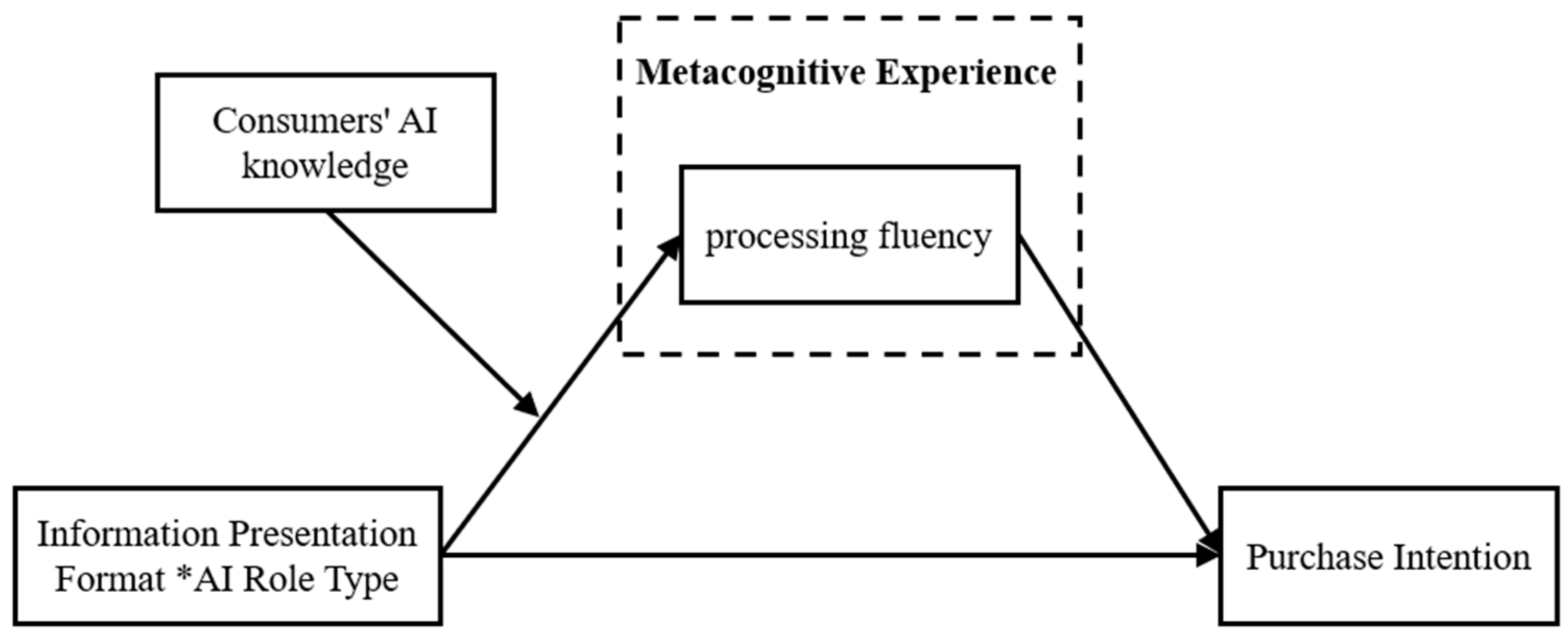
In the following content, two scenario experiments are conducted to verify the hypotheses. Study 1 examines the interaction between information presentation formats and AI role types on consumers’ purchase intention (H1a/H1b). Study 2 explores the mediator and the moderator (H2a/H2b/H3). All the participants provided informed consent, acknowledging that they understood the research objectives, procedures, data protection measures, and their right to withdraw at any time. Figure 1 illustrates the research framework. For all the experimental protocols, see Appendix A.

3. Study 1

Study 1 aims to explore the main effect, namely the interactive influence of information presentation format and AI role type on consumers’ purchase intention.

3.1. Method

3.1.1. Participants

We used G*Power 3.1 to calculate the sample size [51]. Based on our set parameters (Effect size = 0.25, α = 0.05, Power = 0.80), we calculated that the required sample size for the two groups was 128. Participants were recruited through the online survey platform Credamo [52]. Ultimately, 156 participants voluntarily completed the experiment. We adopted a 2 × 2 between-subjects experimental design, and the participants were randomly assigned to four groups in a 2 (information presentation format: horizontal vs. vertical) × 2 (AI role type: assistant-type vs. partner-type) design. To ensure data quality, the study included an attention check question (the participants were shown a quadrilateral pattern and asked to identify whether it was a triangle or a quadrilateral). After excluding incorrectly answered samples, 152 valid data points were ultimately obtained (Nhorizontal = 67, Nvertical = 85, 59.20% female, Mage = 29.29, SD = 5.39).

3.1.2. Procedure and Measures

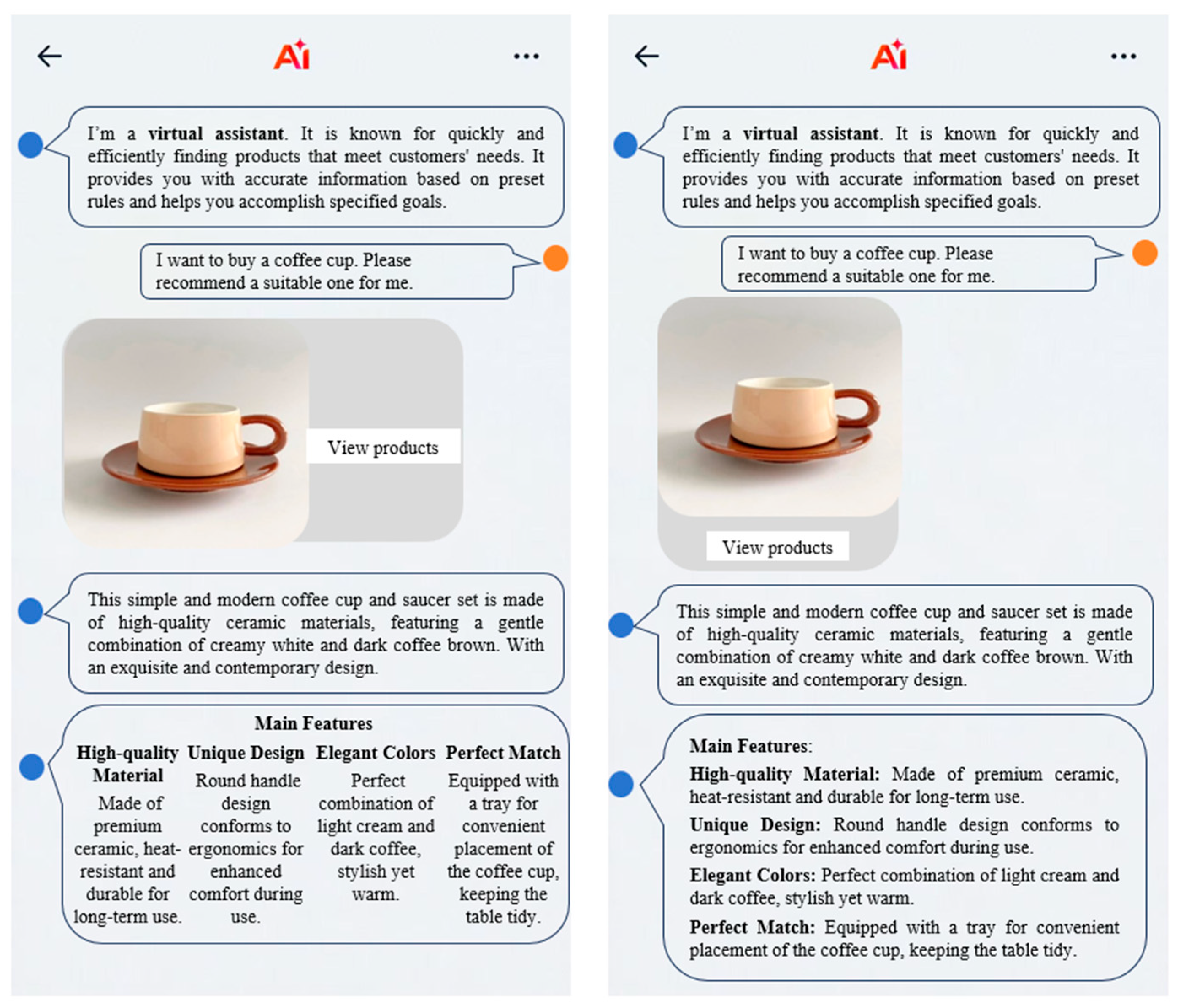
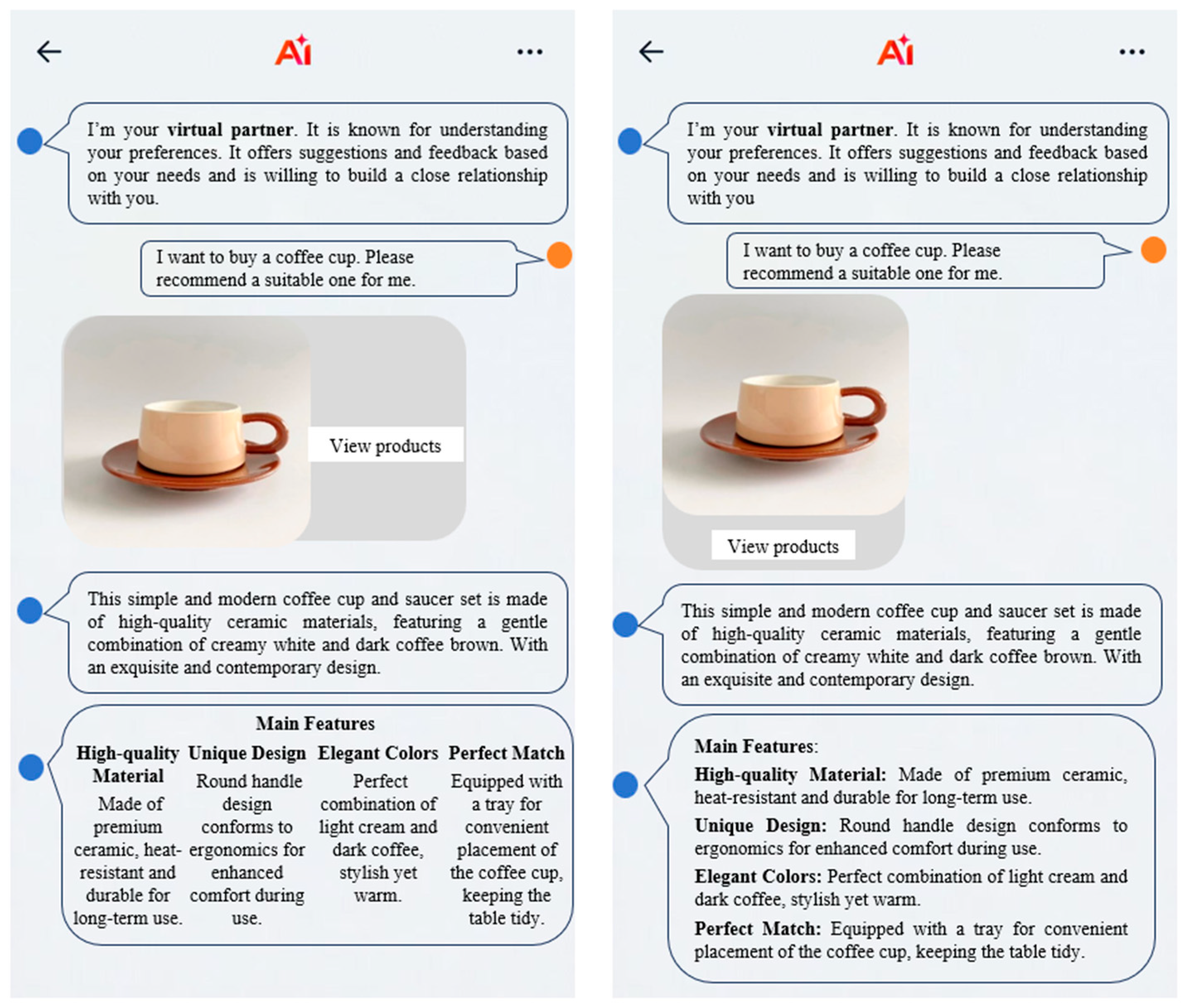
This study refers to the experimental design of Y. Jia et al. (2025) [12]. Before the experiment, the participants were asked to imagine that they wanted to purchase a coffee cup from an AI recommendation system and expected it to provide relevant product information. In the horizontal display condition, the participants saw a coffee cup and their introductions arranged horizontally, whereas in the vertical display condition, the participants viewed the same coffee cup and product descriptions, but the information was presented vertically. In the interactive interface, the AI recommendation system explicitly introduced itself using different role identities, namely an assistant-type AI or a partner-type AI [33]. Specifically, the assistant-type AI was task-oriented and positioned as a functional decision-support tool, emphasizing efficiency, accuracy, and professional product recommendations to help users complete purchasing tasks. Its interaction style was concise, objective, and utility-driven. In contrast, the partner-type AI was socially oriented and framed as an interactive companion that emphasized emotional engagement, personalized interaction, and relational communication. Rather than solely focusing on task completion, it aimed to create a more socially engaging and emotionally connected shopping experience. For example, in this study, achieving consumers’ goals quickly and efficiently embodies the assistant type, while building intimate relationships represents the partner type. See the italicized materials below for details. Specific experimental materials are provided in Appendix B.
[Assistant-type AI] “I’m a virtual assistant. It is known for quickly and efficiently finding products that meet customers’ needs. It provides you with accurate information based on preset rules and helps you accomplish specified goals.”
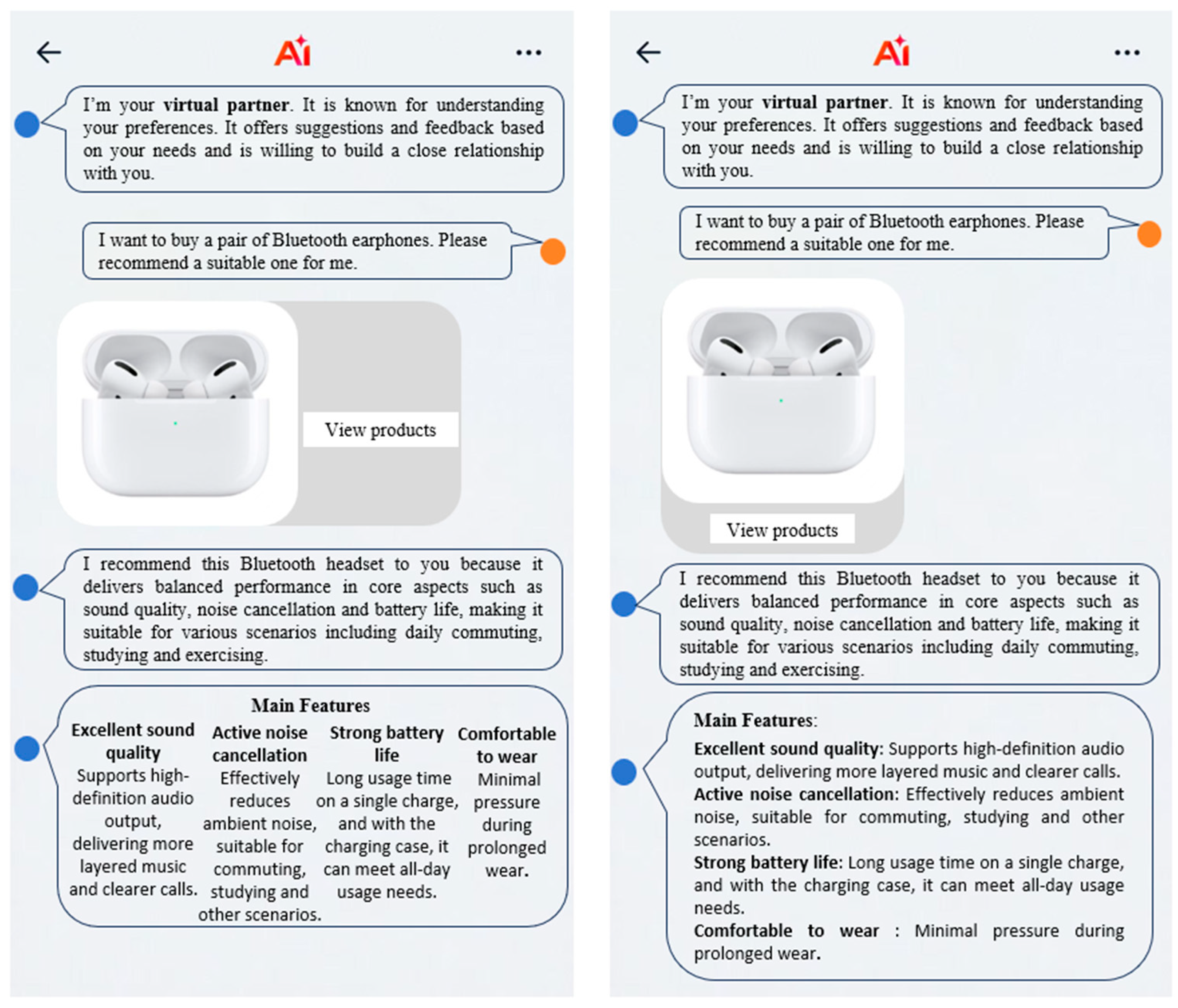
[Partner-type AI] “I’m your virtual partner. It is known for understanding your preferences. It offers suggestions and feedback based on your needs and is willing to build a close relationship with you.”
To assess the participants’ perceived differences in information presentation formats, they evaluated the information presentation format using a single-item seven-point Likert scale with the item: “The information presentation format is horizontal.” (1 = strongly disagree; 7 = strongly agree). To assess the participants’ perceptions of the role type, we employed two independent seven-point Likert items (1 = strongly disagree; 7 = strongly agree), adapted from Youn and Jin (2021) [33]. The items were: “This chatbot is my assistant” and “This chatbot is my partner.” Each item was analyzed separately to ensure accurate measurement of the participants’ perceptions of the different role types. Subsequently, the participants evaluated their purchase intention for the products by completing a single-item scale adapted from the three-item seven-point Likert scale developed by Bettiga et al. (2020) [53]. An example of the item is “I am willing to purchase this product” (1 = strongly disagree; 7 = strongly agree) (Cronbach’s α = 0.80).
To control for individual differences that may interfere with the experimental results, this study incorporated product-related expertise as a covariate in the analysis. Given that previous research has indicated that individuals’ domain-specific expertise may influence their judgments and choices, we used a single-item seven-point Likert scale to measure the participants’ expertise [54,55]: “Compared to others, how would you rate your knowledge of this type of products?” (1 = strongly disagree; 7 = strongly agree). Finally, the participants’ demographic variables were collected. The measurement is shown in Appendix C.

3.2. Result and Discussion

3.2.1. Manipulation Check

The results showed that the participants could effectively distinguish between the two types of information presentation formats (Mhorizontal = 5.64, SD = 1.72 vs. Mvertical = 2.67, SD = 1.77; t (150) = 10.41, p < 0.001; Cohen’s d = 1.75), confirming that the manipulation of information presentation format was effective. For AI role type, the results indicated that under the assistant-type AI, the participants’ perceived scores for the assistant-type AI were significantly higher than those for the partner-type AI (Massistant = 5.09, SD = 0.98 vs. Mpartner = 2.88, SD = 1.63; t (150) = 10.19, p < 0.001; Cohen’s d = 1.34). Under the partner-type AI, the participants’ perceived scores for the partner-type AI were significantly higher than those for the assistant-type AI (Massistant = 3.51, SD = 1.71 vs. Mpartner = 4.77, SD = 1.10; t (150) = 5.43, p < 0.001; Cohen’s d = 1.44). This demonstrates that the manipulation of the independent variable was effective.

3.2.2. Main Effect Analysis

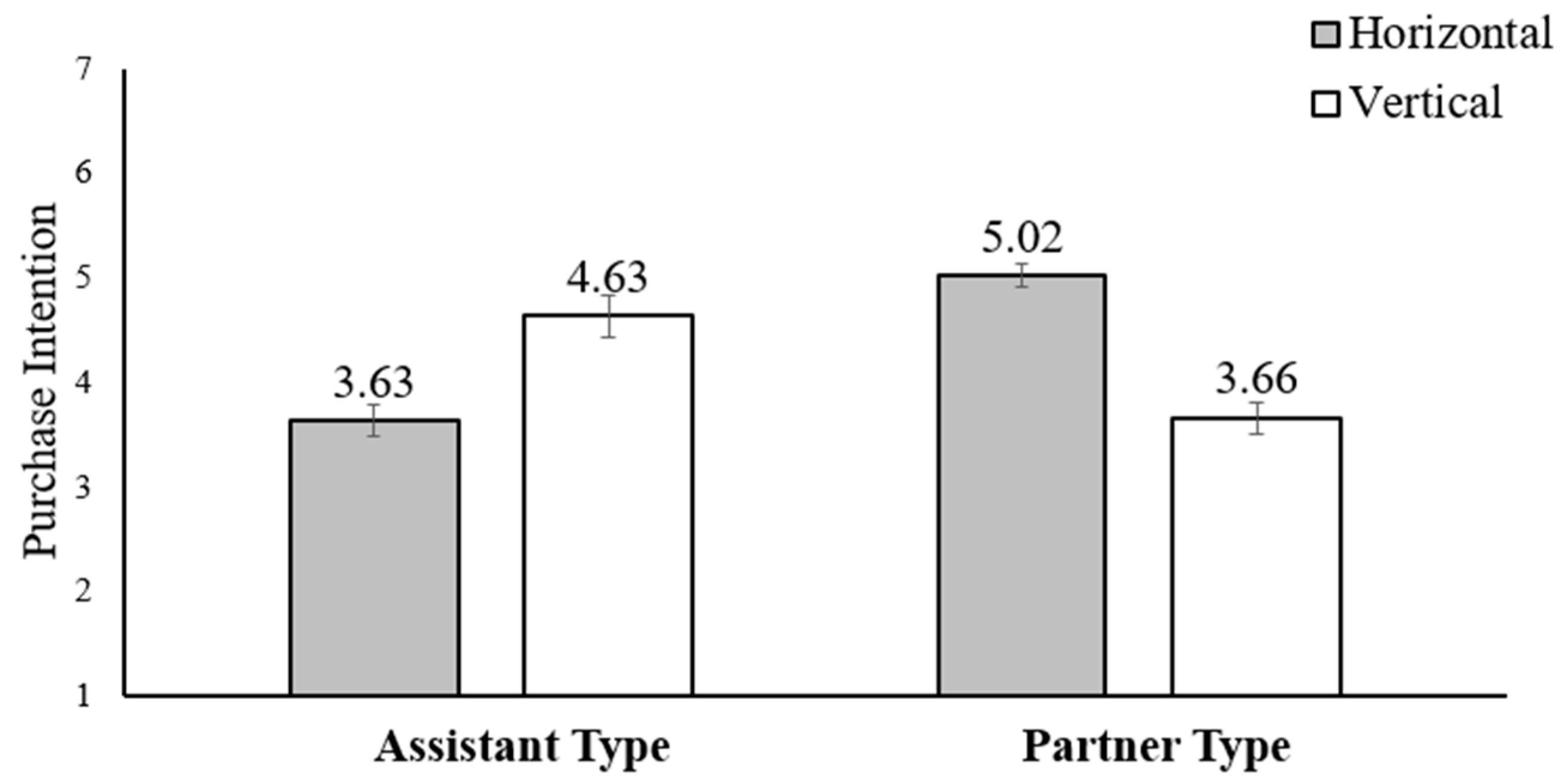
First, this study conducted a 2 × 2 two-way ANOVA with information presentation format and AI role type as independent variables and purchase intention as the dependent variable. The results indicated that the main effect of information presentation format was not significant (F (1,148) = 1.35, p = 0.247, η2 = 0.009), and the main effect of AI role type was also non-significant (F (1,148) = 1.88, p = 0.172, η2 = 0.013). However, there was a significant interaction effect between information presentation format and AI role type on purchase intention (F (1,148) = 58.69, p < 0.001, η2 = 0.284). The results of further simple effect analyses are presented in Figure 2. For the assistant-type AI, consumers showed significantly higher purchase intention under the vertical information presentation format than under the horizontal format (Mhorizontal = 3.63, SD = 0.84 vs. Mvertical = 4.63, SD = 1.02, F (1,148) = 21.27, p < 0.001, η2 = 0.126, 95% = [0.57, 1.43]). On the contrary, for the companion-type AI, consumers had significantly higher purchase intention when exposed to the horizontal information presentation format compared with the vertical format (Mhorizontal = 5.02, SD = 0.87 vs. Mvertical = 3.66, SD = 0.98, F (1,148) = 38.65, p < 0.001, η2 = 0.207, 95% = [0.93, 1.79]).
To further test the robustness of this effect after controlling for irrelevant variables, an analysis of covariance was performed with AI familiarity and product-related professional knowledge as covariates. The results indicated that the main effects of information presentation format (F (1,146) = 0.04, p = 0.849, η2 = 0.000) and role type (F (1,146) = 1.86, p = 0.175, η2 = 0.013) on purchase intention remained non-significant, while the consistency between information presentation format and role type still exerted a significant interaction effect on purchase intention (F (1,146) = 61.37, p < 0.001, η2 = 0.296). Among them, product-related professional knowledge had no significant effect on purchase intention (F (1,146) = 0.19, p = 0.665, η2 = 0.001). Importantly, the inclusion of these covariates did not change the results of the main effects. H1a and H1b were supported.

3.2.3. Discussion

Study 1 provides initial evidence that the effectiveness of purchase intention is shaped by the interaction between information presentation format and AI role type. While neither factor independently influenced purchase intention, their significant interaction. This suggests that consumers evaluate recommendations within an integrated cognitive framework. This finding underscores the importance of considering the congruence between interface design and AI role positioning that supports H1a and H1b.

4. Study 2

Study 2 aims to verify the mediating role of processing fluency and the moderating effect of consumers’ AI knowledge.

4.1. Method

4.1.1. Participants

The required sample size for this experiment was calculated using the same procedure as in Study 1, resulting in a target of 128 participants per group. In total, 155 online users voluntarily participated in this experiment. Study 2 adopted a between-subjects design, in which the participants were randomly assigned to a 2 (information presentation format: horizontal vs. vertical) × 2 (AI role type: assistant-type vs. partner-type) between-subjects design. To ensure data quality, we used the same attention check questions as in Study 1. After excluding 7 samples with incorrect responses, 148 valid data points were finally obtained (Nhorizontal = 72, Nvertical = 76, 42.60% female, Mage = 34.34, SD = 9.16).

4.1.2. Procedure and Measures

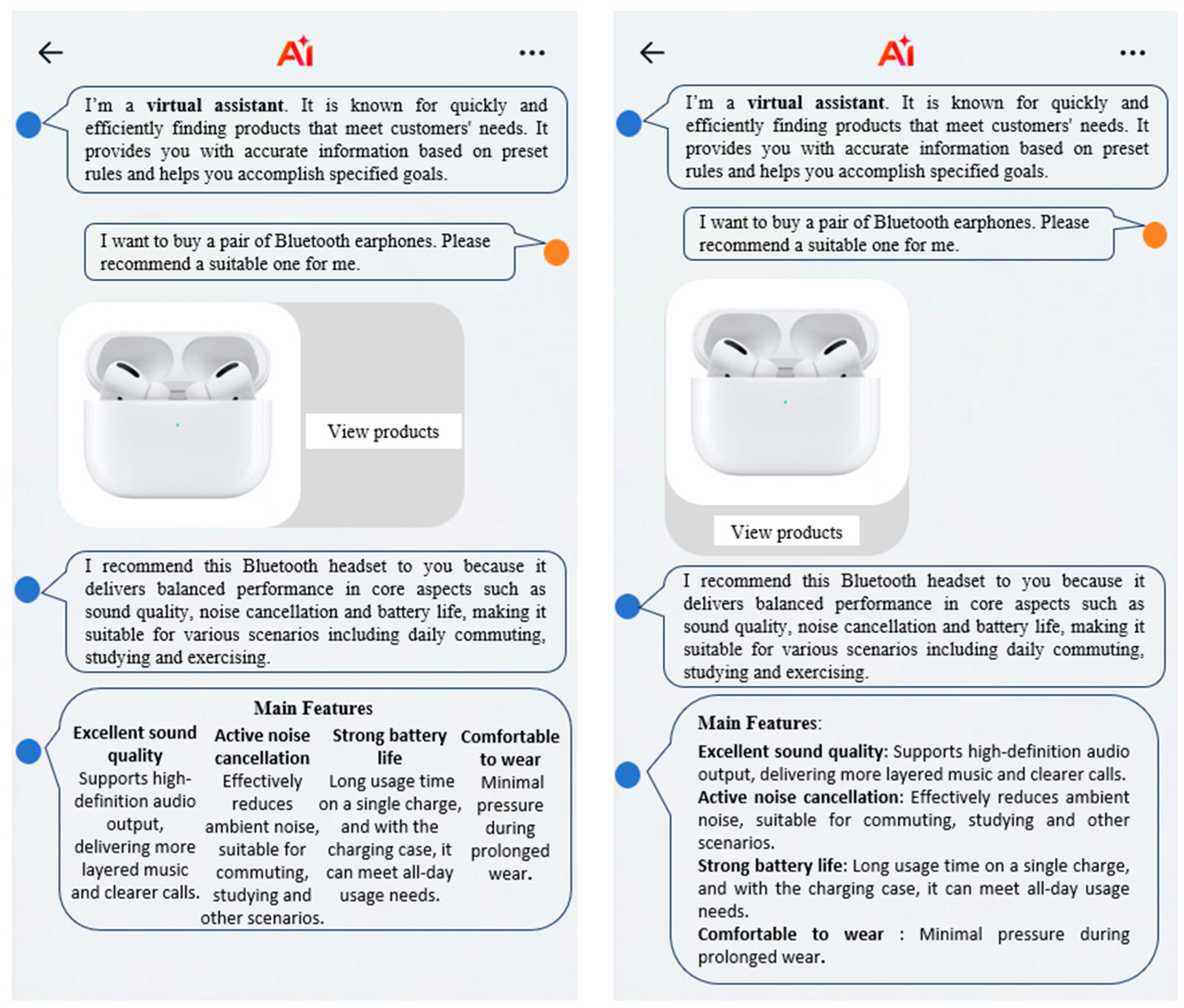
Prior to the experiment, the participants were asked to imagine that they intended to purchase a pair of Bluetooth earphones from an AI recommendation system and hoped that it would provide relevant product information. The manipulation of information presentation formats and AI role types was consistent with that in Study 1. Specific experimental materials are presented in Appendix B. The experimental procedure was similar to that of Study 1: the participants first evaluated different information presentation formats and AI role types, and then their purchase intention was measured using the same scale as in Study 1. In addition, we measured processing fluency using a four-item seven-point scale adapted from Kostyk et al. (2021), with an example item: “I found it difficult to process the information provided by the AI.” (Cronbach’s α = 0.88) [56]. Consumer knowledge of AI was measured using a three-item seven-point scale adapted from Y. Zhang et al. (2025), with an example item: “I know a lot about AI recommendation systems.” (Cronbach’s α = 0.79) [20]. We also measured the same control variables as in Study 1. Finally, the participants’ demographic variables were collected. The measurement is shown in Appendix C.

4.2. Result and Discussion

4.2.1. Manipulation Check

The results showed that the participants were able to effectively distinguish between the two types of information presentation formats (Mhorizontal = 6.31, SD = 1.16 vs. Mvertical = 1.86, SD = 1.13; t (146) = 23.68, p < 0.001; Cohen’s d = 1.14), confirming that the manipulation of information presentation format was effective. For the manipulation check of AI role type, the results indicated that under the assistant-type AI, the participants’ perceived scores for the assistant-type AI recommendation system were significantly higher than those for the partner-type AI (Massistant = 4.64, SD = 2.38 vs. Mpartner = 3.13, SD = 1.69; t (146) = 4.47, p < 0.001; Cohen’s d = 2.06). In contrast, under the partner-type AI, the participants’ perceived scores for the partner-type AI were significantly higher than those for the assistant-type AI (Massistant = 3.16, SD = 2.27 vs. Mpartner = 5.12, SD = 2.17; t (146) = 5.36, p < 0.001; Cohen’s d = 2.22). This demonstrates that the manipulation of the independent variable was effective.

4.2.2. Main Effect Analysis

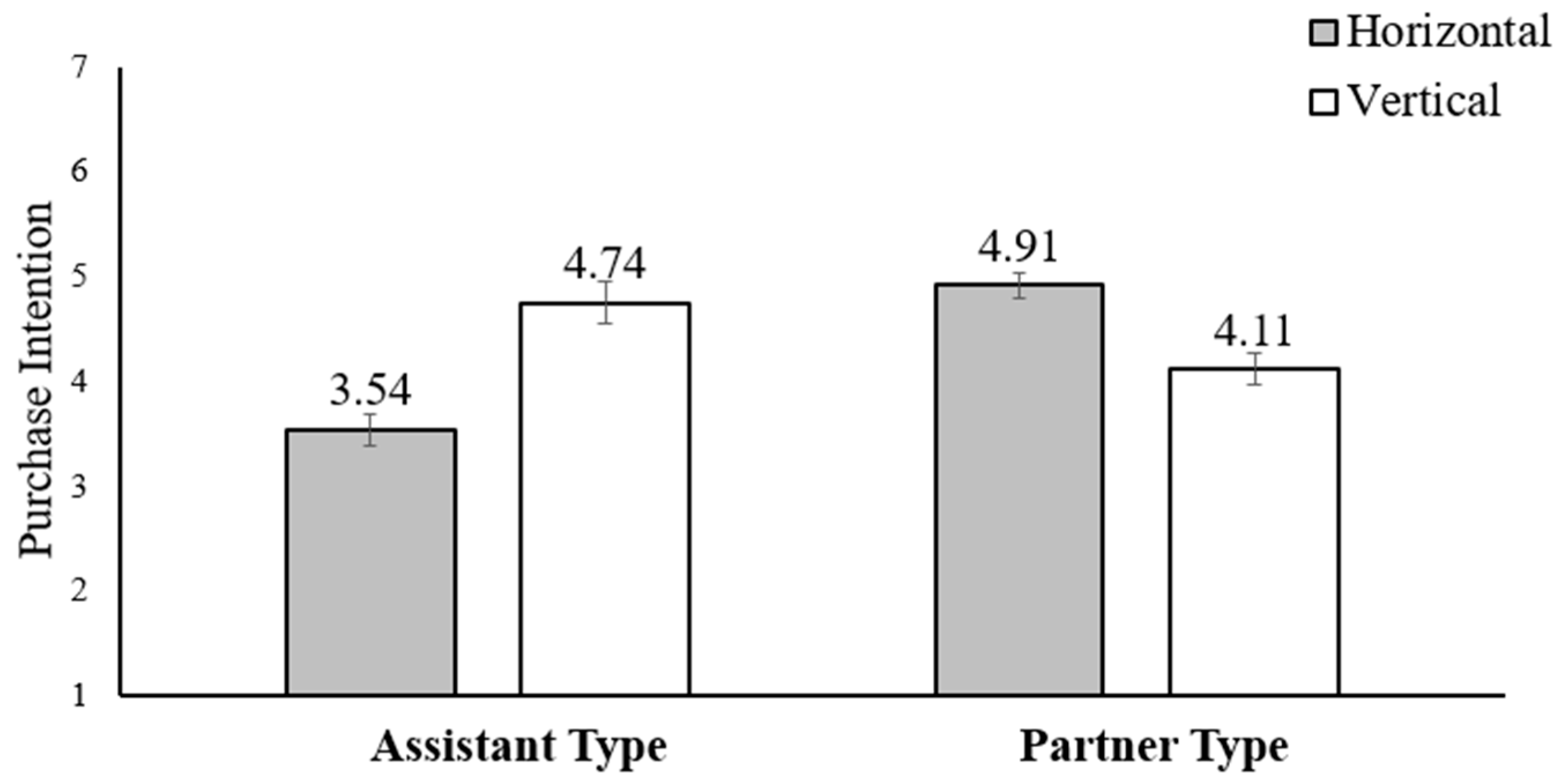
First, this study conducted a 2 × 2 two-way ANOVA with information presentation format and AI role type as independent variables and purchase intention as the dependent variable. The results indicated that the main effect of information presentation format was not significant (F (1,144) = 1.07, p = 0.303, η2 = 0.007), and the main effect of AI role type was also non-significant (F (1,144) = 3.64, p = 0.058, η2 = 0.025). However, there was a significant interaction effect between information presentation format and AI role type on purchase intention (F (1,144) = 26.97, p < 0.001, η2 = 0.158). The results of further simple effect analyses are presented in Figure 3. For the assistant-type AI, consumers showed significantly higher purchase intention under the vertical information presentation format than under the horizontal format (Mhorizontal = 3.54, SD = 1.22 vs. Mvertical = 4.74, SD = 1.25, F (1,144) = 19.09, p < 0.001, η2 = 0.117, 95%CI = [0.66, 1.75]). On the contrary, for the companion-type AI, consumers had significantly higher purchase intention when exposed to the horizontal information presentation format compared with the vertical format (Mhorizontal = 4.91, SD = 1.00 vs. Mvertical = 4.11, SD = 1.21, F (1,144) = 8.79, p = 0.004, η2 = 0.058, 95% = [0.27, 1.34]).
To further test the robustness of this effect after controlling for irrelevant variables, an analysis of covariance was performed with AI familiarity and product-related professional knowledge as covariates. The results indicated that the main effects of information presentation format (F (1,143) = 1.54, p = 0.2166, η2 = 0.011) and AI role type (F (1,143) = 3.66, p = 0.058, η2 = 0.025) on purchase intention remained non-significant, while the consistency between information presentation format and AI role type still exerted a significant interaction effect on purchase intention (F (1,143) = 28.96, p < 0.001, η2 = 0.168). Product-related professional knowledge had no significant effect on purchase intention (F (1,143) = 2.45, p = 0.120, η2 = 0.017). H1a and H1b are supported.

4.2.3. Mediation Effect Analysis

To further examine the mediating effect of information presentation formats on purchase intention among different AI role types, a mediating effect analysis was conducted based on 5000 bootstrap samples (PROCESS Model 8) [57]. In this model, information presentation format and role types were set as independent variables, purchase intention as the dependent variable, and processing fluency as the mediating variable, with all the variables being continuous variables.
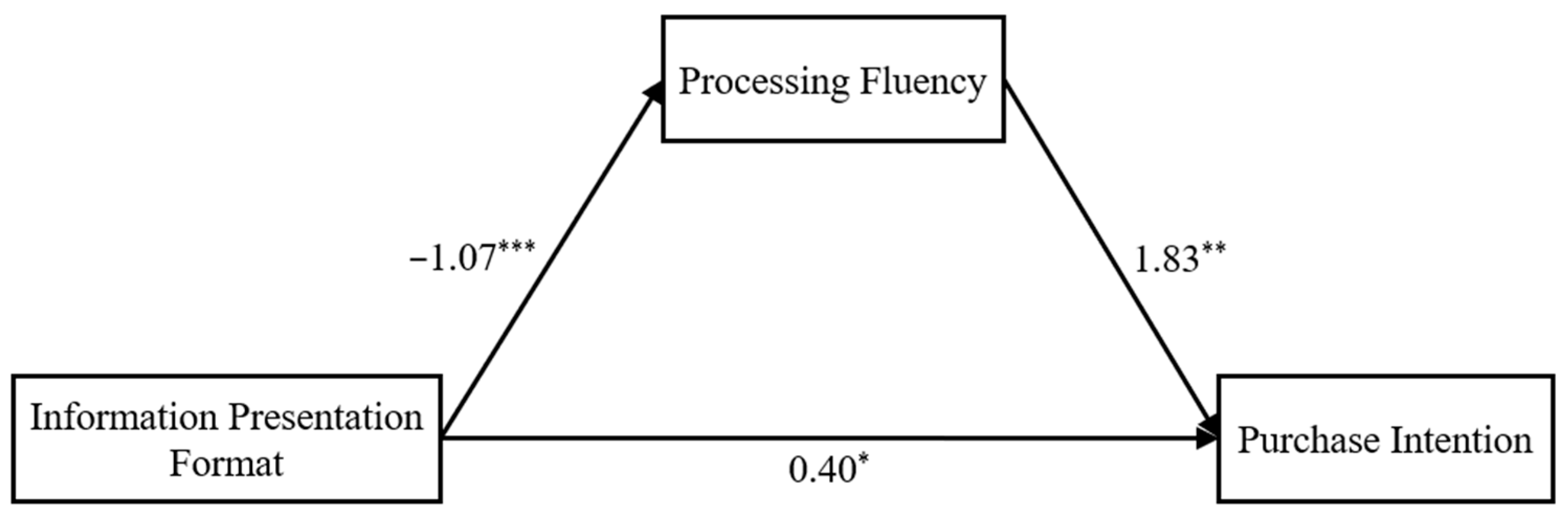
As shown in Figure 4, under the assistant-type AI, information presentation format exerts a significant effect on processing fluency (β = −1.07, BootSE = 0.24, 95% CI = [−1.55, −0.59]). Specifically, each one-unit increase in information presentation format leads to an average decrease of 1.07 units in processing fluency. BootSE = 0.242 is used to assess the stability of coefficient estimation results. The 95% confidence interval of [−1.55, −0.59] indicates that there is a 95% probability that the true coefficient falls within this range, and the interval does not contain zero, which proves that this influencing effect is statistically significant. Processing fluency also has a significant impact on purchase intention (β = 1.83, BootSE = 0.29, 95% CI = [0.61, 1.75]). After incorporating both information presentation format and processing fluency into the model, the direct effect of information presentation format on purchase intention remains significant (β = 0.40, BootSE = 0.18, 95% CI = [0.10, 0.81]). Accordingly, H2a is supported.
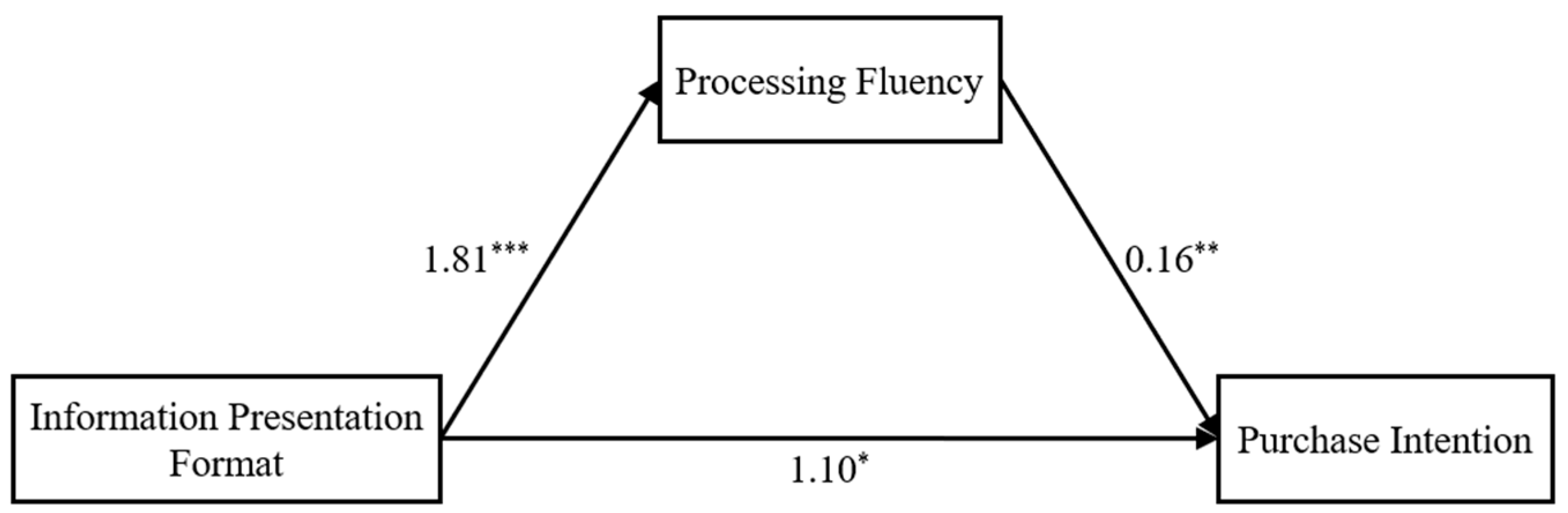
As shown in Figure 5, under the partner-oriented AI mode, information presentation format exerts a significant influence on processing fluency (β = 1.81, BootSE = 0.23, 95% CI = [1.36, 2.28]), and processing fluency also has a remarkable effect on purchase intention (β = 0.16, BootSE = 0.13, 95% CI = [0.09, 0.42]). After incorporating both information presentation format and processing fluency into the model simultaneously, the direct impact of information presentation form on purchase intention remains significant (β = 1.10, BootSE = 0.34, 95% CI = [0.42, 1.79]). Accordingly, H2b is supported.
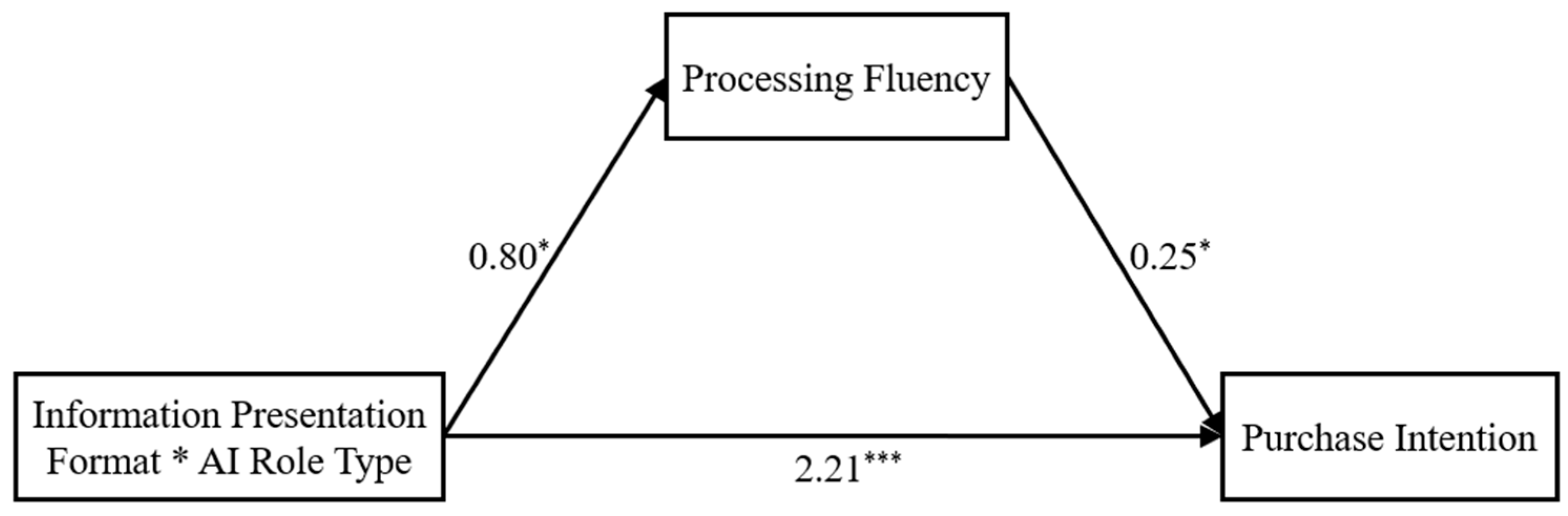
To measure the interaction effect of independent variables, the PROCESS Model 8 was adopted for further mediating effect analysis. In this model, information presentation format and role type are set as independent variables, purchase intention as the dependent variable, and processing fluency as the mediating variable. As shown in Figure 6, the interaction between information presentation mode and role type significantly affected processing fluency (β = 0.80, BootSE = 0.32, 95% CI = [0.18, 1.43]), and the effect of processing fluency on purchase intention was also significant (β = 0.25, BootSE = 0.10, 95% CI = [0.05, 0.45]). When information presentation mode, role type, and processing fluency were simultaneously included in the model, the direct effect of information presentation mode and role type on purchase intention remained significant (β = 2.21, BootSE = 0.39, 95% CI = [1.44, 2.70]). This indicates that information presentation format and role type not only directly affected purchase intention but also exerted an indirect effect through processing fluency.

4.2.4. Moderator Effect Analysis

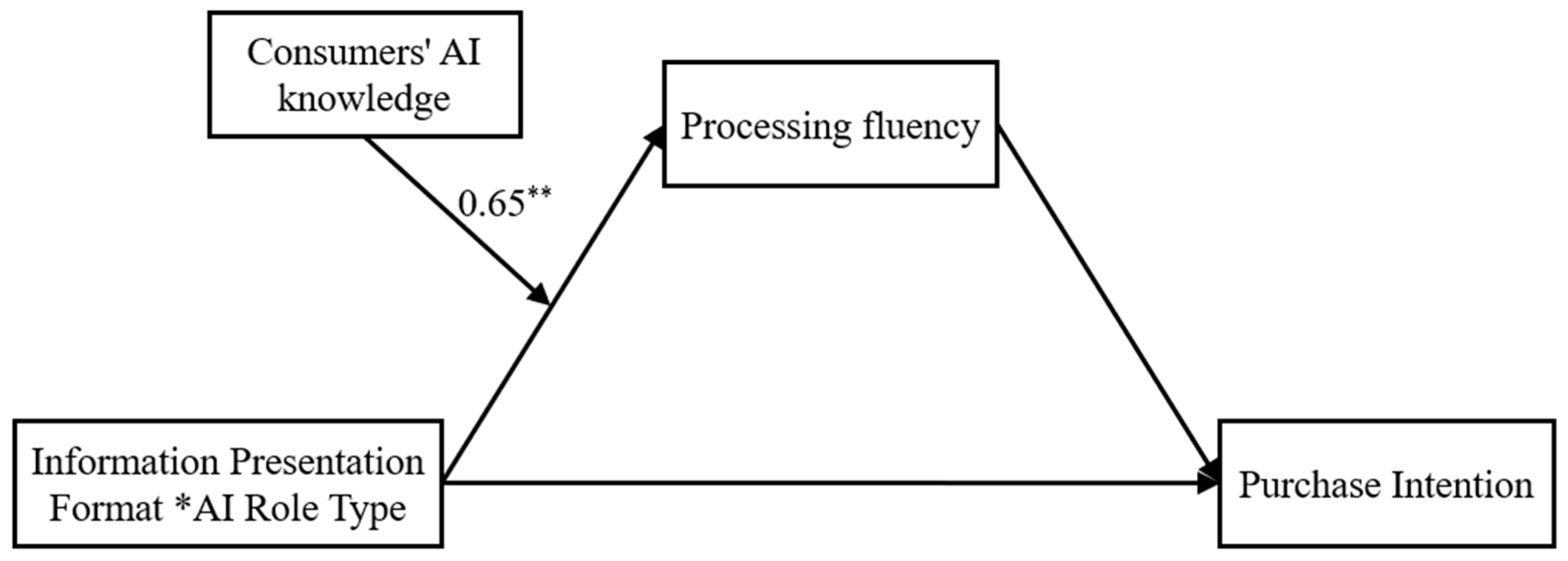
This study adopts the bootstrap method to examine the moderating effect of product attributes (PROCESS Model 13). In this model, information presentation format and role type serve as independent variables, purchase intention as the dependent variable, processing fluency as the mediating variable, and consumers’ AI knowledge as the moderating variable. All the variables are continuous variables. The number of bootstrap resamples is set to 5000. Interaction terms are automatically generated by PROCESS to test the interaction effects and moderating effects between continuous variables. Meanwhile, simple slope analysis is conducted to present the moderating effects at high, medium and low levels. The results, as shown in Figure 7, indicate that consumers’ AI knowledge can effectively moderate the impact of the interaction term between information presentation format and role type on processing fluency (β = 0.65, BootSE = 0.21, 95% CI = [0.24, 1.06]); meanwhile, the moderated mediation index reaches a significant level (Index = −0.15, BootSE = 0.09, 95% CI = [−0.35, −0.01]). Therefore, H3 is supported.
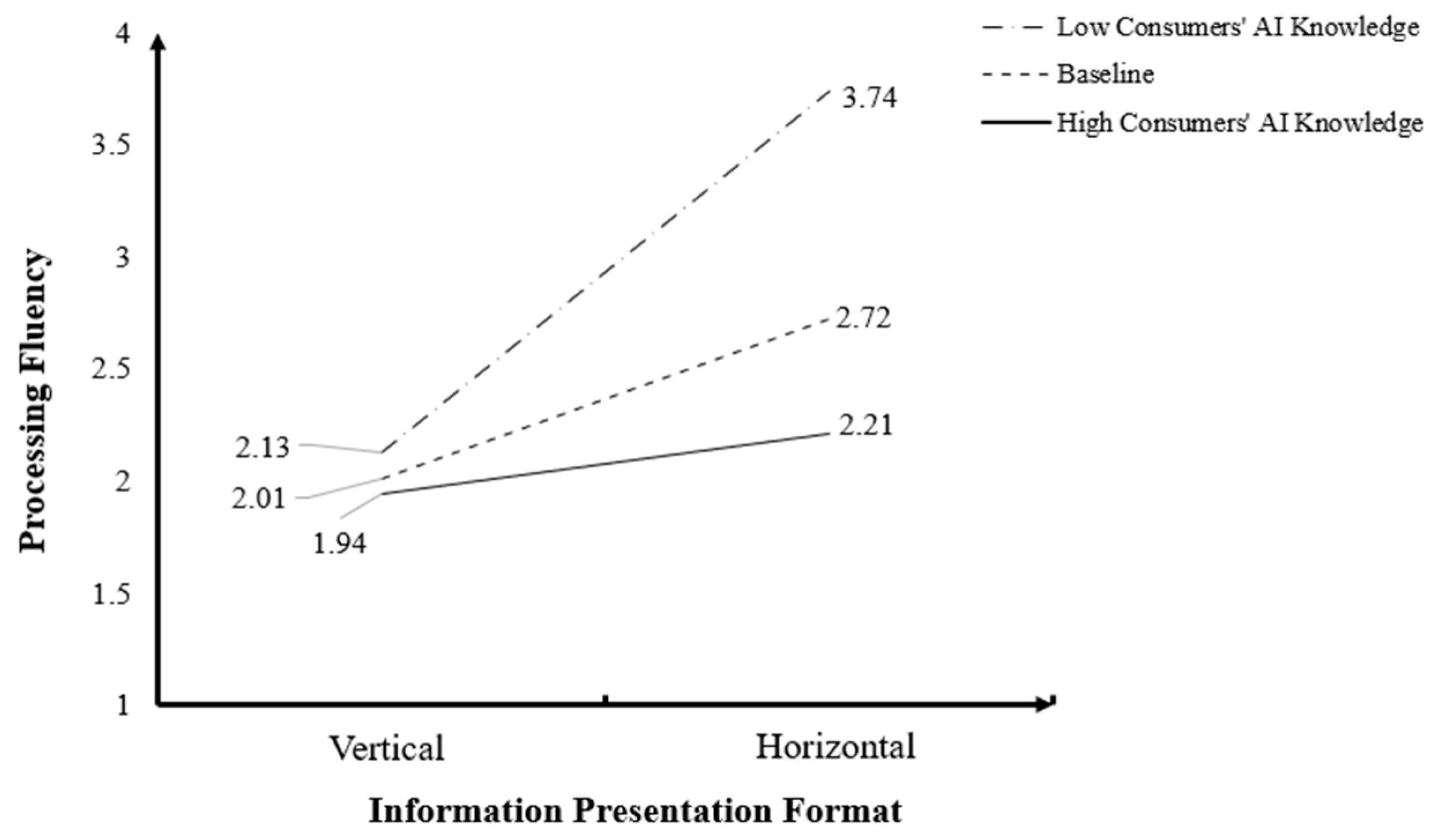
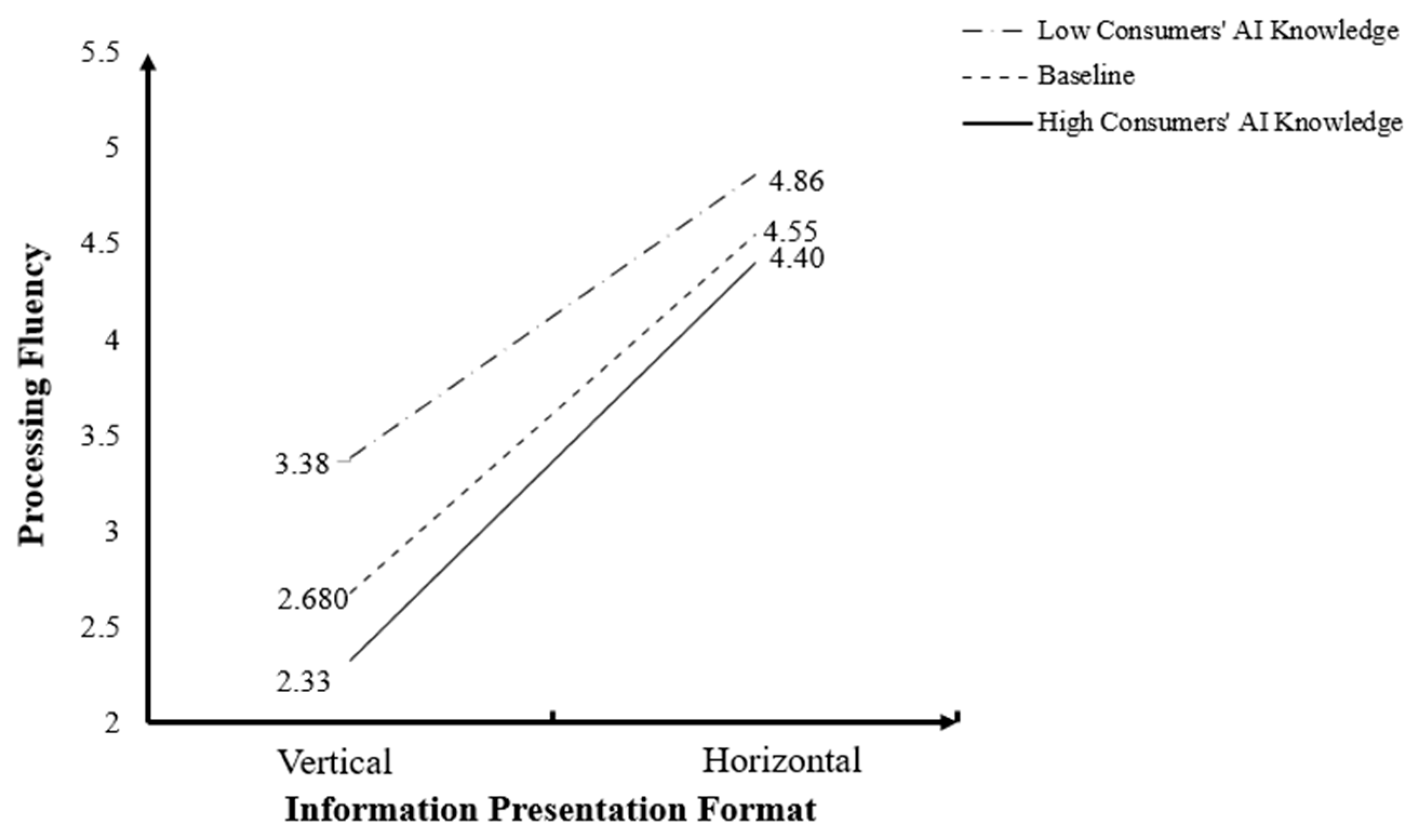
Figure 8 illustrates the moderating effect of consumers’ AI knowledge on the relationship between information presentation format, role type, and perceived processing fluency in the context of the assistant-type AI. The horizontal axis represents information presentation format, and the vertical axis represents the level of perceived processing fluency. The results indicate that the impact of information presentation format on processing fluency varies significantly depending on consumers’ level of AI knowledge. When consumers’ AI knowledge is at a low level (−1SD) and baseline (M), the effect of information presentation format on perceived processing fluency is significant (M − 1 SD: β = 1.62, BootSE = 0.32, 95% CI = [0.99, 2.24]; M: β = −0.71, BootSE = 0.23, 95% CI = [0.26, 1.17]). When consumers’ AI knowledge is at a high level (+1 SD), the effect of information presentation format on perceived processing fluency is not significant (β = 0.26, BootSE = 0.32, 95% CI = [−0.37, 0.90]). Further moderated mediation analysis results show that when consumers’ AI knowledge is at a low level (−1SD) and a medium level (M), the indirect effect is significantly positive (M − 1 SD: β = −0.37, BootSE = 0.19, 95% CI = [−0.76, −0.41]; M: β = −0.16, BootSE = 0.09, 95% CI = [−0.36, −0.13]); when consumers’ AI knowledge is at a high level (+1 SD), the indirect effect of information presentation format on purchase intention through processing fluency is not significant (β = −0.06, BootSE = 0.08, 95% CI = [−0.23, 0.11]).
Figure 9 illustrates the moderating effect of consumers’ AI knowledge on the relationship between information presentation format, role type, and perceived processing fluency in the context of a partner-type AI. Specifically, the effect is significant at low (−1 SD), baseline (M), and high (+1 SD) levels of AI knowledge (M − 1 SD: β = 1.47, BootSE = 0.27, 95% CI = [0.94, 2.01]; M: β = 1.87, BootSE = 0.22, 95% CI = [1.43, 2.32]; M + 1 SD: β = 2.07, BootSE = 0.31, 95% CI = [1.47, 2.68]). Further moderated mediation analysis reveals that the indirect effect of information presentation format on purchase intention through processing fluency is significant when consumers’ AI knowledge is at a low level (−1SD), baseline (M), and high level (+1 SD) (M − 1 SD: β = −0.34, BootSE = 0.16, 95% CI = [−0.66, −0.49]; M: β = −0.43, BootSE = 0.19, 95% CI = [−0.80, −0.07]; M + 1 SD: β = −0.47, BootSE = 0.21, 95% CI = [−0.92, −0.07]).

4.2.5. Discussion

Study 2 further demonstrates the effects of information presentation format and AI role type on purchase intention, revealing the mediating role of processing fluency and the moderating role of consumers’ AI knowledge. The findings indicate that the match between information presentation format and role type exerts a significant direct effect on purchase intention, and this effect is significantly mediated by processing fluency. In addition, consumers’ AI knowledge plays an important moderating role in the relationship between information presentation format and processing fluency. Specifically, consumers with low AI knowledge are more sensitive to the perceived differences between information presentation format and processing fluency, whereas those with high AI knowledge show smaller perceived differences.

5. General Discussion

5.1. Summary and Interpretation of Key Findings

Based on the metacognitive experience theory, this study systematically explores the mechanism of the matching between information presentation formats and AI role types in AI recommendation systems on consumers’ purchase intention in the e-commerce context. It aims to answer the core research question: How does the interaction between information presentation formats and AI role types affect consumers’ purchase intention? The research results show that the matching of information presentation formats and AI role types can significantly enhance consumers’ purchase intention. This effect is mediated by processing fluency, and consumers’ AI knowledge moderates the strength of such influence.
First of all, the results show that the separate effects of information presentation modes and artificial intelligence role types have no significant impact on consumers’ purchase intention, whereas their interactive effect is significant. This conclusion provides an important reference for research literature related to interactive marketing [58]. Most existing studies explore information presentation formats [12,59] or AI role types [33] as a single independent variable. However, recent research in the field of interactive marketing proposes that consumers’ behavioral feedback stems from the synergistic effect of multiple cues in digital scenarios [6,11]. Consistent with this viewpoint, this study finds that in the context of AI interactive marketing, when consumers are exposed to recommended content, they not only focus on the information itself, but also evaluate whether the information presentation formats match the interactive logic conveyed by AI roles. Consumers are more likely to develop positive purchase intentions only when the two types of cues are effectively matched. This finding indicates that a single design element cannot independently drive consumer behavior, and the synergistic matching between information presentation formats and AI role types serves as a crucial mechanism for improving the effectiveness of AI recommendations. This conclusion further deepens academic understanding of the formation mechanism underlying consumer decision-making in AI-powered interactive marketing.
Secondly, this study reveals that the influences of information presentation format and role types on purchase intention are realized through the psychological mechanism of processing fluency. According to the metacognitive experience theory, individuals make subjective evaluations of the decision-making process based on the fluency of information processing during decision-making [21]. Studies show that in assistant-type AI, vertical information presentation reduces processing fluency but significantly increases purchase intention. In partner-type AI, horizontal information presentation improves processing fluency, which in turn motivates consumers to make purchases. This indicates that under the combined effect of different AI role types and information presentation formats, processing fluency exhibits non-linear influence characteristics. Consistent with existing studies, the effect of information processing fluency on decision-making behavior is context-dependent, and low-fluency processing can also positively influence decision-making under specific conditions [32,41], which expands the previous perspective that only emphasizes its positive effect [35,37]. This further verifies the applicability of the experimental results in digital marketing scenarios.
Finally, this study further finds that consumers’ AI knowledge plays a significant moderating role in the impact of the matching between information presentation format and role types on purchase intention. The research results show that compared with consumers who have low AI knowledge, the impact of information presentation format and AI role type on purchase intention is less pronounced among consumers with high AI knowledge. In line with previous studies, consumers’ information processing process is moderated by their past experience [49]. This result reasonably reflects the behavioral differences among consumers with different cognitive levels in digital interactive marketing environments. Users with insufficient relevant knowledge are more likely to rely on interface layouts and system role prompts, while users with abundant relevant knowledge tend to make rational analyses rather than simply depend on processing fluency when dealing with recommended information [50]. The research findings supplement the existing research system of interactive marketing and verify the implementation effect of artificial intelligence-based recommended marketing strategies, which, beyond technical design, are also constrained by consumers’ capability to understand and interpret AI systems.

5.2. Theoretical Contributions and Implications

First, it extends the research on AI recommendation systems and interactive marketing by revealing the interaction effect between information presentation format and AI role type on consumers’ purchase intention. Most previous studies have explored information presentation formats or AI role types as independent antecedent variables affecting consumer behaviors. However, current research on interactive marketing proposes that value creation in AI scenarios stems from the continuous interactions among consumers, AI and interfaces [6,11]. Consistent with this viewpoint, the findings of this study verify that information presentation formats and AI role types jointly influence consumers’ purchase intention via their matching degree. Breaking through the limitations of research perspectives focusing on single influencing factors, this conclusion confirms that consumers develop holistic judgments by combining interface cues and role cues, which further deepens academic understanding of the internal decision-making mechanism of AI recommendation systems.
Second, this study extends the application of metacognitive experience theory to complex human–AI interaction scenarios. Existing research on metacognitive experience has largely focused on traditional cognitive tasks and information-processing contexts [23,24,25], with limited attention to its applicability in AI-mediated marketing. By applying this theory to AI recommendation systems, we demonstrate that perceived processing fluency mediates the influence of information presentation format and AI role type on purchase intention. This conclusion elaborates on how consumers convert interactive experiences into purchase intention, identifies the critical psychological pathways through which AI recommendation systems deliver marketing value, and enriches research in the field of interactive marketing. From a broader perspective, the research findings also supplement existing content of emerging research streams and help academia explore how AI technologies reshape users’ participation patterns and decision-making logic within interactive scenarios.
Finally, this study highlights the boundary role of consumers’ AI knowledge. Although prior research has shown that processing fluency affects decision-making [35,37], the moderating role of consumers’ AI knowledge remains underexplored. This study finds that consumers with lower AI knowledge are more susceptible to the influence of information presentation formats and AI role type compared to those with higher AI knowledge. This finding indicates that individual differences among consumers serve as a critical boundary condition affecting the effectiveness of AI recommendations, thereby offering a new theoretical framework for future research in the field of AI recommendation systems.

5.3. Implications for Practice

This study provides specific strategic guidance for e-commerce platforms to optimize the interface of AI recommendation systems and boost consumers’ purchase intention. First, e-commerce platforms should carry out customized interface design by taking into account the compatibility between information presentation format and AI role type. Specifically, assistant-type AI is suitable for vertical information format to align with consumers’ expectation of in-depth browsing, while partner-type AI works better with horizontal layouts to facilitate quick browsing, which can effectively stimulate consumers’ purchase intention. Secondly, optimizing consumers’ metacognitive experience should be the core goal of recommendation system design. The research results indicate that processing fluency plays a vital mediating role in the influence of information presentation format and AI role types on purchase intention. Accordingly, platforms can improve the consistency between information presentation and AI roles through interface optimization, so as to enhance consumers’ metacognitive experience and further promote their purchase intention. Finally, e-commerce platforms should adopt differentiated recommendation strategies based on consumers’ AI knowledge. For consumers with low AI knowledge, emphasis should be placed on matching information presentation format with AI role types to increase their purchase intention. For those with high AI knowledge, more detailed recommendation logic should be displayed to meet their needs for rational analysis and further drive consumption behaviors.

5.4. Limitations and Future Research Directions

This study has several limitations. First, this research focuses on immediate decision-making scenarios, while the formation of purchase intention may also be affected by long-term effects [60], such as factors including brand trust [61] or brand meaning [62]. Future studies can adopt longitudinal designs or long-term follow-up experiments to incorporate temporal factors into the analytical framework, so as to more comprehensively reveal the sustained impacts of information presentation formats and AI role types on consumer decision-making. Second, although this study recruited diverse samples online to improve representativeness, online data collection still has inherent limitations [63]. For instance, the participants may have self-selection bias, and interfering factors in the online environment may affect their cognitive processing and engagement level. To enhance the external validity of research conclusions, subsequent studies can combine online experiments with controlled laboratory experiments or field surveys, so as to control environmental variables more accurately and verify the robustness of research results in different scenarios. Third, given that recent research in interactive marketing highlights the necessity of establishing more comprehensive theoretical logic to underscore research contributions [64], future studies may incorporate additional theoretical perspectives and contextual factors to deliver a more holistic explanation of interactive behaviors between consumers and artificial intelligence.

Author Contributions

Formal analysis, data curation, and writing—original draft preparation, Q.G.; conceptualization, validation, and methodology, X.Y.; writing—review and editing and supervision, D.Y. and Q.Y. All authors have read and agreed to the published version of the manuscript.

Funding

This research received no external funding.

Institutional Review Board Statement

The study was conducted in accordance with the Declaration of Helsinki, and approved by the Institutional Review Board of Liaoning University of Technology (Approval No.: 20260311; approval date 11 March 2026).

Informed Consent Statement

Informed consent was obtained from all subjects involved in the study.

Data Availability Statement

The data that support the findings of this study are available from the corresponding author upon reasonable request.

Conflicts of Interest

The authors declare no conflicts of interest.

Appendix A

All the experimental protocols were registered at (https://os.psych.ac.cn/preregisterdetail/202604.00007V1, accessed on 8 June 2026). These materials are available on the Open Science Framework and ensure the transparency and reproducibility of the research process.

Appendix B

The experimental materials are as follows.
Figure A1. Experimental materials of assistant-type AI in Study 1.
Jtaer 21 00183 g0a1
Figure A2. Experimental materials of partner-type AI in Study 1.
Jtaer 21 00183 g0a2
Figure A3. Experimental materials of assistant-type AI in Study 2.
Jtaer 21 00183 g0a3
Figure A4. Experimental materials of partner-type AI in Study 4.
Jtaer 21 00183 g0a4

Appendix C

All scale items are shown in Table A1.
Table A1. Scale items.
VariablesItemsSource
IVsInformation Presentation formatThe information is presented horizontally.Self-drafted
Role Type1. This chatbot is my assistant.
2. This chatbot is my partner.
Youn & Jin, 2021 [33]
DVPurchase Intention1. I am willing to purchase the products.
2. I will purchase the products.
3. I will purchase the products for a long time.
Bettiga et al., 2020 [53]
MVProcessing Fluency1. I find it difficult to process the information provided by AI when reading it.
2. I find it hard to read the information provided by AI.
3. It takes me a long time to process the information provided by AI when reading it.
4. I find it difficult to understand the information provided by AI when reading it.
Kostyk et al., 2021 [56]
MoVConsumers’ AI knowledge1. I know a lot about AI recommendation systems.
2. I usually talk a lot about AI recommendation systems.
3. I usually think a lot about AI recommendation systems.
Y. Zhang et al., 2025 [20]
Attention Discrimination QuestionParticipants were shown a quadrilateral pattern and asked to identify whether it was a triangle or a quadrilateral.Y. Zhang et al., 2025 [20]
CVProfessional KnowledgeCompared with others, how would you rate your level of knowledge about this type of product?Chinchanachokchai et al., 2021; Mitchell & Dacin, 1996 [54,55]

References

  1. Wang, C.L. Editorial: The Changing Landscape of Marketing Research in the AI Era: Prospects and Challenges. J. Res. Interact. Mark. 2026, 20, 1–10. [Google Scholar] [CrossRef]
  2. Davenport, T.; Guha, A.; Grewal, D.; Bressgott, T. How Artificial Intelligence Will Change the Future of Marketing. J. Acad. Mark. Sci. 2020, 48, 24–42. [Google Scholar] [CrossRef]
  3. Libai, B.; Bart, Y.; Gensler, S.; Hofacker, C.F.; Kaplan, A.; Kötterheinrich, K.; Kroll, E.B. Brave New World? On AI and the Management of Customer Relationships. J. Interact. Mark. 2020, 51, 44–56. [Google Scholar] [CrossRef]
  4. Zimmermann, R.; Mora, D.; Cirqueira, D.; Helfert, M.; Bezbradica, M.; Werth, D.; Weitzl, W.J.; Riedl, R.; Auinger, A. Enhancing Brick-and-Mortar Store Shopping Experience with an Augmented Reality Shopping Assistant Application Using Personalized Recommendations and Explainable Artificial Intelligence. J. Res. Interact. Mark. 2023, 17, 273–298. [Google Scholar] [CrossRef]
  5. Wang, C.L. New Frontiers and Future Directions in Interactive Marketing: Inaugural Editorial. J. Res. Interact. Mark. 2021, 15, 1–9. [Google Scholar] [CrossRef]
  6. Wang, C.L. Editorial–What Is an Interactive Marketing Perspective and What Are Emerging Research Areas? J. Res. Interact. Mark. 2024, 18, 161–165. [Google Scholar] [CrossRef]
  7. Mohammadi Darani, M.; Aghaie, S. Recommender Systems Impact on Platform’s Content and Outcomes: The Role of Providers and Algorithm Designs. J. Res. Interact. Mark. 2025, 19, 917–935. [Google Scholar] [CrossRef]
  8. Davis, S.W.; Horváth, C.; Gretry, A.; Belei, N. Say What? How the Interplay of Tweet Readability and Brand Hedonism Affects Consumer Engagement. J. Bus. Res. 2019, 100, 151–164. [Google Scholar] [CrossRef]
  9. Zhao, E.; Sun, S.; Fu, C.; Wu, J.; Wang, S. How User-Generated Content Influence Different Types of Travelers to Select Hotels? A Perspective with Prospect Theory. Inf. Process. Manag. 2025, 62, 104049. [Google Scholar] [CrossRef]
  10. Yu, X.; Li, Y.; Huang, H.; Bogicevic, V. How Recommendation Conciseness Shapes Customers’ Attitudes toward the AI Chatbot. Int. J. Contemp. Hosp. Manag. 2025, 37, 3559–3577. [Google Scholar] [CrossRef]
  11. Peltier, J.; Dahl, A.; Schibrowsky, J. Artificial Intelligence in Interactive Marketing: A Conceptual Framework and Research Agenda. J. Res. Interact. Mark. 2024, 18, 54–90. [Google Scholar] [CrossRef]
  12. Jia, Y.; Fang, Y.; Ouyang, J. How Product Display Orientation Affects Customers’ Choice Satisfaction in Online Purchase: A Choice Closure Perspective. Inf. Syst. Res. 2025, 36, 1587–1611. [Google Scholar] [CrossRef]
  13. Fan, L.; Wang, Y.; Mou, J. Enjoy to Read and Enjoy to Shop: An Investigation on the Impact of Product Information Presentation on Purchase Intention in Digital Content Marketing. J. Retail. Consum. Serv. 2024, 76, 103594. [Google Scholar] [CrossRef]
  14. Murtaza, Z.; Sharma, I.; Carbonell, P. Examining Chatbot Usage Intention in a Service Encounter: Role of Task Complexity, Communication Style, and Brand Personality. Technol. Forecast. Soc. Change 2024, 209, 123806. [Google Scholar] [CrossRef]
  15. Schweitzer, F.; Belk, R.; Jordan, W.; Ortner, M. Servant, Friend or Master? The Relationships Users Build with Voice-Controlled Smart Devices. J. Mark. Manag. 2019, 35, 693–715. [Google Scholar] [CrossRef]
  16. Kim, J.; Merrill, K., Jr.; Collins, C. AI as a Friend or Assistant: The Mediating Role of Perceived Usefulness in Social AI vs. Functional AI. Telemat. Inform. 2021, 64, 101694. [Google Scholar] [CrossRef]
  17. Zhang, C.; Li, T.; Li, Y.; Chang, Y.; Zhang, Z. Fostering Well-Being: Exploring the Influence of User-AI Assistant Relationship Types on Subjective Well-Being. Int. J. Inf. Manag. 2024, 79, 102822. [Google Scholar] [CrossRef]
  18. Jin, E.; Eastin, M.S. Birds of a Feather Flock Together: Matched Personality Effects of Product Recommendation Chatbots and Users. J. Res. Interact. Mark. 2023, 17, 416–433. [Google Scholar] [CrossRef]
  19. Chattaraman, V.; Kwon, W.-S.; Gilbert, J.E.; Ross, K. Should AI-Based, Conversational Digital Assistants Employ Social- or Task-Oriented Interaction Style? A Task-Competency and Reciprocity Perspective for Older Adults. Comput. Hum. Behav. 2019, 90, 315–330. [Google Scholar] [CrossRef]
  20. Zhang, Y.; Fang, J.; Liao, M.; Han, L.; Wen, C.; Clement, A. Typography Meets Question Type: Unveiling Their Matching Effect on Willingness to Pay for AI Products. J. Bus. Res. 2025, 192, 115315. [Google Scholar] [CrossRef]
  21. Schwarz, N. Metacognitive Experiences in Consumer Judgment and Decision Making. J. Consum. Psychol. 2004, 14, 332–348. [Google Scholar] [CrossRef]
  22. Jacoby, L.L.; Dallas, M. On the Relationship between Autobiographical Memory and Perceptual Learning. J. Exp. Psychol. Gen. 1981, 110, 306–340. [Google Scholar] [CrossRef]
  23. Cortial, C.; Prado, J.; Caparos, S. Reconceptualizing Metacognitive Experience in Dual-Process Reasoning: The Role of Emotion in Triggering Deliberation. Cogn. Sci. 2025, 49, e70084. [Google Scholar] [CrossRef] [PubMed]
  24. Delivett, C.P.; Thomas, J.M.; Farrow, C.V.; Nash, R.A. Effects of Cueing Multiple Memories of Eating on People’s Judgments about Their Diet. Memory 2023, 31, 1269–1281. [Google Scholar] [CrossRef]
  25. Gangemi, A.; Bourgeois-Gironde, S.; Mancini, F. Feelings of Error in Reasoning—In Search of a Phenomenon. Think. Reason. 2015, 21, 383–396. [Google Scholar] [CrossRef]
  26. Jia, X.; Li, P.; Li, W. The Role of Creative Mindsets in the Relationship between Metacognitive Experience and Divergent Thinking: A Metacognitive Perspective. J. Intell. 2025, 13, 27. [Google Scholar] [CrossRef] [PubMed]
  27. Hermans, F.; Knogler, S.; Corlazzoli, G.; Friedemann, M.; Desender, K. Dynamic Modulation of Confidence Based on the Metacognitive Skills of Collaborators. Cognition 2025, 261, 106151. [Google Scholar] [CrossRef]
  28. Lee, K.; Shavitt, S. Can McDonald’s Food Ever Be Considered Healthful? Metacognitive Experiences Affect the Perceived Understanding of a Brand. J. Mark. Res. 2009, 46, 222–233. [Google Scholar] [CrossRef]
  29. Kyung, E.J.; Thomas, M. When Remembering Disrupts Knowing: Blocking Implicit Price Memory. J. Mark. Res. 2016, 53, 937–953. [Google Scholar] [CrossRef]
  30. Park, Y.-W.; Herr, P.M.; Kim, B.C. The Effect of Disfluency on Consumer Perceptions of Information Security. Mark. Lett. 2016, 27, 525–535. [Google Scholar] [CrossRef]
  31. Zane, D.M.; Smith, R.W.; Reczek, R.W. The Meaning of Distraction: How Metacognitive Inferences from Distraction during Multitasking Affect Brand Evaluations. J. Consum. Res. 2020, 46, 974–994. [Google Scholar] [CrossRef]
  32. Min, B. Interplay of Consumer Expectation and Processing Fluency in Perception of Product Innovativeness and Product Evaluation. Eur. J. Mark. 2023, 57, 283–324. [Google Scholar] [CrossRef]
  33. Youn, S.; Jin, S.V. “In A.I. We Trust?” The Effects of Parasocial Interaction and Technopian versus Luddite Ideological Views on Chatbot-Based Customer Relationship Management in the Emerging “Feeling Economy”. Comput. Hum. Behav. 2021, 119, 106721–106734. [Google Scholar] [CrossRef]
  34. Robert Mitchell, J.; Shepherd, D.A.; Sharfman, M.P. Erratic Strategic Decisions: When and Why Managers Are Inconsistent in Strategic Decision Making. Strateg. Manag. J. 2011, 32, 683–704. [Google Scholar] [CrossRef]
  35. Mattingly, E.S.; Kushev, T.N.; Ahuja, M.K.; Ma, D. Switch or Persevere? The Effects of Experience and Metacognition on Persistence Decisions. Int. Entrep. Manag. J. 2016, 12, 1233–1263. [Google Scholar] [CrossRef]
  36. Chen, J.; Liu, Q. The Green Consumption Behavior Process Mechanism of New Energy Vehicles Driven by Big Data—From a Metacognitive Perspective. Sustainability 2023, 15, 8391. [Google Scholar] [CrossRef]
  37. Fatma, A.; Bhatt, V. Sculpting the Feelings: Influence of Immersive Technology on Responsible Travel. Int. J. Contemp. Hosp. Manag. 2024, 36, 3728–3750. [Google Scholar] [CrossRef]
  38. Flavell, J.H. Metacognition and Cognitive Monitoring: A New Area of Cognitive–Developmental Inquiry. Am. Psychol. 1979, 34, 906–911. [Google Scholar] [CrossRef]
  39. Reber, R.; Schwarz, N.; Winkielman, P. Processing Fluency and Aesthetic Pleasure: Is Beauty in the Perceiver’s Processing Experience? Pers. Soc. Psychol. Rev. 2004, 8, 364–382. [Google Scholar] [CrossRef] [PubMed]
  40. Thompson, V.A.; Prowse Turner, J.A.; Pennycook, G. Intuition, Reason, and Metacognition. Cogn. Psychol. 2011, 63, 107–140. [Google Scholar] [CrossRef]
  41. Motyka, S.; Suri, R.; Grewal, D.; Kohli, C. Disfluent vs. Fluent Price Offers: Paradoxical Role of Processing Disfluency. J. Acad. Mark. Sci. 2016, 44, 627–638. [Google Scholar] [CrossRef]
  42. Xie, Y.; Zhu, K.; Zhou, P.; Liang, C. How Does Anthropomorphism Improve Human-AI Interaction Satisfaction: A Dual-Path Model. Comput. Hum. Behav. 2023, 148, 107878. [Google Scholar] [CrossRef]
  43. Williams, C.M. Horizontal versus Vertical Display of Numbers. Hum. Factors J. Hum. Factors Ergon. Soc. 1966, 8, 237–238. [Google Scholar] [CrossRef]
  44. Deng, X.; Kahn, B.; Unnava, H.; Lee, H. A “Wide” Variety: Effects of Horizontal versus Vertical Display on Assortment Processing, Perceived Variety, and Choice. J. Mark. Res. 2016, 53, 682–698. [Google Scholar] [CrossRef]
  45. Qi, T.; Liu, H.; Huang, Z. An Assistant or a Friend? The Role of Parasocial Relationship of Human-Computer Interaction. Comput. Hum. Behav. 2025, 167, 108625. [Google Scholar] [CrossRef]
  46. Jaud, D.A.; Melnyk, V. The Effect of Text-Only versus Text-and-Image Wine Labels on Liking, Taste and Purchase Intentions. The Mediating Role of Affective Fluency. J. Retail. Consum. Serv. 2020, 53, 101964. [Google Scholar] [CrossRef]
  47. Yu, X.; Gu, Q.; Liu, X. Research on the Influence Mechanism of AI Sound Cues on Decision Outcomes from the Perspective of Perceptual Contagion Theory. J. Theor. Appl. Electron. Commer. Res. 2025, 20, 243. [Google Scholar] [CrossRef]
  48. Chiu, Y.-T.; Zhu, Y.-Q.; Corbett, J. In the Hearts and Minds of Employees: A Model of Pre-Adoptive Appraisal toward Artificial Intelligence in Organizations. Int. J. Inf. Manag. 2021, 60, 102379. [Google Scholar] [CrossRef]
  49. Tully, S.; Longoni, C.; Appel, G. Lower Artificial Intelligence Literacy Predicts Greater AI Receptivity. J. Mark. 2025, 89, 1–20. [Google Scholar] [CrossRef]
  50. Bayer, S.; Gimpel, H.; Markgraf, M. The Role of Domain Expertise in Trusting and Following Explainable AI Decision Support Systems. J. Decis. Syst. 2022, 32, 111–138. [Google Scholar] [CrossRef]
  51. Faul, F.; Erdfelder, E.; Lang, A.-G.; Buchner, A. G*power 3: A Flexible Statistical Power Analysis Program for the Social, Behavioral, and Biomedical Sciences. Behav. Res. Methods 2007, 39, 175–191. [Google Scholar] [CrossRef]
  52. Yao, K.; He, K.; Zhang, C. Leveraging Credamo for Efficient Data Collection: Functional Introductions and Cross-Field Applications in Academic and Commercial Settings. J. Appl. Bus. Behav. Sci. 2026, 1, 232–255. [Google Scholar] [CrossRef]
  53. Bettiga, D.; Lamberti, L.; Lettieri, E. Individuals’ Adoption of Smart Technologies for Preventive Health Care: A Structural Equation Modeling Approach. Health Care Manag. Sci. 2020, 23, 203–214. [Google Scholar] [CrossRef]
  54. Chinchanachokchai, S.; Thontirawong, P.; Chinchanachokchai, P. A Tale of Two Recommender Systems: The Moderating Role of Consumer Expertise on Artificial Intelligence Based Product Recommendations. J. Retail. Consum. Serv. 2021, 61, 102528. [Google Scholar] [CrossRef]
  55. Mitchell, A.A.; Dacin, P.A. The Assessment of Alternative Measures of Consumer Expertise. J. Consum. Res. 1996, 23, 219. [Google Scholar] [CrossRef]
  56. Kostyk, A.; Leonhardt, J.M.; Niculescu, M. Processing Fluency Scale Development for Consumer Research. Int. J. Mark. Res. 2021, 63, 353–367. [Google Scholar] [CrossRef]
  57. Hayes, A.F. Introduction to Mediation, Moderation, and Conditional Process Analysis, 2nd ed.; A Regression-Based Approach; Guilford Publications: New York, NY, USA, 2017. [Google Scholar]
  58. Peltier, J.W.; Dahl, A.J. Guest Editorial: Cutting-Edge Research in Social Media and Interactive Marketing. J. Res. Interact. Mark. 2024, 18, 733–740. [Google Scholar] [CrossRef]
  59. Post, R.; Nguyen, T.; Hekkert, P. Unity in Variety in Website Aesthetics: A Systematic Inquiry. Int. J. Hum.-Comput. Stud. 2017, 103, 48–62. [Google Scholar] [CrossRef]
  60. Wang, W.; Chen, Z.; Kuang, J. Artificial Intelligence-Driven Recommendations and Functional Food Purchases: Understanding Consumer Decision-Making. Foods 2025, 14, 976. [Google Scholar] [CrossRef]
  61. Ma, J.; Zhang, D.; Chen, C.; Du, H. Matching Generative AI Word-of-Mouth with Product Type: Impact on Consumer Adoption and Trust. J. Retail. Consum. Serv. 2026, 89, 104615. [Google Scholar] [CrossRef]
  62. Carew, B.; Peltier, J.; Dahl, A. AI Strategic Orientation and the B2B Social Media Brand Meaning Process: Antecedents, Consequences, and Outcomes. J. Appl. Bus. Behav. Sci. 2025, 1, 184–209. [Google Scholar] [CrossRef]
  63. Arechar, A.A.; Gächter, S.; Molleman, L. Conducting Interactive Experiments Online. Exp. Econ. 2018, 21, 99–131. [Google Scholar] [CrossRef] [PubMed]
  64. Wang, C.L. Editorial: Demonstrating Contributions through Storytelling. J. Res. Interact. Mark. 2025, 19, 1–4. [Google Scholar] [CrossRef]
Figure 1. Research framework. The * means interaction of the two independent variables.
Jtaer 21 00183 g001
Figure 2. The influence of information presentation format and AI role type on purchase intention.
Jtaer 21 00183 g002
Figure 3. The influence of information presentation format and AI role type on purchase intention.
Jtaer 21 00183 g003
Figure 4. Mediating effect coefficient diagram in the assistant-type AI. Note: * p < 0.05; ** p < 0.01; *** p < 0.001.
Jtaer 21 00183 g004
Figure 5. Mediating effect coefficient diagram in the partner-type AI. Note: * p < 0.05; ** p < 0.01; *** p < 0.001.
Jtaer 21 00183 g005
Figure 6. Coefficient diagram of interaction and mediating effects. The * in “Information Presentation Format * AI Role Type” means interaction of the two independent variables. Note: * p < 0.05; *** p < 0.001.
Jtaer 21 00183 g006
Figure 7. The moderating effect. The * in “Information Presentation Format * AI Role Type” means interaction of the two independent variables. Note: ** p < 0.01.
Jtaer 21 00183 g007
Figure 8. Simple slope of consumers’ AI knowledge on processing fluency under assistant AI.
Jtaer 21 00183 g008
Figure 9. Simple slope of consumers’ AI knowledge on processing fluency under partner AI.
Jtaer 21 00183 g009
Disclaimer/Publisher’s Note: The statements, opinions and data contained in all publications are solely those of the individual author(s) and contributor(s) and not of MDPI and/or the editor(s). MDPI and/or the editor(s) disclaim responsibility for any injury to people or property resulting from any ideas, methods, instructions or products referred to in the content.