1. Introduction
The world has witnessed a sea change in recent years due to the digital revolution, which has impacted how marketing, consumer engagement, and competition unfold globally. Environmental values have become a catalyst for firms’ digital practices over the past few years. Sustainability is no longer an optional extra but an integral part of business strategies. A preference for digital sustainability, which reflects an organizational strategic approach to utilizing digital technologies to produce environmentally sustainable outcomes, has become a significant lens through which organizations innovate, communicate, and build responsible brands in the present digital economy [
1,
2]. As consumers become more “environmentally conscious” and digitally connected, firms are facing growing pressure to incorporate genuine sustainability practices into their digital presence [
3,
4]. This shift underscores the importance of examining how digital sustainability orientation also affects consumer outcomes, particularly green brand advocacy in social media marketing.
Social media has emerged as an important area for sustainability communication, environmental activism, and peer advocacy. Facebook, Instagram, TikTok, and X (formerly Twitter) offer brands the opportunity to reach different target groups through green storytelling, interactive content, and influencer partnerships, as well as transparent communication about environmental initiatives [
5]. Previous research has demonstrated that digital sustainability communication can affect consumers’ attitudes towards environmental responsibility and increase their intention to purchase when well-integrated into social networking environments [
6]. In developing countries such as Saudi Arabia, where the use of social media platforms is still rapidly growing, they are an important source of sustainability dialogues, collective environmental action, and user-generated brand advocacy [
7,
8]. This expanding digital ecosystem makes it more important than ever to link sustainability to digital engagement to drive real, consumer-backed environmental change.
Green brand advocacy, or positive word of mouth (WOM), and consumer defense of environmentally friendly brands have been considered a critical framework for measuring sustainable brand performance. Previous research shows that consumers are more likely to support organizations that demonstrate genuine environmental concern, transparent communication, and reflection on broader societal concerns [
9,
10]. In the digital context, such advocacy manifests in acts such as liking, sharing, reviewing, recommending, and co-creating green brand content related to sustainability, beyond firm-owned communication channels [
11]. Online activism has become an increasingly influential phenomenon, even in developing market economies, where peer recommendations and social influence are important factors shaping purchase intentions and brand trust [
12]. Despite the growing body of research in this field, there remains a lack of knowledge about how digital sustainability orientation is translated into green brand advocacy, especially through innovation-driven and consumer-sensitive pathways.
An emerging theoretical mechanism that could explain this relationship is digital green innovation (DGI)—where “Green innovation refers to the development and application of products, processes, technologies, or managerial practices that reduce environmental harm, improve resource efficiency, and support sustainable development objectives” [
13]. Organizations that are particularly concerned with digital sustainability increasingly use technologies such as AI-enabled eco-analytics and cloud-based environmental monitoring systems, as well as environmentally responsible digital advertising, to advance their sustainability agendas [
2,
14].
Recent studies demonstrate that digital green innovation not only improves internal sustainability capacities and organizational performance but also enhances external legitimacy, brand authenticity, and consumer engagement in digitized environments [
15,
16]. However, empirical research examining the mediating role of digital green innovation in the transformation of digital sustainability orientation into green brand advocacy remains quite limited, especially in the Middle East and other emerging-market contexts. Addressing this gap is significant for understanding the role that innovation-oriented digital strategies can play in successfully transforming sustainability commitments into consumer-driven advocacy and long-term brand loyalty.
Another key factor affecting sustainable marketing performance is consumers’ environmental consciousness. Environmentally conscious consumers are more likely to support, recommend, and endorse brands that share their sustainability values. Such consumers are generally very discriminating about corporate sustainability claims, often skeptical of greenwashing, and more likely to reward genuine environmental efforts with greater brand loyalty and advocacy behaviors [
17]. It is in digital and social media environments that their greater sensitivity to sustainability-related cues amplifies the impact of digital sustainability strategies and reenacts the moderating effect of consumer environmental consciousness on the relationship between digital sustainability orientation and consumer behavioral outcomes [
18,
19]. This dynamic underscores the importance of understanding the consequences of varying levels of environmental concern across demographic and cultural contexts for responses to digital sustainability initiatives, particularly in regions facing rapid socio-economic change.
In countries such as Saudi Arabia and those in sub-Saharan Africa, the link between digital marketing and sustainability practices has become a topic of increasing academic and practical interest. This development is attributed to growing concerns about environmental degradation, youth participation in sustainability-related online initiatives, and alignment with national sustainability agendas. Recent research in the Saudi Arabian and African contexts has revealed the growing role of social media in green consumption behavior, environmental literacy, and the effectiveness of green marketing strategies in different industries [
8,
20,
21,
22,
23,
24,
25]. Social media has also become a significant platform for environmental advocacy, with peer influence and community-based sustainability discourse [
26]. Despite these improvements, empirical work on the role of digital sustainability orientation in green brand advocacy in these regions remains limited. Addressing this gap is therefore crucial for understanding the link between environmental consciousness and digital engagement in fostering authentic sustainability communication and advocacy-based marketing performance in developing economies.
Although increased attention is being paid to sustainability in the digital age, many companies, particularly those in emerging economies, remain unable to reconcile their digital strategies with sustainability objectives. Although digital sustainability orientation has been identified as a driver of eco-innovation and sustainability communication, its effects on consumer-level implications, including green brand advocacy, have not been thoroughly investigated. The existing literature on digital sustainability strategies has primarily examined constructs such as green marketing orientation, sustainability communication, and environmental commitment in isolation [
2,
9,
27]. As a result, very little is known about how firms apply digital sustainability strategies to trigger voluntary consumer advocacy through social networking sites (SNSs).
This research gap is particularly large in the emerging markets, such as Saudi Arabia. In these cases, even with the rapid digitalization, sustainability communication practices tend to be fragmented, symbolic, or not strategic [
8,
20,
21,
23,
25]. Moreover, the processes and constraints that link digital sustainability orientation and green brand advocacy remain to be explored. Although digital green innovation has been found to be a major enabler, capable of transforming sustainability-focused digital logic into organizational and environmental performance [
15], its potential to support consumer advocacy behavior has not been empirically confirmed. On the same note, the moderating effect of consumer environmental consciousness on perceptions and reactions towards sustainability communication in digital and social media settings is an unexplored issue in emerging economies [
12,
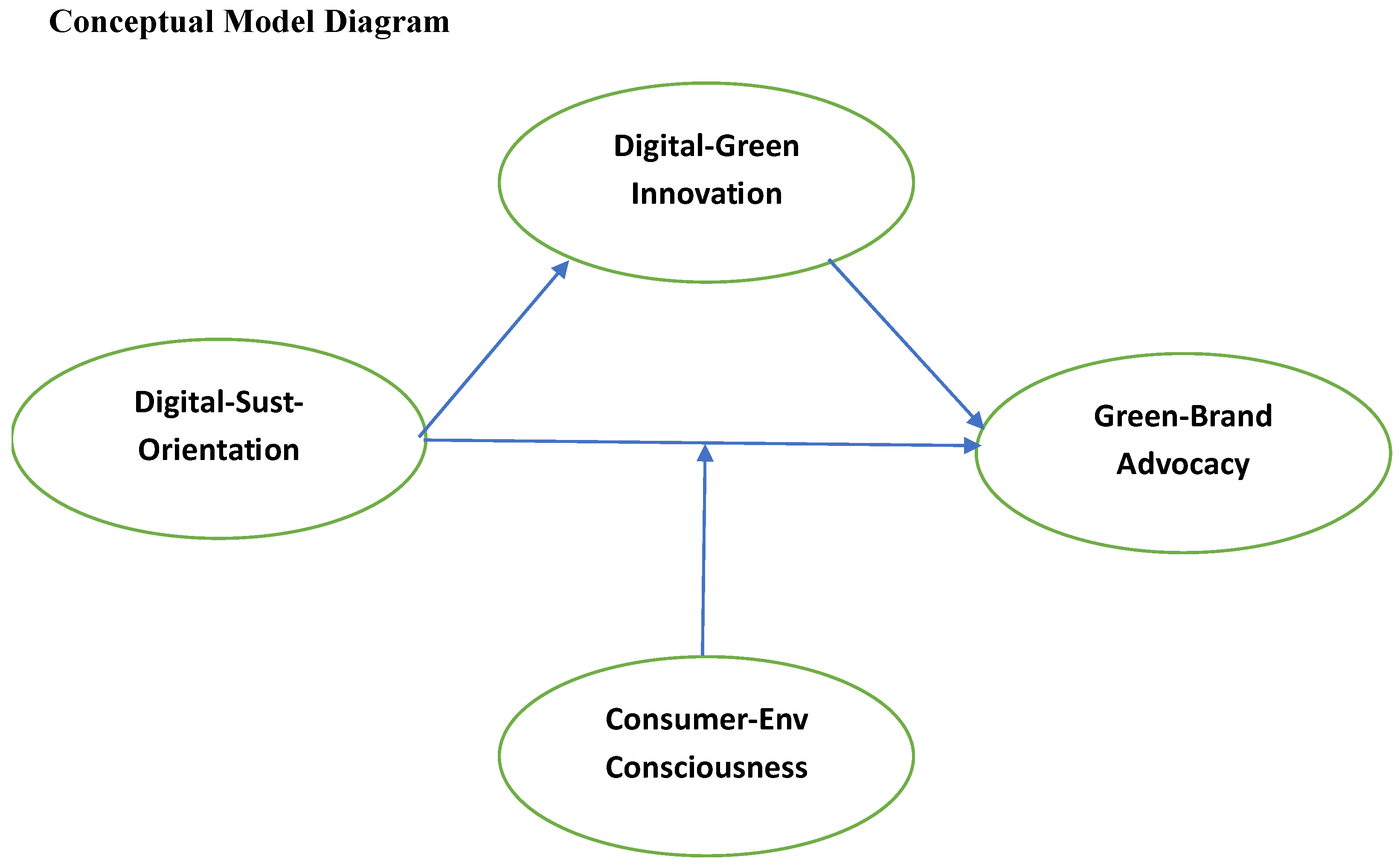
18]. To fill these gaps, this paper examines how the digital sustainability orientation influences green brand advocacy in social media marketing, with digital green innovation as the mediating variable and consumer environmental consciousness as the moderating variable. Using theories of digital sustainability, green marketing, and consumer behavior, the study develops an integrative approach to understanding how digital sustainability is applied to the establishment of consumer advocacy in online settings.
This study has important contributions. First, it provides an empirical validation of the impact of digital sustainability orientation on advocacy behavior on social media platforms, a domain that has not been covered before. Second, it posits digital green innovation as a mediating factor, contributing to theoretical knowledge of digital sustainability with respect to consumer outcomes. Third, the introduction of consumer environmental consciousness as a moderator contributes to a greater understanding of when and how digital sustainability communication is most effective. Taken together, the findings contribute to the body of research on digital sustainability and green marketing and offer practical implications for companies willing to enhance their performance in sustainable marketing, brand image, and environmental activism through digital interaction.
3. Methodology
This study uses a quantitative approach to analyze the linkages of digital sustainability orientation, digital green innovation, consumer environmental consciousness, and green brand advocacy in social media marketing. We consider a positivist (quantitative) design appropriate, as it enables rigorous testing of hypothesized relationships and allows generalization to the wider population. As sustainability communication is increasingly conducted on digital channels, the study focused on consumers actively engaging with brands on social media, including Facebook (Meta Platforms Inc., Menlo Park, CA, USA), WhatsApp (Meta Platforms Inc., Menlo Park, CA, USA), Instagram (Meta Platforms Inc., Menlo Park, CA, USA), TikTok (ByteDance Ltd., Beijing, China), and X formerly Twitter (X Corp., Bastrop, TX, USA). Accordingly, the target population of this study comprises consumers in Saudi Arabia who have previously engaged with digital content, such as a blog or video. Records show that approximately 6.99 million residents of Riyadh are actively using the internet, while 3.7 million in Jeddah are. Those aged 18 and above constitute 72% of the population, with about 7.5 million people [
47,
48]. Therefore, a sample size of 300 has been selected for the online survey to test the study’s hypotheses. The findings of the study are therefore limited to adult consumers who are digitally engaged and are residents in Riyadh and Jeddah, and should not be generalized to all consumers in Saudi Arabia.
A number of screening questions were included at the start of the online survey to ensure the survey reached the right people with the right questions. To begin with, the respondents were asked to affirm that they are 18 years old or older, as the research focuses on adult customers. Second, the participants had to indicate whether they actively use the internet and consume digital content (e.g., social media, blogs, or online videos). Third, the respondents were asked whether they had previously been exposed to or were interested in environmentally responsible or sustainable brands. Only respondents who satisfied all the above criteria were permitted to take the survey; those who did not were automatically filtered out. This strategy ensured that the final sample comprised digitally active consumers with some awareness or interest in sustainability.
Purposive and convenience sampling techniques were used to ensure the inclusion of respondents with relevant experience with sustainability-related online content. Participants were purposively selected to ensure they had experience with digital sustainability content, thereby making their contributions more relevant. Convenience sampling enabled a broader reach by facilitating access to social media platforms. The issue of the possible sampling and self-selection bias is not left out. Since the sample was restricted to respondents who are active on social media and show interest in sustainability, the sample might be overrepresented by more environmentally aware respondents, which could inflate the observed relationships between consumer environmental awareness and green brand advocacy. This limitation is consistent with previous studies suggesting that self-selected samples, especially in sustainability and digital environments, may yield upward-biased estimates due to respondents’ pre-existing attitudes and engagement levels [
49,
50]. However, these sampling methods were theoretically consistent with the study’s aim: focusing on digitally engaged consumers who are most likely to engage in green advocacy online [
38,
40]. Additionally, the existing literature on green marketing and digital innovation follows a similar pattern of using purposive or context-specific samples to identify the relevant behavioral dynamics [
37]. The chosen sample size was deemed adequate to ensure sufficient statistical power for the analysis and reliable, valid estimation of the proposed model, in accordance with methodological recommendations. According to Hair et al. [
51], PLS-SEM is suitable for studies with complex models and does not require extremely large samples, provided that the sample size is large enough to provide sufficient statistical power and stable parameter estimates. Similarly, Kline [
52] suggests that sample sizes greater than 200 are generally acceptable for structural equation modeling and yield reliable, robust results. A structured online questionnaire was used to collect data through social media groups, WhatsApp, and other online eco-minded forums. Screening questions were used to validate respondents’ exposure to sustainability-related digital content prior to participation.
The study’s constructs were measured using existing, validated scales applied in previous research to confirm the reliability and content validity of these instruments. The extent of digital sustainability orientation was assessed by means of scales including items (adapted from Yin et al. [
1]). In contrast, digital green innovation was operationalized following Negi et al. [
15]. Green brand advocacy was measured using the scales by Bhati and Verma [
53] and Confetto et al. [
27]. Consumer environmental awareness measures were adapted from Sawangchai et al. [
17], which express respondents’ level of environmental concern, attitude, and pro-environmental behavior. This study adopts an individual-level, perceptual approach, where DSO and DGI are measured based on consumers’ perceptions of companies’ digital practices. Perceptual measures are widely used in management research because consumers are well-positioned to evaluate firms’ practices, especially when objective data are unavailable. On social media, consumers are exposed to firms’ digital communications and can assess their marketing and signs of innovation, which, in turn, can influence their perceptions and behavioral reactions [
54]. The study therefore relies on perceptual data, which may be subject to common method bias; however, established procedural and statistical remedies were applied to minimize this concern, and these measures are widely accepted in prior research. All variables were measured on a five-point Likert-type scale, ranging from strongly disagree (1) to strongly agree (5).
To evaluate potential nonresponse bias, early and late respondents were compared on key demographic and study variables, assuming that late respondents are more similar to nonrespondents. The results show no significant differences between the two groups, which means that nonresponse bias is unlikely to have materially affected the findings of this study. Furthermore, incomplete responses were excluded from the final analysis, and only fully completed questionnaires that met the screening criteria were retained.
Analysis was performed in Smart-PLS 4.0 (SmartPLS GmbH, Oststeinbek, Germany) which is well-suited for complex models with mediating and moderating effects. The analysis was twofold: it first tested the measurement model to assess reliability and validity, and then examined the structural model to test the hypotheses under scrutiny. The reliability of the scales was also assessed using both Cronbach’s alpha and composite reliability, and convergent and discriminant validity were evaluated using Average Variance Extracted (AVE) and the Fornell–Larcker criterion. Bootstrapping was used to examine mediation effects, and interaction terms were used to explore moderation effects. Ethical issues were adhered to throughout the study; informed consent from each participant was secured, and the confidentiality and anonymity of informants were assured.
4. Results
The questionnaires distributed for this study totaled 300 copies, of which 267 valid responses were obtained, yielding a high response rate of 89 percent. This rate is considered appropriate for online survey research and provides a strong foundation for statistical analysis. The high response rate indicates that participants were interested in the study subject and that social media platforms are effective tools for data collection and interaction. Instagram emerged as the most favored social media platform, with 34.8 percent of respondents identifying as active users. This was followed by Facebook (27.3%), TikTok (21.7%), and X (formerly Twitter) (16.2%), which are the key digital networks where sustainability-related brand interactions occur.
Regarding the demographic profile, 58.4% of participants were female, and 41.6% were male, indicating a slightly higher female participation rate in digital content related to sustainability. Similarly, 31.5 percent of respondents were aged 18–25 years, 38.6 percent were aged 26–35 years, 21.0 percent were aged 36–45 years, and 8.9 percent were aged 46 years or older. Moreover, 67.8% of surveyed participants reported already subscribing to at least one eco-friendly brand on social media, and 32.2% expressed some interest in sustainability-related content. This profile represents a highly environmentally conscious and digitally active consumer segment, making it especially relevant for investigating green brand advocacy behaviors. The combination of high engagement levels and social media activity enhances the dataset’s credibility. It provides a robust empirical foundation for understanding how consumers promote and support eco-friendly brands in digital environments.
Given that the data for this study were collected using a single survey instrument, the possibility of common method bias (CMB) was assessed as recommended by Podsakoff et al. [
55] and Kock [
56]. First, procedural remedies, such as ensuring respondents’ anonymity and reducing evaluation apprehension, were implemented to minimize potential common method bias. In addition, Harman’s single-factor test was conducted by performing an exploratory factor analysis on all measurement items to determine whether a single factor accounts for the majority of the variance. The results revealed that the first factor explained 32.4% of the total variance, below the 50% threshold, indicating that common method bias is not a serious concern.
Furthermore, a full collinearity test was performed using variance inflation factors (VIFs) as recommended in PLS-SEM literature. All VIF values were below the conservative threshold of 3.3, suggesting that common method bias is unlikely to affect the results. These findings collectively confirm that common method bias does not pose a significant threat to the validity of this study. The VIF values are presented in
Table 1. Similarly, the measurement items for all the study constructs and their sources are presented in
Table 2.
4.1. Measurement Model Assessment
The evaluation of the reliability and validity of the constructs used in this study, before the structural relationships were tested, was done through the measurement model assessment. This step ensured that the observed indicators effectively represented the latent variables and met psychometric standards. Recommended PLS-SEM criteria were used to check internal consistency reliability, convergent validity, and discriminant validity. The development of a strong measurement model was a good foundation for the structural model results and hypothesis testing.
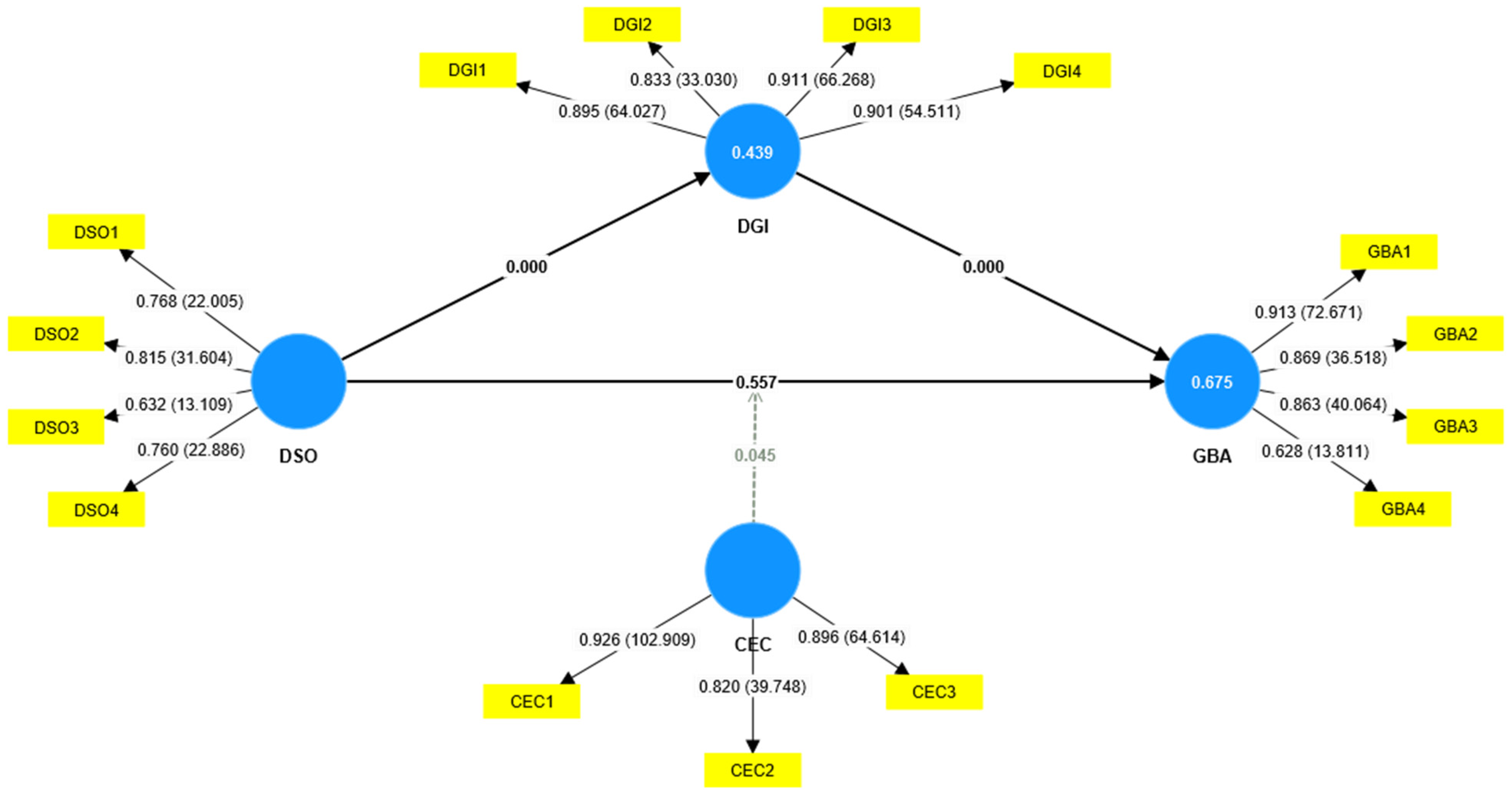
Figure 2 shows the measurement model with the relevant reliability and validity indicator values.
Table 3 illustrates the acceptable levels of reliability and validity for the measurement model and is consistent with the established levels for Partial Least Squares Structural Equation Modeling (PLS-SEM). The indicators were very reliable, with indicator loadings exceeding 0.70, except for a few. In exploratory research, loadings above 0.60 are acceptable, but they must contribute significantly to the construct’s internal consistency [
57,
58]. There is also a need to note that Digital Green Innovation (DGI) and Consumer Environmental Consciousness (CEC) exhibit stable, consistent loadings, indicating that the latent variables are well-measured. In addition, the composite reliability and Cronbach’s alpha values, as well as the average variance extracted (AVE) values for all constructs, were all above the recommended thresholds, indicating that internal consistency and convergent validity were achieved. The results, in general, demonstrate that the measurement model is grounded in the psychometric recommendations proposed in the PLS-SEM literature and therefore provides a strong and valid empirical basis for further examination of the structural model [
57,
59].
Table 4 shows the indicator loadings of the measurement model. The results indicate that the model exhibits acceptable internal consistency and convergent validity for all constructs, according to PLS-SEM standards. The alpha values range from 0.632 to 0.913, all of which exceed the required alpha to achieve the required level of internal consistency for the measurement items [
57], except DSO3 and GBA4. The retention of these indicators was not only statistically but also conceptually justified. Removal of these indicators at the item level did not result in any significant increase in composite reliability or average variance extracted, as the differences were insignificant and did not affect the overall assessment of convergent validity. Moreover, these indicators were retained because they contribute significantly to content validity, as they measure aspects of the construct that other items with higher loadings do not adequately capture. Following Hair et al. [
51], indicators with loadings of 0.40 to 0.70 can be retained when theoretically justified and do not substantially reduce model quality. In addition, all composite reliability coefficients exceed the recommended level of construct reliability (0.70). The Average Variance Extracted (AVE) values are also not below 0.558–0.785, which is higher than the recommended threshold value of 0.50. The constructs explain more than half of the variance in their indicators. The combination of these results provides substantial evidence that the measurement model has good reliability and convergent validity, enabling further analysis of the structural model.
4.1.1. Discriminant Validity
In terms of discriminant validity, the analysis assessed the empirical uniqueness of each construct as a distinct theoretical concept within the model. Discriminant validity must be assessed to ensure that the indicators of a given construct do not overlap substantially with those of another construct. The validity will help to improve the interpretability of the structural relationships and aid in the stability and soundness of the entire measurement model.
The values of the Heterotrait–Monotrait (HTMT) ratios in
Table 5 indicate that all constructs have the recommended threshold values and, therefore, provide evidence of discriminant validity. All HTMT ratios were below the conservative value of 0.90, and most were below the more stringent value of 0.85, supporting the empirical distinction of constructs and indicating no collinearity [
57]. The highest HTMT value found in this study (0.857) is indeed close to a more conservative cutoff of 0.85; however, it is still below the more commonly accepted liberal cutoff of 0.90, which is considered acceptable when constructs are related conceptually but still distinct [
6,
58]. Previous literature explicitly indicates that, for highly distinct constructs, the 0.85 threshold should be used, whereas a 0.90 threshold is acceptable for conceptually proximate constructs, as is the case in this study [
60]. Since the constructs under study (e.g., environmental aware ness and green brand advocacy) are theoretically connected within the sustainability domain, some amount of correlation is anticipated and does not necessarily imply a lack of discriminant validity. Thus, the value of 0.857 indicates that the constructs are conceptually similar, but it does not imply a problematic overlap between them. All in all, these findings confirm the results, which indicate that Digital Sustainability Orientation (DSO), Digital Green Innovation (DGI), Consumer Environmental Consciousness (CEC), and Green Brand Advocacy (GBA) are distinct theoretical dimensions that will enhance the robustness of the measurement model and the validity of the structural model interpretations that will follow.
Table 6 presents the results of the structural model. The findings provide a more detailed description of the relationships among Digital Sustainability Orientation (DSO), Digital Green Innovation (DGI), Consumer Environmental Consciousness (CEC), and Green Brand Advocacy (GBA). The direct impact of DSO on GBA was positive but not statistically significant (b = 0.074,
p = 0.557), indicating that a sustainability-focused digital approach, in itself, might not be sufficient to elicit consumer advocacy for environmentally responsible brands. Moreover, more recent research on digital sustainability emphasizes that orientations are central to capabilities and perceptions, and that these must be triggered by consumer-facing mechanisms before behavioral outcomes such as advocacy emerge [
1]. Thus, the insignificant direct relationship between DSO and GBA can be construed as indicating a completely mediated relationship, rather than as a theoretical inconsistency. This implies that the very existence of strategic intent or symbolic sustainability positioning is not necessarily translated into consumer approval unless it is complemented by observable innovation-based practices that reflect a genuine interest in sustainability.
Conversely, DSO is positively and significantly associated with DGI (b = 0.663, p < 0.001), indicating that strategic sustainability orientation is vital for enhancing companies’ digital innovation capabilities. This finding shows that the concept of developing green digital products can help companies be more digitally creative and socially responsible. It also confirms previous assumptions that strategic orientation is one of the key overriding factors in resource allocation and patterns of technological innovation, especially in digitally intensive industries.
Moreover, the correlation between DGI and GBA is positive and significant (b = 0.230, p < 0.001), indicating that consumers respond more favorably when sustainability commitment is implemented as a practical digital innovation. Cases like eco-friendly online services that use open sustainability tools foster brand credibility, consumer trust, and positive participation in activities like recommending, sharing, and amplifying brands’ online sustainability messages. These conclusions imply a valuable lesson: sustainability is not merely a communication being activated, but the embodiment of sustainability in practice, which can lead to actual support for consumers.
The results further show that Digital Sustainability Orientation (DSO) is associated with Digital Green Innovation (DGI), which is also related to Green Brand Advocacy (GBA) (b = 0.152, p < 0.001). This mediation result confirms one of the essential indirect effects of DSO on GBA through DGI, highlighting the centrality of innovation as a process that transforms sustainability-oriented digital strategies into consumer-focused results. To explore the mediating effect of Digital Green Innovation (DGI), the direct effect of Digital Sustainability Orientation (DSO) on Green Brand Advocacy (GBA) was contrasted with the indirect effect of DSI on GBA through DGI. The results showed that the indirect effect of DSO on GBA through DGI was significant (β = 0.152, t = 4.416, p = 0.001), confirming the mediation. Furthermore, the direct relationship between DSO and DGI was significant as well (β = 0.663, t = 20.505, p = 0.001), suggesting that DSO considerably predicts DGI. The results indicate that DGI is positively related to DSO’s contribution to Green Brand Advocacy. The study does not claim mediation is “full” or “complete” because a formal comparison of the direct effect of DSO on GBA with the indirect effect was not sufficient on its own to conclude or establish indirect-only mediation. Therefore, the mediation effect of DGI in the DSO–GBA relationship is considered more important in this study.
Further, the moderating effect of Consumer Environmental Consciousness (CEC) was significant (b = 0.086, p < 0.045). This result implies that more environmentally conscious consumers are more sensitive to digitally oriented sustainability approaches. To these consumers, sustainability signals in digital investments (e.g., green applications, transparent reporting tools, or green storytelling) are more salient, credible, and persuasive, and they positively impact advocacy intentions. Conversely, less environmentally concerned people appear less sensitive to such cues, which may diminish the influence of DSO on advocacy outcomes.
Lastly, the model is well explained, as shown in
Table 7. The coefficient of determination for green brand advocacy (R
2 = 0.675) indicates that approximately 67.5% of the variation in consumer advocacy behavior is explained by DSO, DGI, and CEC. The model explained a high proportion of variance in Green Brand Advocacy (R
2 = 0.675), indicating strong explanatory power. While this is somewhat high for behavioral research, it is theoretically possible because the three constructs of Digital Sustainability Orientation, Digital Green Innovation, and Green Brand Advocacy are very conceptually similar within the framework of Dynamic Capability. Further, procedural and statistical means were used to minimize possible common method bias, such as respondent anonymity and examination of collinearity statistics, in which the VIF values did not exceed recommended limits. However, the study recognizes that stronger predictive relationships may partly reflect sample homogeneity. On the same note, the R
2 value for digital green innovation (0.439) indicates that DSO contributes substantially to firms’ capacity to develop innovation-based sustainability practices. Altogether, these findings confirm the suggested model and showcase the dual importance of innovation processes and consumer-specific variables in mediating the relationship between digital sustainability orientation and brand advocacy outcomes.
4.1.2. Importance–Performance Map (IPMA)
One of the significant contributions of this study was the use of the Importance–Performance Map Analysis (IPMA) to better understand the overall impact of the constructs on advocacy outcomes.
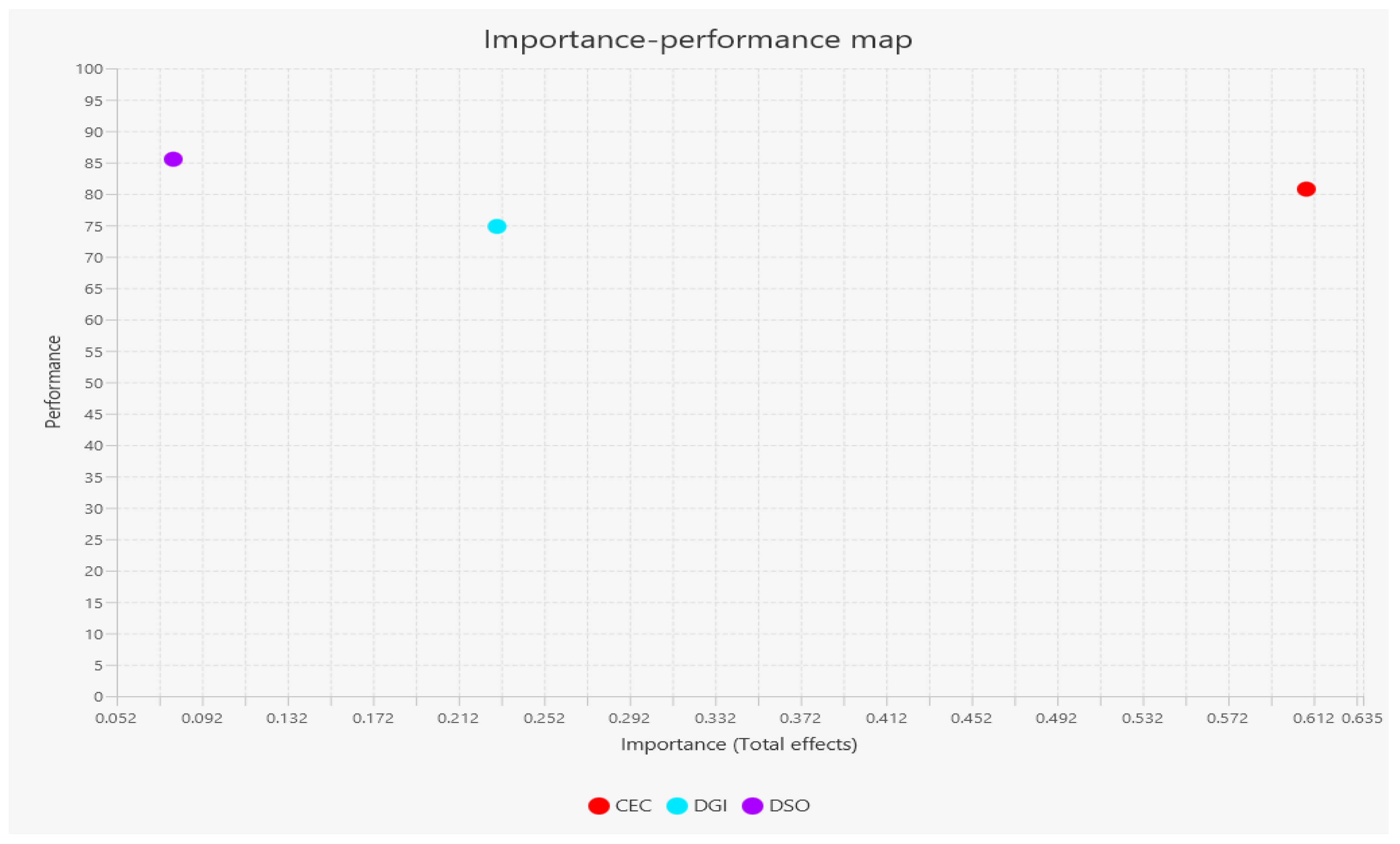
Figure 3 shows the IPMA results, indicating that the most significant and best-performing construct with a significant impact on GBA is Consumer Environmental Consciousness (CEC). The finding further proves that environmentally conscious consumers are the most valuable drivers of sustainability messages and advocacy activities on social media platforms. In addition, Digital Green Innovation (DGI) performs satisfactorily and plays a critical mediating role, through which sustainability-oriented strategies find meaning and gain traction among consumers. On the contrary, the Digital Sustainability Orientation (DSO), although comparably well-performed, is not as important as it should be, which also supports the argument that sustainability orientation, as such (not accompanied by practical, innovation-based activities), has a negligible impact on consumer advocacy. The Importance–Performance Map Analysis (IPMA) shows that consumer environmental consciousness (CEC) has the highest importance (0.62), with a performance level of approximately 78–80, making it the most influential driver of the outcome variable. This indicates that although CEC is already performing relatively well, it offers the greatest potential for impact, and even modest improvements could significantly enhance consumer advocacy. In contrast, digital green innovation (DGI) demonstrates moderate importance (0.22) and moderate performance (73–75), suggesting that it is a relevant but under-optimized factor that requires further development to fully translate sustainability strategies into tangible consumer outcomes.
Meanwhile, digital sustainability orientation (DSO) exhibits the highest performance (85–86) but the lowest importance (0.09), indicating that while organizations are performing strongly in this area, its direct contribution to the outcome is relatively limited. As such, DSO represents a “maintain performance” area rather than a priority for additional resource allocation. The results suggest that firms should prioritize enhancing consumer environmental consciousness and strengthening digital green innovation initiatives, while sustaining current efforts in digital sustainability orientation to achieve optimal improvements in green brand advocacy.
These findings have significant policy and managerial implications. Policy makers and regulators may work to enhance environmental literacy and awareness through education, sustainability campaigns, and digitally driven engagement programs. In addition, public policy may actively encourage digital green innovation—e.g., by providing innovative funding, tax breaks, and innovation grants to develop digital tools and platforms that would be environmentally friendly. By empowering consumers with environmental education and supporting innovation-based sustainability initiatives, governments can create a more conducive market environment that strengthens green brand advocacy and accelerates progress towards national and global sustainability goals.
4.1.3. Confidence Interval
Using bootstrapping procedures as suggested by Preacher and Hayes [
61] and Hair et al. [
51], the mediation analysis results in
Table 8 indicate that the indirect effect of digital sustainability orientation on green brand advocacy through digital green innovation is statistically significant (β = 0.152,
t = 4.416,
p < 0.001). The 95% bias-corrected confidence interval [0.198, 0.421] does not include zero, indicating a significant mediation effect.
Similarly, in
Table 9, the moderation analysis shows that consumer environmental consciousness significantly moderates the relationship between digital sustainability orientation and green brand advocacy (β = 0.086,
t = 2.002,
p < 0.01). The confidence interval [0.072, 0.296] excludes zero, indicating a robust interaction effect.
4.1.4. Effect Size (f2)
The effect size (f
2) was assessed to determine the relative impact of each exogenous construct on the endogenous variables, interpreted using Cohen’s [
62] guidelines. The results presented in
Table 10 show that digital sustainability orientation has a large effect on digital green innovation (f
2 = 0.421), while its direct effect on green brand advocacy is small (f
2 = 0.052). Digital green innovation exhibits a medium effect on green brand advocacy (f
2 = 0.287), indicating a substantial role in explaining consumer advocacy behavior.
4.1.5. Predictive Relevance Q2
Furthermore, based on the Stone–Geisser criterion [
63,
64]. The predictive relevance of the model was evaluated using Stone–Geisser’s Q
2 values obtained through the blindfolding procedure. The results in
Table 11 indicate that both digital green innovation (Q
2 = 0.342) and green brand advocacy (Q
2 = 0.387) have strong predictive relevance, as all Q
2 values are greater than zero. This confirms that the model has adequate predictive capability.
4.2. Discussion of Findings
The research provides valuable insights into the extent to which consumer advocacy is associated with sustainability-oriented digital strategies on social media. The fact that Digital Sustainability Orientation (DSO) and Green Brand Advocacy (GBA) do not exhibit a significant direct relationship implies that organizational motives toward sustainability alone are insufficient to initiate consumer advocacy behaviors. Such a result implies that consumers can interpret the sustainability messages conveyed through digital communications as symbolic, aspirational, or even superficial unless they are accompanied by visible, credible, and action-based commitments. It is also emphasized in previous studies that sustainability orientation should be translated into strategic intent and then into action steps to positively impact consumer reactions [
27,
32]. In a more digitalized world where information is flooding in, and people are doubtful of corporations and concerned about greenwashing, people are no longer satisfied with rhetorical or promotional sustainability claims; they want real, verifiable sustainability efforts [
18,
65].
Conversely, the positive, statistically significant relationship between DSO and Digital Green Innovation (DGI) underscores the strategic imperative to integrate sustainability into digital transformation agendas. Companies that emphasize sustainability in their online activities will better develop digital solutions that are environmentally friendly, such as eco-friendly platforms, data-driven environmental analytics, or transparency dashboards for sustainability. This result is consistent with the Resource-Based View (RBV) and Dynamic Capabilities Theory, which hold that strategic orientations contribute to the creation of valuable, rare, and difficult-to-replicate organizational capabilities [
1,
15,
29]. It also supports the thesis that sustainability orientation is an upstream factor in innovation capability rather than a direct influence on consumer behavior [
14,
16].
Furthermore, the fact that DGI has a significant and positive impact on GBA also speaks to consumers’ greater responsiveness to tangible sustainability initiatives than to abstract ones. Firms that develop digital-based sustainability tools, such as eco-analytics tools, carbon footprint calculators, and interactive green dashboards, develop brand credibility, establish trust, and contribute to consumer engagement. These inventions are also making consumers perceive the brand as genuine and responsible, thereby promoting advocacy behaviors such as sharing, recommending, and endorsing the brand online. The result is consistent with earlier studies showing that green innovation fosters trust, satisfaction, and pro-environmental behavior, particularly in digital settings where advocacy is socially mediated [
9,
11,
31]. This strong mediating effect of DGI also confirms the transformative nature of innovation as a bridging process that translates sustainability-focused digital strategies into consumer-facing value and advocacy outcomes [
33].
Finally, the moderating role of Consumer Environmental Consciousness (CEC) underscores the relevance of individual differences in shaping consumers’ responses to sustainability-oriented digital strategies. Environmentally conscious consumers are more concerned with the firm’s environmental cues; they are also more skeptical of the authenticity of green claims and more willing to campaign on behalf of brands that are actually reflective of their own environmental beliefs. Such an outcome is consistent with previous studies suggesting that sustainability-focused consumers are more attuned to sustainability cues and more responsive to initiatives grounded in transparency, credibility, and authentic commitment [
17,
19]. Based on the findings, the recommendations suggest that companies seeking to sell green brand excitement and advocacy via digital media should not be content with symbolic declarations about sustainability, but rather craft customized, evidence-based, and emotionally evoking sustainability communications. The level of environmental consciousness among consumers is a strategic, authentic, messaging- and innovation-based practice that demonstrates quantifiable environmental impact. Thus, firms not only have to use sustainability positioning but also integrate environmental authenticity into their online narratives in ways that enable them to reach and engage this expanding category of consumers with ease [
4,
12].
4.3. Study Implications
Theoretically, the present study contributes to the fields of sustainability and digital marketing by clarifying the conditions under which digital sustainability orientation (DSO) is associated with consumer advocacy. Contrary to the assumption of a direct relationship between sustainability orientation and consumer advocacy outcomes, the findings indicate that the effect is mostly indirect, mediated by digital green innovation (DGI). It is an extension of the Resource-Based View (RBV) and Dynamic Capabilities Theory (DCT), as it demonstrates that not every strategic orientation is necessarily translated into operational capabilities (tangible or experiential) that can create value. Moreover, the findings support Signaling Theory, as consumers who cannot observe a firm’s internal environmental performance perceive observable sustainability efforts as indicators of actual environmental commitment. DGI is a plausible market indicator for reducing information asymmetry, enhancing brand credibility, and increasing the perceived authenticity of sustainable claims. This study also responds to the demand for a boundary condition in sustainability research by introducing a moderating variable, consumer environmental consciousness (CEC), and has implications for the development of more consumer-focused theoretical frameworks in green marketing and digital sustainability. However, the insights gained should be interpreted within the study’s focus on digitally engaged consumers and perceptual measures.
The findings have significant managerial implications for the organizations that embrace sustainability-based digital approaches. Managers need to appreciate that online discussions on sustainability do not always result in consumer advocacy unless they are supported by physical, interactive, and innovation-driven online experiences. The digital tools (sustainability transparency dashboard, eco-friendly digital services, an interactive platform for environmental engagement, etc.) are also significant facilitators of brand credibility and trust. Moreover, organizations are advised to segment audiences by environmental consciousness and tailor sustainability messages accordingly. Innovative, sustainability-driven propositions (Points of Difference, PODs) based on authenticity will be better received by environmentally conscious consumers, thereby enhancing advocacy behaviors through digital media.
In general, this study provides a better understanding of the social and environmental implications of digital strategies, particularly in relation to sustainable development and shaping ecological mindsets. The results reveal that digital green marketing activities stimulate consumers to act as self-expressive marketers and to market socially responsible brands. Such behavior not only improves brands’ performance but also strengthens pro-environmental norms in society. The companies that incorporate sustainability in the digital innovation process will co-create value with consumers and society, where both benefit mutually and not just profit-wise, but also in terms of environmental stewardship and social welfare. Meanwhile, managers must be careful when generalizing these findings to the broader range of consumers, as they are specific to the context and may not apply to other markets or less digitally engaged groups. In general, although the study suggests that digital green innovation can reinforce brand advocacy, its success depends on organizational capabilities and audience traits.
5. Conclusions and Recommendations
The primary objective of this study was to test the link between digital sustainability orientation and green brand advocacy in the social media age. The findings show that companies need not merely develop a sustainability image or even project this image rhetorically. Instead, consumers respond more positively and enthusiastically to the translation of sustainability intentions into real, digitally enabled green practices that are visible, plausible, and readily accessible online. The results also show that environmentally conscious consumers are especially sensitive to these signals, meaning that advocacy is not only about what firms say but also about how they act and with whom they appease.
In practical terms, the study suggests that companies are not only supposed to cease at the announcements of sustainability, but also to operationalize environmental responsibility through digital innovation. Managers may invest in green digital solutions, such as open sustainability dashboards, cleantech-powered digital products, and interactive eco-functions that help consumers interact, contribute, and share their experiences. In the meantime, the sustainability messages may be properly targeted to groups of environmentally conscious consumers who are likely to be most responsive to actual green activities through positive word-of-mouth and advocacy. Organizations can advance brand advocacy and drive environmental and social goals through a combination of digital innovation, concrete sustainability action, and active consumer engagement.
Limitations and Future Research Directions
Despite the contributions of this study, several limitations remain. First, the cross-sectional research design does not enable causal conclusions or the monitoring of changes in consumer perceptions and advocacy behaviors over time. Second, the data were self-reported, and, given the participants’ social media use, which is prone to common method bias or social desirability bias, this instance is particularly susceptible to pro-environmental behavior being perceived as desirable. Third, the study involved exclusively Saudi Arabian consumers, which may limit the generalizability of the findings to other cultural or institutional settings with varying rates of digital integration and environmental awareness.
These limitations can be overcome in future studies by using a longitudinal research design to examine the dynamics of digital sustainability strategies and green brand advocacy over time, thereby better establishing causal relationships. In addition, further information can be provided by cross-country comparative research on how cultural, regulatory, or technological variables shape consumers’ responses to digital sustainability initiatives. Finally, future scholars can expand the current research by examining additional mediating and moderating factors, such as trust in brands, perceived greenwashing, and brand authenticity, to provide a more comprehensive picture of how digital sustainability orientation influences consumer behavior and advocacy outcomes.