Systematic Review

Retrospection on E-Commerce: An Updated Bibliometric Analysis

by
Laura-Diana Radu
*,
Daniela Popescul
and
Mircea-Radu Georgescu
Department of Accounting, Business Information Systems and Statistics, Faculty of Economics and Business Administration, Alexandru Ioan Cuza University of Iasi, 700505 Iasi, Romania
*
Author to whom correspondence should be addressed.
J. Theor. Appl. Electron. Commer. Res. 2026, 21(2), 46; https://doi.org/10.3390/jtaer21020046
Submission received: 17 November 2025 / Revised: 5 January 2026 / Accepted: 12 January 2026 / Published: 2 February 2026

Abstract

Companies need to allocate substantial effort and resources towards adapting to dynamic market trends and promptly meeting their customers’ evolving expectations in the online business context. Although e-commerce research has experienced significant growth over the past two decades, a comprehensive, systematic, and longitudinal analysis that maps the evolution of publications, academic collaboration patterns, influential actors and sources, thematic structures, and theoretical foundations of the field is still lacking. This gap limits a holistic understanding of the maturation, intellectual structure, and future research directions of e-commerce as an academic domain. Based on these premises, the primary objective of the present study is to analyse the landscape of e-commerce spanning the period from 2008 to 2024. By employing bibliometric analysis, we have identified the most prolific and influential authors and publications that have made notable contributions to the literature on e-commerce, as well as the collaborations between authors and countries within the same field. Furthermore, we have analysed the thematic map, research trends, and interconnections between research themes over the past 17 years, providing a dynamic summary of scientific topics of interest in the field of e-commerce and suggesting potential directions for future explorations. The results reveal the heterogeneity of themes associated with e-commerce. We found that research topics in this field have evolved alongside technological evolution and social changes. Some themes have persisted over the years, such as customer behaviour or trust, while others have either disappeared or transformed. For instance, research related to supporting e-commerce technologies has become more specific, focusing on topics such as artificial intelligence, deep learning, machine learning, metaverse or blockchain. From a social perspective, the impact of COVID-19 has resonated within the scientific community, becoming a significant focus of researchers around the world. This study serves as a comprehensive guide for professionals and researchers seeking to bridge current research topics with forthcoming developments in the field of e-commerce. Examining contributions and emerging trends reveals new perspectives on how technological progress interacts with the social and economic dimensions of e-commerce.

1. Introduction

The volume of transactions for goods and services in the virtual environment has significantly expanded in recent years, especially during the lockdown periods generated by the COVID-19 pandemic. On the global level, their value has increased from 2.98 trillion U.S. dollars in 2018 to 5.21 trillion U.S. dollars in 2021, and it is estimated to reach 8.14 trillion U.S. dollars in 2026 [1]. Many companies have adopted e-commerce as a necessity to adapt to consumers’ demand and market conditions. Technological advancements, enhanced accessibility to hardware and software resources, and shifts in consumer lifestyles have driven companies to expand their operations into the online environment. The development of the e-commerce sector was significantly accelerated [2], with its inherent advantages and disadvantages. A wide range of benefits, such as access to a larger market, 24/7 accessibility, operational flexibility, lower transaction costs, availability of a more diverse customer and partner database, etc., is traditionally associated with e-commerce. On the other hand, compared to the offline market, e-commerce faces challenges such as increased complexity in logistics activities, heightened market dynamics, increased competitiveness, and a higher degree of uncertainty [3,4].
Various additional factors have played a pivotal role in the expansion of e-commerce transactions, with environmental benefits being among the most significant. Research indicates that optimizing delivery routes for online purchases significantly reduces the ecological footprint compared to using personal vehicles for shopping [5,6]. In contrast, other authors argue that the growth of online transactions leads to increased pollution from product transportation and traffic congestion [7], making it challenging to make an accurate assessment of the balance between the negative and positive environmental effects. This contingent scenario depends on several factors, including the volume and variety of products shipped, the geographical distance from the vendor to the consumer, the specific mode of transportation, the efficiency of retailers’ equipment, adherence to environmental legislation governing the logistics chain, and various other determinants. The creation of new opportunities for less developed countries or those with low-cost labour, which have gained access to a market that was difficult to reach in traditional commerce, is another important premise that has contributed to the growth of online sales. The cross-border e-commerce platforms have provided small and medium-sized enterprises (SMEs) and micro-enterprises with the opportunity to access new markets, grow, or survive in the context of the COVID-19 pandemic [8]. E-commerce is also an essential part of digital transformation, defined as “the use of new digital technologies (social media, mobile, analytics, or embedded devices) to enable major business improvements (such as improving customer experience, streamlining operations, or creating new business models)” [9].
Digital commerce platforms create a highly dynamic and competitive environment wherein both anonymous and registered users have access to products and services offered by sellers. They radically change the dynamics of the buyer-seller interaction. In this context, understanding and modelling purchase intention are essential for the success of companies engaged in e-commerce transactions [10]. As a result, the latter invests heavily in both advertising campaigns and user behaviour analysis. Researchers have tried to identify effective approaches enabling companies to align their decisions with the evolving needs and attitudes of consumers. Trends in information and communication technologies (ICT), such as artificial intelligence (AI), big data, augmented and virtual reality, mobile platforms, chatbots, etc., constitute subjects of interest for researchers engaged in the exploration of e-commerce-related themes. These efforts join other research aimed at studying consumer behaviour, the sustainability of business models, challenges, benefits for both consumers and entrepreneurs, and more. However, the preliminary analysis reveals a lack of adaptation of traditional theoretical frameworks to emerging paradigms, as well as the absence of a comprehensive and up-to-date synthesis of the literature on e-commerce in the context of recent technological transformations. Consequently, the research problem addressed in this study is the identification and examination of the theoretical evolution of e-commerce literature, highlighting existing gaps and outlining future research directions based on an extensive bibliometric analysis.
The purpose of this study is to provide a comprehensive overview of almost the last 20 years of research in the field of online sales, the most complex component of e-commerce, by identifying influential works, key themes, and emerging trends using bibliometric analysis. This approach is well-suited for identifying both current and emerging research trends, as well as for thoroughly exploring the complexity of the analysed field. In recent years, several studies on e-commerce employing bibliometric analysis have been published. However, with a few notable exceptions discussed in the following section, these studies focus on a limited range of research areas. In the context of technological and social transformations, significantly influenced by military conflicts in Europe and Asia, as well as by the COVID-19 pandemic, companies need to adapt to customer demands and market conditions. The paper aims to identify the essential aspects that companies need to consider, both from the perspective of the technologies that need to be adopted and from the perspective of customer relationships, to remain competitive in a highly dynamic environment where numerous firms emerge and disappear daily. Bibliometric analysis was selected as the way to reach this purpose, as it provides the possibility to handle large volumes of unstructured scientific data (hundreds or thousands of articles) and can have a significant impact on the field under study [11]. The contribution of this paper is highlighted in the following points:
  • It presents the most prolific and influential publications in the field of e-commerce during the period 2008–2024, analysed by article count, citations count, h-index, g-index, and m-index.
  • It analyses the content of published articles using thematic maps and keywords co-occurrence.
  • It examines the most prolific collaborations both between authors and between their countries of origin.
  • It investigates the most dominant research topics and trends to provide insights and future directions in the field of e-commerce for both research and industry.
  • It maps the most cited documents and publications to identify the most influential research within the analysed dataset.
  • It highlights the challenges faced by online businesses in response to the COVID-19 pandemic and the changes it has brought to the e-commerce sector.
  • Finally, it provides future research directions in the field of e-commerce.
The structure of the remainder of this article is as follows: The next section provides a theoretical background, and reviews related works in e-commerce. Section 3 describes the research methodology, followed by a comprehensive presentation of the research results in Section 4. We analyse publication trends, collaborations among authors and countries, document co-citations, research directions, the impact of articles and journals, and conceptual interconnections using co-occurrence network analysis and thematic mapping, offering insights into the evolution of e-commerce over the past 17 years. Section 5 provides a discussion of the research findings and proposes a theoretical conceptual framework that integrates existing paradigms with future research directions in the field of e-commerce. Section 6 outlines the limitations of the study, while Section 7 offers a summary of the overall research approach and key findings.

2. Theoretical Background and Related Works

The rapid technological evolution in recent decades has led to an increase in the volume of transactions conducted online, as well as the diversification of services offered and purchased. The benefits brought to both the business environment and consumers have led to the continuous evolution of e-commerce, especially in recent years. Interest has been shared equally by researchers and practitioners, with their concerns interacting and complementing each other in a multitude of studies and products. Its interdisciplinary nature can be considered an additional reason for specialists from various fields, especially socio-economic and technological, to engage in research in this area. E-commerce has reinvented itself due to the increase in the number of transactions focused on online services [12]. New business models have emerged, such as streaming services (e.g., Netflix, Disney+, Prime Video, and Apple TV+), considered significant disruptors in the entertainment industry, and have experienced remarkable growth in recent years. The development of social networks also plays a significant role, leading to new forms of online commerce, namely social commerce, or s-commerce.
In these circumstances, e-commerce has drawn the focus of scholars who have examined a range of themes in studies published over time. This includes both the online sale of products, which is particularly important for companies and requires access to appropriate infrastructure, and the purchase of products in a virtual environment. Each of these components has been studied from various perspectives, including bibliometric analysis, systematic literature reviews, and meta-analyses. In our paper, e-commerce is examined specifically from the perspective of online sales.
Liu et al. [13] have analysed articles published in ten major information systems journals and proceedings of the two leading conferences between 1993 and 2012, identifying the main themes addressed, the cohesion between research subfields, and the most influential articles published on specific information systems topics. E-commerce is among the top positions in this study, as it is a topic of interest for many researchers, linked to concepts such as trust, satisfaction, security, privacy, electronic markets, and adoption/acceptance. In another study conducted by Yoo and Jang [14], 1000 articles published on specific e-commerce topics between 1987 and 2017 were analysed from three perspectives: business models, service relationships, and technology. The authors identify three distinct periods in the evolution of e-commerce. In the initial phase, which lasted until 2000, the analysis of novel business models and their accompanying technologies was the primary focus. In the second phase, from 2001 to 2009, researchers were interested in studying advanced mechanisms of e-commerce and the transition to mobile commerce. In the final phase, from 2010 to the date of the study, concerns were directed towards addressing the needs of practitioners and examining the social dimension of e-commerce. Tsai [15] analysed articles published in journals indexed in the Social Science Citation Index (SSCI) in Web of Science from 1996 to 2015 concerning e-commerce, verifying the reliability of Lotka’s Law. The results indicate that the authors’ productivity diverges from the slope of Lotka’s law because the number of authors who publish only one article is too large. The themes addressed are from the fields of computer science, business economics, engineering, information science and library science, operations research, and management science.
More specific themes have been addressed by other authors. For example, Bawack et al. [16] analysed the use of AI in e-commerce, identifying the main researched topics (sentiment analysis, trust, personalization, and optimization), as well as the institutions and countries with the most publications and the journals that dominate the field in terms of the number of articles and impact. Altarturi et al. [17] analysed articles published on the topic of agricultural e-commerce, identifying the main challenges and limitations. The results are presented as a conceptual architecture for agricultural e-commerce, providing solutions for the analysed subdomain using blockchain and Internet of Things technologies. Cui et al. [18] used CiteSpace to analyse the intellectual structure, development, and evolution of s-commerce in 503 articles, identifying key authors, institutions, countries, major recent topics, and trends. A similar approach was conducted by Cui et al. [19] who analysed 1799 papers published in six e-commerce journals from 1999 to 2016, identifying the following main research directions: social commerce, online reviews, social media, and word-of-mouth. Bai and Li [20] investigated themes and trends in the e-commerce field between 2001 and 2020 by applying co-word analysis on 3280 academic articles. The results reflect the dynamics of the topics discussed, with some becoming less visible over time (such as B2C and XML), others seeing increased popularity (cloud computing, mobile technologies, AI, machine learning, blockchain, gamification), or persisting in the preferences of authors (recommendation systems, eGovernment, interoperability). He et al. [21] conducted a performance analysis on e-commerce supply chain management to explore research status and trends. Based on their research, they identified the following future directions for this dimension of e-commerce: the use of live-streaming in selling goods, the potential application of emerging technologies (such as big data analytics, deep learning, blockchain, cryptocurrency, etc.), the assessment of disruption risk management caused by different types of emergencies (such as wars, pandemics, etc.), and the influence of the cognitive characteristics and behavioural preferences of managers and business partners, who often make highly subjective decisions based on their own preferences. In another study, Mumu et al. [22] analysed trust in e-commerce from a gender perspective using a systematic literature review and bibliometric analysis of articles published in the Scopus database between 2002 and 2020. They identified the presence of different challenges regarding trust in e-commerce from both male and female perspectives in previous research. These challenges could be further explored for other categories in the context of gender diversity that has been strongly promoted in recent years. By doing so, companies engaged in online sales activities will be better prepared to accurately meet consumer expectations.
As can be observed, there are several review papers related to the topic of e-commerce that have been conducted using bibliometric analysis, systematic literature review, or meta-analysis. Despite this growing body of literature, several important gaps remain insufficiently addressed, justifying the need for an updated bibliometric analysis. First, most studies are outdated or limited in scope. The rapid technological evolution (including AI-driven commerce, mobile commerce, and platform ecosystems) alongside social challenges (such as the COVID-19 pandemic and wars) continuously reshapes the field, even within short periods. This dynamic context underscores the need for an updated bibliometric analysis capable of capturing the evolution of research themes and emerging trends. Previous studies have typically focused on specific areas—such as AI, agriculture, or supply chain management—using a limited set of publications or dimensions (e.g., co-citation or keyword co-occurrence), which results in a fragmented view of the domain. Only a small number of studies provide an integrated perspective that combines intellectual, conceptual, and social structures. For example, only Tsai [15] and Bai and Li [20] conducted such analyses—Tsai focusing on the period from 1996 to 2015, and Bai and Li limiting their study to a co-word analysis. A multi-layered mapping can reveal deeper insights into how the field is organized. New topics such as AI-enabled commerce, cross-border digital trade, metaverse, modern social commerce, or value co-creation, remain underexplored in previous studies, though they are driving significant changes in e-commerce. As a result, there is a lack of comprehensive investigations that bring together the most productive journals, publications, and authors, as well as the current and emerging research trends. A comprehensive overview of studies in the field of e-commerce can only be achieved through a general and actual analysis of publications. This way, research gaps can be identified, and new research directions can be established in line with technological and social evolution.
In contrast to the limitations identified in prior research, this study distinguishes itself through its extensive temporal coverage, a robust and comprehensive dataset retrieved from Scopus, and a rigorous methodological approach that includes explicit data cleaning and standardization procedures. The combined use of the Bibliometrix (version 4.1.3) and VOSviewer (version 1.6.20) tools enables a multidimensional analysis of the field, encompassing the intellectual, conceptual, and social structures of the research domain. Moreover, the study identifies both traditional and emerging research directions, providing a comprehensive and up-to-date overview of the evolution of e-commerce. Due to the scale of the dataset, methodological transparency, and the complexity of the analyses conducted, this research goes beyond the limitations of previous studies by offering an integrated and relevant perspective for understanding the field.
Given the broad scope of the field under review and the extensive dataset, which makes a manual review difficult, we considered that bibliometric analysis, an approach widely accepted in such cases, is the most appropriate. This was introduced by Pritchard [23] and is used for evaluating the performance and mapping the intellectual structure of scientific research in different subjects or domains [24]. It combines various frameworks, tools, and methods to study scholarly publications [25], becoming increasingly popular in recent years in business research [11]. Bibliometric analysis is facilitated by access to scientific databases and the availability of bibliometric software. This type of literature analysis is employed when the volume of data being analysed is extensive, making a comprehensive investigation impractical. Mukherjee et al. [26] identified the following practical purposes of bibliometric analysis: “promoting objective assessment and reporting of research productivity and impact, ascertaining reach for coverage claims, identifying social dominance or hidden biases for improvement efforts, detecting anomalies for further examination, and evaluating relative performance for equitable decision-making”. It represents both a quantitative and qualitative analysis of bibliographic materials. By applying bibliometric analysis, researchers aim to identify both theoretical and empirical contributions to a specific research field [27]. The applied techniques include performance analysis, science mapping, and network analysis [11]. These techniques involve mapping keywords, analysing article citations and co-citations, mapping journal co-citations, and qualitative content analysis. The ability to analyse unstructured data is a key advantage [28], enabling the creation of maps that depict relationships between concepts within a research field, track their evolution, illustrate collaborations among authors and countries, or reveal connections between cited articles.

3. Materials and Methods

The study was designed to investigate the interest in e-commerce research during the last 17 years, including the problematic period of the COVID-19 pandemic. In our study, the methodology used combines performance analysis, quantitative techniques, and scientific mapping, offering enhanced depth and clarity. These are the primary techniques of bibliometric analysis commonly found in bibliometric research [11] with the purpose of broadening as much as possible the vision on the set of research conducted in a specific field [28].
The paper sets out the answer to the following questions regarding research in the field of e-commerce:
(1)
How has the e-commerce research publication landscape evolved from 2008 to 2024, and what emerging trends and patterns can be observed?
(2)
How do authors collaborate, from the perspective of teamwork and research themes?
(3)
Which papers, journals, and countries have exerted the greatest influence on the development of e-commerce research?
(4)
Which core thematic clusters define e-commerce research, and how these themes interrelate and develop across time?
(5)
What theories and models are relevant for analysing trends in e-commerce?
To address these research questions, the following hypotheses are proposed:
H1: 
The number of publications on e-commerce has increased significantly over the analysed period.
H2: 
Author collaboration in the field of e-commerce has intensified over the analysed period.
H3: 
Journals with higher visibility, as measured by citation counts, publish articles that receive the highest number of citations.
H4: 
Author teams collaborating in e-commerce research address a wide range of topics, reflecting an increasing tendency toward interdisciplinarity.
H5: 
Countries with developed economies, particularly the United States of America (USA) and China, account for a significant share of scientific production in the field of e-commerce.
H6: 
During the period 2019–2024, researchers’ interest in incorporating the pandemic context into e-commerce studies has increased significantly.
H7: 
Concepts associated with automation and AI have become increasingly frequent in recent years, indicating a growing research interest in emerging advanced technologies.
H8: 
A substantial number of e-commerce studies do not propose new theories but instead apply existing theoretical frameworks—predominantly from the field of information technology—suggesting a pragmatic orientation of the research domain.
To perform the bibliometric analysis, several mandatory steps were taken. The e-commerce research publications were searched using Elsevier’s Scopus database. This comprehensive peer-reviewed research repository contains an impressive number of publications by international researchers in social science journals, conference proceedings, or books. The popularity of the Scopus database, its multidisciplinary nature, and the substantial number of indexed publications were the main reasons that influenced the decision to select it for conducting this study. Web of Science is more selective, primarily indexing higher-impact journals and traditional academic sources. While this database could provide a more rigorous dataset, it would also limit the inclusion of studies published in conference proceedings and regional journals, which often exhibit innovative potential in the field of e-commerce. The choice of Scopus enabled a more comprehensive representation of the evolution and emerging trends within the scholarly literature.
The primary dataset includes bibliographic records, citation data, and keyword occurrences. Data collection first involves conducting an interrogation of the scientific database. Based on previous relevant studies, we identified “e-commerce” and “electronic commerce” as the main keywords for the query. There are also some synonymous terms that authors frequently use in their research, such as “online commerce” and “digital commerce,” along with keywords related to electronic sales, including “e-sale”, “online sales”, “digital sales”, “e-selling” and “online selling”, which were considered necessary to identify and extract all relevant literature in the field. We determined that excluding or including other terms in the query would either unjustifiably broaden or similarly limit the results, depending on the Boolean operators used. Finally, the first search query was TITLE-ABS-KEY (e-commerce OR “electronic commerce” OR “online commerce” OR e-sale OR “online sales” OR “digital sales” OR “digital commerce” OR e-selling OR “online selling”) AND (PUBYEAR > 2007 AND PUBYEAR < 2025). The study collects articles published between 2008 and 2024 (the last 17 years). Other exclusion criteria (EC) and inclusion criteria (IC) were included in the search query, such as the results should contain only articles, conference papers and book chapters written in the English language, excluding all articles in press (AIP). Excluding non-English papers helps us avoid errors that can arise from incorrect or inaccurate translations. Scopus is an international database that includes publications from various countries and regions, which minimizes the potential bias associated with exclusively including research published in English. Another exclusion criterion pertained to the field of publication. To ensure the quality of the dataset, we exclusively retained articles, conference papers, and book chapters in the fields of Business, Management and Accounting, Economics, Econometrics and Finance, and Social Sciences. We retrieved 8666 results, which were exported in Comma Separated Value (CSV) format. The downloaded information included the complete record (author, title, abstract, author keywords, index keywords, year, issue, pages, IDT, authors’ affiliation, abstract, publisher, etc.) and references cited from the principal Scopus collection.
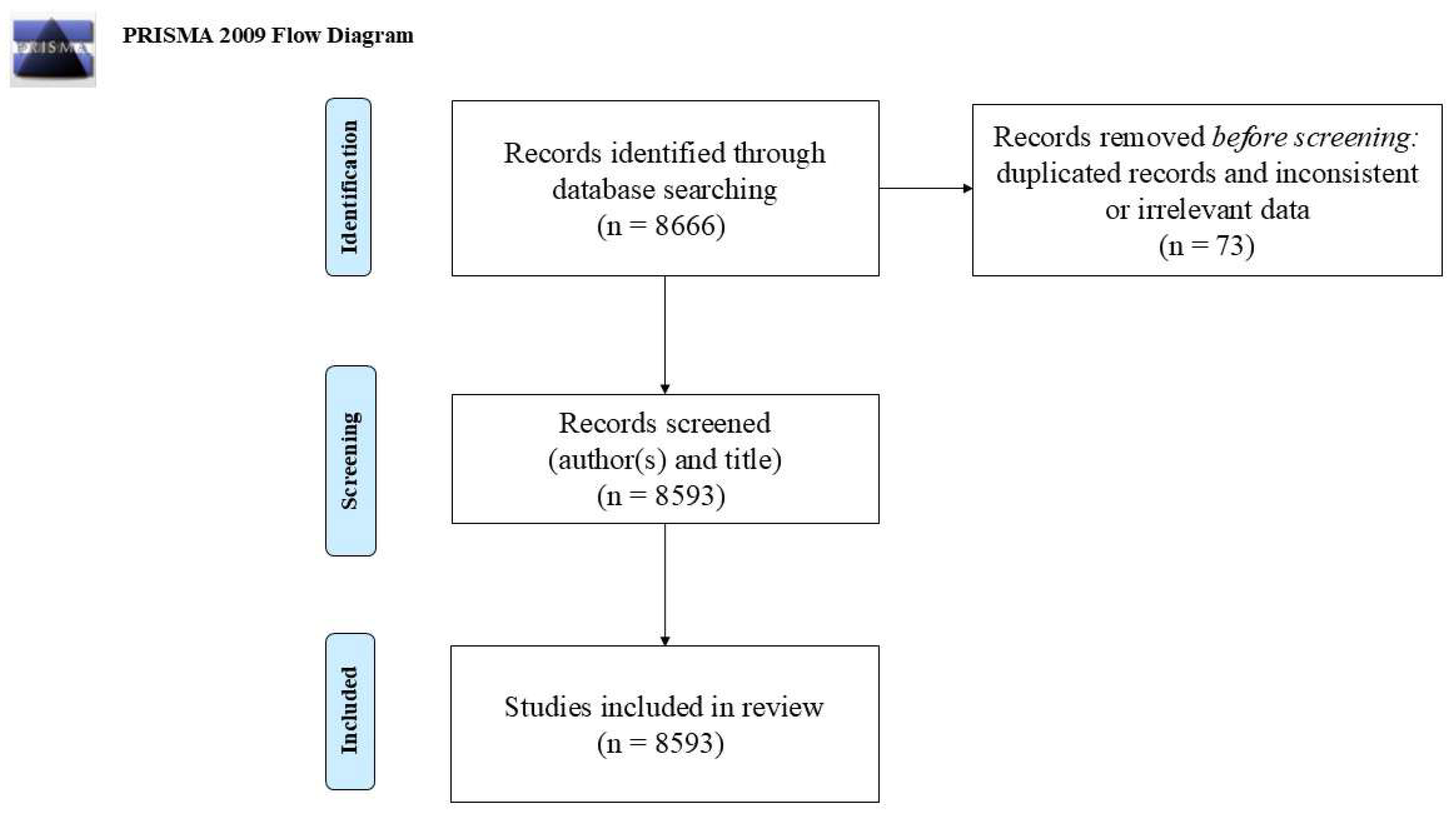
To ensure reliability and consistency of bibliographic analysis, comprehensive data preprocessing was applied to the dataset extracted from Scopus. Standardization was essential, as bibliographic records may contain inconsistencies such as spelling variations, abbreviations, homonyms, or synonyms. The standardization process was conducted using Google Sheets. In the first stage, records with missing essential fields—specifically author names and/or article titles—were removed. In the subsequent stage, duplicate records and irrelevant documents (such as book introductions and conclusions) were eliminated. Author names, journal titles, and publishers were then manually standardized, as Scopus often indexes multiple variants and abbreviations for the same entities. In cases where ambiguity regarding author identity persisted, validation was performed based on institutional affiliation and research domain. Common terms, homonyms, and synonyms were addressed directly during the analysis phase using specific features of the applied bibliometric tools, as detailed later in this section. The final dataset comprised 8593 unique publications. The search was conducted in June 2025. Figure 1 illustrates a flow diagram detailing the various stages of the refinement process leading to the final dataset.
The web interface Biblioshiny provided by Bibliometrix 4.1.3 and VOSviewer 1.6.20 were used to filter and analyse the dataset. All 8593 documents were analysed in the context of this study. The bibliometrix package with the function library(bibliometrix) was loaded into R (version 4.3.0) and the function biblioshiny() was used to launch the Biblioshiny web interface. The work was conducted RStudio. Bibliometrix R package was developed by Massimo Aria from the University of Naples Federico II, Naples, Italy, and Corrado Cuccurullo from the University of Campania Luigi Vanvitelli, Caserta, Italy [30], and it is “an R statistical package for analysing and visualizing the bibliometric data from Web of Science and Scopus databases. It is written in the R language, which operates under the GNU operating system” [31]. VOSviewer, developed by Nees Jan van Eck and Ludo Waltman at the at Centre for Science and Technology Studies, Leiden University, Leiden, Netherlands [32], is a software tool used for exploring and analysing large-scale bibliographic data that can be used for the visualization of scientific collaboration patterns among authors, countries, and organizations, as well as mapping the linkages between document keywords using the co-occurrence analysis function.
The dataset in .CSV format was imported into the Biblioshiny interface. Table 1 presents a summary of the main information about the data. The dataset contains three types of documents: articles (n = 5351), book chapters (n = 1263) and conference papers (n = 1979) published in the last 17 years. Information about the document contents are Author’s Keywords (DE), which represents the total number of keywords across all publications, and Keyword Plus (ID), which represents the keywords that frequently appear in the titles of an article’s references [30,33].
The average number of co-authors per document was 2.57. The total number of citations was 164,557, with an average of 19.15 citations per document. Out of the analysed set, 6393 works had at least one citation. Approximately half of the total citations were concentrated among just 440 articles. This indicates that a relatively small subset of publications holds considerable influence, substantially shaping the body of literature in the field under investigation, while the majority are less frequently cited. The substantial increase in publications in recent years has played a critical role in shaping this phenomenon. The percentage of cited publications, calculated as the ratio of cited articles to the total number of articles, stands at 74.39%. The dataset contains 313,449 cited references.
Within the scope of this research, we have identified and analysed significant articles and leading publications in the field of e-commerce and the main research directions by identifying thematic areas, trends in topics, and co-occurrence networks. To obtain the most relevant results, we eliminated general terms in the field such as e-commerce, electronic commerce, online shopping, internet, internet shopping, ICT, and names of countries. Subsequently, we established associations among concepts that have identical or similar meanings from the perspective of the research subject (e-commerce, electronic commerce; trust, online trust; customer satisfaction, satisfaction, e-satisfaction; customer loyalty, loyalty, e-loyalty; digital transformation, digitalization; retailing, online retailing, retail, online retail; consumer behaviour, consumer behaviour; marketing, internet marketing, digital marketing, e-marketing; service quality, e-service quality, quality; technology acceptance model, TAM; purchase intention, online purchase intention; COVID-19, COVID-19 pandemic, pandemic). In conducting this study, author keywords were used for bibliometric analysis. Keywords play a crucial role in mapping the conceptual structure of a research field, and Biblioshiny allows the use of either Author Keywords or All Keywords. Unlike Keywords Plus, Author Keywords directly reflect the main themes and research objectives explicitly defined by the authors for each study, making them particularly suitable for identifying research trends and thematic clusters. They represent the author’s declared intentions rather than automatically generated terms. Author Keywords are especially valuable for co-occurrence analysis and thematic mapping, as they highlight the most relevant and meaningful concepts within the field. Consequently, the conceptual structure and thematic evolution examined in this study are grounded in the terminology explicitly employed by researchers in the analysed literature. An additional analysis of keywords and abstracts from the dataset was conducted to identify recent trends. Although this analysis is not represented in the main figures and tables, it contributes to a more comprehensive understanding of the evolution of research in the field of e-commerce and provides valuable support for interpreting the results obtained.
The results of the analysis are presented in the following section. The structure of our results and discussion presentation aims to offer a comprehensive perspective of the domain, encompassing its evolution, current trends, and potential future directions.

4. Results

The bibliometric analysis of the publications related to the field of e-commerce is divided into two directions. The first part involves an analysis of the most influential articles and journals that have published research on the topic of e-commerce during the analysed period, spanning from 2008 to 2024. The second part of the research synthesizes the results obtained through science mapping, where the main themes and trends are identified by analysing keywords and their co-occurrences in the database set.

4.1. Performance Analysis

Performance analysis involves descriptive metrics from published documents and includes and encompasses a range of indicators. We examine the annual publication trends, the most impactful documents, the most productive publications, patterns of author collaboration, the number of active years in which publications were produced, and productivity per active publication year. Productivity is reflected by the number of publications, while the impact is revealed by the total and average citations.

4.1.1. Publication Trends and Authors’ Collaboration

The analysis of publication volume trends over the specified period, based on the model proposed by Omotehinwa [34], highlights a noteworthy fluctuation in the number of publications between consecutive years (Table 2). The Annual Growth Rate (AGR) of published articles, despite experiencing notable fluctuations, has consistently maintained positive values from 2015 to 2024. The lowest value was recorded in 2012 (−53.48%), while the highest was in 2011 (69.96%). The results reflect the percentage increase in the number of publications each year and are calculated according to Formula (1).
AGR = Number   of   publications   in   the   current   year Number   of   publications   in   the   previous   year Number   of   publications   in   the   previous   year 100
Another important indicator is the AGR for the entire period analysed. In the case of articles on the topic of e-commerce published in Scopus from 2008 to 2024, this rate is 7.06%, as can be seen in Table 1.
Hypothesis H1 is partially confirmed: although there were fluctuations in the early years, the overall trend throughout the entire period is upward, with a significant increase starting in 2015.
Author collaboration can be measured using the Collaboration Index (CI) and the Collaboration Coefficient (CC) [11]. This is important as it facilitates the exchange of ideas and enables a larger volume of work. Opinions on collaboration are sometimes divergent, balancing between enhancing the credibility of research results and creating an inflation of scientometrics indices that may not accurately reflect the true quality of an individual’s research output [35,36]. When conducted with authenticity, objectivity, and rationality, author collaboration unquestionably benefits the research field. This collaboration has been further enabled by improved communication channels, allowing researchers from geographically dispersed locations to work together more effectively. CI represents the average number of authors per paper (2), while the CC is a more nuanced measure that accounts for both the average number of authors per paper and the proportion of papers with multiple authors (3) [37]. These indicators are determined using the following formulas [38]:
CI = j = 1 k j f j N ,
CC = 1 j = 1 k ( 1 / j ) f j N
where:
  • j represents the number of authors per article.
  • fj represents the number of articles in each category (with one author, with two authors, etc.).
  • N is the total number of articles published within a given period.
  • k is the maximum number of authors per article.
Table 3 presents the CI and CC calculated for the articles in the analysed dataset.
Research groups that were published together were composed of two or three individuals (2739 articles had two authors, while 2129 had three authors). There were very few extreme cases with a high number of authors; only 31 articles had more than seven authors, and 43 articles were published by groups consisting of seven researchers. As observed, the level of collaboration remains relatively stable during the period analysed, fluctuating between 2.67 and 3.35. In contrast to the simpler CI, which focuses solely on team size, CC provides a broader perspective on author collaboration, ranging between 0 and 1. The CC tends toward 0 if the dataset is dominated by single-author papers. Analysing the last decade by comparing with the previous period, the average co-authorship count CI increased from 2.82 in 2008–2014 to 3.05 in 2015–2024, indicating a growth in the number of members per author team. Also, the CC consistently exceeded 0.70, indicating a high level of collaboration and the predominance of co-authored publications. The average CC increased from 0.76 in 2008–2014 to 0.77 in 2015–2024, reflecting a further intensification of collaboration among authors. Regarding international collaboration, according to data calculated by Bibliometrix 4.1.3, 18.31% of the articles were published by authors from different countries (Table 1).
Hypothesis H2 is confirmed: although fluctuations were observed in the early years of the analysed period, the trend from 2015 to 2024 is upward, with larger author teams, reflecting a high degree of collaboration.

4.1.2. Impactful Research and Publications

To identify the most influential research, Table 4 presents an overview of the articles that have received the highest global citations throughout the examined period. Global citations quantify the frequency of citations that each publication has received from other works within the entire Scopus database. The results strongly support the considerable influence of a publication’s age on its citation count. As depicted in the table, the articles with the highest number of citations (over 1000) were published at the beginning of the analysed period (2008–2011). Only one article from the list was published in the last decade [39] and it is also the one with the highest number of citations per year (137.67) followed by [40] (132.39), and [41] (78.78). Another aspect worth noting concerns the subject matter of the most cited articles. Four articles address the impact of Electronic Word of Mouth (eWOM) in e-commerce, three analyse hospitality and tourism from various perspectives, and four articles are explicitly dedicated to analysing the impact of online reviews on e-commerce. eWOM refers to the informal communication of opinions about products, services, or brands through digital channels, such as social media, forums, reviews, and blogs.
Usually, the process of an article gaining popularity and accumulating a substantial number of citations can be time-consuming. Several factors, such as the specificity or generality of the topic, the journal’s prestige, the diversity of databases that index the journal, and the reputation of the authors, also exert an influence on the citation count. These factors cumulatively contribute to the publication’s visibility and impact within the academic community.
Among the publications, 6393 articles in the field of e-commerce, published between 2008 and 2024 and included in the analysed dataset, have been cited at least once, representing 74.39% of the analysed articles. The most relevant publications based on the number of published documents include the Proceedings of the International Conference on E-Business and E-Government (ICEE 2011) with 488 papers, followed by Journal of Retailing and Consumer Services, with 472 papers published in the last 17 years, and a book series Developments in Marketing Science: Proceedings of the Academy of Marketing Science (135 papers). Two additional journals rank among the top ten: Internet Research (103 papers) and Journal of Business Research (99 papers).
The publication impact analysis was assessed based on the total number of citations, h-index, and g-index of the journals in the top ten from the dataset. A total of 8593 articles were published in 1964 journals, books, and conference proceedings. The top ten journals account for only 12.24% of the total publications, but the articles published in these journals represent 35.24% of the total citations (Table 5). These percentages indicate the widespread distribution of publications across various journals, reflecting a growing interest in e-commerce research from multiple perspectives [49] and confirm the relevance and prestige of the publications included in the top. The results highlight that studies published in journals have had the greatest impact in the field, as they represent the only category of publications in the top ten list. Columns 4–6 provide valuable information that reflects the prestige of each journal, specifically the h-index, g-index, and m-index. The Hirsch index (h-index) measures both the productivity and impact [50], calculated as the number of published articles (h) that are cited in other publications at least h times. The g-index was introduced by Egghe [51] and is calculated as follows: for a set of articles that is “ranked in decreasing order of the number of citations that they received, the g-index is the (unique) largest number such that the top g articles received (together) at least g2 citations”. The m-index is calculated by dividing the h-index by the number of years since the first publication. It is an “indicator of the successfulness of a scientist” [52] and can be used to compare researchers with distinct levels of seniority. Table 5 also presents the journal quartile according to Web of Science. Only one journal is not indexed in Web of Science, and another one is in Q4, while the rest are in the first quartile, which clearly demonstrates the prestige of the journals included in the dataset and the attractiveness of the subject for such publications.
Journal of Retailing and Consumer Services had the highest growth during the analysed period, going from 2 articles published in 2008 to 472 in 2024. It also has the highest frequency of citations (26,808; h-index = 90; g-index = 135). In most cases, the number of articles published in this journal increased by at least 50% each year included in the analysis. Internet Research holds second place (7451; h-index = 45; g-index = 85), with Journal of Business Research occupying the third position (8591, h-index = 48, g-index = 85). The analysis shows that the number of published articles has increased from 2008 to 2024 for all journals. The number of active publication years refers to the time span during which each journal in the dataset has continuously published articles related to the analysed topic. More than half of the top-impact journals have consistently published articles each year throughout the analysed period. Journal of Retailing and Consumer Services has the highest productivity per active year of publication, at 27.76. This is calculated as the ratio of the total number of publications to the number of active years of publication [11]. The difference between this journal and the next on the list, Internet Research, is significant, with the latter having a productivity per active year of publication of 6.06.
Hypothesis H3 is partially confirmed: only three of the journals with the highest total citation counts appear among the top-cited articles, indicating high visibility but not a complete overlap between productivity and impact.

4.2. Science Mapping

Science mapping involves the relationship between research components [11]. In this section, we conduct a co-authorship analysis, a co-citation analysis of both publications and references, an analysis of the co-occurrence of author keywords, and a bibliographic coupling of the published documents. To perform these analyses, we used VOSviewer 1.6.20 software to analyse co-citation, co-authorship and bibliographic coupling and Bibliometrix 4.1.3 to analyse topic and thematic evolution, keywords co-occurrence and main themes.

4.2.1. Co-Authorship Analysis

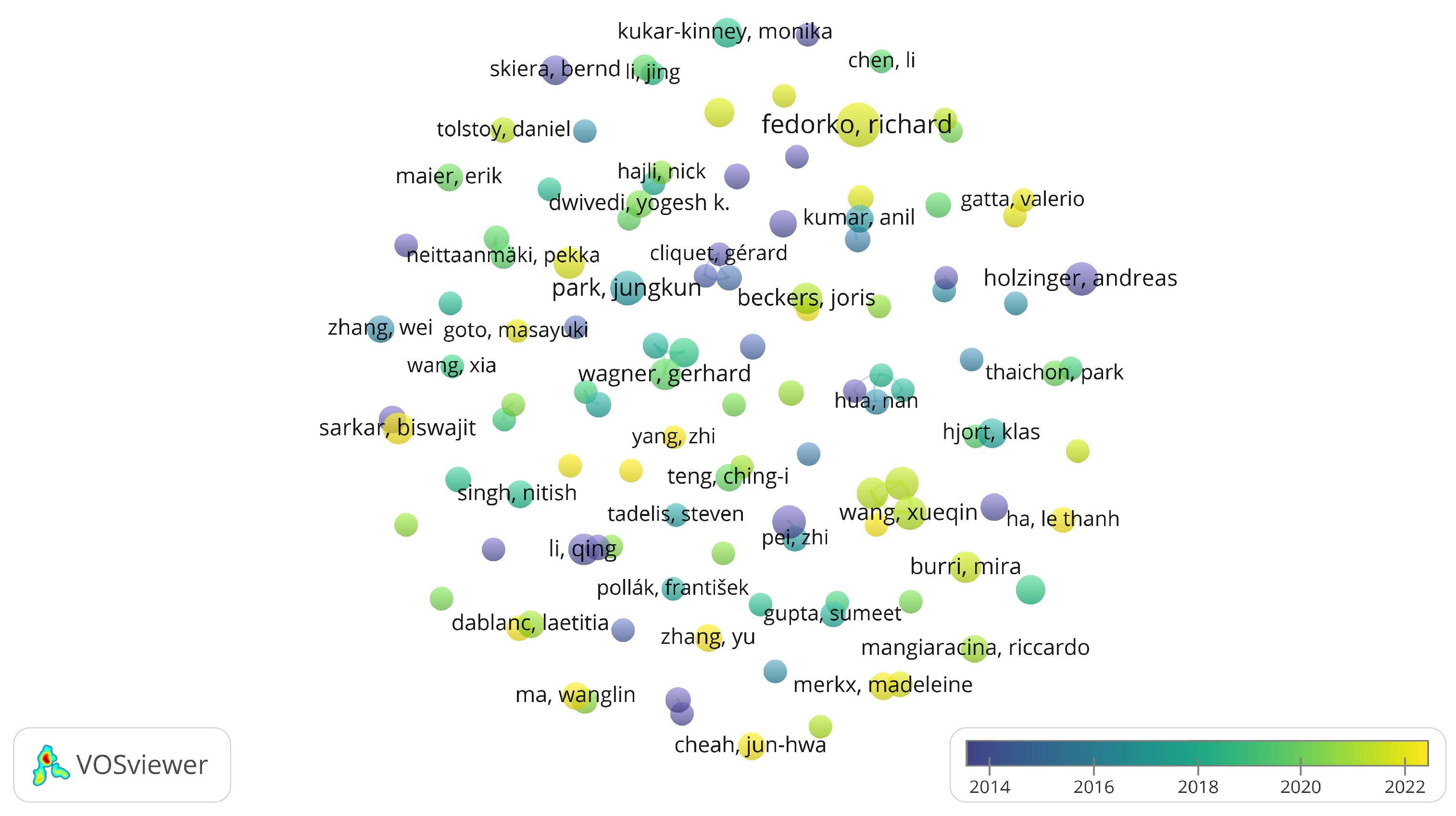
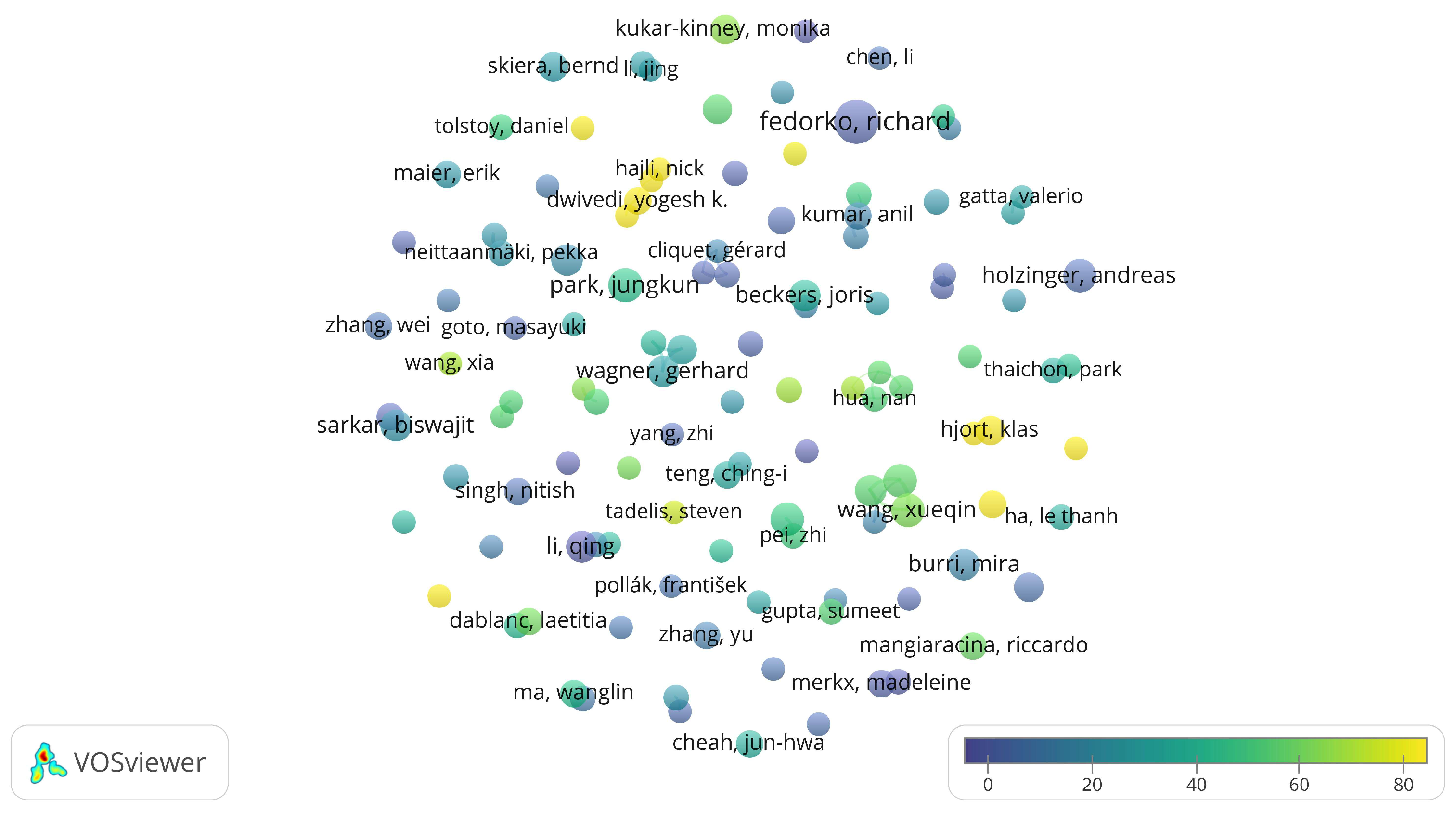
According to Donthu et al. [11], co-authorship is a formal way of intellectual collaboration among scholars and contributes to both the qualitative and quantitative enhancement of scientific output. It has been driven by the increasing methodological and theoretical complexity in research, as well as the easy access to technologies facilitating communication among researchers. The co-authorship analysis for the documents from the dataset reveals a limited number of long-term collaborations. The co-authorship patterns are visualized in Figure 2 and Figure 3 using VOSviewer 1.6.20. For this mapping, the criteria include a minimum of 5 documents per author and at least 10 citations per document to highlight the most influential authors and their citations. Each node in the network represents an author, and the connecting lines indicate co-authorships. Thicker lines show stronger collaboration, based on the number of shared publications. In Figure 2, larger nodes correspond to authors with more publications, and colours show the average publication year. In Figure 3, node size reflects the total citations received, and colours indicate the average citations per paper.
It can be observed that researchers tend to form small research groups, resulting in many discrete collaboration networks. In terms of productivity, the author with the highest number of publications is Richard Fedorko (18), followed by Jungkun Park (11), Andreas Holzinger (10), Xueqin Wang (10), Ruiliang Yan (10) and Yuen Kum Fai (10). Richard Fedorko’s research interests are primarily related to consumers’ behaviour [53,54] and the impact of social networks or influencers on online shopping [55,56]. Xueqin Wang and Kum Fai Yuen have published research on last-mile logistics [57,58,59,60]. Joris Beckers has primarily investigated aspects related to logistics in online selling [61,62] and the impact of COVID-19 on e-commerce [63]. Regarding popularity, the works within the group co-authored by Rob Law have the highest number of citations (3620). These publications cover topics related to eTourism and the hospitality industry [40,44]. The second position is held by the group with Filiery Raffaele with 1142 citations. The research topics include eWOM, social media influence on e-commerce, and online review influences [64]. The paper “The role of cultural values in consumers’ evaluation of online review helpfulness: a big data approach” offers an interesting perspective on the field. The authors analyse more than 500,000 reviews published on Booking.com to assess the influence of cultural factors on the perceived helpfulness of reviews. The results reveal that reviewers from cultural contexts scoring high in power distance, individualism, masculinity, uncertainty avoidance, and indulgence are more likely to produce reviews considered helpful [65]. The group co-authored by Yogesh Dwivedi ranks third position with 648 citations. Their publications cover a diverse range of e-commerce topics, including the impact of social media [66] and eWOM [67].
Hypothesis H4 is confirmed: author teams collaborating in the field of e-commerce address a wide range of topics, indicating a tendency toward interdisciplinarity in research.
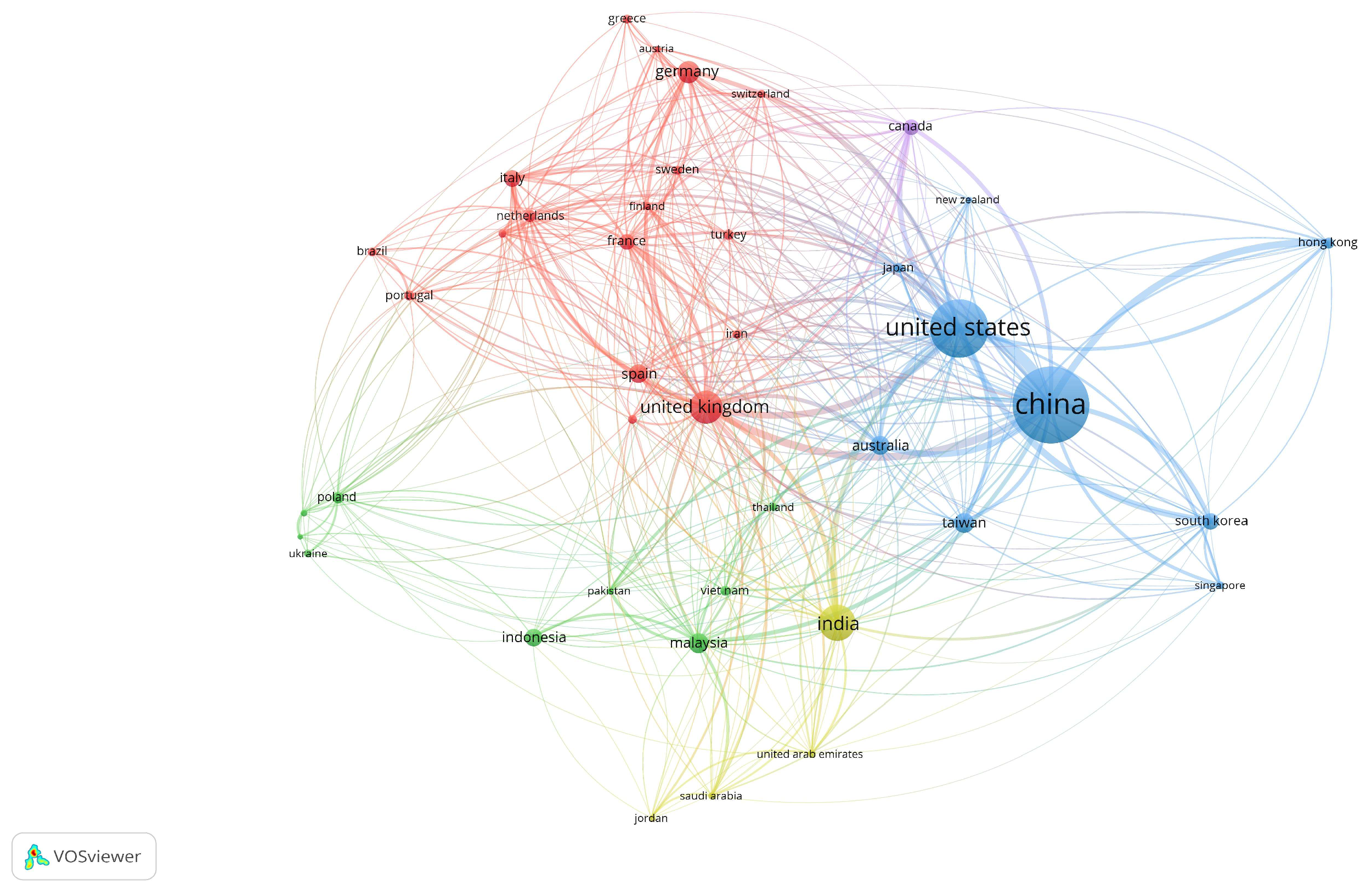
Exploring collaboration for countries reveals the spatial distribution of publications. For network processing, the thresholds are 50 for the number of documents and 500 for the number of citations. Table 6 presents contributing countries regarding e-commerce research based on author affiliation. Figure 4 presents the countries’ co-authorship network generated by VOSviewer 1.6.20.
Table 7 reports the share of publications and citations attributed to USA and China, 95% confidence intervals (Wilson), and p-values from one-sided binomial tests against a dominance threshold of 30%. Researchers from these two countries account for 34.66% of published articles and 32.22% of citations, representing approximately one-third of the total.
Hypothesis H5 is confirmed: countries with developed economies, particularly the USA and China, hold a significant share of scientific production in the field of e-commerce.
International collaboration among countries exhibits a more uniform distribution compared to author collaboration. China leads the rankings in terms of productivity with 1975 documents. It is followed by the USA, which has published 1327 documents, and India, with 671 documents. In terms of citations, the USA ranks first with 46,042 citations, followed by China with 24,290 citations and the UK with 21,135 citations.

4.2.2. Co-Citation Analysis of Documents and Publications

Another technique in scientific mapping is co-citation analysis. To identify the most cited references, we utilized VOSviewer 1.6.20, which generates insights based on references, sources, or authors. Using co-citation analysis of the cited references, Table 8 lists the ten most highly cited articles that have influenced the research interests of the authors in the dataset. The network strength of each paper and the relationship with other cited publications are indicated by the co-citation links (CoLs) [68]. Three papers stand out with at least 140 citations and/or 180 co-citation links. The most prominent is Fornell and Larcker’s “Evaluating structural equation models with unobservable variables and measurement error” (1981), which has received 215 citations and 188 co-citation links, making it the largest co-citation in the network. This is followed by Davis’s seminal work “Perceived usefulness, perceived ease of use, and user acceptance of information technology” (1989), with 140 citations and 170 co-citation links, and by Nunnally’s “Psychometric theory” (1978), which has 129 citations and 174 co-citation links. It should be highlighted that three of the most influential studies were published in MIS Quarterly. All the referenced papers were published more than two decades ago and introduce foundational theories relevant to e-commerce, including the TAM, Structural Equation Modelling (SEM), and the Theory of Planned Behaviour (TPB). These theoretical frameworks have provided the basis for numerous subsequent studies in the field, particularly in the analysis of consumer behaviour. It is important to mention that the present analysis identifies the most frequently cited articles within the dataset to uncover the connections between papers through shared citations. As a result, the list of influential works also includes articles that fall outside the scope of the original dataset.
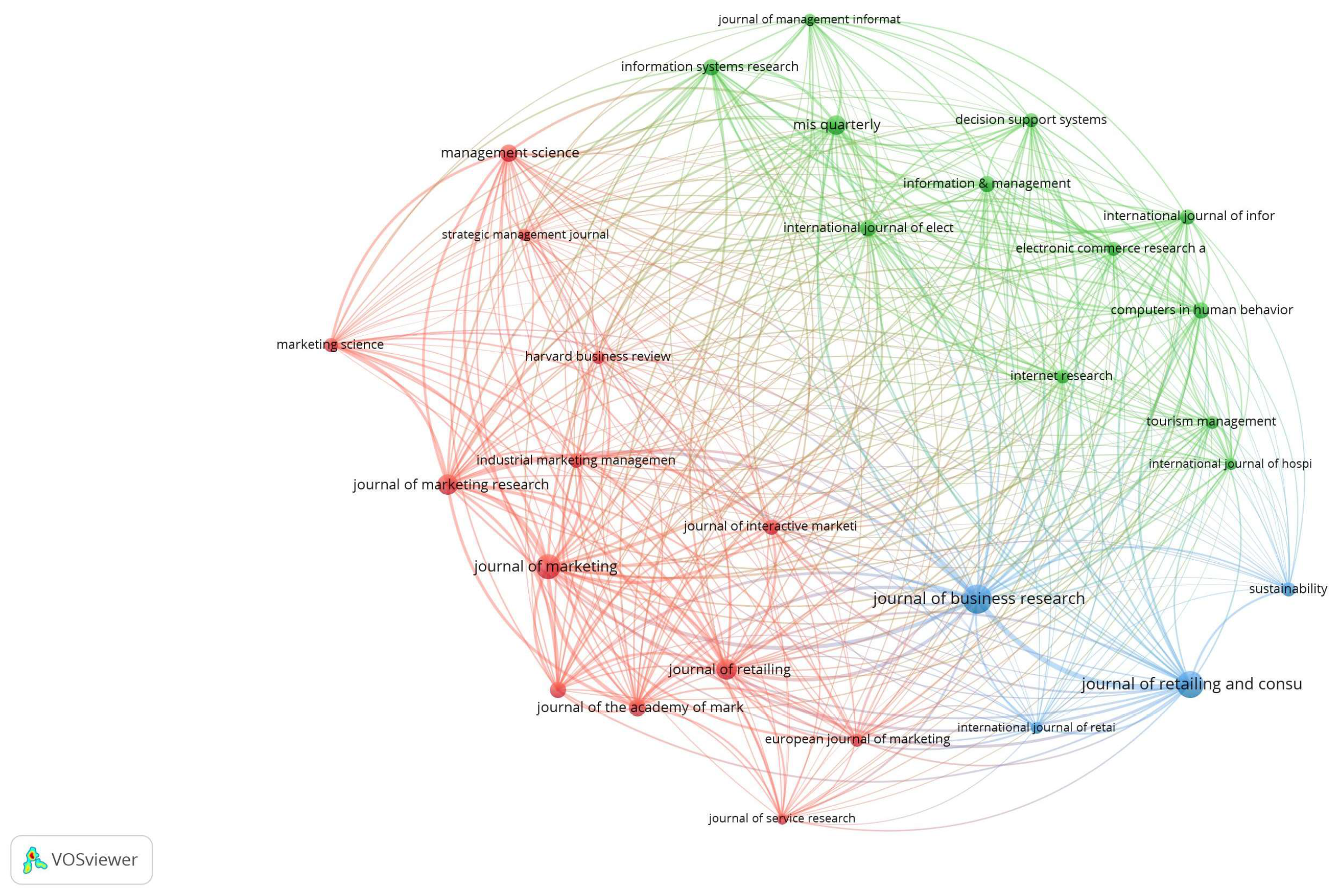
Co-citation source analysis is motivated by the idea that publications frequently cited together exhibit semantic similarities [11]. This analytical approach is employed to acquire a deeper understanding of the evolution of core themes within a field. In a co-citation network, two publications are connected if they are cited together by another paper, with each shared citation counted as a co-citation. In VOSviewer 1.6.20, this analysis can be conducted for references, sources, or authors. Figure 5 illustrates publications that have a minimum of 1000 citations. The result encompasses 29 sources and 406 links. The strength of the connections is represented by the thickness of the lines, whereas the spatial distance between two journals reflects the number of documents in which they are co-cited [68]. The co-citations of the cited journals related to online sales reveal three distinct clusters. The first cluster includes journals related to marketing and management primarily. The second includes journals related to information technologies; the third cluster primarily consists of journals in the fields of retailing, and consumer behaviour. The Journal of Business Research is the most frequently cited journal by authors whose articles are included in the dataset, followed by the Journal of Retailing and Consumer Behaviour and the Journal of Marketing. In terms of spatial affinity, the Journal of Business Research is closely connected with the Journal of Retailing and Consumer Services, International Journal of Retail and Distribution Management, and Sustainability.

4.2.3. Bibliographic Coupling of Documents

Bibliographic coupling is a technique used to identify conceptual similarities between documents by analysing their citations [79]. A document is considered bibliographically coupled if it appears in the references of two or more articles. In our case, the threshold for the number of citations is set at 100. The bibliographic coupling analysis of the 8593 works reveals seven main clusters. Table 9 provides an overview of the clusters, outlining their central themes and the most frequently cited publications within each cluster.
Bibliometric coupling enables the identification of primary topics addressed by researchers within a specific field. In the analysed dataset, only 354 works have more than 100 citations, though some of these are isolated. The first cluster consists of 123 documents published between 2008 and 2022, which have accumulated a total of 28,256 citations. The main themes covered include eTourism, online reviews, eWOM, social media influence, and social commerce, digital transformation (including cloud computing, AI, blockchain, cryptocurrency, etc.), live streaming industry, technology adoption, e-marketing, dynamic online prices, advertising processes, digital marketing strategy, and cross-border e-commerce.
The second cluster contains 57 works published between 2009 and 2023 with 10,807 citations. The primary themes in this cluster include consumer experience, trust, consumer resilience, consumer behaviour, virtual and augmented reality, AI, chatbots, consumer trust, purchasing attitude, retailing education, consumer satisfaction analysed both in general and within specific domains such as tourism or specific contexts like social media.
The third cluster consists of 51 works published between 2008 and 2022, with a total of 11,446 citations. This cluster focuses mainly on purchase intention, e- and m-payments, blockchain, cryptocurrencies, risks, and online banking with additional attention to subtopics such as technology acceptance and adoption.
The fourth cluster encompasses 45 articles published between 2008 and 2022, which have accumulated 9492 citations. Research within this cluster primarily focuses on customer satisfaction, e-trust and e-satisfaction, e-services quality, and m-commerce.
The fifth cluster consists of 43 works published between 2008 and 2021 with 8417 citations. The themes in this cluster are more concentrated, focusing primarily on eTrust, online behaviour, online recommendations, e-loyalty and e-satisfaction. Additionally, it explores e-retailing ethics, cross-border e-commerce, and social commerce.
The sixth cluster includes 27 articles published between 2008 and 2022, with a total of 4306 citations related to last-mile delivery, distribution system, environmental implications, omni-channel fulfilment, and logistics.
Finally, the last cluster comprises only 8 studies addressing heterogeneous topics such as social commerce, social influence, and social media in e-commerce. These papers, published between 2019 and 2021, have collectively accumulated 1296 citations.

4.2.4. Keywords Co-Occurrence and Main Themes

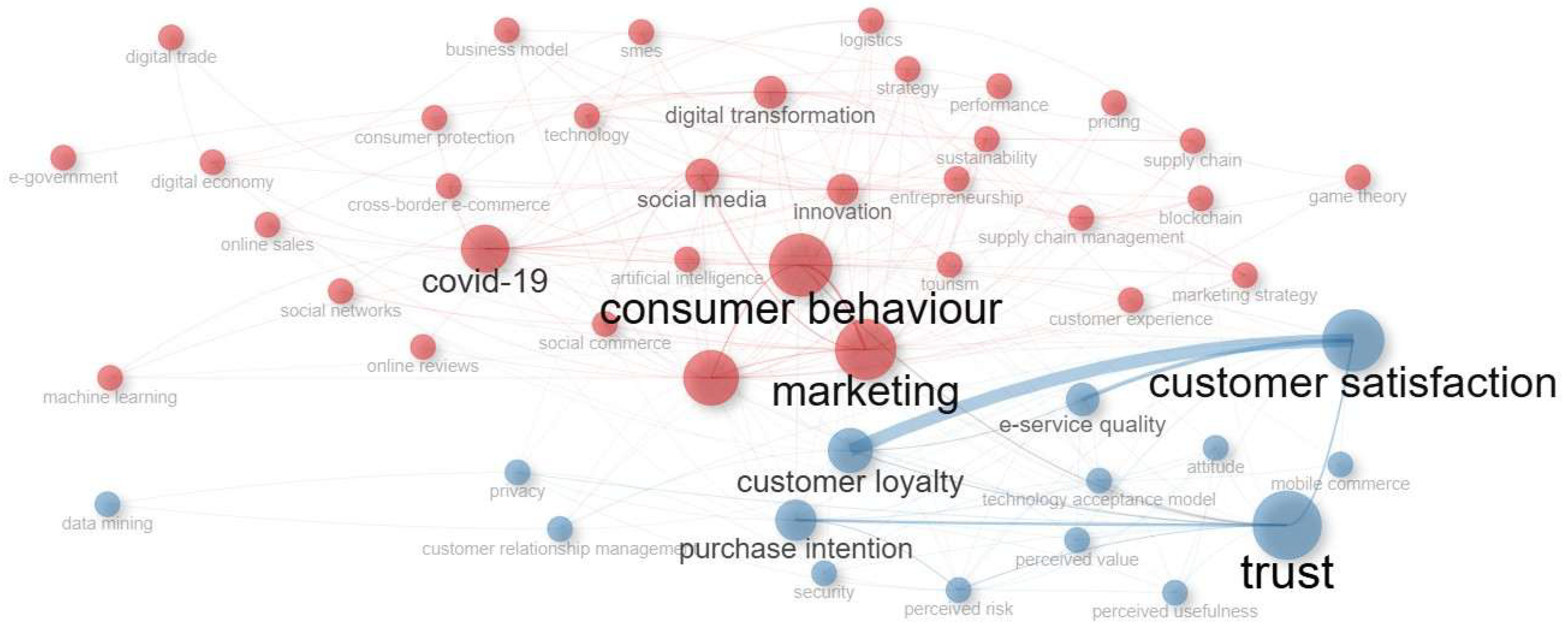
The keyword co-occurrence network is created based on patterns and connections between words that co-occur in the literature analysed. This helps to reveal “patterns and trends in a specific discipline by measuring the association strengths of terms representative of relevant publications produced” [105]. Each node in the network represents a word, and each link represents the co-occurrence of a pair of words [106]. The Keywords Co-occurrence Network was generated using Authors’ Keywords with the following parameters: Clustering Algorithm = “Walktrap”, Number of Nodes = 50, and Minimum Number of Edges = 2. Author’s Keywords offer a more comprehensive representation of an article’s content compared to Keywords Plus [107], which are generated by an automated algorithm [108]. The size of each node is proportional to the number of occurrences of the word in the data set analysed. The thickness of the edges connecting the nodes is proportional to the number of co-occurrences of the words they connect. The number of connections each keyword has reflects its importance in the network. A high centrality of a word in such a network indicates that it acts as a bridge between two separate parts of the network, creating conceptual links between important research topics through a common language [109].
Within each cluster, one can discern keywords that frequently co-occur (Figure 6). The red cluster includes 34 items that are frequently used together. These items reflect associations among specific concepts related to consumer behaviour (marketing, social commerce, online reviews, social media, consumer experience), alongside the marketing (consumer behaviour, retailing, online sales, pricing, digital transformation, performance), retailing (consumer behaviour, marketing, logistics, supply chain management) and concerns regarding the changes related to COVID-19 (consumer behaviour, retailing, marketing, cross-border e-commerce, consumer protection, online sales, social network). The cluster also includes research on disruptive technology related to e-commerce such as machine learning, AI, blockchain and their contribution to digital transformation, digital economy, and digital trade. Additionally, the cluster addresses social, economic, and logistical dimensions linked to online activities, including entrepreneurship, business models, supply chains, consumer protection, sustainability, and strategic considerations.
In the second cluster, in blue, including 15 words, the predominant focus is on concepts related to trust (customer satisfaction, customer, loyalty, purchase intention, perceived value, attitude, perceived risk, privacy and perceived usefulness), alongside the analytical methods used (TAM). Additionally, this cluster includes research on the influence of customer satisfaction (customer relationship management and security). Within the same cluster, one can also find characteristics that influence consumers’ decisions when purchasing products online, including security, privacy, and e-service quality.
In future research, scholars may choose to track current trends in e-commerce by concentrating on the most frequently used keywords from the past decade or innovate by exploring less explored areas related to e-commerce, represented by keywords with lower frequency.
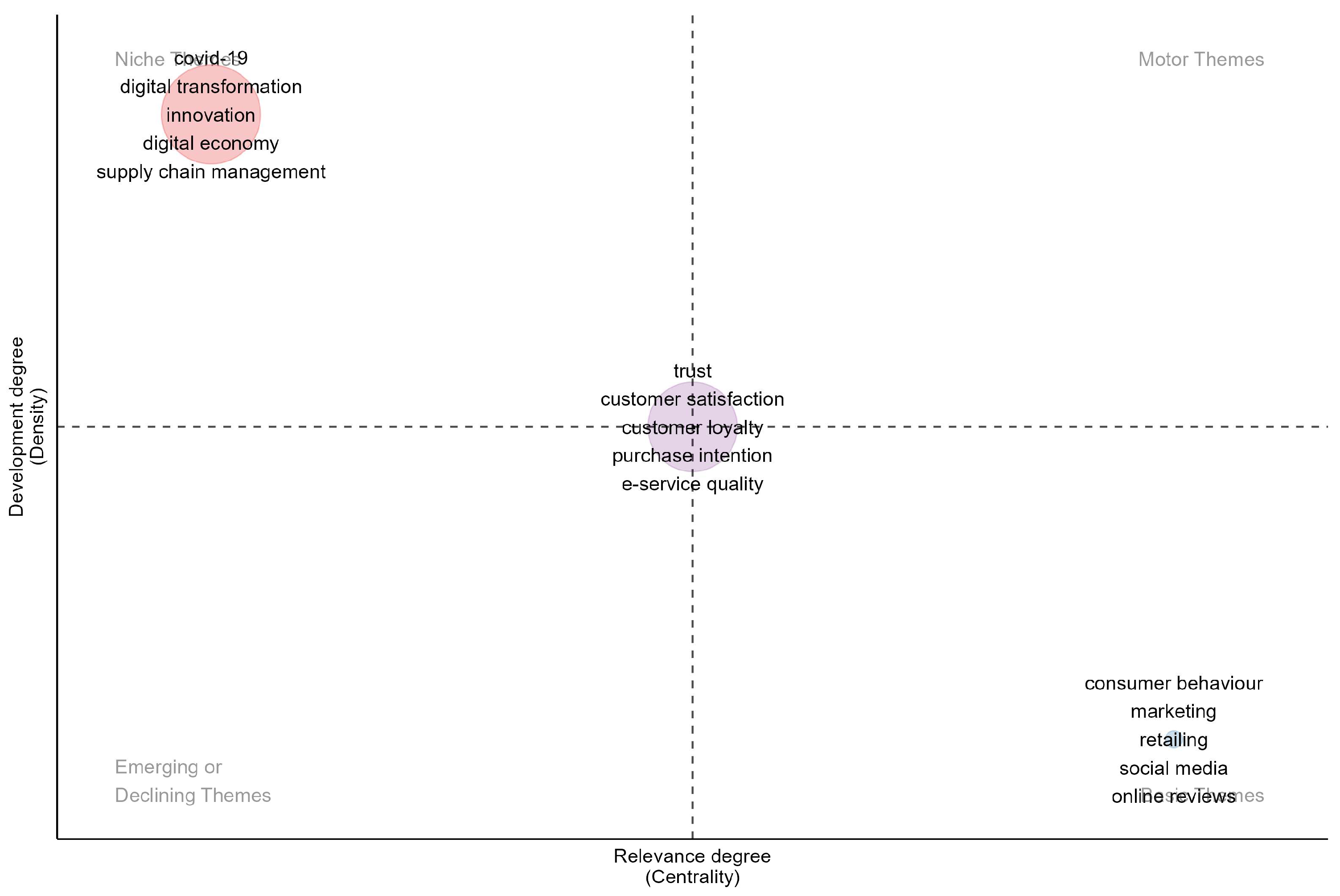
According to Grivel and Polanco [110], the thematic map provides a clear and appropriate manner of illustrating the relationships between topics within a broader subject. It facilitates the identification of the most significant concepts within the analysed field. Consequently, we have employed this form of representation to capture the primary themes addressed in the publications included in the dataset (Figure 7). The thematicMap() function was used, with the following parameters: Number of Words = 250, Min Cluster Frequency (per thousand docs) = 5, Number of Labels = 5, Label size = 0.1, and Clustering Algorithm = “Walktrap”. This is a powerful tool for identifying community structures in networks, particularly suitable for analysing keyword co-occurrence data in bibliometric research. The algorithm offers a measure of similarity between vertices based on random walks, starting from the hypothesis that random walks across the entire graph tend to detect subgraphs (areas of the graph with a high edge density), as there are only a few links leading outside a given community [111]. Clusters were generated based on the Author’s Keywords.
Co-word analysis was proposed by [112] as a content analysis technique for mapping the strength of relationships between information units in textual data. It is considered particularly relevant for reflecting interactions between fundamental and technological research. The thematic map reflects the level of correlation between concepts, measured as the density, and the cohesiveness of nodes, measured as centrality [34]. Each cluster on the map includes a group of related keywords and topics. The centrality and density are two metrics often used in thematic maps. Density signifies the strength of internal connections among all keywords used to describe the research theme. The centrality represents the strength of external connections to other themes by leveraging the field of authors’ keywords. The chart consists of four quadrants that indicate the level of development and relevance of the discussed topics. Niche topics, which are highly developed and isolated, are situated in the top-left quadrant. Motor themes or leading topics can be found in the top-right quadrant. These topics often drive new directions of innovation and research. Emerging or declining topics are located at the bottom-left quadrant and include both weakly developed and marginal themes, while foundational topics are situated at the bottom-right quadrant, including traversal and marginal themes.
The thematic analysis is represented through a thematic map consisting of three distinct clusters that include convergent topics based on their centrality and density within the field. The thematic map is important for understanding and exploring multidisciplinary fields, providing a broader view of the research landscape.
Cluster 1—COVID-19—includes topics related to digital transformation, innovation, digital economy, supply chain management, cross-border e-commerce, entrepreneurship, logistics, business models, AI, game theory, sustainability, strategy, and more. It is the most extensive research area (1074 articles) and has reasonable centrality, reflecting its influence and connections between clusters. It has good coherence, as indicated by high density, but lower centrality, focusing on more specialized directions. Concerns regarding the impact of COVID-19 on e-commerce, although accounting for approximately 12.5% of the analysed corpus, are positioned in the Niche Themes quadrant of the diagram. Their low centrality indicates that, despite their number, COVID-19—related articles are thematically isolated, forming a dense cluster with few semantic links to fundamental topics such as consumer behaviour, trust, customer satisfaction, customer loyalty, marketing, or retailing. The topic is episodic, having emerged suddenly, and is primarily connected to aspects closely related to technological transformations and developments. Given the recency of COVID-19—focused studies, these articles often tend to be self-referential, which significantly limits their connections with other relevant keywords in the field. Their positioning in the insular zone of the diagram does not contradict the importance of the topic; rather, it reflects that the theme does not function as a central node linking the dominant themes of the field, since centrality represents the degree of interconnection with other core topics rather than absolute frequency.
Cluster 2—Consumer behaviour—has the highest centrality score, which proves that it is very influential for the research network. According to the theoretical framework proposed by Callon and applied in the standard thematic map, themes with high centrality and low density are classified as Basic Themes [113]. These are considered common, widely spread, and fundamental to the field, yet not highly developed internally. In the dataset analysed, they represent an extensive and active research area (681 articles), including topics related to marketing, customer behaviour, retailing, social media, online reviews, customer relationship management, and data mining. These themes are well-connected to the rest of the domain, being fundamental and widely prevalent, but not highly specialized or internally developed. Themes in this category constitute the conceptual foundation for other research, as any study on e-commerce is inevitably connected or influenced by consumer behaviour and marketing, regardless of whether it addresses trust, satisfaction, technologies, innovation, or digital transformation.
Cluster 3—Trust—is an influential topic with the second-highest centrality score. The considerable number of articles demonstrates its significant contributions to the field under analysis (855 articles). The topics included in this cluster are related to customer satisfaction, customer loyalty, purchase intention, e-service quality, TAM, perceived risk, perceived value, social commerce, and privacy. The themes within this cluster serve as bridging nodes between Basic and Emerging Themes. They function as pivot topics, appearing in studies on platforms, technologies, and behavioural typologies, as well as in more recent contexts such as AI, sustainability, and value co-creation. These themes reflect the psychological and qualitative dimensions of e-commerce, as trust, satisfaction, and loyalty are essential for the success of any business in this domain.
The absence of themes in the Motor Themes quadrant indicates a transitional phase in the field. E-commerce is mature yet fragmented, undergoing a stage of conceptual reconfiguration. Emerging themes, such as digital transformation and the digital economy, are too recent to function as driving themes, being insufficiently connected to the core topics of the domain. Similarly, although the COVID-19 pandemic generated many publications, it remains conceptually isolated. Due to the ephemeral nature of the topic, it has not connected with the fundamental themes of the field to form clusters with sufficient centrality and density to act as motor themes for e-commerce research.
Overall, the thematic map illustrates the complexity, diversity, and interconnections among research themes explored by authors in e-commerce. Some clusters encompass fundamental and mature dimensions of the area, while others reflect emerging trends and topics with substantial potential for future development.

4.2.5. Temporal Analysis of Topic Evolution

Thematic evolution analysis facilitates the examination of how thematic content and structures evolve, revealing their interconnections, developmental pathways, and trends across different periods [114].
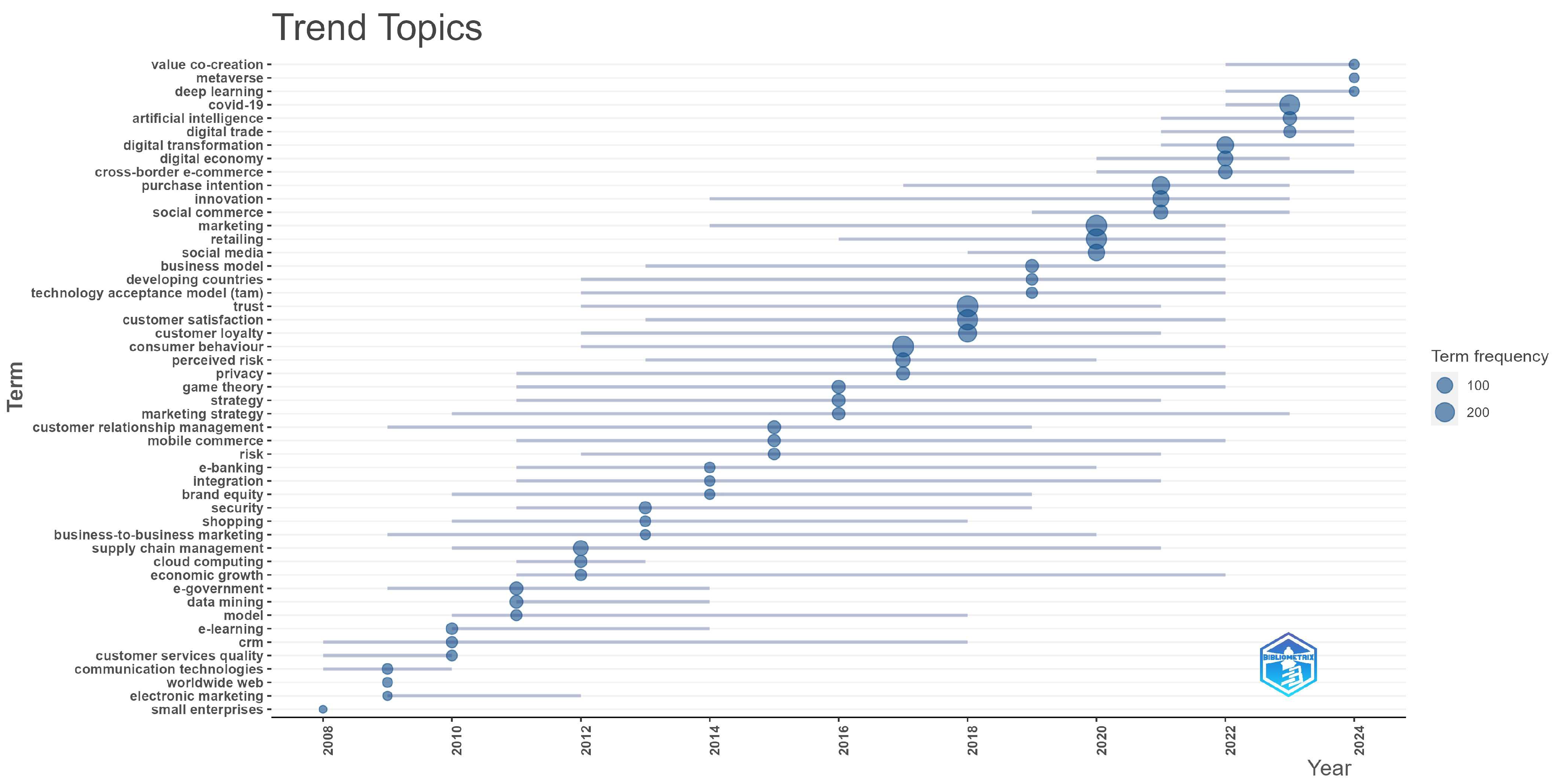
The analysis of keyword evolution plays an essential role in establishing thematic development, serving to gain insights into trends related to the topics and concepts that have captured researchers’ interest in a specific field over a given period. Figure 8 presents the results of the analysis based on the Author’s Keywords with the following parameters: Minimum Frequency = 5, Number of Words per Year = 3.
The result indicates that trust (271) was the most frequently used concept throughout the analysed period, followed by consumer behaviour (266), marketing (255), customer satisfaction (240), retailing (239), and COVID-19 (224). Trust, customer satisfaction, and customer behaviour dominated research interests from 2012 to 2022, while retailing was a prominent focus from 2016 to 2022. Digital transformation gained notable attention more recently, specifically in the period from 2021 to 2024. In recent years, there has been a growing interest in the analysis of disruptive technologies such as deep learning, AI, digital trade, digital economy, as well as the effects of the COVID-19 pandemic and citizen involvement through value co-creation. The most enduring topics are marketing strategy (2010–2023), economic growth (2012–2022), mobile commerce (2011–2022), game theory (2011–2022), privacy (2011–2022), and supply chain management (2010–2021). In 2024, the metaverse emerged as a novel research topic within psychology, drawing significant scholarly attention. Numerous other subjects were analysed during this period, some with a more general focus, such as customer relationship management, risk, social commerce, innovation, integration, etc., while others were more specific, such as e-commerce platforms, electronic banking, social commerce, etc.
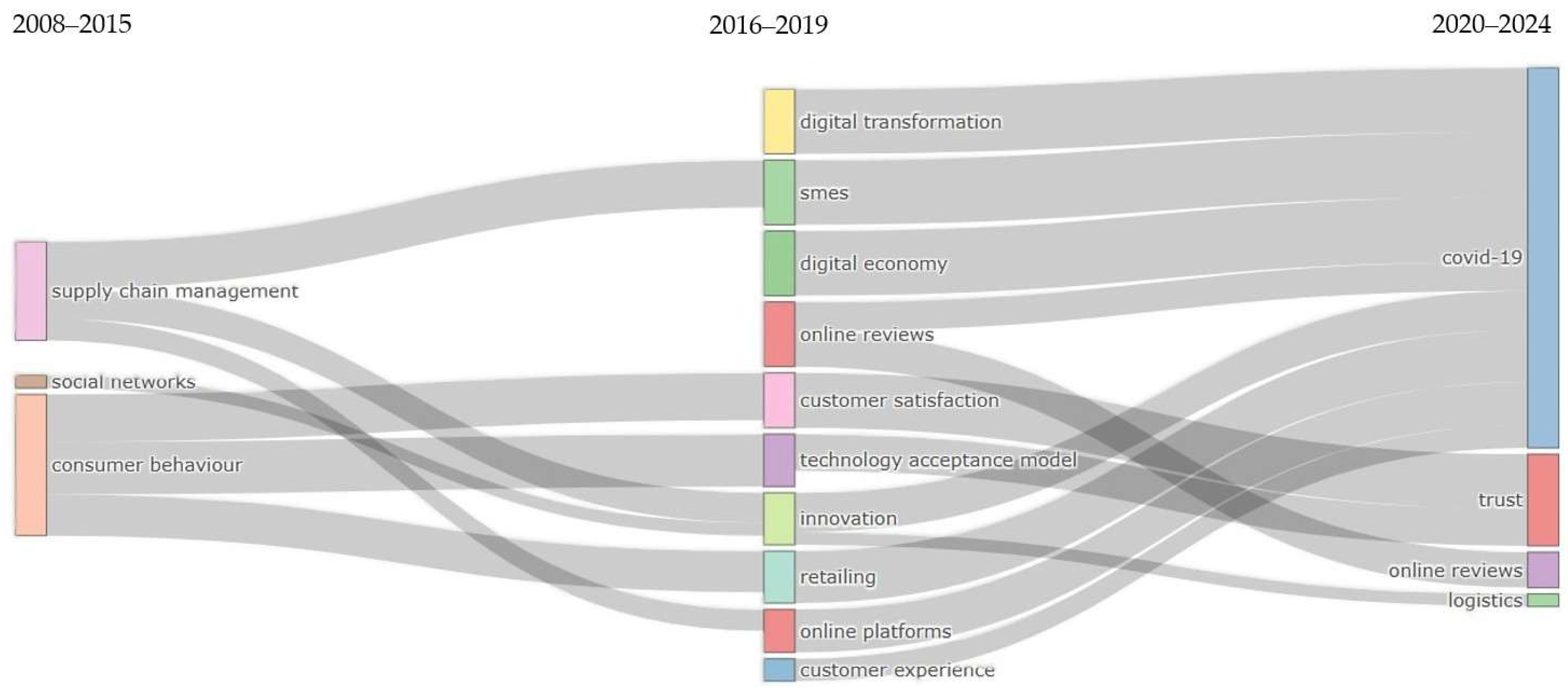
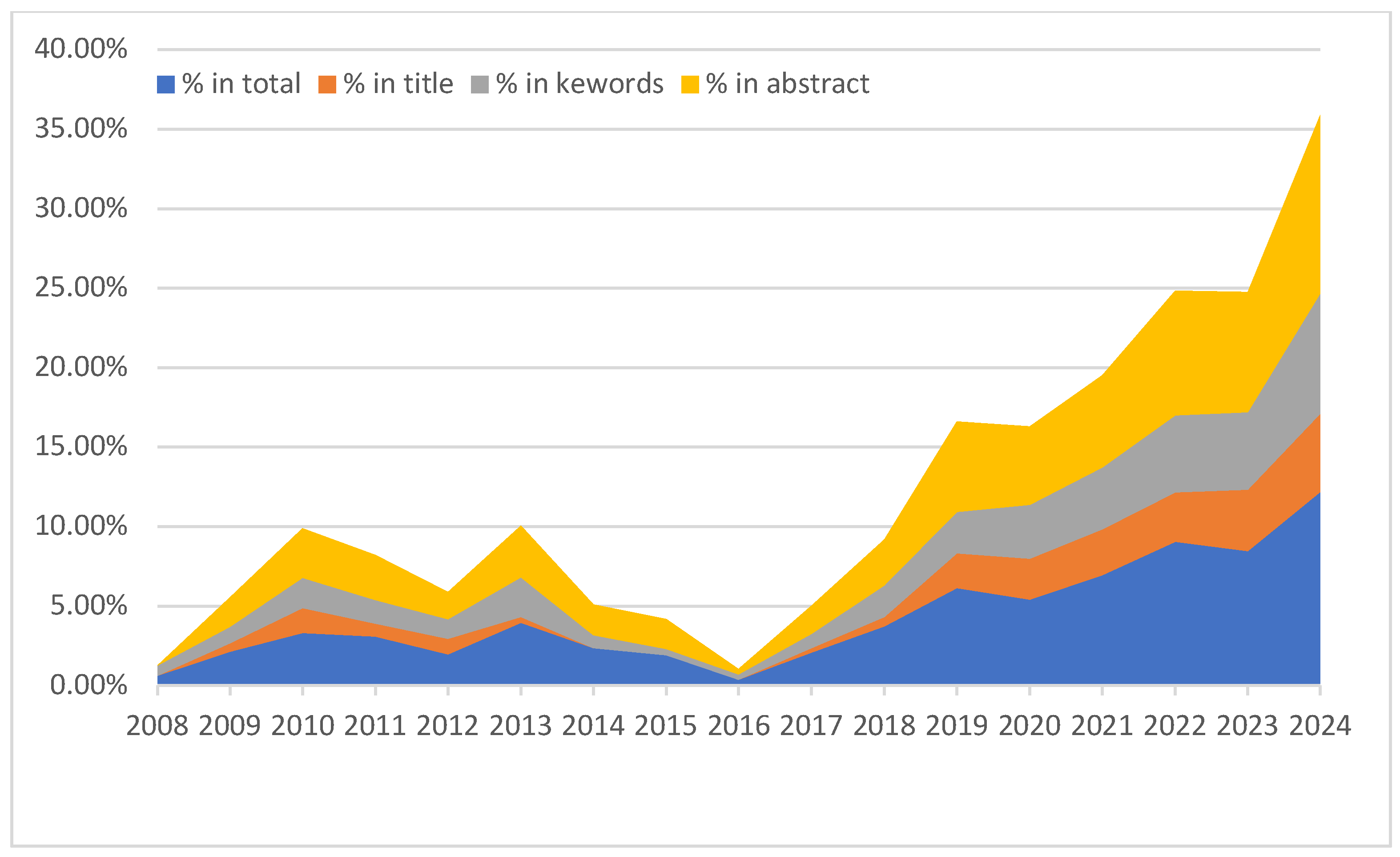
Concerns regarding the impact of COVID-19 on e-commerce emerged in the articles included in the dataset after 2020, with a high frequency during 2022–2023. They appear in 13.55% of publications from 2020 to 2024 (20 out of 590 articles in 2020, 94 out of 692 in 2021, 142 out of 741 in 2022, 169 out of 885 in 2023, and 98 out of 953 in 2024), peaking in 2022 at 19.16% of articles mentioning a COVID-19—related term in the title, abstract, or keywords, and remaining near the peak in 2023 at 19.01%. Interest in this topic declined in 2024. The transition of themes across periods was depicted in a thematic evolution framework in Figure 9 with a Sankey diagram, divided into three periods: 2008–2015, 2016–2019, and 2020–2024. Each cluster represents a research topic or theme, and its size reflects the number of publications on that theme. The research from the first analysed period focused on customer-centric concerns, including topics such as social networks and consumer behaviour, but also on the supply process, with studies addressing supply chain management. In the following period, there has been a growing interest in concepts such as retail, SMEs, consumer experience, consumer satisfaction, innovation, online reviews, and TAM, as well as ICT topics including digital transformation and digital economy. These topics are influencing both businesses’ and customers’ exposure and choices. E-commerce is often mentioned as part of the digital economy. A synthesis of studies focusing on retail, SMEs, customer experience, digital transformation, innovation, online platforms, and the digital economy was observed during the 2021–2024 period, linked to the challenges brought by COVID-19. In addition, between 2020 and 2024, customer satisfaction was analysed using the TAM to reflect the role of trust in e-commerce.
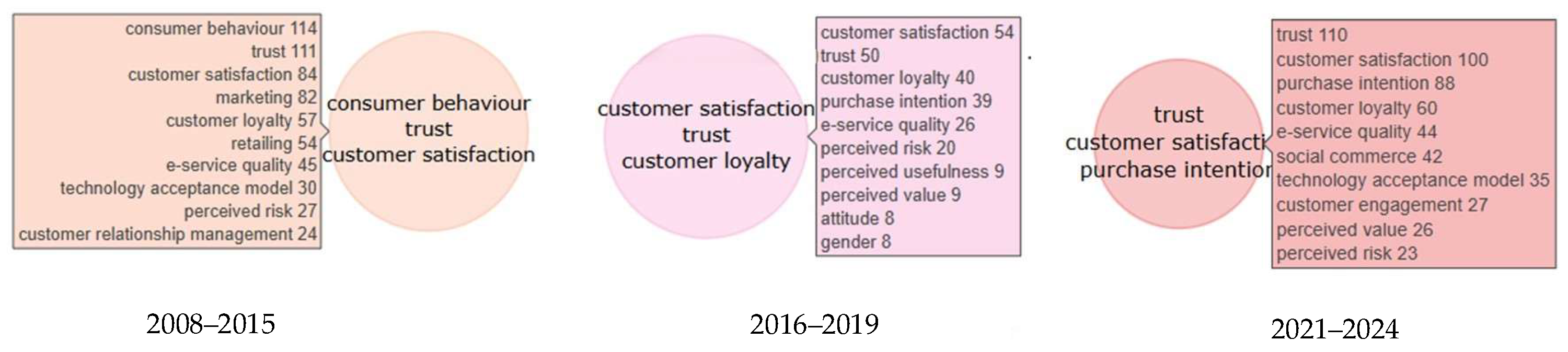
The meaning of key terms has evolved over the analysed period, influenced by technological, social, and economic contexts. The representation provided by the Sankey diagram is highly simplified, making the semantic evolution of keywords particularly important. In the first period, trust appears in the Basic Themes quadrant alongside consumer behaviour and customer satisfaction. This positioning indicates that trust was considered a fundamental element, yet insufficiently developed, integrated within a broader cluster reflecting general concerns about consumer behaviour. In the subsequent period, 2016–2019, the concept remained in Basic Themes but with higher density, suggesting an intensification of research on the impact of trust on customer loyalty. Although centrality remained similar, the increased density indicates the maturation of the theme and an expansion of discussions toward the relationship between trust and customer retention. Eventually, trust migrated to the Motor Themes quadrant, being associated with consumer satisfaction and purchase intention. This reflects an evolution from its role as a fundamental concept to a strategic one, oriented toward influencing purchase intention and optimizing the consumer experience. The following figure illustrates the evolution of research on trust in the analysed domain across these periods (Figure 10).
Consumer behaviour has also undergone a significant transformation according to the thematic analysis. In the first period, the term appears in the Basic Themes quadrant, highlighting its fundamental role in understanding consumer dynamics, with general concerns focusing on customer behaviour and satisfaction. In the period 2016–2019, the concept remains present but is associated with more applied themes such as customer satisfaction, retailing, and TAM. This evolution suggests a shift toward explaining consumer behaviour in the context of technology adoption and purchasing experiences. In the most recent period, the term appears within the same cluster as COVID-19, retailing, and marketing, reflecting a major semantic shift: consumer behaviour is now analysed in relation to global crises and the adaptation of marketing strategies to emerging digital realities.
The thematic analysis indicates a significant shift in the positioning of the concept of digital transformation within the e-commerce literature. In the second analysed period, the term appears in the Emerging Themes quadrant, isolated, suggesting that it was perceived as an emerging theme with developmental potential but still insufficiently explored. In the most recent period, digital transformation has migrated to the Basic Themes quadrant, being associated with COVID-19 in an extended cluster that includes retailing, marketing, consumer behaviour, social media, digital economy, innovation, cross-border e-commerce, and AI. This repositioning reflects a major semantic shift: digital transformation is no longer merely an emerging trend but has become a fundamental element, integrated into strategies for adapting to global crises and into innovation processes within e-commerce. The presence of COVID-19 as a fundamental theme is justified given the analysed period (2019–2024). Similarly, the digital economy, SMEs, retailing, online platforms, customer experience, and, partially, online reviews and innovation have evolved in the same way across these two periods.
In the first period, social network appears in the Niche Themes quadrant, indicating limited relevance and a specialized focus. In the subsequent period, the concept migrates to the innovation cluster within the Motor Themes quadrant, reflecting the integration of social networks into innovative e-commerce strategies. In the most recent period, this cluster fragments, and the social network is found again in the Niche Themes quadrant, within clusters associated with logistics and last-mile delivery as well as COVID-19. This suggests a semantic shift toward the use of social networks in logistical processes and communication within the context of the pandemic.
An interesting and significant aspect is the association of online reviews, machine learning, and sentiment analysis within a cluster positioned at the intersection of the four quadrants (Basic, Emerging, Motor, and Niche) in the most recent period analysed (2019–2024). This positioning indicates a transversal theme that links the fundamentals of consumer behaviour with technological innovation and advanced analytical approaches, highlighting the role of online reviews and machine learning algorithms in optimizing the purchasing experience.
In more detail, Table 10 presents the thematic transitions from one period to another based on the following metrics: weighted inclusion index (W), inclusion index (I), stability index (S), and Occurrence (Occ). The weighted inclusion index and inclusion index measure how relevant a research subject is and how much a topic persists or overlaps when comparing data from one period to the next. Both indices are scaled from 0 to 1. A value of 1 means the subject has the highest possible relevance (Weighted Index) or the research topic has perfectly transitioned and persisted with maximum overlap (Inclusion Index). The number of occurrences indicates how many studies support the transition of a research topic (i.e., its presence and continuity) from one period to the next. Higher values indicate stronger empirical support. The stability index measures the persistence and consistency of a particular topic over time, highlighting its sustained relevance and interest within a specific research domain across an extended period. It is normalized on a scale from 0 to 1. The data in Table 10 provides quantitative insights into the evolution of research trends and underscores the significance of certain themes over time.
The thematic evolution analysis highlights the hub role of the consumer behaviour theme during the periods 2008–2015 and 2016–2019, which branched into three distinct directions. Transitions toward customer satisfaction (W = 0.73; I = 0.07; Occ = 111; S = 0.03) and retailing (W = 0.64; I = 0.11; Occ = 114; S = 0.04) are characterized by high weighted inclusion and low inclusion, indicating the existence of a narrow core of concepts (trust, satisfaction/loyalty, marketing/retailing) that ensures continuity amid lexical diversification. At the same time, the evolution toward TAM reflects a specialization of research in a more theory-oriented direction, small but more cohesive. Subsequently, this line transitions toward trust in 2020–2024. The results indicate significant lexical reorientation (I = 0.06) within a niche volume (Occ = 21), but with reasonable stability (S = 0.33). The topic has retained its theoretical foundations while migrating beyond TAM frameworks to other dimensions such as trust, privacy, risk, and security.
In the case of social networks, the overlap with innovation is high (I = 0.50), with low continuity (W = 0.20), emerging directions (Occ = 17), and robust terminological continuity despite the small scale (S = 0.17). Transitions of supply chain management from 2008 to 2015 toward innovation (W = 0.46; I = 0.20; Occ = 38; S = 0.09), online platforms (W = 0.33; I = 0.33; Occ = 45; S = 0.11), and SMEs (W = 0.73; I = 0.50; Occ = 23; S = 0.11) in 2016–2019 suggest emerging directions with significant reconfigurations across diverse thematic sets. The connection to SMEs is stronger, with high overlap but niche-focused. Stability is relatively constant in all cases. In the subsequent period, 2020–2024, SMEs transition toward COVID-19 with maximum overlap (W = 1) but very modest stability (I = 0.03), sharing only a single common term (SMEs), indicating substantial thematic reformulation and high thematic overlap (I = 0.50). However, the volume remains small (Occ = 19), suggesting emerging directions rather than a dominant theme.
Innovation from the 2016–2019 period transitions toward COVID-19 (W = 0.61; I = 0.03; S = 0.20; Occ = 11) and logistics (W = 0.20; I = 0.14; S = 0.33; Occ = 8) in the subsequent period. In the first case, the transition is based on a few pivot concepts (innovation, business model, and sustainability), but it diversifies lexically due to the pandemic context. In the second case, continuity remains stable, maintaining terminological consistency and coherence, but within a clear niche, with innovation oriented toward operational efficiency and logistical transformations.
Customer satisfaction transitioned toward trust from 2016 to 2019 and from 2020 to 2024. The connection is supported by a core of pivot terms (W = 0.85), but the number of shared terms between the themes is exceedingly small (I = 0.03). This indicates that the theme is specializing and diversifying lexically while maintaining continuity through concepts such as customer satisfaction, trust, customer loyalty, and purchase intention. The relatively large volume (Occ = 54) reflects a major evolutionary direction, while the low stability (S = 0.03) points to substantial terminological novelty introduced in the new period.
The transitions of digital economy (W = 1; S = 0.03; I = 0.5; Occ = 12), digital transformation (W = 1; S = 0.04; I = 1; Occ = 10), and online platforms (W = 0.67; S = 0.03; I = 0.33; Occ = 7) from 2016 to 2019 toward COVID-19 in 2020–2024 are relatively similar. All are characterized by high weighted inclusion and low inclusion, indicating the presence of a narrow core of concepts that ensures continuity amid lexical diversifications. Variations occur only in thematic overlap. For digital transformation, overlap is maximal, whereas for online platforms it is the lowest among the analysed concepts, reflecting greater thematic diversification. The small volume reflects emerging research directions.
The transition of customer experience from 2016 to 2019 to COVID-19 in 2020–2024 shows minimal overlap (I = 0.03) but moderate continuity supported by interest in the original concept (W = 0.35), with a small volume (Occ = 9) and reasonable stability (S = 0.33). This indicates that during the pandemic, research on customer experience underwent lexical reconfiguration, introducing vocabulary specific to the COVID-19 context, while still preserving the conceptual core of customer experience in studies directly addressing the pandemic’s impact on e-commerce.
The transition of online reviews toward COVID-19 between 2016 and 2019 and 2020–2024 is characterized by continuity, supported by the pivot role of big data, and reasonable overlap (W = 0.45; I = 0.5). The volume is small (Occ = 9), indicating that this relationship is emergent rather than dominant. Low stability (S = 0.03) reflects significant lexical reconfiguration. The results also show that online reviews maintain and consolidate their own trajectory across periods, introducing new vocabulary (e.g., fake news, AI, sentiment analysis, review authenticity) while retaining part of the terminology from the previous period (I = 0.25). Continuity and overlap are robust, with high values (W = 0.55; I = 0.5), demonstrating that the theme remains coherent across periods.
The transitions of retailing from 2016 to 2019 toward COVID-19 and trust in 2020–2024 are characterized by low stability and overlap (S = 0.03, I = 0.11 for COVID-19; S = 0.04, I = 0.11 for trust). The theme diversifies lexically and specializes in the most recent period, maintaining continuity only in relation to COVID-19 (W = 0.8), centred around pivot concepts such as consumer behaviour and social media. In the case of trust, continuity is very low (W = 0.06), based solely on a single research direction, namely social commerce. Similarly, the volume is large for the connection between retailing and COVID-19 (Occ = 50), reflecting a major evolutionary direction, and much smaller for the connection between retailing and trust (Occ = 13), indicating that the two concepts are related only through more peripheral terms.
Hypothesis H6 is confirmed: in recent years, researchers’ interest in incorporating the pandemic context into e-commerce studies has increased.
Analyses of the dataset highlight the presence of research on emerging technologies and their potential applications in e-commerce. These studies are connected to concerns regarding consumer behaviour (Figure 6) and are present in clusters identified through thematic analysis, as well as in the trend topics (Figure 8), either directly via AI or through related concepts and technologies such as machine learning, deep learning, blockchain, chatbots, and others. Furthermore, direct analyses of the dataset show a continuous increase in the number of articles including these concepts in the title, abstract, or keywords, with peaks observed in 2022 and 2024 (Figure 11).
Hypothesis H7 is confirmed: concepts associated with automation and artificial intelligence have become increasingly frequent in recent years, indicating a growing interest in emerging advanced technologies.
The results obtained from the thematic evolution analysis, trend topic analysis, and thematic mapping indicate that the TAM serves as the primary theoretical framework in e-commerce research. TAM is prominently represented in the topic trends (Figure 8) over an extended period (2012–2022) and is directly connected to studies related to trust and customer satisfaction, as well as consumer behaviour, as observed in the keywords co-occurrence network (Figure 6). It provides an important and persistent foundation for e-commerce research, as reflected in the thematic evolution of articles (Figure 9 and Table 10). Furthermore, TAM is present in Cluster 3 (Trust) in the thematic map, alongside concepts such as customer satisfaction, customer loyalty, purchase intention, e-service quality, perceived risk, perceived value, social commerce, and privacy. Although predominant, TAM is clearly not the only theory utilized in e-commerce studies. Table 11 presents the theories and models mentioned in the titles, abstracts, and keywords of the articles included in the dataset.
To identify potential new theories, we conducted a heuristic search for expressions such as we propose/introduce/develop a new/novel model/framework/theory within the same dataset mentioned earlier. The results revealed that no explicit proposals for new theories or models were found in titles, abstracts, or keywords during the analysed period (2008–2024). On the other hand, an analysis divided into two periods, 2008–2014 and 2015–2024, indicates an increase in the number of articles applying existing frameworks to study e-commerce–related topics (Table 12). The number of articles using existing theories increased significantly between the two periods, both in absolute terms and as a percentage (from approximately 4.05% in 2008–2014 to 5.79% in 2015–2024), and two-proportion tests reveal significant differences (z = 11.20 for the first period and z = 18.20 for the second period; p < 0.001).
Hypothesis H8 is confirmed: most e-commerce studies do not propose new theories but rather apply existing theoretical frameworks from the field of information technology, suggesting a pragmatic orientation of the domain.
Themes related to e-commerce are vast and dynamic. Their evolution has been influenced by technological, economic, and social transformations. According to our research, some topics have lost their attractiveness or have become specialized, while others have captured the attention of researchers. Additionally, the increase in goods production and easy access in certain geographical regions has led to a rise in scientific production on e-commerce topics from those areas (for example, studies conducted in India and China have become very numerous).


5. Discussion

This paper analyses the status quo of online sales in the last 17 years. The results indicate that the scientific literature on e-commerce research increased during the first part of the analysed period, experienced a sharp decline in 2014, and subsequently returned to an upward trajectory starting in 2015. Our study analyses not only the most influential articles and publications, but also the most studied research topics and the links between them and collaboration between authors and countries.

5.1. Exploration and Evolution of the Themes

Literature has been influenced by technological and social changes, with topics ranging from economic to highly technical [8,10,91,115]. This is not surprising, since e-commerce is a broad and diverse field influenced equally by innovation in the ICT sector and the transformations occurring in the business environment.
Compared to previous studies [13,14,19,20], our research is broader, does not focus on e-commerce in a specific field [17,18,21,22], and applies a wider range of analytical techniques [15,20]. First, unlike earlier articles, our dataset includes the most recent years, capturing the dynamics of publications on e-commerce topics in the context of recent social events (the COVID-19 pandemic) and technological developments driven by AI. Second, the study uses the Scopus database rather than selected journals, which is known for its multidisciplinary coverage. Third, the techniques applied to analyse publications are diverse and advanced, including co-authorship and co-citation network analysis, bibliographic coupling, co-word analysis, and thematic evolution, providing both a structural and dynamic perspective on the domain, extending beyond the dataset boundaries through co-citation analysis. Fourth, the research does not target a specific field, making it more comprehensive than some previous studies. Furthermore, data extraction and filtering procedures are transparent, and the interpretation of results is supported by relevant bibliometric indicators. Overall, the study overcomes limitations identified in the prior literature, contributing to a deeper understanding of the evolution of e-commerce research.
The specific topics addressed by authors are presented by identifying and analysing the distribution of research topics and literature trends. The results indicate that the research themes have evolved over the analysed period. In the first half of the period, efforts were primarily directed towards business-specific topics and the psychological aspects associated with consumer behaviour [91,94,116,117,118,119]. In the second half, economic and psychological concerns continue to dominate the literature, but the presence of emerging technological concepts is also notable, reflecting a shift toward digitalization and automation. This trend has been enabled by advances in computing power, which have facilitated the development of AI subfields and other emerging technologies such as big data, deep learning, machine learning, and blockchain [10,107,120,121,122,123]. Additionally, there has been a growing interest in citizen involvement through value co-creation in recent period [4,59,124]. Throughout the entire period, however, the overall trend reflects an interdisciplinary approach and collaborative research, as evidenced by thematic analyses, the evolution of topics, and a decrease in single-author publications in favour of multi-author works.
Models and theories related to e-commerce, such as TPB, TAM, UTAUT, and UTAUT2, have been employed to identify the factors influencing the decision to use various technologies and platforms for online sales and payments in both general and specific fields, such as travel or tourism [85,86,87,125]. In the case of the TAM model, the decision is influenced by perceived usefulness, perceived ease of use, as well as subjective norms [74]. This had an essential role in establishing the research directions of the field, considering that two of the most cited documents by the authors from dataset address this topic, namely Davis’s “Perceived usefulness, perceived ease of use, and user acceptance of information technology” (1989) [70] and Gefen et al.’s “Trust and TAM in online shopping: an integrated model” (2003) [72]. The DOI is based on constructs such as relative advantages, ease of use, image, voluntariness, comparability, observability, and trialability, which influence users’ decisions [126]. Based on these approaches, strictly from the consumer’s perspective, UTAUT and later UTAUT2 include factors such as performance expectancy, effort expectancy, social influence, facilitating conditions, hedonic motivation, price value, and habit, which are considered determinants of behavioural intentions and behaviour [126]. The theory of ecosystems has underpinned research, particularly in studies examining the impact of live streaming on digital sales [127]. These models and theories have supported numerous studies in the dataset, with the results forming the basis for decisions made by companies engaged in e-commerce activities. Word networks position established theoretical concepts as nodes frequently co-occurring with adoption, trust, social commerce, customer satisfaction, digital transformation, or perceived risk, indicating their thematic centrality. Bibliographic coupling analysis shows that the e-commerce literature relies on the previously mentioned established models. Recent articles from 2018 to 2024 appear marginally in the network, suggesting the absence of a unified theoretical framework for emerging technologies such as AI, blockchain, or live streaming. A few recent studies, however, illustrate attempts to extend traditional frameworks: for example [128] uses the E-service TAM to analyse the role of cognitive and affective responses in the relationship between internal and external stimuli and impulsive buying behaviour on social networks; [83] compares TAM with the Uses and Gratifications (U&G) theory to measure the acceptance of the Emma chatbot in online fashion commerce; and [129] applies Flow Theory to analyse spectator behaviour in live streaming. In this context, the dataset indicates that some emerging directions are forming, with attempts to adapt traditional models to new digital paradigms, such as integrating TAM with constructs related to AI acceptance or categories of online service consumers. Notably, research integrating emerging technologies directly includes the Service Robot Acceptance Model (sRAM) and Artificial Intelligence Device Use and Acceptance (AIDUA) [130], although these studies remain limited in number and impact within the analysed dataset. From a managerial perspective, the results highlight the need to develop capabilities in AI-based personalization, adopt interactive strategies through live streaming, and foster collaboration within digital ecosystems to address the identified trends.
Trust, customer satisfaction, and the creation of effective business models have consistently been the focus of articles, serving as a driving force for innovation in the ICT sector in terms of its impact on the development of e-commerce. The anticipated result is an augmented transactional efficiency that benefits both enterprises and clients. This evolution has resulted in novel approaches for detecting consumer preferences and impacting their choices using recommendation systems. Among the AI-based methods frequently employed are artificial neural networks, support vector machines, decision tree induction, feature extraction, augmented reality, deep learning, transfer learning, reinforcement learning, evolutionary algorithms, and virtual assistants [16,131,132]. In the most recent period, the proportion of mentions of AI-related concepts in abstracts has increased, suggesting their substantial integration into study designs. These observations are based on the examination of keywords and abstracts from the articles included in the dataset. Although their number and relevance were not sufficient to appear in the figures generated by Biblioshiny and VOSviewer 1.6.20 or in the top-cited articles, their presence in the article metadata indicates a clear trend toward the inclusion of predictive methods and AI-based algorithms in e-commerce research, reflecting growing interest in solutions aimed at optimization. These technologies are transforming e-commerce by enhancing personalized customer experiences, optimizing supply chains, improving product recommendations, automating customer service, and creating immersive shopping environments.
Organizations are particularly interested in using advanced trend analysis methods to adjust and align with market demands as closely as possible. These concerns are consolidated within a broader research domain reflected by the concept of digital transformation, as defined in one of the previous sections. They drive changes in business models, logistics, and retail operations, along with cross-border e-commerce facilities. The growing number of companies providing services and products online has resulted in elevated competition while also fostering a continued interest in service quality, customer loyalty, customer satisfaction, consumer behaviour, perceived risk and usefulness, and, naturally, trust. The latter has remained a fundamental and driving theme throughout the examined interval. The rise of social networks has piqued the attention of scholars, resulting in investigations centred on discovering optimal marketing and customer segmentation approaches [133,134,135,136,137,138]. From a business perspective, social networks utilization yields advantages for companies by augmenting both the volume and value of sales. From the customers’ perspective, it reduces the time and effort required to search for products and improves the quality of decisions when making online purchases of goods and services [3].
The COVID-19 pandemic has undeniably generated heightened interest in e-commerce, primarily attributable to the escalation in both the volume and value of transactions. Individuals were compelled to undergo isolation measures or voluntarily choose such measures, consequently fostering the expansion of enterprises engaged in online product distribution. According to studies, companies engaged in the distribution of food products experienced a significant positive impact from these changes. However, given the competition, they were forced to devise new strategies to attract and retain customers. These concerns have also been manifested in research [139,140,141]. Numerous studies have been conducted at the national level in a variety of countries, including India, Germany, China, Morocco, Belgium, Korea, Japan, and others. A limited number of analyses have been undertaken about specific regions or cities [142,143], or at a regional level. From this latter classification, we have identified an article that studies the impact and transformations occurring in Europe [144], another article focused on the Gulf Cooperation Council (GCC) [145], and yet another dedicated to Sub-Saharan Africa (SSA) countries [146]. They aimed to analyse changes in consumer behaviour, adaptation strategies of firms, and the evolution of ICT as a necessity for supporting online transactions in the context of the COVID-19 pandemic. A considerable number of studies conducted in 2022 have been dedicated to the post-COVID effects [147,148,149].
The bibliometric analysis indicates that research themes such as social media, marketing, customer behaviour, loyalty, satisfaction, trust, the TAM, and perceived risk emerged during the period 2010–2012 and have sustained relevance over time, suggesting a high degree of conceptual maturity. In contrast, topics including the metaverse, deep learning, AI, value co-creation, and cross-border e-commerce are more recent, offering new research opportunities. In this context, the paradigm is evolving from adoption and consumer behaviour (e.g., TAM, risk, trust) toward themes increasingly focused on automation. The growing interest in emerging topics such as the metaverse, deep learning, AI, machine learning, blockchain, and chatbots reflects concerns regarding algorithmic governance—a topic insufficiently addressed but amplified by recent technological advancements. These developments underscore the increasing influence of algorithms on consumer decision-making within e-commerce platforms. Despite this, the literature has devoted limited attention to understanding how these algorithms operate, with transparency remaining a neglected area. The reviewed studies reveal a predominant focus on adoption models and the trust-risk relationship in consumer behaviour, while issues related to governance and sustainability have been overlooked. As consumer behaviour becomes increasingly mediated by opaque algorithmic systems, future research should address platform governance by integrating considerations of responsibility and fairness in electronic commerce. Such inquiries could be further connected to system-level phenomena—such as cross-border e-commerce, logistics, and the digital economy—which exhibit rising relevance yet uneven development, thereby suggesting underexplored directions that call for theoretical reframing.

5.2. Conceptual Model and Future Directions

Our analysis of e-commerce based on studies published in the past 17 years revealed that certain topics of interest remain persistent, with a primary focus on the consumer (e.g., trust, consumer behaviour, consumer satisfaction), while others identify alternative focal points influenced by technological advancements (e.g., big data, AI, digital transformation). Additionally, entirely new subjects have emerged, such as the examination of the impact of COVID-19 during the pandemic and post-pandemic period. The results confirm the preference for existing theories in e-commerce studies and highlight the need to develop new conceptual models adapted to digital transformations. Moreover, the trend analysis underscores growing interest in emerging technologies and increased interactivity, aspects that have been insufficiently explored in previous research.
Based on the analyses conducted, we developed a conceptual model of e-commerce evolution—the Integrative Dynamics of e-Commerce Model (IDEM)—grounded in the reviewed literature to illustrate the determinants and outcomes shaping e-commerce research across micro (organisational and individual), meso (industry and market), and macro (societal and institutional contexts) levels (Figure 12). This approach integrates factors positioned at distinct layers, thereby reflecting the complexity of the phenomenon. The model foregrounds external drivers (COVID-19, AI adoption, digital transformation, international trade, macroeconomic conditions, regulatory frameworks, etc.) and the resulting trends, including AI integration, a pragmatic research orientation, value co-creation, and increasing interactivity. It draws on established theories (TAM, DOI, UTAUT etc.) and incorporates both well-validated constructs (trust, perceived risk, perceived usefulness, perceived value) and emergent ones (algorithmic transparency). Potential moderators, such as cultural factors and network effects, shape the strength and direction of the relationships without exerting direct effects. The proposed framework reflects relationships substantiated in the literature as well as underexplored linkages that are essential for advancing theory in e-commerce. As such, IDEM can serve as a foundation for future research and signals a paradigmatic shift from individual-level adoption toward the consequences of algorithmic governance, with emphasis on transparency and regulation enabled through explainable mechanisms.
Based on the conceptual model, we formulated a set of research propositions intended to guide future investigations in the field. These propositions synthesize insights from the literature and emphasize critical relationships that remain underexplored:
Proposition 1.
Digital transformation, digital trade, and digital economy positively influence trust and users’ perceived usefulness of digital platforms, while fostering social media integration.
Proposition 2.
The COVID-19 pandemic acted as a catalyst for technology adoption, reshaping user expectations and reducing resistance to the use of e-commerce digital platforms.
Proposition 3.
Regulatory frameworks positively influence trust and mitigate perceived risks by enhancing algorithmic transparency.
Proposition 4.
Emerging technologies positively influence perceived usefulness and perceived value through personalized user experiences.
Proposition 5.
Efficient logistics and increasing cross-border e-commerce reduce perceived risks and improve overall consumer experience.
Proposition 6.
Platform governance positively influences user trust, thereby enhancing conversion rates and loyalty.
Proposition 7.
Platforms’ interoperability increases perceived usefulness and reduces perceived risk, facilitating social media integration and strengthening loyalty.
Proposition 8.
Perceived usefulness drives AI integration and fosters greater interactivity within e-commerce platforms.
Proposition 9.
Perceived usefulness and perceived value stimulate engagement through value co-creation, enhancing perceived benefits and retention.
Proposition 10.
High perceived risk reduces conversion and negatively affects loyalty.
Proposition 11.
Perceived trust and perceived usefulness support sustainability initiatives and value co-creation.
Furthermore, network effects and cultural dimensions act as moderators: network effects amplify the relationship between interoperability and loyalty, while cultural factors moderate the impact of regulatory frameworks on trust and perceived risk.
The proposed framework offers a holistic perspective on the influence of multi-level factors on e-commerce research. It captures the interplay between determinants and outcomes based on established models and constructs, while integrating emerging dimensions such as algorithmic transparency and governance. The research propositions presented provide a foundation for a deeper understanding of the ongoing transformation in the field and highlight existing gaps aligned with current technological trends.
Future research should extend current studies by focusing on algorithmic transparency and explainability in e-commerce, as well as the integration of sustainability metrics in cross-border transactions, considering cultural particularities and national and regional policy frameworks. These directions are essential for advancing theory and practice in an era where automation and ethical considerations increasingly shape digital commerce ecosystems.

6. Limitations

This study has several limitations that should be acknowledged. First, the analysis is based exclusively on publications indexed in Scopus, which may not include all relevant studies from other sources, such as Web of Science or Google Scholar, potentially affecting the comprehensiveness of the results. Second, language bias is a potential concern, as all selected records are in English. This may limit the inclusion of studies published in other languages, influencing the global perspective on e-commerce research. Third, reliance on author keywords may constrain the scope of conceptual mapping, as keywords can vary in consistency and may fail to capture implicit themes present in the full text. Keywords Plus might, in some opinions, provide broader coverage by capturing known concepts not explicitly mentioned in the original articles. Furthermore, inherent limitations exist in bibliometric analyses. Dependence on citation counts, publication numbers, and co-occurrence networks may not fully capture the qualitative aspects of research. Additionally, the thresholds for inclusion in co-authorship, co-citation, and keyword co-occurrence networks were determined subjectively, and the use of implicit algorithms in VOSviewer 1.6.20 and Biblioshiny may influence the structure and interpretation of visualizations. Alternative parameter values could produce different models. Moreover, the identification of new theories was performed heuristically and only based on titles, abstracts, and keywords. Articles may propose new theories without using the expressions we searched for, or only within the main text. Finally, the data filtering process to ensure quality and relevance may have introduced bias. For these reasons, complete transparency regarding inclusion and exclusion criteria remains essential to ensure the reproducibility of the research.

7. Conclusions

Using science mapping and bibliometric analysis, this paper investigates the general trends and advancements in e-commerce research over the last 17 years. It provides a comprehensive research framework and a structured analysis of knowledge in the field based on articles published in Scopus between 2008 and 2024. Our approach has supplemented previous reviews and obtained several important results presented in this section.
First, the results indicate an annual scientific production rate growth of 7.06% in the analysed field. In recent years, as expected, publications addressing topics related to online selling have continued to increase. Furthermore, the analysed studies reflect variations in the e-commerce-related topics addressed during the examined period. The field has undergone evolution, with emerging themes either integrating with established ones or supplanting them. For instance, in the last four years, the impact of the COVID-19 pandemic on e-commerce changes has consistently ranked among the top subjects covered in published articles.
Second, the USA, China, and India have the highest number of publications in the field of e-commerce. Regarding the impactful research, the studies published by Buhalis and Law [40], Cheung et al. [42] and Liang et al. [43] have the highest number of citations in the dataset during the analysed period, while the Journal of Retailing and Consumer Services, Journal of Business Research, and Internet Research are the most productive journals.
Third, based on the analysis of keywords, research themes, their evolution, and the examination of abstracts and keywords from the articles included in the dataset, we observe a sustained interest in user satisfaction and experience, explored through both traditional and emerging methods, such as chatbots, live streaming, virtual reality, and augmented reality. Naturally, innovations in ICT are reflected in a significant volume of academic publications. The results also highlight an increasing number of studies on the use of AI in the context of e-commerce, suggesting a priority research direction in the academic field. However, a high volume of publications does not necessarily translate into direct benefits for business performance, which requires further empirical investigation. Additionally, the evolution of e-commerce has led to the emergence of distinct subdomains within its scope, notably including m-commerce and s-commerce.
The paper presents a multi-layered and interconnected research agenda based on content analysis of thematic areas. Enterprises demonstrate a strong interest in e-commerce trends to identify strategic investment opportunities, acknowledging their importance for business sustenance, generating substantial profits, and potentially achieving both goals simultaneously. Future research can be conducted based on the already-published characteristics, technologies, and specific mechanisms of e-commerce, at both the consumer and seller levels. The complexity of digital platforms has led to concerns about developing theories in the field that are currently less formalized than the well-established TAM, consumer behaviour, and the DOI. This represents a potential research direction in e-commerce. The results suggest important implications for practitioners. Companies need to create a consumer-centric ecosystem that dynamically adapts to consumer behaviour, continuously updated in line with technological and social developments. The prominent presence of TAM and UTAUT models indicates that technology adoption strategies should focus on perceived usefulness and ease of use. The growing interest in AI and live streaming highlights that e-commerce managers should invest in algorithm-driven personalization and interactive digital engagement. The prominence of digital transformation among top trends underscores the need to establish a collaborative environment between platforms and providers to maximize customer satisfaction and ensure business continuity.
The results of the bibliometric analysis reveal both oversaturated themes and underexplored directions. The first category includes topics related to technology adoption from various perspectives (social media, marketing, customer behaviour, loyalty, satisfaction, trust, risk, etc.). In contrast, themes with significant potential encompass issues such as algorithmic governance and transparency, the impact of recent regulations (such as the AI Act), sustainability, and value co-creation. These findings provided the basis for the development of a theoretical conceptual framework that integrates factors operating at distinct levels of influence—micro (organisational and individual), meso (industry and market), and macro (societal and institutional contexts)—to align existing paradigms with future research directions in e-commerce. The proposed testable research propositions transform the bibliometric insights into an operational framework, extending current approaches in line with technological evolution and emerging trends.
Considering the impact of emerging technologies on online sales, potential research directions could include optimizing big data analytics, examining the influence of live streaming on consumer behaviour, enhancing security through blockchain technology, creating contextual experiences in the metaverse, contributing to the digital transformation of companies, and engaging consumers in initiatives that support sustainable development through value co-creation and trust models. These areas have the potential to significantly enrich research in e-commerce and online sales.

Author Contributions

Conceptualization, L.-D.R., D.P. and M.-R.G.; methodology, L.-D.R. and D.P.; bibliometric analysis, L.-D.R., D.P. and M.-R.G.; critical revision of this paper, L.-D.R., D.P. and M.-R.G. All authors have read and agreed to the published version of the manuscript.

Funding

This research received no external funding.

Institutional Review Board Statement

Not applicable.

Informed Consent Statement

Not applicable.

Data Availability Statement

Data is available on request.

Conflicts of Interest

The authors declare no conflicts of interest.

References

  1. Chevalier, S. Global Retail E-Commerce Sales 2014–2026. Statists. 2022. Available online: https://www.statista.com/statistics/379046/worldwide-retail-e-commerce-sales/ (accessed on 6 August 2023).
  2. Kovács, I.; Keresztes, É.R. Young Employees’ Perceptions about Employability Skills for E-Commerce. Economies 2022, 10, 309. [Google Scholar] [CrossRef]
  3. Huseynov, F. Intelligent Recommender Systems in E-Commerce: Opportunities and Challenges for Online Customers. In Advances in Business Strategy and Competitive Advantage; Idemudia, E.C., Ed.; IGI Global: Hershey, PA, USA, 2020; pp. 36–51. ISBN 978-1-7998-3351-2. [Google Scholar]
  4. Mangiaracina, R.; Perego, A.; Seghezzi, A.; Tumino, A. Innovative Solutions to Increase Last-Mile Delivery Efficiency in B2C e-Commerce: A Literature Review. Int. J. Phys. Distrib. Logist. Manag. 2019, 49, 901–920. [Google Scholar] [CrossRef]
  5. Bigdellou, S.; Aslani, S.; Modarres, M. Sustainable Trade Promotions in Case of Negative Demand Disruption in E-Commerce. Sustainability 2023, 15, 2320. [Google Scholar] [CrossRef]
  6. Jaller, M.; Pahwa, A. Evaluating the Environmental Impacts of Online Shopping: A Behavioral and Transportation Approach. Transp. Res. Part D Transp. Environ. 2020, 80, 102223. [Google Scholar] [CrossRef]
  7. Cano, J.A.; Londoño-Pineda, A.; Castro, M.F.; Paz, H.B.; Rodas, C.; Arias, T. A Bibliometric Analysis and Systematic Review on E-Marketplaces, Open Innovation, and Sustainability. Sustainability 2022, 14, 5456. [Google Scholar] [CrossRef]
  8. Chen, W.-H.; Lin, Y.-C.; Bag, A.; Chen, C.-L. Influence Factors of Small and Medium-Sized Enterprises and Micro-Enterprises in the Cross-Border E-Commerce Platforms. J. Theor. Appl. Electron. Commer. Res. 2023, 18, 416–440. [Google Scholar] [CrossRef]
  9. Fitzgerald, M.; Kruschwitz, N.; Bonnet, D.; Welch, M. Embracing Digital Technology: A New Strategic Imperative. MIT Sloan Manag. Rev. 2013, 55, 1. [Google Scholar]
  10. Micol Policarpo, L.; Da Silveira, D.E.; Da Rosa Righi, R.; Antunes Stoffel, R.; Da Costa, C.A.; Victória Barbosa, J.L.; Scorsatto, R.; Arcot, T. Machine Learning through the Lens of E-Commerce Initiatives: An up-to-Date Systematic Literature Review. Comput. Sci. Rev. 2021, 41, 100414. [Google Scholar] [CrossRef]
  11. Donthu, N.; Kumar, S.; Mukherjee, D.; Pandey, N.; Lim, W.M. How to Conduct a Bibliometric Analysis: An Overview and Guidelines. J. Bus. Res. 2021, 133, 285–296. [Google Scholar] [CrossRef]
  12. Laudon, K.C.; Laudon, J.P. Management Information Systems: Managing the Digital Firm, 17th ed.; Pearson: London, UK, 2022; ISBN 978-1-292-40328-1. [Google Scholar]
  13. Liu, Y.; Li, H.; Goncalves, J.; Kostakos, V.; Xiao, B. Fragmentation or Cohesion? Visualizing the Process and Consequences of Information System Diversity, 1993–2012. Eur. J. Inf. Syst. 2016, 25, 509–533. [Google Scholar] [CrossRef]
  14. Yoo, B.; Jang, M. A Bibliographic Survey of Business Models, Service Relationships, and Technology in Electronic Commerce. Electron. Commer. Res. Appl. 2019, 33, 100818. [Google Scholar] [CrossRef]
  15. Tsai, H.-H. The Research Trends Forecasted by Bibliometric Methodology: A Case Study in e-Commerce from 1996 to July 2015. Scientometrics 2015, 105, 1079–1089. [Google Scholar] [CrossRef]
  16. Bawack, R.E.; Wamba, S.F.; Carillo, K.D.A.; Akter, S. Artificial Intelligence in E-Commerce: A Bibliometric Study and Literature Review. Electron. Mark. 2022, 32, 297–338. [Google Scholar] [CrossRef] [PubMed]
  17. Altarturi, H.H.M.; Nor, A.R.M.; Jaafar, N.I.; Anuar, N.B. A Bibliometric and Content Analysis of Technological Advancement Applications in Agricultural E-Commerce. Electron. Commer. Res. 2025, 25, 805–848. [Google Scholar] [CrossRef]
  18. Cui, Y.; Mou, J.; Liu, Y. Knowledge Mapping of Social Commerce Research: A Visual Analysis Using CiteSpace. Electron. Commer. Res. 2018, 18, 837–868. [Google Scholar] [CrossRef]
  19. Cui, Y.; Mou, J.; Liu, Y. Bibliometric and Visualized Analysis of Research on E-Commerce Journals. In Proceedings of the International Conference on Electronic Commerce, Seongnam, Republic of Korea, 17 August 2017; pp. 1–7. [Google Scholar]
  20. Bai, Y.; Li, H. Mapping the Evolution of E-Commerce Research through Co-Word Analysis: 2001–2020. Electron. Commer. Res. Appl. 2022, 55, 101190. [Google Scholar] [CrossRef]
  21. He, P.; Wang, T.-Y.; Shang, Q.; Zhang, J.; Xu, H. Knowledge Mapping of E-Commerce Supply Chain Management: A Bibliometric Analysis. Electron. Commer. Res. 2024, 24, 1889–1925. [Google Scholar] [CrossRef]
  22. Mumu, J.R.; Saona, P.; Mamun, M.A.A.; Azad, M.A.K. Is Trust Gender Biased? A Bibliometric Review of Trust in E-Commerce. J. Internet Commer. 2022, 21, 217–245. [Google Scholar] [CrossRef]
  23. Pritchard, J. Statistical Bibliography or Bibliometrics. J. Doc. 1969, 25, 348–349. [Google Scholar]
  24. Rasul, T.; Lim, W.M.; Dowling, M.; Kumar, S.; Rather, R.A. Advertising Expenditure and Stock Performance: A Bibliometric Analysis. Financ. Res. Lett. 2022, 50, 103283. [Google Scholar] [CrossRef]
  25. Farooq, R. A Review of Knowledge Management Research in the Past Three Decades: A Bibliometric Analysis. VINE J. Inf. Knowl. Manag. Syst. 2024, 54, 339–378. [Google Scholar] [CrossRef]
  26. Mukherjee, D.; Lim, W.M.; Kumar, S.; Donthu, N. Guidelines for Advancing Theory and Practice through Bibliometric Research. J. Bus. Res. 2022, 148, 101–115. [Google Scholar] [CrossRef]
  27. Ellili, N.O.D. Bibliometric Analysis on Corporate Governance Topics Published in the Journal of Corporate Governance: The International Journal of Business in Society. Corp. Gov. 2023, 23, 262–286. [Google Scholar] [CrossRef]
  28. Guillén-Pujadas, M.; Alaminos, D.; Vizuete-Luciano, E.; Argila-Irurita, A.M.; Solé-Moro, M.L. Digital Marketing and E-Commerce a Bibliometric Analysis. In Advances in Digital Marketing and eCommerce; Martínez-López, F.J., Ed.; Springer Proceedings in Business and Economics; Springer Nature: Cham, Switzerland, 2023; pp. 253–269. ISBN 978-3-031-31835-1. [Google Scholar] [CrossRef]
  29. Page, M.J.; McKenzie, J.; Bossuyt, P.; Boutron, I.; Hoffmann, T.; Mulrow, C.; Shamseer, L.; Tetzlaff, J.; Akl, E.; Brennan, S.E.; et al. The PRISMA 2020 Statement: An Updated Guideline for Reporting Systematic Reviews 2020. PLoS Med. 2021, 18, e1003583. [Google Scholar]
  30. Aria, M.; Cuccurullo, C. Bibliometrix: An R-Tool for Comprehensive Science Mapping Analysis. J. Informetr. 2017, 11, 959–975. [Google Scholar] [CrossRef]
  31. Derviş, H. Bibliometric Analysis Using Bibliometrix an R Package. J. Scientometr. Res. 2020, 8, 156–160. [Google Scholar] [CrossRef]
  32. VOSviewer, version 1.6.20; Centre for Science and Technology Studies, Leiden University: Leiden, The Netherlands, 2023. Available online: https://www.vosviewer.com (accessed on 8 June 2025).
  33. Garfield, E. Keywords Plus: ISI’s Breakthrough Retrieval Method. Part 1. Expanding Your Searching Power on Current Contents on Diskette. Curr. Contents 1990, 13, 3–7. [Google Scholar]
  34. Omotehinwa, T.O. Examining the Developments in Scheduling Algorithms Research: A Bibliometric Approach. Heliyon 2022, 8, e09510. [Google Scholar] [CrossRef]
  35. Masic, I.; Jankovic, S. Inflated Co-Authorship Introduces Bias to Current Scientometric Indices. Med. Arch. 2021, 75, 248–255. [Google Scholar] [CrossRef]
  36. Yadav, B.C.; Thayyen, R.J.; Jain, K.; Dimri, A.P. Himalayan Re-Gridded and Observational Experiment (HiROX): Part II—Application. J. Earth Syst. Sci. 2024, 133, 23. [Google Scholar]
  37. Savanur, K.; Srikanth, R. Modified Collaborative Coefficient: A New Measure for Quantifying the Degree of Research Collaboration. Scientometrics 2010, 84, 365–371. [Google Scholar] [CrossRef][Green Version]
  38. Ajiferuke, I.; Burell, Q.; Tague, J. Collaborative Coefficient: A Single Measure of the Degree of Collaboration in Research. Scientometrics 1988, 14, 421–433. [Google Scholar] [CrossRef]
  39. Wongkitrungrueng, A.; Assarut, N. The Role of Live Streaming in Building Consumer Trust and Engagement with Social Commerce Sellers. J. Bus. Res. 2020, 117, 543–556. [Google Scholar] [CrossRef]
  40. Buhalis, D.; Law, R. Progress in Information Technology and Tourism Management: 20 Years on and 10 Years after the Internet—The State of eTourism Research. Tour. Manag. 2008, 29, 609–623. [Google Scholar] [CrossRef]
  41. Yim, M.Y.-C.; Chu, S.-C.; Sauer, P.L. Is Augmented Reality Technology an Effective Tool for E-Commerce? An Interactivity and Vividness Perspective. J. Interact. Mark. 2017, 39, 89–103. [Google Scholar] [CrossRef]
  42. Cheung, C.M.K.; Lee, M.K.O.; Rabjohn, N. The Impact of Electronic Word-of-mouth: The Adoption of Online Opinions in Online Customer Communities. Internet Res. 2008, 18, 229–247. [Google Scholar] [CrossRef]
  43. Liang, T.-P.; Ho, Y.-T.; Li, Y.-W.; Turban, E. What Drives Social Commerce: The Role of Social Support and Relationship Quality. Int. J. Electron. Commer. 2011, 16, 69–90. [Google Scholar] [CrossRef]
  44. Ye, Q.; Law, R.; Gu, B. The Impact of Online User Reviews on Hotel Room Sales. Int. J. Hosp. Manag. 2009, 28, 180–182. [Google Scholar] [CrossRef]
  45. Duan, W.; Gu, B.; Whinston, A. The Dynamics of Online Word-of-Mouth and Product Sales—An Empirical Investigation of the Movie Industry. J. Retail. 2008, 84, 233–242. [Google Scholar] [CrossRef]
  46. Babić Rosario, A.; Sotgiu, F.; De Valck, K.; Bijmolt, T.H.A. The Effect of Electronic Word of Mouth on Sales: A Meta-Analytic Review of Platform, Product, and Metric Factors. J. Mark. Res. 2016, 53, 297–318. [Google Scholar] [CrossRef]
  47. Xiang, Z.; Du, Q.; Ma, Y.; Fan, W. A Comparative Analysis of Major Online Review Platforms: Implications for Social Media Analytics in Hospitality and Tourism. Tour. Manag. 2017, 58, 51–65. [Google Scholar] [CrossRef]
  48. Culnan, M.J.; McHugh, P.J.; Zubillaga, J.I. How Large US Companies Can Use Twitter and Other Social Media to Gain Business Value. MIS Q. Exec. 2010, 9, 243–259. [Google Scholar]
  49. Fuentes Barrera, G.A.; Gabarrell I Durany, X.; Rieradevall Pons, J.; Guerrero Erazo, J.G. Trends in Global Research on Industrial Parks: A Bibliometric Analysis from 1996–2019. Heliyon 2021, 7, e07778. [Google Scholar] [CrossRef] [PubMed]
  50. Hirsch, J.E. An Index to Quantify an Individual’s Scientific Research Output. Proc. Natl. Acad. Sci. USA 2005, 102, 16569–16572. [Google Scholar] [CrossRef] [PubMed]
  51. Egghe, L. Theory and Practise of the G-Index. Scientometrics 2006, 69, 131–152. [Google Scholar] [CrossRef]
  52. Von Bohlen Und Halbach, O. How to Judge a Book by Its Cover? How Useful Are Bibliometric Indices for the Evaluation of “Scientific Quality” or “Scientific Productivity”? Ann. Anat.-Anat. Anz. 2011, 193, 191–196. [Google Scholar] [CrossRef]
  53. Sulastini, S.; Fedorko, I.; Bačík, R.; Fedorko, R. An Analysis of Online Consumer Shopping Behaviour. Pol. J. Manag. Stud. 2018, 18, 338–349. [Google Scholar] [CrossRef]
  54. Kráľ, Š.; Fedorko, R.; Štofejová, L.; Kizák, M. An Analytical View of Consumers’ Purchasing Behaviour in Terms of E-Commerce During COVID-19. Pol. J. Manag. Stud. 2022, 26, 140–156. [Google Scholar] [CrossRef]
  55. Nastišin, Ľ.; Fedorko, R.; Kráľ, Š. Influencer Marketing as an Effective Marketing Tool in the Conditions of Selected Regions of Central and Eastern Europe. In Eurasian Business and Economics Perspectives; Bilgin, M.H., Danis, H., Demir, E., Eds.; Eurasian Studies in Business and Economics; Springer International Publishing: Cham, Switzerland, 2022; Volume 24, pp. 145–154. ISBN 978-3-031-15530-7. [Google Scholar]
  56. Horváth, J.; Fedorko, R. The Impact of Influencers on Consumers’ Purchasing Decisions When Shopping Online. In Advances in Digital Marketing and eCommerce; Martínez-López, F.J., Ed.; Springer Proceedings in Business and Economics; Springer Nature: Cham, Switzerland, 2023; pp. 216–223. ISBN 978-3-031-31835-1. [Google Scholar]
  57. Wang, X.; Wong, Y.D.; Li, K.X.; Yuen, K.F. A Critical Assessment of Co-Creating Self-Collection Services in Last-Mile Logistics. Int. J. Logist. Manag. 2021, 32, 846–871. [Google Scholar] [CrossRef]
  58. Yuen, K.F.; Wang, X.; Ng, L.T.W.; Wong, Y.D. An Investigation of Customers’ Intention to Use Self-Collection Services for Last-Mile Delivery. Transp. Policy 2018, 66, 1–8. [Google Scholar] [CrossRef]
  59. Wang, X.; Yuen, K.F.; Wong, Y.D.; Li, K.X.; Tran, T.M.T. Co-Creating E-Commerce Last-Mile Logistics with Consumers: A Conceptual Framework and Future Research Agenda. In Key Challenges and Opportunities for Quality, Sustainability and Innovation in the Fourth Industrial Revolution; World Scientific: Singapore, 2021; pp. 177–202. ISBN 978-981-12-3034-9. [Google Scholar]
  60. Wang, X.; Yuen, K.F.; Wong, Y.D.; Teo, C.-C. E-Consumer Adoption of Innovative Last-Mile Logistics Services: A Comparison of Behavioural Models. Total Qual. Manag. Bus. Excell. 2020, 31, 1381–1407. [Google Scholar] [CrossRef]
  61. Beckers, J.; Cardenas, I.; Le Pira, M.; Zhang, J. Exploring Logistics-as-a-Service to Integrate the Consumer into Urban Freight. Res. Transp. Econ. 2023, 101, 101354. [Google Scholar] [CrossRef]
  62. Cardenas, I.D.; Dewulf, W.; Vanelslander, T.; Smet, C.; Beckers, J. The E-Commerce Parcel Delivery Market and the Implications of Home B2C Deliveries vs Pick-up Points. Int. J. Transp. Econ. Riv. Internazionale Econ. Trasp. XLIV 2017, 44, 235–256. [Google Scholar] [CrossRef]
  63. Beckers, J.; Verhetsel, A. Retail after COVID: Impacts on Accessibility. In Advances in Transport Policy and Planning; Elsevier: Amsterdam, The Netherlands, 2023; Volume 12, pp. 69–90. ISBN 978-0-443-23726-3. [Google Scholar]
  64. Filieri, R. What Makes an Online Consumer Review Trustworthy? Ann. Tour. Res. 2016, 58, 46–64. [Google Scholar] [CrossRef]
  65. Filieri, R.; Mariani, M. The Role of Cultural Values in Consumers’ Evaluation of Online Review Helpfulness: A Big Data Approach. Int. Mark. Rev. 2021, 38, 1267–1288. [Google Scholar] [CrossRef]
  66. Arora, A.; Bansal, S.; Kandpal, C.; Aswani, R.; Dwivedi, Y. Measuring Social Media Influencer Index- Insights from Facebook, Twitter and Instagram. J. Retail. Consum. Serv. 2019, 49, 86–101. [Google Scholar] [CrossRef]
  67. Ismagilova, E.; Dwivedi, Y.K.; Slade, E. Perceived Helpfulness of eWOM: Emotions, Fairness and Rationality. J. Retail. Consum. Serv. 2020, 53, 101748. [Google Scholar] [CrossRef]
  68. Baker, H.K.; Kumar, S.; Pattnaik, D. Twenty-Five Years of the Journal of Corporate Finance: A Scientometric Analysis. J. Corp. Financ. 2021, 66, 101572. [Google Scholar] [CrossRef]
  69. Fornell, C.; Larcker, D.F. Evaluating Structural Equation Models with Unobservable Variables and Measurement Error. J. Mark. Res. 1981, 18, 39–50. [Google Scholar] [CrossRef]
  70. Davis, F.D. Perceived Usefulness, Perceived Ease of Use, and User Acceptance of Information Technology. MIS Q. 1989, 13, 319–340. [Google Scholar] [CrossRef]
  71. Nunnally, J.C. Psychometric Theory, 2nd ed.; McGraw-Hill: Columbus, OH, USA, 1978. [Google Scholar]
  72. Gefen, D.; Karahanna, E.; Straub, D.W. Trust and TAM in Online Shopping: An Integrated Model. MIS Q. 2003, 27, 51–90. [Google Scholar] [CrossRef]
  73. Ajzen, I. The Theory of Planned Behavior. Organ. Behav. Hum. Decis. Process. 1991, 50, 179–211. [Google Scholar] [CrossRef]
  74. Davis, F.D.; Bagozzi, R.P.; Warshaw, P.R. User Acceptance of Computer Technology: A Comparison of Two Theoretical Models. Manag. Sci. 1989, 35, 982–1003. [Google Scholar] [CrossRef]
  75. Ajzen, I.; Fishbein, M. Understanding Attitudes and Predicting Social Behavior; Transferred to digital print on demand; Prentice-Hall: Englewood Cliffs, NJ, USA, 1980; ISBN 978-0-13-936443-3. [Google Scholar]
  76. Mehrabian, A.; Russell, J.A. An Approach to Environmental Psychology; The Mit Press: Cambridge, MA, USA, 1974; ISBN 978-0-262-63071-9. [Google Scholar]
  77. Gefen, D. E-Commerce: The Role of Familiarity and Trust. Omega 2000, 28, 725–737. [Google Scholar] [CrossRef]
  78. Venkatesh, V.; Morris, M.G.; Davis, G.B.; Davis, F.D. User Acceptance of Information Technology: Toward a Unified View. MIS Q. 2003, 27, 425–478. [Google Scholar] [CrossRef]
  79. Pandey, G.; Sharma, V.K.; Chaudhary, P.; Chowdary, V.M.; Udayraj. Integration of Texture and Spectral Response with AI Techniques for Buildings Footprint Identification Using High-Resolution Satellite Images. J. Indian Soc. Remote Sens. 2021, 49, 1439–1452. [Google Scholar] [CrossRef]
  80. Hu, M.; Chaudhry, S.S. Enhancing Consumer Engagement in E-Commerce Live Streaming via Relational Bonds. Internet Res. 2020, 30, 1019–1041. [Google Scholar] [CrossRef]
  81. Blázquez, M. Fashion Shopping in Multichannel Retail: The Role of Technology in Enhancing the Customer Experience. Int. J. Electron. Commer. 2014, 18, 97–116. [Google Scholar] [CrossRef]
  82. Bilgihan, A.; Kandampully, J.; Zhang, T. Towards a Unified Customer Experience in Online Shopping Environments: Antecedents and Outcomes. Int. J. Qual. Serv. Sci. 2016, 8, 102–119. [Google Scholar] [CrossRef]
  83. Rese, A.; Ganster, L.; Baier, D. Chatbots in Retailers’ Customer Communication: How to Measure Their Acceptance? J. Retail. Consum. Serv. 2020, 56, 102176. [Google Scholar] [CrossRef]
  84. Yeo, V.C.S.; Goh, S.-K.; Rezaei, S. Consumer Experiences, Attitude and Behavioral Intention toward Online Food Delivery (OFD) Services. J. Retail. Consum. Serv. 2017, 35, 150–162. [Google Scholar] [CrossRef]
  85. Amaro, S.; Duarte, P. An Integrative Model of Consumers’ Intentions to Purchase Travel Online. Tour. Manag. 2015, 46, 64–79. [Google Scholar] [CrossRef]
  86. Escobar-Rodríguez, T.; Carvajal-Trujillo, E. Online Purchasing Tickets for Low Cost Carriers: An Application of the Unified Theory of Acceptance and Use of Technology (UTAUT) Model. Tour. Manag. 2014, 43, 70–88. [Google Scholar] [CrossRef]
  87. Kasilingam, D.L. Understanding the Attitude and Intention to Use Smartphone Chatbots for Shopping. Technol. Soc. 2020, 62, 101280. [Google Scholar] [CrossRef]
  88. Kassim, N.; Asiah Abdullah, N. The Effect of Perceived Service Quality Dimensions on Customer Satisfaction, Trust, and Loyalty in E-commerce Settings: A Cross Cultural Analysis. Asia Pac. J. Mark. Logist. 2010, 22, 351–371. [Google Scholar] [CrossRef]
  89. Fawcett, S.E.; Wallin, C.; Allred, C.; Fawcett, A.M.; Magnan, G.M. Information Technology as an Enabler of Sup-Ply Chain Collaboration: A Dynam-Ic-Capabilities Perspective. J. Supply Chain Manag. 2011, 47, 38–59. [Google Scholar] [CrossRef]
  90. Kim, J.; Jin, B.; Swinney, J.L. The Role of Etail Quality, e-Satisfaction and e-Trust in Online Loyalty Development Process. J. Retail. Consum. Serv. 2009, 16, 239–247. [Google Scholar] [CrossRef]
  91. Jiang, L.; Yang, Z.; Jun, M. Measuring Consumer Perceptions of Online Shopping Convenience. J. Serv. Manag. 2013, 24, 191–214. [Google Scholar] [CrossRef]
  92. Chang, H.H.; Wang, Y.-H.; Yang, W.-Y. The Impact of E-Service Quality, Customer Satisfaction and Loyalty on e-Marketing: Moderating Effect of Perceived Value. Total Qual. Manag. Bus. Excell. 2009, 20, 423–443. [Google Scholar] [CrossRef]
  93. Kim, M.-J.; Chung, N.; Lee, C.-K. The Effect of Perceived Trust on Electronic Commerce: Shopping Online for Tourism Products and Services in South Korea. Tour. Manag. 2011, 32, 256–265. [Google Scholar] [CrossRef]
  94. Bonsón Ponte, E.; Carvajal-Trujillo, E.; Escobar-Rodríguez, T. Influence of Trust and Perceived Value on the Intention to Purchase Travel Online: Integrating the Effects of Assurance on Trust Antecedents. Tour. Manag. 2015, 47, 286–302. [Google Scholar] [CrossRef]
  95. Kim, Y.; Peterson, R.A. A Meta-Analysis of Online Trust Relationships in E-Commerce. J. Interact. Mark. 2017, 38, 44–54. [Google Scholar] [CrossRef]
  96. Pappas, I.O.; Kourouthanassis, P.E.; Giannakos, M.N.; Chrissikopoulos, V. Explaining Online Shopping Behavior with fsQCA: The Role of Cognitive and Affective Perceptions. J. Bus. Res. 2016, 69, 794–803. [Google Scholar] [CrossRef]
  97. Kamalul Ariffin, S.; Mohan, T.; Goh, Y.-N. Influence of Consumers’ Perceived Risk on Consumers’ Online Purchase Intention. J. Res. Interact. Mark. 2018, 12, 309–327. [Google Scholar] [CrossRef]
  98. Hübner, A.H.; Kuhn, H.; Wollenburg, J. Last Mile Fulfilment and Distribution in Omni-Channel Grocery Retailing: A Strategic Planning Framework. Int. J. Retail Distrib. Manag. 2016, 44, 228–247. [Google Scholar] [CrossRef]
  99. Iwan, S.; Kijewska, K.; Lemke, J. Analysis of Parcel Lockers’ Efficiency as the Last Mile Delivery Solution—The Results of the Research in Poland. Transp. Res. Procedia 2016, 12, 644–655. [Google Scholar] [CrossRef]
  100. Hübner, A.; Wollenburg, J.; Holzapfel, A. Retail Logistics in the Transition from Multi-Channel to Omni-Channel. Int. J. Phys. Distrib. Logist. Manag. 2016, 46, 562–583. [Google Scholar] [CrossRef]
  101. Hübner, A.; Holzapfel, A.; Kuhn, H. Distribution Systems in Omni-Channel Retailing. Bus. Res. 2016, 9, 255–296. [Google Scholar] [CrossRef]
  102. Li, Y.; Li, X.; Cai, J. How Attachment Affects User Stickiness on Live Streaming Platforms: A Socio-Technical Approach Perspective. J. Retail. Consum. Serv. 2021, 60, 102478. [Google Scholar] [CrossRef]
  103. Hu, X.; Chen, X.; Davison, R.M. Social Support, Source Credibility, Social Influence, and Impulsive Purchase Behavior in Social Commerce. Int. J. Electron. Commer. 2019, 23, 297–327. [Google Scholar] [CrossRef]
  104. Eisingerich, A.B.; Marchand, A.; Fritze, M.P.; Dong, L. Hook vs. Hope: How to Enhance Customer Engagement through Gamification. Int. J. Res. Mark. 2019, 36, 200–215. [Google Scholar] [CrossRef]
  105. Ding, Y.; Chowdhury, G.G.; Foo, S. Bibliometric Cartography of Information Retrieval Research by Using Co-Word Analysis. Inf. Process. Manag. 2001, 37, 817–842. [Google Scholar] [CrossRef]
  106. Radhakrishnan, S.; Erbis, S.; Isaacs, J.A.; Kamarthi, S. Novel Keyword Co-Occurrence Network-Based Methods to Foster Systematic Reviews of Scientific Literature. PLoS ONE 2017, 12, e0172778. [Google Scholar] [CrossRef]
  107. Zhang, J.; Yu, Q.; Zheng, F.; Long, C.; Lu, Z.; Duan, Z. Comparing Keywords plus of WOS and Author Keywords: A Case Study of Patient Adherence Research. J. Assoc. Inf. Sci. Technol. 2016, 67, 967–972. [Google Scholar] [CrossRef]
  108. Garfield, E.; Sher, I.H. KeyWords PlusTM—Algorithmic Derivative Indexing. J. Am. Soc. Inf. Sci. 1993, 44, 298–299. [Google Scholar] [CrossRef]
  109. Painter, D.T.; Daniels, B.C.; Jost, J. Network Analysis for the Digital Humanities: Principles, Problems, Extensions. Isis 2019, 110, 538–554. [Google Scholar] [CrossRef]
  110. Grivel, L.P.M.; Polanco, X. Thematic Mapping on Bibliographic Databases by Cluster Analysis: A Description of the SDOC Environment with SOLIS. Knowl. Organ. 1995, 22, 70–77. [Google Scholar]
  111. Zhang, Z.; Van Poucke, S.; Goyal, H.; Rowley, D.D.; Zhong, M.; Liu, N. The Top 2,000 Cited Articles in Critical Care Medicine: A Bibliometric Analysis. J. Thorac. Dis. 2018, 10, 2437–2447. [Google Scholar] [CrossRef]
  112. Callon, M.; Courtial, J.-P.; Turner, W.A.; Bauin, S. From Translations to Problematic Networks: An Introduction to Co-Word Analysis. Soc. Sci. Inf. 1983, 22, 191–235. [Google Scholar] [CrossRef]
  113. Cobo, M.J.; López-Herrera, A.G.; Herrera-Viedma, E.; Herrera, F. An Approach for Detecting, Quantifying, and Visualizing the Evolution of a Research Field: A Practical Application to the Fuzzy Sets Theory Field. J. Informetr. 2011, 5, 146–166. [Google Scholar] [CrossRef]
  114. Guleria, D.; Kaur, G. Bibliometric Analysis of Ecopreneurship Using VOSviewer and RStudio Bibliometrix, 1989–2019. Libr. Hi Tech 2021, 39, 1001–1024. [Google Scholar] [CrossRef]
  115. Petcharat, T.; Jattamart, A.; Leelasantitham, A. A conceptual model to imply a negative innovation assessment framework on consumer behaviors through the electronic business platforms. J. Retail. Consum. Serv. 2023, 74, 103450. [Google Scholar] [CrossRef]
  116. Gong, W.; Stump, R.L.; Maddox, L.M. Factors Influencing Consumers’ Online Shopping in China. J. Asia Bus. Stud. 2013, 7, 214–230. [Google Scholar] [CrossRef]
  117. Pei, Z.; Paswan, A.; Yan, R. E-Tailer׳s Return Policy, Consumer׳s Perception of Return Policy Fairness and Purchase Intention. J. Retail. Consum. Serv. 2014, 21, 249–257. [Google Scholar] [CrossRef]
  118. McDowell, W.C.; Wilson, R.C.; Kile, C.O. An Examination of Retail Website Design and Conversion Rate. J. Bus. Res. 2016, 69, 4837–4842. [Google Scholar] [CrossRef]
  119. Yuan, P.-H. Trade Strategy Adjustment of China After the Financial Crisis. Chin. Econ. 2017, 50, 112–118. [Google Scholar] [CrossRef]
  120. McLean, G.; Al-Nabhani, K.; Wilson, A. Developing a Mobile Applications Customer Experience Model (MACE)—Implications for Retailers. J. Bus. Res. 2018, 85, 325–336. [Google Scholar] [CrossRef]
  121. Prasad, B. Converting Computer-Integrated Manufacturing into an Intelligent Information System by Combining CIM with Concurrent Engineering and Knowledge Management. Ind. Manag. Data Syst. 2000, 100, 301–316. [Google Scholar]
  122. Mariani, M.M.; Fosso Wamba, S. Exploring How Consumer Goods Companies Innovate in the Digital Age: The Role of Big Data Analytics Companies. J. Bus. Res. 2020, 121, 338–352. [Google Scholar] [CrossRef]
  123. Martínez-Navarro, J.; Bigné, E.; Guixeres, J.; Alcañiz, M.; Torrecilla, C. The Influence of Virtual Reality in E-Commerce. J. Bus. Res. 2019, 100, 475–482. [Google Scholar] [CrossRef]
  124. Mgoduka, S.; Kaseeram, I.; Heeralal, S. An Analysis of the Effectiveness of Information and Communication Technology Technologies in Providing Customer Feedback to Enhance B2C Value Co-Creation: A Focus on the Tourism Industry. Int. Rev. Manag. Mark. 2024, 14, 83–91. [Google Scholar] [CrossRef]
  125. Faqih, K.M.S.; Jaradat, M.-I.R.M. Assessing the Moderating Effect of Gender Differences and Individualism-Collectivism at Individual-Level on the Adoption of Mobile Commerce Technology: TAM3 Perspective. J. Retail. Consum. Serv. 2015, 22, 37–52. [Google Scholar] [CrossRef]
  126. Venkatesh, V.; Thong, J.Y.; Xu, X. Consumer Acceptance and Use of Information Technology: Extending the Unified Theory of Acceptance and Use of Technology. MIS Q. 2012, 36, 157–178. [Google Scholar] [CrossRef]
  127. Xue, J.; Liu, M.T. Investigating the Live Streaming Sales from the Perspective of the Ecosystem: The Structures, Processes and Value Flow. Asia Pac. J. Mark. Logist. 2023, 35, 1157–1186. [Google Scholar] [CrossRef]
  128. Kimiagari, S.; Asadi Malafe, N.S. The Role of Cognitive and Affective Responses in the Relationship between Internal and External Stimuli on Online Impulse Buying Behavior. J. Retail. Consum. Serv. 2021, 61, 102567. [Google Scholar] [CrossRef]
  129. Zheng, S.; Chen, J.; Liao, J.; Hu, H.-L. What motivates users’ viewing and purchasing behavior motivations in live streaming: A stream-streamer-viewer perspective. J. Retail. Consum. Serv. 2023, 72, 103240. [Google Scholar] [CrossRef]
  130. Gursoy, D.; Chi, O.H.; Lu, L.; Nunkoo, R. Consumers Acceptance of Artificially Intelligent (AI) Device Use in Service Delivery. Int. J. Inf. Manag. 2019, 49, 157–169. [Google Scholar] [CrossRef]
  131. Necula, S.-C.; Păvăloaia, V.-D. AI-Driven Recommendations: A Systematic Review of the State of the Art in E-Commerce. Appl. Sci. 2023, 13, 5531. [Google Scholar] [CrossRef]
  132. Zhang, X. Application of Data Mining and Machine Learning in Management Accounting Information System. J. Appl. Sci. Eng. 2021, 24, 813–820. [Google Scholar]
  133. Roudposhti, V.; Nilashi, M.; Mardani, A.; Streimikiene, D.; Samad, S.; Ibrahim, O. A New Model for Customer Purchase Intention in E-Commerce Recommendation Agents. J. Int. Stud. 2018, 11, 237–253. [Google Scholar] [CrossRef]
  134. Nelmapius, A.; Boshoff, C. A Motivational Perspective on the User Acceptance of Social Media. South Afr. J. Bus. Manag. 2016, 47, 1–13. [Google Scholar] [CrossRef]
  135. Goto, M.; Mikawa, K.; Hirasawa, S.; Kobayashi, M.; Suko, T.; Horii, S. A New Latent Class Model for Analysis of Purchasing and Browsing Histories on EC Sites. Ind. Eng. Manag. Syst. 2015, 14, 335–346. [Google Scholar] [CrossRef]
  136. Rutz, O.J.; Sonnier, G.P.; Trusov, M. A New Method to Aid Copy Testing of Paid Search Text Advertisements. J. Mark. Res. 2017, 54, 885–900. [Google Scholar] [CrossRef]
  137. Chinchanachokchai, S.; Thontirawong, P.; Chinchanachokchai, P. A Tale of Two Recommender Systems: The Moderating Role of Consumer Expertise on Artificial Intelligence Based Product Recommendations. J. Retail. Consum. Serv. 2021, 61, 102528. [Google Scholar] [CrossRef]
  138. Esmeli, R.; Bader-El-Den, M.; Abdullahi, H. An Analyses of the Effect of Using Contextual and Loyalty Features on Early Purchase Prediction of Shoppers in E-Commerce Domain. J. Bus. Res. 2022, 147, 420–434. [Google Scholar] [CrossRef]
  139. Guthrie, C.; Fosso-Wamba, S.; Arnaud, J.B. Online Consumer Resilience during a Pandemic: An Exploratory Study of e-Commerce Behavior before, during and after a COVID-19 Lockdown. J. Retail. Consum. Serv. 2021, 61, 102570. [Google Scholar] [CrossRef]
  140. Yasin Ar, A. Managing E-Commerce during a Pandemic: Lessons from GrubHub during COVID-19. In International Case Studies in the Management of Disasters: Natural-Manmade Calamities and Pandemics; Emerald Publishing Limited: Leeds, UK, 2020; pp. 155–167. ISBN 978-1-83982-187-5. [Google Scholar]
  141. Thilmany, D.; Canales, E.; Low, S.A.; Boys, K. Local Food Supply Chain Dynamics and Resilience during COVID-19. Appl. Econ. Perspect. Policy 2021, 43, 86–104. [Google Scholar] [CrossRef]
  142. Villa, R.; Monzón, A. Mobility Restrictions and E-Commerce: Holistic Balance in Madrid Centre during COVID-19 Lockdown. Economies 2021, 9, 57. [Google Scholar] [CrossRef]
  143. Shemer, L.; Shayanfar, E.; Avner, J.; Miquel, R.; Mishra, S.; Radovic, M. COVID-19 Impacts on Mobility and Travel Demand. Case Stud. Transp. Policy 2022, 10, 2519–2529. [Google Scholar] [CrossRef]
  144. Christopoulos, K.; Eleftheriou, K.; Nijkamp, P. The Role of Pre-Pandemic Teleworking and E-Commerce Culture in the COVID-19 Dispersion in Europe. Lett. Spat. Resour. Sci. 2022, 15, 1–16. [Google Scholar] [CrossRef]
  145. Rao, P.H.N.; Vihari, N.S.; Jabeen, S.S. Reimagining the Fashion Retail Industry Through the Implications of COVID-19 in the Gulf Cooperation Council (GCC) Countries. FIIB Bus. Rev. 2021, 10, 327–338. [Google Scholar] [CrossRef]
  146. Aga, G.; Maemir, H. COVID-19 and Sub-Saharan Africa Firms: Impact and Coping Strategies. J. Dev. Stud. 2022, 58, 2415–2443. [Google Scholar] [CrossRef]
  147. Cao, J.; Liu, F.; Shang, M.; Zhou, X. Toward Street Vending in Post COVID-19 China: Social Networking Services Information Overload and Switching Intention. Technol. Soc. 2021, 66, 101669. [Google Scholar] [CrossRef]
  148. Fedirko, O.; Zatonatska, T. The The Development Strategies for National Economies after the COVID-19 Pandemic. Ekonomika 2020, 99, 92–103. [Google Scholar] [CrossRef]
  149. Chen, M.; Bashir, R. Role of E-Commerce and Resource Utilization for Sustainable Business Development: Goal of Economic Recovery after COVID-19. Econ. Change Restruct. 2022, 55, 2663–2685. [Google Scholar] [CrossRef]
Figure 1. PRISMA flow diagram [29].
Jtaer 21 00046 g001
Figure 2. Co-authorship network for authors based on number of research.
Jtaer 21 00046 g002
Figure 3. Co-authorship network for authors based on number of citations.
Jtaer 21 00046 g003
Figure 4. Co-authorship network for countries.
Jtaer 21 00046 g004
Figure 5. Co-citation of journals between 2008 and 2024 cited at least 1000 times in dataset.
Jtaer 21 00046 g005
Figure 6. Keyword co-occurrence network in e-commerce.
Jtaer 21 00046 g006
Figure 7. Thematic map of concepts in e-commerce.
Jtaer 21 00046 g007
Figure 8. Trends of topics in e-commerce.
Jtaer 21 00046 g008
Figure 9. Chronological thematic evolution.
Jtaer 21 00046 g009
Figure 10. Evolution of trust in e-commerce research: a longitudinal perspective across three periods.
Jtaer 21 00046 g010
Figure 11. The evolution of AI and related concepts in article titles, keywords and abstract between 2008 and 2024.
Jtaer 21 00046 g011
Figure 12. Conceptual model of e-commerce.
Jtaer 21 00046 g012
Table 1. The information about the main data.
DescriptionResults
MAIN INFORMATION ABOUT DATA
Timespan2008:2024
Sources (Journals, Books, etc.)1964
Documents8593
Annual Growth Rate (%)7.06
Average years from publication7.77
Average citations per document19.15
References313,449
DOCUMENT CONTENTS
Keywords Plus (ID)12,646
Author’s Keywords (DE)18,547
AUTHORS
Authors15,914
Authors of single-authored docs1716
AUTHORS COLLABORATION
Single-authored docs1913
Co-Authors per Doc2.57
International co-authorships %18.31
DOCUMENT TYPES
Article5351
Book chapter1263
Conference paper1979
Table 2. Rate of published articles per year and the annual growth rate (authors’ interpretation based on [33] model).
YearNo. of Articles Published% of No. of Articles PublishedCumulative Growth of Published ArticlesCumulative % of No. of Articles PublishedAGR
20083204%32070%
20093794%6998%18.44%
20105166%121514%36.15%
201187710%209224%69.96%
20124085%250029%−53.48%
20132793%277932%−31.62%
20142553%303435%−8.60%
20152633%329738%3.14%
20162893%358642%9.89%
20173394%392546%17.30%
20183494%427450%2.95%
20194585%473255%31.23%
20205907%532262%28.82%
20216928%601470%17.29%
20227419%675579%7.08%
202388510%764089%19.43%
202495311%8593100%7.68%
Total8593100%
Table 3. CI and CC between 2008 and 2024.
YearTotal DocumentsCICC
20083202.780.74
20093792.670.76
20105162.790.78
20118772.760.78
20124082.820.76
20132793.060.78
20142552.890.73
20152632.820.73
20162892.940.78
20173392.910.74
20183492.830.79
20194583.040.73
20205903.060.75
20216923.170.75
20227413.220.79
20238853.210.82
20249533.350.84
85933.020.78
Table 4. Top 10 most cited documents in e-commerce in the last 17 years and their topics.
Author(s)TitleResearch AreaJournalGCAAC
[40]Progress in information technology and tourism management: 20 years on and 10 years after the Internet—The state of eTourism researcheTourism, tourism management and marketing, ICT for tourism strategyTourism Management2383132.39
[42]The impact of electronic word-of-mouth: The adoption of online opinions in online customer communitieseWOM, online consumer reviews acceptance, consumer behaviour, opinion seekersInternet Research107659.78
[43]What drives social commerce: the role of social support and relationship qualitySocial commerce, social sharing, social shopping intention, social support, relationship qualityInternational Journal of Electronic Commerce101967.93
[44]The impact of online user reviews on hotel room salesOnline reviews, online sales, eWOM, hospitalityInternational Journal of Hospitality Management101259.53
[45]The dynamics of online word-of-mouth and product sales—An empirical investigation of the movie industryOnline reviews, WOM, motion picture, positive feedback mechanismJournal of Retailing92251.22
[39]The role of live streaming in building consumer trust and engagement with social commerce sellersSocial commerce, customer trust, live streaming shopping, customer engagementJournal of Business Research826137.67
[46]The effect of Electronic Word of Mouth on sales: a meta-analytic review of platform, product, and metric factorseWOM effectiveness and correlation with sales, social media, eWOM metricsJournal of Marketing Research78578.50
[41]Is augmented reality technology an effective tool for e-commerce? an interactivity and vividness perspectiveAugmented reality, interactivity and vividness in the shopping experienceJournal of Interactive Marketing70978.78
[47]A comparative analysis of major online review platforms: Implications for social media analytics in hospitality and tourismOnline review, hospitality, information quality, tourism managementTourism Management70742.75
[48]How large U.S. companies can use Twitter and other social media to gain business valueSocial media, community building, absorptive capacity, mindful adoption, implementation strategies to gain business value from social mediaMIS Quarterly Executive68445.60
GC: total citation; AAC: annual average citation.
Table 5. Top 10 journals based on their impact.
SourceNA%h-Indexg-Indexm-IndexTCNAYPQuartile (2024)
Journal of Retailing and Consumer Services4725.49901355.0026,80817Q1
Internet Research1031.2045852.50745117Q1
Journal of Business Research991.1548922.67859117Q1
International Journal of Electronic Commerce780.9132731.78545017Q1
Emerald Emerging Markets Case Studies670.78460.278614-
Technology in Society640.7435642.06439016Q1
International Journal of Retail and Distribution Management600.7029511.61265317Q1
International Journal of Electronic Marketing and Retailing560.659150.5032017Q1
Asia Pacific Journal of Marketing and Logistics530.6222471.29221816Q1
Journal of Distribution Science500.587130.72129Q4
Total105212.24 57,999
NA: number of articles; (%): percentage of total publications; TC: total citation; NAYP: number of active years of publication.
Table 6. Top contributing countries in e-commerce research based on author affiliation between 2008 and 2024.
CountryActivenessTDTCLinks
China2015197524,29036
United States of America (USA)2016132746,04235
India202067111,02830
United Kingdom (UK)201760121,13537
Germany2017334849027
Malaysia2018301745527
Taiwan2015284756523
Spain2017281724124
Australia2016277761934
Indonesia2020242222115
Italy2018226414327
South Korea2018226733219
Canada2017209517127
France2018209690330
Netherlands2018142408028
Hong Kong2017130846917
Poland2019127178721
Japan2017119124724
Portugal2018119282420
Viet Nam2022114161617
Turkey2018105180721
South Africa2019104156620
Brazil201999126512
Sweden201897256018
Iran201595119813
Greece201592214214
Thailand201987195715
Belgium201885191221
Saudi Arabia201985226416
United Arab Emirates20188193119
Singapore201980226914
Switzerland201880111419
Finland201777226921
Ukraine2021746809
Czech Republic20187065915
Austria20156671817
Jordan201965178512
Pakistan202064206617
Slovakia2020556288
New Zealand201752182017
TD: total documents; TC: total citations.
Table 7. USA and China vs. the rest of the countries: number of publications and citations.
IndicatorUSA and ChinaTotalShare (%)Thresholdp-Value
Publications3302952734.66%30%<0.001
Citations70,332218,26832.22%30%<0.001
Table 8. Top 10 articles cited in dataset.
Author(s)TitleYearJournalTCCoL
[69]Evaluating structural equation models with unobservable variables and measurement error1981Journal of Marketing Research215188
[70]Perceived usefulness, perceived ease of use, and user acceptance of information technology1989MIS Quarterly140170
[71]Psychometric theory1978-129174
[72]Trust and TAM in online shopping: an integrated model2003MIS Quarterly125166
[73]The theory of planned behavior1991Organizational Behavior and Human Decision Processes125152
[74]User acceptance of computer technology: a comparison of two theoretical models1989Management Science112160
[75]Understanding attitudes and predicting social behaviour1980-97151
[76]An approach to environmental psychology1974-93139
[77]E-commerce: the role of familiarity and trust2000Omega90150
[78]User acceptance of information technology: toward a unified view2003MIS Quarterly89145
CoL: co-citation links; TC: total citations.
Table 9. Overview of the main topics of the research from the clusters.
ClusterMain TopicsMost Citated Article
TitleAuthorsYearTC
1eTourism, online reviews, eWOM, social media influence and social commerce, digital transformationProgress in information technology and tourism management: 20 years on and 10 years after the Internet—The state of eTourism research[40]20082383
The impact of online user reviews on hotel room sales[44]20091012
The dynamics of online word-of-mouth and product sales—An empirical investigation of the movie industry[45]2008922
The effect of electronic word of mouth on sales: A meta-analytic review of platform, product, and metric factors[46]2016785
A comparative analysis of major online review platforms: implications for social media analytics in hospitality and tourism[47]2017707
2Consumer experience, trust, consumer resilience, consumer behaviour, virtual and augmented reality, AI, chatbots, consumer trustThe role of live streaming in building consumer trust and engagement with social commerce sellers[39]2020826
Is augmented reality technology an effective tool for e-commerce? An interactivity and vividness perspective[41]2017709
Enhancing consumer engagement in e-commerce live streaming via relational bonds[80]2020359
Fashion shopping in multichannel retail: the role of technology in enhancing the customer experience[81]2014299
Towards a unified customer experience in online shopping environments: antecedents and outcomes[82]2016280
Chatbots in retailers’ customer communication: How to measure their acceptance?[83]2020271
3Purchase intention, e- and m-payments, blockchain, cryptocurrencies, risks, online banking, technologies acceptance and adoptionThe impact of electronic word-of-mouth: The adoption of online opinions in online customer communities[42]20081076
Consumer experiences, attitude and behavioral intention toward online food delivery (OFD) services[84]2017606
An integrative model of consumers’ intentions to purchase travel online[85]2015445
Online purchasing tickets for low cost carriers: an application of the unified theory of acceptance and use of technology (UTAUT) model[86]2014437
Understanding the attitude and intention to use smartphone chatbots for shopping[87]2020429
4Customer satisfaction, e-trust and e-satisfaction, e-services quality, m-commerceWhat drives social commerce: the role of social support and relationship quality[43]20111019
The effect of perceived service quality dimensions on customer satisfaction, trust, and loyalty in e-commerce settings: a cross cultural analysis[88]2010500
Information technology as an enabler of supply chain collaboration: a dynamic-capabilities perspective[89]2011395
The role of etail quality, e-satisfaction and e-trust in online loyalty development process[90]2009378
Measuring consumer perceptions of online shopping convenience[91]2013369
The impact of e-service quality, customer satisfaction and loyalty on e-marketing: moderating effect of perceived value[92]2009348
5eTrust, online behaviour, blogger recommendations, e-loyality and e-satisfactionThe effect of perceived trust on electronic commerce: shopping online for tourism products and services in South Korea[93]2011562
Influence of trust and perceived value on the intention to purchase travel online: integrating the effects of assurance on trust antecedents[94]2015531
A meta-analysis of online trust relationships in e-commerce[95]2017383
Explaining online shopping behavior with fsQCA: the role of cognitive and affective perceptions[96]2016375
Influence of consumers’ perceived risk on consumers’ online purchase intention[97]2018323
6Last-mile delivery, distribution system, environmental implications, omni-channel fulfilment, logisticsLast mile fulfilment and distribution in omni-channel grocery retailing: a strategic planning framework[98]2016340
Analysis of parcel lockers’ efficiency as the last mile delivery solution—the results of the research in Poland[99]2016269
Retail logistics in the transition from multi-channel to omni-channel[100]2016251
An investigation of customers’ intention to use self-collection services for last-mile delivery[58]2018210
Distribution systems in omni-channel retailing[101]2016194
7Social commerce, social influence, social mediaHow attachment affects user stickiness on live streaming platforms: a socio-technical approach perspective[102]2021273
Social support, source credibility, social influence, and impulsive purchase behavior in social commerce[103]2019237
Hook vs. hope: how to enhance customer engagement through gamification[104]2019181
TC: total citations.
Table 10. Thematic evolution.
FromToWordsWeighted Inclusion IndexStability
Index
Inclusion IndexOccurrences
consumer behavior--2008–2015customer satisfaction--2016–2019trust; customer satisfaction; customer loyalty; e-service quality; perceived risk; privacy; purchase intention0.730.030.07111
consumer behavior--2008–2015retailing--2016–2019consumer behaviour; marketing; retailing0.640.040.11114
consumer behavior--2008–2015technology acceptance model--2016–2019technology acceptance model; customer relationship management0.810.060.3330
social networks--2008–2015innovation--2016–2019business model0.200.170.5017
supply chain management--2008–2015innovation--2016–2019innovation; strategy0.460.090.2038
supply chain management--2008–2015online platforms--2016–2019supply chain management0.330.110.3345
supply chain management--2008–2015smes--2016–2019smes0.730.130.5023
customer experience--2016–2019COVID-19--2020–2024customer experience0.350.030.339
customer satisfaction--2016–2019trust--2020–2024customer satisfaction; trust; customer loyalty; purchase intention; e-service quality; perceived risk; perceived usefulness; perceived value; attitude0.850.030.0754
digital economy--2016–2019COVID-19--2020–2024digital economy; cross-border e-commerce1.000.030.5012
digital transformation--2016–2019COVID-19--2020–2024digital transformation1.000.041.0010
innovation--2016–2019COVID-19--2020–2024innovation; business model; sustainability0.610.030.2011
innovation--2016–2019logistics--2020–2024logistics0.200.140.338
online platforms--2016–2019COVID-19--2020–2024online platforms; supply chain management0.670.030.337
online reviews--2016–2019COVID-19--2020–2024big data0.450.030.509
online reviews--2016–2019online reviews--2020–2024online reviews0.550.250.5011
retailing--2016–2019COVID-19--2020–2024retailing; consumer behaviour; marketing; social media0.800.030.1150
retailing--2016–2019trust--2020–2024social commerce0.060.040.1113
smes--2016–2019COVID-19--2020–2024smes; entrepreneurship1.000.030.5019
technology acceptance model--2016–2019trust--2020–2024technology acceptance model0.570.060.3321
Table 11. Models and theories related to e-commerce.
TheoryNumber of Occurrences (In Title, Keywords, or Abstract)
TAM198
UTAUT62
Stimulus-Organism-Response (SOR)56
TPB47
Resource-Based View (RBW)36
Diffusion of Innovation Theory (DOI)32
Technology-Organization-Environment (TOE)30
Theory of Reasoned Action (TRA)29
Theory of Value Co-creation (VCC)29
Signaling Theory (ST)28
Information System Success Model (DeLone & McLean) (ISSM)16
Expectation-Confirmation Theory (ECT)12
Institutional Theory (INT)11
Table 12. Number of articles using existing theories.
PeriodNo. of ArticlesExisting TheoriesNew Theories% Papers with Existing Theories% Papers with New Theories
2008–2014303412300.0405405410
2015–2025555932200.0579240870
Disclaimer/Publisher’s Note: The statements, opinions and data contained in all publications are solely those of the individual author(s) and contributor(s) and not of MDPI and/or the editor(s). MDPI and/or the editor(s) disclaim responsibility for any injury to people or property resulting from any ideas, methods, instructions or products referred to in the content.