


Abstract
In the context of increasingly pressing environmental challenges, promoting green consumption through effective marketing of green products has become a critical focus for corporate operations. In this study, we seek to establish a theoretical framework examining the cognitive outcomes of green advertising and online interpersonal influence within social media environments and to investigate the moderating roles of online celebrity endorsement and Generation Z within this framework. Based on the Stimulus–Organism–Response model, empirical data collected from 527 survey responses reveal that both green advertising and online social influence positively enhance consumers’ attitudes. These attitudes, in turn, strengthen green purchase intentions, with online celebrity endorsement serving as a significant moderator in this relationship; this moderating effect is amplified among Generation Z consumers. Additionally, purchase intentions exert a positive influence on word-of-mouth intentions. The results of this study provide important insight into the development of green consumption and social media within the Chinese context.
1. Introduction
With rapid global economic growth and accelerated industrialization, the world is facing a series of resource and environmental challenges, culminating in a continuous deterioration of the ecological environment [1,2,3]. China, as the most populous developing nation, is also facing progressively worsening environmental issues amid sustained rapid socio-economic development, industrialization, and urbanization. The transition to a “consumer society” has heightened the importance of environmental governance from the consumption side. Research findings indicate that individual consumption behavior accounts for over 30% of environmental damage [4,5], and experts posit that ecological deterioration might escalate should unsustainable consumption patterns persist [6,7]. Concurrently, environmentally conscious consumers are emerging as an increasingly significant market force, prompting a rising number of enterprises to actively expand their green product offerings and leverage social media platforms (i.e., Weibo, WeChat, and Twitter—now X) for green marketing. Social media advertising not only significantly shapes consumers’ perceptions and attitudes toward green products [8] but also serves as a crucial channel for companies to expand their market share. Clarifying the strategic significance of eco-friendly marketing within social media ecosystems and investigating how digital advertising and interpersonal networks influence consumers’ green purchasing behaviors therefore hold substantial theoretical and practical value.
Content optimization and effectiveness mechanisms of social media green advertising represent the primary focuses of current research efforts, exploring how it attracts consumers and builds trust [9,10]. Research is also directed toward the factors influencing consumer attitudes toward green advertising and their potential effects [11,12]. The results of studies on social media interpersonal influence indicate that online interactions can accelerate consumers’ purchasing decisions [13,14] and enhance consumers’ sense of group identity and belonging by promoting information sharing and trust-building [15,16]. Notably, green advertising skepticism suggests that consumers often do not fully trust advertisements and instead seek other references [12]. The perspectives provided by social media interpersonal influence, which are more easily accepted, precisely meet this need. Therefore, establishing a theoretical connection between green advertising, social media interpersonal influence, and green consumption is of particular importance.
Influencer marketing has gained traction as an innovative approach, demonstrating significant sales effectiveness through live streaming and short videos that showcase and recommend products on shopping platforms [17]. Previous studies provide evidence that influencer endorsements rely not only on appeal and professionalism but are also closely tied to personal character and social responsibility [18]. Although the effectiveness of influencer endorsements in the field of green consumption remains inconclusive, their promotion of green products as a form of social responsibility enhances their own image and strengthens consumer trust and reliance [19]. Therefore, exploring the impact of influencer endorsements on green purchasing decisions holds significant guiding importance for businesses in formulating related marketing and green development strategies.
Members of Generation Z (born between 1995 and 2010), referred to as “digital natives,” grew up during the rapid development of Internet technology and possess an inherent affinity for digital media [20]. They spend considerable time daily on social media, frequently encountering advertisements and engaging in online social interactions. Research findings indicate that this group exhibits a stronger sense of responsibility and ethical awareness, holds stronger environmental values, and is more inclined to make green purchasing decisions [21,22]. Additionally, the enthusiasm and impulsiveness displayed by Generation Z in celebrity fandom contribute to their higher acceptance of influencer endorsements [23,24]. As Generation Z gradually becomes a significant force in the consumer market [21], in-depth analysis of their consumption characteristics and market impact is crucial.
At present, research on how social media green advertising and online interpersonal influence jointly affect green consumption behaviors remains insufficient. Three critical research gaps persist in the existing literature. First, although social media green advertising and online interpersonal influence have been individually demonstrated to independently affect green consumption, their synergistic impact mechanisms within the digital marketing ecosystem have yet to be systematically elucidated. Second, while online celebrity endorsement has proven influential in the broader e-commerce context, its theoretical positioning as a conditional moderating variable in green consumption scenarios remains ambiguous. Third, although researchers have examined the consumption characteristics of Generation Z, empirical evidence on how this cohort differentially responds to green influencer marketing remains lacking.
In response to these gaps, in this study, we aim to address several pivotal research questions within the context of Chinese social media: How do green advertising and online interpersonal influence drive green consumption behaviors through the mediating role of attitude? How does online celebrity endorsement moderate the conversion of attitudes into behavioral intentions? Do Generation Z consumers amplify this moderating effect, and if so, through what mechanisms?
Grounded in the SOR framework, while its applicability to green consumption contexts has been supported by existing studies [12], this study is conducted within the context of Chinese social media ecosystems (e.g., WeChat and Weibo) with the aim of achieving three primary analytical objectives: First, to empirically examine the mechanism through which social media stimuli (green advertising and online interpersonal influence) affect consumer responses (green purchase and word-of-mouth intentions) via the organismic state (attitude). Second, to investigate the conditional role of online celebrity endorsement in moderating the attitude–purchase intention link. Third, to explore the generational boundary effect by examining whether Generation Z consumers amplify the aforementioned moderating effect.
The findings of this study contribute to digital green marketing as follows. First, we empirically test an integrated Stimulus–Organism–Response (SOR) mechanism within the social media context, simultaneously modeling green advertising and online interpersonal influence as stimuli and tracing their sequential impact through attitudes to purchase and word-of-mouth intentions, offering a more holistic understanding of digital pathways to green consumption. Second, we clarify the conditional role of online celebrity endorsement by demonstrating that the attitude–purchase intention link strengthens with higher levels of influencer endorsement, positioning it as a key boundary condition in converting attitudes into behavioral intent. Third, we identify a generational boundary effect, showing that Generation Z consumers significantly amplify this moderating effect, underscoring the need for segment-specific models and strategies in green marketing and advancing the understanding of consumer heterogeneity in sustainable consumption.
2. Theoretical Framework and Hypotheses
2.1. Theoretical Background
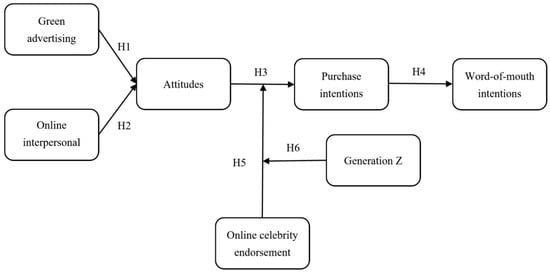
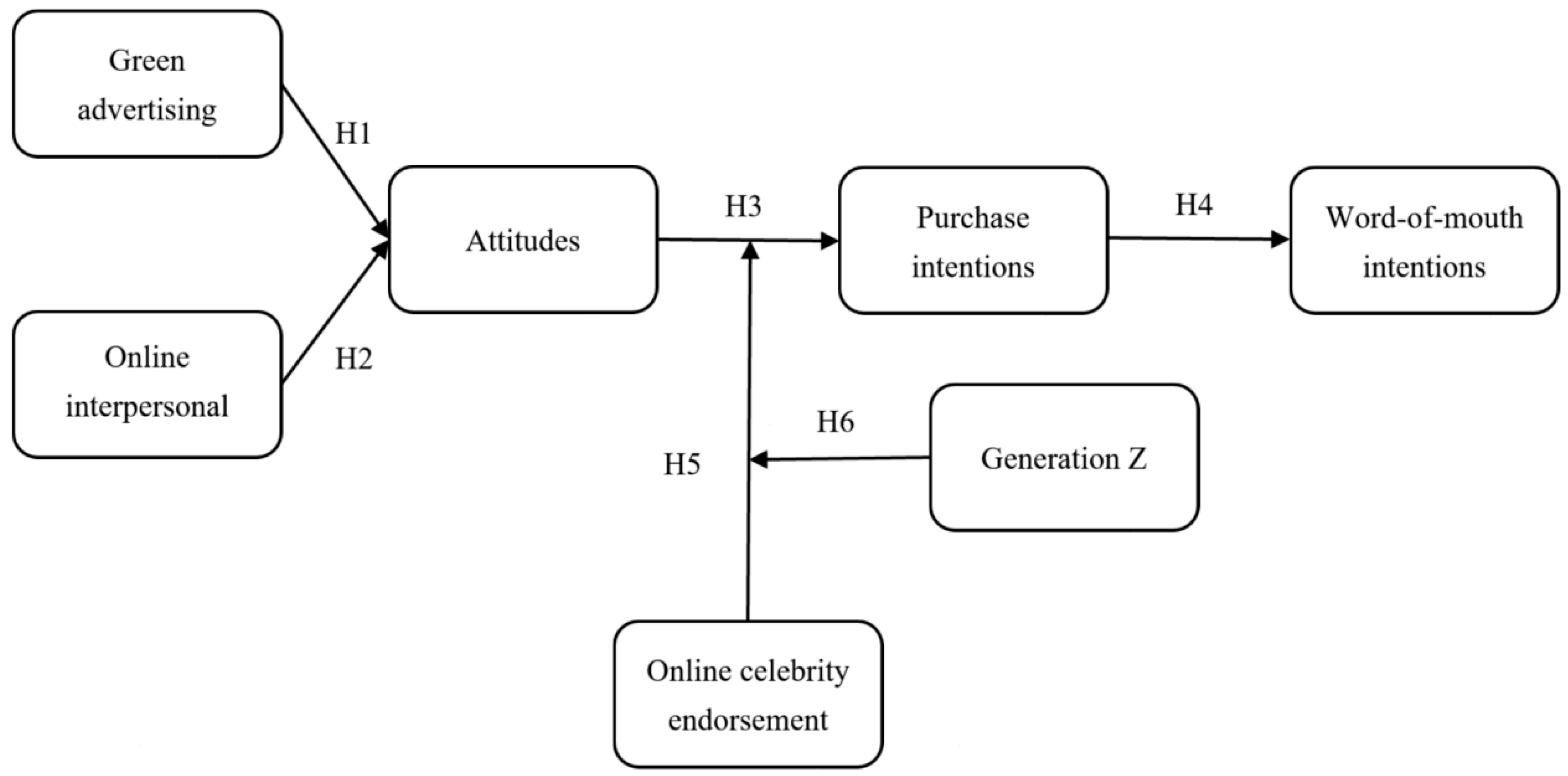
In this study, we adopt the Stimulus–Organism–Response (SOR) framework [25] as the core theoretical foundation, integrating the Elaboration Likelihood Model and Social Influence Theory to construct a theoretical model that explains the formation mechanisms of green consumption behaviors in social media environments. Following the SOR paradigm, we position “green advertising” and “online interpersonal influence” as parallel external stimuli, investigating their complete pathway of influencing “attitude” to drive “purchase intention” and “word-of-mouth intention” [12,16]. Consumer responses exhibit a continuous progressive structure of “attitude → purchase intention → word-of-mouth intention,” reflecting an evolutionary logic from internal evaluation to private behavioral intent, ultimately developing into public advocacy. On this basis, “online celebrity endorsement” is introduced as a moderating variable to investigate its impact on the “attitude–purchase” relationship, and “Generation Z” is incorporated to explore its reinforcement mechanism on the aforementioned moderating effect. With Hypotheses H1–H4, we aim to test the foundational S-O-R pathway, with H5 testing the moderating effect and H6 testing a moderated moderation model.
Based on the Elaboration Likelihood Model, “green advertising” influences cognitive evaluations through the central route by providing factual content such as environmental attributes [26]. Based on Social Influence Theory, “online interpersonal influence” shapes social motivations through the peripheral route by relying on social norms and group identity [14]. These two elements constitute complementary information sources within the SOR framework, jointly influencing attitude formation. “Online celebrity endorsement” integrates both pathways: its professionalism and trustworthiness enhance the persuasiveness of the central route, and its affinity and social identification strengthen the influence of the peripheral route, making it a key catalyst in the conversion of attitudes into behaviors.
In this study, we focus on the green consumption decisions of Generation Z within the Chinese social media ecosystem, which is characterized by high user engagement, deep integration of social commerce, and a collectivist cultural context that emphasizes social harmony. These features profoundly shape online interpersonal dynamics and the reception mechanisms of influencer marketing.
In summary, the theoretical model constructed in this study not only clearly elucidates the core pathways of green consumption behavior formation in social media, but its conceptual framework also demonstrates strong reproducibility. However, the explanatory power of the model requires consideration of specific boundary conditions, particularly in different socio-cultural contexts (such as individualism versus collectivism orientations) and social media platform ecosystems (such as content presentation formats, user interaction patterns, and the extent of commercial integration), where the strength of relationships among variables and their underlying mechanisms may vary.
2.2. Stimulus: Green Advertising on Social Media and Online Interpersonal Influence
Social media platforms encompass various forms, including Facebook, X (formerly Twitter), Weibo and WeChat. These platforms serve two key functions: (1) enabling information production, dissemination, and search, and (2) facilitating interaction among users with shared interests [14]. Companies can utilize social media to publish original green marketing advertisements to promote their environmentally friendly products, thereby enhancing the visibility of their sustainable product offerings. Green advertisements disseminated through online platforms serve as a relatively credible communication tool. Moreover, as users maintain connections with like-minded individuals via social media, firms can identify target consumers and recommend relevant products to them. Empirical research findings indicate that green marketing campaigns on social media significantly influence consumers’ intentions to engage in eco-friendly behaviors. As consumers better comprehend such advertisements, they tend to develop greater trust in the messages conveyed [9,27].
Online interpersonal influence refers to the perceived impact that individuals experience from others within digital networks. Although traditional face-to-face communication is widely acknowledged as a factor shaping consumer behavior, this form of social influence also extends to online environments, where it manifests as online interpersonal influence [16,28]. Due to its interactive nature, social media facilitates social comparison, whereby consumers may experience social pressure—that is, online interpersonal influence—when comparing their own behaviors with those of others on these platforms. Social media enables users to connect with others who have aligned interests, particularly in prosocial behaviors, making such comparisons potentially more impactful than those occurring through other media channels [8]. When consumers are influenced by the attitudes and actions of sustainability-oriented groups on social media, they become more inclined to participate in green consumption.
In this study, green advertising on social media and online interpersonal influence are employed as external stimuli to examine consumers’ responses regarding green product purchases.
2.3. Organism: Attitudes
More than fifty percent of consumers rely on social media to gather product details, which subsequently influences their purchasing choices [8]. Businesses disseminate product-related information through social media [29], and when consumers have convenient access to information regarding eco-friendly products through social media channels, they are more likely to have positive emotions toward green products. Indeed, researchers have found that detailed and interesting green advertising is one of the determinants of consumers’ favorable perception toward green products [30]. Research shows that eye-catching green advertising can encourage consumers to pay greater attention to advertisements and products. Moreover, if consumers regard the information utility of green advertising as relatively high, then the claims of green advertising will be highly evaluated, and consumers’ attitudes toward green products will be higher, strengthening consumers’ intentions to buy green products [31].
In a similar vein, the opinions of key figures online can also influence consumer attitudes. Online interpersonal influence can be extremely influential in existing decision-making relationships, as consumers can use social media to instantly share comments with different audiences [16]. Studies have shown that key figures online are an important source of personal information and decision-making. Such individuals are present on a wide range of social media platforms, possess more information channels, and can influence individual attitudes. In light of the above findings, we present the following hypotheses:
H1.
Green advertising on social media has a favorable impact on consumers’ attitudes toward green products.
H2.
Online interpersonal influence on social media enhances positive attitudes toward green products.
2.4. Response: Purchase Intentions and Word-of-Mouth Intentions
In this study, attitude is defined as the evaluation of purchasing behavior toward eco-friendly products, based on the premise that more favorable consumer perceptions toward green purchasing correspond to a higher likelihood of actual purchase [32]. Thus, when consumers hold positive views of environmentally friendly products, they exhibit a greater tendency to buy them. Online interpersonal influence refers to the perceived social pressure from key figures in digital environments, which substantially shapes individuals’ behavioral outcomes [14]. China’s prevailing collectivist culture emphasizes emotional interdependence, group identity, and social harmony [26,33]. Accordingly, individuals are inclined to be influenced by those they regard as important, often aligning their behavior with group norms and adhering to online interpersonal influence.
Word-of-mouth (WOM) intention indicates an individual’s behavioral inclinations to share with peers the ecological value and sustainability advantages of a specific product or service [29,34]. Purchase intention is among the most frequently examined variables across contexts. Although it often functions as an outcome variable, it can also initiate subsequent behavioral sequences [35,36]. Consumers show a strong tendency to recommend green products they have purchased or intend to purchase to peers and family. This inclination may be associated with seeking social approval, helping others develop interest in and adopt green products, establishing social connections, or expressing opinions about the product [35]. Notably, consumers purchase green products not only for environmental reasons but also derive satisfaction from sharing such choices on social media. This behavior is evident not only in group chats and social media posts but also in product ratings and reviews [37]. In light of the above findings, we present the following hypotheses:
H3.
Consumers’ purchase intentions are positively influenced by their attitudes toward green products.
H4.
Consumers’ purchase intentions of green products positively affect word-of-mouth intentions.
2.5. The Moderating Effect of Online Celebrity Endorsement
Online celebrity endorsement represents a contemporary marketing strategy designed to enhance product visibility and sales by leveraging the substantial attention and influence of online celebrities, thereby stimulating consumers’ purchasing emotions and increasing their propensity to acquire endorsed goods [17]. Given the growing prominence and impact of online celebrities, an increasing number of companies are integrating online celebrity marketing into their e-commerce initiatives and broader business operations [38]. Many consumers exhibit strong trust, admiration, and support toward online celebrities, which has further encouraged firms to recognize their influential role [39]. Consumers often express skepticism regarding the authenticity of environmental claims associated with green products—such as their low-carbon attributes and functional comparability to conventional alternatives. Online celebrity marketing can help alleviate such doubts [39], contributing to an expanding market for green products promoted through celebrity endorsements.
The promotion of products by online celebrities directly shapes consumers’ attitudes and purchase behaviors [17]. Online celebrities not only present the features of green products in an engaging and detailed manner but are also adept at understanding consumer psychology, evoking emotional responses, and addressing uncertainties about green products, thereby facilitating purchasing decisions [40]. By providing consumers with additional information about green products, online celebrities strengthen the effect of consumer attitudes on purchase intentions [41]. Research findings indicate that online celebrities can shape purchase intentions through the mediating role of consumer attitudes [42]. The results of another study demonstrate that green advertisements featuring online celebrity endorsements elicit higher levels of purchase intention [43]. Moreover, online celebrities can cultivate an enthusiastic social atmosphere that emotionally engages consumers and raises their probability of completing a transaction [44].
Based on the above discussions, we anticipate that online celebrity endorsement amplifies the influence of consumers’ attitudes toward eco-friendly products and purchase intentions. In light of the above findings, we present the following hypothesis:
H5.
Online celebrity endorsement can enhance the link between positive attitudes and consumer purchase intentions.
2.6. The Moderating Effect of GEN Z
Online influencers can exert a beneficial influence on the decision-making processes of consumers with respect to their acquisition behaviors. However, consumers from different age groups may show variability in their reaction to online celebrity endorsements [45]. In previous studies, researchers have explored the connection between Generation Z consumers and online celebrities, revealing that this demographic tends to express stronger trust, admiration, and support toward online celebrities. This tendency can be attributed to their heightened susceptibility to social influence within digital media environments [23,24]. Generation Z is increasingly viewed as a key target group, as individuals in this age category are entering maturity and becoming a substantial segment of the consumer market [21]. Moreover, having grown up during the development of e-commerce and the era of online celebrity culture, they are generally more receptive to and willing to engage with online celebrity marketing [20]. Additionally, research findings suggest that Generation Z consumers display favorable attitudes toward environmentally sustainable behaviors. As a result, when exposed to information about green products, they tend to respond with greater sensitivity and more positive perceptions [46]. Accordingly, upon receiving green product information through advertisements, online celebrities, or online interpersonal channels, and developing positive attitudes toward it, they are likely to participate without hesitation. In light of the above findings, we present the following hypothesis:
H6.
The influence of Generation Z can amplify the intervening role of online celebrity endorsements in the connection between attitudes and purchase intentions.
Figure 1 depicts the conceptual framework used in this study.
Figure 1.
Research Framework.
3. Methods
3.1. Sample and Data Collection
To test the research hypotheses within the Chinese social media context, we employed stratified random sampling to ensure demographic diversity. The stratification was based on three key demographic variables reported by the China Internet Network Information Center (CNNIC): geographic region (East, Central, or West), age group (18–24, 25–35, or 36–45), and gender (male or female). Quotas were set proportionally to the latest CNNIC Internet user statistics. The electronic questionnaire was administered through China’s leading professional survey platform, Questionnaire Star, from June 20 to August 20, 2025. The platform’s built-in sampling tool was used to recruit participants from its panel based on the predefined strata. To broaden reach, survey links were also disseminated through social media (Weibo https://www.weibo.com, accessed on 20 June 2025 and WeChat Moments https://wx.qq.com, accessed on 20 June 2025); however, primary data collection was channeled through the Questionnaire Star panel (https://www.wjx.cn, accessed on 20 June 2025) to maintain randomization and minimize self-selection bias. Inclusion criteria were as follows: (1) aged between 18 and 45, (2) self-reported daily use of social media (e.g., Weibo, WeChat, and Xiaohongshu https://www.xiaohongshu.com, accessed on 20 June 2025) for more than 3 years, and (3) residency in mainland China. Exclusion criteria included incomplete responses and patterned answering (e.g., straight-lining). An initial screening question in the survey verified the social media usage criterion.
First, prior to administering the survey, respondents received a brief introduction to green products, defined in this study as products whose manufacturing processes pose no risk to environmental health or human well-being. To facilitate comprehension, specific examples—such as eco-friendly tissues—were provided. Second, a screening question was included to verify that participants were regular social media users with at least three years of experience on platforms such as Sina Weibo. Only those who answered affirmatively were permitted to proceed with the full questionnaire. A total of 650 responses were collected, and after removing submissions with omitted or outlier values, 527 valid questionnaires were retained for analysis, yielding a final response rate of 81.07% (527/650).
Prior to commencing the survey, participants were briefed on its primary purpose and provided with an estimated duration for completion. To reduce potential common method bias, they were explicitly assured that the questions had no right or wrong answers and that all data would be treated with strict confidentiality. As an incentive for participation, each respondent received a monetary reward ranging from 2 to 5 yuan upon successful submission.
The demographic profile of the participants is detailed in Appendix A Table A1, with a comparative overview of key attributes relative to the broader Chinese online population provided in Table 1. Among participants, 53.89% were female, compared with a national Internet user gender distribution of 51.2% male and 48.8% female participants, as reported by the China Internet Network Information Center (2024), indicating reasonable representativeness. Approximately 39.47% of respondents belonged to Generation Z (ages 15–30). This figure aligns with the age profile of Chinese Internet users, among whom the 20–29 and 30–39 age groups account for 13.7% and 19.2%, respectively. The median reported household income was approximately 9000 yuan per month. Based on China’s seventh national population census, the average household size is 2.62 persons, and the most recent monthly per capita disposable income is 3278.67 yuan, corresponding to an average household income of roughly 8600 yuan—consistent with the income distribution observed in this sample. Relevant data are sourced from the China Internet Network Information Center, China’s seventh national population census, and the report on “Income and Consumption Expenditure of the Population in the First Half of 2023.”
Table 1.
Path coefficients of the structural model.
Additionally, an independent samples t-test was performed to assess potential nonresponse bias by comparing early respondents (those who completed the questionnaire within the first 10 days of data collection) with late respondents (those who responded in the final 10 days). The analysis revealed no statistically significant differences between the two groups, indicating that nonresponse bias is unlikely to be a major issue in this study.
3.2. Measures
The survey instrument consisted of two sections: The first involved collecting demographic information from participants (see Table A1), and the second involved measuring the underlying theoretical constructs (see Table A2). All latent constructs were evaluated using multi-item Likert scales, which were adapted from well-established measures in the existing literature, with slight modification to suit the specific context of this research. Responses were collected using a scale that ranged from “strongly disagree” to “strongly agree.” Scale items were drawn from the following sources: green advertising on social media was derived from the study of Borah et al. [46]; assessments of eco-friendly product perceptions and purchase intentions were based on the study of Bi et al. [47]; online interpersonal influence was adopted from the study of Akram et al. [48]; word-of-mouth intentions were sourced from the study of Yang and Ha [49]; and online celebrity endorsement items were derived from the study of K. V. et al. [50]. Statistical results for each item are shown in Table A3.
To ensure the appropriateness and clarity of the survey, three subject-matter experts were invited to review a preliminary version of the instrument. They evaluated the questionnaire in terms of conceptual clarity, wording precision, length, and overall layout. Incorporating their feedback, we refined item wording to enhance clarity and conciseness, reduced technical jargon, and corrected potential ambiguities, resulting in the final version of the questionnaire.
In addition, a pre-test (n = 32) was conducted with two objectives: (1) to select a representative green product for the main study scenario, and (2) to assess the clarity and face validity of the questionnaire items. For product selection, participants were presented with descriptions and images of six common green products: eco-friendly tissues, energy-saving lamps, zinc–air batteries, energy-saving refrigerators, new energy vehicles, and biodegradable tableware. They evaluated each product on a 7-point scale regarding perceived environmental friendliness, familiarity, and likelihood of online purchase. Eco-friendly tissues scored highest on familiarity and mid-range on environmental friendliness and online purchase likelihood, making them a suitable, relatable product for the diverse sample, and were thus selected. Based on verbal feedback regarding the initial draft questionnaire, minor adjustments were made to the wording of several items to enhance comprehension.
4. Data Analysis Results
4.1. Measurement Model Testing
Confirmatory factor analysis (CFA) was employed to evaluate the validity of constructs, including discriminant and convergent validity. The alignment metrics for the measurement model are delineated below: χ2/df ratio of 1.18, which is less than the threshold of 5.0; CFI = 0.993, NFI = 0.957, TLI = 0.992, and GFI = 0.964, which are all greater than 0.90; and RMSEA = 0.019 and RMR = 0.045, which are both less than 0.08 [51].
The stability of the constructs was confirmed through the application of composite reliability (CR) and Cronbach’s alpha (CA) statistical measures. As depicted in Table A4, all CA and CR scores surpassed the benchmark of 0.70, demonstrating the reliability of the measures [52]. Construct validity was evaluated by examining the convergent and discriminant properties of the measures. Convergent association was determined by examining the average variance extracted (AVE) and factor loadings. The results presented in Table A4 and Table A5 show that the AVE values surpassed 0.49, and all item factor loadings were above 0.60 [53], indicating strong convergent validity. Discriminant validity was confirmed as the radical solutions of the AVEs exceeded the inter-construct associations presented in Table A4.
4.2. Structural Model Testing
Given the single-method and self-reported nature of the measurement items in this study, common method bias (CMB) could potentially influence the results. To address this concern, Harman’s single-factor test was performed prior to structural model analysis [54]. The results indicate that the measurement items are loaded onto eight distinct factors, each with an eigenvalue greater than 1. The first factor explained 34% of the total variance, a proportion that is below the suggested threshold of 50.0% [54], suggesting that common method bias does not pose a substantial threat in this study. While Harman’s single-factor test is a common preliminary check, it has recognized limitations. Criticisms include its inability to distinguish substantive from artifactual covariance, its insensitivity to complex forms of method bias, and its dependence on an arbitrary 50% threshold, which lacks strong theoretical or empirical justification [55]. In response, we also implemented several procedural solutions to minimize common method variance ex ante: (1) ensuring respondent anonymity to reduce evaluation apprehension, (2) using clear and distinct scale anchors, (3) counterbalancing the order of some measurement sections, and (4) obtaining construct measures from established but distinct literature sources. The combination of a statistical test and procedural controls suggests that CMB is unlikely to substantially confound the interpretation of our results.
The research hypotheses were subjected to validation through the execution of a structural equation modeling analysis utilizing the AMOS application. The model exhibits an overall satisfactory structural model fit: χ2/df = 1.487, which is less than the threshold of 5.0; CFI = 0.977, NFI = 0.933, TLI = 0.973, and GFI = 0.946, which are all greater than 0.90; and RMSEA = 0.03 and RMR = 0.054, which are both less than 0.08 [51].
Hypotheses H1-H4 are confirmed through the analysis of path coefficients (see Table 1). Green advertising on social media positively affects consumer attitudes (β = 0.44, p < 0.001). Additionally, online interpersonal influence positively affects consumer attitudes (β = 0.35, p < 0.001). Attitudes toward green products positively impact purchase intentions (β = 0.74, p < 0.001), and these intentions in turn positively influence WOM intentions (β = 0.63, p < 0.001).
4.3. Moderating Effect Analysis
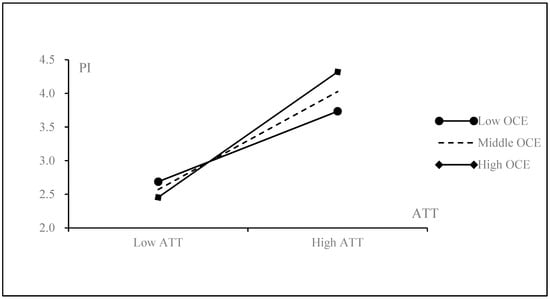
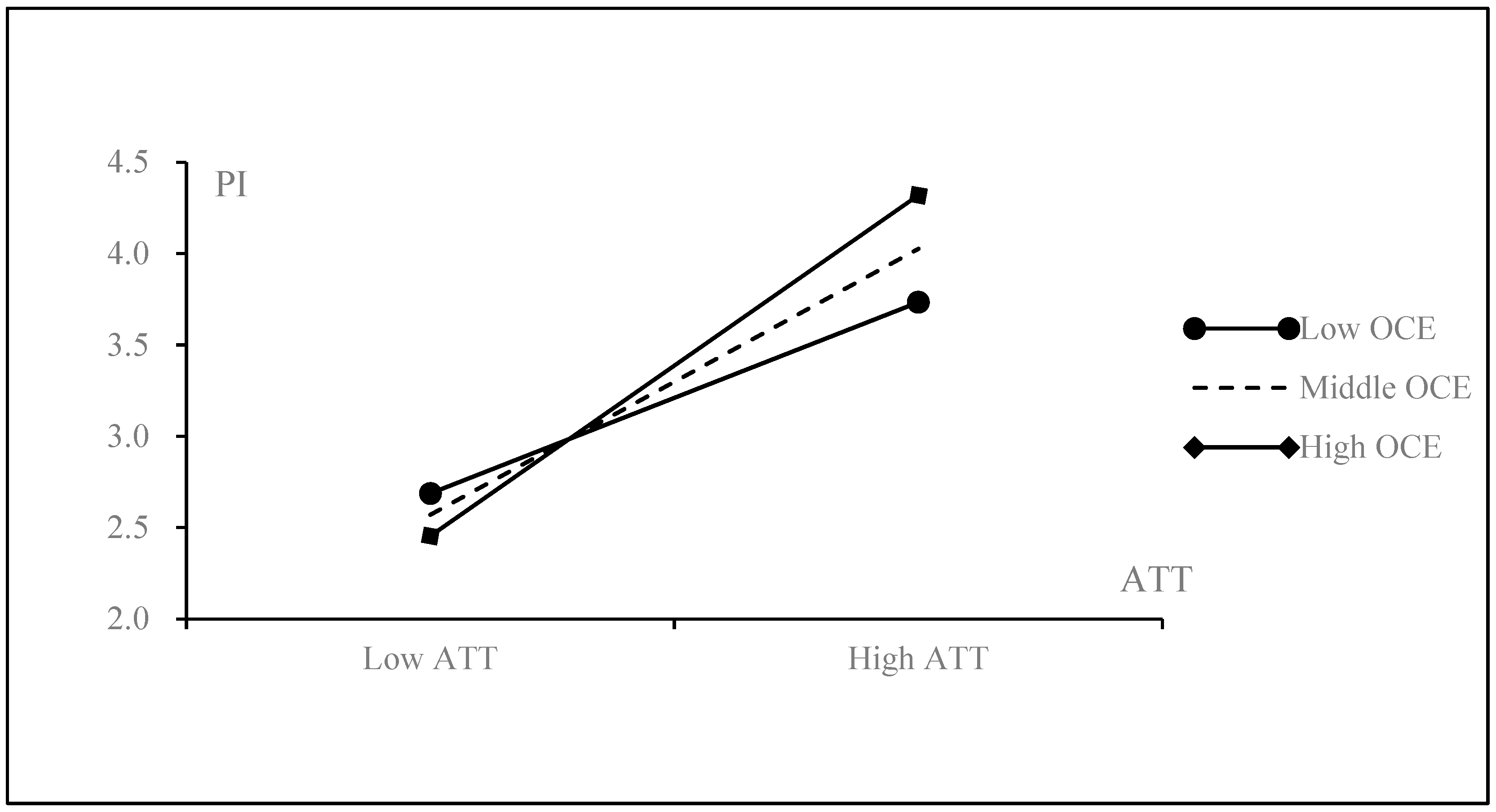
To assess the impact of online celebrity endorsement as a moderator, we analyzed how varying levels of such endorsement affect the relationship between attitudes and the propensity to make purchases. Data presented in Table 2 and Figure 2 reveal that increased levels of online celebrity endorsement amplify the impact of attitudes on purchase intentions.
Table 2.
Moderating Effect Test of Online Celebrity Endorsement.
Figure 2.
Moderating effect of OCE.
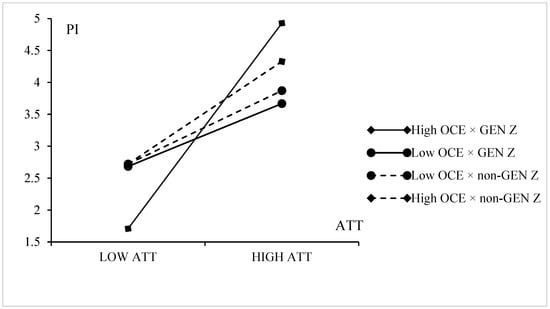
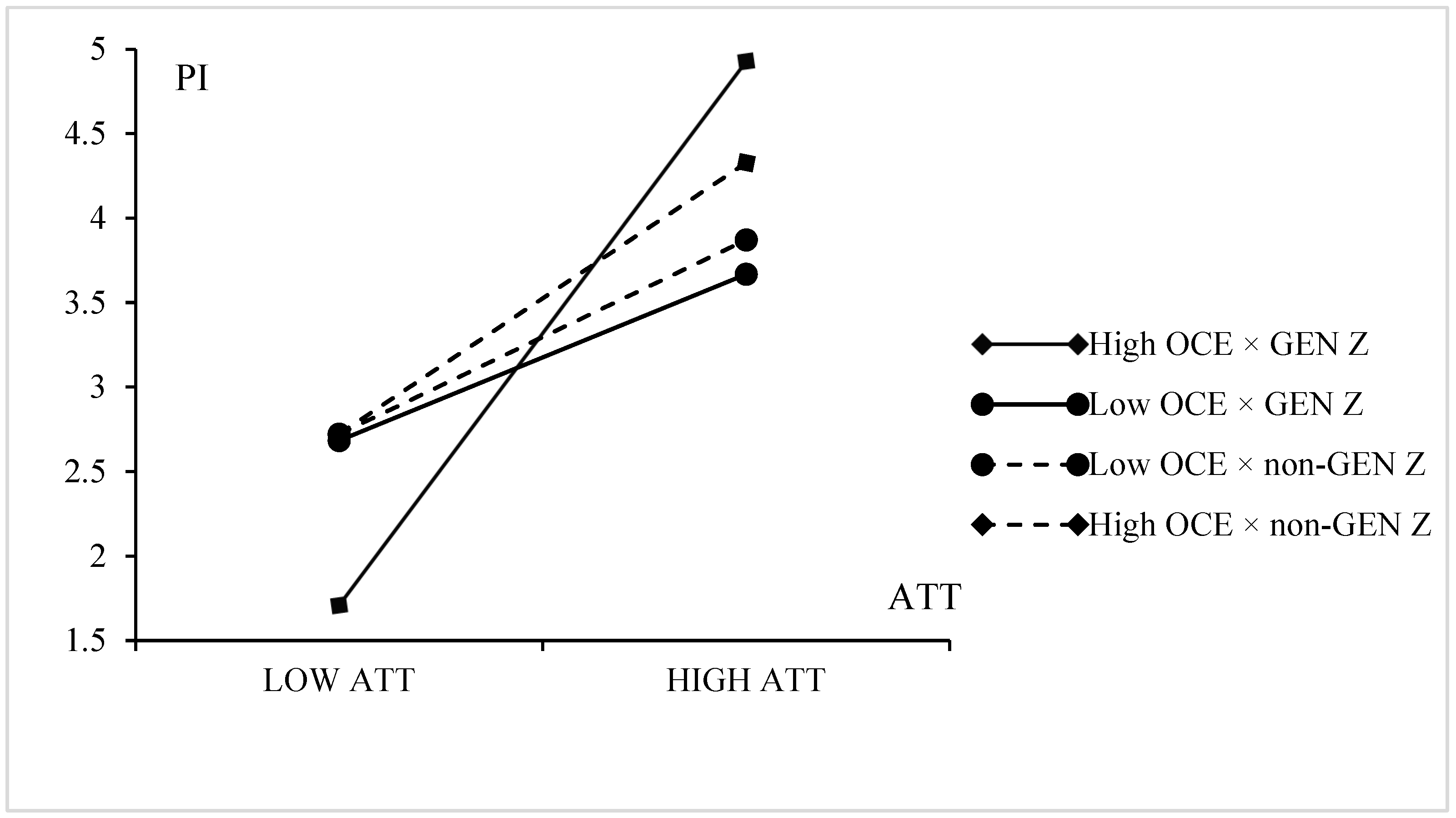
To ascertain the mediating influence of GEN Z, we tested whether the moderating effect of OCE would be different in GEN Z and other generations by means of cohort analysis. First, we performed invariance tests. As shown in Table A6, in the measurement weights model, generational differences do not affect the stability of the measurement model (p > 0.05). In the structural weights model, however, generational differences make a significant difference (p < 0.05). The results presented in Table A7 demonstrate the path coefficients in different generational cases. The interaction terms of attitudes and online celebrity endorsement on purchase intentions vary significantly under different generations; in comparison, other path coefficients do not vary substantially. As shown in Table 3, with the same level of OCE, GEN Z has a more pronounced effect on purchase intentions than non-GEN Z. In Figure 3, the purchase intentions induced by high OCE × GEN Z are significantly higher than in other cases.
Table 3.
Moderating Effect Test of Generation Z.
Figure 3.
Moderating effect of GEN Z.
5. Discussion
In terms of the findings on the SOR mechanism and core pathways, the results validate the integrated SOR framework proposed in this study. In support of H1 and H2, both green advertising (β = 0.44) and online interpersonal influence (β = 0.35) were found to be significant stimuli that positively shape consumers’ attitudes toward green products. These findings broaden the applicability of the SOR model within the field of green consumption research [9,12] by simultaneously modeling two dominant yet distinct social media stimuli. Consistent with findings presented in the existing literature, both green advertising and online interpersonal influence serve as key informational sources that shape consumers’ attitudes toward green products [16,47], particularly given consumers’ susceptibility to external influence in online environments [23]. Extending prior findings, our findings further demonstrate that green advertising exerts the strongest effect on attitude formation, underscoring its primary role as an information channel on social media—a platform perceived as relatively reliable—thereby effectively fostering both purchase and word-of-mouth intentions.
Furthermore, the sequential chain of organismic and response states was validated. H3 and H4 were supported, demonstrating that positive attitudes strongly translate into purchase intentions (β = 0.74), which in turn drive word-of-mouth intentions (β = 0.63). This sequential validation (attitude → intention → WOM) reinforces the hierarchical logic of the SOR model in the digital domain and aligns with findings on the social diffusion of sustainable behaviors [14,29]. It underscores that purchase intention is not an endpoint but a pivotal conduit leading to broader advocacy. Consistent with prior research [14,56,57], when consumers are influenced by social media, they develop positive product attitudes, enhancing perceived product greenness and need fulfillment, thereby increasing purchase likelihood. Positive attitudes also contribute to a more pleasant online shopping experience, further strengthening purchase willingness [58]. Additionally, social media offers multiple channels for consumers to express opinions about green products, satisfying post-purchase sharing needs and enabling electronic word-of-mouth communication that fosters consensus-building, social connection, and group belonging [59]. Consequently, purchase intentions positively influence word-of-mouth intentions.
In terms of the conditional role of online celebrity endorsement, our results validated H5, revealing that online celebrity endorsement acts as a significant positive moderator. The simple slope analysis results indicate a 76% (calculated as (0.97–0.55)/0.55 × 100% ≈ 76%) increase in the strength of the attitude–purchase intention link under high versus low endorsement conditions (β_high = 0.97 vs. β_low = 0.55). This finding critically positions online celebrity endorsement not merely as another stimulus, but as a crucial boundary condition that amplifies the conversion of internal evaluations into behavioral intent. Our findings confirm that online celebrity endorsement significantly enhances the relationship between attitudes and purchase intentions. By establishing trust, influencers make consumers more receptive to their recommendations. Specifically, their comprehensive and persuasive product presentations effectively guide hesitant consumers toward purchase decisions [17]. Consequently, favorable attitudes toward green products are more readily converted into actual purchases, aligning with findings that online celebrity endorsement plays a significant moderating role in consumer decision-making processes [60].
Lastly, in terms of the generational boundary effect, our findings provide support for H6, identifying a significant generational boundary. The moderating effect of online celebrity endorsement was substantially stronger among Generation Z consumers. This finding specifies the “for whom” condition of the proposed mechanism, highlighting that the potency of influencer marketing in green contexts is not universal but contingent upon audience characteristics. It integrates the literature on Generation Z’s digital nativity and social susceptibility [20,23] with green consumption research, offering a more nuanced understanding of consumer heterogeneity. The moderating effect of online celebrity endorsement is significantly amplified among Generation Z consumers due to their distinct profile as digital natives and highly engaged social media users. Having matured alongside the concurrent rise of e-commerce and the influencer economy, this cohort exhibits greater social susceptibility and stronger parasocial attachments in digital environments, enhancing their receptiveness to persuasive endorsements from online celebrities [20]. Their inclination to express affinity for admired figures through consumption further strengthens their responsiveness to influencer-endorsed green products [61]. Consequently, the conditioning role of online celebrity endorsement on the attitude–purchase intention link is markedly strengthened within this demographic.
6. Conclusions
6.1. Theoretical Implications
Validating and Extending the Integrated SOR Model in the Social Media Context: Supported by empirical evidence for H1–H4, our results confirm the effectiveness of an integrated pathway in which green advertising and online interpersonal influence serve as synergistic stimuli that, mediated by attitude, sequentially drive purchase intention and word-of-mouth intention. The above addresses the limitation of prior research that often focuses on isolated stimuli, providing a more realistic and systematic theoretical framework for understanding how multiple information flows jointly shape green consumption behavior on social media.
Clarifying the Conditional Role of Online Celebrity Endorsement in Green Consumption: The verification of H5 demonstrates that online celebrity endorsement functions not as an independent main-effect stimulus but as a key boundary condition that substantially moderates the strength of the core relationship between attitude and purchase intention (with a moderating effect reaching 76%). This finding precisely redefines the theoretical role of online celebrity endorsement from a general “source of influence” to a “conversion amplifier,” thereby enriching green persuasion theory and filling a research gap regarding the mechanisms of influencer marketing in the domain of sustainable consumption.
Revealing the Generational Boundary Effect of Consumer Heterogeneity: Support for H6 highlights an important generational boundary: the moderating effect of online celebrity endorsement is significantly stronger among Generation Z consumers. This finding moves beyond the traditional view of consumers as a homogeneous group by integrating generational characteristics such as digital nativity and social susceptibility into the green consumption behavior model. It advances theory toward greater segmentation and explanatory power, highlighting the importance of the “for whom” condition in digital marketing theory.
6.2. Practical Implications
The findings offer evidence-based guidance for relevant practitioners. In terms of corporate marketing strategy, it is recommended to strengthen integrated content planning. Given that both green advertising and online interpersonal influence effectively shape attitudes, firms should pursue a dual-track content investment on social media: producing high-quality, credible green advertisements to build product awareness while actively curating and guiding user-generated content to foster positive community interaction. Enterprises should also leverage the amplifying effect of online celebrity endorsement. Since such endorsement substantially enhances the attitude-to-purchase conversion rate, it should be treated as a core conversion tool rather than merely an exposure channel. Prioritizing collaborations with influencers whose values align with the brand’s green ethos and designing in-depth, trustworthy product narratives can maximize this moderating effect. Furthermore, implementing Generation Z-targeted communication is essential. Given this cohort’s pronounced responsiveness to influencer endorsements, green marketing aimed at Gen Z should center on influencers as key touchpoints. Such efforts require a deep understanding of their cultural preferences and communication styles, combined with mechanisms to collect feedback for iteratively refining influencer partnership models and product strategies.
For platforms and policymakers, governance recommendations include empowering constructive green engagement. Social platforms can design features that encourage consumers to share authentic experiences with green products, while also improving mechanisms to identify and manage misleading “greenwashing” information and inappropriate marketing, thereby protecting consumers from misinformation and sustaining a healthy environment for green consumption discourse. Additionally, policy attention should focus on regulating and protecting influencer marketing. In light of the considerable impact of online celebrity endorsements on susceptible groups such as Gen Z, regulators should advance more transparent rules for influencer advertising disclosure and authenticity verification. Concurrently, enhanced protection for minors and young consumers in the digital marketing environment is needed to steer the influencer economy toward responsible influence in the green consumption domain.
6.3. Limitations
This study has several limitations that must be addressed. First, the data are derived from a cross-sectional study. The authors of future studies may benefit from employing longitudinal designs to better capture temporal dynamics among the variables. Second, the study was conducted in China, a cultural setting characterized by strong collectivist values. In subsequent studies, researchers could extend the investigation to other countries to examine whether the current findings are generalizable across different cultural contexts. Third, in the present research, we focus exclusively on consumers’ intentions rather than actual behaviors. While the results of prior studies suggest that intentions can serve as reliable predictors of behavior, self-reported intentions do not equate to observed actions. Thus, the authors of future studies should seek to bridge this gap by examining consumers’ actual engagement in green consumption behaviors.
Author Contributions
Conceptualization: Y.S., D.W., H.H.; Methodology: Y.S., D.W.; Formal analysis and investigation: Y.S., D.W.; Writing—original draft preparation: Y.S., D.W.; Writing—review and editing: Y.S., D.W., H.H.; Funding acquisition: Y.S., H.H.; Resources: H.H.; Supervision: Y.S., H.H. All authors have read and agreed to the published version of the manuscript.
Funding
This research was funded by [National Natural Science Foundation of China] grant number [72474034], [Beijing Natural Science Foundation] grant number [9264022] and Research Foundation for Youth Scholars of Beijing Technology and Business University [RFYS2025].
Institutional Review Board Statement
This study has been reviewed by the Ethics Committee/Institutional Review Board (IRB) of Beijing Technology and Business University. Upon review, the Committee has determined that this study qualifies for exemption from full ethical review in accordance with the applicable national regulations and institutional policies, including but not limited to: The Ethical Review Measures for Biomedical Research Involving Humans (2016), Article16;The Personal Information Protection Law (2021), Article 4:Relevant provisions of the Biosafety Law, the Data Security Law, and the GB/T 35273-2020 standard. This study utilizes fully anonymized, non-identifiable, and non-traceable data collected through a survey. No sensitive personal information was collected, and the research design poses no foreseeable risks to participants. Therefore, the study is exempt from the requirement of obtaining written informed consent from participants, in compliance with the aforementioned regulations. This exemption applies specifically to the study referenced above. All research activities have been conducted in accordance with ethical standards for data security and participant privacy.
Informed Consent Statement
Informed consent was obtained from all subjects involved in the study.
Data Availability Statement
The dataset has been uploaded to the figshare database, DOI: 10.6084/m9.figshare.30919064.
Conflicts of Interest
The authors declare no conflict of interest.
Appendix A
Table A1.
Demographic profile.
Table A2.
Complete Questionnaire.
Table A3.
Statistical Results for Each Item (Absolute Values and Percentages).
Table A4.
Mean and standard deviation of the constructs.
Table A5.
Results of confirmatory factor analysis.
Table A6.
Model invariance test.
Table A7.
Results of the moderating effect analysis.
References
- Su, P.; Yao, Q.; Wu, X. How Does Self-Construal Influence Green Product Purchase in the Digital Era? The Moderating Role of Advertising Appeal. J. Theor. Appl. Electron. Commer. Res. 2025, 20, 4. [Google Scholar] [CrossRef] [Scilit]
- Yu, J.; Sun, X.; Huang, Y.; Jia, Y. Concrete or Abstract? The Impact of Green Advertising Appeals and Information Framing on Consumer Responses. J. Theor. Appl. Electron. Commer. Res. 2025, 20, 130. [Google Scholar] [CrossRef] [Scilit]
- Feng, X.; Tang, H.; Fan, W.; Ren, M.; Zhong, Y. The impact of subjective social class on green consumption: The moderating role of status symbols. Curr. Psychol. 2025, 44, 935–944. [Google Scholar] [CrossRef] [Scilit]
- Liao, B.; Li, L.; Yang, Z. Perceived social green preference: The motivation mechanism of inducing green behaviour. Curr. Psychol. 2022, 41, 1–17. [Google Scholar] [CrossRef] [Scilit]
- Panda, D.; Singhal, D.; Jena, S.; Tripathy, S. Assessment of Indian consumers’ green purchase intention: An integration of theory of planned behaviour and meta-analysis. Environ. Dev. Sustain. 2025, 27, 29825–29846. [Google Scholar] [CrossRef] [Scilit]
- IPCC. Climate Change 2022: Mitigation of Climate Change. Contribution of Working Group III to the Sixth Assessment Report of the Intergovernmental Panel on Climate Change; Cambridge University Press: Cambridge, UK; New York, NY, USA, 2022. [Google Scholar]
- Azad, N.; Biswas, M.; Talukder, M. The role of online information sources in enhancing circular consumption behaviour: Fostering sustainable consumption patterns in the digital age. Bus. Strateg. Environ. 2024, 34, 1419–1439. [Google Scholar] [CrossRef] [Scilit]
- Sun, Y.; Wang, S. Understanding consumers’ intentions to purchase green products in the social media marketing context. Asia Pac. J. Mark. Logist. 2019, 32, 860–878. [Google Scholar] [CrossRef] [Scilit]
- Sun, Y.; Luo, B.; Wang, S.; Fang, W. What you see is meaningful: Does green advertising change the intentions of consumers to purchase eco-labeled products? Bus. Strateg. Environ. 2021, 30, 694–704. [Google Scholar] [CrossRef] [Scilit]
- Zhang, X.; Chen, K.; Li, S. The effects of green advertising appeal and message type on purchase intention. J. Retail. Consum. Serv. 2024, 81, 104007. [Google Scholar] [CrossRef] [Scilit]
- Lee, J.L.-M.; Liu, V.; Cheng, C. Effect of green advertising attitude on collectivist consumer behavior: An integrative approach. Asia Pac. J. Mark. Logist. 2023, 35, 3008–3031. [Google Scholar] [CrossRef] [Scilit]
- Luo, B.; Sun, Y.; Shen, J.; Xia, L. How does green advertising skepticism on social media affect consumer intention to purchase green products? J. Consum. Behav. 2020, 19, 371–381. [Google Scholar] [CrossRef] [Scilit]
- Ashraf, A.; Hameed, I.; Saeed, S.A. How do social media influencers inspire consumers’ purchase decisions? The mediating role of parasocial relationships. Int. J. Consum. Stud. 2023, 47, 1416–1433. [Google Scholar] [CrossRef] [Scilit]
- Bedard, S.A.N.; Tolmie, C.R. Millennials’ green consumption behaviour: Exploring the role of social media. Corp. Soc. Responsib. Environ. Manag. 2018, 25, 1388–1396. [Google Scholar] [CrossRef] [Scilit]
- Feng, J.; Lazar, J.; Preece, J. Empathy and online interpersonal trust: A fragile relationship. Behav. Inf. Technol. 2004, 23, 97–106. [Google Scholar] [CrossRef] [Scilit]
- Sharma, V.M.; Klein, A. Consumer perceived value, involvement, trust, susceptibility to interpersonal influence, and intention to participate in online group buying. J. Retail. Consum. Serv. 2020, 52, 101946. [Google Scholar] [CrossRef] [Scilit]
- Sun, Y.; Wu, D.; Yang, Y.; He, H. Exploring online celebrities and reviews simultaneously- the role of their consistency in different product types. Electron. Commer. Res. Appl. 2024, 65, 101384. [Google Scholar] [CrossRef] [Scilit]
- Johnson, C.D.; Bauer, B.C.; Arnold, M.J. The effect of brand crises on endorser reputation and endorsement portfolios. Psychol. Mark. 2022, 39, 1385–1397. [Google Scholar] [CrossRef] [Scilit]
- Gong, H.; Bian, X.; Zheng, C. Leveraging celebrities with inconsistent attractiveness and credibility for charitable endorsement: A cue diagnosticity perspective. J. Retail. Consum. Serv. 2024, 78, 103771. [Google Scholar] [CrossRef] [Scilit]
- Yılmaz, B.; Dinler Kısaçtutan, E.; Gürün Karatepe, S. Digital natives of the labor market: Generation Z as future leaders and their perspectives on leadership. Front. Psychol. 2024, 15, 1378982. [Google Scholar] [CrossRef] [Scilit] [PubMed]
- Fei, A.; Kim, J.; Kim, S.I. Effects of environmental sustainability practice in the economy hotel to Gen Zer’s purchase decision: Behavior economy approach using choice based conjoint analysis. Int. J. Hosp. Manag. 2024, 118, 103678. [Google Scholar] [CrossRef] [Scilit]
- Gomes, S.; Lopes, J.M.; Nogueira, S. Willingness to pay more for green products: A critical challenge for Gen Z. J. Clean. Prod. 2023, 390, 136092. [Google Scholar] [CrossRef] [Scilit]
- Kim, D.Y.; Kim, H.-Y. Social media influencers as human brands: An interactive marketing perspective. J. Res. Interact. Mark. 2023, 17, 94–109. [Google Scholar] [CrossRef] [Scilit]
- Zatwarnicka-Madura, B.; Nowacki, R.; Wojciechowska, I. Influencer Marketing as a Tool in Modern Communication—Possibilities of Use in Green Energy Promotion amongst Poland’s Generation Z. Energies 2022, 15, 6570. [Google Scholar] [CrossRef] [Scilit]
- Mehrabian, A.; Russell, J.A. An Approach to Environmental Psychology; The MIT Press: Cambridge, MA, USA, 1974. [Google Scholar]
- Sun, Y.; Lin, S.; Wang, S. Research on the impact of green advertising information on green purchase behavior in social media: SEM-ANN approach. Asia Pac. J. Mark. Logist. 2025, 37, 3660–3679. [Google Scholar] [CrossRef] [Scilit]
- Segev, S.; Fernandes, J.; Hong, C. Is Your Product Really Green? A Content Analysis to Reassess Green Advertising. J. Advert. 2016, 45, 85–93. [Google Scholar] [CrossRef] [Scilit]
- Khare, A. Consumers’ susceptibility to interpersonal influence as a determining factor of ecologically conscious behaviour. Mark. Intell. Plan. 2014, 32, 2–20. [Google Scholar] [CrossRef] [Scilit]
- Wang, J.; Wang, S.; Xue, H.; Wang, Y.; Li, J. Green image and consumers’ word-of-mouth intention in the green hotel industry: The moderating effect of Millennials. J. Clean. Prod. 2018, 181, 426–436. [Google Scholar] [CrossRef] [Scilit]
- Ahmed, R.R.; Streimikiene, D.; Qadir, H.; Streimikis, J. Effect of green marketing mix, green customer value, and attitude on green purchase intention: Evidence from the USA. Environ. Sci. Pollut. Res. 2023, 30, 11473–11495. [Google Scholar] [CrossRef] [Scilit]
- Matthes, J.; Wonneberger, A. The Skeptical Green Consumer Revisited: Testing the Relationship Between Green Consumerism and Skepticism Toward Advertising. J. Advert. 2014, 43, 115–127. [Google Scholar] [CrossRef] [Scilit]
- Ajzen, I. The theory of planned behavior. Organ. Behav. Hum. Decis. Process. 1991, 50, 179–211. [Google Scholar] [CrossRef] [Scilit]
- Liao, Y.; Xing, Y. Social capital and residents’ plastic recycling behaviors in China. J. Environ. Plan. Manag. 2023, 66, 955–976. [Google Scholar] [CrossRef] [Scilit]
- Meilatinova, N. Social commerce: Factors affecting customer repurchase and word-of-mouth intentions. Int. J. Inf. Manag. 2021, 57, 102300. [Google Scholar] [CrossRef] [Scilit]
- San-Martín, S.; Jiménez, N.; Liébana-Cabanillas, F. Tourism value VS barriers to booking trips online. J. Retail. Consum. Serv. 2020, 53, 101957. [Google Scholar] [CrossRef] [Scilit]
- Shehawy, Y.M. In green consumption, why consumers do not walk their talk: A cross cultural examination from Saudi Arabia and UK. J. Retail. Consum. Serv. 2023, 75, 103499. [Google Scholar] [CrossRef] [Scilit]
- Zhang, L.; Li, D.; Cao, C.; Huang, S. The influence of greenwashing perception on green purchasing intentions: The mediating role of green word-of-mouth and moderating role of green concern. J. Clean. Prod. 2018, 187, 740–750. [Google Scholar] [CrossRef] [Scilit]
- Liu, F.; Lee, Y.-H. Virtually responsible? Attribution of responsibility toward human vs. virtual influencers and the mediating role of mind perception. J. Retail. Consum. Serv. 2024, 77, 103685. [Google Scholar] [CrossRef] [Scilit]
- Chen, X.; Shen, J.; Wei, S. What reduces product uncertainty in live streaming e-commerce? From a signal consistency perspective. J. Retail. Consum. Serv. 2023, 74, 103441. [Google Scholar] [CrossRef] [Scilit]
- Meng, L.; Duan, S.; Zhao, Y.; Lü, K.; Chen, S. The impact of online celebrity in livestreaming E-commerce on purchase intention from the perspective of emotional contagion. J. Retail. Consum. Serv. 2021, 63, 102733. [Google Scholar] [CrossRef] [Scilit]
- Li, M.; Li, J.; Yasin, M.A.I.; Hashim, N.B.; Ang, L.H.; Bidin, R. Impact of celebrity-endorsed environmental advertisements on green economy development. Technol. Forecast. Soc. Change 2022, 184, 121979. [Google Scholar] [CrossRef] [Scilit]
- Trivedi, J.; Sama, R. The Effect of Influencer Marketing on Consumers’ Brand Admiration and Online Purchase Intentions: An Emerging Market Perspective. J. Internet Commer. 2020, 19, 103–124. [Google Scholar] [CrossRef] [Scilit]
- Al Mamun, A.; Naznen, F.; Yang, Q.; Ali, M.H.; Hashim, N.M.H.N. Modelling the significance of celebrity endorsement and consumer interest on attitude, purchase intention, and willingness to pay a premium price for green skincare products. Heliyon 2023, 9, e16765. [Google Scholar] [CrossRef] [Scilit]
- Xu, X.; Luo, C.; Luo, X.R.; Wang, Z. Examining how emotions affect online audience retention: Empirical evidence from livestreaming electronic commerce platforms. Inf. Manag. 2024, 61, 104031. [Google Scholar] [CrossRef] [Scilit]
- Bratina, D.; Faganel, A. Understanding Gen Z and Gen X Responses to Influencer Communications. Adm. Sci. 2024, 14, 33. [Google Scholar] [CrossRef] [Scilit]
- Borah, P.S.; Dogbe, C.S.K.; Marwa, N. Generation Z’s green purchase behavior: Do green consumer knowledge, consumer social responsibility, green advertising, and green consumer trust matter for sustainable development? Bus. Strategy Environ. 2024, 33, 4530–4546. [Google Scholar] [CrossRef] [Scilit]
- Bi, C.; Jin, S.; Li, S.; Li, Y. Can green advertising increase consumers’ purchase intention of electric vehicles? An experimental study from China. J. Clean. Prod. 2023, 419, 138260. [Google Scholar] [CrossRef] [Scilit]
- Akram, U.; Ansari, A.R.; Ulhaq, I.; Yan, C. Cosmetics makers have always sold ‘hope in a jar’! Understanding the cosmetics purchase intention in the Chinese mobile commerce environment. J. Retail. Consum. Serv. 2023, 73, 103337. [Google Scholar] [CrossRef] [Scilit]
- Yang, C.Z.; Ha, H.-Y. The evolution of E-WOM intentions: A two time-lag interval approach after service failures. J. Hosp. Tour. Manag. 2023, 56, 147–154. [Google Scholar] [CrossRef] [Scilit]
- Sriram, K.V.; Namitha, K.P.; Kamath, G.B. Social media advertisements and their influence on consumer purchase intention. Cogent Bus. Manag. 2021, 8, 2000697. [Google Scholar] [CrossRef] [Scilit]
- Anderson, J.C.; Gerbing, D.W. Structural equation modeling in practice: A review and recommended two-step approach. Psychol. Bull. 1988, 103, 411–423. [Google Scholar] [CrossRef] [Scilit]
- Fornell, C.; Larcker, D.F. Structural Equation Models with Unobservable Variables and Measurement Error: Algebra and Statistics. J. Mark. Res. 1981, 18, 382–388. [Google Scholar] [CrossRef] [Scilit] [PubMed]
- Hair, J.F. Multivariate Data Analysis, 5th ed.; Prentice Hall: Upper Saddle River, NJ, USA, 1998. [Google Scholar]
- Harman, H.H. Modern Factor Analysis, 3rd ed. revised; University of Chicago Press: Chicago, IL, USA, 1976. [Google Scholar]
- Fuller, C.M.; Simmering, M.J.; Atinc, G.; Atinc, Y.; Babin, B.J. Common methods variance detection in business research. J. Bus. Res. 2016, 69, 3192–3198. [Google Scholar] [CrossRef] [Scilit]
- Aldaihani, F.M.F.; Islam, M.A.; Saatchi, S.G.; Haque, M.A. Harnessing green purchase intention of generation Z consumers through green marketing strategies. Bus. Strategy Dev. 2024, 7, e419. [Google Scholar] [CrossRef] [Scilit]
- Upadhyay, N.; Kamble, A. Examining Indian consumer pro-environment purchase intention of electric vehicles: Perspective of stimulus-organism-response. Technol. Forecast. Soc. Change 2023, 189, 122344. [Google Scholar] [CrossRef] [Scilit]
- Patel, A.K.; Singh, A.; Rana, N.P.; Parayitam, S.; Dwivedi, Y.K.; Dutot, V. Assessing customers’ attitude towards online apparel shopping: A three-way interaction model. J. Bus. Res. 2023, 164, 113917. [Google Scholar] [CrossRef] [Scilit]
- Kim, W.B.; Kim, C.; Go, I.; Fukuda, R.; Imai, M. Actions are more than just words: Relationships between word-of-mouth, personal interaction, and product attachment. J. Retail. Consum. Serv. 2024, 81, 103994. [Google Scholar] [CrossRef] [Scilit]
- Li, B.; Chen, S.; Zhou, Q. Empathy with influencers? The impact of the sensory advertising experience on user behavioral responses. J. Retail. Consum. Serv. 2023, 72, 103286. [Google Scholar] [CrossRef] [Scilit]
- Romo, Z.F.G.; Sena, L.D.P. K-pop and Celebrity Luxury Brands Endorsements: Influence on Luxury Goods Purchasing Intention Among Spanish Gen Z K-pop Fans Review. Rev. Commun. Res. 2024, 12, 49–64. [Google Scholar] [CrossRef] [Scilit]

Disclaimer/Publisher’s Note: The statements, opinions and data contained in all publications are solely those of the individual author(s) and contributor(s) and not of MDPI and/or the editor(s). MDPI and/or the editor(s) disclaim responsibility for any injury to people or property resulting from any ideas, methods, instructions or products referred to in the content. |
© 2026 by the authors. Licensee MDPI, Basel, Switzerland. This article is an open access article distributed under the terms and conditions of the Creative Commons Attribution (CC BY) license.