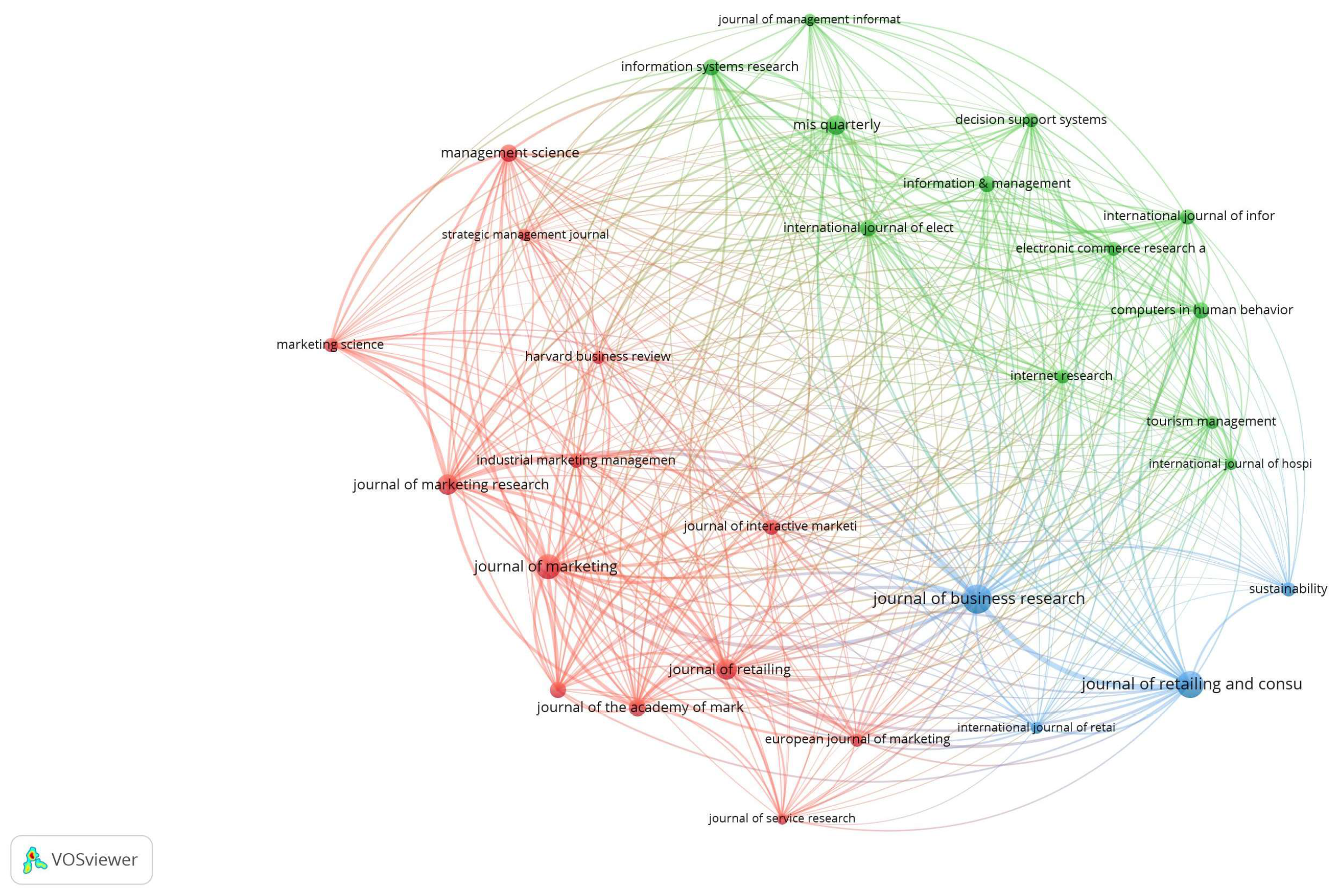
4.2.1. Co-Authorship Analysis
According to Donthu et al. [
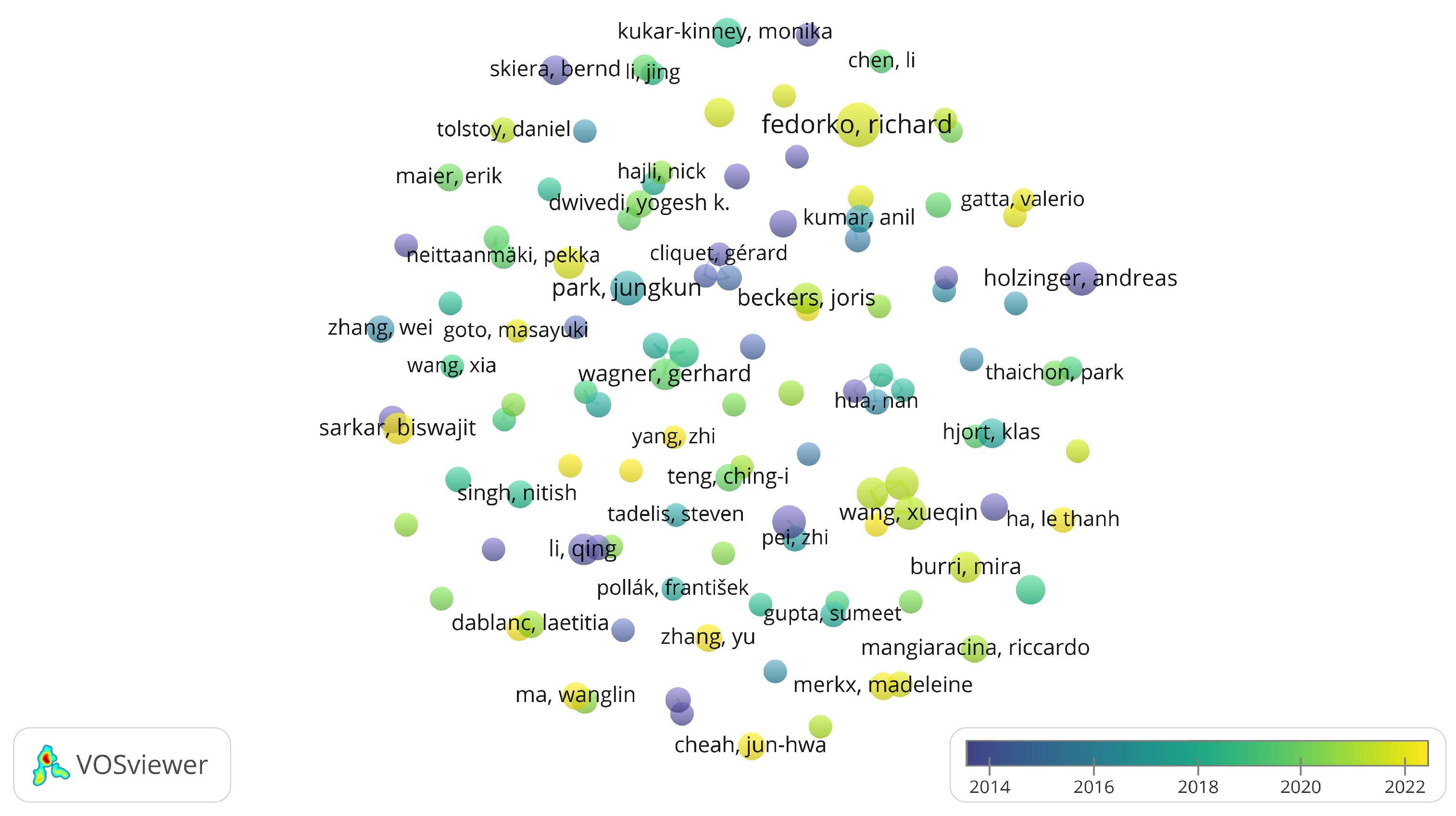
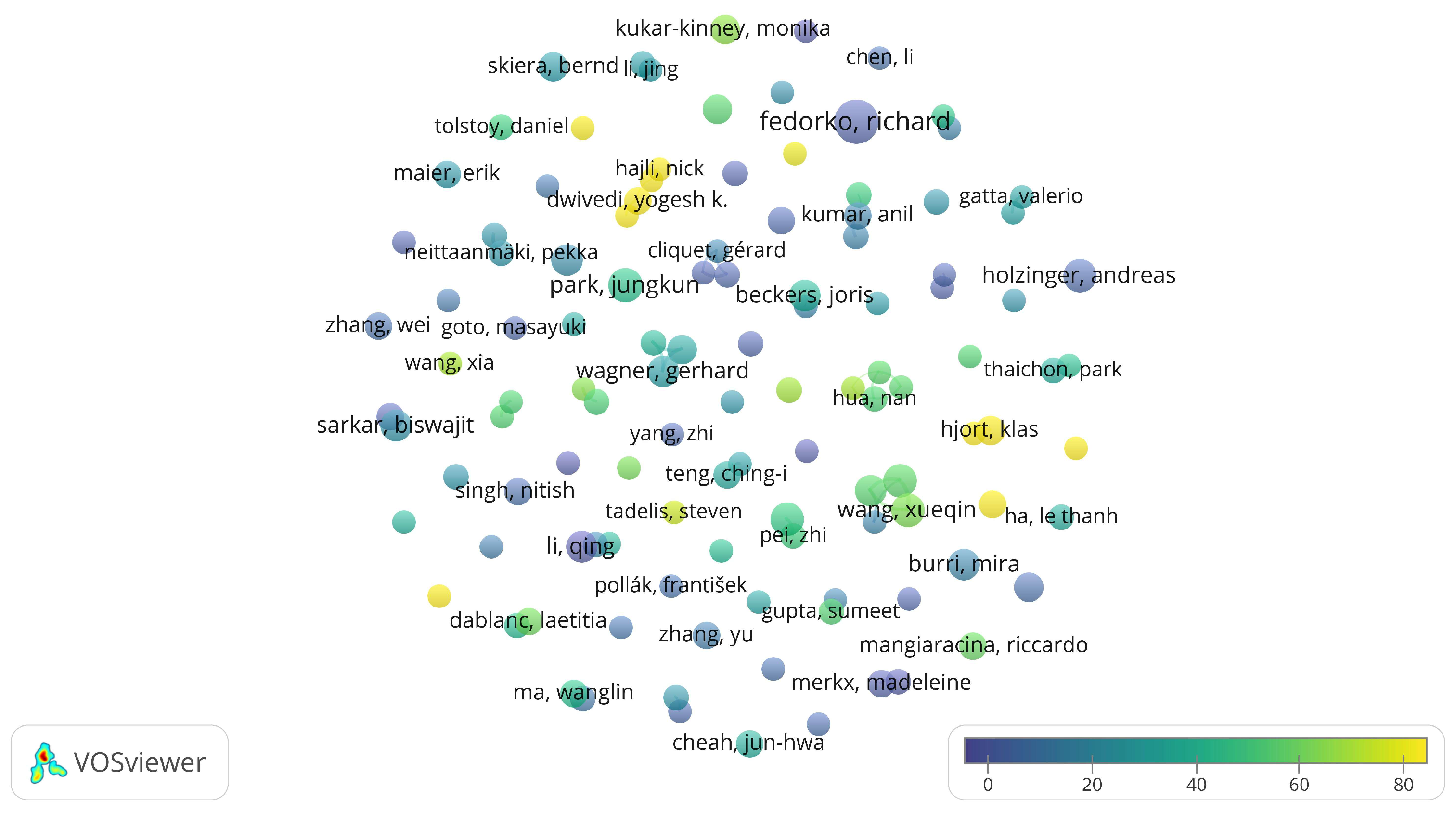
11], co-authorship is a formal way of intellectual collaboration among scholars and contributes to both the qualitative and quantitative enhancement of scientific output. It has been driven by the increasing methodological and theoretical complexity in research, as well as the easy access to technologies facilitating communication among researchers. The co-authorship analysis for the documents from the dataset reveals a limited number of long-term collaborations. The co-authorship patterns are visualized in
Figure 2 and
Figure 3 using VOSviewer 1.6.20. For this mapping, the criteria include a minimum of 5 documents per author and at least 10 citations per document to highlight the most influential authors and their citations. Each node in the network represents an author, and the connecting lines indicate co-authorships. Thicker lines show stronger collaboration, based on the number of shared publications. In
Figure 2, larger nodes correspond to authors with more publications, and colours show the average publication year. In
Figure 3, node size reflects the total citations received, and colours indicate the average citations per paper.
It can be observed that researchers tend to form small research groups, resulting in many discrete collaboration networks. In terms of productivity, the author with the highest number of publications is Richard Fedorko (18), followed by Jungkun Park (11), Andreas Holzinger (10), Xueqin Wang (10), Ruiliang Yan (10) and Yuen Kum Fai (10). Richard Fedorko’s research interests are primarily related to consumers’ behaviour [
53,
54] and the impact of social networks or influencers on online shopping [
55,
56]. Xueqin Wang and Kum Fai Yuen have published research on last-mile logistics [
57,
58,
59,
60]. Joris Beckers has primarily investigated aspects related to logistics in online selling [
61,
62] and the impact of COVID-19 on e-commerce [
63]. Regarding popularity, the works within the group co-authored by Rob Law have the highest number of citations (3620). These publications cover topics related to eTourism and the hospitality industry [
40,
44]. The second position is held by the group with Filiery Raffaele with 1142 citations. The research topics include eWOM, social media influence on e-commerce, and online review influences [
64]. The paper “The role of cultural values in consumers’ evaluation of online review helpfulness: a big data approach” offers an interesting perspective on the field. The authors analyse more than 500,000 reviews published on Booking.com to assess the influence of cultural factors on the perceived helpfulness of reviews. The results reveal that reviewers from cultural contexts scoring high in power distance, individualism, masculinity, uncertainty avoidance, and indulgence are more likely to produce reviews considered helpful [
65]. The group co-authored by Yogesh Dwivedi ranks third position with 648 citations. Their publications cover a diverse range of e-commerce topics, including the impact of social media [
66] and eWOM [
67].
Hypothesis H4 is confirmed: author teams collaborating in the field of e-commerce address a wide range of topics, indicating a tendency toward interdisciplinarity in research.
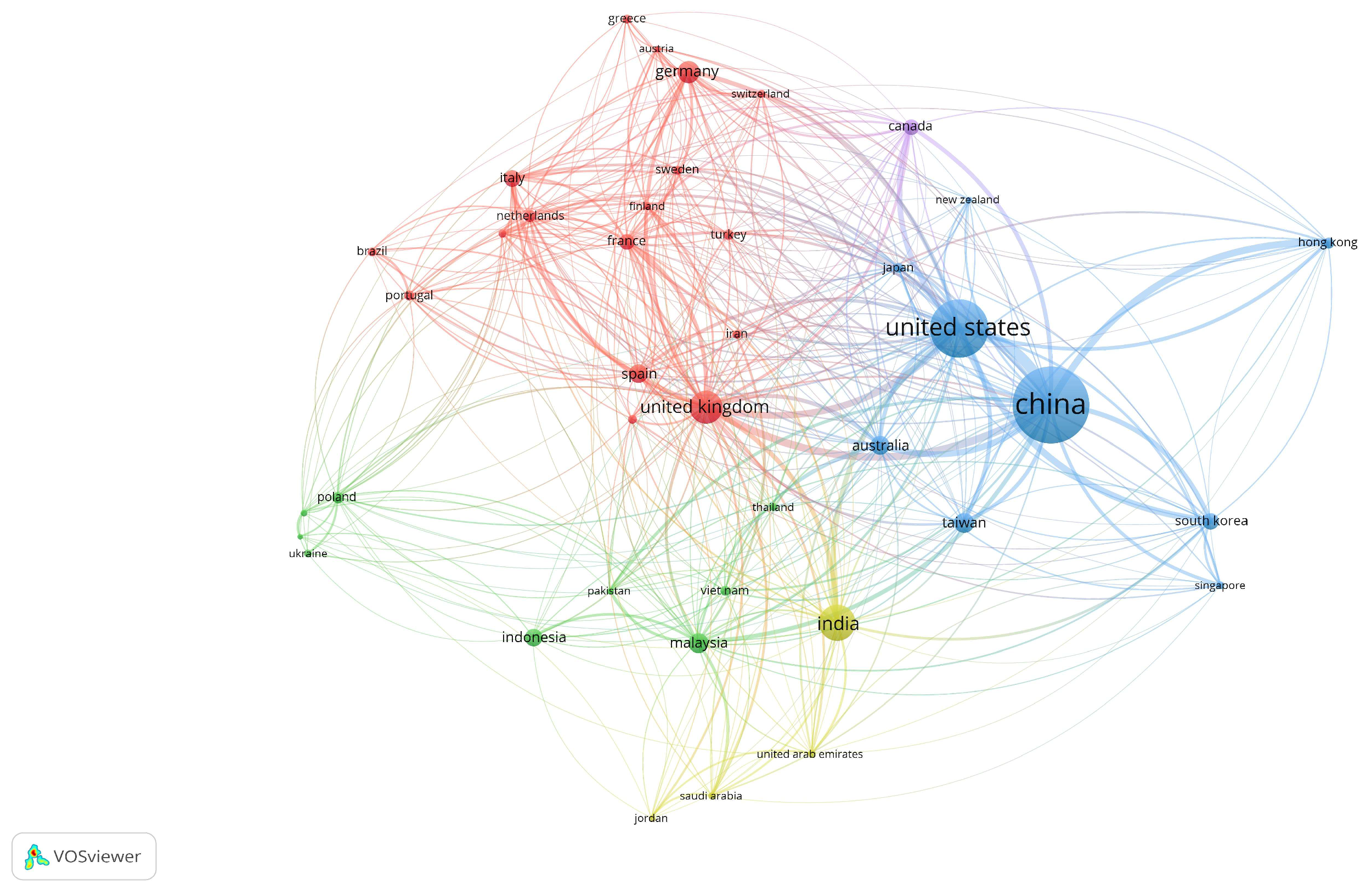
Exploring collaboration for countries reveals the spatial distribution of publications. For network processing, the thresholds are 50 for the number of documents and 500 for the number of citations.
Table 6 presents contributing countries regarding e-commerce research based on author affiliation.
Figure 4 presents the countries’ co-authorship network generated by VOSviewer 1.6.20.
Table 7 reports the share of publications and citations attributed to USA and China, 95% confidence intervals (Wilson), and
p-values from one-sided binomial tests against a dominance threshold of 30%. Researchers from these two countries account for 34.66% of published articles and 32.22% of citations, representing approximately one-third of the total.
Hypothesis H5 is confirmed: countries with developed economies, particularly the USA and China, hold a significant share of scientific production in the field of e-commerce.
International collaboration among countries exhibits a more uniform distribution compared to author collaboration. China leads the rankings in terms of productivity with 1975 documents. It is followed by the USA, which has published 1327 documents, and India, with 671 documents. In terms of citations, the USA ranks first with 46,042 citations, followed by China with 24,290 citations and the UK with 21,135 citations.
4.2.3. Bibliographic Coupling of Documents
Bibliographic coupling is a technique used to identify conceptual similarities between documents by analysing their citations [
79]. A document is considered bibliographically coupled if it appears in the references of two or more articles. In our case, the threshold for the number of citations is set at 100. The bibliographic coupling analysis of the 8593 works reveals seven main clusters.
Table 9 provides an overview of the clusters, outlining their central themes and the most frequently cited publications within each cluster.
Bibliometric coupling enables the identification of primary topics addressed by researchers within a specific field. In the analysed dataset, only 354 works have more than 100 citations, though some of these are isolated. The first cluster consists of 123 documents published between 2008 and 2022, which have accumulated a total of 28,256 citations. The main themes covered include eTourism, online reviews, eWOM, social media influence, and social commerce, digital transformation (including cloud computing, AI, blockchain, cryptocurrency, etc.), live streaming industry, technology adoption, e-marketing, dynamic online prices, advertising processes, digital marketing strategy, and cross-border e-commerce.
The second cluster contains 57 works published between 2009 and 2023 with 10,807 citations. The primary themes in this cluster include consumer experience, trust, consumer resilience, consumer behaviour, virtual and augmented reality, AI, chatbots, consumer trust, purchasing attitude, retailing education, consumer satisfaction analysed both in general and within specific domains such as tourism or specific contexts like social media.
The third cluster consists of 51 works published between 2008 and 2022, with a total of 11,446 citations. This cluster focuses mainly on purchase intention, e- and m-payments, blockchain, cryptocurrencies, risks, and online banking with additional attention to subtopics such as technology acceptance and adoption.
The fourth cluster encompasses 45 articles published between 2008 and 2022, which have accumulated 9492 citations. Research within this cluster primarily focuses on customer satisfaction, e-trust and e-satisfaction, e-services quality, and m-commerce.
The fifth cluster consists of 43 works published between 2008 and 2021 with 8417 citations. The themes in this cluster are more concentrated, focusing primarily on eTrust, online behaviour, online recommendations, e-loyalty and e-satisfaction. Additionally, it explores e-retailing ethics, cross-border e-commerce, and social commerce.
The sixth cluster includes 27 articles published between 2008 and 2022, with a total of 4306 citations related to last-mile delivery, distribution system, environmental implications, omni-channel fulfilment, and logistics.
Finally, the last cluster comprises only 8 studies addressing heterogeneous topics such as social commerce, social influence, and social media in e-commerce. These papers, published between 2019 and 2021, have collectively accumulated 1296 citations.
4.2.4. Keywords Co-Occurrence and Main Themes
The keyword co-occurrence network is created based on patterns and connections between words that co-occur in the literature analysed. This helps to reveal “patterns and trends in a specific discipline by measuring the association strengths of terms representative of relevant publications produced” [
105]. Each node in the network represents a word, and each link represents the co-occurrence of a pair of words [
106]. The Keywords Co-occurrence Network was generated using Authors’ Keywords with the following parameters: Clustering Algorithm = “Walktrap”, Number of Nodes = 50, and Minimum Number of Edges = 2. Author’s Keywords offer a more comprehensive representation of an article’s content compared to Keywords Plus [
107], which are generated by an automated algorithm [
108]. The size of each node is proportional to the number of occurrences of the word in the data set analysed. The thickness of the edges connecting the nodes is proportional to the number of co-occurrences of the words they connect. The number of connections each keyword has reflects its importance in the network. A high centrality of a word in such a network indicates that it acts as a bridge between two separate parts of the network, creating conceptual links between important research topics through a common language [
109].
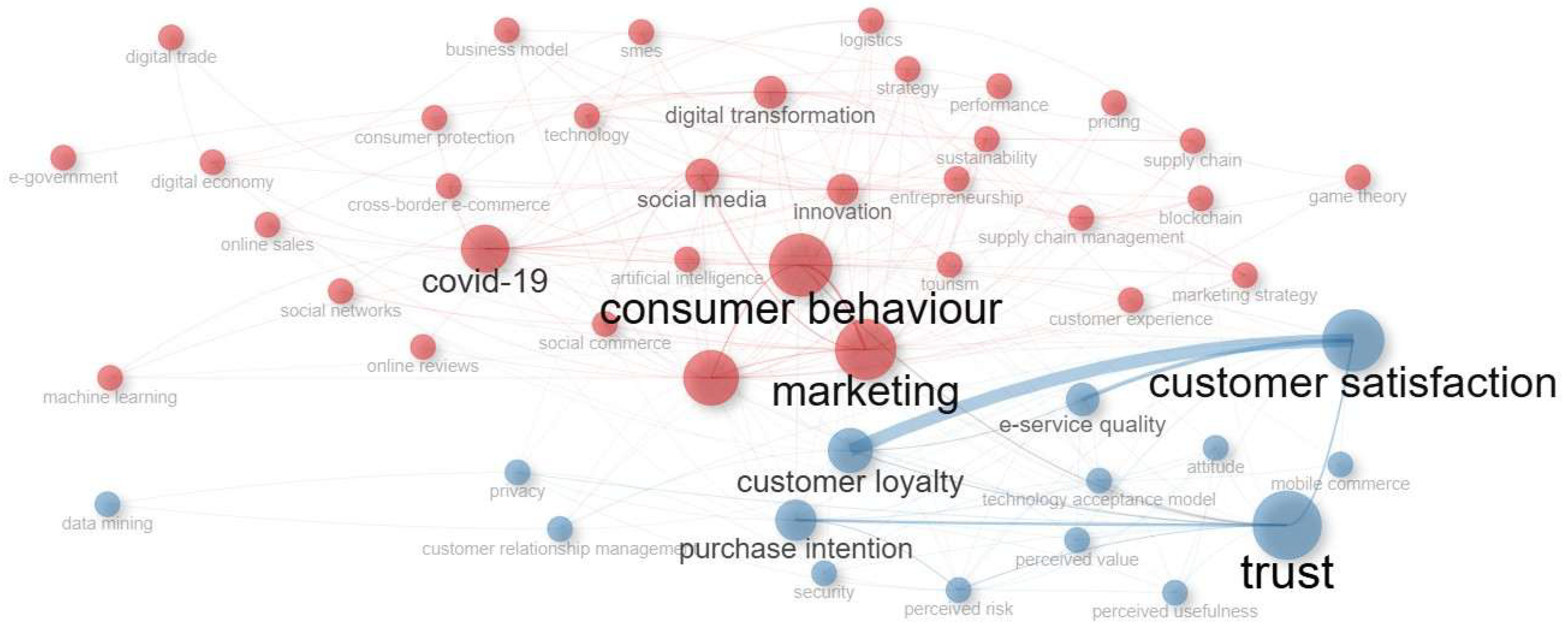
Within each cluster, one can discern keywords that frequently co-occur (
Figure 6). The red cluster includes 34 items that are frequently used together. These items reflect associations among specific concepts related to
consumer behaviour (marketing, social commerce, online reviews, social media, consumer experience), alongside the
marketing (consumer behaviour, retailing, online sales, pricing, digital transformation, performance),
retailing (consumer behaviour, marketing, logistics, supply chain management) and concerns regarding the changes related to
COVID-19 (consumer behaviour, retailing, marketing, cross-border e-commerce, consumer protection, online sales, social network). The cluster also includes research on
disruptive technology related to e-commerce such as machine learning, AI, blockchain and their contribution to digital transformation, digital economy, and digital trade. Additionally, the cluster addresses social, economic, and logistical dimensions linked to online activities, including entrepreneurship, business models, supply chains, consumer protection, sustainability, and strategic considerations.
In the second cluster, in blue, including 15 words, the predominant focus is on concepts related to trust (customer satisfaction, customer, loyalty, purchase intention, perceived value, attitude, perceived risk, privacy and perceived usefulness), alongside the analytical methods used (TAM). Additionally, this cluster includes research on the influence of customer satisfaction (customer relationship management and security). Within the same cluster, one can also find characteristics that influence consumers’ decisions when purchasing products online, including security, privacy, and e-service quality.
In future research, scholars may choose to track current trends in e-commerce by concentrating on the most frequently used keywords from the past decade or innovate by exploring less explored areas related to e-commerce, represented by keywords with lower frequency.
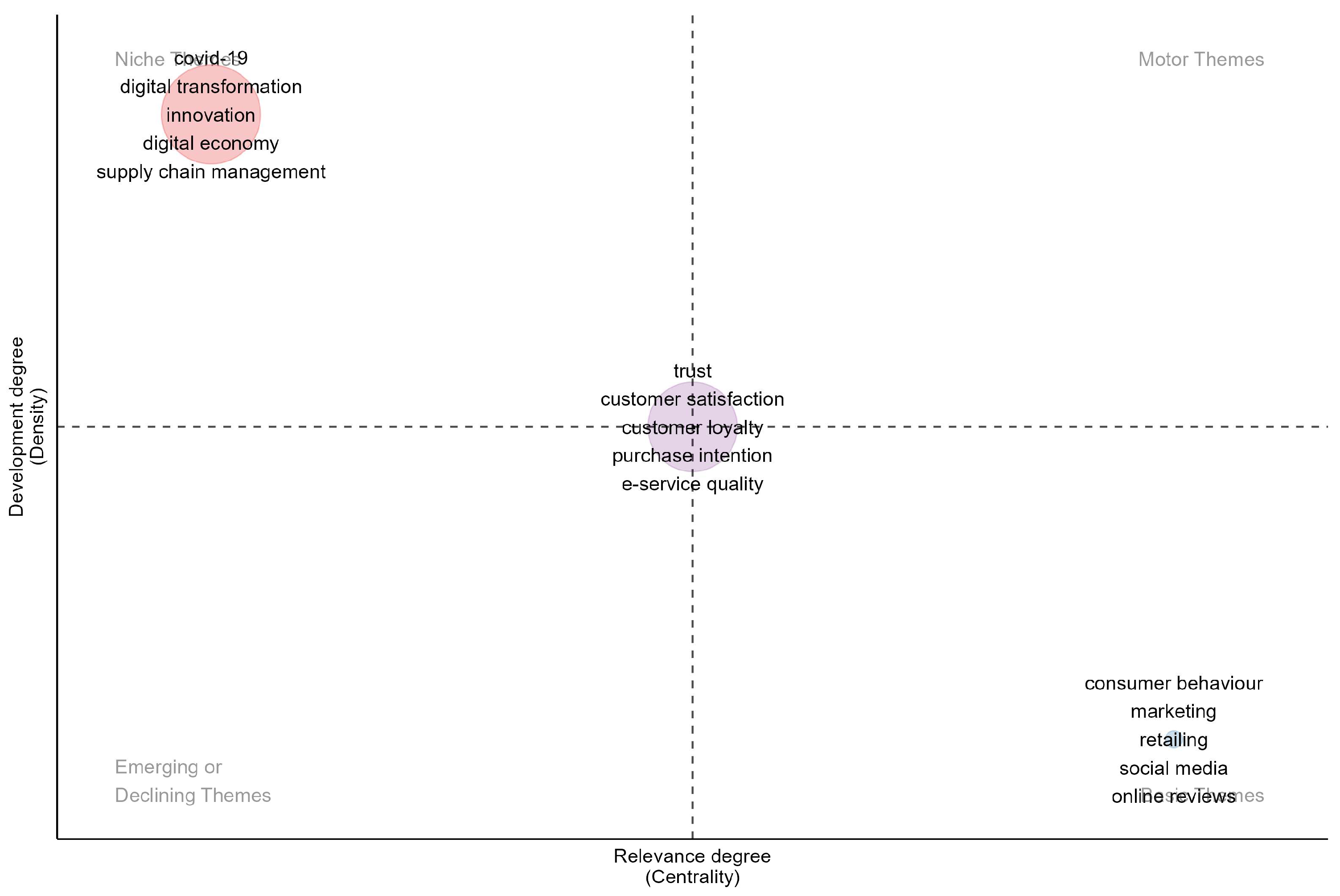
According to Grivel and Polanco [
110], the thematic map provides a clear and appropriate manner of illustrating the relationships between topics within a broader subject. It facilitates the identification of the most significant concepts within the analysed field. Consequently, we have employed this form of representation to capture the primary themes addressed in the publications included in the dataset (
Figure 7). The thematicMap() function was used, with the following parameters: Number of Words = 250, Min Cluster Frequency (per thousand docs) = 5, Number of Labels = 5, Label size = 0.1, and Clustering Algorithm = “Walktrap”. This is a powerful tool for identifying community structures in networks, particularly suitable for analysing keyword co-occurrence data in bibliometric research. The algorithm offers a measure of similarity between vertices based on random walks, starting from the hypothesis that random walks across the entire graph tend to detect subgraphs (areas of the graph with a high edge density), as there are only a few links leading outside a given community [
111]. Clusters were generated based on the Author’s Keywords.
Co-word analysis was proposed by [
112] as a content analysis technique for mapping the strength of relationships between information units in textual data. It is considered particularly relevant for reflecting interactions between fundamental and technological research. The thematic map reflects the level of correlation between concepts, measured as the density, and the cohesiveness of nodes, measured as centrality [
34]. Each cluster on the map includes a group of related keywords and topics. The centrality and density are two metrics often used in thematic maps. Density signifies the strength of internal connections among all keywords used to describe the research theme. The centrality represents the strength of external connections to other themes by leveraging the field of authors’ keywords. The chart consists of four quadrants that indicate the level of development and relevance of the discussed topics. Niche topics, which are highly developed and isolated, are situated in the top-left quadrant. Motor themes or leading topics can be found in the top-right quadrant. These topics often drive new directions of innovation and research. Emerging or declining topics are located at the bottom-left quadrant and include both weakly developed and marginal themes, while foundational topics are situated at the bottom-right quadrant, including traversal and marginal themes.
The thematic analysis is represented through a thematic map consisting of three distinct clusters that include convergent topics based on their centrality and density within the field. The thematic map is important for understanding and exploring multidisciplinary fields, providing a broader view of the research landscape.
Cluster 1—COVID-19—includes topics related to digital transformation, innovation, digital economy, supply chain management, cross-border e-commerce, entrepreneurship, logistics, business models, AI, game theory, sustainability, strategy, and more. It is the most extensive research area (1074 articles) and has reasonable centrality, reflecting its influence and connections between clusters. It has good coherence, as indicated by high density, but lower centrality, focusing on more specialized directions. Concerns regarding the impact of COVID-19 on e-commerce, although accounting for approximately 12.5% of the analysed corpus, are positioned in the Niche Themes quadrant of the diagram. Their low centrality indicates that, despite their number, COVID-19—related articles are thematically isolated, forming a dense cluster with few semantic links to fundamental topics such as consumer behaviour, trust, customer satisfaction, customer loyalty, marketing, or retailing. The topic is episodic, having emerged suddenly, and is primarily connected to aspects closely related to technological transformations and developments. Given the recency of COVID-19—focused studies, these articles often tend to be self-referential, which significantly limits their connections with other relevant keywords in the field. Their positioning in the insular zone of the diagram does not contradict the importance of the topic; rather, it reflects that the theme does not function as a central node linking the dominant themes of the field, since centrality represents the degree of interconnection with other core topics rather than absolute frequency.
Cluster 2—
Consumer behaviour—has the highest centrality score, which proves that it is very influential for the research network. According to the theoretical framework proposed by Callon and applied in the standard thematic map, themes with high centrality and low density are classified as Basic Themes [
113]. These are considered common, widely spread, and fundamental to the field, yet not highly developed internally. In the dataset analysed, they represent an extensive and active research area (681 articles), including topics related to marketing, customer behaviour, retailing, social media, online reviews, customer relationship management, and data mining. These themes are well-connected to the rest of the domain, being fundamental and widely prevalent, but not highly specialized or internally developed. Themes in this category constitute the conceptual foundation for other research, as any study on e-commerce is inevitably connected or influenced by consumer behaviour and marketing, regardless of whether it addresses trust, satisfaction, technologies, innovation, or digital transformation.
Cluster 3—Trust—is an influential topic with the second-highest centrality score. The considerable number of articles demonstrates its significant contributions to the field under analysis (855 articles). The topics included in this cluster are related to customer satisfaction, customer loyalty, purchase intention, e-service quality, TAM, perceived risk, perceived value, social commerce, and privacy. The themes within this cluster serve as bridging nodes between Basic and Emerging Themes. They function as pivot topics, appearing in studies on platforms, technologies, and behavioural typologies, as well as in more recent contexts such as AI, sustainability, and value co-creation. These themes reflect the psychological and qualitative dimensions of e-commerce, as trust, satisfaction, and loyalty are essential for the success of any business in this domain.
The absence of themes in the Motor Themes quadrant indicates a transitional phase in the field. E-commerce is mature yet fragmented, undergoing a stage of conceptual reconfiguration. Emerging themes, such as digital transformation and the digital economy, are too recent to function as driving themes, being insufficiently connected to the core topics of the domain. Similarly, although the COVID-19 pandemic generated many publications, it remains conceptually isolated. Due to the ephemeral nature of the topic, it has not connected with the fundamental themes of the field to form clusters with sufficient centrality and density to act as motor themes for e-commerce research.
Overall, the thematic map illustrates the complexity, diversity, and interconnections among research themes explored by authors in e-commerce. Some clusters encompass fundamental and mature dimensions of the area, while others reflect emerging trends and topics with substantial potential for future development.
4.2.5. Temporal Analysis of Topic Evolution
Thematic evolution analysis facilitates the examination of how thematic content and structures evolve, revealing their interconnections, developmental pathways, and trends across different periods [
114].
The analysis of keyword evolution plays an essential role in establishing thematic development, serving to gain insights into trends related to the topics and concepts that have captured researchers’ interest in a specific field over a given period.
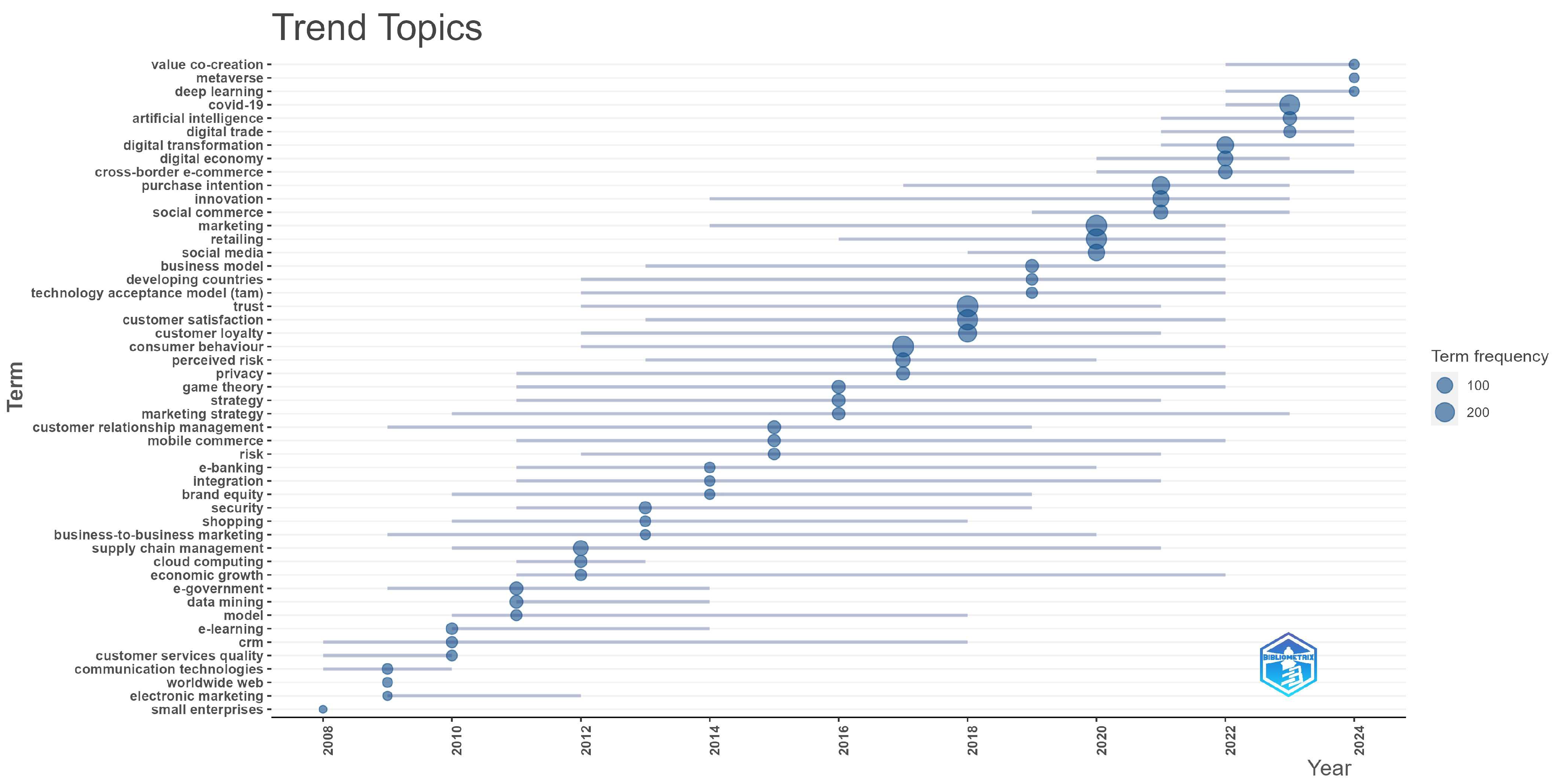
Figure 8 presents the results of the analysis based on the Author’s Keywords with the following parameters: Minimum Frequency = 5, Number of Words per Year = 3.
The result indicates that trust (271) was the most frequently used concept throughout the analysed period, followed by consumer behaviour (266), marketing (255), customer satisfaction (240), retailing (239), and COVID-19 (224). Trust, customer satisfaction, and customer behaviour dominated research interests from 2012 to 2022, while retailing was a prominent focus from 2016 to 2022. Digital transformation gained notable attention more recently, specifically in the period from 2021 to 2024. In recent years, there has been a growing interest in the analysis of disruptive technologies such as deep learning, AI, digital trade, digital economy, as well as the effects of the COVID-19 pandemic and citizen involvement through value co-creation. The most enduring topics are marketing strategy (2010–2023), economic growth (2012–2022), mobile commerce (2011–2022), game theory (2011–2022), privacy (2011–2022), and supply chain management (2010–2021). In 2024, the metaverse emerged as a novel research topic within psychology, drawing significant scholarly attention. Numerous other subjects were analysed during this period, some with a more general focus, such as customer relationship management, risk, social commerce, innovation, integration, etc., while others were more specific, such as e-commerce platforms, electronic banking, social commerce, etc.
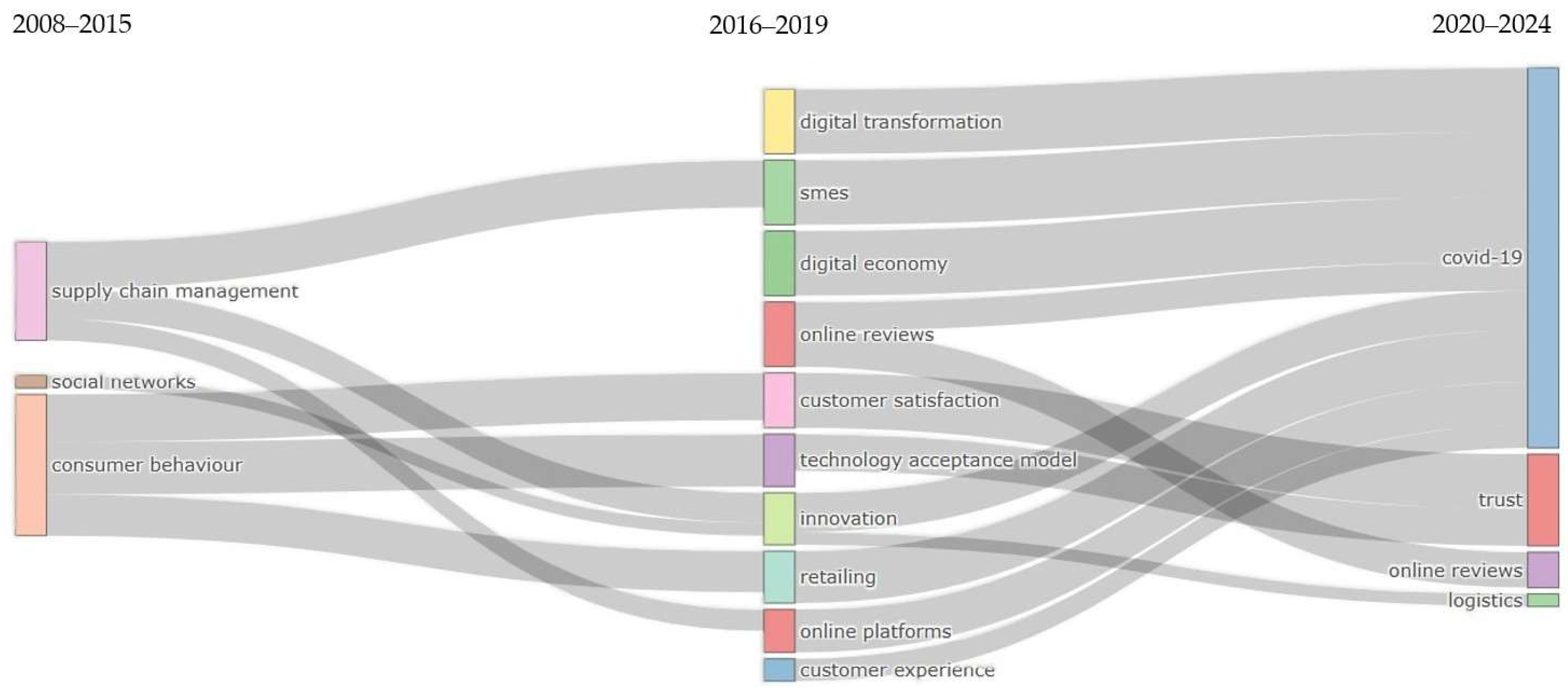
Concerns regarding the impact of COVID-19 on e-commerce emerged in the articles included in the dataset after 2020, with a high frequency during 2022–2023. They appear in 13.55% of publications from 2020 to 2024 (20 out of 590 articles in 2020, 94 out of 692 in 2021, 142 out of 741 in 2022, 169 out of 885 in 2023, and 98 out of 953 in 2024), peaking in 2022 at 19.16% of articles mentioning a COVID-19—related term in the title, abstract, or keywords, and remaining near the peak in 2023 at 19.01%. Interest in this topic declined in 2024. The transition of themes across periods was depicted in a thematic evolution framework in
Figure 9 with a Sankey diagram, divided into three periods: 2008–2015, 2016–2019, and 2020–2024. Each cluster represents a research topic or theme, and its size reflects the number of publications on that theme. The research from the first analysed period focused on customer-centric concerns, including topics such as social networks and consumer behaviour, but also on the supply process, with studies addressing supply chain management. In the following period, there has been a growing interest in concepts such as retail, SMEs, consumer experience, consumer satisfaction, innovation, online reviews, and TAM, as well as ICT topics including digital transformation and digital economy. These topics are influencing both businesses’ and customers’ exposure and choices. E-commerce is often mentioned as part of the digital economy. A synthesis of studies focusing on retail, SMEs, customer experience, digital transformation, innovation, online platforms, and the digital economy was observed during the 2021–2024 period, linked to the challenges brought by COVID-19. In addition, between 2020 and 2024, customer satisfaction was analysed using the TAM to reflect the role of trust in e-commerce.
The meaning of key terms has evolved over the analysed period, influenced by technological, social, and economic contexts. The representation provided by the Sankey diagram is highly simplified, making the semantic evolution of keywords particularly important. In the first period,
trust appears in the Basic Themes quadrant alongside
consumer behaviour and
customer satisfaction. This positioning indicates that trust was considered a fundamental element, yet insufficiently developed, integrated within a broader cluster reflecting general concerns about consumer behaviour. In the subsequent period, 2016–2019, the concept remained in Basic Themes but with higher density, suggesting an intensification of research on the impact of trust on
customer loyalty. Although centrality remained similar, the increased density indicates the maturation of the theme and an expansion of discussions toward the relationship between trust and customer retention. Eventually, trust migrated to the Motor Themes quadrant, being associated with
consumer satisfaction and
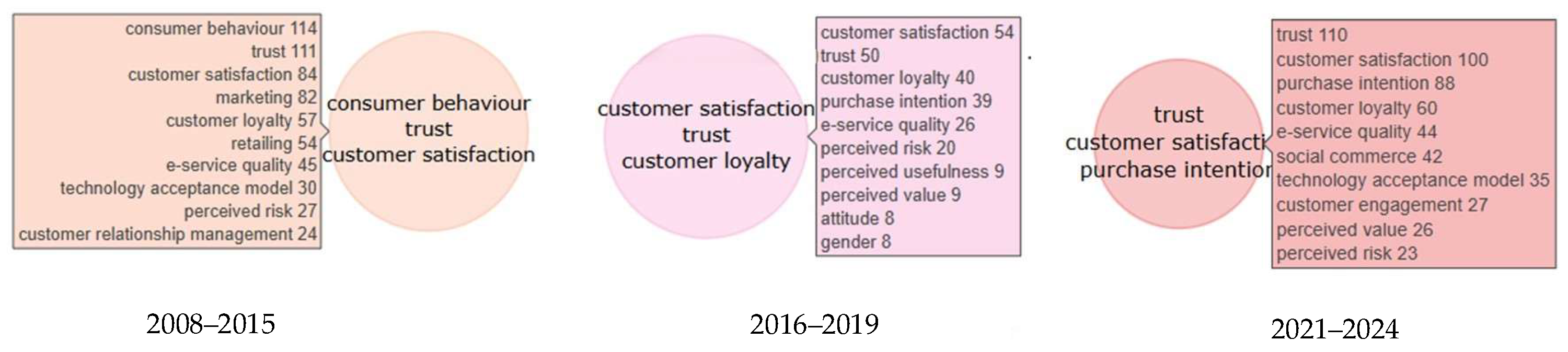
purchase intention. This reflects an evolution from its role as a fundamental concept to a strategic one, oriented toward influencing purchase intention and optimizing the consumer experience. The following figure illustrates the evolution of research on trust in the analysed domain across these periods (
Figure 10).
Consumer behaviour has also undergone a significant transformation according to the thematic analysis. In the first period, the term appears in the Basic Themes quadrant, highlighting its fundamental role in understanding consumer dynamics, with general concerns focusing on customer behaviour and satisfaction. In the period 2016–2019, the concept remains present but is associated with more applied themes such as customer satisfaction, retailing, and TAM. This evolution suggests a shift toward explaining consumer behaviour in the context of technology adoption and purchasing experiences. In the most recent period, the term appears within the same cluster as COVID-19, retailing, and marketing, reflecting a major semantic shift: consumer behaviour is now analysed in relation to global crises and the adaptation of marketing strategies to emerging digital realities.
The thematic analysis indicates a significant shift in the positioning of the concept of digital transformation within the e-commerce literature. In the second analysed period, the term appears in the Emerging Themes quadrant, isolated, suggesting that it was perceived as an emerging theme with developmental potential but still insufficiently explored. In the most recent period, digital transformation has migrated to the Basic Themes quadrant, being associated with COVID-19 in an extended cluster that includes retailing, marketing, consumer behaviour, social media, digital economy, innovation, cross-border e-commerce, and AI. This repositioning reflects a major semantic shift: digital transformation is no longer merely an emerging trend but has become a fundamental element, integrated into strategies for adapting to global crises and into innovation processes within e-commerce. The presence of COVID-19 as a fundamental theme is justified given the analysed period (2019–2024). Similarly, the digital economy, SMEs, retailing, online platforms, customer experience, and, partially, online reviews and innovation have evolved in the same way across these two periods.
In the first period, social network appears in the Niche Themes quadrant, indicating limited relevance and a specialized focus. In the subsequent period, the concept migrates to the innovation cluster within the Motor Themes quadrant, reflecting the integration of social networks into innovative e-commerce strategies. In the most recent period, this cluster fragments, and the social network is found again in the Niche Themes quadrant, within clusters associated with logistics and last-mile delivery as well as COVID-19. This suggests a semantic shift toward the use of social networks in logistical processes and communication within the context of the pandemic.
An interesting and significant aspect is the association of online reviews, machine learning, and sentiment analysis within a cluster positioned at the intersection of the four quadrants (Basic, Emerging, Motor, and Niche) in the most recent period analysed (2019–2024). This positioning indicates a transversal theme that links the fundamentals of consumer behaviour with technological innovation and advanced analytical approaches, highlighting the role of online reviews and machine learning algorithms in optimizing the purchasing experience.
In more detail,
Table 10 presents the thematic transitions from one period to another based on the following metrics: weighted inclusion index (W), inclusion index (I), stability index (S), and Occurrence (Occ). The weighted inclusion index and inclusion index measure how relevant a research subject is and how much a topic persists or overlaps when comparing data from one period to the next. Both indices are scaled from 0 to 1. A value of 1 means the subject has the highest possible relevance (Weighted Index) or the research topic has perfectly transitioned and persisted with maximum overlap (Inclusion Index). The number of occurrences indicates how many studies support the transition of a research topic (i.e., its presence and continuity) from one period to the next. Higher values indicate stronger empirical support. The stability index measures the persistence and consistency of a particular topic over time, highlighting its sustained relevance and interest within a specific research domain across an extended period. It is normalized on a scale from 0 to 1. The data in
Table 10 provides quantitative insights into the evolution of research trends and underscores the significance of certain themes over time.
The thematic evolution analysis highlights the hub role of the consumer behaviour theme during the periods 2008–2015 and 2016–2019, which branched into three distinct directions. Transitions toward customer satisfaction (W = 0.73; I = 0.07; Occ = 111; S = 0.03) and retailing (W = 0.64; I = 0.11; Occ = 114; S = 0.04) are characterized by high weighted inclusion and low inclusion, indicating the existence of a narrow core of concepts (trust, satisfaction/loyalty, marketing/retailing) that ensures continuity amid lexical diversification. At the same time, the evolution toward TAM reflects a specialization of research in a more theory-oriented direction, small but more cohesive. Subsequently, this line transitions toward trust in 2020–2024. The results indicate significant lexical reorientation (I = 0.06) within a niche volume (Occ = 21), but with reasonable stability (S = 0.33). The topic has retained its theoretical foundations while migrating beyond TAM frameworks to other dimensions such as trust, privacy, risk, and security.
In the case of social networks, the overlap with innovation is high (I = 0.50), with low continuity (W = 0.20), emerging directions (Occ = 17), and robust terminological continuity despite the small scale (S = 0.17). Transitions of supply chain management from 2008 to 2015 toward innovation (W = 0.46; I = 0.20; Occ = 38; S = 0.09), online platforms (W = 0.33; I = 0.33; Occ = 45; S = 0.11), and SMEs (W = 0.73; I = 0.50; Occ = 23; S = 0.11) in 2016–2019 suggest emerging directions with significant reconfigurations across diverse thematic sets. The connection to SMEs is stronger, with high overlap but niche-focused. Stability is relatively constant in all cases. In the subsequent period, 2020–2024, SMEs transition toward COVID-19 with maximum overlap (W = 1) but very modest stability (I = 0.03), sharing only a single common term (SMEs), indicating substantial thematic reformulation and high thematic overlap (I = 0.50). However, the volume remains small (Occ = 19), suggesting emerging directions rather than a dominant theme.
Innovation from the 2016–2019 period transitions toward COVID-19 (W = 0.61; I = 0.03; S = 0.20; Occ = 11) and logistics (W = 0.20; I = 0.14; S = 0.33; Occ = 8) in the subsequent period. In the first case, the transition is based on a few pivot concepts (innovation, business model, and sustainability), but it diversifies lexically due to the pandemic context. In the second case, continuity remains stable, maintaining terminological consistency and coherence, but within a clear niche, with innovation oriented toward operational efficiency and logistical transformations.
Customer satisfaction transitioned toward trust from 2016 to 2019 and from 2020 to 2024. The connection is supported by a core of pivot terms (W = 0.85), but the number of shared terms between the themes is exceedingly small (I = 0.03). This indicates that the theme is specializing and diversifying lexically while maintaining continuity through concepts such as customer satisfaction, trust, customer loyalty, and purchase intention. The relatively large volume (Occ = 54) reflects a major evolutionary direction, while the low stability (S = 0.03) points to substantial terminological novelty introduced in the new period.
The transitions of digital economy (W = 1; S = 0.03; I = 0.5; Occ = 12), digital transformation (W = 1; S = 0.04; I = 1; Occ = 10), and online platforms (W = 0.67; S = 0.03; I = 0.33; Occ = 7) from 2016 to 2019 toward COVID-19 in 2020–2024 are relatively similar. All are characterized by high weighted inclusion and low inclusion, indicating the presence of a narrow core of concepts that ensures continuity amid lexical diversifications. Variations occur only in thematic overlap. For digital transformation, overlap is maximal, whereas for online platforms it is the lowest among the analysed concepts, reflecting greater thematic diversification. The small volume reflects emerging research directions.
The transition of customer experience from 2016 to 2019 to COVID-19 in 2020–2024 shows minimal overlap (I = 0.03) but moderate continuity supported by interest in the original concept (W = 0.35), with a small volume (Occ = 9) and reasonable stability (S = 0.33). This indicates that during the pandemic, research on customer experience underwent lexical reconfiguration, introducing vocabulary specific to the COVID-19 context, while still preserving the conceptual core of customer experience in studies directly addressing the pandemic’s impact on e-commerce.
The transition of online reviews toward COVID-19 between 2016 and 2019 and 2020–2024 is characterized by continuity, supported by the pivot role of big data, and reasonable overlap (W = 0.45; I = 0.5). The volume is small (Occ = 9), indicating that this relationship is emergent rather than dominant. Low stability (S = 0.03) reflects significant lexical reconfiguration. The results also show that online reviews maintain and consolidate their own trajectory across periods, introducing new vocabulary (e.g., fake news, AI, sentiment analysis, review authenticity) while retaining part of the terminology from the previous period (I = 0.25). Continuity and overlap are robust, with high values (W = 0.55; I = 0.5), demonstrating that the theme remains coherent across periods.
The transitions of retailing from 2016 to 2019 toward COVID-19 and trust in 2020–2024 are characterized by low stability and overlap (S = 0.03, I = 0.11 for COVID-19; S = 0.04, I = 0.11 for trust). The theme diversifies lexically and specializes in the most recent period, maintaining continuity only in relation to COVID-19 (W = 0.8), centred around pivot concepts such as consumer behaviour and social media. In the case of trust, continuity is very low (W = 0.06), based solely on a single research direction, namely social commerce. Similarly, the volume is large for the connection between retailing and COVID-19 (Occ = 50), reflecting a major evolutionary direction, and much smaller for the connection between retailing and trust (Occ = 13), indicating that the two concepts are related only through more peripheral terms.
Hypothesis H6 is confirmed: in recent years, researchers’ interest in incorporating the pandemic context into e-commerce studies has increased.
Analyses of the dataset highlight the presence of research on emerging technologies and their potential applications in e-commerce. These studies are connected to concerns regarding
consumer behaviour (
Figure 6) and are present in clusters identified through thematic analysis, as well as in the trend topics (
Figure 8), either directly via
AI or through related concepts and technologies such as
machine learning,
deep learning,
blockchain,
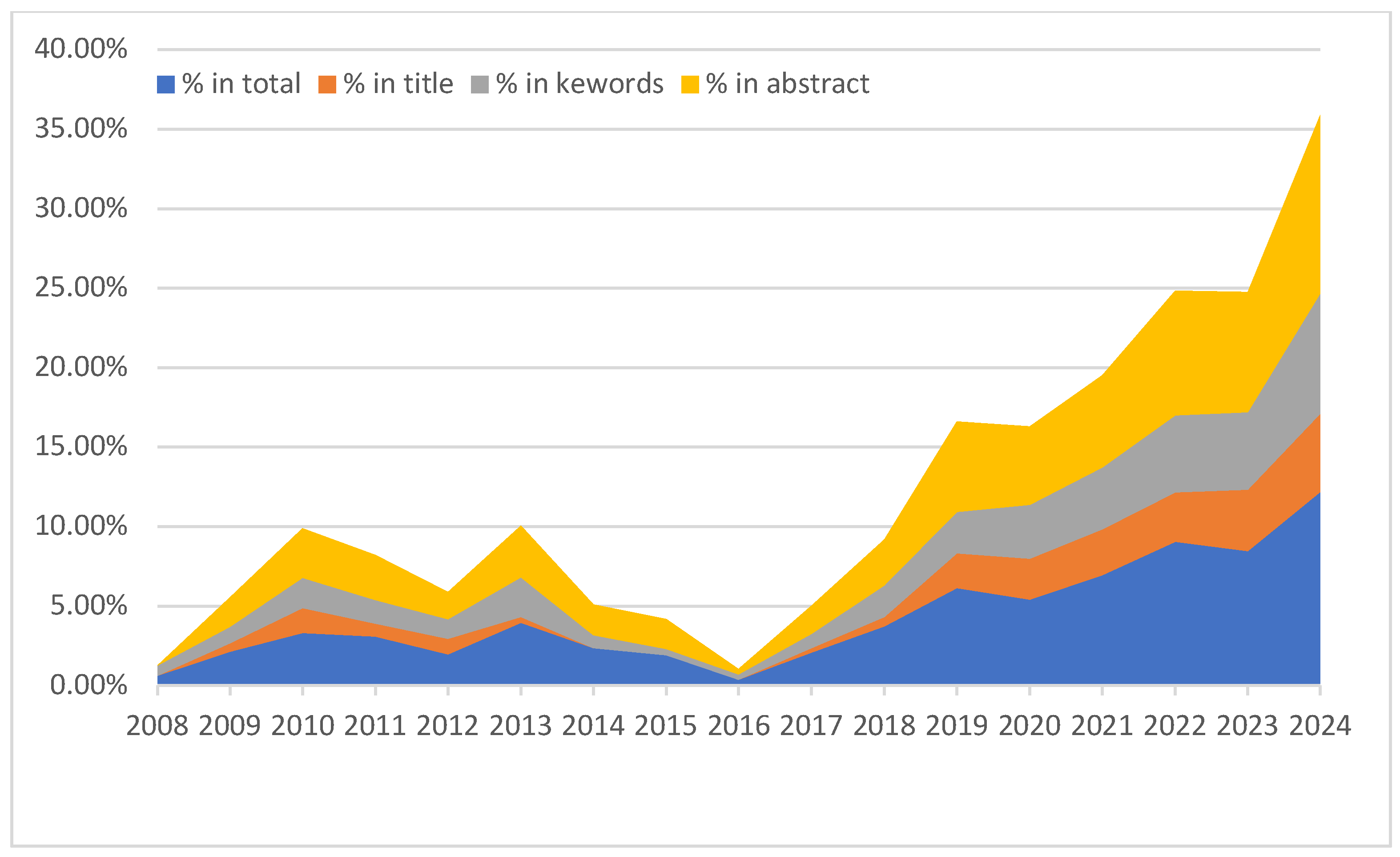
chatbots, and others. Furthermore, direct analyses of the dataset show a continuous increase in the number of articles including these concepts in the title, abstract, or keywords, with peaks observed in 2022 and 2024 (
Figure 11).
Hypothesis H7 is confirmed: concepts associated with automation and artificial intelligence have become increasingly frequent in recent years, indicating a growing interest in emerging advanced technologies.
The results obtained from the thematic evolution analysis, trend topic analysis, and thematic mapping indicate that the TAM serves as the primary theoretical framework in e-commerce research. TAM is prominently represented in the topic trends (
Figure 8) over an extended period (2012–2022) and is directly connected to studies related to
trust and
customer satisfaction, as well as
consumer behaviour, as observed in the keywords co-occurrence network (
Figure 6). It provides an important and persistent foundation for e-commerce research, as reflected in the thematic evolution of articles (
Figure 9 and
Table 10). Furthermore, TAM is present in Cluster 3 (
Trust) in the thematic map, alongside concepts such as
customer satisfaction,
customer loyalty,
purchase intention,
e-service quality,
perceived risk,
perceived value,
social commerce, and
privacy. Although predominant, TAM is clearly not the only theory utilized in e-commerce studies.
Table 11 presents the theories and models mentioned in the titles, abstracts, and keywords of the articles included in the dataset.
To identify potential new theories, we conducted a heuristic search for expressions such as
we propose/introduce/develop a new/novel model/framework/theory within the same dataset mentioned earlier. The results revealed that no explicit proposals for new theories or models were found in titles, abstracts, or keywords during the analysed period (2008–2024). On the other hand, an analysis divided into two periods, 2008–2014 and 2015–2024, indicates an increase in the number of articles applying existing frameworks to study e-commerce–related topics (
Table 12). The number of articles using existing theories increased significantly between the two periods, both in absolute terms and as a percentage (from approximately 4.05% in 2008–2014 to 5.79% in 2015–2024), and two-proportion tests reveal significant differences (z = 11.20 for the first period and z = 18.20 for the second period;
p < 0.001).
Hypothesis H8 is confirmed: most e-commerce studies do not propose new theories but rather apply existing theoretical frameworks from the field of information technology, suggesting a pragmatic orientation of the domain.
Themes related to e-commerce are vast and dynamic. Their evolution has been influenced by technological, economic, and social transformations. According to our research, some topics have lost their attractiveness or have become specialized, while others have captured the attention of researchers. Additionally, the increase in goods production and easy access in certain geographical regions has led to a rise in scientific production on e-commerce topics from those areas (for example, studies conducted in India and China have become very numerous).