
Unsupervised Learning-Based Anomaly Detection for Bridge Structural Health Monitoring: Identifying Deviations from Normal Structural Behaviour

 ,
,  and
and 
Abstract
1. Introduction
- (i)
- (ii)
- (iii)
2. Methodology
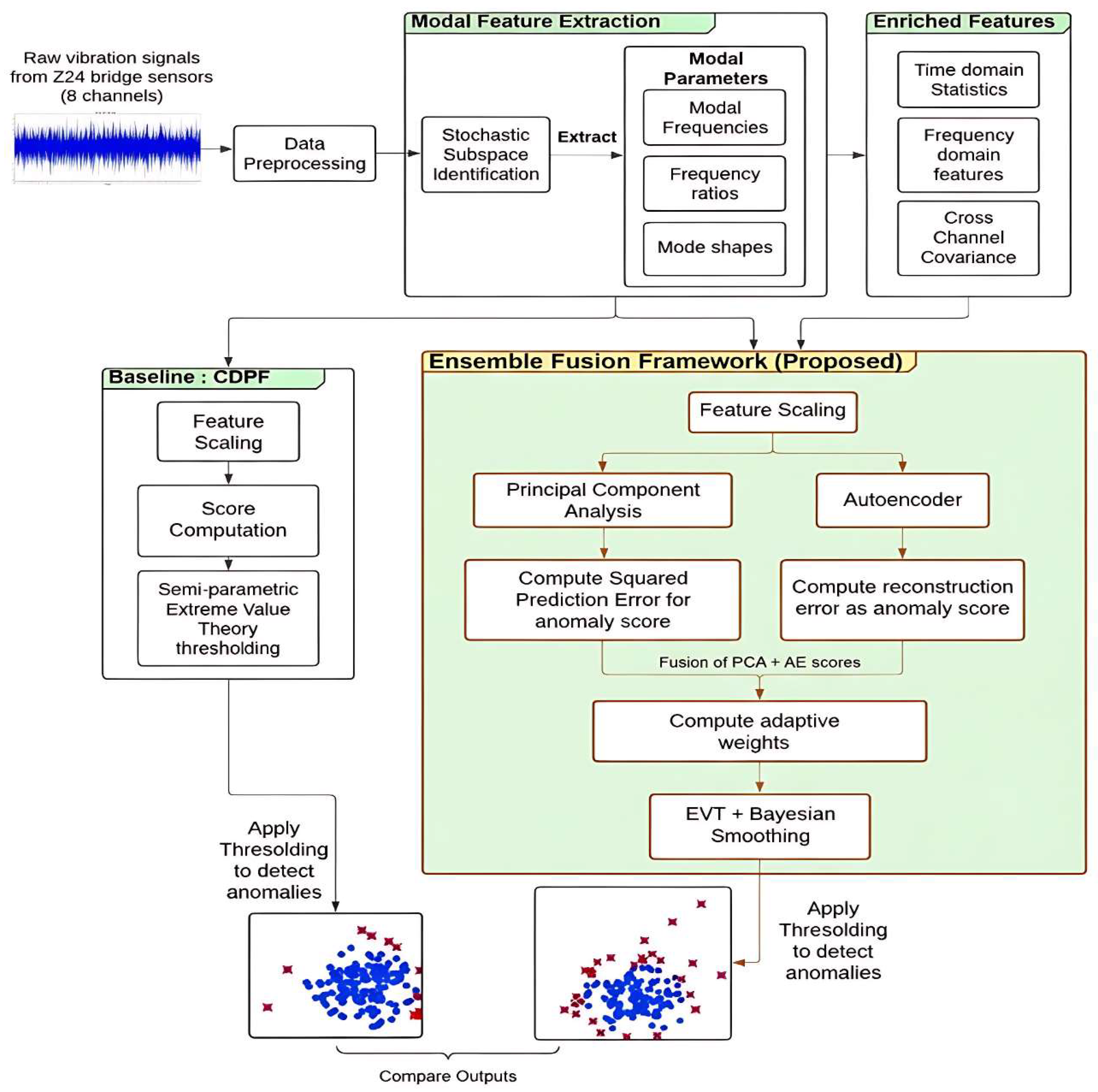
2.1. Overview of the Architectural Flow
2.2. Baseline: CDPF with SEVT Thresholding
2.3. Ensemble Fusion Framework
| Algorithm 1. AE–PCA Ensemble Fusion Anomaly Detection |
| Input: Vibration segments {X_i}, i = 1, ..., N |
| Output: Segment labels: Normal/Damaged |
|
3. Case Study
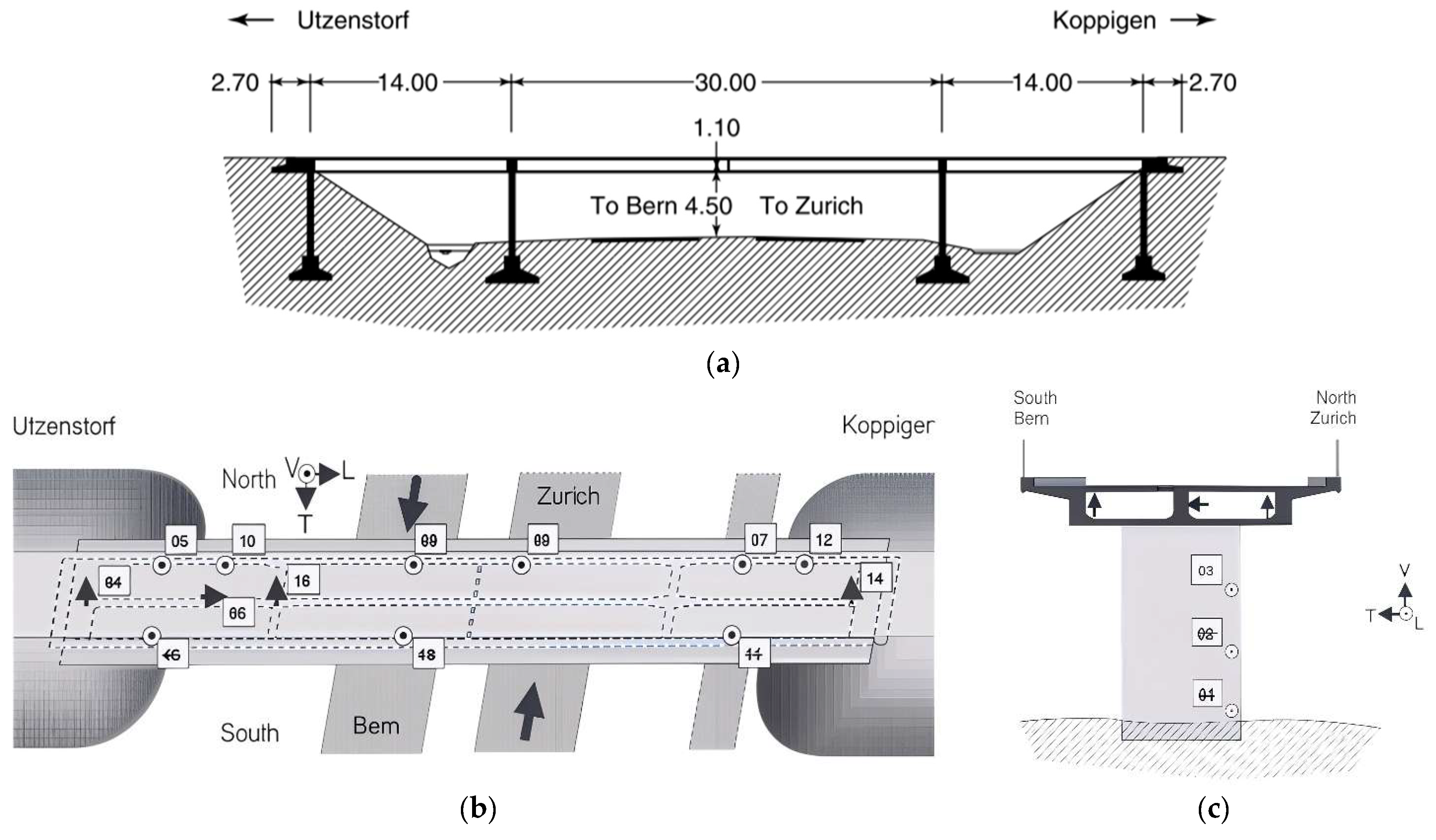
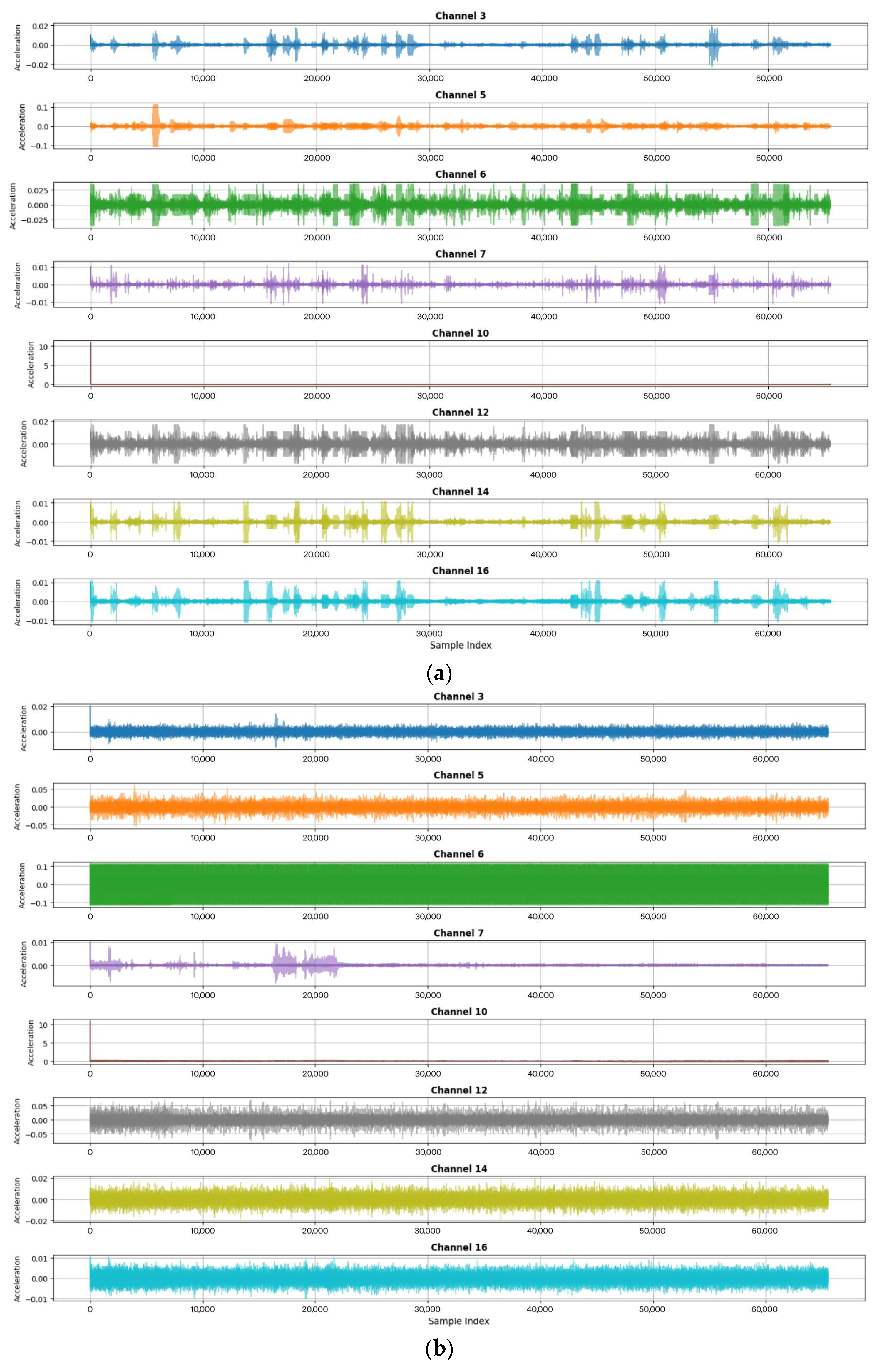
3.1. Z24 Bridge
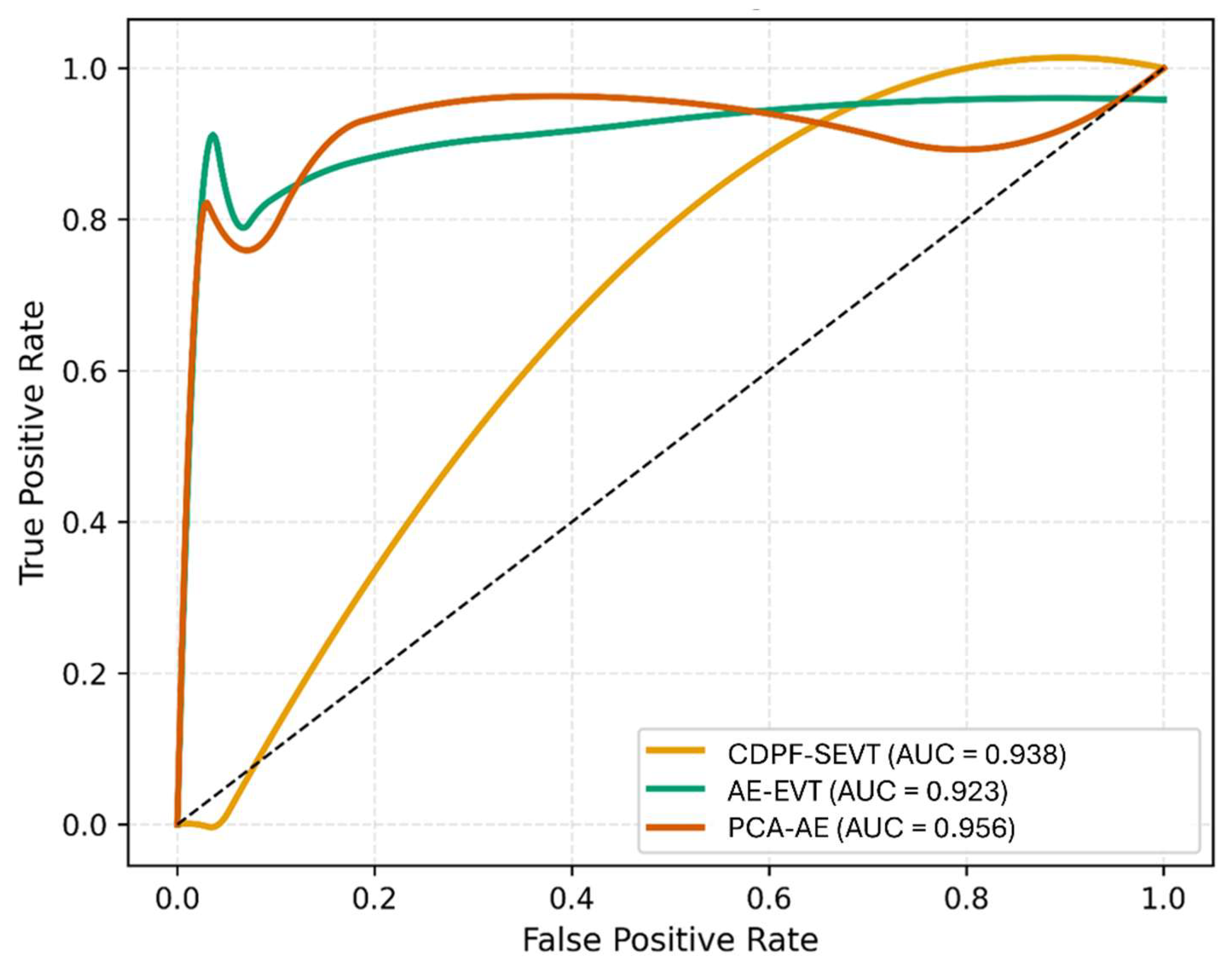
3.2. AUC Analysis
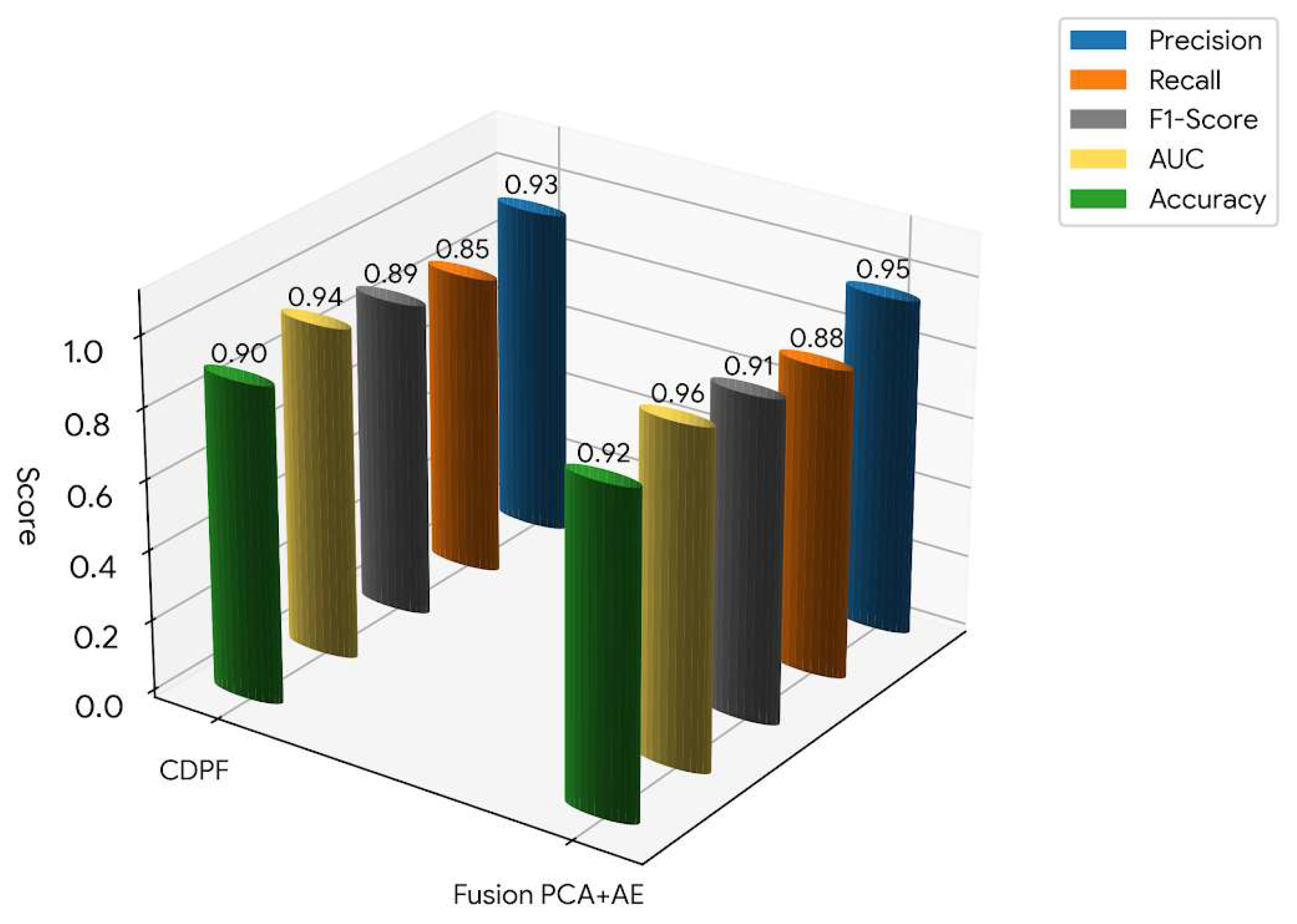
3.3. Classification Performance
4. Results and Discussion
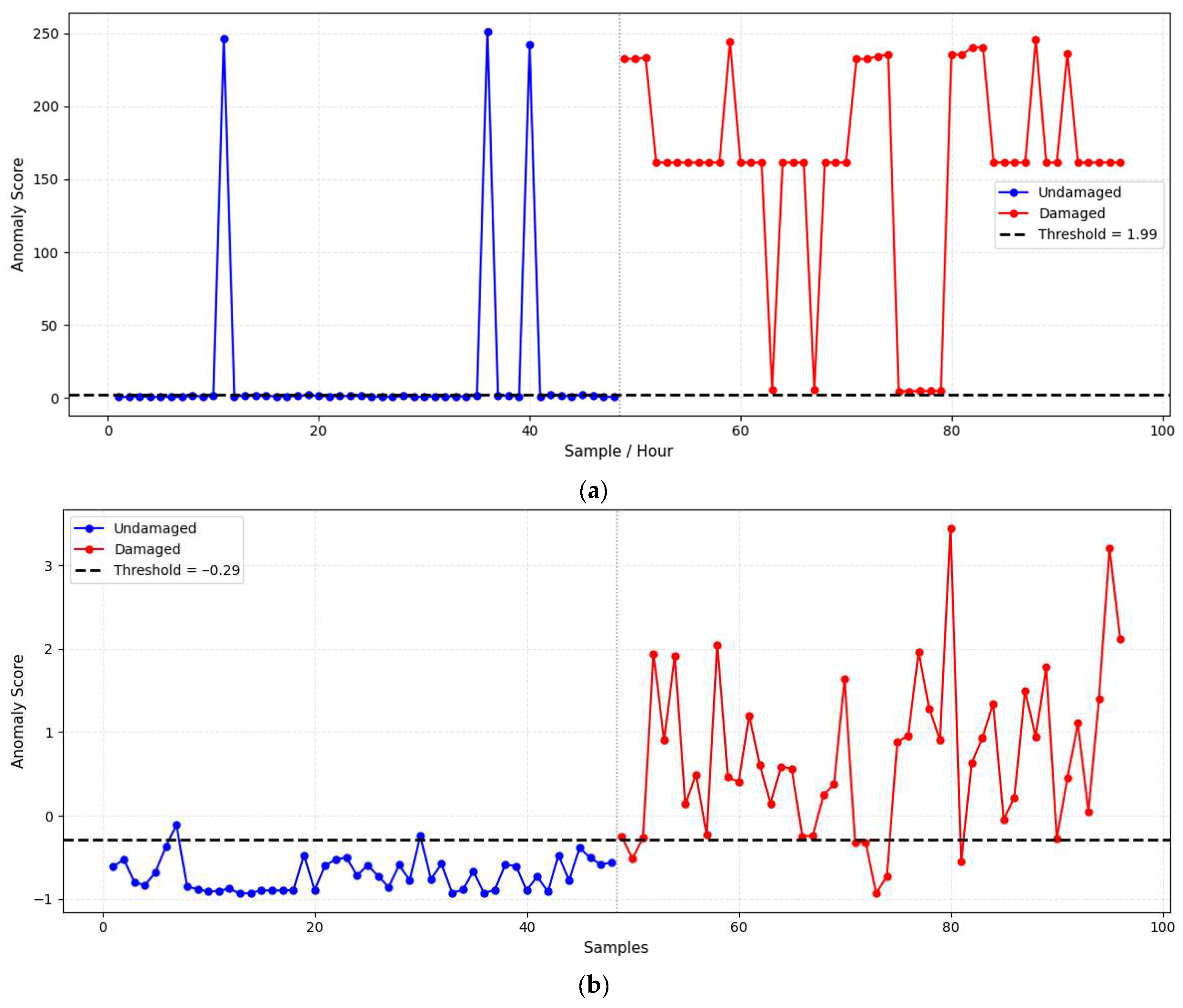
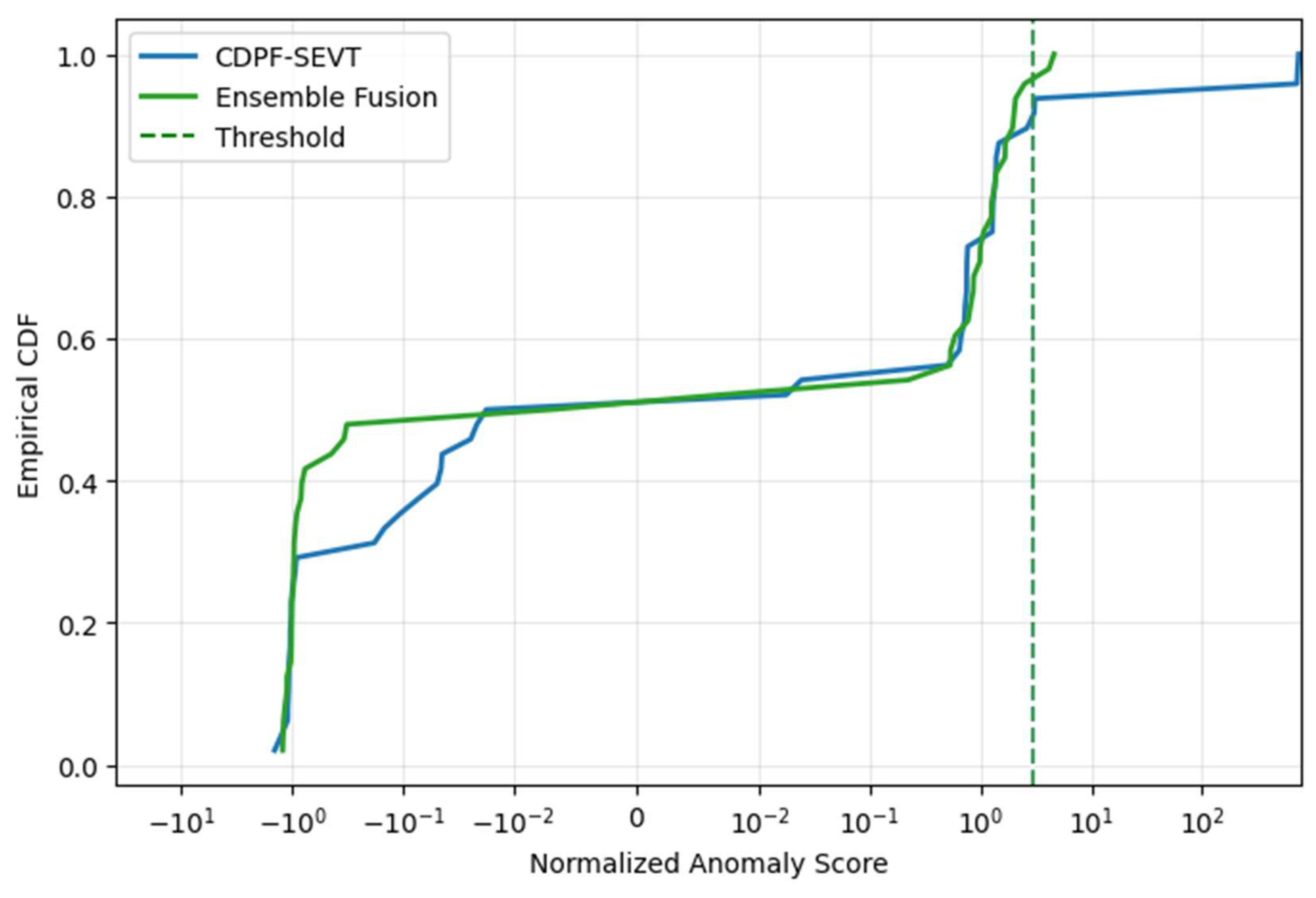
4.1. Threshold-Guided Structural State Classification
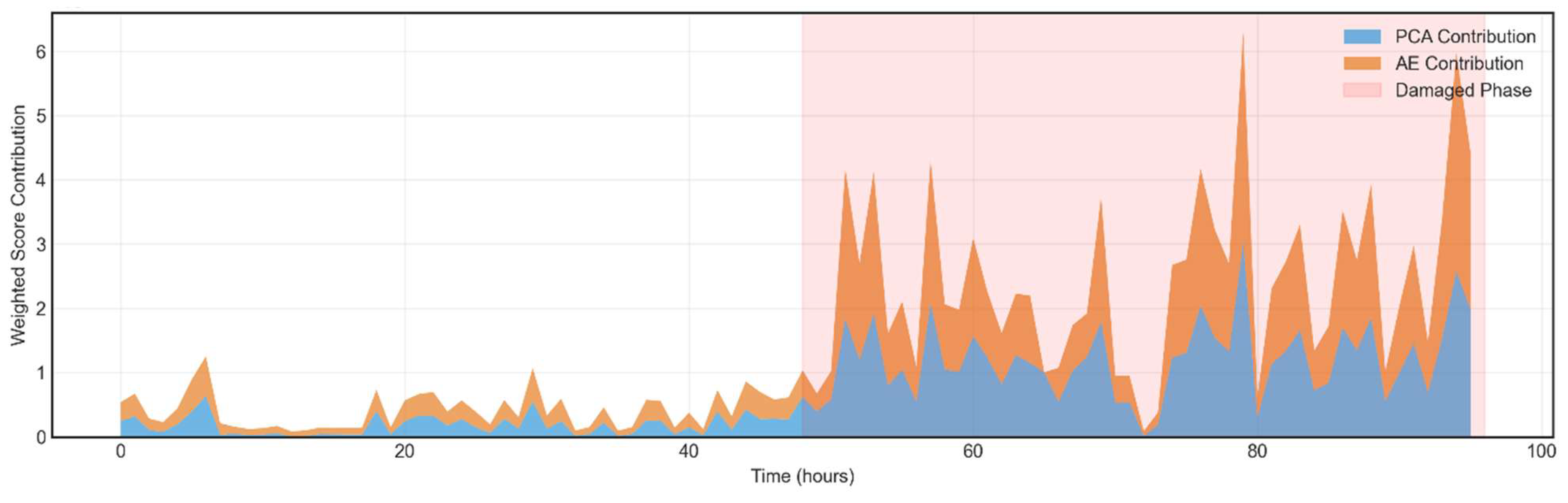
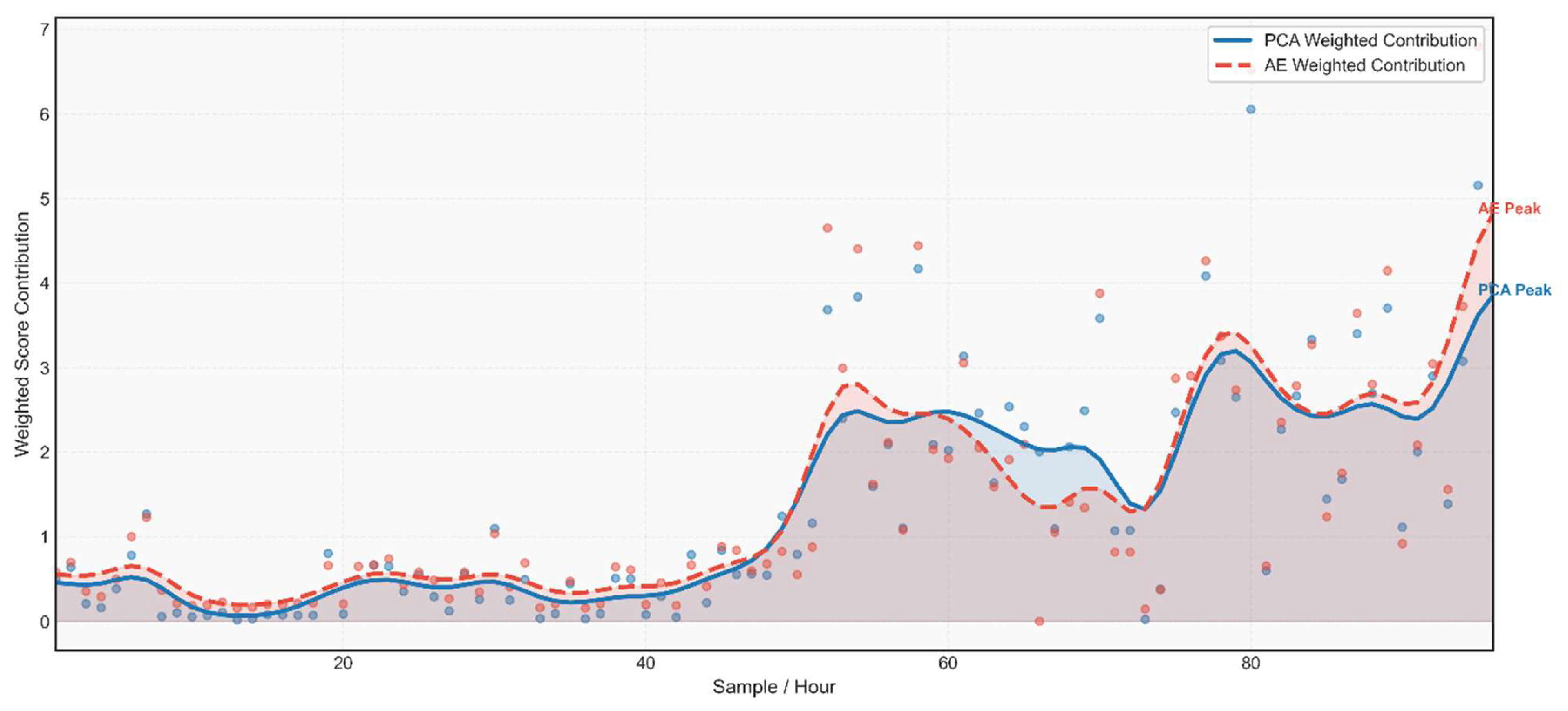
4.2. Weighted Model Contribution Analysis
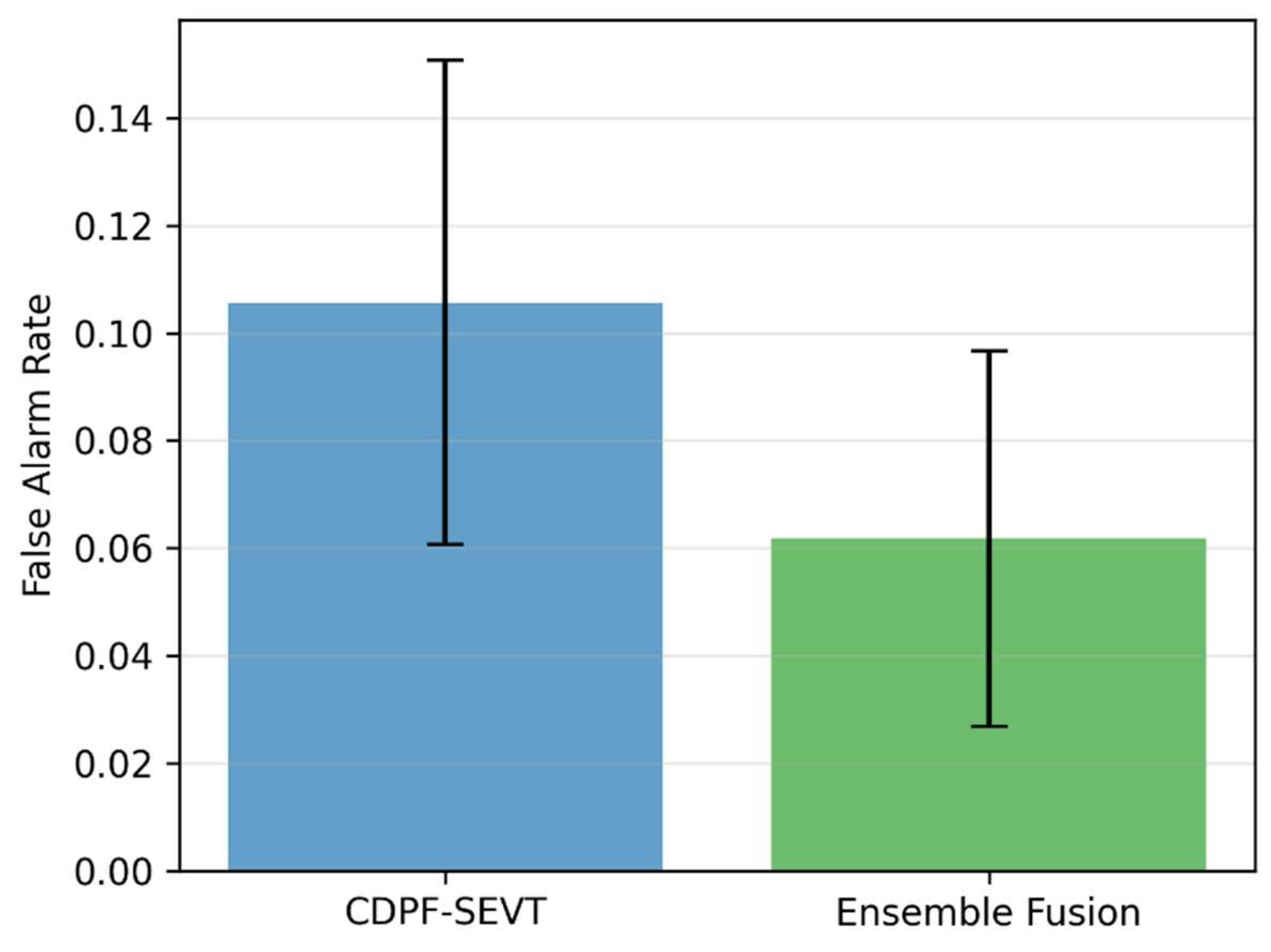
4.3. Environmental and Operational Variability Analysis
5. Conclusions
- The proposed PCA–AE ensemble fusion framework achieved superior detection performance with Precision = 0.95, Recall = 0.88, F1-score = 0.91, and AUC ≈ 0.956, demonstrating improved discrimination between undamaged and damaged structural states.
- Compared with the baseline CDPF–SEVT method (Precision = 0.93, Recall = 0.85, F1-score = 0.89, AUC = 0.94), the ensemble approach improved the F1-score by approximately 2.2% and the AUC by approximately 1.8%, indicating enhanced robustness and classification reliability.
- The adaptive score fusion strategy produced nearly balanced contributions from PCA and AE components (weights ≈ 0.5 each), confirming the complementary role of linear modal variation detection and non-linear response modelling in characterising structural behaviour.
- The EVT-based thresholding scheme enabled statistically principled decision boundaries without assuming score normality, resulting in improved stability of anomaly detection under the environmental and operational variability present in the dataset.
- False-alarm analysis on undamaged data used to analyse and evaluate the effectiveness of the proposed ensemble fusion method under environmental and operational variability demonstrated that the ensemble framework maintained a low and stable FAR of approximately 4%, compared to about 10% for the baseline CDPF–SEVT method, highlighting its improved resistance to spurious detections.
Author Contributions
Funding
Institutional Review Board Statement
Informed Consent Statement
Data Availability Statement
Acknowledgments
Conflicts of Interest
References
- Luo, K.; Kong, X.; Zhang, J.; Hu, J.; Li, J.; Tang, H. Computer Vision-Based Bridge Inspection and Monitoring: A Review. Sensors 2023, 23, 7863. [Google Scholar] [CrossRef]
- Ribeiro, D.; Rakoczy, A.M.; Cabral, R.; Hoskere, V.; Narazaki, Y.; Santos, R.; Tondo, G.; Gonzalez, L.; Matos, J.C.; Massao Futai, M.; et al. Methodologies for Remote Bridge Inspection—Review. Sensors 2025, 25, 5708. [Google Scholar] [CrossRef]
- Minh, T.Q.; Ngo Van, T.; Nguyen, H.X.; Nguyễn, Q. Enhancing the Structural Health Monitoring (SHM) through Data Reconstruction: Integrating 1D Convolutional Neural Networks (1DCNN) with Bidirectional Long Short-Term Memory Networks (Bi-LSTM). Eng. Struct. 2025, 340, 120767. [Google Scholar] [CrossRef]
- Nhung, N.T.C.; Van Vu, L.; Nguyen, H.Q.; Huyen, D.T.; Nguyen, D.B.; Quang, M.T. Development and Application of Linear Variable Differential Transformer (LVDT) Sensors for the Structural Health Monitoring of an Urban Railway Bridge in Vietnam. Eng. Technol. Appl. Sci. Res. 2023, 13, 11622–11627. [Google Scholar] [CrossRef]
- Nhung, N.T.C.; Bui, H.N.; Minh, T.Q. Enhancing Recovery of Structural Health Monitoring Data Using CNN Combined with GRU. Infrastructures 2024, 9, 205. [Google Scholar] [CrossRef]
- Minh, T.Q.; Matos, J.C.; Sousa, H.S.; Ngoc, S.D.; Van, T.N.; Nguyen, H.X.; Nguyễn, Q. Data Reconstruction Leverages One-Dimensional Convolutional Neural Networks (1DCNN) Combined with Long Short-Term Memory (LSTM) Networks for Structural Health Monitoring (SHM). Measurement 2025, 253, 117810. [Google Scholar] [CrossRef]
- Mammeri, S.; Barros, B.; Conde-Carnero, B.; Riveiro, B. From Traditional Damage Detection Methods to Physics-Informed Machine Learning in Bridges: A Review. Eng. Struct. 2025, 330, 119862. [Google Scholar] [CrossRef]
- Bao, N.; Zhang, T.; Huang, R.; Biswal, S.; Su, J.; Wang, Y. A Deep Transfer Learning Network for Structural Condition Identification with Limited Real-World Training Data. Struct. Control. Heal. Monit. 2023, 2023, 1–18. [Google Scholar] [CrossRef]
- Zhang, X.; Li, L.; Ren, X. Unsupervised Local Damage Diagnosis Leveraging Substructure Isolation Technology and Time Series Models. Structures 2025, 77, 109122. [Google Scholar] [CrossRef]
- Yu, L.; Dao, P.B.; Qiu, L.; Uhl, T.; Le, M.-Q. Review of Machine-Learning Techniques Applied to Structural Health Monitoring Systems for Building and Bridge Structures. Appl. Sci. 2022, 12, 10754. [Google Scholar] [CrossRef]
- Ganjdoust, F.; Kefal, A.; Tessler, A. A Novel Delamination Damage Detection Strategy Based on Inverse Finite Element Method for Structural Health Monitoring of Composite Structures. Mech. Syst. Signal Process. 2023, 192, 110202. [Google Scholar] [CrossRef]
- Bao, Y.; Li, H. Machine Learning Paradigm for Structural Health Monitoring. Struct. Health Monit. 2021, 20, 1353–1372. [Google Scholar] [CrossRef]
- Wang, J.; Liu, X.Z.; Ni, Y.Q. A Bayesian Probabilistic Approach for Acoustic Emission-Based Rail Condition Assessment. Comput. Aided Civ. Infrastruct. Eng. 2018, 33, 21–34. [Google Scholar] [CrossRef]
- Ni, Y.Q.; Wang, Y.W.; Zhang, C. A Bayesian Approach for Condition Assessment and Damage Alarm of Bridge Expansion Joints Using Long-Term Structural Health Monitoring Data. Eng. Struct. 2020, 212, 110520. [Google Scholar] [CrossRef]
- Feng, Z.; Zhang, J.; Katafygiotis, L.; Hua, X.; Chen, Z. Bayesian Spectral Decomposition for Efficient Modal Identification Using Ambient Vibration. Struct. Control. Health Monit. 2024, 2024, 5137641. [Google Scholar] [CrossRef]
- Sarmadi, H.; Entezami, A.; Saeedi Razavi, B.; Yuen, K.V. Ensemble Learning-Based Structural Health Monitoring by Mahalanobis Distance Metrics. Struct. Control. Health Monit. 2021, 28, e2663. [Google Scholar] [CrossRef]
- Sarmadi, H.; Entezami, A.; Daneshvar Khorram, M. Energy-Based Damage Localization under Ambient Vibration and Non-Stationary Signals by Ensemble Empirical Mode Decomposition and Mahalanobis-Squared Distance. JVC/J. Vib. Control. 2020, 26, 1012–1027. [Google Scholar] [CrossRef]
- Entezami, A.; Shariatmadar, H.; Mariani, S. Early Damage Assessment in Large-Scale Structures by Innovative Statistical Pattern Recognition Methods Based on Time Series Modeling and Novelty Detection. Adv. Eng. Softw. 2020, 150, 102923. [Google Scholar] [CrossRef]
- Entezami, A.; Shariatmadar, H. Structural Health Monitoring by a New Hybrid Feature Extraction and Dynamic Time Warping Methods under Ambient Vibration and Non-Stationary Signals. Measurement 2019, 134, 548–568. [Google Scholar] [CrossRef]
- Mei, L.; Li, H.; Zhou, Y.; Wang, W.; Xing, F. Substructural Damage Detection in Shear Structures via ARMAX Model and Optimal Subpattern Assignment Distance. Eng. Struct. 2019, 191, 625–639. [Google Scholar] [CrossRef]
- Mujica, L.E.; Vehí, J.; Ruiz, M.; Verleysen, M.; Staszewski, W.; Worden, K. Multivariate Statistics Process Control for Dimensionality Reduction in Structural Assessment. Mech. Syst. Signal Process. 2008, 22, 155–171. [Google Scholar] [CrossRef]
- Entezami, A.; Sarmadi, H.; Behkamal, B.; Mariani, S.; Entezami, C.; Sarmadi, A.; Behkamal, H.; Mariani, B.; Health, S.; Villanueva, G. Health Monitoring of Large-Scale Civil Structures: An Approach Based on Data Partitioning and Classical Multidimensional Scaling. Sensors 2021, 21, 1646. [Google Scholar] [CrossRef] [PubMed]
- Alamdari, M.M.; Rakotoarivelo, T.; Khoa, N.L.D. A Spectral-Based Clustering for Structural Health Monitoring of the Sydney Harbour Bridge. Mech. Syst. Signal Process. 2017, 87, 384–400. [Google Scholar] [CrossRef]
- Sarmadi, H. Investigation of Machine Learning Methods for Structural Safety Assessment under Variability in Data: Comparative Studies and New Approaches. J. Perform. Constr. Facil. 2021, 35, 04021090. [Google Scholar] [CrossRef]
- Masiero, A.; Guarnieri, A.; Baiocchi, V.; Visintini, D.; Pirotti, F. Machine Learning Clustering Techniques to Support Structural Monitoring of the Valgadena Bridge Viaduct (Italy). Remote Sens. 2024, 16, 3971. [Google Scholar] [CrossRef]
- Sarmadi, H.; Entezami, A.; Salar, M.; De Michele, C. Bridge Health Monitoring in Environmental Variability by New Clustering and Threshold Estimation Methods. J. Civ. Struct. Health Monit. 2021, 11, 629–644. [Google Scholar] [CrossRef]
- Baduge, S.K.; Thilakarathna, S.; Perera, J.S.; Arashpour, M.; Sharafi, P.; Teodosio, B.; Shringi, A.; Mendis, P. Artificial Intelligence and Smart Vision for Building and Construction 4.0: Machine and Deep Learning Methods and Applications. Autom. Constr. 2022, 141, 104440. [Google Scholar] [CrossRef]
- Maeda, H.; Sekimoto, Y.; Seto, T.; Kashiyama, T.; Omata, H. Road Damage Detection and Classification Using Deep Neural Networks with Smartphone Images. Comput. Aided Civ. Infrastruct. Eng. 2018, 33, 1127–1141. [Google Scholar] [CrossRef]
- Zhu, Y.; Ni, Y.Q.; Jin, H.; Inaudi, D.; Laory, I. A Temperature-Driven MPCA Method for Structural Anomaly Detection. Eng. Struct. 2019, 190, 447–458. [Google Scholar] [CrossRef]
- Datteo, A.; Lucà, F.; Busca, G. Statistical Pattern Recognition Approach for Long-Time Monitoring of the G.Meazza Stadium by Means of AR Models and PCA. Eng. Struct. 2017, 153, 317–333. [Google Scholar] [CrossRef]
- Chatterton, S.; Alfonso Antonino-Daviu, J.; Yuan, Y.; Zhu, X.; Li, J. Moving-Principal-Component-Analysis-Based Structural Damage Detection for Highway Bridges in Operational Environments. Sensors 2024, 24, 383. [Google Scholar] [CrossRef]
- El-Abbasy, A.A.A. Artificial Intelligence-Driven Predictive Modeling in Civil Engineering: A Comprehensive Review. J. Umm Al-Qura Univ. Eng. Archit. 2025, 16, 1322–1345. [Google Scholar] [CrossRef]
- Malekloo, A.; Ozer, E.; AlHamaydeh, M.; Girolami, M. Machine Learning and Structural Health Monitoring Overview with Emerging Technology and High-Dimensional Data Source Highlights. Struct. Health Monit. 2022, 21, 1906–1955. [Google Scholar] [CrossRef]
- Hassan Daneshvar, M.; Sarmadi, H. Unsupervised Learning-Based Damage Assessment of Full-Scale Civil Structures under Long-Term and Short-Term Monitoring. Eng. Struct. 2022, 256, 114059. [Google Scholar] [CrossRef]
- Ting, D. Adaptive Threshold Sampling and Estimation. Proc. ACM SIGMOD Int. Conf. Manag. Data 2017, 1612–1625. [Google Scholar] [CrossRef]
- Li, Z.; Khailah, E.Y.; Liu, X.; Liang, J. Exploring Purpose-Driven Methods and a Multifaceted Approach in Dam Health Monitoring Data Utilization. Buildings 2025, 15, 2803. [Google Scholar] [CrossRef]
- Plevris, V.; Papazafeiropoulos, G. AI in Structural Health Monitoring for Infrastructure Maintenance and Safety. Infrastructures 2024, 9, 225. [Google Scholar] [CrossRef]
- Liu, Q.; Mu, Y.; Li, X.; Wu, X.; Ren, X. A PCA-Based Approach for Very Early-Age Hydration Monitoring of Self-Compacting Concrete Using Embedded PZT Sensors. Sensors 2023, 23, 3627. [Google Scholar] [CrossRef]
- Finotti, M.; Barbosa, R.; Cury, F.; Structural, A.; Lui, E.M.; Neto, M.S.; Finotti, R.; Barbosa, F.; Cury, A. Structural Damage Identification Using Autoencoders: A Comparative Study. Buildings 2024, 14, 2014. [Google Scholar] [CrossRef]
- Zhang, Y.; Zhang, Y.; Zhou, G.; Zhang, W.; Li, K.; Mu, Q.; He, W.; Tang, K. A New Ensemble Learning Method for Multiple Fusion Weighted Evidential Reasoning Rule. J. Electr. Comput. Eng. 2023, 2023, 8987461. [Google Scholar] [CrossRef]
- Yang, K.; Harley, J.B. An Investigation of the Effect of Measurement Interval on the Autoencoder Based Damage Detection in Uncontrolled Structural Health Monitoring. Struct. Health Monit. 2023, 2023, 851–858. [Google Scholar] [CrossRef]
- Silva, M.F.; Santos, A.; Santos, R.; Figueiredo, E.; Costa, J.C.W.A. Damage-Sensitive Feature Extraction with Stacked Autoencoders for Unsupervised Damage Detection. Struct. Control. Health Monit. 2021, 28, e2714. [Google Scholar] [CrossRef]
- Fernandez-Navamuel, A.; Magalhães, F.; Zamora-Sánchez, D.; Omella, Á.J.; Garcia-Sanchez, D.; Pardo, D. Deep Learning Enhanced Principal Component Analysis for Structural Health Monitoring. Struct. Health Monit. 2022, 21, 1710–1722. [Google Scholar] [CrossRef]
- Di, T.; Magistrale, L.; Lomazzi, L. Variational Autoencoders for Structural Health Monitoring and Generative Design. Master’s Thesis, School of Industrial and Information Engineering, Polytechnic University of Milan, Milan, Italy, 2024. [Google Scholar]
- Hassani, S.; Dackermann, U.; Mousavi, M.; Li, J. A Systematic Review of Data Fusion Techniques for Optimized Structural Health Monitoring. Inf. Fusion 2024, 103, 102136. [Google Scholar] [CrossRef]
- Huang, N. Anomaly Detection in Structural Health Monitoring with Ensemble Learning and Reinforcement Learning. Int. J. Adv. Comput. Sci. Appl. 2024, 15, 121–135. [Google Scholar] [CrossRef]
- Gaurang Shah, S.; Sankararaman, A.; Narayanaswamy, B.; Singh, V. SEAD: Unsupervised Ensemble of Streaming Anomaly Detectors 2025. In Proceedings of the 42nd International Conference on Machine Learning, Vancouver, BC, Canada, 13–19 July 2025. [Google Scholar]
- Siffer, A.; Fouque, P.A.; Termier, A.; Largouet, C. Anomaly Detection in Streams with Extreme Value Theory. In Proceedings of the 23rd ACM SIGKDD International Conference on Knowledge Discovery and Data Mining, Halifax, NS, Canada, 13–17 August 2017; pp. 1067–1075. [Google Scholar] [CrossRef]
- Lee, T.; Jin, S.S.; Kim, S.T.; Min, J. Online Anomaly Detection for Long-Term Structural Health Monitoring of Caisson Quay Walls. Eng. Struct. 2025, 323, 119197. [Google Scholar] [CrossRef]
- Myllyaho, L.; Raatikainen, M.; Männistö, T.; Mikkonen, T.; Nurminen, J.K. Systematic Literature Review of Validation Methods for AI Systems. J. Syst. Softw. 2021, 181, 111050. [Google Scholar] [CrossRef]
- Olawade, D.B.; Wada, O.Z.; Ige, A.O.; Egbewole, B.I.; Olojo, A.; Oladapo, B.I. Artificial Intelligence in Environmental Monitoring: Advancements, Challenges, and Future Directions. Hyg. Environ. Health Adv. 2024, 12, 100114. [Google Scholar] [CrossRef]
- Reynders, E.; De Roeck, G. Continuous Vibration Monitoring and Progressive Damage Testing on the Z 24 Bridge. In Encyclopedia of Structural Health Monitoring; John Wiley & Sons, Inc.: Hoboken, NJ, USA, 2008. [Google Scholar] [CrossRef]
- Peeters, B.; De Roeck, G. One-Year Monitoring of the Z24-Bridge: Environmental Effects versus Damage Events. Earthq. Eng. Amp; Struct. Dyn. 2001, 30, 149–171. [Google Scholar] [CrossRef]
- Orabi, M.; Tran, K.P.; Egger, P.; Thomassey, S. Anomaly Detection in Smart Manufacturing: An Adaptive Adversarial Transformer-Based Model. J. Manuf. Syst. 2024, 77, 591–611. [Google Scholar] [CrossRef]
- Jwo, D.J.; Chang, W.Y.; Wu, I.H. Windowing Techniques, the Welch Method for Improvement of Power Spectrum Estimation. Comput. Mater. Contin. 2021, 67, 3983–4003. [Google Scholar] [CrossRef]
- Sinsomboonthong, S. Performance Comparison of New Adjusted Min-Max with Decimal Scaling and Statistical Column Normalization Methods for Artificial Neural Network Classification. Int. J. Math. Math. Sci. 2022, 2022, 3584406. [Google Scholar] [CrossRef]
- Madakyaru, M.; Kini, K.R. A Novel Anomaly Detection Scheme for High Dimensional Systems Using Kantorovich Distance Statistic. Int. J. Inf. Technol. 2022, 14, 3001–3010. [Google Scholar] [CrossRef]
- Angiulli, F.; Fassetti, F.; Ferragina, L. Reconstruction Error-Based Anomaly Detection with Few Outlying Examples. arXiv 2023, arXiv:2305.10464. [Google Scholar] [CrossRef]
- Hinojosa Lee, M.C.; Braet, J.; Springael, J. Performance Metrics for Multilabel Emotion Classification: Comparing Micro, Macro, and Weighted F1-Scores. Appl. Sci. 2024, 14, 9863. [Google Scholar] [CrossRef]
- Samudra, S.; Barbosh, M.; Sadhu, A. Machine Learning-Assisted Improved Anomaly Detection for Structural Health Monitoring. Sensors 2023, 23, 3365. [Google Scholar] [CrossRef]



| Mode | Success Rate (%) | Eigenfrequency (Hz) | |||||
|---|---|---|---|---|---|---|---|
| Normal Condition (Hz) | Damaged Condition (Hz) | Max. Difference (%) | |||||
| Min | Max | Min | Max | Normal Condition | Damaged Condition | ||
| 1 | 98 | 3.81 | 4.38 | 3.75 | 4.12 | 14 | 9 |
| 2 | 93 | 4.98 | 5.89 | 4.51 | 5.18 | 18 | 14 |
| 3 | 96 | 9.60 | 11.20 | 9.41 | 10.39 | 16 | 10 |
| 4 | 77 | 10.24 | 12.09 | 9.81 | 10.98 | 17 | 12 |
Disclaimer/Publisher’s Note: The statements, opinions and data contained in all publications are solely those of the individual author(s) and contributor(s) and not of MDPI and/or the editor(s). MDPI and/or the editor(s) disclaim responsibility for any injury to people or property resulting from any ideas, methods, instructions or products referred to in the content. |
© 2026 by the authors. Licensee MDPI, Basel, Switzerland. This article is an open access article distributed under the terms and conditions of the Creative Commons Attribution (CC BY) license.
Share and Cite
Nesackon Abraham, J.; Tran, M.Q.; Jayaraj, J.S.; Matos, J.C.; Valluzzi, M.R.; Dang, S.N. Unsupervised Learning-Based Anomaly Detection for Bridge Structural Health Monitoring: Identifying Deviations from Normal Structural Behaviour. Sensors 2026, 26, 561. https://doi.org/10.3390/s26020561
Nesackon Abraham J, Tran MQ, Jayaraj JS, Matos JC, Valluzzi MR, Dang SN. Unsupervised Learning-Based Anomaly Detection for Bridge Structural Health Monitoring: Identifying Deviations from Normal Structural Behaviour. Sensors. 2026; 26(2):561. https://doi.org/10.3390/s26020561
Chicago/Turabian StyleNesackon Abraham, Jabez, Minh Q. Tran, Jerusha Samuel Jayaraj, Jose C. Matos, Maria Rosa Valluzzi, and Son N. Dang. 2026. "Unsupervised Learning-Based Anomaly Detection for Bridge Structural Health Monitoring: Identifying Deviations from Normal Structural Behaviour" Sensors 26, no. 2: 561. https://doi.org/10.3390/s26020561
APA StyleNesackon Abraham, J., Tran, M. Q., Jayaraj, J. S., Matos, J. C., Valluzzi, M. R., & Dang, S. N. (2026). Unsupervised Learning-Based Anomaly Detection for Bridge Structural Health Monitoring: Identifying Deviations from Normal Structural Behaviour. Sensors, 26(2), 561. https://doi.org/10.3390/s26020561