Design and Optimization of Pullulan-Isononanoate Films with Bioactive-Loaded Liposomes for Potential Biomedical Use
 ,
,  , , ,
, , , 
Abstract
1. Introduction
2. Materials and Methods
2.1. Materials
2.2. Modification of Pullulan
2.3. Preparation of Smoke Tree Extract
2.4. Preparation of Liposomes with Smoke Tree Extract and Silibinin and Determination of the Encapsulation Efficiency
2.5. Characterization of the Liposomal Dispersion—Particle Size, Size Distribution, and Zeta Potential
2.6. Nuclear Magnetic Resonance (NMR) Spectroscopy
2.7. Determining the Degree of Esterification (EV) by Potentiometric Titration
2.8. Differential Scanning Calorimetry (DSC) Analysis
2.9. Preparation of Films
2.10. Fourier Transform Infrared Spectroscopy (FTIR) Analysis
2.11. Optical Microscopy
2.12. Water Contact Angle (WCA) Measurements
2.13. Moisture Content (MC), Total Soluble Matter (TSM) Analysis, and Swelling Test
2.14. Analysis of Mechanical Properties
2.15. Determination of Antioxidant Potential of Developed Films
2.15.1. ABTS Assay
2.15.2. DPPH Assay
3. Results and Discussion
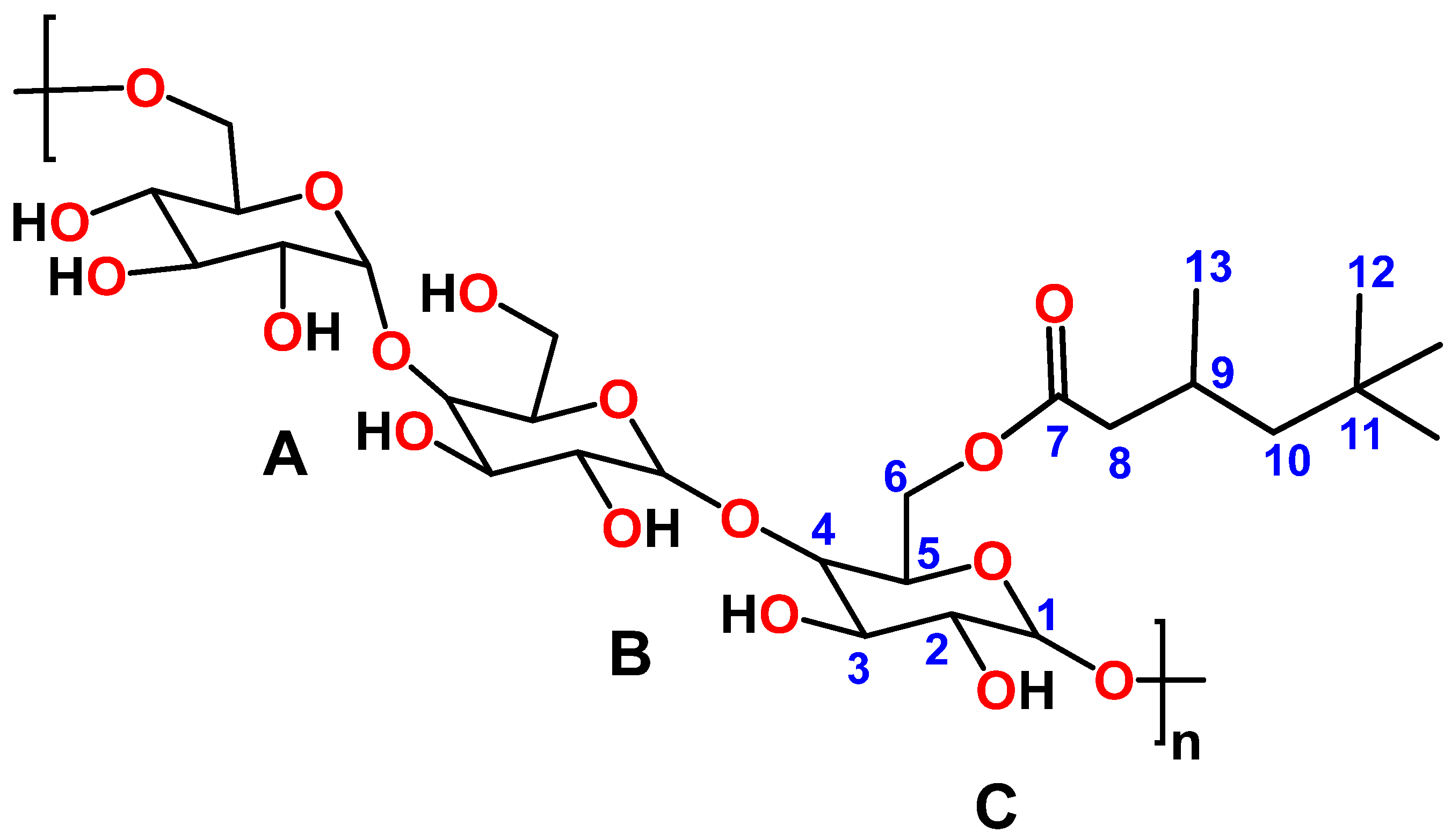
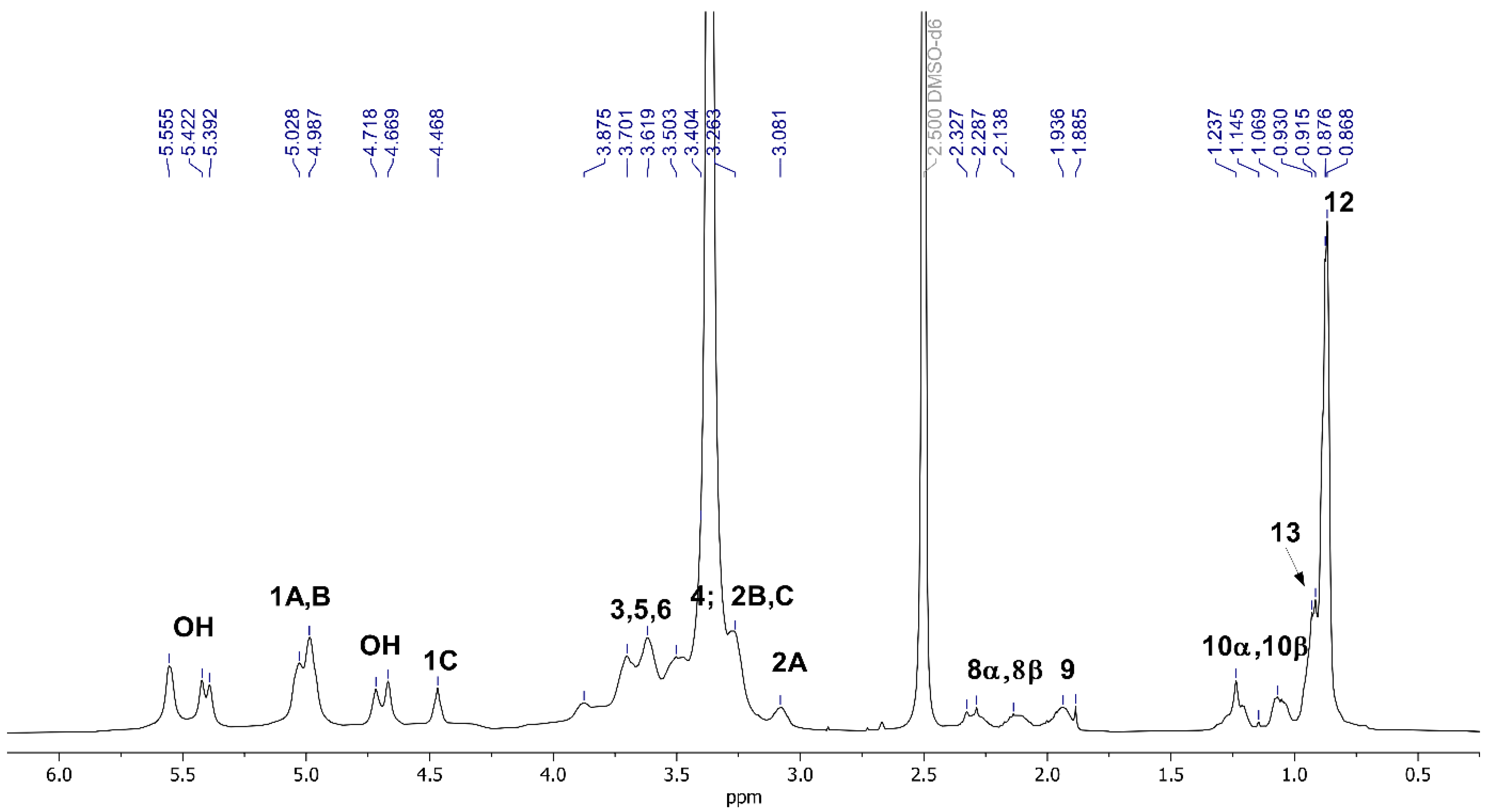
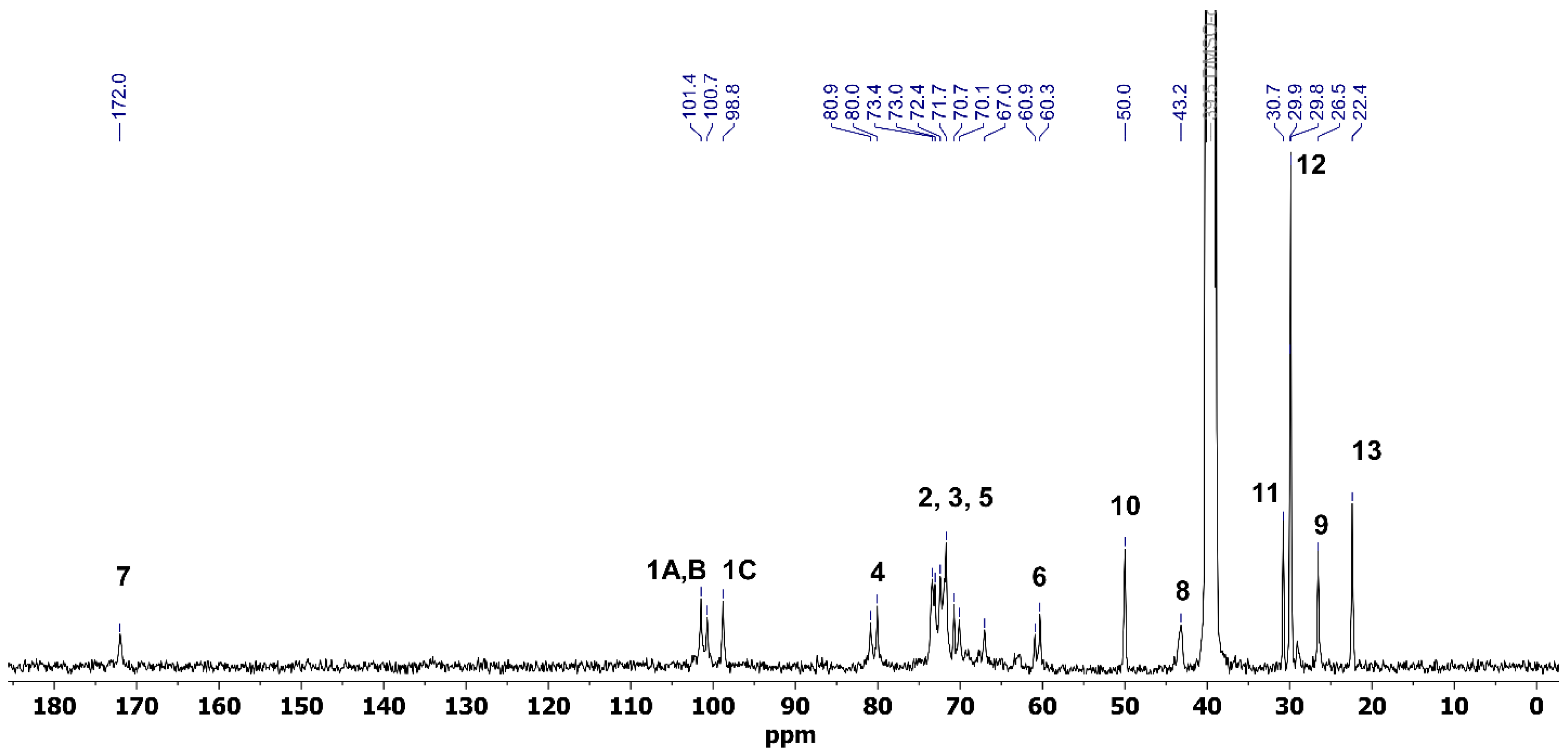
3.1. Results of NMR Spectroscopy Analysis
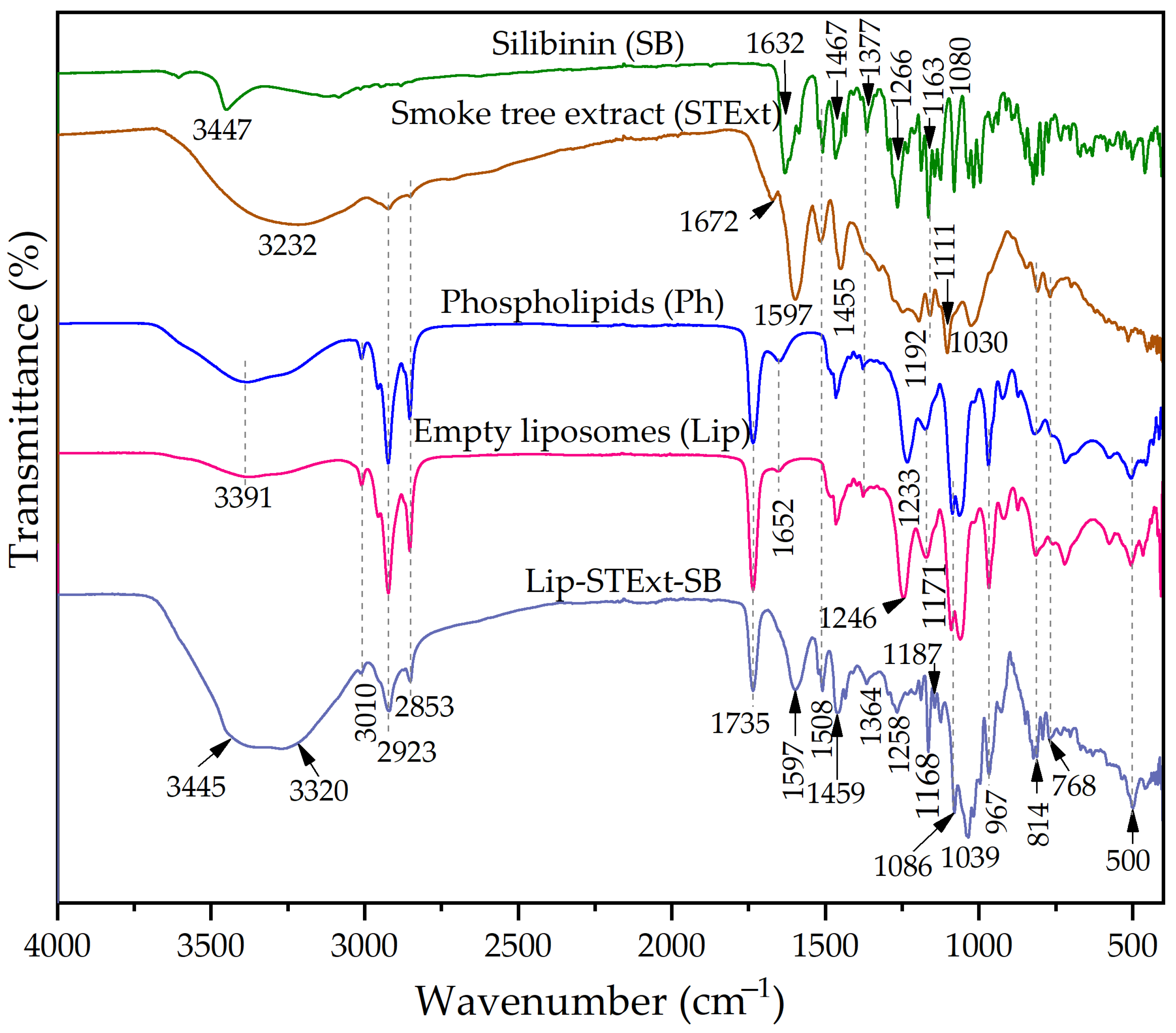
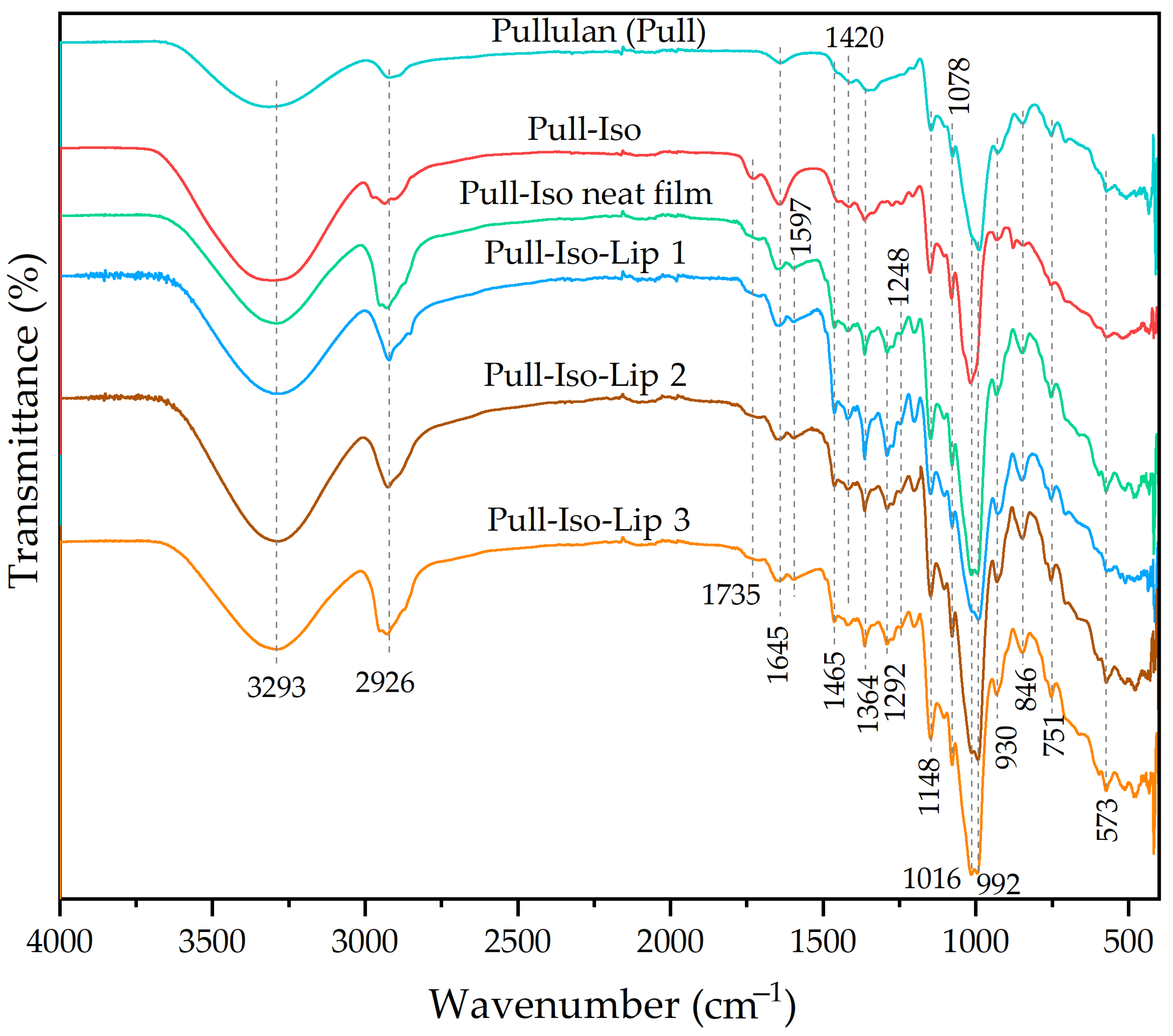
3.2. Results of FTIR Analysis
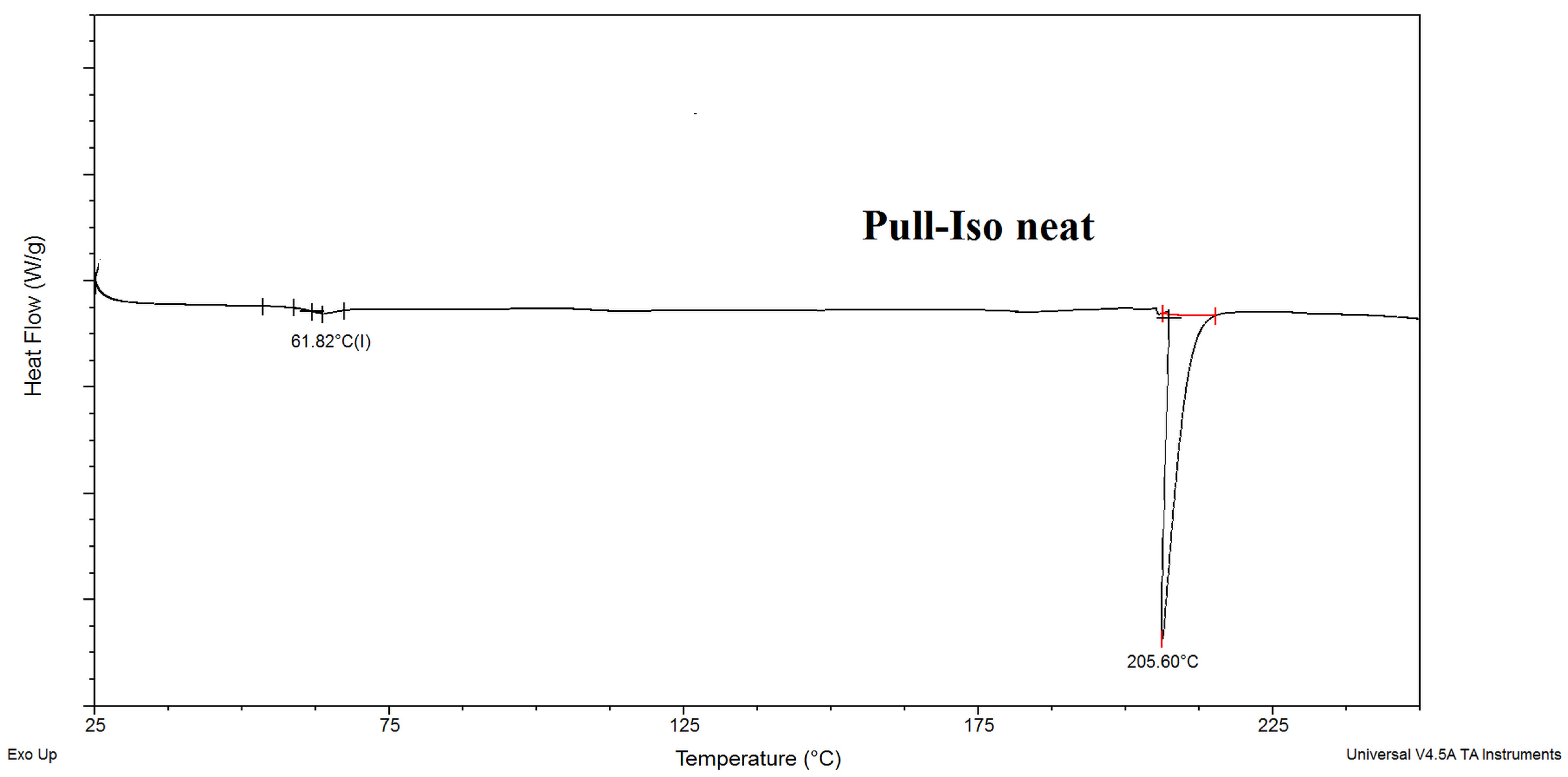
3.3. Results of DSC Analysis of Pull-Iso
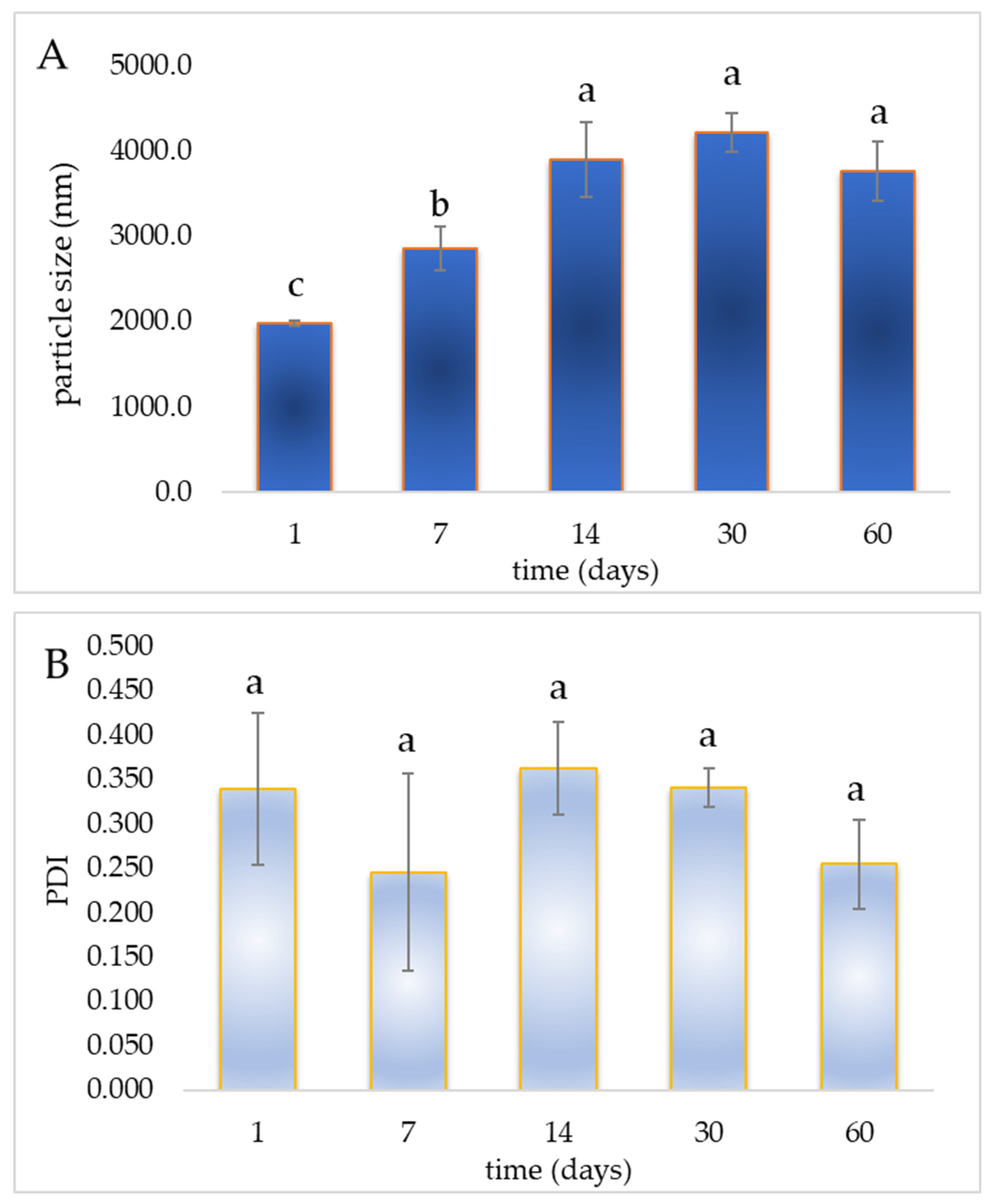
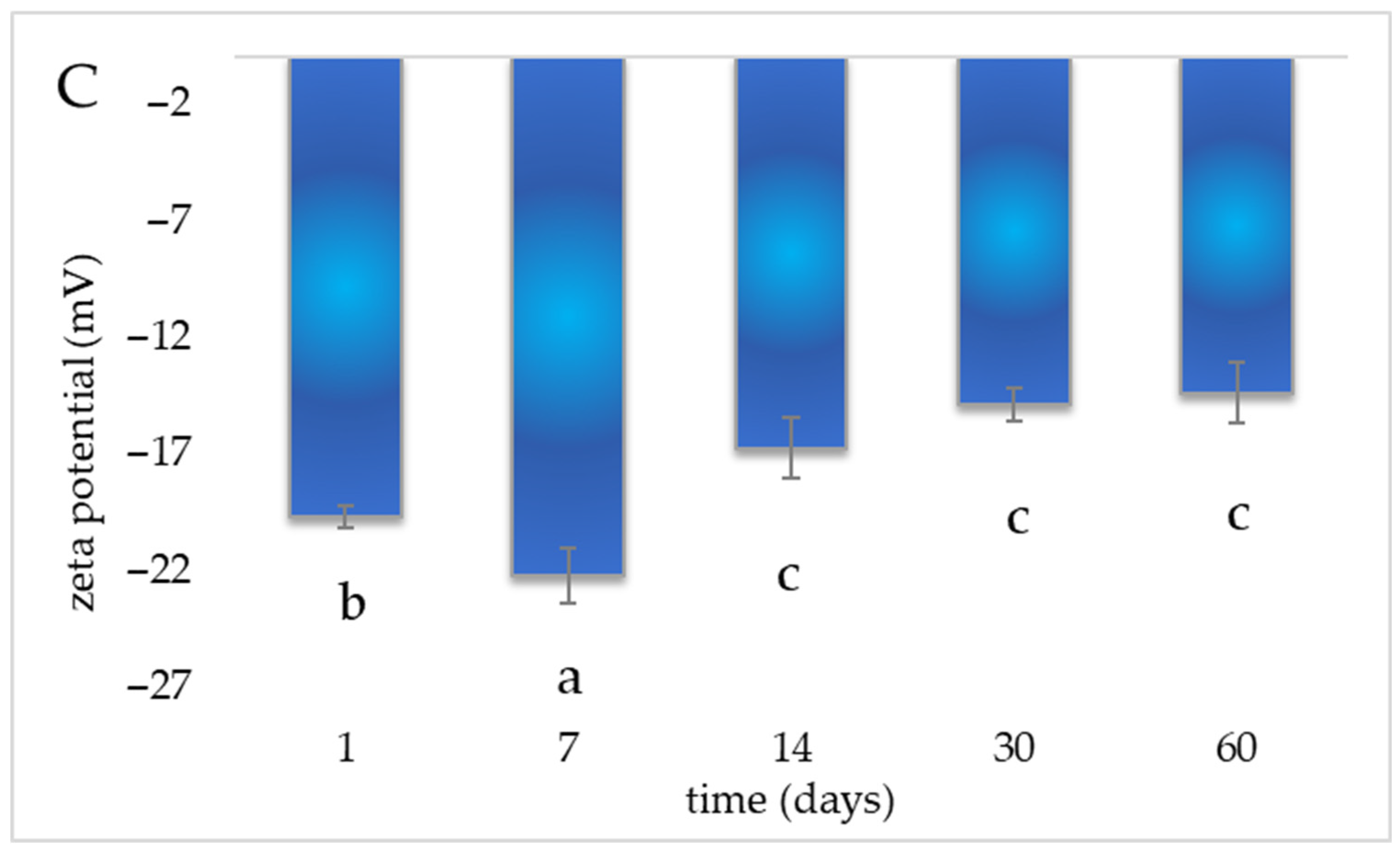
3.4. Results of EE and Particle Size, Size Distribution, and Zeta Potential via Storage Stability Study
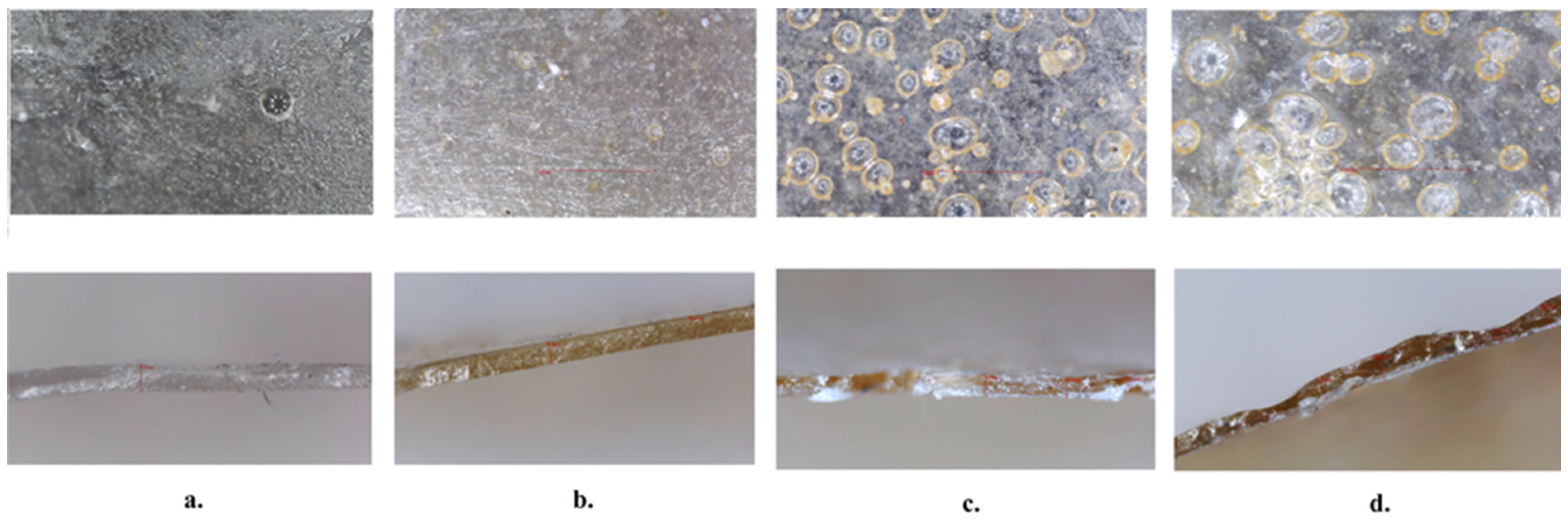
3.5.Results of Optical Microscopy
3.6. Results of Water Contact Angle Measurements
3.7. Results of Moisture Content (MC), Total Soluble Matter (TSM) Analysis, and Swelling Test
3.8. Mechanical Properties and Comparison with Literature
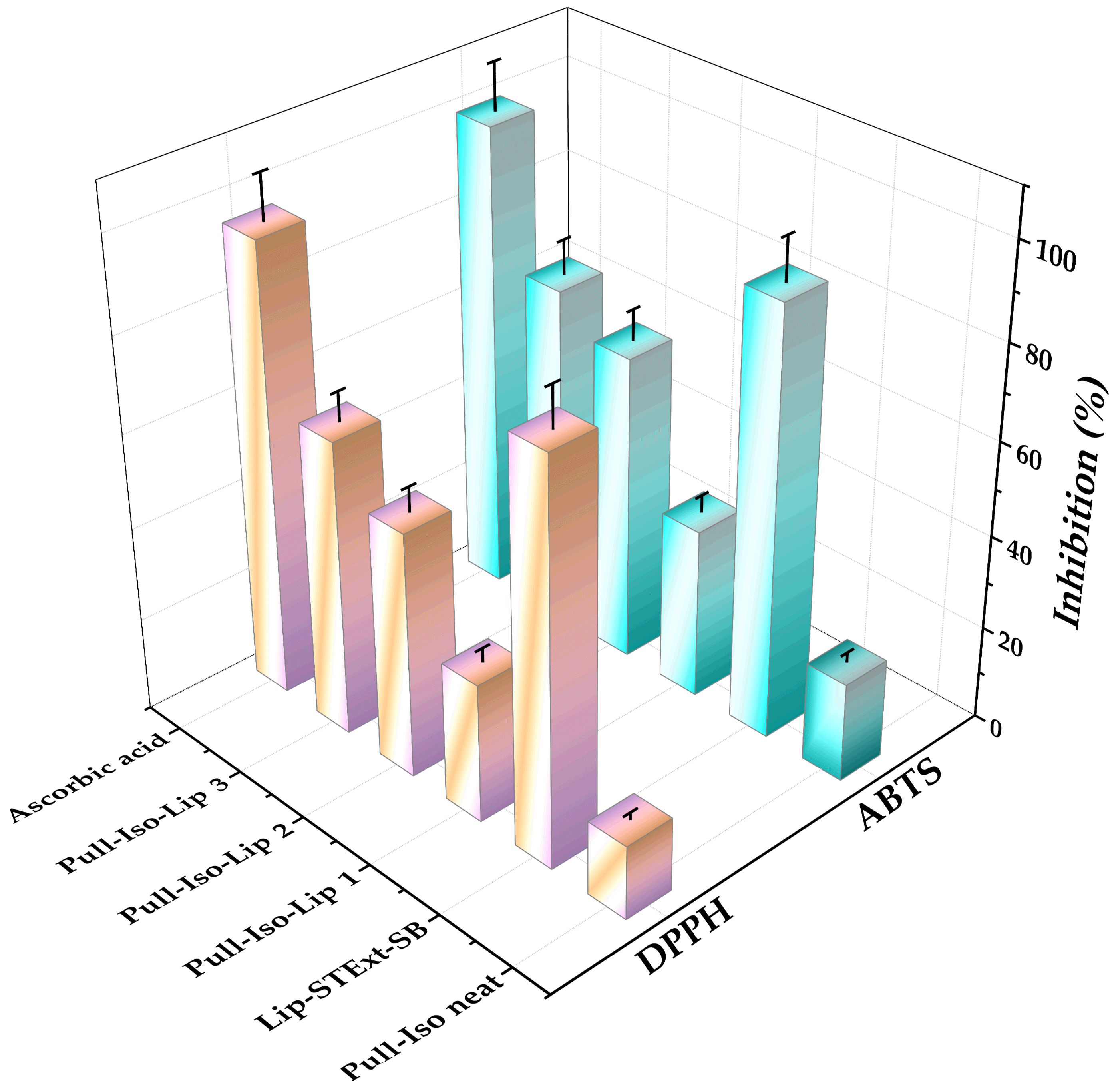
3.9. Results of Antioxidant Capacity
4. Conclusions
Supplementary Materials
Author Contributions
Funding
Institutional Review Board Statement
Data Availability Statement
Conflicts of Interest
Abbreviations
| STExt | Smoke tree extract |
| SB | Silibinin |
| TEMPO | 2,2,6,6-tetramethyl piperidinyloxy |
| PHBHV | Poly(3-hydroxybutyrate-co-3-hydroxyvalerate |
| Pull-Iso | Pullulan isononanoate |
| ABTS | 2,2′-azino-bis (3-ethylbenzothiazoline-6-sulphonic acid |
| DPPH | 2,2-diphenyl-1-picrylhydrazyl |
| DMSO | Dimethyl sulfoxide |
| NMR | Nuclear magnetic resonance |
| FTIR | Fourier-transform infrared spectroscopy |
| DSC | Differential Scanning Calorimetry |
| AV | Acid value |
| SV | Saponification value |
| WCA | Water contact angle |
| MC | Moisture content |
| TSM | Total soluble matter |
| SD | Swelling degree |
| PDI | Polydispersity index |
References
- Su, L.; Jia, Y.; Fu, L.; Guo, K.; Xie, S. The emerging progress on wound dressings and their application in clinic wound management. Heliyon 2023, 9, e22520. [Google Scholar] [CrossRef]
- Zhang, H.; Lin, X.; Cao, X.; Wang, Y.; Wang, J.; Zhao, Y. Developing natural polymers for skin wound healing. Bioact. Mater. 2024, 33, 355–376. [Google Scholar] [CrossRef]
- Rizkita, L.D.; Putri, R.G.P.; Farid, M.; Rizkawati, M.; Wikaningtyas, P. Liposome drug delivery in combating the widespread topical antibiotic resistance: A narrative review. Beni-Suef Univ. J. Basic Appl. Sci. 2024, 13, 90. [Google Scholar] [CrossRef]
- Sun, X.; Ding, H.; Li, X. Disulfiram-loaded nanovesicle hydrogel promotes healing of diabetic wound. J. Transl. Med. 2024, 22, 1066. [Google Scholar] [CrossRef] [PubMed]
- Sengupta, P.; Bose, A.; Sen, K. Liposomal encapsulation of phenolic compounds for augmentation of bio-efficacy: A review. Chem. Select. 2021, 8, 10447–10463. [Google Scholar] [CrossRef]
- Samanta, R.; Pattnaik, A.K.; Pradhan, K.K.; Mehta, B.K.; Pattanayak, S.P.; Banerjee, S. Wound healing activity of silibinin in mice. Pharmacogn. Res. 2016, 8, 298–302. [Google Scholar] [CrossRef]
- Maheshwari, H.; Agarwal, R.; Patil, C.; Katare, O.P. Preparation and pharmacological evaluation of silibinin liposomes. Arzneimittelforschung 2003, 53, 420–427. [Google Scholar] [CrossRef] [PubMed]
- Aksoy, H.; Sen, A.; Sancar, M.; Sekerler, T.; Akakin, D.; Bitis, L.; Uras, F.; Kultur, S.; Izzettin, F.V. Ethanol extract of Cotinus coggygria leaves accelerates the wound healing process in diabetic rats. Pharm. Biol. 2016, 54, 2732–2736. [Google Scholar] [CrossRef] [PubMed]
- Cevc, G. Lipid vesicles and other colloids as drug carriers on the skin. Adv. Drug Deliv. Rev. 2004, 56, 675–711. [Google Scholar] [CrossRef]
- Yoon, G.; Park, W.; Yoo, I.-S. Solid lipid nanoparticles (SLNs) and nanostructured lipid carriers (NLCs): Recent advances in drug delivery. J. Pharm. Investig. 2013, 43, 353–362. [Google Scholar] [CrossRef]
- Puri, A.; Loomis, K.; Smith, B.; Lee, J.H.; Yavlovich, A.; Heldman, E.; Blumenthal, R. Lipid-based nanoparticles as pharmaceutical drug carriers: From concepts to clinic. Crit. Rev. Ther. Drug Carr. Syst. 2009, 26, 523–580. [Google Scholar] [CrossRef]
- Li, X.; Zhao, S.; Chen, L.; Zhou, Q.; Qiu, J.; Xin, X.; Zhang, Y.; Yuan, W.; Tian, C.; Yang, J.; et al. High-level production of pullulan from high concentration of glucose by mutagenesis and adaptive laboratory evolution of Aureobasidium pullulans. Carbohydr. Polym. 2023, 302, 120426. [Google Scholar] [CrossRef]
- Agrawal, S.; Budhwani, D.; Gurjar, P.; Telange, D.; Lambole, V. Pullulan-based derivatives: Synthesis, enhanced physicochemical properties, and applications. Drug Deliv. 2022, 29, 3328–3339. [Google Scholar] [CrossRef]
- Duceac, I.A.; Vereștiuc, L.; Coroaba, A.; Arotăriței, D.; Coseri, S. All-polysaccharide hydrogels for drug delivery applications: Tunable chitosan beads surfaces via physical or chemical interactions using oxidized pullulan. Int. J. Biol. Macromol. 2021, 181, 1047–1062. [Google Scholar] [CrossRef] [PubMed]
- Bruneel, D.; Schacht, E. Chemical modification of pullulan: 1. Periodate oxidation. Polymer 1993, 34, 2628–2632. [Google Scholar] [CrossRef]
- Emam, H.E.; Mohamed, A.L. Controllable release of povidone-iodine from networked pectin-carboxymethyl pullulan hydrogel. Polymers 2021, 13, 3118. [Google Scholar] [CrossRef]
- Li, S.; Yi, J.; Yu, X.; Wang, Z.; Wang, L. Preparation and characterization of pullulan derivative/chitosan composite film for potential antimicrobial applications. Int. J. Biol. Macromol. 2020, 148, 258–264. [Google Scholar] [CrossRef] [PubMed]
- Enomoto-Rogers, Y.; Iio, N.; Takemura, A.; Iwata, T. Synthesis and characterization of pullulan alkyl esters. Eur. Polym. J. 2015, 66, 470–477. [Google Scholar] [CrossRef]
- Carvalho, L.T.; de Moraes, R.M.; Alves, G.M.; Lacerda, T.M.; dos Santos, J.C.; dos Santos, A.M.; Medeiros, S.F. Synthesis of amphiphilic pullulan-graft-poly(ε-caprolactone) via click chemistry. Int. J. Biol. Macromol. 2020, 145, 701–711. [Google Scholar] [CrossRef]
- Jovanović, A.A.; Karkad, A.; Pirković, A.; Dekanski, D.; Lupulović, D.; Novaković, M.; Marinković, A. Stability of Cotinus coggygria Scop. extract-loaded liposomes: The impact of storage on physical and antioxidant properties. Proceedings 2025, 119, 4. [Google Scholar] [CrossRef]
- Isailović, B.D.; Kostić, I.T.; Zvonar, A.; Đorđević, V.B.; Gašperlin, M.; Nedović, V.A.; Bugarski, B.M. Resveratrol-loaded liposomes produced by different techniques. Innov. Food Sci. Emerg. Technol. 2013, 19, 181–189. [Google Scholar] [CrossRef]
- Jovanović, A.A.; Đorđević, V.B.; Zdunić, G.M.; Pljevljakušić, D.S.; Šavikin, K.P.; Godevac, D.M.; Bugarski, B.M. Optimization of the Extraction Process of Polyphenols from Thymus serpyllum L. Herb Using Maceration, Heat- and Ultrasound-Assisted Techniques. Sep. Purif. Technol. 2017, 179, 369–380. [Google Scholar] [CrossRef]
- ASTM D3644-15R22; Standard Test Method for Acid Number of Styrene–Maleic Anhydride Resins. ASTM International: West Conshohocken, PA, USA, 2022. [CrossRef]
- ISO 3657:2023; Animal and Vegetable Fats and Oils—Determination of Saponification Value. 6th ed. International Organization for Standardization (ISO): Geneva, Switzerland, 2023.
- Erceg, T.; Rackov, S.; Terek, P.; Šovljanski, O.; Šuput, D.; Travičić, V.; Hadnađev, M. Synergistic effects of bilayer edible coatings: Protein-based and cocoa butter/linseed oil formulation for enhanced food preservation. Int. J. Biol. Macromol. 2025, 306, 141500. [Google Scholar] [CrossRef] [PubMed]
- Apriliyani, M.W.; Purwadi, A.; Manab, M.W.; Apriliyanti, I.; Ikhwan, A.D. Characteristics of moisture content, swelling, opacity and transparency with addition of chitosan as edible films/coating based on casein. Adv. J. Food Sci. Technol. 2020, 18, 9–14. [Google Scholar] [CrossRef]
- Zuhair, R.A.; Abdullah, A.; Sahilah, A.M.; Dauqan, E. Antioxidant activity and physicochemical properties changes of papaya (Carica papaya L. cv. Hongkong) during different ripening stages. Int. Food Res. J. 2013, 20, 1653–1659. [Google Scholar]
- McIntyre, D.D.; Vogel, H.J. Structural studies of pullulan by nuclear magnetic resonance spectroscopy. Starch/Stärke 1993, 45, 401–405. [Google Scholar] [CrossRef]
- Arnosti, C.; Repeta, D.J. Nuclear magnetic resonance spectroscopy of pullulan and isomaltose: Complete assignment of chemical shifts. Starch/Stärke 1995, 47, 67–71. [Google Scholar] [CrossRef]
- Singh, R.S.; Saini, G.K.; Kennedy, J.F. Pullulan production in stirred tank reactor by a color-variant strain of Aureobasidium pullulans FB-1. Carbohydr. Polym. Technol. Appl. 2021, 2, 100086. [Google Scholar] [CrossRef]
- Hussain, M.A.; Abbas, K.; Lodhi, B.A.; Sher, M.; Ali, M.; Tahir, M.N.; Tremel, W.; Iqbal, S. Fabrication, characterization, thermal stability and nano-assemblies of novel pullulan–aspirin conjugates. Arab. J. Chem. 2017, 10, S1597–S1603. [Google Scholar] [CrossRef]
- Park, J.S.; Park, J.K.; Nam, J.P.; Kim, J.A.; Nah, J.W. Preparation of pullulan-g-poly(L-lysine) and its evaluation as a gene carrier. Macromol. Res. 2012, 20, 667–672. [Google Scholar] [CrossRef]
- Hernandez-Tenorio, F.; Giraldo-Estrada, C. Characterization and chemical modification of pullulan produced from a submerged culture of Aureobasidium pullulans ATCC 15233. Polym. Test. 2022, 114, 107686. [Google Scholar] [CrossRef]
- Simões, A.; Ramos, A.; Domingues, F.; Luís, Â. Pullulan–Tween 40 emulsified films containing geraniol: Production and characterization as potential food packaging materials. Eur. Food Res. Technol. 2024, 250, 1721–1732. [Google Scholar] [CrossRef]
- Farris, S.; Uysal Unalan, I.; Introzzi, L.; Fuentes-Alventosa, J.M.; Cozzolino, C.A. Pullulan-Based Films and Coatings for Food Packaging: Present Applications, Emerging Opportunities, and Future Challenges. J. Appl. Polym. Sci. 2014, 131, 40539. [Google Scholar] [CrossRef]
- Bhattacharjee, S. DLS and zeta potential—What they are and what they are not? J. Control. Release 2016, 235, 337–351. [Google Scholar] [CrossRef]
- Danaei, M.; Dehghankhold, M.; Ataei, S.; Hasanzadeh Davarani, F.; Javanmard, R.; Dokhani, A.; Khorasani, S.; Mozafari, M.R. Impact of Particle Size and Polydispersity Index on the Clinical Applications of Lipidic Nanocarrier Systems. Pharmaceutics 2018, 10, 57. [Google Scholar] [CrossRef]
- Leitgeb, M.; Knez, Ž.; Primožič, M. Sustainable technologies for liposome preparation. J. Supercrit. Fluids 2020, 165, 104984. [Google Scholar] [CrossRef]
- Levin, Y.; Idiart, M.A. Pore dynamics of osmotically stressed vesicles. Physica A 2004, 331, 571–578. [Google Scholar] [CrossRef]
- Grit, M.; Crommelin, D.J.A. The effect of aging on the physical stability of liposome dispersions. Chem. Phys. Lipids 1993, 62, 113–122. [Google Scholar] [CrossRef]
- Leirer, C.T.; Wunderlich, B.; Wixforth, A.; Schneider, M.F. Thermodynamic relaxation drives expulsion in giant unilamellar vesicles. Phys. Biol. 2009, 6, 016011. [Google Scholar] [CrossRef]
- Alshaer, W.; Nsairat, H.; Lafi, Z.; Hourani, O.M.; Al-Kadash, A.; Esawi, E.; Alkilany, A.M. Quality by design approach in liposomal formulations: Robust product development. Molecules 2023, 28, 10. [Google Scholar] [CrossRef]
- Elsayed, M.M.A.; Abdallah, O.Y.; Naggar, V.F.; Khalafallah, N.M. Lipid vesicles for skin delivery of drugs: Reviewing three decades of research. Int. J. Pharm. 2007, 332, 1–16. [Google Scholar] [CrossRef]
- Honeywell-Nguyen, P.L.; Bouwstra, J.A. Vesicles as a tool for transdermal and dermal delivery. Drug Discov. Today Technol. 2005, 2, 67–74. [Google Scholar] [CrossRef]
- Karkad, A.A.; Pirković, A.; Milošević, M.; Stojadinović, B.; Šavikin, K.; Marinković, A.; Jovanović, A.A. Silibinin-Loaded Liposomes: The Influence of Modifications on Physicochemical Characteristics, Stability, and Bioactivity Associated with Dermal Application. Pharmaceutics 2024, 16, 1476. [Google Scholar] [CrossRef]
- Yang, K.; Tran, K.; Salvati, A. Tuning liposome stability in biological environments and intracellular drug release kinetics. Biomolecules 2023, 13, 59. [Google Scholar] [CrossRef]
- Honary, S.; Zahir, F. Effect of zeta potential on the properties of nano-drug delivery systems—A review (Part 1). Trop. J. Pharm. Res. 2013, 12, 255–264. [Google Scholar] [CrossRef]
- Niu, B.; Shao, P.; Chen, H.; Sun, P. Structural and physicochemical characterization of novel hydrophobic packaging films based on pullulan derivatives for fruits preservation. Carbohydr. Polym. 2019, 208, 276–284. [Google Scholar] [CrossRef]
- Ginn, M.E.; Noyes, C.M.; Jungermann, E. The contact angle of water on viable human skin. J. Colloid Interface Sci. 1968, 26, 146–151. [Google Scholar] [CrossRef] [PubMed]
- Ding, Z.; Chang, X.; Fu, X.; Kong, H.; Yu, Y.; Xu, H.; Shan, Y.; Ding, S. Fabrication and characterization of pullulan-based composite films incorporated with bacterial cellulose and ferulic acid. Int. J. Biol. Macromol. 2022, 219, 121–137. [Google Scholar] [CrossRef]
- Zahedi, Y.; Ghanbarzadeh, B.; Sedaghat, N. Physical properties of edible emulsified films based on pistachio globulin protein and fatty acids. J. Food Eng. 2010, 100, 102–108. [Google Scholar] [CrossRef]
- Wang, L.; Li, J.; Zhang, S.; Shi, J. Preparation and characterization of all-biomass soy protein isolate-based films enhanced by epoxy castor oil acid sodium and hydroxypropyl cellulose. Materials 2016, 9, 193. [Google Scholar] [CrossRef]
- Horinaka, J.; Hashimoto, Y.; Takigawa, T. Optical and Mechanical Properties of Pullulan Films Studied by Uniaxial Stretching. Int. J. Biol. Macromol. 2018, 118, 584–587. [Google Scholar] [CrossRef]
- Radan, M.; Ćujić Nikolić, N.; Kuzmanović Nedeljković, S.; Mutavski, Z.; Krgović, N.; Stević, T.; Marković, S.; Jovanović, A.; Živković, J.; Šavikin, K. Multifunctional pomegranate peel microparticles with health-promoting effects for the sustainable development of novel nutraceuticals and pharmaceuticals. Plants 2024, 13, 281. [Google Scholar] [CrossRef]
- Marčetić, M.; Božić, D.; Milenković, M.; Malešević, N.; Radulović, S.; Kovačević, N. Antimicrobial, antioxidant and anti-inflammatory activity of young shoots of the smoke tree, Cotinus coggygria Scop. Phytother. Res. 2012, 26, 1243–1252. [Google Scholar] [CrossRef]
- Hoang, T.X.; Dang, N.M.; Bae, K.G.; Kim, J.Y. Anti-inflammatory and antioxidant effects of topical formulations containing plant extracts, methylsulfonylmethane, and Peptiskin® in in vitro models of arthritis. Pharmaceuticals 2025, 18, 1270. [Google Scholar] [CrossRef] [PubMed]
- Zare Mehrjerdi, P.; Asadi, S.; Ehsani, E.; Askari, V.R.; Baradaran Rahimi, V. Silibinin as a major component of milk thistle seed provides promising influences against diabetes and its complications: A systematic review. Naunyn-Schmiedebergs Arch. Pharmacol. 2024, 397, 7531–7549. [Google Scholar] [CrossRef] [PubMed]
- Pašić, I.; Novaković, M.; Tešević, V.; Milosavljević, S.; Petrović, N.; Stanojković, T.; Matić, I.Z. Exploring the anticancer potential of extracts and compounds from the heartwood of Cotinus coggygria Scop. wild growing in Serbia. BMC Complement. Med. Ther. 2025, 25, 36. [Google Scholar] [CrossRef] [PubMed]
- Shahidi, F.; Samarasinghe, A. How to assess antioxidant activity? Advances, limitations, and applications of in vitro, in vivo, and ex vivo approaches. Food Prod. Process Nutr. 2025, 7, 50. [Google Scholar] [CrossRef]




| Sample | MC (%) | TSM (%) | SR (%) |
|---|---|---|---|
| Pull | 12.4 ± 1.2 | 95.4 ± 1.1 | total soluble |
| Pull-Iso | 7.5 ±1.4 | 58.4 ±1.9 | 62.1 ± 1.7 |
| Pull-Iso-Lip 1 | 8.3 ± 1.7 | 55.7 ± 2.1 | 58.2 ± 2.2 |
| Pull-Iso-Lip 2 | 10.2 ± 1.6 | 52.8 ± 1.8 | 45.8 ± 2.0 |
| Pull-Iso-Lip 3 | 10.3 ± 1.8 | 51.9 ± 1.6 | 72.8 ± 1.4 |
| Sample | Break Stress (MPa) | Break Strain (%) |
|---|---|---|
| Pull | 22.75 ± 1.2 | 3.68 ± 1.1 |
| Pull-Iso | 20.97 ± 1.1 | 10.97 ± 0.9 |
| Pull-Iso-Lip 1 | 10.85 ± 2.4 | 2.46 ± 2.1 |
| Pull-Iso-Lip 2 | 8.79 ± 2.7 | 2.39 ± 2.5 |
| Pull-Iso-Lip 3 | 5.26 ± 2.4 | 1.73 ± 2.7 |
Disclaimer/Publisher’s Note: The statements, opinions and data contained in all publications are solely those of the individual author(s) and contributor(s) and not of MDPI and/or the editor(s). MDPI and/or the editor(s) disclaim responsibility for any injury to people or property resulting from any ideas, methods, instructions or products referred to in the content. |
© 2026 by the authors. Licensee MDPI, Basel, Switzerland. This article is an open access article distributed under the terms and conditions of the Creative Commons Attribution (CC BY) license.
Share and Cite
Karkad, A.A.; Marinković, A.; Jovanović, A.; Simić, K.; Ivanović, S.; Milošević, M.; Erceg, T. Design and Optimization of Pullulan-Isononanoate Films with Bioactive-Loaded Liposomes for Potential Biomedical Use. Polymers 2026, 18, 305. https://doi.org/10.3390/polym18020305
Karkad AA, Marinković A, Jovanović A, Simić K, Ivanović S, Milošević M, Erceg T. Design and Optimization of Pullulan-Isononanoate Films with Bioactive-Loaded Liposomes for Potential Biomedical Use. Polymers. 2026; 18(2):305. https://doi.org/10.3390/polym18020305
Chicago/Turabian StyleKarkad, Amjed A., Aleksandar Marinković, Aleksandra Jovanović, Katarina Simić, Stefan Ivanović, Milena Milošević, and Tamara Erceg. 2026. "Design and Optimization of Pullulan-Isononanoate Films with Bioactive-Loaded Liposomes for Potential Biomedical Use" Polymers 18, no. 2: 305. https://doi.org/10.3390/polym18020305
APA StyleKarkad, A. A., Marinković, A., Jovanović, A., Simić, K., Ivanović, S., Milošević, M., & Erceg, T. (2026). Design and Optimization of Pullulan-Isononanoate Films with Bioactive-Loaded Liposomes for Potential Biomedical Use. Polymers, 18(2), 305. https://doi.org/10.3390/polym18020305