
Structured Medication Review and Shared Decision-Making in Patients with Mild Intellectual Disabilities Who Use Psychotropic Medication

Abstract
1. Introduction
2. Materials and Methods
2.1. Study Design and Setting
- (1)
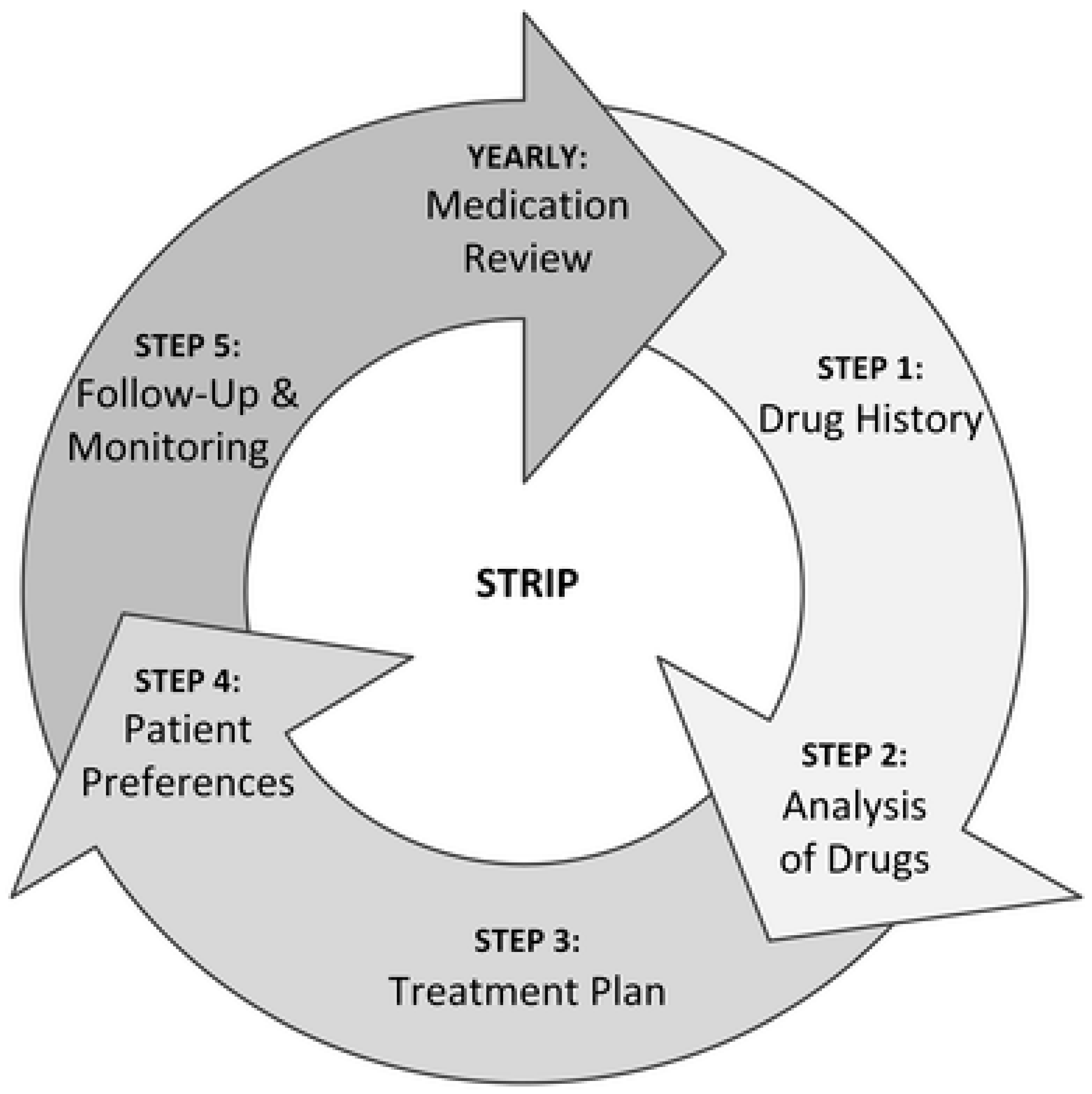
- A medication consultation by a nurse (setting 1) or pharmacist (setting 2), including the pharmacotherapeutic anamnesis, the assessment of side effects, and the provision and discussion of accessible medication leaflets on the type of psychotropic medication that the participant was using;
- (2)
- A medication review, including a pharmacotherapeutic analysis using an assessment form (see Section 2.4 for explanation) and the drawing up of a pharmacotherapeutic treatment plan by the pharmacist and doctor (setting 1) or the pharmacist alone (setting 2), which was subsequently discussed with the participant and/or participants’ relatives by the doctor (setting 1) or pharmacist (setting 2);
- (3)
- A follow-up after six months.
2.2. Participants
2.3. Ethical Issues
2.4. Materials
2.5. Data Collection
2.6. Statistical Analyses
3. Results
3.1. Participant Characteristics
3.2. Psychotropic Medication Use and Review
3.3. Shared Decision-Making Comparisons Between Participants’ Ratings and Clinicians’ Ratings by Setting
3.4. Comparisons Between Settings
4. Discussion
5. Conclusions
Author Contributions
Funding
Institutional Review Board Statement
Informed Consent Statement
Data Availability Statement
Acknowledgments
Conflicts of Interest
References
- Cooper, S.A.; McLean, G.; Guthrie, B.; McConnachie, A.; Mercer, S.; Sullivan, F.; Morrison, J. Multiple physical and mental health comorbidity in adults with intellectual disabilities: Population-based cross-sectional analysis. BMC Fam. Pract. 2015, 16, 110. [Google Scholar] [CrossRef] [PubMed]
- O’Dwyer, M.; McCallion, P.; McCarron, M.; Henman, M. Medication use and potentially inappropriate prescribing in older adults with intellectual disabilities: A neglected area of research. Ther. Adv. Drug Saf. 2018, 9, 535–557. [Google Scholar] [CrossRef] [PubMed]
- Lim, A.G.; Garriock, J.; Moody, I.; Frischtak, H.; Montayre, J.; Arroll, B. Potentially inappropriate medicines for older adults with intellectual disability: Clinical implications from a medication audit. Australas. J. Ageing 2021, 40, e207–e214. [Google Scholar] [CrossRef]
- Doan, T.N.; Lennox, N.G.; Taylor-Gomez, M.; Ware, R.S. Medication use among Australian adults with intellectual disability in primary healthcare settings: A cross-sectional study. J. Intellect. Dev. Disabil. 2013, 38, 177–181. [Google Scholar] [CrossRef]
- Doan, T.N.; Ware, R.S.; McPherson, L.; van Dooren, K.; Bain, C.; Carrington, S.; Einfeld, S.; Tonge, B.; Lennox, N. Psychotropic medication use in adolescents with intellectual disability living in the community. Pharmacoepidemiol. Drug Saf. 2014, 23, 69–76. [Google Scholar] [CrossRef]
- Axmon, A.; Sandberg, M.; Ahlström, G.; Midlöv, P. Prescription of potentially inappropriate medications among older people with intellectual disability: A register study. BMC Pharmacol. Toxicol. 2017, 18, 68. [Google Scholar] [CrossRef]
- Song, M.; Ware, R.S.; Doan, T.N.; McPherson, L.; Trollor, J.N.; Harley, D. Appropriateness of psychotropic medication use in a cohort of adolescents with intellectual disability in Queensland, Australia. BJPsych Open 2020, 6, e142. [Google Scholar] [CrossRef]
- McConkey, R.; Samadi, S.A.; Mahmoodizadeh, A.; Taggart, L. The Use of Psychotropic Medication in Iranian Children with Developmental Disabilities. Int. J. Environ. Res. Public Health 2021, 18, 4120. [Google Scholar] [CrossRef]
- O’Dwyer, C.; McCallion, P.; Henman, M.; McCarron, M.; O’Leary, E.; Burke, E.; O’Connell, J.; O’Dwyer, M. Prevalence and patterns of antipsychotic use and their associations with mental health and problem behaviours among older adults with intellectual disabilities. J. Appl. Res. Intellect. Disabil. 2019, 32, 981–993. [Google Scholar] [CrossRef] [PubMed]
- Granas, A.G.; Halvorsen, K.H.; Wendelbo, J.; Johannessen Landmark, C. Interdisciplinary medication review to improve pharmacotherapy for patients with intellectual disabilities. Int. J. Clin. Pharm. 2019, 41, 1516–1525. [Google Scholar] [CrossRef]
- National Collaborating Centre for Mental Health (UK). Challenging Behaviour and Learning Disabilities: Prevention and Interventions for People with Learning Disabilities Whose Behaviour Challenges; NICE guideline NG11; National Institute for Health and Care Excellence (NICE): London, UK, 2015; Available online: https://www.nice.org.uk/guidance/ng11/resources/challenging-behaviour-and-learning-disabilities-prevention-and-interventions-for-people-with-learning-disabilities-whose-behaviour-challenges-pdf-83203095013 (accessed on 29 October 2025).
- de Kuijper, G.M.; Hoekstra, P.J. Physicians’ reasons not to discontinue long-term used off-label antipsychotic drugs in people with intellectual disability. J. Intellect. Disabil. Res. 2017, 61, 899–908. [Google Scholar] [CrossRef]
- Smith, E.; Stogios, N.; Au, E.; Maksyutynska, K.; De, R.; Ji, A.; Erlang Sørensen, M.; St John, L.; Lin, H.Y.; Desarkar, P.; et al. The metabolic adverse effects of antipsychotic use in individuals with intellectual and/or developmental disability: A systematic review and meta-analysis. Acta Psychiatr. Scand. 2022, 146, 201–214. [Google Scholar] [CrossRef]
- Zhou, M.; Du, W.; Salvador-Carulla, L.; Glasgow, N. Adverse drug event-related hospitalisation in persons with neurodevelopmental disorders: A state-wide retrospective cohort study. J. Intellect. Disabil. Res. 2019, 63, 429–440. [Google Scholar] [CrossRef] [PubMed]
- Sheehan, R.; Horsfall, L.; Strydom, A.; Osborn, D.; Walters, K.; Hassiotis, A. Movement side effects of antipsychotic drugs in adults with and without intellectual disability: UK population-based cohort study. BMJ Open 2017, 7, e017406. [Google Scholar] [CrossRef]
- Scheifes, A.; Walraven, S.; Stolker, J.J.; Nijman, H.L.; Tenback, D.E.; Egberts, T.C.; Heerdink, E.R. Movement Disorders in Adults with Intellectual Disability and Behavioral Problems Associated with Use of Antipsychotics. J. Clin. Psychopharmacol. 2016, 36, 308–313. [Google Scholar] [CrossRef]
- de Kuijper, G.; Mulder, H.; Evenhuis, H.; Scholte, F.; Visser, F.; Hoekstra, P.J. Determinants of physical health parameters in individuals with intellectual disability who use long-term antipsychotics. Res. Dev. Disabil. 2013, 34, 2799–2809. [Google Scholar] [CrossRef] [PubMed]
- Scheifes, A.; Walraven, S.; Stolker, J.J.; Nijman, H.L.; Egberts, T.C.; Heerdink, E.R. Adverse events and the relation with quality of life in adults with intellectual disability and challenging behaviour using psychotropic drugs. Res. Dev. Disabil. 2016, 49–50, 13–21. [Google Scholar] [CrossRef] [PubMed]
- Paton, C.; Flynn, A.; Shingleton-Smith, A.; McIntyre, S.; Bhaumik, S.; Rasmussen, J.; Hardy, S.; Barnes, T. Nature and quality of antipsychotic prescribing practice in UK psychiatry of intellectual disability services. J. Intellect. Disabil. Res. 2011, 55, 665–674. [Google Scholar] [CrossRef]
- Teeluckdharry, S.; Sharma, S.; O’Rourke, E.; Tharian, P.; Gondalekar, A.; Nainar, F.; Roy, M. Monitoring metabolic side effects of atypical antipsychotics in people with an intellectual disability. J. Intellect. Disabil. 2013, 17, 223–235. [Google Scholar] [CrossRef]
- Ruiz, L.M.; Damron, M.; Jones, K.B.; Weedon, D.; Carbone, P.S.; Bakian, A.V.; Bilder, D.A. Antipsychotic Use and Metabolic Monitoring in Individuals with Developmental Disabilities Served in a Medicaid Medical Home. J. Autism Dev. Disord. 2016, 46, 1887–1894. [Google Scholar] [CrossRef]
- Javaheri, K.R.; McLennan, J.D. Adherence to Antipsychotic Adverse Effect Monitoring Among a Referred Sample of Children with Intellectual Disabilities. J. Child Adolesc. Psychopharmacol. 2019, 29, 235–240. [Google Scholar] [CrossRef]
- Ramerman, L.; de Kuijper, G.; Hoekstra, P.J. Adherence of clinicians to guidelines for the prescription of antipsychotic drugs to people with intellectual disabilities. Adv. Ment. Health Intellect. Disabil. 2017, 11, 110–125. [Google Scholar] [CrossRef]
- Shankar, R.; Wilcock, M. Improving knowledge of psychotropic prescribing in people with Intellectual Disability in primary care. PLoS ONE 2018, 13, e0204178. [Google Scholar] [CrossRef]
- Pouls, K.P.; Koks-Leensen, M.C.; Mastebroek, M.; Leusink, G.L.; Assendelft, W.J. Adults with intellectual disabilities and mental health disorders in primary care: A scoping review. Br. J. Gen. Pract. 2022, 72, e168–e178. [Google Scholar] [CrossRef] [PubMed]
- Sheehan, R.; Strydom, A.; Brown, E.; Marston, L.; Hassiotis, A. Association of Focused Medication Review with Optimization of Psychotropic Drug Prescribing: A Systematic Review and Meta-analysis. JAMA Netw. Open 2018, 1, e183750. [Google Scholar] [CrossRef]
- Sheehan, R.; Strydom, A.; Marston, L.; Morant, N.; Fiori, F.; Santosh, P.; Hassiotis, A. A structured medication review tool to promote psychotropic medication optimisation for adults with intellectual disability: Feasibility study. BMJ Open 2019, 9, e033827. [Google Scholar] [CrossRef] [PubMed]
- Hill-Taylor, B.; Walsh, K.A.; Stewart, S.; Hayden, J.; Byrne, S.; Sketris, I.S. Effectiveness of the STOPP/START (Screening Tool of Older Persons’ potentially inappropriate Prescriptions/Screening Tool to Alert doctors to the Right Treatment) criteria: Systematic review and meta-analysis of randomized controlled studies. J. Clin. Pharm. Ther. 2016, 41, 158–169. [Google Scholar] [CrossRef] [PubMed]
- Riordan, D.O.; Walsh, K.A.; Galvin, R.; Sinnott, C.; Kearney, P.M.; Byrne, S. The effect of pharmacist-led interventions in optimising prescribing in older adults in primary care: A systematic review. SAGE Open Med. 2016, 4, 2050312116652568. [Google Scholar] [CrossRef]
- Jokanovic, N.; Tan, E.C.; Sudhakaran, S.; Kirkpatrick, C.M.; Dooley, M.J.; Ryan-Atwood, T.E.; Bell, J.S. Pharmacist-led medication review in community settings: An overview of systematic reviews. Res. Soc. Adm. Pharm. 2017, 13, 661–685. [Google Scholar] [CrossRef]
- Younan, B.; Jorgensen, M.; Holt, G.; Cuskelly, M.; Angley, M.; Wallace, R.; Breen, J.; Gillies, D. Interventions to Reduce Inappropriate Prescribing and Administration of Psychotropic Medications for People with Neurodevelopmental Disabilities: A Systematic Review and Meta-Analysis. J. Appl. Res. Intellect. Disabil. 2025, 38, e70046. [Google Scholar] [CrossRef]
- Cole, J.A.; Gonçalves-Bradley, D.C.; Alqahtani, M.; Barry, H.E.; Cadogan, C.; Rankin, A.; Patterson, S.M.; Kerse, N.; Cardwell, C.R.; Ryan, C.; et al. Interventions to improve the appropriate use of polypharmacy for older people. Cochrane Database Syst. Rev. 2023, 10, CD008165. [Google Scholar] [CrossRef]
- Drenth-van Maanen, A.C.; Leendertse, A.J.; Jansen, P.A.F.; Knol, W.; Keijsers, C.J.W.P.; Meulendijk, M.C.; van Marum, R.J. The Systematic Tool to Reduce Inappropriate Prescribing (STRIP): Combining implicit and explicit prescribing tools to improve appropriate prescribing. J. Eval. Clin. Pract. 2018, 24, 317–322. [Google Scholar] [CrossRef]
- Jungo, K.T.; Deml, M.J.; Schalbetter, F.; Moor, J.; Feller, M.; Lüthold, R.V.; Huibers, C.J.A.; Sallevelt, B.T.G.M.; Meulendijk, M.C.; Spruit, M.; et al. A mixed methods analysis of the medication review intervention centered around the use of the ‘Systematic Tool to Reduce Inappropriate Prescribing’ Assistant (STRIPA) in Swiss primary care practices. BMC Health Serv. Res. 2024, 24, 350. [Google Scholar] [CrossRef]
- Zaal, R.J.; Ebbers, S.; Borms, M.; Koning, B.D.; Mombarg, E.; Ooms, P.; Vollaard, H.; van den Bemt, P.M.; Evenhuis, H.M. Medication review using a Systematic Tool to Reduce Inappropriate Prescribing (STRIP) in adults with an intellectual disability: A pilot study. Res. Dev. Disabil. 2016, 55, 132–142. [Google Scholar] [CrossRef]
- Issac, A.; Nayak, S.G.; George, R.; Priyadarshini, T.; Jacob, J. Barriers and Facilitators to Medication Adherence Among Individuals With Mental Disorders: A Qualitative Systematic Review and Evidence Synthesis. Nurs. Health Sci. 2025, 27, e70153. [Google Scholar] [CrossRef] [PubMed]
- Miller, T.A. Health literacy and adherence to medical treatment in chronic and acute illness: A meta-analysis. Patient Educ. Couns. 2016, 99, 1079–1086. [Google Scholar] [CrossRef] [PubMed]
- Flood, B.; Henman, M.C. Experiences of the Medication Use Process by People with Intellectual Disabilities. What a Pharmacist Should Know! Pharmacy 2021, 9, 24. [Google Scholar] [CrossRef]
- De Kuijper, G.; Jonker, J.; Sheehan, R.; Hassiotis, A. A survey on service users’ perspectives about information and shared decision-making in psychotropic drug prescriptions in people with intellectual disabilities. Br. J. Learn. Disabil. 2024, 52, 350–361. [Google Scholar] [CrossRef]
- Fish, R.; Hatton, C.; Chauhan, U. “Tell me what they do to my body”: A survey to find out what information people with learning disabilities want with their medications. Br. J. Learn. Disabil. 2017, 45, 217–225. [Google Scholar] [CrossRef]
- Deb, S.; Limbu, B. Training direct care staff to empower adults with intellectual disabilities and their families to reduce overmedication. Adv. Neurodev. Disord. 2024, 8, 192–197. [Google Scholar] [CrossRef]
- Crossley, R.; Withers, P. Antipsychotic Medication and People with Intellectual Disabilities: Their Knowledge and Experiences. J. Appl. Res. Intellect. Disabil. 2009, 22, 77–86. [Google Scholar] [CrossRef]
- Arscott, K.; Kroese, B.; Dagnan, D. A Study of the Knowledge that People with Intellectual Disabilities have of their Prescribed Medication. J. Appl. Res. Intellect. Disabil. 2000, 13, 90–99. [Google Scholar] [CrossRef]
- Heslop, P.; Folkes, L.; Rodgers, J. The Knowledge People with Learning Disabilities and their Carers have about Psychotropic Medication Tizard Learn. Disabil. Rev. 2005, 10, 10–18. [Google Scholar] [CrossRef]
- Kriston, L.; Scholl, I.; Hölzel, L.; Simon, D.; Loh, A.; Härter, M. The 9-item Shared Decision Making Questionnaire (SDM-Q-9). Development and psychometric properties in a primary care sample. Patient Educ. Couns. 2010, 80, 94–99. [Google Scholar] [CrossRef]
- Doherr, H.; Christalle, E.; Kriston, L.; Härter, M.; Scholl, I.; van Wouwe, J.P.E. Use of the 9-item Shared Decision Making Questionnaire (SDM-Q-9 and SDM-Q-Doc) in intervention studies—A systematic review. PLoS ONE 2017, 12, e0173904. [Google Scholar] [CrossRef]
- Matson, J.L.; Cervantes, P.E. Current status of the Matson Evaluation of Drug Side Effects (MEDS). Res. Dev. Disabil. 2013, 34, 1849–1853. [Google Scholar] [CrossRef]
- de Kuijper, G.; Heringa, M.; Deb, S. Accessible leaflets on psychotropic medication for people with mild intellectual disabilities developed in a coproduction method. Adv. Ment. Health Intellect. Disabil. 2025, 19, 176–189. [Google Scholar] [CrossRef]
- O’Dwyer, M.; Peklar, J.; McCallion, P.; McCarron, M.; Henman, M.C. Factors associated with polypharmacy and excessive polypharmacy in older people with intellectual disability differ from the general population: A cross-sectional observational nationwide study. BMJ Open 2016, 6, e010505. [Google Scholar] [CrossRef]
- Filipčić, I.Š.; Bajić, Ž.; Filipčić, I. The onset and accumulation of physical multimorbidity in severe and common mental disorders. Curr. Opin. Psychiatry 2020, 33, 484–490. [Google Scholar] [CrossRef]
- Tan, X.W.; Lee, E.S.; Toh, M.P.H.S.; Lum, A.W.M.; Seah, D.E.J.; Leong, K.P.; Chan, C.Y.W.; Fung, D.S.S.; Tor, P.C. Comparison of mental-physical comorbidity, risk of death and mortality among patients with mental disorders-A retrospective cohort study. J. Psychiatr. Res. 2021, 142, 48–53. [Google Scholar] [CrossRef]
- Adams, D.; Hastings, R.P.; Maidment, I.; Hewitt, O.; Langdon, P. Pharmacists’ Perspectives on Deprescribing Psychotropic Medicines in People with Intellectual Disabilities. J. Ment. Health Res. Intellect. Disabil. 2025, 19, 23–42. [Google Scholar] [CrossRef]
- Plehhova, K.; Haering, M.; Wray, J.; Coyle, C.; Ibáñez, E.; Kostev, K. Prescribing Patterns of Proton Pump Inhibitors in Germany: A Retrospective Study Including 472 146 Patients. J. Prim. Care Community Health 2023, 14, 21501319231221002. [Google Scholar] [CrossRef] [PubMed]
- Gsell, J.; Baumgartner, S.; Schlögl, M.; Leenen, K.; Béchir, M.; Russmann, S. Proactive Geriatric Medication Management and Deprescribing Efforts in Swiss Nursing Home Residents. J. Clin. Med. 2025, 14, 2142. [Google Scholar] [CrossRef] [PubMed]



| Step 1 # Medication consultation | Medication history (medical record) Current medication regimen Assessment of medication management Arranging laboratory tests (Arranging) physical examinations Assessment of side effects Providing and discussing accessible information on the type of psychotropic medication(s) the participant uses |
| Step 2 # Medication review |
|
| Step 3 # Follow-up | Evaluating the outcomes of the interventions outlined in the treatment plan |
| Item | Statement |
|---|---|
| 1 | My doctor/pharmacist made clear/I made clear that a decision needs to be made. |
| 2 | My doctor/pharmacist wanted to know exactly/I wanted to know exactly from my patient how I/he/she want(s) to be involved in making the decision. |
| 3 | My doctor/pharmacist told me/I told my patient that there are different options for treating my/his/her medical condition. |
| 4 | My doctor/pharmacist/I precisely explained the advantages and disadvantages of the treatment options (to my patient). |
| 5 | My doctor/pharmacist/I helped me to understand/my patient understood all the information. |
| 6 | My doctor/pharmacist/I asked me/my patient which treatment option I/he/she prefer(s). |
| 7 | My doctor/pharmacist/my patient and I thoroughly weighed the different treatment options. |
| 8 | My doctor/pharmacist/my patient and I selected a treatment option together. |
| 9 | My doctor/pharmacist/my patient and I reached an agreement on how to proceed. |
| Participant | Setting 1 | Gender | Age (Years) | Medication Total Number | Number by ATC Class 2 of Prescribed Medication | N.S. 3 | |||||||||
|---|---|---|---|---|---|---|---|---|---|---|---|---|---|---|---|
| A | B | C | D | G | L | M | N | R | S | ||||||
| 1 | 2 | female | 30 | 7 | 1 | 1 | 1 | 4 | 10 | ||||||
| 2 | 2 | female | 50 | 7 | 3 | 1 | 2 | 1 | m 5 | ||||||
| 3 | 2 | male | 67 | 10 | 3 | 1 | 1 | 4 | 1 | m | |||||
| 4 | 2 | female | 50 | 6 | 1 | 1 | 1 | 3 | m | ||||||
| 5 | 2 | female | 61 | 10 | 3 | 1 | 3 | 1 | 2 | 5 | |||||
| 6 4 | 2 | female | 47 | 9 | 1 | 2 | 2 | 1 | 1 | 2 | m | ||||
| 7 | 2 | male | 36 | 2 | 1 | 1 | m | ||||||||
| 8 | 1 | male | 56 | 9 | 1 | 4 | 3 | 1 | 3 | ||||||
| 9 | 1 | female | 33 | 14 | 2 | 1 | 1 | 1 | 5 | 4 | 15 | ||||
| 10 | 1 | female | 36 | 3 | 1 | 2 | 19 | ||||||||
| 11 | 1 | female | 34 | 5 | 1 | 4 | 0 | ||||||||
| 12 | 1 | female | 25 | 2 | 1 | 1 | 19 | ||||||||
| 13 | 1 | female | 35 | 6 | 6 | 8 | |||||||||
| 14 | 1 | male | 36 | 5 | 2 | 3 | 2 | ||||||||
| 15 | 1 | male | 38 | 7 | 1 | 1 | 1 | 2 | 1 | 1 | 8 | ||||
| Participant | Type of Psychotropic Medication | Number of Pharmacotherapeutic Problems | Pharmacotherapeutic Problems 1 | Pharmacotherapeutic Plan | Degree 2 and Type of Implementation of Pharmacotherapeutic Plan/Change in Medication |
|---|---|---|---|---|---|
| 1 | Antipsychotic Antidepressant Hypnotic/sedative | Missing & | Missing & | No change | Dose increase quetiapine because of psychiatric state |
| 2 | Antipsychotic Antidepressant | 3 | Overtreatment Inappropriate dosage Administration problems | Dose reduction pantoprazole, ferrous fumarate, and quetiapine Folic acid + calcium supplementation | Yes, but attempted dose reduction of quetiapine was not successful Yes |
| 3 | Antipsychotic Hypnotic/sedative | 3 | Not effective | Change in type of sleep medication and asthma medication | Yes |
| Overtreatment | Change intake schedule anti-diabetic medication | Yes | |||
| Administration problems | Tapering and stop pantoprazole | Yes | |||
| 4 | Antidepressant Mood stabilizer | Missing & | Missing & | Missing & | Missing & |
| 5 | Antidepressant Mood stabilizer | 1 | Undertreatment | Change intake schedule medication | Yes |
| Side effect monitoring (blood pressure) | Yes | ||||
| 6 3 | None | 0 | None | Participant had decided by herself to stop the use of methylphenidate because of no effect No further actions are required | Missing & |
| 7 | Antipsychotic | Missing & | Missing & | Missing & | Missing & |
| 8 | Antipsychotic Antidepressant | 3 | Undertreatment Overtreatment (Potential) side effects | No change in psychotropic medication | Yes |
| Referral to medical specialist for change in asthma and cardiovascular medication | Yes | ||||
| 9 | Antipsychotic Hypnotic/sedative Melatonin (sleep medication) | 1 | Overtreatment | No change in psychotropic medication. Consider to stop melatonin | Partially |
| Referral to general practitioner because of overtreatment asthma medication | Yes, but no change in asthma medication | ||||
| 10 | Antidepressant Hypnotic/sedative | 1 | Overtreatment | Stop melatonin Dose reduction omeprazole | No No |
| 11 | Antidepressant Hypnotic/sedative | 2 | Overtreatment (Potential) side effects | Referral to general practitioner because of potential side effects and interactions | Yes |
| Consider dose reduction temazepam/diazepam | Yes; dose reduction temazepam and diazepam | ||||
| (Pharmaceutical) support to quit smoking | Partially | ||||
| 12 | Antipsychotic | 1 | Overtreatment | Tapering and stop omeprazole | Partially; dose reduction omeprazole |
| 13 | Antipsychotic Antidepressant Hypnotic/sedative Mood stabilizer | 4 | Not effective Overtreatment (Potential) side effects Administration problems | Tapering pantoprazole | No |
| Tapering lorazepam and dose reduction haloperidol | Yes | ||||
| Start levothyroxine | Yes | ||||
| 14 | Antipsychotic Hypnotic/sedative | 0 | None | Referral to general practitioner because of side effect monitoring (blood pressure and body weight) | Unknown |
| Consider tapering olanzapine | Partially, but dose increase for olanzapine | ||||
| 15 | Antipsychotic Mood stabilizer Acramprosate | 3 | Overtreatment
| Referral to general practitioner because of indication for and potential side effects of asthma medication | No, not yet |
| Consider changing or stopping pimozide because of potential contraindication Parkinson’s disease and use of L-dopa | Yes, complete discontinuation of pimozide |
Disclaimer/Publisher’s Note: The statements, opinions and data contained in all publications are solely those of the individual author(s) and contributor(s) and not of MDPI and/or the editor(s). MDPI and/or the editor(s) disclaim responsibility for any injury to people or property resulting from any ideas, methods, instructions or products referred to in the content. |
© 2026 by the authors. Licensee MDPI, Basel, Switzerland. This article is an open access article distributed under the terms and conditions of the Creative Commons Attribution (CC BY) license.
Share and Cite
de Kuijper, G.; Jonker, J.; Hoge, R. Structured Medication Review and Shared Decision-Making in Patients with Mild Intellectual Disabilities Who Use Psychotropic Medication. Pharmacy 2026, 14, 5. https://doi.org/10.3390/pharmacy14010005
de Kuijper G, Jonker J, Hoge R. Structured Medication Review and Shared Decision-Making in Patients with Mild Intellectual Disabilities Who Use Psychotropic Medication. Pharmacy. 2026; 14(1):5. https://doi.org/10.3390/pharmacy14010005
Chicago/Turabian Stylede Kuijper, Gerda, Josien Jonker, and Rien Hoge. 2026. "Structured Medication Review and Shared Decision-Making in Patients with Mild Intellectual Disabilities Who Use Psychotropic Medication" Pharmacy 14, no. 1: 5. https://doi.org/10.3390/pharmacy14010005
APA Stylede Kuijper, G., Jonker, J., & Hoge, R. (2026). Structured Medication Review and Shared Decision-Making in Patients with Mild Intellectual Disabilities Who Use Psychotropic Medication. Pharmacy, 14(1), 5. https://doi.org/10.3390/pharmacy14010005