1. Introduction
Peptide receptor radionuclide therapy (PRRT) has made significant progress as a highly effective treatment modality for various cancers, in particular neuroendocrine tumors (NETs). PRRT employs radiolabeled peptides that bind to specific receptors, enabling targeted delivery of cytotoxic radiation directly to cancer cells, thus minimizing damage to surrounding healthy tissues [
1].
With the approval of [
177Lu]Lu-DOTA-TATE (Lutathera
®) targeting somatostatin receptors (SSTRs) by the European Medicines Agency (EMA) in 2017 and the FDA in 2018, following the positive outcomes of the NETTER-1 phase III trial, a broader clinical application of PRRT has become possible. The study demonstrated significantly improved progression-free survival in patients with advanced midgut NETs treated with [
177Lu]Lu-DOTA-TATE [
2]. In various studies, significant improvements in patient outcomes with PRRT in terms of overall response rates and quality of life were shown [
3,
4,
5].
Lung neuroendocrine neoplasms (NENs) represent a heterogeneous group of tumors characterized by neuroendocrine morphology and immunophenotype. According to the 2022 WHO classification, they are divided into well-differentiated NETs—including typical carcinoid (low-grade) and atypical carcinoid (intermediate-grade) NETs, as well as NETs with elevated mitotic counts and/or proliferation indices—and poorly differentiated neuroendocrine carcinomas (NECs), which comprise small cell (lung) carcinoma and large cell neuroendocrine carcinoma [
6].
Notably, in contrast to gastroenteropancreatic neuroendocrine tumors (GEP-NETs), SSTR expression in pulmonary NETs shows greater heterogeneity. Recent studies report that only 24–44% of patients with metastatic pulmonary NET demonstrate uniformly positive SSTR expression on positron emission tomography (PET) imaging [
7,
8,
9]. The expression of SSTRs was analyzed by immunohistochemistry in SCLC tissue samples, revealing that 38% of the specimens were positive for the SSTR subtype 2 [
10]. Consequently, there is a clear need to investigate alternative radiopharmaceuticals beyond those targeting SSTRs, in order to provide effective diagnostic and therapeutic options for patients lacking sufficient SSTR expression.
Small cell lung cancer (SCLC), accounting for 13% to 15% of all lung cancer cases globally, represents a significant clinical challenge. Extensive disease is associated with a particularly poor prognosis, with the five-year survival rate commonly reported to be less than 10% [
11,
12,
13]. The treatment strategies for SCLC have evolved, with the current standard of care primarily involving a combination of platinum-based chemotherapy—either cisplatin or carboplatin—paired with etoposide. This regimen is recommended by several guidelines, for both limited disease (LD-SCLC) and extensive disease (ED-SCLC) [
13,
14,
15]. Recent updates have incorporated the use of immune checkpoint inhibitors such as atezolizumab or durvalumab in conjunction with standard chemotherapy, particularly for patients with ED-SCLC, reflecting a shift towards more comprehensive therapeutic approaches [
15,
16]. The management of SCLC has been shown to benefit from additional interventions such as prophylactic cranial irradiation (PCI), especially in responding patients, as it can significantly reduce the risk of symptomatic brain metastases [
17]. Lurbinectedin and topotecan can be considered as subsequent systemic therapy options [
13,
14].
Despite advancements in cancer treatment, there remains a significant need to improve therapeutic options and explore novel treatment modalities for patients with SCLC, as current therapies often provide limited efficacy and are associated with high relapse rates. Furthermore, emerging strategies focusing on personalized approaches may pave the way for more effective and individualized treatment paradigms, potentially improving prognosis in this challenging disease [
18,
19]. Therefore, the exploration of novel agents, including radiopharmaceuticals and combination therapies, is essential for future research and clinical application in the management of SCLC [
20,
21].
Previously, we have demonstrated the ability of the new radiolabeled minigastrin analogue [
68Ga]Ga-DOTA-MGS5 targeting the cholecystokinin-2 receptor (CCK2R) to accurately detect malignant lesions by means of PET/CT imaging, supporting its potential as a valuable diagnostic tool in patients with advanced medullary thyroid carcinoma (MTC) as well as SCLC [
22,
23]. Within a phase I/IIA clinical trial, the safety and dosimetry, as well as the diagnostic performance of [
68Ga]Ga-DOTA-MGS5, was evidenced in patients with advanced MTC and a patient with bronchopulmonary NET [
24].
In addition, we have reported the successful radiopharmaceutical development and preclinical evaluation of [
177Lu]Lu-DOTA-MGS5, establishing a solid foundation for its further advancement as a therapeutic agent [
25]. In this previous work, a standardized radiopharmaceutical preparation with confirmed stability was established and the experimental data on non-clinical pharmacology and toxicology was described. The performed studies confirmed the high CCK2R affinity and improved targeting properties of [
177Lu]Lu-DOTA-MGS5. Furthermore, the first dose estimates and toxicological studies in support of the clinical translation were provided and the initial peptide dose for clinical application was set.
The data collected in the present work will be part of the Investigational Medicinal Product Dossier (IMPD) to support a phase I clinical trial application with [177Lu]Lu-DOTA-MGS5 in patients with SCLC. In this new study, we report on the CCK2R expression in tumor samples from patients with SCLC evaluated by immunohistochemistry. We further investigated the receptor interaction at the cellular level using the peptide analog MGS5 conjugated to a fluorescence dye. The therapeutic effects of [177Lu]Lu-DOTA-MGS5 were also assessed by comparing CCK2R-expressing cells incubated with [177Lu]Lu-DOTA-MGS5 with the same cell line irradiated by external beam radiotherapy (EBRT). In addition, we report on the first application of [177Lu]Lu-DOTA-MGS5 in a patient with ED-SCLC. The results provide a preliminary basis for future clinical trials in this patient group.
2. Materials and Methods
2.1. Cell Cultures
The A431 human epidermoid carcinoma cell line (American Type Culture Collection, Manassas, VA, USA) stably transfected with the plasmid pCR3.1 containing the complete human CCK2R coding sequence (A431-CCK2R) and the same cell line transfected with the empty vector alone (A431-mock) were originally generated by Dr. Luigi Aloj and used with his permission [
26]. A431 cells were grown in Dulbecco’s modified Eagle’s medium (DMEM) supplemented with 10% (
v/
v) fetal bovine serum and 5 mL of a 100× penicillin–streptomycin–glutamine mixture. Cells were cultured in a humidified atmosphere containing 5% CO
2 at 37 °C. Cells were passaged three times per week with 10× 2.5% trypsin–EDTA solution at a 1:2–1:3 ratio. All media and supplements were purchased from Sigma-Aldrich (Darmstadt, Germany) or Invitrogen Corporation (Lofer, Austria). Strict aseptic culture conditions were adhered to, preventing fungal, bacterial or mycoplasma contamination.
2.2. Fluorescence Microscopy
ATTO-488 NHS-ester (ATTO-TEC, Siegen, Germany) was conjugated to the N-terminus of the MGS5 peptide sequence via amide bond formation. The reaction was carried out in acetonitrile under basic conditions (10 µL of DIPEA, pH~9) for 1 h. The conjugation reaction resulted in an approximately 30% yield. After coupling, the ATTO-488-MGS5 product was purified by preparative HPLC to isolate the labeled fraction. ATTO-488-MGS5 was obtained with a purity >95%, lyophilized and stored at −20 °C for up to 2 months. The identity was confirmed by mass analysis using a Q Exactive HF mass spectrometer (Thermo Fisher Scientific, Bremen, Germany).
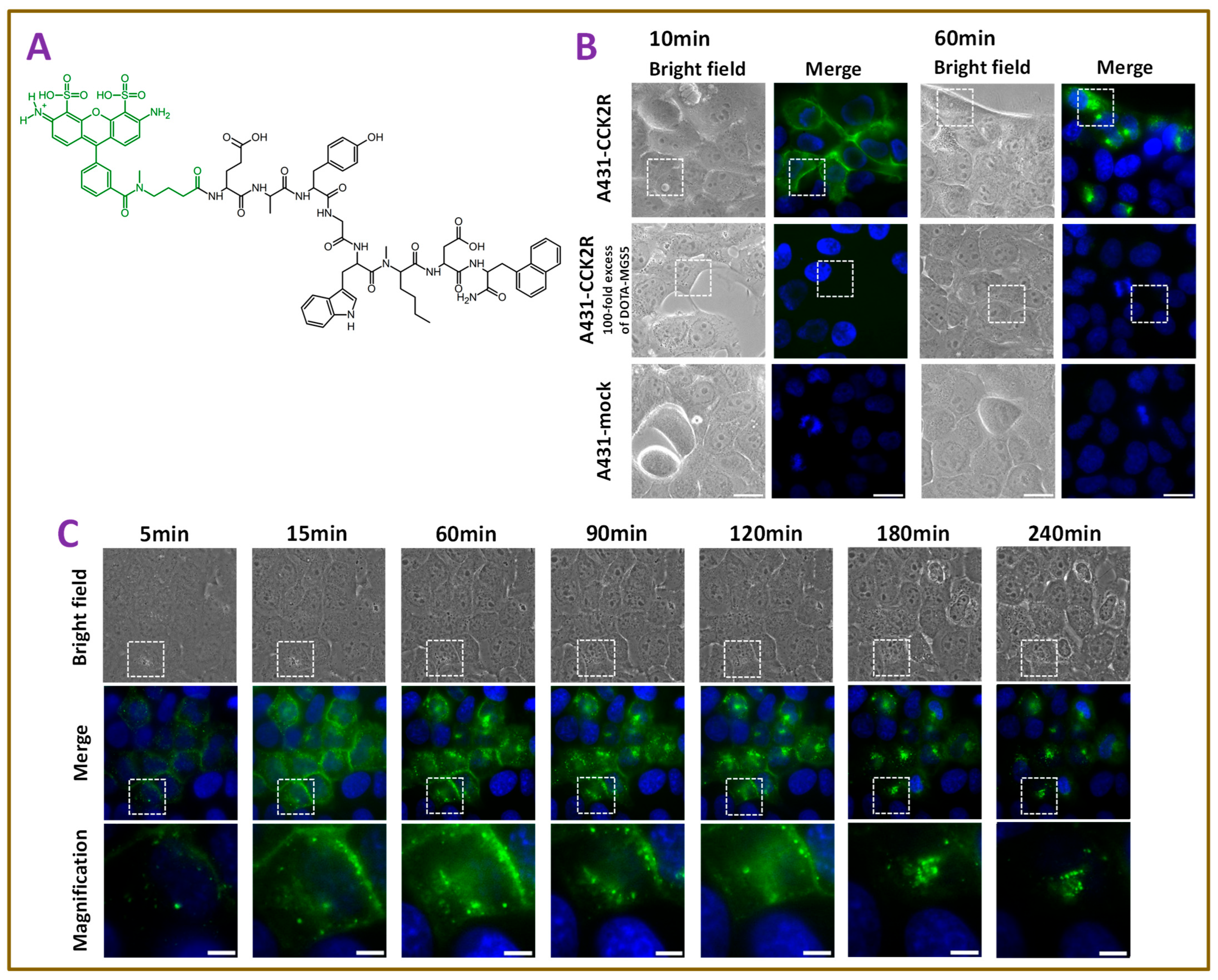
The cell uptake of the fluorescently labeled ligand was analyzed on A431-CCK2R and A431-mock cells. Cells were seeded on labteks or glass plates coated with 0.1 mg/mL collagen (Corning, New York, NY, USA) at a density of 30,000 or 500,000 cells, 36 to 48 h prior to assay. In order to differentiate the nucleus, nuclei were stained using 1 µg/mL Hoechst 33342 (Merck, Vienna, Austria) 30 min before imaging. Then cells were incubated with 100 nM of ATTO-488-MGS5, and cellular microscopy was performed using an Axiovert 200 M microscope (Zeiss, Oberkochen, Germany), using a setting of λexc = 405 nm for Hoechst nuclear staining and λexc = 488 nm for the fluorescent ligand. Image analyses were performed with Axiovision Software (version 4.8, Zeiss, Oberkochen, Germany). Receptor-specific uptake in A431-CCK2R cells was confirmed by additional blocking studies by incubating the cells with a 100-fold excess of DOTA-MGS5 (10 µM) 10 min prior to ATTO-488-MGS5 exposure and using A431-mock cells without receptor expression as a negative control.
Quantitative evaluation of ATTO-488-MGS5 uptake was performed by densitometric analysis of time-lapse fluorescence microscopy images. For each time course, 5–6 well-isolated A431-CCK2R cells were selected, resulting in 16 cells from three independent experiments. For each cell and time point, two regions of interest (ROIs) were defined: (i) the whole-cell area and (ii) the intracellular compartment excluding the plasma membrane. Mean fluorescence intensity was measured for both ROIs, and the membrane-associated signal was calculated as follows:
All membrane and intracellular fluorescence values were normalized to the 5 min time point after tracer addition, and fold-change over time was used to describe the uptake kinetics.
2.3. Cell Viability Assay
To investigate the cytotoxic effect of [
177Lu]Lu-DOTA-MGS5 on A431-CCK2R cells in comparison with EBRT, cells were counted using a TC20 automated cell counter (Bio-Rad Laboratories, Hercules, CA, USA), seeded at a density of 1 × 10
5 cells per well in 6-well plates and incubated at 37 °C with 5% CO
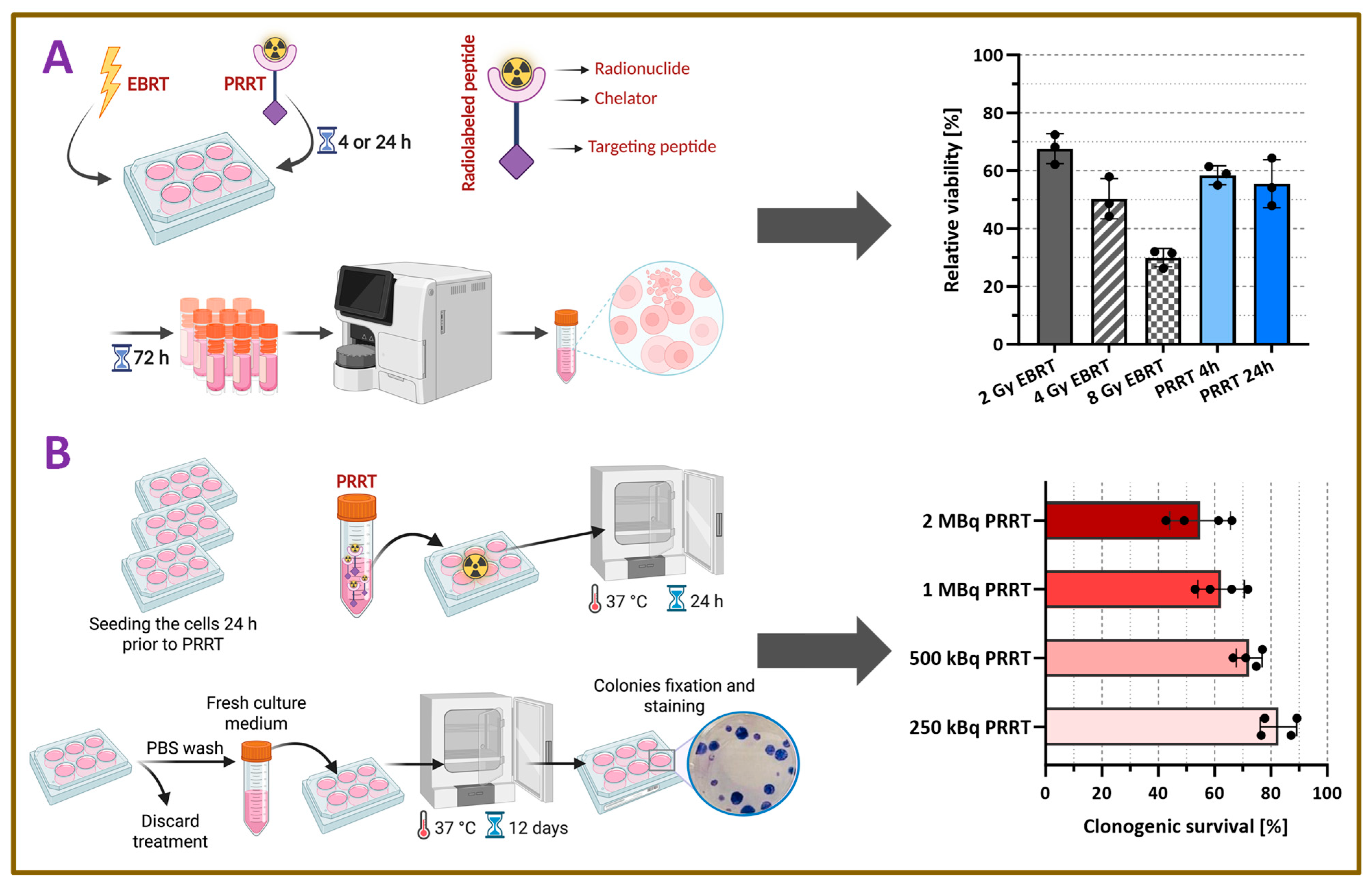
2. After 24 h, cells were irradiated with varying doses (2, 4 and 8 Gy) using a linear accelerator (Elekta Precise, Elekta Oncology Systems, Crawley, England, UK) or by incubation with [
177Lu]Lu-DOTA-MGS5 (~250 kBq, 2 nM/well) for 4 and 24 h followed by replacement with fresh medium. Incubation periods of 4 h and 24 h were selected based on the previously established internalization kinetics and the stability data obtained for [
177Lu]Lu-DOTA-MGS5 [
25].
At the time point of 72 h after treatment, cell viability was assessed using a Beckman Coulter Vi-CELL AS cell viability analyzer (Beckman Coulter, Fullerton, CA, USA). The supernatant from each well was collected in 15 mL Falcon tubes. Cells were then washed twice with 1 mL of serum-free medium, and the wash fractions were combined with the respective supernatants. Trypsin (300 µL) was added to each well, and plates were incubated until detachment. Following detachment, 1 mL of medium was added to each well, and cells were rinsed and transferred to their respective Falcon tubes. This washing step was repeated twice, reaching a total volume of 3 mL.
Cells were pelleted by centrifugation in a benchtop centrifuge (Megafuge™ 8; Thermo Fisher Scientific, Waltham, MA, USA) at 2000 rpm for 8 min at 4 °C, and the supernatant was discarded. Pellets were resuspended in 1 mL of cold serum-free medium. Samples were loaded into the Vi-CELL AS analyzer according to the manufacturer’s instructions. The number of viable cells in each treatment group was normalized to the mean number of viable cells in the non-irradiated control group and expressed as a percentage of the control.
2.4. Clonogenic Survival Assay
To investigate the clonogenic survival after incubation with [177Lu]Lu-DOTA-MGS5, A431-CCK2R cells were counted in the automated cell counter and serial dilutions were performed to achieve a final concentration of 1000 cells/mL (1 cell/µL). Based on the treatment with increasing activities of [177Lu]Lu-DOTA-MGS5 (250 kBq-2 MBq, ~100 nM in each well), cell numbers seeded in 6-well plates were adapted and incubated at 37 °C with 5% CO2. After 24 h of incubation to allow for cell attachment, cells were treated with the increasing activities of [177Lu]Lu-DOTA-MGS5 for 24 h at 37 °C. After this treatment, the medium was aspirated and the cells were gently washed twice with phosphate-buffered saline (PBS) and then incubated at 37 °C for 12 days to allow colony formation. At the end of the incubation period, the culture medium was removed, and the wells were gently rinsed twice with PBS.
Colonies were fixed by adding 1 mL of a 3:1 methanol–glacial acetic acid solution to each well and incubated for 20 min at room temperature in a chemical hood. The solution was removed and the fixed cells gently rinsed twice with 1 mL of PBS.
Staining was performed using 1 mL of Giemsa stain (modified solution; Sigma-Aldrich, St. Louis, MO, USA, CAS No. 32884) diluted 3.5:10 in Milli-Q water. Plates were incubated with the staining solution for 2 h at room temperature. After staining, wells were rinsed twice with Milli-Q water, and plates were inverted on absorbent paper to air-dry.
Colonies were counted manually, with each visible purple-stained cluster considered as one colony. The number of colonies in each treatment group was normalized to the plating efficiency of a control group not subjected to incubation with [177Lu]Lu-DOTA-MGS5 and expressed as percentage of clonogenic survival. Each data point represents the mean ± standard deviation (SD) of four independent experiments, each performed in triplicate.
2.5. Immunohistochemical Staining
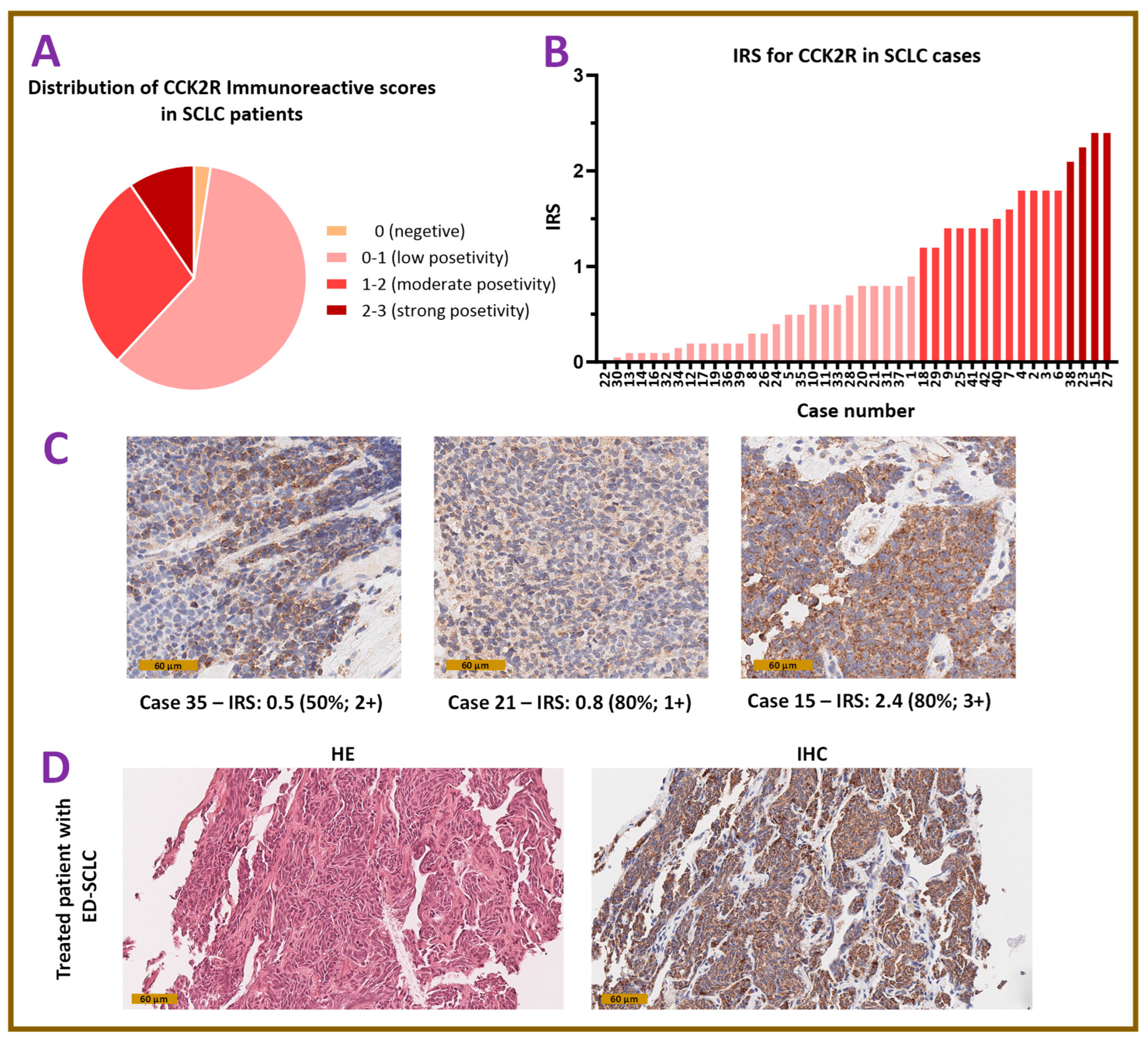
The expression of CCK2R in SCLC was assessed by immunohistochemistry on tissue specimens available at the tissue archive of the Institute of Pathology of the Technical University of Munich, Germany. The study was conducted in accordance with the Declaration of Helsinki, and the protocol was approved by the Ethics Committee of the Technical University of Munich (2024-130-S-DFG-SB) on 9 April 2024. Informed consent for participation was not required by local legislation (Bayerisches Krankenhausgesetz—Art. 27 Datenschutz). A total of 42 tissue specimens, each from a distinct patient (25 men and 17 women) with histologically confirmed SCLC, were analyzed. The samples comprised tissue samples taken from 41 primary tumors and one lymph node metastasis. Slides were deparaffinized and rehydrated using a decreasing concentration of alcohol, followed by heat-induced epitope retrieval at 100 °C for 40 min in Bond™ H1 solution. Endogenous peroxidase activity was blocked, and sections were incubated with a mouse monoclonal CCK2R (E-3) antibody raised against amino acids 1–85 mapping at the N-terminus of CCK2R of human origin (sc-166690; Santa Cruz Biotechnology, Dallas, TX, USA) at a dilution of 1:75 for 15 min at room temperature.
The Bond Polymer Refine Detection Kit (DS9800; Leica Biosystems, Wetzlar, Germany) without the post-primary reagent was used for antibody detection, followed by DAB (3,3′-diaminobenzidine, BS04-500; Medac Diagnostica, Wedel, Germany) staining using brown chromogen (DS9800, Bond Polymer Refine Detection; Leica Biosystems, Wetzlar, Germany), hematoxylin counterstaining, dehydration, clearing and mounting using Pertex mounting medium (00801; Histolab, Goeteborg, Sweden). Slides were digitally scanned with a resolution of 0.252 µm per pixel (equivalent to a 40× objective) using a Leica Aperio Imager AT2 (Leica Biosystems, Wetzlar, Germany). Images were analyzed using Aperio ImageScope software (version 12.4.6.5003). The same procedure was applied to the tissue specimen of the patient with ED-SCLC treated with [
177Lu]Lu-DOTA-MGS5. Antibody specificity was evaluated using specimens from human stomach tissue, known to physiologically express CCK2R, and normal lung tissue lacking CCK2R expression (
Supplementary Figure S2). The absence of non-specific binding was confirmed using another mouse monoclonal antibody (407317; Sigma-Aldrich/Merck, Darmstadt, Germany).
All samples were evaluated for CCK2R immunoreactivity in terms of a positive signal (brown DAB precipitate). Staining intensity (I, score: 0–3) and frequency (P, %) were assessed for each tumor sample. A final immunoreactivity score was defined as IRS = I × (P/100)—with IRSs being in a final range between 0 and 3. All IRS scoring was performed by the same experienced pathologist.
2.6. Clinical Case Presentation
A patient diagnosed with SCLC (initial stage: T4 N3 M1b with primary tumor of the left central lung and possible metastasis to the left adrenal gland) completed first-line systemic therapy with carboplatin/etoposide/atezolizumab (schedule: day 1–day 3, every three weeks) followed by maintenance therapy with atezolizumab and prophylactic cranial irradiation (fractions of 2 Gy each, reaching a total dose of 30 Gy; cognitive preservation with memantine). Subsequently, the entire primary tumor region, including the selectively involved lymph nodes on the left central side, was irradiated (fractions of 2 Gy, resulting in a total dose of 60 Gy). After completing EBRT approximately six months after diagnosis, the disease remained stable for the following four months. Ten months after diagnosis, a new metastasis to the right adrenal gland occurred, and re-induction therapy with carboplatin/etoposide/atezolizumab was administered (a total of four cycles; schedule: day 1–day 3, every three weeks). In the follow-up CT scan, progressive disease was identified again, and third-line therapy with cyclophosphamide/doxorubicin/vincristine was initiated (a total of four cycles; schedule: day 1–day 2, every three weeks). Further progression was seen at the next follow-up CT scan, and the therapy was switched to fourth-line treatment with weekly topotecan (day 1, day 8 and day 15). After 2 cycles, the disease again progressed. This time, there was progression of the primary tumor, liver metastases and new lymph node metastases. Thus, alternative image-guided treatment strategies were evaluated. PET/CT imaging with [
68Ga]Ga-DOTA-MGS5 targeting the CCK2R, performed seventeen months after initial diagnosis, showed intense uptake in tumor lesions, while only faint somatostatin receptor-related uptake was observed in PET imaging with [
68Ga]Ga-DOTA-TOC [
23]. Thus, the patient was considered eligible for PRRT with [
177Lu]Lu-DOTA-MGS5. PRRT was performed under the responsibility of the treating physician and after tumor board approval. According to the Austrian Medicines Act (Arzneimittelgesetz §8), named patient use (“Heilversuch”) was not subject to authorization by or notification to the authorities. Written informed consent was obtained from the patient. All procedures were in accordance with the principles of the 1964 Declaration of Helsinki and its subsequent amendments. The retrospective analysis of the data of the patient was exempted from consultation with the Ethics Committee by the Medical University of Innsbruck.
2.7. [177Lu]Lu-DOTA-MGS5 PRRT
2.7.1. Automated Radiolabeling Process
An activity of 1500 MBq for dosimetric evaluation and four activities of 4000 MBq [
177Lu]Lu-DOTA-MGS5 for therapeutic use were prepared using an automated synthesis module (Modular-Lab PharmTracer
®; Eckert & Ziegler Eurotrope GmbH, Berlin, Germany) following a previously published method [
25]. Each batch was subjected to a full quality control evaluation before release for patient administration. The specifications and analytical methods for the quality control of the final product (as shown in
Supplementary Table S1) were established based on experience with in-house production of different radiotherapeutics and Ph. Eur. monographs available for other radiopharmaceuticals, and the stability of the final product was evaluated previously [
25,
27,
28]. The determination of the peptide content was based on a calibration curve and with a limit of detection of 1 µg/mL and a limit of quantification of 5 µg/mL.
2.7.2. Treatment Regimen
Adequate hydration was ensured through intravenous infusion of 1000 mL of 0.9% saline solution at a rate of 300 mL/h, starting 30 min before and continuing for 2 h after treatment administration. The patient received prophylactic antiemetic therapy with 4 mg ondansetron, as well as 4 mg dexamethasone and 40 mg pantoprazole, given 20 min before the treatment. Prophylactic antiemetic therapy was repeated 12 h after therapy.
[177Lu]Lu-DOTA-MGS5 was administered intravenously via a dedicated peristaltic infusion pump system over a period of 15–20 min. The patient was discharged at the third day following therapy. The treatment was repeated approximately every four weeks.
2.7.3. Image Acquisition Protocol
Whole-body SPECT/CT after each therapy cycle was performed using a dual-head SPECT/CT system (NM/CT 870 DR; GE Healthcare, Chicago, IL, USA) approximately 24 h after injection of [
177Lu]Lu-DOTA-MGS5. The acquisition consisted of 60 projections over 360° with an angular step of 6° and a dwell time of 20 s per projection. A medium-energy general-purpose collimator was used. The primary energy window was set to 187.2–228.8 keV and the scatter window to 169.1–186.9 keV. SPECT images were reconstructed using the manufacturer’s proprietary algorithms (OSEM with resolution recovery), using 2 iterations and 10 subsets and no post-reconstruction filtering. The reconstructed matrix size was 128 × 128, with a pixel size of 4.42 mm. Photon scatter correction was performed using the dual energy window method, and attenuation correction was performed using a low-dose CT scan acquired at 120 kVp, 30 mAs effective, with CareDose4D activated. Whole-body planar imaging was performed in anterior and posterior views using the same system. The scan was conducted in supine position, feet-first orientation. The table traversed 1.14 m at a speed of 10 cm/min. The matrix size was 1024 × 256, with a pixel spacing of 2.40 mm. Imaging after the fourth therapy cycle had to be performed on a different camera system and with a different protocol (for details, see the
Supplementary Materials).
For dosimetry, both planar and SPECT/CT imaging were performed at nominal time points of 30 min and 4, 24, 72 and 96 h post-injection (p.i.). The acquisition protocol for the first three time points followed the procedure described above. For the 72 and 96 h scans, the dwell time per projection for SPECT acquisition was increased to 24 s, and the planar scan speed was reduced to 8 cm/min to compensate for the reduced count statistics at later time points.
2.7.4. Quantification and SPECT-SUV
The gamma camera sensitivity was calibrated according to the GE Healthcare-recommended protocol (DICOM Conformance Statement: NM General Purpose 600/800 Series, Rev. 15, 2018). A Petri dish containing a known activity of lutetium-177 was used as the calibration source, yielding a calibration factor of 5.2 cps/MBq. To correct for partial volume effects (PVEs), recovery coefficients (RCs) were determined using an IEC-NEMA phantom with fillable spheres of varying diameters, and a Jaszczak phantom containing a 60 mm sphere (Data Spectrum Corporation, Hillsborough, NC, USA). For each sphere, RCs were calculated, and a logarithmic regression model was fitted to generate a recovery curve. Two selected well-delineable lesions were segmented on 24 h p.i. SPECT images using a 41% isocontour threshold in Affinity 3.0 (Hermes Medical Solutions, Stockholm, Sweden). Subsequently, SUVmax values normalized to body weight were computed and corrected for PVEs using the corresponding RCs.
4. Discussion
In previous work, we have presented the preclinical development of the CCK2R-targeting minigastrin analog DOTA-MGS5 radiolabeled with gallium-68 and lutetium-177 [
25,
27,
29]. Besides the full preclinical characterization of DOTA-MGS5 radiolabeled with different radiometals, the initial clinical translation of PET/CT imaging with [
68Ga]Ga-DOTA-MGS5 was achieved [
22,
23]. The aim of the present study was to provide further evidence on the applicability of [
177Lu]Lu-DOTA-MGS5 for CCK2R-targeted PRRT in patients with SCLC in support of a first clinical trial application.
Using radioligand-based assays, we characterized and evaluated the receptor affinity and cellular uptake kinetics of DOTA-MGS5 comprehensively [
25,
27,
29]. However, these assays do not allow the visualization of the receptor-mediated internalization processes. To investigate the uptake process at the cellular level, we synthesized the fluorescently labeled analog ATTO-488-MGS5, enabling real-time imaging of tracer–receptor interactions and intracellular trafficking. In dynamic fluorescent microscopy studies on A431-CCK2R cells incubated with Atto-488-MGS5, a rapid translocation from the cell surface to intracellular compartments leading to prolonged intracellular sequestration was confirmed, providing the basis for efficient receptor-specific tumor targeting.
Furthermore, cell-based assays were performed to investigate the therapeutic effect of [
177Lu]Lu-DOTA-MGS5. In the cell viability studies performed using A431-CCK2R cells, the therapeutic effect of 250 kBq of [
177Lu]Lu-DOTA-MGS5 was between the effects of EBRT with 2 and 4 Gy, which was used as a control treatment. The observed early cytotoxic response to PRRT in this assay is consistent with known radiation-induced effects, such as cellular stress, cell cycle arrest and cell death. However, it has to be noted that the response of the cells to PRRT with [
177Lu]Lu-DOTA-MGS5 delivering continuous low-dose-rate irradiation might differ from EBRT with short-term high-dose-rate exposure. The radiobiological differences between PRRT and EBRT primarily relate to the absorbed dose rate and the spatial characteristics of energy deposition. EBRT delivers homogeneous irradiation at a high absorbed dose rate, resulting in relatively uniform dose delivery to the cells. In contrast, PRRT is characterized by a low absorbed dose rate with protracted, heterogeneous irradiation, where energy deposition depends on the receptor-mediated uptake of the radiolabeled compound, the half-life of the radioisotope and the particle path length of the emitted radiation. Consequently, activity distribution is highly heterogeneous, leading to regions receiving substantial radiation exposure while neighboring territories may partially escape irradiation. These differences are known to influence the induction of DNA damage, repair kinetics and cellular survival, and should therefore be considered when comparing the biological effects of PRRT and EBRT in vitro [
30,
31]. For this reason, clonogenic assays were performed in addition to investigate the clonogenic survival after incubation with [
177Lu]Lu-DOTA-MGS5. The observed dose-dependent effects on clonogenic survival suggest a higher level of irreparable DNA damage with increasing activities of [
177Lu]Lu-DOTA-MGS5 leading to long-term reproductive death. This observation is in line with lethal DNA damage through continuous low-dose irradiation, ultimately impairing the ability of cells to undergo multiple rounds of cell division [
31]. A limitation of these experiments is the exclusive use of the engineered A431-CCK2R cell model for in vitro experiments. Currently, no human SCLC cell line with natural, endogenous overexpression of CCK2R is available, and consequently most published studies on CCK2R-targeting radiopharmaceuticals rely either on A431-CCK2R cells, which stably express the human receptor, or on the AR42J rat pancreatic tumor cell line with physiological CCK2R expression. In ongoing experiments, we are performing comparative studies with [
177Lu]Lu-DOTA-MGS5 in A431-CCK2R and AR42J cells, including also A431-mock cells and blocking with excess peptide in AR42J cells to evaluate the receptor-specificity of the treatment. To further elucidate the cellular effects of PRRT, we intend to conduct additional in vitro assays, such as the γH2AX assay, which will allow us to better characterize DNA double-strand break formation and repair dynamics, in addition to our current findings [
32,
33].
In lieu of a human SCLC cell line for preclinical testing, we have investigated the applicability of this new personalized therapeutic approach in patients with SCLC by performing immunohistochemistry analysis of the CCK2R receptor expression in tumor samples from patients with SCLC. The analysis of 42 tumor specimens confirmed moderate to high CCK2R expression in more than one third of the specimens evaluated, supporting that [
68Ga]Ga-DOTA-MGS5 can be used to target CCK2R in this patient group for selecting patients eligible for PRRT with [
177Lu]Lu-DOTA-MGS5. As shown previously for SSTRs, there is a moderate to strong correlation between SSTR expression and SUV
max of [
68Ga]Ga-DOTA-TATE or [
68Ga]Ga-DOTA-TOC PET scans in different tumor entities [
9,
34,
35]. No similar studies have been performed for CCK2R targeting so far. When investigating CCK2R expression in NETs by receptor autoradiography, Reubi et al. [
36] reported a high incidence of CCK2R expression in MTC (92%, 22 out of 24 samples), SCLC (57%, 8 out of 14 samples), astrocytomas (65%, 11 out of 17 samples) and stromal ovarian cancer (100%, 3 out of 3 samples). In further studies, also, insulinomas and vipomas, as well as some bronchial and ileal carcinoids, were suggested as potential CCK2R targets, especially in patients with low or no SSTR expression. In addition, gastrointestinal stromal tumors (mean density of 8641 dpm/mg) and leiomyosarcomas (mean density of 7283 dpm/mg) express CCK2R at a high density [
36,
37,
38]. Based on our immunohistochemical analysis in 38% of the SCLC tissue specimens analyzed, high overexpression of CCK2R could be confirmed, meeting the essential condition for the effectiveness of any receptor-based radionuclide therapy. In a new clinical trial which has recently been started in our center (EUCT n. 2024-514584-25-00), we are currently investigating the correlation of CCK2R expression and uptake values of [
68Ga]Ga-DOTA-MGS5 PET/CT imaging in patients with SCLC.
We have recently reported the first evidence of [
68Ga]Ga-DOTA-MGS5-positive lesion uptake in a patient with ED-SCLC [
23]. The patient underwent dosimetric evaluation with [
177Lu]Lu-DOTA-MGS5 [
25], revealing high tumor doses in the range of 1.2–28 Gy/GBq combined with favorable pharmacokinetics leading to a low radiation burden of 0.28 Gy/GBq to the kidneys and 0.42 Gy/GBq to the stomach due to physiological uptake in this organ. Based on a tumor board decision, a first therapeutic attempt with [
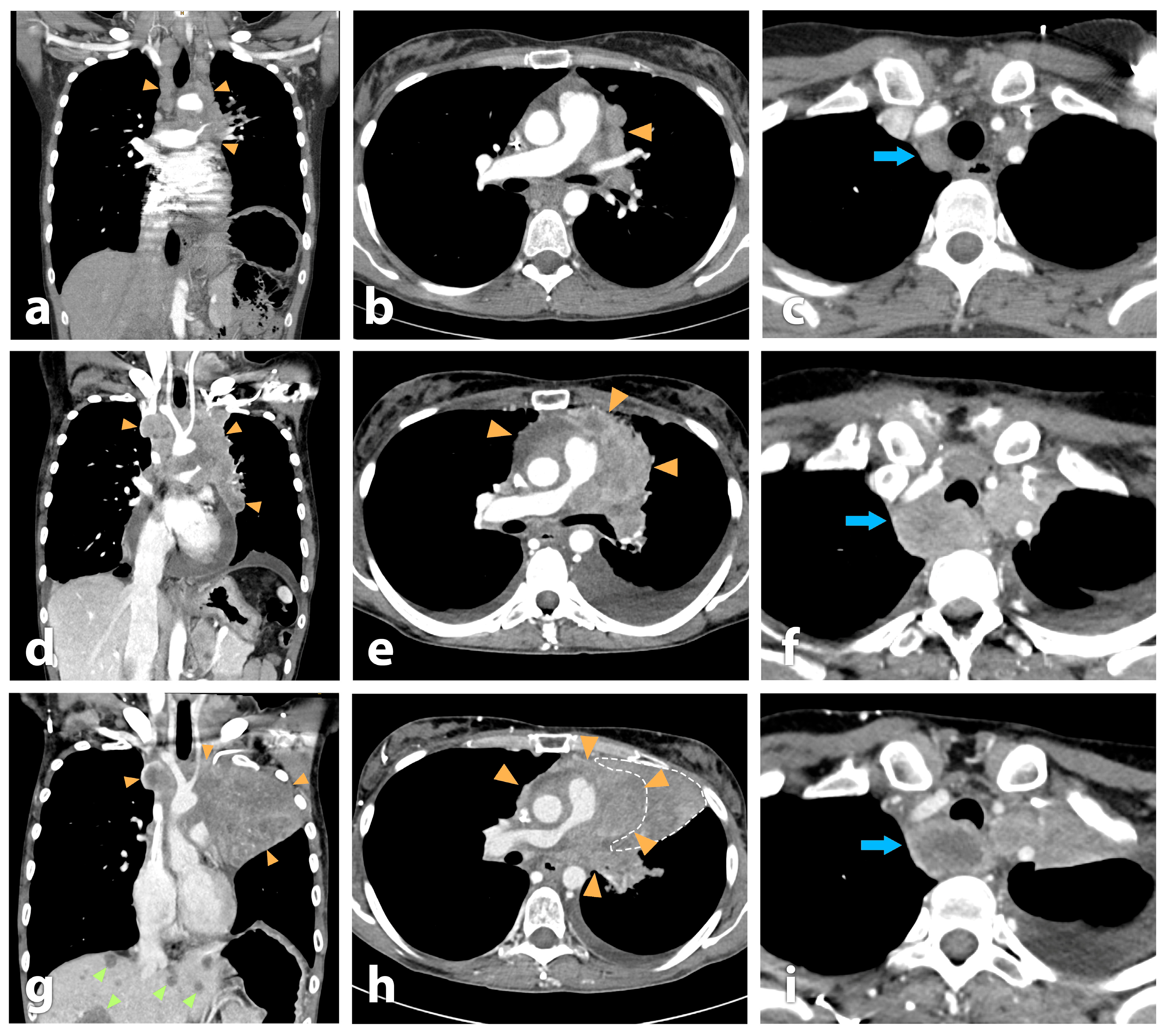
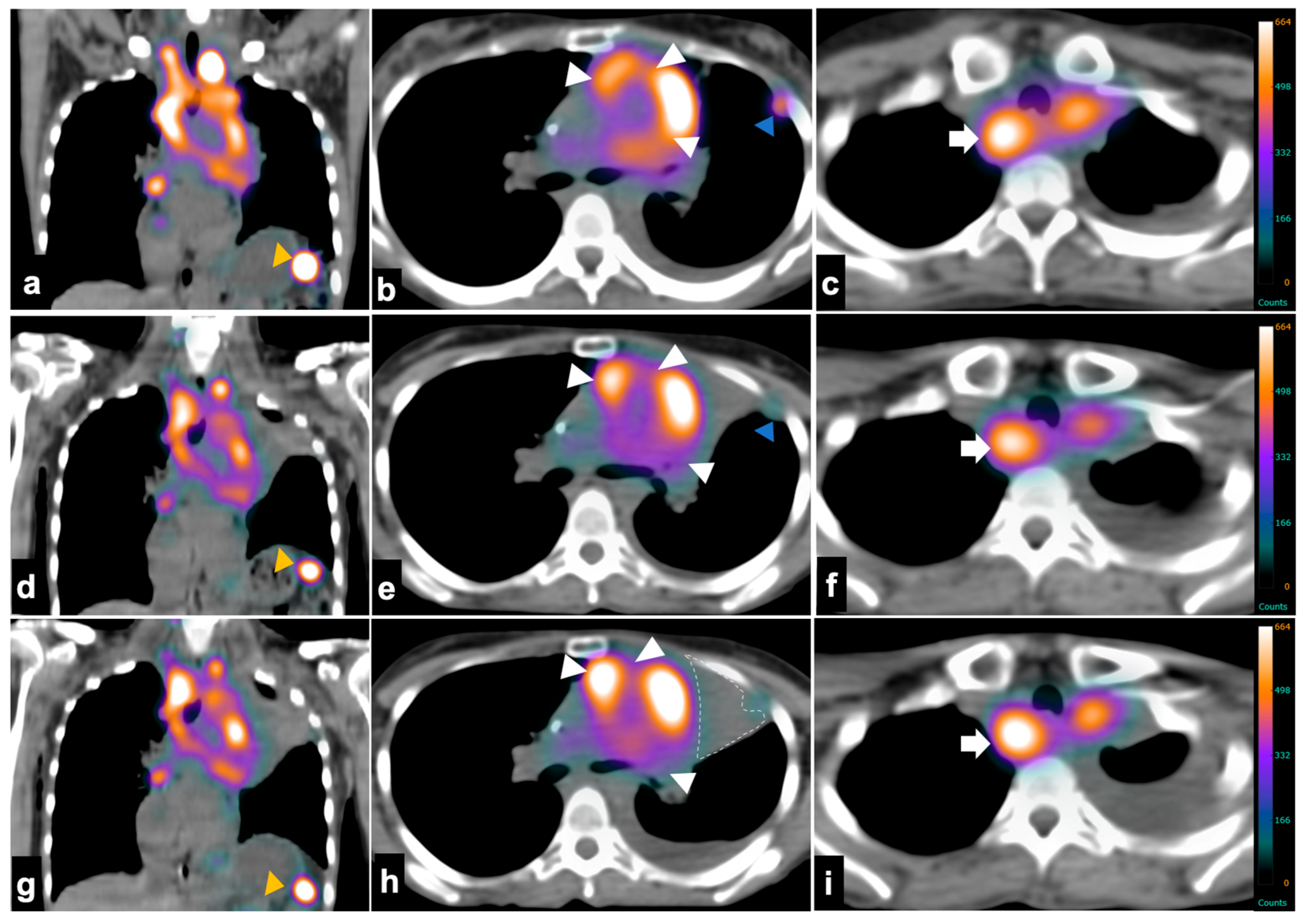
177Lu]Lu-DOTA-MGS5 was undertaken in this patient. A treatment regimen with an administered activity of 4 GBq at intervals of one month was applied to this patient with extensive tumor progression. The patient was treated with a total of four cycles, reaching a total administered activity of 17.2 GBq. This approach was chosen in the attempt to provide palliative treatment for the patient, improving the patient’s quality of life while minimizing potential side effects. Besides mild nausea and mild appetite loss for a few days post-therapy, the treatment was well tolerated by the patient, who reported a sustained state of psychological and physical well-being. Moreover, the patient maintained full autonomy in daily activities and showed subjective improvement in dyspnea and asthenia, mostly within the first three cycles of treatment. Post-therapy SPECT/CT scans after each treatment cycle showed visually stable uptake across the first three cycles. Also, the SPECT/CT scan after the fourth cycle performed with a different camera system showed a similar uptake pattern. However, despite clinical stability during PRRT with [
177Lu]Lu-DOTA-MGS5, the patient showed progressive tumor extension in the diagnostic CT scan performed at the fourth cycle. Due to newly appearing disseminated liver metastases without [
177Lu]Lu-DOTA-MGS5-uptake as well as further progression of the primary tumor, PRRT was discontinued. Together with the rise in tumor marker levels (i.e., NSE and chromogranin A) the tumor progression evidenced in the diagnostic CT and dedifferentiation noted on SPECT/CT imaging suggested resistance to treatment. Of note, the patient received treatment with [
177Lu]Lu-DOTA-MGS5 after progression under various chemotherapy regimens and at a very advanced stage of the disease. Based on the dosimetric evaluation performed [
25], a mean absorbed dose of 215 Gy (range: 21-482 Gy) could be delivered to the tumor lesions during PRRT with [
177Lu]Lu-DOTA-MGS5 in this patient. The calculated tumor-absorbed dose is in line with the tumor-absorbed dose of treatment with [
177Lu]Lu-DOTA-TATE [
39]. Even though no clear stabilization of the disease was achieved, the improvement in quality of life during the four months of PRRT was of particular importance for the patient. The absorbed doses of healthy tissue remained at acceptable levels of 5 Gy for the kidneys, 0.4 Gy for the bone marrow and 7 for the stomach. Fifth-line therapy with lurbinectedin initiated one month after discontinuation of [
177Lu]Lu-DOTA-MGS5 PRRT was also discontinued, and the patient passed away one month later due to the extensive tumor burden and worsening of the patient’s general condition.
By means of the CCK2R-targeting theranostic pair [
68Ga]Ga-DOTA-MGS5 and [
177Lu]Lu-DOTA-MGS5, we could offer an attractive and highly specific alternative treatment option to the patient. Such a theranostic approach, combining imaging and therapy, allows for personalized treatment planning and monitoring [
40]. The use of CCK2R-targeted PRRT resulted in a relief of the clinical symptoms and an improvement in the patient’s quality of life.
So far,
177Lu-labeled peptides targeting CCK2R have been used for PRRT in patients with advanced MTC. In this patient group, the
177Lu-labeled CCK2R-targeting agonist DOTA-(DGlu)
6-Ala-Tyr-Gly-Trp-Nle-Asp-Phe-NH2 ([
177Lu]Lu-PP-F11N) showed a favorable biodistribution with the main accumulation in the stomach and kidneys combined with a median absorbed tumor dose of 0.88 Gy/GBq, which was considered sufficient for a therapeutic approach [
41]. In a dose escalation study, six patients with advanced MTC were treated with up to three to four cycles of [
177Lu]Lu-PP-F11N (3 × 6 GBq or 4 × 8 GBq) at intervals of 8–10 weeks without signs of dose-limiting toxicity [
41,
42]. In another study, two patients with NETs showing sub-optimal uptake in SSTR-targeting [
68Ga]Ga-DOTA-TATE PET/CT imaging were treated with the
177Lu-labeled CCK2R-targeting agonist DOTA-(DGlu)
6-Ala-Tyr-Gly-Trp-Met-Asp-Phe-NH2 ([
177Lu]Lu-CP04), demonstrating the potential theranostic application in patients with low-SSTR-expressing NETs [
43]. In the first patient treated with [
177Lu]Lu-DOTA-MGS5 a tumor dose of 12.5 ± 10.2 Gy/GBq (range: 1.2–28 Gy/GBq) was observed, confirming the high potential of this new radiopharmaceutical in this patient group. The high tumor burden in the patient, consistent with a very advanced and progressed stage of the disease at the time of treatment, may have limited the therapeutic efficacy. With increasing dedifferentiation, NETs become more aggressive and do not express the receptor targets for therapy [
44]. This was possibly also the case in this first patient treated with [
177Lu]Lu-DOTA-MGS5. In a future clinical trial (EUCT n. 2024-518039-12-00), we will investigate [
177Lu]Lu-DOTA-MGS5 PRRT in a larger patient cohort to identify patients who could benefit from this new treatment at an earlier stage of the disease.



 ,
,