Article

Metabolomics of Dry Versus Reanimated Antarctic Lichen-Dominated Endolithic Communities


1
Department of Ecological and Biological Sciences, University of Tuscia, 01100 Viterbo, Italy
2
Italian National Antarctic Museum (MNA), Mycological Section, 16166 Genoa, Italy
*
Authors to whom correspondence should be addressed.
These authors contributed equally to the work.
Life 2021, 11(2), 96; https://doi.org/10.3390/life11020096
Submission received: 15 December 2020 / Revised: 18 January 2021 / Accepted: 25 January 2021 / Published: 27 January 2021
(This article belongs to the Special Issue Advances in Fungal -Omics)

Abstract

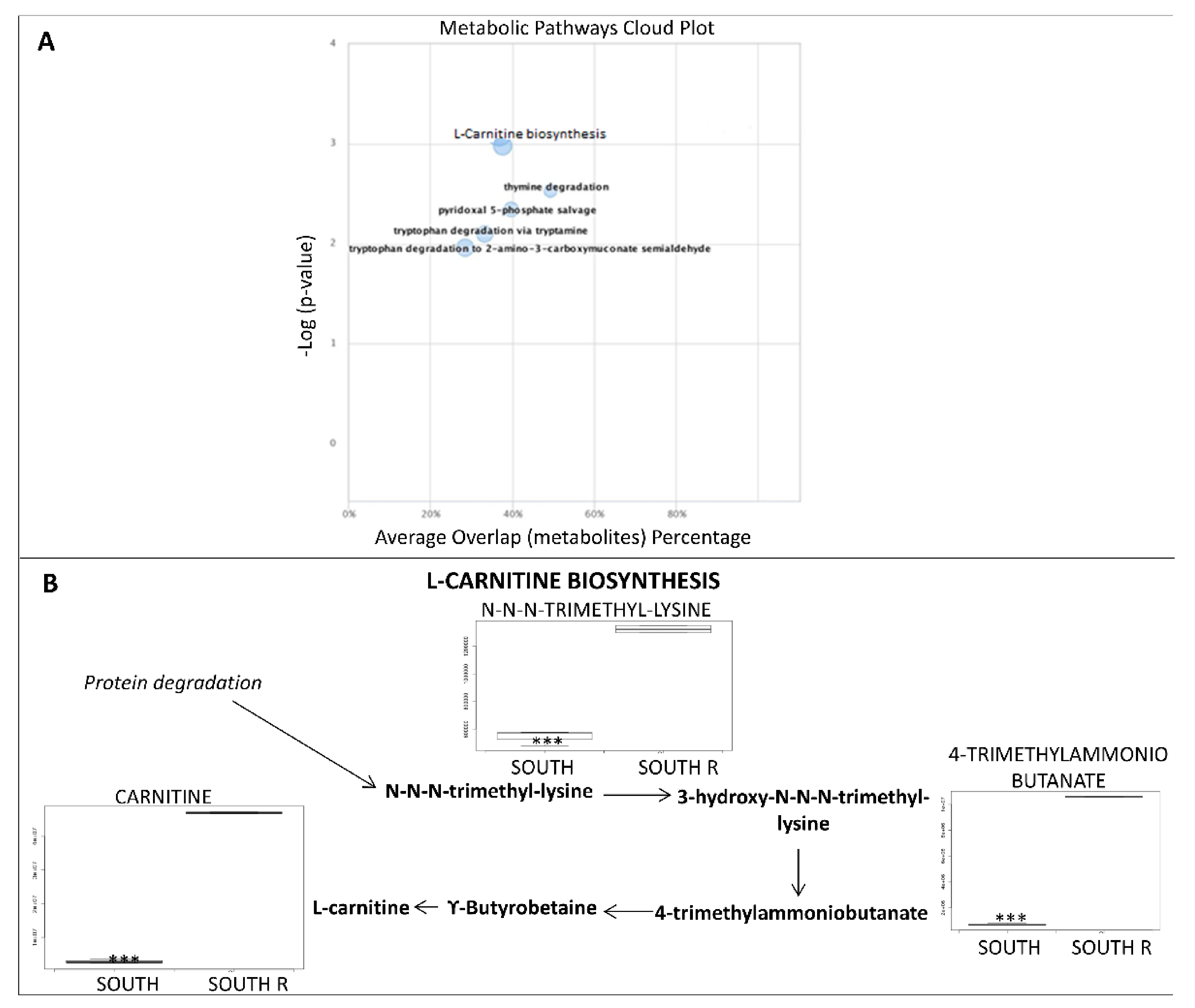
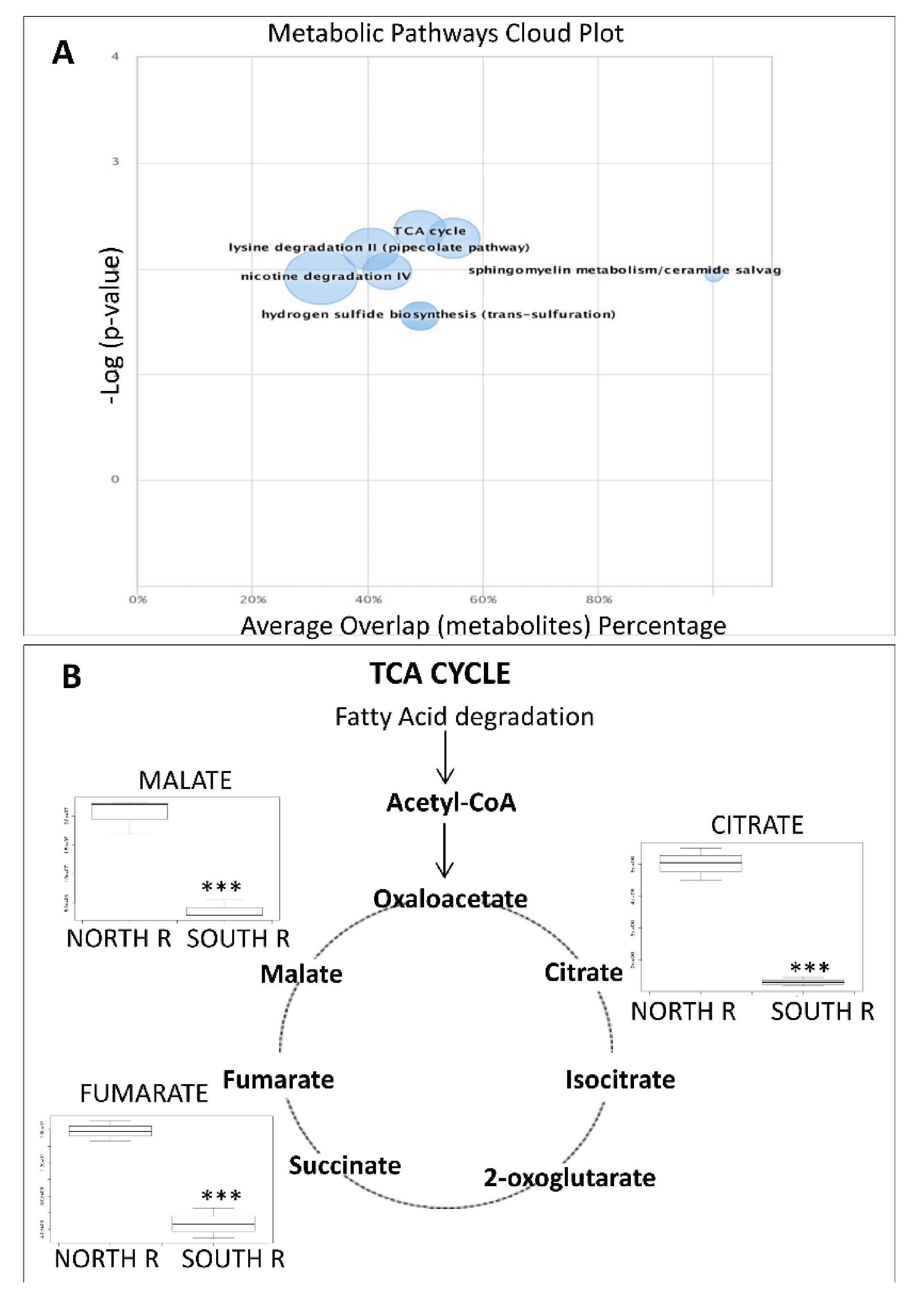
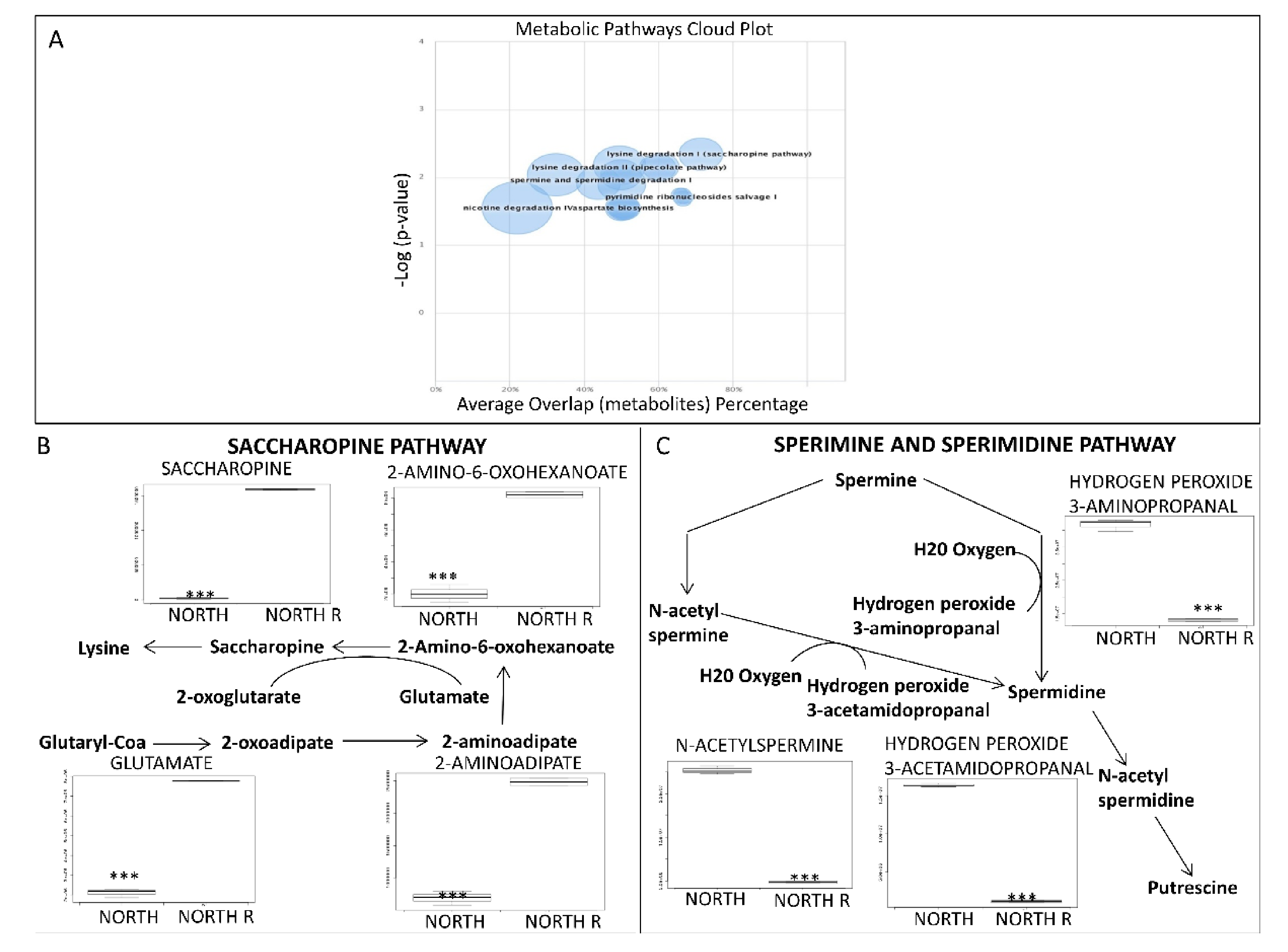
Cryptoendolithic communities are almost the sole life form in the ice-free areas of the Antarctic desert, encompassing among the most extreme-tolerant organisms known on Earth that still assure ecosystems functioning, regulating nutrient and biogeochemical cycles under conditions accounted as incompatible with active life. If high-throughput sequencing based studies are unravelling prokaryotic and eukaryotic diversity, they are not yet characterized in terms of stress adaptations and responses, despite their paramount ecological importance. In this study, we compared the responses of Antarctic endolithic communities, with special focus on fungi, both under dry conditions (i.e., when dormant), and after reanimation by wetting, light, and optimal temperature (15 °C). We found that several metabolites were differently expressed in reanimated opposite sun exposed communities, suggesting a critical role in their success. In particular, the saccharopine pathway was up-regulated in the north surface, while the spermine/spermidine pathway was significantly down-regulated in the shaded exposed communities. The carnitine-dependent pathway is up-regulated in south-exposed reanimated samples, indicating the preferential involvement of the B-oxidation for the functioning of TCA cycle. The role of these metabolites in the performance of the communities is discussed herein.
Keywords: Antarctica; cryptoendolithic communities; untargeted metabolomics; adaptation; extremophiles; sun exposure Antarctica; cryptoendolithic communities; untargeted metabolomics; adaptation; extremophiles; sun exposure