Article

Analysis of Tweets Containing Information Related to Rheumatological Diseases on Twitter
by
Adrian Abbasi-Perez
1,
Miguel Angel Alvarez-Mon
2,*,
Carolina Donat-Vargas
3,4,
Miguel A. Ortega
2,5,
Jorge Monserrat
2,5,
Ana Perez-Gomez
1,
Ignacio Sanz
6 and
Melchor Alvarez-Mon
1,2,5
1
Service of Internal Medicine and Rheumatology, Autoimmune Diseases University Hospital “Principe de Asturias”, 28805 Alcala de Henares, Spain
2
Department of Medicine and Medical Specialities, Faculty of Medicine and Health Sciences, University of Alcala, 28805 Alcala de Henares, Spain
3
Carol Cardiovascular and Nutritional Epidemiology, Institute of Environmental Medicine, Karolinska Institute, 17177 Stockholm, Sweden
4
IMDEA-Food Institute, Campus of International Excellence, Universidad Autónoma de Madrid, Consejo Superior de Investigaciones Científicas, 28049 Madrid, Spain
5
Institute Ramon y Cajal for Health Research (IRYCIS), 28034 Madrid, Spain
6
Division of Immunology and Rheumatology, Department of Medicine, Emory University, Atlanta, GA 30322, USA
*
Author to whom correspondence should be addressed.
Int. J. Environ. Res. Public Health 2021, 18(17), 9094; https://doi.org/10.3390/ijerph18179094

Submission received: 19 July 2021 / Revised: 21 August 2021 / Accepted: 24 August 2021 / Published: 28 August 2021
(This article belongs to the Special Issue Social Media Data for Public Health and Policy)

Abstract

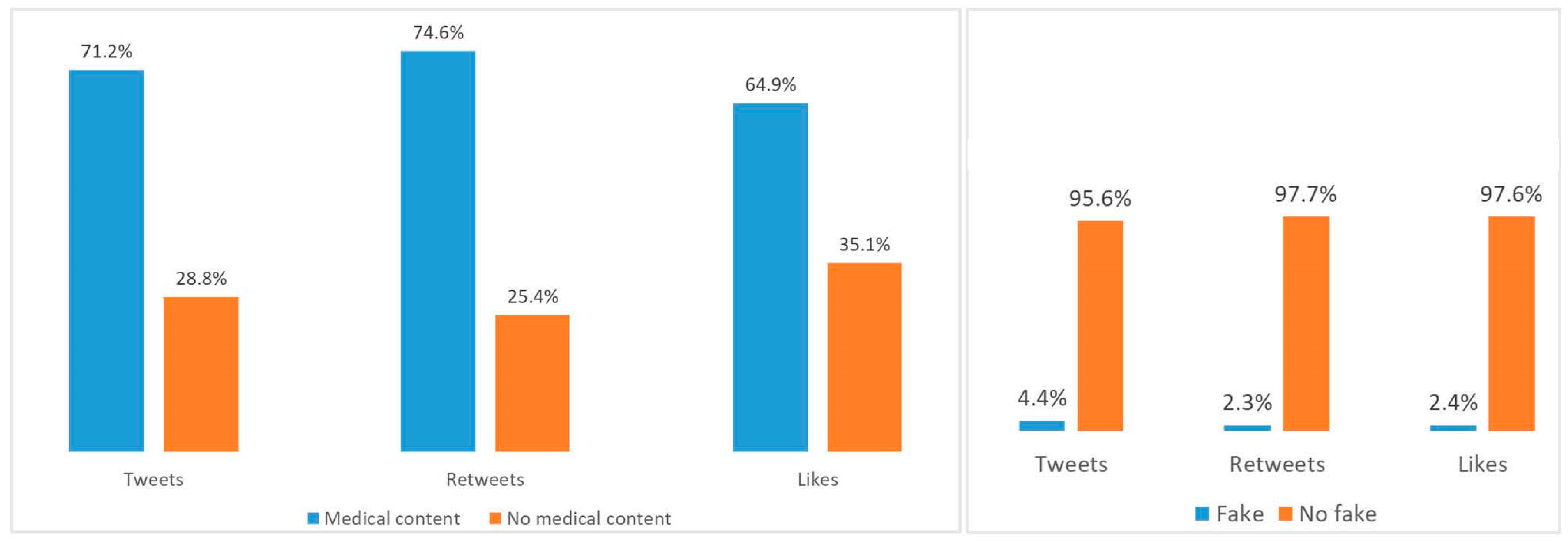
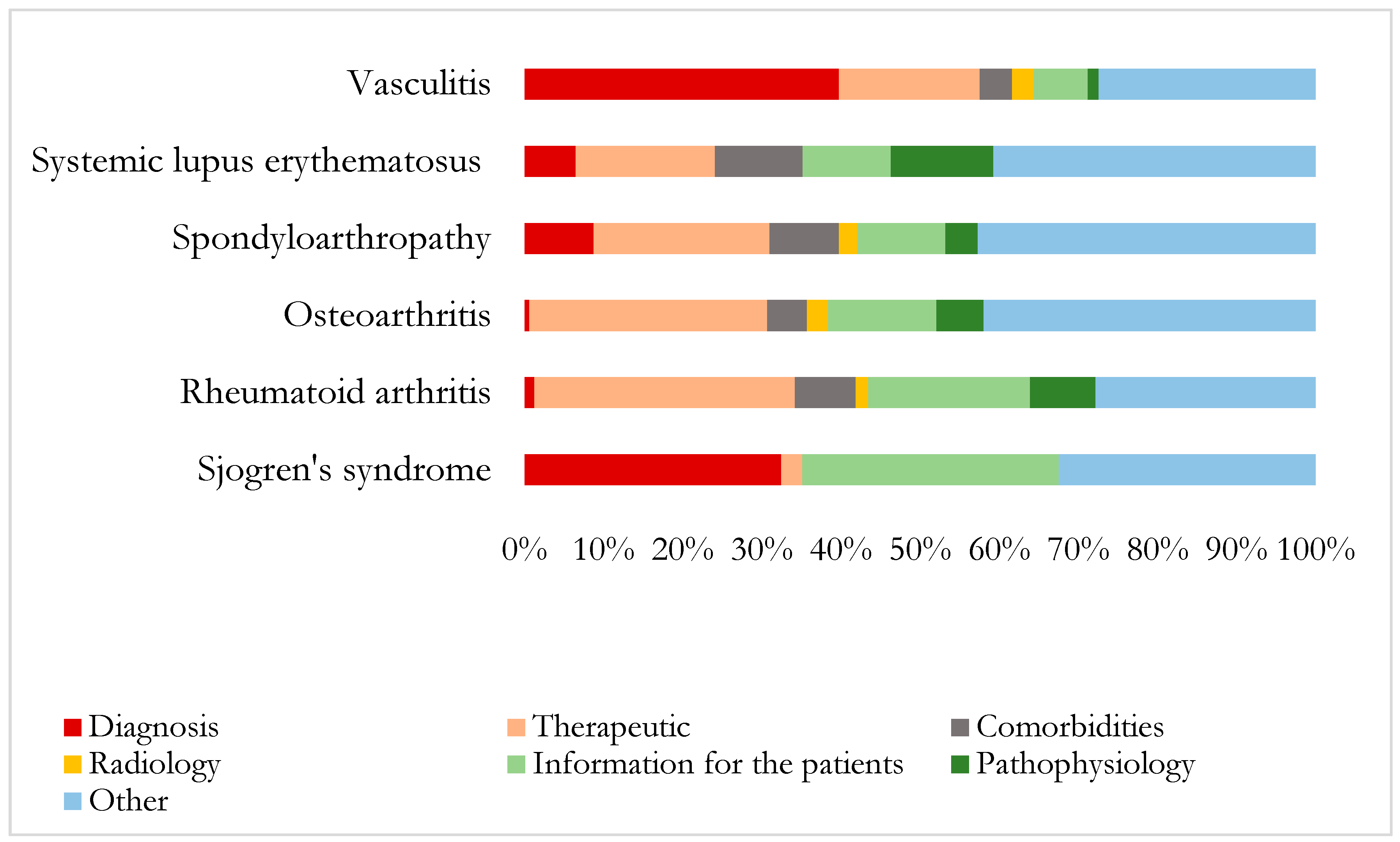
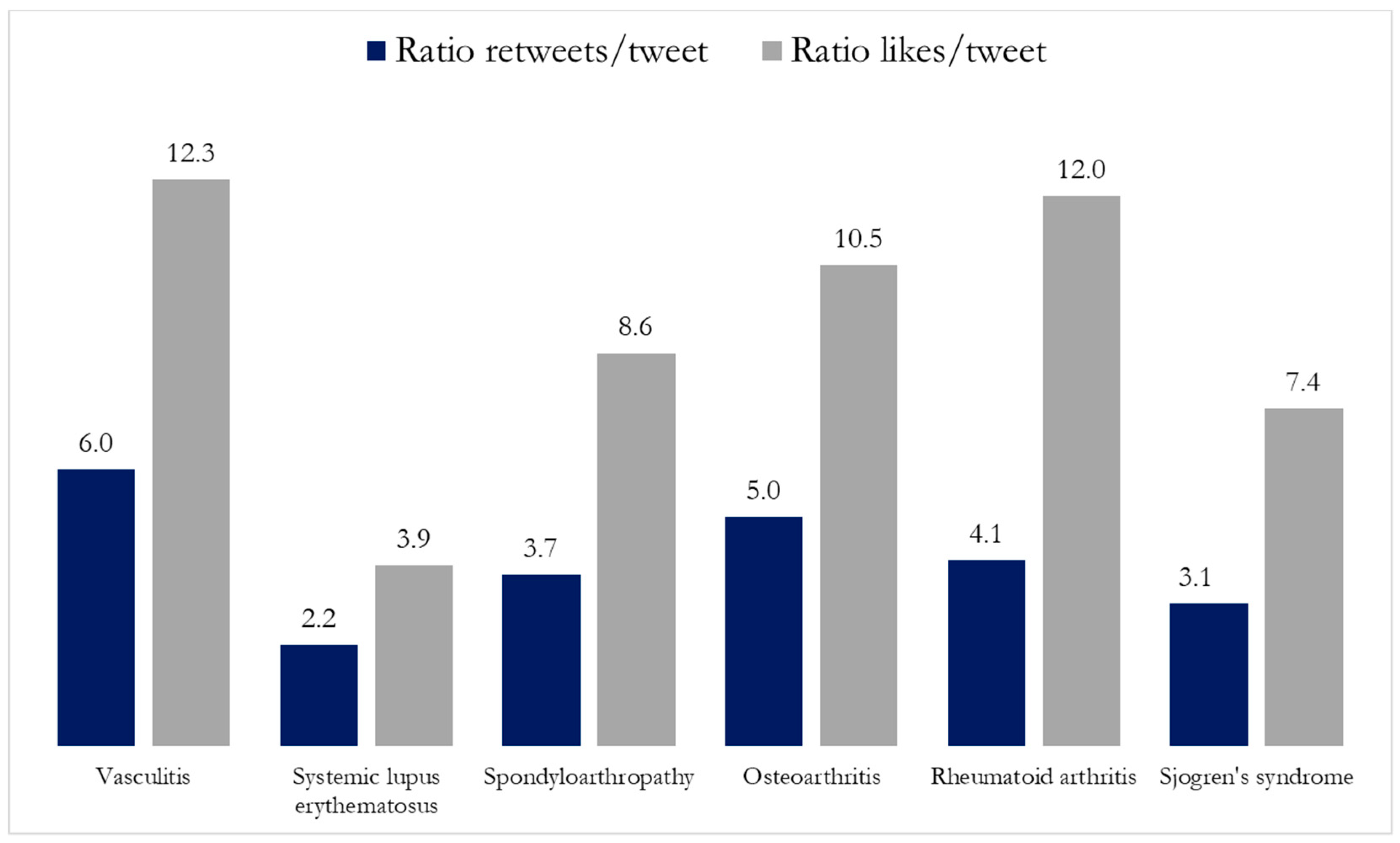
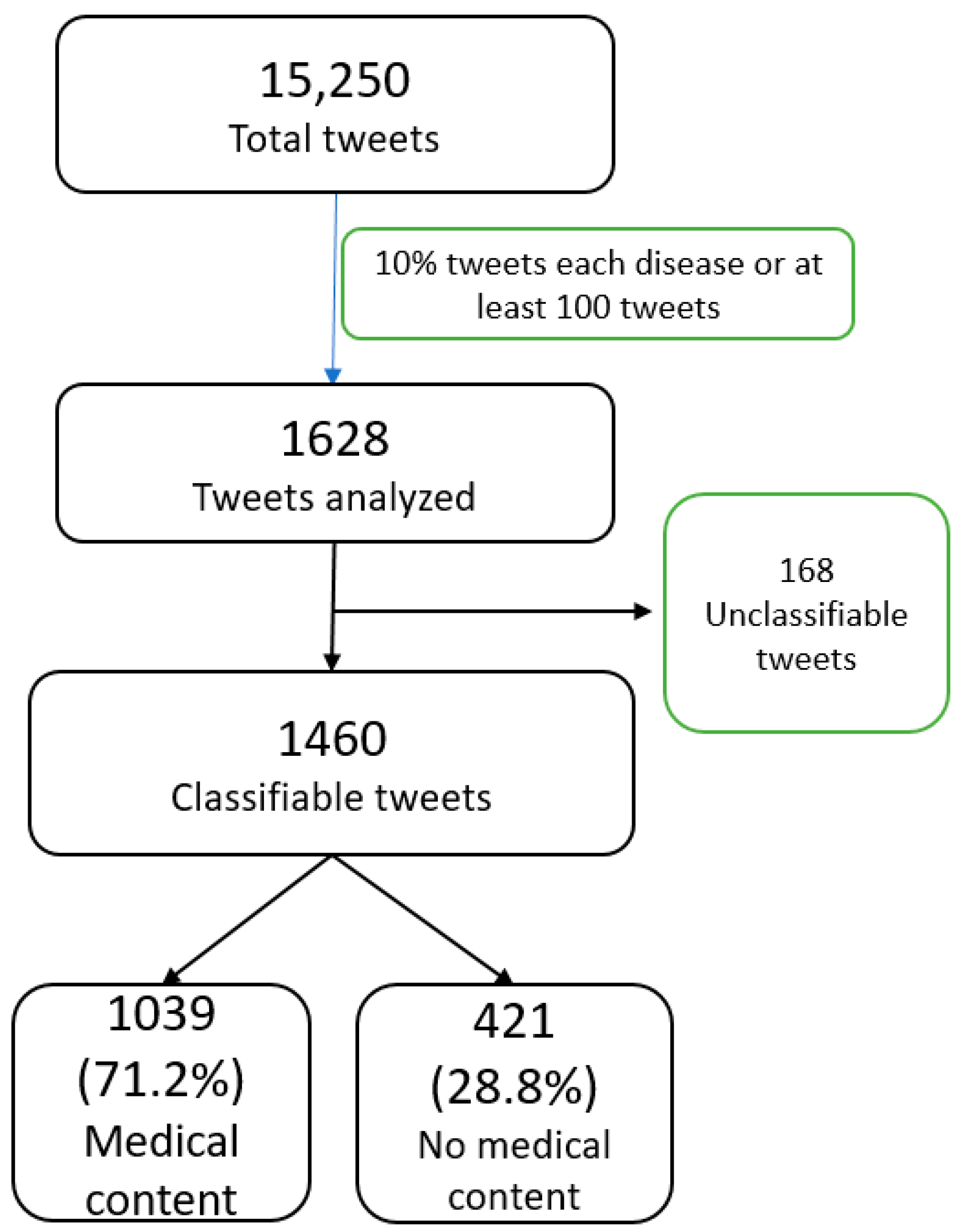
Background: Tweets often indicate the interests of Twitter users. Data from Twitter could be used to better understand the interest in and perceptions of a variety of diseases and medical conditions, including rheumatological diseases which have increased in prevalence over the past several decades. The aim of this study was to perform a content analysis of tweets referring to rheumatological diseases. Methods: The content of each tweet was rated as medical (including a reference to diagnosis, treatment, or other aspects of the disease) or non-medical (such as requesting help). The type of user and the suitability of the medical content (appropriate content or, on the contrary, fake content if it was medically inappropriate according to the current medical knowledge) were also evaluated. The number of retweets and likes generated were also investigated. Results: We analyzed a total of 1514 tweets: 1093 classified as medical and 421 as non-medical. The diseases with more tweets were the most prevalent. Within the medical tweets, the content of these varied according to the disease (some more focused on diagnosis and others on treatment). The fake content came from unidentified users and mostly referred to the treatment of diseases. Conclusions: According to our results, the analysis of content posted on Twitter in regard to rheumatological diseases may be useful for investigating the public’s prevailing areas of interest, concerns and opinions. Thus, it could facilitate communication between health care professionals and patients, and ultimately improve the doctor–patient relationship. Due to the interest shown in medical issues it seems desirable to have healthcare institutions and healthcare workers involved in Twitter.
Keywords: Twitter; rheumatology; social media; public health; health communication Twitter; rheumatology; social media; public health; health communication