Article

Effect of AST Atmosphere on Pt/C Electrocatalyst Degradation

1
Faculty of Chemistry, Southern Federal University, 7 Zorge St., Rostov-on-Don 344090, Russia
2
Research Institute of Physical Organic Chemistry, Southern Federal University, 194/2 Stachki St., Rostov-on-Don 344090, Russia
*
Author to whom correspondence should be addressed.
Inorganics 2023, 11(6), 237; https://doi.org/10.3390/inorganics11060237

Submission received: 1 May 2023 / Revised: 18 May 2023 / Accepted: 26 May 2023 / Published: 28 May 2023

Abstract

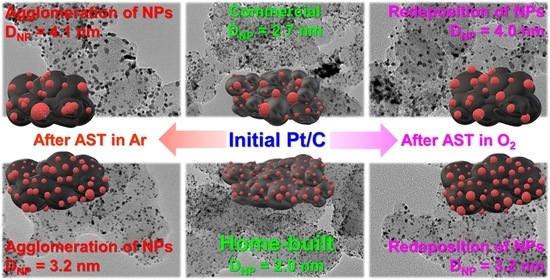
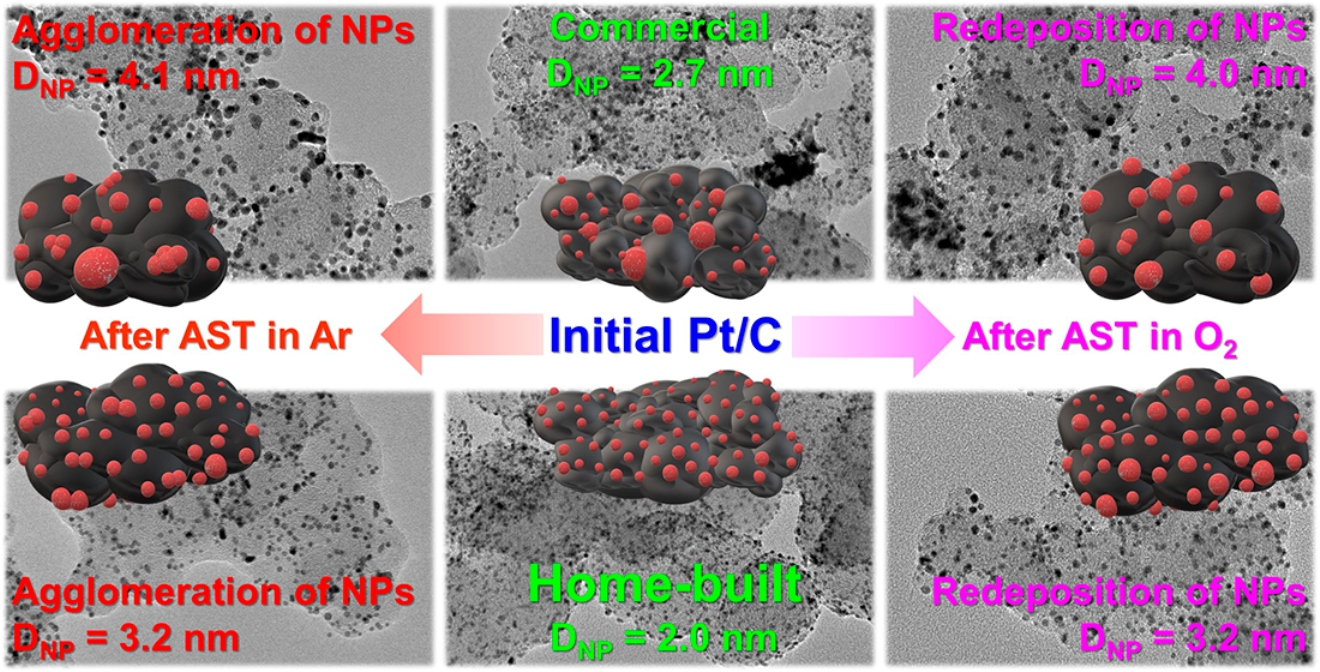
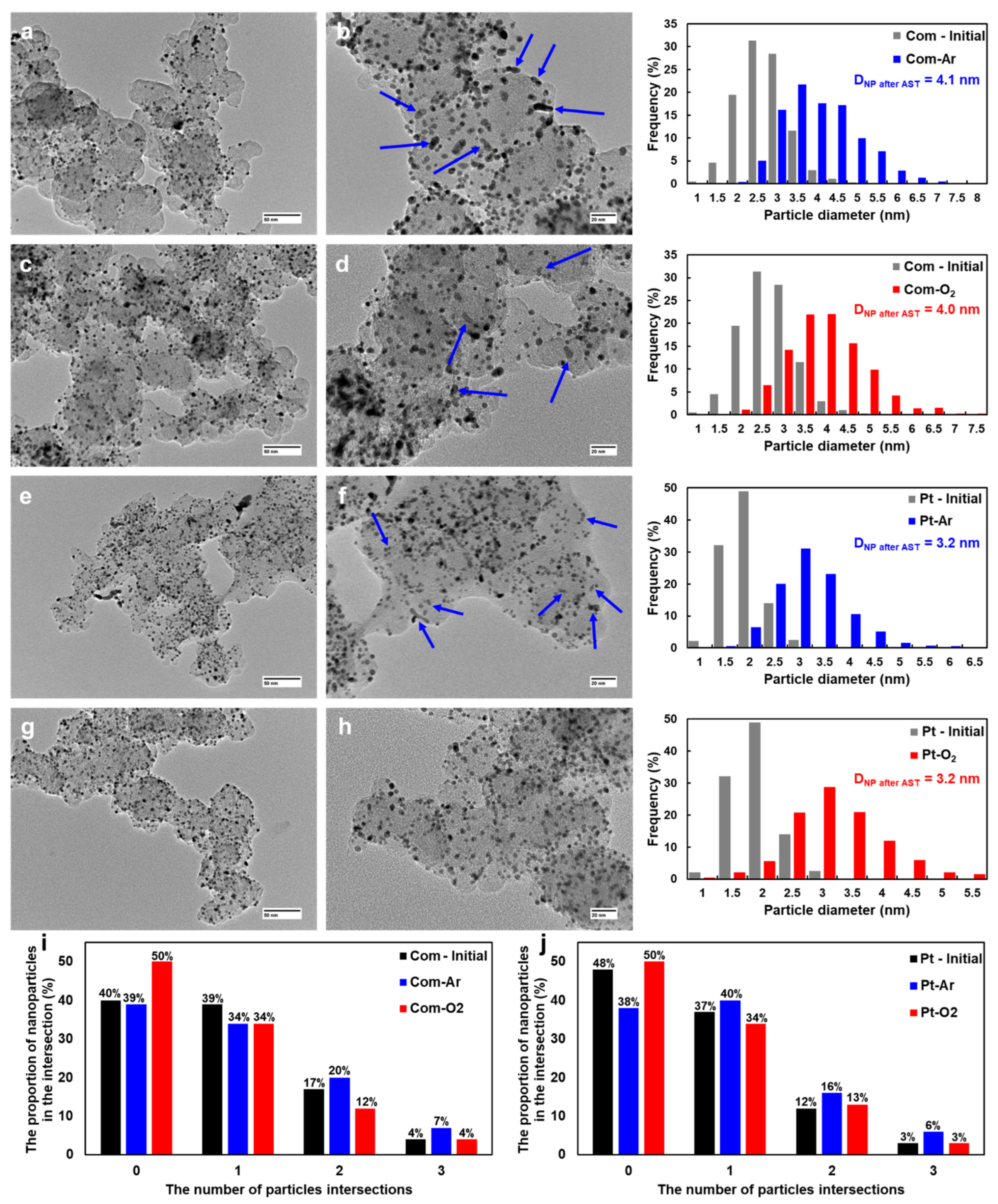
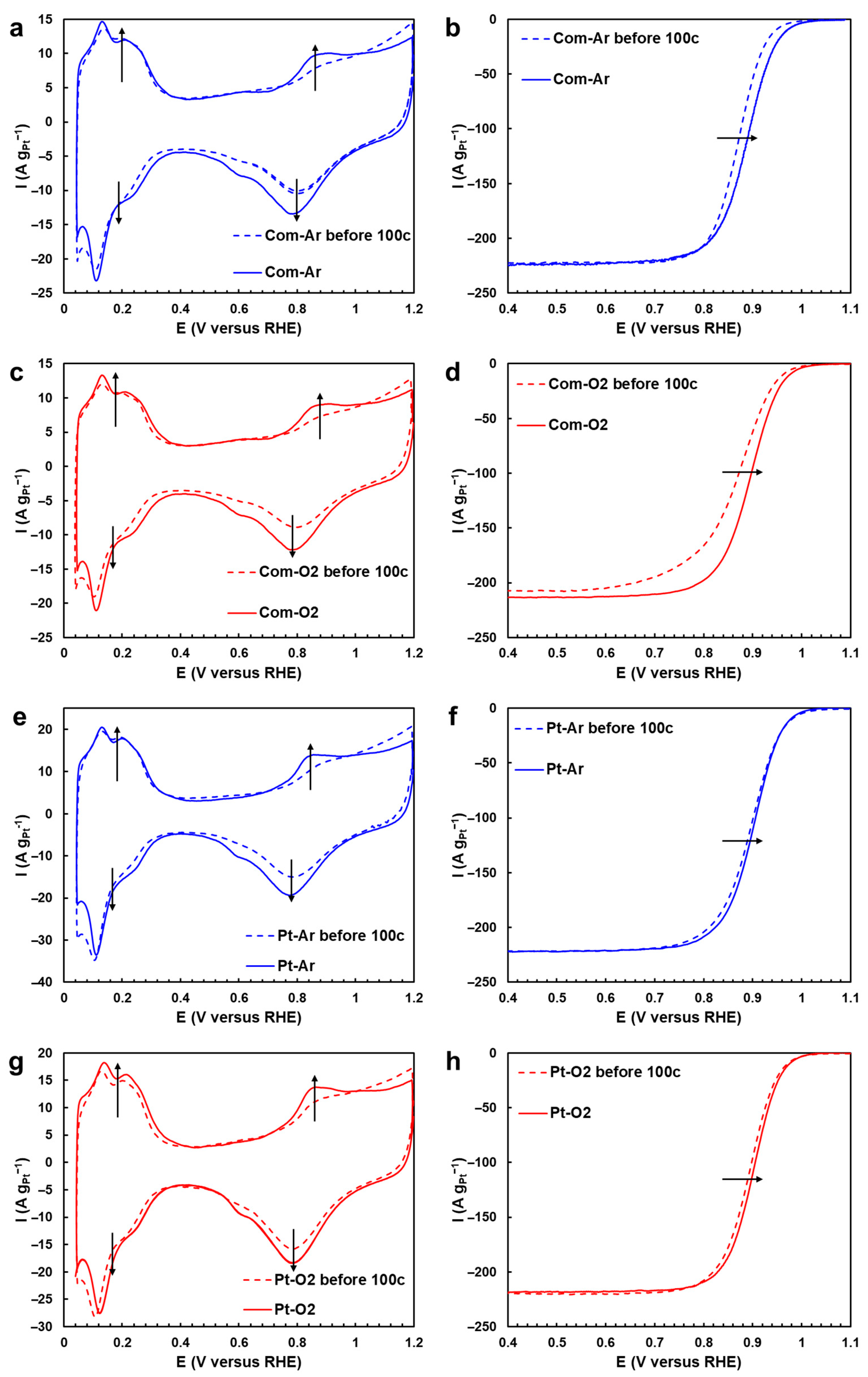
The targeted development of novel stress testing protocols as well as the production of highly active and stable catalysts require abandoning a trial-and-error approach and transitioning to identifying the principal degradation mechanisms of electrocatalysts for PEMFCs under various conditions. Methodological aspects of research related to both qualitative and quantitative assessment of the materials’ robustness against degradation and its mechanisms become the key issues. In this study, accelerated stress testing has been conducted in Ar and O2 to identify the influence of the atmosphere on the degradation and durability mechanisms of the Pt/C catalysts. Initial and final parameters after the AST have been studied in detail by transmission electron microscopy and voltammetry using the rotating disk electrode technique. The Ostwald ripening (redeposition) of platinum particles has been established to be the predominant degradation mechanism during the testing in an O2 atmosphere, this being the agglomeration of nanoparticles during the testing in Ar. An ultra-small size and a narrow size distribution of platinum nanoparticles, as well as their uniform spatial distribution over the surface of the carbon support, have been shown to allow both ORR activity to be increased and durability to be enhanced.
Keywords: durability performance; morphology changes; accelerated stress test; oxygen reduction reaction; electrocatalysts; size effect; catalyst degradation mechanism durability performance; morphology changes; accelerated stress test; oxygen reduction reaction; electrocatalysts; size effect; catalyst degradation mechanism
Graphical Abstract