
Review

Nanoparticle-Mediated Antiviral Strategies for Pandemic Preparedness: Mechanisms, Applications, and Future Perspectives


Wellness and Preventive Medicine Institute, Health Sector, King Abdulaziz City for Science and Technology (KACST), Riyadh 11442, Saudi Arabia
Pandemics 2026, 1(2), 8; https://doi.org/10.3390/pandemics1020008
Submission received: 2 April 2026 / Revised: 25 May 2026 / Accepted: 9 June 2026 / Published: 26 June 2026

Abstract

The recurrent emergence of viral outbreaks, including SARS-CoV-2, influenza, Ebola, and respiratory syncytial virus (RSV), continues to expose critical limitations in conventional antiviral therapies, particularly in terms of targeting specificity, bioavailability, and resistance development. Nanotechnology has emerged as a transformative approach to overcome these challenges. This review provides a comprehensive and critical analysis of nanoparticle-based antiviral systems, including lipid-based, polymeric, inorganic, and hybrid nanocarriers, with a focus on their roles in enhancing drug delivery, targeting precision, and therapeutic efficacy. These platforms exert antiviral effects through multiple coordinated mechanisms, including inhibition of viral entry, suppression of replication, gene silencing, and modulation of host immune responses. The clinical success of lipid nanoparticle-based mRNA vaccines highlights the translational potential of nanotechnology, while emerging nanotherapeutic strategies demonstrate increasing versatility across diverse viral pathogens. However, key challenges—including safety, scalability, formulation stability, and regulatory constraints—continue to limit widespread clinical implementation. Overall, nanoparticle-mediated antiviral systems represent a multifunctional and adaptable platform capable of addressing the limitations of conventional therapies and enabling more effective, resilient, and precision-driven strategies for future pandemic preparedness.

1. Introduction

The growing occurrence of viruses that have pandemic potential, such as COVID-19, Ebola, and influenza, has demonstrated important limitations in current antiviral treatments and worldwide preparedness strategies [1,2,3]. The development of antiviral medications has not yet resulted in sufficiently effective and safe treatments to overcome numerous clinical and pharmacological issues, including insufficient effectiveness, dose-limited toxicity, and rapid development of antiviral resistance, especially among viruses with high mutation rates such as RNA viruses [4,5,6].
In this regard, the use of nanotechnology is emerging as a promising approach in antiviral therapy. Nanotechnology improves antiviral drug delivery and targeting [7,8,9]. Lipid-based nanoparticles, polymeric nanoparticles, and inorganic nanomaterials are overcoming the long-standing problems of antiviral therapy such as drug stability, bioavailability, and release control, alongside the lack of specific targeting in tissues [10,11,12]. Lipid nanoparticles (LNPs), in particular, have been central to the delivery of nucleic acids, including those in mRNA-based COVID-19 vaccines, which represented an important advancement in vaccine nanotechnology [13,14,15].
Nanoparticles have the potential to perform direct and indirect antiviral roles in addition to their use as delivery vehicles, in terms of antiviral effects via mechanisms of action, such as the ability to facilitate the blocking of virus entry, inhibit the replication of viruses, disrupt the assembly and/or release of viruses. In addition, nanosystems can alter the immune responses of the host given that they target both innate and adaptive immune responses to viral infections [16,17,18]. In particular, nanoparticle functionalization enables selective targeting of viral particles or infected cells, minimizing off-target effects and enhancing therapeutic efficacy [19,20].
With regard to global health, nanotechnology-based antiviral methods provide a flexible and scalable means for pandemic preparedness planning. These platforms enable the rapid design and refinement of targeted nanoplatforms for newly discovered and emerging infectious agents—an adaptable platform for future therapeutic and preventive methods. Faced with such considerable potential, several important obstacles still exist. Widespread use of nanotechnology-based antiviral strategies has been hampered by concerns surrounding the toxicity of the nanomaterials, their biocompatibility over time, their manufacturability in bulk for cost-effective and efficient production, the need for regulations and standards for their use, and the need for clinically relevant models [21,22,23].
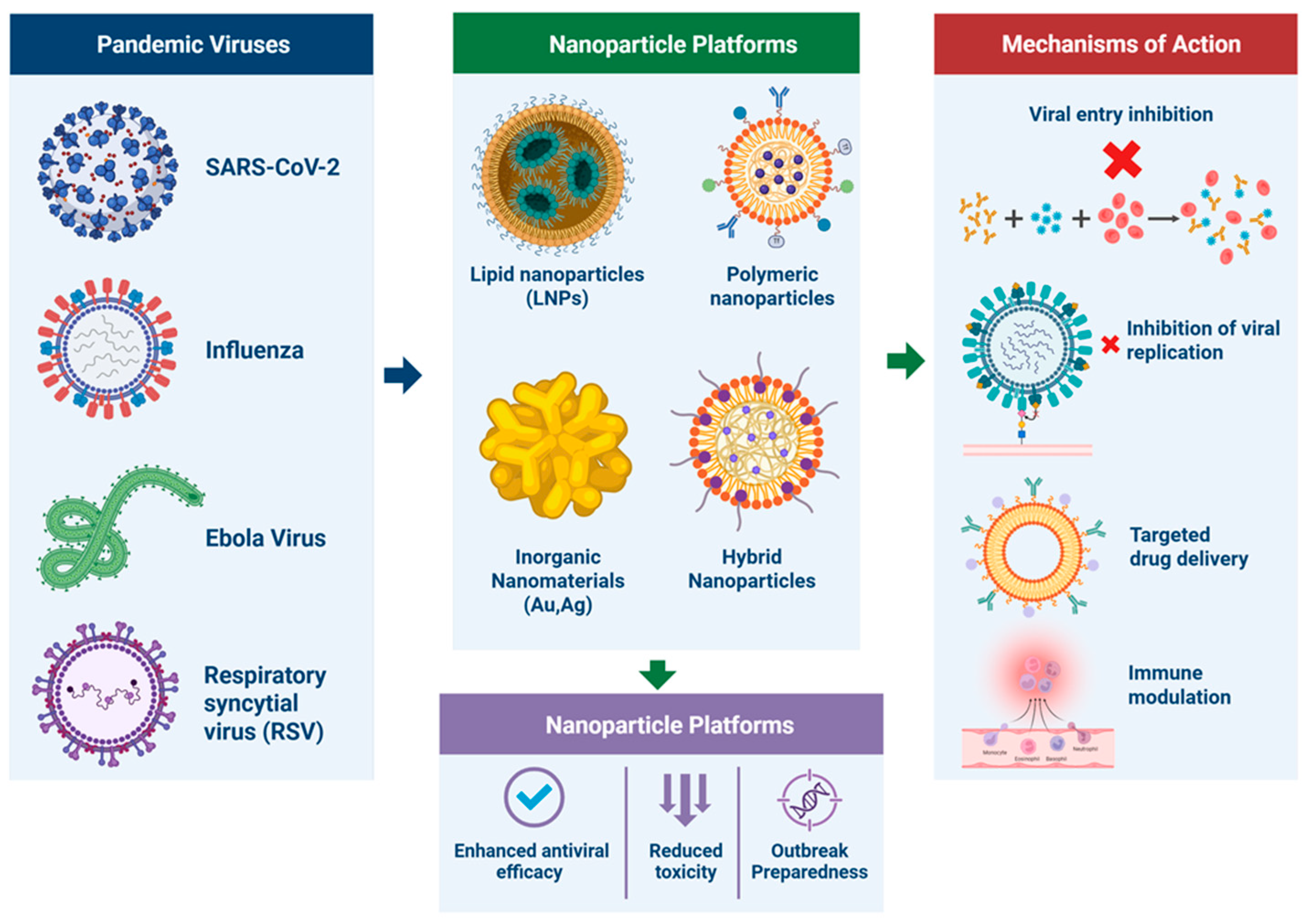
This review provides a comprehensive and critical overview of nanoparticle-mediated antiviral strategies against pandemic pathogens. We examine the structural design and surface engineering of nanocarriers, their underlying antiviral mechanisms, and their applications across major viral infections of global concern. Furthermore, we evaluate the current limitations and emerging opportunities in the field, with a particular focus on translating nanotechnology-based innovations into clinically viable solutions. Collectively, this review highlights the role of nanotechnology as an integrated and forward-looking approach to strengthening global pandemic preparedness and response. As illustrated in Figure 1, nanoparticle-mediated antiviral strategies integrate diverse nanoplatforms and mechanisms to enhance therapeutic precision and pandemic preparedness.

2. Types of Nanoparticles in Antiviral Therapy

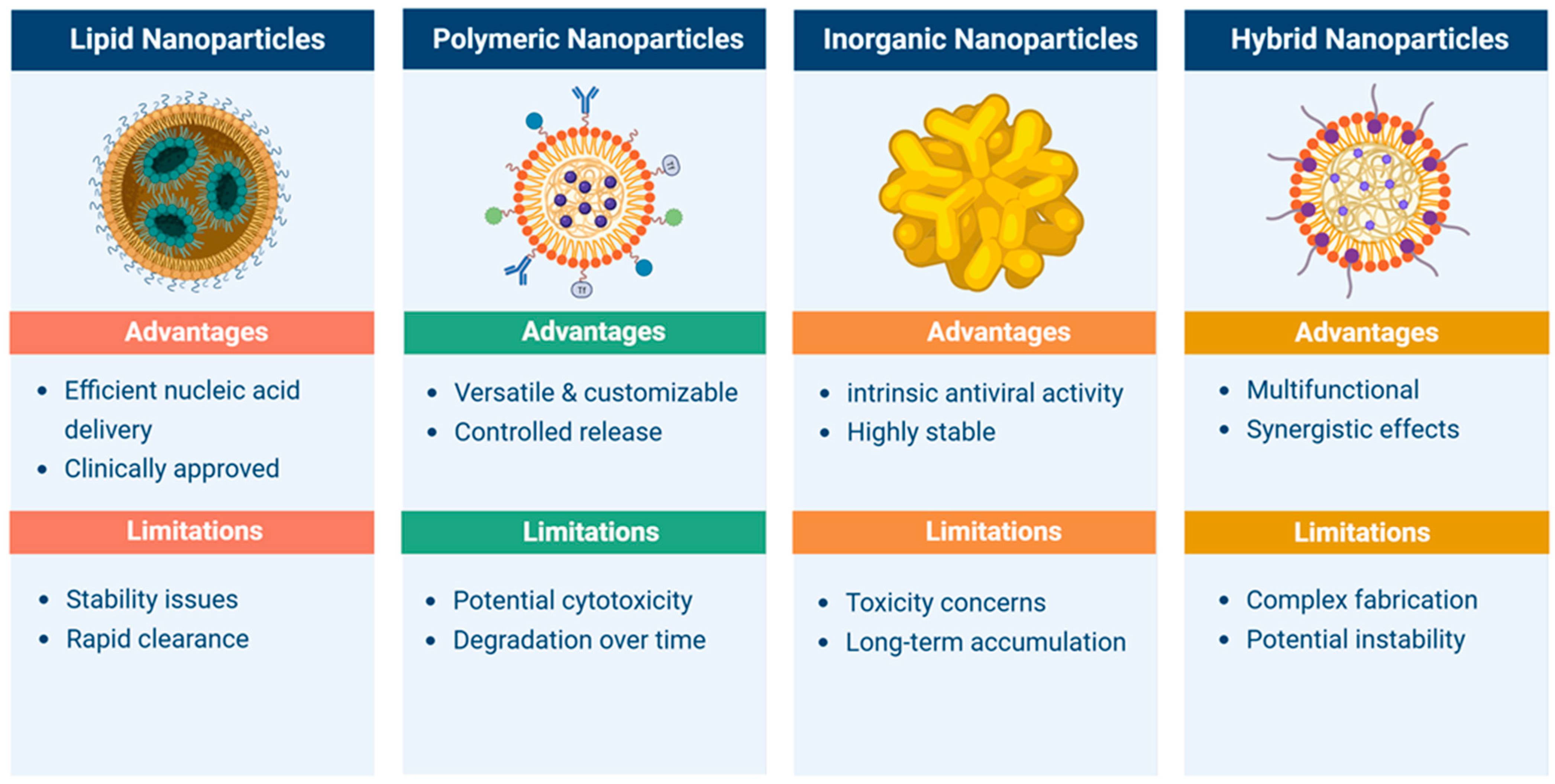
Nanoparticles are being designed as new antiviral drug delivery systems that can modify the pharmacokinetics of drugs, alter host immune responses, and improve tissue-specific targeting of the drugs. For pandemic-prone infectious agents, these systems are versatile and quickly adjustable for therapeutic use. Generally, antiviral nanoparticle platforms can be categorized into lipid-based, polymeric, inorganic, and hybrid systems, each of which has unique structural and functional characteristics and varying degrees of readiness for clinical use (Figure 2). Nanoplatform selection depends on safety and clinical applicability. In Table 1, antiviral delivery systems are compared and summarized [19,24,25].

2.1. Lipid-Based Nanoparticles (LNPs)

Lipid nanoparticle (LNP) systems are first in class and likely to become the first rapid-response nanocarrier systems adapted to nucleic acid delivery. With a core comprising an ionizable lipid, a “helper” lipid, cholesterol, and a polyethylene glycol (PEG) lipid conjugate system, LNPs ensure encapsulation, stabilization, and delivery of nucleic acid mRNA and siRNA to the cytoplasm [11,25]. LNPs’ clinical significance was first recognized with the mRNA vaccines against SARS-CoV-2, which marked a significant advancement in vaccine development [26,31,32].
LNP systems transfect cells through endocytosis and endosomal escape results in the cytoplasmic release of nucleic acids and potent transfection to achieve high level protein expression. LNPs have also been increasingly used to deliver antiviral mRNA therapeutics that target the silencing of viral genomes and/or the modulation (suppression or enhancement) of host immune responses [33,34].
LNPs have high biocompatibility, reproducible manufacturing, and established regulatory compliance, which favor their translation to the clinic. The necessity for maintaining cold-chain storage and the PEG-associated immunogenicity and infusion-reaction side effects, are limitations to the wide use of LNPs in antiviral therapeutics, especially in resource-poor environments [35,36]. These hurdles must be addressed to enable LNPs to be used beyond their current vaccine targets to also include antiviral therapeutics.

2.2. Polymeric Nanoparticles

Notable advancements in recent years have been made in engineering polymeric PNPs due to their ability to achieve controlled and sustained release of therapeutics. PNPs are commonly formulated using biodegradable polymers (among which are poly (lactic-co-glycolic (PLGA) acid), chitosan and polyethylenimine (PEI)). PNPs allow for the modification of various polymeric nanoparticles properties (such as size, surface charge and degradation rate) that are essential for the therapeutic performance of the PNPs [37,38].
PNPs have the ability to encapsulate almost any therapeutic agent, ranging from small molecules to proteins and nucleic acids, making them ideal for multi-functional antiviral systems [39].
Chitosan nanoparticles have shown notable antiviral and mucoadhesive properties that when used for intranasal delivery of chitosan nanoparticles facilitate targeting of respiratory viruses, especially when focusing on the primary infection site for chitosan nanoparticles. This enhances the primary systemic immunity and reducing the exposure to the general systemic immunity [40,41].
Cellular and tissue targeting can also be enhanced by modifying nanoparticles with antibodies, peptides, or even receptor-specific targeting ligands. For their clinical use, controlled and sustained release of therapeutics PNPs still have to achieve much due to the use of cationic polymers (among which are PEI) and their cytotoxicity, and variations in their degradation rate, and in their manufacture, large-scale production [42,43].

2.3. Inorganic Nanoparticles

The unique physical and chemical properties of certain inorganic nanoparticles like gold (AuNPs), silver (AgNPs), and silica-based nanoparticles exhibit unique physicochemical characteristics, including high surface area and tunable optical properties such as an inherent ability to inhibit viral infections [44,45,46]. In contrast to lipid and polymeric systems, which act in encapsulation and delivery of an active pharmaceutical ingredient, inorganic nanoparticles can directly interact with viral particles without requiring encapsulation.
These nanoparticles interact with cells by binding to and/or modifying cellular membrane viral surface proteins and disrupting and/or modifying cellular membrane viral envelope and inhibit the virus’ ability to adhere to and/or penetrate the cells of the host organism. Silver nanoparticles, for instance, interact with viral nucleic acid glycoproteins and inhibit the ability of the virus to infect the host organism, and demonstrate antiviral activity against a wide range of viruses to include HIV, influenza and coronaviruses [47,48,49]. In addition, the antiviral activity of gold nanoparticles can be enhanced by chemically modifying the surface (i.e., functionalization) with certain specific structural ligands, a protein, or a peptide to target the activity of the gold nanoparticles, thus obtaining specific antiviral activity with enhanced immune system recognition [50].
The unique physical and chemical properties of inorganic nanoparticles provide a broad range of potential applications, but these unique physical and chemical properties also pose problems for their in vivo clinical usage as well as their commercial use in large volumes. Biocompatible lipid and polymeric systems are, in general, more favorable alternatives to inorganic nanoparticles as there is a lower risk of prolonged biocompatibility, thus leading to chronic biocompatibility and/or toxicity [51,52]. Therefore, the unique properties of inorganic materials requiring a substantial effort to improve their biocompatibility and increase their use in biodegradable alternatives.

2.4. Hybrid and Multifunctional Nanoparticles

Combining the positive attributes and mitigating the downsides of several materials, hybrid nanoparticles show promise as optimally engineered nanocarriers. These include lipids, polymers, and inorganic materials, which can improve structural robustness, release profile, and biological interactions [53].
The versatility of hybrid systems can be utilized to their maximum potential to achieve several modulated therapeutic, diagnostic, and imaging functionalities. For instance, in the case of lipid–polymer hybrid nanoparticles, the combination of the simplicity of cellular uptake and biocompatibility of lipids with the robust controlled release and structural integrity of polymer nanosystems can be used to achieve the desired therapeutic effect and improve the pharmacokinetics of the system [54,55].
The most notable feature from the perspective of pandemic preparedness is the flexibility of hybrid nanoparticles, which can be rapidly adapted. Emerging pathogens can be rapidly incorporated using new therapeutic agents or targeting ligands, and for the next-generation antiviral strategies, hybrid nanoparticles provide highly adaptable and easily engineered multi-component systems. However, when considering the clinical application of hybrid nanoparticles, the challenges related to formulation complexity, production costs, and regulations must be addressed [56].

3. Mechanisms of Nanoparticle-Mediated Antiviral Action

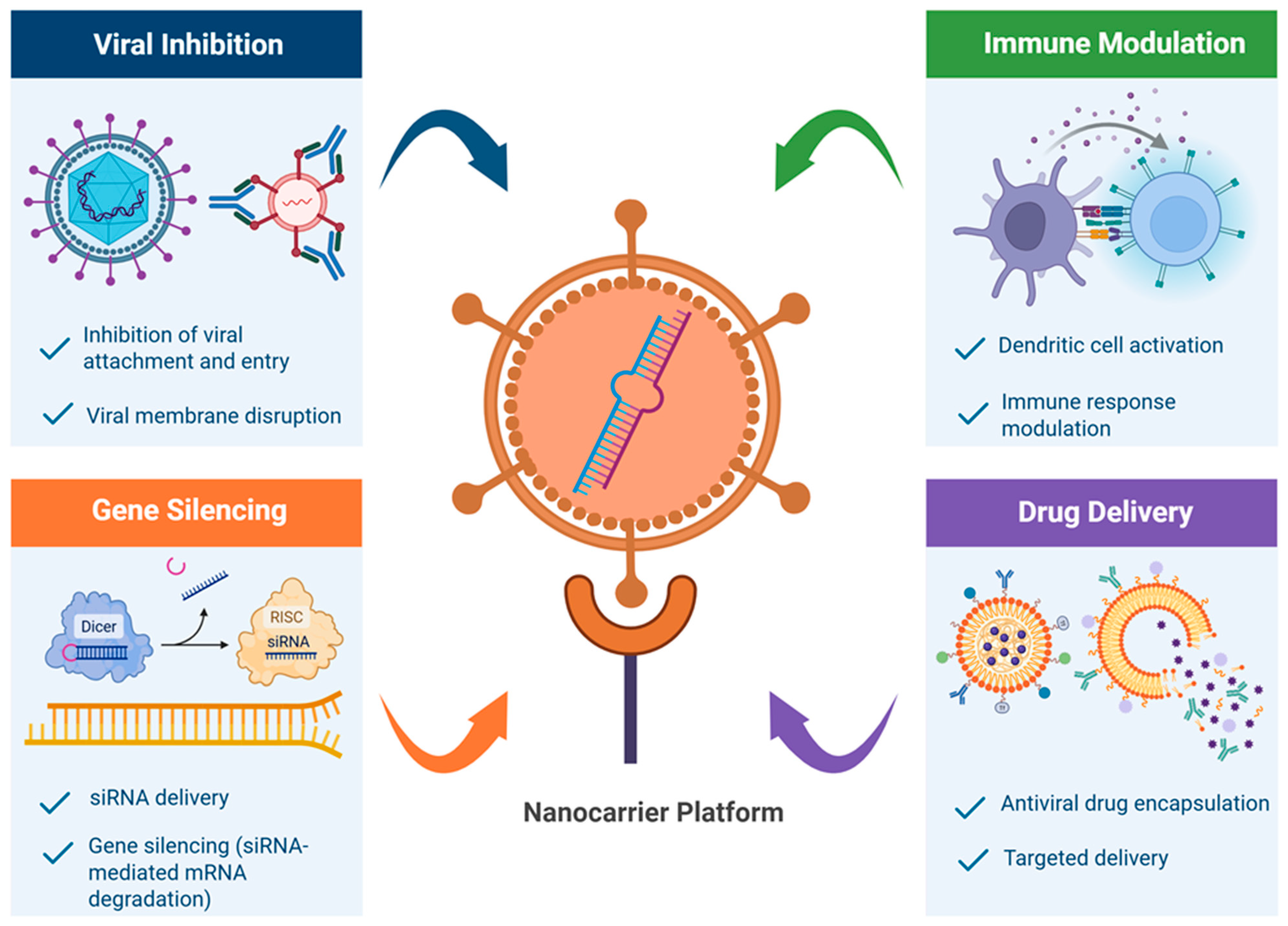
Designing antiviral therapies using nanoparticles has been shown to significantly improve the therapy’s effectiveness due to various mechanisms that act on various stages of the virus’ lifecycle. As illustrated in Figure 3, nanoparticle systems simultaneously target multiple stages of the viral life cycle, including entry inhibition and replication suppression [57,58,59]. Most conventional antiviral agents are designed to target a single viral process, which limits their effectiveness against rapidly mutating viruses. In contrast, nanoparticle-based systems enable multi-target intervention strategies that enhance therapeutic resilience. This is particularly advantageous for emerging RNA viruses, where high mutation rates often lead to resistance, as these systems reduce the likelihood of therapeutic failure and support more sustained antiviral efficacy during pandemics.
Moreover, the integration of multiple mechanisms within a single nanoplatform enhances both therapeutic efficacy and selectivity. From a practical point of view, this multifunctionality is particularly important in a pandemic situation because it allows for innovative and flexible therapeutics that can respond to viral mutations and various disease presentations in patients.

3.1. Inhibition of Viral Entry

Compared to conventional antivirals that primarily act post-entry, nanoparticle-based systems enable pre-entry inhibition, which can significantly reduce viral load during the early stages of infection. By binding to viral surface proteins or mimicking host cell receptors, engineered nanoparticles disrupt virus–host interactions and prevent cellular entry, thereby offering a proactive antiviral strategy [60]. Functionalized nanoparticles with particular ligands, antibodies, or receptor analogs can inhibit viral adhesion, therefore blocking infection in its earliest phase. For example, some nanoparticles can imitate host cell receptors and serve as decoys to trap viruses, preventing them from reaching their target cells [61,62]. This decoy method is unique and broad-spectrum in potential for use as an antiviral strategy.
In addition, nanoparticles that contain analogs of heparan sulfate can inhibit viral entry by binding to viral glycoproteins for several families of viruses, including coronaviruses and simplex herpes viruses [63]. Furthermore, some inorganic nanoparticles, specifically silver nanoparticles, can inhibit viral entry by directly interacting with proteins present on the viral envelope and causing structural changes that result in the loss of viral infectivity [64].

3.2. Suppression of Viral Replication

Nanoparticles are essential for improving the intracellular delivery and bioavailability of antiviral agents for poorly absorbed or quickly degraded drugs. Nanoparticle systems, by improving endosomal escape and cellular internalization, substantially increase the therapeutic potential of antiviral agents [65].
Recent advancements include the use of nanoparticles for the delivery of nucleic acid-based therapeutics, such as mRNA and small interfering RNA (siRNA), that target and silence viral genomes or host cellular factors of the viral replication cycle [32,66]. The combination of a nanoparticle delivery system and RNA interference (RNAi) approaches provides the desired stability, selectivity, and intracellular release of the therapeutic RNA, which results in a marked reduction in the viral replication cycle [67].
Nanoparticle systems may also be designed for sustained and controlled release of therapeutic agents, which may prolong the maintenance of the desired therapeutic concentration [68]. Compared to traditional drug administration, controlled delivery systems reduce the peaks and troughs associated with drug levels and, therefore, increase the overall efficacy of the antiviral agents.

3.3. Targeted Drug Delivery and Tissue-Specific Accumulation

The targeting of tissues infected with a particular disease, thereby achieving selective retention of drugs, is one of the most notable benefits of systems using nanoparticles; as a result, there is an increase in the effectiveness of a therapeutic agent and a decrease in systemic toxicity and off-target effects [69].
By targeting specific infected tissues and cells, marked nanoparticles can be designed to bind to specific infected cells or tissues that express particular biomarkers [70]. For example, in the case of a viral infection with selective tissue tropism, specific nanoparticles can be designed to encapsulate and deliver therapeutic antiviral agents to directly infected tissues.
In the case of viral infections of the lungs such as SARS-CoV-2 or influenza, the use of nanoparticle systems is especially beneficial as they can be delivered to the lungs via inhalation or through an intranasal administration with a direct antiviral agent [71,72].

3.4. Immune System Modulation

In addition to their direct antiviral effects, nanoparticles can modulate host immune responses, thereby enhancing antiviral defense mechanisms. Certain nanoparticles function as immunomodulatory agents or adjuvants, improving antigen presentation and stimulating both innate and adaptive immune responses [73].
Lipid nanoparticle-based mRNA vaccines represent a prominent example of this mechanism. In these systems, nanoparticles not only deliver genetic material encoding viral antigens but also contribute to immune activation, resulting in robust and long-lasting immune responses [74].
Furthermore, nanoparticles can be engineered to regulate cytokine responses, which is particularly relevant in severe viral infections characterized by hyperinflammation and cytokine storms. By modulating immune signaling pathways, nanoparticle-based interventions may help restore immune balance and reduce disease severity [75].

3.5. Multimodal and Synergistic Antiviral Effects

Antiviral therapies that utilize nanoparticles have the advantage of being able to combine several different mechanisms of action in a single therapy. This is largely due to the ability of nanoparticles to co-deliver different classes of therapeutics, including antiviral drugs, nucleic acids, and modulators of the immune system [76]. This ability to co-deliver sequential and/or simultaneous targeting of several different stages of the viral life cycle facilitates the targeting of multiple mechanisms of action in a single approach.
In contrast to monotherapy, which is often focused on a single viral target, combination therapies can target multiple mechanisms to escape viral control [77].
For example, in a combination therapy that employs nanoparticles that contain antiviral drugs and immune system modulators, there is direct inhibition of viral replication, while at the same time, there is an increase in the immune responses of the host. This would result in an improved outcome of the disease. In the context of a pandemic and the need for flexible, effective, and rapid responses to evolving viral pathogens, the utilization of these integrated approaches is invaluable [78].

4. Applications of Nanoparticle-Based Antiviral Strategies in Pandemic Viruses

Nanoparticle-based antiviral strategies have demonstrated remarkable versatility across a broad spectrum of viral pathogens, particularly those associated with epidemics and pandemics. These systems have been successfully applied in vaccine development, targeted therapeutics, viral entry inhibition, replication suppression, and immune modulation. Importantly, their adaptability allows rapid reconfiguration in response to emerging viral threats, making them valuable tools for global pandemic preparedness (Table 2) [79,80,81].
Their modular design enables the incorporation of diverse therapeutic payloads and targeting strategies, which can be tailored according to the biological characteristics of specific viruses. This flexibility is particularly critical in the context of rapidly evolving pathogens.

4.1. Severe Acute Respiratory Syndrome Coronavirus 2

Severe acute respiratory syndrome coronavirus 2 (SARS-CoV-2) pandemic represents a defining example of the clinical and translational impact of nanotechnology in antiviral therapy. Lipid nanoparticle (LNP)-based mRNA vaccines, such as BNT162b2 and mRNA-1273, demonstrated unprecedented speed in development and demonstrated substantial efficacy, highlighting the adaptability and scalability of nanoparticle platforms during global health emergencies [25,102,103].
Beyond vaccine development, nanoparticle-based systems have been extensively explored for therapeutic applications against SARS-CoV-2. These include the delivery of antiviral agents such as remdesivir and nucleic acid-based therapeutics (e.g., siRNA), which target viral genes involved in replication and pathogenesis [32,67]. Such approaches enable precise molecular targeting, thereby improving antiviral efficacy while minimizing off-target effects.
Additionally, engineered nanoparticles have been designed to interact with the viral spike protein, functioning as decoy receptors or neutralizing agents that block viral entry into host cells [104].
Nanotechnology has also contributed significantly to diagnostic advancements. Nanoparticle-based biosensors enable rapid, sensitive, and specific detection of viral RNA and antigens, facilitating early diagnosis and effective outbreak control [105]. Collectively, these applications underscore the central role of nanotechnology in pandemic response and highlight its potential for future viral threats.

4.2. Influenza Virus

Because they can cause seasonal epidemics and periodic pandemics, Influenza viruses continue to pose a persistent global threat. Prophylactic and therapeutic interventions are enhanced by the use of nanoparticle-based vaccines [106].
Nanoparticle-based vaccines enhance vaccine stability, improve immunogenicity, and promote long-lasting immune protection.
This is particularly important when considering the problems created by antigenic drift and shift [107].
Nanoparticles can also be used to increase the effectiveness of the delivery of anti-influenza drugs like oseltamivir. Drugs that are encapsulated in a lipid or polymeric nanoparticle have an increased length of time in the bloodstream and an increased ability to be delivered to the areas of the body that have become infected [108].
Furthermore, if a nanoparticle is bound with a sialic acid mimetic, the nanoparticle can also prevent infection by preventing the virus from binding to the host cell and thereby preventing the infection [109].

4.3. Ebola Virus

The Ebola virus disease (EVD) is characterized by a high mortality rate and few options for the treatment emphasizing the need for new antiviral methods. Recently, new methods using nanoparticle-based delivery systems targeted at the replication of the Ebola virus through nucleic acid-based therapeutics, especially siRNA and antisense oligonucleotides, have been developed [110].
Preclinical studies have demonstrated that lipid nanoparticle (LNP)–mediated delivery of siRNA can effectively silence essential Ebola virus genes involved in viral replication, resulting in complete protection in nonhuman primate models [94].
Additionally, nanoparticle-based vaccine platforms compared to other vaccine systems have been able to induce strong and prolonged immune responses and protective immunity against the Ebola virus [110]. Other than the prolonged immune responses, the other mechanisms proposed as to why these systems are more effective are better antigen presentation and immune system activation. These are critical mechanisms for effective interventions directed at highly virulent pathogens [111].

4.4. Respiratory Syncytial Virus

Respiratory syncytial virus (RSV) is among the most important causes of lower respiratory tract infections in infants, the elderly, and persons with compromised immune systems. To address RSV, significant efforts have been made to improve the efficacy of vaccines and antiviral treatments using RSV in combination with a variety of nanoparticle technologies [112].
The use of polymeric and virus-like nanoparticles for the delivery of RSV antigens has been shown to improve immunogenicity and generate better protective responses. These types of nanoparticles also offer the ability to enhance antigen delivery efficiency and provide sustained immune activation for extended periods [112].
Importantly, RSV antiviral therapies delivered by nanoparticles have been shown to significantly improve clinical outcomes and decrease viral loads because of the targeted delivery of the antiviral agents to the infected tissues, thereby improving the therapeutic effect and limiting systemic toxicity [113].
Formulations of nanoparticles that are designed to be delivered intranasally or by inhalation also offer RSV treatments the unique ability to provide targeted delivery to the respiratory tract where it will be most needed and where it will elicit a protective immune response and therapeutic effect [114].

4.5. Emerging and Re-Emerging Viruses

Besides the well-known pandemic viruses, nanoparticle-based antiviral approaches have also been utilized for emerging and re-emerging pathogens, such as the Zika, dengue, and monkeypox viruses [44,79,108].
For example, nanoparticle systems can be created to serve as a delivery platform for nucleic acid vaccines or antiviral drugs focused on the newly sequenced viral genomes within a short period. The quick responsiveness of such systems can be critical in outbreak settings, where a rapid response to mitigate the spread of disease is important [115].
With the potential for rapid therapeutic development, easy large-scale production, and precision, nanoparticle-based platforms are vital for responding to future pandemics and novel infectious diseases [23,44].

5. Challenges and Limitations of Nanoparticle-Based Antiviral Therapies

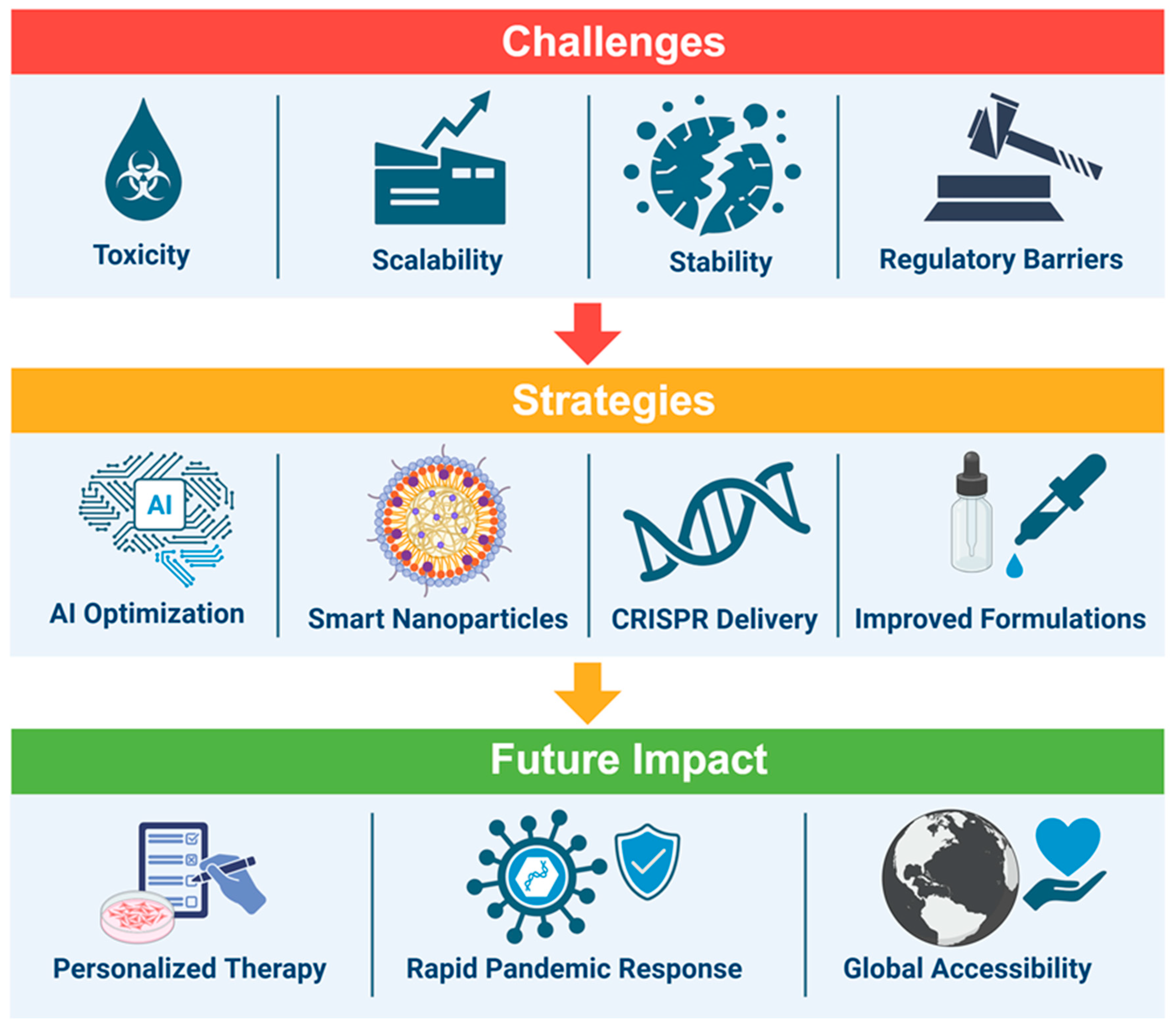
This section outlines the key challenges associated with the clinical translation of nanoparticle integrated antiviral strategies and the challenges that limit nanoparticle antiviral strategies from being processed on a larger scale. The issues that arise from the clinical translation of nanoparticle integrated antiviral strategies extend beyond technical limitations [23,24,92]. These issues include biocompatibility, the ability to manufacture on a large scale, regulatory issues, and the therapeutic reliability for pandemic pathogens that are evolving. The interdisciplinary approach needed to eliminate the aforementioned issues integrates the most advanced techniques from materials science, regulatory science, and computational modeling. (Figure 4). The key challenges and corresponding future strategies in nanoparticle-based antiviral therapies are summarized in Table 3.

5.1. Toxicity and Biocompatibility Concerns

One of the most significant barriers to the clinical translation of nanoparticle-based antiviral systems is the uncertainty surrounding their long-term safety and biocompatibility. Nanoparticles interact dynamically with biological systems, which may lead to unintended consequences such as oxidative stress, inflammatory responses, immune activation, and cellular toxicity [116].
Inorganic nanoparticles, particularly silver and gold nanoparticles, have raised concerns due to their potential for bioaccumulation, prolonged tissue retention, and limited biodegradability. These properties may contribute to chronic toxicity and environmental risks, especially with repeated or high-dose exposure [117,118]. Even relatively biocompatible systems, such as LNPs, have been associated with immunogenic reactions, including complement activation and infusion-related responses in certain individuals [119].
Moreover, nanoparticle–protein corona formation in vivo can alter nanoparticle behavior, biodistribution, and immunological responses, further complicating safety assessment. Therefore, comprehensive toxicological evaluation—including long-term in vivo studies, immunotoxicity profiling, and pharmacokinetic analysis—is essential to ensure safe clinical application [120].

5.2. Manufacturing and Scalability Challenges

The transition from laboratory-scale synthesis to industrial-scale production remains a major bottleneck in the development of nanoparticle-based antiviral therapies. Achieving consistent and reproducible nanoparticle formulations requires strict control over critical quality attributes, including particle size, polydispersity index (PDI), surface charge, and encapsulation efficiency [121].
Scaling up production often introduces variability in physicochemical properties, which can directly impact therapeutic efficacy and safety. This challenge is particularly pronounced for complex nanoplatforms, where minor variations in formulation parameters can lead to significant differences in biological performance [122].
In addition, certain nanoparticle systems—especially lipid-based formulations—require specialized manufacturing technologies, such as microfluidics or high-pressure homogenization, along with stringent environmental controls. These requirements increase production costs and limit accessibility, particularly in resource-limited settings [123].

5.3. Stability and Storage Limitations

The physicochemical stability of nanoparticle formulations remains a critical concern, particularly during storage and distribution. Instability can result in aggregation, degradation, premature drug release, or loss of functional activity, ultimately compromising therapeutic performance [124,125].
This issue is especially relevant for nucleic acid-based therapeutics, such as mRNA, which are highly sensitive to temperature fluctuations, enzymatic degradation, and environmental conditions [118]. The reliance on cold-chain storage, as observed with mRNA vaccines, presents significant logistical challenges, particularly in low- and middle-income countries where infrastructure may be limited [126].
Improving nanoparticle stability through formulation optimization, lyophilization techniques, and the development of temperature-stable delivery systems is essential for enhancing global accessibility and ensuring equitable distribution.

5.4. Regulatory and Clinical Translation Barriers

The regulatory landscape for nanoparticle-based therapeutics is still evolving and remains a significant barrier to clinical translation. The complexity and heterogeneity of nanoparticle systems—characterized by diverse compositions, multifunctionality, and dynamic biological interactions—pose challenges for standardized evaluation and approval processes [127].
Currently, there is a lack of universally accepted regulatory frameworks specifically tailored to nanomedicine, leading to uncertainties in quality control, safety assessment, and clinical trial design. Furthermore, translating promising preclinical findings into successful clinical outcomes remains challenging. Many nanoparticle-based therapies demonstrate strong efficacy in vitro or in animal models but fail to replicate these results in human trials due to differences in physiology, immune responses, and disease complexity [128,129].
Bridging this gap requires improved predictive models, standardized evaluation protocols, and closer collaboration between researchers, industry, and regulatory agencies.

5.5. Viral Mutation and Resistance

Although nanoparticle-based antiviral systems offer advantages in reducing resistance through multi-target mechanisms, rapidly mutating viruses—particularly RNA viruses—continue to present a significant challenge. Viral mutations can alter target structures, reduce drug binding affinity, and compromise therapeutic effectiveness [130].
This challenge underscores the need for the development of adaptable and broad-spectrum nanoparticle platforms capable of targeting conserved viral elements or multiple stages of the viral life cycle simultaneously. Strategies such as combination therapy, multi-drug loading, and gene-targeting approaches may help mitigate the impact of viral evolution [131].

5.6. Economic and Accessibility Considerations

The cost of developing, manufacturing, and distributing advanced nanoparticle-based therapeutics remains a major barrier to global implementation. High production costs, complex formulation processes, and stringent storage requirements can limit accessibility, particularly in low- and middle-income countries [132].
Ensuring equitable access to nanotechnology-based antiviral therapies is a critical component of global pandemic preparedness. Strategies aimed at reducing production costs, simplifying manufacturing processes, and improving formulation stability are essential for maximizing the global impact of these technologies [133].
In addition, international collaboration, technology transfer, and investment in decentralized manufacturing infrastructure may play a key role in expanding access and ensuring a more equitable distribution of advanced antiviral therapies.

6. Future Perspectives

The rapid evolution of nanotechnology has positioned nanoparticle-based antiviral systems as a central pillar in next-generation pandemic preparedness and response. However, future progress in this field will depend not only on technological innovation, but also on the integration of interdisciplinary expertise, data-driven design, and the development of adaptable, scalable, and precision-oriented therapeutic platforms [134]. Importantly, translating these innovations into clinically impactful solutions will require coordinated efforts across scientific, industrial, and regulatory domains.

6.1. AI-Driven Nanomedicine Design

Artificial intelligence (AI) and machine learning (ML) are poised to transform the design, optimization, and clinical translation of nanoparticle-based antiviral systems. AI-driven frameworks can predict nanoparticle–virus interactions, optimize critical physicochemical parameters—such as size, surface charge, and functionalization—and accelerate the identification of optimal formulations with enhanced therapeutic performance [135].
Moreover, AI can significantly reduce development timelines by enabling high-throughput virtual screening of antiviral compounds and facilitating their integration into nanoparticle platforms. When combined with real-time epidemiological and genomic data, AI-based models may enable dynamic adaptation of therapeutic strategies in response to emerging viral variants, thereby enhancing responsiveness during pandemic outbreaks [136].

6.2. Personalized and Precision Antiviral Therapy

Future antiviral strategies are expected to increasingly adopt a personalized medicine approach, in which nanoparticle-based systems are tailored to individual patient characteristics, including genetic background, immune status, and disease severity [130].
Nanoparticles can be engineered to deliver patient-specific therapeutic payloads, such as personalized mRNA vaccines or gene-targeting therapeutics, thereby maximizing efficacy while minimizing adverse effects. This approach may be particularly valuable for high-risk and immunocompromised populations, where standardized treatments may be insufficient. The integration of nanotechnology with precision medicine may support more patient-centered antiviral interventions [137].

6.3. Stimuli-Responsive and Smart Nanoparticles

The development of stimuli-responsive (“smart”) nanoparticles represents a major advancement in improving therapeutic precision and control. These systems are designed to respond to specific biological or environmental triggers—such as pH variations, enzymatic activity, or redox conditions—allowing for site-specific and controlled drug release [138].
Such precision delivery minimizes systemic exposure and enhances therapeutic outcomes by concentrating antiviral activity at sites of infection. In addition, externally triggered systems—such as light-, magnetic-, or temperature-responsive nanoparticles—offer further opportunities for spatiotemporal control of drug activation, opening new avenues for highly targeted antiviral interventions [139].

6.4. CRISPR-Based Antiviral Delivery Systems

The convergence of nanotechnology with gene-editing technologies, particularly CRISPR-Cas systems, represents a promising frontier in antiviral therapy. Nanoparticles can serve as efficient and protective carriers for CRISPR components, enabling targeted editing or degradation of viral genomes within infected cells [140].
This strategy offers the potential for highly specific antiviral effects, particularly against viruses with well-characterized genetic sequences. However, challenges related to delivery efficiency, off-target effects, immune responses, and regulatory approval remain important barriers to clinical translation [141].

6.5. Multifunctional and Theranostic Platforms

Future nanoparticle systems are expected to incorporate multifunctional capabilities, combining therapeutic and diagnostic functions within a single integrated platform. These “theranostic” systems enable simultaneous detection of viral infections, targeted delivery of antiviral agents, and real-time monitoring of treatment response [142].
Such integration has the potential to improve clinical management by facilitating early diagnosis, precise intervention, and treatment monitoring. In pandemic settings, theranostic platforms could enable rapid screening and targeted therapy, thereby improving patient management and public health response [54].

6.6. Scalable Platforms for Pandemic Preparedness

A critical priority for future research is the development of scalable and adaptable nanoparticle platforms that can be deployed against emerging pathogens. These systems should enable the rapid incorporation of new antigens or therapeutic payloads, thereby accelerating outbreak response timelines [143].
Lessons learned from the COVID-19 pandemic underscore the importance of flexible manufacturing infrastructure and robust supply chains. Future innovations should focus on simplifying nanoparticle formulations, improving thermostability, and reducing reliance on cold-chain logistics to enhance global accessibility [144].

6.7. Interdisciplinary Collaboration and Global Integration

Advancing nanoparticle-based antiviral therapies requires collaboration across multiple scientific and regulatory disciplines, including nanotechnology, virology, immunology, data science, and regulatory science. Integrated frameworks involving academia, industry, and public health organizations are important for accelerating innovation and clinical translation [145].
In addition, integrating nanotechnology into global health strategies may strengthen pandemic preparedness through standardized regulatory pathways, data sharing, and international cooperation [146].

7. Conclusions

Nanoparticle-mediated antiviral strategies have emerged as promising approaches for combating pandemic-prone viral infections by improving antiviral delivery, targeting, and immune modulation. Lipid-based, polymeric, inorganic, and hybrid nanocarriers have demonstrated potential applications across multiple viral infections, including SARS-CoV-2, influenza, Ebola, and RSV.
Despite these advances, important challenges remain, including long-term safety, large-scale manufacturing, regulatory standardization, and global accessibility. Addressing these limitations will be essential for successful clinical translation and broader implementation.
Future progress in the field will depend on the continued development of adaptable and scalable nanoplatforms, supported by advances in precision medicine, artificial intelligence, and gene-editing technologies. Overall, nanoparticle-based antiviral systems represent promising tools for improving future pandemic preparedness and antiviral intervention strategies.

Funding

This research received no external funding.

Data Availability Statement

No new datasets were generated or analyzed during the current study. This article is based on previously published literature, and data sharing is not applicable.

Acknowledgments

The author would like to thank King Abdulaziz City for Science and Technology (KACST), Riyadh, Saudi Arabia, for institutional support. During the preparation of this manuscript, the author used ChatGPT (OpenAI, GPT-5.5) for language editing, grammar refinement, and improvement of manuscript readability. The author reviewed, edited, and verified all generated content and takes full responsibility for the content of this publication.

Conflicts of Interest

The author declares no conflicts of interest.

References

  1. Morens, D.M.; Fauci, A.S. Emerging pandemic diseases: How we got to COVID-19. Cell 2020, 182, 1077–1092. [Google Scholar] [CrossRef] [PubMed]
  2. Taubenberger, J.K.; Morens, D.M. Influenza: The once and future pandemic. Public Health Rep. 2010, 125, 15–26. [Google Scholar] [CrossRef] [PubMed Central]
  3. Feldmann, H.; Geisbert, T.W. Ebola haemorrhagic fever. Lancet 2011, 377, 849–862. [Google Scholar] [CrossRef] [PubMed]
  4. De Clercq, E.; Li, G. Approved antiviral drugs over the past 50 years. Clin. Microbiol. Rev. 2016, 29, 695–747. [Google Scholar] [CrossRef] [PubMed]
  5. Zumla, A.; Chan, J.F.; Azhar, E.I.; Hui, D.S.; Yuen, K.Y. Coronaviruses: Drug discovery and therapeutic options. Nat. Rev. Drug Discov. 2016, 15, 327–347. [Google Scholar] [CrossRef] [PubMed]
  6. Peck, K.M.; Lauring, A.S. Complexities of viral mutation rates. J. Virol. 2018, 92, e01031-17. [Google Scholar] [CrossRef] [PubMed]
  7. Weiss, C.; Carriere, M.; Fusco, L.; Capua, I.; Regla-Nava, J.A.; Pasquali, M.; Scott, J.A.; Vitale, F.; Unal, M.A.; Mattevi, C.; et al. Toward nanotechnology-enabled approaches against the COVID-19 pandemic. ACS Nano 2020, 14, 6383–6406. [Google Scholar] [CrossRef] [PubMed]
  8. Rai, M.; Deshmukh, S.D.; Ingle, A.P.; Gupta, I.R.; Galdiero, M.; Galdiero, S. Metal nanoparticles: The protective nanoshield against virus infection. Crit. Rev. Microbiol. 2016, 42, 46–56. [Google Scholar] [CrossRef] [PubMed]
  9. Cagno, V.; Andreozzi, P.; D’Alicarnasso, M.; Jacob Silva, P.; Mueller, M.; Galloux, M.; Le Goffic, R.; Jones, S.T.; Vallino, M.; Hodek, J.; et al. Broad-spectrum non-toxic antiviral nanoparticles with a virucidal inhibition mechanism. Nat. Mater. 2018, 17, 195–203. [Google Scholar] [CrossRef] [PubMed]
  10. Pardi, N.; Hogan, M.J.; Porter, F.W.; Weissman, D. mRNA vaccines: A new era in vaccinology. Nat. Rev. Drug Discov. 2018, 17, 261–279. [Google Scholar] [CrossRef] [PubMed]
  11. Hou, X.; Zaks, T.; Langer, R.; Dong, Y. Lipid nanoparticles for mRNA delivery. Nat. Rev. Mater. 2021, 6, 1078–1094. [Google Scholar] [CrossRef] [PubMed]
  12. Wilson, B.; Geetha, K.M. Lipid nanoparticles in the development of mRNA vaccines for COVID-19. J. Drug Deliv. Sci. Technol. 2022, 74, 103553. [Google Scholar] [CrossRef] [PubMed]
  13. Polack, F.P.; Thomas, S.J.; Kitchin, N.; Absalon, J.; Gurtman, A.; Lockhart, S.; Perez, J.L.; Pérez Marc, G.; Moreira, E.D.; Zerbini, C.; et al. Safety and efficacy of the BNT162b2 mRNA COVID-19 vaccine. N. Engl. J. Med. 2020, 383, 2603–2615. [Google Scholar] [CrossRef] [PubMed]
  14. Baden, L.R.; El Sahly, H.M.; Essink, B.; Kotloff, K.; Frey, S.; Novak, R.; Diemert, D.; Spector, S.A.; Rouphael, N.; Creech, C.B.; et al. Efficacy and safety of the mRNA-1273 SARS-CoV-2 vaccine. N. Engl. J. Med. 2021, 384, 403–416. [Google Scholar] [CrossRef] [PubMed]
  15. Jackson, N.A.C.; Kester, K.E.; Casimiro, D.; Gurunathan, S.; DeRosa, F. The promise of mRNA vaccines: A biotech and industrial perspective. NPJ Vaccines 2020, 5, 11. [Google Scholar] [CrossRef] [PubMed]
  16. Lembo, D.; Donalisio, M.; Civra, A.; Argenziano, M.; Cavalli, R. Nanomedicine formulations for the delivery of antiviral drugs: A promising solution for the treatment of viral infections. Expert Opin. Drug Deliv. 2018, 15, 93–114. [Google Scholar] [CrossRef] [PubMed]
  17. Mainardes, R.M.; Diedrich, C. The potential role of nanomedicine on COVID-19 therapeutics. Ther. Deliv. 2020, 11, 411–414. [Google Scholar] [CrossRef] [PubMed]
  18. Rana, D.; Prajapati, A.; Karunakaran, B.; Vora, L.; Benival, D.; Jindal, A.B.; Patel, R.; Joshi, V.; Jamloki, A.; Shah, U. Recent advances in antiviral drug delivery strategies. AAPS PharmSciTech 2025, 26, 73. [Google Scholar] [CrossRef] [PubMed]
  19. Pu, Y.; Zhu, C.; Liao, J.; Gong, L.; Wu, Y.; Liu, S.; Wang, H.; Zhang, Q.; Lin, Z. Antiviral nanomedicine: Advantages, mechanisms and advanced therapies. Bioact. Mater. 2025, 52, 92–122. [Google Scholar] [CrossRef] [PubMed]
  20. Baram-Pinto, D.; Shukla, S.; Gedanken, A.; Sarid, R. Inhibition of HSV-1 attachment, entry, and cell-to-cell spread by functionalized multivalent gold nanoparticles. Small 2010, 6, 1044–1050. [Google Scholar] [CrossRef] [PubMed]
  21. Pelaz, B.; Alexiou, C.; Alvarez-Puebla, R.A.; Alves, F.; Andrews, A.M.; Ashraf, S.; Balogh, L.P.; Ballerini, L.; Bestetti, A.; Brendel, C.; et al. Diverse applications of nanomedicine. ACS Nano 2017, 11, 2313–2381. [Google Scholar] [CrossRef] [PubMed]
  22. Ventola, C.L. Progress in nanomedicine: Approved and investigational nanodrugs. Pharm. Ther. 2017, 42, 742–755. [Google Scholar]
  23. Herdiana, Y. Bridging the Gap: The Role of Advanced Formulation Strategies in the Clinical Translation of Nanoparticle-Based Drug Delivery Systems. Int. J. Nanomed. 2025, 20, 13039–13053. [Google Scholar] [CrossRef] [PubMed]
  24. Anselmo, A.C.; Mitragotri, S. Nanoparticles in the clinic. Bioeng. Transl. Med. 2016, 1, 10–29. [Google Scholar] [CrossRef] [PubMed]
  25. Hsu, C.Y.; Abdulazez, A.A.; Almajidi, Y.Q.; Kareem, A.K.; Aseeri, A.A.; Prasad, K.; Al-Khafaji, Z.K.; Al-Mashhadani, Z.I.; Bokhoor, S.N.; Hasan, R.N. Delivery systems of mRNA vaccines in the treatment of infectious diseases: From lipid nanoparticles to next-generation platforms. Adv. Pharm. Bull. 2025, 15, 717–734. [Google Scholar] [CrossRef] [PubMed]
  26. Schoenmaker, L.; Witzigmann, D.; Kulkarni, J.A.; Verbeke, R.; Kersten, G.; Jiskoot, W.; Crommelin, D.J. mRNA-lipid nanoparticle COVID-19 vaccines: Structure and stability. Int. J. Pharm. 2021, 601, 120586. [Google Scholar] [CrossRef] [PubMed]
  27. Zhao, Z.; Ukidve, A.; Kim, J.; Mitragotri, S. Targeting strategies for nanoparticle delivery. Cell 2020, 181, 151–167. [Google Scholar] [CrossRef] [PubMed]
  28. Mukherjee, A.; Waters, A.K.; Kalyan, P.; Achrol, A.S.; Kesari, S.; Yenugonda, V.M. Lipid–polymer hybrid nanoparticles as a next-generation drug delivery platform: State of the art, emerging technologies, and perspectives. Int. J. Nanomed. 2019, 14, 1937–1952. [Google Scholar] [CrossRef] [PubMed]
  29. Kazi, R.N.A.; Hasani, I.W.; Khafaga, D.S.R.; Kabba, S.; Farhan, M.; Aatif, M.; Muteeb, G.; Fahim, Y.A. Nanomedicine: The effective role of nanomaterials in healthcare from diagnosis to therapy. Pharmaceutics 2025, 17, 987. [Google Scholar] [CrossRef] [PubMed]
  30. Kulkarni, J.A.; Witzigmann, D.; Chen, S.; Cullis, P.R.; van der Meel, R. Lipid nanoparticle technology for clinical translation of siRNA therapeutics. Acc. Chem. Res. 2019, 52, 2435–2444. [Google Scholar] [CrossRef] [PubMed]
  31. Hassett, K.J.; Benenato, K.E.; Jacquinet, E.; Lee, A.; Woods, A.; Yuzhakov, O.; Himansu, S.; Deterling, J.; Geilich, B.M.; Ketova, T.; et al. Optimization of lipid nanoparticles for intramuscular administration of mRNA vaccines. Mol. Ther. Nucleic Acids 2019, 15, 1–11. [Google Scholar] [CrossRef] [PubMed]
  32. Mukai, H.; Ogawa, K.; Kato, N.; Kawakami, S. Recent advances in lipid nanoparticles for delivery of nucleic acid, mRNA, and gene editing-based therapeutics. Drug Metab. Pharmacokinet. 2022, 44, 100450. [Google Scholar] [CrossRef] [PubMed]
  33. Saber, N.; Senti, M.E.; Schiffelers, R.M. Lipid nanoparticles for nucleic acid delivery beyond the liver. Hum. Gene Ther. 2024, 35, 617–627. [Google Scholar] [CrossRef] [PubMed]
  34. Korzun, T.; Moses, A.S.; Diba, P.; Sattler, A.L.; Taratula, O.R.; Sahay, G.; Taratula, O.; Marks, D.L. Lipid nanoparticle reactogenicity in nucleic acid therapeutics. Pharmaceuticals 2023, 16, 1088. [Google Scholar] [CrossRef] [PubMed]
  35. Ndeupen, S.; Qin, Z.; Jacobsen, S.; Bouteau, A.; Estanbouli, H.; Igyártó, B.Z. The mRNA-LNP platform’s lipid nanoparticle component used in preclinical vaccine studies is highly inflammatory. iScience 2021, 24, 103479. [Google Scholar] [CrossRef] [PubMed]
  36. Eltaib, L. Polymeric Nanoparticles in Targeted Drug Delivery: Unveiling the Impact of Polymer Characterization and Fabrication. Polymers 2025, 17, 833. [Google Scholar] [CrossRef] [PubMed]
  37. Makadia, H.K.; Siegel, S.J. Poly(lactic-co-glycolic acid) as biodegradable controlled drug delivery carrier. Polymers 2011, 3, 1377–1397. [Google Scholar] [CrossRef] [PubMed]
  38. Islam, M.A.; Firdous, J.; Choi, Y.J.; Yun, C.H.; Cho, C.S. Design and application of chitosan microspheres as oral and nasal vaccine carriers: An updated review. Int. J. Nanomed. 2012, 7, 6077–6093. [Google Scholar] [CrossRef] [PubMed]
  39. Kamaly, N.; Yameen, B.; Wu, J.; Farokhzad, O.C. Degradable controlled-release polymeric nanoparticles. Chem. Rev. 2016, 116, 2602–2663. [Google Scholar] [CrossRef] [PubMed]
  40. Omidian, H.; Gill, E.J.; Dey Chowdhury, S.; Cubeddu, L.X. Chitosan nanoparticles for intranasal drug delivery. Pharmaceutics 2024, 16, 746. [Google Scholar] [CrossRef] [PubMed]
  41. Chauhan, R. Advancements in polymer- and lipid-based nanoparticles for enhancing drug solubility, stability, and bioavailability: An integrative and forward-looking review. Front. Nanotechnol. 2026, 8, 1801422. [Google Scholar] [CrossRef]
  42. Yetisgin, A.A.; Cetinel, S.; Zuvin, M.; Kosar, A.; Kutlu, O. Therapeutic nanoparticles and targeted delivery applications. Molecules 2020, 25, 2193. [Google Scholar] [CrossRef] [PubMed]
  43. Ways, T.M.; Lau, W.M.; Khutoryanskiy, V.V. Chitosan and its derivatives for application in mucoadhesive drug delivery systems. Polymers 2018, 10, 267. [Google Scholar] [CrossRef] [PubMed]
  44. Teimouri, H.; Taheri, S.; Saidabad, F.E.; Nakazato, G.; Maghsoud, Y.; Babaei, A. New insights into gold nanoparticles in virology: A review of their applications in the prevention, detection, and treatment of viral infections. Biomed. Pharmacother. 2025, 183, 117844. [Google Scholar] [CrossRef]
  45. Mosidze, E.; Franci, G.; Dell’Annunziata, F.; Capuano, N.; Colella, M.; Salzano, F.; Galdiero, M.; Bakuridze, A.; Folliero, V. Silver nanoparticle-mediated antiviral efficacy against enveloped viruses: A comprehensive review. Glob. Chall. 2025, 9, 2400380. [Google Scholar] [CrossRef] [PubMed]
  46. Bhatti, A.; DeLong, R.K. Nanoscale interaction mechanisms of antiviral activity. ACS Pharmacol. Transl. Sci. 2023, 6, 220–228. [Google Scholar] [CrossRef] [PubMed]
  47. Jeremiah, S.S.; Miyakawa, K.; Morita, T.; Yamaoka, Y.; Ryo, A. Potent antiviral effect of silver nanoparticles on SARS-CoV-2. Biochem. Biophys. Res. Commun. 2020, 533, 195–200. [Google Scholar] [CrossRef] [PubMed]
  48. Rodriguez-Izquierdo, I.; Serramia, M.J.; Gomez, R.; De La Mata, F.J.; Bullido, M.J.; Muñoz-Fernández, M.A. Gold nanoparticles crossing blood–brain barrier prevent HSV-1 infection and reduce herpes-associated amyloid-β secretion. J. Clin. Med. 2020, 9, 155. [Google Scholar] [CrossRef] [PubMed]
  49. Fadeel, B.; Farcal, L.; Hardy, B.; Vázquez-Campos, S.; Hristozov, D.; Marcomini, A.; Lynch, I.; Valsami-Jones, E.; Alenius, H.; Savolainen, K. Advanced tools for the safety assessment of nanomaterials. Nat. Nanotechnol. 2018, 13, 537–543. [Google Scholar] [CrossRef] [PubMed]
  50. Joudeh, N.; Linke, D. Nanoparticle classification, physicochemical properties, characterization, and applications: A comprehensive review for biologists. J. Nanobiotechnol. 2022, 20, 262. [Google Scholar] [CrossRef] [PubMed]
  51. Yang, W.; Wang, L.; Mettenbrink, E.M.; DeAngelis, P.L.; Wilhelm, S. Nanoparticle toxicology. Annu. Rev. Pharmacol. Toxicol. 2021, 61, 269–289. [Google Scholar] [CrossRef] [PubMed]
  52. Chávez-Hernández, J.A.; Velarde-Salcedo, A.J.; Navarro-Tovar, G.; Gonzalez, C. Safe nanomaterials: From use to regulation. Nanoscale Adv. 2024, 6, 1583–1610. [Google Scholar] [CrossRef] [PubMed]
  53. Sivadasan, D.; Sultan, M.H.; Madkhali, O.; Almoshari, Y.; Thangavel, N. Polymeric lipid hybrid nanoparticles (PLNs) as emerging drug delivery platform—A comprehensive review of their properties, preparation methods, and therapeutic applications. Pharmaceutics 2021, 13, 1291. [Google Scholar] [CrossRef] [PubMed]
  54. Huang, H.; Lovell, J.F. Advanced functional nanomaterials for theranostics. Adv. Funct. Mater. 2017, 27, 1603524. [Google Scholar] [CrossRef] [PubMed]
  55. Zhang, L.; Chan, J.M.; Gu, F.X.; Rhee, J.W.; Wang, A.Z.; Radovic-Moreno, A.F.; Alexis, F.; Langer, R.; Farokhzad, O.C. Self-assembled lipid–polymer hybrid nanoparticles: A robust drug delivery platform. ACS Nano 2008, 2, 1696–1702. [Google Scholar] [CrossRef] [PubMed]
  56. Liang, Z.; Shan, G.; Shan, S.; Ding, Z.; Zhang, J.; Chu, B. Comprehensive review on emerging nanotechnologies for combating COVID-19 and future pandemic preparedness. Int. J. Pharm. 2025, 682, 125970. [Google Scholar] [CrossRef] [PubMed]
  57. Sportelli, M.C.; Izzi, M.; Kukushkina, E.A.; Hossain, S.I.; Picca, R.A.; Ditaranto, N.; Cioffi, N. Can nanotechnology and materials science help the fight against SARS-CoV-2? Nanomaterials 2020, 10, 802. [Google Scholar] [CrossRef] [PubMed]
  58. Sharmin, S.; Rahaman, M.M.; Sarkar, C.; Atolani, O.; Islam, M.T.; Adeyemi, O.S. Nanoparticles as antimicrobial and antiviral agents: A literature-based perspective study. Heliyon 2021, 7, e06456. [Google Scholar] [CrossRef] [PubMed]
  59. Chakravarty, M.; Vora, A. Nanotechnology-based antiviral therapeutics. Drug Deliv. Transl. Res. 2021, 11, 748–787. [Google Scholar] [CrossRef] [PubMed]
  60. Łoczechin, A.; Séron, K.; Barras, A.; Giovanelli, E.; Belouzard, S.; Chen, Y.T.; Metzler-Nolte, N.; Boukherroub, R.; Dubuisson, J.; Szunerits, S. Functional carbon quantum dots as medical countermeasures to human coronavirus. ACS Appl. Mater. Interfaces 2019, 11, 42964–42974. [Google Scholar] [CrossRef] [PubMed]
  61. Pereira-Silva, M.; Chauhan, G.; Shin, M.D.; Hoskins, C.; Madou, M.J.; Martinez-Chapa, S.O.; Steinmetz, N.F.; Veiga, F.; Paiva-Santos, A.C. Unleashing the potential of cell membrane-based nanoparticles for COVID-19 treatment and vaccination. Expert Opin. Drug Deliv. 2021, 18, 1395–1414. [Google Scholar] [CrossRef] [PubMed]
  62. Cao, M.; Li, Y.; Song, X.; Lu, Z.; Zhai, H.; Qiu, H.J.; Sun, Y. Broad-spectrum vaccines against evolving viruses: From antigen design to nanoparticle delivery. J. Virol. 2025, 99, e0099725. [Google Scholar] [CrossRef] [PubMed]
  63. Xin, G.L.; Zhang, C.; Ni, J.L.; Li, Y.K.; Sun, Y.; He, X.X. Nanomaterial applications in prevention and treatment strategies of virus. Bioconjug. Chem. 2025, 36, 1341–1361. [Google Scholar] [CrossRef] [PubMed]
  64. Ratan, Z.A.; Mashrur, F.R.; Chhoan, A.P.; Shahriar, S.M.; Haidere, M.F.; Runa, N.J.; Kim, S.; Kweon, D.H.; Hosseinzadeh, H.; Cho, J.Y. Silver nanoparticles as potential antiviral agents. Pharmaceutics 2021, 13, 2034. [Google Scholar] [CrossRef] [PubMed]
  65. Cojocaru, F.D.; Botezat, D.; Gardikiotis, I.; Uritu, C.M.; Dodi, G.; Trandafir, L.; Rezus, C.; Rezus, E.; Tamba, B.-I.; Mihai, C.-T. Nanomaterials designed for antiviral drug delivery across biological barriers. Pharmaceutics 2020, 12, 171. [Google Scholar] [CrossRef] [PubMed]
  66. Cavegn, A.; Waldner, S.; Wang, D.; Sedzicki, J.; Kuzucu, E.Ü.; Zogg, M.; Lotter, C.; Huwyler, J. Intracellular processing of DNA-lipid nanoparticles: A quantitative assessment by image segmentation. J. Control. Release 2025, 382, 113709. [Google Scholar] [CrossRef] [PubMed]
  67. Moazzam, M.; Zhang, M.; Hussain, A.; Yu, X.; Huang, J.; Huang, Y. Nanoparticle-based siRNA delivery and therapeutic development. Mol. Ther. 2024, 32, 284–312. [Google Scholar] [CrossRef] [PubMed]
  68. Li, X.; Li, J.; Wei, J.; Du, W.; Su, C.; Shen, X.; Zhao, A.; Xu, M. Design strategies for lipid nanoparticles in mRNA therapeutics. MedComm 2025, 6, e70414. [Google Scholar] [CrossRef] [PubMed]
  69. Kanasty, R.; Dorkin, J.R.; Vegas, A.; Anderson, D. Delivery materials for siRNA therapeutics. Nat. Mater. 2013, 12, 967–977. [Google Scholar] [CrossRef] [PubMed]
  70. Cai, Q.; Guo, R.; Chen, D.; Deng, Z.; Gao, J. Synthetic biology-based nanomedicine design strategies. J. Nanobiotechnol. 2025, 23, 178. [Google Scholar] [CrossRef] [PubMed]
  71. Fernández-García, R.; Fraguas-Sánchez, A.I. Nanomedicines for pulmonary drug delivery: Overcoming barriers in the treatment of respiratory infections and lung cancer. Pharmaceutics 2024, 16, 1584. [Google Scholar] [CrossRef] [PubMed]
  72. Cinar, O.; Kimiz-Gebologlu, I.; Oncel, S.S. Nanoparticle-based therapeutic strategies in respiratory diseases. Thorac. Res. Pract. 2025, 26, 31–33. [Google Scholar] [CrossRef] [PubMed]
  73. Asdaq, S.M.B.; Ikbal, A.M.A.; Sahu, R.K.; Bhattacharjee, B.; Paul, T.; Deka, B.; Fattepur, S.; Widyowati, R.; Vijaya, J.; Al Mohaini, M.; et al. Nanotechnology integration for SARS-CoV-2 diagnosis and treatment. Nanomaterials 2021, 11, 1841. [Google Scholar] [CrossRef] [PubMed]
  74. Irvine, D.J.; Swartz, M.A.; Szeto, G.L. Engineering synthetic vaccines using biomaterials. Nat. Mater. 2013, 12, 978–990. [Google Scholar] [CrossRef] [PubMed]
  75. Rauf, M.A.; Nisar, M.; Abdelhady, H.; Gavande, N.S.; Iyer, A.K. Nanomedicine approaches to reduce cytokine storms in severe infections. Drug Discov. Today 2022, 27, 103355. [Google Scholar] [CrossRef] [PubMed]
  76. Bindhani, S.; Nayak, A.K. Nanovesicles as potential carriers for delivery of antiviral drugs: A comprehensive review. Curr. Drug Deliv. 2025, 22, 746–760. [Google Scholar] [CrossRef] [PubMed]
  77. Keshmiri Neghab, H.; Azadeh, S.S.; Soheilifar, M.H.; Dashtestani, F. Nanoformulation-based antiviral combination therapy for treatment of COVID-19. Avicenna J. Med. Biotechnol. 2020, 12, 255–256. [Google Scholar] [PubMed]
  78. Ghorai, S.; Shand, H.; Patra, S.; Panda, K.; Santiago, M.J.; Rahman, M.S.; Chinnapaiyan, S.; Unwalla, H.J. Nanomedicine for the treatment of viral diseases: Smaller solution to bigger problems. Pharmaceutics 2024, 16, 407. [Google Scholar] [CrossRef] [PubMed]
  79. Rai, M.; Bonde, S.; Yadav, A.; Plekhanova, Y.; Reshetilov, A.; Gupta, I.; Golińska, P.; Pandit, R.; Ingle, A.P. Nanotechnology-based promising strategies for the management of COVID-19: Current development and constraints. Expert Rev. Anti-Infect. Ther. 2022, 20, 1299–1308. [Google Scholar] [CrossRef] [PubMed]
  80. Saleh, M.; El-Moghazy, A.; Elgohary, A.H.; Saber, W.I.A.; Helmy, Y.A. Revolutionizing nanovaccines: A new era of immunization. Vaccines 2025, 13, 126. [Google Scholar] [CrossRef] [PubMed]
  81. Saravanan, M.; Mostafavi, E.; Vincent, S.; Negash, H.; Andavar, R.; Perumal, V.; Chandra, N.; Narayanasamy, S.; Kalimuthu, K.; Barabadi, H. Nanotechnology-based approaches for emerging and re-emerging viruses: Special emphasis on COVID-19. Microb. Pathog. 2021, 156, 104908. [Google Scholar] [CrossRef] [PubMed]
  82. Thi, E.P.; Mire, C.E.; Lee, A.C.; Geisbert, J.B.; Zhou, J.Z.; Agans, K.N.; Snead, N.M.; Deer, D.J.; Barnard, T.R.; Fenton, K.A.; et al. Lipid nanoparticle siRNA treatment of Ebola-virus-Makona-infected nonhuman primates. Nature 2015, 521, 362–365. [Google Scholar] [CrossRef] [PubMed]
  83. Dunning, J.; Sahr, F.; Rojek, A.; Gannon, F.; Carson, G.; Idriss, B.; Massaquoi, T.; Gandi, R.; Joseph, S.; Osman, H.K.; et al. Experimental treatment of Ebola virus disease with TKM-130803: A single-arm phase 2 clinical trial. PLoS Med. 2016, 13, e1001997. [Google Scholar] [CrossRef] [PubMed]
  84. Geisbert, T.W.; Lee, A.C.; Robbins, M.; Geisbert, J.B.; Honko, A.N.; Sood, V.; Johnson, J.C.; de Jong, S.; Tavakoli, I.; Judge, A.; et al. Postexposure protection of non-human primates against a lethal Ebola virus challenge with RNA interference: A proof-of-concept study. Lancet 2010, 375, 1896–1905. [Google Scholar] [CrossRef] [PubMed]
  85. Idres, Y.M.; Idris, A.; Gao, W. Preclinical testing of antiviral siRNA therapeutics delivered in lipid nanoparticles in animal models—A comprehensive review. Drug Deliv. Transl. Res. 2025, 15, 3899–3916. [Google Scholar] [CrossRef] [PubMed]
  86. Žigrayová, D.; Mikušová, V.; Mikuš, P. Advances in Antiviral Delivery Systems and Chitosan-Based Polymeric and Nanoparticulate Antivirals and Antiviral Carriers. Viruses 2023, 15, 647. [Google Scholar] [CrossRef] [PubMed]
  87. Janovska, S.; Sleha, R.; Slovakova, M.; Pudelka, L.; Bostik, P. Chitosan Nanoparticles as Delivery System for Nasal Immunisation. Mil. Med. Sci. Lett. 2023, 92, 48–56. [Google Scholar] [CrossRef]
  88. Joshi, V.B.; Geary, S.M.; Salem, A.K. Biodegradable Particles as Vaccine Delivery Systems: Size Matters. AAPS J. 2013, 15, 85–94. [Google Scholar] [CrossRef] [PubMed]
  89. Boroumand, H.; Badie, F.; Mazaheri, S.; Seyedi, Z.S.; Nahand, J.S.; Nejati, M.; Baghi, H.B.; Abbasi-Kolli, M.; Badehnoosh, B.; Ghandali, M.; et al. Chitosan-Based Nanoparticles Against Viral Infections. Front. Cell. Infect. Microbiol. 2021, 11, 643953. [Google Scholar] [CrossRef] [PubMed]
  90. Stephens, L.M.; Varga, S.M. Nanoparticle vaccines against respiratory syncytial virus. Future Virol. 2020, 15, 763–778. [Google Scholar] [CrossRef] [PubMed]
  91. Iqbal, M.; Lin, W.; Jabbal-Gill, I.; Davis, S.S.; Steward, M.W.; Illum, L. Nasal delivery of chitosan-DNA plasmid expressing epitopes of respiratory syncytial virus (RSV) induces protective CTL responses in BALB/c mice. Vaccine 2003, 21, 1478–1485. [Google Scholar] [CrossRef] [PubMed]
  92. Hare, J.I.; Lammers, T.; Ashford, M.B.; Puri, S.; Storm, G.; Barry, S.T. Challenges and strategies in anti-cancer nanomedicine development: An industry perspective. Adv. Drug Deliv. Rev. 2017, 108, 25–38. [Google Scholar] [CrossRef] [PubMed]
  93. Vijayakumar, S.; Ganesan, S. Gold nanoparticles as an HIV entry inhibitor. Curr. HIV Res. 2012, 10, 643–646. [Google Scholar] [CrossRef] [PubMed]
  94. Asl, F.D.; Mousazadeh, M.; Taji, S.; Bahmani, A.; Khashayar, P.; Azimzadeh, M.; Mostafavi, E. Nano drug-delivery systems for management of AIDS: Liposomes, dendrimers, gold and silver nanoparticles. Nanomedicine 2023, 18, 279–302. [Google Scholar] [CrossRef] [PubMed]
  95. Das, G.; Shin, H.S.; Patra, J.K. Recent advances in nanoparticle-based antiretroviral drug delivery systems for HIV treatment and prevention: A comprehensive review. Int. J. Nanomed. 2025, 20, 13877–13909. [Google Scholar] [CrossRef] [PubMed]
  96. Hassan, A.A.A.; Ramadan, E.; Kristó, K.; Regdon, G., Jr.; Sovány, T. Lipid-polymer hybrid nanoparticles as a smart drug delivery system for peptide/protein delivery. Pharmaceutics 2025, 17, 797. [Google Scholar] [CrossRef] [PubMed]
  97. Norizwan, J.A.M.; Tan, W.S. Multifaceted virus-like particles: Navigating towards broadly effective influenza A virus vaccines. Curr. Res. Microb. Sci. 2024, 8, 100317. [Google Scholar] [CrossRef] [PubMed]
  98. Liang, Y.; Duan, L.; Lu, J.; Xia, J. Engineering exosomes for targeted drug delivery. Theranostics 2021, 11, 3183–3195. [Google Scholar] [CrossRef] [PubMed]
  99. Gurunathan, S.; Kang, M.H.; Kim, J.H. A comprehensive review on factors influences biogenesis, functions, therapeutic and clinical implications of exosomes. Int. J. Nanomed. 2021, 16, 1281–1312. [Google Scholar] [CrossRef] [PubMed]
  100. Kalluri, R.; LeBleu, V.S. The biology, function, and biomedical applications of exosomes. Science 2020, 367, eaau6977. [Google Scholar] [CrossRef] [PubMed]
  101. Qiu, G.; Gai, Z.; Tao, Y.; Schmitt, J.; Kullak-Ublick, G.A.; Wang, J. Dual-Functional Plasmonic Photothermal Biosensors for Highly Accurate Severe Acute Respiratory Syndrome Coronavirus 2 Detection. ACS Nano 2020, 14, 5268–5277. [Google Scholar] [CrossRef] [PubMed]
  102. Chintagunta, A.D.; M, S.K.; Nalluru, S.; N, S.S.K. Nanotechnology: An emerging approach to combat COVID-19. Emergent Mater. 2021, 4, 119–130. [Google Scholar] [CrossRef] [PubMed]
  103. Teo, S.P. Review of COVID-19 mRNA vaccines: BNT162b2 and mRNA-1273. J. Pharm. Pract. 2022, 35, 947–951. [Google Scholar] [CrossRef] [PubMed]
  104. Rao, L.; Xia, S.; Xu, W.; Tian, R.; Yu, G.; Gu, C.; Pan, P.; Meng, Q.F.; Cai, X.; Qu, D.; et al. Decoy nanoparticles protect against COVID-19 by concurrently adsorbing viruses and inflammatory cytokines. Proc. Natl. Acad. Sci. USA 2020, 117, 27141–27147. [Google Scholar] [CrossRef] [PubMed]
  105. Ahmadivand, A.; Gerislioglu, B.; Ramezani, Z.; Kaushik, A.; Manickam, P.; Ghoreishi, S.A. Functionalized terahertz plasmonic metasensors: Femtomolar-level detection of SARS-CoV-2 spike proteins. Biosens. Bioelectron. 2021, 177, 112971. [Google Scholar] [CrossRef] [PubMed]
  106. Ontiveros-Padilla, L.; Bachelder, E.M.; Ainslie, K.M. Microparticle and nanoparticle-based influenza vaccines. J. Control. Release 2024, 376, 880–898. [Google Scholar] [CrossRef] [PubMed]
  107. Deng, L.; Mohan, T.; Chang, T.Z.; Gonzalez, G.X.; Wang, Y.; Kwon, Y.M.; Kang, S.M.; Compans, R.W.; Champion, J.A.; Wang, B.Z. Double-layered protein nanoparticles induce broad protection against divergent influenza A viruses. Nat. Commun. 2018, 9, 359. [Google Scholar] [CrossRef] [PubMed]
  108. Rios-Ibarra, C.P.; Salinas-Santander, M.; Orozco-Nunnelly, D.A.; Bravo-Madrigal, J. Nanoparticle-based antiviral strategies to combat the influenza virus (Review). Biomed. Rep. 2024, 20, 65. [Google Scholar] [CrossRef] [PubMed]
  109. Jones, S.T.; Cagno, V.; Janeček, M.; Ortiz, D.; Gasilova, N.; Piret, J.; Gasbarri, M.; Constant, D.A.; Han, Y.; Vuković, L.; et al. Modified cyclodextrins as broad-spectrum antivirals. Sci. Adv. 2020, 6, eaax9318. [Google Scholar] [CrossRef] [PubMed]
  110. Bazzill, J.D.; Stronsky, S.M.; Kalinyak, L.C.; Ochyl, L.J.; Steffens, J.T.; van Tongeren, S.A.; Cooper, C.L.; Moon, J.J. Vaccine nanoparticles displaying recombinant Ebola virus glycoprotein for induction of potent antibody and polyfunctional T cell responses. Nanomedicine 2019, 18, 414–425. [Google Scholar] [CrossRef] [PubMed]
  111. Liu, Q.; Zheng, X.; Zhang, C.; Shao, X.; Zhang, X.; Zhang, Q.; Jiang, X. Conjugating influenza A (H1N1) antigen to N-trimethylaminoethylmethacrylate chitosan nanoparticles improves the immunogenicity of the antigen after nasal administration. J. Med. Virol. 2015, 87, 1807–1815. [Google Scholar] [CrossRef] [PubMed]
  112. Menon, I.; Kang, S.M.; D’Souza, M. Nanoparticle formulation of the fusion protein virus-like particles of respiratory syncytial virus stimulates enhanced in vitro antigen presentation and autophagy. Int. J. Pharm. 2022, 623, 121919. [Google Scholar] [CrossRef] [PubMed]
  113. Al-Halifa, S.; Gauthier, L.; Arpin, D.; Bourgault, S.; Archambault, D. Nanoparticle-based vaccines against respiratory viruses. Front. Immunol. 2019, 10, 22. [Google Scholar] [CrossRef] [PubMed]
  114. Pati, R.; Shevtsov, M.; Sonawane, A. Nanoparticle vaccines against infectious diseases. Front. Immunol. 2018, 9, 2224. [Google Scholar] [CrossRef] [PubMed]
  115. Verbeke, R.; Lentacker, I.; De Smedt, S.C.; Dewitte, H. Three decades of messenger RNA vaccine development. Nano Today 2019, 28, 100766. [Google Scholar] [CrossRef]
  116. Havelikar, U.; Ghorpade, K.B.; Kumar, A.; Patel, A.; Singh, M.; Banjare, N.; Gupta, P.N. Comprehensive insights into mechanism of nanotoxicity, assessment methods and regulatory challenges of nanomedicines. Discov. Nano 2024, 19, 165. [Google Scholar] [CrossRef] [PubMed]
  117. Gupta, R.; Xie, H. Nanoparticles in daily life: Applications, toxicity and regulations. J. Environ. Pathol. Toxicol. Oncol. 2018, 37, 209–230. [Google Scholar] [CrossRef] [PubMed]
  118. Wang, Y.; Cai, R.; Chen, C. The nano-bio interactions of nanomedicines: Understanding the biochemical driving forces and redox reactions. Acc. Chem. Res. 2019, 52, 1507–1518. [Google Scholar] [CrossRef] [PubMed]
  119. Szebeni, J. Complement activation-related pseudoallergy: A stress reaction in blood triggered by nanomedicines and biologicals. Mol. Immunol. 2014, 61, 163–173. [Google Scholar] [CrossRef] [PubMed]
  120. Monopoli, M.P.; Åberg, C.; Salvati, A.; Dawson, K.A. Biomolecular coronas provide the biological identity of nanosized materials. Nat. Nanotechnol. 2012, 7, 779–786. [Google Scholar] [CrossRef] [PubMed]
  121. Mitchell, M.J.; Billingsley, M.M.; Haley, R.M.; Wechsler, M.E.; Peppas, N.A.; Langer, R. Engineering precision nanoparticles for drug delivery. Nat. Rev. Drug Discov. 2021, 20, 101–124. [Google Scholar] [CrossRef] [PubMed]
  122. Bobo, D.; Robinson, K.J.; Islam, J.; Thurecht, K.J.; Corrie, S.R. Nanoparticle-based medicines: A review of FDA-approved materials and clinical trials to date. Pharm. Res. 2016, 33, 2373–2387. [Google Scholar] [CrossRef] [PubMed]
  123. Maeki, M.; Kimura, N.; Sato, Y.; Harashima, H.; Tokeshi, M. Advances in microfluidics for lipid nanoparticles and extracellular vesicles and applications in drug delivery systems. Adv. Drug Deliv. Rev. 2018, 128, 84–100. [Google Scholar] [CrossRef] [PubMed]
  124. Chen, D.; Love, K.T.; Chen, Y.; Eltoukhy, A.A.; Kastrup, C.; Sahay, G.; Jeon, A.; Dong, Y.; Whitehead, K.A.; Anderson, D.G. Rapid discovery of potent siRNA-containing lipid nanoparticles enabled by controlled microfluidic formulation. J. Am. Chem. Soc. 2012, 134, 6948–6951. [Google Scholar] [CrossRef] [PubMed]
  125. Pilkington, E.H.; Suys, E.J.A.; Trevaskis, N.L.; Wheatley, A.K.; Zukancic, D.; Algarni, A.; Al-Wassiti, H.; Davis, T.P.; Pouton, C.W.; Kent, S.J.; et al. From influenza to COVID-19: Lipid nanoparticle mRNA vaccines at the frontiers of infectious diseases. Acta Biomater. 2021, 131, 16–40. [Google Scholar] [CrossRef] [PubMed]
  126. Crommelin, D.J.A.; Anchordoquy, T.J.; Volkin, D.B.; Jiskoot, W.; Mastrobattista, E. Addressing the cold reality of mRNA vaccine stability. J. Pharm. Sci. 2021, 110, 997–1001. [Google Scholar] [CrossRef] [PubMed]
  127. Faria, M.; Björnmalm, M.; Thurecht, K.J.; Kent, S.J.; Parton, R.G.; Kavallaris, M.; Johnston, A.P.R.; Gooding, J.J.; Corrie, S.R.; Boyd, B.J.; et al. Minimum information reporting in bio-nano experimental literature. Nat. Nanotechnol. 2018, 13, 777–785. [Google Scholar] [CrossRef] [PubMed]
  128. Blanco, E.; Shen, H.; Ferrari, M. Principles of nanoparticle design for overcoming biological barriers to drug delivery. Nat. Biotechnol. 2015, 33, 941–951. [Google Scholar] [CrossRef] [PubMed]
  129. Gultepe, E.; Valluru, R.; Brown, N.B.; Sridhar, S. The landscape of nanomedical clinical trials. Nano Today 2026, 66, 102898. [Google Scholar] [CrossRef] [PubMed]
  130. Aw, D.Z.H.; Zhang, D.X.; Vignuzzi, M. Strategies and efforts in circumventing the emergence of antiviral resistance against conventional antivirals. NPJ Antimicrob. Resist. 2025, 3, 54. [Google Scholar] [CrossRef] [PubMed]
  131. Luong, Q.X.T.; Hoang, P.T.; Ho, P.T.; Ayun, R.Q.; Lee, T.K.; Lee, S. Potential broad-spectrum antiviral agents: A key arsenal against newly emerging and reemerging respiratory RNA viruses. Int. J. Mol. Sci. 2025, 26, 1481. [Google Scholar] [CrossRef] [PubMed]
  132. Desai, N. Challenges in development of nanoparticle-based therapeutics. AAPS J. 2012, 14, 282–295. [Google Scholar] [CrossRef] [PubMed]
  133. Zhang, X.; Chan, H.W.; Shao, Z.; Wang, Q.; Chow, S.; Chow, S.F. Navigating translational research in nanomedicine: A strategic guide to formulation and manufacturing. Int. J. Pharm. 2025, 671, 125202. [Google Scholar] [CrossRef] [PubMed]
  134. Sanoj Rejinold, N.; Jin, G.W.; Choy, J.H. Strategic preparedness of broad-spectrum antivirals for rapid response towards next pandemics. Small Sci. 2026, 6, e202500480. [Google Scholar] [CrossRef] [PubMed]
  135. Chou, W.C.; Canchola, A.; Zhang, F.; Lin, Z. Machine learning and artificial intelligence in nanomedicine. Wiley Interdiscip. Rev.-Nanomed. Nanobiotechnol. 2025, 17, e70027. [Google Scholar] [CrossRef] [PubMed]
  136. Gawande, M.S.; Zade, N.; Kumar, P.; Gundewar, S.; Weerarathna, I.N.; Verma, P. The role of artificial intelligence in pandemic responses: From epidemiological modeling to vaccine development. Mol. Biomed. 2025, 6, 1. [Google Scholar] [CrossRef] [PubMed]
  137. Li, H.; Pan, M.; Li, Y.; Liang, H.; Cui, M.; Zhang, M.; Zhang, M. Nanomedicine: The new trend and future of precision medicine for inflammatory bowel disease. Chin. Med. J. 2024, 137, 3073–3082. [Google Scholar] [CrossRef] [PubMed]
  138. Majumder, J.; Minko, T. Multifunctional and stimuli-responsive nanocarriers for targeted therapeutic delivery. Expert Opin. Drug Deliv. 2021, 18, 205–227. [Google Scholar] [CrossRef] [PubMed]
  139. Karimi, M.; Sahandi Zangabad, P.; Baghaee-Ravari, S.; Ghazadeh, M.; Mirshekari, H.; Hamblin, M.R. Smart nanostructures for cargo delivery: Uncaging and activating by light. J. Am. Chem. Soc. 2017, 139, 4584–4610. [Google Scholar] [CrossRef] [PubMed]
  140. Dubey, A.K.; Kumar Gupta, V.; Kujawska, M.; Orive, G.; Kim, N.Y.; Li, C.Z.; Kumar Mishra, Y.; Kaushik, A. Exploring nano-enabled CRISPR-Cas-powered strategies for efficient diagnostics and treatment of infectious diseases. J. Nanostruct. Chem. 2022, 12, 833–864. [Google Scholar] [CrossRef] [PubMed]
  141. Du, S.; Hu, X.; Li, P.; Xu, S.; Kim, M.; Liu, X.; Zhan, P. Antiviral drug discovery and development: Challenges and future directions. Signal Transduct. Target. Ther. 2026, 11, 69. [Google Scholar] [CrossRef] [PubMed]
  142. Tirumala, M.G.; Anchi, P.; Raja, S.; Rachamalla, M.; Godugu, C. Novel methods and approaches for safety evaluation of nanoparticle formulations: A focus towards in vitro models and adverse outcome pathways. Front. Pharmacol. 2021, 12, 612659. [Google Scholar] [CrossRef] [PubMed]
  143. Nitika; Wei, J.; Hui, A.M. The development of mRNA vaccines for infectious diseases: Recent updates. Infect. Drug Resist. 2021, 14, 5271–5285. [Google Scholar] [CrossRef] [PubMed]
  144. Alameh, M.G.; Weissman, D.; Pardi, N. Messenger RNA-based vaccines against infectious diseases. Curr. Top. Microbiol. Immunol. 2022, 440, 111–145. [Google Scholar] [CrossRef] [PubMed]
  145. Metselaar, J.M.; Lammers, T. Challenges in nanomedicine clinical translation. Drug Deliv. Transl. Res. 2020, 10, 721–725. [Google Scholar] [CrossRef] [PubMed]
  146. Dikamu, M.; Syraji, Y.; PR, J.; K, G.; Raza, A.; Ezez, D. Nanotechnology in COVID-19 prevention, diagnosis, and treatment: A comprehensive review. Discov. Nano 2025, 20, 225. [Google Scholar] [CrossRef] [PubMed]
Figure 1. Conceptual overview of nanoparticle-mediated antiviral strategies against major pandemic viruses, including SARS-CoV-2, influenza virus, Ebola virus, and respiratory syncytial virus (RSV). The figure highlights major nanoparticle platforms and their associated antiviral mechanisms, including viral entry inhibition, replication suppression, targeted drug delivery, and immune modulation. Created in BioRender. Yahya F. Jamous. (2026) https://BioRender.com/0h8yoj3.
Pandemics 01 00008 g001
Figure 2. Comparative overview of lipid-based, polymeric, inorganic, and hybrid nanoparticles used in antiviral therapy. The figure highlights key differences among major antiviral nanoplatforms in terms of delivery characteristics, stability, biocompatibility, therapeutic advantages, and translational limitations. Created in BioRender. Yahya F. Jamous. (2026) https://BioRender.com/iq0mqpx.
Pandemics 01 00008 g002
Figure 3. Multifunctional mechanisms of nanoparticle-mediated antiviral therapy. Nanoparticle platforms target multiple stages of the viral life cycle, including viral entry inhibition, replication suppression, gene silencing, targeted drug delivery, and immune modulation. These systems enhance intracellular delivery, improve targeting specificity, and enable combined antiviral effects through simultaneous modulation of viral and host pathways. Created in BioRender. Yahya F. Jamous. (2026) https://BioRender.com/u8zbdhu.
Pandemics 01 00008 g003
Figure 4. Integrated framework of current challenges and future directions in nanoparticle-mediated antiviral therapy. Major barriers—including toxicity, scalability, formulation stability, and regulatory complexity—may be addressed through emerging strategies such as AI-guided nanomedicine design, smart and stimuli-responsive nanoplatforms, advanced gene-editing delivery systems, and formulation optimization. The figure highlights ongoing challenges and emerging approaches aimed at improving the clinical translation, therapeutic efficacy, and accessibility of antiviral nanomedicine platforms. Created in BioRender. Yahya F. Jamous. (2026) https://BioRender.com/ted8lkv.
Pandemics 01 00008 g004
Table 1. Comparison of major nanoparticle platforms used in antiviral therapy.
ParameterLipid Nanoparticles (LNPs)Polymeric
Nanoparticles
Inorganic NanoparticlesHybrid NanoparticlesReferences
CompositionIonizable lipids,
cholesterol, PEG-lipids
PLGA, chitosan, PEIGold, silver, silicaLipid–polymer hybrid
systems
[11]
Primary UsemRNA/siRNA deliveryControlled drug
Delivery
Direct antiviral activityCombined delivery
systems
[19]
Delivery EfficiencyHigh
(clinically validated)
Moderate to high
(polymer-dependent)
Variable
(material-dependent)
High[26]
StabilityModerate
(temperature sensitive)
HighGenerally highHigh[27]
BiocompatibilityHighModerate to highVariable High[24]
Targeting
Capability
High
(ligand-functionalization)
High
(modifiable surface)
ModerateHigh[28]
Drug Loading
Capacity
ModerateHighLow to moderateHigh[29]
AdvantagesClinically validated,
Scalable
Tunable,
biodegradable
Intrinsic antiviral
properties
Multifunctional and
optimized delivery
[30]
LimitationsPotential cold-chain
requirements; immunogenicity
Complex synthesis,
potential toxicity
Toxicity, accumulationCost, complexity[25]
Regulatory StatusApproved
(e.g., mRNA vaccines)
Preclinical to early
Clinical
Mostly preclinicalEmerging[23]
Table 2. Overview of nanoparticle-based antiviral applications against major pandemic and emerging viruses.
Nanoparticle TypeTarget
Virus
Mechanism of ActionExample/ApplicationAdvantagesLimitationsReferences
Lipid Nanoparticles (LNPs)SARS-CoV-2mRNA delivery; immune
activation
BNT162b2; mRNA-1273 vaccinesHigh efficacy and
scalability; clinically validated
Cold-chain
requirements;
potential
immunogenicity
[11,12,13,14]
Lipid Nanoparticles (LNPs)Ebola virussiRNA delivery; gene silencingLNP-siRNA therapeuticsHigh delivery efficiency; targeted gene silencingStability concerns; high production cost[82,83,84,85]
Polymeric
Nanoparticles (PLGA, Chitosan)
Influenza
virus
Controlled and sustained
release;
mucosal delivery
Oseltamivir-loaded
nanoparticles
Improved
bioavailability;
sustained release
Complex synthesis;
potential cytotoxicity
[86,87,88,89]
Polymeric
Nanoparticles
RSVAntigen delivery; immune
Stimulation
Intranasal nanoparticle vaccinesEnhanced
immune response;
targeted delivery
Formulation
variability; scalability challenges
[88,89,90,91]
Inorganic
Nanoparticles
(Au, Ag)
Influenza; SARS-CoV-2Viral entry
inhibition; structural
disruption
Silver nanoparticle
antivirals
Broad-spectrum
antiviral activity; high stability
Potential toxicity;
bioaccumulation
[24,79,89,92]
Inorganic
Nanoparticles
HIVBinding viral proteins;
blocking entry
Gold nanoparticle
conjugates
High specificity; tunable surface chemistryLong-term safety
concerns
[44,93,94,95]
Hybrid
Nanoparticles
Multiple virusesCombined drug delivery; immune modulationLipid–polymer hybrid systemsMultifunctionality;
enhanced targeting
efficiency
Complex design; high cost[24,92,96]
Hybrid
Nanoparticles
Emerging
Viruses
(Zika,
Dengue)
Targeted delivery; gene therapyMultifunctional
nanoplatforms
Adaptability; precision therapyRegulatory challenges[44,79,96]
Virus-like
Nanoparticles (VLPs)
Influenza; HPVAntigen
presentation;
immune
activation
VLP-based vaccinesStrong immunogenicity; safety profileProduction complexity; cost[80,90,97]
Exosome-based
Nanoparticles
Multiple
viruses
Natural
vesicle-
mediated
delivery; immune modulation
Engineered exosomesHigh biocompatibility; low immunogenicityIsolation challenges; scalability limitations[98,99,100]
Nanoparticle-based BiosensorsSARS-CoV-2Detection of viral RNA or antigensGold nanoparticle rapid testsHigh sensitivity; rapid detectionCost; limited scalability[44,79,101]
Table 3. Key challenges and future strategies in nanoparticle-based antiviral therapies.
ChallengeImpactProposed StrategyFuture DirectionReferences
Toxicity and
Biocompatibility
Limits clinical
translation and safety
Surface modification; biodegradable
materials
Safer, biocompatible nanocarriers with minimal immune response[23,24,34,35,49,51,52]
Scalability and manufacturingHigh cost and
Inconsistent
Quality
Standardized production methods; process optimizationLarge-scale, cost-effective
manufacturing platforms
[23,24,30,41,56,115]
Stability and
Storage
Reduced shelf-life and cold-chain
Dependency
Formulation optimization;
lyophilization
Room-temperature stable
nanomedicines
[11,26,31,41,68,115]
Regulatory
Barriers
Delayed approval and clinical
Translation
Standardized evaluation protocols and
regulatory harmonization
Accelerated approval pathways for nanomedicine therapeutics[21,22,23,24,49,52,92]
Viral mutation and resistanceReduced
therapeutic
efficacy
Multi-target, adaptive, and gene-based therapeutic strategiesBroad-spectrum and adaptable
antiviral nanoplatforms
[6,19,56,62,67,70,78,103]
Accessibility and costLimited availability in low-resource settingsCost reduction strategies; simplified
formulations
Improved global accessibility and equitable distribution[17,21,22,23,24,56,115]
Limited
targeting
specificity
Off-target effects;
Reduced
therapeutic
precision
Ligand functionalization;
receptor-mediated targeting
Precision-targeted nanomedicine platforms[27,42,44,45,71,72]
Biological
Variability
Unpredictable
Therapeutic
Response
Multi-omics integration; AI-based modelingPersonalized and precision
nanomedicine
[23,27,41,50,51,66,70]
Disclaimer/Publisher’s Note: The statements, opinions and data contained in all publications are solely those of the individual author(s) and contributor(s) and not of MDPI and/or the editor(s). MDPI and/or the editor(s) disclaim responsibility for any injury to people or property resulting from any ideas, methods, instructions or products referred to in the content.