
Review

Pediatric Antimicrobial Stewardship: Current Evidence and Emerging Challenges
Pediatric Unit, Department of Neuroscience, Mental Health and Sense Organs (NESMOS), Faculty of Medicine and Psycology, Sapienza University of Rome, 00189 Rome, Italy
*
Author to whom correspondence should be addressed.
Pandemics 2026, 1(1), 4; https://doi.org/10.3390/pandemics1010004
Submission received: 5 January 2026 / Revised: 2 March 2026 / Accepted: 4 March 2026 / Published: 6 March 2026

Abstract

Antimicrobial resistance (AMR) is a growing global health threat with important implications for pediatric populations. Children are frequently exposed to antibiotics in both hospital and community settings, where inappropriate prescribing, suboptimal dosing, and excessive use of broad-spectrum agents remain common. These practices contribute to the emergence of resistant pathogens, increase adverse drug events, and may negatively affect the developing immune system and microbiota. This narrative review summarizes current evidence on pediatric antimicrobial stewardship (AMS), highlighting recent trends in antimicrobial use and key stewardship strategies across inpatient and outpatient care. Core interventions, including prospective audit and feedback, preauthorization, guideline implementation, AWaRe-based prescribing, therapeutic drug monitoring, and early intravenous-to-oral switch, are discussed. The review also examines the expanding role of diagnostic stewardship, focusing on rapid molecular diagnostics, point-of-care testing, and host-response biomarkers to improve differentiation between bacterial and viral infections and support targeted therapy. Despite progress, pediatric AMS faces persistent challenges, such as regional variability in prescribing practices, limited pediatric-specific data for new antimicrobials and diagnostics, and organizational and behavioral barriers. Emerging tools, particularly artificial intelligence, may enhance decision-making and optimize antimicrobial use, although further validation in pediatric settings is needed. Strengthening pediatric AMS is essential to improving care quality and mitigating the impact of AMR.

1. Introduction

Antimicrobial resistance (AMR) represents a major and steadily growing global health threat. If not properly addressed, it is expected to lead to a significant rise in mortality due to multidrug-resistant bacteria [1]. Although the burden is projected to be highest in adults, AMR also has substantial implications in the pediatric population, particularly among neonates and in low-income settings [1]. The emergence of resistant microorganisms has been recognized since the earliest days of antibiotic therapy. In 1945, during his Nobel Prize acceptance speech, Alexander Fleming warned: “The time may come when penicillin can be bought by anyone in the shops. Then there is the danger that the ignorant man may easily underdose himself and by exposing his microbes to nonlethal quantities of the drug make them resistant” [2]. Even though likely referring to the risks associated with inadequate dosing, this statement presciently anticipated the modern challenge of AMR [3].
To mitigate this growing threat, structured programs aimed at promoting the appropriate use of antimicrobials and optimizing diagnostic strategies for infectious diseases have been developed [4]. These initiatives have evolved into what are now known as Antimicrobial Stewardship (AMS) programs, defined as “the coordinated interventions designed to optimize the use of antimicrobials by ensuring the selection of the appropriate drug, dose, duration of therapy, and route of administration” [5].
The implementation of antimicrobial stewardship programs (ASPs) in pediatric settings still represents a significant challenge [4]. Children are among the most frequent recipients of antibiotic prescriptions, particularly in outpatient care, and unnecessary use or suboptimal dosing remains common [6,7]. Such practices increase the risk of adverse drug reactions and facilitate the selection of resistant organisms, ultimately complicating future therapeutic choices and contributing to poorer clinical outcomes [8].
A major concern in the context of AMR is the limited development of new antibiotics in recent decades. Although the efficacy and safety of antibacterial agents can often be extrapolated from adult data when comparable pediatric exposure is achieved, delays in pediatric PK studies, limited data in specific age groups (particularly neonates), and the lack of age-appropriate formulations may still restrict timely pediatric labeling and complicate clinical decision-making [9]. In addition, children’s developing immune systems and microbiota can be profoundly influenced by antimicrobial exposure, with potential long-term consequences including increased risks of allergies, asthma, and obesity [10,11].
Given the rising global burden of AMR and the unique vulnerabilities of the pediatric population, the implementation of effective AMS strategies in children has become an urgent priority [12]. However, substantial gaps persist regarding optimal prescribing practices, diagnostic approaches, and tailored stewardship interventions across different pediatric settings [13].
This narrative review summarizes recent trends in antimicrobial use, outlines core stewardship interventions, examines the evolving role of diagnostic stewardship, and discusses emerging tools, including artificial intelligence (AI) that may enhance pediatric AMS in the near future.

2. Methods

A structured literature search was conducted in PubMed, Scopus, and Embase. The search strategy combined controlled vocabulary (MeSH/Emtree terms) and free-text keywords related to AMS and pediatric infectious diseases. A representative PubMed query was: (“antimicrobial stewardship” OR “antibiotic stewardship” OR “diagnostic stewardship”) AND (prescrib* OR “antibiotic use” OR “antimicrobial use” OR appropriateness OR de-escalat* OR “IV to oral” OR step-down OR artificial intelligence) AND (newborn OR infant OR child OR pediatric OR pediatric OR adolescent).
Equivalent terms were adapted for Embase and Scopus. We considered narrative and systematic reviews, observational and interventional studies, surveillance reports, and guidelines issued by recognized health authorities. To ensure completeness, additional articles were identified through manual screening of references from key papers.
The search was restricted to English language publications and included relevant studies on the topic published within the last 15 years. Studies specifically addressing antimicrobial use, stewardship interventions, or diagnostic optimization in pediatric settings were preferentially selected, while evidence from adult populations was considered only when relevant to conceptual frameworks or methodological approaches can be applicable to children.
Studies were included if they provided relevant data or conceptual contributions on antimicrobial use or stewardship in children across inpatient or outpatient contexts.
The evidence identified through this process was synthesized qualitatively, with the aim of capturing recurring themes, identifying gaps, and integrating emerging concepts relevant to pediatric AMS.

3. Current Trends in Antimicrobial Use

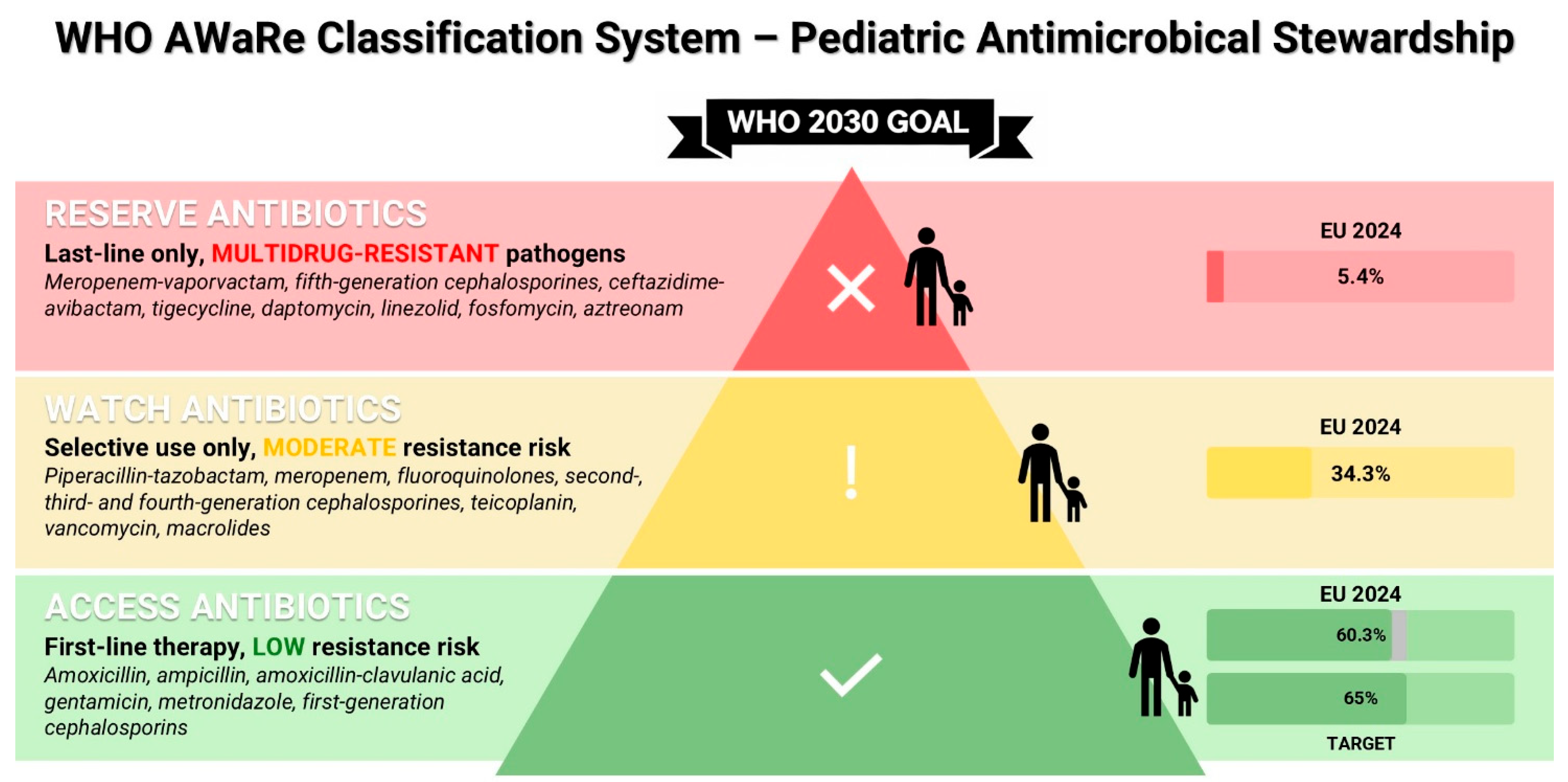
In recent years, the assessment of the appropriateness of pediatric antibiotic prescriptions has increasingly drawn on the World Health Organization (WHO) AWaRe classification (Figure 1). This system groups antibiotics into Access, which represents first-line therapy for most common infections with a low risk of selecting resistance, Watch, which carries a higher risk of resistance and should be reserved for specific indications, and Reserve, which includes last-line options for multidrug-resistant pathogens [14]. The WHO has set the objective that at least 70% of global antibiotic prescriptions should consist of Access antibiotics by 2030 to support AMR containment [12].
Globally, pediatric antibiotic consumption rose by 20% between 2016 and 2023 [16]. The increase has been most evident in low- and middle-income countries, where expanding access to antibiotics parallels growing healthcare needs [17]. This pattern diverges from observations in many high-income countries, especially in Europe, where pediatric prescriptions have either decreased or stabilized in recent years as a result of greater attention to prescription appropriateness [16,18,19,20,21].
Marked regional differences persist within Europe. Western and Northern European countries are gradually approaching or surpassing the WHO target for the proportion of Access antibiotics prescribed in pediatric care [22]. In contrast, in Southern and Eastern Europe, Watch antibiotics continue to be used at high rates [12,23].
Italy reflects these disparities, with substantial regional variability in pediatric antibiotic use and higher prescribing levels in the South compared with the North and Center [24].
Although national guidelines identify Access antibiotics as first-line therapy for most pediatric infections, clinical practice often favors Watch antibiotics, particularly third-generation cephalosporins and penicillin/beta-lactamase inhibitor combinations, even when Access agents would be indicated according to WHO recommendations [25,26,27]. This pattern is especially pronounced in respiratory tract infections, including pharyngitis, tonsillitis, and otitis, and in community-acquired pneumonia. Broad-spectrum agents are prescribed in more than half of these cases, while the use of Access antibiotics remains below WHO recommendations, particularly in children under five years of age [25,26,27,28].
The Coronavirus Disease 19 (COVID-19) pandemic profoundly altered the epidemiology of infectious diseases [29]. As mitigation measures were lifted, several respiratory pathogens and care-seeking patterns moved back toward pre-pandemic seasonality. However, the rebound has been heterogeneous with some pathogens showing atypical timing (e.g., respiratory syncytial virus, Mycoplasma pneumoniae, Streptococcus pyogenes), and intensity compared with pre-pandemic years leading a substantial impact on pediatric antibiotic prescription [30].
From 2021 onward, prescriptions increased rapidly and in some settings exceeded pre-pandemic levels, contributing to the global rise in antibiotic consumption [17,30]. The rebound was most pronounced in low- and middle-income countries, although high-income nations also experienced an uptick, albeit more moderate [16]. In the United States, pediatric prescriptions began to recover in early 2021 alongside the resurgence of respiratory infections and outpatient visits, although overall levels remained below pre-pandemic figures [16,30,31]. In countries such as Denmark and Australia, post-pandemic prescribing exceeded rates recorded immediately before the pandemic, yet trends pointed toward improved appropriateness and a greater reliance on Access antibiotics [17,18].
Despite the progress achieved in promoting appropriate prescribing and expanding the use of Access antibiotics, substantial inter-country and regional disparities are still evident. The persistent use of Watch antibiotics in contexts where they are not indicated highlights the ongoing need to strengthen AMS initiatives to optimize pediatric prescribing practices and slow the development of resistance.

4. Inpatient Antimicrobial Stewardship—Possible Strategies

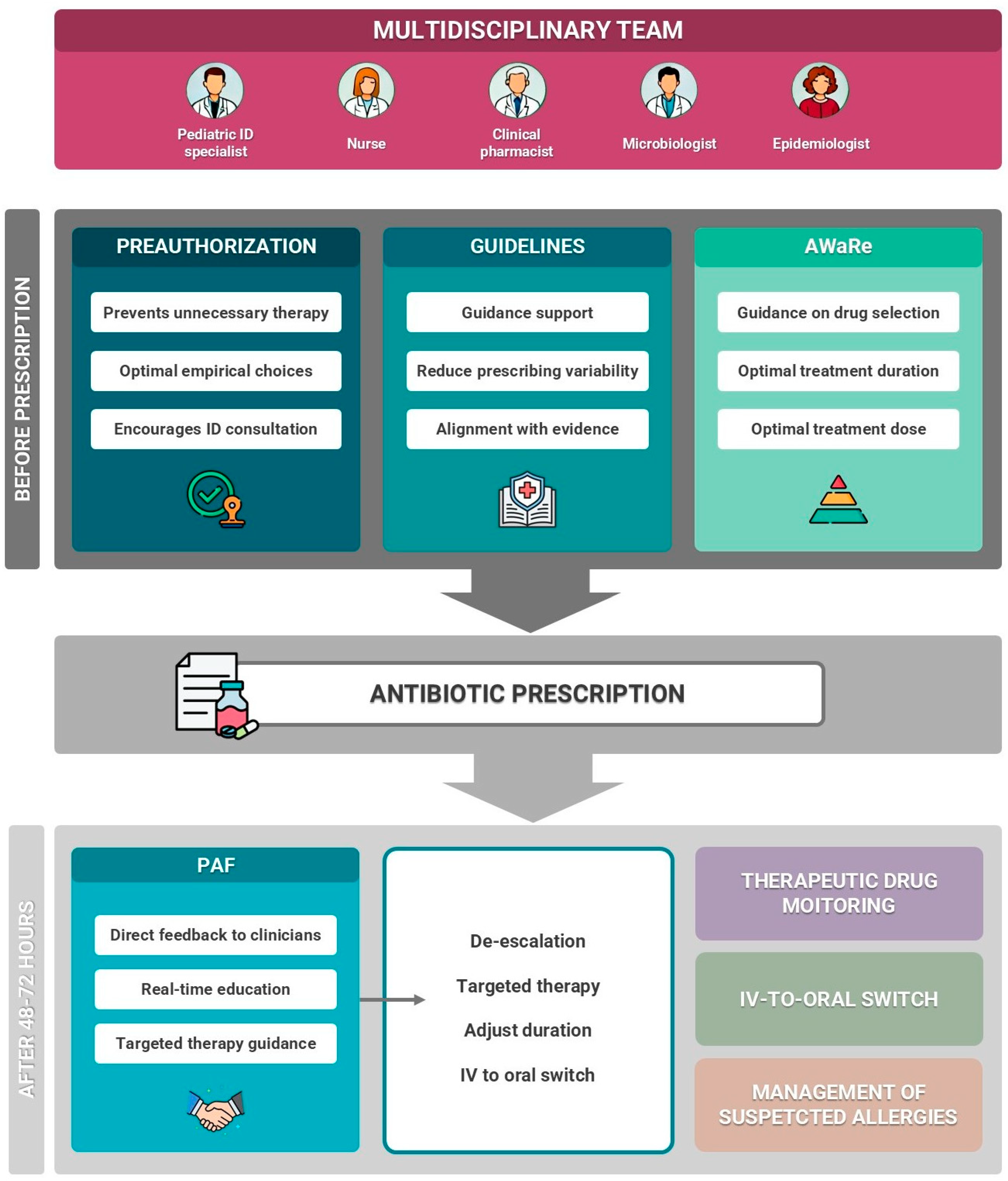
In many high-income settings, hospitalized-based ASPs rely on a multidisciplinary and integrated approach designed to optimize antimicrobial use, limit the development of resistance, and improve clinical outcomes [12,32,33]. A multidisciplinary ASP team is a central component of effective programs and should include, at minimum, a pediatric infectious diseases specialist and a clinical pharmacist with dedicated training. According to the American Academy of Pediatrics (AAP), additional contributions from clinical microbiologists and hospital epidemiologists are recommended to provide AMR surveillance data, while information system specialists and data analysts support monitoring of antibiotic use. Nurses play an important role in daily implementation and in patient and family education, and collaboration with hospital leadership is essential to ensure program sustainability [12,32,33,34]. Building on this structure, several strategies can be implemented by the stewardship team and individual clinicians to enhance prescribing appropriateness and promote the rational and safe use of antimicrobial agents (Figure 2).

4.1. Prospective Audit and Feedback vs. Preauthorization

Two of the most widely adopted ASP strategies are Prospective Audit and Feedback (PAF) and preauthorization [16,32,33]. PAF involves reviewing antibiotic prescriptions within 48–72 h of initiation, followed by direct feedback to clinicians to tailor the ongoing regimen according to clinical evolution and laboratory/microbiological results (e.g., discontinuation when infection is unlikely, de-escalation or change of agent, dose and duration optimization, and IV-to-oral switch). PAF can also be applied to therapies started empirically or after preauthorization, to confirm whether the initial choice remains appropriate for continuation of care. Its primary advantage lies in the ability to guide targeted therapy without limiting clinicians’ initial prescribing choices. PAF can be conducted through phone communication, electronic health records, or in-person interactions. The latter, known as “handshake stewardship,” is considered particularly effective because it offers real-time educational value. Its main limitation is the lack of control over the initial antibiotic selection [32,33,35,36].
Preauthorization takes a complementary approach by requiring clinical justification and approval from ASP personnel before certain antibiotics can be dispensed (e.g., high risk or broad spectrum agents). This strategy helps prevent unnecessary initiation of therapy, supports optimal empirical choices, and often encourages infectious diseases consultation. The approach may, however, disrupt workflow or delay treatment, especially in time-sensitive conditions such as sepsis. For this reason, many programs allow a single unrestricted dose for critically ill children to avoid treatment delays [32,33,35].
Mehta et al. (2014) reported that transitioning from preauthorization to PAF in an academic center was associated with increased total antibiotic use and longer length of stay, suggesting that preauthorization offered greater control of overall consumption in that setting [37]. Conversely, Tamma et al. (2017) found that PAF more effectively reduced days of therapy (DOT), improved adherence to guidelines, and did not negatively affect clinical outcomes [35]. In a multicenter study of community hospitals, Anderson et al. (2019) observed that PAF outperformed a modified preauthorization model in identifying inappropriate treatments, promoting de-escalation, and reducing antibiotic consumption, while proving more sustainable in resource-limited environments [38]. Current guidelines emphasize that the choice between PAF and preauthorization should reflect local resources and program goals, as both strategies improve prescribing quality and represent core ASP components [5]. Although both strategies have demonstrated effectiveness, comparative evidence remains limited and derives exclusively from adult studies.

4.2. Guidelines and Clinical Pathways

Clinical guidelines and care pathways are essential tools for ASP implementation in pediatric inpatient care. The AAP recommends developing and disseminating evidence-based guidelines for the diagnosis and management of major pediatric infectious syndromes, including pneumonia, urinary tract infections, sepsis, and skin infections. Standardized guidance supports consistent therapeutic choices, promotes the use of first-line antibiotics, and reduces prescribing variability [33,34]. By providing a structured approach that translates evidence into actionable recommendations, guidelines ensure consistent prescribing practices and enable audit, feedback, and the continuous optimization of antibiotic use in children [5]. Guideline development should be collaborative, involving physicians, pharmacists, and nurses, while accessibility at the point of care, through intranet platforms, ward manuals, pocket cards, or mobile apps, fosters adherence. Regular updates by the ASP team ensure alignment with emerging evidence [33,34].

4.3. AWaRe

The WHO AWaRe classification (Access, Watch, Reserve) has become a central framework for evaluating and guiding antibiotic prescribing [14]. Access antibiotics are recommended as first-line agents for most common infections due to their narrower spectrum and lower impact on resistance, whereas Watch antibiotics carry a higher resistance risk and should be reserved for specific indications. Reserve agents represent last-line options for multidrug-resistant organisms [14,23].
A recent study conducted in a hospitalized adult population further illustrates the potential impact of integrating the AWaRe framework into routine clinical practice. Following a structured educational program, awareness rose markedly (from 56.5% to 90.8%), demonstrating that even brief, targeted initiatives can substantially enhance familiarity with the framework. Importantly, this improvement in knowledge translated into measurable changes in prescribing behavior. The proportion of Access antibiotics increased by 6.6%, while the use of Watch and Reserve agents declined, indicating a shift toward narrower-spectrum, stewardship-aligned choices [39].
To strengthen global adherence to the AWaRe classification, the WHO developed the AWaRe Antibiotic Book, which provides evidence-based recommendations for the empirical management of 35 common infections in both adult and pediatric populations. The guidance covers inpatient and outpatient settings and includes standardized advice on antibiotic selection, dosing strategies, and optimal treatment duration [12,40].
Close alignment between national guidelines and AWaRe recommendations is highly desirable. The 2025 study by Donà et al., which compared national guidelines from 80 countries with the AWaRe Book, showed good concordance for first-line regimens, particularly for conditions such as acute otitis media and pharyngitis. Alignment decreased for second-line recommendations and gastrointestinal infections, where Watch antibiotics were more frequently suggested [12]. Such discrepancies may hinder implementation of AWaRe-based targets and monitoring because clinicians typically adhere to national guidelines in routine clinical practice.

4.4. Additional Strategies

Additional ASP strategies include Therapeutic Drug Monitoring (TDM) for antimicrobials with a narrow therapeutic index, such as vancomycin and aminoglycosides. TDM supports individualized dosing based on plasma concentrations and pharmacokinetic parameters, improving safety and reducing toxicity risk, particularly in critically ill children [41,42]. Another intervention that promotes more appropriate antimicrobial use is early intravenous-to-oral switch when clinically appropriate. This approach shortens parenteral therapy, limits catheter-related complications, lowers healthcare costs and hospitalization duration, and does not increase recurrence or treatment failure [34,43]. Management of suspected β-lactam allergies also contributes to reducing unnecessary broad-spectrum use, although its implementation is constrained by limited specialist availability, the need for structured delabeling pathways, and overall organizational complexity [5,12].
Taken together, these strategies benefit from a hospital environment that prioritizes continuous education and coordinated engagement of all healthcare professionals. The integrated contribution of physicians, pharmacists, microbiologists, and nurses is fundamental to ensuring the effectiveness and sustainability of ASPs [12].

5. Diagnostic Approaches and Their Role in Pediatric Antimicrobial Stewardship

In pediatric practice, diagnostic tools must account for the unique physiological and clinical characteristics of children. Younger patients often require diagnostic approaches that are minimally invasive and suitable for low-volume sampling, including techniques based on capillary blood collection, which are better tolerated and more feasible in routine care [44,45]. Within this framework, a broad range of diagnostic tools can be incorporated into clinical workflows, such as biomarker assays, point-of-care tests (POCTs), and multiplex polymerase chain reaction (PCR) panels, each offering complementary information to support clinical decision-making [46,47].
The rationale behind integrating these diagnostic modalities is to enhance clinicians’ ability to rapidly differentiate between viral and bacterial infections, thereby improving the accuracy of treatment decisions. This approach aims not only to reduce inappropriate antibiotic prescriptions but also to promote a more individualized therapeutic strategy, ideally directed toward the specific pathogen involved and aligned with AMS principles [12].

5.1. Rapid Diagnostics and Their Influence on Antibiotic Prescribing

The progressive expansion of multiplex molecular diagnostics has introduced important changes in management of pediatric infectious diseases [48]. These platforms allow the simultaneous detection of a wide array of pathogens and have introduced a diagnostic speed that markedly exceeds that of conventional culture-based methods. However, their clinical impact varies substantially depending on the type of specimen analyzed, the patient population, and the integration of results into antimicrobial stewardship frameworks. In selected settings, use of multiplex testing has been associated with reductions in time to appropriate therapy and modifications in antimicrobial prescribing patterns [49]. Evidence regarding in clinical outcomes, including reductions in hospital admission, length of stay, morbidity and mortality, remains heterogeneous and context-dependent [49]. In addition, some extended panels allow early identification of resistance determinants, which may facilitate more timely optimization of antimicrobial therapy [50].
Several studies have evaluated the impact of multiplex molecular diagnostics across different specimen types (e.g., bloodstream, central nervous system, respiratory, and gastrointestinal) and in different pediatric settings.
In a retrospective before-and-after study, Devrim et al. evaluated the introduction of a multiplex blood culture identification panel in children with Gram-negative bloodstream infections [51].
The implementation of the panel was associated with a significant reduction in the time to pathogen and resistance gene identification (median reduction of 55.1 h; p < 0.01). Changes in antimicrobial management were observed in 78% of cases, including discontinuation of unnecessary agents and escalation when resistance determinants were detected. Inappropriate glycopeptide therapy was discontinued in 29.9% of patients following multiplex results.
However, no significant differences were observed in 7- or 30-day mortality between patients managed with multiplex testing and those receiving standard culture-based diagnostics. The retrospective design and limited sample size constrain the generalizability of these findings and underscore the need for cautious interpretation.
Similar findings have been observed in central nervous system infections. A recent meta-analysis evaluating syndromic testing for meningitis and encephalitis showed that, although the pediatric subgroup did not experience a significant decrease in hospital length of stay, multiplex testing was associated with shorter acyclovir exposure (−1.73 days) and reduced antibiotic duration (−1.85 days) [52]. However, the overall number of included studies was limited, and most were observational in design, with inherent risks of bias and confounding.
Despite these diagnostic advances, respiratory infections remain the leading cause of antibiotic use in hospitalized children [5]. The impact of rapid molecular respiratory panels on antibiotic prescribing has been evaluated across heterogeneous pediatric inpatient populations, with variable findings depending on clinical context and study design.
In a retrospective pre–post cohort study conducted at a tertiary-care center, Holgado et al. evaluated hospitalized children (aged 0–18 years) who underwent bronchoalveolar lavage for suspected lower respiratory tract infection and compared outcomes before and after implementation of a multiplex pneumonia panel [53]. The use of the molecular panel significantly reduced time to organism identification (4 vs. 25–26 h) and was associated with a shorter time to targeted antibiotic therapy (median 0 vs. 1 day; p = 0.003). A numerical, but not statistically significant, reduction in time to de-escalation was also observed (2 vs. 3 days; p = 0.061). Notably, the study included a mixed inpatient population, with only a minority of patients requiring mechanical ventilation, limiting direct extrapolation to exclusively critically ill cohorts.
In contrast, Plattner et al. performed a retrospective cohort study evaluating real-world implementation of the BioFire FilmArray Pneumonia Panel in hospitalized pediatric patients, the majority of whom were in intensive care units and had tracheal aspirate specimens analyzed [54]. Although 80% of test results were adjudicated as having theoretical potential to modify antimicrobial therapy, actual changes occurred in only 46% of cases, with escalation (26%) more frequent than de-escalation (15%) or discontinuation (4%). These findings highlight the discrepancy between potential and observed stewardship impact in routine clinical practice.
Similarly, in a single-center retrospective study conducted in a pediatric intensive care unit in Bozan et al. reported that multiplex panel results led to continuation of the same antibiotic regimen in 39–35% of cases and escalation in more than half of patients, whereas de-escalation occurred infrequently (6–8%) [55]. The study population was characterized by a high prevalence of ventilator-associated pneumonia and underlying comorbidities, which may partly explain the limited de-escalation observed.
Overall, these studies underscore that the stewardship impact of rapid respiratory molecular diagnostics is strongly influenced by patient severity, baseline prescribing practices, local epidemiology, and the presence or absence of structured AMS oversight [54,55].
In pediatric emergency departments, where most acute infections are treated, the careful management of antibiotic prescription plays a pivotal role [56]. Evidence regarding the stewardship impact of upper-airway multiplex PCR in these settings remains heterogeneous across studies and healthcare systems. In a prospective study conducted in a French pediatric emergency department, Cantais et al. reported that the incorporation of multiplex PCR into clinical evaluation significantly increased the appropriateness of antibiotic prescriptions, with correct prescribing documented in 68.6% of children tested by PCR compared with 48.2% of those evaluated through standard diagnostic approaches (p < 0.0001) [57]. Conversely, in a randomized control trial performed in a Finnish pediatric emergency department, Mattila et al. did not observe a significant reduction in overall antibiotic prescribing following multiplex PCR testing [58]. These discrepancies reflect the inherent limitations of upper-airway diagnostics. Pathogens detected in the nasopharynx often correlate poorly with those responsible for lower respiratory tract infections [59]. Furthermore, the high sensitivity of molecular assays frequently leads to the identification of pathogens nucleic acids in asymptomatic children, complicating the interpretation of positive results [60].
Gastrointestinal multiplex diagnostics show a similar combination of benefits and challenges. Studies indicate that these assays can reduce inappropriate antibiotic use by improving the identification of enteric pathogens in children [61,62]. However, their interpretation remains complex because they often detect organisms with uncertain pathogenic significance. This may result in the overdiagnosis of clinically irrelevant findings and, in some cases, the initiation of unnecessary antimicrobial therapy [63].
In primary care the availability of microbiological point-of-care tests remains relatively limited. A recent meta-analysis identified rapid streptococcal tests and rapid influenza assays as the most frequently used POCTs in community pediatrics [64]. The introduction of streptococcal testing was associated with a 25% reduction in antibiotic prescribing, confirming the value of targeted diagnostic tools in outpatient stewardship [64]. Broader microbiological POCTs are not yet widely implemented in primary care, largely due to logistical and economic constraints. Nevertheless, their potential contribution to AMS is increasingly recognized. When these tests are interpreted within structured clinical pathways and supported by adequate clinician training, they may help reduce inappropriate antibiotic use. Emerging evidence suggests that this integrated approach can improve prescribing practices in outpatient pediatric settings [65].

5.2. Host-Response Biomarkers and Their Role in Stewardship

An ideal biomarker would combine high sensitivity and specificity, differentiate reliably between bacterial and viral etiologies, remain unaffected by underlying comorbidities, predict severity and clinical outcomes, provide rapid and reproducible results, and be cost-effective [66]. However, no single biomarker fulfills all these criteria simultaneously, and diagnostic performance inevitably reflects trade-offs influenced by patient characteristics, timing of sampling, and clinical context.
Among currently available tools, C-reactive protein (CRP) and procalcitonin (PCT) remain the most frequently used biomarkers in pediatric practice [66,67]. At low cut-off values, both demonstrate high sensitivity and negative predictive value for excluding bacterial infection; however, specificity is limited, as elevations may occur in non-bacterial inflammatory conditions or in mixed infectious states [68,69]. Serial measurements rather than single values may enhance interpretative accuracy, particularly in hospitalized patients.
In recent years, increasing attention has focused on host-response multi-marker approaches. A systematic review identified promising protein-based signatures, including CRP combined with IP-10 and TRAIL (MeMed BV), Myxovirus resistance protein A (MxA) combined with CRP, interleukin-6 combined with interleukin-10, and human neutrophil lipocalin (HNL) [70]. While several studies report encouraging diagnostic performance, most data derive from observational hospital-based cohorts with heterogeneous populations and limited external validation.
Pagano et al. conducted a prospective observational study in 255 hospitalized children and evaluated a chemiluminescence assay combining CRP, TRAIL, and IP-10 (MeMed BV) [71]. While specificity was high (91%), sensitivity for bacterial infection was moderate (51%) in the overall cohort and improved in antibiotic-naïve patients. Importantly, patients with indeterminate scores were excluded from primary analysis, and the reference diagnosis relied on expert panel adjudication rather than a uniform microbiological gold standard. Furthermore, results were analyzed retrospectively, and the test did not influence real-time clinical decision-making, limiting conclusions about stewardship impact.
MxA an interferon-induced protein, has shown promising performance as a viral biomarker [72]. In a large prospective multicenter emergency department cohort, Engelmann et al. reported that combining MxA with CRP enhances diagnostic accuracy in differentiating viral from bacterial infections in febrile children, with an MxA/CRP ratio yielding an AUC of 0.94, a sensitivity of 91.5 percent and a specificity of 84.9 percent, outperforming either marker alone [73]. However, some children with confirmed bacterial infections exhibited elevated MxA levels, potentially reflecting unrecognized viral coinfections. The study excluded patients with documented coinfections, which may overestimate discriminative performance compared with real-world settings. More recently, Piri et al. evaluated a point-of-care MxA assay in 228 febrile children presenting primarily to a pediatric emergency department [74]. In a ROC analysis differentiating viral from bacterial infections, blood MxA measured by the point-of-care method yielded an AUC of 0.96. The optimal combined sensitivity and specificity for viral infection (92.0% and 91.2%, respectively) was observed at a cutoff of 101 μg/L, whereas a higher cutoff of 200 μg/L increased specificity to 100% at the expense of sensitivity (78.6%). These findings confirm the strong performance of MxA as a marker of viral infection. However, viral–bacterial coinfections demonstrated MxA levels overlapping with purely viral infections, indicating that while MxA is highly useful for identifying viral immune activation, it may be less reliable as a binary discriminator between viral and bacterial etiologies in real-world clinical settings. Additionally, the study population was predominantly outpatient and from a single healthcare system, which may limit generalizability.
Growing attention has also been directed toward biomarkers that predominantly reflect neutrophil activation and innate immune responses. Human neutrophil lipocalin (HNL) is released by activated neutrophils and contributes to antibacterial immune responses [75]. Yu et al. demonstrated excellent diagnostic performance for serum HNL in patients with acute infection, reporting an AUC of 0.97, a sensitivity of 98.5 percent and a specificity of 94.3 percent, with markedly better results than those of CRP or neutrophil count [76]. However, the diagnostic classification relied partly on clinical criteria and treatment response, and assay performance varied according to antibody configuration, highlighting methodological variability. Moreover, the cohort consisted of adults and older children in a single center, and external pediatric validation remains limited.
Beyond protein-based approaches, genomic growing interest has focused on host genomic signatures, which aim to capture broader transcriptional responses to infection and may offer complementary diagnostic insights. A recent systematic review and metanalysis found that several transcriptomic signatures achieved AUC values of 0.90 or higher for distinguishing bacterial from viral infections, with accuracy comparable to established protein biomarkers. Nevertheless, their clinical use remains limited because of the cost and technical complexity of transcriptomic platforms, which currently restrict their application to specialized laboratories [77].
Despite these advances, most of these biomarkers have been evaluated primarily in hospital settings. CRP is the only marker extensively studied as a POCT in community pediatrics and has shown stewardship benefits, including reductions in unnecessary antibiotic prescribing when incorporated into structured diagnostic pathways [78].
At present, no single biomarker provides sufficient diagnostic certainty to direct clinical management independently. Clinical assessment therefore remains central to decision making, while ongoing research is needed to refine existing biomarkers, validate emerging candidates, and determine how best to integrate them into pediatric diagnostic and stewardship strategies [66].

6. Outpatient Antimicrobial Stewardship—Possible Strategies

Outpatient AMS is essential in pediatrics, as most antibiotic prescriptions originate in the community and a substantial proportion are unnecessary, particularly for acute respiratory infections [33,79]. However, outpatient care is heterogeneous, it includes office-based primary care, urgent care, emergency departments, out-of-hours services, and direct-to-consumer telemedicine. Consequently, intervention effectiveness varies across settings, baseline prescribing rates, diagnostic access, and implementation fidelity.
Education and direct engagement of patients and families are among the most frequently implemented strategies in the community. Parental anxiety perceived prescribing pressure, and communication challenges strongly influence clinical decision-making. Since the interaction between clinicians and caregivers can determine whether an antibiotic is prescribed, communication skills training (including safety-netting and shared decision-making) has become a central component of stewardship programs [12,80,81]. These interventions are reinforced by public awareness campaigns and multilingual educational materials [5,33,81]. Equity considerations are important, as communication- and access-dependent interventions (e.g., written materials, digital tools, rapid follow-up) may not benefit all families equally.
Continuous medical education represents another key element of outpatient stewardship, particularly when focused on distinguishing viral from bacterial infections. Greater diagnostic confidence may help reduce prescribing pressure and supports the use of watchful waiting when clinically appropriate. Based on outpatient epidemiology, some analysts suggest that antibiotic prescribing could be reduced substantially in selected conditions (approximately 30%), although achievable reductions depend on setting, case-mix, and local diagnostic access [82]. Overall, across studies, outpatient stewardship interventions generally achieve small-to-moderate reductions in antibiotic prescribing, with substantial heterogeneity and occasional null effects. More reliable improvements are reported when interventions are multi-component and embedded in routine workflows (e.g., guideline-linked order sets, audit/feedback, and decision support), rather than relying on passive education alone [83,84]. In a recent pediatric systematic review/meta-analysis, clinical decision support systems (CDSS) in primary care were associated with markedly lower odds of antibiotic prescribing (pooled OR 0.17), albeit with very high heterogeneity [85].
Optimizing prescribing practices also requires careful management of diagnostic information. This includes selecting tests that are likely to change management, considering pre-test probability, and interpreting results in the clinical context (e.g., colonization vs. infection, timing of sampling, and the possibility of coinfections) [86]. While communication of positive test results is widely used to guide the initiation of antibiotic therapy, systems for timely follow-up of pending or subsequently negative results may be most relevant in specific contexts, such as children discharged from the emergency department with cultures pending or with rapid viral testing performed to support early discontinuation or non-initiation in appropriate cases. However, evidence for negative-result communication systems in routine outpatient primary care remains limited and context-dependent; where implemented, these systems should be embedded in clear pathways to avoid unintended delays or safety issues [33].
Even when antibiotics are clinically indicated, stewardship interventions can improve the quality of care. Several studies show that second-line broad-spectrum antibiotics are prescribed as frequently as recommended first-line agents, particularly for acute respiratory infections. Spectrum optimization should be framed with clinical nuance, broader coverage may be appropriate in selected situations, but should be reassessed as new information becomes available to enable narrowing, switching to targeted therapy, or discontinuation when bacterial infection becomes unlikely [33,87]. Importantly, outpatient AMS should also address dosing and treatment duration quality, not only antibiotic spectrum. Optimizing treatment duration is another important component; many common infections respond effectively to shorter courses, including uncomplicated skin infections, pneumonia, and urinary tract infections [33].
Vaccination also plays an important preventive role by reducing infections that commonly lead to inappropriate antibiotic prescribing. Immunizations against influenza, pneumococcus, and Haemophilus influenzae type b decrease disease burden, prevent unnecessary antibiotic use, and support herd immunity [88,89,90].
In summary, pediatric outpatient AMS requires a multifaceted approach that incorporates audits, decision support tools, education, effective communication, guidelines, and vaccination. This integrated model enhances the quality of care and contributes to addressing AMR [12].

7. Limitations and Challenges

The challenges of pediatric AMS are multifactorial and differ substantially between inpatient and outpatient settings. A comprehensive understanding of these barriers, together with the development of targeted strategies to address them, is essential both for the effective implementation of new ASPs and for the optimization of existing programs [91].
Beyond clinical issues, systemic limitations hinder optimal stewardship. Access to newly approved antimicrobials is often delayed in pediatrics due to ethical and methodological challenges in clinical trial design and pediatric development pathways [92]. In addition, many pediatric ASPs have historically been adapted from adult hospital models. Some underlying assumptions, such as differences in syndrome epidemiology and pre-test probability of bacterial disease, developmental pharmacology and formulations, may not fully translate to children [91]. Limited financial support, inadequate staffing, and insufficient informatic infrastructure further restrict program sustainability. While stewardship may be associated with reduced avoidable antibiotic use and downstream cost offsets in some settings, the magnitude and timing of these benefits are context-dependent and do not necessarily translate into immediately available resources to support ASP staffing and infrastructure [4].

7.1. Hospital Setting Limitations

In hospital settings, pediatric AMS faces a combination of population-specific clinical uncertainty in high-risk units, workflow constraints that limit reassessment and follow-up, pediatric-specific prescribing complexity, and system-level and resource limitations that affect sustainability.
High-complexity areas such as neonatology present particularly significant challenges. The fear of missing an early diagnosis of sepsis often leads to excessive or prolonged empirical antibiotic therapy, increasing the risk of AMR and adverse events. Diagnosing neonatal sepsis is especially difficult because clinical signs are nonspecific and rapid, reliable diagnostic tools are lacking. Nevertheless, prolonged antibiotic exposure in the absence of confirmed infection has been associated with serious complications, including necrotizing enterocolitis, late-onset sepsis, invasive candidiasis, and long-term morbidity [93,94].
Similar stewardship tensions arise in oncology and hematology units. Immunocompromised children, especially during neutropenia, require rapid broad-spectrum therapy to prevent deterioration, which can conflict with stewardship goals. In these settings, the key limitation is not the need for early broad coverage per se, but the difficulty of timely reassessment and safe de-escalation in the context of ongoing clinical risk [95,96].
In emergency departments ED, the short clinical encounters and the absence of structured follow-up promote conservative and often suboptimal prescribing practices, complicating AMS implementation [12]. Furthermore, in mixed or adult ED, the care of pediatric patients may also be affected by limited pediatric-specific expertise. Children have unique disease profiles, epidemiology, and risk factors, as well as distinctive physiological and emotional responses. They may also struggle to communicate their symptoms clearly, which can complicate clinical assessment. Pediatric antibiotic prescribing carries additional complexity because many antibiotics approved for adults are not appropriate for children, and the need for weight-based dosing (mg/kg) increases the risk of prescribing errors [12].
Beyond setting-specific issues, broader systemic limitations also hinder optimal antimicrobial use in pediatrics. Compared with adults, children have limited access to newly approved antimicrobials because ethical considerations and methodological challenges complicate the design and execution of pediatric clinical trials [92]. Additionally, as mentioned before, many pediatric ASPs are adapted from adult models and may not fully address pediatric-specific needs [91].
Finally, the lack of dedicated financial and personnel resources represents a major obstacle to the expansion and sustainability of ASPs. Hospital leadership often underestimates their clinical and economic impact, and insufficient funding or inadequate technical infrastructure limits program effectiveness. While reductions in unnecessary antibiotic use can generate cost savings, the magnitude and timing of such offsets are context-dependent and do not always translate into immediately available resources for stewardship teams [4,91].

7.2. Outpatient Setting Limitations

In outpatient care, effective communication with caregivers is essential. Social pressure and fear of missing a diagnosis often drive pediatricians to prescribe antibiotics even in the absence of clear clinical indications [97]. Another relevant barrier is “fever phobia,” the disproportionate parental anxiety surrounding fever, which is frequently perceived as inherently dangerous. This misconception creates expectations for immediate treatment and may push clinicians toward unnecessary interventions, including antibiotics, even when there is no documented bacterial infection [66].
A major organizational challenge is the difficulty of identifying a dedicated clinician with the time, training, and motivation required to lead outpatient stewardship initiatives [84]. IDSA guidelines recommend that ASP teams be led by a physician and a pharmacist with formal infectious diseases training, yet the scarcity of pediatric ID specialists and adequately trained pharmacists often makes this requirement unattainable for smaller facilities and community settings [32]. Inadequate training and the lack of decision-support tools further contribute to substantial variability in outpatient prescribing [4].
Difficulties in accessing first-line antibiotics at the local level can also influence prescribing behavior and undermine stewardship goals. A notable example is provided by the 2025 study by Pagano et al., which showed that community shortages of amoxicillin, an Access antibiotic, led to increased prescribing of Watch antibiotics such as third generation cephalosporins and macrolides, agents associated with a higher risk of selecting resistant pathogens [71].
Among all these barriers, resistance to change represents a cross-cutting challenge, influencing both clinical decision-making and adherence to stewardship recommendations across inpatient and outpatient settings. Consequently, beyond structural and organizational improvements, a broader shift in clinician attitudes and prescribing behaviors is essential to ensure the effective and sustainable implementation of ASPs [91].

8. AI and Future Directions

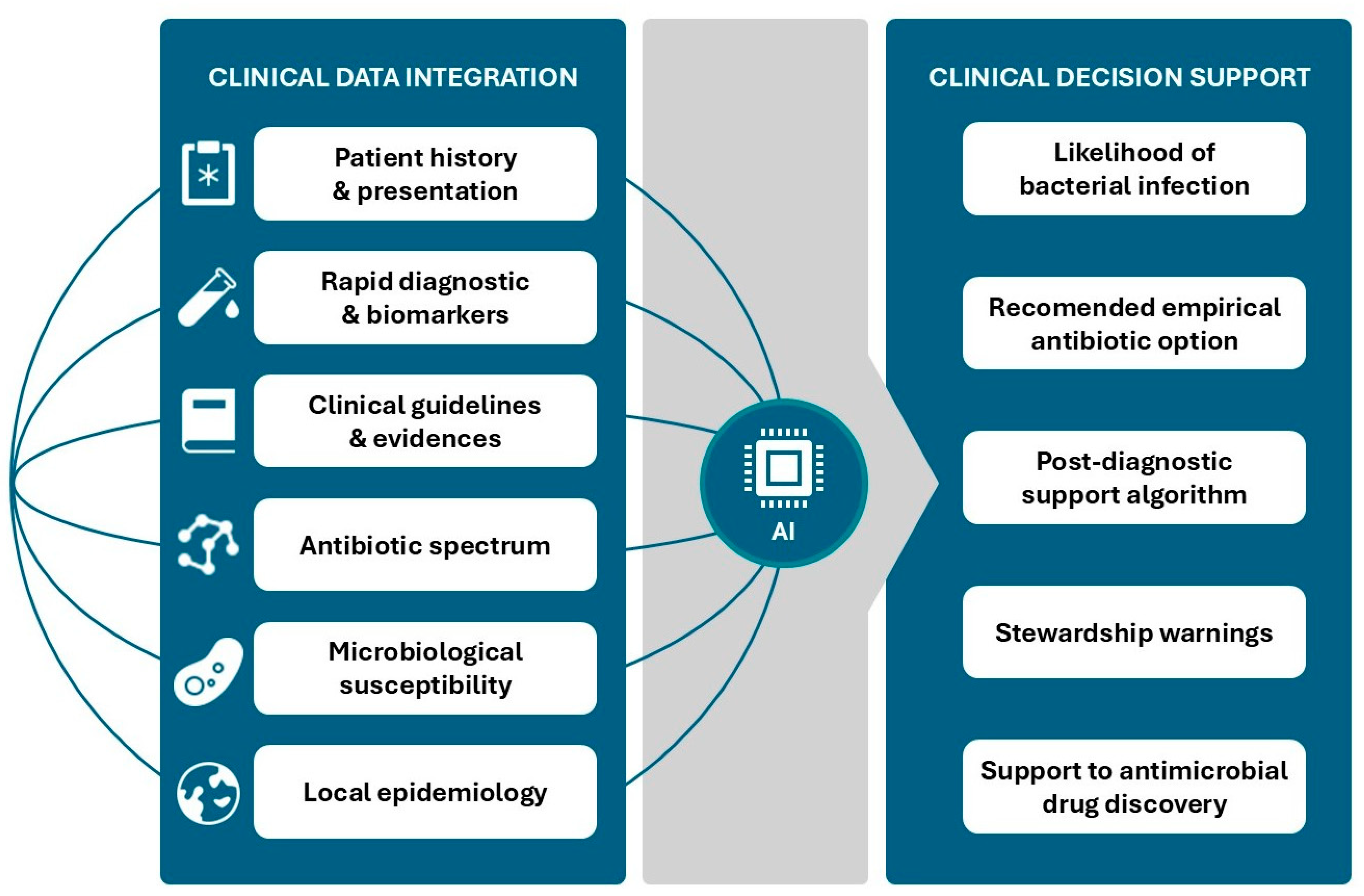
Artificial intelligence (AI) is an expanding area of computer science aimed at developing systems capable of replicating cognitive processes and performing tasks traditionally dependent on human intelligence [98]. The growing complexity of clinical decision-making, driven by the vast amount of data generated in modern healthcare systems, has prompted interest in AI-based tools to support AMS activities. It has been estimated that the volume of medical information produced each year exceeds by almost 200-fold what an individual could reasonably review in a lifetime [99]. By rapidly processing and integrating large datasets, AI has the potential to transform diagnostic pathways and support clinicians in managing infectious diseases (Figure 3). Its application could be of particular interest in the context of AMR, where timely recognition of infection, discrimination between infectious and non-infectious conditions, and early management of complications are essential components of AMS [100]. However, most current applications remain at a developmental or proof-of-concept stage.
Lamping et al., who evaluated a machine learning model designed to distinguish infectious sepsis from non-infectious SIRS in a pediatric intensive care unit. The model incorporated 44 variables available at admission and correctly identified all cases of sepsis. Importantly, the authors estimated that the tool could have reduced antibiotic exposure by approximately 30% among children with non-infectious SIRS [101]. Nevertheless, the analysis was retrospective and conducted in a single center, without prospective clinical validation or assessment of patient-centered outcomes. Similarly, in adult critical care, Ferrari et al. introduced an interpretable machine-learning approach using Multi-Objective Symbolic Regression to predict bloodstream infections and AMR, with the potential to improve early recognition of BSI and support empirical treatment decisions within the study dataset [102].
AI-assisted decision support has also been explored in primary care. Beaudoin et al. implemented a rule-based antimicrobial prescribing support system that reviewed more than 37,000 prescriptions, triggered alerts in nearly one third of cases, and enabled pharmacists to reassess over 4000 treatments. This intervention led to a reduction in overall antimicrobial consumption of 13–15% [103]. A subsequent study integrating a machine learning layer into the same system improved its performance further. The enhanced tool detected all inappropriate prescriptions previously identified by pharmacists and recognized additional inappropriate treatments, with a positive predictive value of 74% for generated alerts [104]. However, although alert performance improved, the intervention was associated with a substantial number of false positives, and outcomes were primarily process-based rather than direct patient-centered endpoints.
Beyond clinical decision support, AI has already demonstrated substantial promise in antimicrobial drug discovery. A pivotal example is the study by Stokes et al., in which a deep neural network applied to large chemical libraries identified halicin, a previously known molecule with unexpected and potent activity against multidrug-resistant pathogens, alongside confirmed in vivo efficacy [105]. This finding exemplified the capability of AI to uncover antibacterial agents with unconventional mechanisms, extending discovery beyond the reach of traditional screening approaches.
A recent review by Liu et al. (2024) describes how AI-driven platforms are reshaping early-stage antimicrobial discovery by efficiently exploring vast chemical spaces, improving activity prediction, and prioritizing chemical scaffolds that diverge from established antibiotic classes [106]. Nevertheless, translation from in silico prediction to clinically approved agents remain lengthy and complex, and the overall impact of AI-based discovery pipelines on the antibiotic development landscape is still emerging.
In the future, AI could play an increasingly central role across multiple phases of antimicrobial development, including molecular design, prediction of dosing strategies and therapeutic response, modeling protein–protein interactions and toxicity reduction [107]. Integrating such advances with AMS frameworks could help slow the emergence of resistance and optimize the introduction of new agents. Moreover, AI-driven methodologies may shorten development timelines and reduce research and development costs, offering advantages over traditional discovery platforms [106].
Despite this potential, the current evidence base remains limited. Existing studies are heterogeneous in design and often methodologically weak, and robust validation is lacking, particularly in pediatric populations [108]. High-quality prospective research is needed to define the clinical utility, safety, and impact of AI-assisted tools before widespread implementation in ASPs can be recommended.

9. Conclusions

Pediatric AMS interventions can be broadly framed into four interrelated domains: optimization of antimicrobial prescribing practices across inpatient and outpatient settings; implementation of diagnostic strategies to improve etiological identification and therapeutic targeting; surveillance and monitoring of antimicrobial use and resistance patterns; and integration of educational, organizational, and technological tools to support sustainable behavior change among healthcare professionals. Together, these domains define a comprehensive framework through which stewardship initiatives can meaningfully impact pediatric care.
This review underscores that ASPs, if correctly implemented, may be effective in pediatric settings. Core inpatient strategies, including prospective audit and feedback, preauthorization, guideline implementation, AWaRe-based prescribing, therapeutic drug monitoring, and early intravenous-to-oral switch, have demonstrated benefits in improving antimicrobial selection, duration, and safety [12]. At the same time, outpatient stewardship remains a critical priority, given that most antibiotic prescriptions for children occur in the community, often for self-limiting respiratory infections. In this setting, communication strategies, clinician education, vaccination, and structured diagnostic pathways may be essential to reduce unnecessary exposure to antibiotics [84]. While several core stewardship interventions are supported by relatively consistent evidence, the magnitude of benefit varies across settings, and emerging diagnostic and digital tools remain in earlier phases of evaluation.
Diagnostic approaches supporting pediatric antimicrobial stewardship are rapidly evolving. The integration of rapid molecular diagnostics, point-of-care testing, and host-response biomarkers offers the potential to shorten time to targeted therapy, optimize antimicrobial selection, and support earlier de-escalation [107]. However, the available evidence remains heterogeneous across clinical settings, patient populations, and study designs, and is still largely derived from observational, hospital-based cohorts. Importantly, real-world pediatric infections frequently involve coinfections, superinfections, and atypical pathogens, and biomarker/test performance may vary with timing of sampling, prior antimicrobial exposure, and age-related differences in host response. Moreover, many studies focus on diagnostic accuracy metrics rather than real-world stewardship outcomes, and often exclude complex populations (e.g., children with significant comorbidities or immunocompromising conditions), limiting generalizability. Overall, no single diagnostic test or biomarker currently provides sufficient certainty to independently guide patient management, reinforcing the continued relevance of clinical judgment within structured decision-making frameworks [66]. Further pediatric-specific, well-designed prospective studies are needed to clarify clinical impact, implementation feasibility, and cost-effectiveness across different levels of care.
Alongside advances in molecular and host-response diagnostics, digital and data-driven strategies are increasingly being explored to support antimicrobial decision-making. In this context, AI represents an emerging and potentially complementary tool within pediatric AMS, with proposed applications in clinical decision support, risk stratification, surveillance, and antimicrobial drug discovery [108]. Early studies suggest that machine learning models may assist in distinguishing bacterial from non-bacterial illness and support optimization of empirical therapy [101].
However, current evidence remains largely exploratory. Most models have been developed and internally validated in retrospective, single-center datasets, with limited external validation and scarce evaluation of patient-centered outcomes. In addition, comparisons are frequently made against baseline prescribing practices rather than established antimicrobial stewardship interventions, making it difficult to determine the true incremental benefit attributable to AI-based tools.
For these reasons, AI should be considered an adjunct to, rather than a substitute for, clinical expertise within established AMS frameworks.
In conclusion, pediatric antimicrobial stewardship is not an optional intervention but a fundamental component of high-quality, safe, and sustainable healthcare [12]. Emerging diagnostic and digital innovations, including AI-driven approaches, require cautious integration and rigorous prospective validation to ensure safety, effectiveness, and equitable applicability across diverse pediatric settings.
Moreover, while extrapolation from adult data is frequently appropriate for antimicrobial therapies when pharmacokinetic and clinical comparability is established, pediatric-specific evaluation remains important for stewardship strategies and emerging digital innovations, especially in areas where extrapolation is not possible or where contextual differences may influence effectiveness.

Author Contributions

M.B. and A.R. equally contributed to the work. Conceptualization, M.B., A.R. and S.V.; original draft preparation, M.B., A.R. and M.C.; writing—review and editing, M.B., A.R. and S.V.; supervision, A.F., G.D.N. and P.P. All authors have read and agreed to the published version of the manuscript.

Funding

This research received no external funding.

Institutional Review Board Statement

Not applicable.

Informed Consent Statement

Not applicable.

Data Availability Statement

No new data were created or analyzed in this study. Data sharing is not applicable to this article.

Conflicts of Interest

The authors declare no conflicts of interest.

References

  1. GBD 2021 Antimicrobial Resistance Collaborators. Global burden of bacterial antimicrobial resistance 1990–2021: A systematic analysis with forecasts to 2050. Lancet 2024, 404, 1199–1226. [Google Scholar] [CrossRef]
  2. Fleming, A. Nobel Lecture: Penicillin. 1945. Available online: https://www.nobelprize.org/nobel_prizes/medicine/laureates/1945/fleming-lecture.html (accessed on 24 November 2025).
  3. Langford, B.J.; Morris, A.M. Is it time to stop counselling patients to “finish the course of antibiotics”? Can. Pharm. J. 2017, 150, 349–350. [Google Scholar] [CrossRef]
  4. Principi, N.; Esposito, S. Antimicrobial stewardship in paediatrics. BMC Infect. Dis. 2016, 16, 424. [Google Scholar] [CrossRef]
  5. Barlam, T.F.; Cosgrove, S.E.; Abbo, L.M.; MacDougall, C.; Schuetz, A.N.; Septimus, E.J.; Srinivasan, A.; Dellit, T.H.; Falck-Ytter, Y.T.; Fishman, N.O.; et al. Implementing an Antibiotic Stewardship Program: Guidelines by the Infectious Diseases Society of America and the Society for Healthcare Epidemiology of America. Clin. Infect. Dis. 2016, 62, e51–e77. [Google Scholar] [CrossRef] [PubMed]
  6. Tersigni, C.; Montagnani, C.; D’Argenio, P.; Duse, M.; Esposito, S.; Hsia, Y.; Sharland, M.; Galli, L. Antibiotic prescriptions in Italian hospitalised children after serial point prevalence surveys (or pointless prevalence surveys): Has anything actually changed over the years? Ital. J. Pediatr. 2019, 45, 127. [Google Scholar] [CrossRef] [PubMed]
  7. De Luca, M.; Donà, D.; Montagnani, C.; Lo Vecchio, A.; Romanengo, M.; Tagliabue, C.; Centenari, C.; D’Argenio, P.; Lundin, R.; Giaquinto, C.; et al. Antibiotic Prescriptions and Prophylaxis in Italian Children. Is It Time to Change? Data from the ARPEC Project. PLoS ONE 2016, 11, e0154662. [Google Scholar] [CrossRef] [PubMed]
  8. Cook, A.; Sharland, M.; Yau, Y.; PediBSI Group; Bielicki, J. Improving empiric antibiotic prescribing in pediatric bloodstream infections: A potential application of weighted-incidence syndromic combination antibiograms (WISCA). Expert. Rev. Anti-Infect. Ther. 2022, 20, 445–456. [Google Scholar] [CrossRef]
  9. Girotto, J.E.; Nichols, K.; Ogrin, S.L.; Parsons, S.; Wilson, W.S. Pediatric Antibiotic Stewardship Programs: The Path Forward. J. Pediatr. Pharmacol. Ther. 2025, 30, 387–397. [Google Scholar] [CrossRef]
  10. Frati, F.; Salvatori, C.; Incorvaia, C.; Bellucci, A.; Di Cara, G.; Marcucci, F.; Esposito, S. The Role of the Microbiome in Asthma: The Gut–Lung Axis. IJMS 2018, 20, 123. [Google Scholar] [CrossRef]
  11. Bossù, G.; Di Sario, R.; Argentiero, A.; Esposito, S. Antimicrobial Prophylaxis and Modifications of the Gut Microbiota in Children with Cancer. Antibiotics 2021, 10, 152. [Google Scholar] [CrossRef]
  12. Dona, D.; Barbieri, E.; Brigadoi, G.; Barchitta, M.; Berardi, A.; Bosis, S.; Buchini, S.; Buonsenso, D.; Cagliero, A.; Campana, B.R.; et al. Pediatric stewardship in Italy: A necessity, not an option—A National Multi-Society Expert Consensus on Antimicrobial and Diagnostic Stewardship (SIP, SITIP, SIMRI, SIAIP, SIMEUP, SIPPS, SICUPP, SIMIT, SIMPE, SIPINF, SIT, SIAATIP, SARNEPI, AIEOP, SIM, SITI, SIF, SIFACT, SITA, SIN). Ital. J. Pediatr. 2025, 51, 283. [Google Scholar] [CrossRef] [PubMed]
  13. Krüger, H. Antimicrobial Stewardship in Pediatric Settings: Gaps and Opportunities. J. Clin. Microbiol. Antimicrob. 2025, 9, 222. [Google Scholar] [CrossRef]
  14. Hsia, Y.; Lee, B.R.; Versporten, A.; Yang, Y.; Bielicki, J.; Jackson, C.; Newland, J.; Goossens, H.; Magrini, N.; Sharland, M.; et al. Use of the WHO Access, Watch, and Reserve classification to define patterns of hospital antibiotic use (AWaRe): An analysis of paediatric survey data from 56 countries. Lancet Glob. Health 2019, 7, e861–e871. [Google Scholar] [CrossRef]
  15. European Centre for Disease Prevention and Control. Antimicrobial consumption in the EU/EEA (ESAC-Net)—Annual Epidemiological Report for 2024. 2025. Available online: https://www.ecdc.europa.eu/en/publications-data/antimicrobial-consumption-eueea-esac-net-annual-epidemiological-report-2024 (accessed on 15 December 2025).
  16. Klein, E.Y.; Impalli, I.; Poleon, S.; Denoel, P.; Cipriano, M.; Van Boeckel, T.P.; Pecetta, S.; Bloom, D.E.; Nandi, A. Global trends in antibiotic consumption during 2016–2023 and future projections through 2030. Proc. Natl. Acad. Sci. USA 2024, 121, e2411919121. [Google Scholar] [CrossRef]
  17. Pedersen, S.J.V.; Reilev, M.; Henriksen, T.B.; Kildegaard, H. Antibiotic use among Danish children and adolescents 2010–2023: A nationwide drug utilisation study. Infect. Dis. 2025, 57, 1144–1153. [Google Scholar] [CrossRef]
  18. Kelty, E.; Tairy, E.; Sims, S.; Orr, C.; Page, A.; Preen, D.B.; Sanfilippo, F.M.; Etherton-Beer, C.; Quintrell, E. Changes in the Dispensing of Antibiotics to Australian Children Between 2013 and 2023: Are We Heading in the Right Direction? Paediatr. Perinat. Epid. 2025; Online ahead of print. [Google Scholar] [CrossRef]
  19. Grammatico-Guillon, L.; Jafarzadeh, S.R.; Laurent, E.; Shea, K.; Pasco, J.; Astagneau, P.; Adams, W.; Pelton, S. Gradual decline in outpatient antibiotic prescriptions in paediatrics: A data warehouse–based 11-year cohort study. Acta Paediatr. 2021, 110, 611–617. [Google Scholar] [CrossRef]
  20. Stephenson, A.; Al-Busaidi, I.S.; Williman, J.; Fanning, K.; Hider, P.; Voss, L. Trends in Community Antibiotic Dispensing for Children and Young People in Aotearoa New Zealand, 2010–2019: Implications for Antimicrobial Stewardship. J. Paediatr. Child Health 2025, 62, 186–193. [Google Scholar] [CrossRef]
  21. Dillen, H.; Burvenich, R.; De Burghgraeve, T.; Verbakel, J.Y. Using Belgian pharmacy dispensing data to assess antibiotic use for children in ambulatory care. BMC Pediatr. 2022, 22, 12. [Google Scholar] [CrossRef]
  22. Simmons, B.; Ariyoshi, K.; Ohmagari, N.; Pulcini, C.; Huttner, B.; Gandra, S.; Satta, G.; Moja, L.; Sharland, M.; Magrini, N.; et al. Progress towards antibiotic use targets in eight high-income countries. Bull. World Health Org. 2021, 99, 550–561. [Google Scholar] [CrossRef] [PubMed]
  23. Kolberg, L.; Khanijau, A.; Van Der Velden, F.J.S.; Herberg, J.; De, T.; Galassini, R.; Cunnington, A.J.; Wright, V.J.; Shah, P.; Kaforou, M.; et al. Raising AWaRe-ness of Antimicrobial Stewardship Challenges in Pediatric Emergency Care: Results from the PERFORM Study Assessing Consistency and Appropriateness of Antibiotic Prescribing Across Europe. Clin. Infect. Dis. 2024, 78, 526–534. [Google Scholar] [CrossRef]
  24. Cangini, A.; Fortinguerra, F.; Di Filippo, A.; Pierantozzi, A.; Da Cas, R.; Villa, F.; Trotta, F.; Moro, M.L.; Gagliotti, C. Monitoring the community use of antibiotics in Italy within the National Action Plan on antimicrobial resistance. Br. J. Clin. Pharma 2021, 87, 1033–1042. [Google Scholar] [CrossRef]
  25. Bianco, A.; Licata, F.; Nobile, C.G.; Napolitano, F.; Pavia, M. Pattern and appropriateness of antibiotic prescriptions for upper respiratory tract infections in primary care paediatric patients. Int. J. Antimicrob. Agents 2022, 59, 106469. [Google Scholar] [CrossRef] [PubMed]
  26. D’Annibali, O.; Bonaldo, G.; Donati, M.; Småbrekke, L.; Motola, D.; Vaccheri, A. Antibacterial prescription in Italian preschool children: Analysis of 7 years of data from the Emilia-Romagna region reimbursement database. J. Antimicrob. Chemother. 2019, 74, 2434–2439. [Google Scholar] [CrossRef]
  27. Costenaro, P.; Cantarutti, A.; Barbieri, E.; Scamarcia, A.; Oletto, A.; Sacerdoti, P.; Lundin, R.; Cantarutti, L.; Giaquinto, C.; Donà, D. Antibiotic Prescriptions for Children With Community-acquired Pneumonia: Findings From Italy. Pediatr. Infect. Dis. J. 2021, 40, 130–136. [Google Scholar] [CrossRef] [PubMed]
  28. Van De Maat, J.; Van De Voort, E.; Mintegi, S.; Gervaix, A.; Nieboer, D.; Moll, H.; Oostenbrink, R.; Moll, H.A.; Oostenbrink, R.; Van Veen, M.; et al. Antibiotic prescription for febrile children in European emergency departments: A cross-sectional, observational study. Lancet Infect. Dis. 2019, 19, 382–391. [Google Scholar] [CrossRef]
  29. Bianchi, M.; Pisani, M.; Ricotta, L.; D’Amore, C.; Vittucci, A.C.; Cristaldi, S.; Musolino, A.M.; Bernaschi, P.; Di Maio, V.C.; Cortazzo, V.; et al. Epidemiology and Clinical Impact of Mycoplasma pneumoniae in an Italian Pediatric Center: An Observational Study from 2017 to 2024. Pediatr. Infect. Dis. J. 2025, 45, 132–139. [Google Scholar] [CrossRef] [PubMed]
  30. Dutcher, L.; Li, Y.; Lee, G.; Grundmeier, R.; Hamilton, K.W.; Gerber, J.S. COVID-19 and Antibiotic Prescribing in Pediatric Primary Care. Pediatrics 2022, 149, e2021053079. [Google Scholar] [CrossRef]
  31. Stevens, E.R.; Feldstein, D.; Jones, S.; Twan, C.; Cui, X.; Hess, R.; Kim, E.J.; Richardson, S.; Malik, F.M.; Tasneem, S.; et al. Ambulatory antibiotic prescription rates for acute respiratory infection rebound two years after the start of the COVID-19 pandemic. PLoS ONE 2024, 19, e0306195. [Google Scholar] [CrossRef]
  32. Same, R.G. The Current State and Future Directions of Inpatient Pediatric Antimicrobial Stewardship. Infect. Dis. Clin. N. Am. 2022, 36, 173–186. [Google Scholar] [CrossRef]
  33. Gerber, J.S.; Jackson, M.A.; Tamma, P.D.; Zaoutis, T.E.; Committee on Infectious Diseases; Pediatric Infectious Diseases Society; Maldonado, Y.A.; O’Leary, S.T.; Banerjee, R.; Barnett, E.D.; et al. Antibiotic Stewardship in Pediatrics. Pediatrics 2021, 147, e2020040295. [Google Scholar] [CrossRef]
  34. Dellit, T.H.; Owens, R.C.; McGowan, J.E.; Gerding, D.N.; Weinstein, R.A.; Burke, J.P.; Huskins, W.C.; Paterson, D.L.; Fishman, N.O.; Carpenter, C.F.; et al. Infectious Diseases Society of America and the Society for Healthcare Epidemiology of America Guidelines for Developing an Institutional Program to Enhance Antimicrobial Stewardship. Clin. Infect. Dis. 2007, 44, 159–177. [Google Scholar] [CrossRef]
  35. Tamma, P.D.; Avdic, E.; Keenan, J.F.; Zhao, Y.; Anand, G.; Cooper, J.; Dezube, R.; Hsu, S.; Cosgrove, S.E. What Is the More Effective Antibiotic Stewardship Intervention: Preprescription Authorization or Postprescription Review with Feedback? Clin. Infect. Dis. 2017, 64, 537–543. [Google Scholar] [CrossRef]
  36. Hurst, A.L.; Child, J.; Pearce, K.; Palmer, C.; Todd, J.K.; Parker, S.K. Handshake Stewardship: A Highly Effective Rounding-based Antimicrobial Optimization Service. Pediatr. Infect. Dis. J. 2016, 35, 1104–1110. [Google Scholar] [CrossRef]
  37. Mehta, J.M.; Haynes, K.; Wileyto, E.P.; Gerber, J.S.; Timko, D.R.; Morgan, S.C.; Binkley, S.; Fishman, N.O.; Lautenbach, E.; Zaoutis, T. Comparison of Prior Authorization and Prospective Audit with Feedback for Antimicrobial Stewardship. Infect. Control Hosp. Epidemiol. 2014, 35, 1092–1099. [Google Scholar] [CrossRef]
  38. Anderson, D.J.; Watson, S.; Moehring, R.W.; Komarow, L.; Finnemeyer, M.; Arias, R.M.; Huvane, J.; Bova Hill, C.; Deckard, N.; Sexton, D.J.; et al. Feasibility of Core Antimicrobial Stewardship Interventions in Community Hospitals. JAMA Netw. Open 2019, 2, e199369. [Google Scholar] [CrossRef]
  39. Abu-Ajaleh, S.; Darwish Elhajji, F.; Al-Bsoul, S.; Abu Farha, R.; Al-Hammouri, F.; Amer, A.; Al Rusasi, A.; Al-Azzam, S.; Araydah, M.; Aldeyab, M.A. An Evaluation of the Impact of Increasing the Awareness of the WHO Access, Watch, and Reserve (AWaRe) Antibiotics Classification on Knowledge, Attitudes, and Hospital Antibiotic Prescribing Practices. Antibiotics 2023, 12, 951. [Google Scholar] [CrossRef]
  40. World Health Organization. The WHO AWaRe (Access, Watch, Reserve) Antibiotic Book, 1st ed.; World Health Organization: Geneva, Switzerland, 2022; ISBN 978-92-4-006238-2. [Google Scholar]
  41. Gatti, M.; Cojutti, P.G.; Campoli, C.; Caramelli, F.; Corvaglia, L.T.; Lanari, M.; Pession, A.; Ramirez, S.; Viale, P.; Pea, F. A Proof of Concept of the Role of TDM-Based Clinical Pharmacological Advices in Optimizing Antimicrobial Therapy on Real-Time in Different Paediatric Settings. Front. Pharmacol. 2021, 12, 755075. [Google Scholar] [CrossRef] [PubMed]
  42. De Cacqueray, N.; Boujaafar, S.; Bille, E.; Moulin, F.; Gana, I.; Benaboud, S.; Hirt, D.; Béranger, A.; Toubiana, J.; Renolleau, S.; et al. Therapeutic Drug Monitoring of Antibiotics in Critically Ill Children: An Observational Study in a Pediatric Intensive Care Unit. Ther. Drug Monit. 2022, 44, 319–327. [Google Scholar] [CrossRef]
  43. Cotter, J.M.; Hall, M.; Girdwood, S.T.; Stephens, J.R.; Markham, J.L.; Gay, J.C.; Shah, S.S. Opportunities for Stewardship in the Transition From Intravenous to Enteral Antibiotics in Hospitalized Pediatric Patients. J. Hosp. Med. 2021, 16, 70–76. [Google Scholar] [CrossRef]
  44. Nedved, A.; Lee, B.R.; Hamner, M.; Wirtz, A.; Burns, A.; El Feghaly, R.E. Impact of an antibiotic stewardship program on antibiotic choice, dosing, and duration in pediatric urgent cares. Am. J. Infect. Control 2023, 51, 520–526. [Google Scholar] [CrossRef] [PubMed]
  45. Lucignano, B.; Cento, V.; Agosta, M.; Ambrogi, F.; Albitar-Nehme, S.; Mancinelli, L.; Mattana, G.; Onori, M.; Galaverna, F.; Di Chiara, L.; et al. Effective Rapid Diagnosis of Bacterial and Fungal Bloodstream Infections by T2 Magnetic Resonance Technology in the Pediatric Population. J. Clin. Microbiol. 2022, 60, e00292-22. [Google Scholar] [CrossRef]
  46. Norman-Bruce, H.; Umana, E.; Mills, C.; Mitchell, H.; McFetridge, L.; McCleary, D.; Waterfield, T. Diagnostic test accuracy of procalcitonin and C-reactive protein for predicting invasive and serious bacterial infections in young febrile infants: A systematic review and meta-analysis. Lancet Child Adolesc. Health 2024, 8, 358–368. [Google Scholar] [CrossRef]
  47. Del Rosal, T.; Bote-Gascón, P.; Falces-Romero, I.; Sainz, T.; Baquero-Artigao, F.; Rodríguez-Molino, P.; Méndez-Echevarría, A.; Bravo-Queipo-de-Llano, B.; Alonso, L.A.; Calvo, C. Multiplex PCR and Antibiotic Use in Children with Community-Acquired Pneumonia. Children 2024, 11, 245. [Google Scholar] [CrossRef] [PubMed]
  48. Caldwell, J.M.; Espinosa, C.M.; Banerjee, R.; Domachowske, J.B. Rapid diagnosis of acute pediatric respiratory infections with Point-of-Care and multiplex molecular testing. Infection 2025, 53, 15. [Google Scholar] [CrossRef]
  49. Mills, D.C.; Huder, J.B.; Bloemberg, G.V.; Huber, M. Comparison of three cartridge-based platforms for syndromic testing for respiratory viruses. Diagn. Microbiol. Infect. Dis. 2024, 109, 116308. [Google Scholar] [CrossRef]
  50. Cortazzo, V.; D’Inzeo, T.; Giordano, L.; Menchinelli, G.; Liotti, F.M.; Fiori, B.; De Maio, F.; Luzzaro, F.; Sanguinetti, M.; Posteraro, B.; et al. Comparing BioFire FilmArray BCID2 and BCID Panels for Direct Detection of Bacterial Pathogens and Antimicrobial Resistance Genes from Positive Blood Cultures. J. Clin. Microbiol. 2021, 59, e03163-20. [Google Scholar] [CrossRef]
  51. Devrim, I.; Ozer, A.; Ergun, D.; Ozbakir, H.; Cetin, B.K.; Yilman, O.; Bayram, A.; Ayhan, F.Y.; Karaman, T.H.; Agin, H.; et al. Impact of the BioFire® BCID2 panel on antimicrobial treatment and mortality in pediatric gram-negative bloodstream infections. Diagn. Microbiol. Infect. Dis. 2025, 113, 117003. [Google Scholar] [CrossRef] [PubMed]
  52. Hueth, K.D.; Thompson-Leduc, P.; Totev, T.I.; Milbers, K.; Timbrook, T.T.; Kirson, N.; Hasbun, R. Assessment of the Impact of a Meningitis/Encephalitis Panel on Hospital Length of Stay: A Systematic Review and Meta-Analysis. Antibiotics 2022, 11, 1028. [Google Scholar] [CrossRef]
  53. Holgado, M.C.R.; Marsh, K.; Saad, A.; Dubrovskaya, Y. Impact of the Bronchoalveolar Lavage BioFire® FilmArray® Pneumonia Panel on Antimicrobial Utilization in Pediatric Patients. Antimicrob. Steward. Healthc. Epidemiol. 2025, 5, s33–s34. [Google Scholar] [CrossRef]
  54. Plattner, A.S.; Lockowitz, C.R.; Dumm, R.; Banerjee, R.; Newland, J.G.; Same, R.G. Practice Versus Potential: The Impact of the BioFire FilmArray Pneumonia Panel on Antibiotic Use in Children. J. Pediatr. Infect. Dis. Soc. 2024, 13, 196–202. [Google Scholar] [CrossRef] [PubMed]
  55. Bozan, G.; Kara, Y.; Kiral, E.; Kizil, M.C.; Kacmaz, E.; Us, T.; Durmaz, G.; Kilic, O.; Dinleyici, E.C. Supporting Clinical Decisions with Rapid Molecular Diagnostic Pneumonia Panel in Pediatric Intensive Care Unit: Single Center Experience in Turkiye. Microorganisms 2023, 11, 2391. [Google Scholar] [CrossRef]
  56. Schober, T.; Wong, K.; DeLisle, G.; Caya, C.; Brendish, N.J.; Clark, T.W.; Dendukuri, N.; Doan, Q.; Fontela, P.S.; Gore, G.C.; et al. Clinical Outcomes of Rapid Respiratory Virus Testing in Emergency Departments: A Systematic Review and Meta-Analysis. JAMA Intern. Med. 2024, 184, 528. [Google Scholar] [CrossRef] [PubMed]
  57. Cantais, A.; Pillet, S.; Rigaill, J.; Angoulvant, F.; Gras-Le-Guen, C.; Cros, P.; Thuiller, C.; Molly, C.; Tripodi, L.; Desbree, A.; et al. Impact of respiratory pathogens detection by a rapid multiplex polymerase chain reaction assay on the management of community-acquired pneumonia for children at the paediatric emergency department. A randomized controlled trial, the Optimization of Pneumonia Acute Care (OPTIPAC) study. Clin. Microbiol. Infect. 2025, 31, 64–70. [Google Scholar] [CrossRef] [PubMed]
  58. Mattila, S.; Paalanne, N.; Honkila, M.; Pokka, T.; Tapiainen, T. Effect of Point-of-Care Testing for Respiratory Pathogens on Antibiotic Use in Children: A Randomized Clinical Trial. JAMA Netw. Open 2022, 5, e2216162. [Google Scholar] [CrossRef]
  59. Wang, H.; Li, X.; Zheng, Y.; Verhagen, L.M.; Gu, J.; Li, L.; Xu, Z.; Wang, W.; De Jonge, M.I. Concordance in pathogen identification at the upper and lower respiratory tract of children with severe pneumonia. BMC Infect. Dis. 2023, 23, 170. [Google Scholar] [CrossRef]
  60. Most, Z.M.; Perl, T.M.; Sebert, M. Respiratory virus infections in symptomatic and asymptomatic children upon hospital admission: New insights. ASHE 2024, 4, e162. [Google Scholar] [CrossRef]
  61. Ergün, D.; Kaçar, P.; Özbakır, H.; Gülderen, M.; Çelebi, M.Y.; Gürbüz, E.; Özenen, G.G.; Özer, A.; Kara, A.A.; Ayhan, F.Y.; et al. The impact of multiplex nested gastrointestinal PCR panel in children with gastroenteridis requiring pediatric infectious disease consultation. Eur. J. Pediatr. 2024, 184, 85. [Google Scholar] [CrossRef]
  62. Yoo, I.H.; Kang, H.M.; Suh, W.; Cho, H.; Yoo, I.Y.; Jo, S.J.; Park, Y.J.; Jeong, D.C. Quality Improvements in Management of Children with Acute Diarrhea Using a Multiplex-PCR-Based Gastrointestinal Pathogen Panel. Diagnostics 2021, 11, 1175. [Google Scholar] [CrossRef]
  63. Tansarli, G.S.; Allen, D.R.; Fang, F.C. Multiplex Polymerase Chain Reaction Panels for Gastrointestinal Infections: Current Evidence, Regulatory Hurdles, and the Way Forward. Open Forum Infect. Dis. 2025, 12, S1418–S1430. [Google Scholar] [CrossRef]
  64. Brigadoi, G.; Gastaldi, A.; Moi, M.; Barbieri, E.; Rossin, S.; Biffi, A.; Cantarutti, A.; Giaquinto, C.; Da Dalt, L.; Donà, D. Point-of-Care and Rapid Tests for the Etiological Diagnosis of Respiratory Tract Infections in Children: A Systematic Review and Meta-Analysis. Antibiotics 2022, 11, 1192. [Google Scholar] [CrossRef]
  65. Li, Y.-N.; Lv, J.; Zhou, J.; Chen, T.-M.; Li, Y.-C.; Zhang, W.-H.; Gao, C.-F.; Nie, X.-L.; Peng, X.-X.; Hu, B.; et al. Impact of point-of-care PCR testing on antibiotic prescribing in pediatric outpatients with acute respiratory infections: A randomized clinical trial. J. Infect. Public Health 2025, 18, 102847. [Google Scholar] [CrossRef]
  66. Bianchi, M.; Costa, M.; Cardinale, F.; Di Nardo, G.; Mennini, M.; Orsini, A.; Foiadelli, T.; Striano, P.; Parisi, P.; Ferretti, A. Optimizing pharmacological management of the febrile child. Expert. Opin. Pharmacother. 2025, 26, 1785–1799. [Google Scholar] [CrossRef]
  67. Katz, S.E.; Sartori, L.F.; Williams, D.J. Clinical Progress Note: Procalcitonin in the Management of Pediatric Lower Respiratory Tract Infection. J. Hosp. Med. 2019, 14, 688–690. [Google Scholar] [CrossRef] [PubMed]
  68. Stockmann, C.; Ampofo, K.; Killpack, J.; Williams, D.J.; Edwards, K.M.; Grijalva, C.G.; Arnold, S.R.; McCullers, J.A.; Anderson, E.J.; Wunderink, R.G.; et al. Procalcitonin Accurately Identifies Hospitalized Children With Low Risk of Bacterial Community-Acquired Pneumonia. J. Pediatr. Infect. Dis. Soc. 2018, 7, 46–53. [Google Scholar] [CrossRef]
  69. Verbakel, J.Y.; Lemiengre, M.B.; De Burghgraeve, T.; De Sutter, A.; Aertgeerts, B.; Bullens, D.M.A.; Shinkins, B.; Van Den Bruel, A.; Buntinx, F. Point-of-care C reactive protein to identify serious infection in acutely ill children presenting to hospital: Prospective cohort study. Arch. Dis. Child. 2018, 103, 420–426. [Google Scholar] [CrossRef]
  70. Leticia Fernandez-Carballo, B.; Escadafal, C.; MacLean, E.; Kapasi, A.J.; Dittrich, S. Distinguishing bacterial versus non-bacterial causes of febrile illness—A systematic review of host biomarkers. J. Infect. 2021, 82, 1–10. [Google Scholar] [CrossRef] [PubMed]
  71. Pagano, F.; Brusa, S.; Arrichiello, G.; Cioffi, V.; Poeta, M.; Bruzzese, D.; Portella, G.; Guarino, A.; Bruzzese, E. A new biomarker combination differentiates viral from bacterial infections and helps monitoring response to antibiotics in hospitalized children. Sci. Rep. 2025, 15, 36254. [Google Scholar] [CrossRef] [PubMed]
  72. Abebaw, D.; Akelew, Y.; Adugna, A.; Teffera, Z.H.; Belew, H.; Selabat, B.; Getie, M.; Mulu, A.T.; Atnaf, A. Recent updates of interferon-derived myxovirus resistance protein A as a biomarker for acute viral infection. Eur. J. Med. Res. 2024, 29, 612. [Google Scholar] [CrossRef]
  73. Engelmann, I.; Dubos, F.; Lobert, P.-E.; Houssin, C.; Degas, V.; Sardet, A.; Decoster, A.; Dewilde, A.; Martinot, A.; Hober, D. Diagnosis of Viral Infections Using Myxovirus Resistance Protein A (MxA). Pediatrics 2015, 135, e985–e993. [Google Scholar] [CrossRef]
  74. Piri, R.; Ivaska, L.; Kujari, A.-M.; Julkunen, I.; Peltola, V.; Waris, M. Evaluation of a Novel Point-of-Care Blood Myxovirus Resistance Protein A Measurement for the Detection of Viral Infection at the Pediatric Emergency Department. J. Infect. Dis. 2024, 230, e1049–e1057. [Google Scholar] [CrossRef] [PubMed]
  75. Romejko, K.; Markowska, M.; Niemczyk, S. The Review of Current Knowledge on Neutrophil Gelatinase-Associated Lipocalin (NGAL). IJMS 2023, 24, 10470. [Google Scholar] [CrossRef] [PubMed]
  76. Yu, Z.; Jing, H.; Hongtao, P.; Furong, J.; Yuting, J.; Xu, S.; Venge, P. Distinction between bacterial and viral infections by serum measurement of human neutrophil lipocalin (HNL) and the impact of antibody selection. J. Immunol. Methods 2016, 432, 82–86. [Google Scholar] [CrossRef] [PubMed]
  77. Kelly, E.; Whelan, S.O.; Harriss, E.; Murphy, S.; Pollard, A.J.; O’ Connor, D. Systematic review of host genomic biomarkers of invasive bacterial disease: Distinguishing bacterial from non-bacterial causes of acute febrile illness. eBioMedicine 2022, 81, 104110. [Google Scholar] [CrossRef]
  78. Martínez-González, N.A.; Keizer, E.; Plate, A.; Coenen, S.; Valeri, F.; Verbakel, J.Y.J.; Rosemann, T.; Neuner-Jehle, S.; Senn, O. Point-of-Care C-Reactive Protein Testing to Reduce Antibiotic Prescribing for Respiratory Tract Infections in Primary Care: Systematic Review and Meta-Analysis of Randomised Controlled Trials. Antibiotics 2020, 9, 610. [Google Scholar] [CrossRef]
  79. El Feghaly, R.E.; Monsees, E.A.; Burns, A.; Wirtz, A.; Lee, B.R.; Hersh, A.L.; Newland, J.G. Outpatient antimicrobial stewardship programs in pediatric institutions in 2020: Status, needs, barriers. Infect. Control Hosp. Epidemiol. 2022, 43, 1396–1402. [Google Scholar] [CrossRef]
  80. Mangione-Smith, R.; Zhou, C.; Robinson, J.D.; Taylor, J.A.; Elliott, M.N.; Heritage, J. Communication Practices and Antibiotic Use for Acute Respiratory Tract Infections in Children. Ann. Fam. Med. 2015, 13, 221–227. [Google Scholar] [CrossRef]
  81. Amin, A.N.; Dellinger, E.P.; Harnett, G.; Kraft, B.D.; LaPlante, K.L.; LoVecchio, F.; McKinnell, J.A.; Tillotson, G.; Valentine, S. It’s about the patients: Practical antibiotic stewardship in outpatient settings in the United States. Front. Med. 2022, 9, 901980. [Google Scholar] [CrossRef]
  82. Fleming-Dutra, K.E.; Hersh, A.L.; Shapiro, D.J.; Bartoces, M.; Enns, E.A.; File, T.M.; Finkelstein, J.A.; Gerber, J.S.; Hyun, D.Y.; Linder, J.A.; et al. Prevalence of Inappropriate Antibiotic Prescriptions Among US Ambulatory Care Visits, 2010–2011. JAMA 2016, 315, 1864. [Google Scholar] [CrossRef]
  83. Pagano, F.; Amato, C.; De Marco, G.; Micillo, M.; Cecere, G.; Poeta, M.; Guarino, A.; Lo Vecchio, A. Reduction in broad-spectrum antimicrobial prescriptions by primary care pediatricians following a multifaceted antimicrobial stewardship program. Front. Pediatr. 2023, 10, 1070325. [Google Scholar] [CrossRef]
  84. Gerber, J.S.; Prasad, P.A.; Fiks, A.G.; Localio, A.R.; Grundmeier, R.W.; Bell, L.M.; Wasserman, R.C.; Keren, R.; Zaoutis, T.E. Effect of an Outpatient Antimicrobial Stewardship Intervention on Broad-Spectrum Antibiotic Prescribing by Primary Care Pediatricians: A Randomized Trial. JAMA 2013, 309, 2345. [Google Scholar] [CrossRef]
  85. Gres, E.; Brigadoi, G.; Zamperetti, E.; Dramowski, A.; Dahourou, D.; Mavoko, H.M.; Matuvanga, T.Z.; Hamers, R.L.; Leroy, V.; Dona’, D.; et al. Antibiotic stewardship and point-of-care testing for children in 25 low-income and lower-middle-income countries: A systematic review and meta-analysis. eClinicalMedicine 2025, 90, 103667. [Google Scholar] [CrossRef]
  86. Patel, R.; Fang, F.C. Diagnostic Stewardship: Opportunity for a Laboratory–Infectious Diseases Partnership. Clin. Infect. Dis. 2018, 67, 799–801. [Google Scholar] [CrossRef] [PubMed]
  87. Hersh, A.L.; Shapiro, D.J.; Pavia, A.T.; Shah, S.S. Antibiotic Prescribing in Ambulatory Pediatrics in the United States. Pediatrics 2011, 128, 1053–1061. [Google Scholar] [CrossRef]
  88. Zhang, J.A.; Nizet, V. The Central Importance of Vaccines to Mitigate the Threat of Antibiotic-Resistant Bacterial Pathogens. Vaccines 2025, 13, 893. [Google Scholar] [CrossRef]
  89. Buckley, B.S.; Henschke, N.; Bergman, H.; Skidmore, B.; Klemm, E.J.; Villanueva, G.; Garritty, C.; Paul, M. Impact of vaccination on antibiotic usage: A systematic review and meta-analysis. Clin. Microbiol. Infect. 2019, 25, 1213–1225. [Google Scholar] [CrossRef] [PubMed]
  90. Hasso-Agopsowicz, M.; Sparrow, E.; Cameron, A.M.; Sati, H.; Srikantiah, P.; Gottlieb, S.; Bentsi-Enchill, A.; Le Doare, K.; Hamel, M.; Giersing, B.K.; et al. The role of vaccines in reducing antimicrobial resistance: A review of potential impact of vaccines on AMR and insights across 16 vaccines and pathogens. Vaccine 2024, 42, S1–S8. [Google Scholar] [CrossRef] [PubMed]
  91. Hyun, D.Y.; Hersh, A.L.; Namtu, K.; Palazzi, D.L.; Maples, H.D.; Newland, J.G.; Saiman, L. Antimicrobial Stewardship in Pediatrics: How Every Pediatrician Can Be a Steward. JAMA Pediatr. 2013, 167, 859. [Google Scholar] [CrossRef]
  92. Pansa, P.; Hsia, Y.; Bielicki, J.; Lutsar, I.; Walker, A.S.; Sharland, M.; Folgori, L. Evaluating Safety Reporting in Paediatric Antibiotic Trials, 2000–2016: A Systematic Review and Meta-Analysis. Drugs 2018, 78, 231–244. [Google Scholar] [CrossRef]
  93. Mukhopadhyay, S.; Sengupta, S.; Puopolo, K.M. Challenges and opportunities for antibiotic stewardship among preterm infants. Arch. Dis. Child. Fetal Neonatal Ed. 2019, 104, F327–F332. [Google Scholar] [CrossRef]
  94. Donà, D.; Mozzo, E.; Mardegan, V.; Trafojer, U.; Lago, P.; Salvadori, S.; Baraldi, E.; Giaquinto, C. Antibiotics Prescriptions in the Neonatal Intensive Care Unit: How to Overcome Everyday Challenges. Am. J. Perinatol. 2017, 34, 1169–1177. [Google Scholar] [CrossRef]
  95. Liberati, C.; Barbieri, E.; Cavagnero, F.; Petris, M.G.; Brigadoi, G.; Reggiani, G.; De Pieri, M.; Pierobon, M.; Marzollo, A.; Gabelli, M.; et al. Impact of a two step antimicrobial stewardship program in a paediatric haematology and oncology unit. Sci. Rep. 2024, 14, 29296. [Google Scholar] [CrossRef] [PubMed]
  96. Muratore, E.; Baccelli, F.; Leardini, D.; Campoli, C.; Belotti, T.; Viale, P.; Prete, A.; Pession, A.; Masetti, R.; Zama, D. Antimicrobial Stewardship Interventions in Pediatric Oncology: A Systematic Review. JCM 2022, 11, 4545. [Google Scholar] [CrossRef]
  97. Dantuluri, K.L.; Bonnet, K.R.; Schlundt, D.G.; Schulte, R.J.; Griffith, H.G.; Luu, A.; Charnogursky, C.; Perkins, J.M.; Whitmore, C.C.; Banerjee, R.; et al. Antibiotic perceptions, adherence, and disposal practices among parents of pediatric patients. PLoS ONE 2023, 18, e0281660. [Google Scholar] [CrossRef]
  98. Shu, L.-Q.; Sun, Y.-K.; Tan, L.-H.; Shu, Q.; Chang, A.C. Application of artificial intelligence in pediatrics: Past, present and future. World J. Pediatr. 2019, 15, 105–108. [Google Scholar] [CrossRef]
  99. Ferrucci, D.; Levas, A.; Bagchi, S.; Gondek, D.; Mueller, E.T. Watson: Beyond Jeopardy! Artif. Intell. 2013, 199–200, 93–105. [Google Scholar] [CrossRef]
  100. Fanelli, U.; Pappalardo, M.; Chinè, V.; Gismondi, P.; Neglia, C.; Argentiero, A.; Calderaro, A.; Prati, A.; Esposito, S. Role of Artificial Intelligence in Fighting Antimicrobial Resistance in Pediatrics. Antibiotics 2020, 9, 767. [Google Scholar] [CrossRef]
  101. Lamping, F.; Jack, T.; Rübsamen, N.; Sasse, M.; Beerbaum, P.; Mikolajczyk, R.T.; Boehne, M.; Karch, A. Development and validation of a diagnostic model for early differentiation of sepsis and non-infectious SIRS in critically ill children—A data-driven approach using machine-learning algorithms. BMC Pediatr. 2018, 18, 112. [Google Scholar] [CrossRef]
  102. Ferrari, D.; Arina, P.; Edgeworth, J.; Curcin, V.; Guidetti, V.; Mandreoli, F.; Wang, Y. Using interpretable machine learning to predict bloodstream infection and antimicrobial resistance in patients admitted to ICU: Early alert predictors based on EHR data to guide antimicrobial stewardship. PLoS Digit. Health 2024, 3, e0000641. [Google Scholar] [CrossRef] [PubMed]
  103. Beaudoin, M.; Kabanza, F.; Nault, V.; Valiquette, L. An Antimicrobial Prescription Surveillance System That Learns from Experience. AI Mag. 2014, 35, 15–25. [Google Scholar] [CrossRef]
  104. Beaudoin, M.; Kabanza, F.; Nault, V.; Valiquette, L. Evaluation of a machine learning capability for a clinical decision support system to enhance antimicrobial stewardship programs. Artif. Intell. Med. 2016, 68, 29–36. [Google Scholar] [CrossRef] [PubMed]
  105. Stokes, J.M.; Yang, K.; Swanson, K.; Jin, W.; Cubillos-Ruiz, A.; Donghia, N.M.; MacNair, C.R.; French, S.; Carfrae, L.A.; Bloom-Ackermann, Z.; et al. A Deep Learning Approach to Antibiotic Discovery. Cell 2020, 180, 688–702.e13. [Google Scholar] [CrossRef] [PubMed]
  106. Liu, G.-Y.; Yu, D.; Fan, M.-M.; Zhang, X.; Jin, Z.-Y.; Tang, C.; Liu, X.-F. Antimicrobial resistance crisis: Could artificial intelligence be the solution? Mil. Med. Res. 2024, 11, 7. [Google Scholar] [CrossRef] [PubMed]
  107. Gainza, P.; Wehrle, S.; Van Hall-Beauvais, A.; Marchand, A.; Scheck, A.; Harteveld, Z.; Buckley, S.; Ni, D.; Tan, S.; Sverrisson, F.; et al. De novo design of protein interactions with learned surface fingerprints. Nature 2023, 617, 176–184. [Google Scholar] [CrossRef]
  108. Pinto, A.; Pennisi, F.; Ricciardi, G.E.; Signorelli, C.; Gianfredi, V. Evaluating the impact of artificial intelligence in antimicrobial stewardship: A comparative meta-analysis with traditional risk scoring systems. Infect. Dis. Now. 2025, 55, 105090. [Google Scholar] [CrossRef]
Figure 1. WHO AWaRe classification as a stewardship framework for pediatric antibiotic selection and population-level monitoring. Graphical representation of the Access–Watch–Reserve (AWaRe) 1 classification as a stewardship-oriented taxonomy that links antibiotic selection to resistance-selection pressure and programmatic goals. The figure maps representative systemic antibiotics commonly used in pediatrics within each AWaRe group. The right-hand panel summarizes the EU/EEA population-weighted distribution of antibiotic consumption across AWaRe categories for 2024, as reported by ECDC/ESAC-Net [15], thereby contextualizing current prescribing profiles relative to the 2030 stewardship targets.
Pandemics 01 00004 g001
Figure 2. Hospital pediatric antimicrobial stewardship as a time-dependent, multidisciplinary workflow. Conceptual pathway linking core stewardship strategies to key prescribing decision points. The figure emphasizes the possible role of Antimicrobial Stewardship team in: (I) pre-prescription interventions that influence initial antibiotic choice and appropriateness (e.g., formulary restriction/preauthorization and guideline-based decision standardization) and (II) post-prescription interventions centered on structured 48–72 h review (prospective audit with feedback) to refine spectrum, route and duration, supported by complementary safety and optimization actions.
Pandemics 01 00004 g002
Figure 3. AI-enabled decision support. Schematic overview of how artificial intelligence (AI) can operationalize stewardship by fusing multi-source clinical, microbiological, and epidemiological information into real-time, patient-level risk stratification and treatment optimization. By integrating data streams at the point of care, AI tools may reduce diagnostic uncertainty, support appropriate empiric initiation, and facilitate early reassessment and de-escalation within stewardship workflows, while remaining dependent on clinical oversight and local validation.
Pandemics 01 00004 g003
Disclaimer/Publisher’s Note: The statements, opinions and data contained in all publications are solely those of the individual author(s) and contributor(s) and not of MDPI and/or the editor(s). MDPI and/or the editor(s) disclaim responsibility for any injury to people or property resulting from any ideas, methods, instructions or products referred to in the content.