Article

Therapeutic Potential, Predictive Pharmaceutical Modeling, and Metabolic Interactions of the Oxindole Kratom Alkaloids


by
Md Harunur Rashid
1,
Matthew J. Williams
1,
Andres Garcia Guerra
1,
Arunporn Itharat
2,3,
Raimar Loebenberg
1 and
Neal M. Davies
1,*
1
Faculty of Pharmacy and Pharmaceutical Sciences, University of Alberta, Edmonton, AB T6M 0L2, Canada
2
Department of Applied Thai Traditional Medicine, Faculty of Medicine, Thammasat University (Rangsit Campus), Pathum Thani 12120, Thailand
3
Center of Excellence in Applied Thai Traditional Medicine Research (CEATMR), Faculty of Medicine, Thammasat University (Rangsit Campus), Pathum Thani 12120, Thailand
*
Author to whom correspondence should be addressed.
J. Phytomed. 2026, 1(1), 2; https://doi.org/10.3390/jphytomed1010002
Submission received: 4 December 2025 / Revised: 10 January 2026 / Accepted: 21 January 2026 / Published: 23 January 2026

Abstract

Kratom (Mitragyna speciosa (Korth.) Havil.) oxindole alkaloids remain underexplored compared to the well-studied indole constituents mitragynine and 7-hydroxymitragynine. Previous research has primarily focused on phytochemical identification and preliminary pharmacology, with limited pharmacokinetic insight. This study pioneers an in silico ADMET modeling analysis of 27 kratom-derived oxindole alkaloids using ADMET Predictor™ v3.0, delivering the first comprehensive predictions of their physicochemical properties, CYP450/UGT enzyme interactions, transporter affinities, permeability, and pharmacokinetic parameters. Representative compounds such as speciophylline, isomitraphylline, and isospeciophylline displayed notably favorable predicted jejunal permeability and moderate metabolic stability, suggesting promising oral drug-like characteristics. Across the dataset, high CYP3A4 substrate affinity (98% confidence), variable CYP3A4, CYP2D6, CYP2C19 inhibition, strong P-gp substrate potential, and differential BBB penetration probabilities (46–99%) were observed. These findings provide a foundational computational framework to guide future experimental validation and rational drug development of kratom oxindole alkaloids.

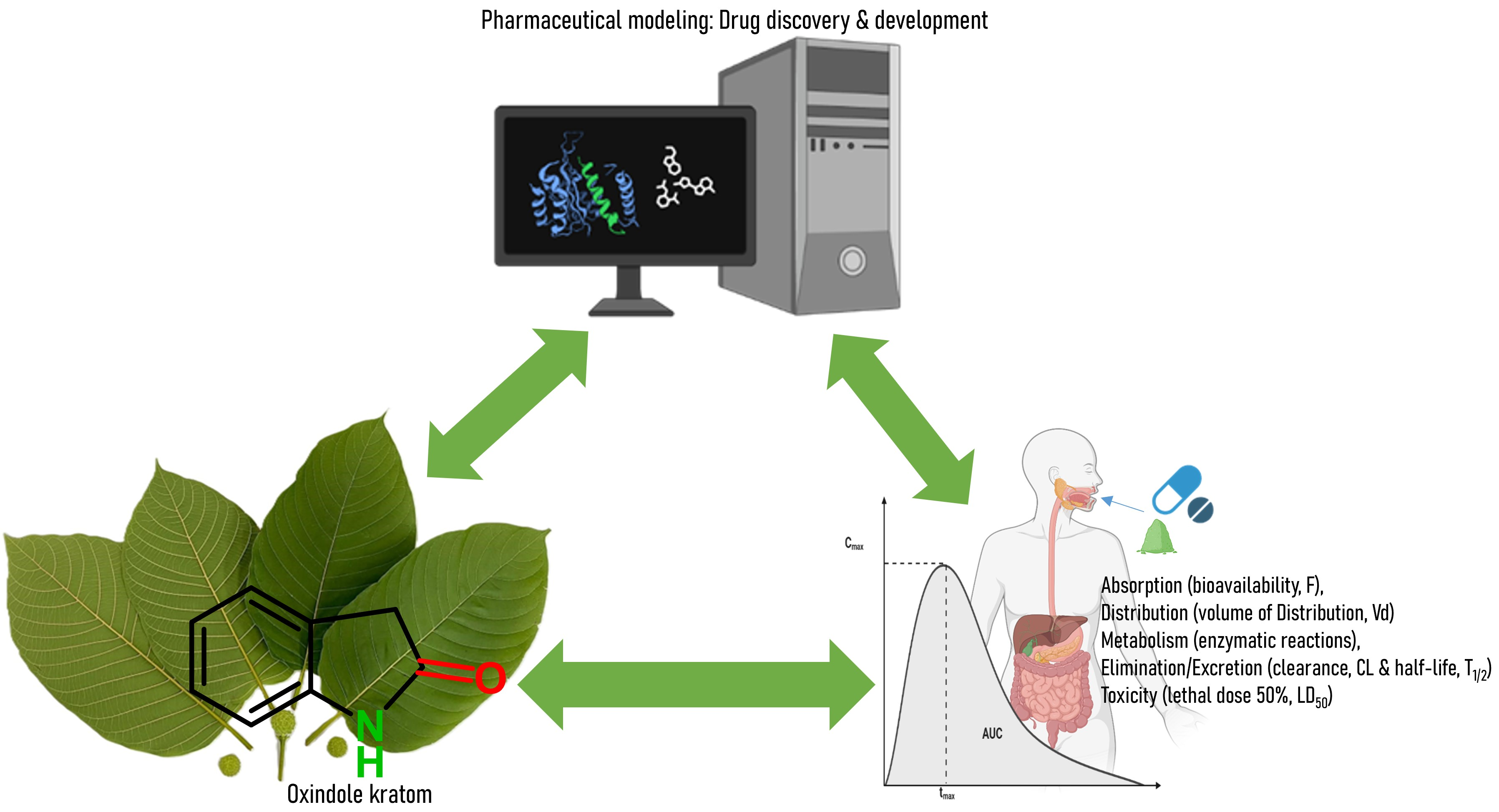
Graphical Abstract

1. Introduction

Kratom (Mitragyna speciosa (Korth.) Havil., Rubiaceae) is a tropical evergreen tree native to Southeast Asia that has been traditionally used in ethnomedicine for its stimulant, analgesic, and mood-modulating properties [1,2,3]. Indigenous and rural communities in Thailand, Malaysia, and Indonesia have historically consumed kratom leaves by chewing fresh foliage, smoking dried material, or preparing aqueous infusions and decoctions. At low doses, kratom preparations have been used to alleviate fatigue, enhance physical endurance, and improve work productivity, particularly among agricultural laborers, whereas higher doses have been employed for pain relief, sedation, and management of opioid-withdrawal-like symptoms [1,2,3,4,5,6,7,8]. Additional traditional applications include the treatment of gastrointestinal disorders such as diarrhea and dysentery, as well as fever, cough, inflammation, and anxiety-related conditions, reflecting the broad therapeutic scope historically attributed to the plant [4,5,6,7,8].
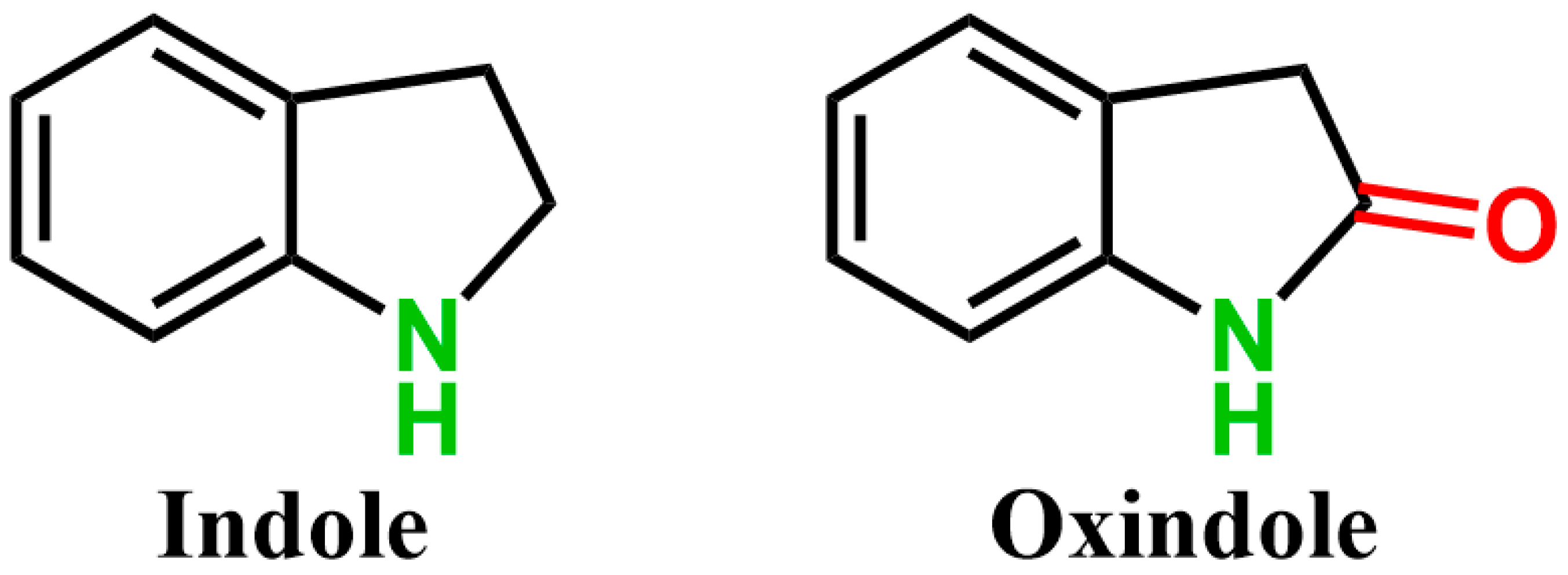
The pharmacological effects of M. speciosa are mediated by a chemically diverse mixture of alkaloids, predominantly various indole [9] and oxindole derivatives (Figure 1 and Supplementary Figures S1–S27). While mitragynine and 7-hydroxymitragynine are the most extensively studied constituents and are widely regarded as the primary contributors to kratom’s opioid-like and stimulant effects, oxindole alkaloids represent a comparatively underexplored structural class that may exert distinct and complementary biological activities [10]. Several oxindole derivatives have been reported to exhibit immunomodulatory, vasodilatory, antinociceptive, and anti-inflammatory effects, suggesting potential pharmacological relevance beyond the classical opioid-receptor-mediated mechanisms associated with indole alkaloids [11,12]. The typical distribution and content of the main oxindole alkaloids in Mitragyna speciosa organs (leaves, stem bark, and fruits) have quantitative ranges (0.01–0.1% dry weight) [6]. Despite these observations, the metabolic fate, enzyme interaction profiles, and transporter liabilities of kratom oxindole alkaloids remain poorly characterized and pure oxindole alkaloids are not widely available commercially and are generally isolated for research purposes. While most oxindole alkaloids described here (such as speciociliatine, rhynchophylline, and isorhynchophylline) occur primarily in Mitragyna speciosa, structurally related oxindoles have also been reported in other Mitragyna species (e.g., M. parvifolia and M. hirsuta) and some Uncaria spp. [10,11,12,13,14].
Understanding how oxindole alkaloids interact with metabolic enzymes and transport systems is essential for predicting their pharmacokinetic behavior, safety profile, and potential for drug–drug interactions. Cytochrome P450 (CYP) enzymes play a central role in alkaloid biotransformation, and competitive or inhibitory interactions among kratom constituents at CYP binding sites may significantly influence systemic exposure and pharmacodynamic outcomes [15,16]. In addition, interactions with membrane transporters such as P-glycoprotein (P-gp) and organic cation transporters may further modulate intestinal absorption, tissue distribution, and central nervous system exposure, thereby contributing to interindividual variability in response and toxicity.
In this study, computational predictive modeling was employed to investigate the metabolic behavior of selected oxindole alkaloids from Mitragyna speciosa, complementing our previous in silico analyses of indole alkaloids [9]. The modeling framework evaluated predicted CYP inhibition and substrate profiles, transporter interactions, and key pharmacokinetic parameters, with the aim of providing foundational insight into the metabolic pathways of oxindole alkaloids and their potential contributions to kratom’s complex and multifaceted pharmacological profile.

2. Materials and Methods

2.1. Chemical Structures and In Silico Modeling

The chemical structures of twenty-seven oxindole alkaloids from Mitragyna speciosa were analyzed using ADMET Predictor™ version 3.0 (Simulation Plus Inc., Lancaster, CA, USA). The 2D structures were sourced from previously published phytochemical studies and verified via PubChem (U.S. National Library of Medicine, Bethesda, MD, USA) and ChemSpider (Royal Society of Chemistry, Cambridge, UK) databases for accuracy and consistency. Each compound was converted into a standardized Simplified Molecular Input Line Entry System (.smi) format for computational modeling. Predictive analyses included physicochemical and absorption, distribution, metabolism, excretion, and toxicity (ADMET) parameters, with a focus on interactions involving cytochrome P450 (CYP) isoforms, UDP-glucuronosyltransferases (UGTs), and drug transporters.

2.2. Dataset Validation and Similarity Analysis

Prior to predictive modeling, structural validation and similarity analyses were conducted to ensure dataset reliability and chemical diversity. Molecular fingerprints were generated using extended connectivity (ECFP-4) algorithms, and pairwise Tanimoto coefficients were calculated to assess structural similarity between compounds. A mean similarity threshold of 0.75 or lower was used to confirm adequate chemical diversity within the oxindole dataset. Compounds showing identical or near-identical structural features were retained only once to prevent redundancy in predictive outputs. Cross-verification with known kratom alkaloid datasets from previous studies was performed to confirm structural authenticity and appropriate classification as oxindole alkaloid derivatives.

2.3. Enzymatic Interaction Analysis

Predicted interactions with phase I metabolic enzymes were evaluated for the key human CYP isoforms: CYP1A2, CYP2C9, CYP2C19, CYP2D6, and CYP3A4. The likelihood of each alkaloid functioning as a substrate, inhibitor, or inducer was determined using confidence scores (expressed as percentage probabilities) produced by ADMET Predictor™. Compounds were categorized into high- (≥75%), medium- (50–74%), or low-probability (<50%) interaction groups based on the ADMET Predictor™ version 3.0 software’s internal training set calibration. The screening concentration (10 µM) used by the ADMET predictor was used for enzyme and transporter inhibition models.

2.4. Pharmacokinetic and Permeability Predictions

Pharmacokinetic evaluations were conducted using the integrated physiologically based pharmacokinetic (PBPK) modules of ADMET Predictor™. Key outputs included human effective jejunal permeability (Peff), skin permeability, and blood–brain barrier (BBB) penetration. Additional system-level parameters such as plasma protein binding (fraction unbound, fu) and blood-to-plasma concentration ratio (RBP) were also determined. Physicochemical descriptors including logP, topological polar surface area (TPSA), molecular weight, and solubility were computed to inform absorption and distribution potential.

2.5. Model Reliability and Internal Validation

Model performance was internally validated using in-built cross-validation metrics provided by the ADMET Predictor™ software. Each prediction was accompanied by a confidence interval and an applicability domain score, indicating whether the compound fell within the model’s chemical space. Only predictions with high internal reliability (confidence score ≥ 0.8) were included in downstream analyses. Descriptors and probability outputs were compared against published literature data where available to assess concordance with experimental evidence.

3. Results

3.1. Enzymatic Interactions and Metabolism

Computational analysis revealed notable variability in predicted CYP450 interactions among the twenty-seven oxindole alkaloids of Mitragyna speciosa. Differences were observed across CYP isoforms regarding substrate affinity, inhibition, and induction potential. For example, every oxindole alkaloid examined exhibited a high likelihood of CYP3A4 substrate activity, indicating potential hepatic metabolism through this dominant enzyme (Table 1). Several oxindole alkaloids also appear to interact with CYP2C8.
The overall distribution of substrate probabilities across CYP families is summarized in Table 1. Table 2 and Table 3 further illustrate inhibition and induction confidence values, respectively, emphasizing that select compounds may serve as both inhibitors and inducers of distinct CYP isoforms. These findings indicate complex metabolic behaviors that warrant experimental validation through in vitro metabolic assays using human liver microsomes.

3.2. Cytochrome P450 Inhibition

All oxindole alkaloids displayed potential to inhibit multiple CYP isoforms (Table 2). CYP3A4 and CYP2D6 and CYP2C19 inhibition were most pronounced, with mitragynine oxindole A (1); corynoxine A (3); isorhynchoophylline (4); mitrafoline (5); rhynchociline (6); corynoxine B (11); rhynchophylline (12); isomitrafoline (13); mitragynine oxindole B (15); 3-epicorynoxine B (20); 3-epirhynchophylline (21); rotundifoline (22); isorotundifoline (23); speciofoline (24); ciliaphyline (25) showing high inhibitory confidence (92%) in CYP3A4 inhibition while all others were 50% or above. CYP inhibition was not evident in the other isoforms examined. These patterns suggest potential for metabolic competition or drug–drug interactions, particularly with medications metabolized by CYP3A4.

3.3. Cytochrome P450 Induction

Predicted enzyme induction profiles (Table 3) suggested that isocorynoxeine (9) and corynoxeine (18) may activate CYP1A2 expression, while other alkaloids exhibited induction potential. Induction of CYP3A4 was minimal across all compounds (<30%), implying limited activation relative to inhibitory effects. Collectively, these data indicate that acute kratom exposure could suppress xenobiotic metabolism, whereas chronic use might modestly induce compensatory CYP expression.

3.4. UGT Substrate Predictions (Phase II Metabolism)

Phase II metabolism predictions, presented in Table 4, identified UDP-glucuronosyltransferase (UGT) glucuronidation potentials among the analyzed oxindole alkaloids. Compounds such as rotundifoleine (2); mitrafoline (5); isorotundifoleine (10); isomitrafoline (13); isospeciofoline (14); rotundifoline (22); isorotundifoline (23); and speciofoline (24) demonstrated high predicted substrate probabilities for UGT1A1/1A3/1A8 and UGT2B7 enzymes central to conjugative detoxification. Isospeciofoleine (19) demonstrated the highest prediction confidence (>79%) as a substrate for UGT1A8. These findings align with prior studies reporting glucuronide formation of structurally related indole alkaloids. Such conjugation suggests a potential route for metabolite clearance and reduced systemic toxicity.

3.5. Transporter Substrate and Inhibition Interactions

Transporter analyses revealed each oxindole alkaloid had predicted substrate interactions with major drug transporters (Table 5), including P-glycoprotein (P-gp), and the majority with OATP1B3 and a few with the organic cation transporter family (OCT1/2). As summarized in Table 6, isocorynoxeine (9) inhibits OAT1; several oxindole alkaloids are predicted to inhibit OCT1 and in particular speciophylline (16) is the strongest inhibitor of OCT2, implying possible involvement in efflux-mediated drug resistance or absorption.

3.6. Blood–Brain Barrier Permeability

Blood–brain barrier (BBB) penetration predictions indicated that several oxindole alkaloids possess significant central nervous system (CNS) permeability potential. Specionoxeine, corynoxeine, and mitragynine oxindole A were among the highest scoring compounds, each demonstrating more than 90% predicted BBB penetration probability, as depicted in Table 7. In contrast, isospeciofoleine showed limited penetration (46% probability), suggesting comparatively low neuroactive potential. These findings highlight structural influences such as lipophilicity and reduced polar surface area on CNS accessibility.

3.7. Human Skin and Jejunal Permeability

Kratom oxindole alkaloids exhibit moderate skin permeability but high jejunal permeability, indicating stronger potential for oral delivery than for topical application. Most compounds such as mitragynine oxindole A (1), corynoxine A (3), isorhynchoophylline (4), mitrafoline (5), rhynchociline (6), and others show skin permeability of 0.8–3.9 × 10⁻⁷ cm/s, compared to jejunal permeability of 1.9–9.4 × 10⁻⁴ cm/s. Isospeciofoleine (19) has the lowest skin value (0.522 × 10⁻⁷ cm/s), making it the least viable for topical use.

3.7.1. Skin Permeability

Skin permeability values cluster from 0.5–3.9 × 10⁻⁷ cm/s, with the highest in mitragynine oxindole A (1), rhynchociline (6), mitragynine oxindole B (15), and ciliaphyline (25) (≈3.9 × 10⁻⁷ cm/s). These remain below the ~1 × 10⁻⁶ cm/s threshold generally required for effective transdermal delivery. Thus, passive diffusion through the stratum corneum is limited. Compounds at the upper range might permit localized topical effects if enhanced with penetration aids (e.g., DMSO), but overall, skin absorption remains marginal.

3.7.2. Jejunal Permeability

Jejunal permeability is one to three orders of magnitude higher than through skin, averaging 2–3 × 10⁻⁴ cm/s, with compounds like speciophylline (16), isomitraphylline (26), and uncarine C (27) reaching 9.4 × 10⁻⁴ cm/s. Values exceeding 1 × 10⁻⁴ cm/s align with BCS Class I/II high-permeability criteria, predicting >90% oral bioavailability for most alkaloids. Even lower-end values (1.9–2.0 × 10⁻⁴ cm/s) indicate sufficient intestinal absorption. Combined with favorable Lipinski profiles (score 0), these results confirm strong oral drug-likeness and absorption potential across the series.

3.8. Plasma Protein Binding

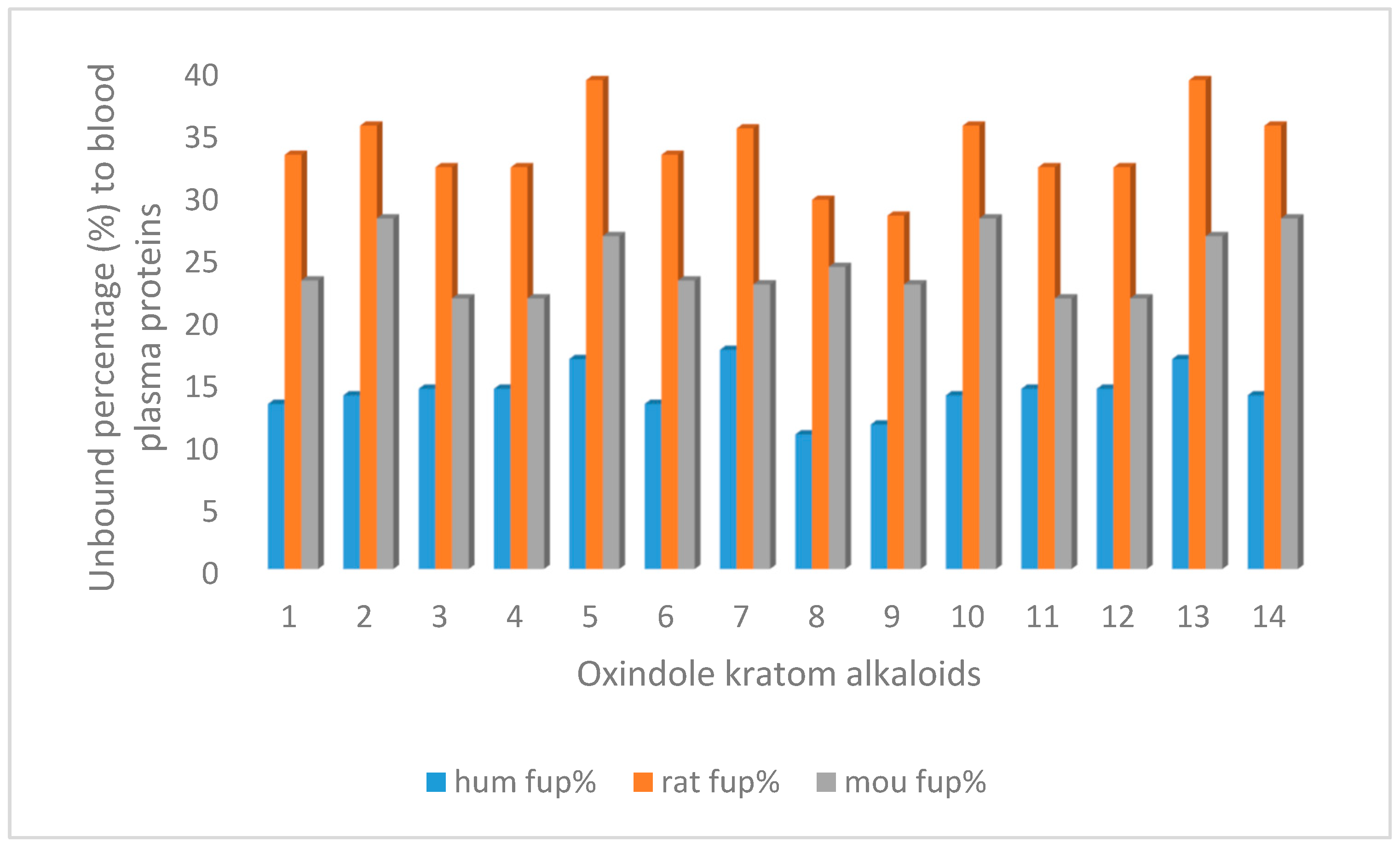
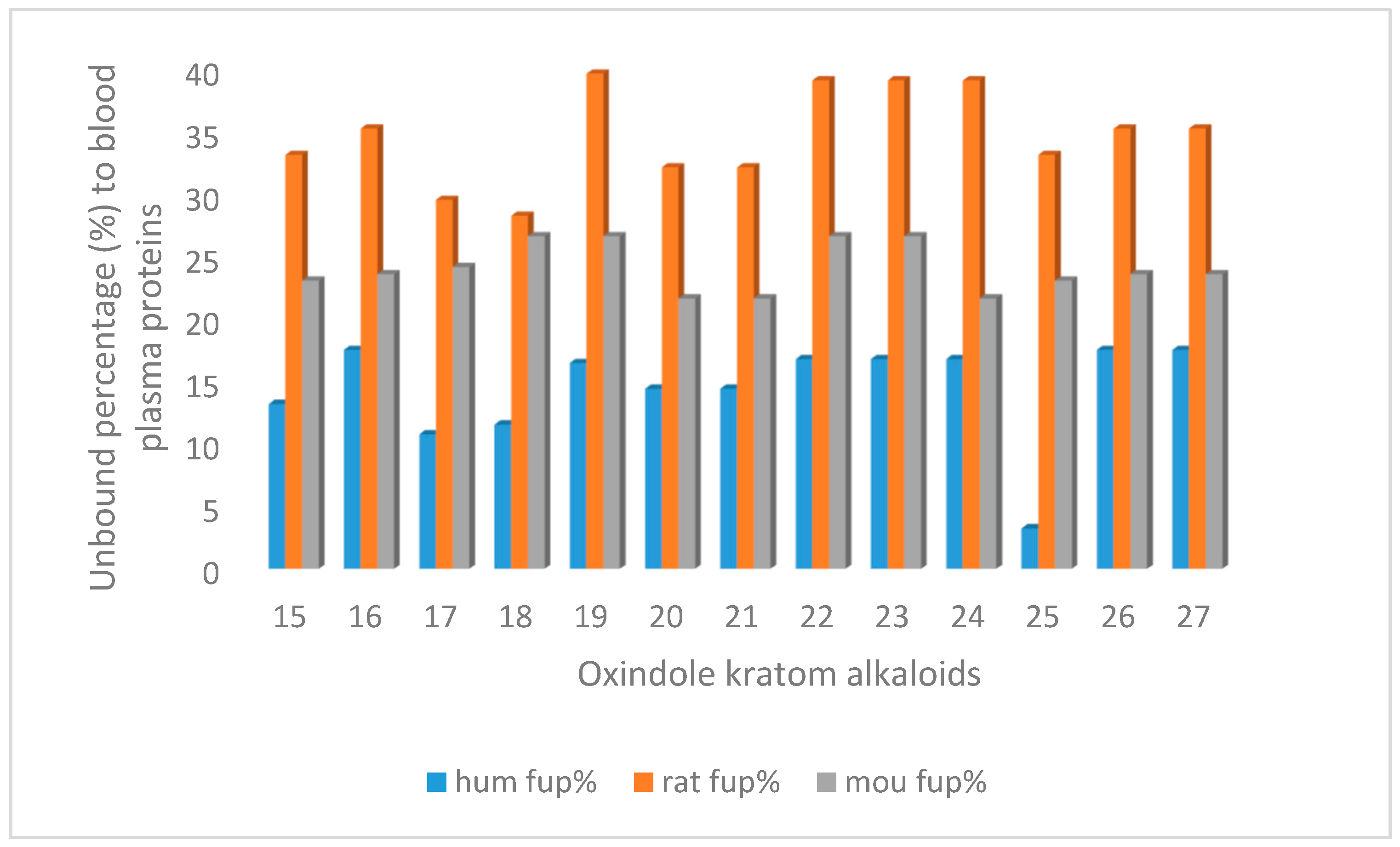
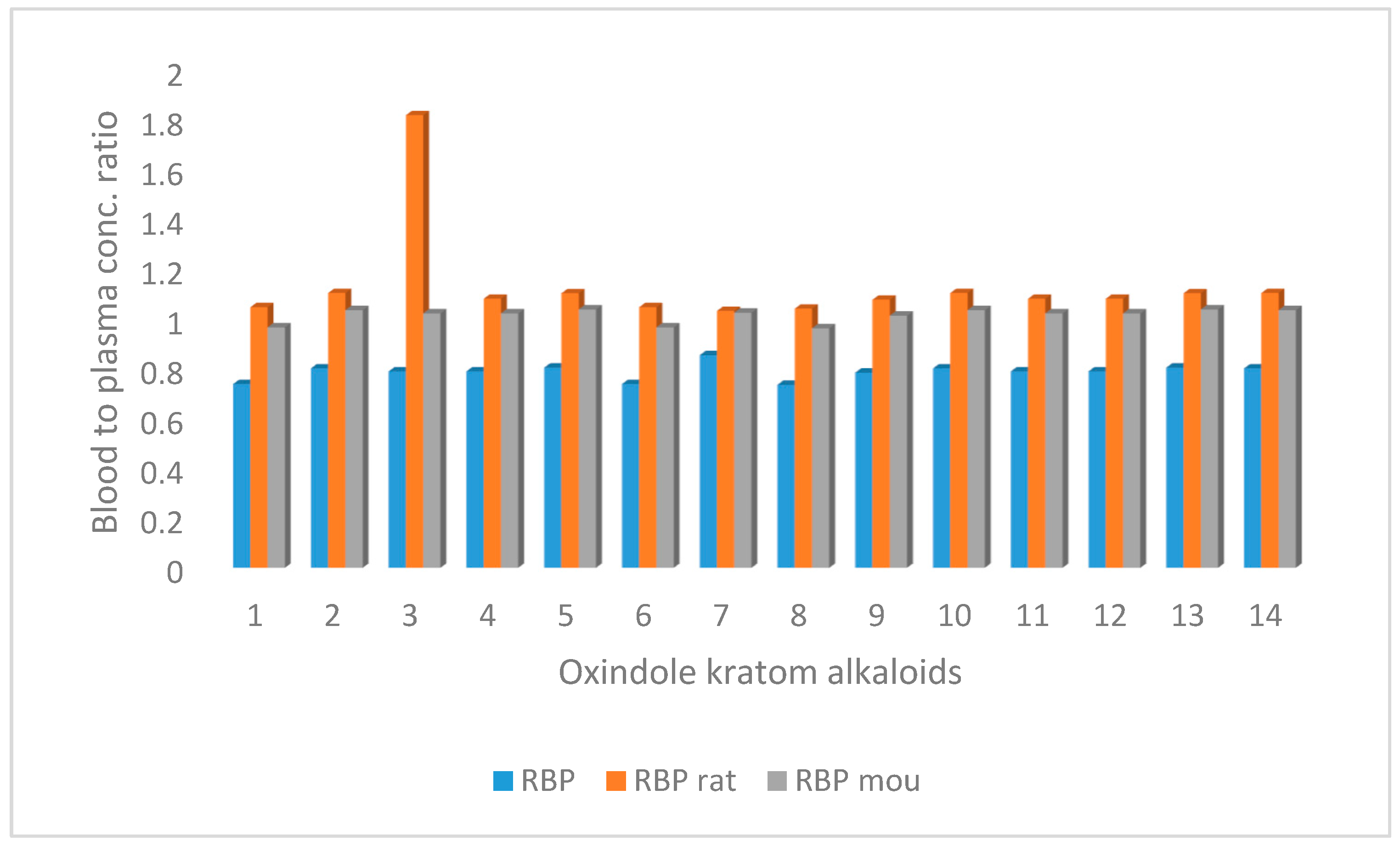
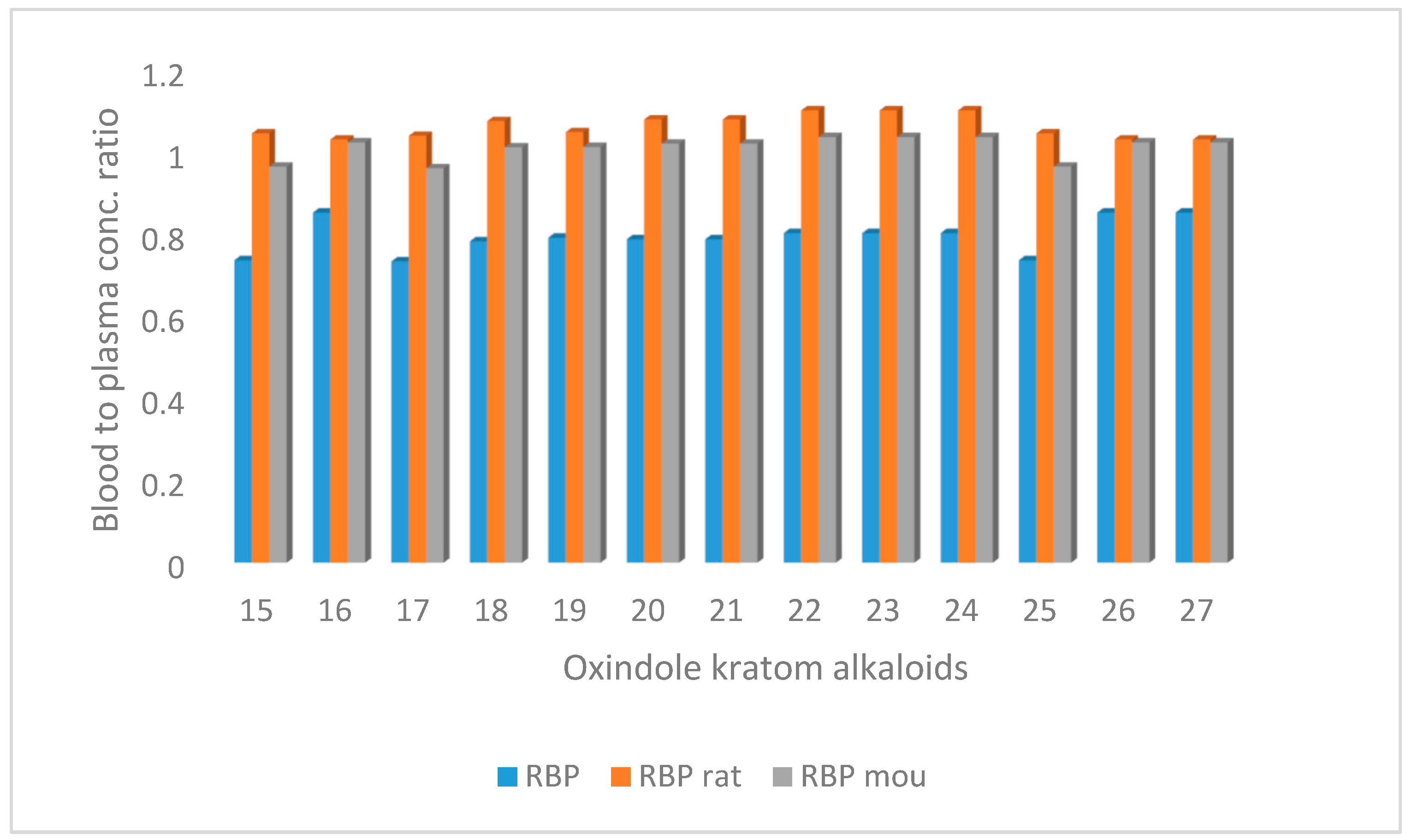
Plasma protein binding predictions (Figure 2) revealed high human plasma affinity for most alkaloids, with typical unbound fractions below 5%, suggesting extensive systemic binding. Blood-to-plasma ratios (Figure 3) varied between 0.65 and 0.95, consistent with moderate red blood cell partitioning, which could influence volume of distribution and tissue targeting without excessive sequestration. Unbound fractions below 5% suggest low free drug availability, potentially prolonging effects but raising concerns for protein binding displacement interactions.

3.9. Pharmacokinetics

These results (Table 8) collectively suggest that oxindole alkaloids of Mitragyna speciosa display diverse yet pharmacokinetically favorable metabolic traits. The fraction absorbed consistently exceeds 99.7% across all 27 compounds, confirming excellent dissolution and intestinal uptake consistent with prior jejunal permeability data (1.9–9.4 × 10⁻⁴ cm/s). AUC values cluster from 300–600 ng·h/mL (highest for 19 at 616 ng·h/mL), indicating substantial systemic exposure despite low dosing; CL remains moderate (13–22 L/h), reflecting suitable elimination with half-lives from 1–3.7 h. Cmax spans 50–116 ng/mL (peaks in isospeciofoleine, e.g., 116 ng/mL), with Tmax uniformly rapid at 1.3–1.8 h, suggesting possible quick-onset post-oral administration.
Compounds mitraphylline (7); speciophylline (16); isospeciofoleine (19); isomitraphylline (26); isospeciophylline, or pteropodine, uncarine C (27) excel with the highest AUC (>464 ng·h/mL) and Cmax (>109 ng/mL), driven by elevated Fb (79–83%) and lowest CL (~17 L/h). the shortest half-lives (e.g., rotundifoleine (2) at 1.16 h) imply rapid elimination, while the longest for corynoxine A (3); isorhynchoophylline (4); corynoxine B (11); rhynchophylline (12); 3-epicorynoxine B (20); 3-epirhynchophylline (21) at 3.67 h favor prolonged exposure; Vd 34–108 L indicates moderate tissue distribution aligning with high BBB penetration (82–99%). Oxindole alkaloids with short elimination half-lives may be suitable candidates for sustained or controlled release formulations.
These profiles predict effective oral bioavailability (>99%), low intercompound variability, and minimal accumulation risk given short half-lives, positioning oxindoles as viable CNS candidates versus parent alkaloids like mitragynine (which show similar but less optimized PK). Predicted Vd and CLp suggest negligible plasma protein impact on clearance; future in vivo studies should validate against CYP interactions noted earlier. Overall, Table 8 data reinforces oral superiority for potential delivery over topical routes due to skin permeability limitations.

4. Discussion

In silico modeling of natural product constituents has a wide range of applications and has been successfully applied to diverse natural products and extracts, including those derived from cannabis, fungi, and indole kratom alkaloids [9,17,18,19]. Building on this foundation, the present study provides a systematic in silico characterization of twenty-seven oxindole alkaloids from Mitragyna speciosa, yielding new insights into their predicted metabolic, pharmacokinetic, and transporter interaction profiles. Rather than behaving as a uniform chemical class, the oxindole alkaloids displayed marked heterogeneity in predicted enzyme affinity, clearance pathways, and BBB permeability, suggesting compound-specific contributions to kratom’s overall pharmacological profile.
Notably, a subset of oxindole alkaloids demonstrated particularly strong predicted substrate interactions with CYP3A4, CYP2D6, and CYP2C19, alongside moderate to high likelihood of CYP3A4 inhibition. These compounds characterized by higher lipophilicity and favorable oral absorption indices emerge as especially relevant candidates for further investigation due to their potential to influence both systemic exposure and drug–drug interaction (DDI) risk. This pattern parallels earlier ADMET and PK studies of indole alkaloids such as mitragynine and 7-hydroxymitragynine, which have been shown to undergo extensive CYP3A-mediated metabolism and to exhibit time- and concentration-dependent inhibition of CYP2D6 [9,15,16,20]. The convergence of predicted metabolic pathways between indole and oxindole alkaloids supports the hypothesis that these structurally distinct groups may act in a complementary manner within the kratom phytocomplex.
The predicted involvement of UGT1A1/1A3/1A8 and UGT2B7 enzymes further suggests that glucuronidation may play a critical role in the secondary clearance and detoxification of oxindole alkaloids, potentially mitigating accumulation during repeated exposure. This finding aligns with prior experimental observations demonstrating significant phase II metabolism of kratom indole alkaloids and underscores the importance of considering both oxidative and conjugative pathways when evaluating kratom-associated safety and variability in response [16,20]. Importantly, interindividual variability in UGT and CYP expression driven by genetic polymorphisms or disease states may further amplify pharmacokinetic heterogeneity among kratom users.
From a pharmacological and toxicological standpoint, the predicted CYP inhibition profiles raise clinically relevant concerns regarding DDIs, particularly for co-administered medications dependent on CYP3A4 or CYP2D6 clearance, including antidepressants, opioids, antipsychotics, and benzodiazepines. Inhibition of these enzymes could result in elevated plasma concentrations of concomitant drugs, increasing the risk of adverse or toxic effects. In addition, several oxindole alkaloids were predicted to be substrates of P-glycoprotein (P-gp), suggesting potential modulation of intestinal efflux and central nervous system (CNS) penetration. Similar transporter-mediated effects have been reported for mitragynine and related indole alkaloids, where P-gp interactions influence both oral bioavailability and brain exposure [15,21]. Collectively, these findings suggest that oxindole alkaloids may contribute to variability in kratom’s CNS effects and interaction liability, particularly in polypharmacy settings.
Although direct experimental toxicity data for kratom oxindole alkaloids remain scarce, compounds with higher predicted lipophilicity and BBB permeability may plausibly contribute to kratom’s reported neuroactive effects, including sedation, stimulation, or anxiolysis, depending on dose and alkaloid composition. The overlap of metabolic enzymes and transporters between oxindole and indole alkaloids further supports the notion that kratom’s safety profile cannot be attributed to a single constituent but rather reflects the integrated behavior of multiple alkaloids with shared biochemical targets.
Despite the breadth of the computational analysis, several limitations must be acknowledged. In silico predictions rely on generalized structure–activity relationships and reference datasets that cannot fully capture stereochemical complexity, concentration-dependent inhibition, or dynamic enzyme–enzyme interactions occurring in vivo. Moreover, the present study did not model potential synergistic or antagonistic interactions between oxindole and indole alkaloids, which may further modulate metabolic and pharmacodynamic outcomes. As such, the findings should be regarded as hypothesis-generating rather than definitive.
Future studies should prioritize experimentally validating the most informative oxindole alkaloids identified herein using human liver microsomes, recombinant CYP and UGT systems, and transporter assays, followed by integration into PBPK models. Such an approach would allow quantitative prediction of exposure, interaction magnitude, and population variability, building on prior PK/PD modeling efforts for kratom indole alkaloids [3,15,16,20,21,22,23,24,25,26,27,28,29].
Compared with earlier computational studies focused predominantly on mitragynine and 7-hydroxymitragynine [9], this work expands the scope of kratom research by introducing oxindole alkaloids as a structurally and functionally distinct class with meaningful ADMET implications. By identifying specific oxindole subgroups with favorable oral bioavailability, CNS accessibility, and pronounced enzyme interactions, the present study provides a mechanistic framework for prioritizing lead compounds for experimental validation and for refining risk–benefit assessments of kratom use [30].

5. Conclusions

In conclusion, this study demonstrates that oxindole alkaloids from Mitragyna speciosa are not merely minor structural variants but represent metabolically active constituents with distinct and compound-specific ADMET profiles. Several oxindole alkaloids exhibit pronounced interactions with key CYP enzymes, UGTs, and drug transporters, positioning them as potential contributors to kratom’s pharmacological effects, interindividual variability, and drug–drug interaction risk.
Rather than offering a broad generalization, the present findings identify specific oxindole alkaloid subgroups with elevated relevance based on predicted oral bioavailability, BBB permeability, and enzyme inhibition potential. These insights extend and complement prior ADMET and PK/PD studies of kratom indole alkaloids, reinforcing the concept that kratom’s pharmacology arises from the integrated behavior of multiple alkaloid classes rather than a single dominant compound.
While the results provide novel computational evidence that advances mechanistic understanding, experimental validation remains essential. Targeted in vitro metabolism and transporter studies, followed by PBPK modeling and in vivo confirmation, will be critical to translating these predictions into quantitative risk and efficacy assessments. By clarifying both the potential and the limitations of in silico modeling, this work establishes a focused and mechanistically informed foundation for future pharmacokinetic, toxicological, and translational investigations of kratom oxindole alkaloids as phytomedicines.

Supplementary Materials

The following supporting information can be downloaded at: https://www.mdpi.com/article/10.3390/jphytomed1010002/s1, Figures S1–S27. In silico prediction of the enzymatic reaction of Oxindole Alkaloids 1–27 in the presence of various CYP enzymes.

Author Contributions

Conceptualization, M.H.R., M.J.W., A.G.G., R.L., A.I. and N.M.D.; methodology, M.H.R., M.J.W., A.G.G., R.L. and N.M.D.; software, M.H.R., M.J.W., A.G.G., R.L. and N.M.D.; validation, M.H.R., M.J.W., A.G.G., R.L. and N.M.D.; formal analysis, M.H.R., M.J.W., A.G.G., R.L. and N.M.D.; investigation, M.H.R., M.J.W., A.G.G., A.I., R.L. and N.M.D.; resources, R.L. and N.M.D.; data curation, M.H.R., M.J.W. and A.G.G.; writing—original draft preparation, M.H.R., M.J.W., A.G.G., R.L. and N.M.D.; writing—review and editing, M.H.R., M.J.W., A.G.G., A.I., R.L. and N.M.D.; visualization, M.H.R., M.J.W., A.G.G., R.L., and N.M.D.; supervision, A.I., R.L. and N.M.D.; project administration, R.L. and N.M.D.; funding acquisition, A.I., R.L. and N.M.D. All authors have read and agreed to the published version of the manuscript.

Funding

This research was funded by MITAC, grant number IT3446.

Data Availability Statement

The original contributions presented in this study are included in the article. Further inquiries can be directed to the corresponding author.

Acknowledgments

The authors acknowledge Simulations Plus, Inc. (Lancaster, CA, USA) for providing access to ADMET Predictor® (version 13) used for physicochemical and metabolic property prediction in this study. N.M.D. acknowledges the Bualuang ASEAN Chair Professorship from Thammasat University. The graphical abstract was created in Biorender by M.H.R. (2026) https://BioRender.com/85jojhw and a CC image of a kratom leaf was obtained from Arunporn Itharat.

Conflicts of Interest

The authors declare no conflicts of interest. The funders had no role in the design of the study; in the collection, analyses, or interpretation of data; in the writing of the manuscript; or in the decision to publish the results.

References

  1. Gahr, M. Kratom (Mitragyna Speciosa): A Psychoactive Plant with Opportunities and Risks. Fortschr. Neurol. Psychiatr. 2023, 91, 455–465. [Google Scholar] [CrossRef]
  2. Takayama, H. Chemistry and pharmacology of analgesic indole alkaloids from the rubiaceous plant. Mitragyna speciosa. Chem. Pharm. Bull. 2004, 52, 916–928. [Google Scholar] [CrossRef]
  3. Kruegel, A.C.; Grundmann, O. The medicinal chemistry and neuropharmacology of kratom: A preliminary discussion of a promising medicinal plant and analysis of its potential for abuse. Neuropharmacology 2018, 134, 108–120. [Google Scholar] [CrossRef]
  4. Jansen, K.L.R.; Prast, C.J. Ethnopharmacology of kratom and the Mitragyna alkaloids. J. Ethnopharmacol. 1988, 23, 115–119. [Google Scholar] [CrossRef]
  5. Saingam, D.; Singh, D.; Geater, A.F.; Assanangkornchai, S.; Jitpiboon, W.; Latkin, C. The Health Impact of Long-Term Kratom (Mitragyna Speciosa) Use in Southern Thailand. Subst. Use Misuse 2023, 58, 1212–1225. [Google Scholar] [CrossRef] [PubMed]
  6. Grundmann, O. Patterns of Kratom use and health impact in the US—Results from an online survey. Drug Alcohol Depend. 2017, 176, 63–70. [Google Scholar] [CrossRef]
  7. Singh, D.; Narayanan, S.; Vicknasingam, B. Traditional and non-traditional uses of Mitragynine (Kratom): A survey of the literature. Brain Res. Bull. 2016, 126, 41–46. [Google Scholar] [CrossRef] [PubMed]
  8. Hassan, Z.; Muzaimi, M.; Navaratnam, V.; Yusoff, N.H.M.; Suhaimi, F.W.; Vadivelu, R.; Vicknasingam, B.K.; Amato, D.; von Hörsten, S.; Ismail, N.I.W.; et al. From Kratom to mitragynine and its derivatives: Physiological and behavioural effects related to use, abuse, and addiction. Neurosci. Biobehav. Rev. 2013, 37, 138–151. [Google Scholar] [CrossRef]
  9. Rashid, M.H.; Williams, M.J.; Garcia Guerra, A.; Itharat, A.; Loebenberg, R.; Davies, N.M. Therapeutic Potential and Predictive Pharmaceutical Modeling of Indole Kratom Alkaloids. J. Phytomed. 2026, 1, 1. [Google Scholar] [CrossRef]
  10. Castro, S.G.; Hosoya, E.; Kitajima, M.; Nakamura, H.; Manzano, J.A.H.; Alejandro, G.J.D.; Tan, M.A.; Ishikawa, H. Uncamarins A–D, oxindole alkaloids from Philippine Uncaria longiflora and their anti-amyloidogenic properties. Phytochemistry 2025, 238, 114585. [Google Scholar] [CrossRef] [PubMed]
  11. Sudmoon, R.; Tanee, T.; Wonok, W.; Ameamsri, U.; Liehr, T.; Daduang, S.; Siripiyasing, P.; Chaveerach, A. Discovery of rhynchophylline and mitraphylline in two Thai Mitragyna species and the investigation of their biological activity via opioid gene expression analysis. Sci. Rep. 2025, 15, 5865. [Google Scholar] [CrossRef] [PubMed]
  12. Shi, J.; Yu, J.; Chen, X.; Xu, R. Pharmacological actions of Uncaria alkaloids, rhynchophylline and isorhynchophylline. Acta Pharmacol. Sin. 2003, 24, 97–101. Available online: http://www.chinaphar.com/article/view/9032/9477 (accessed on 7 January 2026).
  13. Khetmalis, Y.M.; Shivani, M.; Murugesan, S.; Chandra Sekhar, K.V.G. Oxindole and its derivatives: A review on recent progress in biological activities. Biomed. Pharmacother. 2021, 141, 111842. [Google Scholar] [CrossRef]
  14. Kushida, H.; Matsumoto, T.; Ikarashi, Y. Properties, Pharmacology, and Pharmacokinetics of Active Indole and Oxindole Alkaloids in Uncaria Hook. Front. Pharmacol. 2021, 12, 688670. [Google Scholar] [CrossRef]
  15. Kong, W.M.; Chik, Z.; Ramachandra, M.; Subramaniam, U.; Raja Aziddin, R.E.; Mohamed, Z. Evaluation of the effects of Mitragyna speciosa alkaloid extract on cytochrome P450 enzymes using a high throughput assay. Molecules 2011, 16, 7344–7356. [Google Scholar] [CrossRef] [PubMed]
  16. Kamble, S.H.; Sharma, A.; King, T.I.; Berthold, E.C.; León, F.; Meyer, P.K.L.; Kanumuri, S.R.R.; McMahon, L.R.; McCurdy, C.R.; Avery, B.A. Exploration of cytochrome P450 inhibition mediated drug-drug interaction potential of kratom alkaloids. Toxicol. Lett. 2020, 319, 148–154. [Google Scholar] [CrossRef]
  17. Amaral Silva, D.; Pate, D.W.; Clark, R.D.; Davies, N.M.; El-Kadi, A.O.S.; Löbenberg, R. Phytocannabinoid drug-drug interactions and their clinical implications. Pharmacol. Ther. 2020, 215, 107621. [Google Scholar] [CrossRef]
  18. O’Croinin, C.; Garcia Guerra, A.; Doschak, M.R.; Löbenberg, R.; Davies, N.M. Therapeutic Potential and Predictive Pharmaceutical Modeling of Stilbenes in Cannabis sativa. Pharmaceutics 2023, 15, 1941. [Google Scholar] [CrossRef]
  19. Richter, L.M.; Al-Gousous, J.; de Araujo, G.L.B.; Davies, N.M.; Löbenberg, R. Assessing the utility of in silico tools in early drug development: The case of a pharmaceutically relevant formulation of the prodrug psilocybin. J. Drug Deliv. Sci. Technol. 2024, 92, 105305. [Google Scholar] [CrossRef]
  20. Basiliere, S.; Kerrigan, S. Identification of metabolites and potential biomarkers of kratom in urine. J. Chromatogr. B Analyt. Technol. Biomed. Life Sci. 2020, 1140, 121971. [Google Scholar] [CrossRef] [PubMed]
  21. Hanapi, N.A.; Chear, N.J.Y.; Azizi, J.; Yusof, S.R. Kratom Alkaloids: Interactions With Enzymes, Receptors, and Cellular Barriers. Front. Pharmacol. 2021, 12, 751656. [Google Scholar] [CrossRef]
  22. Jia, Q.; He, Q.; Yao, L.; Li, M.; Lin, J.; Tang, Z.; Zhu, X.; Xiang, X. Utilization of Physiologically Based Pharmacokinetic Modeling in Pharmacokinetic Study of Natural Medicine: An Overview. Molecules 2022, 27, 8670. [Google Scholar] [CrossRef]
  23. Alford, A.S.; Moreno, H.L.; Benjamin, M.M.; Dickinson, C.F.; Hamann, M.T. Exploring the Therapeutic Potential of Mitragynine and Corynoxeine: Kratom-Derived Indole and Oxindole Alkaloids for Pain Management. Pharmaceuticals 2025, 18, 222. [Google Scholar] [CrossRef] [PubMed]
  24. Bayu, A.; Rahmawati, S.I.; Karim, F.; Panggabean, J.A.; Nuswantari, D.P.; Indriani, D.W.; Ahmadi, P.; Witular, R.; Dharmayanti, N.L.P.I.; Putra, M.Y. An In Vitro Examination of Whether Kratom Extracts Enhance the Cytotoxicity of Low-Dose Doxorubicin against A549 Human Lung Cancer Cells. Molecules 2024, 29, 1404. [Google Scholar] [CrossRef]
  25. Boucher, R.; Germain, H.; Desgagné-Penix, I.; Boucher, R.; Germain, H.; Desgagné-Penix, I. Exploring the Lesser-Known Bioactive Natural Products of Plant Species of the Genus Cannabis L.: Alkaloids, Phenolic Compounds, and Their Therapeutic Potential. Plants 2025, 14, 1372. [Google Scholar] [CrossRef]
  26. Liu, Y.; Lawless, M.; Li, M.; Fairman, K.; Embry, M.R.; Mitchell, C.A. Prediction of physicochemical and pharmacokinetic properties of botanical constituents by computational models. J. Appl. Toxicol. 2024, 44, 1236–1245. [Google Scholar] [CrossRef]
  27. Ya, K.; Methaneethorn, J.; Tran, Q.B.; Trakulsrichai, S.; Wananukul, W.; Lohitnavy, M. Development of a Physiologically Based Pharmacokinetic Model of Mitragynine, Psychoactive Alkaloid in Kratom (Mitragyna Speciosa Korth.), In Rats and Humans. J. Psychoact. Drugs 2021, 53, 127–139. [Google Scholar] [CrossRef] [PubMed]
  28. Chou, P.C.; Shannar, A.; Pan, Y.; Dave, P.D.; Xu, J.; Kong, A.N.T. Application of Physiologically-Based Pharmacokinetic (PBPK) Model in Drug Development and in Dietary Phytochemicals. Curr. Pharmacol. Rep. 2025, 11, 45. [Google Scholar] [CrossRef]
  29. Yusof, S.R.; Mohd Uzid, M.; Teh, E.H.; Hanapi, N.A.; Mohideen, M.; Mohamad Arshad, A.S.; Mordi, M.N.; Loryan, I.; Hammarlund-Udenaes, M. Rate and extent of mitragynine and 7-hydroxymitragynine blood-brain barrier transport and their intra-brain distribution: The missing link in pharmacodynamic studies. Addict. Biol. 2019, 24, 935–945. [Google Scholar] [CrossRef]
  30. Rashid, M.H.; O’Croinin, C.; Le, T.S.; Abdi, Z.; Loebenberg, R.; Davies, N.M. Analytical method validation with development for the detection and quantification of kratom alkaloids using LC−MS/MS. J. Pharmacol. Toxicol. Methods 2026, 137, 108409. [Google Scholar] [CrossRef] [PubMed]
Figure 1. Chemical structures of indole and oxindole alkaloids illustrating their core scaffolds, with emphasis on the lactam moiety that differentiates oxindole alkaloids from indole analogues.
Jphytomed 01 00002 g001
Figure 2. In silico prediction of the percentage of the oxindole kratom Alkaloids that are unbound to blood plasma proteins in human, rat, and mouse. Mitragynine oxindole A (1); Rotundifoleine (2); Corynoxine A (3); Isorhynchoophylline (4); Mitrafoline (5); Rhynchociline (6); Mitraphylline (7); Isospecionoxeine (8); Isocorynoxeine (9); Isorotundifoleine (10); Corynoxine B (11); Rhynchophylline (12); Isomitrafoline; (13) Isospeciofoline (14); Mitragynine oxindole B (15); Speciophylline (16); Specionoxeine (17); Corynoxeine (18); Isospeciofoleine (19); 3-Epicorynoxine B (20); 3-Epirhynchophylline (21); Rotundifoline (22); Isorotundifoline (23); Speciofoline (24); Ciliaphyline (25); Isomitraphylline (26); Isospeciophylline, or Pteropodine, Uncarine C (27).
Jphytomed 01 00002 g002aJphytomed 01 00002 g002b
Figure 3. In silico prediction of the Blood to plasma concentration ratio of the oxindole kratom Alkaloids in human, rat, and mouse. Mitragynine oxindole A (1); Rotundifoleine (2); Corynoxine A (3); Isorhynchoophylline (4); Mitrafoline (5); Rhynchociline (6); Mitraphylline (7); Isospecionoxeine (8); Isocorynoxeine (9); Isorotundifoleine (10); Corynoxine B (11); Rhynchophylline (12); Isomitrafoline; (13) Isospeciofoline (14); Mitragynine oxindole B (15); Speciophylline (16); Specionoxeine (17); Corynoxeine (18); Isospeciofoleine (19); 3-Epicorynoxine B (20); 3-Epirhynchophylline (21); Rotundifoline (22); Isorotundifoline (23); Speciofoline (24); Ciliaphyline (25); Isomitraphylline (26); Isospeciophylline, or Pteropodine, Uncarine C (27).
Jphytomed 01 00002 g003aJphytomed 01 00002 g003b
Table 1. Heatmap for the predicted substrates’ interaction with various CYP isoforms by ADMET Predictor™. Color codes reflect the degree of interaction confidence as follows: 1. Dark green (+90 to +99): Very high probability of interaction; 2. Moderate green (+70 to +90): High to moderate probability of interaction; 3. Light green (below +70): Moderate to weak probability of interaction; 4. Pale yellow (below −70): Uncertain interaction or moderate probability of no interaction; 5. Light red (−70 to −89): High to moderate probability of no interaction; 6. Dark red (−90 to −99): Very high probability of no interaction. Mitragynine oxindole A (1); Rotundifoleine (2); Corynoxine A (3); Isorhynchoophylline (4); Mitrafoline (5); Rhynchociline (6); Mitraphylline (7); Isospecionoxeine (8); Isocorynoxeine (9); Isorotundifoleine (10); Corynoxine B (11); Rhynchophylline (12); Isomitrafoline (13); Isospeciofoline (14); Mitragynine oxindole B (15); Speciophylline (16); Specionoxeine (17); Corynoxeine (18); Isospeciofoleine (19); 3-Epicorynoxine B (20); 3-Epirhynchophylline (21); Rotundifoline (22); Isorotundifoline (23); Speciofoline (24); Ciliaphyline (25); Isomitraphylline (26); Isospeciophylline, or Pteropodine, Uncarine C (27).
Kratom
Alkaloids
1234567891011121314
CYP1A2−97−97−97−97−97−97−97−97−97−97−97−97−97−97
CYP2A6−84−916262−88−8469−84−66−916262−88−91
CYP2B651−985959−925157−89−83−985959−92−98
CYP2C863−948484566377−91−78−95848456−94
CYP2C9−65−73−67−67−78−65393637−73−67−67−78−73
CYP2C1950−734848−6650503963−734848−66−73
CYP2D65855656544585546585565654455
CYP2E1−69−88−6666−77−69−74−76−72−886666−77−88
CYP3A49898989898989898989898989898
Kratom
Alkaloids
15161718192021222324252627
CYP1A2−97−97−97−97−97−97−97−97−97−97−97−97−97
CYP2A6−8469−84−66−986262−88−88−88−846969
CYP2B65157−89−83−985959−92−92−92515757
CYP2C86377−91−78568484565656637777
CYP2C9−65393637−94−67−67−78−78−78−973939
CYP2C1950503963−954848−66−66−66505050
CYP2D658554658−716565444444585555
CYP2E1−69−74−76−72−72−66−66−77−77−77−69−74−74
CYP3A498989898989898989898989898
Table 2. Heatmap for the predicted inhibition of CYP isoforms by ADMET Predictor™. Color codes reflect the degree of interaction confidence as follows: 1. Dark green (+90 to +99): Very high probability of interaction; 2. Moderate green (+70 to +90): High to moderate probability of interaction; 3. Light green (below +70): Moderate to weak probability of interaction; 4. Pale yellow (below −70): Uncertain interaction or moderate probability of no interaction; 5. Light red (−70 to −89): High to moderate probability of no interaction; 6. Dark red (−90 to −99): Very high probability of no interaction. Mitragynine oxindole A (1); Rotundifoleine (2); Corynoxine A (3); Isorhynchoophylline (4); Mitrafoline (5); Rhynchociline (6); Mitraphylline (7); Isospecionoxeine (8); Isocorynoxeine (9); Isorotundifoleine (10); Corynoxine B (11); Rhynchophylline (12); Isomitrafoline (13); Isospeciofoline (14); Mitragynine oxindole B (15); Speciophylline (16); Specionoxeine (17); Corynoxeine (18); Isospeciofoleine (19); 3-Epicorynoxine B (20); 3-Epirhynchophylline (21); Rotundifoline (22); Isorotundifoline (23); Speciofoline (24); Ciliaphyline (25); Isomitraphylline (26); Isospeciophylline, or Pteropodine, Uncarine C (27). Screening concentration (10 µM) used by the ADMET predictor for enzyme and transporter inhibition models.
Kratom
Alkaloids
1234567891011121314
CYP1A2−96−96−96−96−96−96−96−96−96−96−96−96−96−96
CYP2A6−99−99−99−99−99−99−99−99−99−99−99−99−99−99
CYP2B6−99−65−99−99−95−99−99−63−68−65−99−99−95−65
CYP2C8−97−55−97−97−97−97−97−52−69−55−97−97−97−55
CYP2C9−97−78−97−97−97−97−97−78−86−78−97−97−97−78
CYP2C19−72−69−64−64−76−7246−5651−69−64−64−76−69
CYP2D6314136364131−8025314136364141
CYP2E1−82−77−90−90−78−82−85−77−87−77−90−90−78−77
CYP3A49273929292925078697392929273
Kratom
Alkaloids
15161718192021222324252627
CYP1A2−96−96−96−96−96−96−96−96−96−96−96−96−96
CYP2A6−99−99−99−99−99−99−99−99−99−99−99−99−99
CYP2B6−99−99−63−68−99−99−99−95−95−95−99−99−99
CYP2C8−97−97−52−69−97−97−97−97−97−97−97−97−97
CYP2C9−97−97−78−86−78−97−97−97−97−97−65−97−97
CYP2C19−7247−5651−96−64−64−76−76−76−724747
CYP2D631−80253166363641414131−80−80
CYP2E1−82−85−77−87−78−90−90−78−78−78−82−85−85
CYP3A492507869739292929292925050
Table 3. Heatmap for the predicted induction of CYP1A2 isoforms by ADMET Predictor™. Color codes reflect the degree of interaction confidence as follows: Light green (+60 to +89): Moderate probability of interaction; Light red (−60 to −89): Moderate probability of no interaction. Mitragynine oxindole A (1); Rotundifoleine (2); Corynoxine A (3); Isorhynchoophylline (4); Mitrafoline (5); Rhynchociline (6); Mitraphylline (7); Isospecionoxeine (8); Isocorynoxeine (9); Isorotundifoleine (10); Corynoxine B (11); Rhynchophylline (12); Isomitrafoline; (13) Isospeciofoline (14); Mitragynine oxindole B (15); Speciophylline (16); Specionoxeine (17); Corynoxeine (18); Isospeciofoleine (19); 3-Epicorynoxine B (20); 3-Epirhynchophylline (21); Rotundifoline (22); Isorotundifoline (23); Speciofoline (24); Ciliaphyline (25); Isomitraphylline (26); Isospeciophylline, or Pteropodine, Uncarine C (27). Screening concentration (10 µM) used by the ADMET predictor for enzyme and transporter inhibition models.
Kratom
Alkaloids
1234567891011121314
CYP1A27575797975757975847579797575
Kratom
Alkaloids
15161718192021222324252627
CYP1A275797584−647979757575757979
Table 4. Heatmap for the predicted substrates for various UGT isoforms by ADMET Predictor™. Color codes reflect the degree of interaction confidence as follows: 1. Dark green (+90 to +99): Very high probability of interaction; 2. Moderate green (+70 to +90): High to moderate probability of interaction; 3. Light green (below +70): Moderate to weak probability of interaction; 4. Pale yellow (below −70): Uncertain interaction or moderate probability of no interaction; 5. Light red (−70 to −89): High to moderate probability of no interaction; 6. Dark red (−90 to −99): Very high probability of no interaction. Mitragynine oxindole A (1); Rotundifoleine (2); Corynoxine A (3); Isorhynchoophylline (4); Mitrafoline (5); Rhynchociline (6); Mitraphylline (7); Isospecionoxeine (8); Isocorynoxeine (9); Isorotundifoleine (10); Corynoxine B (11); Rhynchophylline (12); Isomitrafoline; (13) Isospeciofoline (14); Mitragynine oxindole B (15); Speciophylline (16); Specionoxeine (17); Corynoxeine (18); Isospeciofoleine (19); 3-Epicorynoxine B (20); 3-Epirhynchophylline (21); Rotundifoline (22); Isorotundifoline (23); Speciofoline (24); Ciliaphyline (25); Isomitraphylline (26); Isospeciophylline, or Pteropodine, Uncarine C (27).
Kratom
Alkaloids
1234567891011121314
UGT1A1−8259−76−7659−82−85−85−7959−76−765959
UGT1A3−6853−58−5859−68−68−58−5353−58−585953
UGT1A4−81−99−70−70−99−81−78−90−78−99−70−70−99−99
UGT1A6−79−68−77−77−70−79−70−73−73−68−77−77−70−68
UGT1A8−7562−61−6160−7541−75−6862−61−616062
UGT1A9−92−66−92−92−92−92−92−92−92−66−92−92−92−92
UGT1A10−97−97−97−97−97−97−97−97−97−97−97−97−97−97
UGT2B7−97−97−85−85−97−97−81−97−90−97−85−85−97−97
UGT2B15−99−95−99−99−95−99−99−99−99−95−99−99−95−95
Kratom
Alkaloids
15161718192021222324252627
UGT1A1−82−85−85−79−98−76−76595959−82−85−85
UGT1A3−68−68−58−5359−58−58595959−68−68−68
UGT1A4−81−78−90−78−99−70−70−99−99−99−81−78−78
UGT1A6−79−70−73−73−68−77−77−70−70−70−79−70−70
UGT1A8−7541−75−6879−61−61606060−754141
UGT1A9−92−92−92−92−92−92−92−92−92−92−92−92−92
UGT1A10−97−97−97−97−87−97−97−97−97−97−97−97−97
UGT2B7−97−81−97−90−97−85−85−97−97−97−97−81−81
UGT2B15−99−99−99−99−99−99−99−95−95−95−99−99−99
Table 5. Heatmap for the predicted interaction with different transporters by ADMET Predictor™. Color codes reflect the degree of interaction confidence as follows: 1. Dark green (+90 to +99): Very high probability of interaction; 2. Moderate green (+70 to +90): High to moderate probability of interaction; 3. Light green (below +70): Moderate to weak probability of interaction; 4. Pale yellow (below −70): Uncertain interaction or moderate probability of no interaction; 5. Light red (−70 to −89): High to moderate probability of no interaction; 6. Dark red (−90 to −99): Very high probability of no interaction. Mitragynine oxindole A (1); Rotundifoleine (2); Corynoxine A (3); Isorhynchoophylline (4); Mitrafoline (5); Rhynchociline (6); Mitraphylline (7); Isospecionoxeine (8); Isocorynoxeine (9); Isorotundifoleine (10); Corynoxine B (11); Rhynchophylline (12); Isomitrafoline; (13) Isospeciofoline (14); Mitragynine oxindole B (15); Speciophylline (16); Specionoxeine (17); Corynoxeine (18); Isospeciofoleine (19); 3-Epicorynoxine B (20); 3-Epirhynchophylline (21); Rotundifoline (22); Isorotundifoline (23); Speciofoline (24); Ciliaphyline (25); Isomitraphylline (26); Isospeciophylline, or Pteropodine, Uncarine C (27). Assumed ligand concentration of 10 µM, consistent with the simulation parameters.
Kratom
Alkaloids
1234567891011121314
P-gp9999999999999799999999999999
BCRP−98−75−98−98−88−98−98−98−98−96−98−98−88−75
OATP1B1−58−79−52−52−55−5852−79−52−79−52−52−55−79
OATP1B3696666666869−5568656666666866
OAT1−92−92−92−92−92−92−92−92−92−92−92−92−92−92
OAT3−95−49−95−95−62−95−49−59−62−49−95−95−62−49
OC T 1−60−48−49−49−48−6049−56−50−48−49−49−48−48
OC T 2−91−9178−78−91−91−78−91−91−91−78−78−91−91
Kratom
Alkaloids
15161718192021222324252627
P-gp99979999749999999999999797
BCRP−98−98−98−98−52−98−98−88−88−88−98−98−98
OATP1B1−5852−79−52−53−52−52−55−55−55−585252
OATP1B369−55686569666668686869−55−55
OAT1−92−92−92−92−92−92−92−92−92−92−92−92−92
OAT3−95−49−59−62−50−95−95−62−62−62−95−49−49
OC T 1−6053−56−5096−49−49−48−48−48−605349
OC T 2−91−74−91−91−57−78−78−91−91−91−91−74−78
Table 6. Heatmap for the predicted transporters’ inhibitions by ADMET Predictor™. Color codes reflect the degree of interaction confidence as follows: 1. Dark green (+90 to +99): Very high probability of interaction; 2. Moderate green (+70 to +90): High to moderate probability of interaction; 3. Light green (below +70): Moderate to weak probability of interaction; 4. Pale yellow (below -70): Uncertain interaction or moderate probability of no interaction; 5. Light red (−70 to −89): High to moderate probability of no interaction; 6. Dark red (−90 to −99): Very high probability of no interaction. Mitragynine oxindole A (1); Rotundifoleine (2); Corynoxine A (3); Isorhynchoophylline (4); Mitrafoline (5); Rhynchociline (6); Mitraphylline (7); Isospecionoxeine (8); Isocorynoxeine (9); Isorotundifoleine (10); Corynoxine B (11); Rhynchophylline (12); Isomitrafoline; (13) Isospeciofoline (14); Mitragynine oxindole B (15); Speciophylline (16); Specionoxeine (17); Corynoxeine (18); Isospeciofoleine (19); 3-Epicorynoxine B (20); 3-Epirhynchophylline (21); Rotundifoline (22); Isorotundifoline (23); Speciofoline (24); Ciliaphyline (25); Isomitraphylline (26); Isospeciophylline, or Pteropodine, Uncarine C (27). Screening concentration (10 µM) used by the ADMET predictor.
Kratom Alkaloids1234567891011121314
P-gp−60−93−60−60−99−60−93−69−69−93−60−60−93−93
BCRP−96−96−96−96−96−96−96−96−96−79−96−96−96−96
OATP1B1−60−55−86−86−62−60−86−55−74−55−86−86−62−55
OATP1B3−53−63−60−60−63−53−71−55−60−63−60−60−63−63
OAT1−98−98−98−98−98−98−98−9868−98−98−98−98−98
OAT3−95−95−95−95−95−95−71−95−95−98−95−95−95−95
OC T 1−50−686262−64−5053−5655−686262−64−68
OC T 2−79−85−78−78−89−79−74−83−79−85−78−78−89−83
Kratom Alkaloids15161718192021222324252627
P-gp−60−93−69−69−99−60−60−93−93−99−60−93−93
BCRP−96−96−96−96−96−96−96−96−96−96−96−96−96
OATP1B1−60−86−55−74−86−86−86−62−62−62−60−86−86
OATP1B3−53−71−55−60−63−60−60−63−63−63−53−71−71
OAT1−98−98−98−98−98−98−98−98−98−98−98−98−98
OAT3−95−71−95−95−95−95−95−95−95−95−95−71−71
OC T 1−5053−5655−766262−64−64−64−505353
OC T 2−7974−83−79−85−78−78−89−89−89−79−74−74
Table 7. Predictive data related to the permeability of the Oxindole Kratom Alkaloids Mitragynine oxindole A (1); Rotundifoleine (2); Corynoxine A (3); Isorhynchoophylline (4); Mitrafoline (5); Rhynchociline (6); Mitraphylline (7); Isospecionoxeine (8); Isocorynoxeine (9); Isorotundifoleine (10); Corynoxine B (11); Rhynchophylline (12); Isomitrafoline; (13) Isospeciofoline (14); Mitragynine oxindole B (15); Speciophylline (16); Specionoxeine (17); Corynoxeine (18); Isospeciofoleine (19); 3-Epicorynoxine B (20); 3-Epirhynchophylline (21); Rotundifoline (22); Isorotundifoline (23); Speciofoline (24); Ciliaphyline (25); Isomitraphylline (26); Isospeciophylline, or Pteropodine, Uncarine C (27).
Kratom
Alkaloids
Permeability Through
Human Skin
(cm/s × 10−7)
Effective Human
Jejunal
Permeability
(cm/s × 10−4)
Blood–Brain Barrier
Penetration
(Confidence %)
Lipinski’s Rule
of 5 Score
13.9082.732High (99)0
20.8042.001High (93) 0
33.0713.156High (99)0
43.0713.156High (99)0
50.9811.931High (82)0
63.9082.732High (99)0
70.8863.382High (99)0
82.9742.903High (99)0
92.3783.386High (99)0
100.8042.001High (93)0
113.0713.156High (99)0
123.0713.156High (99)0
130.9811.931High (82)0
140.8042.001High (93)0
153.9082.732High (99)0
160.8869.382High (99)0
172.9742.903High (99)0
182.3783.386High (99)0
190.5221.943Low (46)0
203.0713.3156High (99)0
213.0713.3156High (99)0
220.9811.931High (82)0
230.9811.931High (82)0
240.9811.931High (82)0
253.9082.732High (99)0
260.8869.382High (99)0
270.8869.382High (99)0
Table 8. Pharmacokinetic data for the Kratom Alkaloids based on predictive modeling of a simulated tablet formulation containing 10 mg of active alkaloid and standard excipients (microcrystalline cellulose and lactose) as vehicle components for model input and human liver microsomal clearance by ADMET Predictor™. Mitragynine oxindole A (1); Rotundifoleine (2); Corynoxine A (3); Isorhynchoophylline (4); Mitrafoline (5); Rhynchociline (6); Mitraphylline (7); Isospecionoxeine (8); Isocorynoxeine (9); Isorotundifoleine (10); Corynoxine B (11); Rhynchophylline (12); Isomitrafoline; (13) Isospeciofoline (14); Mitragynine oxindole B (15); Speciophylline (16); Specionoxeine (17); Corynoxeine (18); Isospeciofoleine (19); 3-Epicorynoxine B (20); 3-Epirhynchophylline (21); Rotundifoline (22); Isorotundifoline (23); Speciofoline (24); Ciliaphyline (25); Isomitraphylline (26); Isospeciophylline, or Pteropodine, Uncarine C (27).
Kratom
Alkaloids
FaFbCminCmaxTmaxAUCAUCinfCLCLpTHalfVd
(%)(%)(ng/mL)(ng/mL)(h)(ng-h/mL)(ng-h/mL)(L/h)(L/h)(h)(L)
199.9872.350.7654.951.78370.43374.2319.3319.333.4395.79
299.7672.632.62103.481.44351.97351.9820.6420.641.1634.65
399.9872.830.9050.561.71353.25358.0620.3420.343.67107.7
499.9872.830.9050.561.71353.25358.0620.3420.343.67107.7
599.7975.550.1872.821.83400.86401.4918.8218.822.3764.21
699.9872.350.7654.951.78370.43374.2319.3319.333.4395.79
799.9879.420.05109.351.38464.56464.717.0917.091.9447.79
899.9768.554.4286.891.36317.15317.1621.6121.611.5147.15
999.9969.430.0181.681.32409.45309.4222.4322.431.6653.86
1099.7672.632.62103.481.44351.97351.9820.6420.641.1634.65
1199.9872.830.9050.561.71353.25358.0620.3420.343.67107.7
1299.9872.830.9050.561.71353.25358.0620.3420.343.67107.7
1399.7975.550.1872.821.83400.86401.4918.8218.822.3764.21
1499.7672.632.62103.481.44351.98351.9820.6420.641.1634.65
1599.9872.350.7654.951.78370.43374.2319.3319.333.4395.79
1699.9879.420.05109.351.38464.56464.7217.0917.091.9447.79
1799.9768.554.4286.891.36317.15317.1621.6121.611.5147.15
1899.9969.430.0181.681.32309.45309.4222.4322.431.6653.86
1999.6982.650.23115.981.79615.81616.5813.4013.402.2543.46
2099.9872.830.9050.861.71353.25358.0620.3420.343.67107.7
2199.9872.830.9050.861.71353.25358.0620.3420.343.67107.7
2299.7975.550.1872.821.83400.86401.4918.8218.822.3764.21
2399.7975.550.1872.821.83400.86401.4918.8218.822.3764.21
2499.7975.550.1872.821.83400.86401.4918.8218.822.3764.21
2599.9872.550.7654.951.78370.43374.2319.3319.333.4395.79
2699.9879.420.05109.351.38464.56464.7017.0917.091.9447.79
2799.9879.420.05109.351.38464.56464.7017.0917.091.9447.79
Disclaimer/Publisher’s Note: The statements, opinions and data contained in all publications are solely those of the individual author(s) and contributor(s) and not of MDPI and/or the editor(s). MDPI and/or the editor(s) disclaim responsibility for any injury to people or property resulting from any ideas, methods, instructions or products referred to in the content.