
Article

Effects of Resin Tapping on the Wood Properties of Pinus pinaster Ait

by
Dalila Lopes
1,2,*,
José Luís Louzada
1,2,
Letícia Moreira
3,
Fábio Pereira
2 and
Maria Emília Silva
1,2
1
Department of Forest Sciences and Landscape Architecture, University of Trás-os-Montes and Alto Douro, Quinta de Prados, 5000-801 Vila Real, Portugal
2
Centre for the Research and Technology of Agroenvironmental and Biological Sciences, CITAB, Inov4Agro, University of Trás-os-Montes and Alto Douro, Quinta de Prados, 5000-801 Vila Real, Portugal
3
Postgraduate Program in Society Nature, and Development (PPGSND), Federal University of Western Pará (UFOPA), Santarém 68040-255, Pará, Brazil
*
Author to whom correspondence should be addressed.
Bioresour. Bioprod. 2026, 2(3), 12; https://doi.org/10.3390/bioresourbioprod2030012
Submission received: 11 May 2026 / Revised: 22 June 2026 / Accepted: 27 June 2026 / Published: 1 July 2026

Abstract

Pinus pinaster Ait. forests have potential for resin tapping, a forestry activity that complements timber production and may increase the profitability of maritime pine stands. However, the viability of this co-production remains uncertain due to the potential effects of resin tapping on wood characteristics. The present study aimed to investigate the effects of resin tapping on the wood characteristics of maritime pine, in order to infer possible changes in wood quality, its utilisation, and, consequently, its value. The study was based on samples collected in Tresminas from resin-tapped trees (37.2 ± 6.0 years old and mean height of 15.8 ± 1.4 m) subjected to the traditional Portuguese resin tapping method for four consecutive years, and from non-resin-tapped trees (37.5 ± 8.9 years old and mean height of 14.1 ± 2.2 m). Samples were collected from different positions along the stem of resin-tapped trees (incision side, opposite side, and 50 cm above the last tapping incision) and compared with samples obtained from non-resin-tapped trees. Wood density, modulus of elasticity (MOE), modulus of rupture (MOR), extractives content, growth ring width and the number and area of resin ducts were evaluated. The effects of resin tapping on wood properties were assessed by comparing resin-tapped and non-resin-tapped trees, as well as different sampling positions within resin-tapped trees, using linear mixed-effects models. Mean comparisons were performed using Tukey’s test at a 95% significance level. No significant effects of resin tapping were observed on MOE or MOR between resin-tapped and non-resin-tapped trees. Wood from the incision side showed higher density (0.596 g·cm−3) and higher extractives content (7.49%). Resin-tapped trees produced a greater number of resin ducts after tapping; however, their area did not change. No significant differences were found in growth ring width between resin-tapped (1.75 mm) and non-resin-tapped trees (1.80 mm), although resin-tapped trees presented slightly narrower rings on average. Resin tapping in P. pinaster did not promote relevant changes in wood properties that would compromise its mechanical and physical performance. Although some alterations were detected, these were predominantly localised and restricted to the region adjacent to the tapping incision.

1. Introduction

Maritime pine (Pinus pinaster Ait.) is a widely distributed species with high ecological importance and economic value in Portugal. In addition to occupying an area of approximately 713.3 thousand hectares and presenting a standing timber volume of 66.52 million m3 [1], it constitutes one of the main species supplying raw material to several forest-based industries, namely panel manufacturing, pellet production, sawmilling, furniture-making, carpentry, construction, and the pulp and paper industry [2]. In 2024, the pine-based value chain accounted for approximately 80% of employment and 89% of companies within the forest-based industries in Portugal, as well as about 60% of the Gross Value Added, 50% of the total turnover generated, and 38% of the sector’s exports [3]. In the same period, the industrial consumption of maritime pine wood totalled 3.42 million m3 of debarked wood, with sawmilling representing the main destination, accounting for 1.39 million m3 [3], thereby highlighting the decisive role played by this species in the functioning of the national wood-based industry.
Although pine forests are primarily managed for timber production for the forest industry, they also contribute to the provision of multiple ecosystem services, such as biodiversity conservation, cultural services, carbon sequestration, and the supply of renewable non-wood forest products that offer alternatives to fossil fuel-derived products, among which resin is particularly noteworthy [4,5,6]. In Europe, maritime pine forests exhibit high potential for resin extraction, a forestry activity complementary to timber production that can contribute to the socioeconomic development of rural areas, to the reduction in forest fire risk, and to the generation of intermediate income [4,7,8,9].
Resin is a viscous plant extract produced and used as a defence mechanism by trees against biotic attacks and mechanical damage [10]. It is essentially composed of terpene molecules [11], produced by epithelial cells and stored and transported through a network of axial and radial resin ducts in the xylem of conifers [12,13,14]. During resin extraction, these ducts are damaged and the resin accumulated within them is subsequently exuded [15,16,17]. As a defensive response to the incisions, the tree triggers resin biosynthesis and the formation of new resin ducts in the tissue adjacent to the wounded area, known as traumatic resin ducts [18,19,20].
In addition to its socioeconomic and environmental relevance, resin may also constitute a complementary product to timber production [21,22]. However, the co-production of resin and timber continues to raise concerns regarding the effects of resin tapping on wood quality and characteristics, whether through structural modifications or through resin accumulation within the stem, which may affect its workability and technological performance. Although there are some studies that have addressed this topic, they do not focus on the quality of maritime pine wood growing in Portugal, despite these concerns being a reality in the country, where resin-tapped wood is frequently undervalued or rejected by the sawmilling industry. Furthermore, the literature presents divergent results in the comparison between wood from resin-tapped and non-resin-tapped trees, analysing different properties in isolation. For example, García-Iruela et al. [23] observed that wood from resin-tapped trees exhibited superior physical and mechanical characteristics compared to non-resin-tapped wood. Conversely, González-Prieto et al. [24], when analysing the physicochemical properties of resin-tapped and non-resin-tapped trees during the last three years prior to harvesting, did not observe significant differences between them, concluding that resin extraction during this period, combined with timber harvesting, did not affect or limit its use as solid wood. Similarly, Du et al. [25] found that moderate resin extraction had no detrimental effect on tree growth. In contrast, Génova et al. [26] reported that resin tapping had negative impacts on tree growth, as non-resin-tapped trees exhibited a mean growth ring width of 3.71 ± 1.8 mm, whereas resin-tapped trees showed a lower mean value of 3.18 ± 1.7 mm. The discrepancies observed among the different studies may be related to factors such as the edaphoclimatic conditions of each study site, stand characteristics, tree age, and the height or stem position from which the wood samples were collected.
The present study is based on the hypothesis that resin tapping may influence tree growth and defence mechanisms without significantly altering wood properties to the extent of compromising its technological performance, utilisation potential, and economic value. In this context, the properties that contribute most to the definition of wood quality are analysed in an integrated manner.

2. Materials and Methods

2.1. Study Site Description

This study was conducted in a maritime pine stand located in Tresminas, northern Portugal (41°29′28″ N, 7°31′44″ W), at an altitude of approximately 762 m. The selected trees had been subjected to resin tapping for four consecutive years (2020–2023). During this period, the study area recorded a mean annual temperature of 12.6 °C and a cumulative precipitation of 3567.6 mm [27].
Resin tapping was carried out using the traditional Portuguese method, involving the application of a sulphuric acid-based stimulant paste and the renewal of tapping wounds every 21 days [28]. From this stand, 20 trees were selected: 10 resin-tapped and 10 non-resin-tapped. The resin-tapped trees had a mean age of 37.2 ± 6.0 years and a mean height of 15.8 ± 1.4 m, whereas the corresponding values for non-resin-tapped trees were 37.5 ± 8.9 years and 14.1 ± 2.2 m, respectively.

2.2. Sample Collection

To assess the influence of resin tapping on the characteristics of maritime pine wood, namely its physical, mechanical, chemical, and anatomical properties, the trees were identified and felled in 2024 for subsequent sample collection.
As resin production constitutes a defence response induced by the mechanical wounding caused by resin tapping, it may trigger either a localised effect, in the vicinity of the tapping wound, or a systemic effect, extending beyond the wound site [29,30]. Therefore, in order to evaluate the spatial distribution of the effects of resin tapping on wood formation (localised or systemic effects), samples were collected from different positions along the tree stem.
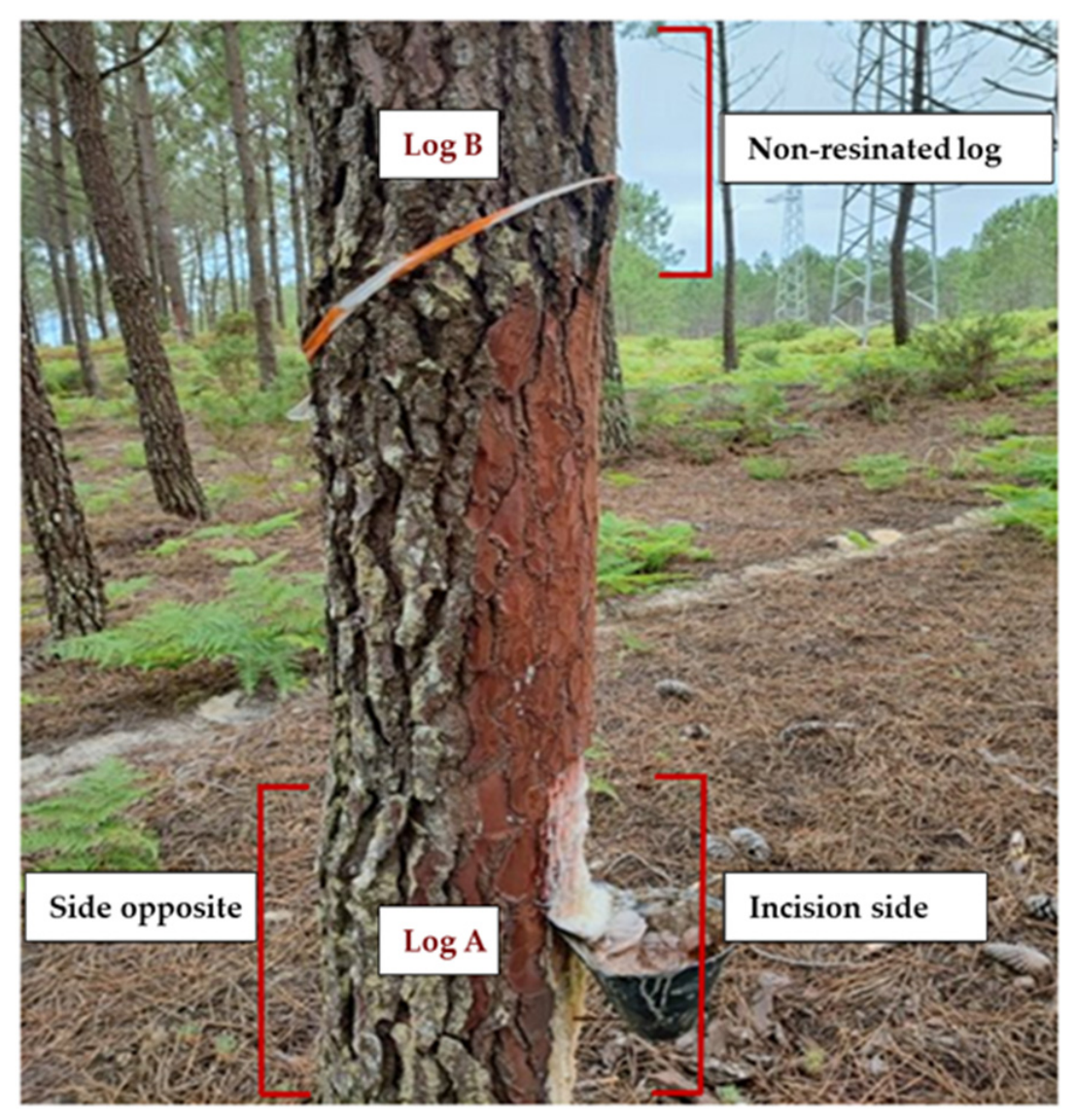
In resin-tapped trees, two logs measuring 45 cm in length were removed: one located in the resin tapping incision region (Log A) and the other located 50 cm above the last incision (Log B), in order to ensure a position where the effects of the tapping incision were no longer expected to occur [31]. In Log A, samples were collected from both the incision side and the side opposite the incision (Figure 1). In non-resin-tapped trees, only one log was removed, located below 1.30 m above ground level. In total, 30 maritime pine logs were collected.

2.3. Sample Preparation and Determination of Wood Properties

2.3.1. Density

To obtain specimens for wood density determination, a 1 cm thick disc was removed from each log, avoiding areas with knots or any other defects. In the resin-tapped logs (Log A), two specimens were obtained: one from the tapped side corresponding to eight growth rings (three formed after tapping and five formed before tapping), and another from the side opposite to the tapped containing the last eight growth rings. In Log B from the resin-tapped trees and in the log collected from the non-resin-tapped trees, two specimens were obtained, one from each side, considering the last eight growth rings. The specimens were conditioned in an environment with an average temperature of 20 °C and 65% humidity until constant weight was reached.
Wood density at 12% moisture content was determined according to the Portuguese Standard NP 616 (1973). All specimens were initially weighed using an electronic balance with a precision of 0.01 g. The dimensions of each specimen, thickness, and width and length, were measured using a universal calliper with a precision of 0.05 mm. Specimen volume was calculated as the product of these dimensions. Subsequently, density at 12% moisture content was calculated as the ratio between the mass and the volume of the specimen, as shown in Equation (1):
ρ 12 % = m 12 % V 12 %
where ρ12% is the density at 12% moisture content (g·cm−3), m12% is the mass of the sample at 12% moisture content (g), and V12% is the volume of the sample at 12% moisture content (cm3).

2.3.2. Extractives Content

For the determination of extractives content, three wedge-shaped specimens (from the pith to the periphery) were collected from resin-tapped trees: one from the incision side, another from the opposite side (Log A), and one specimen from the non-resin-tapped log (Log B). In non-resin-tapped trees, one specimen was obtained. For this procedure, the samples, in duplicate, were fragmented, ground, air-dried, and stored in properly identified paper cartridges. The initial mass of the samples prior to extraction was approximately 4.0 ± 0.4 g of oven-dry wood.
Extractives content was determined by gravimetric analysis of the residue obtained after evaporation of the solutions, resulting from successive extractions using a Soxhlet extractor, with solvents of increasing polarity, namely dichloromethane, ethanol, and water, in accordance with the methodology described in TAPPI T204 CM-07 (Solvent Extractives of Wood and Pulp). After each extraction and solvent evaporation step, the residue obtained was weighed in order to determine the amount of extractives removed by each solvent.

2.3.3. Mechanical Properties

To evaluate mechanical performance through three-point bending tests, specimens measuring 20 × 20 × 340 mm were prepared. From Log A of the resin-tapped trees, two specimens were prepared: one from the incision side, including the most recent growth rings, and another from the side opposite the incision. From the non-resin-tapped trees, one specimen with the same dimensions was prepared, totalling 28 specimens. The specimens, properly oriented and free of knots or any other defects, were kept at room temperature until reaching a moisture content of 12%. In the case of Log B, the majority of the specimens produced were unsuitable for mechanical testing due to the presence of defects. Therefore, the samples obtained from Log B were excluded from the mechanical analysis. Subsequently, they were subjected to static bending tests using an INSTRON universal testing machine (Instron, Norwood, EUA) to determine the modulus of elasticity (MOE) and the modulus of rupture (MOR), in accordance with the Portuguese Standard NP 619 (1973).
The modulus of elasticity was calculated according to Equation (2):
M O E =   L 3 ( P 2   P 1 )   4 b h 3 ( a 2   a 1 )
where MOE is the modulus of elasticity (N/mm2), L is the distance between supports (mm), P2–P1 is the increment in load within the linear elastic region of the load–deflection curve (N), b is the test piece width (mm), h is the test piece height (mm), and a2–a1 is the increment in deflection within the linear elastic region of the load–deflection curve (mm).
The modulus of rupture is defined by Equation (3):
M O R = 3 P L 2 b h 2
where MOR is the modulus of rupture (N/mm2), P is the breaking load (N), L is the distance between supports (mm), b is the test piece width (mm), and h is the test piece height (mm).

2.3.4. Anatomical Properties

Macroscopic anatomical properties, namely growth ring width and the number and area of resin ducts, were evaluated using the same specimens employed for wood density determination. Initially, the transverse surface of the specimens was polished using P320-grit sandpaper in order to facilitate the visualisation of growth rings and the distinction of anatomical structures.
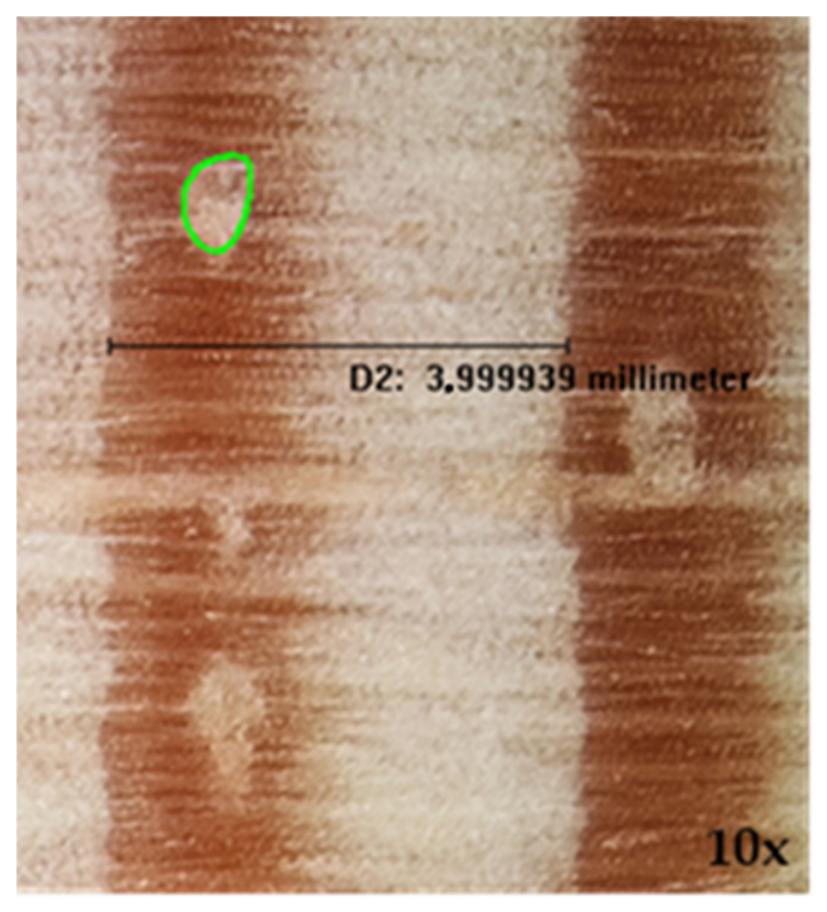
Subsequently, the transverse surfaces of the specimens were digitised using a scanner with a resolution of 600 dpi. Growth ring width (LA) was determined from the digitised images using the image analysis software Image-Pro Plus 6.2 (Media Cybernetics, Bethesda, MD, USA), previously calibrated with a reference scale (Figure 2). Each growth ring comprised both earlywood and latewood, and its width was determined as the distance between its boundaries.
For the analysis of transverse resin ducts, each polished sample was observed at a total magnification of 10.0×. Based on the images obtained and using the same software, the number of resin ducts (NCR) and their respective areas (ACR) were manually determined within each growth ring through the delineation of each resin ducts (Figure 2). In the specimens from the incision side, the five growth rings formed before tapping and the three rings formed after tapping were analysed. In the remaining specimens (opposite side to the incision, specimens from Log B, and specimens from non-resin-tapped trees), the last eight growth rings were analysed.

2.4. Statistical Analysis

The physical, mechanical, chemical, and anatomical properties were analysed considering the different positions of the stems of resin-tapped and non-resin-tapped trees (Figure 1). These evaluations were performed both within resin-tapped trees (comparison between the incision side and the side opposite to the incision) and between resin-tapped and non-resin-tapped trees.
To assess the effects of resin tapping on wood properties, the data were analysed using linear mixed-effects models in JMP software 19 (SAS Institute Inc., Cary, NC, USA). For the physical and mechanical wood properties, the stem position in resin-tapped and non-resin-tapped trees (incision side, side opposite the incision, Log B, and the corresponding position in non-resin-tapped trees) was considered as a fixed effect. For extractives content, stem position, extraction solvent (dichloromethane, ethanol, and water), and the interaction between these factors were considered as fixed effects. For the anatomical properties, stem position and growth ring were considered as fixed effects. An exception was made for the analysis of resin ducts’ number and area by period, for which period (before resin tapping and after resin tapping) and growth ring were considered as fixed effects. In all analyses, tree was considered as a random effect. Whenever significant effects were detected, means were compared using Tukey’s test at a 95% significance level.

3. Results

3.1. General Characterisation of the Samples

Descriptive statistics of density, extractives content, and the mechanical and anatomical properties of resin-tapped and non-resin-tapped P. pinaster are presented in Table 1.
Analysis of the mean values and their respective standard deviations shows that, on the incision side, resin-tapped trees exhibit higher mean values than the other samples for the following characteristics: density, extractives content, modulus of rupture, growth ring width, number of resin ducts, and resin ducts. Only the modulus of elasticity showed a lower value in the samples from the incision side when compared to the opposite side, although it remained higher than that observed in non-resin-tapped trees.

3.2. Density

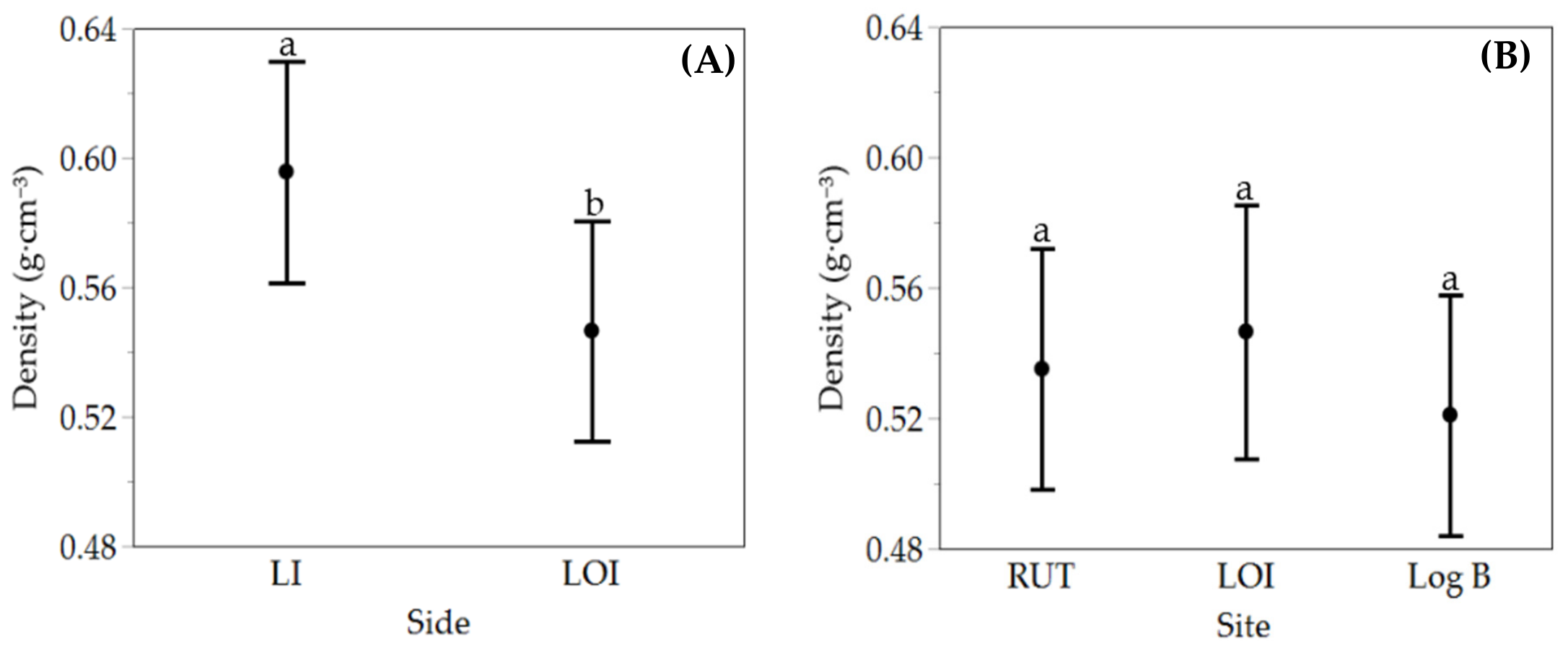
The mean wood density ranged from 0.521 to 0.596 g·cm−3, values that are typical for P. pinaster wood, and classifies it as moderately heavy wood according to the classification proposed by Carvalho [32]. Samples from the incision side exhibited significantly higher mean density values than samples from the side opposite to the incision (LOI) (Figure 3A).
No significant differences in wood density were observed between the sides without incision (Figure 3B). Therefore, this effect appears to be localised in the vicinity of the incision area and does not extend throughout the tree stem. However, despite being localised, the increase in density observed in the samples collected from the incision side may be advantageous for certain end uses of the wood, as it may confer greater resistance to biodegradation.

3.3. Extractives Content

Table 2 presents the mean extractives contents and their respective standard deviations as a function of solvent and sample position, with total mean values ranging from 2.29 to 7.49%.
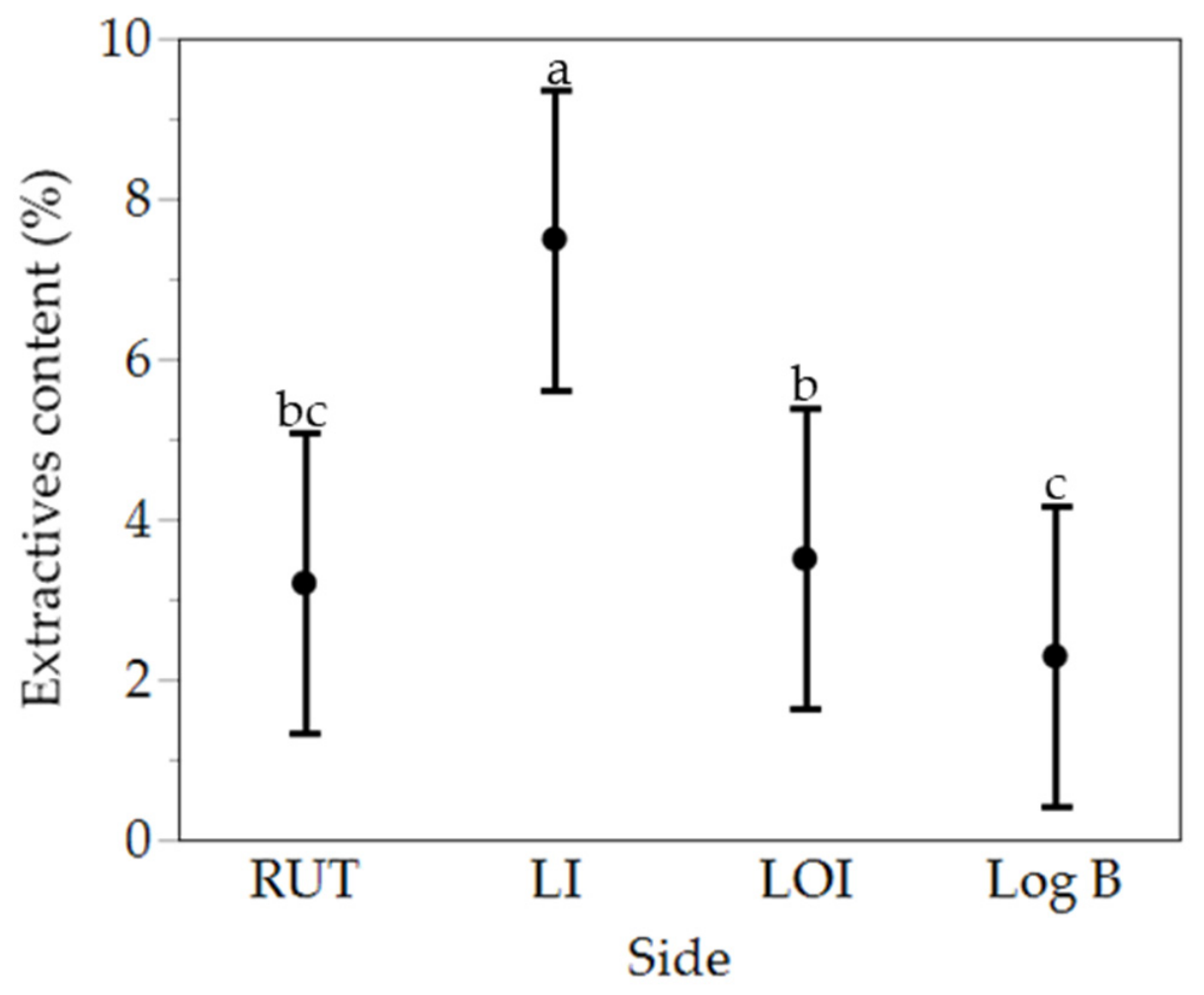
Samples from the incision side of resin-tapped trees (LI) exhibited significantly higher mean extractives content than all other positions (Figure 4). This indicates an apparent concentration of extractives at the incision site, which is consistent with the tree’s production of resin as a defensive response to injury, which in this case is the incision.
In the samples without incision, from both resin-tapped and non-resin-tapped trees, the mean extractives content differed significantly only between the side opposite to the incision (LOI) and Log B of the resin-tapped trees (Log B), with these samples showing the lowest extractives content. Samples from non-resin-tapped trees (RUT) did not differ significantly from any of the other samples without incision. Graphically, it can be observed that, in addition to having very similar mean values, the high variability within each group of samples results in the absence of statistically significant differences among them.
The high variability observed in extractives content among the different sampling positions within the stem may be attributed to the fact that both the quantity and composition of extractives can vary between trees of the same species and among different parts of the same tree as they depend on several factors, including genetics, tree age, sampling location within the tree, climatic conditions, growth rate, and harvesting season [33].
The presence of extractives in wood may contribute to increased density, enhanced natural durability, improved protection against biodegradation and moisture uptake, and greater potential for biomass valorisation due to the presence of high-value phenolic compounds. However, extractives may also influence certain industrial processes, such as pulp and paper production and wood finishing operations [34,35].

3.4. Mechanical Properties

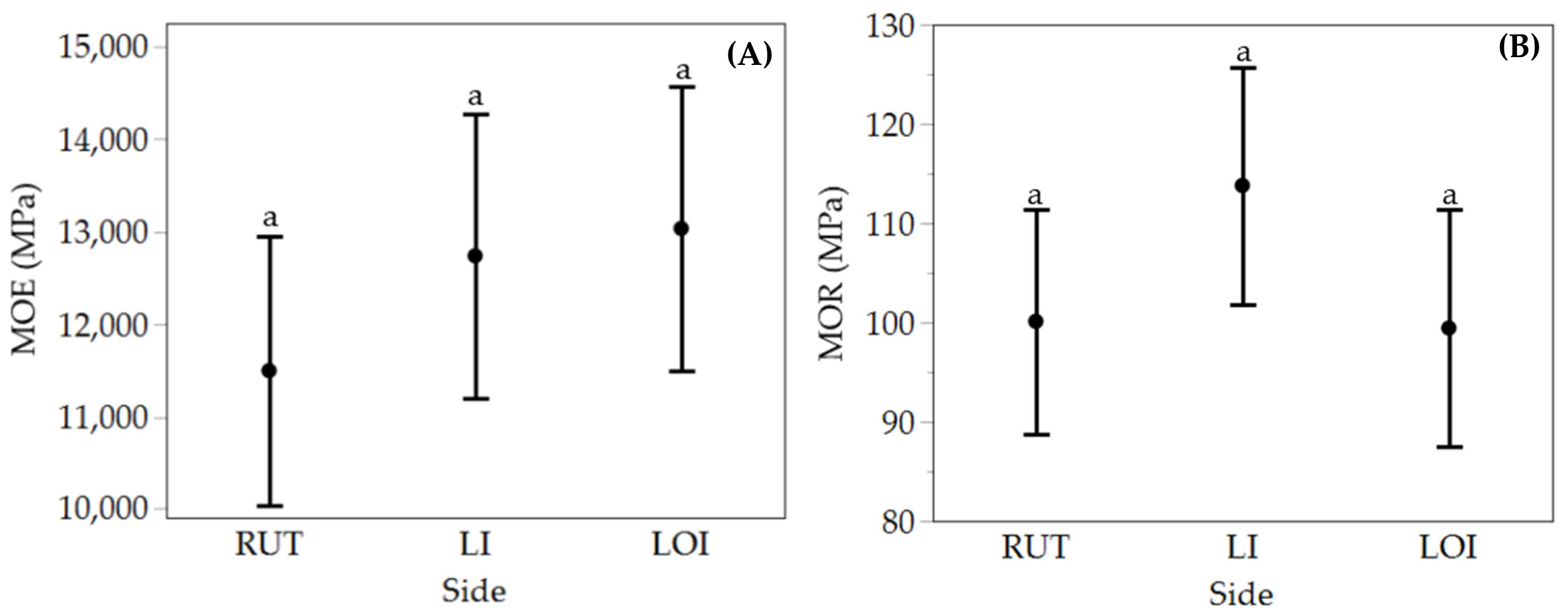
With regard to mechanical properties, no significant differences were observed among all analysed samples for either the modulus of elasticity (MOE) or the modulus of rupture (MOR) (p > 0.05) (Figure 5). Samples from non-resin-tapped trees (RUT) showed the lowest modulus of elasticity, indicating lower resistance to elastic deformation, i.e., greater flexibility (Figure 5A). In contrast, samples from the incision side (LI) exhibited higher MOR values, indicating a greater capacity to withstand higher stresses before failure, which suggests that this wood possesses favourable characteristics for structural use (Figure 5B).
In any case, as previously mentioned, the differences observed both between resin-tapped and non-resin-tapped trees and within resin-tapped trees were not significant, indicating that the resin tapping process did not alter the mechanical properties of the wood.

3.5. Anatomical Properties

3.5.1. Resin Ducts

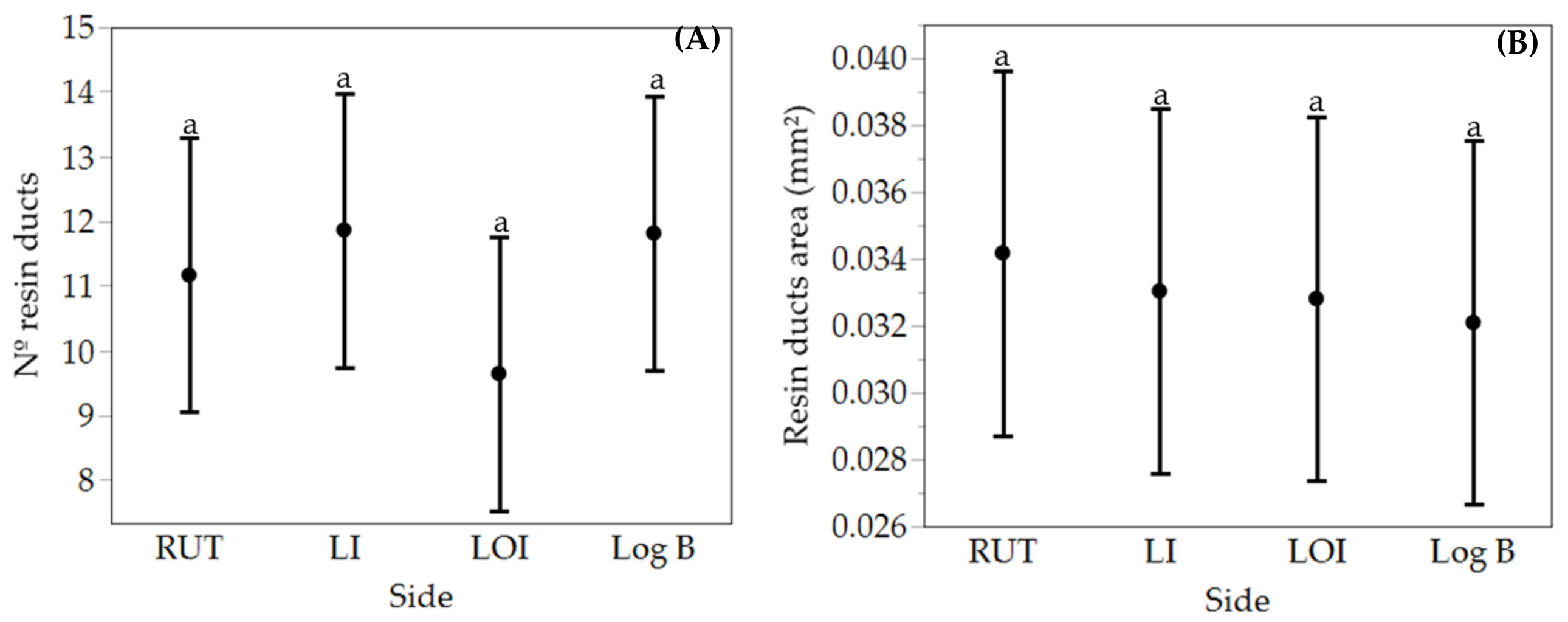
When the total set of growth rings (eight rings) from each sample was analysed, no statistically significant variation was observed either in the number or in the area of resin ducts. Nevertheless, the number of resin ducts on the incision side was the highest among all samples (Table 1 and Figure 6).
For both characteristics, a high variability was observed within each side (Figure 6). For the number of resin ducts, the standard deviation values were 7.7 and 5.1 for the incision side and the side opposite to the incision, respectively. The mean resin duct area showed standard deviation values of 0.012 mm2 for the incision side and 0.011 mm2 for the opposite side.
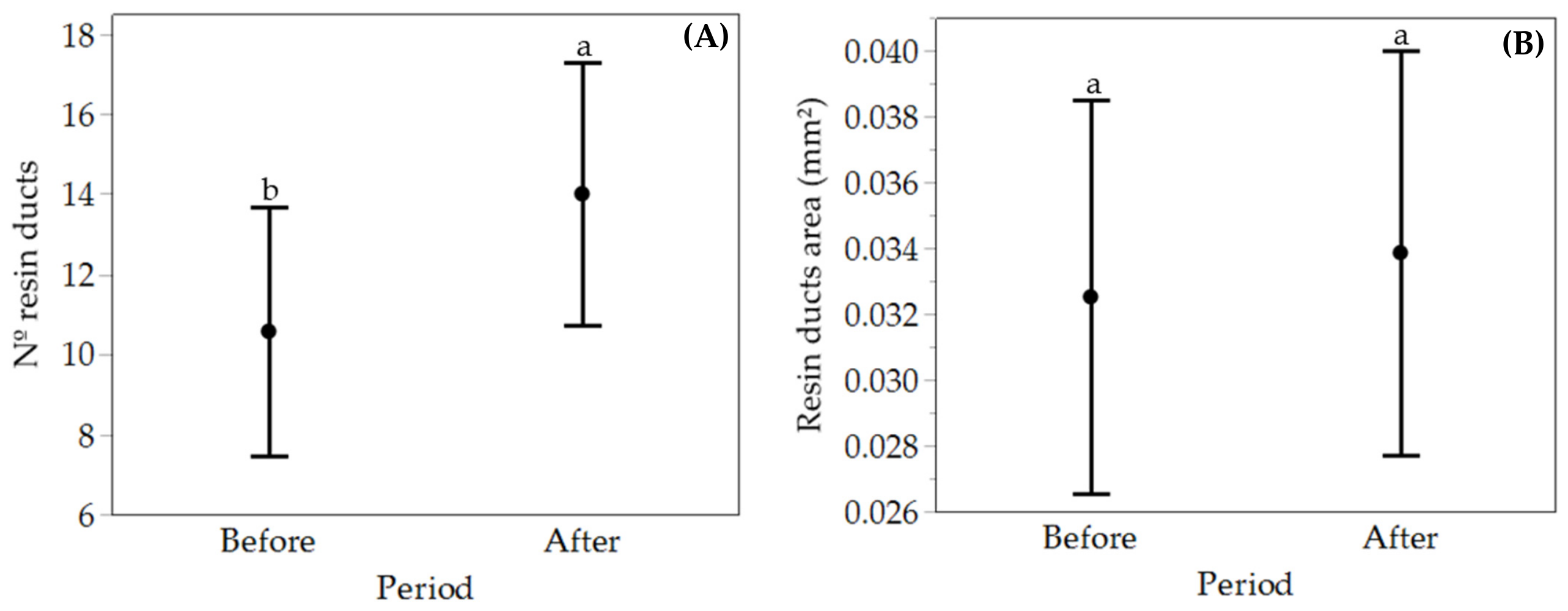
When evaluating, on the incision side, the effect of the period before and after resin tapping on the number and area of resin ducts, a significant effect was observed only for the number of resin ducts (p = 0.0041), whereas no significant effect was found for the resin duct area (p = 0.4033) (Table 3).
It was observed that the growth rings formed after the incision presented a higher number of resin ducts (14.0) compared with the rings formed before the incision (10.6) (Figure 7). This indicates that the resin tapping process stimulated the formation of new traumatic resin ducts, although no significant differences were found in their area. In addition, a high variability within each group was also observed for the number of resin ducts, with standard deviations of 5.6 and 10.0 for the rings formed before and after the incision, respectively.

3.5.2. Growth Ring Width

To evaluate the potential effect of resin tapping on tree growth, the width of growth rings formed after the onset of resin tapping was measured, considering only samples from the side opposite to the incision for comparison with samples from non-resin-tapped trees, assuming that the effect on growth would manifest similarly in the growth rings on both the incision side and the opposite side. Growth rings formed after the onset of resin tapping and located immediately adjacent to the incision were not considered, as this region corresponds to a wound-healing zone where growth ring width may not be representative of growth around the stem.
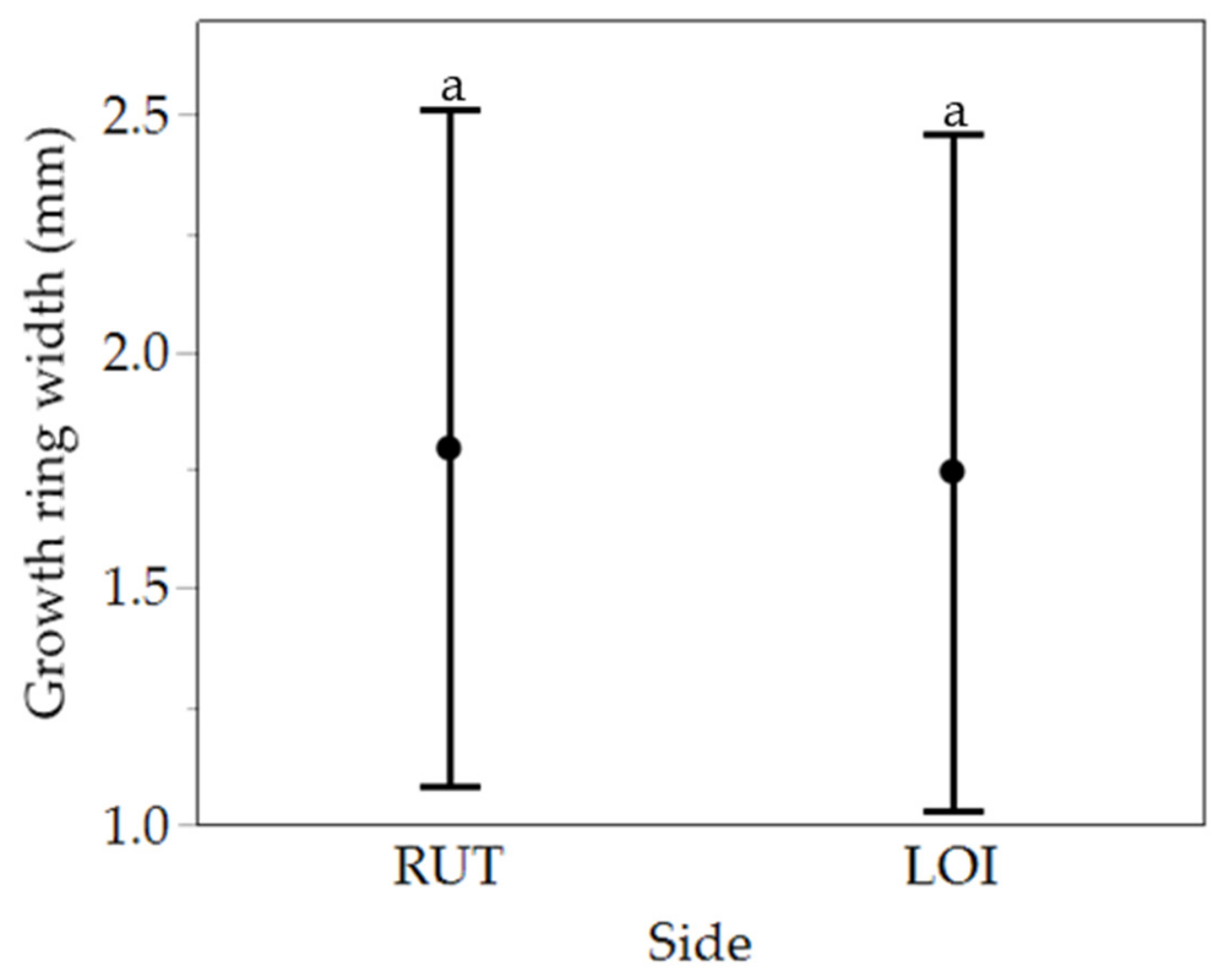
The results indicated that no statistically significant differences were observed between resin-tapped and non-resin-tapped trees (p > 0.05) (Figure 8), which may indicate that resin tapping did not affect tree growth. Nevertheless, the mean growth ring width of non-resin-tapped trees (1.80 ± 1.23 mm) was slightly higher than that of resin-tapped trees (1.75 ± 1.26 mm), although with considerable variability within each group.

4. Discussion

The significant differences observed in properties such as wood density and extractives content in resin-tapped trees were concentrated in the region adjacent to the incision, indicating the activation of tree defence mechanisms in response to resin tapping, with no evidence of systemic changes throughout the tree. According to Zas et al. [30], induced defences may result either from the synthesis of new defence mechanisms or from the translocation of pre-existing defences to the site of the incision. These authors also observed that resin extraction induced strong local defence responses. In this context, the increase in extractives content in this region may have contributed to the observed increase in wood density. This result is consistent with those reported by Garcia-Iruela et al. [23] and Silva et al. [36], who found higher density values in wood from resin-tapped trees. In this case, the increase in density may represent an advantage for certain end uses of wood, as a higher extractives content is associated with greater resistance to biodegradation.
When comparing samples collected from the sides without an incision in resin-tapped trees with those from non-resin-tapped trees, no significant differences in wood density were observed, indicating that resin tapping is not a factor influencing density throughout the stem. This result is particularly relevant, as density is a fundamental wood property and one of the main indicators of wood quality, being directly related to mechanical strength, stiffness, durability, and other properties [37,38], and therefore largely determining its technological suitability.
Between resin-tapped and non-resin-tapped trees, no statistically significant differences were observed for the mechanical and anatomical properties, irrespective of the sample location within the stem. Both the modulus of elasticity and the modulus of rupture indicate that the resin tapping process did not cause significant changes in the mechanical performance of the wood and therefore did not compromise its subsequent utilisation. Recent studies conducted on wood from resin-tapped Pinus trees support these findings [24,36,39]. Consequently, resin production appears to be compatible with timber production, representing a viable alternative for increasing the profitability of forest stands. This is supported by studies on P. pinaster, which demonstrated compatibility between resin and timber production [24,40,41], as well as greater profitability of co-production compared with timber production alone [22,42].
Although the differences observed in resin ducts number were not statistically significant, samples collected from the incision side presented, on average, a higher number of resin ducts and greater variability within the group. Rodríguez-García et al. [31], Silva et al. [36], and Garcia-Forner et al. [43] reported significant differences in resin ducts number between resin-tapped and non-resin-tapped trees. This behaviour may indicate investment by the tree in induced anatomical defence mechanisms [13,29,31,43]. In the samples collected from the incision side, growth rings formed after resin tapping contained a greater number of resin ducts than rings formed before tapping, demonstrating that this process stimulated the formation of new resin ducts.
With regard to resin ducts size, the results were consistent with those reported by Garcia-Forner et al. [43], indicating that this characteristic was not affected by resin tapping, as no significant differences were observed between resin-tapped and non-resin-tapped trees. However, considerable variability was observed within each group. The same authors suggested that resin ducts size may be under genetic control or may reflect a high degree of phenotypic plasticity associated with water availability, since differences were observed among populations. Nevertheless, Rodríguez-García et al. [31] reported a reduction in the mean size of resin ducts in the years following resin tapping, particularly in regions close to the incision. In the present study, although the differences were not statistically significant, non-resin-tapped trees exhibited slightly wider resin ducts.
With regard to growth ring width, resin tapping did not affect the radial growth of the trees evaluated. These results are consistent with those reported by [25,30,40,44]. One possible explanation for this behaviour may be the establishment of a functional balance in carbon allocation between growth and defence processes, enabling trees to meet defence demands without compromising growth [45]. Novick et al. [46] concluded that the relationship between growth and resin production is regulated by the balance between available carbon and net primary production, as well as by resource limitation.
However, the literature presents contrasting results regarding the effects of resin extraction on tree growth. Fernández-Blas et al. [47] and Garcia-Forner et al. [43] observed greater growth in resin-tapped P. pinaster trees in Spain and Portugal, respectively, whereas Van der Maaten et al. [48] reported wider growth rings in resin-tapped Pinus sylvestris. In contrast, Génova et al. [49], Chen et al. [50], Zeng et al. [51], and Génova et al. [26] reported reductions in growth ring width in different Pinus species subjected to resin tapping, namely Pinus massoniana, Pinus tabuliformis, P. pinaster, and P. pinaster, respectively. The reduction in growth observed in resin-tapped trees may be associated with the allocation of a greater proportion of carbon, originally assimilated for growth, towards resin synthesis as a defence mechanism [52,53].
Nevertheless, Moura et al. [40] demonstrated that the effects of resin tapping on growth vary according to tree age and height. These authors reported negative impacts in young stands (less than 30 years old), characterised by a reduction in growth ring width during the extraction period; no effects in stands aged between 40 and 55 years; and positive effects, reflected by increased growth ring width, in stands older than 55 years and in taller trees. Génova et al., [26] also stated that differences in radial growth between resin-tapped and non-resin-tapped trees are strongly associated with tree age and site characteristics, rather than being exclusively attributable to resin extraction. In the present study, trees exhibited very similar ages and heights, which may explain the absence of differences in growth ring width.
The discrepancies observed among studies may be attributed to the various factors influencing the results obtained, including differences among species, tree dendrometric characteristics, stand conditions, genetic variability, resource availability, silvicultural practices, environmental conditions, resin tapping method and duration, stimulant pastes used, and sampling procedures adopted in the different studies [7,40,43,48,54,55]. In this context, investigating the effects of resin tapping on tree growth requires an experimental design specifically developed for this purpose and should not be limited to measuring radial growth at the level of the incision. Growth assessment should be extended throughout the entire stem in order to determine whether reductions in wood volume occur.
The results demonstrate that resin tapping affects certain wood properties of P. pinaster. However, the limited number of sampled trees and the fact that the study was restricted to a single site limit the scope of the findings and require caution when extrapolating the results to other conditions.

5. Conclusions

This study demonstrated that resin tapping in P. pinaster did not promote relevant changes in wood characteristics and properties that could compromise its mechanical and physical performance.
The effect of resin tapping was mainly manifested at the local level, namely in the wood from the incision side and with respect to density and extractives content. Indeed, resin-tapped trees exhibited higher values for these two properties in the region close to the incision. However, this increased density and higher extractives content may represent a qualifying factor for the wood, making it mechanically more resistant, less hygroscopic, and more resistant to biodegradation, which may constitute an advantage for certain end uses.
Mechanically, resin-tapped wood exhibited greater resistance to elastic deformation, that is, higher stiffness and more brittle behaviour, although the differences were not significant when compared with non-resin-tapped wood. However, it presented a higher modulus of rupture, indicating a greater capacity to withstand high stresses before breaking.
With regard to the anatomical characteristics, it was observed that there were no statistically significant differences either in the number or in the area of resin ducts among the different sampling positions. Nevertheless, the incision side presented the highest number of resin ducts. By analysing the growth rings formed before and after the incision, it was observed that the number of resin ducts increased after resin tapping, although no significant changes were found in their area. This demonstrates that the resin tapping process stimulated the formation of new traumatic resin ducts, but without significant differences in their area.
The absence of significant differences in growth ring width indicates that resin tapping did not affect tree growth, which appears to be more dependent on other factors, such as tree age and site characteristics, rather than exclusively on the effects of resin extraction. This result also suggests that trees may possess an optimised capacity for carbon allocation, allowing them to meet both growth and defence functions.
This study provides relevant insights into the effects of resin tapping on the wood properties of P. pinaster under the conditions evaluated. However, given the scope of the study, the interpretation, generalisation, and broader conclusions should be approached with caution, as the study was conducted at a single site and involved a limited number of sampled trees. Further research encompassing different edaphoclimatic conditions and age classes will be essential to consolidate knowledge on this subject, providing forest managers with a more robust scientific basis for the adoption of timber and resin co-production management models.

Author Contributions

Conceptualisation, D.L., J.L.L. and M.E.S.; methodology, D.L., J.L.L. and M.E.S.; validation, D.L., J.L.L. and M.E.S.; formal analysis, D.L., J.L.L. and M.E.S.; investigation, D.L., J.L.L., L.M., F.P. and M.E.S.; resources, M.E.S.; data curation, D.L., J.L.L. and M.E.S.; writing—original draft preparation, D.L.; writing—review and editing, D.L., J.L.L., L.M., F.P. and M.E.S.; visualisation, D.L., J.L.L. and M.E.S.; supervision, J.L.L. and M.E.S.; project administration, M.E.S.; funding acquisition, M.E.S. All authors have read and agreed to the published version of the manuscript.

Funding

This work was carried out within the scope of the Integrated Project RN21—Innovation in the Natural Resin Value Chain for the Enhancement of the National Bioeconomy, funded by the Environmental Fund through Component 12—Promotion of the Sustainable Bioeconomy (Investment TC-C12-i01—Sustainable Bioeconomy—No. 02/C12-i01/2022), using European funds allocated to Portugal through the Recovery and Resilience Plan (PRR) under the European Union (EU) Recovery and Resilience Facility (RRF), as part of the Next Generation EU initiative for the period 2021–2026. This work is supported by National Funds by FCT—Portuguese Foundation for Science and Technology, under the projects UID/04033/2025: Centre for the Research and Technology of Agro-Environmental and Biological Sciences (https://doi.org/10.54499/UID/04033/2025) and LA/P/0126/2020 (https://doi.org/10.54499/LA/P/0126/2020). Supported by the European Union—NextGenerationEU via projects UID/PRR/04033/2025 (https://doi.org/10.54499/UID/PRR/04033/2025) and UID/PRR2/04033/2025 (https://doi.org/10.54499/UID/PRR2/04033/2025).

Institutional Review Board Statement

Not applicable.

Informed Consent Statement

Not applicable.

Data Availability Statement

The original contributions presented in this study are included in the article. Further inquiries can be directed to the corresponding authors.

Conflicts of Interest

The authors declare no conflicts of interest.

References

  1. ICNF—Instituto da Conservação da Natureza e das Florestas. 6° Inventário Florestal Nacional—Relatório Final; ICNF: Lisboa, Portugal, 2019.
  2. Alonso-Esteban, J.I.; Carocho, M.; Barros, D.; Velho, M.V.; Heleno, S.; Barros, L. Chemical Composition and Industrial Applications of Maritime Pine (Pinus pinaster Ait.) Bark and Other Non-Wood Parts. Rev. Environ. Sci. Biotechnol. 2022, 21, 583–633. [Google Scholar] [CrossRef]
  3. Centro Pinus—Associação para a Valorização da Floresta de Pinho. A Fileira do Pinho em 2024. Indicadores da Fileira do Pinho; Centro Pinus: Viana do Castelo, Portugal, 2025. [Google Scholar]
  4. Soliño, M.; Yu, T.; Alía, R.; Auñón, F.; Bravo-Oviedo, A.; Chambel, M.R.; de Miguel, J.; del Río, M.; Justes, A.; Martínez-Jauregui, M.; et al. Resin-Tapped Pine Forests in Spain: Ecological Diversity and Economic Valuation. Sci. Total Environ. 2018, 625, 1146–1155. [Google Scholar] [CrossRef] [PubMed]
  5. Rodrigues-Honda, K.C.d.S.; Junkes, C.F.d.O.; de Lima, J.C.; Waldow, V.d.A.; Rocha, F.S.; Sausen, T.L.; Bayer, C.; Talamini, E.; Fett-Neto, A.G. Carbon Sequestration in Resin-Tapped Slash Pine (Pinus elliottii Engelm.) Subtropical Plantations. Biology 2023, 12, 324. [Google Scholar] [CrossRef] [PubMed]
  6. Zas, R.; Quiroga, R.; Touza, R.; Vázquez-González, C.; Sampedro, L.; Lema, M. Resin Tapping Potential of Atlantic Maritime Pine Forests Depends on Tree Age and Timing of Tapping. Ind. Crops Prod. 2020, 157, 112940. [Google Scholar] [CrossRef]
  7. Vázquez-González, C.; López-Goldar, X.; Alía, R.; Bustingorri, G.; Lario, F.J.; Lema, M.; de la Mata, R.; Sampedro, L.; Touza, R.; Zas, R. Genetic Variation in Resin Yield and Covariation with Tree Growth in Maritime Pine. For. Ecol. Manag. 2021, 482, 118843. [Google Scholar] [CrossRef]
  8. Susaeta, A.; Peter, G.F.; Hodges, A.W.; Carter, D.R. Oleoresin Tapping of Planted Slash Pine (Pinus elliottii Engelm. Var. Elliottii) Adds Value and Management Flexibility to Landowners in the Southern United States. Biomass Bioenergy 2014, 68, 55–61. [Google Scholar] [CrossRef]
  9. Heinze, A.; Kuyper, T.W.; García Barrios, L.E.; Ramírez Marcial, N.; Bongers, F. Tapping into Nature’s Benefits: Values, Effort and the Struggle to Co-Produce Pine Resin. Ecosyst. People 2021, 17, 69–86. [Google Scholar] [CrossRef]
  10. Celedon, J.M.; Bohlmann, J. Oleoresin Defenses in Conifers: Chemical Diversity, Terpene Synthases and Limitations of Oleoresin Defense under Climate Change. New Phytol. 2019, 224, 1444–1463. [Google Scholar] [CrossRef] [PubMed]
  11. Phillips, M.A.; Croteau, R.B. Resin-Based Defenses in Conifers. Trends Plant Sci. 1999, 4, 184–190. [Google Scholar] [CrossRef] [PubMed]
  12. Wu, H.; Hu, Z. Comparative Anatomy of Resin Ducts of the Pinaceae. Trees 1997, 11, 135–143. [Google Scholar] [CrossRef]
  13. Vazquez-Gonzalez, C.; Zas, R.; Erbilgin, N.; Ferrenberg, S.; Rozas, V.; Sampedro, L. Resin Ducts as Resistance Traits in Conifers: Linking Dendrochronology and Resin-Based Defences. Tree Physiol. 2020, 40, 1313–1326. [Google Scholar] [CrossRef] [PubMed]
  14. Esteban, L.G.; de Palacios, P.; García-Iruela, A.; García-Esteban, L.; de Vega, D.G.; García-Fernández, F. Comparative Wood Anatomy in Pinaceae with Reference to Its Systematic Position. Forests 2021, 12, 1706. [Google Scholar] [CrossRef]
  15. Rodrigues-Corrêa, K.C.; Lima, J.C.; Fett-Neto, A.G. Oleoresins from Pine: Production and Industrial Uses. In Natural Products; Ramawat, K., Mérillon, J.M., Eds.; Springer: Berlin/Heidelberg, Germany, 2013. [Google Scholar] [CrossRef]
  16. Soares, P.; Ribeiro, C.; Ribeiro, M.; Emília Silva, M. Resina Natural Em Portugal-Desafios Estratégicos Natural Resin in Portugal-Strategic Challenges. Rev. de Ciênc. Agrár. 2024, 47, 479–490. [Google Scholar] [CrossRef]
  17. Caglayan, I.; Dolu, A.; Kabak, Ö.; Rodríguez-García, A.; Demirel, T.; Özkan, U.; Makineci, E.; Yeşil, A.; Ayberk, H. Dynamics of Resin Yield in Pinus Brutia: A Quantitative Analysis Using Bark Streak Tapping. Ind. Crops Prod. 2024, 221, 119344. [Google Scholar] [CrossRef]
  18. Zulak, K.G.; Bohlmann, J. Terpenoid Biosynthesis and Specialized Vascular Cells of Conifer Defense. J. Integr. Plant Biol. 2010, 52, 86–97. [Google Scholar] [CrossRef] [PubMed]
  19. DeRose, R.J.; Bekker, M.F.; Long, J.N. Traumatic Resin Ducts as Indicators of Bark Beetle Outbreaks. Can. J. For. Res. 2017, 47, 1168–1174. [Google Scholar] [CrossRef]
  20. Tulik, M.; Jura-Morawiec, J. An Arrangement of Secretory Cells Involved in the Formation and Storage of Resin in Tracheid-Based Secondary Xylem of Arborescent Plants. Front. Plant Sci. 2023, 14, 1268643. [Google Scholar] [CrossRef] [PubMed]
  21. Gómez-García, E.; Martínez Chamorro, E.; García-Méijome, A.; Rozados Lorenzo, M.J. Modelling Resin Production Distributions for Pinus pinaster Ait. Stands in NW Spain. Ind. Crops Prod. 2022, 176, 114316. [Google Scholar] [CrossRef]
  22. Delgado-Rodriguez, M.; Rodríguez-Soalleiro, R.; Nobre, S.R.; Carlos Estraviz Rodriguez, L.; Diaz-Balteiro, L. Resin: Not Only a Secondary Forest Product. Eur. J. For. Res. 2025, 144, 1161–1169. [Google Scholar] [CrossRef]
  23. García-Iruela, A.; Esteban, L.G.; De Palacios, P.; García-Fernández, F.; De Miguel Torres, A.; Iriarte, E.V.; Simón, C. Resinous Wood of Pinus pinaster Ait.: Physico-mechanical Properties. BioResources 2016, 11, 5230–5241. [Google Scholar] [CrossRef]
  24. González-Prieto, Ó.; Alegre, R.; Picos, J.; Martínez Chamorro, E. Compatibility between Resin Tapping Management of Pinus pinaster during the Last Three Years and Its Uses as Solid Wood. Eur. J. Wood Wood Prod. 2024, 82, 1567–1579. [Google Scholar] [CrossRef]
  25. Du, B.; Luan, Q.; Ni, Z.; Sun, H.; Jiang, J. Radial Growth and Non-Structural Carbohydrate Partitioning Response to Resin Tapping of Slash Pine (Pinus elliottii Engelm. Var. Elliottii). J. For. Res. 2022, 33, 423–433. [Google Scholar] [CrossRef]
  26. Génova, M.; Caminero, L.; Gutiérrez, E. Contrasting Resin-Tapped and Untapped Pinus pinaster Ait. Trees of Central Spain in a Dendroclimatic Research. iForest 2024, 17, 148–155. [Google Scholar] [CrossRef]
  27. Open-Meteo. Historical Forecast API Archived High-Resolution Weather Forecasts. Available online: https://open-meteo.com/en/docs (accessed on 15 June 2026).
  28. Decreto-Lei n.o 181/2015; Regime Jurídico Da Resinagem e Da Circulação Da Resina de Pinheiro No Território Do Continente. Diário da República: Lisboa, Portugal, 2015.
  29. Rodríguez-García, A.; López, R.; Martín, J.A.; Pinillos, F.; Gil, L. Resin Yield in Pinus pinaster Is Related to Tree Dendrometry, Stand Density and Tapping-Induced Systemic Changes in Xylem Anatomy. For. Ecol. Manag. 2014, 313, 47–54. [Google Scholar] [CrossRef]
  30. Zas, R.; López-Villamor, A.; Cao, A.; Touza, R.; Sampedro, L.; Lema, M. Impact of Resin-Tapping on Growth, defences and reproduction of 40 yr-old Maritime Pines in NW-Spain. For. Ecol. Manag. 2026, 604, 123497. [Google Scholar] [CrossRef]
  31. Rodríguez-García, A.; Martín, J.A.; López, R.; Sanz, A.; Gil, L. Effect of Four Tapping Methods on Anatomical Traits and Resin Yield in Maritime Pine (Pinus pinaster Ait.). Ind. Crops Prod. 2016, 86, 143–154. [Google Scholar] [CrossRef]
  32. Carvalho, A. Madeiras Portuguesas: Estrutura Anatómica, Propriedades, Utilizações; Instituto Florestal: Lisboa, Portugal; Direção Geral das Florestas: Lisboa, Portugal, 1997; Volume II, ISBN 972-8097-23-9.
  33. Routa, J.; Brännström, H.; Anttila, P.; Mäkinen, M.; Jänis, J.; Asikainen, A. Wood Extractives of Finnish Pine, Spruce and Birch-Availability and Optimal Sources of Compounds A Literature Review; Natural Resources Institute Finland (Luke): Helsinki, Finland, 2017; ISBN 9789523264946.
  34. Lehr, M.; Miltner, M.; Friedl, A. Removal of Wood Extractives as Pulp (Pre-)Treatment: A Technological Review. SN Appl. Sci. 2021, 3, 886. [Google Scholar] [CrossRef]
  35. Kirker, G.T.; Hassan, B.; Mankowski, M.E.; Eller, F.J. Critical Review on the Use of Extractives of Naturally Durable Woods as Natural Wood Protectants. Insects 2024, 15, 69. [Google Scholar] [CrossRef] [PubMed]
  36. Silva, M.E.; Gaspar, M.J.; Pires, J.; Ribeiro, M.; Loureiro, C.; Coutinho, J.P.; Santos, E.; Carvalho, A.; Brito, J.L.; Salgueiro, A.; et al. RESIMPROVE—Desenvolvimento de Processos de Produção e Extração de Resina de Pinheiro Para a Melhoria da Eficiência, Racionalização e Expansão da Atividade; UTAD: Vila Real, Portugal, 2018. [Google Scholar]
  37. Armstrong, J.P.; Skaar, C.; Dezeeuw, C. Wood Science and Technology The Effect of Specific Gravity on Several Mechanical Properties of Some World Woods. Wood Sci. Technol. 1984, 18, 137–146. [Google Scholar] [CrossRef]
  38. Chevalier, R.; Catapano, A.; Pommier, R.; Montemurro, M. A Review on Properties and Variability of Pinus pinaster Ait. ssp. Atlantica Existing in the Landes of Gascogne. J. Wood Sci. 2024, 70, 14. [Google Scholar] [CrossRef]
  39. Kopaczyk, J.; Jelonek, T.; Szwed, T. The Impact of Resin Harvest History on Properties of Scots Pine Wood Tissue. Bioresources 2023, 18, 6221–6235. [Google Scholar] [CrossRef]
  40. Moura, M.; Campelo, F.; Nabais, C.; Garcia-Forner, N. Resin Tapping Influence on Maritime Pine Growth Depends on Tree Age and Stand Characteristics. Eur. J. For. Res. 2023, 142, 965–980. [Google Scholar] [CrossRef]
  41. García-Méijome, A.; Rozados Lorenzo, M.J.; Fernández Blanco, E.; Martínez Chamorro, E.; Gómez-García, E. Resin-Tapping Production in Pinus pinaster Ait. Stands in Galicia (NW Spain): Effects of Location, Number of Faces, Wound Width and Production Year. Forests 2023, 14, 128. [Google Scholar] [CrossRef]
  42. Chamorro, E.M.; Rozados Lorenzo, M.J.; García-Méijome, A.; Gómez-García, E. Adaptación Del Aprovechamiento Resinero En Masas de Pinus pinaster Ait. Destinadas a La Producción de Madera de Sierra En Galicia. Rev. Montes 2019, 137, 32–36. [Google Scholar]
  43. Garcia-Forner, N.; Campelo, F.; Carvalho, A.; Vieira, J.; Rodríguez-Pereiras, A.; Ribeiro, M.; Salgueiro, A.; Silva, M.E.; Louzada, J.L. Growth-Defence Trade-Offs in Tapped Pines on Anatomical and Resin Production. For. Ecol. Manag. 2021, 496, 119406. [Google Scholar] [CrossRef]
  44. Williams, R.; Nauman, C.; Zhu, J. The Effects of Resin Tapping on the Radial Growth of Masson Pine Trees in South China—A Case Study. Agric. Res. Technol. 2017, 8, 555732. [Google Scholar] [CrossRef]
  45. Herms, D.A.; Mattson, W.J. The Dilemma of Plants: To Grow or Defend. Quarterl Y Rev. Biol. 1992, 67, 283–335. [Google Scholar] [CrossRef]
  46. Novick, K.A.; Katul, G.G.; McCarthy, H.R.; Oren, R. Increased Resin Flow in Mature Pine Trees Growing under Elevated CO2 and Moderate Soil Fertility. Tree Physiol. 2012, 32, 752–763. [Google Scholar] [CrossRef] [PubMed]
  47. Fernández-Blas, C.; Ruiz-Benito, P.; Gazol, A.; Granda, E.; Samblás, E.; Granado-Díaz, I.; Zavala, M.A.; Valeriano, C.; Camarero, J.J. Historical Forest Use Constrains Tree Growth Responses to Drought: A Case Study on Tapped Maritime Pine (Pinus pinaster). Trees For. People 2024, 18, 100699. [Google Scholar] [CrossRef]
  48. Van der Maaten, E.; Mehl, A.; Wilmking, M.; van der Maaten-Theunissen, M. Tapping the Tree-Ring Archive for Studying Effects of Resin Extraction on the Growth and Climate Sensitivity of Scots Pine. For. Ecosyst. 2017, 4, 7. [Google Scholar] [CrossRef]
  49. Génova, M.; Caminero, L.; Dochao, J. Resin Tapping in Pinus pinaster: Effects on Growth and Response Function to Climate. Eur. J. For. Res. 2014, 133, 323–333. [Google Scholar] [CrossRef]
  50. Chen, F.; Yuan, Y.-J.; Yu, S.-L.; Zhang, T.-W. Influence of Climate Warming and Resin Collection on the Growth of Masson Pine (Pinus massoniana) in a Subtropical Forest, Southern China. Trees-Struct. Funct. 2015, 29, 1423–1430. [Google Scholar] [CrossRef]
  51. Zeng, X.; Sun, S.; Wang, Y.; Chang, Y.; Tao, X.; Hou, M.; Wang, W.; Liu, X.; Zhang, L. Does Resin Tapping Affect the Tree-Ring Growth and Climate Sensitivity of the Chinese Pine (Pinus tabuliformis) in the Loess Plateau, China? Dendrochronologia 2021, 65, 125800. [Google Scholar] [CrossRef]
  52. Gessler, A.; Grossiord, C. Coordinating Supply and Demand: Plant Carbon Allocation Strategy Ensuring Survival in the Long Run. New Phytol. 2019, 222, 5–7. [Google Scholar] [CrossRef] [PubMed]
  53. Rissanen, K.; Hölttä, T.; Bäck, J.; Rigling, A.; Wermelinger, B.; Gessler, A. Drought Effects on Carbon Allocation to Resin Defences and on Resin Dynamics in Old-Grown Scots Pine. Environ. Exp. Bot. 2021, 185, 104410. [Google Scholar] [CrossRef]
  54. López-Álvarez, Ó.; Zas, R.; Marey-Perez, M. Resin Tapping: A Review of the Main Factors Modulating Pine Resin Yield. Ind. Crops Prod. 2023, 202, 117105. [Google Scholar] [CrossRef]
  55. Lopes, D.; Sandim, A.; Louzada, J.L.; Silva, M.E. Resin Production in Pinus: A Review of the Relevant Influencing Factors and Silvicultural Practices. Forests 2025, 16, 1470. [Google Scholar] [CrossRef]
Figure 1. Schematic illustration of the position of the logs extracted from resin-tapped trees, from which samples were taken for the analysis of wood properties.
Bioresourbioprod 02 00012 g001
Figure 2. Anatomical characteristics of P. pinaster observed in the transverse plane. The boundary of the resin duct is highlighted in green, while the black line indicates the measurement of growth ring width. Magnification = 10×.
Bioresourbioprod 02 00012 g002
Figure 3. Graphical representation of mean wood density: (A) between the incision side (LI) and the side opposite to the incision (LOI); (B) between the side opposite to the incision (LOI), Log B of resin-tapped trees (Log B), and non-resin-tapped trees (RUT). Different letters indicate significantly different means at the 95% confidence level.
Bioresourbioprod 02 00012 g003
Figure 4. Graphical representation of extractives content for the incision side (LI), the side opposite to the incision (LOI), Log B of resin-tapped trees (Log B), and non-resin-tapped trees (RUT). Different letters indicate significantly different means at the 95% confidence level.
Bioresourbioprod 02 00012 g004
Figure 5. Graphical representation of the modulus of elasticity (MOE) (A), and modulus of rupture (MOR) (B) for the incision side (LI), the side opposite to the incision (LOI), and non-resin-tapped trees (RUT). Different letters indicate significantly different means at the 95% confidence level.
Bioresourbioprod 02 00012 g005
Figure 6. Graphical representation of the number of resin ducts (A) and the resin duct area (B) for the incision side (LI), the side opposite to the incision (LOI), Log B of resin-tapped trees (Log B), and non-resin-tapped trees (RUT). Different letters indicate significantly different means at the 95% confidence level.
Bioresourbioprod 02 00012 g006
Figure 7. Graphical representation of the number of resin ducts (A) and the mean resin duct area (B) considering the period before and after resin tapping on the incision side. Different letters indicate significantly different means at the 95% confidence level.
Bioresourbioprod 02 00012 g007
Figure 8. Mean growth ring width in resin-tapped (considering the side opposite to the incision—LOI) and non-resin-tapped trees (RUT). Different letters indicate significantly different means at the 95% confidence level.
Bioresourbioprod 02 00012 g008
Table 1. Mean values and standard deviations of density, extractives content, and the mechanical and anatomical properties of resin-tapped and non-resin-tapped trees.
PropertiesResin-Tapped TreesNon-Resin
Log ALog BTapped Trees
LILOI
Density (g·cm−3)0.596 ± 0.037
(n = 10)
0.547 ± 0.032
(n = 10)
0.521 ± 0.032
(n = 10)
0.535 ± 0.052
(n = 10)
Extractives Content (%)7.49 ± 6.45
(n = 20)
3.50 ± 3.03
(n = 20)
2.29 ± 2.44
(n = 20)
3.20 ± 3.74
(n = 20)
Mechanical
MOE (MPa)12,738.69 ± 1265.50
(n = 9)
13,035.36 ± 2594.59
(n = 9)
-
(n = 0)
11,496.56 ± 2430.69
(n = 10)
MOR (MPa)113.85 ± 22.04
(n = 9)
99.48 ± 17.96
(n = 9)
-
(n = 0)
100.16 ± 11.56
(n = 10)
Anatomical
LA (mm)2.55 ± 1.43
(n = 10)
2.34 ± 1.42
(n = 10)
2.43 ± 1.41
(n = 10)
2.51 ± 1.35
(n = 10)
NCR11.9 ± 7.7
(n = 10)
9.7 ± 5.1
(n = 10)
11.8 ± 6.8
(n = 10)
11.2 ± 5.5
(n = 10)
ACR (mm)0.0330 ± 0.0126
(n = 10)
0.0328 ± 0.0113
(n = 10)
0.0321 ± 0.0098
(n = 10)
0.0342 ± 0.0153
(n = 10)
LI = incision side; LOI = side opposite to the incision; MOE = modulus of elasticity; MOR = modulus of rupture; LA = growth ring width; NCR = number of resin ducts; ACR = resin ducts area.
Table 2. Mean values and standard deviations of extractives content as a function of solvent and sample position in resin-tapped and non-resin-tapped trees.
SolventsResin-Tapped TreesNon-Resin
Log ALog BTapped Trees
LILOI
Dichloromethane14.92 ± 4.343.76 ± 3.222.13 ± 2.084.00 ± 5.42
Ethanol2.58 ± 1.902.16 ± 1.951.47 ± 1.121.81 ± 1.62
Water4.98 ± 4.084.59 ± 3.333.25 ± 3.333.79 ± 2.90
Total Average7.49 ± 6.453.50 ± 3.032.29 ± 2.443.20 ± 3.74
Table 3. Number and mean area of resin ducts according to the period before and after resin tapping on the incision side.
PropertiesPeriod
BeforeAfter
Nº of resin ducts10.6 b14.0 a
Mean resin ducts area (mm2)0.0325 a0.0339 a
Different letters indicate statistically significant differences between means at the 95% confidence level.
Disclaimer/Publisher’s Note: The statements, opinions and data contained in all publications are solely those of the individual author(s) and contributor(s) and not of MDPI and/or the editor(s). MDPI and/or the editor(s) disclaim responsibility for any injury to people or property resulting from any ideas, methods, instructions or products referred to in the content.