
Review

Climate Change and Vector-Borne Diseases in Europe: Implications for Public Health and Environmental Sanitation Strategies

by
Antonio Cristaldi
*,
Salvatore Scondotto
and
Vincenzo Restivo
Department of Medicine and Surgery, University of Enna “Kore”, Scientific and Technological Center of Santa Panasia, 94100 Enna, Italy
*
Author to whom correspondence should be addressed.
Int. J. Environ. Med. 2026, 1(3), 10; https://doi.org/10.3390/ijem1030010
Submission received: 19 January 2026 / Revised: 29 May 2026 / Accepted: 29 June 2026 / Published: 2 July 2026

Abstract

Climate change is significantly altering the distribution, seasonality, and transmission dynamics of vector-borne diseases, posing an increasing public health concern, particularly in regions previously considered at low risk. Key climatic variables, including temperature, precipitation, and humidity, strongly influence vector survival, reproduction, and pathogen transmission capacity. This review provides an overview of current evidence on the relationship between climate change, vector ecology, and vector-borne disease epidemiology in Europe, based on evidence extracted from peer-reviewed literature published between 2010 and 2024 and retrieved from PubMed, Scopus, and Web of Science. Particular attention is given to vector-borne diseases with current or potential relevance to Europe. This includes infections that are already endemic, such as leishmaniasis and tick-borne encephalitis, as well as diseases currently imported, such as malaria, dengue, chikungunya, Zika, yellow fever, and Chagas disease, that may pose a future risk of local transmission due to climate-driven changes in vector distribution and abundance. The analysis highlights potential health and economic impacts, and discusses implications for public health preparedness, environmental sanitation, surveillance, and vector control strategies. Strengthening adaptive and mitigation policies, alongside targeted research efforts, is essential to enhance resilience of health systems against climate-driven epidemic risks.

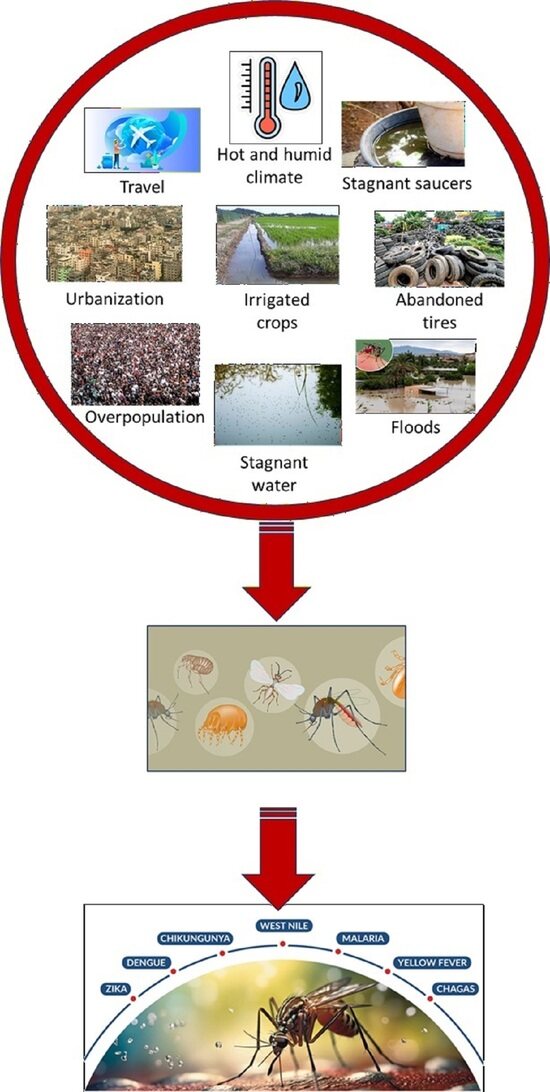
Graphical Abstract

1. Introduction

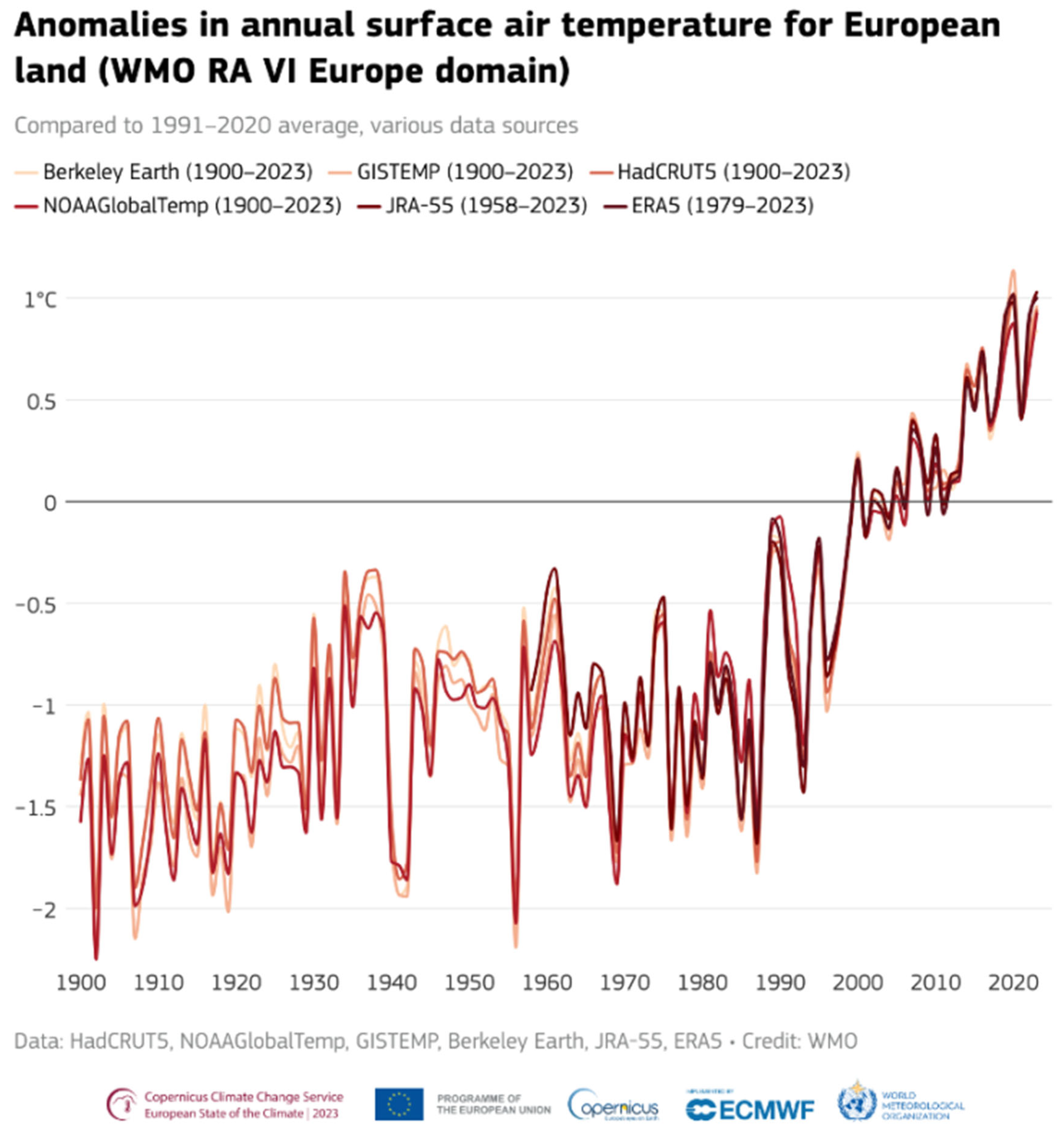
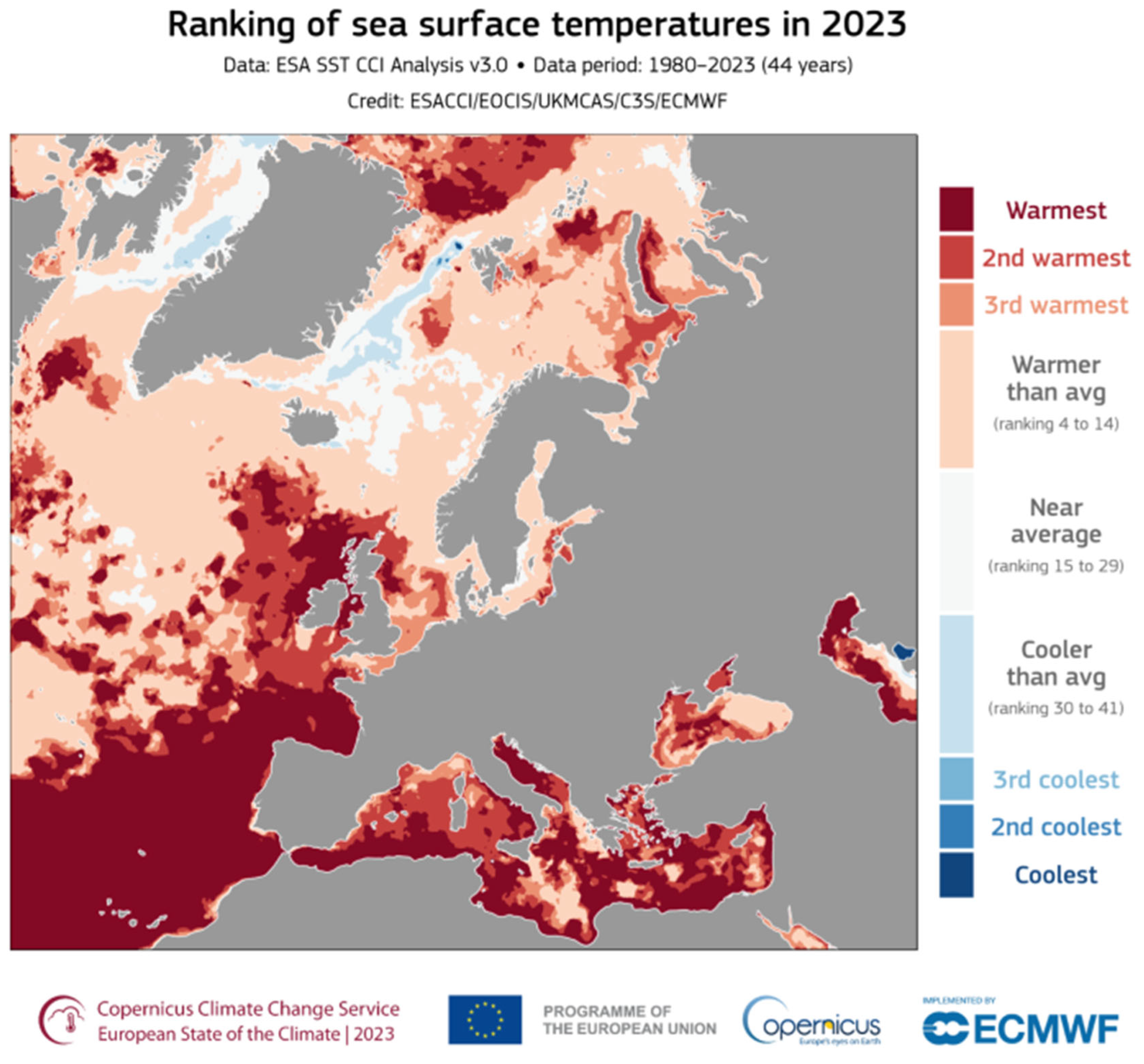
Climate change refers to long-term shifts in temperature and weather patterns. While these changes can occur naturally, human activities, particularly the burning of fossil fuels, have become the main drivers since the 19th century, increasing the concentration of greenhouse gases in the atmosphere [1]. According to the World Health Organization (WHO), climate change is expected to become one of the most significant global public health threat of the 21st century [2] (who.int). Vector-borne diseases (VBDs) are highly sensitive to climate, as their transmission is influenced by key variables like temperature, precipitation, and humidity [3,4,5]. Rising temperatures are changing the geographical range and seasonality of vectors such as mosquitoes and ticks, enabling disease transmission in areas previously unaffected. Diseases like malaria and dengue, traditionally confined to tropical zones, are now emerging in temperate and urban areas [6,7]. Although tropical regions remain most vulnerable, climate-related risks are increasing in temperate zones as well [8,9,10]. The Copernicus Climate Change Service (C3S) and the World Meteorological Organization (WMO) reported that 2023 was one of Europe’s warmest years, with record-breaking land (Figure 1) and sea temperatures (Figure 2) [11] (climate.copernicus.eu).
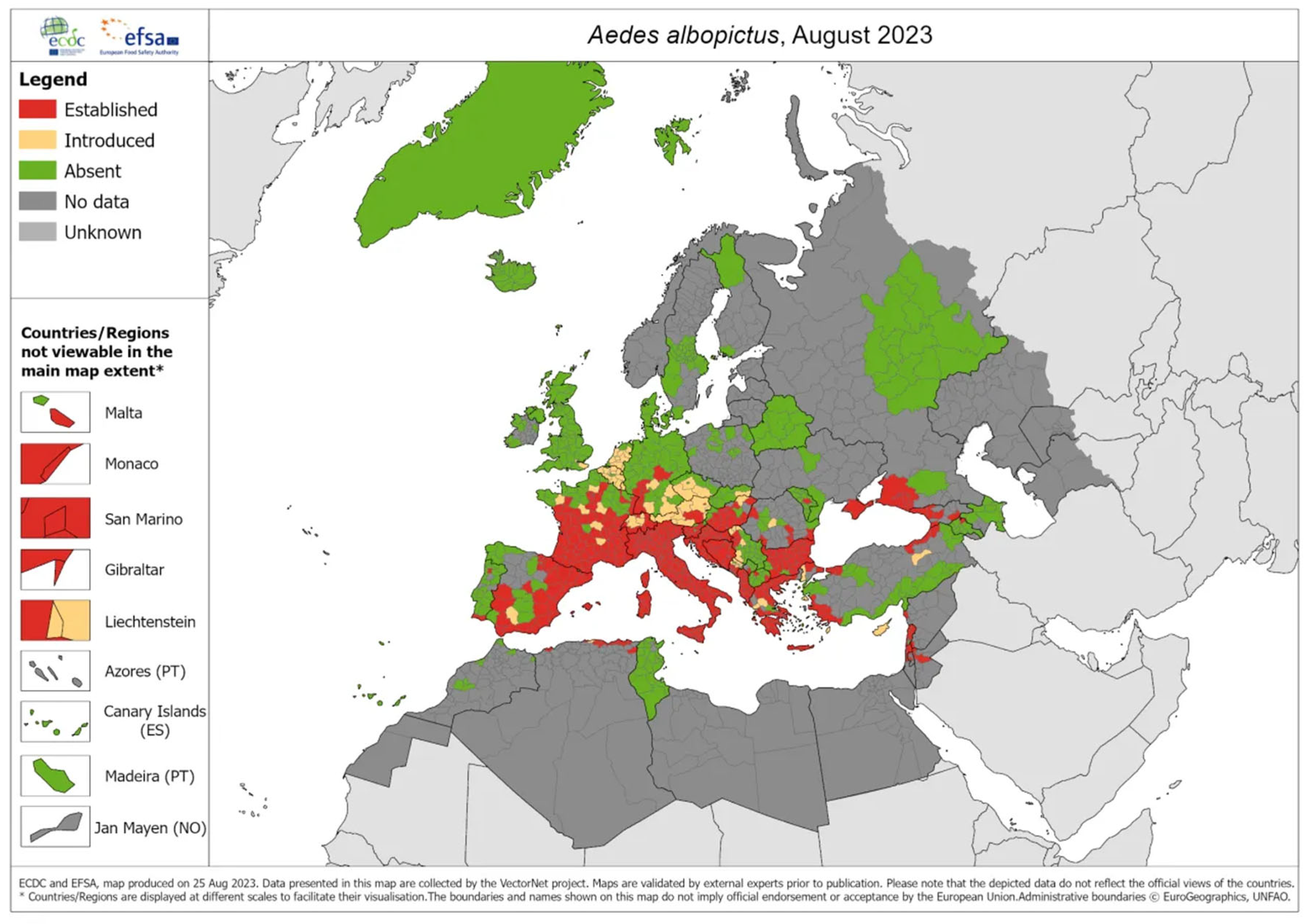
Rising air temperatures have contributed to the northward and altitudinal expansion of Aedes albopictus in Europe, while Aedes aegypti remains largely confined to its historical distribution around the Black Sea and the eastern Mediterranean.
To address these threats, the European Union (EU) has implemented a climate adaptation strategy, as outlined in the Communication “Forging a climate-resilient Europe—the new EU Strategy on Adaptation to Climate Change” (European Commission, 2021) [13], promoting resilience through integrated actions involving climate monitoring, water management, vector control, and health education [14]. These initiatives align with the EU’s broader One Health and climate preparedness frameworks, which emphasize early warning systems, cross-border surveillance, and coordinated public health responses.
This narrative review explores how climate change is influencing the spread of vector-borne diseases in Europe. It examines evidence of the geographical and temporal expansion of these diseases, including changes in the interaction among environment, vector and host. The review also highlights the specific vulnerabilities of European regions, particularly southern and Mediterranean areas, and discusses the implications for public health preparedness, environmental sanitation, surveillance, and vector control strategies within the EU context.

2. Literature Search and Article Selection

This narrative review aims to provide an overview of current evidence on the impact of climate change on vector-borne diseases from a public health perspective, with a specific focus on Europe. A non-systematic literature search was conducted using PubMed, Scopus, and Web of Science to identify peer-reviewed articles published between 2010 and 2024. Search terms included combinations of “climate change”, “global warming”, “vector-borne diseases”, “mosquito-borne diseases”, “tick-borne diseases”, as well as specific disease names such as malaria, dengue, chikungunya, West Nile virus, and leishmaniasis. In addition to peer-reviewed literature, institutional sources and official web resources were consulted to contextualize epidemiological trends, climate indicators, and public health responses relevant to Europe. These included reports, guidelines, and surveillance data from international and European organizations such as the World Health Organization, the European Centre for Disease Prevention and Control, the Copernicus Climate Change Service, the World Meteorological Organization, and the Italian National Institute of Health.
Given the narrative nature of this review, the selection process did not follow a systematic protocol. However, studies were included when they met the following criteria: (i) relevance to the relationship between climate change and vector-borne diseases; (ii) contribution to understanding ecological or epidemiological dynamics in Europe; and (iii) publication in peer-reviewed journals or authoritative institutional sources. Studies focusing exclusively on non-European regions without implications for Europe were excluded. However, evidence on globally relevant vector-borne diseases (e.g., dengue, chikungunya, malaria, yellow fever) was considered when it contributed to understanding potential importation risks, vector competence, or future suitability scenarios for Europe.
As a narrative review, this study presents some inherent methodological limitations that should be considered when interpreting the findings. Publication bias may have influenced the available literature, as studies reporting associations between climate change and vector-borne diseases are more likely to be published than studies with negative or inconclusive findings. Language bias may also be present, since the review primarily included articles published in English, which were intentionally selected to ensure methodological comparability and accessibility for an international readership, potentially underrepresenting relevant evidence published in other languages, particularly from local public health reports or regional surveillance systems. In addition, important disparities exist across European countries in terms of surveillance quality, diagnostic capacity, reporting systems, and availability of epidemiological and entomological data. These differences may lead to heterogeneous estimates of disease burden and vector distribution, particularly in low-resource settings or regions with less standardized monitoring systems. Consequently, the epidemiological patterns and climate-related projections discussed in this review should be interpreted with caution, especially when comparing different geographical areas or extrapolating future transmission risks.

3. Biological and Environmental Mechanisms

Climate change significantly influences the survival, reproduction, and disease transmission capacity of vectors responsible for infectious diseases [15,16,17]. Key climatic variables, temperature, precipitation, and humidity, affect both vector biology and the dynamics of the pathogens they carry [18].
Temperature plays a central role by accelerating vector life cycles and increasing biting frequency. For instance, Ae. aegypti, the primary vector of dengue and Zika, matures more quickly in warmer conditions, enabling a shorter extrinsic incubation period (EIP) [19,20]. However, very high temperatures (above 30 °C) may increase mosquito mortality and reduce overall transmission potential, indicating that the relationship between temperature and transmission is non-linear [21].
Precipitation patterns directly influence breeding site availability. Increased rainfall creates more standing water in containers, urban debris, and flood zones, providing ideal environments for mosquito breeding. Ae. aegypti commonly lays eggs in man-made containers filled with stagnant water. Conversely, droughts may reduce natural breeding grounds but can also lead to unsafe water storage, increasing breeding opportunities and transmission risks [22,23,24].
Humidity is equally important. High humidity improves mosquito survival and activity, extending the period during which vectors remain capable of transmitting pathogens. Under such conditions, transmission of diseases like Zika and dengue becomes more efficient because vectors live longer and bite more frequently [24,25,26].
These climatic factors are shifting the distribution, intensity, and seasonality of vector-borne diseases, posing increasing challenges for public health [10]. Understanding these environmental-biological interactions is essential to guide effective prevention and control strategies.

4. Vector-Borne Diseases

VBDs are infections caused by protozoa, viruses, or bacteria transmitted by vectors, mainly arthropods such as mosquitoes, ticks, sandflies, flies, fleas, and lice [1,27].
According to the WHO, VBDs account for over 17% of all infectious globally diseases, causing more than 700,000 deaths annually. Since 2014, major outbreaks of dengue, malaria, chikungunya, yellow fever, and Zika have stressed healthcare systems worldwide [28]. In Europe, the European Centre for Disease Prevention and Control (ECDC) monitors VBD outbreaks and risks. Their spread is influenced by factors such as international travel, global trade, animal migration, urbanization, agricultural practices, socio-demographic changes, and particularly climate change [1,29]. The vector-borne diseases of greatest global and European public health relevance, as commonly reported in the literature, are summarized in Table 1.

4.1. Malaria

Malaria remains the most lethal vector-borne diseases, with major public health impacts, particularly in tropical and subtropical regions. According to the WHO’s World Malaria Report 2025, malaria remains a major global health challenge, with an estimated 282 million cases and 610,000 deaths in 2024. The WHO African Region continues to bear the greatest burden, with 11 countries accounting for about two-thirds of global cases and deaths [34].
Malaria is caused by protozoa of the Plasmodium genus, transmitted through the bite of infected Anopheles mosquitoes. Among the five species infecting human (P. falciparum, P. vivax, P. ovale, P. malariae, P. knowlesi), P. falciparum and P. vivax are the most clinically significant. P. falciparum is predominant in sub-Saharan Africa and is responsible for most severe cases and deaths, whereas P. vivax has a wider geographical distribution and can cause relapses due to dormant liver stages [35].
In Europe, most malaria cases are imported via travelers and immigrants returning from endemic regions. According to the latest available ECDC annual epidemiological report [36], 6131 confirmed cases were reported in the EU/EEA, with 99.8% classified as travel-related and only 13 considered locally acquired.
Overall, the majority of infections occurred in men aged 25–44 years, with a clear seasonal peak during the summer months. P. falciparum remained the predominant species (85.7%), followed by P. ovale (4.4%), P. malariae (3.1%), and P. vivax (2.2%) [36].
While local transmission is rare, climate change and demographic shifts have raised concerns about the potential resurgence of malaria in Europe. Transmission risk is influenced by receptivity (presence of competent vectors and suitable climate), infectivity (vector susceptibility to Plasmodium), and vulnerability (presence of infected individuals). Various Anopheles species are still present in Europe, notably Anopheles atroparvus, An. labranchiae, and An. plumbeus. Though eradication efforts reduced their numbers, they were never fully eliminated. With warming temperatures and persistent vectors, conditions may become favorable for local transmission [35,37,38].
Surveillance systems are essential for early detection, outbreak response, and disease control. These include clinical, entomological, molecular, and serological surveillance, supported by digital tools and climate data. Delayed diagnosis and treatment in non-endemic countries can increase the risk of local outbreaks [35,39].
Clinically, malaria presents with non-specific symptoms such as fever, chills, headache, vomiting, and diarrhea, with P. falciparum responsible for most severe complications, including cerebral malaria. Diagnosis relies on microscopy, rapid diagnostic tests, and PCR, while artemisinin-based combination therapy (ACT) remains the first-line treatment. Prevention strategies include chemoprophylaxis for travelers, vector control (bed nets, insecticides, larvicides), and vaccination (in some African countries). Although malaria vaccines are not part of EU prevention strategies, they are briefly described here to meet the request for broader international context. The first malaria vaccine, RTS,S/AS01, has shown partial protection against P. falciparum in African children and demonstrated reductions in clinical malaria, severe disease, and hospital admissions in real-world implementation [40,41]. RTS,S/AS01 is most effective when combined with seasonal malaria chemoprevention and insecticide-treated nets, reflecting its role as part of an integrated control strategy [42].
In 2023, WHO recommended a second vaccine, R21/Matrix-M, which is now being introduced in routine childhood immunization programs exclusively in high-burden African countries [40]. R21/Matrix-M has shown higher efficacy in seasonal transmission settings (around 70%) and was developed to improve scalability and affordability, helping expand vaccination coverage in regions with intense transmission [43].
Despite progress, malaria continues to pose a global health threat. Increasing global mobility also contributes to a steady flow of imported cases into the EU/EEA [41]. Continued surveillance, research, and integrated prevention strategies therefore remain essential to mitigate these evolving risks.

4.2. Dengue

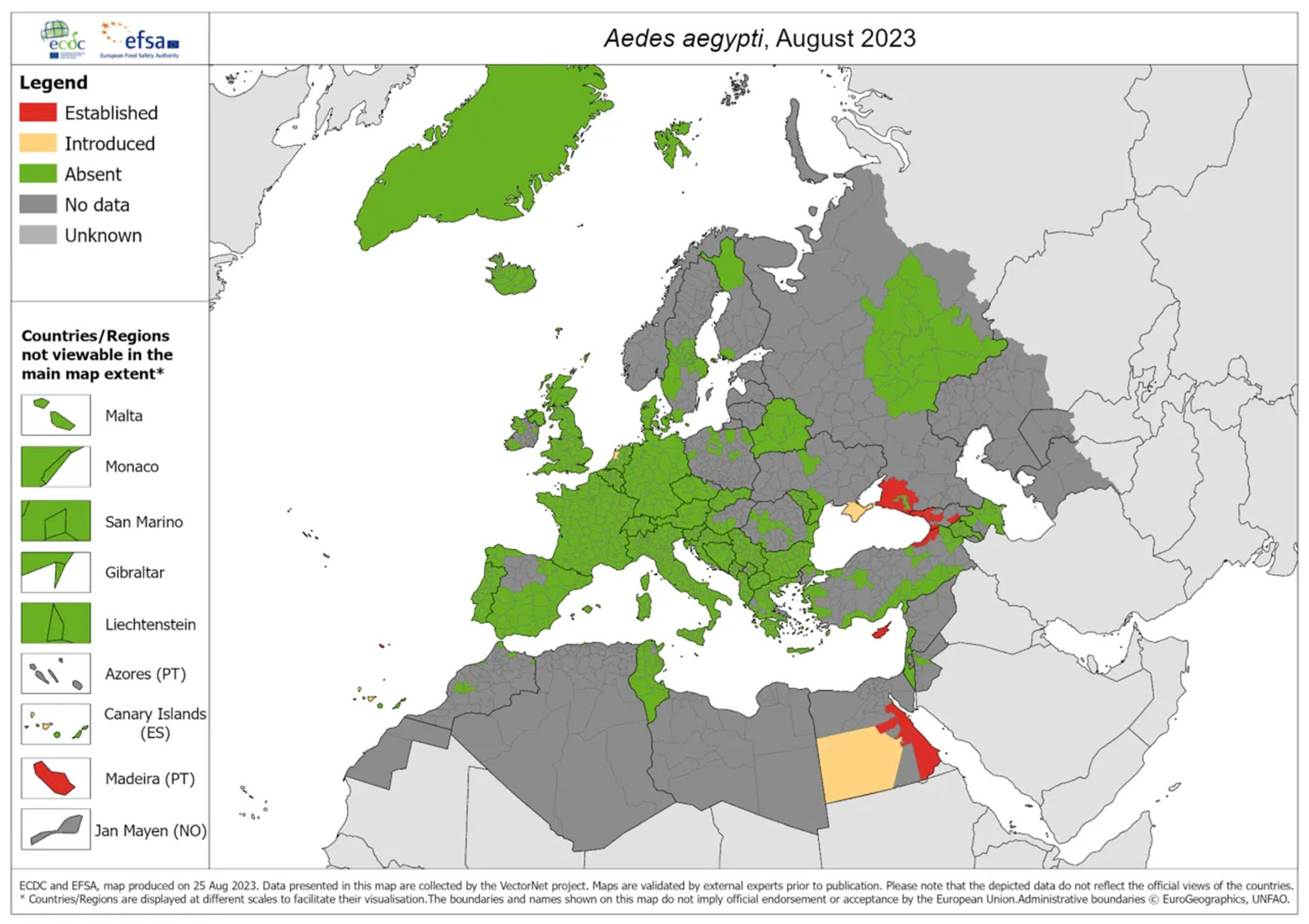
Dengue is a viral infection transmitted to humans by the mosquitoes Ae. aegypti and Ae. albopictus, and caused by four distinct serotypes (Den-1 to Den-4). The virus is endemic in tropical and subtropical regions and is primarily transmitted through mosquito bites; human-to-human transmission occurs in rare occasions such as breast feeding, though humans serve as the main reservoir during the viremic phase (2–7 days). Dengue is particularly prevalent during and after the rainy season in Africa, Southeast Asia, Latin America, and parts of Oceania. In Europe, dengue is primarily an imported disease, and its rise is linked to the increasing frequency of global travel and trade [38]. Ae. aegypti and Ae. albopictus are present in Europe (Figure 3 and Figure 4). Ae. albopictus is prevalent in southern Europe (Figure 4), specifically in Italy, southern France, eastern Spain and on the eastern coast of the Adriatic Sea and is gradually spreading towards the northern latitudes of Europe.
Ae. albopictus shows remarkable thermal tolerance: its diapausing eggs can survive winter temperatures well below 0 °C, allowing the species to persist and expand in temperate regions. It is also widely distributed in tropical and subtropical areas, including parts of sub-Saharan Africa and South America, demonstrating its ability to withstand very high summer temperatures [46]. Ae. aegypti is already established in areas with relatively cold winters, such as parts of the northern Black Sea region (Figure 3). Climate change may therefore influence the relative suitability of different European regions for these species, but their potential expansion cannot be explained solely by simple temperature thresholds [47]. Autochthonous dengue transmission has increased substantially in Europe over the past three years. In 2022, Europe recorded 66 locally acquired dengue cases (65 in France and 1 in Spain). In 2023, cases rose to 122, including 76 in Italy, where several unlinked outbreaks occurred across multiple provinces. France and Spain reported cases mainly along the Mediterranean coast, and in urban areas such as Paris, Madrid, Milan, and Rome, where Aedes mosquitoes thrive [48]. According to Santé Publique France surveillance, dengue transmission persisted in 2024 and 2025, with France reporting 30 locally acquired dengue cases in 2025, mostly in southern regions where Ae. albopictus is well established [49]. As of November 2024, Italy reported 687 confirmed cases, of which 213 were autochthonous. The largest outbreak occurred in the Marche region (143 cases), with others in Lombardy, Veneto, Emilia-Romagna, Tuscany, and Abruzzo [50]. In 2025, a total of 223 cases were recorded in Italy, of which 4 were autochthonous [51].
Dengue surveillance is essential for early outbreak detection and response. Monitoring mosquito populations and human cases allows health authorities to identify hotspots and implement vector control measures. Screening blood and organ donors is also important, particularly in areas with active transmission; a case of dengue transmission via organ transplant was reported in [52]. The ECDC recommends preventive measures for travelers, but no EU-wide protocols exist for dengue screening in donors [48]. Clinically, dengue presents 5–6 days post-bite with fever, headache, retro-orbital pain, joint pain, nausea, rash, and in rare cases, progresses to dengue hemorrhagic fever. Symptoms may be mild or absent in children. Diagnosis is based on clinical presentation and confirmation via PCR or serology. Prevention relies on avoiding mosquito bites and controlling breeding sites, especially in urban environments. Effective measures include repellents, protective clothing, and mosquito netting. The most effective outbreak prevention strategy remains vector control, particularly the elimination of stagnant water. Two dengue vaccines have been approved in 2023: Qdenga® (Takeda), also authorized in Italy and effective against all four serotypes, and Dengvaxia® (Sanofi Pasteur), approved in 20 countries but recommended only for previously infected individuals in endemic regions. Dengue vaccination strategies remain complex due to the existence of four serotypes and the risk of antibody-dependent enhancement (ADE). Dengvaxia® (CYD-TDV) is recommended only for individuals with confirmed previous dengue infection, as its use in seronegative individuals may increase the risk of severe disease upon subsequent infection. In contrast, Qdenga® (TAK-003) has shown broader efficacy against all four dengue serotypes and can be administered regardless of prior infection status. Clinical trials reported approximately 80% protection against hospitalization and around 60–65% efficacy against symptomatic dengue. However, its long-term effectiveness and impact on different age groups are still under evaluation, and WHO recommends its use in settings with high dengue transmission under careful surveillance frameworks [53].
There is no specific antiviral treatment for dengue and patients recover in two weeks with supportive care (hydration, fever management, rest); fatigue and depression may persist for weeks [54,55].
Addressing dengue requires a multidisciplinary and international approach, combining surveillance, public education, vector control, and vaccine deployment. Climate change and global mobility are driving its expansion, making coordinated action and continued research imperative for effective control.

4.3. Zika

Zika virus (ZIKV) is a mosquito-borne flavivirus transmitted primarily by Ae. aegypti and Ae. albopictus, the same vectors responsible for dengue and chikungunya. First isolated in 1947 in Uganda, ZIKV remained largely confined to Africa and Asia until 2007, when the first major outbreak occurred in Micronesia. Mosquito control has led to the reduction and elimination of the disease, although Zika, like dengue, is more prevalent in poor urban areas of tropical and subtropical regions, where favorable climate conditions are coupled with poor socioeconomic conditions and a lack of public health policies [56]. Subsequent outbreaks followed in French Polynesia (2013–2014) and other Pacific Islands. In 2015, a large-scale outbreak in Brazil drew global attention due to its association with congenital abnormalities, especially microcephaly, and neurological complications such as Guillain-Barré syndrome [30,56,57,58].
As of 2019, ZIKV transmission had been reported in 87 countries, with 61 countries having competent Aedes vectors but no documented autochthonous cases. In Europe, no local outbreaks have occurred, but imported cases continue to be reported in several countries (Denmark, Finland, Germany, Netherlands, Portugal, Spain, Sweden, United Kingdom), including Italy where only 7 and 5 cases were recorded in 2024 and 2025, respectively [51]. Sporadic cases of congenital Zika syndrome have also been identified in children born to mothers infected during travel to endemic areas [51,59].
Zika is primarily transmitted through mosquito bites, but can also spread via sexual contact, blood transfusion, and organ transplantation. The majority of infections are asymptomatic (~80%). When symptoms occur, they are typically mild and flu-like, including fever, rash, conjunctivitis, headache, muscle and joint pain, and usually resolve within a week. However, in pregnant women infection can lead to severe fetal complications (brain damage, microcephaly, and other neurological issues), particularly during the first trimester [58]. Diagnosis is mainly based on PCR or virus isolation from blood or urine samples. Serological testing is complicated by cross-reactivity with other flaviviruses. There is no approved vaccine or specific antiviral treatment; care is supportive, with fever management and hydration. Prevention focuses on minimizing mosquito exposure through repellents, protective clothing, bed nets, and vector control strategies. In Europe, Zika virus surveillance is coordinated by ECDC and the WHO Regional Office for Europe. Italy has implemented a comprehensive National Plan for Surveillance and Response to Aedes-borne Arboviral Diseases, which includes entomological monitoring, clinical case reporting, public education, and vector control. The plan intensifies surveillance between June and October, the peak vector activity period [60].
Climate change, urbanization, poor sanitation, and global travel all contribute to the expansion of Aedes vectors, increasing the risk of ZIKV transmission in new areas. The lack of specific treatments and vaccines highlights the importance of early detection, integrated surveillance systems, community awareness, and international cooperation in mitigating the public health impact of Zika virus.

4.4. Chikungunya

Chikungunya is a viral disease caused by the chikungunya virus (CHIKV), an RNA virus of the genus Alphavirus (Togaviridae family). It is primarily transmitted to humans by Ae. aegypti and Ae. albopictus mosquitoes. The was first identified in Tanzania in 1952, and subsequent outbreaks have occurred in Africa, Asia, Europe, and the Americas. Since 2004, its geographic range has rapidly expanded, with confirmed transmission in over 110 countries. A mutation in the virus facilitated its transmission by Ae. albopictus, the prevalent mosquito in Europe Its relevance for Europe increased markedly after 2007, when the first autochthonous transmission occurred in Italy (Ravenna), resulting in 337 suspected cases, 229 of which were laboratory confirmed [61]. Subsequent outbreaks were reported in France (2010) and Italy (2017), particularly in Lazio and Calabria [62,63,64,65]. In 2025, a total of 482 cases were recorded in Italy, of which 384 were autochthonous [51]. In 2025, Santé Publique France reported 809 locally acquired chikungunya cases in France, including 790 cases across 79 transmission episodes and 19 isolated cases, confirming the capacity of Ae. albopictus to sustain substantial outbreaks under favorable conditions [49]. Imported cases continue to be detected across Europe, facilitated by international travel from endemic regions. The establishment and expansion of Ae. albopictus in many European countries, driven by climate change, urbanization, and inadequate vector control, creates favorable conditions for local transmission.
Clinically, chikungunya presents with abrupt onset of fever, severe joint pain, myalgia, headache, fatigue, and rash. While most patients fully recover, joint pain can persist for months or even years. Rare complications include neurological, ocular, and cardiac manifestations, and elderly patients are at higher risk of severe outcomes. Diagnosis is primarily based on PCR during the acute febrile phase, and serological tests help identify past or recent infection. There is no specific antiviral treatment; care focuses on symptom management. The first chikungunya vaccine has been approved in 2023 by the FDA in the United States, and in Europe in February 2025 by the European Commission [66].
Vector control remains the most effective preventive strategy. Traditional measures include elimination of breeding sites, personal protection, and targeted insecticide use, although resistance is increasingly reported [62]. Wolbachia-based biocontrol has shown the ability to reduce CHIKV transmission in laboratory settings, but these approaches are not authorized or implemented in Europe [67].
Chikungunya continues to pose a public health challenge in areas where Ae. albopictus is established. Strengthening surveillance, improving vector control, and enhancing public awareness remain essential to prevent future outbreaks in Europe.

4.5. West Nile

West Nile fever is a mosquito-borne zoonotic disease caused by the West Nile virus (WNV), a member of the Flaviviridae family. First isolated in Uganda in 1937, WNV has since widely spread across Africa, Asia, Europe, Australia, and the Americas. The virus is divided into nine lineages, but most human infections are caused by lineages 1a and 2. The virus primarily circulates among wild birds and Culex mosquitoes, with birds serving as natural reservoirs and mosquitoes as vectors. Humans and other mammals, such as horses, are incidental hosts and do not contribute to ongoing transmission [68]. Environmental and climatic factors play a central role in the virus’s transmission. Warm temperatures above 20 °C support mosquito survival, while temperatures over 30 °C accelerate viral replication. Precipitation fosters mosquito breeding, and humidity enhances mosquito activity. Climate change, by extending warm seasons and altering bird migration patterns, further facilitates virus spread and vector proliferation. Additionally, winds can carry infected mosquitoes across large areas, increasing the risk of cross-border transmission [69,70,71].
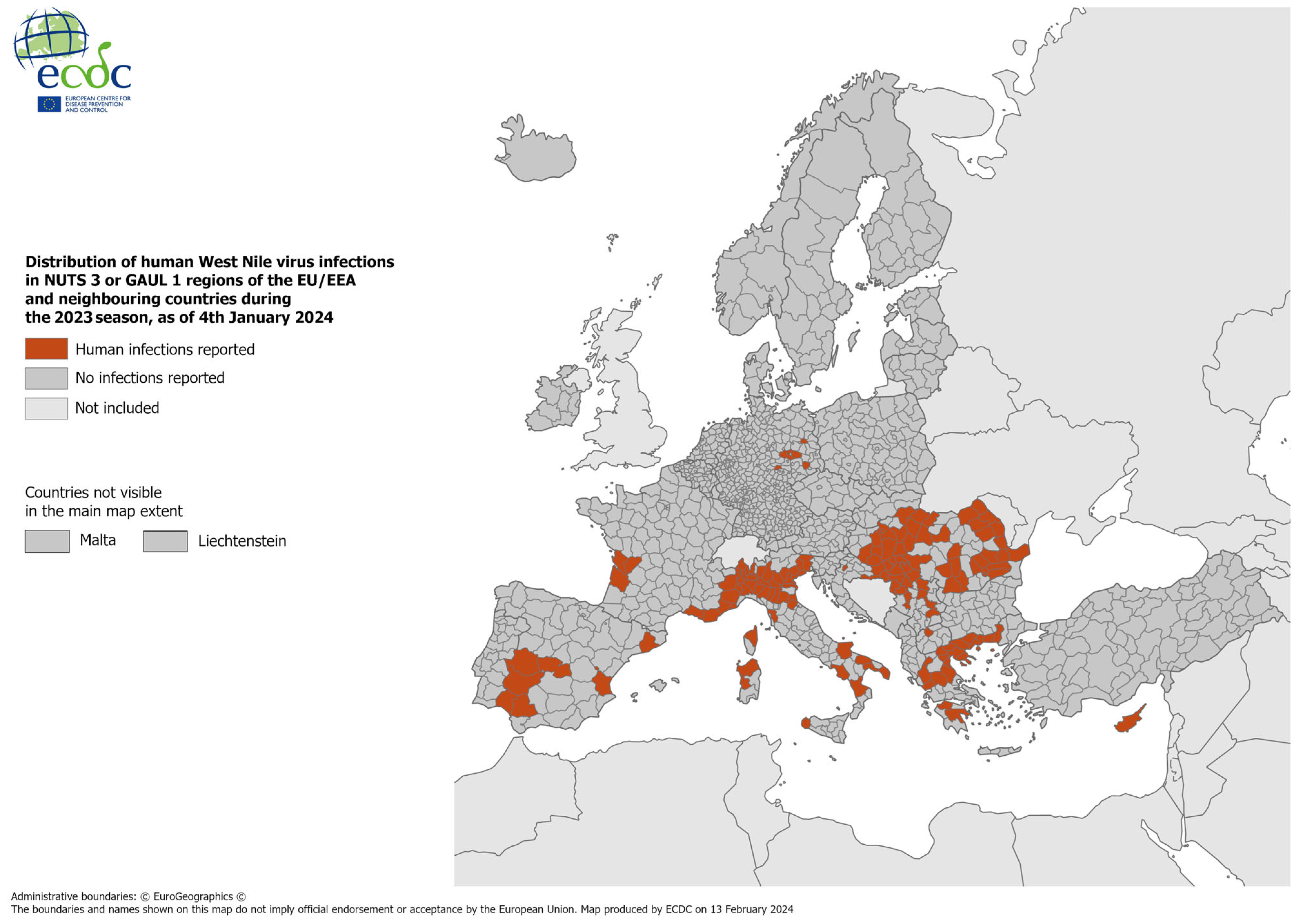
In Europe, WNV poses a recurrent public health challenge. In 2023, 728 human cases were reported across the EU, of which 709 were locally acquired and 19 travel-related (Figure 5). The highest case numbers were recorded in Italy (336), Greece (162), and Romania (103). Deaths were reported in Italy (29), Greece (23), Romania (12), and Spain (3). Although the total number of cases in 2023 decreased by 36% compared to 2022, the number of affected regions increased by 31%, indicating wider geographic spread [68,72]. However, in 2025, cases in Italy increased again, with 502 cases and 33 deaths recorded [73].
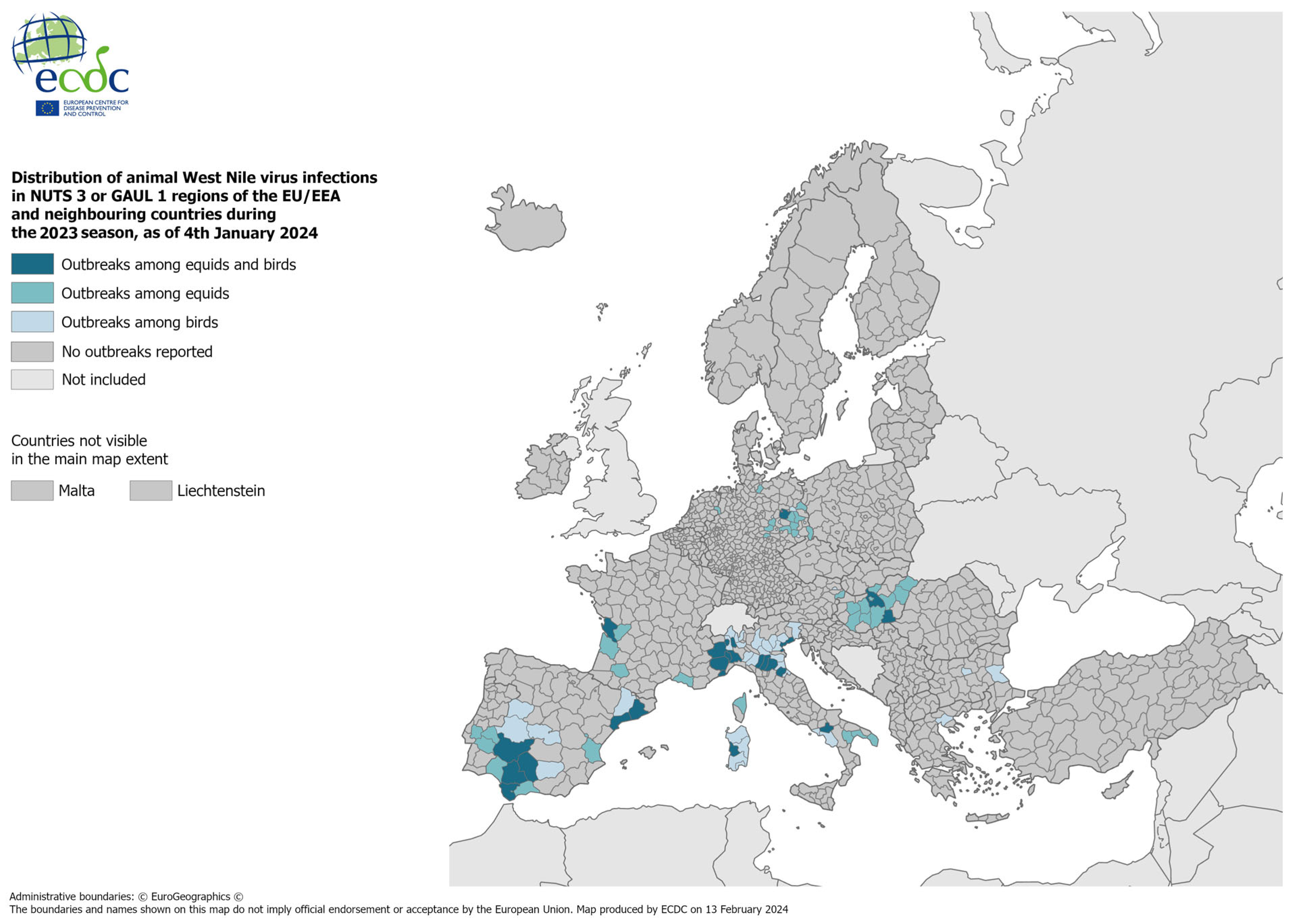
In addition to human cases, 153 outbreaks in equids (primarily horses) and 251 in birds were reported in the EU in 2023 (Figure 6). Most animal outbreaks occurred in France (44), Spain (38), Hungary (26), Italy (25), and Germany (14). There was a 51% increase in outbreaks among equids compared to the previous year, though bird outbreaks decreased by 22%. The correlation between animal outbreaks and human cases highlights the role of zoonotic surveillance in early detection.
Most infected people are asymptomatic, but about 20% of symptomatic cases experience mild symptoms like fever, headache, nausea, vomiting, swollen lymph nodes, and skin rashes, lasting from a few days to weeks. Serious symptoms, including high fever, severe headache, muscle weakness, tremors, vision problems, numbness, convulsions, paralysis, and coma, occur in less than 1% of cases. In about 1 in 1000 cases, fatal encephalitis can occur. Diagnosis is made through laboratory tests (ELISA, PCR, or viral culture) on serum or cerebrospinal fluid. No vaccine is currently available, but studies are ongoing. Prevention involves avoiding mosquito bites through repellents, long clothing, and mosquito nets, and reducing mosquito breeding by emptying stagnant water containers. There is no specific antiviral therapy, and symptoms usually resolve on their own [75,76]. WNV surveillance across Europe is coordinated through systems like TESSy and ADIS (Animal Disease Information System), which track human, animal, and vector data. These systems enable the timely implementation of mosquito control campaigns and help identify hotspots of viral activity. Some countries also use sentinel systems to monitor environmental conditions and predict potential outbreaks [75].
West Nile virus remains a significant and growing threat in Europe, exacerbated by climate change, increasing vector range, and globalization. Continued investment in epidemiological surveillance, vector management, and public health infrastructure will be essential to mitigating the impact of future outbreaks.

4.6. Yellow Fever

Yellow fever (also called icteroid typhus) is an acute, potentially fatal viral disease caused by a Flavivirus transmitted by mosquitoes, primarily Ae. aegypti, Haemagogus, and Sabethes. It is endemic in tropical regions of Africa and Latin America, with an estimated 200,000 cases and 30,000 deaths annually. The incidence of yellow fever fluctuates based on vaccination coverage and mosquito control measures. Although not endemic in Europe, changing climatic conditions, increasing global mobility, and the presence of vector mosquitoes in southern Europe, especially Ae. aegypti, pose a potential risk for future outbreaks. In 2018, EU countries reported 13 travel-related cases of yellow fever in France (7), Germany (2), Czech Republic (1), Netherlands (1), Romania (1) and United Kingdom (1), primarily linked to travel in South America and Africa. While no autochthonous transmission has occurred in Europe in recent decades, the growing presence of competent vectors in Mediterranean regions has raised public health concerns. In Italy, the risk remains theoretical but possible due to climate change, migration, and the presence of Ae. aegypti [77,78].
Symptoms appear 3 to 6 days after infection and may range from mild flu-like signs (fever, headache, chills, nausea) to a severe toxic phase, affecting 15% of cases. This advanced phase may include jaundice, bleeding, liver and kidney failure, and can result in shock or death. There is no specific antiviral treatment, and care focuses on symptom management, including fluid support and treatment of complications. Prevention is primarily achieved through the yellow fever vaccine, which offers long-lasting protection (at least 10 years) and is recommended for anyone traveling to endemic areas. Other preventive strategies include mosquito bite prevention with repellents and protective clothing.
However, several challenges hinder disease control efforts: interruption of vaccination campaigns in conflict zones, limited access to healthcare, mosquito resistance to insecticides, and climate change. These factors complicate outbreak management and increase the need for robust surveillance systems [79,80].
Continuous monitoring of mosquito populations, tracking human cases, and early detection of environmental risks are essential for rapid response. Though large-scale outbreaks in Europe remain unlikely, surveillance and prevention are crucial to mitigating the potential spread of yellow fever in a changing global context.

4.7. Chagas Disease

Chagas disease, caused by the parasite Trypanosoma cruzi, is primarily transmitted by blood-sucking insects of the Triatoma genus. It is endemic to Latin American countries such as Bolivia, Brazil, Mexico, and Argentina, with an estimated 6–7 million people globally infected, making it the third most common parasitic disease in the world after malaria and leishmaniasis. Due to migration, imported cases have been increasingly reported in non-endemic regions, including Europe, especially in Spain, Portugal, and Italy. Between 2010 and 2020, Spain had the highest number of estimated cases (about 30,000), followed by Italy (10,000–15,000) and Portugal (5000–10,000). Most infections in Europe have been identified among Bolivian immigrants. However, data remain incomplete, as there is no unified surveillance system in place. Climate change could potentially favor the expansion of vectors into non-endemic areas, increasing the risk of parasite introduction. Congenital transmission of Chagas disease, when the infection is passed from mother to child during pregnancy, is underdiagnosed in Europe, due to the lack of screening programs targeting pregnant women from endemic regions. Other, less frequent modes of transmission include blood transfusions and organ transplants from infected individuals [81,82,83].
Initial symptoms include fever, localized swelling, and pain at the bite site. If untreated, the disease may progress to a chronic phase, potentially causing severe cardiac or gastrointestinal complications. Diagnosis relies on serological and molecular testing, and treatment involves antiparasitic drugs such as benznidazole and nifurtimox, which are most effective in the acute phase [81].
Vector control, chemoprophylaxis and, above all, surveillance are the keys to controlling Chagas disease in non-endemic countries. Monitoring migrant populations, implementing screening for pregnant women and newborns, and improving access to diagnosis and treatment are essential to prevent further transmission and reduce the disease burden in Europe and other at-risk regions.

4.8. Leishmaniasis

Leishmaniasis is a parasitic disease affecting humans and animals, caused by protozoa of the Leishmania genus (e.g., L. martiniquensis, L. donovani, L. infantum). It is transmitted by the bite of sandflies (Phlebotomus spp.), which act as biological vectors. The disease is widespread in tropical and subtropical regions, including parts of southern Europe, such as Italy, Greece. Climate change and rising temperatures may enhance the distribution of sandflies, increasing the risk of leishmaniasis in previously unaffected areas [84,85].
Van der Auwera [86] highlighted the presence of human leishmaniasis cases between 2014 and 2019 in 11 European countries: Belgium, France, Germany, Italy, the Netherlands, Norway, Portugal, Spain, Sweden, Switzerland, and the United Kingdom. Specifically, 1142 cases were detected, of which 76%, 21%, and 3% presented cutaneous, visceral, and mucosal disease, respectively. Visceral leishmaniasis (VL) was mainly acquired in Europe, while cutaneous leishmaniasis (CL) was imported. Todeschini [87] analyzed 154 cases were reported from 2004 to 2022 in the city of Bologna (Italy) highlighting a rise in the past decade and 11 associated deaths. The disease mainly affected men, young children, and immunocompromised individuals. Increases in cases were linked to hot, dry summers, suggesting an impact from climate change. The study also highlighted that the dog, despite being a known reservoir, may not be the only source of disease transmission, as a similar increase in dogs was not observed during years with higher human cases. The infection has also been found in other animals, such as mice and rats, suggesting that other mammals may contribute to the spread of leishmaniasis [87]. In Italy, both VL and CL are endemic in much of the country and are caused by the subspecies L. infantum. Of the 30 species of Leishmania that can infect mammals, approximately 20 can cause disease in humans with varying clinical outcomes. L. donovani is responsible for VL, L. maior and L. tropica cause CL, L. mexicana and L. brazilenzis cause mucocutaneous leishmaniasis (MCL). Leishmaniasis symptoms depend on the form: CL manifests with skin lesions, while VL presents with fever, and organ enlargement. Diagnosis is made through blood tests and skin biopsies. Treatment varies by species but includes local treatments for CL and intravenous drugs like liposomal amphotericin B for VL. Preventive measures focus on avoiding sandfly bites through repellents, protective clothing, and reducing vector habitats. Currently, no human vaccine is available [84,88]. Prevention includes avoiding sandfly bites through repellents, protective clothing, and vector control. Surveillance is critical, especially in non-endemic areas, to monitor sandfly populations, animal reservoirs, and climate data [87]. Ongoing research and public awareness are essential to prevent the disease’s further spread in Europe.

4.9. Other Vector-Borne Diseases

Onchocerciasis, or river blindness, is caused by the nematode Onchocerca volvulus and transmitted by Simulium flies. According to the WHO (2007) [89], over three million people worldwide have been blinded by this disease. It is common in sub-Saharan Africa and parts of Latin America, but not present in Europe, where cases are mostly imported. Although global warming may influence vector spread, the risk of resurgence in Europe remains low. Symptoms include itching, skin lesions, and blindness caused by larval migration. Diagnosis involves detecting microfilariae in blood or skin. Treatment with ivermectin is effective and has reduced cases substantially. Prevention involves mass drug administration to limit transmission [90].
Japanese encephalitis, caused by the Japanese Encephalitis Virus (JEV) and transmitted by Culex mosquitoes, affects mainly East and Southeast Asia with around 50,000 annual cases. In Europe and Italy, risk is minimal, but imported cases may occur. Climate change could expand vector habitats, increasing spread risks. Symptoms include fever, headache, and neurological signs such as convulsions and encephalitis. Diagnosis is via serology and PCR. No specific antiviral exists, but vaccination is available in Europe and Italy for travelers to endemic areas. However, vaccination is not recommended for children due to limited safety data. Prevention focuses on mosquito protection [91].
Human African trypanosomiasis, or sleeping sickness, caused by Trypanosoma brucei and transmitted by tsetse flies, is endemic in sub-Saharan Africa with about 70,000 cases yearly. Europe and Italy have no endemic cases, only rare imports. Two forms exist: chronic sleeping sickness caused by T. brucei gambiense in West and Central Africa, transmitted by Glossina palpalis, and subacute sleeping sickness by T. brucei rhodesiense in southeastern Africa, transmitted by Glossina morsitans [92,93]. Rising temperatures might affect tsetse distribution, but European resurgence risk is low. Early symptoms include fever, headache, and lymphadenopathy, followed by CNS involvement. Diagnosis is through parasite detection in blood. Treatment uses pentamidine and suramin. Prevention targets tsetse control and repellents [93].
Rift Valley fever, a viral disease transmitted by mosquitoes and flies, is endemic in East Africa with outbreaks in Saudi Arabia and Yemen. Europe and Italy are non-endemic but at risk from infected travelers. Climate change could expand vector habitats and epidemic risk. Symptoms include fever, headache, and muscle pain. Diagnosis relies on serological tests. No specific antiviral exists; treatment is supportive. Prevention centers on vector control [94,95].
Ross River fever, caused by an Alphavirus transmitted by mosquitoes, is endemic in Australia and the Pacific Islands; risk in Europe is low but may increase with climate change. Symptoms include fever, arthritis, and rash. Diagnosis is serological. No specific treatment exists, but symptoms respond to analgesics and anti-inflammatories. Prevention involves mosquito repellents and protection [96,97].
Tick-borne encephalitis (TBE), caused by a virus transmitted by ticks (Ixodes ricinus and Ixodes persulcatus). Global warming may increase vector range and disease resurgence. TBE is prevalent in central Europe, Asia, and parts of North America, with around 10,000 cases annually. TBE is endemic in Europe and Italy. In Italy, the first cases were recorded in 1994, and the latest surveys have revealed 67 cases, 63 of which are indigenous [51]. TBE is also endemic in Slovenia, representing one of the highest incidence areas in Europe, with annual notification rates often exceeding 10–20 cases per 100,000 inhabitants in some regions. Transmission is particularly concentrated in wooded rural areas, where I. ricinus ticks are widespread. Human cases in Slovenia have been reported regularly in recent decades, with seasonal peaks in spring and summer associated with outdoor recreational activities [98]. Symptoms include fever, headache, and neurological effects. Diagnosis is serological. No antiviral treatment exists. Prevention includes tick control, but vaccination is an effective prevention strategy [99,100]. Vaccination represents the most effective preventive strategy against TBE. The inactivated virus vaccines, such as FSME-IMMUN and Encepur, are highly immunogenic and provide long-lasting protection after a primary series and booster doses. Real-world data from the Slovenian population confirms a field effectiveness of 93.4% after a primary three-dose series, with estimates exceeding 95% in preventing clinical disease and severe neurological complications. Despite its availability, vaccination coverage remains suboptimal, which contributes to continued sporadic outbreaks [101,102].
Tularemia, or rabbit fever, caused by Francisella tularensis, is endemic in Europe, North America, and Asia. It is transmitted by I. ricinus ticks, rodents, and lagomorphs. Humans contract it through tick bites, contact with infected animals, or ingestion of contaminated food or water. It is present in parts of Europe, including Italy. Rodent spread and climate change could increase tick distribution and disease occurrence. Symptoms include fever, ulcers, and swollen lymph nodes. Diagnosis involves bacterial culture or PCR. Antibiotics are effective, and prevention focuses on rodent control and tick protection [103,104].
Lyme disease (borreliosis), caused by Borrelia burgdorferi and transmitted by Ixodes ticks, is widespread in the Americas, Asia, and Europe. In Italy, it is common, especially in mountainous areas. Climate change may increase tick populations and cases. Early symptom is erythema migrans; neurological issues like meningitis, cranial neuritis, and radiculoneuropathy affect 15% of patients. Arthritis occurs in 60–70%, with possible recurrent joint swelling and pain. Diagnosis is serological. Antibiotics treat it effectively. Prevention involves repellents and tick control [105,106]. Vaccines exist in the U.S. but are unavailable in Italy and Europe due to multiple Borrelia species presence.
Plague, caused by Yersinia pestis, is primarily transmitted by the rat flea (Xenopsylla cheopis), and also by lice and bedbugs. It can spread through direct contact with infected animals or person-to-person [107]. Plague is endemic in parts of Africa, Asia, and North America. From 2010–2015, 3248 cases were reported globally, with 584 deaths [108]. Although no longer endemic in Europe, climate change and mobility may increase epidemic risks. Symptoms include high fever and swollen lymph nodes. Diagnosis involves bacterial culture. Antibiotics are effective, with prevention focusing on rodent and flea control.

5. Climate Scenarios and Future Projections

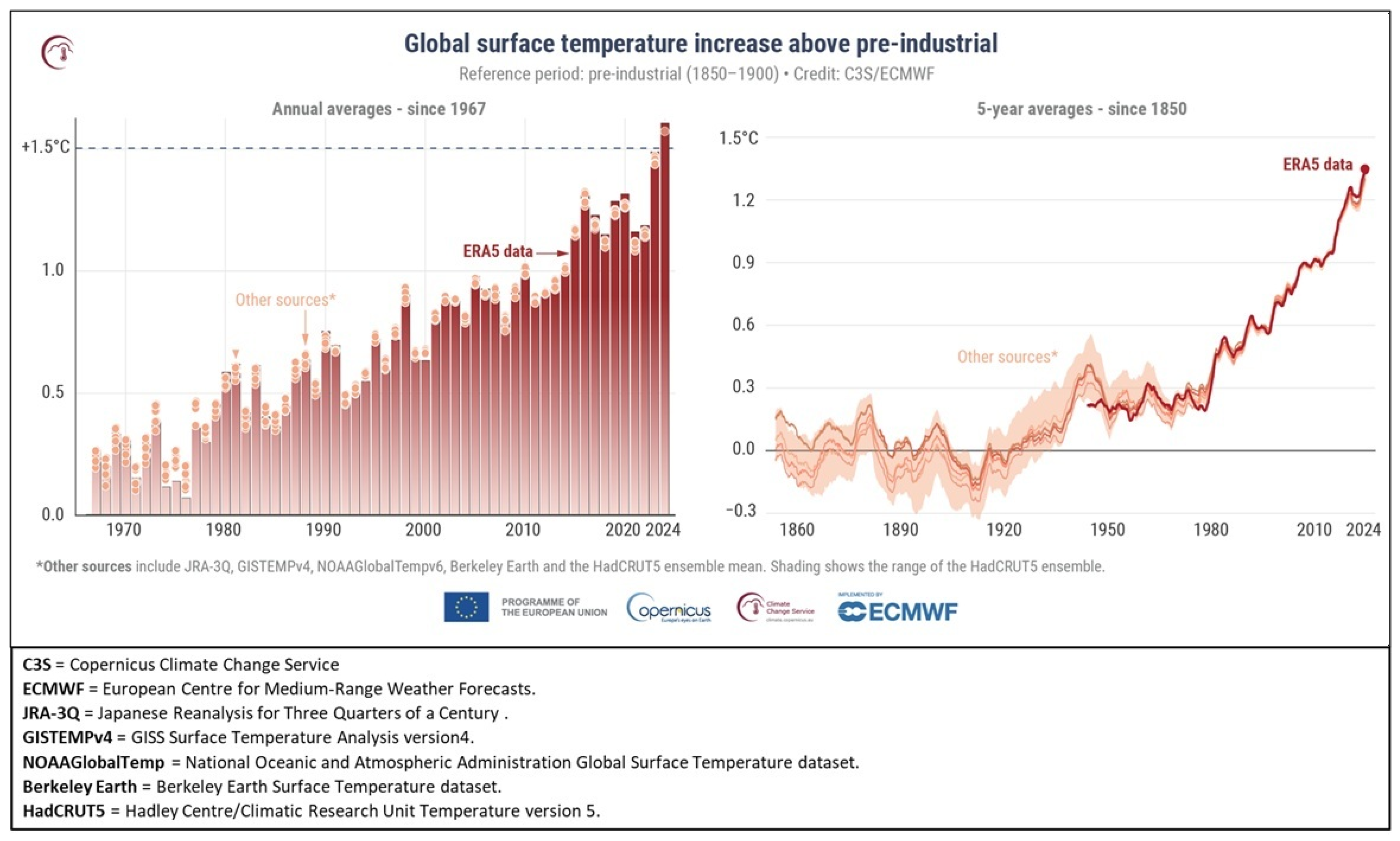
Record temperatures were observed across the world in 2024. In fact, the C3S, in its annual report Global Climate Highlights 2024 (Figure 7), reported that 2024 was the warmest year since scientific records began, i.e., since 1850 [109].
In Europe, temperatures are rising at twice the global average, increasingly threatening public health and causing preventable deaths. Without a significant reduction in greenhouse gas emissions, it appears unlikely that the global temperature increase will remain below 1.5 °C [110]. The IPCC Sixth Assessment Report (AR6) concluded that the 1.5 °C threshold could be exceeded in the early 2030s, about 10 years earlier than the midpoint of the range (2030–2052) assessed in the previous report (SR1.5) [111]. Without timely and effective climate action, billions will face negative health outcomes. Between 2003–2012 and 2013–2022, heat-related mortality in Europe increased by an average of 17.2 deaths per 100,000 people. Vulnerable populations, such as the elderly, pregnant women, newborns, individuals with chronic illnesses, urban dwellers, outdoor workers, and socioeconomically disadvantaged groups, are particularly at risk. Overall, heat vulnerability rose by 9% between 1990 and 2022, with Southern Europe seeing the highest increase (11%) and Northern Europe the lowest (around 5%) [112].
Climate models and forecast simulations are essential tools to anticipate how climate change could affect the distribution of vectors and associated infectious diseases. Guevara [113] emphasized that causal inference methods can help clarify links between climate variables and disease transmission. Due to climate change, many regions are expected to see amplified infectious disease risks, with shifts in both transmission dynamics and geographic reach. Kronen [114] analyzed future transmission risks for ZIKV and CHIKV in Europe under two climate scenarios: RCP4.5 (moderate emissions, ~2.4 °C warming by 2100) and RCP8.5 (high emissions, ~4.3 °C warming). Both scenarios predict increased transmission risk and geographic expansion. CHIKV risk will particularly rise in Spain, Portugal, the Mediterranean coast, and around the Black Sea. More broadly, large areas across Europe will become suitable for both ZIKV and CHIKV transmission by the end of the century.
Using mechanistic models, another study estimated the basic reproduction number (R0) and transmission season length for dengue, Zika, and chikungunya viruses, factoring in temperature, precipitation, mosquito density, and human population. Between 2013–2022, the risk of dengue epidemics in Europe rose by 55.94% compared to 1951–1960, with Southern Europe experiencing the greatest increase. The absolute risk of dengue epidemics caused by Ae. albopictus in northern Europe increased by 1.7%, while in western Europe it increased by 6.10%. Similar trends were noted for Zika and chikungunya. The dengue transmission season also increased by 4 additional months (mean 1.7, SE 0.2). Travel-related importation of dengue has surged: between 2009–2019, imported cases across Europe rose by 176.8% compared to 1995–2004. Northern Europe recorded the highest relative increase (194.17%), followed by Southern Europe (173.73%) [115,116].
van Daalen [110] citing data from Farooq [117] and Farooq [118], report that the risk of WNV epidemics has consistently increased in Europe from 1951 to 2022, largely due to climate change. Between 2013–2022, epidemic risk rose by 256% over 1951–1960 levels, with the highest increases in Eastern Europe (516%) and Southern Europe (203%).
van Daalen [110] used a threshold-based model incorporating precipitation, humidity, temperature, and land cover types (e.g., rice paddies, irrigated land, recreational areas) was also used to estimate months suitable for P. vivax malaria transmission, previously endemic in Europe. Western and Eastern Europe saw the highest increases in transmission suitability (0.34 and 0.22 months, respectively) between 1951–1960 and 2013–2022. Notably, suitability rose most in non-urban areas with moderate levels of social deprivation. At the national level, Liechtenstein, Slovenia, and Switzerland showed the largest increases.
Although climate models and forecast simulations are useful tools, it is important to emphasize that these projections are inherently scenario-based and subject to uncertainty. Differences in emission pathways, climate sensitivity, vector ecology assumptions, and socioeconomic conditions contribute to variability in projected outcomes. Moreover, inter-model comparisons indicate that estimates of both the magnitude and spatial distribution of disease risk may vary substantially depending on the modelling framework adopted, highlighting the presence of structural and parameter uncertainty across studies. Therefore, the results reported in this section should be interpreted as indicative projections of potential risk rather than deterministic forecasts of future disease occurrence. Beyond the increase in global average temperatures, precipitation, and relative humidity, other important factors must also be considered, such as socio-economic conditions, the migrations, and the growing urbanization of areas with often inadequate sanitation, which makes them particularly vulnerable.

Economic Implications

Healthcare spending related to vector-borne diseases already represents a growing economic concern for European health systems, particularly due to the rising incidence of West Nile virus, TBE, leishmaniasis, and the recent emergence of autochthonous dengue cases [119]. Climate change is expected to amplify this burden by increasing the frequency, duration, and geographic range of transmission, thereby generating additional direct and indirect costs. Direct costs include expenditures for diagnosis, treatment, hospitalization, surveillance, and vector control, while indirect costs arise from productivity losses, long-term neurological sequelae (e.g., after West Nile neuroinvasive disease), and reduced workforce participation in affected regions [120,121].
Although comprehensive economic estimates for the EU/EEA remain limited, available evidence indicates that outbreaks can impose substantial financial pressure. For example, West Nile virus epidemics in Southern and Eastern Europe have led to increased healthcare utilization, emergency vector-control interventions, and significant productivity losses [122]. Tick-borne encephalitis also generates considerable long-term costs due to chronic neurological impairment, particularly in Central and Eastern Europe [123]. Moreover, the expansion of Ae. albopictus has required several Member States to intensify surveillance and implement costly preventive measures to reduce the risk of dengue transmission [124].
Beyond the health sector, climate-sensitive vector-borne diseases may affect tourism, agriculture, and local economies, especially in Mediterranean regions where seasonal mobility and outdoor labor are essential economic drivers. Adaptation measures, such as strengthening early warning systems, improving vector surveillance, and upgrading public health infrastructure, will require sustained investments but are expected to reduce long-term economic losses [125,126]. In this context, addressing vector-borne diseases is not only a public health priority but also an economic necessity for the European Union, particularly in the face of accelerating climate change.

6. Integrated Strategies for the Control of Infectious Disease Vectors

Vector-borne diseases (VBDs) are a public health challenge worldwide, and their relevance for Europe is increasing due to the expansion of mosquitoes and climate-driven changes in vector ecology. Effective control requires integrated approaches combining environmental management, biological and chemical control, physical protection, surveillance, and community engagement [127].
Environmental management aims to alter habitats where vectors thrive. Draining wetlands and treating water can reduce mosquito breeding. Proper waste management, including sealed, accessible containers for recycling and composting, reduces breeding grounds. Regular waste collection, such as incineration, further mitigates risks. Raising public awareness about waste management is vital for preventing breeding and improving public health [127,128].
Insecticides remain a common method for controlling vector populations, targeting larvae, adults, or breeding environments, using chemicals like temephos, pyriproxyfen, permethrin, and deltamethrin. Physical measures, such as insecticide-treated nets, screens, and protective clothing, offer additional protection [129,130]. However, traditional methods alone may be insufficient, making biological control a key component. Introducing natural predators, such as fish that consume mosquito larvae, or using bacteria like Bacillus thuringiensis israelensis to target larvae without harming other species, are effective ecological solutions. Wolbachia-based approaches, although promising in reducing vector competence in laboratory and field trials elsewhere, are not authorized or implemented in Europe [42]. Genetic control techniques, including sterile insect methods and gene-editing approaches, are under development and have shown potential in reducing vector populations or limiting pathogen transmission [131,132]. However, these strategies remain experimental and are not currently applied in Europe. Surveillance and monitoring are crucial for gathering data on vector presence and spread, with entomological analysis and predictive models helping plan effective control measures. Integrated Vector Management (IVM) combines these strategies, reducing pesticide use while promoting environmentally friendly methods. The goal is to lower the risk of vector-borne diseases, protect public health, and reduce the economic and social impact of these diseases [133,134].
To support the implementation of IVM in Europe, several operational indicators can be used to guide surveillance and early response activities [135]. Entomological indicators commonly include Aedes mosquito surveillance metrics such as ovitrap indices, adult mosquito density, and larval positivity rates, which are widely applied in European monitoring programs to assess transmission risk [136]. Early warning systems often integrate climatic thresholds, including sustained increases in temperature and rainfall anomalies associated with enhanced vector development and viral replication potential [137]. Although exact thresholds may vary by region, periods of prolonged warm temperatures and increased precipitation have been consistently associated with elevated arboviral transmission risk [138]. In addition, effective outbreak preparedness relies on timely response mechanisms, with cross-border coordination and rapid implementation of control measures following early detection signals [139]. Environmental management indicators also play a key role and include reduction of stagnant water sites, improvement of waste management systems, and maintenance of drainage infrastructure to limit vector breeding habitats [140]. These indicators should be considered adaptable operational tools rather than fixed universal thresholds, reflecting ecological and epidemiological heterogeneity across European settings.

7. Health Policies and Climate Change

Addressing VBDs in the context of climate change requires coordinated action at global, regional, and local levels. The WHO has developed strategies based on IVM, combining vector surveillance with environmental policies. WHO’s support to Member States focuses on three key goals: raising awareness, promoting health through climate change mitigation, and strengthening health systems to address emerging risks. Effective water and sanitation management, along with improved health surveillance, are critical to protecting populations. Emerging technologies, such as satellite remote sensing, offer strong potential for early warning systems and rapid epidemic responses. Early warning systems can be further strengthened by integrating operational thresholds based on entomological, climatic, and environmental indicators, allowing for timelier and coordinated public health interventions across European countries. However, their success depends on community engagement and institutional response capacity, especially in low-resource settings. These systems must be supported by strong emergency response policies, with particular focus on vulnerable areas. Climate change is now widely recognized as a direct threat to public health. Increasing awareness of the climate-health link is essential for shaping policies and engaging the public. The 2015 Paris Agreement and subsequent COP meetings reaffirmed the goal of limiting global warming to below 2 °C, ideally 1.5 °C. This target indirectly supports efforts to reduce VBD risks by curbing temperature rises and their effects on vector habitats. In Europe, the European Green Deal aims to achieve climate neutrality by 2050 while protecting citizens’ health. The 2021 EU Climate Law mandates adaptation strategies to enhance resilience. The European Commission’s 2021 communication envisions a climate-resilient Europe by 2050 and launched the European Climate and Health Observatory. The 2022 Regulation on Cross-border Health Threats further strengthens EU coordination in responding to health emergencies, including those related to climate. Programs like EU4Health and agencies such as ECDC and HERA enhance preparedness and response capabilities. To reduce climate-driven health threats, global collaboration, stronger local capacities, and investment in climate mitigation are essential [141,142]. Timely, unified action is key to building a healthier, more sustainable future.

8. Conclusions

Climate change poses a growing threat to public health, with direct and indirect impacts on VBDs. Rising temperatures and changes in precipitation will favor the geographic expansion of VBDs, exacerbating health risks, especially for socio-economically disadvantaged populations. Poorer and more vulnerable areas will be the most affected, due to increased exposure to vectors and reduced access to adequate healthcare. Health facilities, especially in countries with limited resources, may be overwhelmed by the increase in cases of infectious diseases, highlighting the need to make health systems more resilient and prepared to respond to health emergencies, as highlighted by the COVID-19 pandemic. Furthermore, climate change may exacerbate migratory movements, with populations moving from more vulnerable areas to safer regions, but who may not be prepared to address increased health risks, including the spread of VBDs. To address these risks, adaptation and mitigation policies are crucial. Vector control strategies should include innovative techniques to counteract the growing resistance to traditional insecticides. Health infrastructures must be strengthened to respond rapidly to epidemics, through timely diagnosis, training of health workers and education of at-risk communities. In densely populated urban settings, it is essential to improve the management of water resources, waste and drainage systems to reduce vector proliferation. The fight against VBDs requires an integrated approach that combines public health, environmental sustainability and global climate policies. Scientific research continues to be a crucial element in developing innovative and sustainable solutions, which can ensure a future in which climate-related health risks are effectively mitigated and managed.

Author Contributions

Conceptualization: A.C. Methodology: A.C., V.R. and S.S. Investigation: A.C. Writing—Original Draft: A.C. Writing—Review & Editing: V.R. and S.S. Visualization: A.C., V.R. and S.S. Supervision: A.C. and V.R. All authors have read and agreed to the published version of the manuscript.

Funding

This research received no external funding.

Institutional Review Board Statement

Not applicable.

Informed Consent Statement

Not applicable.

Data Availability Statement

The datasets analyzed during the current study are publicly available from published scientific literature and official institutional repositories (e.g., WHO, Copernicus). The original sources and access links are provided in the references.

Conflicts of Interest

The authors declare no conflict of interest.

References

  1. Rocklöv, J.; Dubrow, R. Climate Change: An Enduring Challenge for Vector-Borne Disease Prevention and Control. Nat. Immunol. 2020, 21, 479–483. [Google Scholar] [CrossRef] [Scilit] [PubMed]
  2. Climate Change. Available online: https://www.who.int/news-room/fact-sheets/detail/climate-change-and-health (accessed on 28 May 2026).
  3. Hess, J.; Boodram, L.-L.G.; Paz, S.; Stewart Ibarra, A.M.; Wasserheit, J.N.; Lowe, R. Strengthening the Global Response to Climate Change and Infectious Disease Threats. BMJ 2020, 371, m3081. [Google Scholar] [CrossRef] [Scilit] [PubMed]
  4. Metcalf, C.J.E.; Walter, K.S.; Wesolowski, A.; Buckee, C.O.; Shevliakova, E.; Tatem, A.J.; Boos, W.R.; Weinberger, D.M.; Pitzer, V.E. Identifying Climate Drivers of Infectious Disease Dynamics: Recent Advances and Challenges Ahead. Proc. R. Soc. B Biol. Sci. 2017, 284, 20170901. [Google Scholar] [CrossRef] [Scilit] [PubMed]
  5. Semenza, J.C.; Lindgren, E.; Balkanyi, L.; Espinosa, L.; Almqvist, M.S.; Penttinen, P.; Rocklöv, J. Determinants and Drivers of Infectious Disease Threat Events in Europe. Emerg. Infect. Dis. 2016, 22, 581–589. [Google Scholar] [CrossRef] [Scilit] [PubMed]
  6. Medlock, J.M.; Leach, S.A. Effect of Climate Change on Vector-Borne Disease Risk in the UK. Lancet Infect. Dis. 2015, 15, 721–730. [Google Scholar] [CrossRef] [Scilit] [PubMed]
  7. Thomson, M.C.; Stanberry, L.R. Climate Change and Vectorborne Diseases. N. Engl. J. Med. 2022, 387, 1969–1978. [Google Scholar] [CrossRef] [Scilit] [PubMed]
  8. Gage, K.L.; Burkot, T.R.; Eisen, R.J.; Hayes, E.B. Climate and Vectorborne Diseases. Am. J. Prev. Med. 2008, 35, 436–450. [Google Scholar] [CrossRef] [Scilit] [PubMed]
  9. Ogden, N.H.; Lindsay, L.R. Effects of Climate and Climate Change on Vectors and Vector-Borne Diseases: Ticks Are Different. Trends Parasitol. 2016, 32, 646–656. [Google Scholar] [CrossRef] [Scilit] [PubMed]
  10. Semenza, J.C.; Suk, J.E. Vector-Borne Diseases and Climate Change: A European Perspective. FEMS Microbiol. Lett. 2018, 365, fnx244. [Google Scholar] [CrossRef] [Scilit] [PubMed]
  11. European State of the Climate 2023|Copernicus. Available online: https://climate.copernicus.eu/esotc/2023 (accessed on 28 May 2026).
  12. Europe Experiences Widespread Flooding and Severe Heatwaves in 2023. World Meteorological Organization. Available online: https://wmo.int/news/media-centre/europe-experiences-widespread-flooding-and-severe-heatwaves-2023 (accessed on 28 May 2026).
  13. Forging a Climate-Resilient Europe-the New EU Strategy on Adaptation to Climate Change|European Committee of the Regions. Available online: https://www.cor.europa.eu/en/our-work/opinions/cdr-1903-2021 (accessed on 28 May 2026).
  14. EU Adaptation Strategy-Climate Action-European Commission. Available online: https://climate.ec.europa.eu/eu-action/adaptation-and-resilience-climate-change/eu-adaptation-strategy_en (accessed on 28 May 2026).
  15. Chaves, L.F.; Friberg, M.D.; Pascual, M.; Calzada, J.E.; Luckhart, S.; Bergmann, L.R. Community-Serving Research Addressing Climate Change Impacts on Vector-Borne Diseases. Lancet Planet. Health 2024, 8, e334–e341. [Google Scholar] [CrossRef] [Scilit] [PubMed]
  16. Jibon, M.J.N.; Ruku, S.M.R.P.; Islam, A.R.M.T.; Khan, M.N.; Mallick, J.; Bari, A.B.M.M.; Senapathi, V. Impact of Climate Change on Vector-Borne Diseases: Exploring Hotspots, Recent Trends and Future Outlooks in Bangladesh. Acta Trop. 2024, 259, 107373. [Google Scholar] [CrossRef] [Scilit] [PubMed]
  17. Semenza, J.C.; Paz, S. Climate Change and Infectious Disease in Europe: Impact, Projection and Adaptation. Lancet Reg. Health Eur. 2021, 9, 100230. [Google Scholar] [CrossRef] [Scilit] [PubMed]
  18. Beugnet, F.; Chalvet-Monfray, K. Impact of Climate Change in the Epidemiology of Vector-Borne Diseases in Domestic Carnivores. Comp. Immunol. Microbiol. Infect. Dis. 2013, 36, 559–566. [Google Scholar] [CrossRef] [Scilit] [PubMed]
  19. Kamiya, T.; Greischar, M.A.; Wadhawan, K.; Gilbert, B.; Paaijmans, K.; Mideo, N. Temperature-Dependent Variation in the Extrinsic Incubation Period Elevates the Risk of Vector-Borne Disease Emergence. Epidemics 2020, 30, 100382. [Google Scholar] [CrossRef] [Scilit] [PubMed]
  20. Sternberg, E.D.; Thomas, M.B. Local Adaptation to Temperature and the Implications for Vector-Borne Diseases. Trends Parasitol. 2014, 30, 115–122. [Google Scholar] [CrossRef] [Scilit] [PubMed]
  21. Liu, Z.; Zhang, Q.; Li, L.; He, J.; Guo, J.; Wang, Z.; Huang, Y.; Xi, Z.; Yuan, F.; Li, Y.; et al. The Effect of Temperature on Dengue Virus Transmission by Aedes Mosquitoes. Front. Cell. Infect. Microbiol. 2023, 13, 1242173. [Google Scholar] [CrossRef] [Scilit] [PubMed]
  22. Caminade, C.; McIntyre, K.M.; Jones, A.E. Impact of Recent and Future Climate Change on Vector-borne Diseases. Ann. N. Y. Acad. Sci. 2019, 1436, 157–173. [Google Scholar] [CrossRef] [Scilit] [PubMed]
  23. de Souza, W.M.; Weaver, S.C. Effects of Climate Change and Human Activities on Vector-Borne Diseases. Nat. Rev. Microbiol. 2024, 22, 476–491. [Google Scholar] [CrossRef] [Scilit] [PubMed]
  24. Fleischmann, W.A.; Cao, L.C.; Nurjadi, D.; Velavan, T.P. Addressing the Rise of Autochthonous Vector-Borne Diseases in a Warming Europe. Int. J. Infect. Dis. 2024, 149, 107275. [Google Scholar] [CrossRef] [Scilit] [PubMed]
  25. Brown, J.J.; Pascual, M.; Wimberly, M.C.; Johnson, L.R.; Murdock, C.C. Humidity—The Overlooked Variable in the Thermal Biology of Mosquito-Borne Disease. Ecol. Lett. 2023, 26, 1029–1049. [Google Scholar] [CrossRef] [Scilit] [PubMed]
  26. Campbell-Lendrum, D.; Manga, L.; Bagayoko, M.; Sommerfeld, J. Climate Change and Vector-Borne Diseases: What Are the Implications for Public Health Research and Policy? Philos. Trans. R. Soc. B Biol. Sci. 2015, 370, 20130552. [Google Scholar] [CrossRef] [Scilit] [PubMed]
  27. Massoels, B.; Bottu, T.; Vanslembrouck, A.; Kramer, I.; Van Bortel, W. Systematic Literature Review on the Vector Status of Potential Vector Species of 36 Vector-Borne Pathogens. EFSA Support. Publ. 2023, 20, 8484E. [Google Scholar] [CrossRef] [Scilit]
  28. Vector-Borne Diseases. Available online: https://www.who.int/news-room/fact-sheets/detail/vector-borne-diseases (accessed on 28 May 2026).
  29. Disease Vectors. Available online: https://www.ecdc.europa.eu/en/disease-vectors (accessed on 28 May 2026).
  30. Van Wyk, H.; Eisenberg, J.N.S.; Brouwer, A.F. Long-Term Projections of the Impacts of Warming Temperatures on Zika and Dengue Risk in Four Brazilian Cities Using a Temperature-Dependent Basic Reproduction Number. PLoS Negl. Trop. Dis. 2023, 17, e0010839. [Google Scholar] [CrossRef] [Scilit] [PubMed]
  31. Madhav, M.; Blasdell, K.R.; Trewin, B.; Paradkar, P.N.; López-Denman, A.J. Culex-Transmitted Diseases: Mechanisms, Impact, and Future Control Strategies Using Wolbachia. Viruses 2024, 16, 1134. [Google Scholar] [CrossRef] [Scilit] [PubMed]
  32. Abela, B.; Akamboe, J.; Alves, F.; Brooker, S.J.; Ciceri-Reynolds, K.; Cole, J.; Desjardins, A.; Drakeley, C.; Ediriweera, D.S.; Ferguson, N.M.; et al. Climate Change, Malaria and Neglected Tropical Diseases: A Scoping Review. Trans. R. Soc. Trop. Med. Hyg. 2024, 118, 561–579. [Google Scholar] [CrossRef] [Scilit] [PubMed]
  33. Longbottom, J.; Caminade, C.; Gibson, H.S.; Weiss, D.J.; Torr, S.; Lord, J.S. Modelling the Impact of Climate Change on the Distribution and Abundance of Tsetse in Northern Zimbabwe. Parasites Vectors 2020, 13, 526. [Google Scholar] [CrossRef] [Scilit] [PubMed]
  34. World Malaria Report 2025. Available online: https://www.who.int/teams/global-malaria-programme/reports/world-malaria-report-2025 (accessed on 27 May 2026).
  35. Piperaki, E.T.; Daikos, G.L. Malaria in Europe: Emerging Threat or Minor Nuisance? Clin. Microbiol. Infect. 2016, 22, 487–493. [Google Scholar] [CrossRef] [Scilit] [PubMed]
  36. Annual Epidemiological Reports (AERs). Available online: https://www.ecdc.europa.eu/en/publications-data/monitoring/all-annual-epidemiological-reports (accessed on 28 May 2026).
  37. White, N.J. Determinants of Relapse Periodicity in Plasmodium Vivax Malaria. Malar. J. 2011, 10, 297. [Google Scholar] [CrossRef] [Scilit] [PubMed]
  38. Schaffner, F.; Thiéry, I.; Kaufmann, C.; Zettor, A.; Lengeler, C.; Mathis, A.; Bourgouin, C. Anopheles Plumbeus (Diptera: Culicidae) in Europe: A Mere Nuisance Mosquito or Potential Malaria Vector? Malar. J. 2012, 11, 393. [Google Scholar] [CrossRef] [Scilit] [PubMed]
  39. Yi, B.; Zhang, L.; Yin, J.; Zhou, S.; Xia, Z. 1-3-7 Surveillance and Response Approach in Malaria Elimination: China’s Practice and Global Adaptions. Malar. J. 2023, 22, 152. [Google Scholar] [CrossRef] [Scilit] [PubMed]
  40. Fact Sheet About Malaria. Available online: https://www.who.int/news-room/fact-sheets/detail/malaria (accessed on 28 May 2026).
  41. Disease Information About Malaria. Available online: https://www.ecdc.europa.eu/en/malaria/facts (accessed on 28 May 2026).
  42. Bhattacharyya, J.; Roelke, D.L. Wolbachia-Based Mosquito Control: Environmental Perspectives on Population Suppression and Replacement Strategies. Acta Trop. 2025, 262, 107517. [Google Scholar] [CrossRef] [Scilit] [PubMed]
  43. Datoo, M.S.; Dicko, A.; Tinto, H.; Ouédraogo, J.-B.; Hamaluba, M.; Olotu, A.; Beaumont, E.; Lopez, F.R.; Natama, H.M.; Weston, S.; et al. Safety and Efficacy of Malaria Vaccine Candidate R21/Matrix-M in African Children: A Multicentre, Double-Blind, Randomised, Phase 3 Trial. Lancet 2024, 403, 533–544. [Google Scholar] [CrossRef] [Scilit] [PubMed]
  44. Aedes aegypti—Current Known Distribution: August 2023. Available online: https://www.ecdc.europa.eu/en/publications-data/aedes-aegypti-current-known-distribution-august-2023 (accessed on 28 May 2026).
  45. Aedes albopictus—Current Known Distribution: August 2023. Available online: https://www.ecdc.europa.eu/en/publications-data/aedes-albopictus-current-known-distribution-august-2023 (accessed on 28 May 2026).
  46. Tippell, L.; Werner, D.; Kampen, H. Low Temperature Tolerance of Three Aedes albopictus Strains (Diptera: Culicidae) under Constant and Fluctuating Temperature Scenarios. Parasites Vectors 2020, 13, 587. [Google Scholar] [CrossRef] [Scilit] [PubMed]
  47. Merkenschlager, C.; Bangelesa, F.; Paeth, H.; Hertig, E. Evolution of the Recent Habitat Suitability Area of Aedes albopictus in the Extended Mediterranean Area Due to Land-Use and Climate Change. Sci. Total Environ. 2025, 974, 179202. [Google Scholar] [CrossRef] [Scilit] [PubMed]
  48. Brem, J.; Elankeswaran, B.; Erne, D.; Hedrich, N.; Lovey, T.; Marzetta, V.; Salvado, L.T.; Züger, C.; Schlagenhauf, P. Dengue “Homegrown” in Europe (2022 to 2023). New Microbes New Infect. 2024, 56, 101205. [Google Scholar] [CrossRef] [Scilit] [PubMed]
  49. Chikungunya, Dengue, and Zika in Metropolitan France. 2025 Report.|Santé Publique France. Available online: https://www.santepubliquefrance.fr/en/vector-borne-diseases/chikungunya/national-bulletin/chikungunya-dengue-and-zika-metropolitan-france-2025-report (accessed on 28 May 2026).
  50. EpiCentro. Febbre Dengue—News. Available online: https://www.epicentro.iss.it/febbre-dengue/aggiornamenti (accessed on 28 May 2026).
  51. EpiCentro. Arbovirosi—Riepilogo 2025. Available online: https://www.epicentro.iss.it/arbovirosi/dashboard-2025 (accessed on 28 May 2026).
  52. Lecadieu, A.; Teysseyre, L.; Larsen, K.; Vidal, C.; Caron, M.; Traversier, N.; Aujoulat, T.; Allyn, J.; Allou, N. Case Report: Transmission of Dengue Virus from a Deceased Donor to a Kidney Transplant Recipient Previously Infected by Dengue Virus. Am. J. Trop. Med. Hyg. 2021, 104, 2199–2201. [Google Scholar] [CrossRef] [Scilit] [PubMed]
  53. Biswal, S.; Reynales, H.; Saez-Llorens, X.; Lopez, P.; Borja-Tabora, C.; Kosalaraksa, P.; Sirivichayakul, C.; Watanaveeradej, V.; Rivera, L.; Espinoza, F.; et al. Efficacy of a Tetravalent Dengue Vaccine in Healthy Children and Adolescents. N. Engl. J. Med. 2019, 381, 2009–2019. [Google Scholar] [CrossRef] [Scilit] [PubMed]
  54. EpiCentro. Febbre dengue—EpiCentro—Istituto Superiore di Sanità. Available online: https://www.epicentro.iss.it/febbre-dengue/(v) (accessed on 28 May 2026).
  55. Schaefer, T.J.; Panda, P.K.; Wolford, R.W. Dengue Fever. In StatPearls; StatPearls Publishing: Treasure Island, FL, USA, 2025. [Google Scholar]
  56. Troncoso, A. Zika Threatens to Become a Huge Worldwide Pandemic. Asian Pac. J. Trop. Biomed. 2016, 6, 520–527. [Google Scholar] [CrossRef] [Scilit]
  57. Delrieu, M.; Martinet, J.-P.; O’Connor, O.; Viennet, E.; Menkes, C.; Burtet-Sarramegna, V.; Frentiu, F.D.; Dupont-Rouzeyrol, M. Temperature and Transmission of Chikungunya, Dengue, and Zika Viruses: A Systematic Review of Experimental Studies on Aedes aegypti and Aedes albopictus. Curr. Res. Parasitol. Vector-Borne Dis. 2023, 4, 100139. [Google Scholar] [CrossRef] [Scilit] [PubMed]
  58. Paul, S.; Patra, S.; Mondal, A.; Adhikari, G.S.; Ghosh, P.; Bysack, M.; Dey, R. The Role of Microglia in Zika Virus Pathogenesis: Possible Diagnostic and Therapeutic Strategies. Microbe 2024, 5, 100180. [Google Scholar] [CrossRef] [Scilit]
  59. EpiCentro. Virus Zika Aspetti Epidemiologici dal Mondo. Available online: https://www.epicentro.iss.it/zika/epidemiologia-mondo (accessed on 28 May 2026).
  60. Merakou, C.; Amendola, A.; Fortuna, C.; Marsili, G.; Fiorentini, C.; Argentini, C.; Benedetti, E.; Rezza, G.; Maraglino, F.; Del Manso, M.; et al. Diagnosis of Imported Dengue and Zika Virus Infections in Italy from November 2015 to November 2022: Laboratory Surveillance Data from a National Reference Laboratory. Viruses 2023, 16, 50. [Google Scholar] [CrossRef] [Scilit] [PubMed]
  61. EpiCentro. Chikungunya—Istituto Superiore di Sanità. Available online: https://www.epicentro.iss.it/chikungunya/ (accessed on 28 May 2026).
  62. Grabenstein, J.D.; Tomar, A.S. Global Geotemporal Distribution of Chikungunya Disease, 2011–2022. Travel Med. Infect. Dis. 2023, 54, 102603. [Google Scholar] [CrossRef] [Scilit] [PubMed]
  63. Riccardo, F.; Venturi, G.; Luca, M.D.; Manso, M.D.; Severini, F.; Andrianou, X.; Fortuna, C.; Remoli, M.E.; Benedetti, E.; Caporali, M.G.; et al. Secondary Autochthonous Outbreak of Chikungunya, Southern Italy, 2017. Emerg. Infect. Dis. J. 2019, 25, 2093–2095. [Google Scholar] [CrossRef] [Scilit] [PubMed]
  64. Tomasello, D.; Schlagenhauf, P. Chikungunya and Dengue Autochthonous Cases in Europe, 2007–2012. Travel Med. Infect. Dis. 2013, 11, 274–284. [Google Scholar] [CrossRef] [Scilit] [PubMed]
  65. Venturi, G.; Luca, M.D.; Fortuna, C.; Remoli, M.E.; Riccardo, F.; Severini, F.; Toma, L.; Manso, M.D.; Benedetti, E.; Caporali, M.G.; et al. Detection of a Chikungunya Outbreak in Central Italy, August to September 2017. Eurosurveillance 2017, 22, 17-00646. [Google Scholar] [CrossRef] [Scilit] [PubMed]
  66. Vairo, F.; Haider, N.; Kock, R.; Ntoumi, F.; Ippolito, G.; Zumla, A. Chikungunya: Epidemiology, Pathogenesis, Clinical Features, Management, and Prevention. Infect. Dis. Clin. N. Am. 2019, 33, 1003–1025. [Google Scholar] [CrossRef] [Scilit] [PubMed]
  67. Amraoui, F.; Failloux, A.-B. Chikungunya: An Unexpected Emergence in Europe. Curr. Opin. Virol. 2016, 21, 146–150. [Google Scholar] [CrossRef] [Scilit] [PubMed]
  68. Koch, R.T.; Erazo, D.; Folly, A.J.; Johnson, N.; Dellicour, S.; Grubaugh, N.D.; Vogels, C.B.F. Genomic Epidemiology of West Nile Virus in Europe. One Health 2024, 18, 100664. [Google Scholar] [CrossRef] [Scilit] [PubMed]
  69. Chancey, C.; Grinev, A.; Volkova, E.; Rios, M. The Global Ecology and Epidemiology of West Nile Virus. BioMed Res. Int. 2015, 2015, 376230. [Google Scholar] [CrossRef] [Scilit] [PubMed]
  70. Eybpoosh, S.; Fazlalipour, M.; Baniasadi, V.; Pouriayevali, M.H.; Sadeghi, F.; Vasmehjani, A.A.; Niya, M.H.K.; Hewson, R.; Salehi-Vaziri, M. Epidemiology of West Nile Virus in the Eastern Mediterranean Region: A Systematic Review. PLoS Negl. Trop. Dis. 2019, 13, e0007081. [Google Scholar] [CrossRef] [Scilit] [PubMed]
  71. Fros, J.J.; Geertsema, C.; Vogels, C.B.; Roosjen, P.P.; Failloux, A.-B.; Vlak, J.M.; Koenraadt, C.J.; Takken, W.; Pijlman, G.P. West Nile Virus: High Transmission Rate in North-Western European Mosquitoes Indicates Its Epidemic Potential and Warrants Increased Surveillance. PLoS Negl. Trop. Dis. 2015, 9, e0003956. [Google Scholar] [CrossRef] [Scilit] [PubMed]
  72. Epidemiological Update: West Nile Virus Transmission Season in Europe, 2023. Available online: https://www.ecdc.europa.eu/en/news-events/epidemiological-update-west-nile-virus-transmission-season-europe-2023-0 (accessed on 28 May 2026).
  73. EpiCentro. Febbre West Nile—News. Available online: https://www.epicentro.iss.it/westnile/aggiornamenti (accessed on 28 May 2026).
  74. West Nile Virus—Distribution of Human Infections, 2023. Available online: https://www.ecdc.europa.eu/en/publications-data/west-nile-virus-distribution-human-infections-2023 (accessed on 28 May 2026).
  75. EpiCentro. Febbre West Nile—Istituto Superiore di Sanità. Available online: https://www.epicentro.iss.it/westnile/ (accessed on 28 May 2026).
  76. Bellini, R.; Zeller, H.; Van Bortel, W. A Review of the Vector Management Methods to Prevent and Control Outbreaks of West Nile Virus Infection and the Challenge for Europe. Parasites Vectors 2014, 7, 323. [Google Scholar] [CrossRef] [Scilit] [PubMed]
  77. Yellow Fever. Available online: https://www.who.int/news-room/fact-sheets/detail/yellow-fever (accessed on 28 May 2026).
  78. Wint, W.; Jones, P.; Kraemer, M.; Alexander, N.; Schaffner, F. Past, Present and Future Distribution of the Yellow Fever Mosquito Aedes aegypti: The European Paradox. Sci. Total Environ. 2022, 847, 157566. [Google Scholar] [CrossRef] [Scilit] [PubMed]
  79. Domingo, C.; Fraissinet, J.; Ansah, P.O.; Kelly, C.; Bhat, N.; Sow, S.O.; Mejía, J.E. Long-Term Immunity against Yellow Fever in Children Vaccinated During Infancy: A Longitudinal Cohort Study. Lancet Infect. Dis. 2019, 19, 1363–1370. [Google Scholar] [CrossRef] [Scilit] [PubMed]
  80. Garske, T.; Van Kerkhove, M.D.; Yactayo, S.; Ronveaux, O.; Lewis, R.F.; Staples, J.E.; Perea, W.; Ferguson, N.M.; Yellow Fever Expert Committee. Yellow Fever in Africa: Estimating the Burden of Disease and Impact of Mass Vaccination from Outbreak and Serological Data. PLoS Med. 2014, 11, e1001638. [Google Scholar] [CrossRef] [Scilit] [PubMed]
  81. Antinori, S.; Galimberti, L.; Bianco, R.; Grande, R.; Galli, M.; Corbellino, M. Chagas Disease in Europe: A Review for the Internist in the Globalized World. Eur. J. Intern. Med. 2017, 43, 6–15. [Google Scholar] [CrossRef] [Scilit] [PubMed]
  82. Cucunubá, Z.M.; Gutiérrez-Romero, S.A.; Ramírez, J.-D.; Velásquez-Ortiz, N.; Ceccarelli, S.; Parra-Henao, G.; Henao-Martínez, A.F.; Rabinovich, J.; Basáñez, M.-G.; Nouvellet, P.; et al. The Epidemiology of Chagas Disease in the Americas. Lancet Reg. Health Am. 2024, 37, 100881. [Google Scholar] [CrossRef] [Scilit] [PubMed]
  83. Monge-Maillo, B.; López-Vélez, R. Challenges in the Management of Chagas Disease in Latin-American Migrants in Europe. Clin. Microbiol. Infect. 2017, 23, 290–295. [Google Scholar] [CrossRef] [Scilit] [PubMed]
  84. Ahmadi, S.; Hataminejad, M.; Rahimi Esboei, B.; Hosseini, S.A.; Fakhar, M. An Update on Leishmania Martiniquensis Infections: Transmission, Clinical Characteristics, and Treatment. Parasite Epidemiol. Control 2024, 27, e00386. [Google Scholar] [CrossRef] [Scilit] [PubMed]
  85. Berriatua, E.; Maia, C.; Conceição, C.; Özbel, Y.; Töz, S.; Baneth, G.; Pérez-Cutillas, P.; Ortuño, M.; Muñoz, C.; Jumakanova, Z.; et al. Leishmaniases in the European Union and Neighboring Countries. Emerg. Infect. Dis. 2021, 27, 1723–1727. [Google Scholar] [CrossRef] [Scilit] [PubMed]
  86. Van der Auwera, G.; Davidsson, L.; Buffet, P.; Ruf, M.-T.; Gramiccia, M.; Varani, S.; Chicharro, C.; Bart, A.; Harms, G.; Chiodini, P.L.; et al. Surveillance of Leishmaniasis Cases from 15 European Centres, 2014 to 2019: A Retrospective Analysis. Eurosurveillance 2022, 27, 2002028. [Google Scholar] [CrossRef] [Scilit] [PubMed]
  87. Todeschini, R.; Musti, M.A.; Pandolfi, P.; Troncatti, M.; Baldini, M.; Resi, D.; Natalini, S.; Bergamini, F.; Galletti, G.; Santi, A.; et al. Re-Emergence of Human Leishmaniasis in Northern Italy, 2004 to 2022: A Retrospective Analysis. Eurosurveillance 2024, 29, 2300190. [Google Scholar] [CrossRef] [Scilit] [PubMed]
  88. Carvalho, B.M.; Maia, C.; Courtenay, O.; Llabrés-Brustenga, A.; Lotto Batista, M.; Moirano, G.; van Daalen, K.R.; Semenza, J.C.; Lowe, R. A Climatic Suitability Indicator to Support Leishmania infantum Surveillance in Europe: A Modelling Study. Lancet Reg. Health Eur. 2024, 43, 100971. [Google Scholar] [CrossRef] [Scilit] [PubMed]
  89. Onchocerciasis (River Blindness). Available online: https://www.who.int/news-room/fact-sheets/detail/onchocerciasis (accessed on 28 May 2026).
  90. Brattig, N.W.; Cheke, R.A.; Garms, R. Onchocerciasis (River Blindness)—More than a Century of Research and Control. Acta Trop. 2021, 218, 105677. [Google Scholar] [CrossRef] [Scilit] [PubMed]
  91. Duerlund, L.S.; Nielsen, H.; Bodilsen, J. Current Epidemiology of Infectious Encephalitis: A Narrative Review. Clin. Microbiol. Infect. 2025, 31, 515–521. [Google Scholar] [CrossRef] [Scilit] [PubMed]
  92. Hollingshead, C.M.; Bermudez, R. Human African Trypanosomiasis (Sleeping Sickness). In StatPearls; StatPearls Publishing: Treasure Island, FL, USA, 2025. [Google Scholar]
  93. Migchelsen, S.J.; Büscher, P.; Hoepelman, A.I.M.; Schallig, H.D.F.H.; Adams, E.R. Human African Trypanosomiasis: A Review of Non-Endemic Cases in the Past 20 Years. Int. J. Infect. Dis. 2011, 15, e517–e524. [Google Scholar] [CrossRef] [Scilit] [PubMed]
  94. Rift Valley Fever. Available online: https://www.who.int/news-room/fact-sheets/detail/rift-valley-fever (accessed on 28 May 2026).
  95. Chevalier, V. Relevance of Rift Valley Fever to Public Health in the European Union. Clin. Microbiol. Infect. 2013, 19, 705–708. [Google Scholar] [CrossRef] [Scilit] [PubMed]
  96. CDC. Clinical Diagnosis, Treatment, and Prevention of Ross River Virus Disease. Ross River Virus. Available online: https://www.cdc.gov/ross-river-virus/hcp/clinical-diagnosis-treatment/index.html (accessed on 28 May 2026).
  97. Liu, X.; Tharmarajah, K.; Taylor, A. Ross River Virus Disease Clinical Presentation, Pathogenesis and Current Therapeutic Strategies. Microbes Infect. 2017, 19, 496–504. [Google Scholar] [CrossRef] [Scilit] [PubMed]
  98. Simonović, Z.; Janković, T. TBE in Slovenia. In Tick-Borne Encephalitis Book; Global Health Press: Singapore, 2021. [Google Scholar] [CrossRef] [Scilit]
  99. Angulo, F.J.; Halsby, K.; Davidson, A.; Ravikumar, S.; Pilz, A.; Stark, J.H.; Moïsi, J.C. Publicly Available Surveillance Data on Tick-Borne Encephalitis in Europe, 2023. Ticks Tick.-Borne Dis. 2024, 15, 102388. [Google Scholar] [CrossRef] [Scilit] [PubMed]
  100. Castagna, A.; Schiavon, S.; Mengozzi, G.; Baldovin, T.; Nozza, S.; Canetti, D.; Cocchio, S.; Montuori, E.A.; Iantomasi, R.; Baldo, V. Tick-Borne Encephalitis Seroprevalence in Northern Italy: A Cross-Sectional Study on a Randomly Selected Population. IJID Reg. 2024, 12, 100404. [Google Scholar] [CrossRef] [Scilit] [PubMed]
  101. Grgič-Vitek, M.; Klavs, I. High Burden of Tick-Borne Encephalitis in Slovenia—Challenge for Vaccination Policy. Vaccine 2011, 29, 5178–5183. [Google Scholar] [CrossRef] [Scilit] [PubMed]
  102. Kordež, J.; Angulo, F.J.; Zhang, P.; Davidson, A.; Edwards, J.; Harper, L.R.; Pilz, A.; Gould, H. Tick-Borne Encephalitis Vaccine Effectiveness and Impact in Slovenia, 2019–2024. Pathogens 2026, 15, 503. [Google Scholar] [CrossRef] [Scilit] [PubMed]
  103. Foley, J.E.; Nieto, N.C. Tularemia. Vet. Microbiol. 2010, 140, 332–338. [Google Scholar] [CrossRef] [Scilit] [PubMed]
  104. Maurin, M.; Gyuranecz, M. Tularaemia: Clinical Aspects in Europe. Lancet Infect. Dis. 2016, 16, 113–124. [Google Scholar] [CrossRef] [Scilit] [PubMed]
  105. Mead, P. Epidemiology of Lyme Disease. Infect. Dis. Clin. N. Am. 2022, 36, 495–521. [Google Scholar] [CrossRef] [Scilit] [PubMed]
  106. Trevisan, G.; Ruscio, M.; Cinco, M.; Nan, K.; Forgione, P.; Di Meo, N.; Tranchini, P.; Nacca, M.; Trincone, S.; Rimoldi, S.G.; et al. The History of Lyme Disease in Italy and Its Spread in the Italian Territory. Front. Pharmacol. 2023, 14, 1128142. [Google Scholar] [CrossRef] [Scilit] [PubMed]
  107. Dillard, R.L.; Juergens, A.L. Plague. In StatPearls; StatPearls Publishing: Treasure Island, FL, USA, 2025. [Google Scholar]
  108. Plague. Available online: https://www.who.int/news-room/fact-sheets/detail/plague (accessed on 28 May 2026).
  109. Copernicus. Copernicus: 2024 Is the First Year to Exceed 1.5 °C Above Pre-Industrial Level. Available online: https://climate.copernicus.eu/copernicus-2024-first-year-exceed-15degc-above-pre-industrial-level (accessed on 28 May 2026).
  110. van Daalen, K.R.; Tonne, C.; Semenza, J.C.; Rocklöv, J.; Markandya, A.; Dasandi, N.; Jankin, S.; Achebak, H.; Ballester, J.; Bechara, H.; et al. The 2024 Europe Report of the Lancet Countdown on Health and Climate Change: Unprecedented Warming Demands Unprecedented Action. Lancet Public Health 2024, 9, e495–e522. [Google Scholar] [CrossRef] [Scilit] [PubMed]
  111. Global Surface Temperature: Increase Above Pre-Industrial. Available online: https://datawrapper.dwcdn.net/MEptY/1/ (accessed on 28 May 2026).
  112. Diffenbaugh, N.S.; Barnes, E.A. Data-Driven Predictions of the Time Remaining until Critical Global Warming Thresholds Are Reached. Proc. Natl. Acad. Sci. USA 2023, 120, e2207183120. [Google Scholar] [CrossRef] [Scilit] [PubMed]
  113. Guevara, L.A.B.; Kramer, S.C.; Kurth, T.; de Cellès, M.D. How Causal Inference Concepts Can Guide Research into the Effects of Climate on Infectious Diseases. arXiv 2024, arXiv:2402.12507. [Google Scholar] [CrossRef] [Scilit]
  114. Kronen, J.; Leuchner, M.; Küpper, T. Zika and Chikungunya in Europe 2100—A GIS Based Model for Risk Estimation. Travel Med. Infect. Dis. 2024, 60, 102737. [Google Scholar] [CrossRef] [Scilit] [PubMed]
  115. Colón-González, F.J.; Sewe, M.O.; Tompkins, A.M.; Sjödin, H.; Casallas, A.; Rocklöv, J.; Caminade, C.; Lowe, R. Projecting the Risk of Mosquito-Borne Diseases in a Warmer and More Populated World: A Multi-Model, Multi-Scenario Intercomparison Modelling Study. Lancet Planet. Health 2021, 5, e404–e414. [Google Scholar] [CrossRef] [Scilit] [PubMed]
  116. DiSera, L.; Sjödin, H.; Rocklöv, J.; Tozan, Y.; Súdre, B.; Zeller, H.; Muñoz, Á.G. The Mosquito, the Virus, the Climate: An Unforeseen Réunion in 2018. GeoHealth 2020, 4, e2020GH000253. [Google Scholar] [CrossRef] [Scilit] [PubMed]
  117. Farooq, Z.; Rocklöv, J.; Wallin, J.; Abiri, N.; Sewe, M.O.; Sjödin, H.; Semenza, J.C. Artificial Intelligence to Predict West Nile Virus Outbreaks with Eco-Climatic Drivers. Lancet Reg. Health Eur. 2022, 17, 100370. [Google Scholar] [CrossRef] [Scilit] [PubMed]
  118. Farooq, Z.; Sjödin, H.; Semenza, J.C.; Tozan, Y.; Sewe, M.O.; Wallin, J.; Rocklöv, J. European Projections of West Nile Virus Transmission Under Climate Change Scenarios. One Health 2023, 16, 100509. [Google Scholar] [CrossRef] [Scilit] [PubMed]
  119. Charnley, G.E.C.; Alcayna, T.; Almuedo-Riera, A.; Antoniou, C.; Badolo, A.; Bartumeus, F.; Boodram, L.-L.; Bueno-Marí, R.; Codeço, C.; Codeço Coelho, F.; et al. Strengthening Resilience to Emerging Vector-Borne Diseases in Europe: Lessons Learnt from Countries Facing Endemic Transmission. Lancet Reg. Health Eur. 2025, 53, 101271. [Google Scholar] [CrossRef] [Scilit] [PubMed]
  120. Neira, M.; Erguler, K.; Ahmady-Birgani, H.; AL-Hmoud, N.D.; Fears, R.; Gogos, C.; Hobbhahn, N.; Koliou, M.; Kostrikis, L.G.; Lelieveld, J.; et al. Climate Change and Human Health in the Eastern Mediterranean and Middle East: Literature Review, Research Priorities and Policy Suggestions. Environ. Res. 2023, 216, 114537. [Google Scholar] [CrossRef] [Scilit] [PubMed]
  121. Yilmaz, S.; Tatliparmak, A.C.; Erbil, B.; Akarca, F.K.; Karakayali, O.; Bozkurt, S.; Dursun, R.; Bicakci, N.; Celikmen, M.F.; Yilmaz, S.; et al. A Holistic Approach to Climate Change in the Emergency Department: Direct Impact of Environmental Factors on Patients. Turk. J. Emerg. Med. 2026, 26, 1–18. [Google Scholar] [CrossRef] [Scilit] [PubMed]
  122. Cholvi, M.; Moretti, R.; Osório, H.C.; L’Ambert, G.; Seixas, G.; Kavran, M.; Michaelakis, A.; Stephanou, A.S.; Antoniou, C.P.; Martinou, A.F.; et al. Present and Future of Mosquito-Borne Disease Control in Europe with a Specific Focus on the Mediterranean. Insects 2026, 17, 254. [Google Scholar] [CrossRef] [Scilit] [PubMed]
  123. Slížek, M.; Chovanec, L.; Pražák, V.; Chrdle, A.; Pohludková, K.; Petroušová, L.; Bolchová, J.; Šram, K.; Sečník, J.; Džupová, O.; et al. Complications and Long-Term Sequelae of Tick-Borne Encephalitis: Association with Age and Other Predictors—A Multicenter Observational Study. Ticks Tick.-Borne Dis. 2026, 17, 102624. [Google Scholar] [CrossRef] [Scilit] [PubMed]
  124. Roiz, D.; Pontifes, P.A.; Jourdain, F.; Diagne, C.; Leroy, B.; Vaissière, A.-C.; Tolsá-García, M.J.; Salles, J.-M.; Simard, F.; Courchamp, F. The Rising Global Economic Costs of Invasive Aedes Mosquitoes and Aedes-Borne Diseases. Sci. Total Environ. 2024, 933, 173054. [Google Scholar] [CrossRef] [Scilit] [PubMed]
  125. Abbasi, E. The Impact of Climate Change on Travel-Related Vector-Borne Diseases: A Case Study on Dengue Virus Transmission. Travel Med. Infect. Dis. 2025, 65, 102841. [Google Scholar] [CrossRef] [Scilit] [PubMed]
  126. Negev, M.; Paz, S.; Clermont, A.; Pri-Or, N.G.; Shalom, U.; Yeger, T.; Green, M.S. Impacts of Climate Change on Vector Borne Diseases in the Mediterranean Basin—Implications for Preparedness and Adaptation Policy. Int. J. Environ. Res. Public Health 2015, 12, 6745–6770. [Google Scholar] [CrossRef] [Scilit] [PubMed]
  127. Wilson, A.L.; Courtenay, O.; Kelly-Hope, L.A.; Scott, T.W.; Takken, W.; Torr, S.J.; Lindsay, S.W. The Importance of Vector Control for the Control and Elimination of Vector-Borne Diseases. PLoS Negl. Trop. Dis. 2020, 14, e0007831. [Google Scholar] [CrossRef] [Scilit] [PubMed]
  128. Tortosa-La Osa, S.; Martín-Ruiz, E.; Galán-Relaño, Á.; de Labry-Lima, A.O. Effectiveness of Environmental Interventions to Reduce Entomological Indices of Dengue, Zika, and Chikungunya Vector. Acta Trop. 2022, 233, 106523. [Google Scholar] [CrossRef] [Scilit] [PubMed]
  129. Becker, N.; Petrić, D.; Zgomba, M.; Boase, C.; Madon, M.B.; Dahl, C.; Kaiser, A. (Eds.) Physical Control. In Mosquitoes: Identification, Ecology and Control; Springer International Publishing: Cham, Switzerland, 2020; pp. 513–518. [Google Scholar] [CrossRef] [Scilit]
  130. Meier, C.J.; Rouhier, M.F.; Hillyer, J.F. Chemical Control of Mosquitoes and the Pesticide Treadmill: A Case for Photosensitive Insecticides as Larvicides. Insects 2022, 13, 1093. [Google Scholar] [CrossRef] [Scilit] [PubMed]
  131. Collier, T.C.; Lee, Y.; Mathias, D.K.; López Del Amo, V. CRISPR-Cas9 and Cas12a Target Site Richness Reflects Genomic Diversity in Natural Populations of Anopheles gambiae and Aedes aegypti Mosquitoes. BMC Genom. 2024, 25, 700. [Google Scholar] [CrossRef] [Scilit] [PubMed]
  132. Gantz, V.M.; Jasinskiene, N.; Tatarenkova, O.; Fazekas, A.; Macias, V.M.; Bier, E.; James, A.A. Highly Efficient Cas9-Mediated Gene Drive for Population Modification of the Malaria Vector Mosquito Anopheles Stephensi. Proc. Natl. Acad. Sci. USA 2015, 112, E6736–E6743. [Google Scholar] [CrossRef] [Scilit] [PubMed]
  133. Mattia, C.; Federica, M.; Fabrizio, M. New Incursions of West Nile Virus Lineage 2 in Italy in 2013: The Value of the Entomological Surveillance as Early Warning System. Vet. Ital. 2013, 49, 315–319. [Google Scholar] [CrossRef] [Scilit] [PubMed]
  134. Wu, Y.; Ling, F.; Hou, J.; Guo, S.; Wang, J.; Gong, Z. Will Integrated Surveillance Systems for Vectors and Vector-Borne Diseases Be the Future of Controlling Vector-Borne Diseases? A Practical Example from China. Epidemiol. Infect. 2016, 144, 1895–1903. [Google Scholar] [CrossRef] [Scilit] [PubMed]
  135. World Health Organization. Monitoring & Evaluation Indicators for Integrated Vector Management; World Health Organization: Geneva, Switzerland, 2012. [Google Scholar]
  136. Liu, Q.-M.; Gong, Z.-Y.; Wang, Z. A Review of the Surveillance Techniques for Aedes albopictus. Am. J. Trop. Med. Hyg. 2023, 108, 245–251. [Google Scholar] [CrossRef] [Scilit] [PubMed]
  137. Liu-Helmersson, J.; Stenlund, H.; Wilder-Smith, A.; Rocklöv, J. Vectorial Capacity of Aedes aegypti: Effects of Temperature and Implications for Global Dengue Epidemic Potential. PLoS ONE 2014, 9, e89783. [Google Scholar] [CrossRef] [Scilit] [PubMed]
  138. Baker, R.E.; Stamper, A.R.; Burrows, H.A.; Spacey, O.G.; Chung, M.V.; Rice, B.L.; Yang, W.; Wagner, C.E.; Metcalf, C.J.E. Climate Change and Infectious Diseases. Nat. Med. 2026, 32, 1634–1645. [Google Scholar] [CrossRef] [Scilit] [PubMed]
  139. Zucs, P.; Beauté, J.; Palm, D.; Spiteri, G. Focus, Vigilance, Resilience: Towards Stronger Infectious Disease Surveillance, Threat Detection and Response in the EU/EEA. Eurosurveillance 2024, 29, 2400066. [Google Scholar] [CrossRef] [Scilit] [PubMed]
  140. Mahmud, M.; Mutalip, H.; Lodz, N.A.; Muhammad, E.N.; Yoep, N.; Hasim, H.; Abdul Rahim, F.A.; Aik, J.; Rajarethinam, J.; Muhamad, N. The Application of Environmental Management Methods in Combating Dengue: A Systematic Review. Int. J. Environ. Health Res. 2022, 33, 1148–1167. [Google Scholar] [CrossRef] [Scilit] [PubMed]
  141. EU Policy Framework. Available online: https://climate-adapt.eea.europa.eu/en/observatory/policy/european-policy/eu-policy-framework (accessed on 28 May 2026).
  142. Vineis, P.; Romanello, M.; Michelozzi, P.; Martuzzi, M. Health Co-Benefits of Climate Change Action in Italy. Lancet Planet. Health 2022, 6, e293–e294. [Google Scholar] [CrossRef] [Scilit] [PubMed]
Figure 1. Thermal anomalies on the surface of the landmasses in Europe ©Copernicus/WMO. Source: https://wmo.int/news/media-centre/europe-experiences-widespread-flooding-and-severe-heatwaves-2023 (accessed on 19 January 2026) [12].
Ijem 01 00010 g001
Figure 2. European sea surface temperatures in 2023 ©Copernicus/WMO. Source: https://climate.copernicus.eu/esotc/2023/sea-surface-temperature (accessed on 19 January 2026) [12].
Ijem 01 00010 g002
Figure 3. Distribution of Ae. aegypti in Europe, status August 2023. Source: [44] https://www.ecdc.europa.eu/en/publications-data/aedes-aegypti-current-known-distribution-august-2023 (accessed on 19 January 2026).
Ijem 01 00010 g003
Figure 4. Distribution of Ae. albopictus in Europe, status August 2023. Source: https://www.ecdc.europa.eu/en/publications-data/aedes-albopictus-current-known-distribution-august-2023 (accessed on 19 January 2026) [45].
Ijem 01 00010 g004
Figure 5. West Nile virus human infections, 2023 season. Source: [74] https://www.ecdc.europa.eu/sites/default/files/images/WNF-Human-2023-season.png (accessed on 19 January 2026).
Ijem 01 00010 g005
Figure 6. West Nile virus animal infections, 2023 season. Source: [74] https://www.ecdc.europa.eu/sites/default/files/images/WNF-Animal-2023-season.png (accessed on 19 January 2026).
Ijem 01 00010 g006
Figure 7. Global surface air temperature increases above the 1850–1900 pre-industrial reference period. Credit: C3S/ECMWF. Source: [109] https://climate.copernicus.eu/sites/default/files/2025-01/GCH2024_PR_Fig1_timeseries_annual_global_temperature_anomalies_ref1850-1900.png (accessed on 19 January 2026).
Ijem 01 00010 g007
Table 1. Vector-borne diseases of greatest global and European public health relevance (modified by [1,8]).
DiseasePathogenPrimary Vector(s)Relevant Climatic FactorsEffects of Climatic Variability or Climate ChangeReferences
MalariaPlasmodium parasite (Plasmodium vivax,
P. falciparum)
Anopheles mosquitoTemperature, rainfall, humidity,
El Niño–related effects, sea
surface temperatures
Disease distribution; pathogen development in vector;
development, reproduction, activity, distribution,
and abundance of vectors; transmission patterns
and intensity; outbreak occurrence
[1,8]
DengueFlavivirusAe. aegypti and Ae. albopictus mosquitoesTemperature, precipitationOutbreaks, mosquito breeding, abundance,
transmission intensity (extrinsic incubation period)
[1,8]
Yellow feverFlavivirusAe. aegypti mosquitoesTemperature, precipitationOutbreaks, incidence; distribution, abundance, and
breeding of mosquitoes, transmission intensity
(extrinsic incubation period)
[1,8]
ZikaFlavivirusAe. aegypti and Ae. albopictus mosquitoesTemperature, precipitationOutbreaks, incidence; distribution, abundance, and
breeding of mosquitoes, transmission intensity
(extrinsic incubation period)
[1,30]
ChikungunyaAlphavirusAe. aegypti and Ae. albopictus mosquitoesTemperature, precipitationOutbreaks; mosquito breeding and abundance,
transmission intensity (extrinsic incubation period)
[1,8]
Chagas diseaseTrypanosoma cruzi parasiteTriatomine bugTemperature, precipitation,
humidity, severe weather
event
Vector distribution, increased infestation of houses by
vector
[1,8]
LeishmaniasisLeishmania parasite (Leishmania spp.)Sand flyTemperature, precipitation, El
Niño–related effects
Disease incidence and outbreak occurrence;
abundance, behavior, and distribution of vectors
[1,8]
OnchocerciasisOnchocerca volvulus nematodeSimulium (black fly)TemperatureTransmission intensity[1,8]
Japanese encephalitisFlavivirusCulex mosquitoesTemperature, precipitationDisease incidence and outbreak occurrence;
abundance, behavior, and distribution of vectors
[1,31]
African trypanosomiasisTrypanosoma brucei parasiteGlossina (tsetse fly)Temperature, precipitationAbundance, behavior, and distribution of vectors[1,32,33]
Rift Valley feverRift Valley Fever virusMosquitoesPrecipitation, sea surface
temperatures
Outbreaks; vector breeding and abundance,
transmission intensity (extrinsic incubation period)
[8]
Ross River feverRoss River
virus
MosquitoesTemperature, precipitation, sea
surface temperatures
Outbreaks, vector breeding and abundance,
transmission intensity (extrinsic incubation period)
[8]
Tick-borne encephalitisFlavivirusIxodes ticksTemperature, precipitation,
humidity
Vector distribution, phenology of host-seeking by
vector
[1,8]
West Nile feverFlavivirusCulex mosquitoesTemperature, precipitationTransmission rates, pathogen development in vector,
distribution of disease and vector
[1,8]
TularemiaFrancisella tularensisTicksTemperature, precipitationCase frequency and onset[8]
Lyme diseaseBorrelia spirocheteIxodes ticksTemperature, precipitation,
humidity
Frequency of cases, phenology of host-seeking by
vector, vector distribution
[1,8]
PlagueYersinia pestisFleasTemperature, precipitation,
humidity, El Niño–related
events
Development and maintenance of pathogen in vector; survival and reproduction of vectors and hosts; occurrences of historical pandemics and regional outbreaks, distribution of disease[8]
Disclaimer/Publisher’s Note: The statements, opinions and data contained in all publications are solely those of the individual author(s) and contributor(s) and not of MDPI and/or the editor(s). MDPI and/or the editor(s) disclaim responsibility for any injury to people or property resulting from any ideas, methods, instructions or products referred to in the content.