Article

Development of a Screening Measure to Identify Breast Appearance Dissatisfaction in Women

1
Department of Psychology, University of Central Florida, Orlando, FL 32816, USA
2
College of Nursing, University of Central Florida, Orlando, FL 32816, USA
*
Author to whom correspondence should be addressed.
J. Aesthetic Med. 2025, 1(2), 7; https://doi.org/10.3390/jaestheticmed1020007
Submission received: 21 August 2025 / Revised: 20 September 2025 / Accepted: 22 October 2025 / Published: 24 October 2025

Abstract

Body image dissatisfaction, particularly related to breast appearance, plays an important role in cosmetic breast surgery (CBS) decisions and psychological wellbeing. However, existing measures are often lengthy, overlook healthy women considering CBS, and fail to adequately address the nipple–areola complex (NAC), a critical component of breast satisfaction. This study introduces the 12-item Breast Appearance Concerns Scale (BACS), a brief screening tool developed to address existing gaps and to document breast-specific body image concerns among women considering CBS. Data were collected from a diverse sample of 589 young adult women who completed the BACS along with measures of related constructs such as self-esteem and anxiety. Exploratory and confirmatory factor analyses supported a two-subscale structure: NAC Satisfaction and General Breast Satisfaction. The BACS total score demonstrated strong internal consistency (α = 0.785) and test–retest reliability (r = 0.741). Predictive validity analyses revealed that the General Breast Satisfaction subscale effectively distinguished women who had considered CBS from those who had not (classification accuracy = 72.1%). Receiver Operating Characteristic (ROC) analysis was conducted with the General Breast Satisfaction subscale to establish a preliminary cutoff score. This cutoff provides initial support for use of this subscale as a screening tool to help classify individuals based on their consideration of CBS. Although clinically important, the NAC subscale is still in an early stage of development and requires additional research before cutoff scores can be established to inform surgical decision-making and evaluate patient-reported satisfaction outcomes. Both subscales require further investigation in older populations and clinical settings to support their use as screening tools. These findings position the BACS as a promising screening tool for assessing breast-specific body image concerns, particularly general breast satisfaction, with potential applications in clinical, pre-surgical settings.

1. Introduction

Quantifying breast-specific body image concerns through brief, reliable screening tools is essential for understanding the motivations and outcomes associated with cosmetic breast surgery (CBS). In this context, body image plays a central role in decision-making. Body image dissatisfaction is characterized by a persistent negative perception of one’s body size, shape, or appearance. It often results from a perceived discrepancy between an individual’s actual physical appearance and their idealized self-image [1,2]. Many individuals pursue cosmetic surgery interventions to reduce this discrepancy, with the aim to better align their physical self and their idealized image.
Prior research has demonstrated that this perceived misalignment can lead to significant psychological distress, including reduced emotional wellbeing and impaired quality of life [3,4]. The influence of body image on psychosocial functioning is well-documented, particularly in relation to constructs such as self-esteem, appearance investment, anxiety, and depression. For instance, body dissatisfaction and low self-esteem have consistently been linked to increased interest in elective CBS, especially breast augmentation [5,6]. Instruments like the Appearance Schemas Inventory–Revised (ASI–R) [7] have demonstrated associations between appearance investment and negative psychological outcomes such as anxiety, social anxiety, and depression across a range of populations, including women with breast cancer, transgender individuals, and people with limb amputations [8,9,10,11].
Specific concerns about breast appearance have been linked to lower self-esteem and greater depressive symptoms, although evidence for their association with anxiety has been mixed [9,12]. In oncological breast reconstruction populations specifically, higher appearance investment has been associated with greater breast appearance dissatisfaction [13], underscoring the complexity of this construct in surgically altered bodies. Given these multidimensional relationships, there is a clear need for psychometrically sound instruments that can rapidly assess breast-specific appearance concerns, particularly in otherwise healthy women considering CBS. Such tools are not only valuable for identifying motivational factors and guiding pre-surgical counseling, but they are also critical for documenting the patient’s presurgical goals and desires as a reference point for evaluating postoperative outcomes. Existing measures are often lengthy and not tailored to the unique aesthetic features of the breast, including the nipple–areola complex (NAC). A brief, targeted screening questionnaire can fill this gap to support the patient-centered delivery of cosmetic care, enhance patient–provider communication, and contribute to better long-term psychosocial outcomes [13,14].

1.1. Current Measures and Their Limitations

In evaluating breast-specific body image concerns, several existing instruments provide valuable insights, but exhibit limitations, particularly in the context of CBS. Widely used measures, such as the Body Image after Breast Cancer Questionnaire (BIBCQ) and the BREAST-Q, were primarily designed for specific patient populations [15,16] and to assess patient-reported outcomes, as they are often used post-operatively [17,18]. Their length can limit feasibility in both research and clinical screening settings, particularly among otherwise healthy women. Additionally, the English versions of these instruments have not undergone comprehensive psychometric validation, including both exploratory and confirmatory factor analyses [19,20], which raises questions about their structural validity across broader populations.
These tools do not adequately assess aesthetic features such as the NAC, which has been emphasized throughout the literature as a critical component of breast appearance satisfaction [21,22,23]. For example, the BIBCQ includes only a single item referencing NAC satisfaction, while the BREAST-Q addresses the NAC exclusively in the post-operative reconstruction version of the scale. Most existing research has therefore focused on the NAC in the context of reconstructive surgery and post-surgical complications [24,25]. This focus has overlooked the potential significance of NAC-related concerns among otherwise healthy women who may be considering CBS for aesthetic reasons.
Thus, current measures are limited by their clinical specificity, lack of comprehensive psychometric validation, excessive length, and narrow focus on patient populations. They fall short in capturing the concerns of healthy women who may be contemplating CBS and do not adequately reflect the full spectrum of breast-specific appearance concerns. Given these limitations, there is a critical need for a brief, validated screening tool tailored to the unique needs of women considering elective CBS. Such a measure would enhance clinical understanding of patient motivations, support informed surgical decision-making, and provide a standardized means of documenting the presurgical psychological state.

1.2. The Current Study

Given the limitations of existing measures in accurately assessing breast-specific body image concerns, the current study introduces the Breast Appearance Concerns Scale (BACS), a brief, psychometrically sound screening tool developed to fill this gap. This research aims to rigorously evaluate the psychometric properties of the BACS to ensure it functions as a focused, valid, and reliable instrument for assessing breast appearance concerns in otherwise healthy women.
Importantly, the BACS incorporates three specific items addressing satisfaction with the NAC, a critical yet often overlooked element of breast aesthetics in non-clinical populations. Previous research has documented the relevance of the NAC in reconstructive and post-surgical settings, particularly in studies of 3D areola pigmentation, nipple reconstruction, and prosthetic approaches, yet its significance for healthy women considering CBS remains underexplored. By including NAC-focused items, the BACS seeks to capture a more comprehensive picture of breast-specific body image concerns in this population.
Taken together, this study aims to develop and validate a brief psychometric screening instrument to assess breast-specific body image concerns, including satisfaction with the NAC, in a healthy female population, and to explore its utility in identifying individuals considering CBS.

1.3. The Breast Appearance Concerns Scale (BACS)

An initial item pool for the BACS was generated through a thorough review of the literature and with consideration for our previous work on breast reconstruction [21,26]. We employed exploratory and confirmatory factor analyses to investigate the underlying structure of the newly developed measure. To evaluate the psychometric integrity of the scale, we assessed internal consistency, test–retest reliability, predictive validity, and construct validity. Construct validity was examined through associations with related constructs known to influence body image, including appearance investment, self-esteem, anxiety, and depression.
To further assess clinical utility, we used discriminant analysis to compare the predictive validity of the BACS against established measures such as the Rosenberg Self-Esteem Scale (RSE) [27] and the ASI–R [7,28]. This approach allowed us to determine whether the BACS could effectively distinguish between women who have considered CBS and those who have not, thereby identifying its potential application as a screening instrument in both research and clinical settings. To support its use as a screening tool, we conducted receiver operating characteristic (ROC) analysis to identify a clinically meaningful cutoff score and allow for classification of individuals based on consideration of CBS.

2. Materials and Methods

2.1. Study Design and Participants

The study was conducted at a large public southeastern university with English-speaking female undergraduates enrolled in introductory psychology courses. Participation in research is required for most programs at the university, ensuring a diverse range of majors and backgrounds in the participant pool. Initially, 990 students attempted the survey, and after data cleaning, 589 participant responses remained at baseline and 220 at follow-up. The study protocol was approved by the university’s institutional review board prior to data collection (STUDY00004026, MOD00002793). All data were securely stored in Qualtrics, a password-protected, encrypted survey platform compliant with university IRB data protection standards. Mean age of participants was 20.07 years (SD = 4.36), with ages ranging from 18 to 58 years. Racial and ethnic backgrounds reported were as follows: 55.5% Caucasian or White, 23.4% Latina or Hispanic, 8.8% Asian, 5.9% African American or Black, and 6.1% multiracial. Complete demographic characteristics are presented in Table 1.

2.2. Procedure

2.2.1. Analysis Overview

The total dataset of 589 participants was randomly split into two subsamples (group 1, n = 294; group 2, n = 295) to execute split-sample validation that would allow for replication of the initial EFA on an independent dataset. A second wave of data collection produced 220 responses from participants who completed the survey at time 1 an average of 26 days later. This allowed for test–retest reliability analyses to be conducted. The two subsamples were compared on demographic variables of age and race to ensure no significant differences existed between groups. Chi-square analyses revealed a successful randomized split in terms of age, race/ethnicity, and education level. All descriptive statistics and reliability analyses were conducted using SPSS v. 28.0.

2.2.2. Statistical Methods

The primary statistical analytic procedures of factor analyses were conducted using Mplus 8.8 [29]. An oblique (geomin) rotation was performed on subsample 1 (n = 294) to determine the best-fitting factor model. The oblique rotation runs under the assumption that factors are correlated. Eigenvalues, scree plots, and overall model fit were observed. The specified number of factors was 6 and eigenvalues greater than 1.0 were extracted. Factor models were assessed based on the following criteria: Root Mean Square Error of Approximation (RMSEA) ≤ 0.06, Comparative Fit Index (CFI) ≥ 0.95, Tucker–Lewis Index (TLI) ≥ 0.95, and Standardized Root Mean Square Residual (SRMR) ≤ 0.04 [30]. Items were removed after consideration for factor loadings, item content, and residuals, following approaches used in prior measure development studies.
CFA was performed on subsample 2 (n = 295) to replicate the model established through EFA. CFA was conducted using Mplus 8.8 [29]. Model fit was evaluated based on Hu and Bentler criteria for RMSEA, CFI, TLI, and SRMR indices [30]. The final model was chosen based on statistical criteria and theoretical soundness, ensuring that the factor structure exhibited good fit indices and aligned with conceptual framework.
Once a stable factor structure was established, SPSS v. 28.0. was used to evaluate reliability and validity. Internal consistency was determined using Cronbach’s alpha coefficients for the full scale and individual subscales, with values at or above 0.70 indicating adequate reliability. To assess the scale’s test–retest reliability, the original survey was readministered to participants approximately 30 days following initial survey completion. Individual factor scores and composite scores were then correlated at timepoints 1 and 2.
Convergent and divergent validity were assessed by examining correlations with other related and established measures of body image distress, including the ASI-R and the RSE. A series of discriminant analyses were then conducted to further explore construct validity. A singular item probing participants’ consideration of cosmetic breast augmentation, lift, or reduction was employed as a grouping variable. The item categorized participants into two groups: those who have considered CBS (49% of respondents) and those who have not (51% of respondents). The discriminant analysis aimed to discern whether the BACS could reliably distinguish between these two groups.
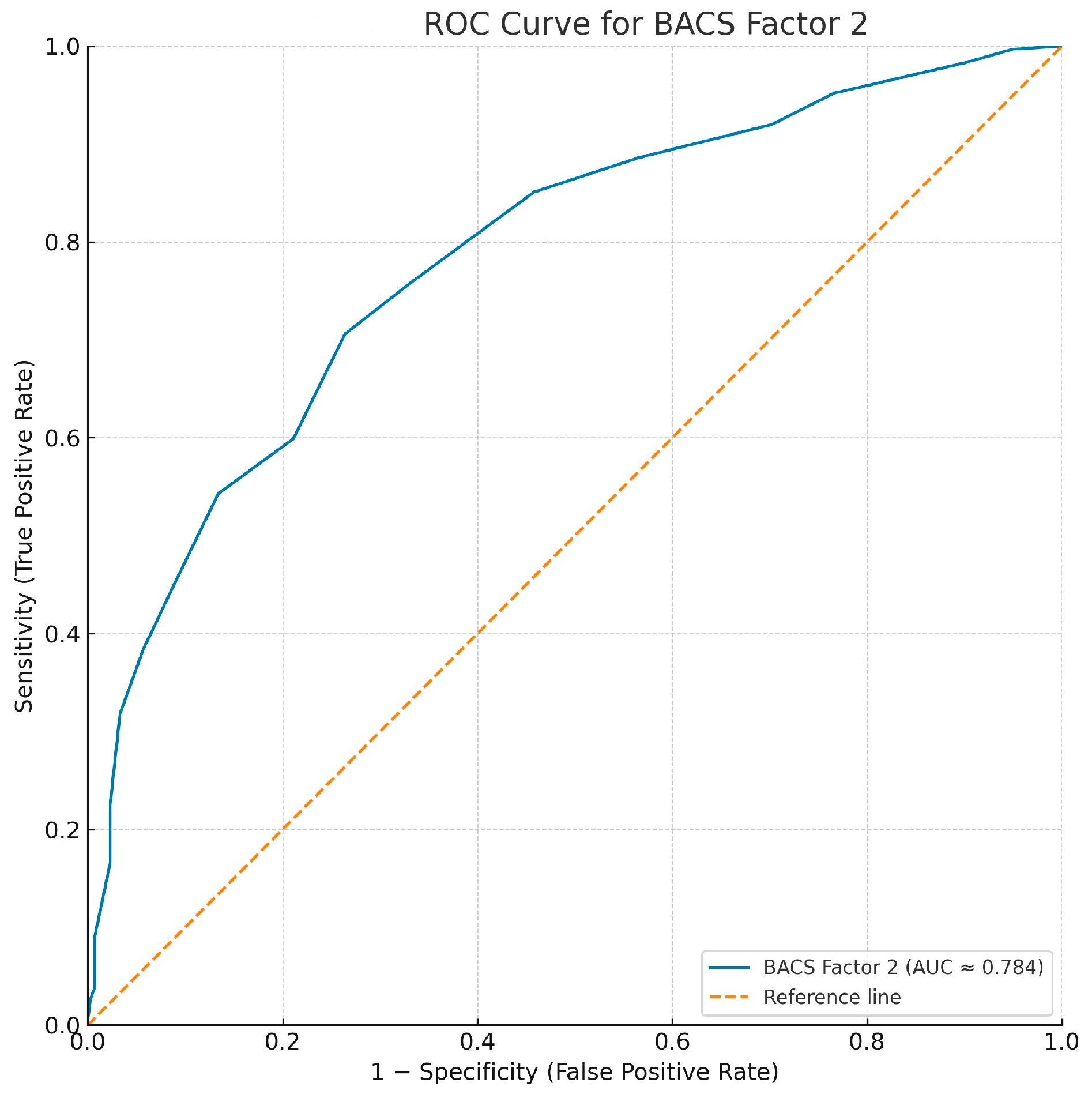
Receiver operating characteristic (ROC) analysis was then conducted to quantify the discriminative ability of Factor 2. This allowed for distinguishing between participants who had versus had not considered CBS and derive an empirically based clinical cutoff. Performance was summarized by the area under the curve (AUC; nonparametric 95% CIs), and the cutoff was selected by maximizing Youden’s index. Because the BACS is integer-scored, midpoint thresholds were operationalized at the next highest integer for reporting and interpretation.
Finally, an exploratory one-way analysis of variance (ANOVA) was conducted to explore potential differences in BACS Factor 2 scores across the four most represented ethnic/racial groups in the sample (White, Hispanic/Latina, Asian, and Black/African American). Bonferroni-corrected post hoc comparisons were used to examine pairwise differences.

2.3. Measures

2.3.1. Demographic Characteristics

Demographics. Participants reported age, race, biological sex, gender, education level, annual income, sexual orientation, relationship status, and religious affiliation.

2.3.2. Body Image-Related Measures

Appearance Schemas Inventory-Revised (ASI-R). The Appearance Schemas Inventory-Revised (ASI-R) is a 20-item scale that assesses individuals’ underlying beliefs and attitudes about the influence of physical appearance in their lives. Scores for each item range on a 5-point scale (1 = strongly disagree, 5 = strongly agree), with 6 reverse-coded items [7]. Items include “I seldom compare my appearance to that of other people I see,” and “I fantasize about what it would be like to be better looking than I am.” Internal consistency in the current study for ASI-R was good at baseline (α = 0.88) and follow-up (α = 0.87) [7,28].
Rosenberg Self-Esteem Scale (RSE). The Rosenberg Self-Esteem Scale (RSE) is a 10-item scale that assesses global self-worth through positive and negative feelings about the self. Response options for each item range from 1 (strongly disagree) to 4 (strongly agree), with 5 reverse-coded items. Items include “I feel that I have a number of good qualities,” and “I wish I could have more respect for myself.” Internal consistency in the current study for RSE was excellent at baseline and follow-up (α = 0.91) [27].

2.3.3. Mood-Related Measures

Patient Health Questionnaire (PHQ-9). The Patient Health Questionnaire-9 (PHQ-9) is a 9-item scale that measures symptoms of depression. Scores for each item range on a 4-point scale, from 0 (not at all) to 3 (nearly every day). Example items include “Little interest or pleasure in doing things,” and “Feeling down, depressed, or hopeless” [31]. Internal consistency in the current study for PHQ-9 was good at baseline and follow-up (α = 0.89).
Generalized Anxiety Disorder (GAD-7). The Generalized Anxiety Disorder (GAD-7) is a 7-item scale that measures symptoms of anxiety. Scores for each item range on a 4-point scale, from 0 (not at all) to 3 (nearly every day). Example items include “Feeling nervous, anxious, or on edge,” and “Not being able to stop or control worrying” [32]. Internal consistency in the current study for GAD-7 was excellent at baseline and follow-up (α = 0.92).

2.3.4. New Measure

Breast Appearance Concerns Scale (BACS). The aim of this study was to develop and analyze the psychometric properties of a measure of breast appearance concerns. An item pool was developed following an extensive review of the existing literature on body image, breast appearance, and related constructs such as self-esteem and appearance investment. The major source was the BIBCQ given its wide range of items, variety of dimensions, and greater accessibility compared to other body image questionnaires. All items related to breast cancer diagnosis were removed. Some examples of the items that were removed include, “Being tired interferes with my life,” “I need reassurance about my health,” “I worry about minor aches and pains,” and “I feel prone to cancer.” Items related to breast appearance were retained in the initial item pool.
The BIBCQ included one NAC-related item: “I am happy with the position of my nipple,” which was modified to “I am happy with the position of my nipple and areola complex.” Two similarly worded items regarding shape and color were generated for comprehensiveness of NAC appearance concerns.
The final item pool consisted of 12 items. Participants responded to items on a 5-point scale, reflecting on their experiences within a 1-month retrospective period. Responses for the first 5 items were rated as follows: 1 = strongly agree, 2 = somewhat agree, 3 = neither agree nor disagree, 4 = somewhat disagree, and 5 = strongly disagree. Responses for the remaining seven items were rated as follows: 1 = never/almost never, 2 = infrequently, 3 = sometimes, 4 = often, and 5 = always. See Table 2 for the complete item pool.

3. Results

3.1. EFA Results

An exploratory factor analysis was conducted on the first subsample (n = 294) to examine the underlying factor structure of a brief questionnaire designed to assess breast-specific body image concerns. Models ranging from one to six factors were evaluated to determine their goodness of fit to collected data. The two-factor model emerged as the most coherent and representative of the latent factor structure, demonstrating superior fit compared to alternative factor structures. The model had more robust item loadings, with most items exhibiting stronger associations with the two identified factors and minimal cross-loadings. Additionally, each factor incorporated more than two items, in contrast to models with a greater number of factors, which, following the iterative item removal process, resulted in one factor comprising a singular item. Items 5, 6, and 7 were sequentially removed from analyses due to their inadequate loadings (values below 0.300) and pronounced cross-loadings. The final two-factor model indicated good fit, χ2 (19) = 33.581, p = 0.021; RMSEA = 0.051, CFI = 0.975, TLI = 0.953, SRMR = 0.030. This information is also presented in table form in Table 3.

3.2. CFA Results

To further validate the factor structure, CFA was performed on subsample 2 (n = 295). In this analysis, the fit indices were as follows: RMSEA = 0.048, CFI = 0.966, TLI = 0.954, and SRMR = 0.041. The CFA results indicate that the model continues to exhibit good fit to the data, although there was a slight decrease in RMSEA and an increase in SRMR compared to the EFA. The CFI and TLI values remained at satisfactory levels. In the process of model refinement, modification indices were reviewed. CFA did not indicate any index values greater than 10, suggesting that the model could not be improved with additional constraints or paths. This finding supports the 2-factor model found through EFA.

3.3. Internal Consistency

To assess internal consistency, Cronbach’s alpha coefficients were calculated for BACS Factor 1 items, BACS Factor 2 items, and the BACS Total score. BACS Factor 1 subscale consisted of 3 items (α = 0.832) and BACS Factor 2 subscale consisted of 6 items (α = 0.715). The BACS Total contains a total of 9 items (α = 0.785). Results suggest overall good reliability, with no notable improvements in consistency with the removal of any individual item for any scale. The final BACS instrument is displayed in Table 4 below.

3.4. Test–Retest Reliability

To establish test–retest reliability, a bivariate correlation matrix was obtained for BACS scores at timepoints 1 and 2. Correlations between baseline and follow-up scores for BACS Factor 1 (r = 0.587), BACs Factor 2 (r = 0.769), and BACS Total (r = 0.741) were all statistically significant, suggesting that the BACS Factor 2 and BACS Total provide reliable assessments over time.

3.5. Construct Validity

To assess construct validity of the BACS, its correlations with the ASI-R, RSE, PHQ-9, and GAD-7 were analyzed. BACS scores were calculated with consideration for negatively worded items, which were reverse scored. Items corresponding to Factors 1 and 2 were summed separately, yielding individual factor scores. Total score was then calculated by summing all items across both factors. The BACS Total exhibited low to moderate positive correlation with ASI-R (r = 0.297, p < 0.001) and a moderate negative correlation with the RSE (r = −0.349, p < 0.001). Furthermore, BACS Total was positively correlated with the PHQ-9 (r = 0.237, p < 0.001) and the GAD-7 (r = 0.228, p < 0.001). These results provide evidence supporting divergent validity of the BACS (see Table 5). Significant correlations between the BACS Total and the factor subscales with other established measures of body-image and mood-related constructs indicate the scales’ relatedness without excessive overlap. Thus, correlations between the BACS and other measures provide evidence that BACS captures a distinct construct within the field of body-image research.

3.6. Predictive Validity

Discriminant analysis was performed using two subscales, BACS Factor 1 and BACS Factor 2, as predictors of membership in two groups. Predictors were thus nipple–areola appearance satisfaction and general breast satisfaction. Of the 589 cases, 1 was excluded due to missing data. Group membership was assigned based on self-reported consideration of CBS. Groups thus consisted of women who had (n = 289) and had not (n = 299) considered CBS. A significant discriminant function was found, Wilks’s Λ = 0.764, χ2 (1) = 157.85, p < 0.001, indicating a relationship between predictors and group membership. Individuals who had not considered CBS experienced higher general breast satisfaction (M = 11.55, SD = 3.58) than those who had considered surgery (M = 16.10, SD = 4.58). Similarly, individuals who had not considered surgery had higher nipple–areola appearance satisfaction (M = 5.40, SD = 2.38) than those who had considered surgery (M = 6.94, SD = 3.25). The discriminant function, which utilized Factor 2 as the predictor, correctly classified 73.6% of the cases who had not considered CBS and 70.6% of those who had, with an overall correct classification rate of 72.1%.
Additional discriminant analysis utilized BACS total score to predict group membership. A significant discriminant function was found, Wilks’s Λ = 0.780, χ2 (1) = 145.35, p < 0.001, indicating a relationship between predictor and group membership. Women who had not considered CBS (M = 16.95, SD = 4.86) had less breast appearance concerns than those who had considered surgery (M = 23.04, SD = 6.54). The discriminant function correctly classified 71.6% of the cases who had not considered CBS and 69.6% of those who had, with an overall correct classification rate of 70.6%.
A stepwise discriminant analysis was conducted to evaluate the predictive ability of BACS Factor 2 (general breast satisfaction) and the ASI-R, RSE, PHQ-9, and GAD-7, regarding group membership defined by consideration for CBS. Minimum criteria for F entry and removal were 0.05 and 0.10, respectively. Variables that reduced the overall Wilks’ Λ were entered at each step. The final model included two significant predictors: BACS Factor 2 and ASI-R total score. A significant discriminant function was found, Wilks’s Λ = 0.758, χ2 (2) = 162.28, p < 0.001. The function correctly classified 76.3% of individuals who had not considered CBS and 68.2% of individuals who had considered it. Overall, 72.3% of cases were correctly classified, with a consistent cross-validation rate. This supports the predictive ability of the BACS in identifying individuals with varying levels of breast appearance concerns who have considered surgical intervention. Specifically, BACS Factor 2 had the highest sensitivity for identifying individuals considering CBS. BACS Factor 1, while inadequately sensitive, showed the highest specificity among the scales, with a 74.2% correct classification rate. Incorporating ASI-R to BACS Factor 2 yielded slightly improved classification rates for individuals not considering CBS. These findings are visually summarized in Figure 1.
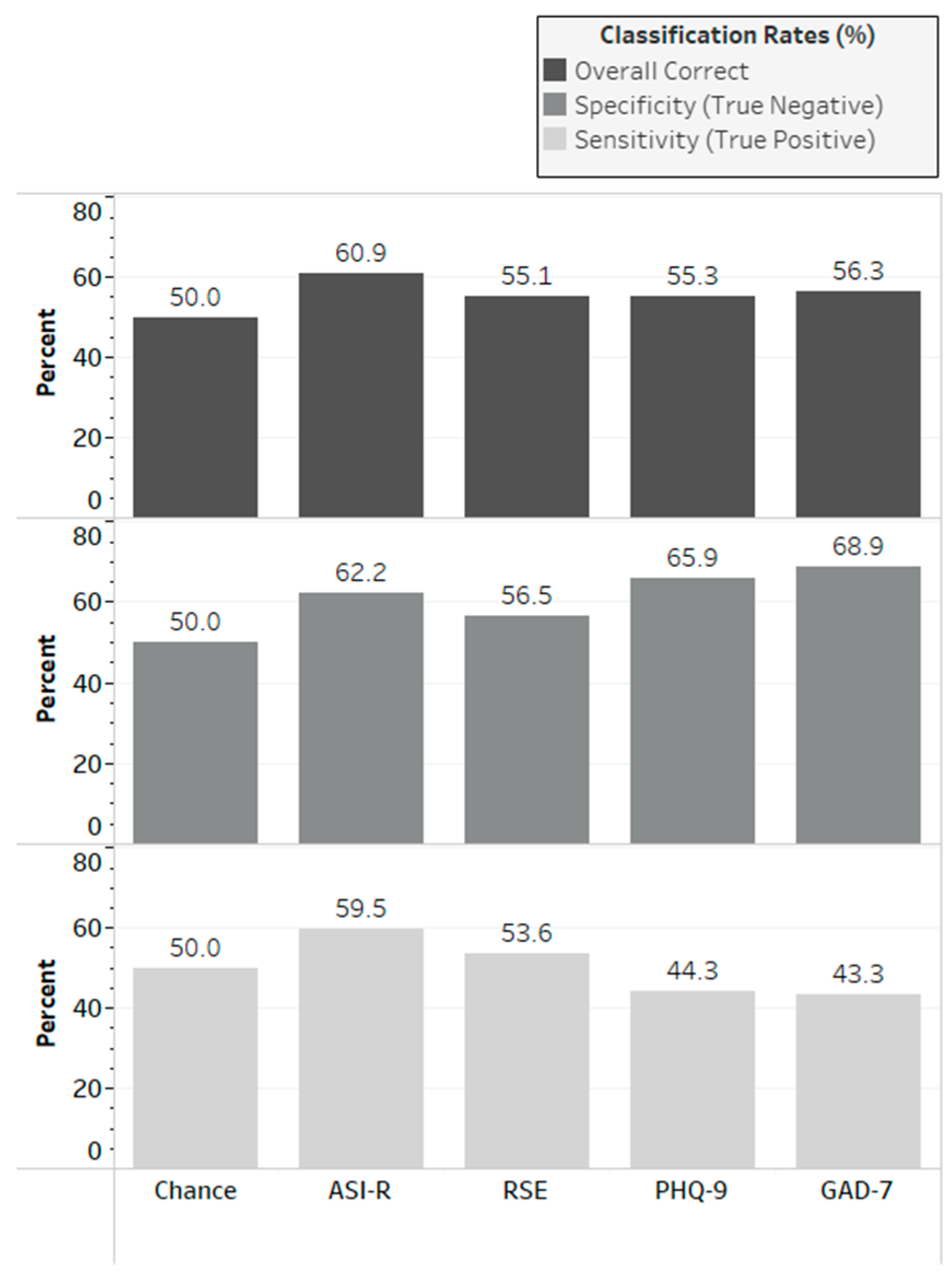
Additional discriminant analyses were conducted to compare relative effectiveness of individual psychological measures in predicting desire for CBS. The ASI-R, RSE, GAD-7, and PHQ-9 were each analyzed; however, none surpassed the predictive accuracy of BACS Factor 2. Interestingly, psychological functioning did not predict desire for CBS much greater than chance (see Figure 2).

3.7. Clinical Cutoff Determination

To evaluate the discriminative validity of the BACS with respect to consideration of CBS, a receiver operating characteristic (ROC) analysis was conducted. ROC was performed for BACS Factor 2, consistent with predictive analyses, as Factor 2 demonstrated the strongest association with CBS consideration. BACS Factor 2 indicated acceptable to good discrimination (AUC = 0.784, 95% CI 0.748–0.821, p < 0.001). The Youden optimal threshold occurred at the midpoint of 13.5; however, due to the nature of this integer-scored scale, it was operationalized as ≥14, which yielded sensitivity = 0.706 and specificity = 0.736. Positive screens were defined as scores ≥ 14 (see Figure 3).

3.8. Exploratory Analysis by Racial/Ethnic Group

An exploratory one-way ANOVA was conducted to examine whether general breast satisfaction (BACS Factor 2) differed across the four major racial or ethnic groups most represented in our sample (White, Hispanic/Latina, Asian, Black/African American). The analysis revealed no significant differences among groups, F(3, 548) = 0.45, p = 0.716, η2 = 0.002. Mean scores were similar across groups: White (M = 13.80, SD = 4.58), Hispanic/Latina (M = 13.93, SD = 4.80), Asian (M = 13.58, SD = 5.22), Black/African American (M = 12.94, SD = 4.32). Bonferroni-corrected post hoc comparisons indicated no significant pairwise differences (all p values = 1.000). These findings suggest that general breast satisfaction, as measured by the BACS, was consistent across racial/ethnic groups in this sample.

4. Discussion and Conclusions

The current study attempts to develop a brief, psychometrically sound screening tool to assess breast-specific dissatisfaction among women, and to identify those considering CBS. Existing scales focus on broader body image issues or are designed for specific clinical groups, such as breast cancer survivors or transgender individuals. In contrast, the BACS was developed to address gaps in the literature by including items related to the nipple–areola complex (NAC) and by focusing on otherwise healthy candidates for CBS. Because satisfaction with breast appearance, appearance investment, and self-esteem are common concerns in emerging young adult women, this sample offers meaningful insights into breast-related body image concerns in a pre-intervention population.
The initial item pool of the BACS underwent exploratory factor analysis, revealing a solid two-factor solution with strong item loadings and minimal cross-loadings. Confirmatory factor analysis supported the model’s fit and validated the structure identified through EFA. The BACS exhibited robust internal consistency. Test–retest reliability was further confirmed using a repeated sample, ensuring measurement stability over time. Divergent validity was supported by significant, low correlations with related constructs like the ASI-R, RSE, PHQ-9, and GAD-7, establishing its association with and distinctiveness from other measures. The scale’s ability to distinguish between individuals who have and have not considered CBS was explored and ultimately, the general breast satisfaction subscale of the BACS was predictive of CBS consideration. Although the NAC satisfaction subscale was psychometrically sound, it was not a strong predictor of CBS consideration in this sample. Collectively, these findings suggest that general breast satisfaction may play a more central role in CBS decision-making among young adult women, whereas NAC satisfaction may hold more relevance in clinical or post-surgical contexts. Further research is needed to establish its utility in diverse populations and settings.

4.1. Clinical Utility and Theoretical Implications

The general breast satisfaction subscale of the BACS was effective in identifying individuals considering CBS, demonstrating higher predictive ability than both the NAC satisfaction subscale and the full-scale BACS. This emphasizes the importance of general breast satisfaction in the decision-making process for CBS. Further analysis revealed that individuals scoring ≥ 14 on BACS Factor 2 can be considered above the clinical threshold for CBS consideration. It is noted that the proposed screening threshold should be validated in independent clinical samples before clinical application.
While the NAC satisfaction subscale was less predictive of a desire for CBS, it effectively identified those not considering such procedures. This subscale may be more appropriate for evaluating interest in non-surgical options like medical tattooing. This inclusion was also informed by our prior research which highlights the importance of NAC appearance in patient satisfaction with medical tattooing. However, given its weaker psychometric and predictive performance in this study, we view the NAC subscale as a preliminary component that requires refinement and further evaluation. Specifically, future research should validate this subscale’s utility within clinical populations beyond post-mastectomy breast cancer patients.
Furthermore, our study is the first to provide empirical evidence indicating that the NAC is not a primary consideration for otherwise healthy women contemplating CBS. Prior to this research, the impact of NAC satisfaction on CBS decision-making was not clearly understood, with no existing studies explicitly addressing this aspect within a non-clinical population. The findings from our study reveal that while NAC satisfaction may influence decision-making to some extent, greater focus on general breast satisfaction is warranted in otherwise healthy women considering CBS.

4.2. Ethical & Diversity Considerations

The lack of a strong predictive relationship between traditional measures of anxiety, depression, and the desire for CBS challenges prevalent assumptions about the psychological profiles of individuals seeking these procedures. This finding gives rise to important ethical considerations for practitioners regarding the need to approach each patient’s decision for CBS without bias, given that such decisions can be driven by a variety of factors, including personal aesthetic preferences. This approach respects patient autonomy and counters the oversimplification of CBS as merely a response to negative self-perception.
Furthermore, understanding breast appearance dissatisfaction requires a culturally sensitive approach, as perceptions of ideal body image are substantially shaped by cultural values and norms. This study did not explicitly examine cultural or contextual influences on BACS performance, but an exploratory analysis found no significant differences in general breast satisfaction scores across four racial/ethnic groups (White, Hispanic/Latina, Asian, Black/African American). While this finding suggests consistency in how BACS Factor 2 operates across these groups within this sample, future research is needed to assess cross-cultural measurement invariance and clinical relevance in more diverse and international populations.
Cultural factors play a critical role in aesthetic medicine, especially when assessing body image constructs that are shaped by social and contextual influences. Research examining how these constructs differ across racial, ethnic, and cultural groups, including populations from non-Western regions, remains essential for advancing both the validity and relevance of assessment tools in this field.

4.3. Limitations and Future Directions

Although this study offers important insights into the assessment of breast appearance dissatisfaction, several limitations should be noted. A key limitation is the demographic composition of the sample, which may constrain the generalizability of the findings to broader populations. In particular, the relatively young age of participants may have influenced both their interpretation of the items and the measure’s predictive validity, as body image concerns and motivations for CBS are likely to evolve across the lifespan. Furthermore, while the sample consisted of non-clinical participants, it is noteworthy that nearly half reported having considered CBS, highlighting the measure’s potential relevance to aesthetic contexts.
Because test–retest data were collected from a voluntary subset, we did not conduct formal attrition analysis; however, no substantial differences in demographics were observed between baseline and follow-up samples. Future research should validate the BACS in clinical populations actively pursuing or recovering from aesthetic procedures. Specifically, future studies could incorporate clinical validation in surgical settings, longitudinal tracking of post-operative outcomes, and cross-cultural comparisons to enhance the scale’s generalizability and clinical utility.
Furthermore, despite rigorous psychometric testing, the real-world applicability of the BACS in diverse clinical settings remains to be thoroughly evaluated. The BACS includes both agreement-based and frequency-based items, which were treated uniformly as ordinal data in analyses; while this approach is common in scale development, future research should examine whether response format impacts measurement structure or interpretability.
To broaden the BACS’s utility and scope, future research could include comparative studies with established measures like the BREAST-Q to provide deeper insights into the relative strengths of these tools in assessing breast appearance concerns. Additionally, evaluating the BACS alongside broader body image measures, such as the Multidimensional Body-Self Relations Questionnaire (MBSRQ) or Body-Esteem Scale for Adolescents and Adults (BESAA), would help further assess its convergent and incremental validity.
It may also be important to examine how the NAC satisfaction subscale performs in post-mastectomy individuals interested in medical tattooing, as this could reveal significant implications for its sensitivity and applicability in post-surgical settings. The recent introduction of a new rating scale for breast aesthetics by health service providers [33] suggests the potential for enhancing the BACS by incorporating or adapting additional items from a patient perspective, potentially increasing its predictive ability. Future studies might also evaluate the ability of the general breast satisfaction subscale to predict post-surgical satisfaction, which could enhance its clinical relevance.
Although we conducted an exploratory ANOVA examining group differences in general breast satisfaction by racial/ethnic identity, the sample sizes for non-White groups were modest, and the study was not powered to detect subtle effects or cultural nuance. Additional work is needed to validate the BACS across larger, more diverse populations and to test measurement invariance across cultural groups.
Currently, in some regions like the United Kingdom, preoperative psychological evaluations are part of the consultation process for procedures like bariatric surgery with the goal of optimizing patient outcomes and allocating healthcare resources effectively [34,35]. Although not a requirement in the United States, the practice of evaluating candidates for cosmetic surgery is not uncommon. With further refinement, the BACS could play an important role in the pre-surgical consultation process, thereby expanding its contribution to both research and clinical practice in assessing breast-specific body image concerns. In particular, the BACS may serve as a brief screening tool to support patient-centered discussions about breast appearance goals, expectations, and motivations prior to cosmetic breast procedures.

Author Contributions

S.G.: Conceptualization, Methodology, Data curation, Formal analysis, Visualization, Writing—original draft, and Writing—review and editing. J.E.C.: Conceptualization, Methodology, Supervision, and Writing—review and editing. M.P.: Investigation and Resources. D.P.: Methodology, Supervision, and Writing—review and editing. V.D.: Supervision and Writing—review and editing. All authors have read and agreed to the published version of the manuscript.

Funding

This research received no external funding.

Institutional Review Board Statement

This study was conducted in accordance with the Declaration of Helsinki and was determined to be exempt by the Institutional Review Board of The University of Central Florida (protocol code: STUDY00004026 and MOD00002793; date of approval: 18 April 2022).

Informed Consent Statement

The ethics committee/institutional review board waived the requirement of written informed consent for participation from the participants or the participants’ legal guardians/next of kin because participants were at minimal risk and the data were collected anonymously.

Data Availability Statement

The raw data supporting the conclusions of this article will be made available by the authors without undue reservation.

Conflicts of Interest

The authors declare no conflicts of interest.

Abbreviations

The following abbreviations are used in this manuscript:
CBSCosmetic breast surgery
NACNipple–areola complex
BACSBreast Appearance Concerns Scale
ASI–RAppearance Schemas Inventory–Revised
BIBCQBody Image after Breast Cancer Questionnaire
EFAExploratory factor analysis
RMSEARoot Mean Square Error of Approximation
CFIComparative Fit Index
TLITucker–Lewis Index
SRMRStandardized Root Mean Square Residual
CFAConfirmatory factor analysis
ROCReceiver Operating Characteristic
RSERosenberg Self-Esteem
PHQ–9Patient Health Questionnaire–9
GAD–7Generalized Anxiety Disorder–7
MBSRQMultidimensional Body-Self Relations Questionnaire
BESAABody-Esteem Scale for Adolescents and Adults

References

  1. Cash, T.F.; Smolak, L. Understanding Body Images: Historical and Contemporary Perspectives. In Body Image: A Handbook of Science, Practice, and Prevention, 2nd ed.; The Guilford Press: New York, NY, USA, 2011; pp. 3–11. ISBN 978-1-60918-182-6. [Google Scholar]
  2. Higgins, E.T. Self-Discrepancy: A Theory Relating Self and Affect. Psychol. Rev. 1987, 94, 319–340. [Google Scholar] [CrossRef]
  3. Anton, S.D.; Perri, M.G.; Riley, J.R. Discrepancy between Actual and Ideal Body Images: Impact on Eating and Exercise Behaviors. Eat. Behav. 2000, 1, 153–160. [Google Scholar] [CrossRef] [PubMed]
  4. Mond, J.; Mitchison, D.; Latner, J.; Hay, P.; Owen, C.; Rodgers, B. Quality of Life Impairment Associated with Body Dissatisfaction in a General Population Sample of Women. BMC Public Health 2013, 13, 920. [Google Scholar] [CrossRef] [PubMed]
  5. Solvi, A.S.; Foss, K.; von Soest, T.; Roald, H.E.; Skolleborg, K.C.; Holte, A. Motivational Factors and Psychological Processes in Cosmetic Breast Augmentation Surgery. J. Plast. Reconstr. Aesthetic Surg. 2010, 63, 673–680. [Google Scholar] [CrossRef]
  6. von Soest, T.; Torgersen, L.; Kvalem, I.L. Mental Health and Psychosocial Characteristics of Breast Augmentation Patients. J. Health Psychol. 2020, 25, 1270–1284. [Google Scholar] [CrossRef]
  7. Cash, T.F.; Melnyk, S.E.; Hrabosky, J.I. The Assessment of Body Image Investment: An Extensive Revision of the Appearance Schemas Inventory. Int. J. Eat. Disord. 2004, 35, 305–316. [Google Scholar] [CrossRef]
  8. Atherton, R.; Robertson, N. Psychological Adjustment to Lower Limb Amputation amongst Prosthesis Users. Disabil. Rehabil. 2006, 28, 1201–1209. [Google Scholar] [CrossRef]
  9. Jarry, J.L.; Dignard, N.A.L.; O’Driscoll, L.M. Appearance Investment: The Construct That Changed the Field of Body Image. Body Image 2019, 31, 221–244. [Google Scholar] [CrossRef] [PubMed]
  10. Moreira, H.; Canavarro, M.C. A Longitudinal Study about the Body Image and Psychosocial Adjustment of Breast Cancer Patients during the Course of the Disease. Eur. J. Oncol. Nurs. 2010, 14, 263–270. [Google Scholar] [CrossRef]
  11. van de Grift, T.C.; Kreukels, B.P.C.; Elfering, L.; Özer, M.; Bouman, M.-B.; Buncamper, M.E.; Smit, J.M.; Mullender, M.G. Body Image in Transmen: Multidimensional Measurement and the Effects of Mastectomy. J. Sex. Med. 2016, 13, 1778–1786. [Google Scholar] [CrossRef]
  12. Moulton, S.J.; Gullyas, C.; Hogg, F.J.; Power, K.G. Psychosocial Predictors of Body Image Dissatisfaction in Patients Referred for NHS Aesthetic Surgery. J. Plast. Reconstr. Aesthetic Surg. 2018, 71, 149–154. [Google Scholar] [CrossRef]
  13. Von Soest, T.; Kvalem, I.L.; Roald, H.E.; Skolleborg, K.C. The Effects of Cosmetic Surgery on Body Image, Self-Esteem, and Psychological Problems. J. Plast. Reconstr. Aesthetic Surg. 2009, 62, 1238–1244. [Google Scholar] [CrossRef]
  14. Wojtkowska, A.; Zaborski, D.; Modrzejewski, A.; Pastucha, M. The Effect of Cosmetic Surgery on Mental Self-Image and Life Satisfaction in Women Undergoing Breast Augmentation: An Intermediate Role of Evaluating the Surgery as One of the Most Important Life Events. J. Plast. Reconstr. Aesthetic Surg. 2022, 75, 1842–1848. [Google Scholar] [CrossRef]
  15. Baxter, N. The Body Image After Breast Cancer Questionnaire, the Design and Testing of a Disease-Specific Measure. Ph.D. Thesis, University of Toronto, Toronto, ON, Canda, 1998. [Google Scholar]
  16. Baxter, N.N.; Goodwin, P.J.; Mcleod, R.S.; Dion, R.; Devins, G.; Bombardier, C. Reliability and Validity of the Body Image after Breast Cancer Questionnaire. Breast J. 2006, 12, 221–232. [Google Scholar] [CrossRef] [PubMed]
  17. Cano, S.J.; Klassen, A.F.; Scott, A.M.; Pusic, A.L. A Closer Look at the BREAST-Q. Clin. Plast. Surg. 2013, 40, 287–296. [Google Scholar] [CrossRef] [PubMed]
  18. Pusic, A.L.; Klassen, A.F.; Scott, A.M.; Klok, J.A.; Cordeiro, P.G.; Cano, S.J. Development of a New Patient-Reported Outcome Measure for Breast Surgery: The BREAST-Q. Plast. Reconstr. Surg. 2009, 124, 345. [Google Scholar] [CrossRef]
  19. Klassen, A.F.; Dominici, L.; Fuzesi, S.; Cano, S.J.; Atisha, D.; Locklear, T.; Gregorowitsch, M.L.; Tsangaris, E.; Morrow, M.; King, T.; et al. Development and Validation of the BREAST-Q Breast-Conserving Therapy Module. Ann. Surg. Oncol. 2020, 27, 2238–2247. [Google Scholar] [CrossRef]
  20. Sharif Nia, H.; Firouzbakht, M.; Rekabpour, S.-J.; Nabavian, M.; Nikpour, M. The Psychometric Properties of the Persian Version of the Body Image after Breast Cancer Questionnaire: A Second- Order Confirmatory Factor Analysis. Curr. Psychol. 2021, 42, 3924–3934. [Google Scholar] [CrossRef]
  21. Becker, S.; Proctor, M.; Cassisi, J.E. The Application of Medical Tattooing in Cosmetic Breast Surgery. Plast. Reconstr. Surg. Glob. Open 2022, 10, e4272. [Google Scholar] [CrossRef]
  22. Becker, S.J.; Cassisi, J.E. Applications of Medical Tattooing: A Systematic Review of Patient Satisfaction Outcomes and Emerging Trends. Aesthetic Surg. J. Open Forum 2021, 3, ojab015. [Google Scholar] [CrossRef] [PubMed]
  23. Lewin, R.; Amoroso, M.; Plate, N.; Trogen, C.; Selvaggi, G. The Aesthetically Ideal Position of the Nipple-Areola Complex on the Breast. Aesthetic Plast. Surg. 2020, 44, 1130–1138. [Google Scholar] [CrossRef]
  24. Heo, J.-W.; Park, S.O.; Jin, U.S. A Nipple-Areolar Complex Reconstruction in Implant-Based Breast Reconstruction Using a Local Flap and Full-Thickness Skin Graft. Aesthetic Plast. Surg. 2018, 42, 1478–1484. [Google Scholar] [CrossRef] [PubMed]
  25. Satteson, E.S.; Brown, B.J.; Nahabedian, M.Y. Nipple-Areolar Complex Reconstruction and Patient Satisfaction: A Systematic Review and Meta-Analysis. Gland Surg. 2017, 6, 4–13. [Google Scholar] [CrossRef]
  26. Proctor, M.; Cassisi, J.E.; Dvorak, R.D.; Decker, V.; Becker, S. Breast Cancer Survivors’ Perceptions of Mastectomy Reconstruction: A Comparative Analysis of Medical Tattooing Impact on Aesthetics. Aesthetic Plast. Surg. 2024, 49, 1881–1888. [Google Scholar] [CrossRef] [PubMed]
  27. Rosenberg, M. Society and the Adolescent Self-Image; Princeton University Press: Princeton, NJ, USA, 1965; ISBN 978-1-4008-7613-6. [Google Scholar]
  28. Cash, T.F.; Labarge, A.S. Development of the Appearance Schemas Inventory: A New Cognitive Body-Image Assessment. Cogn. Ther. Res. 1996, 20, 37–50. [Google Scholar] [CrossRef]
  29. Muthen, L.K.; Muthen, B. Mplus User’s Guide: Statistical Analysis with Latent Variables, 8th ed.; Muthén & Muthén: Los Angeles, CA, USA, 2017; ISBN 978-0-9829983-2-8. [Google Scholar]
  30. Hu, L.; Bentler, P.M. Cutoff Criteria for Fit Indexes in Covariance Structure Analysis: Conventional Criteria versus New Alternatives. Struct. Equ. Model. A Multidiscip. J. 1999, 6, 1–55. [Google Scholar] [CrossRef]
  31. Kroenke, K.; Spitzer, R.L.; Williams, J.B.W. The PHQ-9: Validity of a Brief Depression Severity Measure. J. Gen. Intern. Med. 2001, 16, 606–613. [Google Scholar] [CrossRef]
  32. Spitzer, R.L.; Kroenke, K.; Williams, J.B.W.; Löwe, B. A Brief Measure for Assessing Generalized Anxiety Disorder: The GAD-7. Arch. Intern. Med. 2006, 166, 1092. [Google Scholar] [CrossRef]
  33. Duraes, E.F.R.; Durand, P.; Morisada, M.; Scomacao, I.; Duraes, L.C.; De Sousa, J.B.; Abedi, N.; Djohan, R.S.; Bernard, S.; Moreira, A.; et al. A Novel Validated Breast Aesthetic Scale. Plast. Reconstr. Surg. 2022, 149, 1297–1308. [Google Scholar] [CrossRef]
  34. Dhaliwal, K.; Radotra, I.; Khanna, A. The CQC’s Recommendations on Psychological Assessment for Cosmetic Surgery Patients: Will They Improve the Patient’s Journey? A Review of Current Practice in the UK Based on a Survey of 71 Plastic Surgeons. J. Plast. Reconstr. Aesthetic Surg. 2021, 74, 2392–2442. [Google Scholar] [CrossRef] [PubMed]
  35. Mechanick, J.I.; Apovian, C.; Brethauer, S.; Garvey, W.T.; Joffe, A.M.; Kim, J.; Kushner, R.F.; Lindquist, R.; Pessah-Pollack, R.; Seger, J.; et al. Clinical Practice Guidelines for the Perioperative Nutrition, Metabolic, and Nonsurgical Support of Patients Undergoing Bariatric Procedures—2019 Update: Cosponsored by American Association of Clinical Endocrinologists/American College of Endocrinology, The Obesity Society, American Society for Metabolic & Bariatric Surgery, Obesity Medicine Association, and American Society of Anesthesiologists. Surg. Obes. Relat. Dis. 2020, 16, 175–247. [Google Scholar] [CrossRef] [PubMed]
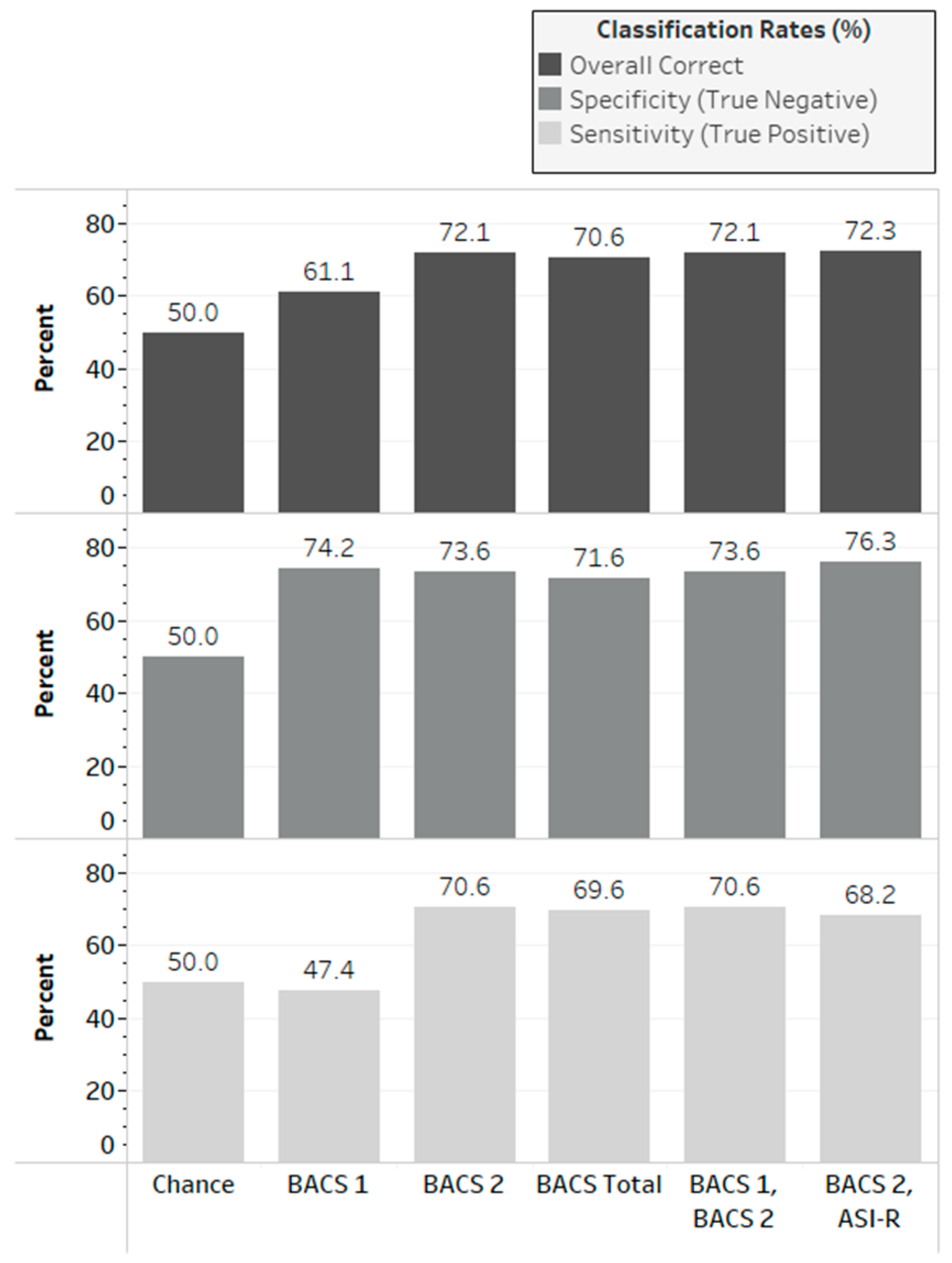
Figure 1. Classification accuracy rates for predicting consideration of CBS, including overall accuracy (dark grey), specificity (medium grey), and sensitivity (light grey), across BACS subscales and other psychological measures. Note. BACS = Breast Appearance Concerns Scale, BACS 1 = BACS Factor 1, BACS 2 = BACS Factor 2, ASI-R = Appearance Schemas Inventory- Revised.
Jaestheticmed 01 00007 g001
Figure 2. Overall correct, specificity (true negative), and sensitivity (true positive) classification rates of individual psychological measures predicting CBS. Note. ASI-R = Appearance Schemas Inventory-Revised, RSE = Rosenberg Self Esteem Scale, PHQ-9 = Patient Health Questionnaire, GAD-7 = Generalized Anxiety Disorder.
Jaestheticmed 01 00007 g002
Figure 3. Receiver operating characteristic (ROC) curve for BACS Factor 2 discriminating consideration of CBS. Note. The clinical cutoff was determined by Youden’s index, which occurred at midpoint 13.5, and because the scale is integer-scored, was operationalized as ≥14 (sensitivity = 0.706, specificity = 0.736).
Jaestheticmed 01 00007 g003
Table 1. Participant sociodemographic characteristics.
Characteristicn%
Race or Ethnic Identification
  American Indian or Alaska Native10.2
  Asian or Asian American528.8
  Black or African American355.9
  White32755.5
  Hispanic, Latina, or Spanish Origin13823.4
  Multiracial366.1
Sexual Orientation
  Heterosexual42772.5
  Homosexual122.0
  Bisexual11118.8
  Other254.2
  Prefer not to say142.4
Biological Sex
  Female589100
  Male00
Gender Identity
  Female58899.8
  Male10.2
Highest Level of Education/Degree
  High School Graduate (diploma or equiv.)19833.6
  Some college but no degree23139.2
  Associates degree in college14224.1
  Bachelor’s degree in college183.1
Note: Participants (N = 589) were, on average, 20.1 years old (SD = 4.4).
Table 2. Breast Appearance Concerns 12-Item Pool.
Instructions: The following questions assess self-satisfaction regarding the breasts and body. Please read each statement carefully and decide how it applies to you. When answering, consider how you have been feeling over the past month.
1.I am happy with the position of my nipple and areola complex.
2.I am happy with the shape of my nipple and areola complex.
3.I am happy with the color of my nipple and areola complex.
4.I am satisfied with the size of my breast.
5.I feel comfortable when others see my breasts.
6.The appearance of my breast could disturb others.
7.I feel that people are looking at my chest.
8.I need to be reassured about the appearance of my bust.
9.I would keep my chest covered during sexual intimacy.
10.I think my breasts appear uneven to each other.
11.I feel people can tell my breasts are not normal.
12.I think about my breasts.
Note: All items are rated on a 5-point scale. Items 1–6 use the following anchors: 1 (Strongly Agree), 2 (Somewhat Agree), 3 (Neither Agree nor Disagree), 4 (Somewhat Disagree), and 5 (Strongly Disagree). Items 7–12 use the following anchors: 1 (Never/Almost Never), 2 (Infrequently), 3 (Sometimes), 4 (Often), and 5 (Always).
Table 3. Exploratory factor analysis final 2-factor solution.
ItemFactor 1Factor 2
1. I am happy with the position of my nipple and areola complex.0.8000.081
2. I am happy with the shape of my nipple and areola complex.0.886−0.001
3. I am happy with the color of my nipple and areola complex.0.744−0.087
4. I am satisfied with the size of my breast.0.2120.559
8. I need to be reassured about the appearance of my bust.−0.0130.726
9. I would keep my chest covered during sexual intimacy.0.1670.434
10. I think my breasts appear uneven to each other.0.1610.338
11. I feel people can tell my breasts are not normal.0.1450.454
12. I think about my breasts.−0.0100.583
Note. χ2 (19) = 33.58, p = 0.02; RMSEA = 0.051, CFI = 0.975, TLI = 0.953, SRMR = 0.030.
Table 4. The Breast Appearance Concerns Scale.
Factor 1: Nipple–Areola Satisfaction
Item 1I am happy with the position of my nipple and areola complex.
Item 2I am happy with the shape of my nipple and areola complex.
Item 3I am happy with the color of my nipple and areola complex.
Factor 2: General Breast Satisfaction
Item 4I am satisfied with the size of my breast.
Item 8I need to be reassured about the appearance of my bust.
Item 9I would keep my chest covered during sexual intimacy.
Item 10I think my breasts appear uneven to each other.
Item 11I feel people can tell my breasts are not normal.
Item 12I think about my breasts.
Note. Initial 12-item pool and factor loadings are presented in Table 2.
Table 5. Bivariate correlations of BACS total and BACS factor scores.
BACS TotalFactor 1Factor 2
ASI-R0.297 **0.095 *0.353 **
RSE−0.349 **−0.260 **−0.320 **
PHQ-90.237 **0.162 **0.227 **
GAD-70.228 **0.097 *0.255 **
Note. ASI-R = Appearance Schemas Inventory-Revised. RSE = Rosenberg Self Esteem. PHQ-9 = Patient Health Questionnaire. GAD-7 = Generalized Anxiety Disorder. * p < 0.05. ** p < 0.01.
Disclaimer/Publisher’s Note: The statements, opinions and data contained in all publications are solely those of the individual author(s) and contributor(s) and not of MDPI and/or the editor(s). MDPI and/or the editor(s) disclaim responsibility for any injury to people or property resulting from any ideas, methods, instructions or products referred to in the content.