1. Introduction
According to urbanisation projections, by 2030, 81% of the population will live in cities [
1]. Intensive urbanisation and anthropogenic pressure are altering land use and adversely affecting the environment. Urban heat islands (UHIs) are a prominent element of the urban climate that increases temperatures in cities [
2]. In response to these challenges, contemporary environmental policies and legislation at the global and European levels increasingly require the transformation of urban spaces. The European Green Deal and the EU Biodiversity Strategy for 2030 explicitly call for the integration of nature-based solutions (NBS) and the restoration of urban ecosystems through the mandatory increase in functional green spaces [
3]. These documents shift the focus from aesthetic landscaping towards the ecological functionality of plant material.
Plant material within green infrastructure (GI) elements can mitigate the adverse effects of air temperature variations in urban environments. Indeed, different types and compositions of green infrastructure elements have a stronger cooling effect (during summer) compared with structures lacking shrub vegetation or vertical stratification [
4]. In this context, ornamental shrubs play an indispensable role in the lower layers of GI, providing essential ecosystem services related to microclimate regulation at pedestrian level [
5]. In addition to providing shade and transpiration-driven cooling at ground level, multi-layered shrub structures effectively filter suspended particulate matter (PM2.5 and PM10) at breathing height, attenuate urban noise, and ensure a continuous supply of pollen and nectar for urban pollinators during critical periods of drought [
6].
The impact of elevated urban temperatures on plant phenology has been widely documented in the literature. Numerous studies have shown that urban microclimatic characteristics alter flowering dynamics, often extending the growing season or changing the abundance of flowering in ornamental taxa [
7,
8]. Although most previous research has focused on urban trees, the phenological plasticity of ornamental shrubs remains insufficiently investigated, despite their role in the lower layers of green infrastructure [
9]. This lack of data hinders the implementation of contemporary urban planning guidelines that require a transition towards so-called climate-smart landscape design [
10]. Ornamental species and lower taxa such as
Abelia × grandiflora (Glossy Abelia) are increasingly gaining importance in urban landscapes due to their prolonged flowering period and high tolerance to drought and heat stress, making them candidates for studying local adaptations to climate change [
11].
In highly urbanised areas such as Belgrade (Southeastern Balkans), the selection and management of climate-resilient taxa are increasingly guided by strategic and legal frameworks. The General Urban Plan of Belgrade (GUP) and the Detailed Regulation Plan for the Green Space System of Belgrade explicitly recognise green infrastructure as a primary tool for mitigating climate change and reducing the UHI effect [
12,
13]. In addition, local spatial planning strategies and environmental policies require the integration of adaptive plant material to enhance urban biodiversity and ecosystem services [
14]. However, although local regulations and plans provide a clear legislative incentive for the development of GI, urban planners and landscape architects in practice often lack precise, empirical guidelines on the performance of specific introduced cultivars. In the conditions of Belgrade, which is strongly affected by climate change accompanied by extreme summer heatwaves and moisture deficits [
15], traditional plant selection is becoming increasingly limited. Therefore, there is an imperative to evaluate highly plastic taxa that can respond both to legislative requirements and to the harsh microclimatic conditions of the urban core.
The effect of urban heat islands, i.e., temperature variations, has the potential to enhance or disrupt ecological systems, while it remains unclear how the plasticity of Glossy Abelia under conditions of local climate change can facilitate urban planning and design. Building on the identified gaps in the empirical literature and planning frameworks, the aim of the study is to analyse the resilience and flowering phenology of Abelia × grandiflora ‘Little Richard’ in Lep Izgled Park, assessing the capacity of the taxon to support climate-adaptive urban design under conditions of intensive urbanisation.
2. Materials and Methods
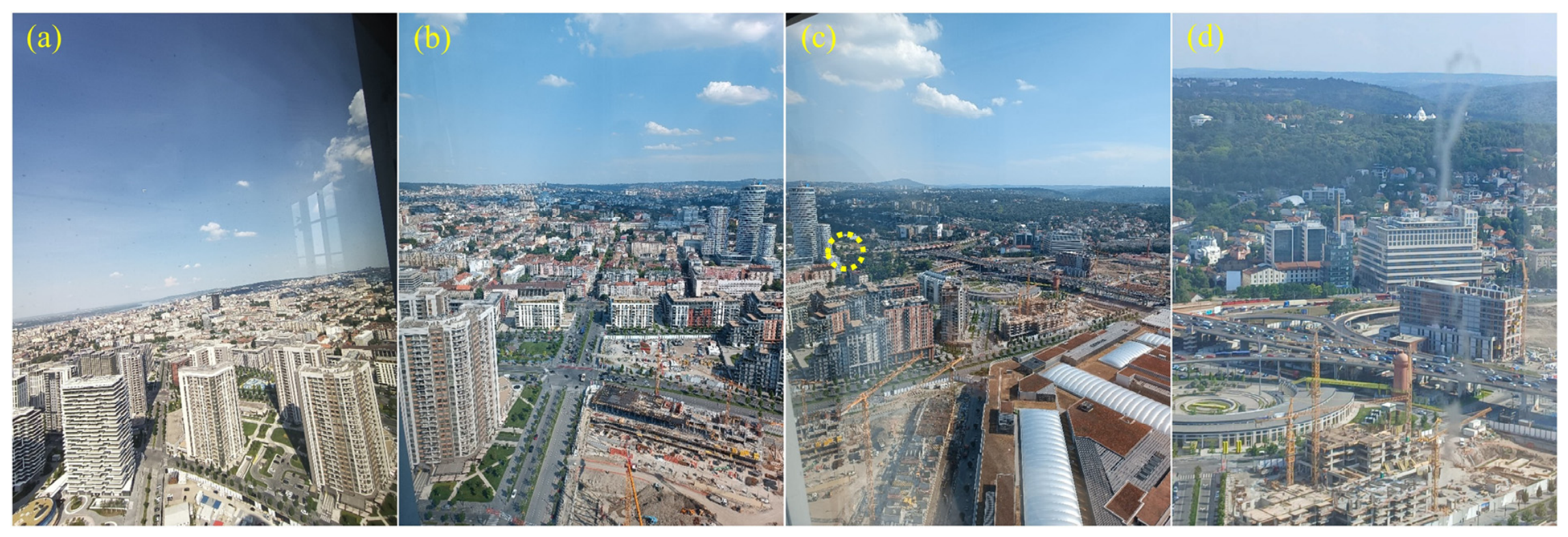
The study was conducted in Lepi Izgled Park, located in the municipality of Savski venac in Belgrade (Serbia). The area is characterised by an exceptionally high urbanisation rate of 91.89% [
16], with a pronounced trend of further intensive growth due to the immediate proximity to and expansion of the “Belgrade Waterfront” megaproject. According to data from the Copernicus Earth observation programme [
16], the remaining 8.11% of the municipality’s area is currently undergoing rapid urban transformation and land-use change, further intensifying anthropogenic pressure on the local microclimate (
Figure 1).
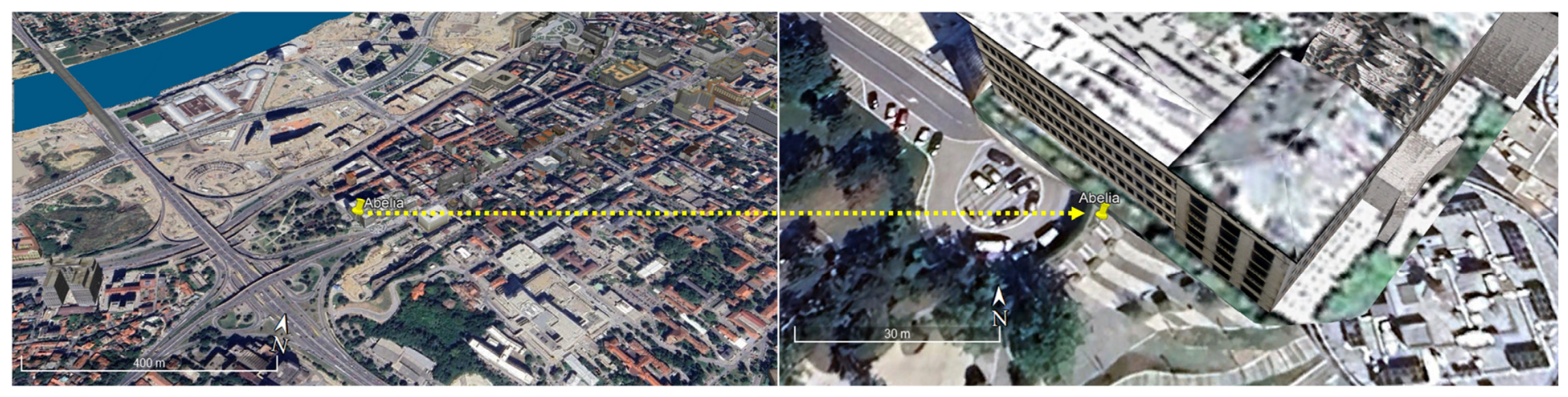
Lepi Izgled Park is located within the Sava Amphitheatre zone, at a specific morphological location exposed to the urban heat island (UHI) effect of Belgrade. The study area extends from northeast to southwest, i.e., from the Skyline complex (Latitude 44°47′58.39″ N, Longitude 20°27′6.54″ E, Altitude 91 m a.s.l.) to the descending local road from the E-75 motorway (Latitude 44°47′55.47″ N, Longitude 20°26′56.98″ E, Altitude 77 m a.s.l.). Cartographic materials, planning documents and field surveys were used to investigate the spatial distribution of green infrastructure elements within the transport infrastructure network. The Lepi Izgled park area is located in the zone of the high-frequency and morphologically complex Mostar Interchange, where its peripheral matrix is directly defined by contact with primary and secondary roads. The northeastern and northern peripheries of the site are bounded by Kneza Miloša Street and Sarajevska Street, which are urban streets with high traffic intensity, while the southwestern edge is defined by Bulevar vojvode Mišića, which connects the central urban core with the southern zones. Additional anthropogenic pressure is generated by the immediate proximity of the E-75 motorway (part of Pan-European Corridor X), together with its associated network of transit ramps, interchanges and descending branches from Kneza Miloša Street. This specific setting defines Lepi Izgled Park as an isolated ecological island, completely surrounded by extensive asphalt and concrete structures, making the site a suitable setting for studying extreme anthropogenic pressure and the effects of urban heat islands (UHIs) on the functionality and plasticity of the plant material under investigation (
Figure 2).
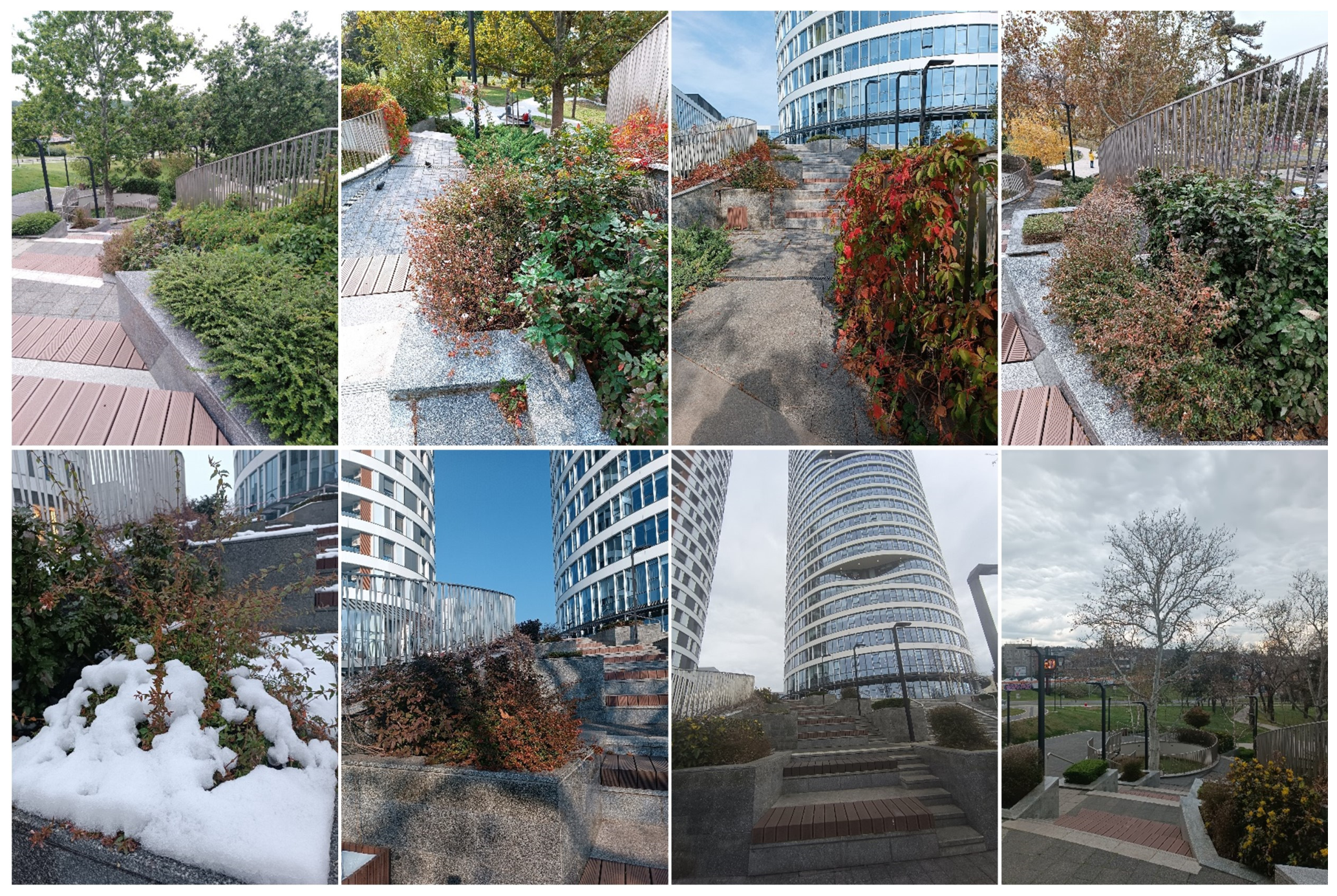
The experimental material comprised three representative and uniform individuals of the cultivar
Abelia × grandiflora ‘Little Richard’. The plants were located in the park’s exit zone, designed as a cascading approach to the residential and commercial complex “Skyline Belgrade” (
Figure 3). The plants were established in purpose-built, raised concrete planters containing a controlled growing substrate. The substrate was isolated with geotextile and covered with a layer of mulch (wood-bark mulch), while ribbed perforated pipes were installed within the root zone to facilitate regular irrigation and fertilisation. Controlled maintenance minimised the influence of edaphic factors and moisture deficits, allowing the recorded phenological results to be directly related to variations in air temperature. The plants were oriented west (W) and north-west (NW), making them additionally exposed to afternoon insolation and heat radiation from the surrounding vertical concrete and glass surfaces.
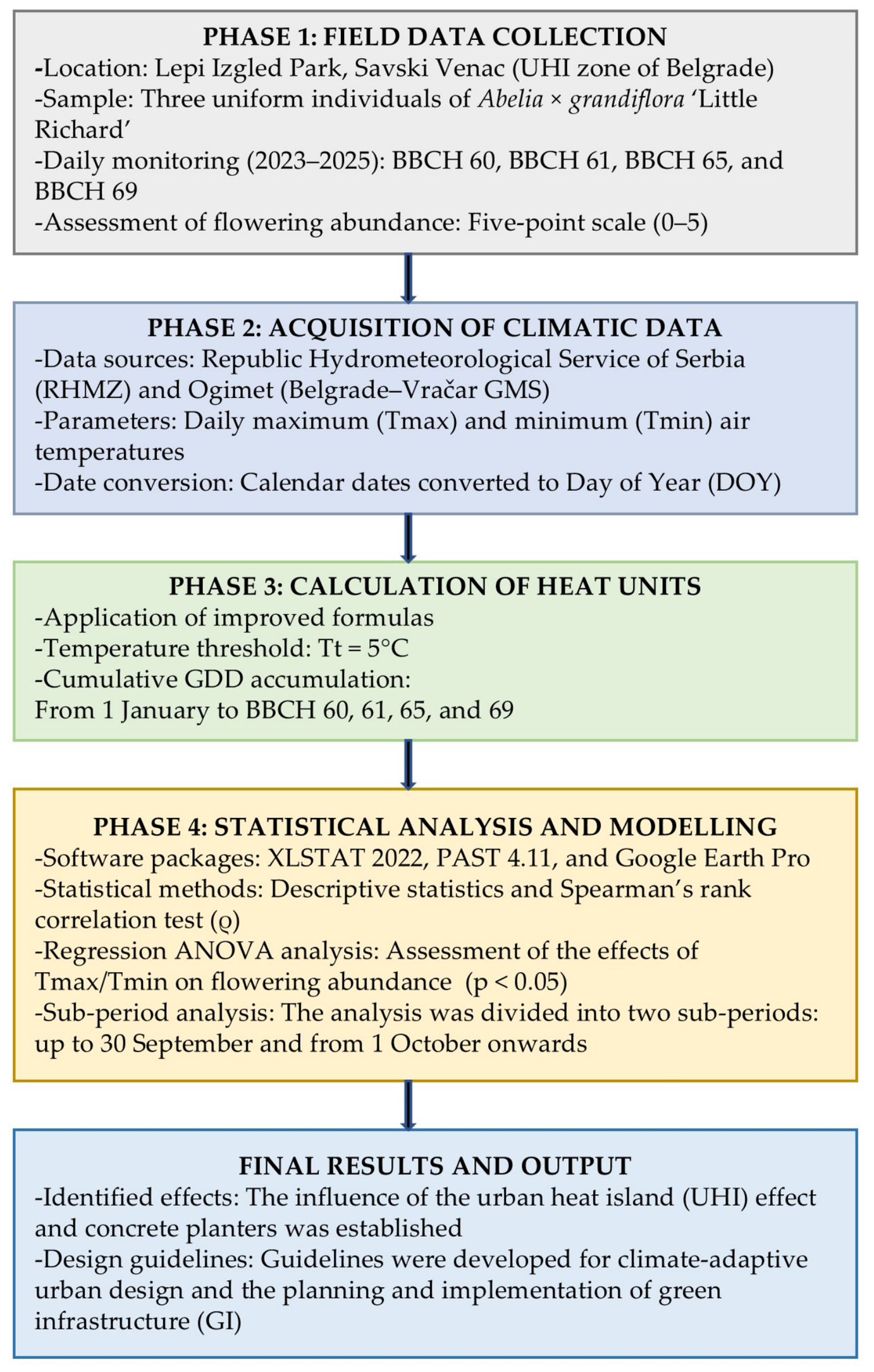
The overall research procedure was structured into four successive phases: (1) field collection of phenological data and assessment of flowering abundance; (2) acquisition and processing of microclimatic parameters; (3) calculation of accumulated heat-unit sums; and (4) statistical modelling and trend analysis. The structure and workflow of the research are illustrated in
Figure 4.
During three consecutive years (2023–2025), the following dates were recorded daily for each individual of
Abelia × grandiflora ‘Little Richard’: BBCH 60 (the day when the first flower opened), beginning of flowering—BBCH 61 (the day when more than 10% of flowers were open), full flowering—BBCH 65 (the day when more than 50% of flowers were open), and end of flowering—BBCH 69 (the day when more than 80% of flowers had faded), according to the BBCH scale [
17]. The recorded dates were subsequently converted into DOY (Day of Year) values using software. For the key phenophases, Growing Degree Days (GDD) were determined based on daily maximum (T
max) and minimum (T
min) air temperatures, applying improved formulae according to Lalić et al. [
18]:
When Tmax < Tt, then GDD = 0.
In cases where T
max > T
t > T
min, the following formula was applied:
Where the coefficient is:
The value of the function f(R) was taken from a table according to R.
A temperature threshold of Tt = 5 °C was applied, in accordance with the recommendation of WMO [
19] for temperate continental climate conditions. After establishing an appropriate series of active temperatures, they were accumulated from 1 January for each day up to the DOY corresponding to BBCH 61, BBCH 60, BBCH 65, and BBCH 69, separately for each year of the study. Phenological patterns and flowering abundance were analysed using descriptive statistics, the Spearman rank test, the Mann–Kendall trend test in conjunction with Sen’s slope test, and regression analysis. Daily climatological data were obtained from the Republic Hydrometeorological Service of Serbia (RHMS) [
20] and OGIMET [
21], from the Belgrade Main Meteorological Station (MMS), as it is located within the Urban Heat Island zone and in close proximity to the study area. Flowering abundance was assessed using the five-point scale of Stilinović [
22]: 0—no flowers (0% of branches with flowers); 1—very low (<20%); 2—low (>20–<40%); 3—moderate (>40–<60%); 4—abundant (>60–<90%); and 5—maximum (>90%). Data processing was performed at the population level using the software packages XLSTAT 2022.4.5 (Paris, France), PAST 4.11 (Oslo, Norway), and Google Earth Pro 7.3.7.1327 (Mountain View, CA, USA).
3. Results
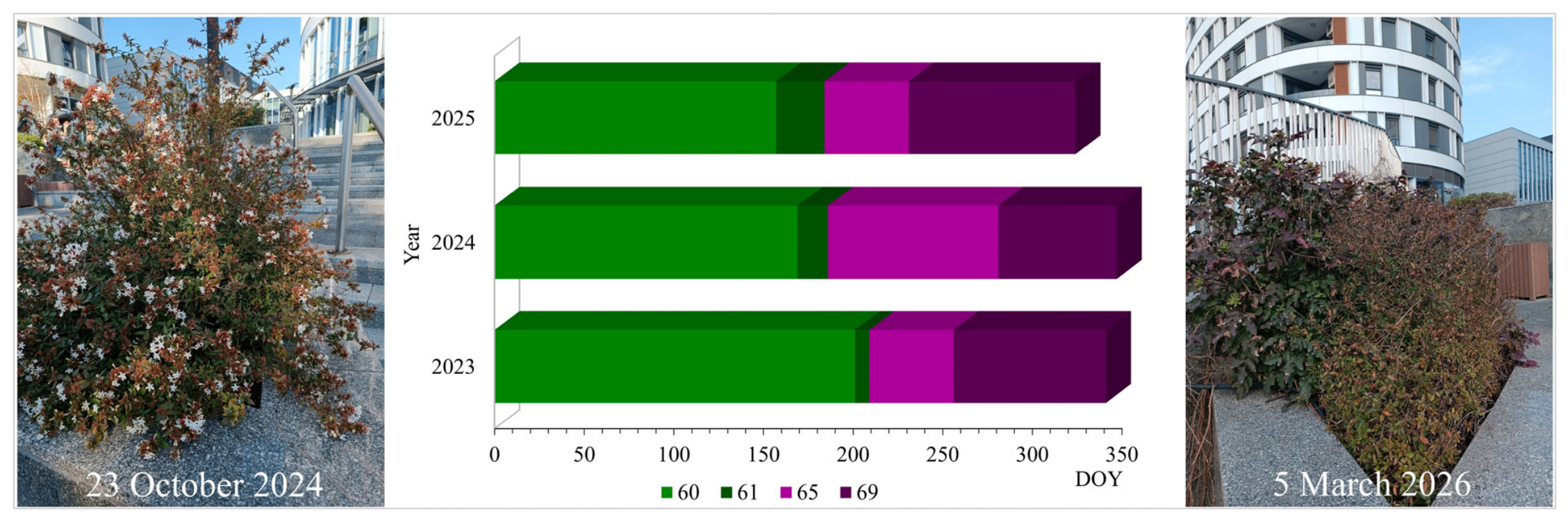
Empirical three-year observations (2023–2025) at the Lepi Izgled Park site showed that the average total flowering duration of the hybrid cultivar
Abelia × grandiflora ‘Little Richard’ was 161.67 days. A detailed analysis of phenological phases according to the BBCH scale indicated significant interannual variability in the dates of onset of developmental stages of the floral elements. All observed phenophases were recorded earliest in 2025. In contrast, the initial stages encompassing the onset of flowering (BBCH 60) and the stage at which 10% of flowers were open (BBCH 61) were delayed most in 2023. Specific dynamics were observed for the full flowering stage (BBCH 65), as well as for the end of flowering (BBCH 69), which were recorded latest in 2024 (
Figure 5).
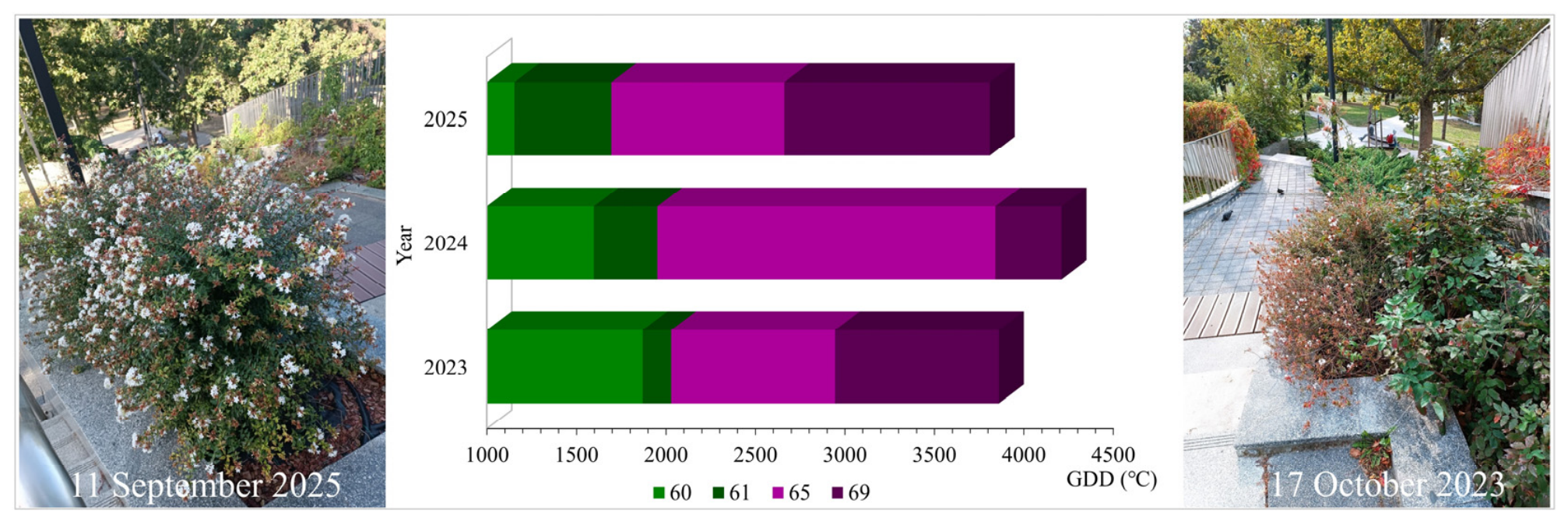
The quantification of the thermal conditions required for the transition between phenophases was performed through an analysis of accumulated growing degree days (GDD), with significant absolute differences in thermal sums recorded between the extreme minimum and maximum values for each individual phase. For phenophase BBCH 60, the absolute difference in GDD was 715.22 °C, for BBCH 61 the difference was 334.07 °C, while the full flowering phase (BBCH 65) showed the largest absolute amplitude of 1179.08 °C. For the end of the flowering phenophase (BBCH 69), the difference was 400.66 °C. Regarding the annual dynamics of heat-unit accumulation, the lowest GDD values for all phases were recorded during the spring period of 2025, while the highest initial thermal sum thresholds at the beginning of the growing season were recorded during the dry 2023. The maximum cumulative GDD values required to reach full flowering and the end of the flowering phenophase were reached during the calendar year 2024 (
Figure 6).
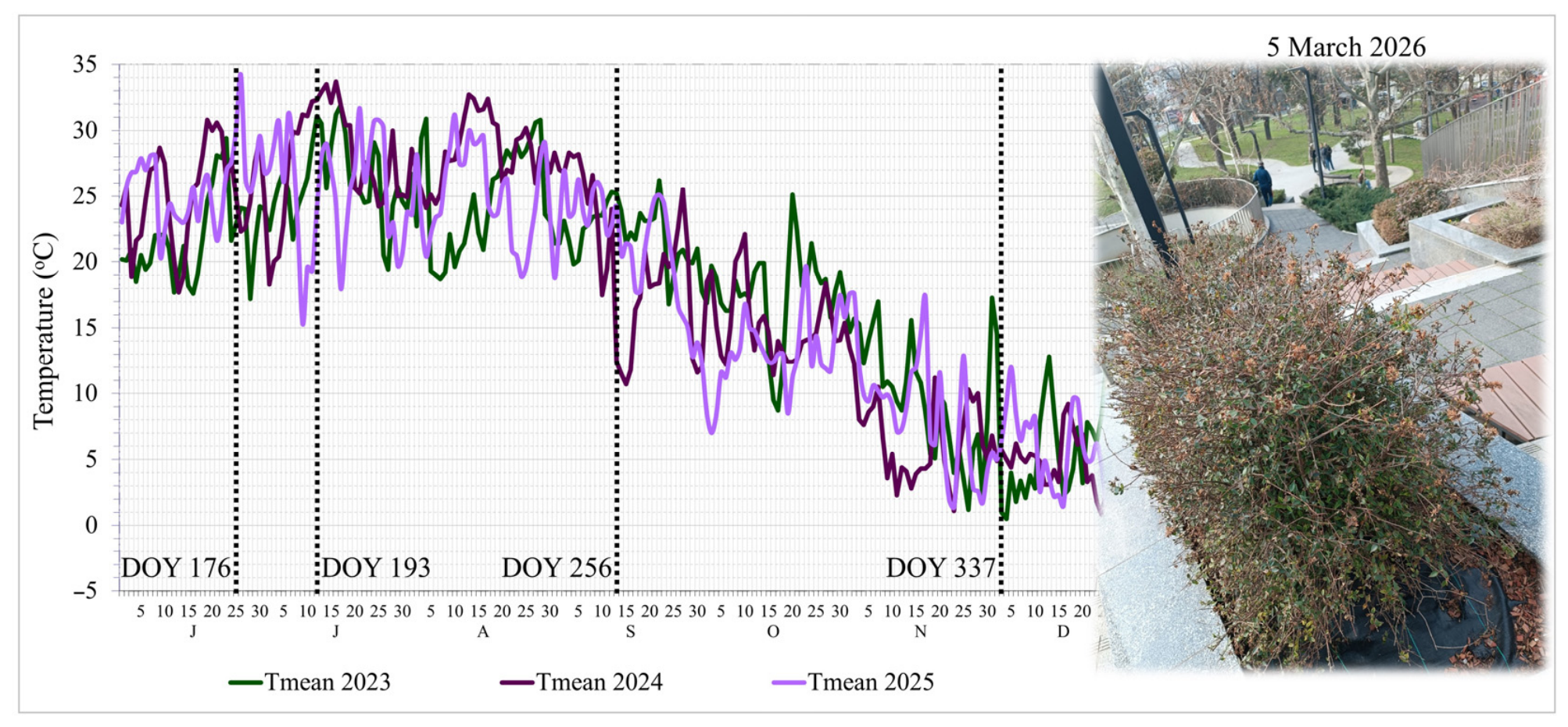
The mathematical and statistical analysis showed that the established phenological patterns depend on the daily fluctuations in maximum and minimum air temperatures at the micro-location (
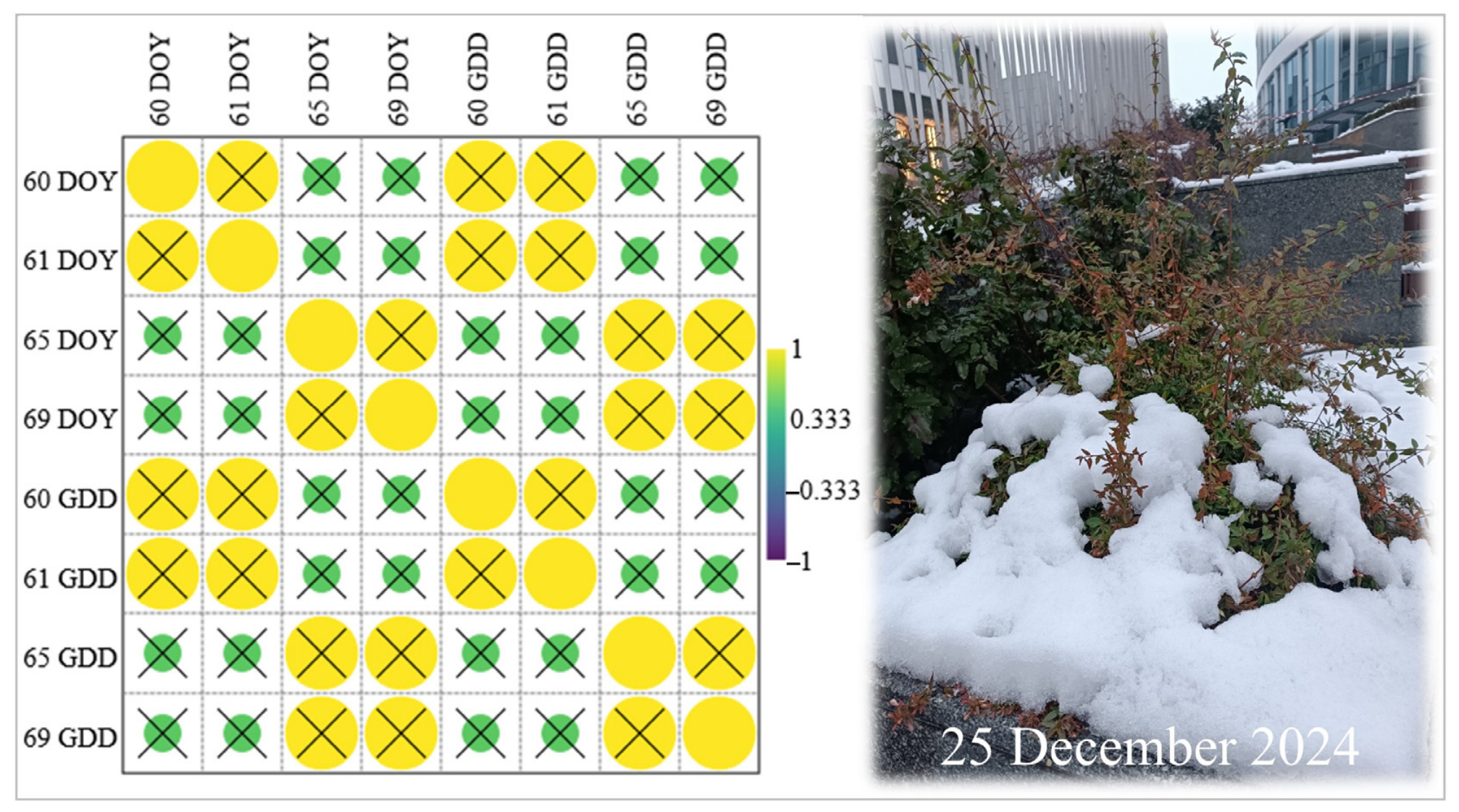
Figure 7). Application of Spearman’s rank correlation coefficient revealed no statistically significant differences between the years observed in terms of the relationship between the day of the year (DOY) and GDD accumulation. The numerical indicators confirm that calendar dates do not have a statistically significant effect on the phenological development of the cultivar; rather, the plant response is primarily determined by the dynamics of heat accumulation (
Figure 8).
In addition to the dynamics of phase onset, one-way analysis of variance (ANOVA) was applied to examine the effects of seasonal climatic factors on the abundance of flowering in
Abelia × grandiflora ‘Little Richard’. At the adopted significance level (
p < 0.05), the results confirmed a statistically significant effect of the interaction between photoperiod (day length) and air temperature on the intensity of flower production (
Table 1).
During the summer months (July and August), long sunny days accompanied by extremely high air temperatures and pronounced heat stress in the raised planters of the cascading complex led to a statistically significant reduction in flowering abundance. In the autumn period (from October onwards), with the onset of a shorter photoperiod and a moderate decrease, followed by stabilisation, in air temperature, a statistically significant increase in flowering abundance was recorded. The identified trend indicates the formation of a secondary flowering wave of greater abundance, which extends into the early winter months.
4. Discussion
The recorded flowering duration of
Abelia × grandiflora ‘Little Richard’ under the conditions of Belgrade, from early summer to early winter, represents a significant deviation from previous reports in the literature. The findings reported by Casey [
23], as well as the official data from the University of Delaware [
24], categorise the taxon primarily as a summer-flowering shrub with a clearly defined flowering period. The results obtained in this study suggest that, under the specific ecoclimatic conditions of the Southeastern Balkans, the cultivar exhibits considerably broader phenological plasticity. Although these data partially correspond to the macro-regional data from the Pl@ntNet database on the GBIF platform [
25] for the Northern Hemisphere, where flowering is recorded from June to November at lower elevations, the extension of flowering well into December at the Belgrade site indicates a strong influence of urban microclimatic modifications. The fact that the onset of key phenophases does not show a statistically significant dependence on the calendar day (DOY), but is primarily driven by the accumulation of thermal units (GDD), demonstrates that the studied taxon is thermo-sensitive [
5]. Its phenological window is conditioned by the thermal regime of the urban environment, as also confirmed by the high values of Spearman’s rank correlation coefficient.
Thermal dependence also explains the specific fluctuations in flowering abundance recorded during the summer months. The decrease in flowering intensity during July and August, confirmed by ANOVA analysis, cannot be interpreted solely as a consequence of general regional heatwaves, but also as a result of the design of the micro-environment. Positioning the plants in raised stone and concrete planters in the cascading section of the “Skyline” complex exposed them to a thermophysical phenomenon. Massive structural elements made of concrete and stone function as pronounced thermal masses that absorb high levels of solar radiation during the day and re-emit the accumulated energy at night in the form of long-wave thermal radiation [
6]. This process creates permanent heat stress in the root zone and above-ground organs, which limits the physiological capacities of the plants and reduces flowering abundance during the summer solstice. However, this same mechanism of heat retention and emission proved advantageous during the later stages of the growing season. From October onwards, under conditions of a shorter photoperiod and declining external temperatures, the thermal emissivity of the concrete elements of the “Skyline” complex artificially maintained a more favourable microclimate in the immediate vicinity of the plants. The moderate autumn increase in temperature, combined with heat from the built environment, had a stimulatory effect on the metabolism of the taxon, initiating a secondary flowering wave of high abundance.
In the broad context of contemporary urban planning and design, this morphological and physiological plasticity positions
Abelia × grandiflora ‘Little Richard’ as a resource for designing climate-resilient green spaces. Urban landscape design in the high-density areas of Belgrade faces a chronic shortage of taxa in the lower layers that can maintain biological vitality and aesthetic value under the influence of extreme microclimatic fluctuations. This is particularly pronounced in areas of intensive infrastructure transformation in the immediate surroundings of the site, such as the Belgrade Waterfront complex, where dry and overheated surfaces predominate. The extended phenological window of more than 160 days provides two important ecosystem services in the city. From an aesthetic and environmental perspective, the plant’s ability to flower during the inert late autumn and early winter months successfully counteracts the grey, anthropogenic character of concrete architectural forms, introducing dynamism into the visual identity of the space. Even more significant is the ecological function of prolonged flowering, as it provides a late source of nectar and pollen for urban pollinators during a period of the year when the remaining vegetation has finished flowering [
26]. From a planning perspective, the results of the study indicate that the full potential of the taxon in cascading and vertical green infrastructure systems can be ensured only if planting design is combined with substrates with high moisture-retention capacity and adequate irrigation systems, thereby mitigating the summer heat shock caused by built structures.
5. Conclusions
The study confirms that Abelia × grandiflora ‘Little Richard’ is an exceptionally resilient ornamental cultivar, with an average flowering duration of 161.67 days, making it a reliable component of green infrastructure (GI) and a bioindicator of microclimatic changes within urban heat island (UHI) zones.
The results of three years of intensive observation demonstrate that phenological patterns are not primarily dependent on the calendar day of the year (DOY), but are governed by the accumulation of growing degree days (GDD) and daily temperature fluctuations. Specific urban structures, such as raised stone and concrete planters, act as thermal masses that intensify summer heat stress and reduce flowering abundance during the hottest months, while simultaneously enabling an extended aesthetic and phenological window in late autumn and during mild winter periods. Based on these findings, urban planners and landscape architects are recommended to integrate this cultivar into cascading and vertical green infrastructure elements in highly urbanised areas, particularly in environments similar to the Belgrade Waterfront development. Its exceptional plasticity and prolonged flowering period can mitigate the negative effects of the anthropogenic environment, ensuring continuity of aesthetic appeal and ecosystem services, including a late-season source of nectar for urban pollinators (bees and butterflies) and the attraction of birds in areas subject to intense development pressure.




 ,
,