1. Introduction
Aquatic ecosystems are among the most threatened ecosystems, facing increasing pressure from the impact of climate change (CC), hydro-morphological alterations, land-use changes, and anthropogenic impacts. Rivers, in particular, are highly dynamic systems in which physical, chemical, and biological components interact across spatial and temporal scales, directly influencing habitat quality and biodiversity. Therefore, understanding species (fish)–habitat relationships is essential for effective conservation, restoration, and sustainable water resources management [
1].
The fish habitat suitability assessment represents a key tool for the conservation and management of river systems. Anthropogenic pressures, including urbanization, pollution, hydrotechnical facilities construction, and CC impact, contribute to the degradation of aquatic habitats and pose significant threats to fish diversity and population stability. A thorough understanding of habitat preferences, such as flow regime, substrate composition, water velocity, water depth, and temperature, are essential for identifying and protecting valuable ecological areas. Habitat suitability models enable the evaluation of habitat quality as well as the assessment of spatial and temporal variability, both of which are critical for the development of adaptive conservation strategies. Consequently, these models have gained increasing importance in environmental protection, particularly in supporting restoration initiatives in riverine systems [
2].
In recent years, the combination of simulation and assessment methods with emerging algorithms, including machine learning (ML) and artificial intelligence (AI), has attracted significant research attention [
3].
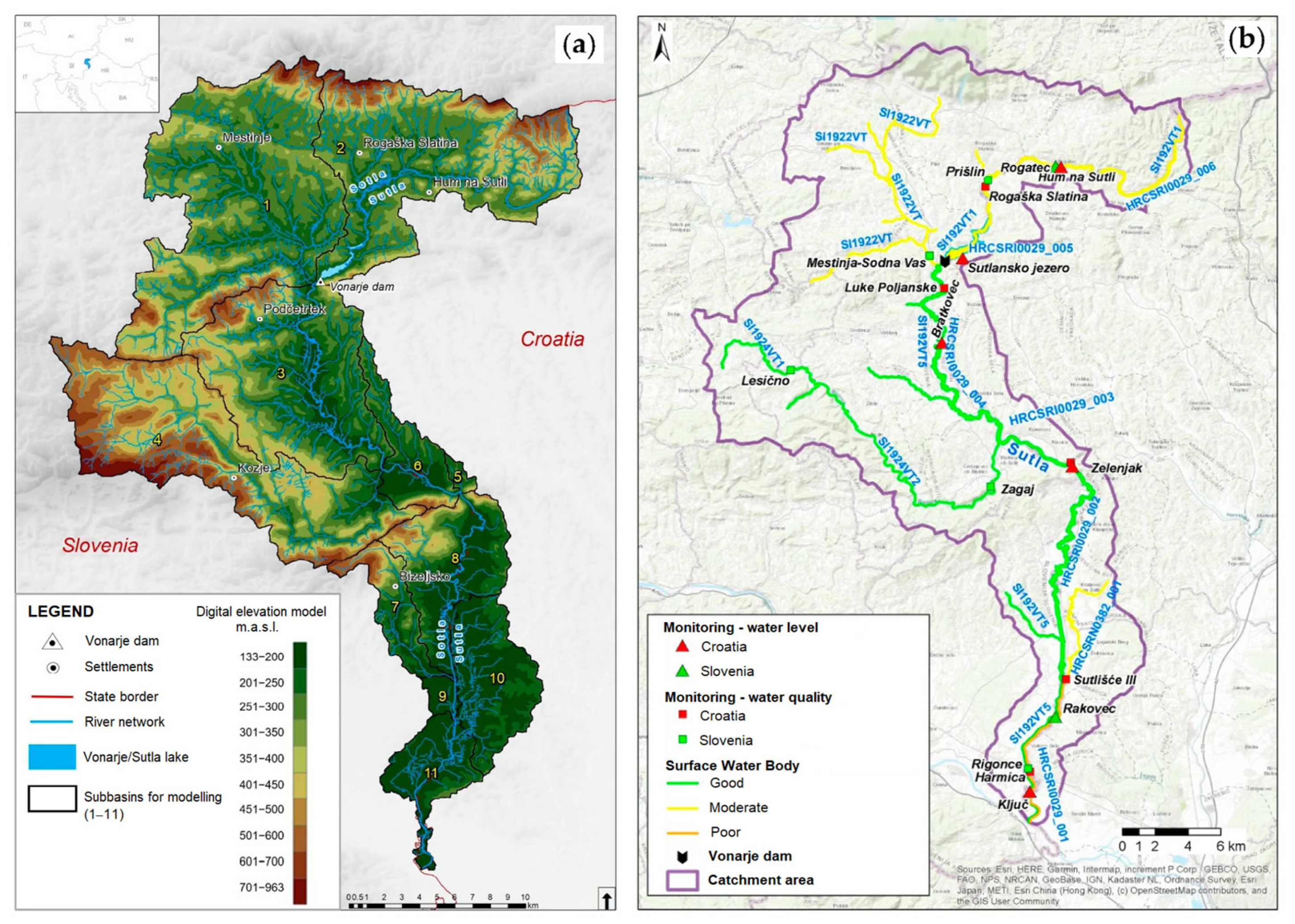
This research aims to develop ML models, with a particular focus on model trees, to predict key abiotic factors associated with bioindicator species Barbus balcanicus (brook barbel), i.e., water velocity, water depth, and water temperature, which are relevant to fish habitat suitability. The ML predicted variables are combined with outputs from the Soil and Water Assessment Tool (SWAT) model to determine the Habitat Suitability Index (HSI) for fish bioindicator species under future scenarios. By linking ML techniques with ecohydrological modelling, this research contributes to advancing habitat assessment methodologies and provides a decision-support tool for river management and conservation planning.
3. Results and Discussion
The presented methodology was applied to calculate HSI for the life stages of
Barbus balcanicus under present conditions, and two selected future scenarios. HSI results for present conditions are shown in
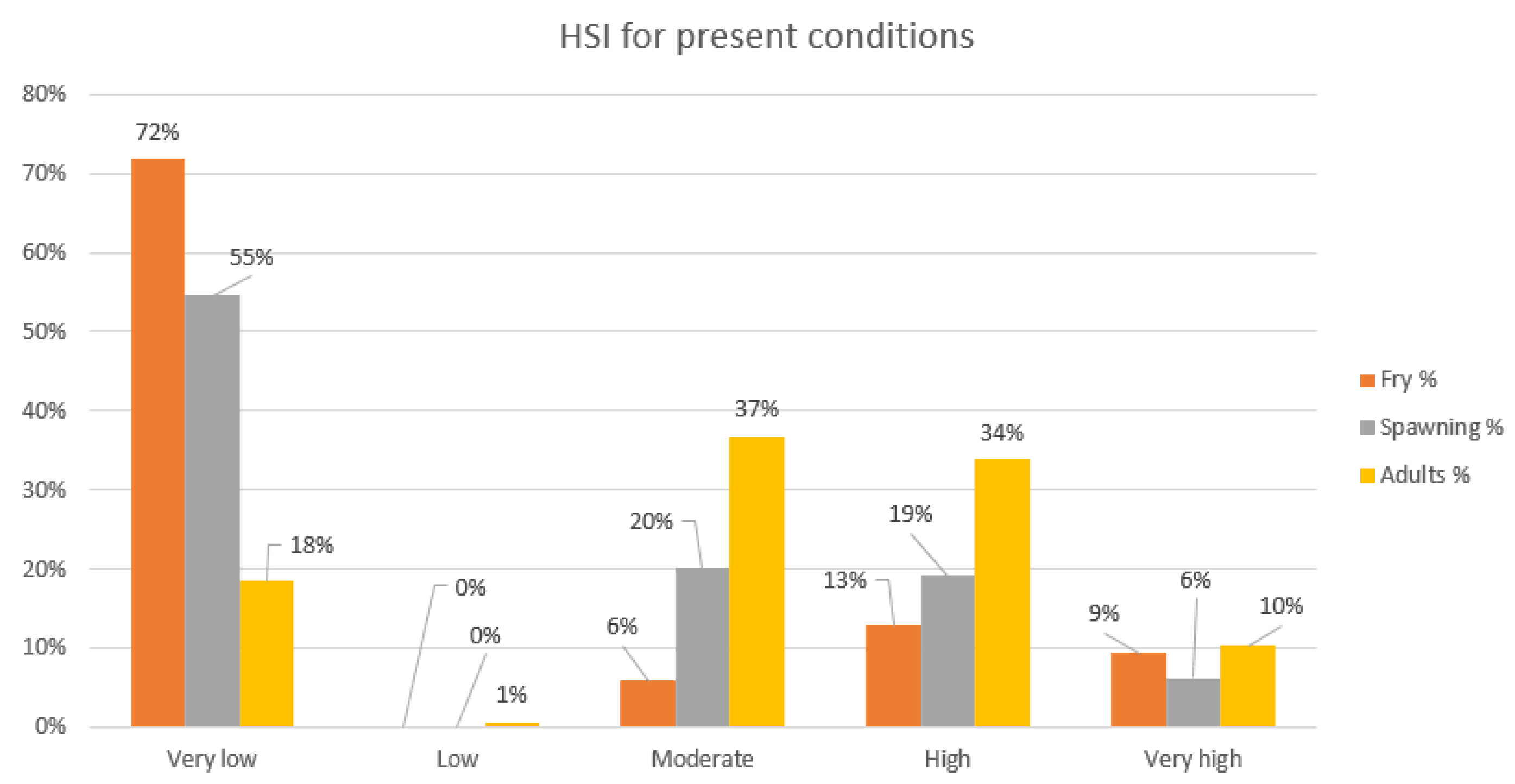
Figure 2 (hydrological monitoring data period: 2000–2022), while results for future scenarios are presented in
Figure 3 (scenario FUTURE 3a
2) and
Figure 4 (scenario FUTURE 3b
1).
Under present conditions (
Figure 2), fry habitats are dominated by very low suitability, with approximately 72% of habitats falling into the “very low” class, and less than 10% classified as high or very high. Spawning habitats are more balanced, with moderate and high suitability together representing nearly 40% of available habitat, reflecting the presence of spatially restricted but ecologically important spawning sites. Adults occupy predominantly moderate-to-high suitability areas, highlighting their broader ecological tolerance and behavioural flexibility compared to early-life stages. The very low representation of “very high” habitats across all stages indicates that optimal conditions are spatially limited under present conditions [
4].
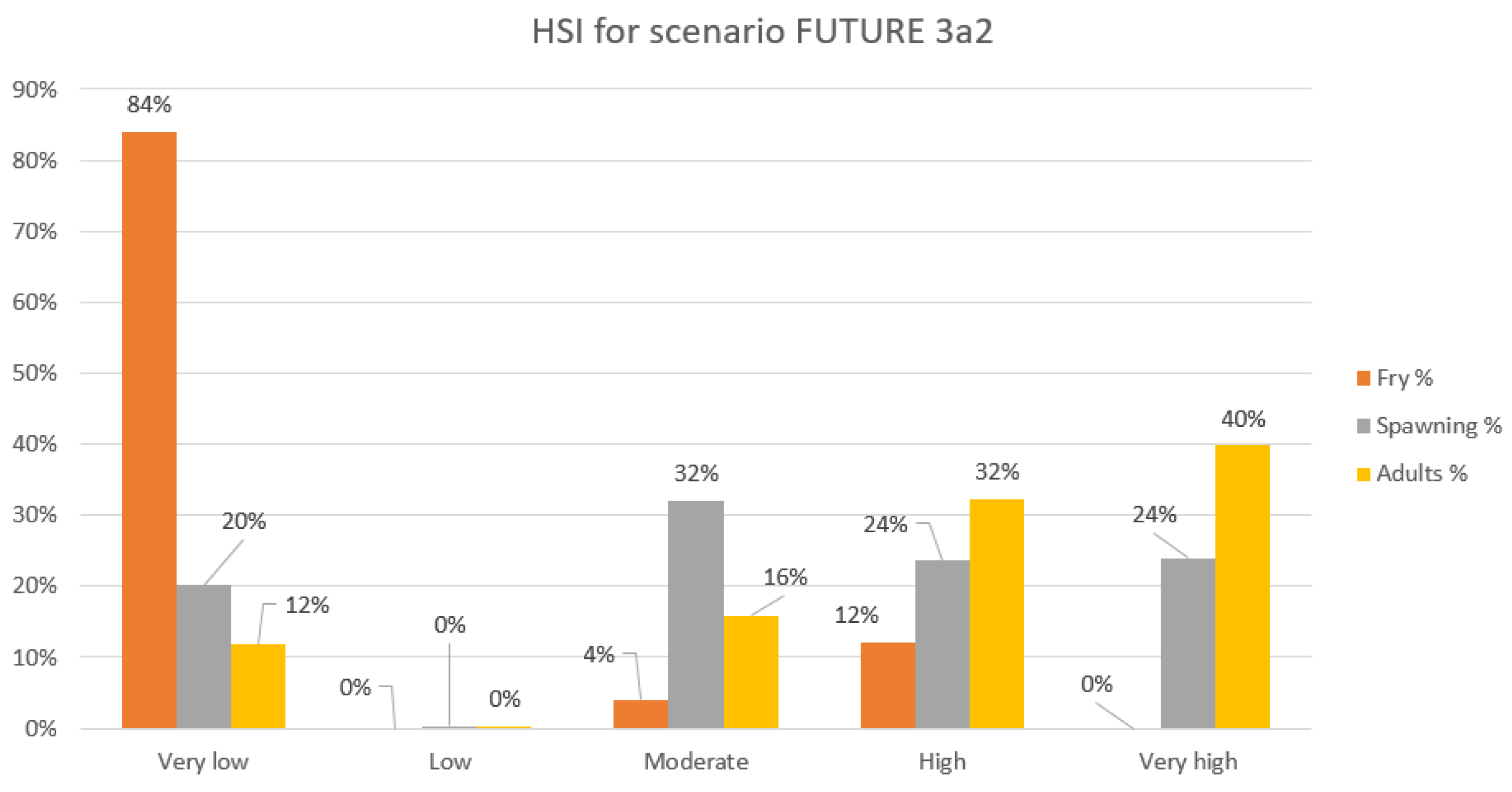
Figure 3.
HSI results for the scenario FUTURE 3a2.
Figure 3.
HSI results for the scenario FUTURE 3a2.
For the scenario FUTURE 3a
2 (
Figure 3), fry habitat suitability declines further, with over 83% of habitats classified as very low. Moderate-to-high suitability habitats become scarce, suggesting that early-life stages are particularly vulnerable to projected increases in temperature and alterations in flow, velocity and depth conditions. Spawning habitats experience a relative shift towards moderate and high suitability classes, but this improvement likely reflects partial suitability rather than consistently optimal conditions. Adults show an overall increase in high and very high suitability classes, with nearly 40% of the habitat classified as very high, indicating that adults may benefit from warmer temperatures and altered flow regimes, provided that dissolved oxygen remains adequate.
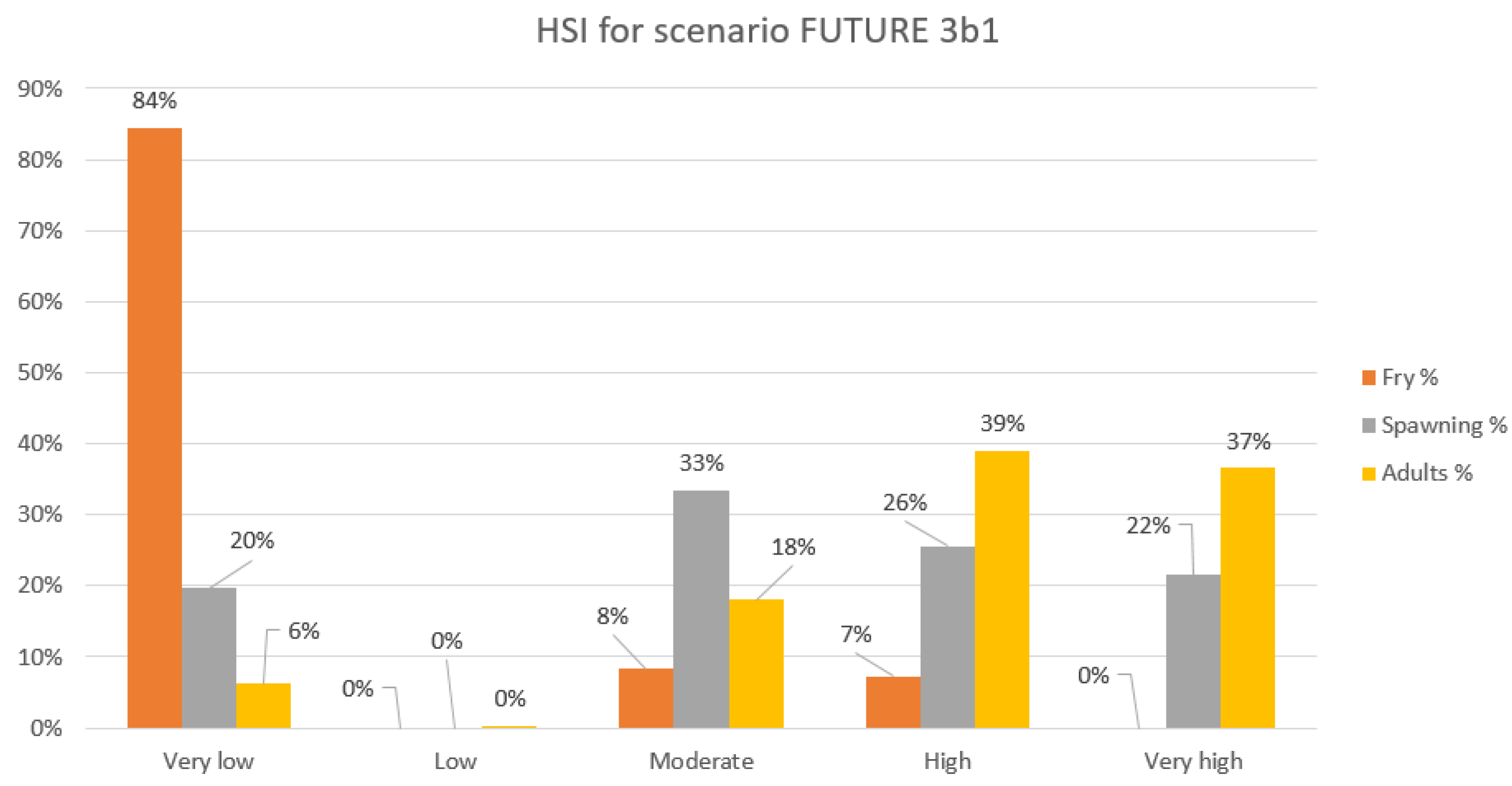
Figure 4.
HSI results for the scenario FUTURE 3b1.
Figure 4.
HSI results for the scenario FUTURE 3b1.
For the scenario FUTURE 3b
1 (
Figure 4), a continuation of the trends is observed in the mid-century projection. Fry stage habitats remain predominantly very low (approximately 84%), while the proportion of moderate-to-high suitability habitats slightly increase for spawning and adult stages. Adult habitats maintain the highest overall suitability, with nearly 39% of habitats classified as high and 36% as very high. These patterns indicate that although adults retain access to a relatively large fraction of suitable habitat, early-life stages continue to face critical bottlenecks, which may limit spawning and long-term population persistence.
The results highlight a pronounced life-stage-specific vulnerability under both present and future conditions. Early-life stages, particularly fry, consistently occupy habitats with very low suitability, which is exacerbated under projected climate scenarios. In contrast, adult habitats remain largely suitable or even improve under warmer and altered flow regimes. This divergence emphasizes the importance of managing river habitats, within integrated water management, to maintain suitable conditions for early life stages, such as shallow, slow-flowing areas with optimal temperature and dissolved oxygen. The application of a “soft” suitability approach allows for partial habitat use under suboptimal conditions, providing a realistic representation of ecological flexibility.
It is also important to emphasize that the hydrological measurement profiles are not located exactly at the same microlocalities as the water quality monitoring stations, where samples for assessing water status related to biological indicators are collected. This may explain the occurrence of unfavourable hydrological conditions (low and very low HSI) for brook barbel even under current conditions. Alternatively, the selected profile may not be fully representative, and the remaining riverbed provides favourable hydrological and hydraulic conditions for brook barbel settlement [
4].
Overall, these findings suggest that future climate-driven changes may reshape the spatial distribution of habitat suitability rather than uniformly reducing it, with early life stages representing a critical limiting factor for population sustainability.
4. Conclusions
The results show clear life-stage-specific differences in habitat suitability for the indicator species Barbus balcanicus, suggesting that projected climate-driven changes are likely to alter the spatial distribution of habitat suitability rather than cause a uniform decline across the river system. Young stage, i.e., fry, consistently experience the lowest suitability, which declines further under future scenarios, creating a critical bottleneck for spawning and population persistence. Low fry HSI values under current conditions may partly reflect mismatches between hydrological measurements and water quality monitoring locations. In contrast, adult stage habitats remain mostly moderate to highly suitable and may even improve under future climate conditions, while spawning habitats are intermediate but spatially limited. Overall, climate change is likely to shift the spatial distribution of suitable habitats rather than uniformly reduce it, with early-life stages being the most vulnerable. These findings underscore the importance of preserving shallow, low-flow areas with favourable temperature and oxygen for spawning and demonstrate how combining ML and ecohydrological modelling can support river management and conservation planning.