1. Introduction
The Strait of Messina occupies a strategic position in the Mediterranean, representing an environmental and territorial peculiarity. The Strait area today is at the center of the political debate for the stable crossing project, a strategic infrastructure work for Italy and Europe [
1].
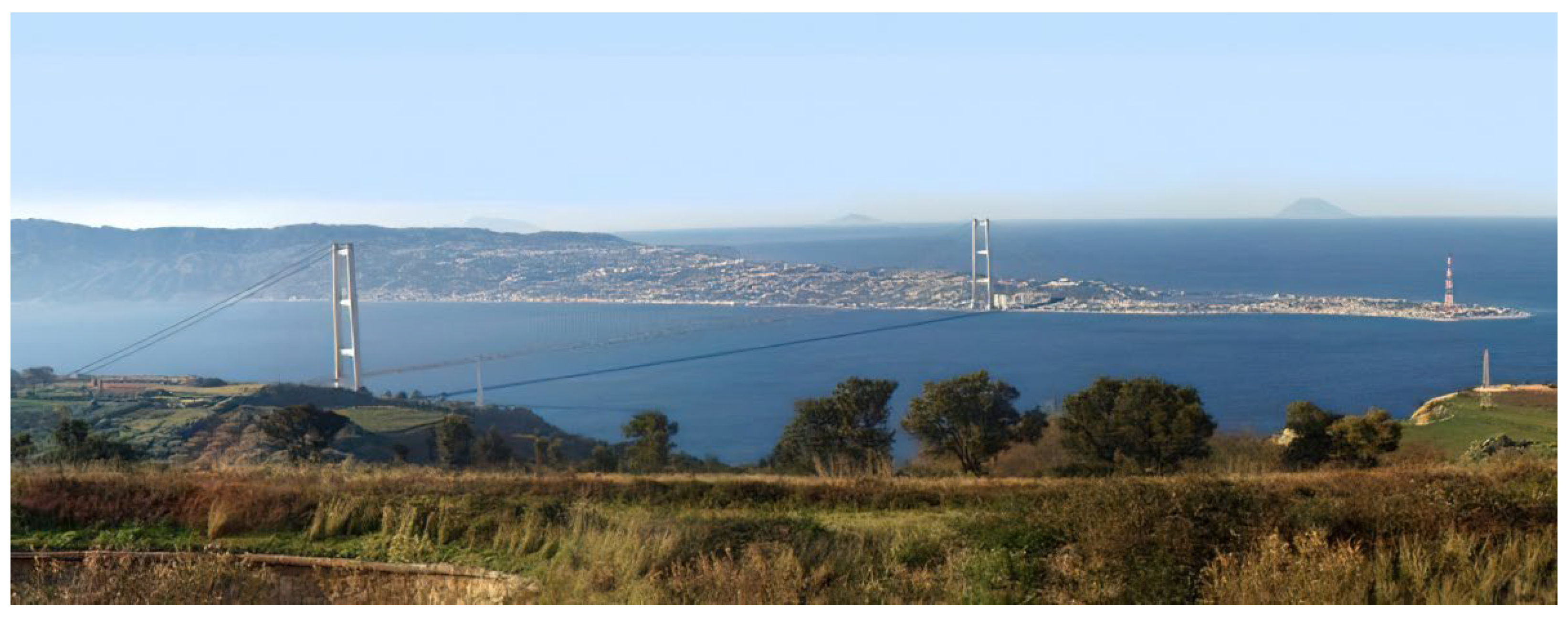
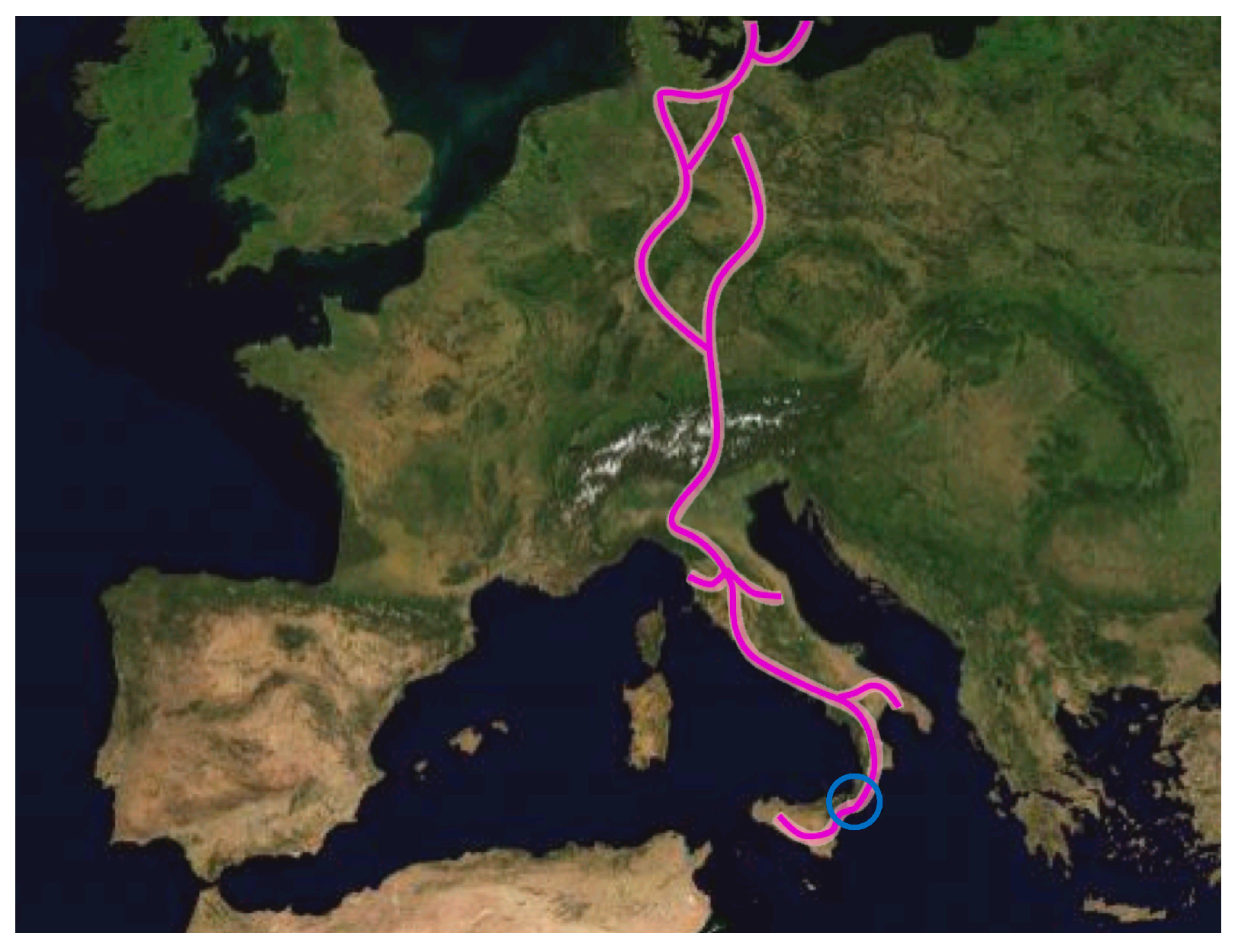
With a suspended span of 3300 m, the Strait Bridge will have the longest suspended distance in the world, one kilometer longer than the current record-holder, the Çanakkale Bridge in Turkey, and will accommodate both road and rail traffic. The Bridge plays strategic roles for Italy and Europe: it will unite Sicily to the continent and the Mediterranean to Europe; it will be the hub of an integrated infrastructure system, serving the region and its citizens; and it will implement the “Scandinavian–Mediterranean Corridor” (Helsinki–Palermo–Valletta) of the TEN-T (Trans-European Transport Network) network, projecting the largest and most populous island in the Mediterranean towards Europe (
Figure 1).
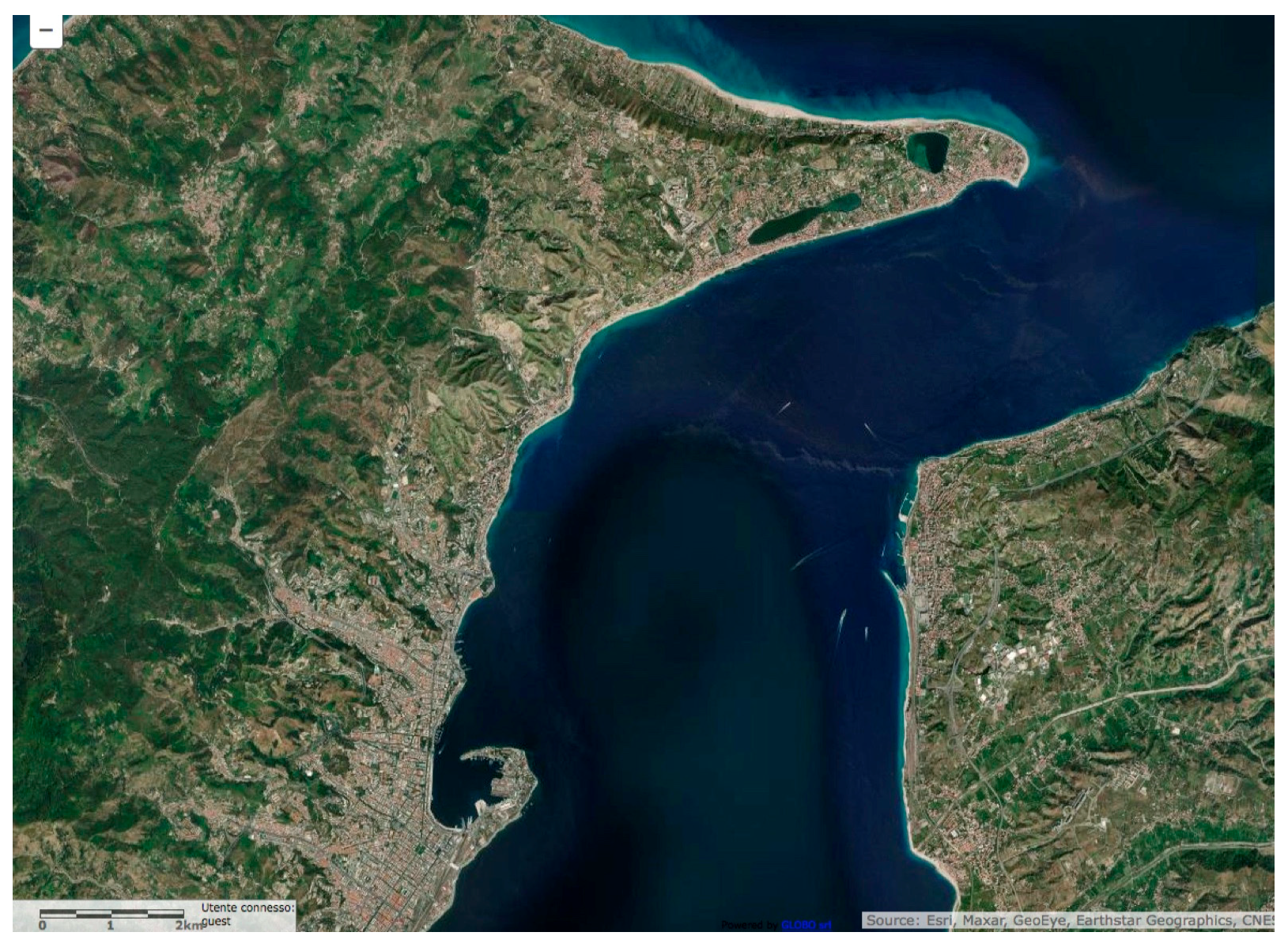
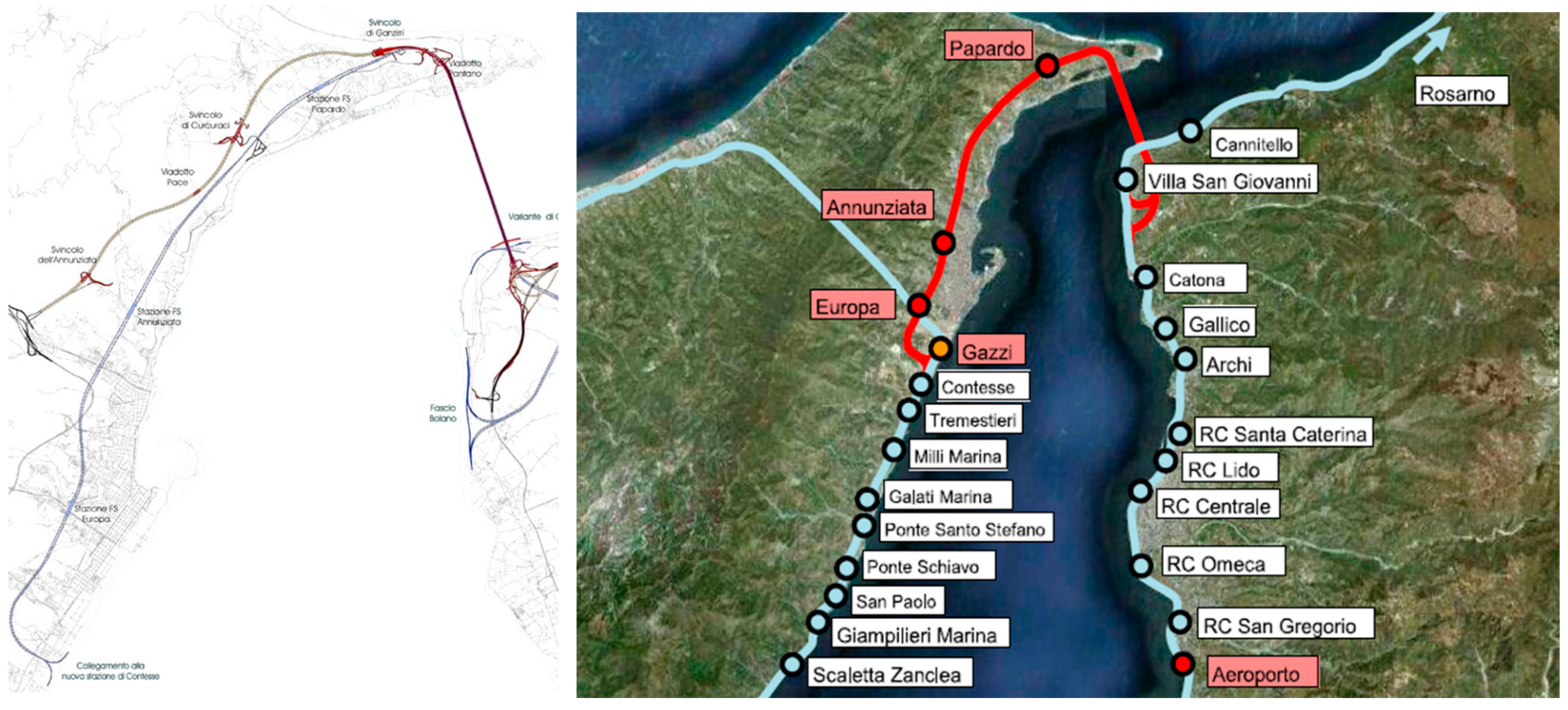
With the Strait Bridge, in the Strait area (
Figure 2), territorial arrangements, seafronts, infrastructure systems, and urban and architectural dimensions will change. It appears necessary to prepare the territories and take advantage of all the opportunities related to future scenarios (
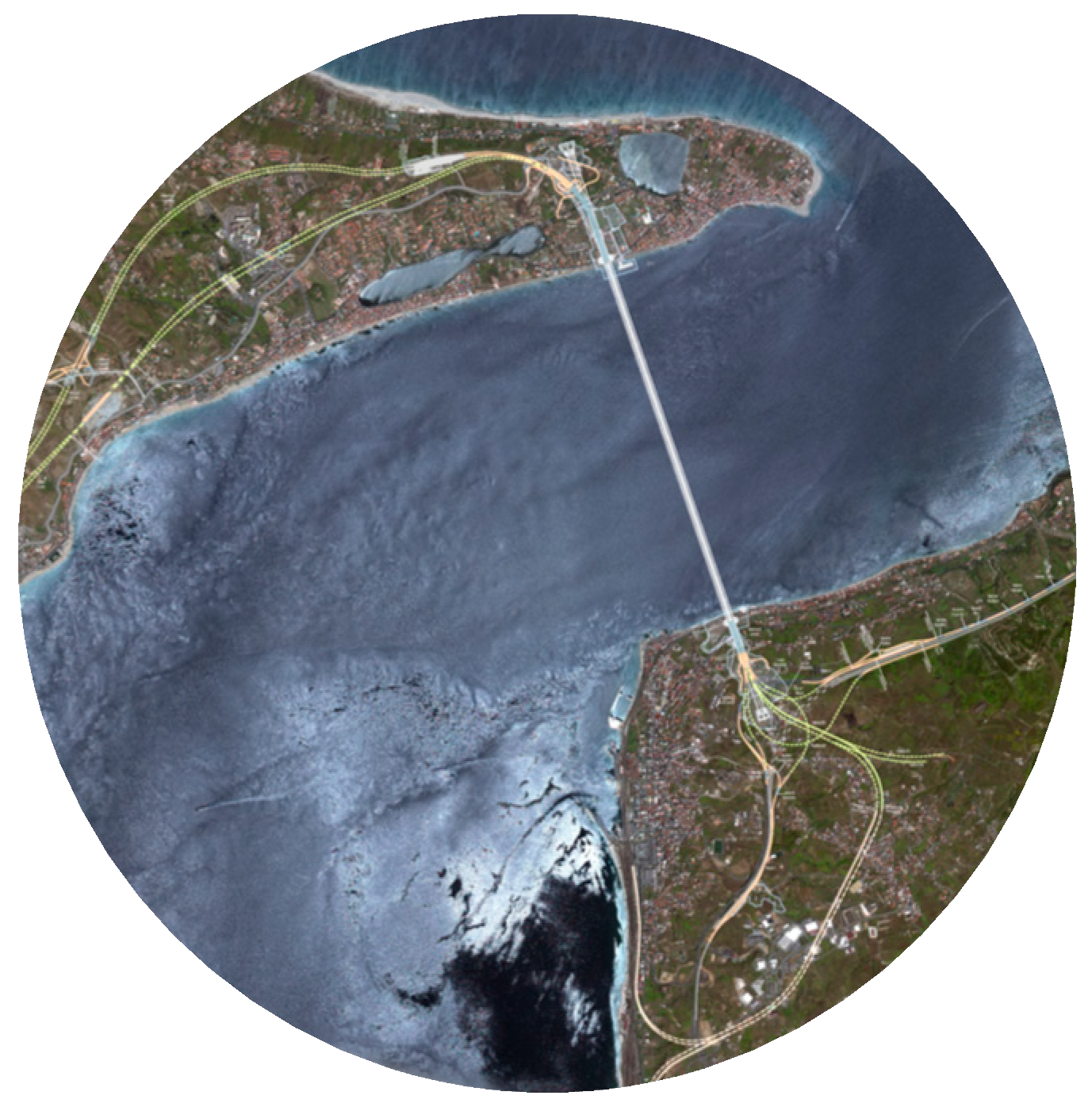
Figure 3).
It is necessary to consider how the territories, with the Bridge, will strengthen their centrality with regard to the role of the Strait in the Mediterranean, a crossroads of major transnational routes, and the need to reorganize travel and manage flows, given that 10 million passengers a year and 8000 a day travel in the area. Today, the Strait area is at the center of political debate on the issue of a permanent crossing, as it is the most important project destined to play a central role on a global scale. This has sparked debate on an area characterized by infinite potential. In addition to becoming the real link between the two land–sea interfaces of Sicily and Calabria—vast and heterogeneous regional contexts in terms of territorial morphology and infrastructure—it will connect the country with the rest of the southern hemisphere, in particular with Africa, which is incredibly close in terms of the mutual composition of resources, economy, and countless energies. The Strait is, therefore, the point of contact with the densest flows. Every year, millions of goods and people travel through the Strait area using different modes of transport and with various destinations, including those outside the region. The two metropolitan cities, Messina and Reggio Calabria, covers a total area of almost 6500 square kilometers, with a population of approximately 1,100,100. Sicily, with less than 5 million residents, and Calabria, with just over 1.8 million, will develop cities with variable geometries in relation to Euro-Mediterranean hubs and networks [
2]. The Strait area is marked not only by the crossing but the whole territorial and urban system—the coastal strip and inland areas—which will become an active part of the processes of territorial regeneration and development [
3].
The Bridge (
Figure 4) can also play a strategic role in urban and architectural waterfront regeneration. The Bridge will change the territorial arrangement of the Strait and the urban organization and the architecture of the seafront. And from here, the change could then spread all around, becoming an opportunity for widespread regeneration. It will be necessary to prepare the territories, including inland areas, with particular regard to central Sicily. This is an extraordinary opportunity not only for the Strait area and its coasts but also for the inland areas of Sicily, which cannot be excluded from such scenarios.
2. Materials and Methods
Best practices and experiences of the world’s straits were examined, analyzing useful case studies to understand what processes and phenomena “cross” them and what works, along with what urban, spatial, and architectural interactions and strategies they intercept or lap up. Marine “straits” are unique, and one realizes that the strength of their peculiarities lies not only in their function as a natural link between two shores but also in their role in channeling flows and energies. The goal is to understand their extraordinary potential to promote a synergistic and sustainable transformation and devise strategies to prevent the opportunity of the construction of the Strait Bridge from becoming a missed opportunity for the enhancement of its shores as catalysts for rebirth and innovation.
Attempts are made to identify possible design strategies so that the Bridge does not merely unite two shores but relates to socio-economic issues, regeneration, and architectural and urban enhancement, involving resources and actors in the Strait area. An analysis of the literature on the topic of land–sea boundary relationships in straits, with reference to the straits of Europe and the Strait of Messina, reveals a complex interaction between environmental, landscape, architectural, and urban factors. Straits constitute spaces of transition and connection between two worlds, land and sea, and present unique challenges and opportunities for urban management and development.
3. Results
The processes of transformation and management of architectural and urban dynamics in straits are crucial to preserve the balance between nature and the built environment, as well as to foster proper integration between local communities and maritime contexts.
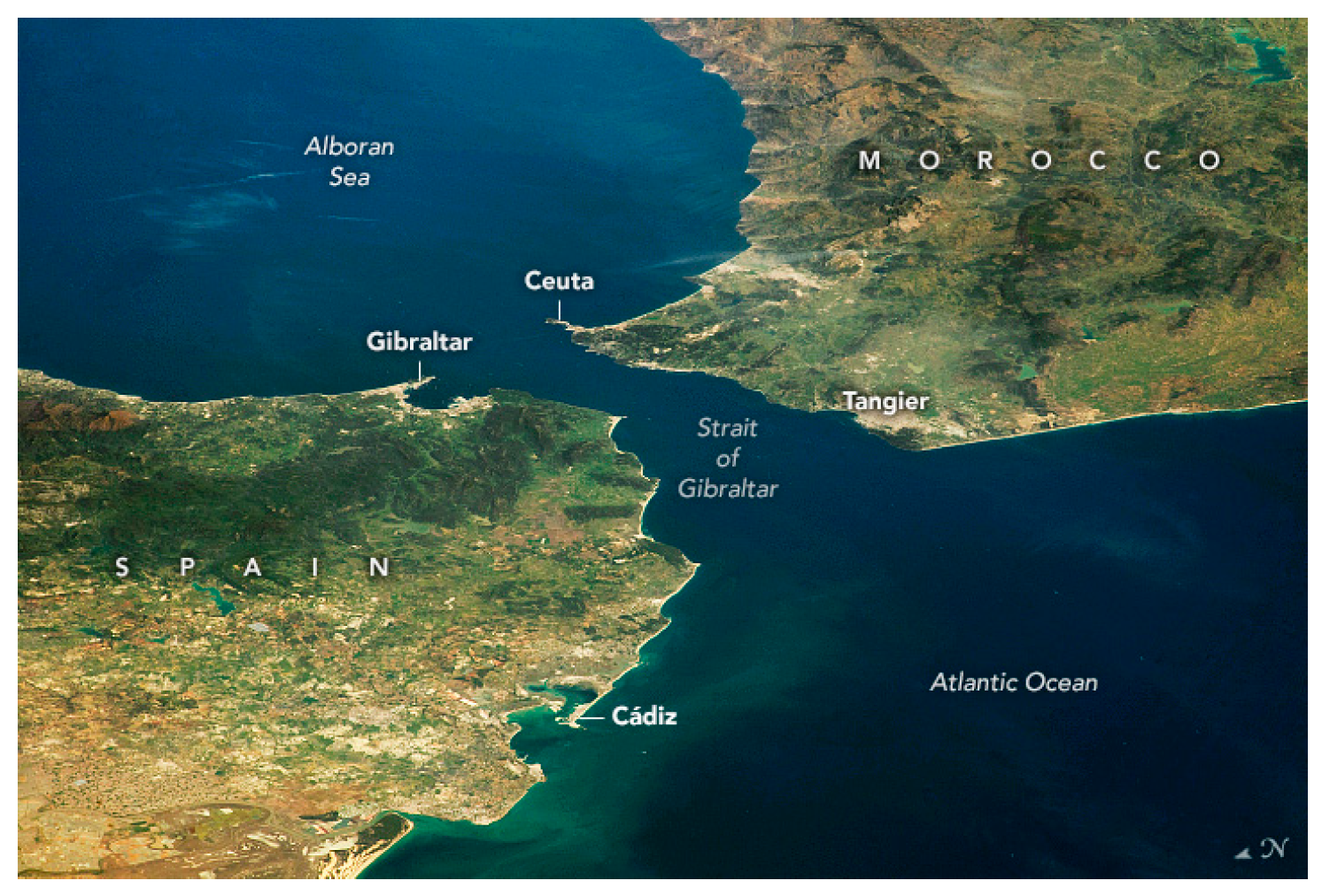
The Strait of Gibraltar (
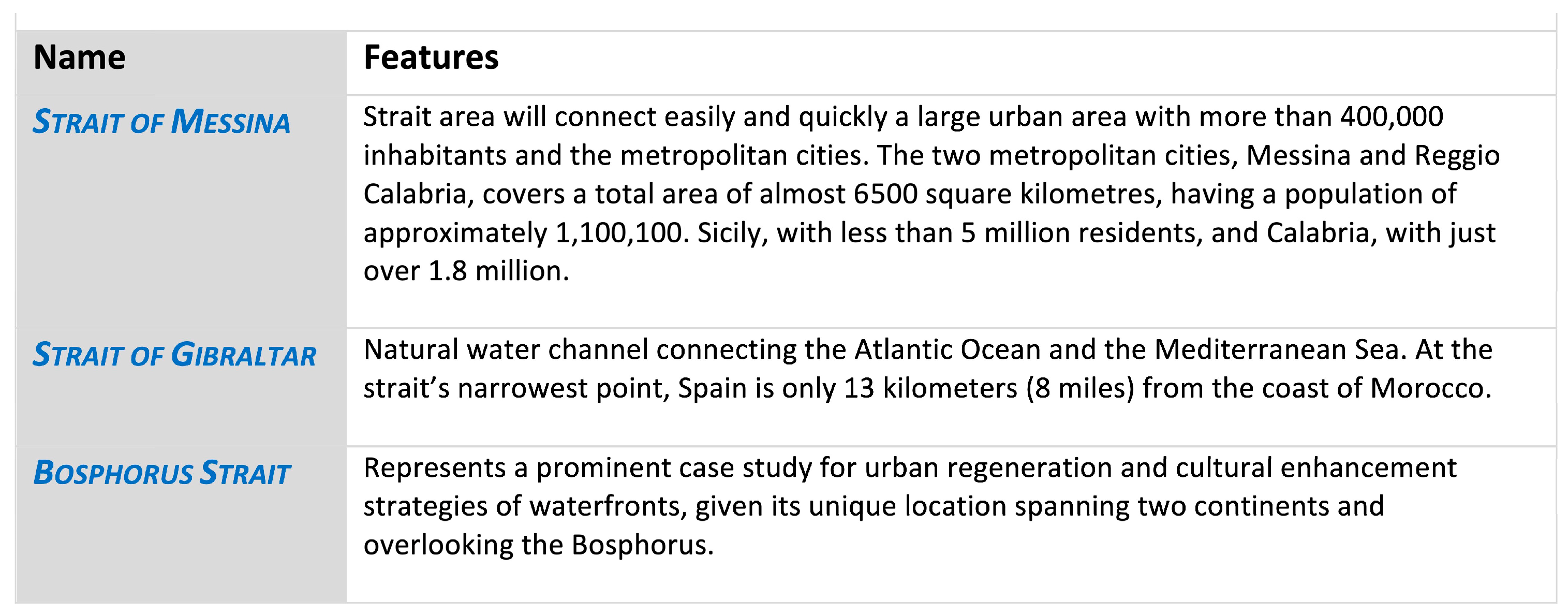
Figure 5) is a natural water channel connecting the Atlantic Ocean and the Mediterranean Sea. At the strait’s narrowest point, Spain is only 13 km (8 miles) from the coast of Morocco. Gibraltar is committed to the sustainable management of waterfronts through projects for the redevelopment of port areas, the creation of pedestrian paths along the coast, and the enhancement of the area’s natural and cultural resources.
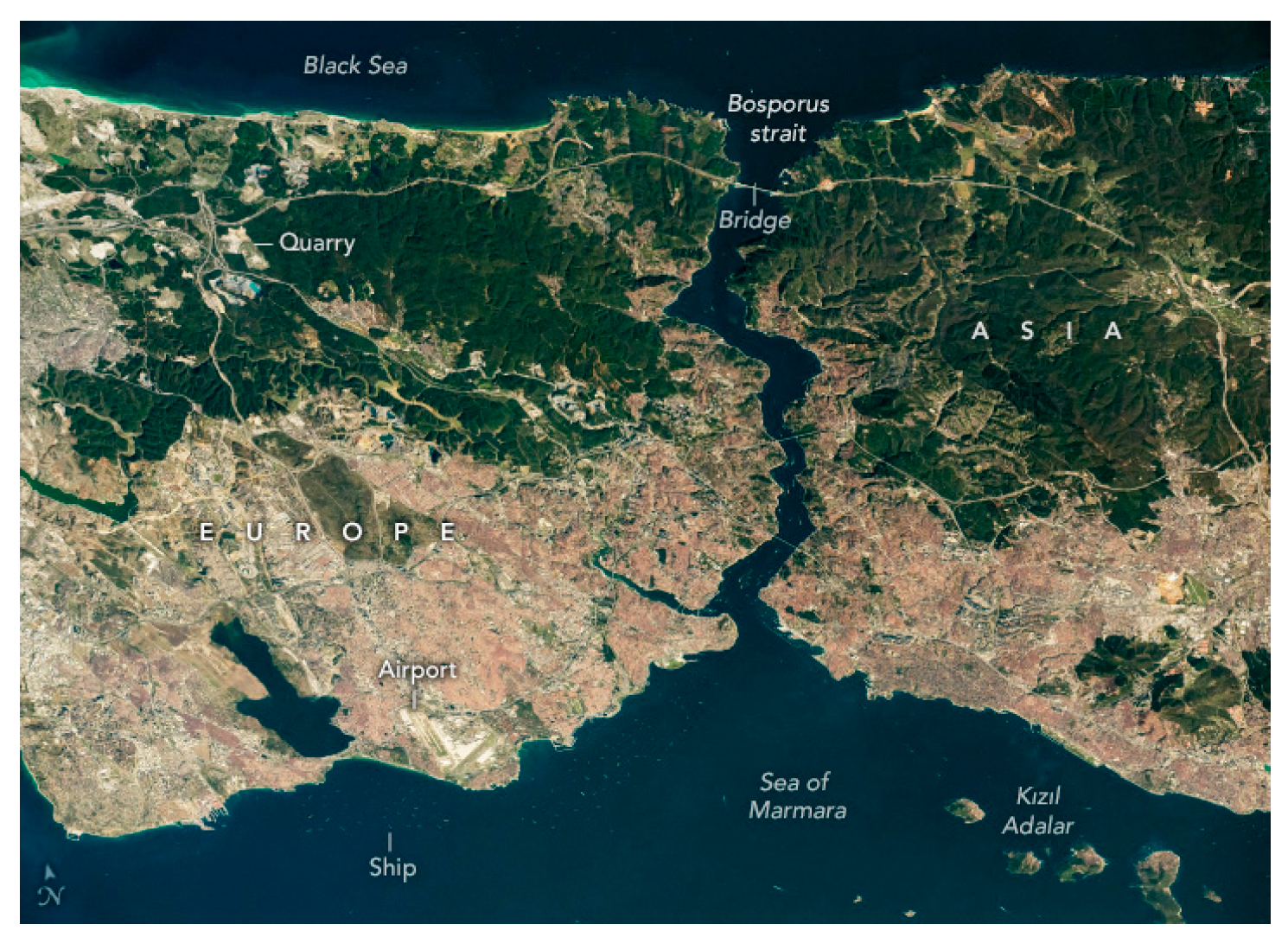
In the Bosphorus Strait (
Figure 6), Istanbul represents a prominent case study for urban regeneration and cultural enhancement strategies of waterfronts, given its unique location spanning two continents and overlooking the Bosphorus. The width of the Bosphorus varies considerably, from a minimum of about 550–700 m at its narrowest points to about 3000–3500 m at its widest points or at the entrance to the Black Sea. The Istanbul metropolitan area is home to over 16 million people and straddles the Bosphorus Strait, which serves as a direct link between the Black Sea to the north and the Sea of Marmara to the south. The Bosphorus not only divides Istanbul but also separates Europe and Asia, meaning the city stretches and must consider its waterfront spanning two continents (
Figure 7).
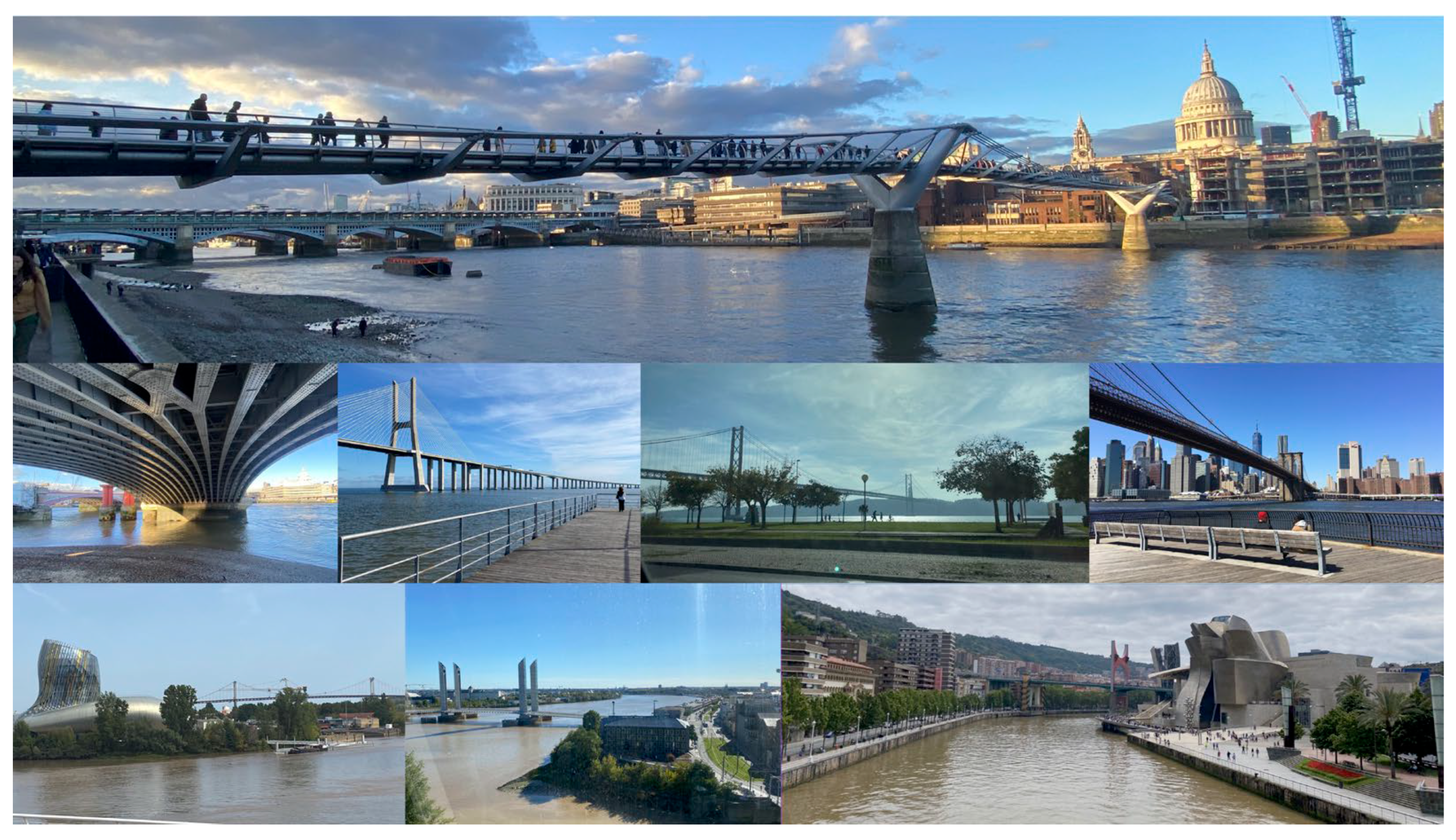
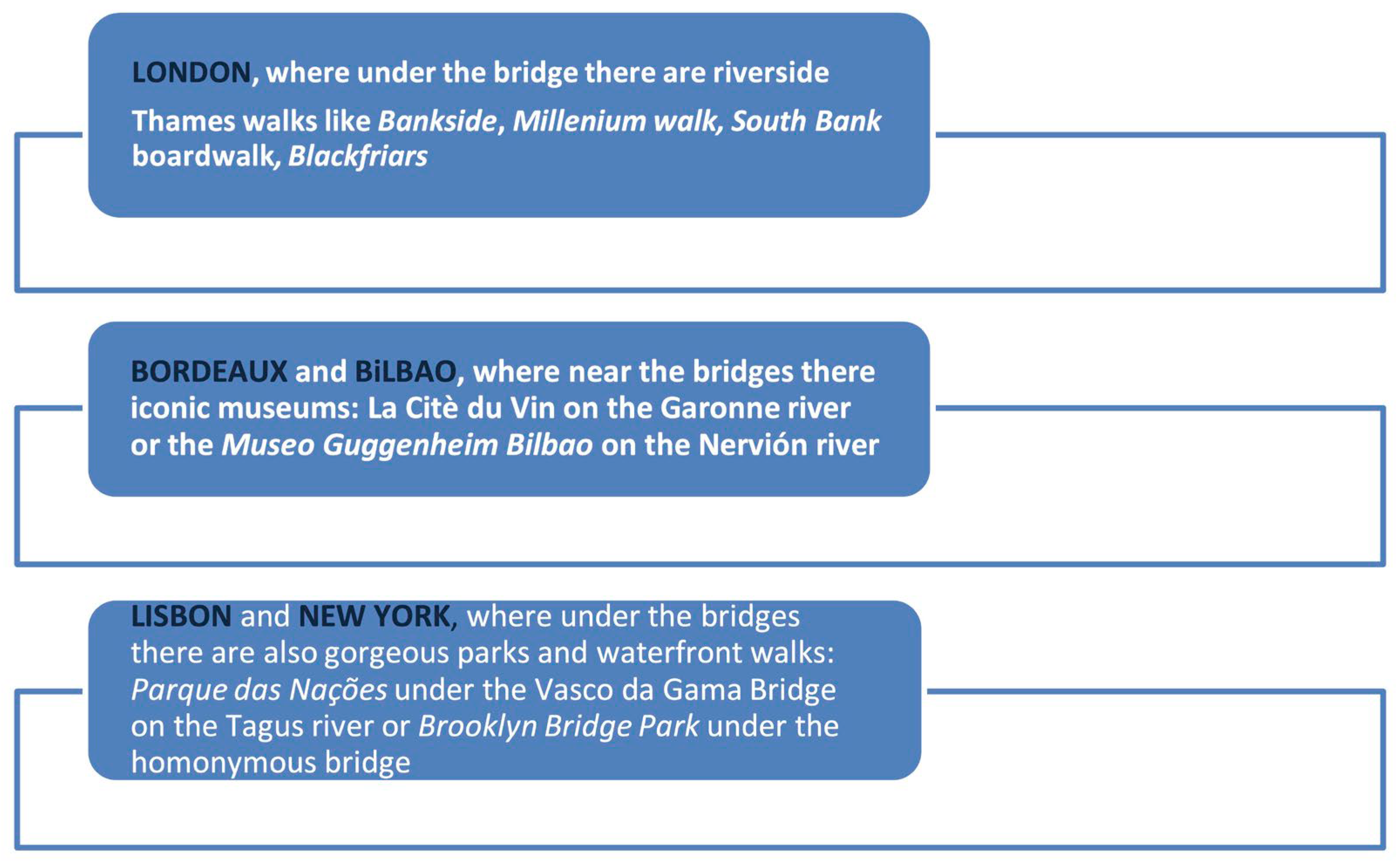
From the study of straits, of which only two examples have been included here, we move on to the study of some cities connected by bridges to see what happens under or around the bridges themselves. Several examples of areas in the city center right under the bridge or around the bridge, as analyzed in the case studies. Cases include the following: London, where there are riverside Thames walks under the bridge like Bankside, Millenium walk, South Bank boardwalk, and Blackfriars; Bordeaux or Bilbao, where near the bridges there are not only walks but iconic museums, thanks to La Citè du Vin on the Garonne river or the
Museo Guggenheim Bilbao on the Nervión river; Lisbon or New York, where there are also gorgeous parks and waterfront walks under the bridges, thanks to
Parque das Nações under the Vasco da Gama Bridge on the Tagus river or the
Brooklyn Bridge Park under the homonymous bridge (
Figure 8 and
Figure 9).
Thanks to the Bridge, not only did “the place appear”, to quote Martin Heidegger [
4], but an unstoppable regeneration of the areas was triggered, with benefits all around for the cities that host them. Bridges unite and bring together. In a word, they redevelop. Next to bridges, parks, museums, and theaters arise. Architecture for the community is born and reborn. These are just some of the possible and diverse design strategies that can be implemented for the regeneration, conservation, and enhancement of waterfront edges. This represents a valuable opportunity to engage resources and stakeholders in the Strait area, restoring these strategic waterfront areas to the cities and their residents.
4. Discussion
From the case studies, it is possible to draw various design strategies for the regeneration, conservation, and enhancement of waterfront edges, involving resources and stakeholders in the Strait area, returning these strategic seafront areas to the cities and their inhabitants. New projects are to be carried forward together on the seafront for the new and larger metropolitan city that is taking shape around the Bridge. Around the Bridge, it could be an occasion to restore the identity of the Strait itself.
A bridge is not just a bridge; it is much more: it is an opportunity to create spaces for socialization in its surroundings, for new meeting places, for exchanges, for exhibitions and displays, perhaps even parks for sports, and a place where people can meet together by the sea, along the two shores. In addition to the infrastructure itself, the Strait Bridge also includes complementary works in Sicily and Calabria, such as roads and railway connections to the national network, regional transport lines, and three railway stations in Messina, with transport service to connect the Bridge to the university, hospitals, and city center. All these complementary projects will not only profoundly change mobility in the two regions but will also help protect the surrounding environment. An estimated 12 million cubic meters of earth will be excavated in Sicily and 4.5 million in Calabria, which will be used to build roads and restore the environment along the Tyrrhenian coast. Several interventions are planned as part of a broad environmental compensation system.
On the Calabria side of the Bridge, the Villa San Giovanni Management Area and Monitoring Centre of the Bridge and the Bridge Business Center designed by Daniel Libeskind will be built. It will be a multifunctional complex which will host activities related to the management of the project, and it will be located in Piale, Villa San Giovanni, Reggio Calabria, adjacent to the anchor block of the Cannitello tower of the Bridge. This infrastructure is much more than a bridge: “A Bridge is not just a junction of point A with point B, but it is also everything that appears thanks to the Bridge”, as the famous Polish–American naturalized architect claims. “It is the essence of humanity, it is a spiritual experience because it includes all the spiritual experiences that people have as they cross it”, as he says. “The Bridge is not just a segment, but everything it can represent in terms of community, it is a place of meeting and socialization”. And so the large ‘Piazza del Mediterraneo’ connected to the Business Center Bridge is conceived as a place of community, “the essence of being together and sharing”. As Libeskind demonstrates through his design, “the bridge is not a place of passage, but an opportunity to create places to live” [
5]. For this reason, the design of it seeks to express the Mediterranean identity, evoking the connotations of a sea that expresses the bonds of different cultures, religions, identities, and languages.
Many works related to the Bridge itself are planned: the Bridge can become an opportunity for regeneration and restoration of identity to all the areas surrounding it. Myths, legends, currents of the Strait, and winds also serve as raw materials and the foundational elements of the project.
The uniqueness and exceptional nature of the system of works we call the Bridge over the Strait, compared to other projects completed to date, lies in its multifaceted and multi-level nature. The “Bridge System” is simultaneously part of the European TEN-T network; a motorway infrastructure directly connected to the motorway network; a railway infrastructure connected to the Italian high-speed line; part of the complex of local mobility connections; an urban and interregional underground line connecting the metropolitan area of the Strait from Messina via Villa San Giovanni to Reggio Calabria; a local road line relieving all urban traffic through the roads upstream of the current city road network and also providing access to the Bridge; part of an urban regeneration process; the tool to redevelop the areas surrounding the Bridge towers and the structure’s anchorage areas (currently degraded) with green areas and sports and multi-purpose spaces, located in a territory that has been highly symbolic since the time of Homer’s Odyssey; the solution for the recovery of a large portion of the seafront north of Calabria and Sicily, which has fallen victim to unplanned and uncontrolled construction, including port facilities that will be permanently removed; and a turning point, with the new railway network on the Sicilian side, to eliminate the divide that has wounded the southern part of the city of Messina, represented by the old railway line, which will be almost completely removed, restoring continuity and access to the sea from the city. (
Figure 10).
The Bridge, with the new inter-regional metropolitan system of the Strait area, will easily and quickly connect a large urban area with more than 400,000 inhabitants. The “Bridge System” is activator of many processes, operating at international, regional, and local levels and possessing regenerative effects that could reverse the social and economic history of the territory. According to numerous studies, the Bridge connection would improve economic dynamism and promote development within the region [
6]. It is confirmed as one of the most significant economic operations for the country in recent decades [
7]. The Bridge will bring profound changes, and the benefits that the Bridge will bring far outweigh the inconveniences [
8]. The Bridge is also a highly environmentally friendly structure. Its construction and subsequent use in crossing the Strait, replacing ferry navigation, would drastically reduce pollution levels [
9]. The examples mentioned above operate on one or only some of these territorial levels. The most significant innovation and, at the same time, the greatest complexity of the project emerges more clearly from a detailed reading of its integrations and interactions with the area or areas (sea and land) concerned. The three levels mentioned above are not separable but are intertwined in their essence.
The motorway infrastructure connecting to the crossing project on the Sicilian side is entirely located within the municipal territory of Messina. The reorganization of the networks—facilities and infrastructure—must be rethought in a systemic logic in which the Strait is not just an “element of discontinuity” between the two land masses. Architectural, urban planning, landscape, environmental, economic, and other solutions will need to be proposed to improve the environmental performance of the territory in terms of safety from all forms of risk, resilience, quality of life, and adaptation to climate change, thereby promoting local activities, activating knowledge and awareness-raising initiatives relating to the new forms of the territory and urban structures, creating and strengthening the network between institutions, organizing a knowledge system through virtual mapping and analysis of the assets and resources of the territory, and disseminating good practices on their possible use.
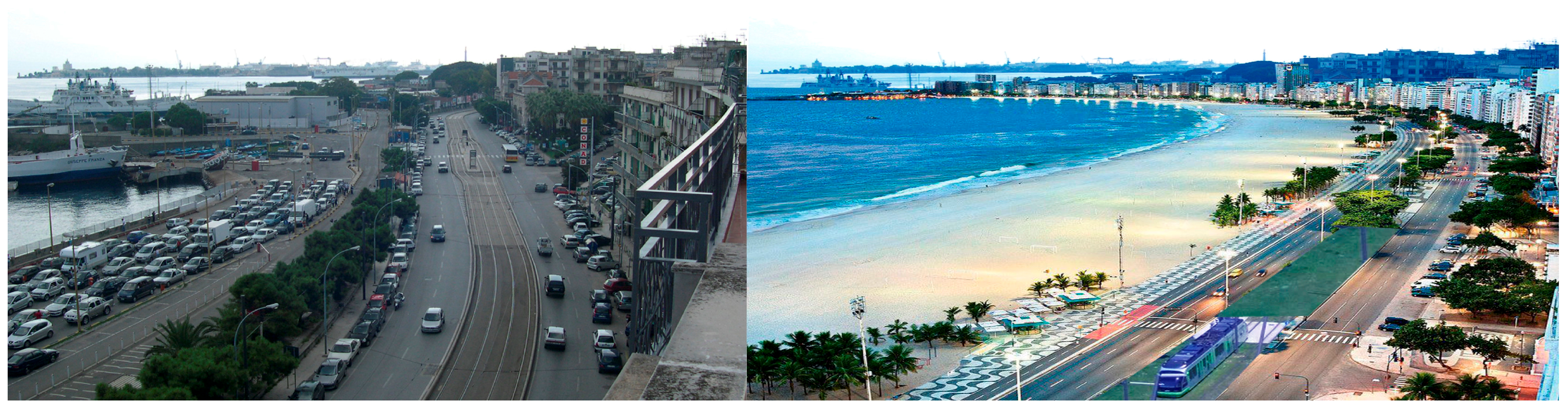
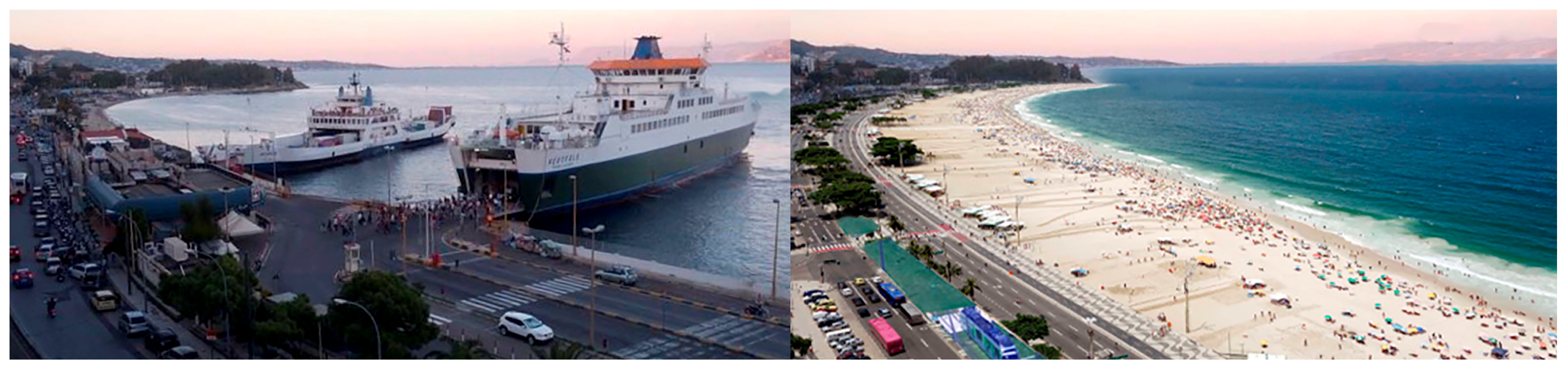
On the Sicilian coast alone, it is hard to believe that the city of Messina, with its 50 km of man-made coastline, has practically no urban beach. Until the 1960s, there were the
Bagni Vittoria and
Principe Amedeo bathing establishments, right where the San Francesco harbor is now located, with ferries to Calabria. Thanks to the Bridge, these ferries should now move further south to the new port of Tremestieri. A magnificent urban beach could magically appear (
Figure 11 and
Figure 12). Who would not like to walk barefoot on the beach, along a simply equipped seafront, walking along the sand? When possible, perhaps during a break or early in the morning before going to work or just after disembarking from a cruise ship, one could take a swim in the sea and then a quick shower, later getting dressed and admiring a work by Caravaggio, a building by Coppedè, or a rationalist building by Mazzoni with a beautiful mosaic by Cascella just a few meters away. In Messina, all this would be easily possible. Coastal cities such as Rio de Janeiro and Miami, but also much smaller cities closer to home such as Nice in France, San Sebastián in Spain (for many years voted the best urban beach in the world according to Travelers’ Choice and many others), Barcelona, Malaga, and Tel Aviv, owe their fortune to their extraordinary geographical location but also to the true integration between the sea, the beach, and the city center. There are no barriers to the view of the sea and the beach but rather maximum openness and dialog between the city and its inhabitants and the sea of the Strait.
5. Conclusions
The current state of lack of appreciation and degradation of the seafront in the various case studies analyzed along the Strait of Messina raises important questions about how to intervene with projects to recover, reuse, and initiate possible regeneration strategies [
10]. Each stretch of coastline has the potential to be enhanced, potentially becoming a valuable element of identity, a fragment of a vastly larger landscape, and part of a greater memory to be preserved and enhanced both naturally and architecturally.
As a “passage and threshold,” the Strait cannot escape its nature as a multidirectional crossing point. “The Straits have always been pivotal places—the Anglo-Saxons, unhypocritically, call them chokepoints—points of suffocation—in international politics” [
11]; they are suffocation points capable of unleashing an enormous force to radiate all around.
The Strait of Messina Bridge will transform not only mobility between Sicily and the rest of Italy but also the waterfront of the entire new metropolitan city around it, acting as a catalyst for economic development, industry, employment, culture, and tourism in Southern Italy.
“There are places that, when examined on a map, make you feel for a brief moment an affinity with Providence, places where history is inevitable, places where geography provokes history” [
12].
The quote also seems to be talking about this case: The Strait Bridge in the Strait area—an opportunity for careful strategic architectural and urban waterfront regeneration.