Article

Interplay of Climate Change, Population Growth, and Building Stock Expansion in Egypt: Pathways to Energy-Efficient Building Development

by
Hebatallah Abdulhalim Mahmoud Abdulfattah
Department of Architecture, Faculty of Engineering, Cairo University, Giza 12613, Egypt
Reg. Sci. Environ. Econ. 2026, 3(2), 7; https://doi.org/10.3390/rsee3020007
Submission received: 2 February 2026 / Revised: 23 April 2026 / Accepted: 28 April 2026 / Published: 4 May 2026

Abstract

This research examines the complex relationship between climate change, rapid population growth, and building stock expansion in Egypt, as well as their combined impact on energy demand and urban sustainability, to address the rapidly increasing electricity demand. This study uses a mixed-methods approach, including quantitative analysis to examine climatic data (1970–2100), demographic trends, and building energy consumption patterns, quantifying their synergistic effects; a qualitative evaluation of policy frameworks and urban planning strategies; and building energy performance simulation using Design Builder to utilize climate-responsive design techniques for energy reduction. Finally, this study proposes energy-efficient design guidance. The research findings reveal that Egypt’s unique hot–arid climate, projected to warm by 4 °C by 2100, combined with a population set to reach 160 million by 2050, has driven the near-doubling of building stock since 1986, with residential buildings accounting for 70–83% of structures and 60% of national electricity use. The research results highlight the importance of implementing climate-responsive design strategies (optimized building-envelope thermal insulation and energy-efficient HVAC systems) in Egypt’s built environment to reduce electricity consumption by up to 40%, thereby aligning urban growth with sustainability objectives. These insights are scalable to other arid, rapidly urbanizing regions globally.

1. Introduction

The worldwide demand for energy is escalating rapidly, driven by a confluence of socioeconomic, demographic, and environmental factors that threaten the stability of energy systems worldwide. The built environment is pivotal to this connection, presenting both a problem and a crucial opportunity for action. In regions with hot, arid climates, the relationship between buildings and energy demand is particularly pronounced, as high temperatures intensify cooling needs and strain already burdened energy systems. Egypt presents a compelling case study of these intersecting pressures, having experienced a substantial increase in energy demand over the last 30 years. The substantial rise in energy consumption in Egypt has emerged as a major and challenging issue for both the government and the individual user.
Egypt is experiencing significant climate changes, including increased temperatures and altered rainfall patterns, which exacerbate desertification and necessitate identifying vulnerable climate zones [1]. Egypt’s hot-arid climate is already characterized by summer temperatures exceeding 40 °C [2], and projections indicate that temperatures will rise by up to 4 °C in 2100 [3]. This warming trend is expected to dramatically intensify cooling energy demand, with studies projecting increases of up to 39% in cooling requirements by 2080 [4]. Rising temperatures drive greater reliance on air conditioning, which, in turn, increases electricity consumption.
Compounding this climate pressure is Egypt’s extraordinary demographic growth, as the 13th-most populous country in the world and the third-most populous in Africa [5]. Egypt’s population has surged from 20 million in 1950 to 119,203 million in 2025 [5]. Cairo, the capital, is expected to grow from 18.8 million in 2015 to 25.5 million by 2030 [6], placing additional strain on energy resources. Such demographic expansion directly translates into increased demand for housing, infrastructure, and the energy services that sustain them, thereby increasing energy consumption. Consequently, the Egyptian building stock has nearly doubled since 1986 to 2017, residential buildings accounting for 70–83% of the total [7]. These buildings are significant energy consumers, with residential buildings alone accounting for 60% of the country’s total electricity usage [8]. With the reality that the overall electricity consumption in Egypt has increased fivefold in 26 years [9].
Despite this crisis, existing built policies have fallen short; energy efficiency codes introduced since 2005 have not been incorporated into the mandatory permitting law or the Green Pyramid Rating System, due to their complexity and lack of clear targets, resulting in minimal to no impact [7,10]. Consequently, the built environment is thermally inefficient, overly reliant on mechanical cooling, and unprepared to address the challenges posed by climate change and population growth. This policy gap is starkly reflected in Egypt’s international standing. The 2022 International Energy Efficiency Scorecard ranks Egypt last in building efficiency policies and performance among 25 countries [11]. This ranking underscores a fundamental disconnect between the urgency of the energy challenge and the adequacy of the policy and design frameworks currently in place.
The Egyptian energy sector is facing several interrelated issues associated with the ever-increasing demand. As a result, Egypt is seeking a balance between generating energy and meeting its own needs [12]. The Egyptian electricity industry relies on a variety of resources to meet its basic energy needs, with oil and natural gas as the principal sources of energy production [13]. Consequently, Egypt’s share of primary energy from fossil fuels is among the highest globally [14]. This dependence has significant implications for energy security, particularly as domestic production faces technical challenges and recent exploration efforts have yielded limited new discoveries [14].
Globally, by 2040, primary energy consumption is projected to rise by 32% compared to 2017 levels [15]. Therefore, numerous programs run by organizations worldwide promote sustainable practices and guide users to reduce energy consumption. Cool-climate countries have extensive experience implementing energy-efficiency standards and have successfully established sustainable green-building designs, policies, and regulatory codes. In contrast, developing countries in hot climates face challenges in establishing and implementing effective energy-efficiency criteria that align with their specific climates and contexts [16,17]. This has left a critical gap between the potential of climate-responsive, passive design principles—evident in Egypt’s own vernacular architectural heritage—and their systematic application in modern construction.
To bridge this gap, this research analyzed various energy-efficiency standards, including Passive House, LEED, BREEAM, Green Star, and the Green Pyramid Rating System. And to identify the most effective and appropriate energy-efficiency strategies for the proposed pathway’s potential, this research draws on globally recognized high-performance building standards and practices, as well as prior research, to guide the selection of strategies for the case study in Cairo by developing a context-specific, performance-based design pathway that synergizes global best practices with local bioclimatic wisdom.
Accordingly, this study examines the synergistic effects of the key drivers of this problem: climate change, population growth, and the steady increase in the building stock, which are the root causes of the rise in energy consumption in Egypt. These three factors do not act in isolation; they create a powerful feedback loop that significantly increases electricity demand. Understanding their complexity is crucial for developing effective strategies that enhance building energy performance, reduce energy consumption, and mitigate climate change.
To address this critical gap, this study aims to develop and validate a practical, performance-based design pathway for energy-efficient residential buildings in Egypt. The specific objectives are to quantify the synergistic impact of climate change, population growth, and building stock expansion; evaluate the suitability of existing local and international energy efficiency standards; identify and rank the most effective, locally adaptable efficiency strategies through energy performance simulation; and propose an evidence-based, context-specific guideline framework.

2. Background

This section of the research will establish the foundational knowledge needed to understand the energy-efficiency challenge in Egypt’s residential building sector. It first analyzes the root causes driving increased electricity consumption: climate change, population growth, and the expansion of the building stock, and clarifies the continuous, permanent interrelation between them. Then it investigates Egypt’s existing energy-efficiency building codes and systems, evaluating their effectiveness. Finally, it examines the global energy-efficiency standards and practices to identify best practices suitable for adaptation to Egypt’s hot-arid context.

2.1. Electricity Consumption Increase Root Causes

A precise understanding of the root causes of steadily increasing electricity consumption is fundamental to developing effective pathways to build energy savings and enhance performance. This subsection examines each factor individually before demonstrating their collective impact.

2.1.1. Climate Change

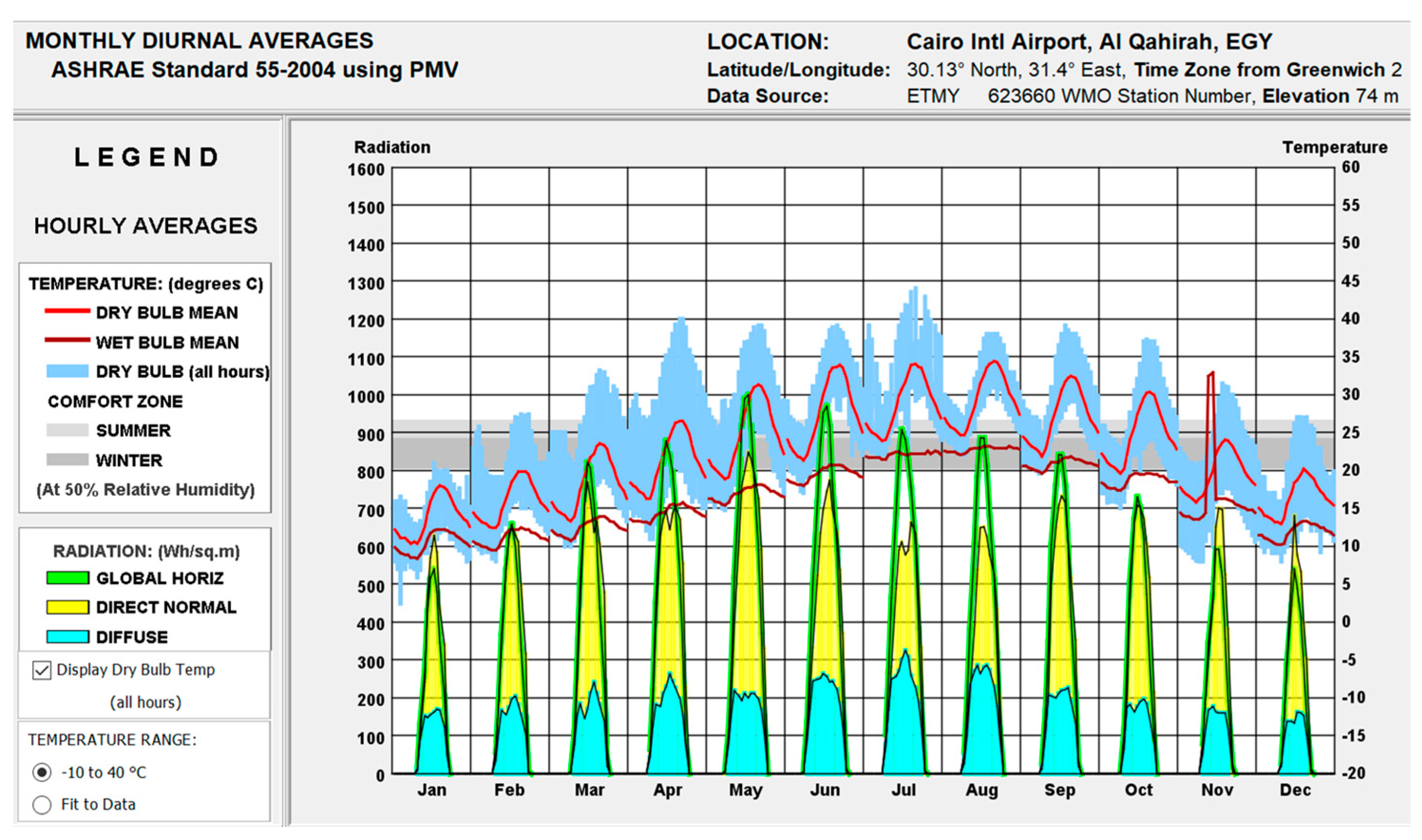
Understanding the complexities of climate is crucial for improving building performance and energy efficiency. Egypt’s changing climate is dramatically altering the thermal performance requirements of buildings, with direct consequences for energy consumption. Over the past 120 years, Egypt has experienced significant climate changes, with various studies shedding light on their trends and impacts. According to research by Tarek, M., El-Geziry, the annual mean temperature has shown a consistent upward trend, correlating with global climate change, providing insights into the evolution of temperatures over this period [18]. Egypt’s climate has undergone notable changes over the last 50 years, with increases in maximum temperatures and decreases in minimum temperatures. These changes have implications for desertification and land use planning [19]. As stated in the Special Report on Emission Scenarios, temperatures will rise by 4 °C by 2100 [20]. Climate change has led to dramatic shifts in Egypt’s climate in recent years. According to the Köppen–Geiger climate classification, Egypt is divided into three climate zones, dominated by hot, dry arid areas [19]. The summer months are marked by intense heat, often exceeding 40 °C [2]. Based on ASHRAE Standard 55-2004, Cairo’s climate is characterized by high temperatures reaching 44 °C and intense solar radiation, mainly in summer, as shown in Figure 1, confirming that buildings are outside the thermal comfort zone and leading to an overwhelming reliance on air conditioning, thereby increasing cooling energy consumption [21]. However, according to the Climate Action Tracker, Egypt’s climate mitigation actions were rated as highly insufficient [22]. IEA reported that climate estimates indicate that Egypt will see more substantial warming than the global average by 2100. A recent study revealed nonlinear relationships between climate change and building energy consumption, demonstrating that temperature increases disproportionately intensify cooling demand beyond simple linear projections [23]. Therefore, Egypt’s climate is becoming increasingly severe, with rising temperatures directly translating into higher cooling energy demand. This trend will continue and intensify, making building energy efficiency a critical adaptation priority.

2.1.2. Population Growth

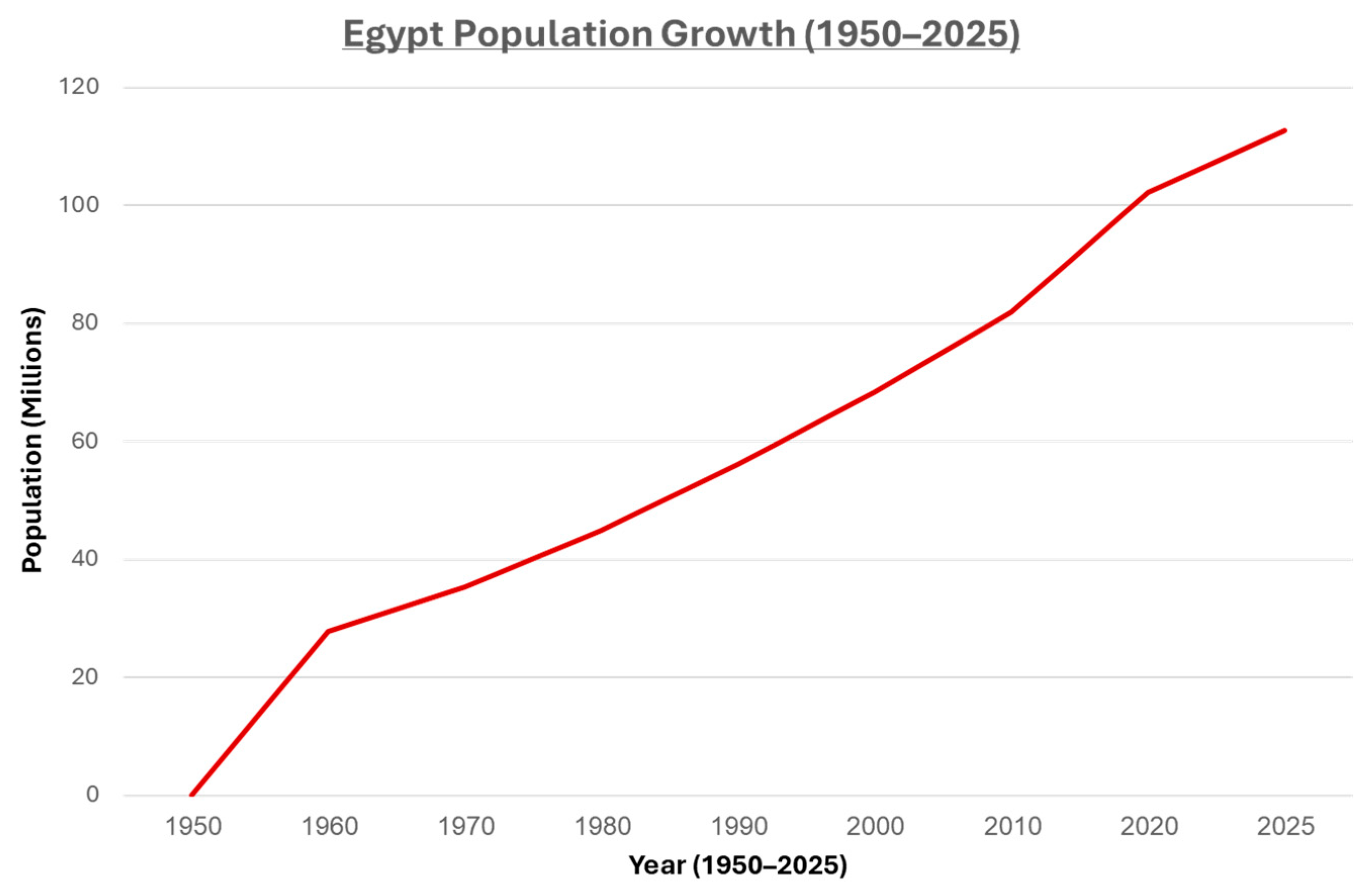
Egypt’s unprecedented demographic expansion is creating proportional increases in housing demand and associated energy consumption. Egypt’s population has surged from 20 million in 1950 to 119,203 million in 2025, representing an approximately 6-fold increase, as shown in Figure 2. Projections indicate further growth to 160 million by 2050 [24]. Cairo is Egypt’s largest city and capital, with approximately 22 million people, and an average annual growth rate of 1.99% [24]. Moreover, Cairo is one of the world’s most populous cities and has seen rapid growth over the last few decades [25]. By 2050, the population is expected to reach 40 million [26]. According to UN DESA, Cairo’s population will increase from 18.8 million in 2015 to 25.5 million by 2030 [6]. Egypt’s rapidly growing urban population, especially in cities such as Cairo, is driving significant demand for construction and related energy services. Consequently, this demographic pressure directly translates into a need for more buildings and, in turn, greater energy consumption, which must be addressed through efficiency measures to mitigate its impact.

2.1.3. Building Stock Expansion

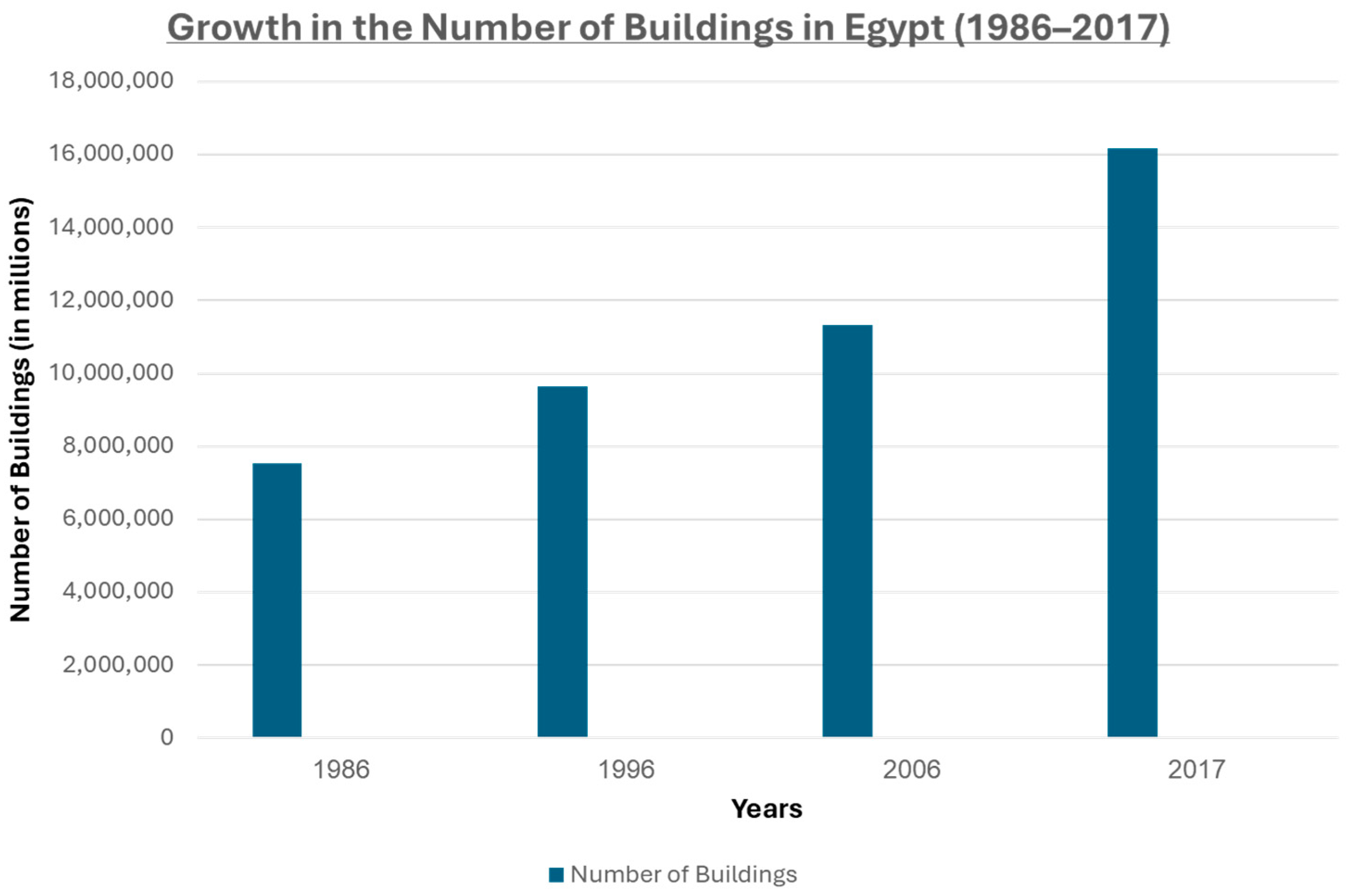
The physical expansion of Egypt’s building stock has accelerated alongside population growth, creating a large and growing stock of energy-intensive structures. The building sector in Egypt has experienced significant growth, driven by the construction industry’s prominent role in the nation’s economy [27]. Census data reported that the number of buildings in Egypt was 11,151,223.000 in 2006, increasing to 16,185,063.000 in 2017, nearly doubling over 30 years since 1986 [28], as shown in Figure 3. According to the World Bank, the existing stock of residential and public buildings totals 21 million. Given that Egypt requires an additional 3.8–4.2 million housing units by 2030, along with non-residential buildings [28]. The Egyptian government has been constructing tens of thousands of new housing units in the market each year. Residential buildings have consistently dominated construction in Egypt, making up about 70% of all buildings [29]. Alsaadani reported that Egypt’s residential building inventory accounts for 70% of the country’s total buildings [8]. However, according to GamalEldine and Corvacho, residential buildings account for about 83.2% of existing buildings, with 13,467,333 million units out of 16,185,063 million buildings. Thus, with a share of 70–83%, the residential sector is the largest energy consumer among industries [7]. Nevertheless, in Cairo, the Egyptian government is proceeding with the construction of a new administrative capital 50 km east of the city. This ambitious project aims to provide 240,000 new buildings within the next five years, alongside numerous other ongoing housing projects [30]. Buildings are significant energy consumers, accounting for a large share of primary energy consumption. Operational energy demand is the main source of greenhouse gas emissions from buildings, followed by construction and demolition activities. Buildings account for approximately 67% of Egypt’s energy usage [31]. A study by Alsaadani found that buildings account for over 60% of the country’s total energy consumption [8]. Egypt’s building stock has expanded dramatically and continues to grow, with residential buildings constituting the majority of structures and energy consumption. The energy intensity of these buildings, particularly for cooling, represents a critical target for efficiency interventions.

2.1.4. The Interplay Between Root Causes

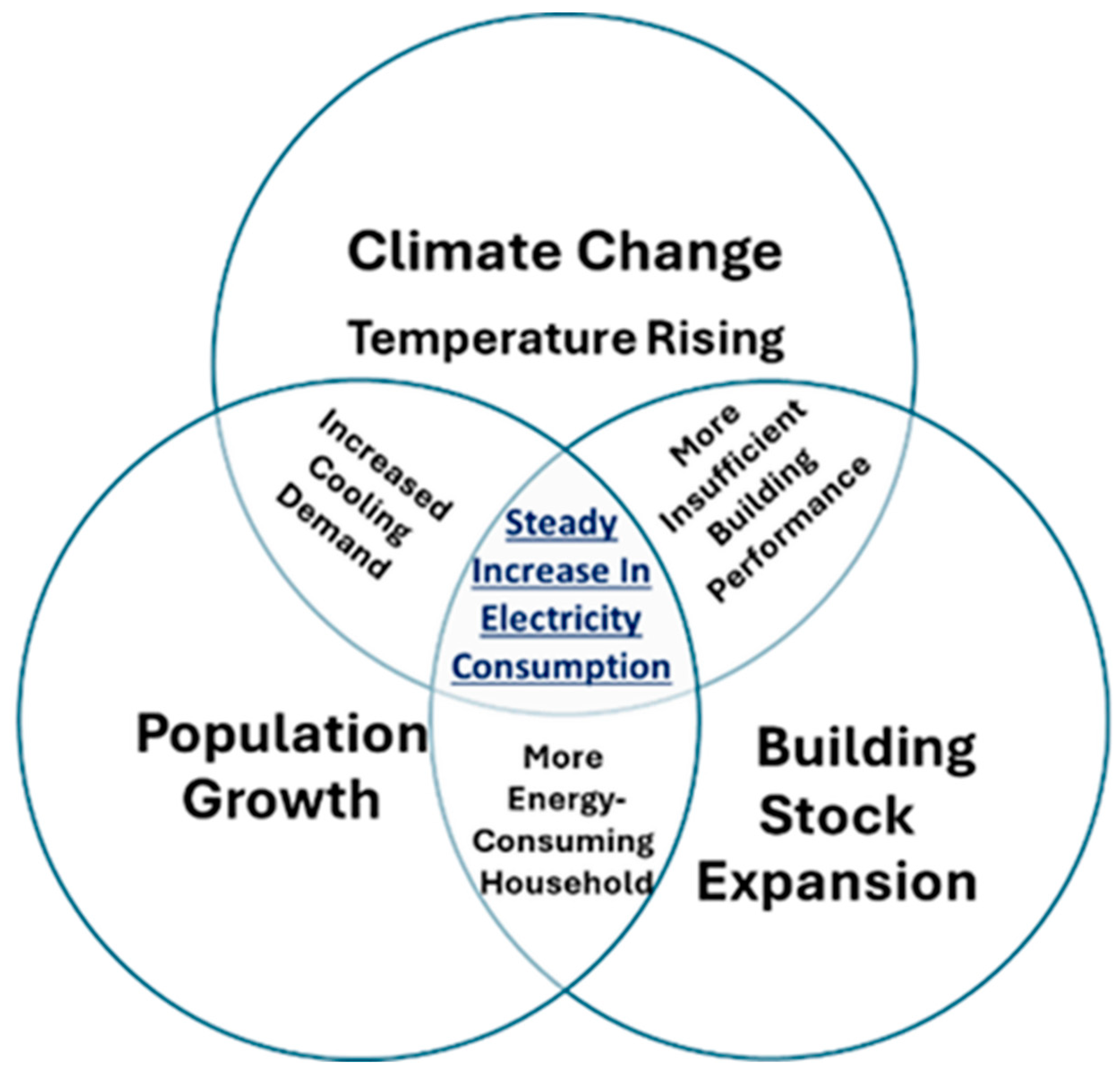
Climate change, population growth, and building stock expansion do not operate independently but rather create a reinforcing feedback loop that amplifies electricity demand beyond what any single factor would predict. The relationship between these three drivers is synergistic rather than additive. Studies show an immediate causal link between electricity consumption, urbanization, and population growth [32]. Population growth fuels building expansion, and more buildings, coupled with a warmer climate, dramatically increase cooling demand. This interplay is the engine behind Egypt’s steadily rising electricity consumption, as illustrated in Figure 4. Egypt will experience a notable surge in power consumption due to more frequent severe heat events, urbanization, and population growth [21]. Anticipated urban growth in Egypt makes energy efficiency a critical concern [33]. This data underscores the urgent need for energy efficiency measures in the building sector to mitigate environmental impacts and reduce overall energy consumption. This analysis provides a comprehensive understanding of the current state of the built environment. As Egypt navigates the complexities of these root causes, a concerted effort to develop and implement energy-efficiency standards for building design is paramount. This initiative will not only reduce greenhouse gas emissions but also foster a resilient built environment capable of withstanding the adverse effects of climate change, ultimately contributing to Egypt’s future sustainability. The synergistic interaction among climate change, population growth, and building stock expansion creates an urgent imperative for energy-efficiency interventions. Addressing any single factor in isolation will be insufficient; comprehensive, integrated solutions are required.

2.2. Energy Issues in Egypt

Despite the scale of the energy challenge, Egypt’s policy and regulatory framework for building energy efficiency remains fragmented, non-mandatory, and largely ineffective. Egypt’s energy sector faces interrelated issues associated with rising demand. Since 2014, Egypt has transitioned from an energy exporter to an importer; this shift was mainly driven by rising domestic demand resulting from rapid population growth, which reached over 120 million by 2025 [24]. Furthermore, some oil and gas resources are now experiencing declines due to technical difficulties, and gas fields have been unable to reach their maximum production capacity. Additionally, recent exploration efforts have not yielded any noteworthy new findings. Consequently, the reduction in production and the rapid expansion in consumption have had significant implications for energy stocks and balances, which in turn have hurt consumers [14]. The regional context highlights the urgency of Egypt’s energy transition, with a holistic analysis of energy development in the Middle East indicating that fossil fuels dominate the Middle East despite renewable potential, and it suggests that a successful transition necessitates integrated policy frameworks, sustained investment, and context-specific regulatory mechanisms relevant to Egypt’s building sector [34]. A report by the Our World in Data organization stated that Egypt’s share of primary energy consumption from fossil fuels is among the highest in the world in 2025 [35]. Primary energy consumption has increased from 92 terawatt-hours in 1965 to 1024 terawatt-hours in 2023, with an average growth rate of 1093% [36]. Consequently, Egypt ranks second in Africa in CO2 emissions from fuel consumption, the primary source of electricity generation, according to the 2021 regional ranking. Meanwhile, electricity accounts for 41% of total energy-related CO2 emissions [21,37].

2.2.1. Electricity Consumption Status in Egypt

Zooming in on electricity consumption, Egypt’s electricity consumption increased from 3.7 kWh Mn in February 1997 to 18.9 kWh Mn in August 2025, representing approximately a fivefold increase [38]. Buildings in Egypt consume a significant share of total electricity, accounting for 66–74% [39]. As of 2021, the residential sector accounted for 58% of Egypt’s electricity demand. Meanwhile, researchers reported that electricity used by the ventilation and air-conditioning system accounts for more than half of total electricity consumption [40]. Air conditioning accounts for about 56% of residential buildings’ total yearly energy consumption [41]. The anticipated rise in ambient temperatures is projected to cause a surge in cooling energy requirements of up to 39% and a 23% increase in peak cooling load by 2080, resulting in HVAC systems that are insufficiently sized [4]. Residential buildings and their cooling systems are the dominant drivers of Egypt’s electricity demand, a trend that will intensify under projected climate warming, making them the primary target for energy efficiency interventions.

2.2.2. Existing Building Energy Codes and Their Limitations

Despite this crisis, existing built energy-efficiency policies and design responses have fallen short. Over the past two decades, the Egyptian government has issued three laws to promote energy efficiency. The first law, enacted in 2005, applied to residential buildings. The second law, issued in 2007, targeted commercial buildings. The third law, passed in 2010, was specifically for governmental buildings. Additionally, a ventilation law was approved in 2015 [33,42]. However, these codes have not been integrated into building permits, as they are not mandatory [7]. The Egyptian Ministry of Housing has promoted environmentally friendly construction practices as part of its broader sustainable development initiatives. Consequently, it established the Egyptian Green Building Council EGBC in 2009, which consists of national and international personalities, including government ministers [43]. The main goal of this Council was to establish a rating system that would incentivize the adoption of building energy-efficiency criteria by implementing measures that enhance energy efficiency and environmental conservation. Accordingly, the EGBC established the Green Pyramid Rating System GPRS) initiative, which was derived directly from the LEED rating system, to promote a grading system that transformed Egypt’s approach to building projects [44]. The main elements considered in this system for new buildings are energy efficiency, water-use efficiency, and indoor air quality [45]. The Egyptian Green Building Council recently established the TARSHEED national rating system [46]. Many weaknesses in these systems may be the reason why they have not yet been implemented: these systems exhibit a high level of complexity and are typically unsuitable for implementation in the Egyptian environment, they emphasize the facility’s management rather than its energy efficiency, which is not Egypt’s primary concern, developers were not motivated to invest in energy-efficient projects due to the unclear energy savings targets, and insufficiency in attaining the enduring social, cultural, and economic goals [7,10]. A study of energy development in the Middle East concluded that successful energy transitions require integrated policy frameworks with building energy codes serving as a foundational mechanism for demand-side management [34]. Egypt’s building energy codes and rating system are ineffective, hindered by their complexity and a lack of alignment with developers’ incentives and local conditions.

2.2.3. Egypt’s International Standing in Energy Efficiency

The gap between policy intent and implementation is reflected in Egypt’s poor international ranking in building energy efficiency. This lack of effective policy is reflected on the global stage; the 2022 International Energy Efficiency Scorecard ranks Egypt last in building efficiency policies and performance [11]. This ranking highlights a significant disconnect between the urgency of Egypt’s energy challenges and the effectiveness of its policies and designs. The lack of robust policy mechanisms prevents Egypt from capitalizing on cost-effective energy-efficiency interventions in buildings, which are crucial for reducing energy consumption and emissions, amid increasing energy demand. To address this pressing challenge, it is essential to integrate effective, context-appropriate design standards and climate adaptation strategies into the building design phase, with a focus on energy efficiency. Bridging the gap between current architectural practices and climate-responsive design is vital for enhancing building energy performance. Egypt requires a fundamentally different approach to building energy efficiency.

2.3. Global Energy Efficiency Standards and Passive Design Strategies

International experience offers proven frameworks for building energy efficiency, but these require careful adaptation to Egypt’s hot-arid climate and construction context. Energy efficiency standards can be categorized as voluntary or mandatory, with mandatory certification often considered more effective at achieving defined targets. This is primarily because mandatory standards require compliance, ensuring that all relevant stakeholders adhere to established benchmarks. While various standards may present distinct techniques, concepts, and procedures, they share a common goal: promoting energy efficiency across sectors. Mandatory standards often lead to more consistent implementation, driving widespread adoption of best practices in energy management. In contrast, voluntary standards may result in uneven application and varying levels of commitment. By providing clear guidelines and enforcing compliance, mandatory certifications have a greater impact on reducing energy consumption and enhancing sustainability.

2.3.1. International Energy Efficiency Standards in Buildings

Several internationally recognized rating systems provide frameworks for energy efficiency, each with distinct strengths and limitations. Ultimately, the successful implementation of energy efficiency standards—voluntary or compulsory—contributes to reduced environmental impact and improved overall performance of buildings and infrastructure [31]. In light of the urgent climate change concerns, numerous countries plan to adopt or revamp building standards and evaluation methods [47]. Internationally recognized green building rating systems, such as LEED (Leadership in Energy and Environmental Design), BREEAM (Building Research Establishment Environmental Assessment Method), GSERS (Green Star), and Passive House (Passivhaus), while valuable, are often complex, costly, and poorly adapted to Egypt’s specific climatic, economic, and cultural context, leading to low adoption rates [48]. This study conducted a comparative analysis between them in terms of energy efficiency, which revealed that the most efficient standard is Passive House, which reduces heating/cooling energy consumption by up to 70–90% [49], while BREEAM projects typically achieve maximum energy savings of 6–30% [50], LEED achieves energy savings of 11–20% [51], and GSERS reduces energy use by 15–25% [52]. International rating systems offer proven frameworks but require significant adaptation to Egypt’s hot-arid climate, construction practices, and market conditions. A context-specific approach is needed.

2.3.2. Passive Design Strategies and Their Relevance to Egypt

Passive design strategies (PDSs) are architectural techniques that maximize a building’s energy efficiency and occupant comfort by leveraging natural ambient conditions rather than relying primarily on mechanical systems. These solutions are designed to reduce energy use, improve indoor air quality, and minimize carbon footprints through careful design decisions. PDSs effectively reduce energy use through renewable strategies such as passive cooling and daylighting [53]. Passive design is defined as a method that optimizes the use of natural resources to improve energy efficiency and comfort in buildings. Key strategies include orientation and layout, thermal mass, insulation, natural ventilation, shading devices, landscaping, and daylighting.
A study in Egypt found a clear correlation between passive design strategies and improved energy efficiency in residential buildings. The research also highlighted the need to adapt these strategies to local environmental conditions, such as Egypt’s hot and arid climate. The authors recommend integrating passive design strategies in the planning stages of new urban developments to maximize their effectiveness and sustainability [54]. Recent simulation-based research on middle-income housing in Egypt supports the efficacy of passive design strategies, revealing that enhanced glazing and shading can improve thermal comfort by up to 10% and reduce cooling loads, underscoring the need to prioritize passive measures before incorporating active systems [55]. Furthermore, PDSs enhance the comfort of indoor spaces and promote the well-being of occupants by ensuring ideal temperature conditions and air quality. PDSs play a crucial role in sustainable design by reducing dependence on non-renewable energy sources and minimizing adverse environmental impacts. Additionally, the utilization and implementation of passive design principles are increasingly essential in the built environment. There is global demand for high-quality, energy- and cost-efficient homes. Passive cooling methods can improve energy efficiency, optimize air conditioning, and reduce heat absorption during the summer months [56]. A study highlights the potential of incorporating courtyards and earth materials, such as Compressed Earth Blocks (CEB), into residential architectural designs to enhance energy efficiency and mitigate carbon emissions [1]. A study by Ouazzani found that shading/reflecting surfaces, as well as movable windows, can reduce energy consumption by roughly 16% during the cooling phase. The energy efficiency of the ground-coupled heat pump is approximately 21% higher than that of a traditional air conditioning system [57].
Fahmy stated that passive design strategies are essential for enhancing sustainability, particularly when integrated with energy-efficient, cost-effective materials [1]. Implementing insulation materials in buildings can significantly decrease overall annual expenses, insulation thickness, and operational costs [58]. A recent study on heat-resilient housing in hot-arid regions found that integrated building envelope measures—including improved thermal resistance, reduced solar heat gain, and window shading—can reduce peak electrical loads by up to 70%, validating that envelope optimization must precede mechanical system upgrades [59]. Additionally, a parametric study of multi-story residential buildings in hot arid climates revealed that glazing type significantly impacts energy performance, while wall insulation reduces annual cooling demand, supporting the fabric-first principle established in the study [60]. Utilizing local materials and passive design strategies can dramatically reduce energy consumption and improve indoor comfort [1]. On the other hand, Azimi stated that active measures such as reflective coatings, green roofs, and energy-efficient air-conditioning systems can reduce energy consumption. Green roofs and renewable energy sources also contribute to energy efficiency [61].
Finally, passive design strategies are essential tools that aim to reduce energy consumption through design techniques but may only address some energy needs, which vary depending on the selected techniques, so it should be regulated and employed in the design process form the early design stages in a clear obligatory framework or pathway with specific requirements as comprehensively as other standards depending on the particular climate and context. Passive design strategies offer a proven and contextually appropriate pathway to energy efficiency in Egypt. These strategies align with the country’s vernacular architectural heritage and can serve as the foundation for a modern, climate-responsive approach to building design.

2.4. Synthesis and Identified Research Gap

Despite the availability of international best practices and the demonstrated potential of passive design strategies, no existing study has systematically integrated these elements into a context-specific, performance-based design pathway for Egypt’s residential buildings. This has left a critical gap between the potential of climate-responsive, passive design principles, evident in Egypt’s own vernacular architectural heritage, and their systematic application in modern construction. Therefore, Egypt, with its hot, arid climate, must tailor green building standards to address its unique environmental, social, and economic challenges. In the meantime, by analyzing the vernacular Egyptian architectural style, the study found that it prioritizes thermal insulation of the building envelope using thick stone, which aligns with the main principle of the PH: building-envelope insulation that reduces heat transfer between inside and outside [62,63]. Furthermore, the vernacular Egyptian architectural style provides fresh air with minimal energy use, employing ventilation shafts to enhance natural ventilation and passive design techniques such as opening locations and the stack effect to drive airflow [64], which aligns with the main game-changer design principle in PH, which is continuous filtered fresh air using a Heat Recovery Ventilation system/Energy Recovery Ventilation system [65]. This research will use these two key points to bridge the gap between vernacular architectural style and modern climate-mitigation practices, thereby achieving a context- and climate-responsive design pathway. This approach honors traditional bioclimatic wisdom while meeting contemporary energy-efficiency standards. This study addresses the identified gap by developing and validating a practical, performance-based design pathway for energy-efficient residential buildings in Egypt, grounded in the synergistic analysis of root causes and informed by both international best practices and local vernacular wisdom.

3. Methodology

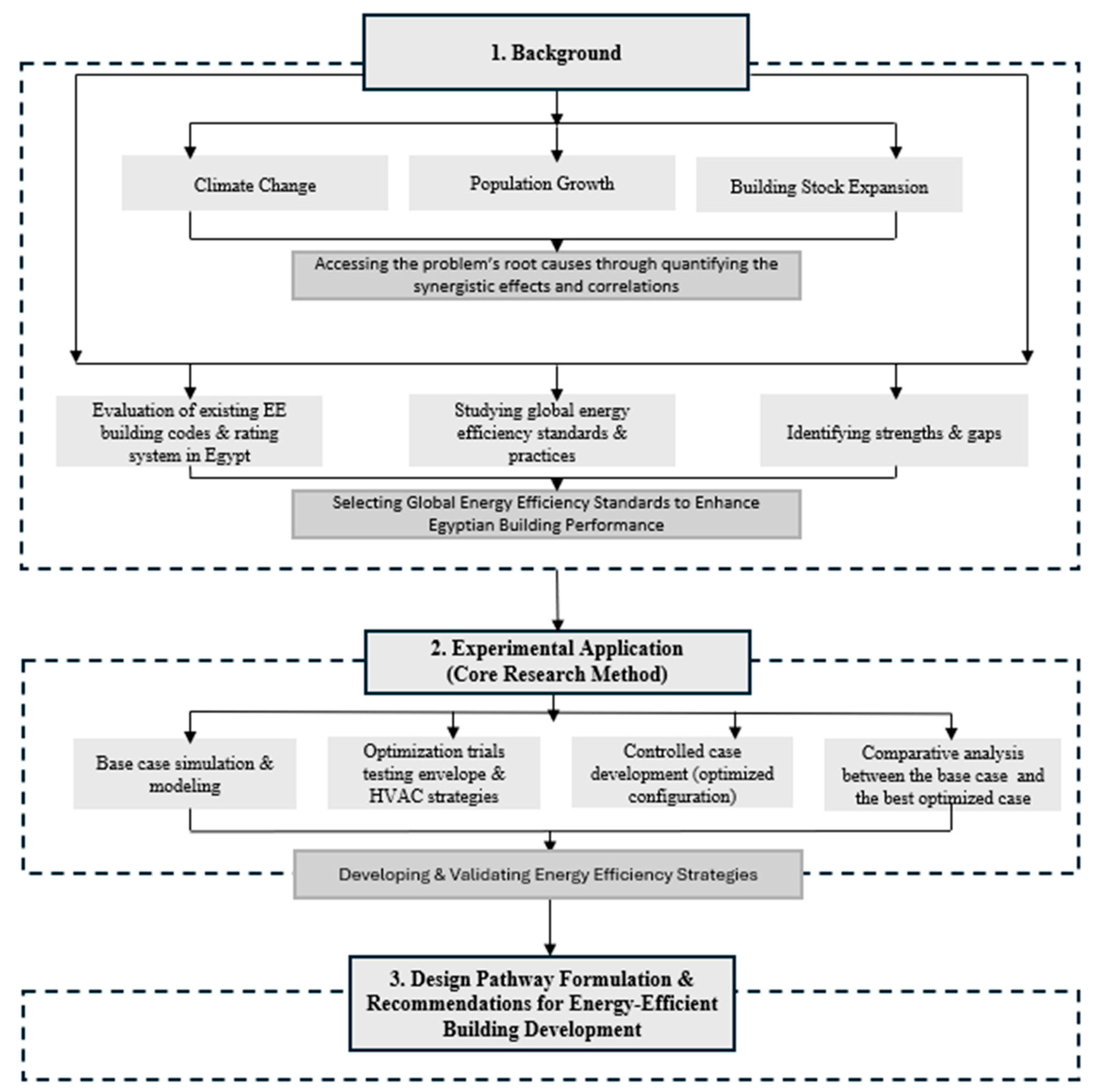
This research starts with a background review of the synergistic effects of the problem’s key drivers: rising temperatures due to climate change, exponential population growth, and the associated increase in building stock, along with a review of existing Egyptian building codes to identify strengths and gaps, and an evaluation through a comparative study of international energy efficiency standards and best practices. Finally, the core research method, the experimental application approach using simulation and energy performance optimization, led to the development of the proposed energy efficiency design pathway for building energy performance optimization, as shown in Figure 5.
The research developed a base-case model for a typical single-family house with a total area of 367.75 square meters, located in Cairo’s hot, arid climate, which was selected as representative of prevalent and conventional Egyptian construction techniques. Modeled with EnergyPlus Design Builder v7.3.1.003. Then, the research runs a series of optimizations to identify the most effective energy-efficient combination of strategies and practices for the Egyptian climate and context. The optimized case was defined as the combination of energy-efficiency strategies that achieved the most significant energy reduction while prioritizing locally available materials and technologies. This iterative analysis yielded a final, optimized model that exceeded preliminary estimates, achieving a 43.1% reduction in total energy consumption. This led to the provision of a pathway for optimizing energy performance in residential buildings in Egypt. Detailed simulation parameters, case study justification, and optimization results are presented in Section 4.

4. Experimental Application

This section will focus on addressing the research problem by developing an energy-efficiency design pathway that consumes less energy. To demonstrate the potential of the proposed pathway, the simulation process comprises five key steps: the research draws on globally recognized high-performance building standards, prior research to guide the selection of energy-efficiency strategies, and the vernacular architectural design concept for the case study in Cairo; it employs Energy Plus-based simulation, using Design Builder v7.3.1.003 for building modeling, and to enhance energy performance, starting with base case simulation; then it performs energy-efficiency optimization, and compares energy consumption between the base and best-controlled cases. Finally, it proposes the best, most efficient and most likely energy-efficiency strategies for residential buildings in Egypt. This pathway is tailored to Egypt’s climate and context, accounting for the specific challenges and opportunities posed by its environmental conditions. The experimental application will enable a comprehensive evaluation of potential savings in electricity consumption. The findings are within Egypt’s specific climatic and cultural settings, so they could contribute to the broader conversation about making buildings more energy-efficient, especially in areas where energy demand is increasing and environmental problems are worsening.

4.1. Case Study Analysis

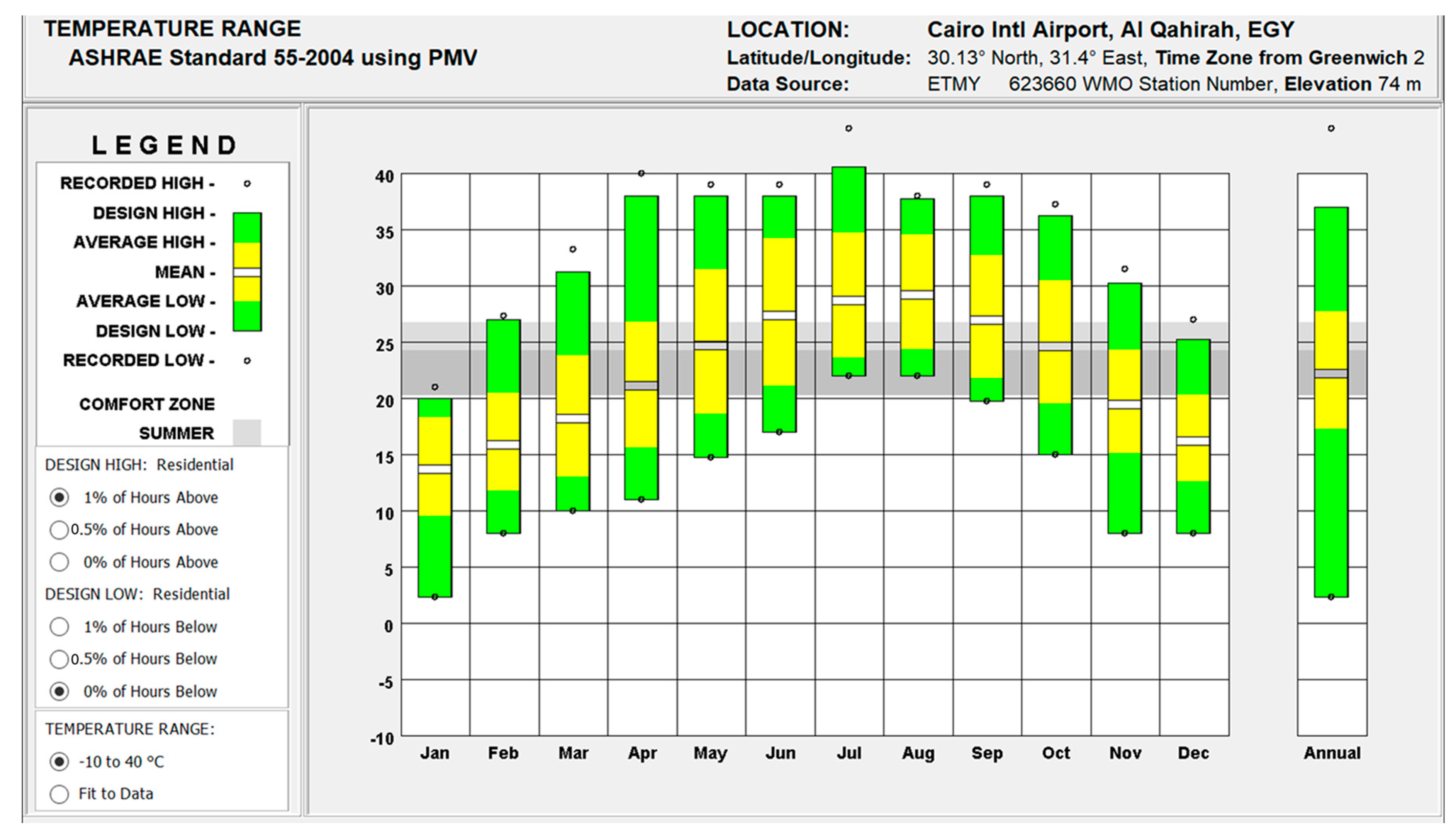
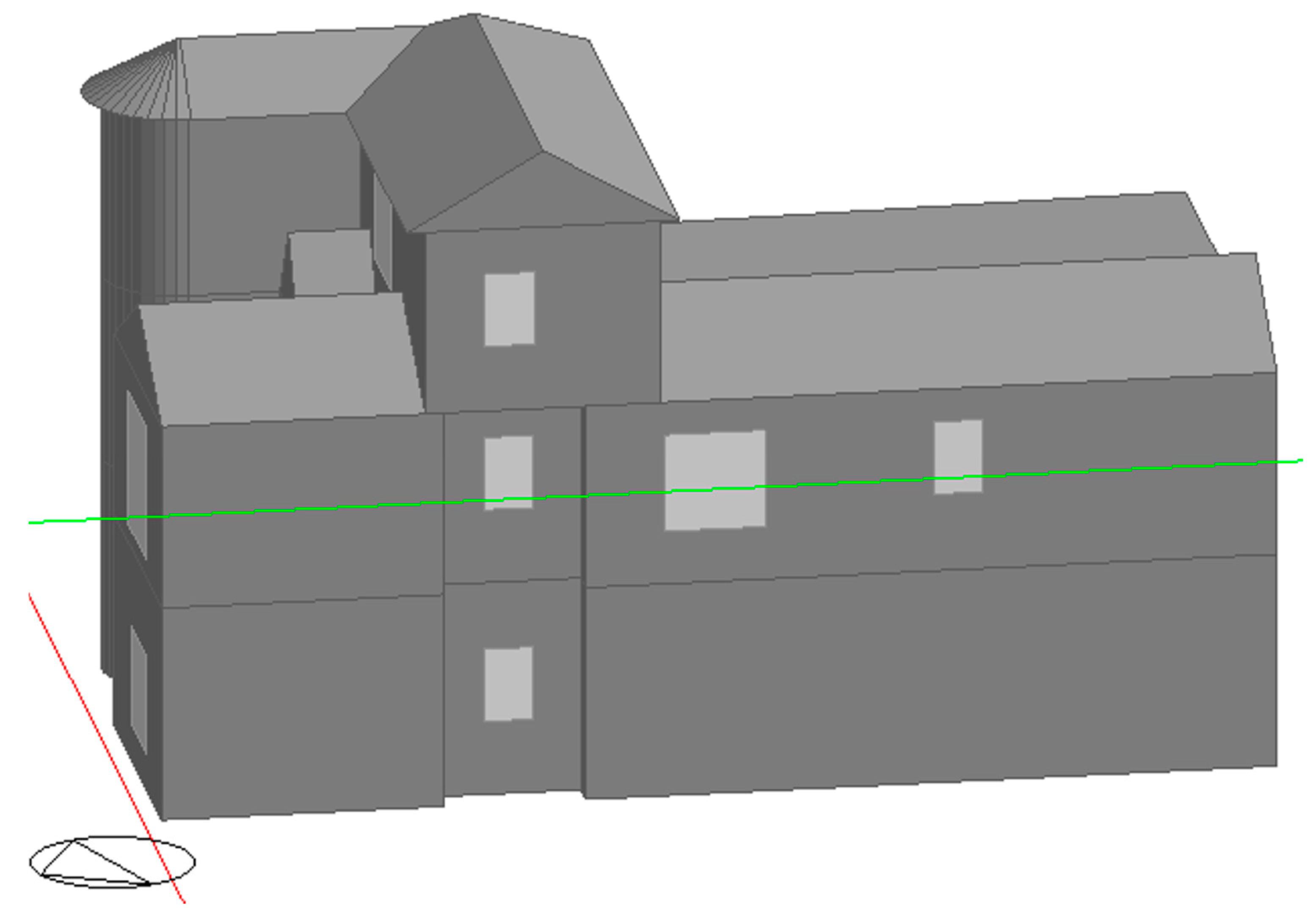
The case study is a single-family building in Cairo with a northwest-southeast orientation. Its dominant climate is characterized by hot, dry summers—most of the year- and mild, cold winters. According to the Climate Consultant 6.0 software data, the study case is located outside the thermal comfort zone for most of the year, as presented in Figure 6. The building is L-shaped due to its prevalence in Cairo’s suburban areas and new urban communities. This typology emerged in the late 1990s and early 2000s to adapt to standardized plot sizes (300–400 m2) and developer trends that focus on maximizing living space while providing private outdoor areas, a sought-after feature in the Egyptian market, and has become prevalent in Greater Cairo’s housing landscape over the last two decades. Its total floor area is 367.75 m2. It consists of two typical floors and a penthouse, as illustrated in Figure 7. It is modeled as the conventional building construction type, reinforced concrete.

4.2. Simulation Scenarios and Base Case Definition

This study evaluates energy savings potential by defining two main simulation scenarios: the Base Case Scenario and the Best Optimized Case Scenario. The base case scenario reflects the conventional residential construction practices in Cairo, using standard materials, assemblies, and HVAC systems as required by existing building codes. This scenario acts as the reference for assessing energy savings. Conversely, the optimized case scenario integrates various energy-efficiency strategies identified through iterative simulations, focusing on reducing energy consumption using locally available materials and technologies. Key features of the optimized approach include enhanced insulation of the building envelope, improved window glazing, and a high-efficiency HVAC system. Furthermore, the study conducted 20 simulation trials to analyze and rank the specific contributions of each energy efficiency strategy, as discussed in Section 4.3.

4.3. Energy Simulation for the Base Case

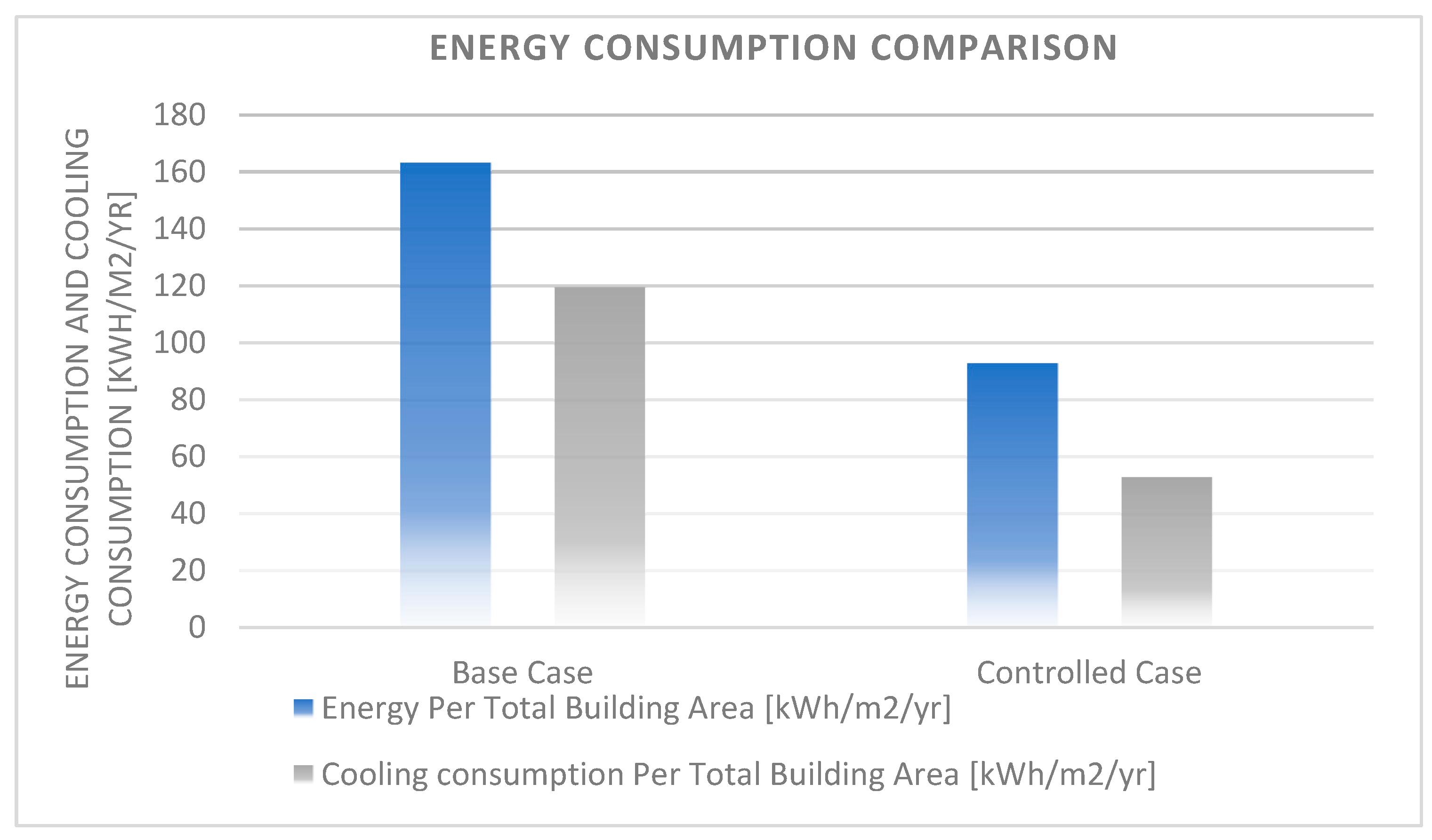
A base-case energy performance analysis in Design Builder evaluates the building’s energy performance by assessing the building envelope (opaque and transparent elements) and the HVAC system. Each of these is analyzed separately in the upcoming sections. The data were compiled and analyzed to reflect the base-case energy performance. For the opaque elements, the Ground Floor: thickness is 35 cm; assembly (from interior to exterior): 2 cm marble, 2 cm cement mortar, 6 cm limestone (semi-hard), 25 cm reinforced concrete; U-Value is 2.5 W/m2·K. For the walls: Thickness is 33 cm, Assembly (from interior to exterior): 2 cm plaster, 2 cm mortar, 25 cm brickwork, 2 cm mortar, 2 cm exterior plaster, and U-Value is 1.5 W/m2·K. For the flat roof: Thickness is 37 cm, Assembly (from interior to exterior): 2 cm plaster, 2 cm mortar, 15 cm reinforced concrete (1% steel), 1 cm roofing felt, 7 cm cast concrete, 6 cm limestone (semi-hard), 2 cm cement screed, 2 cm ceramic tiles, and U-Value is 1.7 W/m2·K. For the Pitched Roof (Occupied): Thickness is 31 cm, Assembly (from interior to exterior): 2 cm plaster, 2 cm mortar, 20 cm reinforced concrete (1% steel), 1 cm roofing felt, 6 cm clay roofing tile, and U-Value: 2.35 W/m2·K. For the Pitched Roof (Unoccupied): Thickness is 31 cm, Assembly (from interior to exterior): 2 cm plaster, 2 cm mortar, 20 cm reinforced concrete (1% steel), 1 cm roofing felt, 6 cm clay roofing tile, and U-Value is 2.35 W/m2·K as illustrated in Table 1. For the transparent elements: the windows are single-glazed with an aluminum frame and have a U-value of 2.31 W/m2·K. Furthermore, the ventilation system is an HVAC-standard cooling/heating split unit within a separate, zone-defined mechanical ventilation system. The climate data used is the EnergyPlus weather file (EPW) for Cairo International Airport. Occupancy profiles are set to the default 24/7 schedule, reflecting continuous residential occupancy. Internal loads (equipment and lighting) remain at the default value for a residential building. The HVAC system operates on a constant schedule aligned with occupancy. These parameters, plus building orientation, were held constant across all simulation trials to isolate the impact of envelope and HVAC system strategies. The base-case energy performance analysis revealed that electricity consumption is 163.5 kWh/m2/yr, and the cooling consumption is 119.5 kWh/m2/yr, representing 73% of the total electricity consumption.

4.4. Performance-Based Design Optimization

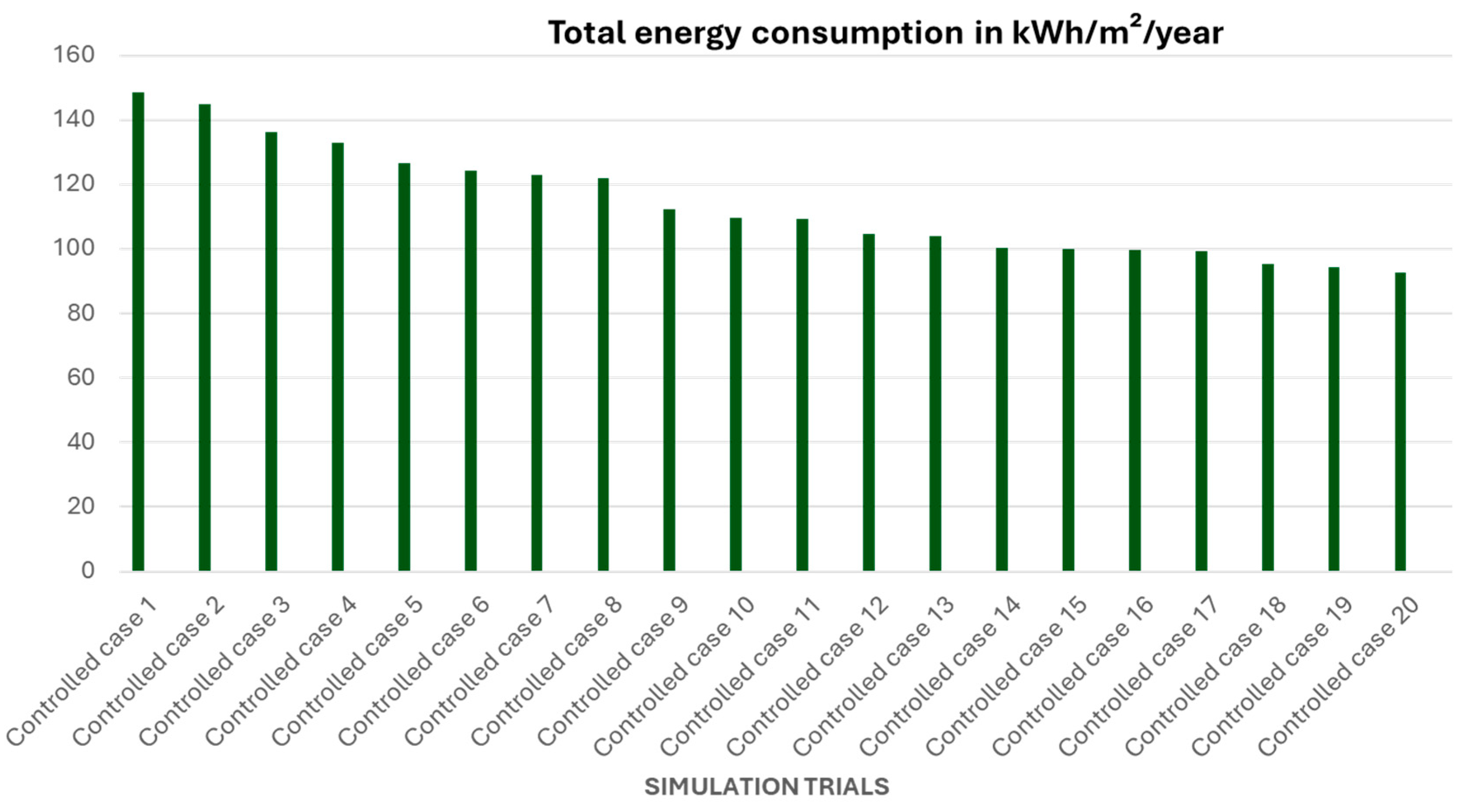
The research conducted 20 data-driven, performance-focused design-simulation trials, as illustrated in Figure 8, to identify the most effective, applicable, and practical energy-efficient strategies. The simulation investigated the following:
  • Building Envelope Insulation: Different insulation materials (opaque elements) with varying U-values for the building envelope to achieve optimal insulation. And different types of glazing and window frames (transparent elements) with different U-values, materials, and specifications to achieve high-performance window characteristics.
  • Investigating ventilation systems to employ the best energy-efficient ventilation system specifications after eliminating the heat transfer through the optimized building envelope.

4.5. Controlled Case Development

After the optimization simulation process, and based on the least amount of energy consumption achieved through the energy performance of twenty trials, the study identified and prioritized the best energy efficiency techniques for the controlled case that decreased the electricity consumption to the least amount without using renewable energy sources by adapting the building envelope insulation, improving the window characteristics, and improving the ventilation system. The energy performance simulation revealed that the thermal properties for the opaque elements: Ground Floor: thickness is 30 cm; assembly (from interior to exterior): 3 cm timber flooring, 7 cm floor screed, 10 cm reinforced concrete, 10 cm MW rockwool; U-Value is 0.31 W/m2·K. For the walls: Thickness is 38 cm, Assembly (from interior to exterior): 2 cm Gypsum board, 10 cm concrete block, 12 cm XPS (Egyptian marmox board), 10 cm brickwork, 2 cm mortar, 2 cm exterior plaster, and U-Value is 0.25 W/m2·K. For the flat roof: Thickness is 33 cm, Assembly (from interior to exterior): 2 cm plaster, 2 cm mortar, 10 cm reinforced concrete, 8 cm XPS (Egyptian marmox board), 1.5 cm fiberboard, 1.5 cm bitumen, 4 cm limestone (semi-hard), 2 cm cement screed, 2 cm ceramic tiles, and U-Value is 0.33 W/m2·K. For the Pitched Roof (Occupied): Thickness is 37 cm, Assembly (from interior to exterior): 2 cm plaster, 2 cm mortar, 10 cm reinforced concrete, 1 cm roofing felt, 15 cm MW stone wool roll, 1 cm roofing felt, 6 cm clay roofing tile, and U-Value: 0.35 W/m2·K. For the Pitched Roof (Unoccupied): Thickness is 22 cm, Assembly (from interior to exterior): 2 cm plaster, 2 cm mortar, 1 cm roofing felt, 10 cm MW stone wool roll, 1 cm roofing felt, 6 cm clay roofing tile, and U-Value is 0.41 W/m2·K. For the transparent elements, the windows are double-glazed, clear Low-E, Argon-filled, with a PVC frame (Egyptian local manufacturer), and have a U-value of 1.8 W/m2·K. Furthermore, the ventilation system has been replaced with a dual-inverter air-conditioning system, which reduces cooling consumption by up to 60%, and it is available in Egypt. The controlled-case energy performance analysis revealed that electricity consumption is reduced to 93 kWh/m2/yr and cooling consumption to 52.8 kWh/m2/yr.

5. Results

The energy performance simulation of the optimized case resulted in a total electricity consumption of 93 kWh/m2/yr, representing a 43.1% savings compared to the base case of 163.5 kWh/m2/yr. Cooling consumption fell significantly from 73% to 56% of the total load, as shown in Figure 9. These results validate the selected combination of envelope and ventilation strategies as the most effective and practical foundation for the subsequent design guidelines.

Proposed Energy Efficiency Strategies Design Pathway

Through the optimization process, the study found that the building envelope’s external insulation is the primary driver of energy efficiency, as demonstrated by a simulation journey across 20 trials, yielding approximately 27% savings; the efficient ventilation system is the second driver, using a dual-inverter air-conditioning system, yielding up to 16%. The pathway is summarized in Table 2.

6. Discussion

This section interprets the key findings from the energy performance simulation and optimization process, evaluates their significance in the Egyptian context, outlines their implications for policy and practice, and presents their strengths and limitations.

6.1. Summary of the Main Findings

Simulation of the conventionally constructed single-family home revealed a significant energy demand driven by cooling. The total annual electricity consumption was 163.5 kWh/m2/yr, and space cooling accounted for 119.5 kWh/m2/yr, representing 73% of the total electricity use, highlighting the acute cooling load challenge in standard Egyptian construction. After implementing the selected strategy combination, a substantial reduction in energy consumption was achieved. Total Annual Electricity Consumption was reduced to 93 kWh/m2/yr. Cooling Energy Consumption was reduced to 52.8 kWh/m2/yr, which represents 56% of the total. This constitutes an overall reduction of 69.2 kWh/m2/yr, equating to energy savings of 43.1% compared to the Base Case.

6.2. The Fabric-First Principle in Hot-Arid Climates

The energy-based optimization analysis of 20 simulation trials enabled the identification and prioritization of individual strategies based on their contributions to total energy savings. The key observation is that, in terms of building envelope dominance, insulation of opaque elements of walls, roof, and floor, and transparent elements was unequivocally the most effective strategy, accounting for approximately two-thirds of the total savings. In the meantime, a recent study demonstrated that integrating radiative cooling with phase change materials in building envelopes can achieve additional cooling energy savings in hot climates [66]. Additionally, combining envelope optimization with rooftop photovoltaic systems offers a cost-effective pathway toward Net Zero Energy goals in Egypt, suggesting that mandatory envelope standards could serve as a foundation for broader renewable energy integration [55]. Another recent study underscores that envelope-focused regulations not only reduce energy consumption but also enhance occupant thermal safety during extreme heat events, a co-benefit particularly relevant to Egypt’s warming climate [59]. This confirms the fabric-first principle as the cornerstone of energy efficiency in hot-arid climates. The simulation identified the building envelope as the primary determinant of energy performance, accounting for most of the achieved savings, up to 27%. In a hot, arid climate where cooling dominates energy use, minimizing heat transfer through the building envelope is fundamental.

6.3. Synergy Between Envelope and HVAC Strategies

The secondary role is for the HVAC system: the efficient HVAC system contributed nearly equally to the remaining third of the savings. This effectiveness is significantly enabled by the high-performance envelope, which first reduces heat transfer, thereby reducing the cooling load. The total savings from the combined strategies indicate a positive synergistic interaction, particularly when a superior envelope reduces the HVAC system’s size and runtime requirements. A recent study demonstrated that advanced cooling technologies can significantly reduce the energy intensity of mechanical cooling when paired with an optimized envelope [67]. Additionally, the effectiveness of dual-inverter air conditioning systems with variable-speed compressors achieves substantial energy savings compared to conventional fixed-speed units in hot climates [66]. The proposed pathway, achieving 43.1% overall savings, demonstrates a clear hierarchy of implementation priority for maximum cost and energy effectiveness in Egypt’s residential sector. This study sought to develop a practical, climate-responsive design pathway to mitigate soaring energy demand in Egypt’s residential sector, driven by synergistic pressures from climate change, population growth, urban expansion, and ineffective energy efficiency building codes. The success of using locally available insulation materials, such as Egyptian Marmox XPS board, and a dual-inverter air-conditioning system proves that high thermal performance is technologically feasible within the local construction industry. The simulation results demonstrate that a strategically optimized building envelope, coupled with an efficient HVAC system, can reduce total electricity consumption by 43.1% in residential buildings under typical Cairo conditions.

6.4. Policy Implications and Regulatory Pathways

The proposed pathway shifts Egypt’s building energy policy from the current inactive voluntary code to a mandatory framework centered on the validated U-value targets. The study demonstrates a 43.1% energy savings through envelope optimization and HVAC upgrades using local materials, highlighting that significant reductions in electricity consumption can be achieved with existing technologies. It recommends setting specific, measurable standards: opaque envelope U-values of 0.25–0.35 W/m2·K for the whole building envelope; double-glazing with Low E and argon-filled windows with U-values ≤ 1.8 W/m2·K; and a minimum dual-inverter HVAC system efficiency. Implementing this pathway as code or policy would simplify compliance within the building permit process, promoting greater adoption than current systems, which are hindered by complexity and vague targets. This approach aims to enhance energy efficiency in the expanding residential sector without dependence on expensive technologies or complex certifications.
This discussion interprets the research findings, evaluates their significance relative to the typical design and construction method for the local context used in the base-case simulation, and outlines the critical implications for policy and practice. The proposed pathway’s 43.1% energy reduction situates it uniquely between existing global standards and the current Egyptian reality. As reviewed, global energy efficiency standards range from 10–15% to 90% and present significant adoption barriers due to cultural misalignment and climatic adoption. This proposed research pathway, achieving nearly half the savings with locally adapted specifications, represents a pragmatic, high-impact intermediate step. It demonstrates that moving beyond the weak performance of conventional construction does not require wholesale adoption of foreign standards, but rather a strategic synthesis: applying the performance logic of global best practices, super-insulation, and high-performance glazing through the material and selecting the appropriate efficiency HVAC system.
This research bridges the critical gap identified in the literature between the potential of climate-responsive design and its systematic application. The findings validate a design rooted in tradition yet performance-led, proving that vernacular principles and modern building science are complementary, not contradictory. The pathway provides a technical framework for codifying this evolved, contemporary construction. This research result provides empirical evidence for advocating a mandatory, simplified, and context-specific building energy code. The core of such a code should be unambiguous, enforceable, and achievable U-value limits for opaque and transparent envelope components, calibrated for Egypt’s climate. This fabric-first regulatory approach is more straightforward to implement, inspect, and comply with than point-based rating systems, offering a clearer path to scale.

6.5. Study Strengths and Limitations

The research provides a practical strategic pathway for energy efficiency in the design phase to reduce energy consumption in residential buildings in Cairo, aiming to achieve 43.1% electricity savings. This pathway is formulated for practitioners and policymakers, moving from problem analysis to implementation solutions applicable in Egypt and similar climatic regions. It uses a multi-approach methodology integrating quantitative, qualitative, and experimental methods; and investigates the root causes and their correlations with increasing energy consumption in buildings in Egypt; identifies the obstacles that hinder energy efficiency initiatives in Egypt and how to avoid them; utilizes energy performance EnrgyPlus simulation software; adds value by formulating Energy Efficiency Strategy Pathway in the design process, which indicates a potential for energy savings of 43.1%, not complicated to design and implement, and has a clear measurable saving goal, making it a practical solution for improving energy efficiency in buildings in hot arid climate. The proposed pathway, emphasizing climate-contextualized, fabric-first optimization using locally available solutions, offers a transferable framework. It demonstrates that the transition to energy-efficient built environments in the MENA region does not require importing expensive, context-blind solutions but can be driven by strategically upgrading conventional practices through performance-based targets. However, the research encountered some obstacles, such as discrepancies in the numbers and in the literature regarding Egypt. Furthermore, the proposed pathway may face challenges, including the need for more awareness among architects and designers, resistance to change within conventional building practices, vague initial investment costs, a shortage of trained tradespersons, and limited availability of essential energy-efficient components. Also, the findings may not be applicable to other building types or in other climatic conditions.

7. Conclusions

This study has quantitatively demonstrated the severe and synergistic pressures that climate change, population growth, and building stock expansion exert on Egypt’s energy security. In response, it moves beyond diagnostic analysis to propose and validate a practical, climate-responsive design pathway for residential buildings in Cairo. Through detailed simulation of a typical single-family house, the research found that strategic optimization of the building envelope and HVAC systems can reduce total electricity consumption by 43.1%, with high-performance insulation as the primary driver for savings. The proposed pathway represents a significant evolution in approach for the Egyptian context. It successfully bridges a critical gap between the bioclimatic intelligence of vernacular architecture and the rigorous performance metrics of global standards, offering a viable, context-specific alternative to complex or misaligned international rating systems. By prioritizing locally available materials and technologies, the pathway demonstrates that transformative energy efficiency is not only a technical possibility but also a practical and achievable goal within the current construction ecosystem.
The findings carry unambiguous implications for policy and regulatory frameworks. They provide robust evidence for the urgent revision of Egypt’s building energy codes, advocating for mandatory, simplified, and enforceable standards centered on thermal envelope performance. Implementing such standards in ongoing national projects would catalyze industry-wide change, aligning urban development with climate resilience and energy sustainability objectives. Ultimately, this work contributes a transferable model for sustainable building design in hot-arid, rapidly urbanizing regions. It underscores that the path to a low-energy built environment in Egypt and similar climates lies not in the wholesale import of external standards, but in the intelligent synthesis of global best practices with local wisdom and resources. Future research should build upon this foundation by conducting life-cycle assessments, detailed cost–benefit analyses, and real-world validation across diverse building typologies to further refine and scale this essential transition.

Funding

This research received no external funding.

Institutional Review Board Statement

Not applicable.

Informed Consent Statement

Not applicable.

Data Availability Statement

The original contributions presented in this study are included in the article material. Further inquiries can be directed to the corresponding author.

Conflicts of Interest

The author declare no conflicts of interest.

References

  1. Fahmy, M.; Elwy, I.; Mahmoud, S. Back from parcel planning to future heritage of urban courtyard: The 5th generation of Egyptian cities as a sustainable design manifesto for neo-arid neighbourhoods. Sustain. Cities Soc. 2022, 87, 104155. [Google Scholar] [CrossRef] [Scilit]
  2. Sayed, M.A.A.E.D.A.; Fikry, M.A. Impact of glass facades on internal environment of buildings in hot arid zone. Alex. Eng. J. 2019, 58, 1063–1075. [Google Scholar] [CrossRef] [Scilit]
  3. UCAR. Predictions of Future Global Climate. 2026. Available online: https://scied.ucar.edu/learning-zone/climate-change-impacts/predictions-future-global-climate (accessed on 18 January 2026).
  4. Abdollah, M.A.F.; Scoccia, R.; Filippini, G.; Mario, M. Cooling Energy Use Reduction in Residential Buildings in Egypt Accounting for Global Warming Effects. Climate 2021, 9, 45. [Google Scholar] [CrossRef] [Scilit]
  5. World Population Review. Egypt. 2026. Available online: https://worldpopulationreview.com/countries/egypt (accessed on 28 January 2026).
  6. United Nations Department of Economic and Social Affairs/Population Division UNDESA. World Urbanization Prospects; UNDESA: New York, NY, USA, 2018. [Google Scholar]
  7. Gamaleldine, M.; Corvacho, H. Compliance with Building Energy Code for the Residential Sector in Egyptian Hot-Arid Climate: Potential Impact, Difficulties, and Further Improvements. Sustainability 2022, 14, 3936. [Google Scholar] [CrossRef] [Scilit]
  8. Alsaadani, S. A statistical review of a decade of residential energy research in Egypt. Energy Rep. 2022, 8, 95–102. [Google Scholar] [CrossRef] [Scilit]
  9. CEIC Data. Egypt Electricity Production. 2026. Available online: https://www.ceicdata.com/en/indicator/egypt/electricity-production (accessed on 15 January 2026).
  10. Ascione, F.; De Masi, R.F.; Mastellone, M.; Vanoli, G.P. Building rating systems: A novel review about capabilities, current limits and open issues. Sustain. Cities Soc. 2022, 76, 103498. [Google Scholar] [CrossRef] [Scilit]
  11. ACEEE. 2022 International Energy Efficiency Scorecard; ACEEE: Washington, DC, USA, 2022. [Google Scholar]
  12. Hongyun, H.; Radwan, A. Economic and social structure and electricity consumption in Egypt. Energy 2021, 231, 120962. [Google Scholar] [CrossRef] [Scilit]
  13. Worldoil. Offshore Discoveries in the Mediterranean to Increase Egypt’s Gas Output. 2018. Available online: https://www.worldoil.com/news/2018/8/14/eia-offshore-discoveries-in-the-mediterranean-to-increase-egypt-s-gas-output (accessed on 28 September 2025).
  14. US Energy Information Adminstration (EIA). Egypt Data Overview and Analysis. 2024. Available online: https://www.eia.gov/beta/international/country.php?iso=EGY (accessed on 5 September 2025).
  15. Li, C.Z.; Zhang, L.; Liang, X.; Xiao, B.; Tam, V.W.Y.; Lai, X.; Chen, Z. Advances in the research of building energy saving. Energy Build. 2022, 254, 111556. [Google Scholar] [CrossRef] [Scilit]
  16. IEA.org. The Energy World is Set to Change Significantly by 2030, Based on Today’s Policy Settings Alone. 2023. Available online: https://www.iea.org/news/the-energy-world-is-set-to-change-significantly-by-2030-based-on-today-s-policy-settings-alone (accessed on 25 August 2025).
  17. Iwaro, J.; Mwasha, A. A review of building energy regulation and policy for energy conservation in developing countries. Energy Policy 2010, 38, 7744–7755. [Google Scholar] [CrossRef] [Scilit]
  18. El-Geziry, T.M. Analysis of Air Temperature Trends as a Climate Change Indicator for Alexandria (Egypt). Athens J. Sci. 2022, 9, 239–256. [Google Scholar] [CrossRef] [Scilit]
  19. Hamed, M.M.; Nashwan, M.S.; Shahid, S. Climatic zonation of Egypt based on high-resolution dataset using image clustering technique. Prog. Earth Planet. Sci. 2022, 9, 35. [Google Scholar] [CrossRef] [Scilit]
  20. Pachauri, R.K. Climate Change 2014: Synthesis Report; IPCC: Geneva, Switzerland, 2014. [Google Scholar]
  21. IEA.org. National Climate Resilience Assessment for Egypt; IEA: Paris, France, 2023. [Google Scholar]
  22. Climate Action Tracker. Egypt Overall Rating. 2025. Available online: https://climateactiontracker.org/countries/egypt/ (accessed on 23 October 2025).
  23. Arshed, N.; Iqbal, M.; Hanif, U.; Munir, M. Nonlinear climate change effects on building energy consumption: A second-generation modeling with moderation case of BRICS countries. Energy Build. 2025, 345, 116114. [Google Scholar] [CrossRef] [Scilit]
  24. Worldometer. Egypt Population. 2025. Available online: https://www.worldometers.info/world-population/egypt-population/?tblang=persian#:~:text=Egypt2025populationisestimated,(308peoplepermi2) (accessed on 25 September 2025).
  25. World Population Review. Cairo, Egypt Population 2026; World Population Review: Walnut, CA, USA, 2026; Available online: https://worldpopulationreview.com/cities/egypt/cairo (accessed on 28 January 2026).
  26. Michaelson, R. ‘Cairo has started to become ugly’: Why Egypt is building a new capital city. The Guardian, 7 May 2018.
  27. Egypt Today Staff. Egypt achieves growth rate of 8.3% during Q2 of 21/22. Egypt Today, 22 February 2022.
  28. ISI CEIC. Egypt Number of Buildings: Census; Central Agency for Public Mobilization and Statistics: Cairo, Egypt, 2021; Available online: https://www.ceicdata.com/en/egypt/number-of-buildings-census-by-region/no-of-buildings-census#:~:text=EgyptNumberofBuildings%3ACensusdatawasreportedat16%2C185%2C063.000,to2017%2Cwith4observations (accessed on 5 October 2023).
  29. CAPMAS. Housing in Egypt; CAPMAS: Cairo, Egypt, 2023. Available online: https://www.capmas.gov.eg/data/mainSubject/1/subSubject/18 (accessed on 15 September 2025).
  30. Farouk, M.A. Business Monthly; American Chamber of Commerce in Egypt: Cairo, Egypt, 2018. [Google Scholar]
  31. Abdelazim, A.I.; Ibrahim, A.M.; Aboul-Zahab, E.M. Development of an energy efficiency rating system for existing buildings using Analytic Hierarchy Process—The case of Egypt. Renew. Sustain. Energy Rev. 2016, 71, 414–425. [Google Scholar] [CrossRef] [Scilit]
  32. El-Motasem, S.; Khodeir, L.M.; Fathy Eid, A. Analysis of challenges facing smart buildings projects in Egypt. Ain Shams Eng. J. 2021, 12, 3317–3329. [Google Scholar] [CrossRef] [Scilit]
  33. Adly, B.; El-Khouly, T. Combining retrofitting techniques, renewable energy resources and regulations for residential buildings to achieve energy efficiency in gated communities. Ain Shams Eng. J. 2022, 13, 101772. [Google Scholar] [CrossRef] [Scilit]
  34. Tazikeh, S.; Mohammadzadeh, O.; Zendehboudi, S.; Saady, N.M.C.; Albayati, T.M.; Chatzis, I. Energy development and management in the Middle East: A holistic analysis. Energy Convers. Manag. 2025, 323, 119124. [Google Scholar] [CrossRef] [Scilit]
  35. Ritchie, H. Fossil Fuels; Our World in Data: Oxford, UK, 2024; Available online: https://ourworldindata.org/fossil-fuels (accessed on 20 July 2025).
  36. Ritchie, H. Egypt: Energy Country Profile; Our World in Data: Oxford, UK, 2025; Available online: https://ourworldindata.org/energy/country/egypt (accessed on 3 September 2025).
  37. IEA.org. Egypt/Emissions; International Energy Agency: Paris, France, 2022; Available online: https://www.iea.org/countries/egypt/emissions (accessed on 15 June 2024).
  38. Egyptian Electricity Holding Company. Egypt Electricity Consumption; ISI CEIC: London, UK, 2024; Available online: https://www.ceicdata.com/en/egypt/electricity-consumption/electricity-consumption (accessed on 3 January 2026).
  39. Emil, F.; Diab, A. Energy rationalization for an educational building in Egypt: Towards a zero energy building. J. Build. Eng. 2021, 44, 103247. [Google Scholar] [CrossRef] [Scilit]
  40. IEA.org. Air Conditioning Use Emerges as One of the Key Drivers of Global Electricity-Demand Growth; IEA: Paris, France, 2018. [Google Scholar]
  41. Abdelsalam, G.M.; Razzaz, Z.M.E.L.; Elnekhaily, F. Effectiveness of High Energy Efficiency to Minimize Energy Consumption for Residential Buildings in Egypt. Eng. Res. J. 2020, 165, 78–95. [Google Scholar] [CrossRef] [Scilit]
  42. HBRC. The Housing and Building National Research Center (HBRC). 2023. Available online: https://hbrc.edu.eg/en/ (accessed on 18 June 2024).
  43. The Egyptian Green Building Council. 2020. Available online: http://egypt-gbc.org/ (accessed on 6 May 2024).
  44. Moussa, R.R. The reasons for not implementing Green Pyramid Rating System in Egyptian buildings. Ain Shams Eng. J. 2019, 10, 917–927. [Google Scholar] [CrossRef] [Scilit]
  45. Hanna, G.; Farouh, H. Energy Analysis for New Hotel Buildings in Egypt. Int. J. Eng. Res. Appl. 2014, 4, 53–59. [Google Scholar]
  46. Hazem, N.; Abdelraouf, M.; Fahim, I.S.; El-Omari, S. A Novel Green Rating System for Existing Buildings. Sustainability 2020, 12, 7143. [Google Scholar] [CrossRef] [Scilit]
  47. Chen, X.; Yang, H.; Lu, L. A comprehensive review on passive design approaches in green building rating tools. Renew. Sustain. Energy Rev. 2015, 50, 1425–1436. [Google Scholar] [CrossRef] [Scilit]
  48. Doan, D.T.; Ghaffarianhoseini, A.; Naismith, N.; Zhang, T.; Tookey, J. A critical comparison of green building rating systems. Build. Environ. 2017, 123, 243–260. [Google Scholar] [CrossRef] [Scilit]
  49. Passipedia. What is a Passive House?—Passipedia.org. 2023. Available online: https://passipedia.org/basics/what_is_a_passive_house (accessed on 8 May 2024).
  50. BREEAM2024. Available online: https://www.breeam.com/ (accessed on 8 May 2024).
  51. USGBC. LEED Rating System. 2024. Available online: https://new.usgbc.org/leed (accessed on 10 May 2024).
  52. Green Building Council of Australia. Green Star is an Internationally-Recognised Australian Sustainability Rating and Certification System. 2024. Available online: https://new.gbca.org.au/green-star/rating-system/ (accessed on 18 May 2024).
  53. Juffle, N.A.H.; Rahman, M.M.; Asli, R.A. Adopting passive design strategies: A brief review. AIP Conf. Proc. 2023, 2643, 030005. [Google Scholar] [CrossRef] [Scilit]
  54. Mourad, M.M. The Impact of Passive Design Factors on House Energy Efficiency for New Cities in Egypt. In World Academy of Science, Engineering and Technology Environmental and Ecological Engineering; World Academy of Science, Engineering and Technology (WASET): Istanbul, Turkey, 2015. [Google Scholar]
  55. Raslan, E.; Elkhateeb, S.; Ahmed, R. Enhancing Energy Efficiency in Egyptian Middle-Income Housing: A Study of PV System Integration and Building Envelope Optimization in Sakan Masr. Buildings 2025, 15, 2326. [Google Scholar] [CrossRef] [Scilit]
  56. Shawkat, M.S.A.; Abdel Mageed Diab, M.; Haleem Hussien Abdel Aziz, A. Improving Energy Efficiency performance utilizing building envelope design in High standard housing in Egypt. Eng. Res. J. 2021, 171, 330–351. [Google Scholar] [CrossRef] [Scilit]
  57. Ouazzani, L.; Fossa, M.; Priarone, A.; Mechaqrane, A. Energy saving strategies in sustainable greenhouse cultivation in the mediterranean climate—A case study. Appl. Energy 2021, 282, 116156. [Google Scholar] [CrossRef] [Scilit]
  58. Alsayed, M.F.; Tayeh, R.A. Life cycle cost analysis for determining optimal insulation thickness in Palestinian buildings. J. Build. Eng. 2019, 22, 101–112. [Google Scholar] [CrossRef] [Scilit]
  59. Birge, D.P.; Brearley, J.; Zhang, Z.; Norford, L.K. Design of heat-resilient housing in hot-arid regions. Energy Build. 2025, 328, 115003. [Google Scholar] [CrossRef] [Scilit]
  60. Omar, A.; Gomaa, M.M.; Ragab, A. The Effects of Setback Geometry and Façade Design on the Thermal and Energy Performance of Multi-Story Residential Buildings in Hot Arid Climates. Architecture 2025, 5, 68. [Google Scholar] [CrossRef] [Scilit]
  61. Fereidani, N.A.; Rodrigues, E.; Gaspar, A.R. A review of the energy implications of passive building design and active measures under climate change in the Middle East. J. Clean. Prod. 2021, 305, 127152. [Google Scholar] [CrossRef] [Scilit]
  62. Khalfan, M. Lessons Learned from the First Passivhaus Building in Qatar. Environ. Sci. Sustain. Dev. 2019, 4, 77–91. [Google Scholar] [CrossRef] [Scilit]
  63. Ahmed, B.J.; Jimenez-Bescos, C. An Analysis on the Benefits of Vernacular Architecture to Design Passivhaus Buildings in Kurdistan. In Proceedings of the International Conference of Architectural Science Association; Architectural Science Association (ANZAScA): Auckland, New Zealand, 2020; pp. 151–160. [Google Scholar]
  64. Farouk Mohamed, A. Comparative study of traditional and modern building techniques in Siwa Oasis, Egypt: Case study: Affordable residential building using appropriate building technique. Case Stud. Constr. Mater. 2020, 12, e00311. [Google Scholar] [CrossRef] [Scilit]
  65. Passive House Institute, Germany. 2024. Available online: http://passivehouse.com/01_passivehouseinstitute/01_passivehouseinstitute.htm (accessed on 20 June 2025).
  66. Cao, X.; Wang, Y.; Luo, K.; Wang, L.; Liu, X.; Luan, Y. Energy-Saving potential of radiative cooling and phase change materials in hot Climates: A numerical study. Appl. Therm. Eng. 2025, 268, 125971. [Google Scholar] [CrossRef] [Scilit]
  67. Al Fardi, N.; Zeitoun, O.; Elsheniti, M.B. Experimental evaluation of a two-stage indirect evaporative cooling system with heat pipe heat exchangers for hot and arid climates. J. Build. Eng. 2025, 114, 114450. [Google Scholar] [CrossRef] [Scilit]
Figure 1. Monthly Diurnal Averages in Cairo, Egypt. Source: Climate Consultant 6.0.
Rsee 03 00007 g001
Figure 2. Egypt’s population from 1950 to 2025. Source: [24], represented by the author.
Rsee 03 00007 g002
Figure 3. The number of Egyptian buildings from 1986 to 2017. Source: [28], represented by the author.
Rsee 03 00007 g003
Figure 4. Interplay Diagram. Source: Author.
Rsee 03 00007 g004
Figure 5. Research Methodology. Source: Author.
Rsee 03 00007 g005
Figure 6. Case study temperature range. Source: Climate Consultant 6.0.
Rsee 03 00007 g006
Figure 7. Case study model in Design Builder. Source: Author. The lines represent the X and Y axes.
Rsee 03 00007 g007
Figure 8. Energy Efficiency Optimization Trials. Source: Author.
Rsee 03 00007 g008
Figure 9. Energy consumption comparison between the base case and the controlled case. Source: Author.
Rsee 03 00007 g009
Table 1. Opaque Building Envelope Assembly of the Base Case. Source: Author.
ElementOpaque Building Envelope Assembly (Interior to Exterior) in (cm) Thickness (cm)U-Value (W/m2·K)
Ground FloorMarble (2) + Cement mortar (2) + Limestone (6) + Reinforced concrete (25)352.50
External WallsPlaster (2) + Mortar (2) + Brickwork (25) + Mortar (2) + Exterior plaster (2)331.50
Flat RoofPlaster (2) + Mortar (2) + Reinforced concrete (15) + Roofing felt (1) + Cast concrete (7) + Limestone (6) + Cement screed (2) + Ceramic tiles (2)371.70
Pitched Roof Plaster (2) + Mortar (2) + Reinforced concrete (20) + Roofing felt (1) + Clay roofing tile (6)312.35
Table 2. Proposed Energy Efficiency Strategies Design Pathway. Source: Author.
Energy Efficiency StrategyGuideline
Building envelope insulation (opaque elements—heavyweight construction for ground floor, walls, and roof)U value of 0.25–0.35 W/m2·K
Enhancing the efficiency of transparent elementsDouble glazing, LoE, argon-filled, U value ≤ 1.8 W/m2·K
Efficient ventilation systemNatural ventilation coupled with an efficient ventilation system using a dual-inverter air-conditioning system
Disclaimer/Publisher’s Note: The statements, opinions and data contained in all publications are solely those of the individual author(s) and contributor(s) and not of MDPI and/or the editor(s). MDPI and/or the editor(s) disclaim responsibility for any injury to people or property resulting from any ideas, methods, instructions or products referred to in the content.