Article

Cross-National Patterns of Quality of Life According to HDI Levels: A Multivariate Approach Using Partial Triadic Analysis


by
Mitzi Cubilla-Montilla
1,2,*,
Andrés Castillo
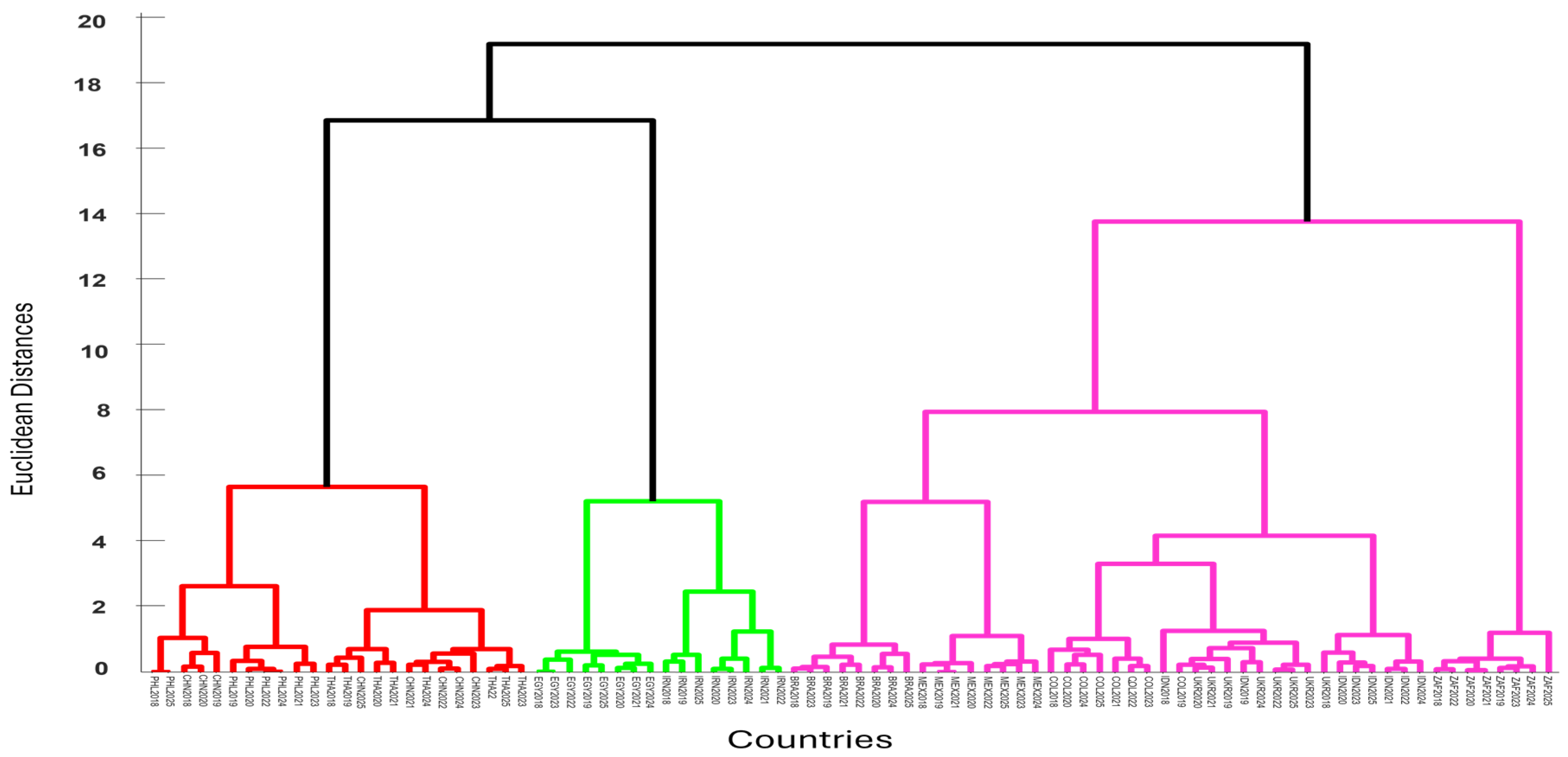
1 and
Carlos A. Torres-Cubilla
3,*
1
Departamento de Estadística, Facultad de Ciencias Naturales, Exactas y Tecnología, Universidad de Panamá, Panamá City 0824, Panama
2
Sistema Nacional de Investigación de Panamá (SNI), Secretaría Nacional de Ciencia, Tecnología e Innovación (SENACYT), Panama City 0816, Panama
3
Independent Researcher, Panama City 0824, Panama
*
Authors to whom correspondence should be addressed.
Reg. Sci. Environ. Econ. 2026, 3(1), 2; https://doi.org/10.3390/rsee3010002
Submission received: 20 October 2025 / Revised: 11 January 2026 / Accepted: 27 January 2026 / Published: 3 February 2026

Abstract

Quality of life, as an essential component of sustainable development, is particularly relevant in transnational contexts characterized by deep inequalities in human development, equity, and social well-being. The objective of this paper is to analyze the temporal and spatial changes in transnational patterns of quality of life observed between 2018 and 2025, taking into account levels of human development. To this end, multivariate statistical techniques were applied: partial triadic analysis, which allows the identification of both the common structure of the data and the temporal evolution of the indicators, together with the HJ-Biplot and cluster analysis, which provide a multidimensional and interpretable visualization of country profiles. The results reveal consistent configurations of quality of life, largely aligned with levels of human development, and highlight persistent inequalities in environmental quality, economic accessibility, and objective well-being. These findings are relevant for the formulation of policies aimed at enhancing population well-being, particularly in countries facing structural constraints despite their high levels of development. The contribution of this research lies in its three-dimensional, dynamic, and reproducible approach, which makes it possible to identify regional contrasts that are not visible through traditional methods based on unidimensional indicators or cross-sectional analyses.

1. Introduction

Quality of life (QoL) is a multidimensional concept [1,2,3,4] that has evolved from approaches focused exclusively on economic indicators [5,6] to more comprehensive models that incorporate social, environmental, health, and climatic dimensions, among others [7,8]. This conceptual expansion has stimulated academic and scientific debate, aimed at understanding and improving the well-being of citizens [9,10]. Defining the concept of QoL is not an easy task, which has led to multiple interpretations [11,12,13]. In this context, Verdugo and Schalock [14] explain their conceptual development through six clearly defined periods, offering a historical and analytical framework to understand its evolution.
One of the most widely accepted definitions comes from the World Health Organization, which describes it as “individuals perception of their position in life in the context of the culture and value systems in which they live and in relation to their goals, expectations, standards, and concerns” [15].
Based on this definition, the concept of QoL can be considered a broad field that must take into account differences across countries, as well as local or regional traditions [16,17,18,19,20,21] and the needs of individuals in a constantly evolving society [2].
Several organizations have periodically developed ways to evaluate the QoL of countries or cities based on composite indices. Some of the indices are the Quality of Life Index [22], the Better Life Index (the Organization for Economic Cooperation and Development -OECD) [23], and the World Happiness Report [24]. National initiatives, including the Gross National Happiness Index [25], the Canadian Index of Well-being [26] and the World Happiness Report [27], provide important measures of well-being. The focus of these organizations and the methods they employ vary according to their specific interests [28]. For example, the Better Life Index is designed to compare well-being exclusively among member countries of the OECD, an approach that would have the Quality of Life proposed by Numbeo for all countries worldwide.
The results derived from these composite indices only reflect the relative positions of the experimental units with respect to the total population, focusing on establishing QoL rankings at the country level and ignoring the impact that the components of these indicators have on QoL and their evolution over time. A more in-depth analysis would reveal the evolutionary dynamics of composite well-being indices and their components, favoring processes aimed at improving the current status quo.
Building upon these considerations, this study seeks to address the following research questions: What structural similarities and differences do quality-of-life patterns exhibit among countries grouped according to their levels of human development during the study period? How have these patterns evolved over time? What interdependencies or statistical associations are observed among the quality-of-life indicators? Finally, do countries with similar HDI levels tend to follow convergent trajectories, or are eccentric patterns observed in their quality-of-life indicators?
In this context, the present study aims to analyze the evolution of the QoL Index proposed by Numbeo [22] during the period from 2018 to 2025. The objective is to identify possible variations in the index values that reflect improvements or deteriorations in the population’s well-being. Additionally, we will determine whether the QoL is associated with the favorable progress of the Human Development Index (HDI). The decision to select the Numbeo QoL indicator, instead of the one proposed by the OECD, is due to its broad coverage. This indicator allows the different levels of human development and geographical conditions of a larger number of countries to be examined, providing more elements that will ultimately improve the analysis and results of the study.
The data analysis was carried out using the X-STATIS technique, also known as partial triadic analysis [29], which allows for the examination of the temporal evolution of QoL indicators. Its statistical robustness provides relevant and structured information on national well-being dynamics. It is worth noting that this tool has not been previously applied in studies on QoL, which gives this research an innovative character. The results were complemented by the HJ-Biplot method [30] and clustering techniques, which facilitated the identification and ordering of similar profiles along an interpretative gradient.
With the aim of achieving the objectives of this study and addressing the research questions outlined above, the article is structured into five sections. Following this introduction, Section 2 provides a conceptual overview of quality of life. Section 3 details the research design, data sources, and statistical procedures employed. Section 4 presents the main results. Section 5 discusses these findings, and Section 6 concludes with the key findings and final considerations.

2. Literature Review

To situate the study within a clear conceptual framework and to understand the close relationship between the concepts of quality of life, well-being, and the welfare state, their definitions are presented below. Based on the definition of quality of life presented in the Introduction, this concept refers to an individual’s perception of their position in life in relation to their goals, expectations, standards, and personal concerns [31]. Well-being, in turn, refers to a general state of satisfaction with life and with the social, economic, and environmental conditions that sustain it. It is a broader notion that encompasses both individual and collective dimensions and can be approached from subjective and objective perspectives [32]. Finally, the welfare state is understood as a model of governmental organization in which the state plays a central role in social protection and in promoting the economic and social well-being of its citizens [32]. For a more in-depth discussion of these concepts, see Dahlén [33].
In recent years, the analysis of QoL has gained increasing importance on both political and academic agendas [34,35,36], in response to changes observed in the main determinants of well-being: health, education, the economy, and social welfare [37]. According to Giugno [38], the welfare state has served as a central framework for exploring QoL in academic research. Within this framework, promoting well-being has become a permanent goal [39] and one of the fastest-growing areas of inquiry in the social sciences [40,41]. It has also become a focal point for researchers across multiple disciplines [42].
Early seminal studies [43,44,45] approached QoL from a multidimensional perspective, combining subjective and objective indicators. More recent research has reaffirmed this conception [46,47,48,49,50,51]. As Costanza et al. [52] argue, integrating both types of measurements provides a more comprehensive understanding of QoL.
Subjective Quality of Life (SQoL), also known as subjective well-being (SWB) [41,53,54,55], focuses on self-reported levels of happiness and fulfillment [9,56,57] and describes how people feel about their own lives [58,59]. There is a rapidly growing body of interdisciplinary research examining the elements that contribute to happiness and subjective well-being, which are considered direct proxies for QoL [60,61].
On the other hand, the so-called objective measurements of quality of life (OQoL) generally focus on social [62], economic [63], and health indicators [64,65,66]. These measures are useful at both city and national levels [67,68] and represent an individual’s standard of living [69].
Despite the increasing sophistication of QoL indices, several methodological limitations persist. One of the main challenges is the cultural relativity of subjective indicators, since perceptions of happiness and satisfaction vary significantly across societies. Moreover, self-reported data may be influenced by temporary emotional states, social desirability bias, or lack of awareness of broader living conditions. Objective indicators, although more stable and comparable, often fail to capture an individual’s lived experiences.
The assessment of QoL must also consider regional and contextual differences. Studies have shown that QoL indicators may reflect different priorities depending on the geographic location [2,70], level of development [40], and cultural values [71]. For example, in high-income countries, environmental quality and work–life balance may be central aspects of well-being, whereas in low- and middle-income countries, access to basic services and political stability may be more critical [72]. This diversity highlights the importance of designing flexible and context-sensitive measurement tools that can adapt to local realities while maintaining international comparability.
Thus, objective measurements not only reflect the standard of living but also allow for analyzing the role that public institutions play in improving social well-being. From this perspective, empirical studies show that the effectiveness of government services is a determining factor of QoL [73] and the welfare of citizens [74].
Numerous researchers have encouraged governments to incorporate these QoL indices into their government policies [75]. Indeed, they warn about the need for QoL to have a central role within a governmental system. Furthermore, ref. [76] emphasized that governments should be more proactive in improving the levels of QoL. In short, incorporating citizens’ perceptions of QoL into local decision-making processes is essential for designing more effective and context-sensitive public policies [77].
As previously mentioned, the purpose of this study is to analyze QoL and its components. To achieve this, a comparative approach has been adopted, as this type of analysis is essential for informed decision-making. Cross-country comparisons provide detailed insights into national conditions, thereby facilitating the design and implementation of new policies, as well as the revision and improvement of existing ones, all aimed at enhancing the overall well-being of the population.

3. Materials and Methods

3.1. Data Description

This study was carried out by selecting countries for which QoL data were available from the composite QoL index developed by Numbeo (Numbeo is a database of user contributed data and manually collected data from official sources for countries. This system began to collect data in 2011, incorporating a set of indicators that is now known as the Quality-of-Life Index. This Index is an empirical measure created by the company based on experiments that provides current information on world living conditions. These indicators have been accepted worldwide by many public and private organizations.) [22], covering the period 2018–2025. The Numbeo index was chosen due to its wide coverage, allowing for more representative comparisons of the dynamic evolution of QoL and its subcomponents. The index comprises eight indicators, which are detailed in Table 1. For the year 2025, only data corresponding to the first semester were considered, since the year was still in progress at the time of data cutoff. For the remaining years (2018–2024), data for the entire year were used.
The data collection process on the Numbeo platform is based on a mixed strategy, combining user contributions with information manually verified from institutional and commercial sources, such as supermarket websites, transportation services, and government agencies. To ensure data reliability and consistency, both automated and semi-automated algorithms are employed to filter statistical noise and exclude records originating from IP addresses associated with suspicious activities (spammers), including open proxies. These control mechanisms are essential for preserving the integrity and neutrality of the database. Moreover, Numbeo provides data differentiated by territorial level, covering both cities and countries, and applies specific weightings according to the volume of contributions per locality. As part of its data-cleaning procedures, records that present statistical inconsistencies or are methodologically improbable are regularly removed [78].
Although the Numbeo Quality of Life Index is widely recognized, it is important to note certain limitations inherent to its data collection methodology. The index relies on collaborative user contributions, which may introduce self-selection bias. Moreover, annual modifications to the calculation formula can affect the temporal comparability. Despite these limitations, it represents an open and freely accessible database that has become a recognized and valid source for QoL research [79]. Its key strengths include ease of use and extensive geographical coverage—both at the city and country levels—enabling comprehensive comparative analyses of essential quality-of-life indicators [80]. Unlike official statistical sources, Numbeo does not follow a fixed reporting schedule; it is continuously and dynamically updated, providing real-time data. To date, over 865,721 contributors from approximately 12,500 cities have participated in their surveys [81].
The Numbeo index has been widely adopted within the international academic community. For instance, Shu et al. [82] employs it as an empirical basis for designing international comparative models; Salah [79] reinforces its reputation as a practical instrument in studies of quality of life and urban sustainability; Sun et al. [83] utilizes data from 465 cities across 116 countries/regions to estimate the carbon footprint based on purchasing power indicators; and Helble [84] presents evidence on the housing affordability crisis using Numbeo-reported prices as the primary source, validating these data through comparisons with both public and private datasets. Furthermore, Carlsen and Bruggemann [85] highlight that Numbeo indicators are generally more transparent and understandable than those derived from classical or highly sophisticated methods, such as Multi-Criteria Decision Analysis. Although the data are not strictly official, they capture citizen experiences, which can enrich models by incorporating “social context” variables. In this regard, the city portal of Pilsen (Czech Republic) notes that Numbeo results can provide valuable insights not only to citizens but also to local authorities [86]. This underscores the potential of Numbeo-generated information to complement official statistics.
Regarding the countries analyzed, the final sample included 49 nations from different geographic regions, all with complete data for the combined indicators of the index for the 2018–2025 period (see Table 2).
To examine whether human development influences both the QoL and the progression of the analyzed indicators, countries were classified into two groups: Very High HDI and High HDI (see Table 2), based on data from the United Nations Development Programme (UNDP) Human Development Index [87]. The HDI was designed to highlight that expanding the opportunities available to individuals should be the primary criterion for assessing development outcomes. The HDI evaluates a country’s progress across three dimensions of human development: a healthy life, access to education, and a decent standard of living. The UNDP uses the HDI, expressed as a value between zero and one, to classify countries worldwide into four development categories: Very High HDI: HDI ≥ 0.800; High HDI: 0.700 ≤ HDI ≤ 0.799; Medium HDI: 0.550 ≤ HDI ≤ 0.699; Low HDI: HDI < 0.55.

3.2. Methodology

Given the multivariate nature of the information, three complementary statistical methods were applied: X-STATIS, HJ-Biplot, and cluster analysis. Before applying these techniques, the dataset was reviewed to include only countries with complete information during the study period, thereby avoiding the presence of missing values. In addition, all indicators were centered by year and standardized (mean of zero and standard deviation of one), ensuring comparability between indicators and proper temporal alignment for the analysis.
The Partial Triadic Analysis (PTA), originally proposed by [29], is a three-way method derived from Triadic Analysis [88] that follows the framework of the STATIS family [89,90]. The term “partial” refers to it being a simplified version, while “triadic” refers to a three-mode analysis [91]. The main objective of the PTA is to simultaneously study multiple quantitative data matrices and identify patterns that may be common among them within the overall structure. The matrices share rows (individuals, sites, countries, companies, sampling points, etc.) and columns (variables), forming a data cube measured at different times or under different conditions occasions. Therefore, PTA emerges as a robust analytical tool, capable of synthesizing complex multidimensional information across both time and space.
In the present study, the PTA organizes the data into a three-dimensional array, with dimensions corresponding to countries, QoL indicators, and years. The nine numerical properties represent the indicators obtained for each country in relation to its QoL over the last eight years (2018–2025). In this way, a data cube was generated for each country in each period, forming a matrix of X49 × 9 × 8.
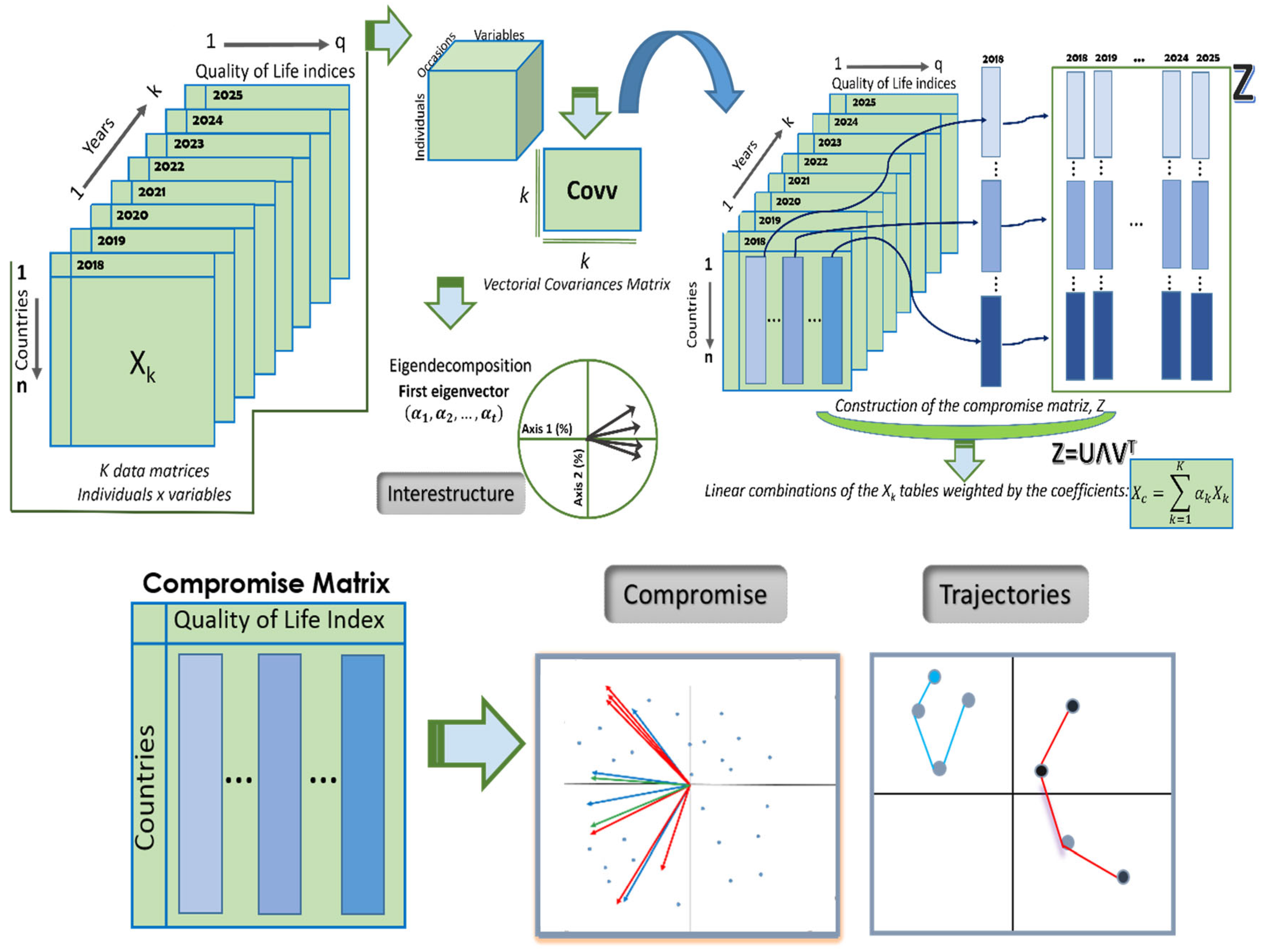
PTA is performed in three stages: the interstructure, which determines the relative contribution of each matrix to the analysis; the compromise, which identifies the common structure shared by the matrices; and the intrastructure, which projects the individuals and variables of each matrix into the two-dimensional space of the compromise (Figure 1).
The mathematical procedure of PTA begins with the construction of the three-dimensional matrix Z , formed from the composition of the original data. That is, we start from T data matrices ( X T ) containing the same I   rows (countries), the same P variables (QoL indicators), and the same K conditions (years). The elements of this matrix can be expressed as
Z = { x i , j , k   |   i = 1 , ,   I ;   j = 1 , , P ;   k = 1 , , K } ,
where i denotes the countries, j the quality-of-life indicators, and k the years.
Each column vector of the Z matrix corresponds to one of the T matrices considered, in an extended form. Therefore, Z consists of as many columns as matrices included in the analysis and can be visualized as a two-dimensional table that summarizes the original three-dimensional information, as follows:
Z =   x 111   x 11 t   x 11 T     x I 11   x I 1 t   x I 1 T     x 1 j 1 .   x 1 j t   x 1 j T     x I j 1   x I j t   x I j T     x 1 J 1   x 1 J t   x 1 J T     x I J 1   x I J t   x I J T .
For this matrix, the triplets are defined containing the diagonal matrix D I , with the weights assigned to the rows, and the diagonal matrix D P , with the weights for the columns of each matrix k :
( X 1 ,   D I ,   D p ) ,   ( X 2 ,   D I ,   D p ) ,   ,   ( X k ,   D I ,   D p ) .
Once the triplets have been defined, the first step of PTA consists of studying the interstructure, whose aim is to identify the relationships between the years under study, in order to assess their similarity. For this purpose, the inner product between each pair of weighted matrices ( X k   and   X l ) is computed, yielding a vector covariance matrix, denoted as COVV, expressed as
C O V V   X k , X l = T r a c e X k T D I X l D p = T r a c e X l T D I X k D p ,   k ,   l = 1 ,   2 , K .
The covariance matrix is then projected into a low-dimensional Euclidean subspace and represented on the factorial plane defined by the first two axes. Each year and each of the k data tables appear as points connected to the origin, allowing a graphical estimation of the vector correlations between tables. Thus, short distances and acute angles reflect strong positive correlations and high similarity among years, indicating that the QoL indicators exhibit consistent behavior over time for the countries analyzed.
This graphical representation is complemented by quantitative measures describing the relationships between tables. In particular, the vector variance, which estimates the inertia of each table, is computed as
V A R V   X k , X l = T r a c e X k T D I X k D p .
Similarly, the RV coefficient, used to quantify the proximity between pairs of tables, is defined as
R V   X k , X l = C O V V   X k , X l V A R V   X k   V A R V   X l ,   0 R V 1 ,
where values close to 1 indicate high similarity.
The next stage of PTA consists of constructing the compromise matrix X c , whose purpose is to summarize the information from all initial matrices ( X t ) into a single representative matrix. This matrix is obtained as a linear combination of the original matrices, weighted by the coordinates of the first eigenvector of the interstructure:
X c = k α k X k ,
where α k denotes the weight assigned to each table X k . The α k weights are taken from the first eigenvector of the interstructure.
The compromise matrix maximizes the average correlation between its variables and those of each of the matrices X t , thus capturing the common structure shared by all tables. For this purpose, singular value decomposition is applied to matrix Z ( Z = U D V ), yielding the matrix Z V , whose columns now contain the information common to all matrices.
Finally, the last stage of partial triadic analysis corresponds to the study of the intrastructure, whose objective is to assess the reproducibility of the compromise at the row level. This procedure allows representing the positions—or trajectories—of each individual (country) and each variable across the different tables and to analyze their relative placement with respect to the position defined in the compromise. A trajectory is defined as the change in the position of an individual (or variable) across situations, conditions, or time periods. Thus, a trajectory with little variation (envelope) indicates that the individual (or variable) is stable over time, whereas a trajectory with large amplitude (eccentric) suggests instability over the temporal or conditional domain.
The intrastructure is obtained by projecting the rows and columns of each table onto the subspace generated by the first eigenvectors of the compromise.
The row coordinates of matrix X k are computed as
X k D J V r ,
where V r is the matrix formed by the first eigenvectors of the compromise analysis, i.e., of X c D I X c D J .
The column coordinates are obtained as
X k D I U r ,
where U r contains the first eigenvectors of X c D J X c D I .
This methodological framework enables the extraction of consistent patterns across multidimensional QoL datasets, setting the stage for a comparative analysis in the following sections.
The PTA has been used in a wide range of situations and disciplines such as e-government [92], sustainability [93], governance [94], water quality [95], and other fields. We are not aware that the PTA has been applied within the context of QoL related to countries, regions, or cities.
Finally, based on the coordinates obtained from the PTA compromise analysis, a hierarchical cluster analysis was applied using Ward’s method as the clustering criterion and Euclidean distance as the dissimilarity measure. This approach minimizes within-group variance and maximizes the internal homogeneity of the clusters. In sum, this methodological combination provides a rigorous and complementary characterization of the PTA results by revealing the latent structure of similarities present in the data.
The ade4 package of the R programming language (version 4.3.0) was used to perform the statistical analyses and generate the corresponding graphical representations [96].

4. Results

The analysis begins by evaluating the scope of the different indices on the estimation of the QoL index the countries, during 2018–2025, using the PTA. First, the interstructure is presented; subsequently, the consensus matrix is shown, both for the global compromise and for the specific compromise of the countries, organized according to their classification in the HDI. Finally, a cluster analysis is conducted to identify groups of countries with similar QoL profiles.
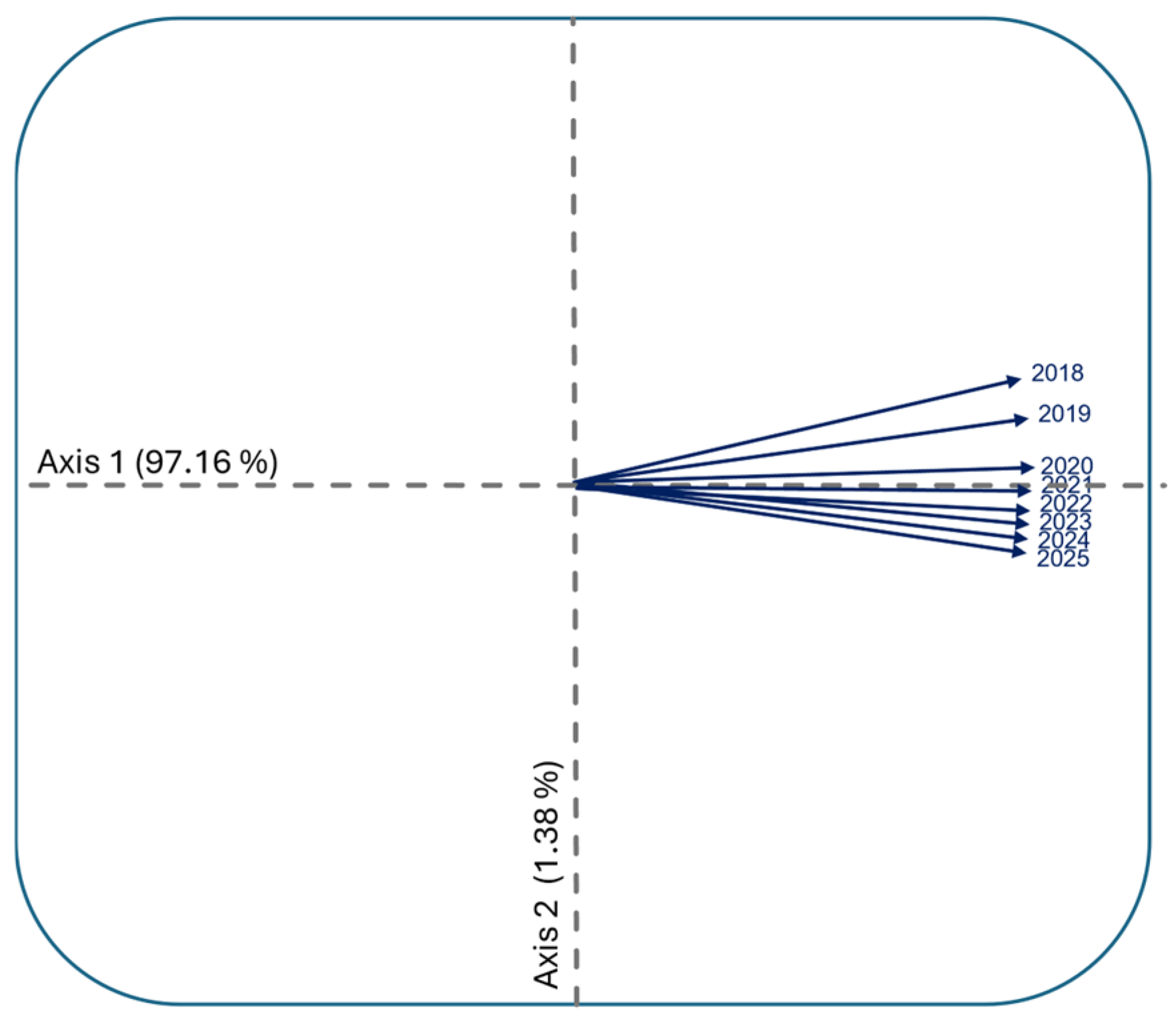
The first step allows for the comparison of the global structure of the eight matrices. At this point, the main objective is to determine whether the covariance structures of the data are similar or not in the different years and to discover how the QoL indices evolve over time. To accomplish this, the table of vector correlations is presented (Table 3) together with Figure 2, which helps to visualize the vector correlations among the years.
Table 3 shows the weights of each matrix on the compromise, and the column labeled “Weights” indicates the weight that each matrix acquires in the construction of the compromise. It was determined that the eight matrices obtained similar weights in the compromise. The column “Cos2” indicates the quality of the representation that each matrix has in the compromise. It can be observed that the matrices have a high quality of representation, with values exceeding 0.95.
Figure 2 shows that the angles formed between the vectors are small (acute angles); these results reveal a structure of common covariation among the years and reveal an orderly and gradual growth in the QoL index during the years of study, with no evidence of abrupt fluctuations between periods. This graphic representation collects 98.54% of the information in the 1–2 plane. The stability in the general structure of the data is consistent with the definition of the compromise matrix.
The next step is to construct and analyze the compromise matrix to summarize the information originating from the different data matrices. The compromise contains the values of the countries corresponding to the indices analyzed for the eight study years.
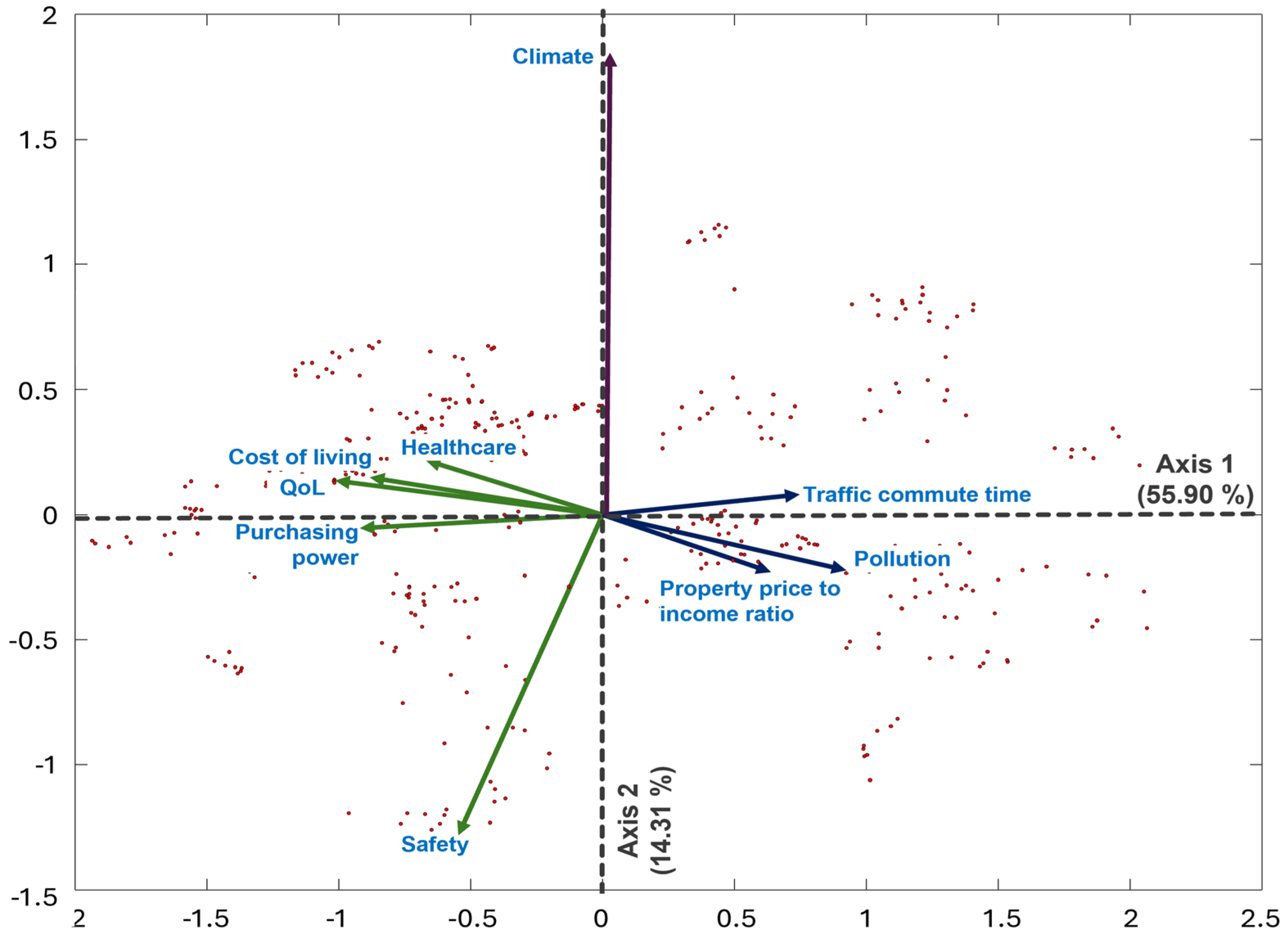
The compromise subspace is presented in the factorial plane 1–2 (Figure 3). The representation includes 70.21% of the information in the first two axes. This scenario provides valuable and important information. It shows that the QoL in the different countries highly varies, since the countries appear dispersed throughout the factorial plane. The indices that directly influence the QoL index are represented in the second and third quadrants. Higher QoL levels are positively correlated with higher purchasing power and better accessibility to healthcare services. Higher living costs tend to reduce the QoL, reflecting the economic pressures associated with maintaining material well-being. Overall, access to essential goods and services occurs alongside financial demands, which correspond to variations in the subjective perception of life quality. Moreover, people tend to perceive a better QoL when they experience improvements in both the quality of healthcare services and the doctor–patient relationship.
On the other hand, the indices that inversely influence QoL are located in different regions of the factorial space: traffic commute time lies in the first quadrant, while pollution and the property price to income ratio are positioned in the fourth quadrant. Likewise, it has been observed that in areas with high levels of traffic and pollution, access to housing is often limited. This finding is consistent with the idea that high traffic levels are associated with elevated stress and discomfort in the population, which in turn are linked to lower levels of QoL.
It is important to note that there is no direct correlation between climate and safety; however, the contrast between these indicators suggests that improving quality of life requires balancing dimensions that do not necessarily coexist naturally. Regions characterized by favorable climatic conditions do not necessarily coincide with high levels of safety, and vice versa.
This contrast highlights that QoL is a multidimensional concept, where optimizing one aspect may require trade-offs in others.
To complement the previous results, the study incorporates an approach based on the HDI, which evaluates the effect of health, education, and living standards on the population’s level of QoL. The aim is to analyze how the QoL evolves according to each country’s level of development. For this purpose, the classification proposed by UNDP [87] was used, which groups countries into two categories: very high and high HDI. Countries with medium and low HDI scores were excluded from the analysis due to an insufficient sample size (n = 2), which limited the statistical validity of the applied technique.
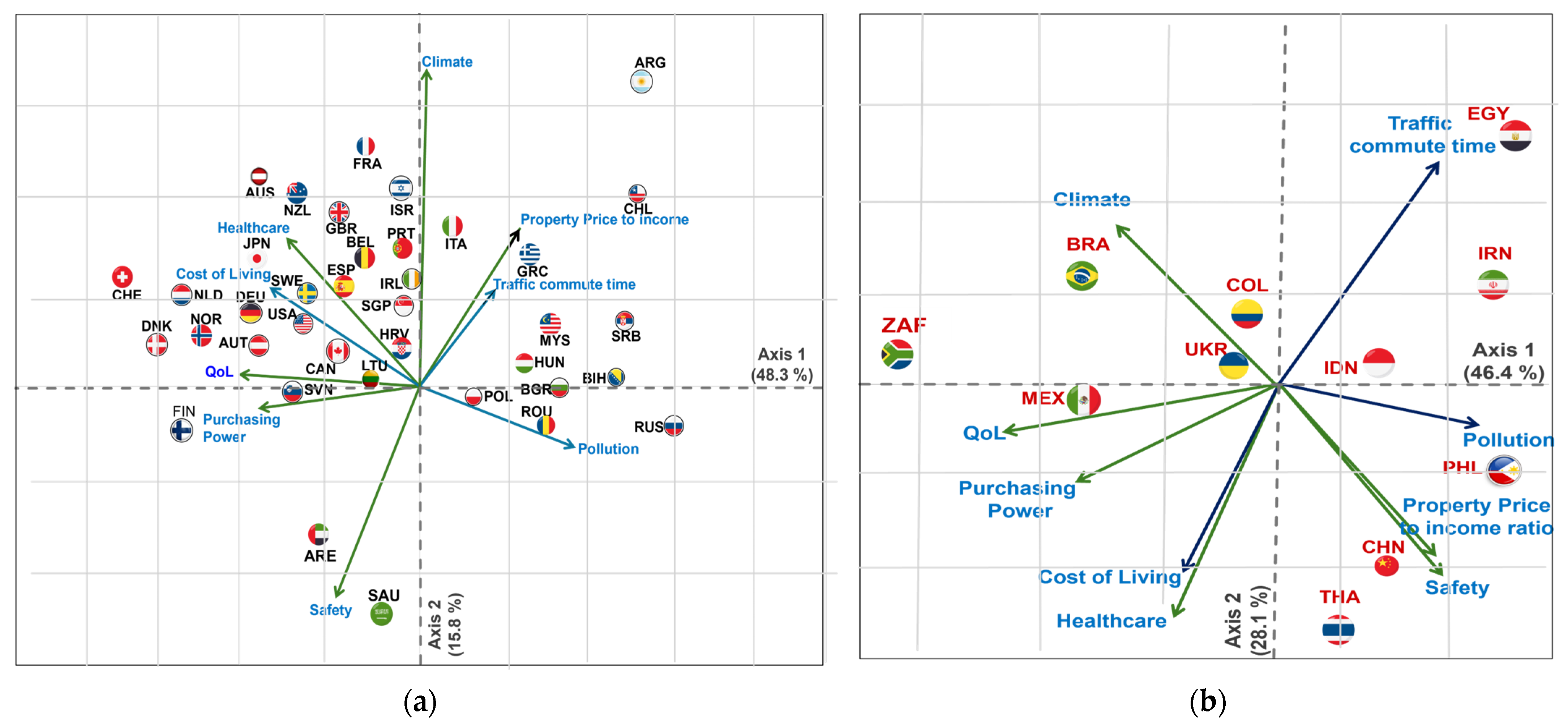
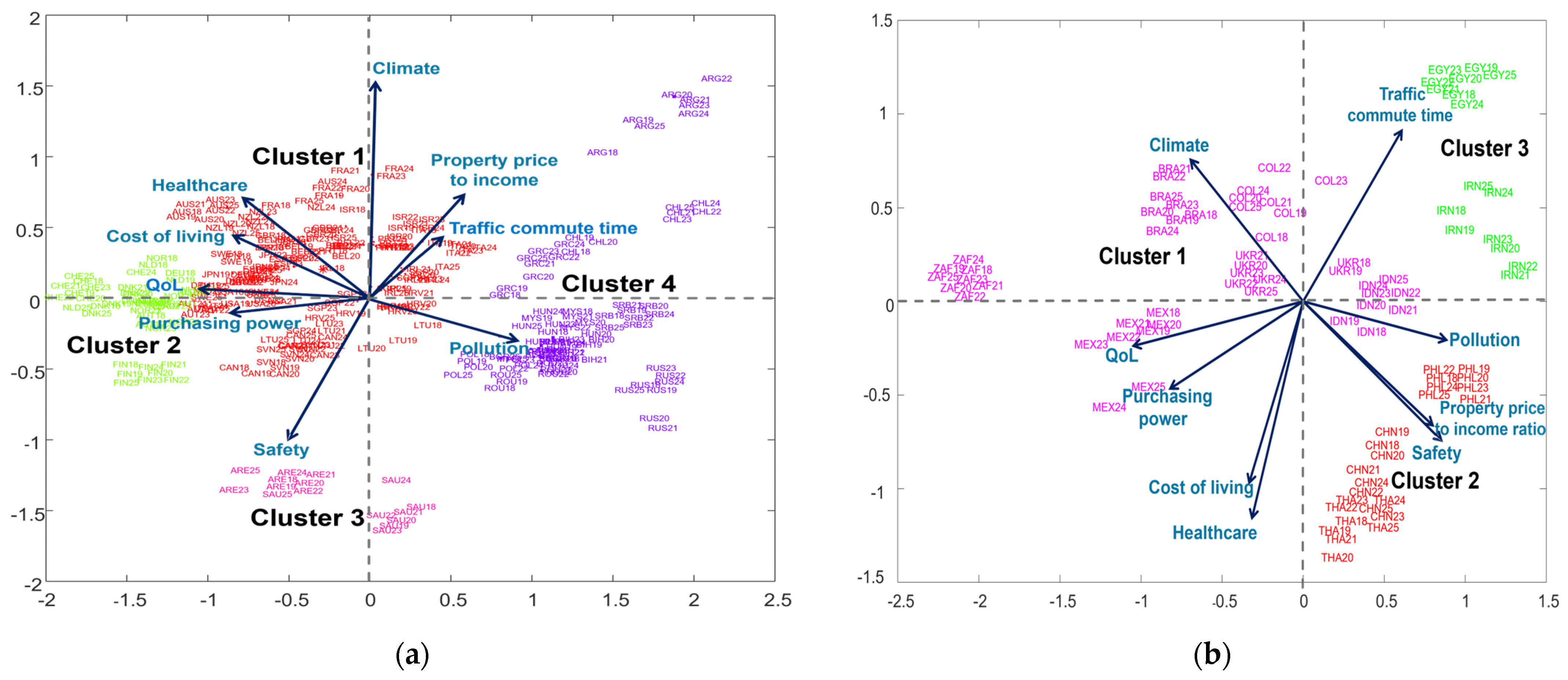
Figure 4 presents the compromise matrices obtained through PTA, projected onto the factorial plane. These correspond to countries classified by HDI level: very high (left) and high (right).
These figures place the countries that show higher compromise to QoL more to the left. The latent axis (horizontal) reflects a configuration characterized by higher purchasing power, better healthcare and safety conditions, together with the relative positioning of the cost-of-living indicator within the same factorial structure. In addition, they also have lower values in the subcomponents that are negatively associated with QoL. On the contrary, the position on the right corresponds to those countries that have the highest values for the indicators commonly associated with lower levels of QoL, such as property price to income ratio, traffic commute time, and pollution.
In Figure 4a, the countries with very high HDI—Finland, Switzerland, Norway, Netherlands, Denmark, Austria, Sweden, Germany, Australia, New Zealand, Canada, Spain, Belgium, and the United States—are in the left quadrant. Although these countries are characterized by higher cost-of-living levels, they still exhibit high overall well-being, largely in association with favorable values in other QoL dimensions. These countries also present lower values for indicators commonly associated with lower levels of social well-being such as pollution, traffic commute time, climate, and property price to income ratio. In the same figure, it is observed that countries located further to the right, Russia, Bulgaria, Romania, Chile, Hungary, Bosnia and Herzegovina, Argentina, Greece, and Poland, still have considerable human development and show a low compromise to QoL. These results may be associated with high levels of pollution, serious traffic problems, and instability in the property to income ratio. They suggest that the high human development of a country does not necessarily imply an equally good performance across all QoL indicators. Regarding the security indicator, the United Arab Emirates ranked highest among the group of very high HDI countries, a result observed alongside a highly professional police force and comprehensive crime prevention systems implemented throughout the emirates. In second place is Saudi Arabia, which maintains one of the lowest crime rates in the region, coinciding with the presence of strong security and social control policies.
The scenario shows greater dispersion among countries with a high HDI (Figure 4b). While countries such as Egypt, Iran and Ukraine, stand out for their low cost of living, their performance in healthcare and traffic congestion reveals structural challenges. Traffic congestion represents a critical problem in Egypt, which is linked to less favorable conditions in terms of quality of life and economic performance. In contrast, countries such as Indonesia, Thailand, and China, although exhibiting high living costs and a high property price to income ratio, do not reflect significant health-related issues.
On the other hand, Colombia and Brazil offer pleasant climates, moderate costs, and low pollution but experience urban traffic pressures. Within this group of countries, Mexico and South Africa stand out for their high QoL. In the case of Mexico, QoL is valued for its diverse climate; however, there is an association with factors that condition the well-being of its citizens, such as high levels of insecurity, traffic congestion that significantly prolongs commuting times, and the relationship between housing prices and income.
The disparity between countries makes it difficult to draw general conclusions about QoL, as structural, social, and economic conditions vary significantly across regions. To address this heterogeneity, a cluster analysis was conducted using Euclidean distance to identify groups of countries that share similar characteristics in terms of multidimensional well-being. The number of clusters was determined from the dendrogram generated by the hierarchical clustering procedure while maintaining the two previous HDI-based classifications. Ward’s method was employed, recognized for its ability to minimize within-group variance and maximize homogeneity within each cluster. This technique allows cases to be classified according to common patterns, facilitating a comparative and structured interpretation of the results.
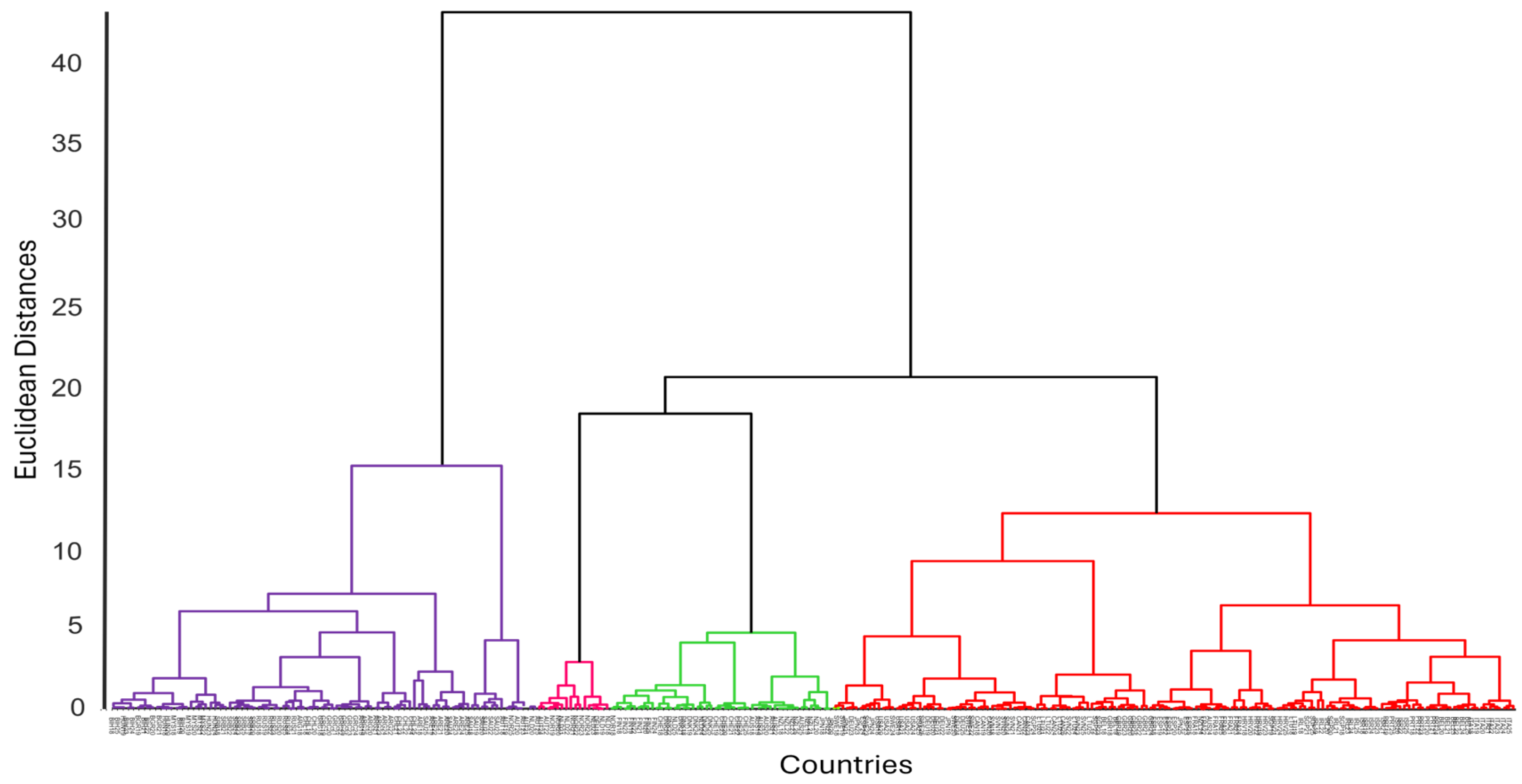
Figure 5 and Figure 6 present the corresponding dendrograms, constructed according to the country classification used in this article.
The segmentation criterion was based on a horizontal cut of the dendrogram at an approximate height of 25 distance units (Figure 5). This threshold allowed the identification of four main clusters, each characterized by high internal coherence and significant differentiation from the others. From a mathematical standpoint, this cut-off point maximizes the separation between groups without compromising internal homogeneity, making it suitable for representing differentiated territorial patterns according to the analyzed indicators.
From the previous dendrogram (Figure 6), three groups of countries with similar quality-of-life characteristics were identified. The segmentation criterion was based on a horizontal cut of the dendrogram at an approximate height of 18 distance units, which allowed for the distinction of three main clusters with significant differences among them.
Based on this segmentation, the clusters of countries and indicators are represented in the factorial plane using the corresponding HI-Biplot for each case (Figure 7).
The cluster analysis identified four groups of countries with similar QoL profiles, based on the comparison of indicators among very high-income countries (Figure 7a).
The first cluster comprises primarily developed countries—many of them European and from advanced economies—where the cost of living and healthcare efficiency are prominent indicators, coinciding with a considerable level of purchasing power. Despite the high cost of living, these countries also exhibit advanced healthcare infrastructure and relatively strong purchasing power, which are observed alongside sustained standards of well-being. Additionally, these countries experience minimal levels of pollution and low traffic congestion, which coincide with favorable living conditions and overall QoL.
The second cluster consists of seven countries, mostly Nordic and Western European, whose QoL patterns are largely associated with indicators related to purchasing power and the cost of living. Although the cost of living in these countries tends to be high, their strong economies and high wage levels coincide with significant purchasing power for the population. Beyond the economic dimension, these countries also display high levels of political stability and institutional trust. In particular, the Nordic countries stand out for their extensive welfare systems, including free education and strong social protection.
The third cluster consists of Saudi Arabia and the United Arab Emirates, where QoL patterns are largely associated with security indicators. Both countries feature a strong security infrastructure and low crime rates, with safety perception being a prominent aspect of well-being. However, these nations face adverse climatic conditions, characterized by extreme temperatures, water scarcity, and severe weather events. These challenges occur alongside broader climate-related changes, which are associated with potential pressures on the sustainability of QoL.
The countries comprising the fourth cluster are characterized by high property price to income ratios, long commuting times, and elevated pollution levels. Consequently, their positioning in the factorial space corresponds to a lower relative QoL in terms of housing accessibility, urban mobility, and environmental conditions. This group of countries differs from others in terms of well-being components that could enhance QoL, such as purchasing power, an affordable cost of living, and the perception of safety. The relative absence of these factors, together with the presence of negative indicators, coincides with a profile of limited QoL attainment.
Table 4 presents the countries associated with each of the identified clusters, allowing for a clear and quick visualization of the composition of each group.
Based on the analysis of the indicators, countries with a high HDI were grouped into three clusters exhibiting similar QoL profiles, as shown in Figure 7b.
The countries in Cluster 1 stand out for their high purchasing power and favorable climatic conditions. These climatic advantages contribute positively to QoL by improving physical and mental health, increasing productivity and motivation, and fostering social and recreational activities. However, the high cost of living and property prices relative to income suggest developed urban environments, where well-being coexists with significant economic pressures.
The three countries comprising Cluster 2 occupy an intermediate position, resulting from a combination of indicators that reflect both strengths and challenges in terms of QoL. In China and Thailand, for instance, the quality of healthcare services acts as a positive factor that significantly contributes to overall well-being. Indeed, Thailand has one of the most highly regarded healthcare systems in the world, providing free coverage to the majority of its citizens. However, these advantages are partly offset by the high cost of living and strong pressure in the housing market, which reduces economic accessibility for the population. Added to this are problems of air pollution—driven by industrialization and transportation—and water pollution, associated with the degradation of rivers and groundwater. The weak contribution of positive indicators such as purchasing power reflects contexts in which material and environmental conditions constrain the overall well-being of the population.
The group of countries in Cluster 3, including Egypt and Iran, is associated with indicators showing high levels of pollution and significant traffic congestion. The limited contribution of positive indicators, such as health and purchasing power, suggests contexts in which material and environmental conditions constrain the overall well-being of the population. In these environments, the configuration of indicators reflects an inverted quality-of-life profile, in which environmental stressors and infrastructure deficits outweigh the presence of protective or enabling conditions.
Table 5 shows the countries with a high HDI associated with each of the identified clusters, providing a clear and concise view of the composition of each group.
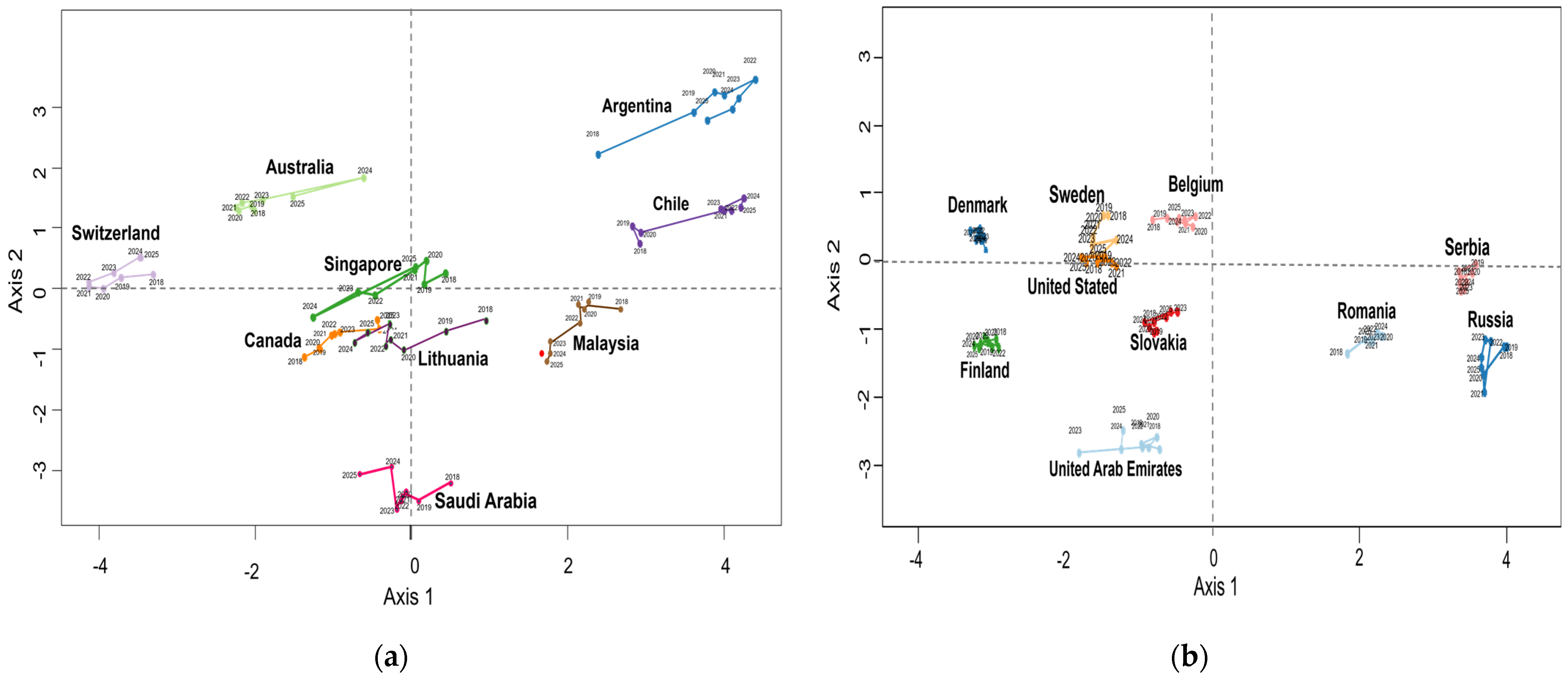
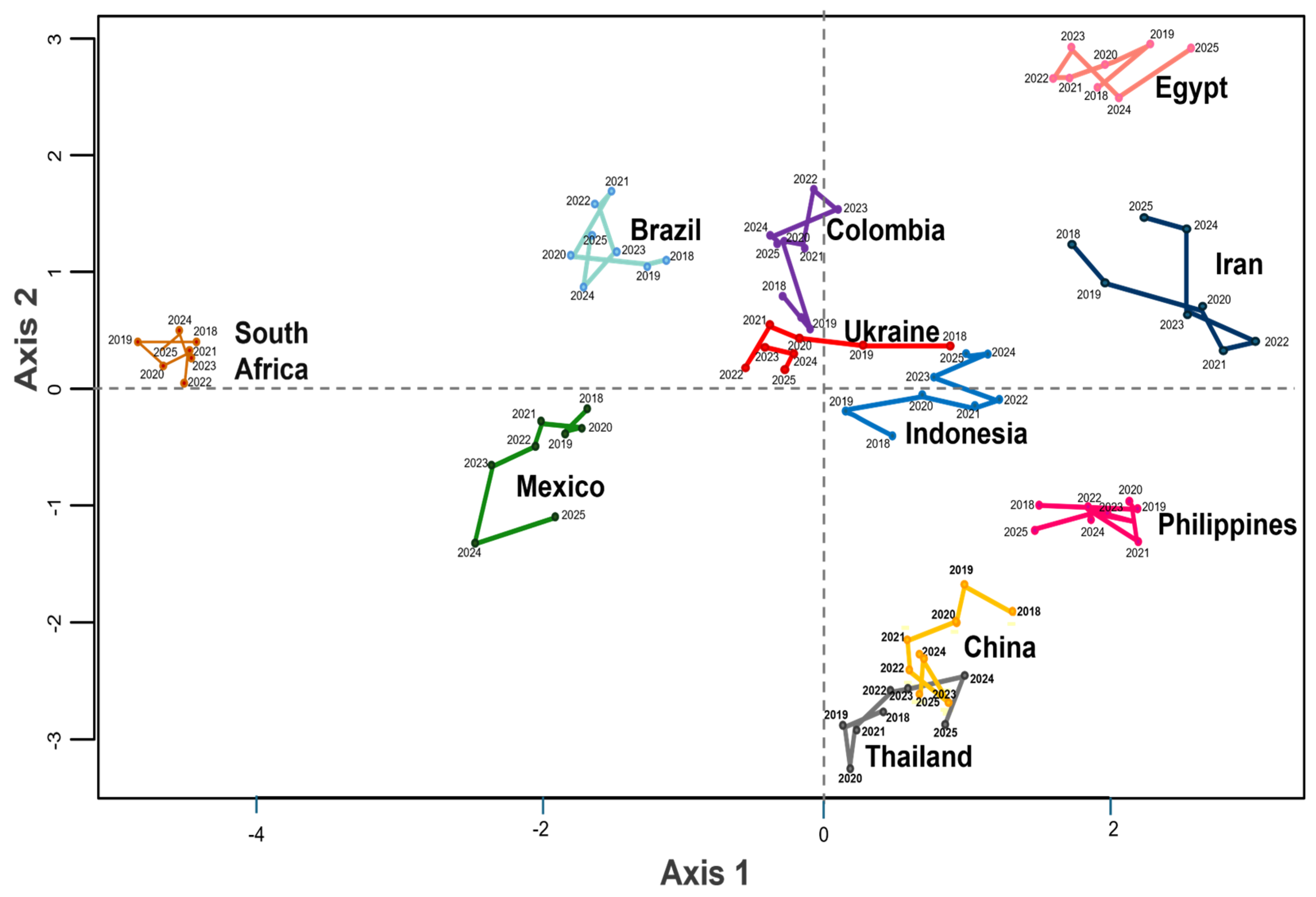
A fundamental step in the X-STATIS analysis is the study of trajectories, which allows for the visualization of each country’s individual evolution throughout the 2018–2025 period. These trajectories are illustrated in the compromise subspace, where patterns of change can be identified (Figure 8 and Figure 9).
The trajectories derived from the PTA allow for the examination of countries’ movements within the factorial space as shifts of proximity or distance relative to the dimensions that structure it. A movement toward a region associated with a specific indicator—represented by a vector—suggests a relative contribution within that dimension.
From an interpretive standpoint, such displacement may indicate improved performance, provided that the indicator reflects a desirable condition (e.g., health, safety, or purchasing power). Conversely, a movement away from a vector linked to a positive indicator may signal a decline in relative influence or positioning. For indicators of a negative nature (such as pollution or traffic congestion), this pattern is reversed: distancing can be interpreted as an improvement, whereas approaching would denote a deterioration. Overall, the interpretation of trajectories depends on both the direction of movement and the intrinsic nature of each indicator
This representation facilitates the interpretation of stability or variability in the levels of QoL for each country, based on their displacement and orientation within the multivariate space. A trajectory with little variation—also referred to as enveloping—indicates that the country maintains a relatively stable position over time, suggesting consistency in its structural and social conditions. In contrast, a trajectory with wide amplitude—eccentric—reflects a more volatile evolution, associated with significant changes in the evaluated indicators, which may imply instability or transformation in living conditions.
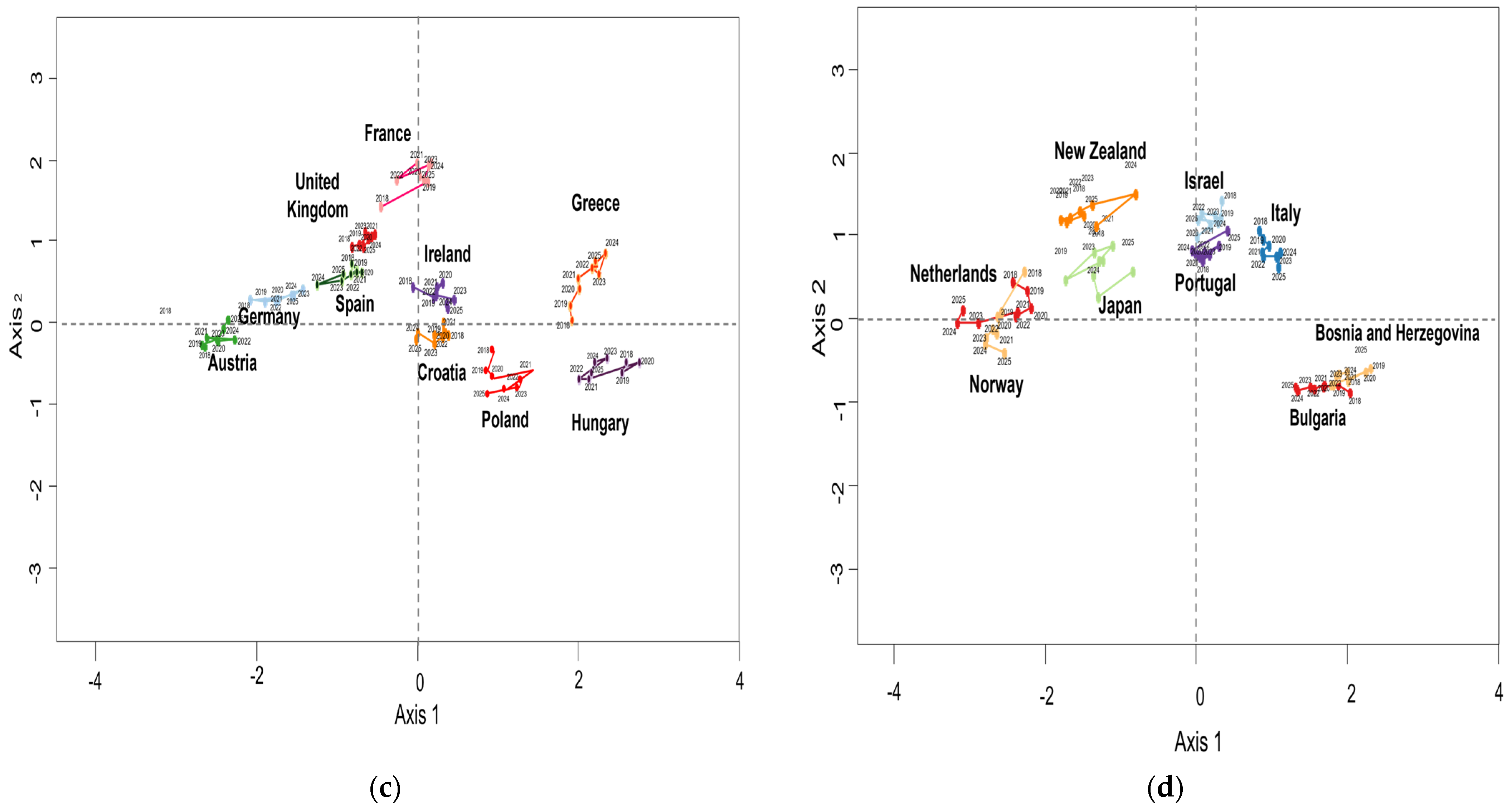
To facilitate comparative visualization of the 38 countries classified as having very high HDI, the data were distributed across four separate figures (Figure 8). Each country is represented by a line connecting its annual positions, with each point along the trajectory corresponding to a specific year, facilitating the comparative analysis of internal dynamics and the identification of possible convergences or divergences among countries.
This division does not follow any specific classificatory criteria but rather aims to enhance the readability of both individual and collective trajectories.
The differences in the length and direction of the trajectories reflect the diverse dynamics of change in QoL indicators over time. Countries with short and stable trajectories tend to maintain consolidated levels of well-being, which are observed alongside more balanced and sustainable social and economic structures. Conversely, longer trajectories reflect changes in living conditions, which occur alongside variations in economic, social, or human development indicators.
Figure 8 reveals notable differences in the magnitude of changes observed among countries during the 2018–2025 period.
Figure 8a–c each display the trajectories of 10 countries, allowing for a clear visualization of individual movements within the factorial space. Figure 8d presents the trajectories of the remaining eight countries. This division facilitates a detailed comparison of trajectories while avoiding overcrowding in a single plot, ensuring that patterns of change for each country can be readily observed.
In the Figure 8a some countries, mainly European—such as Denmark, Sweden, Finland, Slovakia, and Belgium, among others—exhibit short and concentrated trajectories around a single point, indicating a stable evolution with no significant variations in their profiles over time. In contrast, other countries display broader movements across the plane (Figure 8b), reflecting more pronounced transformations in the analyzed indicators. Among them, Argentina stands out, with a trajectory extending considerably toward the upper-right quadrant, and, to a lesser extent, Chile, Australia, Singapore, Canada, Lithuania, Malaysia and Canada, which also show a certain degree of dynamism, along with Saudi Arabia.
In an intermediate position are the countries shown in Figure 8c,d. Some, such as Greece and Hungary, exhibit moderate trajectories with limited amplitude, while others, like Japan and New Zealand, display more inconsistent behavior relative to the compromise.
Overall, the results suggest that while one group of countries shows structural stability in their QoL indicators, others are undergoing more pronounced changes that modify their relative position in the factorial space.
The following figure (Figure 9) shows the temporal trajectories of the eleven high-HDI countries, projected onto the factorial space defined by the QoL indicators.
As shown in Figure 9, among the group of countries with high HDI, most exhibit enveloping trajectories—such as South Africa, Brazil, and the Philippines—suggesting relative stability in the quality-of-life indicators throughout the study period. These countries tend to remain within the same quadrant, indicating limited structural shifts in their multidimensional positioning. Other countries, including Mexico and Indonesia, and to a lesser extent Ukraine, display somewhat more open trajectories; however, these variations do not reflect substantial changes in their overall profiles.

5. Discussion

In line with the ideas proposed by Oleńczuk-Paszel et al. [97], the concept of QoL has been addressed from multiple scientific disciplines, reflecting its complex and multifaceted nature. Despite the growing number of studies in this field, there remains a need to generate evidence that allows for the comparison of experiences across countries, as highlighted by [98,99]. This comparative perspective is essential for understanding how well-being profiles are shaped in different socio-territorial contexts and provides a fundamental basis for evaluating the impact of public interventions and guiding strategic decision-making, as noted by Nedjat et al. [100].
The results of this study align with this approach by offering a structural and comparative characterization of national commitments to QoL, through the implementation of a three-way multivariate approach. Through partial triadic analysis, it was possible to capture the temporal stability of global configurations, suggesting that, despite economic and social fluctuations, well-being profiles remain relatively consistent.
From a comparative perspective, analyzing well-being levels across countries helps highlight the relationships between government policies on QoL and, as Rahman et al. [101] point out, contributes to identifying areas where improvements may be considered. In this regard, we align with Băndoi [102], who conducted a study on QoL in European Union countries. His findings coincide with those of the present work, illustrating how territorial and sectoral factors are reflected in the configuration of well-being. Consistent with our results and in line with García-Carro and Sánchez-Sellero [103], Rogee and Nijverseel [104], and Ruggeri et al. [105], this study also reveals that Nordic and Western European countries—specifically Denmark, Finland, Germany, Norway, Sweden, and Austria—exhibit high levels of QoL, which is associated with their well-established institutional systems, inclusive social policies, and high human development indicators. These regions tend to display stable well-being configurations, characterized by an effective integration of objective dimensions—such as health, education, and income—and positive subjective perceptions. Our results also align with those reported by Rajani et al. [106], who indicate that Greece and Bulgaria exhibited the lowest levels of life satisfaction. In relation to cluster formation, Girardi et al. [107] conducted a classification of countries based on their characteristics associated with QoL, obtaining conclusive results that differ from the findings of the present study.
On the other hand, several studies have documented a positive association between quality of life and the Human Development Index (HDI). For instance, Koohi et al. [108] demonstrate a favorable impact of economic development on QoL, while Brodny [109] highlights the influence of structural and socio-economic factors on well-being. However, other research presents contrasting findings; Zeng et al. [110] notes that, in certain contexts, high levels of economic development do not necessarily translate into better QoL, a result that aligns with the findings of our study. This variability underscores the importance of considering both objective indicators and subjective perceptions when assessing well-being, as well as the sociocultural particularities of each country [47,49]. Our three-way multivariate approach provides a valuable tool for monitoring these dynamics and guiding future interventions, offering solid evidence for strategic decision-making at both national and international levels.
The results of this study contribute evidence that may support the formulation of public policies aimed at improving quality of life. The regional patterns identified highlight that enhancing the quality of life cannot be separated from the structural and territorial conditions that sustain it.
In this regard, policies should move beyond approaches focused exclusively on economic growth and adopt a comprehensive vision that links quality of life with social, environmental, and institutional well-being. This entails promoting equitable access to basic services, such as health, education, and housing; strengthening environmental sustainability and resilience; and consolidating more transparent, participatory, and socially oriented institutions, with the purpose of reducing the disparities observed in the analyzed indicators. Overall, the findings of this study suggest the need to advance toward a multidimensional, equitable, and sustainable development model centered on individual and collective well-being, within the framework of a sustained improvement in the region’s quality of life.
Future research could explore the integration of QoL indicators with complementary dimensions such as sustainability, corruption perception, and economic freedom. This multivariate approach would allow for a deeper and more context-sensitive understanding of countries by capturing not only social and economic outcomes but also institutional and environmental dynamics. Furthermore, it would be possible to apply multivariate analyses by differentiating countries according to continent, to capture regional variation and structural contrasts between geographic blocs with distinct dynamics.

6. Conclusions

In general terms, the results show that countries classified with a very high HDI exhibit significantly higher levels of QoL, which are consistently associated with indicators such as purchasing power, safety, and health. In contrast, countries with a high HDI display slightly lower QoL levels, reflecting challenges in infrastructure and public services. These differences underscore the relevance of structural and contextual factors in the configuration of well-being, providing an interpretive framework for understanding well-being levels across countries and highlighting regional heterogeneity in quality of life.
This study provides empirical evidence on the relationships among multidimensional quality-of-life indicators, using multivariate exploratory techniques. Nevertheless, the analysis presents certain methodological limitations. The main one lies in the fact that, due to the descriptive and exploratory nature of the tools employed, it is not possible to establish causal relationships among the analyzed variables. Consequently, the results should be interpreted as indications of structural proximities in the factorial space rather than as direct effects or explanatory mechanisms.
To further examine these limitations, future research could incorporate complementary analytical approaches such as structural equation modeling, which allows for the simultaneous assessment of direct and indirect relationships among latent variables; mediation analysis, useful for identifying intermediate mechanisms between predictors and outcomes; or causal inference methods based on longitudinal data, which offer a higher capacity to estimate the directionality and magnitude of effects in dynamic contexts.
Likewise, the inclusion of contextual indicators—related to governance, public policies, or climate vulnerability—could enrich the interpretation of the observed spatial patterns and contribute to a more comprehensive understanding of the factors shaping quality of life across diverse socio-territorial settings.

Author Contributions

Conceptualization, M.C.-M.; methodology, M.C.-M.; software, C.A.T.-C.; validation, C.A.T.-C. and A.C.; formal analysis, M.C.-M.; investigation, A.C.; resources, C.A.T.-C.; data curation, A.C.; writing—original draft preparation, M.C.-M.; writing—review and editing, C.A.T.-C.; visualization, A.C.; supervision, M.C.-M.; project administration, A.C.; funding acquisition, M.C.-M. All authors have read and agreed to the published version of the manuscript.

Funding

This study was made possible thanks to the support of the Sistema Nacional de Investigacion (SNI) of the Secretaria Nacional de Ciencia, Tecnologia e Innovacion (Panama). Convocatoria Pública para el Ingreso de Nuevos Miembros al SIN de Panama 2020 (Grant Number: SIN-NM2020.

Data Availability Statement

The data used in this study were collected from https://www.numbeo.com/quality-of-life/rankings_by_country.jsp (accessed on 6 July 2025).

Conflicts of Interest

The authors declare no conflicts of interest.

References

  1. Murawska, A.; Sieg, P.; Stereńczak, S. Environmental Safety and Self-Perceived Quality of Life and Health: The Example of the European Union. Sustainability 2025, 17, 8412. [Google Scholar] [CrossRef]
  2. Faka, A. Assessing Quality of Life Inequalities. A Geographical Approach. ISPRS Int. J. Geo-Inf. 2020, 9, 600. [Google Scholar] [CrossRef]
  3. Fernando, F.; Cooley, D. An Oil Boom’s Effect on Quality of Life (QoL): Lessons from Western North Dakota. Appl. Res. Qual. Life 2016, 11, 1083–1115. [Google Scholar] [CrossRef]
  4. Power, T. The Economic Value of the Quality of Life; Routledge: London, UK, 2020. [Google Scholar]
  5. Yang, Y.; Zhang, S. Income Distribution Unfairness, Social Insurance and Happiness of the Chinese. J. Financ. Res. 2016, 434, 34–50. [Google Scholar]
  6. Li, Z.; Xie, Z. The Impact of Income Inequality and the Use of Information Media on Happiness. Open J. Soc. Sci. 2020, 8, 128–142. [Google Scholar] [CrossRef]
  7. Amian, C.; Alarcón, J.G.; Arenilla Villaba, D.; Sánchez-Medina, M.J.; Fernandez-Portero, C.; Amian, J.G.; Alarcón, D.; Arenilla Villalba, M.J.; Sánchez-Medina, J.A. The Effect of Social Relationships on the Well-Being and Happiness of Older Adults Living Alone or with Relatives. Healthcare 2023, 11, 222. [Google Scholar] [CrossRef]
  8. Belau, M.H.; Jung, L.; Maurer, T.; Obi, N.; Behrens, S.; Seibold, P.; Becher, H.; Chang-Claude, J. Social Relationships and Their Impact on Health-Related Quality of Life in a Long-Term Breast Cancer Survivor Cohort. Cancer 2024, 130, 3210–3218. [Google Scholar] [CrossRef] [PubMed]
  9. Li, C. Quality of Life: The Perspective of Urban Park Recreation in Three Asian Cities. J. Outdoor Recreat. Tour. 2020, 29, 100260. [Google Scholar] [CrossRef]
  10. López-Ruiz, V.R.; Huete-Alcocer, N.; Alfaro-Navarro, J.L.; Nevado-Peña, D. The Relationship between Happiness and Quality of Life: A Model for Spanish Society. PLoS ONE 2021, 16, e0259528. [Google Scholar] [CrossRef]
  11. Jonek-Kowalska, I.; Wolniak, R. Quality of Life and Its Determinants. In Smart Cities in Poland; Taylor & Francis: Abingdon, UK, 2023; pp. 30–50. ISBN 9781032412481. [Google Scholar]
  12. Muhammad, Z.; Abubakar, I.R. Improving the Quality of Life of Urban Communities in Developing Countries. In Responsible Consumption and Production, Encyclopedia of the UN Sustainable Development Goals; Leal Filho, W., Ed.; Springer Nature: Cham, Switzerland, 2019; pp. 1–14. [Google Scholar]
  13. Marans, R. Quality of Urban Life & Environmental Sustainability Studies: Future Linkage Opportunities. Habitat Int. 2015, 45, 47–52. [Google Scholar] [CrossRef]
  14. Verdugo, M.Á.; Schalock, R.L. From a Concept to a Theory: The Six Eras of Quality of Life Research and Application. Res. Dev. Disabil. 2024, 150, 104763. [Google Scholar] [CrossRef]
  15. WHOQOL Group. The World Health Organization Quality of Life Assessment (WHOQOL): Position Paper from the World Health Organization. Soc. Sci. Med. 1995, 41, 1403–1409. [Google Scholar] [CrossRef]
  16. Murgaš, F.; Klobučník, M. Municipalities and Regions as Good Places to Live: Index of Quality of Life in the Czech Republic. Appl. Res. Qual. Life 2016, 11, 553–570. [Google Scholar] [CrossRef]
  17. Belyaeva, L. Quality of Life in the Subjective Estimates of the Population: Russia in the European Context. RUDN J. Sociol. 2018, 18, 680–694. [Google Scholar] [CrossRef]
  18. Węziak-Białowolska, D. Quality of Life in Cities–Empirical Evidence in Comparative European Perspective. Cities 2016, 58, 87–96. [Google Scholar]
  19. Bougouffa, I.; Permana, A. A Study on the Linkages between Residential Satisfaction and the Overall Quality of Life in Bandar Tun Razak Area of Kuala Lumpur City, Malaysia. Appl. Res. Qual. Life 2018, 13, 991–1013. [Google Scholar] [CrossRef]
  20. Decancq, K. Measuring Multidimensional Inequality in the OECD Member Countries with a Distribution-Sensitive Better Life Index. Soc. Indic. Res. 2017, 131, 1057–1086. [Google Scholar] [CrossRef]
  21. Linares, S.; Mikkelsen, C.A.; Velázquez, G.A.; Celemín, J.P. Spatial Segregation and Quality of Life: Empirical Analysis of Medium-Sized Cities of Buenos Aires Province. Indic. Qual. Life Lat. Am. 2016, 62, 201–218. [Google Scholar] [CrossRef]
  22. Numbeo Quality of Life. Available online: https://www.numbeo.com/quality-of-life/ (accessed on 6 July 2025).
  23. OECD Better Life Index|OECD. Available online: https://www.oecd.org/en/data/tools/oecd-better-life-index.html (accessed on 6 October 2025).
  24. World Happiness Report 2025 | The World Happiness Report. Available online: https://www.worldhappiness.report/ed/2025/ (accessed on 6 October 2025).
  25. Gross National Happiness. Centre for Bhutan Studies. Available online: https://bhutanstudies.org.bt/ (accessed on 6 October 2025).
  26. Wellbeing as the Lens for Decision-Making in Canada|Canadian Index of Wellbeing|University of Waterloo. Available online: https://uwaterloo.ca/canadian-index-wellbeing/ (accessed on 6 October 2025).
  27. World Happiness Report. Available online: https://data.worldhappiness.report/table (accessed on 6 October 2025).
  28. Elkhouly, A.N.; Attia, S.A.; Zayed, M.A. Quality of Urban Life Indexes’ Analysis to Initiate Socio-Urban Based Criteria. Int. J. Eng. Res. Technol. 2019, 12, 2273–2283. [Google Scholar]
  29. Jaffrenou, P.A. Sur l’analyse Des Familles Finies de Variables Vectorielles: Bases Algebriques et Application a La Description Statistique; Université Claude Bernard: Lyon, France, 1978. [Google Scholar]
  30. Villardón, M. Una Alternativa de Representación Simultánea: HJ-Biplot. Qüestiió Quad. D’estadística I Investig. Oper. 1986, 10, 13–23. [Google Scholar]
  31. Antoniadou, M.; Mangoulia, P.; Myrianthefs, P. Quality of Life and Wellbeing Parameters of Academic Dental and Nursing Personnel vs. Quality of Services. Healthcare 2023, 11, 2792. [Google Scholar] [CrossRef]
  32. What’s Wellbeing? Available online: https://www.futureofwellbeing.com/about-wellbeing/?utm_source=chatgpt.com (accessed on 9 November 2025).
  33. Dahlen, M.; Thorbjørnsen, H. Individuals’ Assessments of Their Own Wellbeing, Subjective Welfare, and Good Life: Four Exploratory Studies. Int. J. Environ. Res. Public Health 2022, 19, 11919. [Google Scholar] [CrossRef] [PubMed]
  34. Celemin, J.P.; Mikkelsen, C.A.; Velázquez, G.Á. La Calidad de Vida Desde Una Perspectiva Geográfica: Integración de Indicadores Objetivos y Subjetivos. Rev. Univ. Geogr. 2015, 24, 63–84. [Google Scholar]
  35. Cárcaba, A.; González, E.; Ventura, J. Una Propuesta Para La Medición de La Calidad de Vida En Los Municipios Españoles. Rev. Asoc. Española Contab. Adm. Empresas 2017, 117, 37–41. [Google Scholar]
  36. Costanza, R.; Fisher, B.; Ali, S.; Beer, C.; Bond, L.; Boumans, R.; Danigelis, N.L.; Dickinson, J.; Elliott, C.; Farley, J.; et al. An Integrative Approach to Quality of Life Measurement, Research, and Policy. SAPI EN. S. Surv. Perspect. Integr. Environ. 2008, 1, 848–855. [Google Scholar] [CrossRef]
  37. Estes, R.J.; Sirgy, M.J. Global Advances in Quality of Life and Well-Being: Past, Present, and Future. Soc. Indic. Res. 2019, 141, 1137–1164. [Google Scholar] [CrossRef]
  38. Giugno, D. La Qualità Di Vita Conta Più Della Quantità Della Vita. Recent. Prog. Med. 2019, 110, 269–270. [Google Scholar] [CrossRef]
  39. Marquez, D.X.; Aguinãga, S.; Vásquez, P.M.; Conroy, D.E.; Erickson, K.I.; Hillman, C.; Stillman, C.M.; Ballard, R.M.; Sheppard, B.B.; Petruzzello, S.J.; et al. A Systematic Review of Physical Activity and Quality of Life and Well-Being. Transl. Behav. Med. 2020, 10, 1098–1109. [Google Scholar] [CrossRef]
  40. Beslerová, S.; Dzuričková, J. Quality of Life Measurements in EU Countries. Procedia Econ. Financ. 2014, 12, 37–47. [Google Scholar]
  41. Choe, J.; O’Regan, M.; Kimbu, A.N. Filipino Migrant Workers’ Leisure and Subjective Quality of Life in Macao. World Leis. J. 2020, 62, 242–260. [Google Scholar] [CrossRef]
  42. Murgaš, F.; Klobučník, M. Community well-being or quality of place? A few notes and their application in Czech Republic. In New Dimensions in Community Well-Being; Kraeger, P., Cloutier, S., Talmage, C., Eds.; Springer International Publishing: Cham, Switzerland, 2017; pp. 29–59. [Google Scholar]
  43. Diener, E.; Suh, E. Measuring Quality of Life: Economic, Social, and Subjective Indicators. Soc. Indic. Res. 1997, 40, 189–216. [Google Scholar] [CrossRef]
  44. Campbell, A.; Converse, P.; Rodgers, W. The Quality of American Life: Perceptions, Evaluations, and Satisfactions; Russell Sage Foundation: New York, NY, USA, 1976. [Google Scholar]
  45. Allardt, E. Dimensions of Welfare in a Comparative Scandinavian Study. Acta Sociol. 1976, 19, 227–239. [Google Scholar] [CrossRef]
  46. Allirani, H.; Dumka, A.; Verma, A. A Framework for Assessment of Pedestrianization Impacts on Quality of Life: Combining Subjective and Objective Measures. Cities 2024, 145, 104688. [Google Scholar] [CrossRef]
  47. Haslauer, E.; Delmelle, E.C.; Keul, A.; Blaschke, T.; Prinz, T. Comparing Subjective and Objective Quality of Life Criteria: A Case Study of Green Space and Public Transport in Vienna, Austria. Soc. Indic. Res. 2014, 124, 911–927. [Google Scholar] [CrossRef]
  48. Ardestani, L.; Choobchian, S.; Sadighi, H.; Azadi, H.; Viira, A.H.; Tanaskovik, V.; Kurban, A. Investigating Subjective and Objective Quality of Life in Rural Areas: The Case of Tehran Province in Iran. Appl. Res. Qual. Life 2022, 17, 671–702. [Google Scholar] [CrossRef]
  49. MacKů, K.; Caha, J.; Pászto, V.; Tuček, P. Subjective or Objective? How Objective Measures Relate to Subjective Life Satisfaction in Europe. ISPRS Int. J. Geo-Inf. 2020, 9, 320. [Google Scholar] [CrossRef]
  50. Morales-Urrutia, X.; Yépez-Villacis, R.; Miranda, A.M.; Nogales-Portero, R.; Álvarez, E. Quality of Life and Environmental Degradation: An Empirical Assessment of Their Interactions and Determinants in Latin America and the Caribbean. Sustainability 2025, 17, 7479. [Google Scholar] [CrossRef]
  51. Maridal, J. A Worldwide Measure of Societal Quality of Life. Soc. Indic. Res. 2017, 134, 1–38. [Google Scholar] [CrossRef]
  52. Costanza, R.; Fisher, B.; Ali, S.; Beer, C.; Bond, L.; Boumans, R.; Danigelis, N.L.; Dickinson, J.; Elliott, C.; Farley, J.; et al. Quality of life: An approach integrating opportunities, human needs, and subjective well-being. Ecol. Econ. 2007, 61, 267–276. [Google Scholar] [CrossRef]
  53. Skevington, S.; Böhnke, J. How Is Subjective Well-Being Related to Quality of Life? Do We Need Two Concepts and Both Measures? Soc. Sci. Med. 2018, 206, 22–30. [Google Scholar] [CrossRef] [PubMed]
  54. Lakomý, M. The Effects of Prolonged Working Life on Subjective Quality of Life across Europe. Soc. Sci. Res. 2019, 82, 33–44. [Google Scholar] [CrossRef]
  55. Bottoni, G.; Addeo, F. The Effect of Social Cohesion on Subjective Individual Quality of Life in European Countries. Soc. Indic. Res. 2024, 171, 1111–1133. [Google Scholar] [CrossRef]
  56. Graham, C.; Nikolova, M. Bentham or Aristotle in the Development Process? An Empirical Investigation of Capabilities and Subjective Well-Being. World Dev. 2015, 68, 163–179. [Google Scholar] [CrossRef]
  57. Medvedev, O.N.; Landhuis, C.E. Exploring Constructs of Well-Being, Happiness and Quality of Life. PeerJ 2018, 6, e4903. [Google Scholar] [CrossRef] [PubMed]
  58. Cai, T.; Verze, P.; Bjerklund Johansen, T.E. The Quality of Life Definition: Where Are We Going? Uro 2021, 1, 14–22. [Google Scholar] [CrossRef]
  59. McQuaid, G.; Gendy, J.; Lee, N.; Wallace, G. Sexual Minority Identities in Autistic Adults: Diversity and Associations with Mental Health Symptoms and Subjective Quality of Life. Autism Adulthood 2023, 5, 139–153. [Google Scholar] [CrossRef]
  60. DiMaria, C.H.; Peroni, C.; Sarracino, F. Happiness Matters: Productivity Gains from Subjective Well-Being. J. Happiness Stud. 2020, 21, 139–160. [Google Scholar] [CrossRef]
  61. Layard, R. Happiness: Lessons from a New Science; Penguin UK: London, UK, 2011. [Google Scholar]
  62. Nanor, M.A.; Poku-Boansi, M.; Adarkwa, K.K. An Objective Analysis of the Relationship between Quality of Life and Socio-Economic Characteristics in Kumasi, Ghana. GeoJournal 2018, 83, 835–851. [Google Scholar] [CrossRef]
  63. Šoltés, V.; Nováková, B. Measurement of Objective Life Quality in the Context of Economically Developed Countries’ Quantification. Procedia Econ. Financ. 2015, 32, 146–153. [Google Scholar] [CrossRef]
  64. Cichocki, Ł.; Cechnicki, A.; Franczyk-Glita, J.; Błądziński, P.; Kalisz, A.; Wroński, K. Quality of Life in a 20-Year Follow-up Study of People Suffering from Schizophrenia. Compr. Psychiatry 2015, 56, 133–140. [Google Scholar] [CrossRef]
  65. Heidary, Z.; Ghaemi, M.; Hossein Rashidi, B.; Kohandel Gargari, O.; Montazeri, A. Quality of Life in Breast Cancer Patients: A Systematic Review of the Qualitative Studies. Cancer Control 2023, 30. [Google Scholar] [CrossRef] [PubMed]
  66. Zewude, W.C.; Derese, T.; Suga, Y.; Teklewold, B. Quality of Life in Patients Living with Stoma. Ethiop. J. Health Sci. 2021, 31, 993–1000. [Google Scholar] [CrossRef] [PubMed]
  67. Nowak, P. Regional Variety in Quality of Life in Poland. Oeconomia Copernic. 2018, 9, 381–401. [Google Scholar] [CrossRef]
  68. Morais, P.; Camanho, A. Evaluation of Performance of European Cities with the Aim to Promote Quality of Life Improvements. Omega 2011, 39, 398–409. [Google Scholar] [CrossRef]
  69. Michalska-Żyła, A.; Marks-Krzyszkowska, M. Quality of life and quality of living in rural communes in Poland. Eur. Countrys. 2018, 10, 280–299. [Google Scholar] [CrossRef]
  70. Hossain, M.A.; Sultana, S.; Nazem, N.I. Spatial Distribution of Strategic Service Infrastructures That Favour Quality of Life (QOL) in the Greater Dhaka Region (GDR), Bangladesh. SN Soc. Sci. 2021, 8, 205. [Google Scholar] [CrossRef]
  71. Urzúa, A.; Miranda-Castillo, C.; Caqueo-Urízar, A.; Mascayano, F. Do Cultural Values Affect Quality of Life Evaluation? Soc. Indic. Res. 2012, 114, 1295–1313. [Google Scholar] [CrossRef]
  72. Milanovic, B. Capitalism, Alone: The Future of the System That Rules the World; Harvard University Press: London, UK, 2019; ISBN 9780674242869. [Google Scholar]
  73. Bérenger, V.; Verdier, A. Multidimensional Measures of Well-Being: Standard of Living and Quality of Life across Countries. World Dev. 2007, 35, 1259–1276. [Google Scholar] [CrossRef]
  74. Charron, N.; Dijkstra, L.; Lapuente, V. Regional Governance Matters: Quality of Government within European Union Member States. Reg. Stud. 2014, 48, 68–90. [Google Scholar] [CrossRef]
  75. Torres, I. La Incorporación Del Concepto de Felicidad En El Diseño de Las “Políticas Públicas” En El Chile Neoliberal. Rev. Bras. Sociol. Emoção 2013, 12, 89–120. [Google Scholar]
  76. Diener, E.; Biswas-Diener, R. Happiness: Unlocking the Mysteries of Psychological Wealth; John Wiley & Sons: Hoboken, NJ, USA, 2011. [Google Scholar]
  77. Bourdin, S.; Cornier, T. Au-Delà de La Mesure Du Bien-Être En Milieu Urbain: Quelle Perception de La Qualité de Vie Dans Les Villes Européennes? Géographie économie Société 2017, 19, 3–31. [Google Scholar] [CrossRef]
  78. Methodology and Motivation. Available online: https://www.numbeo.com/common/motivation_and_methodology.jsp (accessed on 8 November 2025).
  79. Salah, R.; Elsappagh, H. The NUBEO Quality of Life Indicators Methodology for Analytical Assessment of Urban Community Public Satisfaction and Sustainable Development. J. Eng. Adv. Technol. Sustain. Appl. 2025, 1, 54–59. [Google Scholar] [CrossRef]
  80. Elserafi, T.; Aly, A. Ben Fusing Smart Innovation and Human-Centered Design: A Livable Approach to Smart Sustainable District. Civ. Eng. Archit. 2025, 13, 2257–2275. [Google Scholar] [CrossRef]
  81. Cost of Living. Available online: https://www.numbeo.com/cost-of-living/ (accessed on 8 November 2025).
  82. Shu, Z.; Carrasco, R.A.; García-Miguel, J.P.; Wang, C.-C.; Wu, C.-L.; Dong, L.; Shu, Z.; Carrasco, R.A.; Portela García-Miguel, J.; Sánchez-Montañés, M. Multiple Scenarios of Quality of Life Index Using Fuzzy Linguistic Quantifiers: The Case of 85 Countries in Numbeo. Mathematics 2022, 10, 2091. [Google Scholar] [CrossRef]
  83. Sun, X.; Mi, Z.; Sudmant, A.; Coffman, D.M.; Yang, P.; Wood, R. Using Crowdsourced Data to Estimate the Carbon Footprints of Global Cities. Adv. Appl. Energy 2022, 8, 100111. [Google Scholar] [CrossRef]
  84. Helble, M.; Ok Lee, K.; Gia Arbo, M.A. How (Un) Affordable Is Housing in Developing Asia? Int. J. Urban. Sci. 2021, 25, 80–110. [Google Scholar] [CrossRef]
  85. Carlsen, L.; Bruggemann, R. Environmental Perception in 33 European Countries: An Analysis Based on Partial Order. Environ. Dev. Sustain. 2020, 22, 1873–1896. [Google Scholar] [CrossRef]
  86. Numbeo Statistical Portal―Správa Informačních Technologií Města Plzně. Available online: https://www.sitmp.cz/en/projekty_detail/numbeo-statistical-portal/?utm_ (accessed on 8 November 2025).
  87. United Nations Development Programme. Human Development Reports 2025. Available online: https://hdr.undp.org/content/human-development-report-2025 (accessed on 8 October 2025).
  88. Tucker, L.R. Some Mathematical Notes on Three Mode Factor Analysis. Psychometrika 1966, 31, 279–311. [Google Scholar] [CrossRef]
  89. L’Hermier des Plantes, H. Structuration Des Tableaux à Trois Indices de la statistique. Thése de 3eme cycle, Universite’ Montpellier II, Montpellier, France, 1976. [Google Scholar]
  90. Escoufier, Y. Opérateur Associé à un Tableau de Données. In Annales de l’INSEE; JSTOR: New York, NY, USA, 1976; pp. 165–179. [Google Scholar]
  91. Kroonenberg, P. The Anal Sis of Multiple Tables in Factorial Ecolog. III. Acta Oecologica Oecologia Gen. 1989, 10, 245–256. [Google Scholar]
  92. Rodríguez-Martínez, C.C.; Cubilla-Montilla, M.; Vicente-Galindo, P.; Galindo-Villardón, P. X-STATIS: A Multivariate Approach to Characterize the Evolution of E-Participation, from a Global Perspective. Mathematics 2023, 11, 1492. [Google Scholar] [CrossRef]
  93. Medina-Hernández, E.J.; Fernández-Gómez, M.J. Multi-Way Analysis of the Gender Dimension of the Sustainable Development Goals. Soc. Indic. Res. 2024, 172, 517–541. [Google Scholar] [CrossRef]
  94. Gallego-Álvarez, I.; Rodríguez-Rosa, M.; Vicente-Galindo, P. Are Worldwide Governance Indicators Stable or Do They Change over Time? A Comparative Study Using Multivariate Analysis. Mathematics 2021, 9, 3257. [Google Scholar] [CrossRef]
  95. Slimani, N.; Jiménez, J.J.; Guilbert, E.; Boumaïza, M.; Thioulouse, J. Surface Water Quality Assessment in a Semiarid Mediterranean Region (Medjerda, Northern Tunisia) Using Partial Triadic Analysis. Environ. Sci. Pollut. Res. 2020, 27, 30190–30198. [Google Scholar] [CrossRef]
  96. RStudio: Integrated Development for R [Computer Software], RStudio PBC: Boston, MA, USA, 2020.
  97. Oleńczuk-Paszel, A.; Sompolska-Rzechuła, A. Housing Conditions and the Quality of Life of the Populations of the European Union Countries. Sustainability 2025, 17, 1550. [Google Scholar] [CrossRef]
  98. Wesz, J.; Miron, L.; Delsante, I.; Tzortzopoulos, P. Urban Quality of Life: A Systematic Literature Review. Urban. Sci. 2023, 7, 56. [Google Scholar] [CrossRef]
  99. Yum, S. The Determinants of the Quality of Life across the World. Qual. Quant. 2025, 1–17. [Google Scholar] [CrossRef]
  100. Nedjat, S.; Holakouie Naieni, K.; Mohammad, K.; Majdzadeh, R.; Montazeri, A. Quality of Life among an Iranian General Population Sample Using the World Health Organization’s Quality of Life Instrument (WHOQOL-BREF). Int. J. Public. Health 2011, 56, 55–61. [Google Scholar] [CrossRef]
  101. Rahman, T.; Mittelhammer, R.C.; Wandscheider, P. Measuring the Quality of Life across Countries: A Sensitivity Analysis of Well-Being Indices; WIDER Research Paper, 2005; ISBN 9291906735. Available online: https://www.econstor.eu/bitstream/10419/63384/1/480586861.pdf (accessed on 11 January 2026).
  102. Băndoi, A.; Jianu, E.; Enescu, M.; Axinte, G.; Tudor, S. The Relationship between Development of Tourism, Quality of Life and Sustainable Performance in EU Countries. Sustainability 2020, 12, 1628. [Google Scholar] [CrossRef]
  103. García-Carro, B.; Sánchez, M. Evolución de La Calidad de Vida Subjetiva En La Unión Europea. Comparación de Diferentes Metodologías Para La Construcción de Indicadores Sintéticos. Revista Economía Mundial. 2022, 61, 21–38. [Google Scholar] [CrossRef]
  104. Rogge, N.; Van Nijverseel, I. Quality of Life in the European Union: A Multidimensional Analysis. Soc. Indic. Res. 2019, 141, 765–789. [Google Scholar] [CrossRef]
  105. Ruggeri, K.; Garcia-Garzon, E.; Maguire, Á.; Matz, S.; Huppert, F.A. Well-Being Is More than Happiness and Life Satisfaction: A Multidimensional Analysis of 21 Countries. Health Qual. Life Outcomes 2020, 18, 192. [Google Scholar] [CrossRef] [PubMed]
  106. Rajani, N.B.; Skianis, V.; Filippidis, F.T. Association of Environmental and Sociodemographic Factors with Life Satisfaction in 27 European Countries. BMC Public Health 2019, 19, 534. [Google Scholar] [CrossRef] [PubMed]
  107. Girardi, G.C.; Rubbo, P.; Broday, E.E.; Arnold, M.; Picinin, C.T. Comparative Analysis between Quality of Life and Human Labor in Countries Belonging to G7 and BRICS Blocks: Proposition of Discriminant Analysis Model. Economies 2024, 12, 124. [Google Scholar] [CrossRef]
  108. Koohi, F.; Nedjat, S.; Yaseri, M. Quality of Life among General Populations of Different Countries in the Past 10 Years, with a Focus on Human Development Index: A Systematic Review and Meta-Analysis. Iran. J. Public 2017, 46, 12. [Google Scholar]
  109. Brodny, J.; Tutak, M.; Bindzár, P. Measuring and Assessing the Level of Living Conditions and Quality of Life in Smart Sustainable Cities in Poland—Framework for Evaluation Based on MCDM Methods. Smart Cities 2024, 7, 1221–1260. [Google Scholar] [CrossRef]
  110. Zeng, W.; Xiang, L.; Zhang, W. Evaluation of Life Quality and Its Spatial Mismatch with Local Economic Development in Large Chinese Cities. Appl. Res. Qual. Life 2020, 15, 239–258. [Google Scholar] [CrossRef]
Figure 1. Stages of the X-STATIS or partial triadic analysis.
Rsee 03 00002 g001
Figure 2. X-STATIS analysis of the interstructure.
Rsee 03 00002 g002
Figure 3. Compromise analysis representing all countries.
Rsee 03 00002 g003
Figure 4. (a) Compromise analysis for countries with very high HDI; (b) compromise analysis for countries with high HDI.
Rsee 03 00002 g004
Figure 5. Dendrogram for countries with very high HDI.
Rsee 03 00002 g005
Figure 6. Dendrogram for countries with high HDI.
Rsee 03 00002 g006
Figure 7. (a) Cluster analysis for countries with very high HDI; (b) cluster analysis for countries with high HDI.
Rsee 03 00002 g007
Figure 8. X-STATIS analysis trajectories for very high-HDI countries between 2018 and 2025. (a) Eccentric trajectories, (b) enveloping trajectories; (c) moderate trajectories; (d) unstable trajectories.
Rsee 03 00002 g008aRsee 03 00002 g008b
Figure 9. X-STATIS analysis trajectories for high-HDI countries between 2018 and 2025.
Rsee 03 00002 g009
Table 1. System for measuring quality of life (Numbeo) [22].
IndicatorsDescription
Quality of Life (QoL)A multidimensional construct that reflects the extent to which the material, social, environmental, and institutional conditions of a territory enable the population to meet their basic needs.
Purchasing PowerRepresents the relative purchasing power in buying goods and services.
Safety IndexIndicates overall safety conditions in a city, encompassing crime statistics and the citizens’ perception of security.
Healthcare IndexEvaluates the quality and accessibility of healthcare services, response times, and the affordability of medical care.
Cost of Living IndexRepresents the expenses associated with living in a specific place, encompassing the prices of necessary commodities, housing, and services.
Property Price to Income RatioExamine real estate prices in relation to income levels, providing insights into home affordability for inhabitants.
Traffic Commute TimeAssesses the time consumed in traffic, due overall inadequacies in the traffic system.
PollutionAssesses environmental pollution, encompassing air and water quality as well as overall pollution levels in the region.
Climate Reflects climate comfort determined by variables including temperature, humidity, and air quality.
Table 2. Classification of sample countries according to their HDI.
Very High HDIHigh HDI
ISO3 CodeCountryISO3 CodeCountry
AREUnited Arab EmiratesBRABrazil
ARGArgentinaCHNChina
AUSAustraliaCOLColombia
AUTAustriaEGYEgypt
BELBelgiumIDNIndonesia
BGRBulgariaIRNIran
BIHBosnia and HerzegovinaMEXMexico
CANCanadaPHLPhilippines
CHESwitzerlandTHAThailand
CHLChileUKRUkraine
DEUGermanyZAFSouth Africa
DNKDenmark
ESPSpain
FINFinland
FRAFrance
GBRUnited Kingdon
GRCGreece
HRVCroatia
HUNHungary
IRLIreland
ISRIsrael
ITAItaly
JPNJapan
LTULithuania
MYSMalaysia
NLDNetherlands
NORNorway
NZLNew Zealand
POLPoland
PRTPortugal
ROURomania
RUSRussia
SAUSaudi Arabia
SGPSingapore
SRBSerbia
SVNSlovenia
SWESweden
USAUnited States
Countries are identified using three-letter codes.
Table 3. Weights and quality of representation of each matrix (year) on compromise.
AxisWeightsCos2
20180.3470.968
20190.3540.986
20200.3560.992
20210.3550.991
20220.3550.991
20230.3560.992
20240.3530.983
20250.3530.983
Table 4. Clusters formed among countries with very high HDI according to QoL profiles (2018–2025).
Cluster 1 (n = 18)Cluster 2 (n = 7)Cluster 3 (n = 2)Cluster 4 (n = 11)
AustraliaAustriaSaudi ArabiaArgentina
BelgiumSwitzerlandUnited Arab EmiratesBulgaria
CanadaGermany Bosnia and Herzegovina
SpainDenmark Chile
FranceFinland Greece
United KingdomNetherlands Hungary
CroatiaNorway Malaysia
Ireland Poland
Israel Romania
Italy Russia
Japan Serbia
Lithuania
New Zealand
Portugal
Singapore
Slovenia
Sweden
United States
Table 5. Clusters formed among countries with high HDI according to QoL profiles (2018–2025).
Cluster 1 (n = 6)Cluster 2 (n = 3)Cluster 3 (n = 2)
BrazilChinaEgypt
ColombiaPhilippinesIran
IndonesiaThailand
Mexico
Ukraine
South Africa
Disclaimer/Publisher’s Note: The statements, opinions and data contained in all publications are solely those of the individual author(s) and contributor(s) and not of MDPI and/or the editor(s). MDPI and/or the editor(s) disclaim responsibility for any injury to people or property resulting from any ideas, methods, instructions or products referred to in the content.