

Light and Environment: Regulation of Seasonal Reproduction in Wild Birds

 , , and
Simple Summary
Abstract
1. Introduction
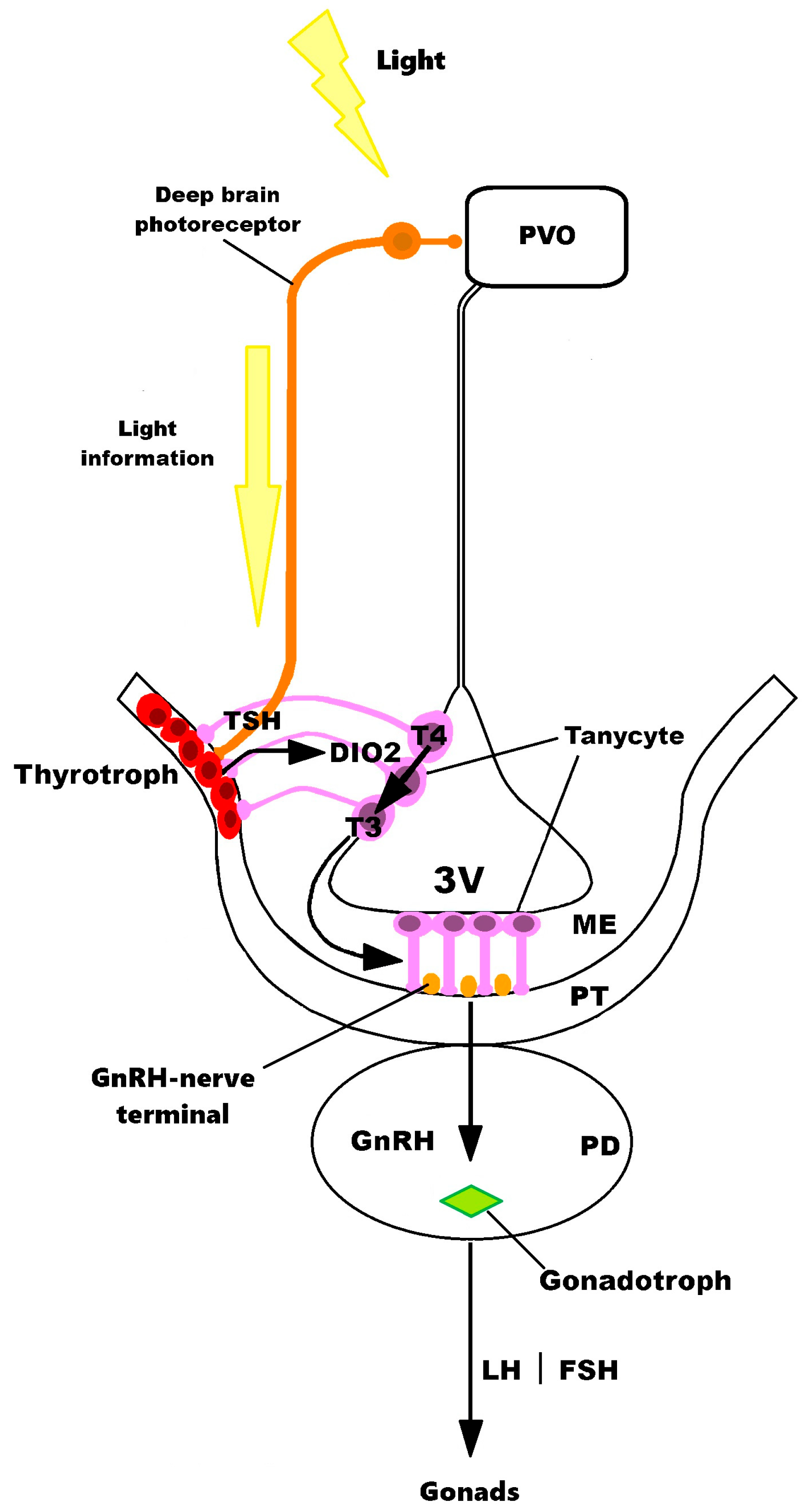
2. Neuroendocrine Axis and Molecular Mechanisms of Reproductive Seasonality
3. Interaction with Secondary Environmental Factors
3.1. Temperature and Precipitation
3.2. Availability of Food Resources
3.3. Social Interactions
3.4. Artificial Light Pollution at Night (ALAN)
4. Opportunistic Reproduction and Alternative Modes of Seasonality
5. Conclusions
Author Contributions
Funding
Institutional Review Board Statement
Informed Consent Statement
Data Availability Statement
Acknowledgments
Conflicts of Interest
Abbreviations
| 3β-HSD | 3β-Hydroxysteroid Dehydrogenase |
| 5α-DHT | 5α-Dihydrotestosterone |
| AE | Androstenedione |
| ALAN | Artificial Light at Night |
| CSF | Cerebrospinal Fluid |
| DIO2 | Type II Deiodinase |
| DIO3 | Type III Deiodinase |
| FSH | Follicle-Stimulating Hormone |
| GnIH | Gonadotropin-Inhibitory Hormone |
| GnRH | Gonadotropin-Releasing Hormone |
| GPR54 | G-protein-coupled receptor 54 |
| HPG | Hypothalamic–Pituitary–Gonadal |
| HPT | Hypothalamic–Pituitary–Thyroid |
| HSPs | Heat Shock Proteins |
| HVC | Proper name of a song control nucleus in the avian forebrain |
| IGF-1 | Insulin-like Growth Factor 1 |
| KISS1/KISS2 | Kisspeptin genes |
| LH | Luteinizing Hormone |
| LH surge | Preovulatory rise in Luteinizing Hormone |
| LHCGR | Luteinizing Hormone/Chorionic Gonadotropin Receptor |
| MBH | Mediobasal Hypothalamus |
| mSCN/vSCN | Medial/Ventral Suprachiasmatic Nucleus |
| MT1 | Melatonin Receptor 1 |
| mTOR | Mammalian Target of Rapamycin |
| NPY | Neuropeptide Y |
| OPN | Opsin (photoreceptor protein) |
| OPN4 | Melanopsin (pineal and hypothalamic photoreceptor) |
| OPN5 | Neuropsin (deep brain photoreceptor) |
| PRL | Prolactin |
| PRLR | Prolactin Receptor |
| PT | Pars Tuberalis |
| PVO | Paraventricular Organ |
| ROS | Reactive Oxygen Species |
| SCN | Suprachiasmatic Nucleus |
| T3 | Triiodothyronine |
| T4 | Thyroxine |
| TSH | Thyroid-Stimulating Hormone |
| TSHβ | Thyroid-Stimulating Hormone beta subunit |
| V3 | Third Ventricle |
| OPNVA | Vertebrate Ancient Opsin |
| VIP | Vasoactive Intestinal Peptide |
References
- Ashmole, N.P. The Regulation of Numbers of Tropical Oceanic Birds. IBIS 1963, 103b, 458–473. [Google Scholar] [CrossRef] [Scilit]
- Dawson, A.; King, V.M.; Bentley, G.E.; Ball, G.F. Photoperiodic control of seasonality in birds. J. Biol. Rhythm. 2001, 16, 365–380. [Google Scholar] [CrossRef] [Scilit] [PubMed]
- Sharp, P.J. Photoperiodic regulation of seasonal breeding in birds. Ann. N. Y. Acad. Sci. 2005, 1040, 189–199. [Google Scholar] [CrossRef] [Scilit] [PubMed]
- Gwinner, E. Circannual rhythms in birds. Curr. Opin. Neurobiol. 2003, 13, 770–778. [Google Scholar] [CrossRef] [Scilit] [PubMed]
- Nicholls, T.J.; Goldsmith, A.R.; Dawson, A. Photorefractoriness in birds and comparison with mammals. Physiol. Rev. 1988, 68, 133–176. [Google Scholar] [CrossRef] [Scilit]
- Yasuo, S.; Watanabe, M.; Nakao, N.; Takagi, T.; Follett, B.K.; Ebihara, S.; Yoshimura, T. The reciprocal switching of two thyroid hormone-activating and -inactivating enzyme genes is involved in the photoperiodic gonadal response of Japanese quail. Endocrinology 2005, 146, 2551–2554. [Google Scholar] [CrossRef] [Scilit]
- Holthues, H.; Engel, L.; Spessert, R.; Vollrath, L. Circadian gene expression patterns of melanopsin and pinopsin in the chick pineal gland. Biochem. Biophys. Res. Commun. 2005, 326, 160–165. [Google Scholar] [CrossRef] [Scilit]
- Underwood, H.; Steele, C.T.; Zivkovic, B. Circadian organization and the role of the pineal in birds. Microsc. Res. Tech. 2001, 53, 48–62. [Google Scholar] [CrossRef] [Scilit]
- Okano, T.; Yoshizawa, T.; Fukada, Y. Pinopsin is a chicken pineal photoreceptive molecule. Nature 1994, 372, 94–97. [Google Scholar] [CrossRef] [Scilit]
- Petrusewicz-Kosińska, M.; Przybylska-Gornowicz, B.; Prusik, M.; Ziółkowska, N.; Lewczuk, B. Pinopsin and photoreception in the pineal organ of the domestic turkey during post-hatching development. Micron 2019, 126, 102749. [Google Scholar] [CrossRef] [Scilit]
- Halford, S.; Pires, S.S.; Turton, M.; Zheng, L.; González-Menéndez, I.; Davies, W.L.; Peirson, S.N.; García-Fernández, J.M.; Hankins, M.W.; Foster, R.G. VA opsin-based photoreceptors in the hypothalamus of birds. Curr. Biol. 2009, 19, 1396–1402. [Google Scholar] [CrossRef] [Scilit]
- Nakane, Y.; Ikegami, K.; Ono, H.; Yamamoto, N.; Yoshida, S.; Hirunagi, K.; Ebihara, S.; Kubo, Y.; Yoshimura, T. A mammalian neural tissue opsin (Opsin 5) is a deep brain photoreceptor in birds. Proc. Natl. Acad. Sci. USA 2010, 107, 15264–15268. [Google Scholar] [CrossRef] [Scilit]
- Yoshimura, T.; Yasuo, S.; Watanabe, M.; Iigo, M.; Yamamura, T.; Hirunagi, K.; Ebihara, S. Light-induced hormone conversion of T4 to T3 regulates photoperiodic response of gonads in birds. Nature 2003, 426, 178–181. [Google Scholar] [CrossRef] [Scilit]
- Reinert, B.D.; Wilson, F.E. The thyroid and the hypothalamus-pituitary-ovarian axis in American tree sparrows (Spizella arborea). Gen. Comp. Endocrinol. 1996, 103, 60–70. [Google Scholar] [CrossRef] [Scilit]
- Kuenzel, W.J.; Kang, S.W.; Zhou, Z.J. Exploring avian deep-brain photoreceptors and their role in activating the neuroendocrine regulation of gonadal development. Poult. Sci. 2015, 94, 786–798. [Google Scholar] [CrossRef] [Scilit] [PubMed]
- Liufu, S.; Pan, J.; Sun, J.; Shen, X.; Jiang, D.; Ouyang, H.; Xu, D.; Tian, Y.; Huang, Y. OPN5 Regulating Mechanism of Follicle Development Through the TSH-DIO2/DIO3 Pathway in Mountain Ducks Under Different Photoperiods. Front. Physiol. 2022, 13, 813881. [Google Scholar] [CrossRef] [Scilit] [PubMed]
- Pan, J.-Q.; Liufu, S.; Sun, J.-F.; Chen, W.-J.; Ouyang, H.-J.; Shen, X.; Jiang, D.-L.; Xu, D.-N.; Tian, Y.-B.; He, J.-H.; et al. Long-day photoperiods affect expression of OPN5 and the TSH-DIO2/DIO3 pathway in Magang goose ganders. Poult. Sci. 2022, 101, 102024. [Google Scholar] [CrossRef] [Scilit] [PubMed]
- Yoshimura, T. Thyroid hormone and seasonal regulation of reproduction. Front. Neuroendocrinol. 2013, 34, 157–166. [Google Scholar] [CrossRef] [Scilit]
- Kang, S.W.; Leclerc, B.; Kosonsiriluk, S.; Mauro, L.J.; Iwasawa, A.; El Halawani, M.E. Melanopsin expression in dopamine-melatonin neurons of the premammillary nucleus of the hypothalamus and seasonal reproduction in birds. Neuroscience 2010, 170, 200–213. [Google Scholar] [CrossRef] [Scilit]
- McNabb, F.M.A. The hypothalamic-pituitary-thyroid (HPT) axis in birds and its role in bird development and reproduction. Crit. Rev. Toxicol. 2007, 37, 163–193. [Google Scholar] [CrossRef] [Scilit]
- Helm, B.; Greives, T.; Zeman, M. Endocrine-circadian interactions in birds: Implications when nights are no longer dark. Philos. Trans. R. Soc. B Biol. Sci. 2024, 379, 20220514. [Google Scholar] [CrossRef] [Scilit]
- Singh, D.; Reed, S.M.; Kimmitt, A.A.; Alford, K.A.; Stricker, C.A.; Polly, P.D.; Ketterson, E.D. Breeding at higher latitude is associated with higher photoperiodic threshold and delayed reproductive development in a songbird. Horm. Behav. 2021, 128, 104907. [Google Scholar] [CrossRef] [Scilit]
- Pérez, J.H.; Krause, J.S.; Bishop, V.R.; Reid, A.M.A.; Sia, M.; Wingfield, J.C.; Meddle, S.L. Seasonal differences in hypothalamic thyroid-stimulating hormone β, gonadotropin-releasing hormone-I and deiodinase expression between migrant and resident subspecies of white-crowned sparrow (Zonotrichia leucophrys). J. Neuroendocrinol. 2021, 33, e13032. [Google Scholar] [CrossRef] [Scilit]
- Rodríguez, C.; Bustamante, J. The effect of weather on lesser kestrel breeding success: Can climate change explain historical population declines? J. Anim. Ecol. 2003, 72, 793–810. [Google Scholar] [CrossRef] [Scilit]
- Renthlei, Z.; Mongku, M.; Yatung, S.; Lalpekhlui, R.; Trivedi, A.K. High temperature during photorefractory stage attenuates photoperiodic responses during photostimulatory stage in male tree sparrows (Passer montanus). Theriogenol. Wild 2024, 5, 100100. [Google Scholar] [CrossRef] [Scilit]
- Sergio, F. From individual behaviour to population pattern: Weather-dependent foraging and breeding performance in black kites. Anim. Behav. 2003, 66, 1109–1117. [Google Scholar] [CrossRef] [Scilit]
- Steenhof, K.; Kochert, M.N.; Mcdonald, T.L. Interactive Effects of Prey and Weather on Golden Eagle Reproduction. J. Anim. Ecol. 1997, 66, 350–362. [Google Scholar] [CrossRef] [Scilit]
- Valle, S.; Carpentier, E.; Vu, B.; Tsutsui, K.; Deviche, P. Food restriction negatively affects multiple levels of the reproductive axis in male house finches, Haemorhous mexicanus. J. Exp. Biol. 2015, 218, 2694–2704. [Google Scholar] [CrossRef] [Scilit]
- Wingfield, J.C.; Hahn, T.P.; Maney, D.L.; Schoech, S.J.; Wada, M.; Morton, M.L. Effects of temperature on photoperiodically induced reproductive development, circulating plasma luteinizing hormone and thyroid hormones, body mass, fat deposition and molt in mountain white-crowned sparrows, Zonotrichia leucophrys oriantha. Gen. Comp. Endocrinol. 2003, 131, 143–158. [Google Scholar] [CrossRef] [Scilit]
- Sur, S.; Sharma, A. Understanding the role of temperature in seasonal timing: Effects on behavioural, physiological and molecular phenotypes. Mol. Ecol. 2025, 34, e17447. [Google Scholar] [CrossRef] [Scilit]
- Singh, D.; Montoure, J.; Ketterson, E.D. Exposure to artificial light at night accelerates but does not override latitude-dependent seasonal reproductive response in a North American songbird. Environ. Pollut. 2021, 279, 116867. [Google Scholar] [CrossRef] [Scilit]
- Zhang, X.; Yang, W.; Liang, W.; Wang, Y.; Zhang, S. Intensity dependent disruptive effects of light at night on activation of the HPG axis of tree sparrows (Passer montanus). Environ. Pollut. 2019, 249, 904–909. [Google Scholar] [CrossRef] [Scilit]
- Jong, M.d.; Jeninga, L.; Ouyang, J.Q.; van Oers, K.; Spoelstra, K.; Visser, M.E. Dose-dependent responses of avian daily rhythms to artificial light at night. Physiol. Behav. 2016, 155, 172–179. [Google Scholar] [CrossRef] [Scilit] [PubMed]
- Nakane, Y.; Yoshimura, T. Universality and diversity in the signal transduction pathway that regulates seasonal reproduction in vertebrates. Front. Neurosci. 2014, 8, 115. [Google Scholar] [CrossRef] [Scilit] [PubMed]
- Ubuka, T.; Bentley, G.E. Neuroendocrine Control of Reproduction in Birds. In Hormones and Reproduction of Vertebrates; Academic Press: Cambridge, MA, USA, 2011; pp. 1–25. [Google Scholar] [CrossRef] [Scilit]
- Silverin, B.; Massa, R.; Stokkan, K.A. Photoperiodic adaptation to breeding at different latitudes in great tits. Gen. Comp. Endocrinol. 1993, 90, 14–22. [Google Scholar] [CrossRef] [Scilit] [PubMed]
- Foster, R.G.; Korf, H.W.; Schalken, J.J. Immunocytochemical markers revealing retinal and pineal but not hypothalamic photoreceptor systems in the Japanese quail. Cell Tissue Res. 1987, 248, 161–167. [Google Scholar] [CrossRef] [Scilit]
- Yoshimura, T.; Yasuo, S.; Suzuki, Y.; Makino, E.; Yokota, Y.; Ebihara, S. Identification of the suprachiasmatic nucleus in birds. Am. J. Physiol. Regul. Integr. Comp. Physiol. 2001, 280, R1185–R1189. [Google Scholar] [CrossRef] [Scilit]
- Ikegami, K.; Yoshimura, T. Circadian clocks and the measurement of daylength in seasonal reproduction. Mol. Cell. Endocrinol. 2012, 349, 76–81. [Google Scholar] [CrossRef] [Scilit]
- Gaston, S.; Menaker, M. Pineal function: The biological clock in the sparrow? Science 1968, 160, 1125–1127. [Google Scholar] [CrossRef] [Scilit]
- García-Fernández, J.M.; Cernuda-Cernuda, R.; Davies, W.I.L.; Rodgers, J.; Turton, M.; Peirson, S.N.; Follett, B.K.; Halford, S.; Hughes, S.; Hankins, M.W.; et al. The hypothalamic photoreceptors regulating seasonal reproduction in birds: A prime role for VA opsin. Front. Neuroendocrinol. 2015, 37, 13–28. [Google Scholar] [CrossRef] [Scilit]
- Siopes, T.D.; Wilson, W.O. Extraocular modification of photoreception in intact and pinealectomized coturnix. Poult. Sci. 1974, 53, 2035–2041. [Google Scholar] [CrossRef] [Scilit]
- van Wyk, B.; Fraley, G. Ontogeny of OPN4, OPN5, GnRH and GnIH mRNA Expression in the Posthatch Male and Female Pekin Duck (Anas platyrhynchos domesticus) Suggests OPN4 May Have Additional Functions beyond Reproduction. Animals 2021, 11, 1121. [Google Scholar] [CrossRef] [Scilit]
- Yasuo, S.; Watanabe, M.; Okabayashi, N.; Ebihara, S.; Yoshimura, T. Circadian clock genes and photoperiodism: Comprehensive analysis of clock gene expression in the mediobasal hypothalamus, the suprachiasmatic nucleus, and the pineal gland of Japanese Quail under various light schedules. Endocrinology 2003, 144, 3742–3748. [Google Scholar] [CrossRef] [Scilit]
- Yoshimura, T. Molecular mechanism of the photoperiodic response of gonads in birds and mammals. Comp. Biochem. Physiol. Part A Mol. Integr. Physiol. 2006, 144, 345–350. [Google Scholar] [CrossRef] [Scilit]
- Millar, R.P.; King, J.A. Synthesis and biological activity of D-Trp6 chicken luteinizing hormone-releasing hormone. Peptides 1983, 4, 425–429. [Google Scholar] [CrossRef] [Scilit]
- Sharp, P.J.; Talbot, R.T.; Main, G.M.; Dunn, I.C.; Fraser, H.M.; Huskisson, N.S. Physiological roles of chicken LHRH-I and -II in the control of gonadotrophin release in the domestic chicken. J. Endocrinol. 1990, 124, 291–299. [Google Scholar] [CrossRef] [Scilit] [PubMed]
- Shahabi, N.A.; Norton, H.W.; Nalbandov, A.V. Steroid levels in follicles and the plasma of hens during the ovulatory cycle. Endocrinology 1975, 96, 962–968. [Google Scholar] [CrossRef] [Scilit] [PubMed]
- Scanes, C.G. Discontinuities in understanding follicular development, the ovulatory cycle and the oviposition cycles in the hen: Advances, opportunities, slow downs and complete stops. Front. Physiol. 2022, 13, 1023528. [Google Scholar] [CrossRef] [Scilit] [PubMed]
- Nitta, H.; Osawa, Y.; Bahr, J.M. Immunolocalization of steroidogenic cells in small follicles of the chicken ovary: Anatomical arrangement and location of steroidogenic cells change during follicular development. Domest. Anim. Endocrinol. 1991, 8, 587–594. [Google Scholar] [CrossRef] [Scilit]
- Caicedo, R.E.; Kawashima, M.; Kamiyoshi, M. Steroidogenesis in Theca Cells of Chicken Follicles in Response to Ovine Gonadotropins. J. Poult. Sci. 1997, 34, 36–44. [Google Scholar] [CrossRef] [Scilit]
- Wilson, S.C.; Sharp, P.J. Effects of progesterone and synthetic luteinizing hormone releasing hormone on the release of luteinizing hormone during sexual maturation in the hen (Gallus domesticus). J. Endocrinol. 1975, 67, 359–369. [Google Scholar] [CrossRef] [Scilit] [PubMed]
- Wells, J.W.; Gilbert, A.B.; Culbert, J. Effect of luteinizing hormone on progesterone secretion in vitro by the granulosa cells of the domestic fowl (Gallus domesticus). J. Endocrinol. 1980, 84, 249–254. [Google Scholar] [CrossRef] [Scilit] [PubMed]
- Zhu, G.; Fang, C.; Mo, C.; Wang, Y.; Huang, Y.; Li, J. Transcriptomic analysis of granulosa cell populations proximal and distal to the germinal disc of chicken preovulatory follicles. Sci. Rep. 2021, 11, 4683. [Google Scholar] [CrossRef] [Scilit]
- Johnson, A.L.; van Tienhoven, A. Plasma concentrations of six steroids and LH during the ovulatory cycle of the hen, Gallus domesticus. Biol. Reprod. 1980, 23, 386–393. [Google Scholar] [CrossRef] [Scilit]
- Liu, H.K.; Lilburn, M.S.; Koyyeri, B.; Anderson, J.W.; Bacon, W.L. Preovulatory surge patterns of luteinizing hormone, progesterone, and estradiol-17beta in broiler breeder hens fed ad libitum or restricted fed. Poult. Sci. 2004, 83, 823–829. [Google Scholar] [CrossRef] [Scilit]
- Etches, R.J.; Cunningham, F.J. The interrelationship between progesterone and luteinizing hormone during the ovulation cycle of the hen (Gallus domesticus). J. Endocrinol. 1976, 71, 51–58. [Google Scholar] [CrossRef] [Scilit]
- Watanabe, T.; Yamamura, T.; Watanabe, M.; Yasuo, S.; Nakao, N.; Dawson, A.; Ebihara, S.; Yoshimura, T. Hypothalamic expression of thyroid hormone-activating and -inactivating enzyme genes in relation to photorefractoriness in birds and mammals. Am. J. Physiol. Regul. Integr. Comp. Physiol. 2007, 292, R568–R572. [Google Scholar] [CrossRef] [Scilit]
- Ubuka, T.; Bentley, G.E.; Ukena, K.; Wingfield, J.C.; Tsutsui, K. Melatonin induces the expression of gonadotropin-inhibitory hormone in the avian brain. Proc. Natl. Acad. Sci. USA 2005, 102, 3052–3057. [Google Scholar] [CrossRef] [Scilit]
- Chowdhury, V.S.; Yamamoto, K.; Ubuka, T.; Bentley, G.E.; Hattori, A.; Tsutsui, K. Melatonin stimulates the release of gonadotropin-inhibitory hormone by the avian hypothalamus. Endocrinology 2010, 151, 271–280. [Google Scholar] [CrossRef] [Scilit]
- Ubuka, T.; Bentley, G.E.; Tsutsui, K. Neuroendocrine regulation of gonadotropin secretion in seasonally breeding birds. Front. Neurosci. 2013, 7, 38. [Google Scholar] [CrossRef] [Scilit] [PubMed]
- Ohta, M.; Kadota, C.; Konishi, H. A role of melatonin in the initial stage of photoperiodism in the Japanese quail. Biol. Reprod. 1989, 40, 935–941. [Google Scholar] [CrossRef] [Scilit]
- Geng, A.L.; Zhang, J.; Zhang, Y.; Wang, H.H.; Chu, Q.; Yan, Z.X.; Liu, H.G. Effects of lighting regimes on performance, pineal melanopsin expression and melatonin content in native laying hens aged from 19 to 34 weeks. Poult. Sci. 2022, 101, 101567. [Google Scholar] [CrossRef] [Scilit]
- Bao, Q.; Gu, W.; Song, L.; Weng, K.; Cao, Z.; Zhang, Y.; Zhang, Y.; Ji, T.; Xu, Q.; Chen, G. The Photoperiod-Driven Cyclical Secretion of Pineal Melatonin Regulates Seasonal Reproduction in Geese (Anser cygnoides). Int. J. Mol. Sci. 2023, 24, 11998. [Google Scholar] [CrossRef] [Scilit] [PubMed]
- Ubuka, T.; Ukena, K.; Sharp, P.J.; Bentley, G.E.; Tsutsui, K. Gonadotropin-inhibitory hormone inhibits gonadal development and maintenance by decreasing gonadotropin synthesis and release in male quail. Endocrinology 2006, 147, 1187–1194. [Google Scholar] [CrossRef] [Scilit] [PubMed]
- Maddineni, S.; Ocón-Grove, O.M.; Krzysik-Walker, S.M.; Hendricks, G.L.; Proudman, J.A.; Ramachandran, R. Gonadotrophin-inhibitory hormone receptor expression in the chicken pituitary gland: Potential influence of sexual maturation and ovarian steroids. J. Neuroendocrinol. 2008, 20, 1078–1088. [Google Scholar] [CrossRef] [Scilit]
- El Halawani, M.E.; Silsby, J.L.; Mauro, L.J. Vasoactive intestinal peptide is a hypothalamic prolactin-releasing neuropeptide in the turkey (Meleagris gallopavo). Gen. Comp. Endocrinol. 1990, 78, 66–73. [Google Scholar] [CrossRef] [Scilit]
- Zhou, X.; Jiang, D.; Zhang, Z.; Shen, X.; Pan, J.; Ouyang, H.; Xu, D.; Tian, Y.; Huang, Y. Effect of active immunization with OPN5 on follicular development and egg production in quail under different photoperiods. Theriogenology 2024, 228, 81–92. [Google Scholar] [CrossRef] [Scilit]
- Li, W.L.; Liu, Y.; Yu, Y.C.; Huang, Y.M.; Liang, S.D.; Shi, Z.D. Prolactin plays a stimulatory role in ovarian follicular development and egg laying in chicken hens. Domest. Anim. Endocrinol. 2011, 41, 57–66. [Google Scholar] [CrossRef] [Scilit] [PubMed]
- Yu, J.; Lou, Y.; Zhao, A. Transcriptome analysis of follicles reveals the importance of autophagy and hormones in regulating broodiness of Zhedong white goose. Sci. Rep. 2016, 6, 36877. [Google Scholar] [CrossRef] [Scilit]
- Calisi, R.M.; Rizzo, N.O.; Bentley, G.E. Seasonal differences in hypothalamic EGR-1 and GnIH expression following capture-handling stress in house sparrows (Passer domesticus). Gen. Comp. Endocrinol. 2008, 157, 283–287. [Google Scholar] [CrossRef] [Scilit]
- Saldanha, C.J.; Walters, B.J.; Fraley, G.S. Neurons that co-localize aromatase- and kisspeptin-like immunoreactivity may regulate the HPG axis of the Mallard drake (Anas platyrhynchos). Gen. Comp. Endocrinol. 2010, 166, 606–613. [Google Scholar] [CrossRef] [Scilit] [PubMed]
- Xiao, Y.; Ni, Y.; Huang, Y.; Wu, J.; Grossmann, R.; Zhao, R. Effects of kisspeptin-10 on progesterone secretion in cultured chicken ovarian granulosa cells from preovulatory (F1-F3) follicles. Peptides 2011, 32, 2091–2097. [Google Scholar] [CrossRef] [Scilit]
- Ni, Y.; Huang, Y.; Xiao, Y.; Wu, J.; Qian, F.; Grossmann, R.; Zhao, R. Effects of repeated injection of kisspeptin-10 on the initiation of egg-laying in juvenile quail. Anim. Reprod. Sci. 2012, 134, 203–209. [Google Scholar] [CrossRef] [Scilit]
- Pasquier, J.; Lafont, A.-G.; Rousseau, K.; Quérat, B.; Chemineau, P.; Dufour, S. Looking for the bird Kiss: Evolutionary scenario in sauropsids. BMC Evol. Biol. 2014, 14, 30. [Google Scholar] [CrossRef] [Scilit] [PubMed]
- Surbhi; Rastogi, A.; Malik, S.; Rani, S.; Kumar, V. Changes in brain peptides associated with reproduction and energy homeostasis in photosensitive and photorefractory migratory redheaded buntings. Gen. Comp. Endocrinol. 2016, 230–231, 67–75. [Google Scholar] [CrossRef] [Scilit]
- Gao, S.; Zhang, J.; He, C.; Meng, F.; Bu, G.; Zhu, G.; Li, J.; Wang, Y. Molecular characterization of neuropeptide Y (NPY) receptors (Y1, Y4 and Y6) and investigation of the tissue expression of their ligands (NPY, PYY and PP) in chickens. Gen. Comp. Endocrinol. 2017, 240, 46–60. [Google Scholar] [CrossRef] [Scilit] [PubMed]
- He, C.; Zhang, J.; Gao, S.; Meng, F.; Bu, G.; Li, J.; Wang, Y. Molecular characterization of three NPY receptors (Y2, Y5 and Y7) in chickens: Gene structure, tissue expression, promoter identification, and functional analysis. Gen. Comp. Endocrinol. 2016, 236, 24–34. [Google Scholar] [CrossRef] [Scilit]
- Kuenzel, W.J. Central Neuroanatomical Systems Involved in the Regulation of Food Intake in Birds and Mammals. J. Nutr. 1994, 124, 1355S–1370S. [Google Scholar] [CrossRef] [Scilit]
- Denbow, D.M.; Duke, G.E.; Chaplin, S.B. Food intake, gastric secretion, and motility as affected by avian pancreatic polypeptide administered centrally in chickens. Peptides 1988, 9, 449–454. [Google Scholar] [CrossRef] [Scilit]
- Leclercq, B. Adipose tissue metabolism and its control in birds. Poult. Sci. 1984, 63, 2044–2054. [Google Scholar] [CrossRef] [Scilit]
- Dawson, A. Annual gonadal cycles in birds: Modeling the effects of photoperiod on seasonal changes in GnRH-1 secretion. Front. Neuroendocrinol. 2015, 37, 52–64. [Google Scholar] [CrossRef] [Scilit] [PubMed]
- Nakane, Y.; Shinomiya, A.; Ota, W.; Ikegami, K.; Shimmura, T.; Higashi, S.-I.; Kamei, Y.; Yoshimura, T. Action spectrum for photoperiodic control of thyroid-stimulating hormone in Japanese quail (Coturnix japonica). PLoS ONE 2019, 14, e0222106. [Google Scholar] [CrossRef] [Scilit] [PubMed]
- Pérez, J.H.; Meddle, S.L.; Wingfield, J.C.; Ramenofsky, M. Effects of thyroid hormone manipulation on pre-nuptial molt, luteinizing hormone and testicular growth in male white-crowned sparrows (Zonotrichia leuchophrys gambelii). Gen. Comp. Endocrinol. 2018, 255, 12–18. [Google Scholar] [CrossRef] [Scilit]
- Perfito, N.; Meddle, S.L.; Tramontin, A.D.; Sharp, P.J.; Wingfield, J.C. Seasonal gonadal recrudescence in song sparrows: Response to temperature cues. Gen. Comp. Endocrinol. 2005, 143, 121–128. [Google Scholar] [CrossRef] [Scilit] [PubMed]
- Oishi, T.; Konishi, T. Effects of photoperiod and temperature on testicular and thyroid activity of the Japanese quail. Gen. Comp. Endocrinol. 1978, 36, 250–254. [Google Scholar] [CrossRef] [Scilit]
- Sechman, A. The role of thyroid hormones in regulation of chicken ovarian steroidogenesis. Gen. Comp. Endocrinol. 2013, 190, 68–75. [Google Scholar] [CrossRef] [Scilit]
- Orije, J.E.M.J.; Raymaekers, S.R.; Majumdar, G.; Groof, G.d.; Jonckers, E.; Ball, G.F.; Verhoye, M.; Darras, V.M.; van der Linden, A. Unraveling the Role of Thyroid Hormones in Seasonal Neuroplasticity in European Starlings (Sturnus vulgaris). Front. Mol. Neurosci. 2022, 15, 897039. [Google Scholar] [CrossRef] [Scilit]
- Schew, W.A.; McNabb, F.M.; Scanes, C.G. Comparison of the ontogenesis of thyroid hormones, growth hormone, and insulin-like growth factor-I in ad libitum and food-restricted (altricial) European starlings and (precocial) Japanese quail. Gen. Comp. Endocrinol. 1996, 101, 304–316. [Google Scholar] [CrossRef] [Scilit]
- Maldonado, L.; Tempesti, T.C.; Somoza, G.M.; Peluc, S.I.; Valdez, D.J. Reproduction in the Eared Dove: An exception to the classic model of seasonal reproduction in birds? Zoology 2020, 140, 125769. [Google Scholar] [CrossRef] [Scilit]
- Wikelski, M.; Hau, M.; Wingfield, J.C. Seasonality of Reproduction in A Neotropical Rain Forest Bird. Ecology 2000, 81, 2458–2472. [Google Scholar] [CrossRef]
- Hau, M. Timing of breeding in variable environments: Tropical birds as model systems. Horm. Behav. 2001, 40, 281–290. [Google Scholar] [CrossRef] [Scilit] [PubMed]
- Rosenfield, R.N.; Sonsthagen, S.A.; Stout, W.E.; Driscoll, T.G.; Stewart, A.C.; Frater, P.N.; Talbot, S.L. Combined high rates of alternative breeding strategies unexpectedly found among populations of a solitary nesting raptor. Ecol. Evol. 2024, 14, e70190. [Google Scholar] [CrossRef] [Scilit]
- Krüger, O. Dissecting common buzzard lifespan and lifetime reproductive success: The relative importance of food, competition, weather, habitat and individual attributes. Oecologia 2002, 133, 474–482. [Google Scholar] [CrossRef] [Scilit]
- Hirschauer, M.T.; Wolter, K. High occurrence of extra-pair partnerships and homosexuality in a captive Cape Vulture Gyps coprotheres colony. Ostrich 2017, 88, 173–176. [Google Scholar] [CrossRef] [Scilit]
- Hlraldo, F.; Veiga, J.P.; Máñez, M. Growth of nestling black kites Milvus migrans: Effects of hatching order, weather and season. J. Zool. 1990, 222, 197–214. [Google Scholar] [CrossRef] [Scilit]
- Wolf, M.M.; Francis, C.D. Eye catching light: Anthropogenic light at night and its evolutionary influence on the avian eye. iScience 2025, 28, 112039. [Google Scholar] [CrossRef] [Scilit] [PubMed]
- Madian, H.; Hassan, M.; El-Hadad, E.; Saad, M.; El-Shhat, A.; Eliraqy, E. Semen Production, Testosterone Profile, and Testicular Histology of Heat Stressed Egyptian Geese Administrated with L-Arginine. J. Anim. Poult. Prod. 2023, 14, 135–141. [Google Scholar] [CrossRef] [Scilit]
- Davies, S.J.J.F. Studies of the Three Coo-Calls of the Male Barbary Dove. Emu—Austral Ornithol. 1974, 74, 18–26. [Google Scholar] [CrossRef] [Scilit]
- Erickson, C.J.; Lehrman, D.S. Effect of Castration of Male Ring Doves Upon Ovarian Activity of Females. J. Comp. Psychol. 1964, 58, 164–166. [Google Scholar] [CrossRef] [Scilit]
- Friedman, M.B. Interactions between visual and vocal courtship stimuli in the neuroendocrine response of female doves. J. Comp. Physiol. Psychol. 1977, 91, 1408–1416. [Google Scholar] [CrossRef] [Scilit]
- O’Connell, M.E.; Reboulleau, C.; Feder, H.H.; Silver, R. Social interactions and androgen levels in birds. I. Female characteristics associated with increased plasma androgen levels in the male ring dove (Streptopelia risoria). Gen. Comp. Endocrinol. 1981, 44, 454–463. [Google Scholar] [CrossRef] [Scilit]
- O’Connell, M.E.; Silver, R.; Feder, H.H.; Reboulleau, C. Social interactions and androgen levels in birds. II. Social factors associated with a decline in plasma androgen levels in male ring doves (Streptopelia risoria). Gen. Comp. Endocrinol. 1981, 44, 464–469. [Google Scholar] [CrossRef] [Scilit]
- Michel, G.F.; Moore, C.L. Contributions of reproductive experience to observation-maintained crop growth and incubation in male and female ring doves. Anim. Behav. 1986, 34, 790–796. [Google Scholar] [CrossRef] [Scilit]
- Cheng, M.F. Female cooing promotes ovarian development in ring doves. Physiol. Behav. 1986, 37, 371–374. [Google Scholar] [CrossRef] [Scilit] [PubMed]
- MDonald, P.G.; Olsen, P.D.; Cockburn, A. Weather dictates reproductive success and survival in the Australian brown falcon Falco berigora. J. Anim. Ecol. 2004, 73, 683–692. [Google Scholar] [CrossRef] [Scilit]
- Steenhof, K.; Kochert, M.N.; Carpenter, L.B.; Lehman, R.N. Long-Term Prairie Falcon Population Changes in Relation to Prey Abundance, Weather, Land Uses, and Habitat Conditions. Condor 1999, 101, 28–41. [Google Scholar] [CrossRef] [Scilit]
- Dawson, R.D.; Bortolotti, G.R. Reproductive Success of American Kestrels: The Role of Prey Abundance and Weather. Condor 2000, 102, 814–822. [Google Scholar] [CrossRef]
- Korpimäki, E.; Wiehn, J.; Korpimaki, E.; Wiehn, J. Clutch Size of Kestrels: Seasonal Decline and Experimental Evidence for Food Limitation under Fluctuating Food Conditions. Oikos 1998, 83, 259–272. [Google Scholar] [CrossRef] [Scilit]
- Spottiswoode, C.; Herrmann, E.; Rasa, O.E.A.; Sapsford, C.W. Co-operative breeding in the Pygmy Falcon Polihierax semitorquatus. Ostrich 2004, 75, 322–324. [Google Scholar] [CrossRef] [Scilit]
- Bolopo, D.; Lowney, A.M.; Thomson, R.L. Helpers improve fledgling body condition in bigger broods of cooperatively breeding African pygmy falcon. Behav. Ecol. Sociobiol. 2019, 73, 16. [Google Scholar] [CrossRef] [Scilit]
- Mougeot, F. Breeding density, cuckoldry risk and copulation behaviour during the fertile period in raptors: A comparative analysis. Anim. Behav. 2004, 67, 1067–1076. [Google Scholar] [CrossRef] [Scilit]
- Zheng, Y.; Zhang, Q.; Jing, L.; Fei, Y.; Zhao, H. The Effects of Chronic Lead Exposure on Testicular Development of Japanese Quail (Coturnix japonica): Histopathological Damages, Oxidative Stress, Steroidogenesis Disturbance, and Hypothalamus-Pituitary-Testis Axis Disruption. Biol. Trace Elem. Res. 2023, 201, 3446–3460. [Google Scholar] [CrossRef] [Scilit]
- Baghel, K.; Niranjan, M.K.; Srivastava, R. Water and Food restriction decreases immunoreactivity of oestrogen receptor alpha and antioxidant activity in testes of sexually mature Coturnix coturnix japonica. J. Anim. Physiol. Anim. Nutr. 2020, 104, 1738–1747. [Google Scholar] [CrossRef] [Scilit]
- Baghel, K.; Srivastava, R. Effect of estrogen and stress on estrogen receptor 1 in the HPG axis of immature male Gallus gallus domesticus: Involvement of anti-oxidant system. Theriogenology 2020, 155, 98–113. [Google Scholar] [CrossRef] [Scilit]
- Wang, S.-H.; Cheng, C.-Y.; Tang, P.-C.; Chen, C.-F.; Chen, H.-H.; Lee, Y.-P.; Huang, S.-Y. Acute heat stress induces differential gene expressions in the testes of a broiler-type strain of Taiwan country chickens. PLoS ONE 2015, 10, e0125816. [Google Scholar] [CrossRef] [Scilit] [PubMed]
- Hu, Q.; Wang, Y.; Yu, G.; Lv, L.; Wang, P.; Wen, Y.; Xu, J.; Wang, Y.; Zhang, Z.; Li, J. The effect of ambient temperature on bird embryonic development: A comparison between uniparental incubating silver-throated tits and biparental incubating black-throated tits. J. Avian Biol. 2024, 2024, e03168. [Google Scholar] [CrossRef] [Scilit]
- Schoech, S.J.; Bridge, E.S.; Boughton, R.K.; Reynolds, S.J.; Atwell, J.W.; Bowman, R. Food supplementation: A tool to increase reproductive output? A case study in the threatened Florida Scrub-Jay. Biol. Conserv. 2008, 141, 162–173. [Google Scholar] [CrossRef] [Scilit]
- Schoech, S.J.; Bowman, R.; Reynolds, S.J. Food supplementation and possible mechanisms underlying early breeding in the Florida Scrub-Jay (Aphelocoma coerulescens). Horm. Behav. 2004, 46, 565–573. [Google Scholar] [CrossRef] [Scilit]
- Canestrari, D.; Marcos, J.M.; Baglione, V. Reproductive success increases with group size in cooperative carrion crows, Corvus corone corone. Anim. Behav. 2008, 75, 403–416. [Google Scholar] [CrossRef] [Scilit]
- Trapote, E.; Canestrari, D.; Baglione, V. Female helpers signal their contribution to chick provisioning in a cooperatively breeding bird. Anim. Behav. 2021, 172, 113–120. [Google Scholar] [CrossRef] [Scilit]
- Ligon, J.D. Reproductive Interdependence of Pinon Jays and Pinon Pines. Ecol. Monogr. 1978, 48, 111–126. [Google Scholar] [CrossRef] [Scilit]
- Sur, S.; Chaturvedi, K.; Sharma, A.; Malik, S.; Rani, S.; Kumar, V. Ambient temperature affects multiple drivers of physiology and behaviour: Adaptation for timely departure of obligate spring migrants. J. Exp. Biol. 2020, 223, jeb236109. [Google Scholar] [CrossRef] [Scilit]
- Ren, Z.; Chen, Y.; Liu, F.; Ma, X.; Ma, J.; Liu, G. Effects of artificial light with different wavelengths and irradiances on the sleep behaviors of Chestnut buntings (Emberiza rutila). Biol. Rhythm. Res. 2022, 53, 1454–1473. [Google Scholar] [CrossRef] [Scilit]
- Bentley, G.E.; Wingfield, J.C.; Morton, M.L.; Ball, G.F. Stimulatory effects on the reproductive axis in female songbirds by conspecific and heterospecific male song. Horm. Behav. 2000, 37, 179–189. [Google Scholar] [CrossRef] [Scilit]
- Hinde, R.A.; Steel, E. The Influence of Daylength and Male Vocalizations on the Estrogen-Dependent Behavior of Female Canaries and Budgerigars, with Discussion of Data from Other Species. Adv. Study Behav. 1978, 8, 39–73. [Google Scholar] [CrossRef] [Scilit]
- Morton, M.L.; Pereyra, M.E.; Baptista, L.F. Photoperiodically induced ovarian growth in the white-crowned sparrow (Zonotrichia leucophrys gambelii) and its augmentation by song. Comp. Biochem. Physiol. Part A Physiol. 1985, 80, 93–97. [Google Scholar] [CrossRef] [Scilit]
- Ketterson, E.D.; Greives, T.J. Mechanisms matching timing to resources: Comparisons of closely related seasonally sympatric, migratory and non-migratory populations. J. Avian Biol. 2025, 2025, e03380. [Google Scholar] [CrossRef] [Scilit]
- Wingfield, J.C.; Hahn, T.P.; Wada, M.; Schoech, S.J. Effects of day length and temperature on gonadal development, body mass, and fat depots in white-crowned sparrows, Zonotrichia leucophrys pugetensis. Gen. Comp. Endocrinol. 1997, 107, 44–62. [Google Scholar] [CrossRef] [Scilit]
- Berntsen, H.H.; Bech, C. Incubation temperature and physiological aging in the zebra finch. PLoS ONE 2021, 16, e0260037. [Google Scholar] [CrossRef] [Scilit]
- Batra, T.; Malik, I.; Kumar, V. Illuminated night alters behaviour and negatively affects physiology and metabolism in diurnal zebra finches. Environ. Pollut. 2019, 254, 112916. [Google Scholar] [CrossRef] [Scilit]
- Griffith, S.C.; Da Silva, C.R.; Ton, R. The Thermal Window of the Wild Zebra Finch in Developmental, Reproductive, Phylogenetic and Global Contexts. J. Therm. Biol. 2025, 134, 104340. [Google Scholar] [CrossRef] [Scilit]
- Valle, S.; Das, C.; Meddle, S.L.; Deviche, P. The effect of food restriction on the regulation of gonadotropin-releasing hormone in male house finches (Haemorhous mexicanus). Gen. Comp. Endocrinol. 2019, 282, 113196. [Google Scholar] [CrossRef] [Scilit] [PubMed]
- Hahn, T.P. Integration of photoperiodic and food cues to time changes in reproductive physiology by an opportunistic breeder, the red crossbill, Loxia curvirostra (Aves: Carduelinae). J. Exp. Zool. 1995, 272, 213–226. [Google Scholar] [CrossRef] [Scilit]
- Watts, H.E.; Hahn, T.P. Non-photoperiodic regulation of reproductive physiology in the flexibly breeding pine siskin (Spinus pinus). Gen. Comp. Endocrinol. 2012, 178, 259–264. [Google Scholar] [CrossRef] [Scilit]
- Watts, H.E.; Edley, B.; Hahn, T.P. A potential mate influences reproductive development in female, but not male, pine siskins. Horm. Behav. 2016, 80, 39–46. [Google Scholar] [CrossRef] [Scilit] [PubMed]
- Da Silva, A.; Valcu, M.; Kempenaers, B. Light pollution alters the phenology of dawn and dusk singing in common European songbirds. Philos. Trans. R. Soc. B Biol. Sci. 2015, 370, 20140126. [Google Scholar] [CrossRef] [Scilit] [PubMed]
- Smith, R.A.; Gagné, M.; Fraser, K.C. Pre-migration artificial light at night advances the spring migration timing of a trans-hemispheric migratory songbird. Environ. Pollut. 2021, 269, 116136. [Google Scholar] [CrossRef] [Scilit]
- Bani Assadi, S.; Fraser, K.C. The Influence of Different Light Wavelengths of Anthropogenic Light at Night on Nestling Development and the Timing of Post-fledge Movements in a Migratory Songbird. Front. Ecol. Evol. 2021, 9, 735112. [Google Scholar] [CrossRef] [Scilit]
- Jalabert, C.; Gray, S.L.; Soma, K.K. An Aggressive Interaction Rapidly Increases Brain Androgens in a Male Songbird during the Non-breeding Season. J. Neurosci. 2024, 44, e1095232024. [Google Scholar] [CrossRef] [Scilit]
- Jalabert, C.; Ma, C.; Soma, K.K. Profiling of systemic and brain steroids in male songbirds: Seasonal changes in neurosteroids. J. Neuroendocrinol. 2021, 33, e12922. [Google Scholar] [CrossRef] [Scilit]
- Dominoni, D.M.; Teo, D.; Branston, C.J.; Jakhar, A.; Albalawi, B.F.A.; Evans, N.P. Feather, But Not Plasma, Glucocorticoid Response to Artificial Light at Night Differs between Urban and Forest Blue Tit Nestlings. Integr. Comp. Biol. 2021, 61, 1111–1121. [Google Scholar] [CrossRef] [Scilit] [PubMed]
- Dominoni, D.M.; Kjellberg Jensen, J.; Jong, M.d.; Visser, M.E.; Spoelstra, K. Artificial light at night, in interaction with spring temperature, modulates timing of reproduction in a passerine bird. Ecol. Appl. 2020, 30, e02062. [Google Scholar] [CrossRef] [Scilit]
- Raap, T.; Pinxten, R.; Eens, M. Light pollution disrupts sleep in free-living animals. Sci. Rep. 2015, 5, 13557. [Google Scholar] [CrossRef] [Scilit]
- Ouyang, J.Q.; de Jong, M.; Hau, M.; Visser, M.E.; van Grunsven, R.H.A.; Spoelstra, K. Stressful colours: Corticosterone concentrations in a free-living songbird vary with the spectral composition of experimental illumination. Biol. Lett. 2015, 11, 20150517. [Google Scholar] [CrossRef] [Scilit]
- Welbers, A.A.M.H.; van Dis, N.E.; Kolvoort, A.M.; Ouyang, J.; Visser, M.E.; Spoelstra, K.; Dominoni, D.M. Artificial Light at Night Reduces Daily Energy Expenditure in Breeding Great Tits (Parus major). Front. Ecol. Evol. 2017, 5, 55. [Google Scholar] [CrossRef] [Scilit]
- van Dis, N.E.; Spoelstra, K.; Visser, M.E.; Dominoni, D.M. Color of Artificial Light at Night Affects Incubation Behavior in the Great Tit, Parus major. Front. Ecol. Evol. 2021, 9, 728377. [Google Scholar] [CrossRef] [Scilit]
- Solís, I.; Álvarez, E.; Barba, E. Effects of an extreme weather event over reproduction and survival of Great Tits (Parus major) in eastern Spain. J. Ornithol. 2024, 165, 997–1008. [Google Scholar] [CrossRef] [Scilit]
- Glądalski, M.; Podstawczyńska, A.; Bańbura, M.; Kaliński, A.; Markowski, M.; Wawrzyniak, J.; Mańkowska, D.; Zieliński, P.; Znajewska, A.; Skwarska, J.; et al. Effect of extreme weather on the breeding parameters of great tits Parus major: Comparison of two very different seasons. Eur. Zool. J. 2022, 89, 927–940. [Google Scholar] [CrossRef] [Scilit]
- Schaper, S.V.; Dawson, A.S.; Sharp, P.J.; Gienapp, P.; Caro, S.P.; Visser, M.E.; Dawson, A. Data from: Increasing temperature, not mean temperature, is a cue for avian timing of reproduction. Am. Nat. 2011, 179, E55–E69. [Google Scholar] [CrossRef] [Scilit] [PubMed]
- Visser, M.E.; Holleman, L.J.M.; Caro, S.P. Temperature has a causal effect on avian timing of reproduction. Proc. Biol. Sci. 2009, 276, 2323–2331. [Google Scholar] [CrossRef] [Scilit] [PubMed]
- Visser, M.E.; van Noordwijk, A.J.; Tinbergen, J.M.; Lessells, C.M. Warmer springs lead to mistimed reproduction in great tits (Parus major). Proc. Biol. Sci. 1998, 265, 1867–1870. [Google Scholar] [CrossRef] [Scilit]
- Raap, T.; Pinxten, R.; Casasole, G.; Dehnhard, N.; Eens, M. Ambient anthropogenic noise but not light is associated with the ecophysiology of free-living songbird nestlings. Sci. Rep. 2017, 7, 2754. [Google Scholar] [CrossRef] [Scilit] [PubMed]
- Foppen, K.; Pinxten, R.; Meijdam, M.; Eens, M. Artificial Light at Night Advances the Onset of Vocal Activity in Both Male and Female Great Tits During the Breeding Season, While Noise Pollution Has Less Impact and Only in Females. Animals 2024, 14, 3199. [Google Scholar] [CrossRef] [Scilit]
- Delaitre, S.; van Oers, K.; Visser, M.E.; Caro, S.P. Female great tits (Parus major) reproduce earlier when paired with a male they prefer. Ethology 2023, 129, 461–471. [Google Scholar] [CrossRef] [Scilit]
- Davies, S.; Cros, T.; Richard, D.; Meddle, S.L.; Tsutsui, K.; Deviche, P. Food availability, energetic constraints and reproductive development in a wild seasonally breeding songbird. Funct. Ecol. 2015, 29, 1421–1434. [Google Scholar] [CrossRef] [Scilit]
- Ball, G.F.; Balthazart, J. Neuroendocrine Mechanisms Regulating Reproductive Cycles and Reproductive Behavior in Birds. Horm. Brain Behav. 2002, 2, 649–798. [Google Scholar] [CrossRef] [Scilit]
- Polikarpova, E. Influence of external factors upon the development of the sexual gland of the sparrow. Dokl. Akad. Nauk. SSSR 1940, 27, 91–95. [Google Scholar]
- Voigt, C.; Leitner, S.; Gahr, M. Socially induced brain differentiation in a cooperatively breeding songbird. Proc. Biol. Sci. 2007, 274, 2645–2651. [Google Scholar] [CrossRef] [Scilit]
- Pandey, R.K.; Bhardwaj, S.K. Photoperiodic regulation of seasonal responses in Indian weaver bird (Ploceus philippinus). Biol. Rhythm Res. 2015, 46, 483–495. [Google Scholar] [CrossRef] [Scilit]
- Hau, M.; Wikelski, M.; Wingfield, J.C. Visual and nutritional food cues fine-tune timing of reproduction in a neotropical rainforest bird. J. Exp. Zool. 2000, 286, 494–504. [Google Scholar] [CrossRef]
- Dominoni, D.M.; Quetting, M.; Partecke, J. Long-term effects of chronic light pollution on seasonal functions of European blackbirds (Turdus merula). PLoS ONE 2013, 8, e85069. [Google Scholar] [CrossRef] [Scilit]
- Dominoni, D.M. Effects of Artificial Light at Night on Daily and Seasonal Organization of European Blackbirds (Turdus merula). Ph.D. Thesis, University of Konstanz, Konstanz, Germany, 13 September 2013. [Google Scholar]
- Dominoni, D.M.; Carmona-Wagner, E.O.; Hofmann, M.; Kranstauber, B.; Partecke, J. Individual-based measurements of light intensity provide new insights into the effects of artificial light at night on daily rhythms of urban-dwelling songbirds. J. Anim. Ecol. 2014, 83, 681–692. [Google Scholar] [CrossRef] [Scilit]
- Dominoni, D.M.; Goymann, W.; Helm, B.; Partecke, J. Urban-like night illumination reduces melatonin release in European blackbirds (Turdus merula): Implications of city life for biological time-keeping of songbirds. Front. Zool. 2013, 10, 60. [Google Scholar] [CrossRef] [Scilit] [PubMed]
- Dominoni, D.M.; Helm, B.; Lehmann, M.; Dowse, H.B.; Partecke, J. Clocks for the city: Circadian differences between forest and city songbirds. Proc. Biol. Sci. 2013, 280, 20130593. [Google Scholar] [CrossRef] [Scilit]
- Dominoni, D.M.; Partecke, J. Does light pollution alter daylength? A test using light loggers on free-ranging European blackbirds (Turdus merula). Philos. Trans. R. Soc. B Biol. Sci. 2015, 370, 20140118. [Google Scholar] [CrossRef] [Scilit] [PubMed]
- Russ, A.; Lučeničová, T.; Klenke, R. Altered breeding biology of the European blackbird under artificial light at night. J. Avian Biol. 2017, 48, 1114–1125. [Google Scholar] [CrossRef] [Scilit]
- Ritz-Radlinská, A.; Barták, V.; Kadlec, T.; Říhová, L.; Zasadil, P. Synergistic effect of light and noise pollution on dawn and dusk singing behavior of urban European blackbird: Changes during nesting season. Appl. Anim. Behav. Sci. 2025, 282, 106486. [Google Scholar] [CrossRef] [Scilit]
- Partecke, J.; Van’t Hof, T.; Gwinner, E. Differences in the timing of reproduction between urban and forest European blackbirds (Turdus merula): Result of phenotypic flexibility or genetic differences? Proc. Biol. Sci. 2004, 271, 1995–2001. [Google Scholar] [CrossRef] [Scilit]
- Lomáscolo, S.B.; Monmany, A.C.; Malizia, A.; Martin, T.E. Flexibility in Nest-Site Choice and Nesting Success of Turdus rufiventris (Turdidae) in a Montane Forest in Northwestern Argentina. Wilson J. Ornithol. 2010, 122, 674–680. [Google Scholar] [CrossRef] [Scilit]
- Iorio, I.N.; Louro, M.P. Respostas comportamentais de sabiá-laranjeira Turdus rufiventris Vieillot, 1818 (PASSERIFORMES, TURDIDAE) frente a distúrbios antrópicos. Vita Sci. 2022, 1, 89–98. [Google Scholar] [CrossRef]
- Burger, J.W. The effect of photic and psychic stimuli on the reproductive cycle of the male starling, Sturnus vulgaris. J. Exp. Zool. 1953, 124, 227–239. [Google Scholar] [CrossRef] [Scilit]
- Burger, J.W. The influence of some external factors on the ovarian cycle of the female starling. Anat. Rec. 1942, 84, 518. [Google Scholar]
- Itay, M.; Haim, A. Artificial Light at Night Increases Growth and Impairs Reproductive Success in Budgerigars (Melopsittacus undulatus) in a Duration Dose-Dependent Manner. Birds 2024, 5, 352–362. [Google Scholar] [CrossRef] [Scilit]
- Setiawan, A.N.; Davis, L.S.; Darby, J.T.; Lokman, P.M.; Young, G.; Blackberry, M.A.; Cannell, B.L.; Martin, G.B. Effects of artificial social stimuli on the reproductive schedule and hormone levels of yellow-eyed penguins (Megadyptes antipodes). Horm. Behav. 2007, 51, 46–53. [Google Scholar] [CrossRef] [Scilit]
- Trivedi, A.K.; Sur, S.; Sharma, A.; Taufique, S.T.; Gupta, N.J.; Kumar, V. Temperature alters the hypothalamic transcription of photoperiod responsive genes in induction of seasonal response in migratory redheaded buntings. Mol. Cell. Endocrinol. 2019, 493, 110454. [Google Scholar] [CrossRef] [Scilit]
- Padhi, A.; Ghaly, M.M.; Ma, L. Testis-enriched heat shock protein A2 (HSPA2): Adaptive advantages of the birds with internal testes over the mammals with testicular descent. Sci. Rep. 2016, 6, 18770. [Google Scholar] [CrossRef] [Scilit]
- Xiong, N.; Liu, S.; Hu, W.; Liu, Y.; Ding, X.; Xu, D.; Ling, Y.; Fang, M.; Liu, B.; Zheng, L.; et al. Selenium yeast alleviates diquat-induced oxidative stress and testicular damage in roosters. Anim. Reprod. Sci. 2025, 273, 107760. [Google Scholar] [CrossRef] [Scilit]
- Huang, H.; Wang, M.; Hou, L.; Lin, X.; Pan, S.; Zheng, P.; Zhao, Q. A potential mechanism associated with lead-induced spermatogonia and Leydig cell toxicity and mitigative effect of selenium in chicken. Ecotoxicol. Environ. Saf. 2021, 209, 111671. [Google Scholar] [CrossRef] [Scilit] [PubMed]
- Aryal, B.; Kwakye, J.; Ariyo, O.W.; Ghareeb, A.F.A.; Milfort, M.C.; Fuller, A.L.; Khatiwada, S.; Rekaya, R.; Aggrey, S.E. Major Oxidative and Antioxidant Mechanisms During Heat Stress-Induced Oxidative Stress in Chickens. Antioxidants 2025, 14, 471. [Google Scholar] [CrossRef] [Scilit] [PubMed]
- McGuire, N.L.; Koh, A.; Bentley, G.E. The direct response of the gonads to cues of stress in a temperate songbird species is season-dependent. PeerJ 2013, 1, e139. [Google Scholar] [CrossRef] [Scilit]
- Wang, D.; Xu, C.; Wang, T.; Li, H.; Li, Y.; Ren, J.; Tian, Y.; Li, Z.; Jiao, Y.; Kang, X.; et al. Discovery and functional characterization of leptin and its receptors in Japanese quail (Coturnix japonica). Gen. Comp. Endocrinol. 2016, 225, 1–12. [Google Scholar] [CrossRef] [Scilit]
- Hennin, H.L.; Legagneux, P.; Gilchrist, H.G.; Bêty, J.; McMurtry, J.P.; Love, O.P. Plasma mammalian leptin analogue predicts reproductive phenology, but not reproductive output in a capital-income breeding seaduck. Ecol. Evol. 2019, 9, 1512–1522. [Google Scholar] [CrossRef] [Scilit]
- Dridi, S.; Swennen, Q.; Decuypere, E.; Buyse, J. Mode of leptin action in chicken hypothalamus. Brain Res. 2005, 1047, 214–223. [Google Scholar] [CrossRef] [Scilit]
- Horev, G.; Einat, P.; Aharoni, T.; Eshdat, Y.; Friedman-Einat, M. Molecular cloning and properties of the chicken leptin-receptor (CLEPR) gene. Mol. Cell. Endocrinol. 2000, 162, 95–106. [Google Scholar] [CrossRef] [Scilit]
- Friedman-Einat, M.; Cogburn, L.A.; Yosefi, S.; Hen, G.; Shinder, D.; Shirak, A.; Seroussi, E. Discovery and characterization of the first genuine avian leptin gene in the rock dove (Columba livia). Endocrinology 2014, 155, 3376–3384. [Google Scholar] [CrossRef] [Scilit] [PubMed]
- Huang, G.; Li, J.; Wang, H.; Lan, X.; Wang, Y. Discovery of a novel functional leptin protein (LEP) in zebra finches: Evidence for the existence of an authentic avian leptin gene predominantly expressed in the brain and pituitary. Endocrinology 2014, 155, 3385–3396. [Google Scholar] [CrossRef] [Scilit] [PubMed]
- Seroussi, E.; Cinnamon, Y.; Yosefi, S.; Genin, O.; Smith, J.G.; Rafati, N.; Bornelöv, S.; Andersson, L.; Friedman-Einat, M. Identification of the Long-Sought Leptin in Chicken and Duck: Expression Pattern of the Highly GC-Rich Avian leptin Fits an Autocrine/Paracrine Rather Than Endocrine Function. Endocrinology 2016, 157, 737–751. [Google Scholar] [CrossRef] [Scilit]
- Gündüz, B. Reproductive Development of Japanese Quail (Coturnix coturnix japonica) in Males and Females Subjected to Leptin Injections. Acta Vet. Eurasia 2023, 49, 149–154. [Google Scholar] [CrossRef] [Scilit]
- Runfeldt, S.; Wingfield, J.C. Experimentally prolonged sexual activity in female sparrows delays termination of reproductive activity in their untreated mates. Anim. Behav. 1985, 33, 403–410. [Google Scholar] [CrossRef] [Scilit]
- Wingfield, J.C.; Moore, M.C. Hormonal, Social, and Environmental Factors in the Reproductive Biology of Free-Living Male Birds. In Psychobiology of Reproductive Behavior: An Evolutionary Perspective; Prentice-Hall: Upper Saddle River, NJ, USA, 1987; pp. 148–175. [Google Scholar]
- Hahn, T.P.; Cornelius, J.M.; Watts, H.E. Timing mismatches, carryover effects, and the role of neuroendocrine mechanisms in determining birds’ responses to environmental change. J. Neuroendocrinol. 2025, 37, e70032. [Google Scholar] [CrossRef] [Scilit]
- Helm, B.; Liedvogel, M. Avian migration clocks in a changing world. J. Comp. Physiol. A Neuroethol. Sens. Neural Behav. Physiol. 2024, 210, 691–716. [Google Scholar] [CrossRef] [Scilit]
- Marchese, N.A.; Ríos, M.N.; Guido, M.E.; Valdez, D.J. Three different seasonally expressed opsins are present in the brain of the Eared Dove, an opportunist breeder. Zoology 2024, 162, 126147. [Google Scholar] [CrossRef] [Scilit]
- Bosque, C.; Pacheco, M.A.; García-Amado, M.A. The annual cycle of Columbina ground-doves in seasonal savannas of Venezuela. J. Field Ornithol. 2004, 75, 1–17. [Google Scholar] [CrossRef] [Scilit]
- Bosque, C.; García-Amado, M.A.; Pacheco, M.A. Breeding and Molt Patterns of the Common Ground-Dove (Columbina Passerina) in Xeric, Unpredictable Environments of Venezuela. Ornitol. Neotrop. 2018, 29, S37–S49. [Google Scholar] [CrossRef] [Scilit]
- Lorena, J.; Olson, C.R.; Fontana, C.S.; Mello, C.V.; Schneider, M.P.C.; Schneider, P.N. Seasonal changes in the song control nuclei of the Rufous-bellied Thrush, Turdus rufiventris (Oscine, Passeriformes, and Turdidae). J. Exp. Zool. B Mol. Dev. Evol. 2019, 332, 92–98. [Google Scholar] [CrossRef] [Scilit] [PubMed]
- Ruiz, N.L.; Araújo, P.S.A.d.; Fernandes de Lima, J.V.; Ferreira, P.V.S.; Andrade, L.M.d.; Pichorim, M. Breeding biology of Pale-breasted Thrush Turdus leucomelas (Turdidae) in the north of Atlantic Forest, Brazil. Rev. Bras. Ornitol. 2017, 25, 110–121. [Google Scholar] [CrossRef] [Scilit]
- Pereyra, M.E.; Sharbaugh, S.M.; Hahn, T.P. Interspecific variation in photo-induced GnRH plasticity among nomadic cardueline finches. Brain Behav. Evol. 2005, 66, 35–49. [Google Scholar] [CrossRef] [Scilit]
- Hahn, T.P.; MacDougall-Shackleton, S.A. Adaptive specialization, conditional plasticity and phylogenetic history in the reproductive cue response systems of birds. Philos. Trans. R. Soc. B Biol. Sci. 2008, 363, 267–286. [Google Scholar] [CrossRef] [Scilit]
- Moore, I.T.; Bentley, G.E.; Wotus, C.; Wingfield, J.C. Photoperiod-independent changes in immunoreactive brain gonadotropin-releasing hormone (GnRH) in a free-living, tropical bird. Brain Behav. Evol. 2006, 68, 37–44. [Google Scholar] [CrossRef] [Scilit] [PubMed]

| Order and Family | Species and Common Name | Modulating Environmental Factor | Observed Response/Effect | Reference |
|---|---|---|---|---|
| Accipitriformes Accipitridae | Accipiter cooperii Cooper’s hawk | Food; Breeding density | High prey and nest density increased extra-pair mating and brood parasitism. | [93] |
| Accipitriformes Accipitridae | Aquila chrysaetos Golden eagle | Temperature; Food | High prey abundance and mild weather increased nesting success, while cold or hot springs reduced productivity. | [27] |
| Accipitriformes Accipitridae | Buteo buteo Common buzzard | Temperature; Precipitation | Cold, wet years reduced lifespan and reproductive success; warm, dry years increased fitness. | [94] |
| Accipitriformes Accipitridae | Gyps coprotheres Cape vulture | Social environment | High rates of extra-pair and same-sex mating linked to confined social structure and partner limitation. | [95] |
| Accipitriformes Accipitridae | Milvus migrans Black kite | Precipitation; Temperature | Cold and wet weather reduced foraging success, nestling growth, and fledging rates; mild, dry conditions enhanced hunting efficiency, chick condition, and reproductive output. | [26,96] |
| Accipitriformes Passeriformes Piciformes Strigiformes | B. jamaicensis; P. domesticus, C. brachyrhynchos, T. Migratorius; C. auratus; B. virginianus | ALAN | Eye shape and size changed over time and with human density across six urban bird species with different responses to night lighting, suggesting adaptation to artificial light. | [97] |
| Anseriformes Anatidae | Alopochen aegyptiaca Egyptian goose | Temperature | Heat caused tubular atrophy, germline necrosis and testosterone drop associated with oxidative stress and testicular inflammation | [98] |
| Columbiformes Columbidae | Streptopelia risorii Ring dove | Social environment | Distinct coo-call types linked to courtship, threat, and territorial contexts; vocal behavior varies with reproductive condition. | [99,100,101,102,103,104,105] |
| Falconiformes Falconidae | Falco berigora Brown falcon | Temperature; Precipitation | Heavy rain caused nest failure and adult mortality; dry, mild years improved breeding success and survival. | [106] |
| Falconiformes Falconidae | Falco mexicanus Prairie falcon | Food; Precipitation | Breeding success increased with abundant prey and dry weather; declined in wet years and food shortage. | [107] |
| Falconiformes Falconidae | Falco naumanni Lesser kestrel | Temperature; Precipitation | Moderate rain and mild temperatures improved breeding success; heavy rain during nesting reduced chick survival. | [24] |
| Falconiformes Falconidae | Falco sparverius American kestrel | Temperature; Precipitation; Food | Cold, wet weather reduced chick survival by limiting prey access; extra food helped females but not offspring outcomes. | [108] |
| Falconiformes Falconidae | Falco tinnunculus Eurasian kestrel | Food | High prey abundance increased polygyny and clutch size; food shortage reduced breeding success. | [109] |
| Falconiformes Falconidae | Polihierax semitorquatus African pygmy falcon | Social environment | Cooperative groups and helpers improved chick condition and survival in large broods; higher colony density increased copulation rate and mate guarding. | [110,111,112] |
| Galliformes Phasianidae | Coturnix japonica Japanese quail | Temperature; Food and water restriction | Heat or resource scarcity caused testicular degeneration, oxidative stress, reduced sex steroids, and lower sperm quality, associated with decreased ERα expression and antioxidant activity. | [113,114] |
| Galliformes Phasianidae | Gallus g. domesticus Chicken | Temperature; Water restriction | Heat or water restriction caused oxidative stress, apoptosis, lower sex steroids, and testicular degeneration. | [115,116] |
| Passeriformes Aegithalidae | Aegithalos concinnus Black-throated tit | Temperature | Warmer weather shortened incubation slightly; hatching success and chick growth unchanged. | [117] |
| Passeriformes Aegithalidae | Aegithalos glaucogularis Silver-throated tit | Temperature | Higher temperatures shortened incubation more strongly than in black-throated tits; no effect on hatching or chick growth. | [117] |
| Passeriformes Corvidae | Aphelocoma coerulescens Florida scrub-jay | Food | Extra or high-protein food advanced breeding, increased clutch size and fledgling success, and lowered stress hormones. | [118,119] |
| Passeriformes Corvidae | Corvus c. corone Carrion crow | Social environment | Larger groups with helpers bred more successfully. | [120,121] |
| Passeriformes Corvidae | Gymnorhinus cyanocephalus Pinyon jay | Food | Abundant piñon seeds allowed breeding in both winter and summer; food and day length worked together to speed gonadal growth. | [122] |
| Passeriformes Emberizidae | Emberiza melanocephala Black-headed bunting | Temperature | Warm conditions increased testosterone, fat and muscle buildup, and migratory and breeding readiness. | [123] |
| Passeriformes Emberizidae | Emberiza rutila Chestnut bunting | ALAN | ALAN delayed sleep onset, reduced sleep duration, and increased nocturnal awakenings; strongest effect under green and yellow light, intensity-dependent. | [124] |
| Passeriformes Emberizidae | Zonotrichia l. gambelii White-crowned sparrow | Social Environment | Social cues (male song and visual presence) accelerate ovarian growth only under suprathreshold photoperiods, without shifting the critical day length. | [125,126,127] |
| Passeriformes Emberizidae | Zonotrichia l. oriantha White-crowned Sparrow | Temperature; Climate | Cold and snow temporarily delay or suppress gonadal growth and lower LH and thyroid hormones; gonadal activity resumes rapidly with warming. | [23,29,128] |
| Passeriformes Emberizidae | Zonotrichia l. pugetensis White-crowned sparrow | Temperature | Low ambient temperatures delay gonadal development and reduce plasma LH even under long days, indicating thermal modulation of photoperiodic activation. | [129] |
| Passeriformes Estrildidae | Taeniopygia guttata Zebra finch | Temperature; ALAN | Broad thermal tolerance (−5 to 46 °C) but low incubation temperature (35.9 °C) delayed hatching, increased oxidative stress, and reduced adult survival; ALAN induced nocturnal feeding, fat gain, lower melatonin and thyroxine, and metabolic imbalance. | [130,131,132] |
| Passeriformes Fringillidae | Haemorhous mexicanus House finch | Food | Food restriction inhibited testis growth and GnRH release, suppressing HPG activation. | [28,133] |
| Passeriformes Fringillidae | Junco hyemalis Dark-eyed junco | ALAN; Latitude | Northern populations are more sensitive to ALAN; differences in photoperiod threshold; reproductive anticipation under artificial light | [22,31] |
| Passeriformes Fringillidae | Loxia curvirostra Red crossbill | Food | When food was abundant, birds developed active gonads even under short days, showing that food can replace long daylight as a breeding cue. | [134] |
| Passeriformes Fringillidae | Serinus canaria Canary | Social environment; Vegetation | Male song promoted nest-building, courtship, and earlier laying, especially in young females; females preferred complex or familiar songs linked to reproductive activation. Green vegetation under short days advanced breeding by several weeks. | [126] |
| Passeriformes Fringillidae | Spinus pinus Pine siskin | Social environment; Food | Preferred food triggered LH rise and gonadal growth in both sexes; presence of a potential mate further enhanced ovarian development and LH in females but had no effect on males. | [135,136] |
| Passeriformes Fringillidae Muscicapidae Turdidae | E. rubecula, T. merula, T. philomelos, P. major, C. caeruleus, F. coelebs European songbirds | ALAN | Earlier seasonal onset of dawn and dusk singing in illuminated sites. | [137] |
| Passeriformes Hirundinidae | Progne subis Purple martin | ALAN | White ALAN increased nestling mass but delayed fledging; pre-migration exposure advanced spring departure and arrival, risking phenological mismatch. | [138,139] |
| Passeriformes Melospizidae | Melospiza melodia Song sparrow | Social Environment; Temperature | Social and thermal cues modulated reproduction: territorial challenges rapidly increased brain androgens; female activity prolonged male reproductive state; warmer temperatures accelerated testicular growth and LH release. | [140,141] |
| Passeriformes Paridae | Cyanistes caeruleus Blue tit | ALAN | ALAN advanced morning activity, delayed rest, and increased nocturnal movement; in urban nestlings, elevated feather corticosterone. | [33,142] |
| Passeriformes Paridae | Parus major Great tit | ALAN | Earlier awakening and reduced sleep; lower melatonin and dose-dependent circadian shifts; higher corticosterone and lower fledging success under white/red light; earlier laying under ALAN, especially in cooler springs; altered incubation and lower energy expenditure under white/green light. | [33,143,144,145,146,147] |
| Passeriformes Paridae | Parus major Great tit | Temperature; Precipitation | Warmer or rapidly increasing spring temperatures advanced laying; heat and drought reduced clutch and fledging success; cold and rain caused nest failures and chick mortality. | [148,149,150,151,152] |
| Passeriformes Paridae | Parus major Great tit | Social environment | Preferred mates advanced laying; light advanced singing; noise raised stress and immune markers, especially in females and nestlings. | [153,154,155] |
| Passeriformes Passerellidae | Melozone aberti Abert’s towhee | Food | Restricted food reduced LH and testosterone levels and delayed reproductive activation. | [156] |
| Passeriformes Passeridae | Passer domesticus House sparrow | Social environment; ALAN | Social cues from breeding males increased female body mass, oviduct growth and egg-laying probability. White LED light made birds start activity earlier. | [157,158] |
| Passeriformes Passeridae | Passer montanus Tree sparrow | Temperature; ALAN | Reduction in TSHβ, DIO2 and GnRH-I expression under prolonged heat; early activation or reproductive inhibition depending on light intensity | [25,32] |
| Passeriformes Ploceidae | Plocepasser mahali White-browed sparrow-weaver | Social environment | Social rank influenced brain differentiation in song and reproductive areas, linking dominance to reproductive potential. | [159] |
| Passeriformes Ploceidae | Ploceus philippinus Indian weaver | Light intensity | Testicular growth and regression, molt, and plumage change occurred only under ≥ 500 lux; no reproductive activation under ≤ 50 lux. | [160] |
| Passeriformes Thamnophilidae | Hylophylax naevioides Spotted antbird | Food | Exposure to abundant prey and visual food signals accelerated testis growth and onset of reproductive activity. | [161] |
| Passeriformes Turdidae | Turdus merula Blackbird | ALAN; Urbanization | Artificial light advanced breeding and activity, suppressed melatonin, and accelerated gonadal growth and molt by up to one month. Chronic exposure disrupted gonadal cycles, while urban males showed earlier LH rise and reproductive activation; free-ranging birds experienced longer perceived daylength and earlier maturity. | [162,163,164,165,166,167,168,169,170] |
| Passeriformes Turdidae | Turdus rufiventris Rufous-bellied thrush | Urbanization; Human disturbance | Avoided people when activity was high but fed on human food after disturbance; built nests in disturbed areas, often in bromeliads, which reduced predation and maintained breeding success. | [171,172] |
| Passeriformes Sturnidae | Sturnus vulgaris European starling | Social environment; Light intensity | Brighter light accelerated testicular growth; presence of females further enhanced spermatogenesis and delayed regression, showing additive photic and social stimulation. | [173,174] |
| Psittaciformes Psittaculidae | Melopsittacus undulatus Budgerigar | ALAN; Social environment | ALAN increased body mass but reduced egg production and hatching success via melatonin suppression; male song enhanced female courtship and nesting behaviors independent of photoperiod. | [126,175] |
| Sphenisciformes Spheniscidae | Megadyptes antipodes Yellow-eyed penguin | Social environment | Artificial social stimuli advanced nesting activity and elevated plasma testosterone and estradiol. | [176] |
Disclaimer/Publisher’s Note: The statements, opinions and data contained in all publications are solely those of the individual author(s) and contributor(s) and not of MDPI and/or the editor(s). MDPI and/or the editor(s) disclaim responsibility for any injury to people or property resulting from any ideas, methods, instructions or products referred to in the content. |
© 2025 by the authors. Licensee MDPI, Basel, Switzerland. This article is an open access article distributed under the terms and conditions of the Creative Commons Attribution (CC BY) license (https://creativecommons.org/licenses/by/4.0/).
Share and Cite
Vieira, C.S.; Oliveira, L.Z.; Braga, P.F.d.S.; Carreira, J.T. Light and Environment: Regulation of Seasonal Reproduction in Wild Birds. Wild 2025, 2, 48. https://doi.org/10.3390/wild2040048
Vieira CS, Oliveira LZ, Braga PFdS, Carreira JT. Light and Environment: Regulation of Seasonal Reproduction in Wild Birds. Wild. 2025; 2(4):48. https://doi.org/10.3390/wild2040048
Chicago/Turabian StyleVieira, Caroline Silva, Letícia Zoccolaro Oliveira, Paula Fernanda de Souza Braga, and Janaina Torres Carreira. 2025. "Light and Environment: Regulation of Seasonal Reproduction in Wild Birds" Wild 2, no. 4: 48. https://doi.org/10.3390/wild2040048
APA StyleVieira, C. S., Oliveira, L. Z., Braga, P. F. d. S., & Carreira, J. T. (2025). Light and Environment: Regulation of Seasonal Reproduction in Wild Birds. Wild, 2(4), 48. https://doi.org/10.3390/wild2040048

