Article

Safety and Clinical Impact of the Concomitant Use of Antifibrotic Drugs and Anticoagulants: A Single-Centre Retrospective Study

1
Department of Surgical, Medical and Molecular Pathology and Critical Care, University of Pisa, 56126 Pisa, Italy
2
Pulmonary Medicine Unit, Pisa University Hospital, 56126 Pisa, Italy
*
Author to whom correspondence should be addressed.
Therapeutics 2025, 2(2), 9; https://doi.org/10.3390/therapeutics2020009
Submission received: 28 January 2025 / Revised: 22 May 2025 / Accepted: 26 May 2025 / Published: 30 May 2025

Abstract

Background: Idiopathic pulmonary fibrosis (IPF) and progressive pulmonary fibrosis (PPF) are chronic conditions often accompanied by a prothrombotic state. Antifibrotic therapies, including nintedanib and pirfenidone, have demonstrated efficacy in slowing disease progression. Despite the known interactions between coagulation pathways and fibrotic processes, there is a lack of data in the literature on the safety of the concomitant use of anticoagulants and antifibrotics. Objectives: This study aimed to evaluate the safety and clinical impact of combining antifibrotics and anticoagulants in patients with IPF or PPF. A single-center, retrospective study was conducted on 137 patients diagnosed with IPF or PPF, 25 of whom were on concurrent anticoagulant therapy (AC+). Baseline demographics, pulmonary function tests (PFTs), bleeding risk scores (HAS-BLED, RIETE), and clinical outcomes were analyzed over a 12-month follow-up period. Methods: Statistical analyses included t-tests, χ2 tests, Kaplan–Meier survival analysis, and multivariate logistic regression. Results: Two clinically relevant bleeding events were observed, with one in the AC+ group. No major bleeding episodes occurred in either group. Baseline forced vital capacity (FVC) was lower in the AC+ group (73.4 ± 16.9% vs. 83.0 ± 21.9%; p = 0.04), but no significant differences were observed in FVC, forced expiratory volume (FEV1), or diffusing capacity for carbon monoxide (DLCO) at 6 and 12 months. Survival rates and radiological progression were comparable between groups. Multivariate analysis revealed that DLCO was an independent predictor of mortality (HR 0.84; p = 0.005), while anticoagulant use was not. Conclusions: The concomitant use of antifibrotics and anticoagulants appears safe, with no significant increase in bleeding risk or adverse effects on disease progression. Future prospective studies are required to confirm these findings and explore the long-term impact of this therapeutic combination.

1. Introduction

Idiopathic pulmonary fibrosis (IPF) is a rare and progressive disease, with an estimated global incidence range from 1 to 13/100,000/year [1]. The clinical course is characterized by the progressive fibrotic involvement of the lung parenchyma, leading to deterioration in function and quality of life; the median survival without effective therapy is approximately 4 years [2]. Although a cause-and-effect relationship has not been established, several conditions are known to promote its development, including cigarette smoke, exposure to toxic substances and environmental pollutants, gastro-esophageal reflux, and a family history of IPF [3]. With the advent of standardized diagnostic criteria for IPF, the ineffectiveness or harmfulness of various potential therapies (e.g., prednisolone, azathioprine, acetylcysteine) has been recognized, and the first effective disease-modifying therapies have been identified, namely pirfenidone and nintedanib [4]. More recently, based on the results of the INBUILD trial, the indications for nintedanib have been extended to pulmonary fibrotic diseases with a progressive phenotype, regardless of the underlying etiology [5]: as a result, an increasing number of patients are receiving antifibrotic therapy. Studies aimed at a better understanding of the pathogenetic mechanisms underlying IPF have led to the identification of an increased risk of venous and arterial thrombotic events in patients with IPF compared with matched controls. Several studies have reported a bidirectional association between the IPF and pathological conditions of the vascular bed [6], as well as an imbalance between thrombotic activation and fibrinolysis in the alveolar compartment [7].
IPF patients are more likely to have a prothrombotic state than general population controls [8], and the presence of a prothrombotic state has a negative impact on survival [9].
In addition, data from the EMPIRE registry on comorbidities in these patients show that approximately 80% have cardiovascular comorbidities, of which approximately 20% require anticoagulant therapy (AC) [10].
Due to their good safety profile, tolerability, and ease of use, direct oral anticoagulants (DOAC), namely dabigatran, rivaroxaban, apixaban, and edoxaban, are currently the mainstay of anticoagulant therapy. Although these molecules have different metabolisms, they are all substrates for the transport glycoprotein, P-gp, although to a different extent; rivaroxaban and apixaban are also CYP3A4 substrates. As a consequence, potential interactions with other drugs that act as substrates for the same proteins should be kept in mind. Specifically, nintedanib inhibits P-gp in vitro, thus potentially increasing exposure to DOAC [11].
Pirfenidone is mostly metabolized through CYP1A2; however, its potential to interact with P-gp substrates in vivo cannot be ruled out; as a consequence, it has been advocated that the concomitant use of pirfenidone with medications known as P-gp substrates should be cautious [12]. Bleeding, even in the absence of concomitant anticoagulant therapy, is also considered a potential adverse effect of nintedanib, possibly through the inhibition of the vascular endothelial growth factor receptor [13]. Although both the INPULSIS (1–2) and INPULSIS-ON trials demonstrated a good tolerability profile and a low incidence of adverse events, particularly major cardiovascular events (incidence of 4.4% and 3.6%, respectively) and bleeding events (incidence of 15.8% and 8.4%), it should be noted that patients with a predisposition to bleeding or taking full doses of anticoagulants were excluded from the study population [14]. Based on the epidemiological evidence regarding the prevalence of comorbidities that necessitate anticoagulant therapy in patients with idiopathic or progressive pulmonary fibrosis, the lack of data in the literature on the safety of concomitant anticoagulant and antifibrotic use, as well as the known interactions between coagulation pathways and fibrotic processes, we designed this study to evaluate the safety profile of this drug combination and to assess its potential impact on disease progression.

2. Patients and Methods

2.1. Study Design

This is a single-center, retrospective study conducted on adult patients (aged ≥ 18 years) diagnosed with idiopathic pulmonary fibrosis (IPF) or progressive pulmonary fibrosis (PPF). All patients were referred to the specialized outpatient clinic for the diagnosis, treatment, and follow-up of interstitial lung diseases and sarcoidosis at the University Hospital of Cisanello (Pisa, Italy). Eligible patients received a prescription for antifibrotic therapy between January 2022 and June 2024. It was agreed that the designated observation period would end on 30 November 2024 for all patients, regardless of the date of enrollment, or on the date of the end of treatment for any reason, whichever event happened first.

2.2. Study Population

The initial study population consisted of consecutive patients diagnosed with IPF or PPF who had a clinical indication for antifibrotic therapy. All patients fulfilled the most recent diagnostic and therapeutic criteria established by the 2022 American Thoracic Society (ATS), European Respiratory Society, Japanese Respiratory Society, and Latin American Thoracic Association [15]. The only exclusion criterion was refusal to take antifibrotic drugs despite clinical indication and specialist prescription. The population was divided into two groups (AC+ and AC−) according to whether or not they had been reported to be taking an anticoagulant drug at the outpatient follow-up visits, regardless of the clinical indication.
Anthropometric characteristics, sex, date of birth, smoking history, and cancer history were recorded. Where available, pulmonary function tests (PFTs) and pulmonary diffusing capacity for carbon monoxide (DLCO) were collected at baseline and at 6 and 12 months using a VyntusTM BODY plethysmograph (Vyaire Medical, Irvine, CA, USA), according to current ATS/ERS standards [16]. Parameters collected included forced vital capacity (FVC), forced expiratory volume in one second (FEV1), and lung diffusing capacity for carbon monoxide (DLCO).
Data regarding the history of interstitial lung disease (ILD) included age at diagnosis and type of diagnosis, the initiation of antifibrotic therapy, and the specific therapy prescribed. Additionally, information on treatment interruptions (defined as discontinuation lasting > 2 months) and dose reductions (defined as a daily dosage of <801 mg/day for pirfenidone or <200 mg/day for nintedanib) was gathered [17,18]. Finally, we measured the hemorrhagic risk using the HAS-BLED [19,20] and RIETE [21,22] risk scores; for the AC− population, we used both scores, while either was used for the AC+ patients depending on the indication for AC: HAS-BLED for FA patients and RIETE for VTE patients. The RIETE score was codified as follows: low bleeding risk for a RIETE of 0; intermediate risk for a RIETE of 1–4, and high bleeding risk for a RIETE > 4. Bleeding events were classified as non-clinically relevant, non-major clinically relevant, or major according to the current literature [23] and were recorded from the time of enrollment in the study to the last day of the study or the end of follow-up, whichever happened first.

2.3. Aims and Endpoints

The main aim of this study was to assess the safety and efficacy of the combined use of antifibrotic drugs and anticoagulants. The primary endpoint was the incidence of bleeding events. Secondary endpoints included functional progression, exacerbations, hospitalizations, and survival.

2.4. Statistical Analysis

Continuous variables are presented as mean ± SD, and categorical variables as counts and percentages. Continuous variables were compared by t-test when the data were normally distributed as determined by the Shapiro test; when the distribution was not normal, the Mann–Whitney U test was used. Comparisons of categorical variables were made using the χ2 test. The Kaplan–Meier method followed by a log-rank analysis was used for survival analysis. Multivariate logistic regression was used to assess the role of AC, as well as other factors that may have had an impact on survival. The evolution of functional parameters over time was calculated with Linear Mixed-Effects Models. Statistical significance was defined as a two-tailed p-value < 0.05. Jamovi [24] (version 2.6.17.0) was used to perform statistical analyses; SPSS version 30.0.0.0 for MacOS (IBM Corporation, Armonk, NY, USA) software and Prism (version 10 for MacOS; GraphPad Software, Boston, MA, USA) were used to perform and generate graphs.

3. Results

3.1. Patients’ Baseline Characteristics and Grouping

From January 2022 to June 2024, 156 subjects were prescribed an antifibrotic drug. Of these, 19 patients declined the medication. The study population thus consisted of 137 subjects (103 males). In total, 25 of the 137 patients (18%) were on anticoagulants. The study population was therefore subdivided according to the presence or absence of concomitant anticoagulants (AC+ and AC−, respectively). All patients in the AC+ group were on anticoagulants at the inception of antifibrotic therapy.
Table 1 provides a summary of the anthropometric, anamnestic, and functional characteristics of the subjects at the time of enrolment. The statistical analysis revealed non-significant differences between the two groups with regard to age, sex, weight, smoking history (categorized as absent, previous for at least 6 months, and current), and history of neoplastic disease (categorized as absent, in remission, or active). In contrast, FVC, expressed as a percentage of the predicted value, was significantly lower in the AC+ group.
Table 2 provides a summary of the data pertaining to interstitial disease, incorporating metrics such as age at diagnosis and the specific type of diagnosis. The table also enumerates the number of subjects who discontinued their treatment and the number of subjects who reduced their treatment dose due to clinical intolerance or laboratory contraindication. In the context of ILD, no statistically significant differences were observed between the groups considered. The analysis revealed that nintedanib was the most prevalent pharmaceutical agent, with 114 out of 137 subjects receiving this drug. During the observation period, four subjects discontinued nintedanib in favor of pirfenidone, which they tolerated better.

3.2. Use of Anticoagulants

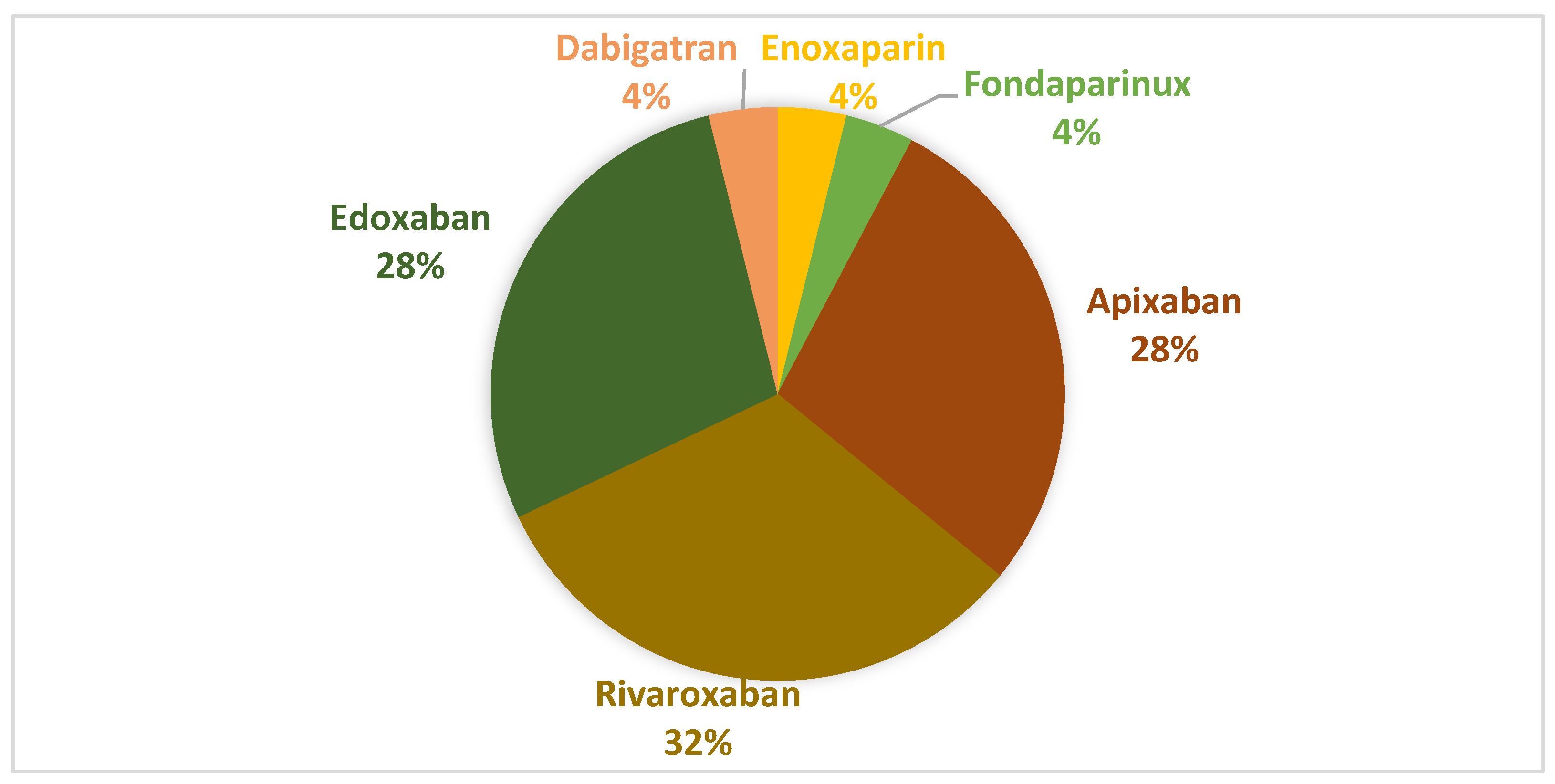
Of the total number of subjects enrolled in the study, 25 were prescribed anticoagulants, 17 (68%) for atrial fibrillation (AF), while the remaining 8 were evenly distributed between those with (a) previous episode(s) of pulmonary embolism (PE) and deep vein thrombosis (DVT) (see Figure 1 for a visual representation of the distribution of anticoagulant types). Of note, none of our patients were receiving vitamin K antagonists, likely due to the reported potential harm of these drugs in IPF.
All AC+ patients received full therapeutic doses of the prescribed drugs according to prescription guidelines. Specifically, fondaparinux, which can be used at a lower dosage in specific conditions, such as superficial vein thrombosis, was used at 5, 7.f or 10 mg/day depending on the body weight (<50; 50–100; >100 Kg, respectively) in all patients.
Enoxaparin was used at 100 UI anti-Xa/Kg of body weight b.i.d. Supplementary Table S1 summarizes the more relevant information, patient by patient.

3.3. Primary Outcome—Safety

No major bleeding was observed in either group. Two non-major clinically relevant bleeding episodes occurred: one (1% of the AC− group) in a patient with PPF that was receiving nintedanib, who exhibited an occurrence of rectal bleeding necessitating subsequent diagnostic assessment via colonoscopy and one (4% of the AC− group) in a patient on rivaroxaban treatment with a history of ulcerative colitis not adequately controlled, resulting in rectorrhagia; with the limit of the small sample size, this difference is not statistically significant.
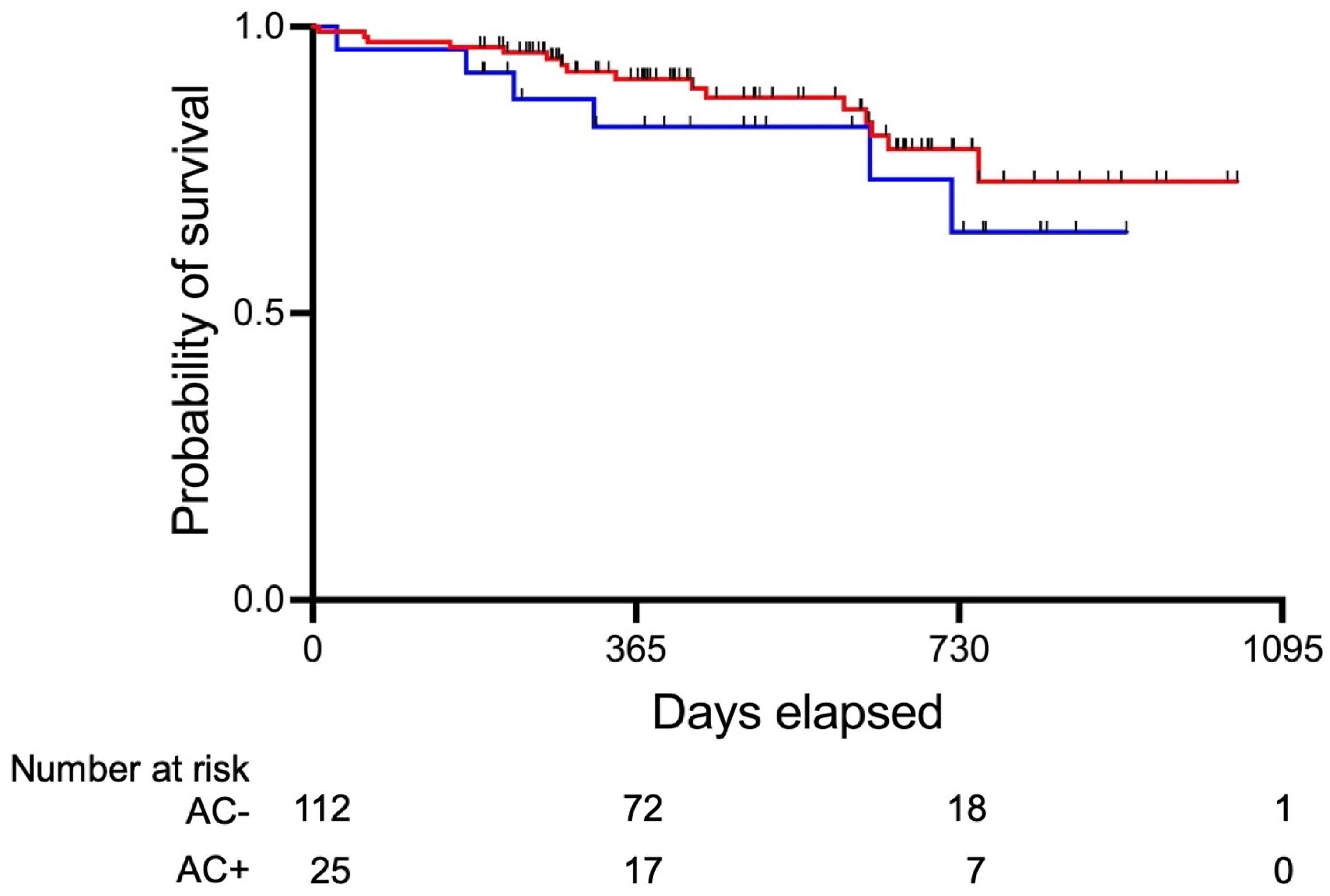
The hemorrhagic risk of the entire study population was also measured using the HAS-BLED and RIETE risk scores for AF and VTE, respectively. Both scores were compared in the two groups using Fisher’s exact χ2 tests, which showed no statistically significant difference in HAS-BLED (p = 0.068), while a statistically significant difference was found for the RIETE score (p = 0.04). During the observation period, four deaths occurred in the AC+ group (4.4%), compared to sixteen deaths in the AC− group (1.7%, yielding a non-statistically significant difference (p = 0.23).
Figure 2 shows the results obtained from the survival analysis with the Kaplan–Meier.
A multivariable Cox-regression model was constructed, incorporating the following variables: age at diagnosis, anticoagulants, bleeding risk as assessed by both the HAS-BLED and the RIETE scores for AF and VTE, respectively, and functional values (FVC, FEV1, and DLCO) at baseline.
The results of this analysis are presented in Table 3.

3.4. Secondary Outcomes—Efficacy

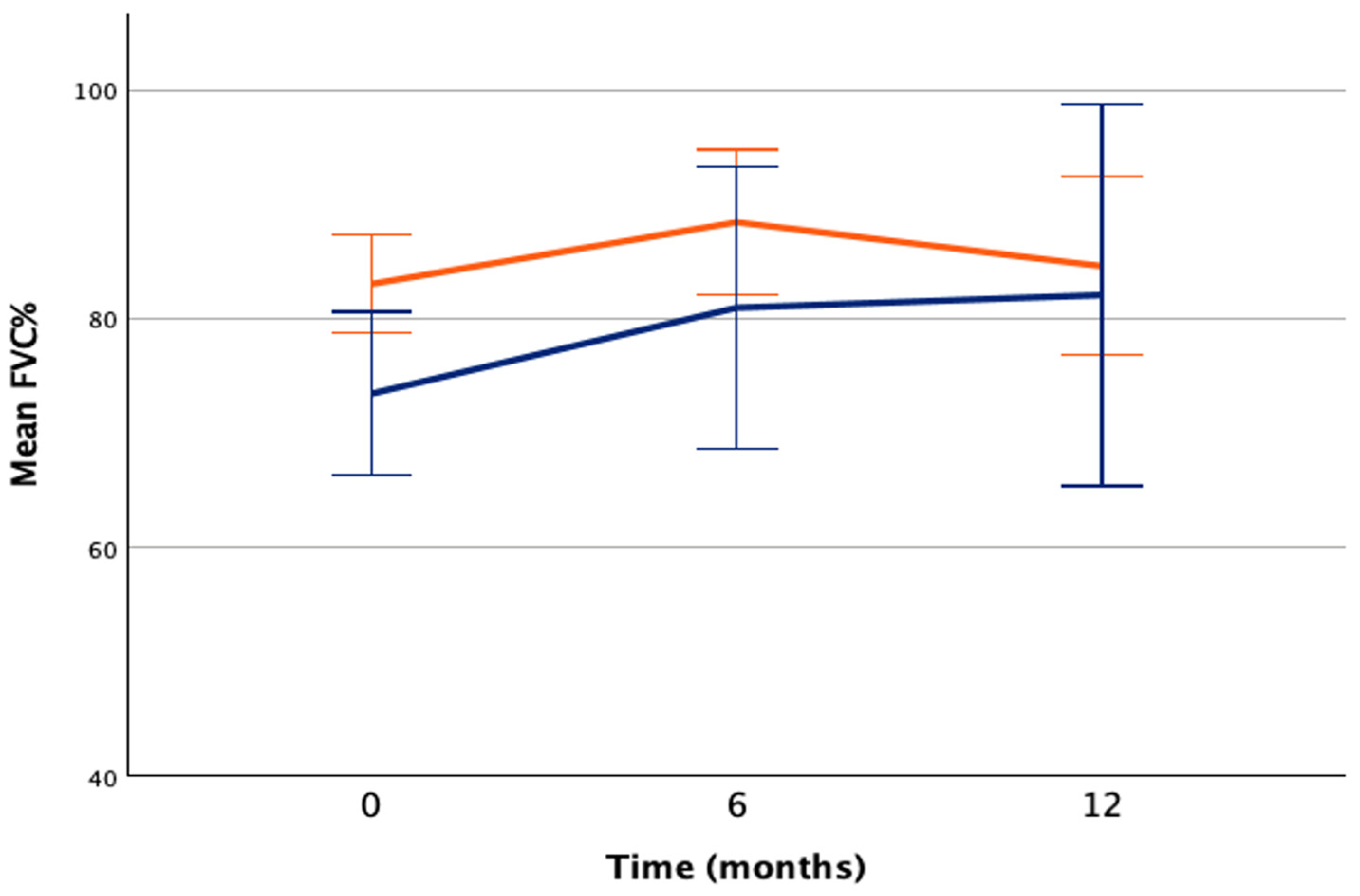
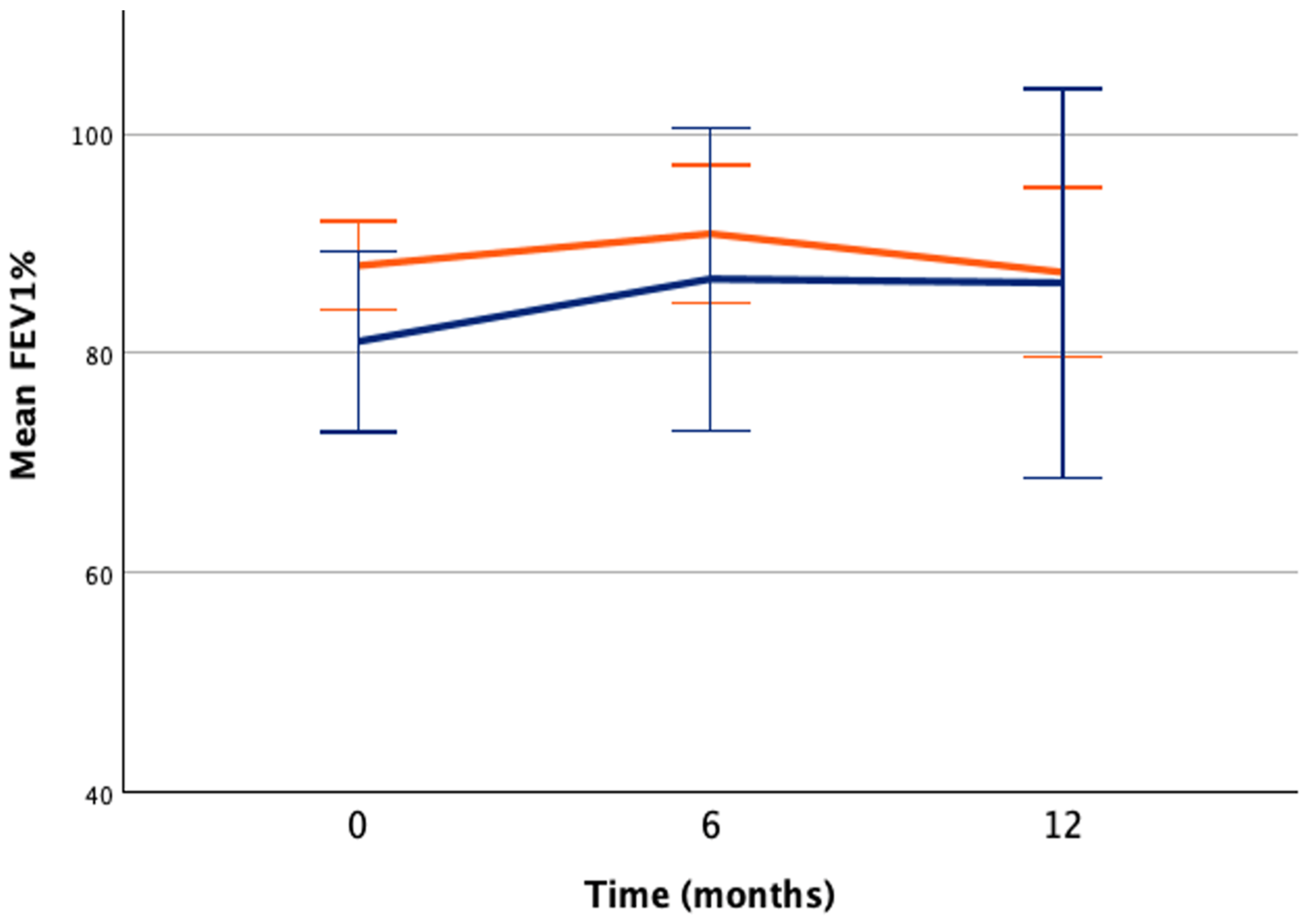
Concerning the secondary endpoint, namely the evaluation of the potential impact of anticoagulant therapy on the natural progression of ILD, we observed no difference between AC+ and AC− patients in terms of FVC, FEV1, and DLCO at both six-month and 12-month follow-up points post baseline (Table 4).
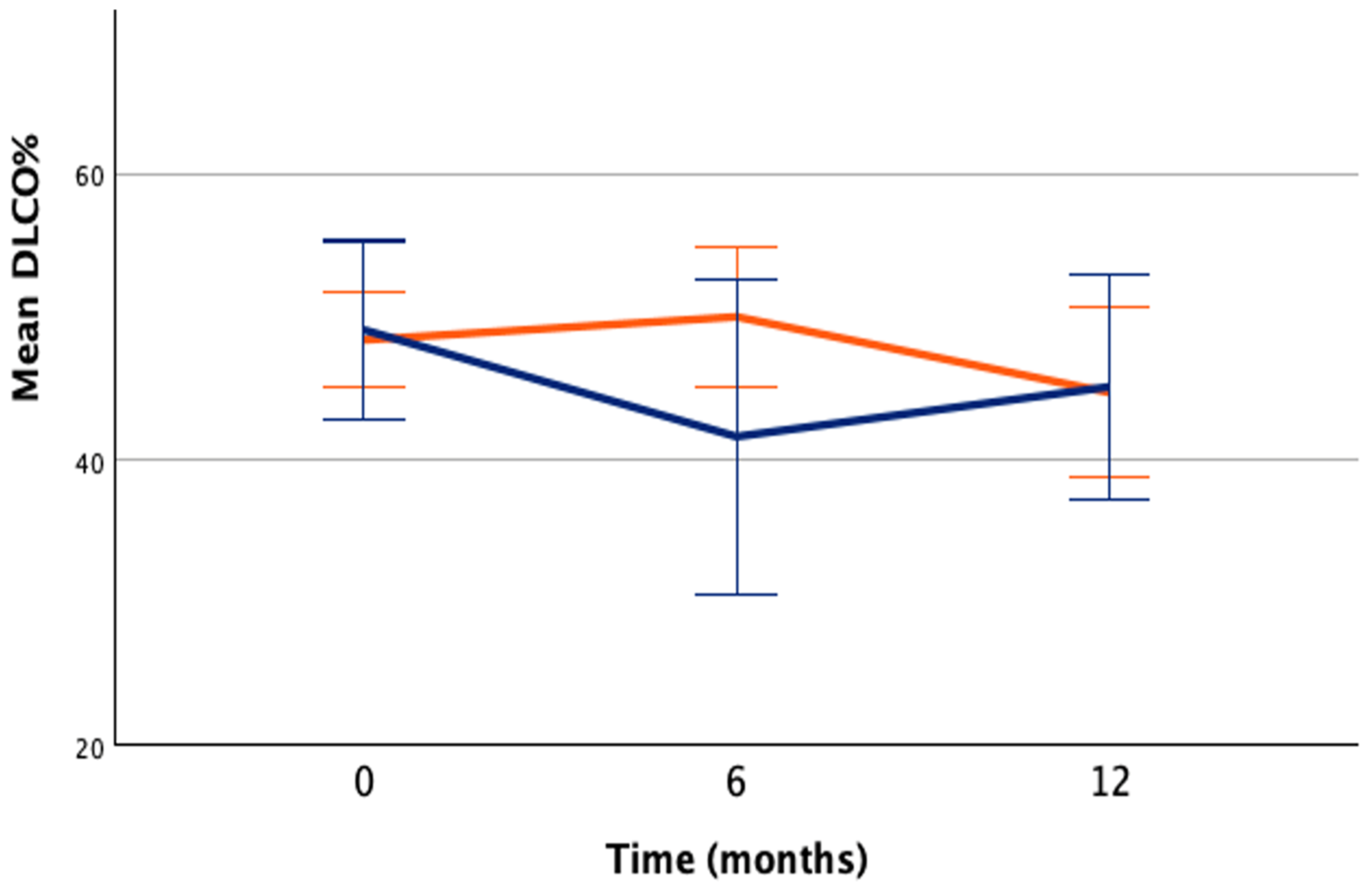
An increase in FVC and FEV1 values over time can be observed in the AC+ group; in both groups, however, there is a decrease in DLCO at 12 months compared to baseline (Figure 3, Figure 4 and Figure 5).
The study revealed no statistically significant differences between the two groups with respect to the incidence of flare-ups, hospitalizations, or radiological progression. In relation to the latter, only 11 cases of radiological disease progression were observed in the AC+ group, compared to 29 in the AC− group (p = 0.07; χ2). The time from the commencement of antifibrotic therapy to death, measured in days, was 490 ± 260 in the AC+ group and 484 ± 233 (p = 0.92). The data are summarized in Table 5.

4. Discussion

In our study, the concomitant use of anticoagulant and antifibrotic therapies did not demonstrate a relevant impact on safety. No major bleeding was observed in either group. Clinically relevant non-major bleedings were also rare. Specifically, only two non-major clinically relevant bleeding episodes occurred: one in the AC+ group (4%) and one (1%) in the AC− group. Finally, survival was not affected by the prescription of anticoagulants, as evidenced by both univariate and multivariate analysis. The HAS-BLED score did not demonstrate a statistically significant association with mortality in this model; however, the wide confidence intervals suggest that the data may be insufficient. Patients exhibiting RIETE scores of 1 or 2 demonstrate a substantially elevated risk of adverse outcomes, although higher RIETE score values do not appear to exert an additional influence on the risk level. A comparison of current findings regarding the risk of bleeding in patients with ILD on oral anticoagulant therapy with those in the existing literature is not feasible. The absence of studies evaluating the safety of antifibrotics when administered concomitantly with anticoagulants precludes such a comparison. Notwithstanding the above, the findings of our study indicate that the necessity for anticoagulant therapy in patients diagnosed with ILD is not infrequent, with a prevalence of 18% among subjects. This observation is consistent with data reported in the EMPIRE registry [9]. With regard to the data on relapses, hospitalizations, and radiological disease progression, no statistically significant differences were observed between the two groups. About the latter, the AC+ group demonstrated a disease progression of 11 cases over a 12-month period, while the AC− group exhibited a number of 29 cases (p = 0.07). These observations were recorded at the follow-up HRTC. Furthermore, the mean time to death was similar in both groups, with a mean of 490 days in the AC+ group and 484 days in the AC− group (p = 0.92).
Our results regarding mortality, disease progression, and hospitalization contrast with those obtained in a post hoc analysis comparing IPF patients with and without additional oral anticoagulant therapy [25]. In this 2016 analysis, IPF patients on anticoagulant therapy showed a statistically significant number of disease progressions, deaths from all causes, and deaths from causes related to IPF: in multivariate analyses, any use of anticoagulants during the study was an independent predictor of all endpoints tested. However, the predominant anticoagulant medication administered to the study participants was warfarin (81.5%), followed by fondaparinux (7.4%), dabigatran (7.4%), bivalirudin (1.9%), and acenocoumarol (1.9%). This distribution does not allow for direct comparison with our study, in which novel oral anticoagulants were the prevailing medication. Of note, warfarin and acenocoumarol (together accounting for 83.4% of the treatments in the previously mentioned study) are vitamin K antagonists. Protein C is a vitamin K-dependent protein that has been shown to be reduced in ILD patients compared to controls [26] and to inhibit bleomycin-induced lung fibrosis when administered intratracheally in mice [27]. Thus, it is possible that vitamin K inhibition, while successfully decreasing the procoagulant profile, perturbs the equilibrium of vitamin K-dependent proteins, accelerating the progression of ILD. Possibly due to this knowledge, none of our patients were prescribed vitamin K antagonists, again making a comparison with previous studies impossible. A paper by King et al. reports the results of a registry of patients with IPF, some of them under anticoagulation. The authors confirm that a significant percentage (9.1%) of ILD patients need anticoagulants; again, a comparison with their data is hampered by the significant proportion of patients on vitamin K antagonists [28].
With respect to the secondary endpoint, it is observed that the AC+ group exhibits a statistically significantly lower FVC value at baseline in comparison to the AC− group (p = 0.04). However, at subsequent follow-ups at 6 and 12 months, this discrepancy is no longer evident, suggesting an increase in FVC values over time within this subject category; there were no statistically significant disparities observed in the baseline values of FEV1 and DLCO. Subsequent follow-up revealed no statistically significant differences between the two test groups in terms of FVC, FEV1, and DLCO values. The analysis of the variations in functional parameters over time shows that FVC and FEV1, which have lower values in the AC+ group than in the AC− group at baseline, reach a value close to the AC− value at 12 months, indicating a progressive improvement in these parameters. DLCO, on the other hand, remains fairly stable in both groups over time, with a slight decrease in its value when comparing values at baseline with those at 12 months. Furthermore, the FVC, FEV1, and DLCO parameters were utilized to adjust survival curves in the multivariate analysis. Neither FVC nor FEV1 exhibits a significant association with mortality. In contrast, there is a substantial correlation of DLCO with mortality outcomes: an HR of less than 1 suggests that an elevated DLCO level functions as an effective mortality risk reduction strategy. A 10% increase in DLCO results in a mortality risk reduction of approximately 16%. This finding aligns with the existing literature, which substantiates that diminished DLCO, employing varying cut-offs as delineated by the studies, functions as an autonomous predictor of diminished survival. Moreover, this parameter is utilized to stratify patients into categories of elevated, intermediate, and reduced survival probability [29,30].
This study offers novel insights into the safety and efficacy of the concurrent administration of antifibrotics and anticoagulants. However, this study has some limitations. First, the retrospective design may have introduced information bias. Furthermore, the relatively brief observation period may not be sufficient to fully capture the long-term effects of this therapeutic combination. Finally, the sample size is limited, particularly for the AC+ subgroup, which has the potential to reduce the statistical power of the analyses. In particular, the lack of statistical significance between AC+ and AC− in terms of non-major clinically relevant bleeding events could be attributed to the insufficient statistical power. However, even if the case of a statistically significant difference, the absolute number of bleedings (all non-major) supports the notion of a limited impact in terms of safety. Further studies and extended follow-up periods are thus required to substantiate the safety finding and elucidate the potential therapeutic function of anticoagulant medications in progressive fibrosing disorders. This will facilitate the response to an increasingly pertinent clinical need.

Supplementary Materials

The following supporting information can be downloaded at: https://www.mdpi.com/article/10.3390/therapeutics2020009/s1, Table S1: details of anticoagulant therapy for the AC+ patients

Author Contributions

Conceptualization, R.P. and A.C.; methodology, A.C.; formal analysis, A.P. and A.C; investigation, A.P. and M.B.; data curation, L.T., F.P., D.C. and L.C.; writing—original draft, A.P and A.C.; writing—review and editing, R.P. and A.C.; supervision, A.C. All authors have read and agreed to the published version of the manuscript.

Funding

This research received no external funding.

Institutional Review Board Statement

Ethical review and approval were waived for this study due to the retrospective, observational nature of the study.

Informed Consent Statement

Patient consent was waived due to the retrospective, observational nature of the study.

Data Availability Statement

Data supporting reported results can be obtained upon reasonable request.

Conflicts of Interest

The authors declare no conflicts of interest.

Abbreviations

The following abbreviations are used in this manuscript:
ACanticoagulants
AFatrial fibrillation
ATSAmerican thoracic society
DLCOdiffusion (lung) of carbon monoxide
DOACdirect oral anticoagulants
DVTdeep vein thrombosis
ERSEuropean respiratory society
FEV1forced expiratory volume at the 1st second
FVCforced vital capacity
HRhazard ratio
ILDinterstitial lung disease
IPFidiopathic pulmonary fibrosis
PEpulmonary embolism
PFTpulmonary function tests
PPFprogressive pulmonary fibrosis

References

  1. Maher, T.M.; Bendstrup, E.; Dron, L.; Langley, J.; Smith, G.; Khalid, J.M.; Patel, H.; Kreuter, M. Global incidence and prevalence of idiopathic pulmonary fibrosis. Respir. Res. 2021, 22, 197. [Google Scholar] [CrossRef] [PubMed]
  2. Khor, Y.H.; Ng, Y.; Barnes, H.; Goh, N.S.; McDonald, C.F.; Holland, A.E. Prognosis of idiopathic pulmonary fibrosis without anti-fibrotic therapy: A systematic review. Eur. Respir. Rev. 2020, 29, 190158. [Google Scholar] [CrossRef] [PubMed]
  3. Podolanczuk, A.J.; Thomson, C.C.; Remy-Jardin, M.; Richeldi, L.; Martinez, F.J.; Kolb, M.; Raghu, G. Idiopathic pulmonary fibrosis: State of the art for 2023. Eur. Respir. J. 2023, 61, 2200957. [Google Scholar] [CrossRef]
  4. Richeldi, L.; Collard, H.R.; Jones, M.G. Idiopathic pulmonary fibrosis. Lancet 2017, 389, 1941–1952. [Google Scholar] [CrossRef]
  5. Flaherty, K.R.; Wells, A.U.; Cottin, V.; Devaraj, A.; Walsh, S.L.; Inoue, Y.; Richeldi, L.; Kolb, M.; Tetzlaff, K.; Stowasser, S.; et al. Nintedanib in Progressive Fibrosing Interstitial Lung Diseases. N. Engl. J. Med. 2019, 381, 1718–1727. [Google Scholar] [CrossRef]
  6. Cenerini, G.; Chimera, D.; Pagnini, M.; Bazzan, E.; Conti, M.; Turato, G.; Celi, A.; Neri, T. The Intricate Relationship Between Pulmonary Fibrosis and Thrombotic Pathology: A Narrative Review. Cells 2024, 13, 2099. [Google Scholar] [CrossRef]
  7. Aihara, K.; Handa, T.; Nagai, S.; Tanizawa, K.; Ikezoe, K.; Watanabe, K.; Chihara, Y.; Harada, Y.; Yoshimura, C.; Oga, T.; et al. Impaired endothelium-dependent vasodilator response in patients with pulmonary fibrosis. Respir. Med. 2013, 107, 269–275. [Google Scholar] [CrossRef] [PubMed]
  8. Boonpheng, B.; Ungprasert, P. Risk of venous thromboembolism in patients with idiopathic pulmonary fibrosis: A systematic review and meta-analysis. Sarcoidosis Vasc. Diffuse Lung Dis. 2018, 35, 109–114. [Google Scholar]
  9. Navaratnam, V.; Fogarty, A.W.; McKeever, T.; Thompson, N.; Jenkins, G.; Johnson, S.R.; Dolan, G.; Kumaran, M.; Pointon, K.; Hubbard, R.B. Presence of a prothrombotic state in people with idiopathic pulmonary fibrosis: A population-based case–control study. Thorax 2014, 69, 207–215. [Google Scholar] [CrossRef]
  10. Jovanovic, D.M.; Šterclová, M.; Mogulkoc, N.; Lewandowska, K.; Müller, V.; Hájková, M.; Studnicka, M.; Tekavec-Trkanjec, J.; Littnerová, S.; Vašáková, M. Comorbidity burden and survival in patients with idiopathic pulmonary fibrosis: The EMPIRE registry study. Respir. Res. 2022, 23, 135. [Google Scholar] [CrossRef]
  11. Otten, L.S.; Piet, B.; van den Heuvel, M.M.; Marzolini, C.; van Geel, R.M.; Gulikers, J.L.; Burger, D.M.; Leentjens, J.; ter Heine, R. Practical recommendations to combine small-molecule inhibitors and direct oral anticoagulants in patients with nonsmall cell lung cancer. Eur. Respir. Rev. 2022, 31, 220004. [Google Scholar] [CrossRef]
  12. Available online: https://www.accessdata.fda.gov/drugsatfda_docs/nda/2014/022535Orig1s000ClinPharmR.pdf (accessed on 24 April 2025).
  13. Noth, I.; Oelberg, D.; Kaul, M.; Conoscenti, C.S.; Raghu, G. Safety and tolerability of nintedanib in patients with idiopathic pulmonary fibrosis in the USA. Eur. Respir. J. 2018, 52, 1702106. [Google Scholar] [CrossRef] [PubMed]
  14. Crestani, B.; Huggins, J.T.; Kaye, M.; Costabel, U.; Glaspole, I.; Ogura, T.; Song, J.W.; Stansen, W.; Quaresma, M.; Stowasser, S.; et al. Long-term safety and tolerability of nintedanib in patients with idiopathic pulmonary fibrosis: Results from the open-label extension study, INPULSIS-ON. Lancet Respir. Med. 2019, 7, 60–68. [Google Scholar] [CrossRef] [PubMed]
  15. Raghu, G.; Remy-Jardin, M.; Richeldi, L.; Thomson, C.C.; Inoue, Y.; Johkoh, T.; Kreuter, M.; Lynch, D.A.; Maher, T.M.; Martinez, F.J.; et al. Idiopathic Pulmonary Fibrosis (an Update) and Progressive Pulmonary Fibrosis in Adults: An Official ATS/ERS/JRS/ALAT Clinical Practice Guideline. Am. J. Respir. Crit. Care Med. 2022, 205, e18–e47. [Google Scholar] [CrossRef]
  16. Graham, B.L.; Steenbruggen, I.; Miller, M.R.; Barjaktarevic, I.Z.; Cooper, B.G.; Hall, G.L.; Hallstrand, T.S.; Kaminsky, D.A.; McCarthy, K.; McCormack, M.C.; et al. Standardization of spirometry 2019 update an official American Thoracic Society and European Respiratory Society technical statement. Am. J. Respir. Crit. Care Med. 2019, 200, e70–e88. [Google Scholar] [CrossRef]
  17. Limper, A.H.; Thao, V.; Helfinstine, D.A.; Sangaralingham, L.R.; Dempsey, T.M. The Impact of Nintedanib Dosing on Clinical Outcomes. Chest 2024, 167, 800–805. [Google Scholar] [CrossRef]
  18. Hwang, H.; Lee, J.-K.; Choi, S.M.; Lee, Y.J.; Cho, Y.-J.; Yoon, H.I.; Lee, J.H.; Lee, C.-T.; Kim, Y.W.; Park, J.S. Efficacy of lower dose pirfenidone for idiopathic pulmonary fibrosis in real practice: A retrospective cohort study. Korean J. Intern. Med. 2022, 37, 366–376. [Google Scholar] [CrossRef] [PubMed]
  19. Lip, G.Y.H.; Frison, L.; Halperin, J.L.; Lane, D.A. Comparative validation of a novel risk score for predicting bleeding risk in anticoagulated patients with atrial fibrillation: The HAS-BLED (hypertension, abnormal renal/liver function, stroke, bleeding history or predisposition, labile INR, elderly, drugs/alcohol concomitantly) score. J. Am. Coll. Cardiol. 2011, 57, 173–180. [Google Scholar]
  20. Pisters, R.; Lane, D.A.; Nieuwlaat, R.; de Vos, C.B.; Crijns, H.J.; Lip, G.Y. A Novel User-Friendly Score (HAS-BLED) To Assess 1-Year Risk of Major Bleeding in Patients With Atrial Fibrillation: The Euro Heart Survey. Chest 2010, 138, 1093–1100. [Google Scholar] [CrossRef]
  21. Ruíz-Giménez, N.; Suárez, C.; González, R.; Nieto, J.A.; Todolí, J.A.; Samperiz, A.L.; Monreal, M.; RIETE Investigators. Predictive variables for major bleeding events in patients presenting with documented acute venous thromboembolism. Findings from the RIETE Registry. Thromb. Haemost. 2008, 100, 26–31. [Google Scholar] [CrossRef]
  22. Guijarro, R.; Montes, J.; Sanromán, C.; Monreal, M. Venous thromboembolism in Spain. Comparison between an administrative database and the RIETE registry. Eur. J. Intern. Med. 2008, 19, 443–446. [Google Scholar] [CrossRef]
  23. Kaatz, S.; Ahmad, D.; Spyropoulos, A.C.; Schulman, S. Definition of clinically relevant non-major bleeding in studies of anticoagulants in atrial fibrillation and venous thromboembolic disease in non-surgical patients: Communication from the SSC of the ISTH. J. Thromb. Haemost. 2015, 13, 2119–2126. [Google Scholar] [CrossRef] [PubMed]
  24. jamovi, version 2.6.17.0; [macOS]; The Jamovi Project. 2024. Available online: https://www.jamovi.org (accessed on 7 February 2025).
  25. Kreuter, M.; Wijsenbeek, M.S.; Vasakova, M.; Spagnolo, P.; Kolb, M.; Costabel, U.; Weycker, D.; Kirchgaessler, K.-U.; Maher, T.M. Unfavourable effects of medically indicated oral anticoagulants on survival in idiopathic pulmonary fibrosis. Eur. Respir. J. 2016, 47, 1776–1784. [Google Scholar] [CrossRef]
  26. Kobayashi, H.; Gabazza, E.C.; Taguchi, O.; Wada, H.; Takeya, H.; Nishioka, J.; Yasui, H.; Kobayashi, T.; Hataji, O.; Suzuki, K.; et al. Protein C Anticoagulant System in Patients with Interstitial Lung Disease. Am. J. Respir. Crit. Care Med. 1998, 157, 1850–1854. [Google Scholar] [CrossRef]
  27. Yasui, H.; Gabazza, E.C.; Tamaki, S.; Kobayashi, T.; Hataji, O.; Yuda, H.; Shimizu, S.; Suzuki, K.; Adachi, Y.; Taguchi, O. Intratracheal Administration of Activated Protein C Inhibits Bleomycin-induced Lung Fibrosis in the Mouse. Am. J. Respir. Crit. Care Med. 2001, 163, 1660–1668. [Google Scholar] [CrossRef] [PubMed]
  28. King, C.S.; Freiheit, E.; Brown, A.W.; Shlobin, O.A.; Aryal, S.; Ahmad, K.; Khangoora, V.; Flaherty, K.R.; Venuto, D.; Nathan, S.D. Association Between Anticoagulation and Survival in Interstitial Lung Disease: An Analysis of the Pulmonary Fibrosis Foundation Patient Registry. Chest 2021, 159, 1507–1516. [Google Scholar] [CrossRef] [PubMed]
  29. Soares, M.R.; Pereira, C.; Ferreira, R.; Nei Aparecida Martins Coletta, E.; Silva Lima, M.; Muller Storrer, K. A score for estimating survival in idiopathic pulmonary fibrosis with rest SpO2>88. Sarcoidosis Vasc. Diffuse Lung Dis. 2015, 32, 121–128. [Google Scholar]
  30. Alhamad, E.H.; Cal, J.G.; Alrajhi, N.N.; Alharbi, W.M. Predictors of mortality in patients with interstitial lung disease-associated pulmonary hypertension. J. Clin. Med. 2020, 9, 3828. [Google Scholar] [CrossRef]
Figure 1. Anticoagulants distribution.
Therapeutics 02 00009 g001
Figure 2. Kaplan–Meier curve for the probability of survival of AC+ (blue line) and AC− (red line). Black marks designate censored data.
Therapeutics 02 00009 g002
Figure 3. Changes over time of FVC in AC+ (blue line) and AC− (orange line) groups, obtained by mixed-model analysis.
Therapeutics 02 00009 g003
Figure 4. Changes over time of FEV1 in AC+ (blue line) and AC− (orange line) groups, obtained by mixed-model analysis.
Therapeutics 02 00009 g004
Figure 5. Changes over time of DLCO in AC+ (blue line) and AC− (orange line) groups, obtained by mixed-model analysis.
Therapeutics 02 00009 g005
Table 1. Summary of baseline demographics.
AC+
n = 25
AC−
n = 112
p
Age, year
(mean ± SD)
77.4 ± 7.374.6 ± 8.50.10
Male sex (n, %)20 (14.6)83 (60.6)0.54
Weight (mean ± SD)81.8 ± 17.175.5 ± 14.80.29
Smoking habit (n, %) 0.83
Never6 (4.4)24 (17.5)
Former18 (13.1)84 (61.3)
Current1 (0.7)4 (2.9)
Cancer history (n, %) 0.60
Never23 (16.8)105 (76.6)
Remission02 (1.5)
Current2 (1.5)5 (3.6)
Baseline PFT&DLCO,
% predicted:
FVC (mean ± SD)73.4 ± 16.983.0 ± 21.90.04
FEV1 (mean ± SD)81.0 ± 19.687.9 ± 20.80.16
DLCO (mean ± SD)49.0 ± 14.448.3 ± 16.90.70
PFT: pulmonary function tests; FVC: forced vital capacity; FEV1: forced expiratory volume in one second; DLCO: lung diffusing capacity for carbon monoxide.
Table 2. Summary of ILD features.
AC+
n = 25
AC−
n = 112
p
Age at diagnosis (mean ± SD)75.9 ± 7.3473.0 ± 8.520.10
PPF (N, %)9 (6.6)45 (32.8)0.69
IPF (N, %)16 (11.7)67 (48.9)0.69
Pirfenidone use (N, %)3 (2.2)10 (7.3)0.63
Nintedanib use (N, %)24 (17.5)104 (75.9)0.56
Reduction in dosage (%)10 (7.3)28 (20.4)0.13
Withdrawal of therapy (%)3 (2.2)27 (19.7)0.18
Table 3. Multivariate logistic analysis for mortality.
VariableOR
[95% CI]
p
Age at diagnosis0.89 [0.80–1.00]0.043
AC0.000.999
HAS-BLED
10.46 [0.01–15.14]0.665
26.80 [0.08–590.10]0.400
30.39 [0.00–59.25]0.712
RIETE
148.81 [1.27–1875.18]0.037
274.60 [1.05–5324.21]0.048
3-40.000.999
FVC baseline0.93 [0.77–1.13]0.475
FEV1 baseline1.04 [0.87–1.25]0.641
DLCO baseline0.84 [0.74–0.95]0.005
Table 4. Summary of functional parameters.
AC+
n = 25
AC−
n = 112
p
Baseline PFR & DLCO, % predicted:
FVC (FVC (mean ± SD)73.4 ± 16.983.0 ± 21.90.04
FEV1 (mean ± SD)81.0 ± 19.687.9 ± 20.80.16
DLCO (mean ± SD)49.0 ± 14.448.3 ± 16.90.70
T6 PFR & DLCO, % predicted:
FVC (mean ± SD)80.9 ± 20.587.2 ± 26.80.21
FEV1 (mean ± SD)86.8 ± 22.890.9 ± 24.30.48
DLCO (mean ± SD)41.6 ± 18.350.0 ± 18.30.18
T12 PFR & DLCO, % predicted:
FVC (mean ± SD)82.0 ± 24.984.6 ± 24.10.77
FEV1 (mean ± SD)86.4 ± 26.387.4 ± 23.80.87
DLCO (mean ± SD)45.1 ± 11.044.7 ± 17.90.86
PFT: pulmonary function tests; FVC: forced vital capacity; FEV1: forced expiratory volume in one second; DLCO: lung diffusing capacity for carbon monoxide.
Table 5. List of occurrences during follow-up.
AC+
n = 25
AC−
n = 112
p
Acute exacerbation (N, %)5 (3.6)10 (7.3)0.10
Hospitalization (N, %)5 (3.6)10 (7.3)0.10
Radiological disease progression (N, %)11 (8)29 (21.2)0.07
Time to death, days
(mean ± SD)
490 ± 260484 ± 2330.92
Disclaimer/Publisher’s Note: The statements, opinions and data contained in all publications are solely those of the individual author(s) and contributor(s) and not of MDPI and/or the editor(s). MDPI and/or the editor(s) disclaim responsibility for any injury to people or property resulting from any ideas, methods, instructions or products referred to in the content.