Review

Health Behaviors, Mental Health, and Peer Relationships in Adolescence: A Scoping Review

by
Francheska Erotokritou
and
Georgios Giannakopoulos
*
Department of Child and Adolescent Psychiatry, School of Medicine, National and Kapodistrian University of Athens, Agia Sofia Children’s Hospital, 115 27 Athens, Greece
*
Author to whom correspondence should be addressed.
Psychol. Int. 2026, 8(3), 50; https://doi.org/10.3390/psycholint8030050
Submission received: 20 June 2026 / Revised: 11 July 2026 / Accepted: 31 July 2026 / Published: 1 August 2026
(This article belongs to the Special Issue The Psychology of Peak Performance in Sport)

Abstract

Adolescence is a critical developmental period marked by the interaction of health behaviors, psychosocial functioning, and peer relationships. This scoping review mapped quantitative evidence on the associations between health behaviors, emotional and behavioral problems, and peer-related factors among adolescents, accounting for sociodemographic characteristics. An electronic literature search was conducted in November 2025 using the ProQuest Summon Discovery Service, in line with PRISMA-ScR reporting guidance. Studies published between 2015 and 2025 that focused on adolescent populations and examined at least two key variables were considered; the included samples collectively spanned ages 10–18 years. Thirteen studies met the inclusion criteria. Across the included studies, health behaviors, particularly physical activity, diet, sleep, and screen use, were examined both individually and as co-occurring lifestyle patterns. Less favorable behavioral patterns were generally associated with poorer mental health and psychosocial indicators, whereas healthier patterns were associated with better well-being and quality of life. Associations with screen and internet use varied according to the type and intensity of digital engagement, with evidence of dose–response patterns for internet use and divergent associations across different screen activities. Peer relationships and related social factors were most often operationalized through social support, friendship quality, bullying, or victimization rather than through direct measures of peer attachment security. Within this limited and heterogeneous evidence base, supportive peer contexts were generally associated with more favorable behavioral and emotional outcomes, whereas bullying and victimization were associated with poorer outcomes. The mapped evidence is consistent with a biopsychosocial perspective but remains predominantly cross-sectional, underscoring the need for longitudinal research and more precise measurement of peer attachment processes.

1. Introduction

Adolescence is widely recognized as a critical developmental period during which health behaviors are shaped and consolidated, with long-term implications for physical and mental well-being (Brink & Wissing, 2012; Duke & Borowsky, 2018). During this stage, adolescents develop lifestyle patterns related to physical activity, diet, sleep, and digital media use, which are strongly influenced by family, peers, and the broader social environment (Garcia et al., 2016; Larson et al., 2018; Salvy et al., 2017). At the same time, evidence from several countries suggests a decline in adolescents’ quality of life, highlighting the need to better understand the factors that shape health and well-being (Meade & Dowswell, 2016; Vella et al., 2015).
Adolescence is also characterized by increased psychosocial vulnerability, as biological, cognitive, and social changes interact with environmental influences (Duke & Borowsky, 2018). Family and peers play a central role in shaping health-related attitudes and behaviors, including dietary habits and physical activity (Story et al., 2002; Williams et al., 2002). Peer relationships, in particular, may function as either protective or risk factors, depending on their quality and context (Sawka et al., 2015).
The recent literature emphasizes that health behaviors tend to cluster, forming distinct patterns of risk or protection (B. G. G. Costa et al., 2020). Unhealthy combinations—such as low physical activity, poor diet, and high sedentary behavior—are associated with increased psychological symptoms, including depressive manifestations (Ames et al., 2018; Farias et al., 2017), whereas healthier behavioral patterns are linked to improved mental health and higher quality of life (Urchaga et al., 2020).
Specific lifestyle domains have received considerable attention. Excessive digital media use has been associated with depressive symptoms, sleep disturbances, physical inactivity, and obesity-related outcomes (Iwasaki et al., 2022; Kelly et al., 2018; Ma & Sheng, 2024; Marin et al., 2021; Mylona et al., 2020). Substance use, including alcohol, tobacco, and cannabis, represents an additional risk factor that tends to increase during adolescence (Kann et al., 2014; Kokotailo, 2010; Maggs & Schulenberg, 2004). Sleep also plays a crucial role, with both duration and quality closely linked to mental health; poor sleep and late bedtimes are associated with increased psychological symptoms, often in connection with digital media use (Dutil et al., 2022; Gariépy et al., 2019; Scott et al., 2019).
Physical activity is consistently identified as a protective factor, contributing to improved mood, self-esteem, and social functioning (Guevara et al., 2020), whereas sedentary behavior is associated with higher levels of depressive symptoms and reduced well-being (C. D. S. Costa et al., 2018). Similarly, dietary patterns play a key role: adherence to the Mediterranean diet is linked to better well-being, while Western dietary patterns are associated with increased psychological difficulties (Alfaro-González et al., 2023; Iaccarino Idelson et al., 2017). Food insecurity further exacerbates risks for both physical and mental health (Duke & Borowsky, 2018).
In parallel, peer victimization has been identified as a significant risk factor for emotional and behavioral problems, including depressive symptoms and substance use (J. S. Hong et al., 2014; Juvonen & Graham, 2014). The self-medication theory suggests that adolescents may engage in substance use as a means of coping with negative emotional experiences (Khantzian, 1985, 1997). Demographic factors such as gender and age also influence health behaviors and psychological outcomes, with girls typically reporting higher psychological distress and older adolescents exhibiting increased depressive symptoms (Gu et al., 2025; Puig-Navarro et al., 2025).
Despite the expanding body of research, the literature remains fragmented, as health behaviors, psychosocial outcomes, and peer-related factors are often examined separately rather than within an integrated framework. A further conceptual problem is that peer attachment security is rarely operationalized directly. Formal attachment constructs concern relatively enduring relational expectations and perceptions of trust, communication, and alienation within close peer bonds, whereas social support, friendship quality, bullying, and victimization capture related but non-equivalent dimensions of the peer environment. Treating these constructs as interchangeable may obscure attachment-specific processes and limit the conclusions that can be drawn about the role of peer attachment itself. To date, no comprehensive scoping review has systematically mapped how health behaviors, emotional and behavioral problems, and these different peer-relational constructs are examined together across adolescence.
The present scoping review aims to address this gap by synthesizing quantitative evidence published between 2015 and 2025 across adolescent populations spanning early to late adolescence. Specifically, it examines: (1) associations between health behaviors and emotional and behavioral problems; (2) associations between emotional and behavioral problems and peer-related constructs, including direct measures of peer attachment where available; (3) links between health behaviors and peer-related constructs; and (4) the role of demographic and individual factors in these relationships. By distinguishing formal measures of peer attachment from broader indicators of peer relationships and social context, the review seeks to provide a more conceptually precise biopsychosocial mapping of the available evidence and to identify priorities for future research.

2. Materials and Methods

2.1. Study Design

This scoping review followed the PRISMA-ScR framework, an extension of the PRISMA 2020 guidelines (Page et al., 2021; Tricco et al., 2018), specifically designed to support the systematic identification and mapping of the breadth and characteristics of existing research evidence. The completed PRISMA-ScR checklist is provided as Supplementary File S1. The present review aims to investigate the relationship between health behaviors and emotional/behavioral problems in adolescents, while also considering the role of peer attachment security and demographic factors. Rather than focusing on effect size estimation or assessing the strength of evidence, this review seeks to map the scope and trends of the existing literature over the past decade (2015–2025). The objective is to examine how the variables of interest are conceptually and methodologically operationalized in empirical studies of adolescent populations. The target developmental period was adolescence, with particular interest in the 12–18-year age range; however, studies using broader adolescent samples that extended into early adolescence were also eligible, provided that the sample included participants within the target age range and was explicitly treated as an adolescent population. The review focuses on identifying patterns, associations, and emerging research directions across the available international literature, without attempting causal inference or quantitative synthesis of findings, as would be the case in a meta-analysis. Eligibility criteria and the core review procedures were defined before study selection; however, no formal protocol was developed or prospectively registered. The review procedures and methodological decisions are reported transparently in the present manuscript.

2.2. Protocol and Registration

No formal protocol was developed or prospectively registered before the conduct of the review. The review was initiated without a prospective registration plan, and by the time registration was undertaken, the review process had already been completed and the manuscript submitted. The subsequent OSF registration was therefore undertaken solely as a transparency measure and should not be interpreted as prospective registration. The registration DOI is: 10.17605/OSF.IO/B6UC3.

2.3. Search Strategy

The literature search was conducted in November 2025 using the ProQuest Summon Discovery Service available through the Library and Information Center of the National and Kapodistrian University of Athens. Summon was selected because the review question spans several disciplinary areas, including psychology, public health, education, and social research, and the discovery service provided a pragmatic means of retrieving interdisciplinary literature through a single institutional interface. The search covered publications from January 2015 to November 2025 and was limited to English-language, peer-reviewed journal articles.
The following Boolean combination was used in Summon: (“health behaviors” OR “health behavior” OR “risk behavior” OR “health-related behavior” OR “lifestyle habits”) AND (“mental health” OR “behavioral problems” OR “emotional problems” OR “psychological well-being” OR stress OR depression OR anxiety OR disorders) AND (adolescents OR teenagers OR youth OR students OR adolescent) AND (“peer attachment” OR “peer relationships” OR “peer influence” OR “peer support” OR friendships OR “peer bonding” OR “friendship quality”).
To provide a database-native and repeatable representation of the search strategy, the same concept structure was translated into Web of Science Core Collection syntax as follows: TS = (“health behavior*” OR “health behaviour*” OR “risk behavior*” OR “risk behaviour*” OR “health-related behavior*” OR “health-related behaviour*” OR “lifestyle habit*”) AND TS = (“mental health” OR “behavioral problem*” OR “behavioural problem*” OR “emotional problem*” OR “psychological well-being” OR “psychological wellbeing” OR stress OR depress* OR anxi* OR disorder*) AND TS = (adolescen* OR teen* OR youth OR student*) AND TS = (“peer attachment” OR “peer relationship*” OR “peer influence” OR “peer support” OR friendship* OR “peer bonding” OR “friendship quality”). The corresponding limits were publication years 2015–2025, English language, and document type Article.
Reliance on a single discovery service for the original study-identification process was a pragmatic methodological choice, but it does not provide the same degree of search control and transparency as systematic searching across multiple database-native interfaces. Discovery-service retrieval may be influenced by platform-level processes related to source coverage, indexing, field mapping, relevance ranking, deduplication, and record retrieval that are not fully transparent to users and may differ from database-native searching. The search may therefore have had lower sensitivity than a multi-database strategy, and the direction and extent of any resulting retrieval bias cannot be determined. In addition, systematic backward reference-list searching, forward citation searching, and grey-literature searching were not undertaken. Relevant studies may therefore have been missed, and the review should be interpreted as a mapping of the evidence retrieved through the stated search strategy rather than as an exhaustive account of all available literature.

2.4. Eligibility Criteria

The inclusion criteria required that studies: (a) were published in English in peer-reviewed journals between 2015 and 2025; (b) focused on adolescent populations and included participants within the 12–18-year target age range; studies with broader age bands extending into early adolescence, including ages 10 or 11, were retained when the study population was explicitly conceptualized and analyzed as an adolescent sample; (c) were empirical studies employing quantitative or mixed-methods designs with full-text availability; (d) examined health behaviors and emotional and/or behavioral problems in adolescents; and (e) investigated at least two of the key domains of interest: health behaviors, emotional/behavioral problems, and peer-related constructs, including direct measures of peer attachment security where available. Studies were excluded if their sampled age range did not overlap meaningfully with the target adolescent population, if they focused exclusively on younger children or adults, if they were opinion papers, conference abstracts, or non-empirical works, or if they did not assess outcomes relevant to the variables under investigation.

2.5. Study Selection

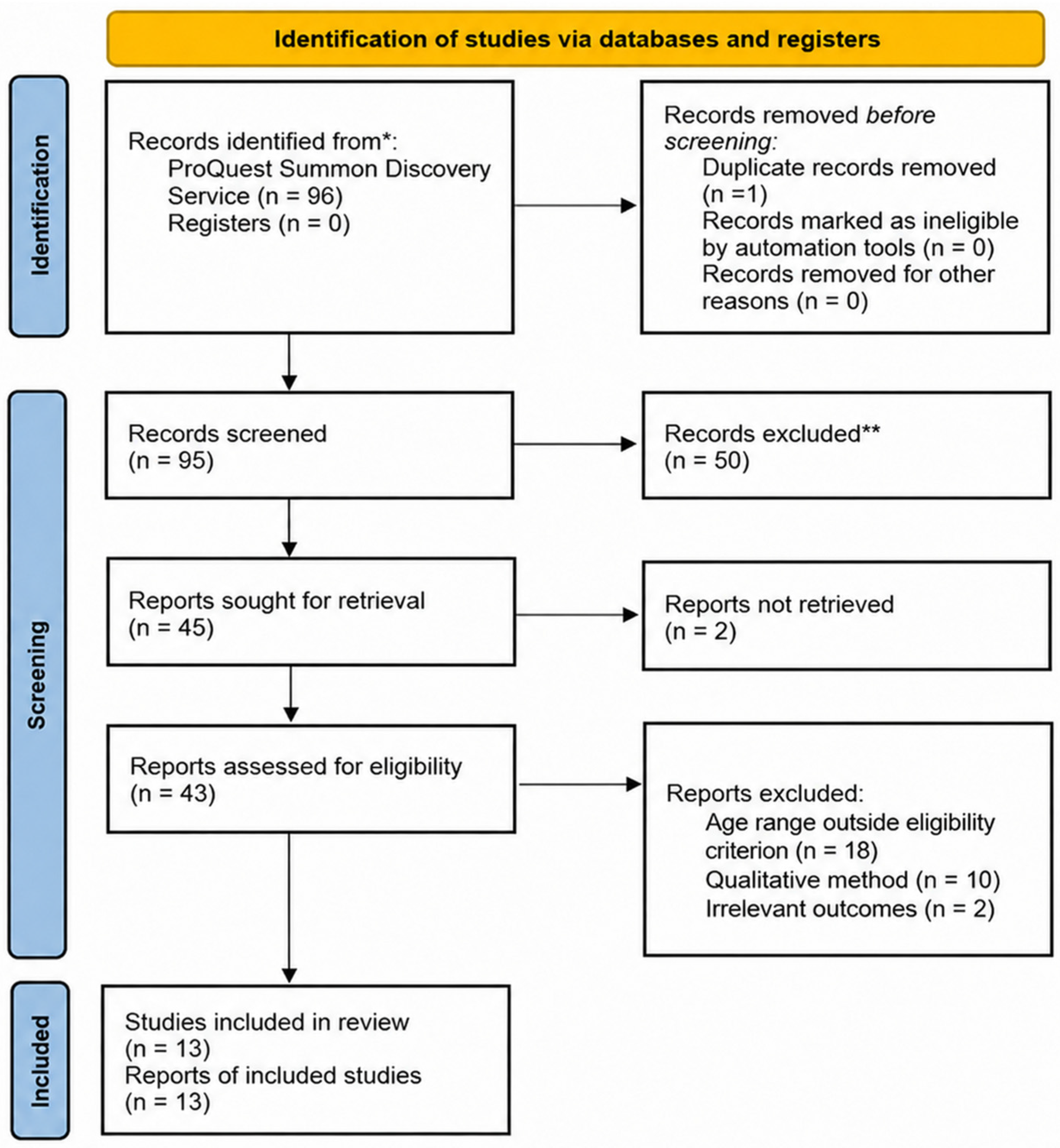
The selection process involved title and abstract screening followed by full-text assessment for eligibility. Both stages were conducted by the first author (F.E.) and were not performed independently in duplicate. No formal inter-rater agreement statistic was therefore calculated. Eligibility decisions were made by applying the predefined criteria described above, and potentially eligible records were carried forward to full-text assessment when eligibility could not be determined confidently from the title and abstract alone. No automated screening tools were used. Of the 96 records identified, one duplicate was removed, leaving 95 records for title and abstract screening. Fifty records were excluded at this stage. Full texts were sought for 45 reports; two reports could not be retrieved, leaving 43 reports for full-text eligibility assessment. Of these, 30 were excluded: 18 because the sampled age range did not meet the eligibility criterion, 10 because they used qualitative methods, and two because the outcomes examined were not relevant to the review questions. Thirteen studies met the eligibility criteria and were included in the synthesis. The complete selection process is presented in Figure 1.

2.6. Data Extraction

Data charting was conducted by the first author (F.E.) using a standardized coding form developed for the review. Data were not charted independently in duplicate, and no formal inter-rater agreement assessment was undertaken. No automation tools were used, and no additional data were requested from study authors. For each study, the following information was recorded: citation details (author, year), study context/setting, research design, sample size and characteristics, primary study aim, measures and instruments used (outcomes, independent variables/predictors, and confounders), key concepts/keywords, analytical methods (e.g., SEM, PROCESS macro), and the main findings (key take-home messages) in relation to the research questions of the present review.

2.7. Analytical Framework

To ensure consistency in data synthesis, a structured analytical framework was applied. Each included study was examined in relation to: (a) the type and operationalization of the health behaviors assessed; (b) the type and operationalization of emotional and/or behavioral problems; (c) the measurement and role of peer-related constructs, with direct measures of peer attachment security distinguished from broader indicators such as social support, friendship quality, bullying, and victimization; (d) the mediating and/or moderating variables included in the analytical models; (e) the statistical approach employed (e.g., structural equation modeling [SEM], PROCESS macro); and (f) sample characteristics, including age, gender, and cultural context. Mediating and moderating variables were coded based on thematic categories derived from both theoretical frameworks and the findings of the individual studies. Particular emphasis was placed on the role of individual, interpersonal, and broader social factors that may influence the relationship between health behaviors, emotional and behavioral problems, and peer attachment security.

2.8. Data Synthesis

Rather than quantitatively summarizing effect sizes, the review focused on the presence, direction (positive/negative), and statistical significance of the examined associations, including both direct and indirect relationships. This analytical framework enabled the identification of recurring patterns across the literature. Due to substantial heterogeneity in study designs, sample characteristics, measurement instruments, and the operationalization of key constructs (health behaviors, emotional and behavioral problems, and peer attachment security), conducting a meta-analysis was deemed inappropriate. Instead, a narrative thematic synthesis approach was adopted to systematically organize and interpret the findings, as well as to identify converging and diverging patterns across studies conducted in different methodological and cultural contexts. As this is a scoping review, findings are presented narratively rather than as pooled effect size estimates, with the aim of capturing the breadth of the existing literature and the range of relationships examined.
Sensitivity analyses were not performed, as the present study follows a scoping review approach and does not aim to provide a quantitative estimate of aggregate effects. Studies were grouped according to the primary type of mediating or moderating variable examined, including individual factors (e.g., gender, age, psychological characteristics), behavioral factors (e.g., lifestyle-related patterns), and interpersonal/social factors (e.g., peer relationships, social support, school environment). Methodological appraisal was used to calibrate interpretation rather than to exclude studies or generate numerical weights. Findings supported by studies with stronger criterion-level appraisal profiles and by more than one study were given greater interpretive emphasis, whereas findings derived from a single study or from studies with “No” or “Can’t tell” judgments on relevant MMAT criteria were described more cautiously and were not used alone to support broad conclusions. Statistical modeling approaches, including mediation and moderation analyses and structural equation models, were also considered when interpreting the findings.
All reported quantitative findings related to the variables of interest—namely health behaviors, emotional and behavioral problems, and aspects of the adolescent social environment—were considered for inclusion. When multiple outcomes or time points were reported, the primary outcome, as defined by the study authors, was extracted. No restrictions were applied based on measurement instruments or timing, and no data transformation procedures were conducted. All information was extracted as reported in the original studies. Given the narrative synthesis approach, incomplete reporting of summary statistics did not constitute an exclusion criterion.
Additional data extracted included key study characteristics such as publication year, country of origin, sample size and age range, study design, primary variables (health behaviors, indicators of mental well-being, and social factors), mediators and moderators, and analytical approach. The categorization of mediators and moderators was based on a combination of theoretical considerations and empirical findings from the included studies. Mediators were grouped according to their functional role (e.g., emotional vulnerability, psychosocial mechanisms), whereas moderators were organized based on their level of influence (individual, interpersonal, and broader social context). This framework provided a coherent structure for the thematic synthesis of findings.
Information on funding sources and conflicts of interest was not consistently reported and was therefore not systematically included in the data extraction. When information was unclear or incomplete, the most reasonable interpretation of the text was used, without contacting study authors. Effect sizes (e.g., regression coefficients, odds ratios, p-values) were not systematically extracted due to heterogeneity in reporting practices. Instead, findings were synthesized based on the presence, direction, and statistical significance of the examined relationships.
The main characteristics of the included studies are summarized in Table 1, including study context, design, sample, aims, measures, analytical approaches, key concepts, and principal findings.

2.9. Quality Assessment

The methodological quality of the included studies was appraised using the Mixed Methods Appraisal Tool (MMAT), version 2018 (Q. N. Hong et al., 2018). Each study was first classified according to its underlying analytic design before criterion-level appraisal. All 13 included studies were mapped to the MMAT quantitative non-randomized category: 11 were cross-sectional analytic studies, one was a longitudinal cohort study, and one was an uncontrolled non-randomized pre–post pilot feasibility study. Accordingly, the five MMAT criteria for quantitative non-randomized studies (3.1–3.5) were applied: representativeness of participants, appropriateness of outcome and exposure or intervention measurements, completeness of outcome data, control of confounding, and whether the exposure or intervention occurred as intended. Judgments were recorded as “Yes,” “No,” or “Can’t tell,” in accordance with MMAT guidance. No overall numerical quality score was calculated, and studies were not excluded on the basis of appraisal findings.
The criterion-level appraisal showed the strongest profiles for Earnshaw et al. (2017) and Moreno-Maldonado et al. (2018), which received “Yes” judgments across all five MMAT criteria. Alfaro-González et al. (2023) and Gu et al. (2025) also showed generally favorable profiles, although completeness of outcome data was rated “Can’t tell.” Greater caution was warranted for findings from Boraita et al. (2020), Lazzeri et al. (2024), Lucena et al. (2022), the three AVATAR reports (Mastorci et al., 2020, 2021, 2023), Puig-Navarro et al. (2025), and Urchaga et al. (2020), for which one or more concerns or uncertainties were identified regarding participant representativeness, completeness of outcome data, and/or control of confounding. Mastorci et al. (2021) additionally received a “Can’t tell” judgment regarding whether the exposure or intervention occurred as intended. Aquino-Blanco et al. (2025) had uncertainty regarding completeness of outcome data and a “No” judgment for participant representativeness. These judgments did not determine study inclusion but were used to calibrate the strength of interpretive language and to avoid broad conclusions based primarily on single-study findings or studies with less favorable criterion-level profiles. Detailed appraisal results are presented in Table 2.

3. Results

This scoping review mapped findings from empirical quantitative studies published between 2015 and 2025 that examined the relationships between health behaviors, emotional and behavioral problems, and factors related to the social environment and individual characteristics among adolescents. The included studies were conducted predominantly in school-based settings and were geographically concentrated. Six reports originated from Spain, four from Italy, and one each from China, the United States, and Brazil. Thus, 10 of the 13 included reports were derived from two Western European countries. The sum of the reported sample sizes across the 13 included reports was 31,606, with participant ages ranging from 10 to 18 years. This figure represents the arithmetic sum of the sample sizes reported for each study and should not be interpreted as the number of unique adolescents, because partial participant overlap among the three AVATAR reports (Mastorci et al., 2020, 2021, 2023) cannot be excluded.
Most studies employed cross-sectional designs; only one longitudinal study and one pilot feasibility study were included. The most frequently examined outcomes included health-related quality of life (HRQoL), mental well-being, and emotional and behavioral problems (e.g., depressive symptoms, conduct problems, hyperactivity). Health behaviors encompassed physical activity, dietary habits, sleep and circadian characteristics, as well as screen use and internet use. Analytical approaches primarily involved multivariable regression models, structural equation modeling (SEM), and mediation and group-difference analyses. A substantial portion of the literature also focused on the role of peer relationships and the broader social context, as well as demographic and individual factors—such as gender, age, and socioeconomic conditions—which were associated with the relationships under investigation.

3.1. Health Behaviors and Emotional and Behavioral Problems

Across the included studies, several associations were observed between health behaviors and indicators of emotional and psychosocial functioning during adolescence. Health behaviors were examined both individually and as components of broader lifestyle patterns, although the number of studies contributing to each behavioral domain varied considerably.
In the AVATAR model, lifestyle habits, social context, emotional status, and cognitive abilities were examined as interrelated components of adolescent well-being (Mastorci et al., 2020, 2021). Lifestyle habits were associated with social context, emotional status, and cognitive abilities, while social context was associated with emotional status and cognitive abilities. Because diet and physical activity showed weaker loadings on the lifestyle-habits component than autonomy, these findings should be interpreted as evidence for an integrated well-being model rather than as direct evidence that specific lifestyle behaviors independently predict emotional status.
In parallel, Earnshaw et al. (2017), the only longitudinal study included in the review, reported that peer victimization in early adolescence was associated with later substance use indirectly through depressive symptoms. This finding provides study-specific longitudinal evidence for an indirect association, but it should not be generalized to the predominantly cross-sectional evidence base as a whole.
Similarly, findings from Puig-Navarro et al. (2025) reinforce the importance of emotional difficulties, demonstrating that depressive symptoms are systematically associated with key indicators of functioning in adolescence. In particular, depression was negatively associated with life satisfaction, mental well-being, perceived social support, school environment quality, and academic performance. These findings indicate that emotional and behavioral problems were associated with multiple domains of adolescents’ daily functioning in the included studies.

3.1.1. Screen and Internet Use

Two included studies examined screen or internet use in relation to adolescent health and psychosocial outcomes. Their findings indicated that associations varied according to both the type and intensity of digital engagement, with greater or problematic internet use associated with less favorable outcomes in one study and different forms of screen activity showing divergent associations with well-being and quality of life in another.
Specifically, Gu et al. (2025) found that increased internet use was associated with a higher likelihood of physical–mental multimorbidity, defined as the co-occurrence of physical health problems and depressive symptoms. This relationship demonstrated a clear dose–response pattern, with adolescents reporting higher levels of internet use showing progressively greater risk. Problematic or addictive patterns of internet use were identified as particularly strong risk indicators, further strengthening the association between digital behaviors and adverse outcomes.
However, Lucena et al. (2022) reported that the associations between screen use and psychosocial outcomes were not uniformly negative. Some findings indicated variation depending on the type of activity, with computer use showing positive associations with mental well-being, whereas other forms of use—such as video gaming and mobile device use—were linked to lower levels of health-related quality of life and mental well-being. In addition, broadly, screen time was negatively associated with aspects of the school environment, suggesting potential implications for school adjustment. In contrast, objectively measured sedentary behavior (via accelerometry) was not significantly associated with overall quality of life or its subdimensions.

3.1.2. Physical Activity and Exercise

Boraita et al. (2020) demonstrated that participation in organized sports and higher cardiorespiratory fitness were associated with lower levels of depressive symptoms and anxiety, as well as a reduced likelihood of maladaptive behaviors. These findings indicate that higher physical activity was associated with more favorable psychological indicators. The strength of these associations varied across subgroups, with some findings suggesting that lower activity levels were more closely associated with emotional difficulties among girls.
Similarly, Urchaga et al. (2020) found that physical activity was positively associated with health-related quality of life and life satisfaction. Participation in activities with family members and peers was also associated with more favorable outcomes, indicating that the social context of physical activity may be relevant to these observed relationships.
Further evidence from Lazzeri et al. (2024) indicated that both the level and intensity of physical activity differentiate its associations with specific dimensions of psychosocial functioning. Moderate levels of physical activity were associated with higher mental well-being, more positive mood, improved self-perception, better peer relationships, and greater social acceptance. Higher levels of activity were linked to more favorable perceptions of mental health, although some dimensions, such as mood and social acceptance, did not increase linearly with exercise intensity. Adolescents with moderate to high levels of physical activity also demonstrated lower BMI, better physical and mental well-being, greater autonomy, and higher academic performance compared to their less active peers. Additionally, higher physical activity levels were associated with greater adherence to the Mediterranean diet and more adaptive use of social media, whereas low activity levels were linked to reduced participation in extracurricular activities and less healthy dietary patterns. Taken together, these findings indicate that physical activity was associated with multiple dimensions of adolescent psychosocial functioning, with the pattern of associations varying according to activity level and social context.

3.1.3. Dietary Habits

Dietary habits emerged as a key factor associated with adolescents’ emotional and psychosocial well-being, with particular emphasis on diet quality. Collectively, findings indicate that adherence to healthy dietary patterns is associated with more favorable indicators of mental well-being and a lower prevalence of emotional and behavioral problems.
Specifically, Boraita et al. (2020) reported that adherence to the Mediterranean diet was positively associated with health-related quality of life, higher self-esteem, and improved physical and mental well-being. Better diet quality also co-occurred with other favorable health behaviors, such as increased physical activity, suggesting the presence of broader healthy lifestyle patterns. Additionally, body image satisfaction was associated with higher quality of life and self-esteem, factors linked to fewer emotional difficulties.
Complementary findings from Alfaro-González et al. (2023) showed that low adherence to the Mediterranean diet was associated with higher levels of psychosocial difficulties, including conduct problems and hyperactivity, as well as lower levels of prosocial behavior. At the level of specific dietary practices, the consumption of healthy foods (e.g., fruits and nuts) was associated with fewer emotional and behavioral problems, whereas unhealthy behaviors—such as frequent consumption of sweets and skipping breakfast—were linked to increased psychosocial difficulties. Legume consumption was positively associated with prosocial behavior, illustrating that specific dietary practices showed differentiated associations with psychosocial indicators.
Aquino-Blanco et al. (2025) further reported that food insecurity was associated with lower adherence to the Mediterranean diet and less favorable dietary patterns. Adolescents experiencing lower food security demonstrated reduced adherence to the Mediterranean diet and a higher likelihood of adopting suboptimal dietary patterns. These findings indicate an association between food insecurity and poorer diet quality. Any downstream relationship with emotional or psychosocial functioning should be interpreted cautiously, as the cross-sectional design does not establish temporal or causal pathways. Overall, the included findings place dietary patterns within a broader context of co-occurring health behaviors and socioeconomic conditions associated with adolescent well-being.

3.1.4. Sleep and Circadian Characteristics

Sleep and circadian characteristics were examined directly in one included study. Puig-Navarro et al. (2025) reported that distinctness was associated with less favorable health indicators, including higher depressive symptoms, lower life satisfaction, poorer HRQoL dimensions, and lower peer/social support. Shorter time in bed on weekdays was associated with higher depressive symptoms, whereas social jetlag was associated with lower psychological well-being and poorer academic performance. These findings should be interpreted as evidence from a single cross-sectional study rather than as an established pattern across the included literature.

3.2. Health Behaviors and Individual Factors

Across the included studies, individual and sociodemographic characteristics were associated with variation in health behaviors during adolescence. Particular emphasis has been placed on gender, age, and specific individual characteristics, which appear to be systematically associated with indicators of well-being, lifestyle patterns, and engagement in unhealthy behaviors.

3.2.1. Gender

Gender differences emerged as one of the most consistently examined factors in the literature. In Boraita et al. (2020) mean BMI did not differ between boys and girls (21.01 vs. 21.02 kg/m2, respectively; p = 0.941), and the overall distribution across WHO BMI categories was not significantly different by gender (p = 0.093). Nevertheless, the proportion classified as having obesity was descriptively higher among boys than girls (8.6% vs. 4.8%). Girls also reported greater body image dissatisfaction and were more likely to desire a lower BMI. In addition, boys exhibited higher levels of physical activity and better aerobic capacity, whereas girls showed a descriptively higher prevalence of cardiovascular risk classification.
Gender differences were also evident in dietary behaviors. Girls reported more frequent consumption of fresh vegetables and lower intake of sugar-sweetened beverages, whereas boys showed higher consumption of energy-dense foods such as pasta and rice (Moreno-Maldonado et al., 2018). Furthermore, girls were less likely to consume breakfast on a daily basis compared to boys.
Adherence to the Mediterranean diet was positively associated in both genders with better health-related quality of life (HRQoL), higher self-esteem, and increased levels of physical activity, with stronger associations observed among girls. Moreover, physical activity showed positive correlations with nearly all other health and lifestyle indicators across both genders (Boraita et al., 2020).
Regarding HRQoL, boys reported higher levels of physical and psychological well-being, whereas girls reported greater satisfaction with the school environment. However, girls appeared more vulnerable to maladaptive lifestyle behaviors under conditions of emotional distress. For example, in the context of bullying experiences, girls exhibited lower psychological well-being and less healthy lifestyle habits (Mastorci et al., 2023).
Additionally, girls reported shorter sleep duration during school days and higher levels of social jetlag compared to boys (Puig-Navarro et al., 2025). Altogether, these findings indicate that gender differences were observed across multiple dimensions of health behavior and psychological adjustment during adolescence.

3.2.2. Age

Age-related differences were reported in several outcomes, with older adolescents showing less favorable indicators in the contributing studies. Specifically, older adolescents reported higher levels of depressive symptoms, lower physical and psychological well-being, reduced perceived social support, and poorer academic performance (Puig-Navarro et al., 2025).
At the same time, increasing age was associated with changes in sleep and dietary behaviors. Older adolescents reported shorter sleep duration during school days, indicating an age-related association with sleep patterns and general well-being within the included evidence. In addition, older age was linked to less healthy dietary habits, including lower breakfast consumption and higher intake of sweets and unhealthy snacks (Moreno-Maldonado et al., 2018; Puig-Navarro et al., 2025).

3.2.3. Socioeconomic and Individual Vulnerability Factors

Beyond gender and age, Earnshaw et al. (2017) identified specific characteristics associated with greater exposure to peer victimization. Boys, sexual minority youth, and adolescents living with chronic health conditions reported more frequent peer victimization in fifth grade. These findings identify differential exposure to victimization across subgroups but should be distinguished from the study’s longitudinal mediation pathway linking early peer victimization to later depressive symptoms and, subsequently, to substance use.
Socioeconomic factors also emerged as correlates of dietary behaviors. Higher parental educational attainment, particularly maternal education, was associated with more favorable eating patterns, including higher breakfast and fruit consumption and lower soft-drink consumption, while greater family material affluence was associated particularly with higher daily fruit consumption (Moreno-Maldonado et al., 2018). Although aggregate school-level indicators did not add explanatory value to the individual-level logistic models, school-level linear models showed that selected healthy-eating measures and food-availability indicators were associated with students’ aggregate breakfast, fruit, candy, and soft-drink consumption.
Across the corpus, however, structural determinants were not examined systematically. Socioeconomic context was represented mainly through parental education, family material affluence, and food insecurity, while broader structural conditions, including inequalities in school resources, neighborhood environments, and commercial influences on adolescent health behaviors, were largely absent from the included evidence base. Health literacy was not directly assessed in the included studies. Consequently, although parental education, family material affluence, and school-based health-promotion indicators were associated with health behaviors in the mapped evidence, the review cannot determine whether differences in the capacity to access, appraise, and use health-related information contributed to these associations.

3.3. Health Behaviors and Social Context/Peer Attachment

Across the included studies, adolescents’ health behaviors were associated with indicators of peer relationships and the broader social environment, although these associations were mostly cross-sectional. According to Mastorci et al. (2020), positive peer relationships are embedded within a supportive social context that is associated with better physical well-being, greater autonomy, and collectively healthier lifestyle patterns. Similarly, engagement in healthy behaviors, such as adherence to the Mediterranean diet and higher levels of physical activity, was associated with better quality of life and higher self-esteem, highlighting the observed associations among health behaviors, psychosocial well-being, and interpersonal contexts (Boraita et al., 2020).
In relation to physical activity, Lazzeri et al. (2024) reported cross-sectional associations between activity levels and several psychosocial indicators. Higher levels of physical activity were associated with more favorable physical, social, and overall well-being, more positive relationships with parents and peers, and greater social acceptance. Adolescents’ physical activity levels were also positively associated with those of their peers, while satisfaction with friendships was associated with both greater physical activity and higher HRQoL. These findings indicate co-occurring associations between physical activity and aspects of the social environment, but they do not establish the temporal direction or bidirectionality of these relationships (Lazzeri et al., 2024; Urchaga et al., 2020).
Similar patterns were observed in dietary behaviors, with adolescents’ eating practices showing associations with the corresponding behaviors of their peer groups. Breakfast consumption, fruit intake, and the consumption of sweets and sugar-sweetened beverages were positively associated with peers’ corresponding dietary behaviors within the school environment, indicating that adolescents tend to adopt similar eating patterns—both healthy and unhealthy—to those of their peers (Moreno-Maldonado et al., 2018).
Conversely, disrupted or negative social experiences, such as involvement in bullying, were associated with less favorable health behavior patterns. Adolescents reporting bullying experiences exhibited lower levels of healthy lifestyle habits, reduced health care behaviors, and less adaptive lifestyle patterns in general. Furthermore, perceived bullying was associated with lower HRQoL and poorer functional outcomes, including reduced physical well-being, autonomy, and quality of peer relationships. These findings indicate that adverse peer experiences and poorer peer relationship quality were associated with less favorable behavioral and psychosocial indicators during adolescence (Mastorci et al., 2023).
Regarding screen use, findings by Lucena et al. (2022) indicate differentiated associations depending on the type of activity. Computer use was positively associated with social support and friendships, whereas increased use of video games, mobile phones, and tablets was negatively associated with social support and peer relationships. These results indicate that different forms of screen-based activity showed distinct associations with psychosocial outcomes and relationship quality.
Finally, certain sleep behaviors and circadian characteristics were associated with perceived social support and peer relationship quality. The dimension of distinctness, reflecting intra-daily fluctuations in mood, energy, and cognitive functioning, showed a negative association with perceived social support and peer relationship quality and remained a significant negative predictor after adjustment for the reported covariates. In contrast, sleep duration on weekdays was positively associated with peer relationship quality. Social jetlag did not show a direct association, and neither morningness nor eveningness demonstrated direct effects. However, gender differences were observed, with girls exhibiting higher levels of morning affect reporting lower social support compared to boys (Puig-Navarro et al., 2025).

3.4. Emotional and Behavioral Problems and Peer-Related Factors

Studies examining bullying, victimization, and school climate reported associations between adverse peer-related experiences and less favorable emotional and behavioral outcomes during adolescence. Experiences of bullying and peer victimization were linked to higher levels of depressive symptoms, lower psychological well-being, reduced health-related quality of life (HRQoL), and more negative perceptions of the school environment, indicating an association between adverse peer contexts and poorer psychosocial outcomes (Mastorci et al., 2020, 2023).
Adolescents exposed to bullying also reported lower self-concept, poorer mood, and less favorable relationship quality with both peers and parents (Mastorci et al., 2023). In contrast, positive and supportive peer relationships were associated with more favorable emotional status and lower involvement in bullying behaviors. These findings concern supportive peer relations rather than directly measured attachment security and should therefore not be interpreted as evidence of an attachment-specific protective effect (Mastorci et al., 2020).
At the cognitive-emotional level, constructs such as body image, self-esteem, and self-concept, which may be related to social comparison processes with peers, were associated with both psychological and physical well-being. Body image satisfaction, in particular, was linked to higher self-esteem and better quality of life (Boraita et al., 2020).
Earnshaw et al. (2017) further reported a longitudinal mediation model in which peer victimization was associated with later depressive symptoms, which were in turn associated with subsequent substance use. This finding is specific to that longitudinal study and should not be taken as evidence that a comparable pathway was established across the wider, predominantly cross-sectional corpus.
Finally, factors related to biological and psychological regulation, such as chronotype characteristics (e.g., morning affect, eveningness, and distinctness) and social jetlag, were associated with adolescents’ psychological, physical, and social well-being. Specifically, higher levels of social jetlag and distinctness were linked to increased depressive symptoms and lower life satisfaction, while sleep duration and quality were also associated with academic performance. These findings underscore the role of regulatory processes in adolescent adjustment (Puig-Navarro et al., 2025).

3.5. Emotional and Behavioral Problems and Individual Factors

The findings indicate that demographic and individual characteristics were associated with variation in emotional and behavioral problems during adolescence. Gender and age consistently emerged as key modifying variables. Girls reported higher levels of depressive symptoms, more advanced pubertal development, and greater social jetlag, whereas boys reported higher levels of physical and psychological well-being and greater life satisfaction.
In addition, older adolescents demonstrated less favorable well-being profiles, including increased depressive symptoms and lower levels of psychological and physical well-being, autonomy, perceived social support, and academic achievement (Gu et al., 2025; Puig-Navarro et al., 2025). In contrast, factors such as body mass index (BMI) and family size did not appear to be significantly associated with complex outcomes such as physical–mental multimorbidity, suggesting that they may not contribute equally to emotional and behavioral difficulties when examined in combination (Gu et al., 2025).
At the level of biopsychological regulation, sleep- and circadian-related characteristics were strongly associated with mental health outcomes. Morning affect was linked to lower levels of depression and better overall well-being, whereas distinctness was associated with higher depressive symptoms, lower life satisfaction, and reduced school engagement, particularly among girls. Furthermore, longer sleep duration and lower levels of social jetlag were associated with better physical and psychological well-being, while increased depressive symptoms and distinctness were negatively associated with academic performance (Puig-Navarro et al., 2025).
In parallel, Earnshaw et al. (2017) provided longitudinal evidence that more frequent peer victimization in early adolescence was associated with greater depressive symptoms over time, which were subsequently associated with a higher likelihood of alcohol, marijuana, and tobacco use. The main longitudinal mediation pathways were similar for boys and girls. The study also found that boys, sexual minority youth, and adolescents living with chronic health conditions reported more frequent peer victimization. In additional sex-stratified analyses, sexual minority status was more strongly associated with alcohol use among girls than boys and was associated with marijuana and tobacco use among girls but not boys. These subgroup findings should be distinguished from the principal longitudinal mediation pathway from peer victimization through depressive symptoms to later substance use.
Similarly, Mastorci et al. (2023) found that bullying experiences were associated with broader adverse psychosocial outcomes, including lower self-concept, poorer mood, and reduced quality of relationships with both peers and parents. These associations were more pronounced among girls, who reported lower levels of emotional well-being compared to boys.
Finally, self-perception and body image emerged as key emotional indicators. Body dissatisfaction and lower self-concept were more frequently reported among girls, independently of BMI, whereas body image satisfaction was associated with better quality of life and higher self-esteem. Moreover, psychological well-being was strongly associated with self-esteem and self-perception. These findings underscore the importance of emotionally relevant constructs—shaped by social comparison and interpersonal relationships—in the development of emotional and behavioral problems during adolescence (Boraita et al., 2020).

4. Discussion

The present scoping review aimed to map the relationship between health behaviors, emotional and behavioral problems, and social environmental factors during adolescence, with particular emphasis on the role of peer attachment security and demographic characteristics. Taken together, the mapped findings indicate that health behaviors were examined as part of broader behavioral, interpersonal, and contextual patterns associated with adolescents’ mental well-being and psychosocial adjustment.
The interpretation below is anchored in the 13 studies included in the mapped evidence base. Where studies or reviews outside the included corpus are cited, they are introduced explicitly as contextual evidence to compare, extend, or qualify the mapped findings and are not treated as part of the scoping review evidence base.
The geographic distribution of the evidence also requires caution. Ten of the 13 included reports originated from Spain or Italy, with only one report each from China, the United States, and Brazil. The recurring associations identified in the review should therefore not be interpreted as culturally universal patterns. Health behaviors, peer norms, school environments, and the meaning and organization of close relationships are shaped by cultural and socioeconomic context. Accordingly, the biopsychosocial perspective used in this review is best understood as an organizing framework for the mapped associations rather than as evidence that the relative importance or expression of behavioral, interpersonal, and contextual factors is invariant across populations.
The methodological appraisal further qualifies how the mapped findings should be interpreted. The longitudinal findings of Earnshaw et al. (2017) and the multilevel dietary-behavior findings of Moreno-Maldonado et al. (2018) were derived from studies meeting all five MMAT criteria and therefore provide comparatively stronger methodological support within this corpus. By contrast, the sleep and circadian findings rely on a single study, Puig-Navarro et al. (2025), for which participant representativeness was rated “No” and completeness of outcome data was rated “Can’t tell.” Several physical-activity and AVATAR-derived social-context findings were also drawn from studies with criterion-level concerns regarding participant representativeness and/or control of confounding (Lazzeri et al., 2024; Mastorci et al., 2020, 2023), while the AVATAR pilot feasibility study additionally had uncertainty regarding whether the exposure or intervention occurred as intended (Mastorci et al., 2021). The body-image and gender-specific lifestyle findings reported by Boraita et al. (2020) should likewise be interpreted cautiously because completeness of outcome data could not be judged confidently, and control of confounding was limited. These findings remain informative for mapping purposes, but they should not carry the same interpretive weight as findings supported by methodologically stronger studies or replicated across independent samples.
Across studies, healthy behaviors, such as regular physical activity, balanced diet, and adequate sleep duration, were consistently associated with more favorable indicators of mental well-being, including higher quality of life, better emotional functioning, and greater self-esteem. In contrast, unhealthy patterns, such as excessive screen use, poor sleep quality, and suboptimal dietary habits, were linked to increased levels of emotional and behavioral problems.
Within the mapped corpus, several included studies examined multiple health behaviors simultaneously, supporting a view of adolescent lifestyle patterns as co-occurring rather than entirely isolated domains (Boraita et al., 2020; Gu et al., 2025). This pattern is broadly consistent with external contextual evidence. For example, Park et al. (2023), a study outside the included corpus, reported associations between insufficient sleep, smoking, alcohol consumption, and higher levels of depression and perceived stress. This external evidence is cited to contextualize, rather than extend, the findings of the present scoping review.
External longitudinal evidence provides additional context for the predominantly cross-sectional patterns identified in the mapped corpus. The study by Wijbenga et al. (2022), based on repeated measures from early adolescence to early adulthood, examined the development of multiple health risk behaviors and their association with mental well-being. The findings indicated that engagement in unhealthy behaviors increases with age and tends to occur in clusters, supporting the notion of interrelated behavioral patterns. However, no clear or linear association was identified between the initiation or persistence of these behaviors and changes in mental well-being, with the exception of persistent unhealthy patterns related to obesity, which were associated with worsening psychological outcomes. Although not part of the mapped corpus, these findings provide a useful longitudinal comparison and illustrate the uncertainty that remains regarding the temporal relationship between clustered health behaviors and mental well-being.
Screen-based behaviors emerged as a multidimensional domain, with their association with emotional and behavioral problems varying depending on the type, intensity, and context of use. The findings converge in indicating that increased digital engagement is associated with less favorable psychological outcomes, such as depressive symptoms and physical–mental multimorbidity, particularly when use becomes excessive or dysfunctional (Gu et al., 2025). This dose–response pattern suggests that the intensity of engagement may serve as an indicator of increased risk, although it does not fully explain the underlying mechanisms.
At the same time, evidence points to important distinctions between types of sedentary behavior. For example, Lucena et al. (2022) found that computer use may be positively associated with psychological well-being and perceived social support, possibly due to its role in facilitating communication and maintaining social ties. In contrast, activities such as gaming and mobile device use were associated with lower quality of life, poorer school adjustment, and reduced perceived peer support. The absence of significant associations between objectively measured sedentary behavior and quality of life further supports the notion that the quality and context of engagement may be more important than duration alone.
Further contextual evidence outside the included corpus has examined digital media use within broader psychosocial profiles. O’Shea et al. (2023) reported that higher levels of social media use were associated with less favorable mental well-being profiles, with intensity emerging as an important correlate. However, the distinction between active and passive use appears to moderate this relationship, highlighting the importance of interaction patterns within digital environments. Taken together with the mapped findings of Gu et al. (2025) and Lucena et al. (2022), this contextual literature supports cautious consideration of screen use as a heterogeneous behavioral domain rather than a unitary exposure. Distinguishing between functional and dysfunctional forms of digital engagement is essential for understanding how these behaviors are associated with emotional and behavioral problems, although causal relationships cannot be established.
In addition, Boraita et al. (2020) reported that participation in organized physical activity and higher cardiorespiratory fitness were associated with fewer anxiety and depressive symptoms, as well as a lower likelihood of problematic behaviors. The mapped associations are broadly consistent with external systematic-review evidence linking physical activity and structured exercise with lower levels of anxiety and depressive symptoms (Haapala et al., 2025). In sum, health behaviors during adolescence appear to function as interconnected lifestyle patterns.
More specifically, Urchaga et al. (2020) found that physical activity is positively associated with quality of life indicators. As external contextual evidence, research using 24-h movement behavior frameworks suggests that adherence to combined recommendations for physical activity, sedentary behavior, and sleep is associated with lower depressive symptoms and better mental well-being. A dose–response trend has also been reported, although the strength of this external evidence remains limited, primarily because of the predominance of cross-sectional designs (Sampasa-Kanyinga et al., 2020).
Lazzeri et al. (2024) further demonstrated that physical activity is associated with better psychosocial functioning, more positive mood, higher self-esteem, and more favorable peer relationships. In contrast, external randomized-trial evidence provides a useful contextual qualification: Wassenaar et al. (2021) found that high-intensity school-based physical activity interventions did not necessarily produce significant improvements in cognitive or psychological outcomes. This external evidence illustrates that the cross-sectional associations identified in the mapped corpus should not be interpreted as evidence that increasing physical activity will necessarily produce corresponding improvements in psychosocial outcomes.
Sleep also emerged as a critical component of health behaviors. Puig-Navarro et al. (2025) showed that shorter sleep duration and circadian rhythm instability are associated with increased depressive symptoms and lower mental well-being. External systematic-review evidence provides additional context, indicating associations among problematic digital media use, poorer sleep quality, and less favorable mental well-being, with sleep proposed as a possible mediator in some studies, although reported effect sizes are generally small (Dibben et al., 2023).
Dietary behaviors also play a central role in adolescents’ psychosocial adjustment. Adherence to healthy dietary patterns, such as the Mediterranean diet, is associated with higher quality of life and self-esteem (Boraita et al., 2020). External contextual evidence has similarly associated higher fruit and vegetable consumption more consistently with positive dimensions of mental well-being than with reductions in depressive symptoms (Dabravolskaj et al., 2024). Broader systematic-review evidence outside the mapped corpus has also reported associations between healthier dietary patterns, lower psychological distress, and better overall well-being (Głąbska et al., 2020).
Within the mapped corpus, Alfaro-González et al. (2023) reported associations between lower adherence to the Mediterranean diet and greater psychosocial difficulties. External literature has reported broadly compatible associations for less healthy dietary patterns, including Western-style dietary habits (Zielińska et al., 2022). Because the mapped evidence is observational, these associations should not be interpreted as establishing biological mechanisms linking dietary patterns with psychosocial outcomes.
Food insecurity also emerged as a relevant contextual correlate of adolescent dietary patterns and psychosocial well-being. Aquino-Blanco et al. (2025) found that adolescents with lower food security demonstrated reduced adherence to the Mediterranean diet and a higher likelihood of less favorable dietary patterns; however, the cross-sectional design does not establish whether these associations translate into subsequent emotional or social difficulties. These mapped findings can be situated alongside external evidence linking food insecurity with adverse mental health outcomes. For example, Sharifi et al. (2024) reported higher levels of psychological difficulties among food-insecure youth, while the ECLS-K study found that associations between food insecurity and mental health outcomes persisted after adjustment for socioeconomic factors (Poole-Di Salvo et al., 2016). These studies are cited as contextual evidence and were not part of the mapped corpus.
The distribution of variables examined across the corpus also warrants a broader interpretive qualification. Most included studies foregrounded individual health behaviors or proximal interpersonal factors, whereas structural determinants were comparatively underrepresented. Food insecurity, parental education, family material affluence, and selected school-level interventions were among the relatively few contextual variables examined. This imbalance creates a risk of interpreting adolescent health primarily through an individual-choice framework. The concept of healthism is relevant here as an external critical lens: it refers to an orientation that emphasizes individual responsibility and personal control over health while giving less weight to institutional and structural conditions (Kirbiš, 2023). The present findings do not demonstrate that the included studies explicitly adopted a healthist ideology; rather, the concentration of measurement at the individual and proximal interpersonal levels limits what the corpus can reveal about the structural production and constraint of health-related choices. Future research should therefore examine adolescent behaviors within the material, institutional, neighborhood, and commercial contexts in which those behaviors become more or less feasible.
Health literacy provides a complementary interpretive lens, although it was not directly assessed in the included studies and should not therefore be treated as an established mediator or moderator of the mapped associations. Broadly understood as the capacity to access, understand, appraise, and use health-relevant information, health literacy may help explain why adolescents exposed to similar peer norms, digital information environments, or health-promotion messages do not necessarily show the same behavioral patterns. External evidence suggests that the role of health literacy may differ across social and educational groups (Lubej & Kirbiš, 2025). In the present corpus, the associations of parental education and family material affluence with dietary practices, together with the observed associations involving school-based health-promotion indicators, point to the need to examine health-information resources more directly (Moreno-Maldonado et al., 2018). These findings do not establish health literacy as the explanatory mechanism; rather, they identify a plausible but currently unmeasured dimension for future research. Studies should therefore assess adolescent and family health literacy directly and examine whether it contributes to heterogeneity in the associations among socioeconomic conditions, peer and digital information environments, and health behaviors.
Demographic factors, particularly gender and age, were consistently associated with differences in health behaviors and mental well-being. Boys tended to report higher levels of physical activity, whereas girls exhibited greater vulnerability to psychological distress and body image dissatisfaction. These differences likely reflect the combined influence of biological, psychological, and sociocultural mechanisms. In this context, body image dissatisfaction appears to be reinforced by sociocultural appearance ideals and increased exposure to digital media, particularly among girls. As an external interpretive framework, developmental–sociocultural models describe adolescence as a period of heightened sensitivity to social comparison and appearance-related pressures (Choukas-Bradley et al., 2022). This framework provides context for the gender differences observed in the mapped studies but was not itself part of the reviewed evidence base.
Age-related patterns were also evident, with older adolescents showing higher levels of depressive symptoms and lower mental well-being (Gu et al., 2025; Puig-Navarro et al., 2025), suggesting that the transition to middle and late adolescence is associated with increased psychological vulnerability.
Beyond individual behaviors, the findings highlight the importance of psychosocial factors. Peer victimization was associated with depressive symptoms and engagement in risk behaviors in the longitudinal study by Earnshaw et al. (2017), while bullying involvement was associated cross-sectionally with lower self-esteem and less favorable relationships with parents and peers in Mastorci et al. (2023). From an attachment-theoretical perspective, however, the distinction between peer attachment and broader peer-relational variables is consequential. Peer attachment refers to relatively enduring expectations concerning the availability, responsiveness, trustworthiness, and emotional reliability of close others, whereas social support, friendship satisfaction, bullying exposure, victimization, and similarity in peer behavior index related but distinct features of the social environment. A study may therefore identify supportive friendships, high perceived social support, or low victimization without having assessed attachment security. Treating these constructs as interchangeable creates a construct-validity problem and prevents conclusions about attachment-specific processes. Methodologically, future studies should define the attachment construct a priori, use validated attachment-specific measures, distinguish attachment dimensions from general social support and relationship quality, and examine whether attachment contributes explanatory information beyond these overlapping peer-context variables. Longitudinal designs are also needed to determine whether attachment-related expectations precede changes in health behavior or mental health rather than merely co-occur with them.
Taken together, the findings indicate that adolescent mental well-being is associated with multiple behavioral, interpersonal, and individual factors that frequently co-occur. Sleep-related difficulties, adverse interpersonal experiences, and unfavorable body-related perceptions were each associated with poorer psychosocial outcomes, whereas healthier behaviors, more positive self-perceptions, and supportive peer contexts were associated with more favorable adjustment. The predominantly cross-sectional evidence does not establish whether these factors interact causally or reinforce one another over time.
Within this framework, the mapped findings are compatible with a biopsychosocial perspective, insofar as behavioral, interpersonal, individual, and selected socioeconomic factors were associated with adolescent mental well-being across the included studies. At the same time, the relative absence of broader structural determinants from the corpus limits the comprehensiveness of this perspective as empirically represented in the current evidence base. Because the evidence is predominantly cross-sectional, the findings do not establish dynamic interactions or underlying mechanisms among these domains. Future prevention and health-promotion research should therefore examine health behaviors within multilevel social contexts, including peer and family relationships, schools, socioeconomic conditions, neighborhood environments, and commercial influences, rather than treating behavior change primarily as a matter of individual adolescent choice. Longitudinal, experimental, and multilevel studies are needed to clarify temporal ordering and to distinguish individual-level associations from contextual and structural processes.

Limitations

This scoping review should be interpreted in light of several limitations. First, the majority of the included studies relied on cross-sectional designs, which preclude causal inferences regarding the relationships between health behaviors, social factors, and mental health during adolescence. Accordingly, the findings primarily identify cross-sectional associations and cannot establish temporal ordering, developmental trajectories, or reciprocal relationships among the variables examined. Second, substantial heterogeneity was observed in the measurement tools and operational definitions of key variables, including physical activity, digital media use, dietary behaviors, and mental health indicators. This variability limits the direct comparability of findings across studies and may influence the overall interpretation of the evidence. Third, the evidence base was geographically concentrated, with 10 of the 13 included reports originating from Spain or Italy and only three reports representing countries outside Western Europe. The findings therefore cannot be assumed to generalize across cultural, socioeconomic, educational, and regional contexts. Adolescent health behaviors, peer norms, and relational experiences may differ substantially across settings, and the apparent convergence of some associations within the present corpus should not be interpreted as evidence of cross-cultural universality. Fourth, although peer attachment was an intended conceptual focus of the review, the included evidence rarely measured attachment security directly. Most studies assessed adjacent constructs such as social support, friendship quality, bullying, or victimization. These variables should not be treated as interchangeable with attachment security, and their use as indirect proxies limits the construct validity of any attachment-specific interpretation. Accordingly, the present review can map associations involving peer-relational contexts but cannot determine whether attachment-specific processes account for those associations. Fifth, no formal review protocol was developed or prospectively registered before the review was conducted. Although the review methods are reported transparently and the review was subsequently registered in OSF, retrospective registration cannot provide the same safeguard against selective methodological modification as prospective protocol registration. Sixth, the literature search was restricted to peer-reviewed journal articles published in English and relied on a single discovery service rather than systematic searches across multiple database-native interfaces. Although Summon was selected as a pragmatic interdisciplinary retrieval tool, discovery-service retrieval may be affected by differences in source coverage, indexing, field mapping, relevance ranking, deduplication, and retrieval processes that are not fully transparent to users. Search sensitivity may therefore have been reduced relative to a multi-database strategy, and the direction and magnitude of any resulting retrieval bias cannot be determined. Systematic backward reference-list searching, forward citation searching, and grey-literature searching were also not undertaken. Relevant studies may therefore have been missed, and the findings should be interpreted as a mapping of the evidence retrieved through the stated strategy rather than as an exhaustive account of all available literature. Seventh, screening and data charting were conducted by a single reviewer and were not independently duplicated. Consequently, the possibility of study-selection or data-charting errors cannot be excluded. Eighth, three included reports (Mastorci et al., 2020, 2021, 2023) were derived from the AVATAR project and related school-based data collection infrastructure. The published reports do not provide sufficient participant-level information to establish that the samples were entirely independent, and partial sample overlap therefore cannot be excluded. This should be considered when interpreting the apparent size and breadth of the evidence base. Ninth, a substantial proportion of the data was based on self-reported measures, which are subject to social desirability bias and recall bias. Altogether, these limitations highlight the need for future longitudinal and methodologically harmonized studies to clarify whether, and how, health behaviors, social environments, and adolescent mental health are temporally related.

5. Conclusions

This scoping review mapped quantitative evidence published over the past decade on the associations among health behaviors, emotional and behavioral problems, peer-related factors, and individual and sociodemographic characteristics during adolescence. Across the included studies, physical activity, dietary patterns, digital media use, sleep-related characteristics, and social experiences were associated with variation in mental well-being, psychosocial adjustment, and health-related quality of life. However, the evidence base was small, heterogeneous, predominantly cross-sectional, and geographically concentrated, with most reports originating from Spain and Italy. The observed associations should therefore not be interpreted as establishing causal or reciprocal relationships or as representing culturally universal patterns.
A central finding of the review is the conceptual and measurement gap surrounding peer attachment. Although peer-related factors were frequently examined, they were most often operationalized through social support, friendship quality, bullying, victimization, or broader indicators of the social environment rather than through direct measures of attachment security. Accordingly, the mapped evidence supports associations between peer-related contexts and adolescent behavioral and psychosocial outcomes but does not establish an attachment-specific explanatory process. Future studies should distinguish formal attachment constructs from related interpersonal variables and use theoretically grounded, validated measures of peer attachment where this is the construct of interest.
The mapped evidence also indicates that individual and sociodemographic characteristics, including gender, age, socioeconomic conditions, and food security, are relevant to the patterning of adolescent health behaviors and psychosocial outcomes. At the same time, broader structural determinants were sparsely represented in the included literature, limiting the review’s capacity to assess how material, institutional, neighborhood, and commercial conditions shape opportunities for health-related behavior. The findings therefore support a multilevel biopsychosocial perspective in which behaviors are considered alongside interpersonal and broader contextual conditions, rather than being interpreted primarily as matters of individual choice or responsibility. Prevention and mental health promotion research should accordingly examine both individual and relational factors and the structural conditions that enable or constrain healthy behavior. Health literacy should also be assessed directly as a potentially relevant resource shaping how adolescents access, appraise, and act on health information across different social and informational contexts.
Further longitudinal and experimental research is needed to clarify temporal ordering, reciprocal associations, and whether causal pathways link health behaviors, peer-related processes, and adolescent mental health. More culturally diverse research and more precise measurement of peer attachment are also required to determine whether the associations identified in the present review generalize across developmental and social contexts.

Supplementary Materials

The following supporting information can be downloaded at: https://www.mdpi.com/article/10.3390/psycholint8030050/s1, Supplementary File S1: Preferred Reporting Items for Systematic reviews and Meta-Analyses extension for Scoping Reviews (PRISMA-ScR) Checklist.

Author Contributions

Conceptualization, F.E. and G.G.; methodology, F.E. and G.G.; validation, F.E. and G.G.; formal analysis, F.E. and G.G.; investigation, F.E.; resources, F.E. and G.G.; data curation, F.E.; writing—original draft preparation, F.E.; writing—review and editing, F.E. and G.G.; visualization, F.E.; supervision, G.G. All authors have read and agreed to the published version of the manuscript.

Funding

This research received no external funding.

Data Availability Statement

No new primary data were generated in this study. All data analyzed in this scoping review were extracted from previously published studies cited in the article and are summarized in the main text and tables. Data sharing is therefore not applicable to this article.

Conflicts of Interest

The authors declare no conflicts of interest.

References

  1. Alfaro-González, S., Garrido-Miguel, M., Martínez-Vizcaíno, V., & López-Gil, J. F. (2023). Mediterranean dietary pattern and psychosocial health problems in Spanish adolescents: The EHDLA study. Nutrients, 15(13), 2905. [Google Scholar] [CrossRef] [Scilit] [PubMed]
  2. Ames, M. E., Leadbeater, B. J., & MacDonald, S. W. S. (2018). Health behavior changes in adolescence and young adulthood: Implications for cardiometabolic risk. Health Psychology, 37(2), 103–113. [Google Scholar] [CrossRef] [Scilit] [PubMed]
  3. Aquino-Blanco, A., Jiménez-López, E., Victoria-Montesinos, D., Gutiérrez-Espinoza, H., Olivares-Arancibia, J., Yañéz-Sepúlveda, R., Martín-Calvo, N., & López-Gil, J. F. (2025). The role of food security in Mediterranean diet adherence among adolescents: Findings from the EHDLA study. Foods, 14(3), 414. [Google Scholar] [CrossRef] [Scilit] [PubMed]
  4. Boraita, R. J., Ibort, E. G., Torres, J. M. D., & Alsina, D. A. (2020). Gender differences relating to lifestyle habits and health-related quality of life of adolescents. Child Indicators Research, 13(6), 1937–1951. [Google Scholar] [CrossRef] [Scilit]
  5. Brink, A. J., & Wissing, M. P. (2012). A model for a positive youth development intervention. Journal of Child & Adolescent Mental Health, 24(1), 1–13. [Google Scholar] [CrossRef] [Scilit] [PubMed]
  6. Choukas-Bradley, S., Roberts, S. R., Maheux, A. J., & Nesi, J. (2022). The perfect storm: A developmental-sociocultural framework for the role of social media in adolescent girls’ body image concerns and mental health. Clinical Child and Family Psychology Review, 25(4), 681–701. [Google Scholar] [CrossRef] [Scilit] [PubMed]
  7. Costa, B. G. G., Chaput, J. P., Lopes, M. V. V., Costa, R. M., Malheiros, L. E. A., & Silva, K. S. (2020). Association between lifestyle behaviors and health-related quality of life in a sample of Brazilian adolescents. International Journal of Environmental Research and Public Health, 17(19), 7133. [Google Scholar] [CrossRef] [Scilit] [PubMed]
  8. Costa, C. D. S., Flores, T. R., Wendt, A., Neves, R. G., Assunção, M. C. F., & Santos, I. S. (2018). Sedentary behavior and consumption of ultra-processed foods by Brazilian adolescents: Brazilian national school health survey (PeNSE), 2015. Cadernos de Saúde Pública, 34(3), e00021017. [Google Scholar] [CrossRef] [Scilit] [PubMed]
  9. Dabravolskaj, J., Patte, K. A., Yamamoto, S., Leatherdale, S. T., Veugelers, P. J., & Maximova, K. (2024). Association between diet and mental health outcomes in a sample of 13,887 adolescents in Canada. Preventing Chronic Disease, 21, E82. [Google Scholar] [CrossRef] [Scilit] [PubMed]
  10. Dibben, G. O., Martin, A., Shore, C. B., Johnstone, A., McMellon, C., Palmer, V., Pugmire, J., Riddell, J., Skivington, K., Wells, V., McDaid, L., & Simpson, S. A. (2023). Adolescents’ interactive electronic device use, sleep and mental health: A systematic review of prospective studies. Journal of Sleep Research, 32(5), e13899. [Google Scholar] [CrossRef] [Scilit] [PubMed]
  11. Duke, N. N., & Borowsky, I. W. (2018). Health status of adolescents reporting experiences of adversity. Global Pediatric Health, 5, 2333794X18769555. [Google Scholar] [CrossRef] [Scilit] [PubMed]
  12. Dutil, C., Podinic, I., Sadler, C. M., da Costa, B. G., Janssen, I., Ross-White, A., Saunders, T. J., Tomasone, J. R., & Chaput, J. P. (2022). Sleep timing and health indicators in children and adolescents: A systematic review. Health Promotion and Chronic Disease Prevention in Canada, 42(4), 150–169. [Google Scholar] [CrossRef] [Scilit] [PubMed]
  13. Earnshaw, V. A., Elliott, M. N., Reisner, S. L., Mrug, S., Windle, M., Emery, S. T., Peskin, M. F., & Schuster, M. A. (2017). Peer victimization, depressive symptoms, and substance use: A longitudinal analysis. Pediatrics, 139(6), 1. [Google Scholar] [CrossRef] [Scilit] [PubMed]
  14. Farias, J. C. J., Loch, M. R., Lima, A. J. N., Sales, J. M., & Ferreira, F. (2017). Reproducibility, internal consistency, and construct validity of KIDSCREEN-27 in Brazilian adolescents. Cadernos de Saúde Pública, 33(9), e00131116. [Google Scholar] [CrossRef] [Scilit] [PubMed]
  15. Garcia, J. M., Sirard, J. R., Deutsch, N. L., & Weltman, A. (2016). The influence of friends and psychosocial factors on physical activity and screen time behavior in adolescents: A mixed-methods analysis. Journal of Behavioral Medicine, 39(4), 610–623. [Google Scholar] [CrossRef] [Scilit] [PubMed]
  16. Gariépy, G., Doré, I., Whitehead, R. D., & Elgar, F. J. (2019). More than just sleeping in: A late timing of sleep is associated with health problems and unhealthy behaviours in adolescents. Sleep Medicine, 56, 66–72. [Google Scholar] [CrossRef] [Scilit] [PubMed]
  17. Głąbska, D., Guzek, D., Groele, B., & Gutkowska, K. (2020). Fruit and vegetables intake in adolescents and mental health: A systematic review. Roczniki Państwowego Zakładu Higieny, 71(1), 15–25. [Google Scholar] [CrossRef] [Scilit] [PubMed]
  18. Gu, H., Shi, B., He, H., Yuan, S., Cai, J., Chen, X., & Wan, Z. (2025). Association between excessive internet use time, internet addiction, and physical-mental multimorbidity among Chinese adolescents: Cross-sectional study. Journal of Medical Internet Research, 27(5), e69210. [Google Scholar] [CrossRef] [Scilit] [PubMed]
  19. Guevara, R. M., Urchaga, J. D., Cabaco, A. S., & Moral-García, J. E. (2020). The quality of breakfast and healthy diet in school-aged adolescents and their association with BMI, weight loss diets and the practice of physical activity. Nutrients, 12(8), 2294. [Google Scholar] [CrossRef] [Scilit] [PubMed]
  20. Haapala, E. A., Leppänen, M. H., Kosola, S., Appelqvist-Schmidlechner, K., Kraav, S.-L., Jussila, J. J., Tolmunen, T., Lubans, D. R., Eloranta, A.-M., Schwab, U., & Lakka, T. A. (2025). Childhood lifestyle behaviors and mental health symptoms in adolescence. JAMA Network Open, 8(2), e2460012. [Google Scholar] [CrossRef] [Scilit] [PubMed]
  21. Hong, J. S., Davis, J. P., Sterzing, P. R., Yoon, J., Choi, S., & Smith, D. C. (2014). A conceptual framework for understanding the association between school bullying victimization and substance misuse. American Journal of Orthopsychiatry, 84(6), 696–710. [Google Scholar] [CrossRef] [Scilit] [PubMed]
  22. Hong, Q. N., Fàbregues, S., Bartlett, G., Boardman, F., Cargo, M., Dagenais, P., Gagnon, M.-P., Griffiths, F., Nicolau, B., O’Cathain, A., Rousseau, M.-C., Vedel, I., & Pluye, P. (2018). The Mixed Methods Appraisal Tool (MMAT) version 2018 for information professionals and researchers. Education for Information, 34(4), 285–291. [Google Scholar] [CrossRef] [Scilit]
  23. Iaccarino Idelson, P., Scalfi, L., & Valerio, G. (2017). Adherence to the Mediterranean diet in children and adolescents: A systematic review. Nutrition, Metabolism and Cardiovascular Diseases, 27(4), 283–299. [Google Scholar] [CrossRef] [Scilit] [PubMed]
  24. Iwasaki, M., Kakuta, S., & Ansai, T. (2022). Associations among internet addiction, lifestyle behaviors, and dental caries among high school students in Southwest Japan. Scientific Reports, 12(1), 17342. [Google Scholar] [CrossRef] [Scilit] [PubMed]
  25. Juvonen, J., & Graham, S. (2014). Bullying in schools: The power of bullies and the plight of victims. Annual Review of Psychology, 65, 159–185. [Google Scholar] [CrossRef] [Scilit] [PubMed]
  26. Kann, L., Kinchen, S., Shanklin, S. L., Flint, K. H., Kawkins, J., Harris, W. A., Lowry, R., Olsen, E. O., McManus, T., Chyen, D., Whittle, L., Taylor, E., Demissie, Z., Brener, N., Thornton, J., Moore, J., & Zaza, S. (2014). Youth risk behavior surveillance—United States, 2013. Morbidity and Mortality Weekly Report Supplements, 63(4), 1–168. [Google Scholar] [PubMed]
  27. Kelly, Y., Zilanawala, A., Booker, C., & Sacker, A. (2018). Social media use and adolescent mental health: Findings from the UK Millennium Cohort Study. EClinicalMedicine, 6, 59–68. [Google Scholar] [CrossRef] [Scilit] [PubMed]
  28. Khantzian, E. J. (1985). The self-medication hypothesis of addictive disorders: Focus on heroin and cocaine dependence. American Journal of Psychiatry, 142(11), 1259–1264. [Google Scholar] [CrossRef] [Scilit] [PubMed]
  29. Khantzian, E. J. (1997). The self-medication hypothesis of substance use disorders: A reconsideration and recent applications. Harvard Review of Psychiatry, 4(5), 231–244. [Google Scholar] [CrossRef] [Scilit] [PubMed]
  30. Kirbiš, A. (2023). The impact of socioeconomic status, perceived threat and healthism on vaccine hesitancy. Sustainability, 15(7), 6107. [Google Scholar] [CrossRef] [Scilit]
  31. Kokotailo, P. K. (2010). Alcohol use by youth and adolescents: A pediatric concern. Pediatrics, 125(5), 1078–1087. [Google Scholar] [CrossRef] [Scilit] [PubMed]
  32. Larson, N., Chen, Y., Wall, M., Winkler, M. R., Goldschmidt, A. B., & Neumark-Sztainer, D. (2018). Personal, behavioral, and environmental predictors of healthy weight maintenance during the transition to adulthood. Preventive Medicine, 113, 80–90. [Google Scholar] [CrossRef] [Scilit] [PubMed]
  33. Lazzeri, M. F. L., Mastorci, F., Piaggi, P., Trivellini, G., Casu, A., Devine, C., Doveri, C., Marinaro, I., & Pingitore, A. (2024). The effects of different levels of sports activity on health-related quality of life and lifestyle habits in high school Italian students. European Journal of Pediatrics, 183(9), 4041–4048. [Google Scholar] [CrossRef] [Scilit] [PubMed]
  34. Lubej, M., & Kirbiš, A. (2025). Why does health literacy matter, and for whom? Explaining the differentiating impact of health literacy on vaccine attitudes. Frontiers in Psychology, 16, 1470654. [Google Scholar] [CrossRef] [Scilit] [PubMed]
  35. Lucena, J. M. S. d., Loch, M. R., Silva, E. C. d. C., & Farias Júnior, J. C. d. (2022). Sedentary behavior and health-related quality of life in adolescents. Ciência & Saude Coletiva, 27(6), 2143–2152. [Google Scholar] [CrossRef] [Scilit] [PubMed]
  36. Ma, J., & Sheng, L. (2024). The effect of internet use on body weight in Chinese adolescents: Evidence from a nationally longitudinal survey. PLoS ONE, 19(12), e0311996. [Google Scholar] [CrossRef] [Scilit] [PubMed]
  37. Maggs, J., & Schulenberg, J. (2004). Trajectories of alcohol use during the transition to adulthood. Alcohol Research & Health, 28(4), 195–201. [Google Scholar]
  38. Marin, M. G., Nuñez, X., & de Almeida, R. M. M. (2021). Internet addiction and attention in adolescents: A systematic review. Cyberpsychology, Behavior, and Social Networking, 24(4), 237–249. [Google Scholar] [CrossRef] [Scilit] [PubMed]
  39. Mastorci, F., Bastiani, L., Trivellini, G., Doveri, C., Vassalle, C., & Pingitore, A. (2020). A new integrated approach for adolescent health and well-being: The AVATAR project. Health and Quality of Life Outcomes, 18(1), 77–79. [Google Scholar] [CrossRef] [Scilit] [PubMed]
  40. Mastorci, F., Lazzeri, M. F. L., Piaggi, P., Doveri, C., Casu, A., Trivellini, G., Marinaro, I., Devine, C., Vassalle, C., & Pingitore, A. (2023). An entangled relationship between bullying perception and psychosocial dimensions in a sample of young adolescents. Children, 10(11), 1823. [Google Scholar] [CrossRef] [Scilit] [PubMed]
  41. Mastorci, F., Piaggi, P., Trivellini, G., Doveri, C., Casu, A., Bastiani, L., Marinaro, I., Vassalle, C., & Pingitore, A. (2021). Development of a web-based school support system within the AVATAR project for psychosocial well-being in adolescents: Pilot feasibility study. JMIR Formative Research, 5(12), e24840. [Google Scholar] [CrossRef] [Scilit] [PubMed]
  42. Meade, T., & Dowswell, E. (2016). Adolescents’ health-related quality of life (HRQoL) changes over time: A three year longitudinal study. Health and Quality of Life Outcomes, 14, 14. [Google Scholar] [CrossRef] [Scilit] [PubMed]
  43. Moreno-Maldonado, C., Ramos, P., Moreno, C., & Rivera, F. (2018). How family socioeconomic status, peer behaviors, and school-based intervention on healthy habits influence adolescent eating behaviors. School Psychology International, 39(1), 92–118. [Google Scholar] [CrossRef] [Scilit]
  44. Mylona, I., Deres, E. S., Dere, G. S., Tsinopoulos, I., & Glynatsis, M. (2020). The impact of internet and videogaming addiction on adolescent vision: A review of the literature. Frontiers in Public Health, 8, 63. [Google Scholar] [CrossRef] [Scilit] [PubMed]
  45. O’Shea, T. M., McGrath, M., Aschner, J. L., Lester, B., Santos, H. P., Jr., Marsit, C., Stroustrup, A., Emmanuel, C., Hudak, M., McGowan, E., Patel, S., & Fry, R. C. (2023). Environmental influences on child health outcomes: Cohorts of individuals born very preterm. Pediatric Research, 93(5), 1161–1176. [Google Scholar] [CrossRef] [Scilit] [PubMed]
  46. Page, M. J., McKenzie, J. E., Bossuyt, P. M., Boutron, I., Hoffmann, T. C., Mulrow, C. D., Shamseer, L., Tetzlaff, J. M., Akl, E. A., Brennan, S. E., Chou, R., Glanville, J., Grimshaw, J. M., Hróbjartsson, A., Lalu, M. M., Li, T., Loder, E. W., Mayo-Wilson, E., McDonald, S., … Moher, D. (2021). The PRISMA 2020 statement: An updated guideline for reporting systematic reviews. International Journal of Surgery, 88, 105906. [Google Scholar] [CrossRef] [PubMed]
  47. Park, S. K., Jo, H.-K., & Song, E. (2023). Mental health and smoking-related determinants of alcohol drinking experience in Korean adolescents. International Journal of Environmental Research and Public Health, 20(6), 4724. [Google Scholar] [CrossRef] [Scilit] [PubMed]
  48. Poole-Di Salvo, E., Silver, E. J., & Stein, R. E. (2016). Household food insecurity and mental health problems among adolescents: What do parents report? Academic Pediatrics, 16(1), 90–96. [Google Scholar] [CrossRef] [Scilit] [PubMed]
  49. Puig-Navarro, Y., Arrona-Palacios, A., & Díaz-Morales, J. F. (2025). The relevance of morning affect, eveningness and distinctness in regard to the mental health of adolescents. Chronobiology International, 42(3), 340–350. [Google Scholar] [CrossRef] [Scilit] [PubMed]
  50. Salvy, S. J., Miles, J. N., Shih, R. A., Tucker, J. S., & D’Amico, E. J. (2017). Neighborhood, family and peer-level predictors of obesity-related health behaviors among young adolescents. Journal of Pediatric Psychology, 42(2), 153–161. [Google Scholar] [CrossRef] [Scilit] [PubMed]
  51. Sampasa-Kanyinga, H., Colman, I., Goldfield, G. S., Janssen, I., Wang, J., Podinic, I., Tremblay, M. S., Saunders, T. J., Sampson, M., & Chaput, J.-P. (2020). Combinations of physical activity, sedentary time, and sleep duration and their associations with depressive symptoms and other mental health problems in children and adolescents: A systematic review. International Journal of Behavioral Nutrition and Physical Activity, 17(1), 72. [Google Scholar] [CrossRef] [Scilit] [PubMed]
  52. Sawka, K. J., McCormack, G. R., Nettel-Aguirre, A., & Swanson, K. (2015). Associations between aspects of friendship networks and dietary behavior in youth: Findings from a systematized review. Eating Behaviors, 18, 7–15. [Google Scholar] [CrossRef] [Scilit] [PubMed]
  53. Scott, H., Biello, S. M., & Woods, H. C. (2019). Identifying drivers for bedtime social media use despite sleep costs: The adolescent perspective. Sleep Health, 5(6), 539–545. [Google Scholar] [CrossRef] [Scilit] [PubMed]
  54. Sharifi, V., Dimitropoulos, G., Williams, J. V. A., Rao, S., Pedram, P., Bulloch, A. G. M., & Patten, S. B. (2024). Food insecurity is associated with poor mental health in Canadian children and adolescents. Canadian Journal of Psychiatry, 69(4), 296–298. [Google Scholar] [CrossRef] [Scilit] [PubMed]
  55. Story, M., Neumark-Sztainer, D., & French, S. (2002). Individual and environmental influences on adolescent eating behaviors. Journal of the American Dietetic Association, 102(Suppl. S3), S40–S51. [Google Scholar] [CrossRef] [Scilit] [PubMed]
  56. Tricco, A. C., Lillie, E., Zarin, W., O’Brien, K. K., Colquhoun, H., Levac, D., Moher, D., Peters, M. D. J., Horsley, T., Weeks, L., Hempel, S., Akl, E. A., Chang, C., McGowan, J., Stewart, L., Hartling, L., Aldcroft, A., Wilson, M. G., Garritty, C., … Straus, S. E. (2018). PRISMA extension for scoping reviews (PRISMA-ScR): Checklist and explanation. Annals of Internal Medicine, 169(7), 467–473. [Google Scholar] [CrossRef] [Scilit] [PubMed]
  57. Urchaga, J. D., Guevara, R. M., Cabaco, A. S., & Moral-García, J. E. (2020). Life satisfaction, physical activity and quality of life associated with the health of school-age adolescents. Sustainability, 12(22), 9486. [Google Scholar] [CrossRef] [Scilit]
  58. Vella, S. A., Magee, C. A., & Cliff, D. P. (2015). Trajectories and predictors of health-related quality of life during childhood. Journal of Pediatrics, 167(2), 422–427. [Google Scholar] [CrossRef] [Scilit] [PubMed]
  59. Wassenaar, T. M., Wheatley, C. M., Beale, N., Nichols, T., Salvan, P., Meaney, A., Atherton, K., Diaz-Ordaz, K., Dawes, H., & Johansen-Berg, H. (2021). The effect of a one-year vigorous physical activity intervention on fitness, cognitive performance and mental health in young adolescents: The Fit to Study cluster randomised controlled trial. International Journal of Behavioral Nutrition and Physical Activity, 18(1), 47. [Google Scholar] [CrossRef] [Scilit] [PubMed]
  60. Wijbenga, L., de Winter, A. F., Almansa, J., Vollebergh, W. A. M., Korevaar, E. L., Hofstra, J., & Reijneveld, S. A. (2022). Multiple health risk behaviors and mental health from a life course perspective: The Dutch TRAILS study. Preventive Medicine, 154, 106870. [Google Scholar] [CrossRef] [Scilit] [PubMed]
  61. Williams, P. G., Holmbeck, G. N., & Greenley, R. N. (2002). Adolescent health psychology. Journal of Consulting and Clinical Psychology, 70(3), 828–842. [Google Scholar] [CrossRef]
  62. Zielińska, M., Łuszczki, E., Michońska, I., & Dereń, K. (2022). The Mediterranean diet and the western diet in adolescent depression-Current reports. Nutrients, 14(20), 4390. [Google Scholar] [CrossRef] [Scilit] [PubMed]
Figure 1. PRISMA flow diagram depicting the study selection process. * Records were identified through the ProQuest Summon Discovery Service, which aggregates content from multiple bibliographic sources. ** No automation tools were used for record exclusion.
Psycholint 08 00050 g001
Table 1. Summary of included studies.
CitationSetting/ContextStudy DesignSampleAimMeasures/Tools (Outcome(s) | Exposures/Predictors | Covariates)Key ConceptsAnalysesKey Finding
(Alfaro-González et al., 2023)School-basedCross-sectionalN = 700, 12–17 yExamination of Mediterranean diet and psychosocial problemspsychosocial problems | MedDiet adherence | demographics, lifestyleMediterranean diet; psychosocial health; lifestyle; adolescents; peers; behaviorANCOVA + regressionHigher MedDiet adherence linked to fewer psychosocial problems and better prosocial behavior.
(Aquino-Blanco et al., 2025)School-based (EHDLA)Cross-sectionalN = 836, 12–17 yExamination of food insecurity and diet adherenceMedDiet adherence | food insecurity | demographics, lifestylefood insecurity; diet; adolescents; lifestyle; stressGLMsFood insecurity linked to poorer diet adherence, independent of covariates.
(Earnshaw et al., 2017)School-basedLongitudinalN = 4297, 10–16 yExamination of longitudinal associations between peer victimization, depressive symptoms, and later substance usedepression, substance use | victimization | demographics, baseline measuresvictimization; depression; substance use; longitudinal; risk; adolescentsSEM (mediation)Earlier victimization was associated with later substance use indirectly through depressive symptoms.
(Gu et al., 2025)School-basedCross-sectionalN = 5842, 13–18 yExamination of internet use and IA behaviors in relation to multimorbidity and lifestyle mediatorsmultimorbidity | internet use & IA | sleep, diet, substances, demographicsinternet use; addiction; multimorbidity; sleep; lifestyle; adolescentsLogistic regression, spline, mediation (bootstrap)Excessive internet use and IA behaviours were associated with higher odds of physical–mental multimorbidity; lifestyle factors were reported as partial mediators in cross-sectional mediation analyses.
(Boraita et al., 2020)School-basedCross-sectionalN = 761, 12–17 yExamination of gender differences in lifestyle and well-beingHRQoL, well-being, self-esteem | lifestyle, gender | —gender; lifestyle; body image; well-being; physical activity; diett-tests, correlations, regressionGirls reported lower physical and psychological well-being, lower physical activity, lower aerobic capacity, and lower body satisfaction; MedDiet adherence and physical activity were associated with more favorable HRQoL and self-esteem, with several associations stronger among girls.
(Lazzeri et al., 2024)School-basedCross-sectionalN = 2819, 10–18 yExamination of PA levels and psychosocial outcomesHRQoL dimensions and MedDiet adherence | PA level | —physical activity; QoL; well-being; peers; lifestyle; dietANOVA + correlationsModerate and high PA levels were associated with different favorable HRQoL dimensions; moderate PA showed higher MedDiet adherence, while some HRQoL dimensions did not increase linearly across PA levels.
(Lucena et al., 2022)School-basedCross-sectionalN = 1455, 10–15 yExamination of screen behaviors and HRQoLHRQoL | sedentary-behaviour types and accelerometer-measured sedentary time | sex, age, maternal education, economic class, BMI, MVPAscreen time; sedentary; HRQoL; well-being; peers; adolescentsLinear regressionComputer time was positively associated with psychological well-being and peer social support, whereas videogame/cell phone/tablet time was inversely associated with overall HRQoL, psychological well-being, peer social support, and school environment; accelerometer-measured sedentary time was not associated with HRQoL.
(Mastorci et al., 2020)School-basedCross-sectionalN = 756, 10–14 yDevelopment of adolescent well-being modelEmotional status/psychological well-being and mood | Lifestyle habits, social context, cognitive abilities well-being; lifestyle; social context; peersSEM/CFALifestyle habits, social context, emotional status, and cognitive abilities were interrelated within the AVATAR SEM model; lifestyle habits were associated with social context, emotional status, and cognitive abilities, while social context was associated with emotional status and cognitive abilities.
(Mastorci et al., 2023)School-basedCross-sectionalN = 5390, 10–14 yExamination of bullying perception in relation to HRQoL and well-being by sexHRQoL and PWBI | bullying perception/social acceptance | sexbullying; victimization; well-being; HRQoL; peers; genderχ2 + MANOVA (Bonferroni)Bullying perception was associated with lower HRQoL across dimensions, especially mood/emotion, self-perception, and parent relationships; social context and emotional state were the most affected PWBI components, with greater impairment among girls.
(Mastorci et al., 2021)School-basedPilot feasibilityN = 331, 10–14 yEvaluation of a web-based system for monitoring adolescent well-beingHRQoL, KIDMED, PAQ-C | AVATAR-guided school-based program | —well-being; HRQoL; digital intervention; lifestyle; peers; feasibilityPaired t-tests + McNemar–BowkerThe AVATAR web-based platform was feasible for school-based monitoring; post-program improvements were reported in psychological well-being, mood/emotion, self-perception, autonomy, parent and peer relationships, social acceptance, MedDiet adherence, and physical activity.
(Moreno-Maldonado et al., 2018)School-based (HBSC)Cross-sectionalN = 6851, 11–16 yExamination of SES, peer behaviors, and school-based interventions on adolescent eating behaviorsEating behaviors | peers, school interventions, SES, demographics | SES indicatorseating behaviors; peer influence; school interventions; SES; lifestyle; adolescentsMultiple logistic & linear regression (ORs, β, R2), hierarchical models (4 steps), F-testsAdolescent eating behaviours were associated with parental education, family affluence, and schoolmates’ corresponding eating behaviours; school-level healthy-eating measures and food-availability indicators were associated with aggregate dietary patterns, although school-level indicators did not add explanatory value to the individual-level logistic models.
(Puig-Navarro et al., 2025)School-basedCross-sectionalN = 342, 11–14 yExamination of circadian traits and mental healthdepressive symptoms, life satisfaction, HRQoL, academic performance | morning affect, eveningness, distinctness, time in bed, social jetlag | sex, age, pubertal developmentcircadian rhythms; distinctness; mental health; QoL; peers; adolescentsRegression modelsGreater distinctness was associated with higher depressive symptoms, lower life satisfaction, poorer HRQoL indicators, lower peer/social support, and poorer school-related outcomes, with stronger adverse associations among girls.
(Urchaga et al., 2020)School-basedCross-sectionalN = 1226, 12–16 yExamination of physical activity and life satisfaction in relation to QoLQLAH | personal, family, and friendship satisfaction; personal, family, and friends’ PA | —physical activity; life satisfaction; QoL; family; peers; well-beingcorrelations, multiple regression, SEMQLAH was positively associated with personal, family, and friendship satisfaction and with physical activity undertaken personally, with family, and with friends; PA and satisfaction variables were interrelated in the SEM model.
Note. HRQoL = health-related quality of life; QLAH = quality of life associated with health; PWBI = psychological well-being index; IA = internet addiction; PA = physical activity; MVPA = moderate-to-vigorous physical activity; MedDiet = Mediterranean diet; QoL = quality of life; SES = socioeconomic status; SEM = structural equation modeling; CFA = confirmatory factor analysis; ANCOVA = analysis of covariance; ANOVA = analysis of variance; MANOVA = multivariate analysis of variance; GLMs = generalized linear models; OR = odds ratio; β = regression coefficient; R2 = coefficient of determination; χ2 = chi-square test. Em dash (—) indicates not reported or not applicable.
Table 2. Study quality assessment using the Mixed Methods Appraisal Tool (MMAT).
StudyStudy Design/MMAT CategoryRepresentativeness of ParticipantsAppropriateness of Outcome and Exposure or Intervention MeasurementsCompleteness of Outcome DataControl of ConfoundingExposure or Intervention Occurred as Intended
(Alfaro-González et al., 2023)Cross-sectional analytic/QNRYesYesCan’t tellYesYes
(Aquino-Blanco et al., 2025)Cross-sectional analytic/QNRNoYesCan’t tellYesYes
(Earnshaw et al., 2017)Longitudinal cohort/QNRYesYesYesYesYes
(Gu et al., 2025)Cross-sectional analytic/QNRYesYesCan’t tellYesYes
(Boraita et al., 2020)Cross-sectional analytic/QNRYesYesCan’t tellNoYes
(Lazzeri et al., 2024)Cross-sectional analytic/QNRNoYesYesNoYes
(Lucena et al., 2022)Cross-sectional analytic/QNRCan’t tellYesCan’t tellYesYes
(Mastorci et al., 2020)Cross-sectional analytic/QNRNoYesYesNoYes
(Mastorci et al., 2023)Cross-sectional analytic/QNRNoYesYesNoYes
(Mastorci et al., 2021)Uncontrolled pre–post pilot feasibility/QNRNoYesYesNoCan’t tell
(Moreno-Maldonado et al., 2018)Cross-sectional analytic/QNRYesYesYesYesYes
(Puig-Navarro et al., 2025)Cross-sectional analytic/QNRNoYesCan’t tellYesYes
(Urchaga et al., 2020)Cross-sectional analytic/QNRYesYesCan’t tellNoYes
Note. MMAT = Mixed Methods Appraisal Tool; QNR = quantitative non-randomized. All studies were classified using the MMAT 2018 design algorithm and appraised using the QNR criterion set. Ratings: Yes, No, or Can’t tell. “Can’t tell” indicates insufficient reporting to support a defensible judgment. No overall numerical score was calculated.
Disclaimer/Publisher’s Note: The statements, opinions and data contained in all publications are solely those of the individual author(s) and contributor(s) and not of MDPI and/or the editor(s). MDPI and/or the editor(s) disclaim responsibility for any injury to people or property resulting from any ideas, methods, instructions or products referred to in the content.