1. Introduction
Reading is a cognitive process of constructing meaning from written language and represents one of the highly advanced cognitive functions acquired by humans. This process is established through the interaction between decoding—the conversion of graphemes into phonological representations—and language comprehension, which involves the use of vocabulary, grammar, and background knowledge (
Gough & Tunmer, 1986). In particular, decoding serves as the foundation for accurate and fluent reading, and persistent difficulties in this process are considered a primary characteristic of developmental dyslexia (
Lyon et al., 2003).
Developmental dyslexia is a neurodevelopmental disorder characterized by persistent difficulties in acquiring decoding skills and accurate and fluent word recognition and spelling (
Peterson & Pennington, 2015). Historically, the explanation of developmental dyslexia relied on definitions requiring a discrepancy where reading difficulties are manifested despite adequate intellectual capacity and educational opportunities. In recent years, however, emphasis has shifted away from a discrepancy with intellectual level; instead, understanding the disorder based on the persistent difficulties observed in reading skills and the underlying cognitive functional characteristics has become increasingly important (
Peterson & Pennington, 2015). Although multiple cognitive factors contribute to the background of developmental dyslexia, phonological processing deficits, in particular, have been positioned as one of its core cognitive foundations since the 1970s (
Liberman et al., 1974;
Snowling, 2000).
As a representative experimental task to manipulate phonological decoding load, oral reading tasks using words and nonwords have been widely utilized (
Price, 2012). The reading of words aloud allows for the utilization of previously acquired lexical and semantic representations. Conversely, because nonwords lack existing lexical or semantic representations, their oral reading requires a heavier reliance on grapheme-to-phoneme conversion, resulting in a higher phonological decoding load compared to word reading (
Price, 2012). Indeed, studies involving individuals with developmental dyslexia have repeatedly reported increased error rates and prolonged reading times during nonword reading (
Rack et al., 1992;
Wimmer, 1996;
Zhang & Peng, 2022). Consequently, tasks comparing words and nonwords are considered valuable for investigating the cognitive processes and neural activities underlying phonological decoding.
Japanese
kana characters possess an extremely regular correspondence between characters and sounds, and are recognized as a highly transparent orthographic system (
Wydell & Butterworth, 1999). Although this high orthographic transparency facilitates the acquisition of grapheme-to-phoneme conversion rules, it does not diminish the critical importance of decoding itself. In fact, research targeting Japanese children with developmental dyslexia has consistently demonstrated prolonged reaction times and elevated error rates during nonword reading (
Matsumoto, 2006;
Inoue et al., 2012;
Takasaki et al., 2015). Therefore, grapheme-to-phoneme conversion remains a fundamental cognitive process supporting reading in the Japanese language. Furthermore, because Japanese
kana exhibits consistent character-to-sound correspondences, it offers the unique advantage of allowing investigators to examine the neural substrates of phonological decoding while minimizing the confounding effects of spelling and pronunciation irregularities.
Recent neuroimaging studies have demonstrated that reading is not mediated by a single brain region, but is supported by the coordinated activity of a left-hemisphere-dominant distributed reading network. This network comprises the left inferior frontal gyrus, superior temporal gyrus, angular gyrus, supramarginal gyrus, ventral occipitotemporal cortex (including the visual word form area: VWFA), frontal motor-related areas, and occipital visual cortex (
Price, 2012;
Frost, 2012;
Vogel et al., 2013;
Turker et al., 2025). Within this network, the left temporal lobe regions, including the left superior temporal gyrus (STG), are recognized as critical areas involved in grapheme-to-phoneme conversion and phonological processing (
Price, 2012;
Simos et al., 2002). In particular, during the oral reading of nonwords, where existing lexical information cannot be utilized, an increased reliance on phonological decoding has been reported to elevate activity within the reading network, including the left temporal lobe (
Price, 2012;
Simos et al., 2002).
Conversely, evidence suggests that neural activity during reading is associated not only with task-dependent factors, such as stimulus type and task difficulty, but also with individual differences in reading proficiency and related cognitive abilities (
Church et al., 2011;
Koyama et al., 2011;
Achal et al., 2016). For instance, proficient readers execute reading tasks efficiently utilizing relatively fewer neural resources, whereas individuals with reading difficulties often exhibit stronger or more widespread neural activation (
Shaywitz et al., 2002). These findings are consistent with the neural efficiency hypothesis, which posits that individuals with higher cognitive abilities perform tasks through more efficient neural activity (
Dunst et al., 2014;
Neubauer & Fink, 2009).
Individual differences in reading proficiency have been associated with several cognitive abilities, including Rapid Automatized Naming (RAN) and working memory (
Peterson & Pennington, 2015). RAN is a task that requires multiple cognitive processes, such as the recognition of visual stimuli, rapid lexical access, phonological retrieval, and processing speed, and its strong association with reading fluency has been repeatedly documented (
Norton & Wolf, 2012). Concurrently, working memory supports the process of converting letter strings into phonological representations while temporarily maintaining and integrating this information. In recent years, developmental dyslexia has come to be understood not as a disorder explained by a singular phonological deficit, but rather as a highly heterogeneous neurodevelopmental condition involving multiple cognitive functions, including phonological awareness, RAN, working memory, and visual search (
Lorusso & Toraldo, 2023). Therefore, examining the relationship between neural activity during reading and these cognitive abilities is essential for understanding the neurological factors that generate individual differences in reading proficiency.
However, previous neuroimaging studies have primarily investigated task-dependent neural activity and individual differences in reading-related cognitive abilities separately. For instance, while researchers have examined neural activity associated with phonological decoding load by comparing words and nonwords (
Mechelli et al., 2003;
Church et al., 2011), evaluated the relationships between brain activity and reading proficiency or speed (
Koyama et al., 2011;
Achal et al., 2016), and explored the links between brain activity and reading-related cognitive abilities such as RAN and working memory (
Cross et al., 2021), few studies have concurrently investigated both task-dependent effects related to phonological decoding load and individual differences in reading-related cognitive abilities within the same participants and the same neuroimaging dataset. Consequently, how activity in and around the left temporal lobe relates to task conditions and individual differences, respectively, remains fully elucidated.
Functional near-infrared spectroscopy (fNIRS) represents an effective methodological approach to address this issue. As a neuroimaging technique, fNIRS captures cortical hemodynamic responses by measuring concentration changes in oxygenated hemoglobin (oxy-Hb) and deoxygenated hemoglobin (deoxy-Hb). Compared to functional magnetic resonance imaging (fMRI), fNIRS allows for the execution of tasks involving vocalization and body movement in a relatively natural environment, making it highly suitable for measuring oral reading tasks. Furthermore, because of its non-invasive nature, excellent portability, and applicability to a wide range of participants, including young children, fNIRS has been increasingly utilized to investigate the neural substrates of reading development and developmental dyslexia (
Soltanlou et al., 2018;
Bode et al., 2026).
Based on the above, the present study aimed to use functional near-infrared spectroscopy (fNIRS) to measure hemodynamic responses in the left temporal region during the oral reading of words and nonwords in native Japanese speakers. We hypothesized that nonword reading would elicit greater hemodynamic responses than word reading because of the greater phonological decoding demand. Furthermore, using the same fNIRS dataset, we explored whether hemodynamic responses in the left temporal region would be associated with individual differences in reading-related cognitive abilities, as assessed by rapid word reading, Rapid Automatized Naming (RAN), and digit span tasks.
4. Discussion
In the present study, using functional near-infrared spectroscopy (fNIRS), we measured hemodynamic responses around the left temporal lobe during the oral reading of words and nonwords in Japanese speakers, and examined the relationships between the differences in responses across task conditions and reading-related cognitive abilities assessed by word rapid reading, Rapid Automatized Naming (RAN), and digit span tasks.
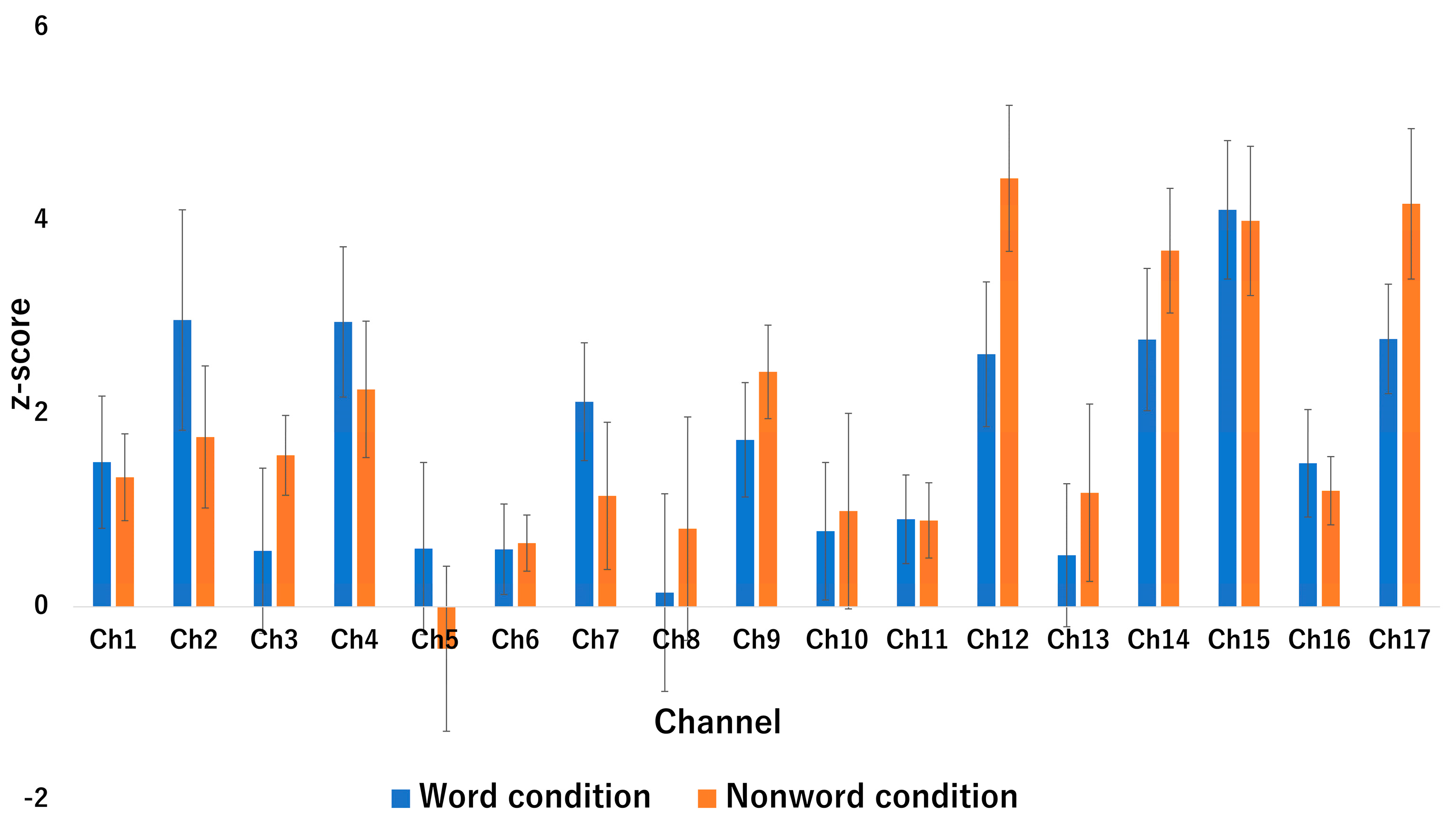
In the uncorrected analysis, differences were observed between the word and nonword conditions in oxy-Hb at Channel 12 and deoxy-Hb at Channel 9. However, after applying the False Discovery Rate (FDR) correction using the Benjamini–Hochberg procedure across the 17 channels, none of the differences between conditions maintained statistical significance. On the other hand, in the exploratory correlation analysis targeting Channel 9 and Channel 12—where differences between conditions were observed in the uncorrected analysis—the relationships between the hemodynamic responses observed around Channel 9 and word rapid reading, RAN, and digit span tasks remained significant even after FDR correction.
In conclusion, although the differences in hemodynamic responses across task conditions remain exploratory findings, the results suggest that the hemodynamic responses observed around Channel 9 may be associated with individual differences in reading-related cognitive abilities, such as reading speed, naming speed, phonological short-term memory, and working memory.
4.1. Reading-Related Cognitive Abilities and Hemodynamic Responses Around Channel 9
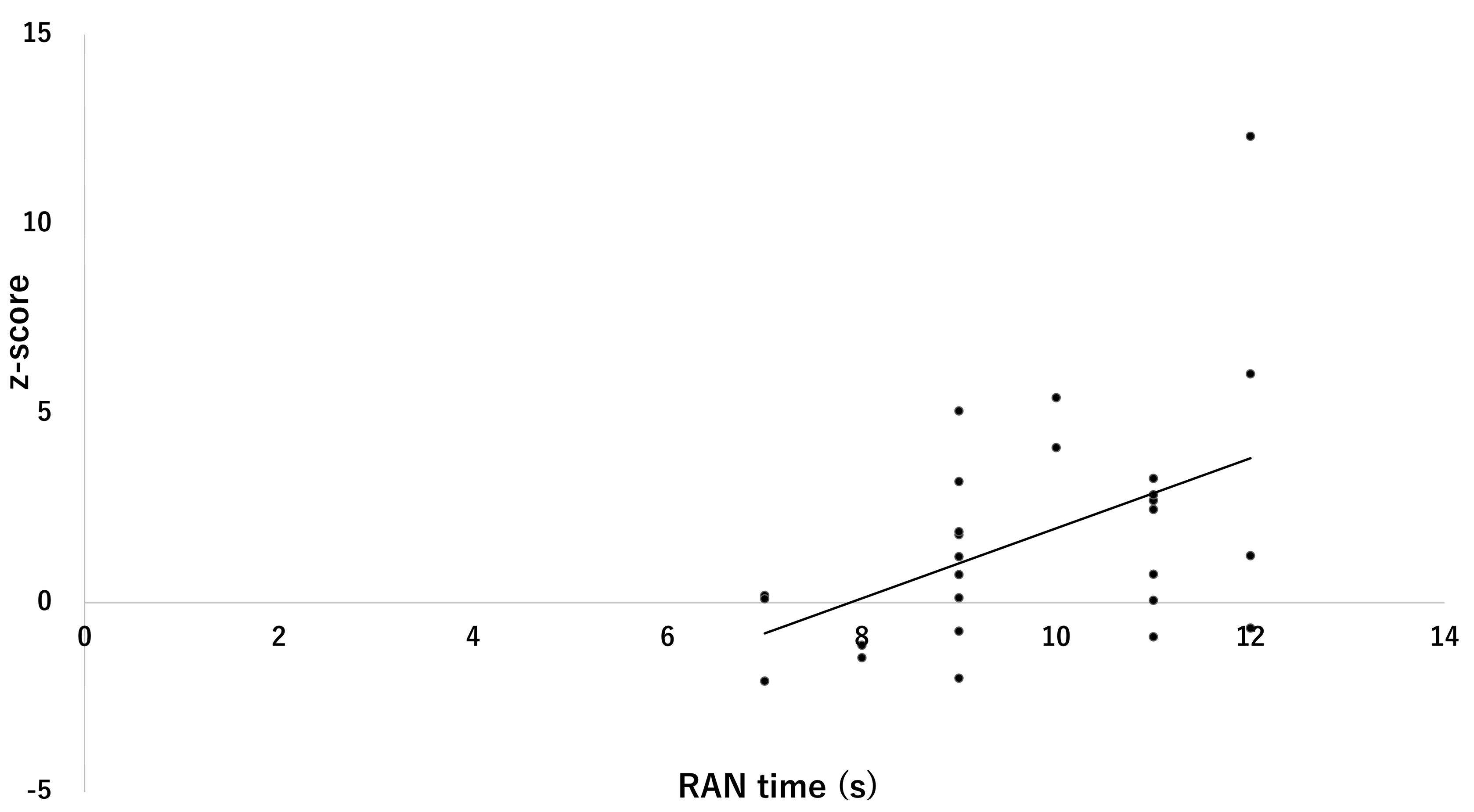
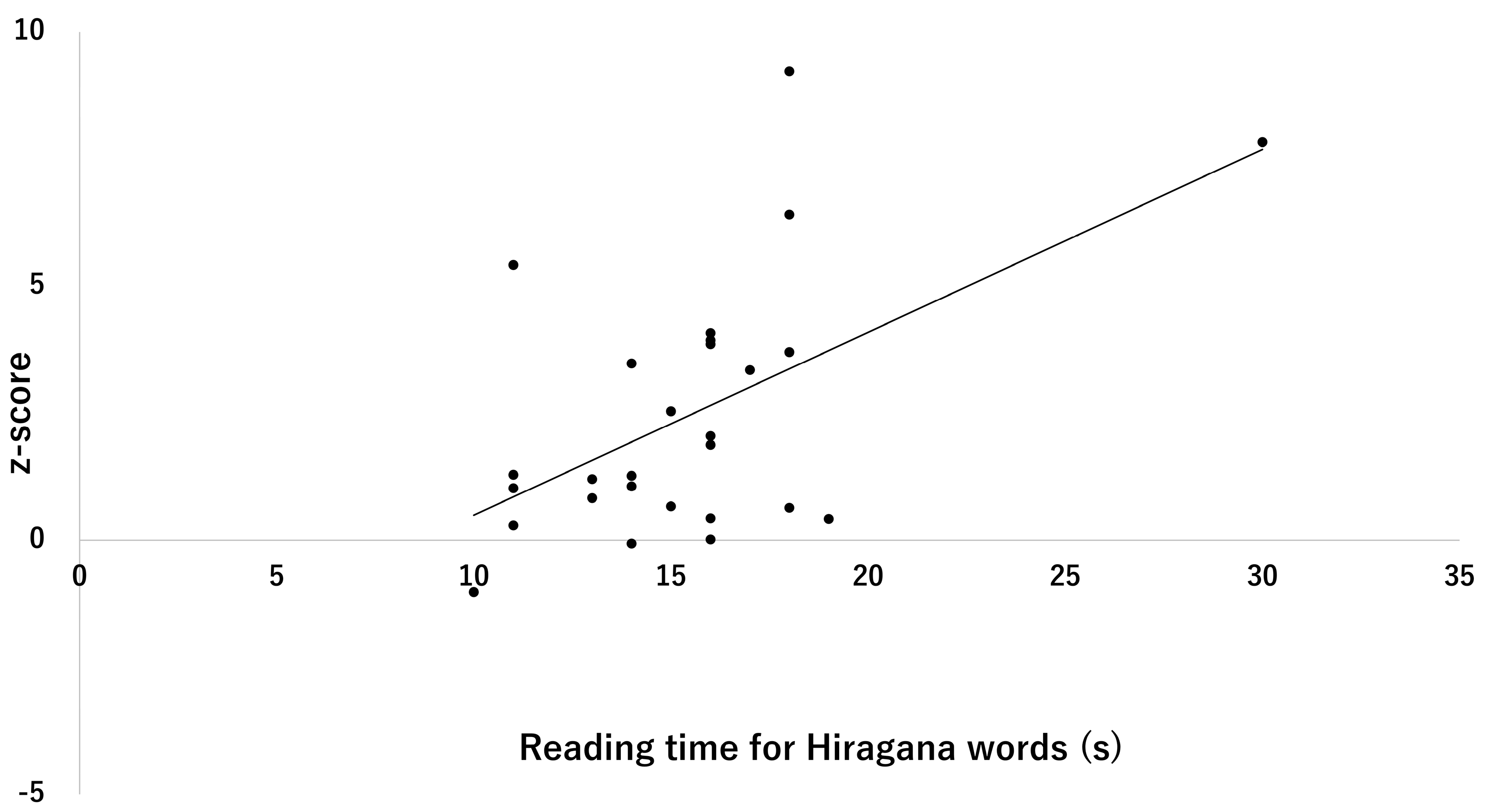
Hemodynamic responses around Channel 9, but not Channel 12, showed significant associations with word rapid reading, RAN, and digit span tasks even after FDR correction. These findings suggest that neural activity in the area monitored by Channel 9 may be associated with individual differences in several reading-related cognitive abilities. Specifically, the amount of oxy-Hb change at Channel 9 in the nonword condition showed a positive correlation with the time required for rapid word reading (Hiragana, word and Katakana, word). Additionally, the amount of oxy-Hb change at Channel 9 in the word condition showed a positive correlation with the time required for RAN. These results indicate that participants who required more time for reading or naming exhibited greater oxy-Hb responses around Channel 9 during task execution, which is consistent with the neural efficiency hypothesis (
Dunst et al., 2014;
Neubauer & Fink, 2009). The neural efficiency hypothesis posits that individuals with higher cognitive abilities perform tasks efficiently with relatively less neural activity, whereas individuals with lower cognitive abilities may exhibit greater neural activity during task execution. In reading research, it has also been reported that proficient readers show more efficient activation within the reading network, while those with reading difficulties often exhibit stronger or more widespread activation (
Shaywitz et al., 2002), and the findings of the present study are consistent with these previous observations.
Furthermore, RAN is a task that assesses the ability to recognize visual stimuli, rapidly access the corresponding names and phonological information, and articulate them sequentially; in the Japanese language as well, it is recognized as one of the primary indices associated with reading fluency and developmental dyslexia (
Haruhara et al., 2011;
Uno et al., 2017). Therefore, the responses observed around Channel 9 may be associated with rapid access to phonological representations during reading and the automation of such processing. Consequently, these findings may suggest that when understanding the hemodynamic responses observed during reading, it is necessary to consider individual differences related to information access speed and processing automation, in addition to phonological processing.
Thus, the relationships observed in this study between oxy-Hb responses and both word rapid reading and RAN may be related to individual differences in processing efficiency. However, it remains unclear whether the increased responses observed in this study suggest processing inefficiency or represent a compensatory reaction to maintain task performance. Furthermore, other factors may be involved, such as task effort, sustained attention, processing strategies, systemic fluctuations, and vascular reactivity. Therefore, the findings of this study show a statistical association indicating that participants who required more time for reading or naming exhibited greater oxy-Hb responses around Channel 9, and the physiological and functional implications of this association must be interpreted with caution.
Furthermore, the amount of deoxy-Hb change at Channel 9 showed a negative correlation with performance on both the forward and backward digit span tasks. This suggests that participants with higher digit span scores exhibited smaller changes in deoxy-Hb, whereas those with lower scores exhibited greater changes.
The forward digit span primarily reflects phonological short-term memory, which temporarily maintains phonological information, whereas the backward digit span more strongly involves elements of working memory, which manipulates the maintained information. Reading requires not only converting letters into phonological representations but also temporarily maintaining the converted phonological information and integrating it into words or sentences. For this reason, phonological short-term memory and working memory are considered critical cognitive functions that support reading (
Peng et al., 2018).
Thus, the fact that both forward and backward digit spans were associated with deoxy-Hb changes at Channel 9 suggests the possibility that the hemodynamic responses observed around Channel 9 are related to individual differences in the capacity for maintaining and manipulating phonological information. However, these results must be interpreted as demonstrating a statistical association between the deoxy-Hb responses observed around Channel 9 and individual differences in phonological short-term memory and working memory, rather than a direct mapping to neural activity intensity.
In addition, RAN and digit span are tasks that measure distinct cognitive functions. RAN reflects rapid access to phonological representations from the recognition of visual stimuli and processing speed, whereas the digit span reflects the maintenance and manipulation of phonological information. The fact that the hemodynamic responses observed around Channel 9 were associated with these multiple behavioral indices suggests that this response does not specifically correspond to a single cognitive process, but rather may be related to individual differences in multiple cognitive functions that support fluent reading.
4.2. Significance of Integrating the Investigation of Task Conditions and Individual Differences
In the present study, while the uncorrected analysis revealed differences in hemodynamic responses associated with task conditions around Channel 12, the hemodynamic responses observed around Channel 9 were associated with performance on word rapid reading, RAN, and digit span tasks. These findings may suggest the possibility that the hemodynamic responses observed around the left temporal lobe during Japanese reading incorporate both variations related to stimuli or task conditions and variations related to the reader’s reading-related cognitive abilities.
However, this does not imply a distinct anatomical or functional dissociation, wherein Channel 12 mediates processing related to task conditions and Channel 9 mediates processing related to individual differences. The difference between conditions at Channel 12 was not significant after FDR correction, and its association with task conditions remains an exploratory finding. Furthermore, each fNIRS channel does not acquire signals exclusively from a single gyrus or cortical region, and there is a possibility that the measurement areas of Channel 9 and Channel 12 partially overlap. Therefore, the two aspects demonstrated in this study do not imply the existence of two independent functional centers within the left temporal lobe, but rather illustrate the possibility of capturing the hemodynamic responses observed during reading from distinct levels of analysis: average changes associated with task conditions and individual differences in cognitive abilities among participants.
This study is novel in that it concurrently investigated both the effects of task conditions through the comparison of words and nonwords and individual differences in reading-related cognitive abilities captured by word rapid reading, RAN, and digit span tasks, using the same participants and the same fNIRS dataset.
In traditional neuroimaging research, studies investigating brain activity associated with phonological decoding load through the comparison of words and nonwords, and studies examining the relationships between brain activity and reading proficiency or reading-related cognitive abilities, have been conducted primarily separately (
Achal et al., 2016;
Church et al., 2011;
Cross et al., 2021;
Koyama et al., 2011;
Mechelli et al., 2003). However, hemodynamic responses observed during reading tasks are considered to vary not only depending on the cognitive demands of the task itself, but also according to the cognitive characteristics of the individual performing the task. In the present study, while the average differences associated with task conditions were not clearly confirmed after FDR correction, statistical associations were observed between the hemodynamic responses around Channel 9 and reading speed, naming speed, phonological short-term memory, and working memory. This finding highlights the necessity of evaluating the hemodynamic responses observed during reading by incorporating individual differences among participants, rather than understanding them solely through average differences between task conditions.
Furthermore, by combining hemodynamic indices obtained via fNIRS with psychological and behavioral measures such as rapid reading, RAN, and digit span tasks, it may be possible to examine individual differences in reading processes from multiple perspectives, beyond what can be captured by behavioral performance alone.
However, the participants in this study were limited to typically developing adult university students, and it remains unclear whether these hemodynamic responses can be applied to the assessment of developmental dyslexia. In the future, after verifying the reproducibility, sensitivity, and specificity in an independent sample that includes participants with developmental dyslexia, it will be necessary to investigate whether this approach can serve as a research index that complements existing psychological tests and behavioral assessments.
4.3. Limitations and Future Directions of the Present Study
First, the participants were limited to 27 adult females. Consequently, it remains unclear whether the findings of this study can be replicated in males, children, the elderly, or individuals with developmental dyslexia. Furthermore, while the absence of a history of neurological diseases, major psychiatric disorders, and sensory impairments was confirmed via self-report, a systematic evaluation using standardized questionnaires or diagnostic interviews was not conducted. Future studies will need to target larger samples that include participants of different sexes, ages, and reading proficiencies while also evaluating health status and reading history using standardized criteria.
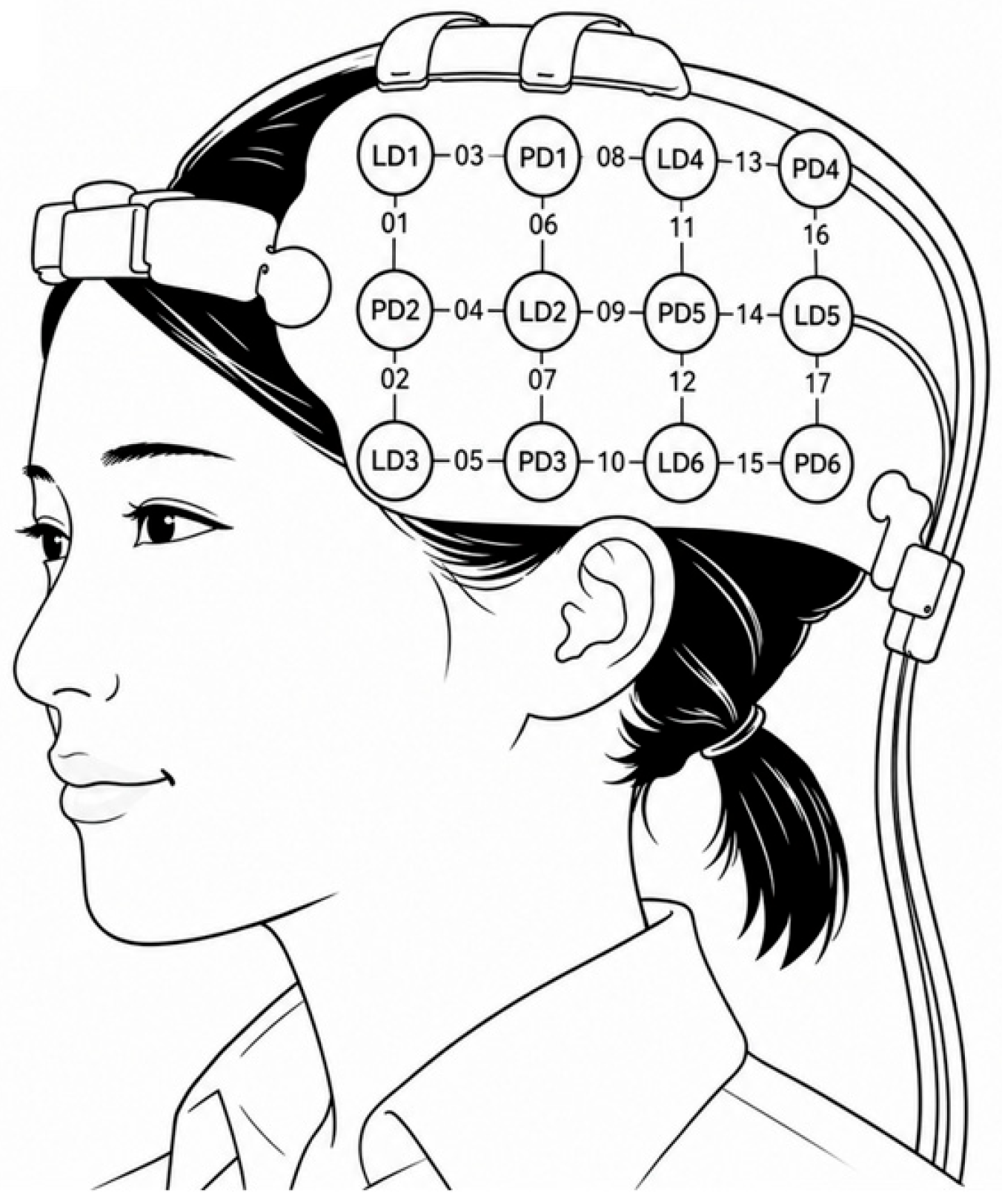
Second, the fNIRS system utilized in this study has limitations regarding spatial resolution. Although the probes were positioned over the left temporoparietal region with reference to the International 10–20 system, three-dimensional (3D) digitizer measurements and registration with structural MRI were not performed; therefore, each channel cannot be strictly mapped onto specific gyri or anatomical regions, such as the STG. Consequently, the findings of this study must be interpreted not as neural activity within a specific anatomical region, but as hemodynamic responses observed around the left temporal lobe. Future studies would benefit from incorporating 3D digitizer measurements, registration with structural MRI, or the concurrent use of other neuroimaging modalities, such as fMRI.
Third, due to a ceiling effect in the number of correct responses, this study primarily analyzed performance based on response time, reflecting reading speed and processing fluency rather than accuracy. Future research should employ tasks of varying difficulty and involve participants with reading difficulties to ensure sufficient individual variation in both accuracy and speed.
Fourth, regarding the comparison between conditions, after applying FDR correction across the 17 channels, the differences observed in the uncorrected analysis did not maintain significance. Therefore, the results concerning the relationship between task conditions and hemodynamic responses around the left temporal lobe remain preliminary, and replication with an independent sample is required.
Fifth, the correlation analyses were exploratory, targeting Channel 9 and Channel 12, which were selected based on the results of the comparison between conditions. Although FDR correction was applied to the correlation analyses and significant associations remained after correction, because the channel selection and correlation analyses were based on the same dataset, replicative validation with an independent sample is required, and future studies are expected to perform confirmatory analyses after pre-specifying anatomical regions of interest using three-dimensional digitizer measurements or other techniques.
Sixth, this is a cross-sectional correlational study, which precludes clarifying whether reading-related cognitive abilities influence hemodynamic responses, whether individual differences in brain function influence reading proficiency, or whether a third factor, such as attention, task effort, processing strategies, systemic fluctuations, and vascular reactivity, influences both. Future studies will need to investigate developmental changes and causal relationships through longitudinal studies targeting children in the early stages of reading acquisition or intervention studies comparing hemodynamic responses before and after reading training.
Finally, the measurement scope of this study was limited to the area around the left temporal lobe. However, reading is supported by a widespread network comprising the frontal, temporal, parietal, and occipitotemporal regions. Future research will need to measure the entire reading network using multi-channel fNIRS or fMRI while also expanding into studies that incorporate kanji, text reading aloud, and reading comprehension tasks.
5. Conclusions
The present study suggests that hemodynamic responses in the left temporal region during Japanese reading may be associated with two complementary aspects: task-related differences associated with phonological decoding demands and individual differences in reading-related cognitive abilities. Specifically, although greater oxy-Hb responses were observed at Channel 12 during nonword reading in the uncorrected analysis, this difference did not remain significant after FDR correction. In contrast, hemodynamic responses around Channel 9 were significantly associated with reading fluency, Rapid Automatized Naming (RAN), and digit span performance, suggesting that this region may be sensitive to individual differences in cognitive processes supporting reading.
These findings are consistent with the contemporary view that reading is supported by a distributed left-lateralized reading network and further suggest that hemodynamic responses in the left temporal region may be understood from two complementary perspectives: task-related variation and individual differences in reading-related cognitive abilities. Importantly, the present study highlights the value of examining these two perspectives within the same fNIRS dataset, providing a more comprehensive framework for understanding neural activity during reading.
Furthermore, the present findings build on previous neuroimaging research conducted primarily in alphabetic languages by suggesting that similar relationships may also be observed in Japanese, an orthographically transparent writing system. These findings contribute to a broader understanding of the neural mechanisms underlying reading across different orthographic systems.
From a methodological perspective, the present study also highlights the value of functional near-infrared spectroscopy (fNIRS) for investigating reading under relatively natural conditions. Integrating behavioral assessments with neuroimaging measures may contribute to a more comprehensive evaluation of reading and developmental dyslexia. Although fNIRS is not intended to replace conventional psychological or educational assessments, it has the potential to complement existing behavioral approaches as a neurobiological measure. Following further validation in independent samples, including individuals with developmental dyslexia, this multimodal approach may contribute to the development of neurobiological indicators that complement existing assessment methods and support more comprehensive evaluation and educational intervention.