
Investigating the Contributions of Stress Appraisals and Self-Regulated Learning Practices on Student Success


Abstract
1. Introduction
1.1. Literature Review
Stress and Student Success
1.2. Theory Informed Expectations Regarding Student Experiences of Stress
1.2.1. Stress Optimization Theory
1.2.2. Student Stress Appraisals in the Academic Context
Stress Mindset
Coping Self-Efficacy
1.2.3. Student Regulatory Responses to Stress Appraisals in the Academic Context
Metacognitive Regulatory Practices
Social Regulatory Practices
2. Materials and Methods
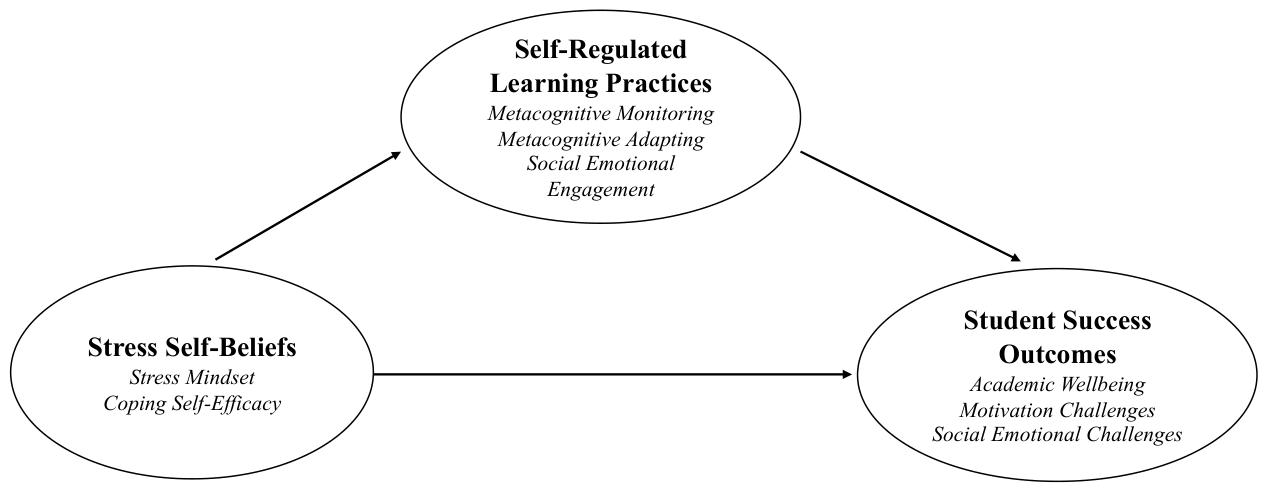
2.1. Purpose and Research Questions
2.2. Research Context
2.3. Participants
2.4. Variables and Measures
2.4.1. Stress Appraisals
Coping Self-Efficacy Scale
Stress Mindset Scale
2.4.2. Self-Regulated Learning Practices
2.4.3. Student Success Experiences and Outcomes
Academic Challenges
Mental Health
GPA
2.5. Analytic Approach
3. Results
3.1. Descriptive Statistics and Correlations
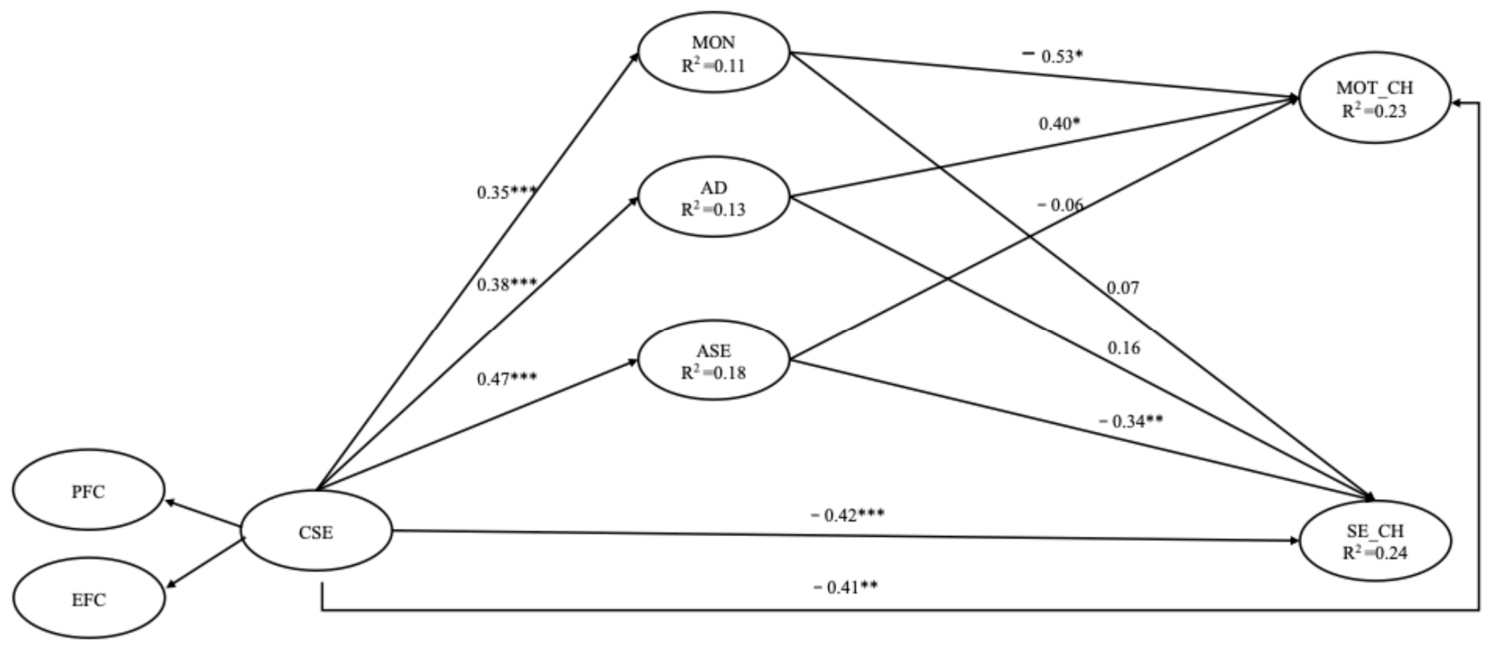
3.2. Model One: Coping Self-Efficacy, Regulatory Practices, and Academic Challenges
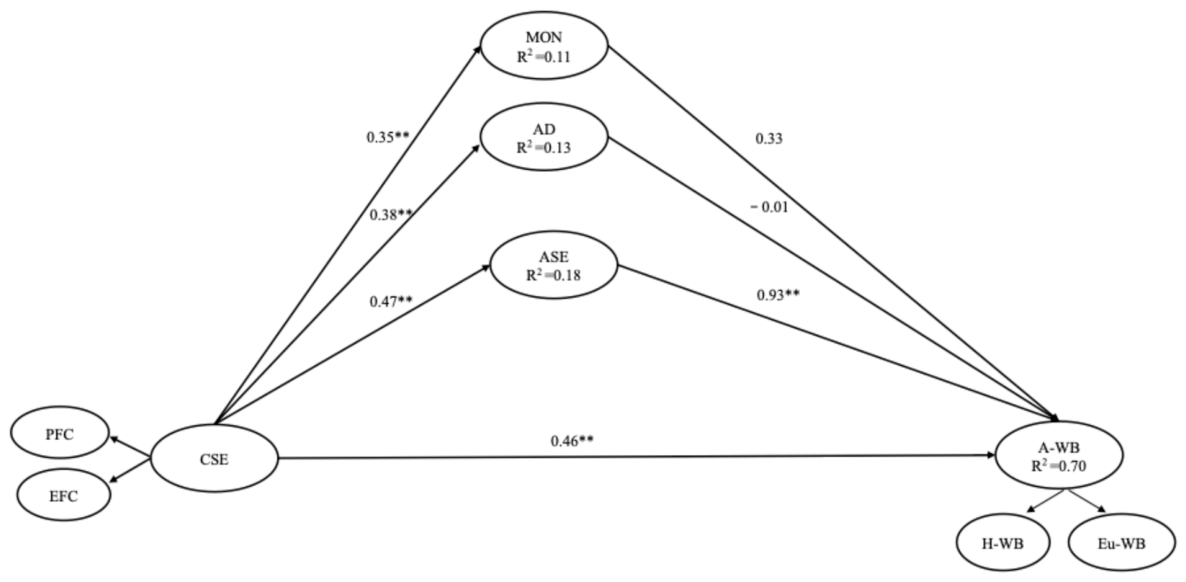
3.3. Model Two: Coping Self-Efficacy, Regulatory Practices, and Academic Well-Being
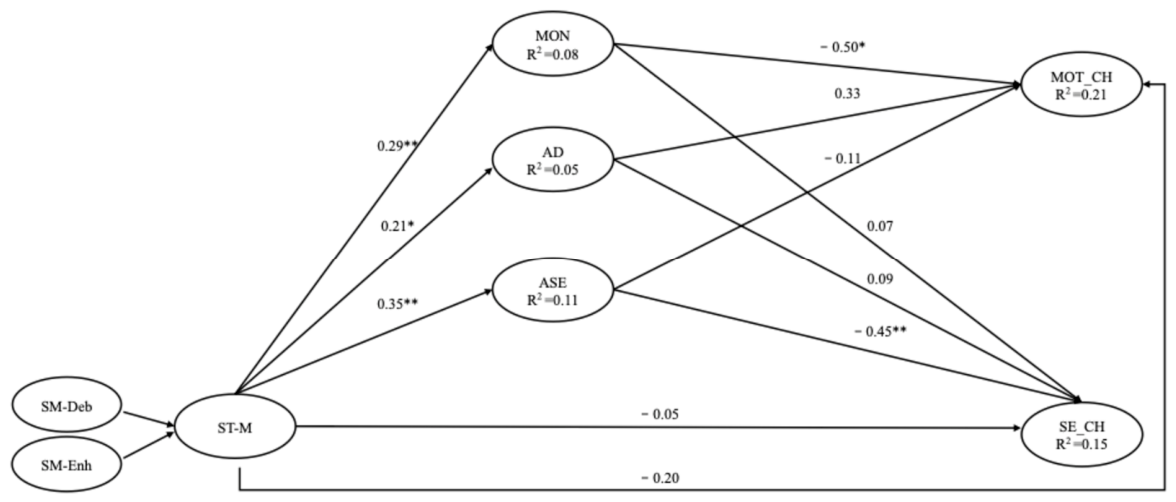
3.4. Model Three: Stress Mindset, Regulatory Practices, and Academic Challenges
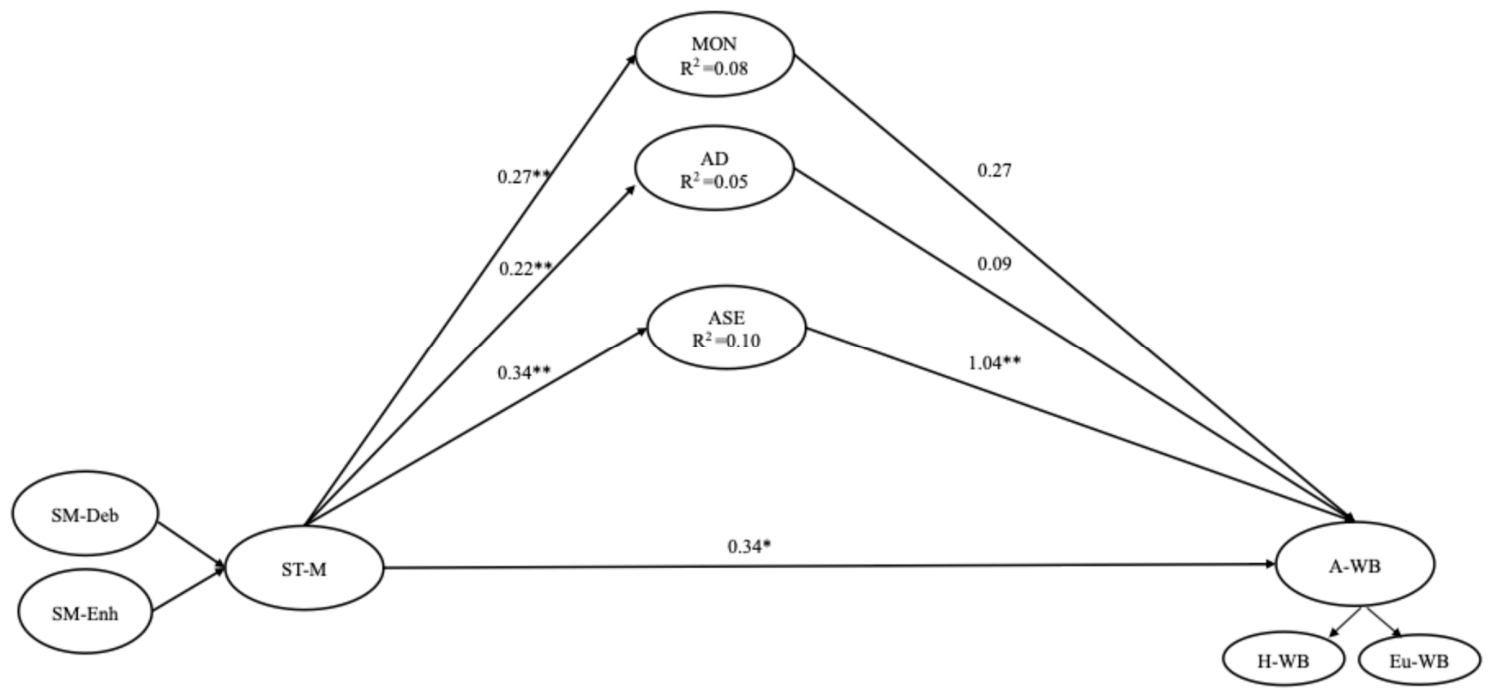
3.5. Model Four: Stress Mindset, Regulatory Practices, Academic Well-Being
4. Discussion
4.1. Adaptive Stress Appraisals
4.1.1. Coping Self-Efficacy in the Present Study
4.1.2. Stress Mindset in the Present Study
4.2. Metacognitive Regulatory Practices
4.3. Social Regulatory Practices
4.4. Implications for Practice
4.5. Future Research
4.6. Limitations
4.7. Conclusions
Author Contributions
Funding
Institutional Review Board Statement
Informed Consent Statement
Data Availability Statement
Acknowledgments
Conflicts of Interest
References
- American College Health Association (ACHA). (2016). ACHA-national college health assessment II: Canadian reference group executive summary spring 2016. ACHA. Available online: https://www.acha.org/wp-content/uploads/2024/07/NCHA-II_SPRING_2016_CANADIAN_REFERENCE_GROUP_EXECUTIVE_SUMMARY.pdf (accessed on 28 May 2026).
- Bandura, A. (2001). Social cognitive theory: An agentic perspective. Annual Review of Psychology, 52(1), 1–26. [Google Scholar] [CrossRef] [PubMed]
- Bandura, A., & Locke, E. A. (2003). Negative self-efficacy and goal effects revisited. Journal of Applied Psychology, 88(1), 87–99. [Google Scholar] [CrossRef] [PubMed]
- Barbayannis, G., Bandari, M., Zheng, X., Baquerizo, H., Pecor, K. W., & Ming, X. (2022). Academic stress and mental well-being in college students: Correlations, affected groups, and COVID-19. Frontiers in Psychology, 13, 886344. [Google Scholar] [CrossRef] [PubMed]
- Barrett, L. F. (2006). Solving the emotion paradox: Categorization and the experience of emotion. Personality and Social Psychology Review, 10(1), 20–46. [Google Scholar] [CrossRef] [PubMed]
- Barrett, L. F. (2017). The theory of constructed emotion: An active inference account of interoception and categorization. Social Cognitive and Affective Neuroscience, 12(11), 1833. [Google Scholar] [CrossRef] [PubMed]
- Barrett, L. F. (2022). Context reconsidered: Complex signal ensembles, relational meaning, and population thinking in psychological science. The American Psychologist, 77(8), 894–920. [Google Scholar] [CrossRef] [PubMed]
- Benight, C. C., & Harper, M. L. (2002). Coping self-efficacy perceptions as a mediator between acute stress response and long-term distress following natural disasters. Journal of Traumatic Stress, 15(3), 177–186. [Google Scholar] [CrossRef] [PubMed]
- Bienertova-Vasku, J., Lenart, P., & Scheringer, M. (2020). Eustress and distress: Neither good nor bad, but rather the same? BioEssays, 42(7), 1900238. [Google Scholar] [CrossRef] [PubMed]
- Boekaerts, M., & Cascallar, E. (2006). How far have we moved toward the integration of theory and practice in self-regulation? Educational Psychologist Review, 18, 199–210. [Google Scholar] [CrossRef]
- Brooks, A. W. (2014). Get excited: Reappraising pre-performance anxiety as excitement. Journal of Experimental Psychology: General, 143(3), 1144–1158. [Google Scholar] [CrossRef] [PubMed]
- Burnette, J. L., Billingsley, J., Banks, G. C., Knouse, L. E., Hoyt, C. L., Pollack, J. M., & Simon, S. (2023). A systematic review and meta-analysis of growth mindset interventions: For whom, how, and why might such interventions work? Psychological Bulletin, 149(3–4), 174–205. [Google Scholar] [CrossRef] [PubMed]
- Cattelino, E., Testa, S., Calandri, E., Fedi, A., Gattino, S., Graziano, F., Rollero, C., & Begotti, T. (2021). Self-efficacy, subjective well-being and positive coping in adolescents with regard to COVID-19 lockdown. Current Psychology, 42, 17304–17315. [Google Scholar] [CrossRef] [PubMed]
- Chesney, M. A., Neilands, T. B., Chambers, D. B., Taylor, J. M., & Folkman, S. (2006). A validity and reliability study of the coping self-efficacy scale. British Journal of Health Psychology, 11, 421–437. [Google Scholar] [CrossRef] [PubMed]
- Cohen, S., & Wills, T. A. (1985). Stress, social support, and the buffering hypothesis. Psychological Bulletin, 98(2), 310–357. [Google Scholar] [CrossRef]
- Crum, A. J., Akinola, M., Martin, A., & Fath, S. (2017). The role of stress mindset in shaping cognitive, emotional, and physiological responses to challenging and threatening stress. Anxiety, Stress and Coping, 30, 379–395. [Google Scholar] [CrossRef] [PubMed]
- Crum, A. J., Salovey, P., & Achor, S. (2013). Rethinking stress: The role of mindsets in determining the stress response. Journal of Personality and Social Psychology, 104(4), 716–733. [Google Scholar] [CrossRef] [PubMed]
- de la Fuente, J., Verónica Paoloni, P., Vera-Martínez, M. M., & Garzón-Umerenkova, A. (2020). Effect of levels of self-regulation and situational stress on achievement emotions in undergraduate students: Class, study and testing. International Journal of Environmental Research and Public Health, 17(12), 4293. [Google Scholar] [CrossRef] [PubMed]
- Delahaij, R., & Van Dam, K. (2017). Coping with acute stress in the military: The influence of coping style, coping self-efficacy and appraisal emotions. Personality and Individual Differences, 119, 13–18. [Google Scholar] [CrossRef]
- Denovan, A., & Macaskill, A. (2017). Stress and subjective well-being among first year UK undergraduate students. Journal of Happiness Studies, 18(2), 505–525. [Google Scholar] [CrossRef]
- de Ruiter, N. M. P., & Thomaes, S. (2023). A process model of mindsets: Conceptualizing mindsets of ability as dynamic and socially situated. Psychological Review, 130(5), 1326–1338. [Google Scholar] [CrossRef] [PubMed]
- Diener, E., Heintzelman, S. J., Kushlev, K., Tay, L., Wirtz, D., Lutes, L. D., & Oishi, S. (2017). Finding all psychologists should know from the science on subjective well-being. Canadian Psychology/Psychologie Canadienne, 58, 87–104. [Google Scholar] [CrossRef]
- Dweck, C. S. (1999). Self-theories: Their role in motivation, personality, and development. Psychology Press. [Google Scholar]
- Efklides, A., Schwartz, B. L., & Brown, V. (2018). Motivation and affect in self-regulated learning: Does metacognition play a role? In B. J. Zimmerman, & D. H. Schunk (Eds.), Handbook of self-regulation of learning and performance (pp. 64–84). Routledge. [Google Scholar] [CrossRef]
- Elmer, T., Mepham, K., & Stadtfeld, C. (2020). Students under lockdown: Comparisons of students’ social networks and mental health before and during the covid-19 crisis in Switzerland. PLoS ONE, 15(7), e0236337. [Google Scholar] [CrossRef] [PubMed]
- Epel, E. S., Crosswell, A. D., Mayer, S. E., Prather, A. A., Slavich, G. M., Puterman, E., & Mendes, W. B. (2018). More than a feeling: A unified view of stress measurement for population science. Frontiers in Neuroendocrinology, 49, 146–169. [Google Scholar] [CrossRef] [PubMed]
- Folkman, S., & Lazarus, R. S. (1985). If it changes it must be a process: Study of emotion and coping during three stages of a college examination. Journal of Personality and Social Psychology, 48, 150–170. [Google Scholar] [CrossRef] [PubMed]
- Freire, C., Ferradás, M. D. M., Núñez, J. C., Valle, A., & Vallejo, G. (2019). Eudaimonic well-being and coping with stress in university students: The mediating/moderating role of self-efficacy. International Journal of Environmental Research and Public Health, 16(1), 48. [Google Scholar] [CrossRef] [PubMed]
- Freire, C., Ferradás, M. D. M., Valle, A., Núñez, J. C., & Vallejo, G. (2016). Profiles of psychological well-being and coping strategies among university students. Frontiers in Psychology, 7, 1554. [Google Scholar] [CrossRef] [PubMed]
- Gross, J. J. (2015). The extended process model of emotion regulation: Elaborations, applications, and future directions. Psychological Inquiry, 26(1), 130–137. [Google Scholar] [CrossRef]
- Grund, A., Fries, S., Nückles, M., Renkl, A., & Roelle, J. (2024). When is learning “Effortful”? Scrutinizing the concept of mental effort in cognitively oriented research from a motivational perspective. Educational Psychology Review, 36(1), 11. [Google Scholar] [CrossRef]
- Hadwin, A. F., Bakhtiar, A., & Miller, M. (2018). Challenges in online collaboration: Effects of scripting shared task perceptions. International Journal of Computer-Supported Collaborative Learning, 13(3), 301–329. [Google Scholar] [CrossRef]
- Hadwin, A. F., Davis, S. K., Bakhtiar, A., & Winne, P. H. (2019). Academic challenges as opportunities to learn to self-regulate learning. In H. Askell-Williams, J. Orrell, & M. Lawson (Eds.), Problem solving for teaching and learning: A festschrift for emeritus professor Mike Lawson (pp. 34–47). Routledge. [Google Scholar] [CrossRef]
- Hadwin, A. F., & Järvelä, S. (2011). Self-regulated, co-regulated, and socially-shared regulation of learning. In B. J. Zimmerman, & D. H. Schunk (Eds.), Handbook of self-regulation of learning and performance (pp. 65–84). Routledge. [Google Scholar]
- Hadwin, A. F., Rostampour, R., & Bahena-Olivares, L. M. (2021). Self-regulated learning profile and self-diagnostic tool (SRL-PSD-2021). [Poster Presentation]. American Educational Research Association. [Google Scholar]
- Hadwin, A. F., Sukhawathanakul, P., Rostampour, R., & Bahena-Olivares, L. M. (2022). Do self-regulated learning practices and intervention mitigate the impact of academic challenges and COVID-19 distress on academic performance during online learning? Frontiers of Psychology, 13, 813529. [Google Scholar] [CrossRef] [PubMed]
- Hair, J. F., Black, W. C., Babin, B. J., & Anderson, R. E. (2019). Multivariate data analysis (8th ed.). Cengage Learning, EMEA. [Google Scholar]
- Howell, A. J. (2009). Flourishing: Achievement-related correlates of students’ well-being. The Journal of Positive Psychology, 4, 1–13. [Google Scholar] [CrossRef]
- Howell, A. J. (2017). Believing in change: Reviewing the role of implicit theories in psychological dysfunction. Journal of Social and Clinical Psychology, 36(6), 437–460. [Google Scholar] [CrossRef]
- Hu, L., & Bentler, H. (1999). Conventional criteria versus new alternatives. Structural Equation Modeling: A Multidisciplinary Journal, 6(1), 1–55. [Google Scholar] [CrossRef]
- Jamieson, J. P., Black, A. E., Pelaia, L. E., Gravelding, H., Gordils, J., & Reis, H. T. (2022). Reappraising stress arousal improves affective, neuroendocrine, and academic performance outcomes in community college classrooms. Journal of Experimental Psychology. General, 151(1), 197–212. [Google Scholar] [CrossRef] [PubMed]
- Jamieson, J. P., Crum, A. J., Goyer, J. P., Marotta, M. E., & Akinola, M. (2018). Optimizing stress responses with reappraisal and mindset interventions: An integrated model. Anxiety, Stress, & Coping, 31, 245–261. [Google Scholar] [CrossRef] [PubMed]
- Jenkins, A., Weeks, M. S., & Hard, B. M. (2021). General and specific stress mindsets: Links with college student health and academic performance. PLoS ONE, 16(9), e0256351. [Google Scholar] [CrossRef] [PubMed]
- Kapil, M., Rostampour, R., & Hadwin, A. (2024). Coping self-efficacy and stress mindset as predictors of student success outcomes. Journal of Postsecondary Student Success, 4(1), 147–172. [Google Scholar] [CrossRef]
- Karademas, E. C., & Kalantzi-Azizi, A. (2004). The stress process, self-efficacy expectations, and psychological health. Personality and Individual Differences, 37(5), 1033–1043. [Google Scholar] [CrossRef]
- Kashdan, T. B., Biswas-Diener, R., & King, L. A. (2008). Reconsidering happiness: The costs of distinguishing between hedonics and eudaimonia. The Journal of Positive Psychology, 3(4), 219–233. [Google Scholar] [CrossRef]
- Keech, Hagger, M. S., O’Callaghan, F. V., & Hamilton, K. (2018). The influence of university students’ stress mindsets on health and performance outcomes. Annals of Behavioral Medicine, 52(12), 1046–1059. [Google Scholar] [CrossRef] [PubMed]
- Keyes, C. L. M. (2002). The mental health continuum: From languishing to flourishing in life. Journal of Health and Social Behavior, 43, 207–222. [Google Scholar] [CrossRef]
- Keyes, C. L. M. (2005). Mental health and/or mental illness? Investigating axioms of the complete state model of health. Journal of Consulting and Clinical Psychology, 73, 539–548. [Google Scholar] [CrossRef] [PubMed]
- Keyes, C. L. M. (2007). Promoting and protecting mental health as flourishing: A complementary strategy for improving national mental health. The American Psychologist, 62, 95–108. [Google Scholar] [CrossRef] [PubMed]
- Keyes, C. L. M., & Haidt, J. (Eds.). (2003). Flourishing: Positive psychology and the life well-lived. American Psychological Association. [Google Scholar]
- Khan, S., & Shamama-Tus-Sabah, S. (2020). Perceived stress and its association with positive mental health and academic performance of university students. Pakistan Armed Forces Medical Journal, 70(5), 1391–1395. [Google Scholar]
- Klassen, R. M., & Klassen, J. R. L. (2018). Self-efficacy beliefs of medical students: A critical review. Perspectives on Medical Education, 7(2), 76–82. [Google Scholar] [CrossRef] [PubMed]
- Koivuniemi, M., Panadero, E., Malmberg, J., & Järvelä, S. (2017). Higher education students’ learning challenges and regulatory skills in different learning situations/desafíos de aprendizaje y habilidades de regulación en distintas situaciones de aprendizaje en estudiantes de educación superior. Infancia Aprendizaje 40, 19–55. [Google Scholar] [CrossRef]
- Kuh, G., Kinzie, J., Schuh, J., & Whitt, E. (2005). Student success in college: Creating conditions that matter. Jossey-Bass. [Google Scholar]
- Lazarus, R. S. (1991). Cognition and motivation in emotion. American Psychologist, 46(4), 352–367. [Google Scholar] [CrossRef] [PubMed]
- Lazarus, R. S., DeLongis, A., Folkman, S., & Gruen, R. (1985). Stress and adaptational outcomes: The problem of confounded measures. American Psychologist, 40, 770–779. [Google Scholar] [CrossRef]
- Lewis, K. L., & Hodges, S. D. (2015). Expanding the concept of belonging in academic domains: Development and validation of the ability uncertainty scale. Learning and Individual Differences, 37, 197–202. [Google Scholar] [CrossRef]
- Lobczowski, N. G. (2020). Bridging gaps and moving forward: Building a new model for socioemotional formation and regulation. Educational Psychologist, 55(2), 53–68. [Google Scholar] [CrossRef]
- Louis, M. C., & Schreiner, L. A. (2012). Helping students thrive: A strengths development model. In L. A. Schreiner, M. C. Louis, & D. D. Nelson (Eds.), Thriving in transitions: A research-based approach to college student success. University of South Carolina, National Resource Center for the First-Year Experience and Students in Transition. [Google Scholar]
- Macnamara, B. N., & Burgoyne, A. P. (2023). Do growth mindset interventions impact students’ academic achievement? A systematic review and meta-analysis with recommendations for best practices. Psychological Bulletin, 149(3–4), 133–173. [Google Scholar] [CrossRef] [PubMed]
- McLean, L., Gaul, D., & Penco, R. (2023). Perceived social support and stress: A study of 1st year students in Ireland. International Journal of Mental Health and Addiction, 21(4), 2101–2121. [Google Scholar] [CrossRef] [PubMed]
- Melato, S. R., van Eeden, C., Rothmann, S., & Bothma, E. (2017). Coping self-efficacy and psychosocial well-being of marginalised South African youth. Journal of Psychology in Africa, 27(4), 338–344. [Google Scholar] [CrossRef]
- Midkiff, M. F., Lindsey, C. R., & Meadows, E. A. (2018). The role of coping self-efficacy in emotion regulation and frequency of NSSI in young adult college students. Cogent Psychology, 5(1), 1520437. [Google Scholar] [CrossRef]
- Ng, W., Diener, E., Aurora, R., & Harter, J. (2009). Affluence, feelings of stress, and well-being. Social Indicators Research, 94(2), 257–271. [Google Scholar] [CrossRef]
- Panadero, E. (2018). A review of self-regulated learning: Six models and four direction for research. Frontiers in Psychology, 8, 422. [Google Scholar] [CrossRef] [PubMed]
- Park, D., Yu, A., Metz, S. E., Tsukayama, E., Crum, A. J., & Duckworth, A. L. (2017). Beliefs about stress attenuate the relation among adverse life events, perceived distress, and self-control. Child Development, 62, 1269. [Google Scholar] [CrossRef] [PubMed]
- Pascoe, M. C., Hetrick, S. E., & Parker, A. G. (2020). The impact of stress on students in secondary school and higher education. International Journal of Adolescence and Youth, 25(1), 104–112. [Google Scholar] [CrossRef]
- Perfect, T. J., & Schwartz, B. L. (2002). Applied metacognition. Cambridge University Press. Available online: http://tinyurl.com/y4vtmqzf (accessed on 30 January 2023).
- Pérez-González, J.-C., Filella, G., Soldevila, A., Faiad, Y., & Sanchez-Ruiz, M.-J. (2022). Integrating self-regulated learning and individual differences in the prediction of university academic achievement across a three-year-long degree. Metacognition and Learning, 17(3), 1141–1165. [Google Scholar] [CrossRef]
- Poluektova, O., Kappas, A., & Smith, C. A. (2023). Using Bandura’s self-efficacy theory to explain individual differences in the appraisal of problem-focused coping potential. Emotion Review, 15(4), 302–312. [Google Scholar] [CrossRef]
- Rice, K., Larsen, S. A., Davies, R. L., & Rock, A. J. (2025). Beyond GPA: A quantitative evaluation of York et al.’s model of academic success in higher education: York et al. Australian Educational Researcher, 52(6), 4683–4702. [Google Scholar] [CrossRef]
- Richardson, M., Abraham, C., & Bond, R. (2012). Psychological correlates of university students’ academic performance: A systematic review and meta-analysis. Psychological Bulletin, 138, 353–387. [Google Scholar] [CrossRef] [PubMed]
- Robbins, S. B., Lauver, K., Le, H., Davis, D., Langley, R., & Carlstrom, A. (2004). Do psychosocial and study skill factors predict college outcomes?: A meta-analysis. Psychological Bulletin, 130(2), 261–288. [Google Scholar] [CrossRef] [PubMed]
- Rosseel, Y. (2012). lavaan: An R package for structural equation modeling. Journal of Statistical Software, 48(2), 1–36. [Google Scholar] [CrossRef]
- Rostampour, R., Kapil, M., & Hadwin, A. F. (2023, August 22–26). Academic well-being: Construct validation of an instrument to measure student mental health and well-being in academic settings [Paper Presentation]. EARLI Conference, Thessaloniki, Greece. [Google Scholar]
- Rudland, J. R., Golding, C., & Wilkinson, T. J. (2020). The stress paradox: How stress can be good for learning. Medical Education, 54(1), 40–45. [Google Scholar] [CrossRef] [PubMed]
- Ryan, R. M., & Deci, E. L. (2001). On happiness and human potential: A review of research on hedonic and eudaimonic well-being. Annual Review of Psychology, 52, 141–166. [Google Scholar] [CrossRef] [PubMed]
- Ryff, C. D. (2016). Beautiful ideas and the scientific enterprise: Sources of intellectual vitality in research on eudaimonic well-being. In Handbook of eudaimonic well-being (pp. 95–107). Springer International Publishing. [Google Scholar] [CrossRef]
- Scherer, K. R., & Moors, A. (2019). The emotion process: Event appraisal and component differentiation. Annual Review of Psychology, 70, 719–745. [Google Scholar] [CrossRef] [PubMed]
- Selye, H. (1976). Stress without distress. In G. Serban (Ed.), Psychopathology of human adaptation. Springer. [Google Scholar] [CrossRef]
- Singer, M. J., Humphreys, K. L., & Lee, S. S. (2016). Coping self-efficacy mediates the association between child abuse and ADHD in adulthood. Journal of Attention Disorders, 20(8), 695–703. [Google Scholar] [CrossRef] [PubMed]
- Sisk, V. F., Burgoyne, A. P., Sun, J., Butler, J. L., & Macnamara, B. N. (2018). To what extent and under which circumstances are growth mind-sets important to academic achievement? two meta-analyses. Psychological Science, 29(4), 549–571. [Google Scholar] [CrossRef] [PubMed]
- Southwick, S. M., Sippel, L., Krystal, J., Charney, D., Mayes, L., & Pietrzak, R. (2016). Why are some individuals more resilient than others: The role of social support. World Psychiatry, 15(1), 77–79. [Google Scholar] [CrossRef] [PubMed]
- Suldo, S. M., Riley, K. N., & Shaffner, E. J. (2006). Academic correlates of children and adolescents’ life satisfaction. School Psychology International, 27(5), 567–582. [Google Scholar] [CrossRef]
- Tamir, M., John, O. P., Srivastava, S., & Gross, J. J. (2007). Implicit theories of emotion: Affective and social outcomes across a major life transition. Journal of Personality and Social Psychology, 92(4), 731–744. [Google Scholar] [CrossRef] [PubMed]
- Thiede, K. W., & Dunlosky, J. (1999). Toward a general model of self-regulated study: Analysis of selection of items for study and self-paced study time. Journal of Experimental Psychology: Learning, Memory, and Cognition, 25, 1024–1037. [Google Scholar] [CrossRef]
- Tinto, V. (2017). Reflections on student persistence. Student Success, 8, 1–8. [Google Scholar] [CrossRef]
- Tomarken, A. J., & Waller, N. G. (2005). Structural equation modeling: Strengths, limitations, and misconceptions. Annual Review of Clinical Psychology, 1, 31–65. [Google Scholar] [CrossRef] [PubMed]
- Usher, E. L., & Pajares, F. (2009). Sources of self-efficacy in mathematics: A validation study. Contemporary Educational Psychology, 34(1), 89–101. [Google Scholar] [CrossRef]
- Uusberg, A., Taxer, J. L., Yih, J., Uusberg, H., & Gross, J. J. (2019). Reappraising Reappraisal. Emotion Review, 11(4), 267–282. [Google Scholar] [CrossRef]
- van der Zanden, Petrie, J. A. C., Denessen, E., Cillessen, A. H. N., & Meijer, P. C. (2018). Domains and predictors of first-year student success: A systematic review. Educational Research Review, 23, 57–77. [Google Scholar] [CrossRef]
- Vogel, S., & Schwabe, L. (2016). Learning and memory under stress: Implications for the classroom. npj Science of Learning, 1(1), 16011. [Google Scholar] [CrossRef] [PubMed]
- Winne, P. H., & Hadwin, A. F. (2008). The weave of motivation and self-regulated learning. In D. H. Schunk, & B. J. Zimmerman (Eds.), Motivation and self-regulated learning: Theory, research, and applications (pp. 297–314). Lawrence Erlbaum Associates. [Google Scholar]
- Wissing, Khumalo, I. P., Oosthuizen, T. M., Nienaber, A., Kruger, A., Potgieter, J. C., & Temane, Q. M. (2011). Coping self-efficacy as mediator in the dynamics of psychological well-being in various contexts. Journal of Psychology in Africa, 21(2), 165–172. [Google Scholar] [CrossRef]
- Won, S., Hensley, L. C., & Wolters, C. A. (2021). Brief research report: Sense of belonging and academic help-seeking as self-regulated learning. Journal of Experimental Education, 89(1), 112–124. [Google Scholar] [CrossRef]
- Won, S., Kapil, M., Drake, B., & Paular, R. (2023). Investigating the role of academic, social, and emotional self-efficacy in online learning. The Journal of Experimental Education, 92, 485–501. [Google Scholar] [CrossRef]
- Won, S., Wolters, C. A., & Mueller, S. A. (2018). Sense of belonging and self-regulated learning: Testing achievement goals as mediators. Journal of Experimental Education, 86(3), 402–418. [Google Scholar] [CrossRef]
- Yaman-Sözbir, Ş., Ayaz-Alkaya, S., & Bayrak-Kahraman, B. (2019). Effect of chewing gum on stress, anxiety, depression, self-focused attention, and academic success: A randomized controlled study. Stress and Health, 35(4), 441–446. [Google Scholar] [CrossRef] [PubMed]
- Yan, V. X., & Schuetze, B. A. (2023). What is meant by “Growth Mindset”? Current theory, measurement practices, and empirical results leave much open to interpretation: Commentary on Macnamara and Burgoyne (2023) and Burnette et al. (2023). Psychological Bulletin, 149(3–4), 206–219. [Google Scholar] [CrossRef]
- Yeager, D. S., Bryan, C. J., Gross, J. J., Murray, J. S., Krettek Cobb, D., Santos, P. H. F., Gravelding, H., Johnson, M., & Jamieson, J. P. (2022). A synergistic mindsets intervention protects adolescents from stress. Nature, 607(7919), 512–520. [Google Scholar] [CrossRef] [PubMed]
- Yeager, D. S., & Dweck, C. S. (2012). Mindsets that promote resilience: When students believe that personal characteristics can be developed. Educational Psychologist, 47(4), 302–314. [Google Scholar] [CrossRef]
- Yeager, D. S., Lee, H. Y., & Jamieson, J. P. (2016). How to improve adolescent stress responses: Insights from integrating implicit theories of personality and biopsychosocial models. Psychological Science, 27(8), 1078–1091. [Google Scholar] [CrossRef] [PubMed]
- Zollanvari, A., Kizilirmak, R. C., Kho, Y. H., & Hernandez-Torrano, D. (2017). Predicting students’ GPA and developing intervention strategies based on self-regulatory learning behaviours. IEEE Access, 5, 23792–23802. [Google Scholar] [CrossRef]




| Variable | Mean | sd | α | GPA | CSE | SM | AWB | MOT_CH | SE_CH | MON | AD | ASE |
|---|---|---|---|---|---|---|---|---|---|---|---|---|
| GPA | 4.8 | 2.2 | n/a | - | ||||||||
| CSE | 3.11 | 0.63 | 0.90 | −0.08 | - | |||||||
| SM | 2.7 | 0.60 | 0.78 | 0.027 | 0.40 *** | - | ||||||
| AWB | 3.44 | 0.67 | 0.88 | 0.24 *** | 0.45 *** | 0.29 *** | _ | |||||
| MOT_CH | 2.9 | 0.87 | 0.78 | −0.21 ** | −0.31 *** | −0.23 * | −0.37 *** | - | ||||
| SE_CH | 2.87 | 0.84 | 0.87 | −0.12 | −0.35 *** | −0.14 * | −0.41 *** | 0.62 *** | - | |||
| MON | 3.68 | 0.72 | 0.78 | 0.18 * | 0.27 *** | 0.20 ** | 0.46 *** | −0.27 *** | −0.10 | - | ||
| AD | 3.58 | 0.53 | 0.85 | 0.10 | 0.29 *** | 0.23 * | 0.49 *** | −0.13 | −0.10 | 0.60 *** | - | |
| ASE | 3.11 | 0.87 | 0.76 | 0.19 ** | 0.32 *** | 0.22 *** | 0.62 *** | −0.22 ** | −0.30 *** | 0.43 *** | 0.47 *** | - |
| Predictor | Outcome | B | SE | β | t | p | R2 |
|---|---|---|---|---|---|---|---|
| CSE | AWB | 0.47 | 0.07 | 0.45 | 7.00 | <0.001 | 0.20 |
| SM | 0.35 | 0.08 | 0.29 | 4.24 | <0.001 | 0.09 | |
| CSE | Mot_Ch | −0.40 | 0.09 | −0.31 | −4.55 | <0.001 | 0.10 |
| SM | −0.32 | 0.10 | −0.23 | −3.21 | 0.002 | 0.05 | |
| CSE | SE_Ch | −0.46 | 0.09 | −0.35 | −5.23 | <0.001 | 0.12 |
| SM | −0.21 | 0.10 | −0.14 | −2.00 | 0.005 | 0.15 | |
| CSE | GPA | −0.27 | 0.23 | −0.08 | −1.14 | 0.26 | 0.00 |
| SM | 0.10 | 0.27 | 0.03 | 0.39 | 0.70 | 0.00 |
| Variables | Estimate | Std. Error | z-Value | p | 95% Confidence Interval | |
|---|---|---|---|---|---|---|
| Lower | Upper | |||||
| CSE–GPA | −0.09 | 0.08 | −1.12 | 0.26 | −0.25 | 0.07 |
| SM–GPA | 0.06 | 0.09 | 0.59 | 0.56 | −0.28 | 0.23 |
| Mediation Relationships | B | SE | p |
|---|---|---|---|
| CSE to Mon to MOT_CH | −0.18 | 0.09 | 0.04 * |
| CSE to AD to MOT_CH | 0.15 | 0.08 | 0.05 * |
| CSE to ASE to MOT_CH | −0.03 | 0.07 | 0.70 |
| CSE to MOT_CH total effect | −0.47 | 0.13 | <0.001 *** |
| CSE to MON to SE_CH | 0.03 | 0.05 | 0.62 |
| CSE to AD to SE_CH | 0.06 | 0.06 | 0.33 |
| CSE to ASE to SE_CH | −0.16 | 0.07 | 0.02 * |
| CSE to SE_CH total effect | −0.49 | 0.12 | <0.001 *** |
| Mediation Relationships | B | SE | p |
|---|---|---|---|
| CSE to Mon to AWB | 0.11 | 0.09 | 0.23 |
| CSE to AD to AWB | −0.004 | 0.09 | 0.96 |
| CSE to ASE to AWB | 0.44 | 0.17 | 0.01 ** |
| CSE to AWB total indirect effect | 0.55 | 0.18 | 0.003 ** |
| CSE to AWB total effect | 1.01 | 0.25 | <0.001 *** |
| Mediation Relationships | B | SE | p |
|---|---|---|---|
| SM to Mon to MOT_CH | −0.15 | 0.07 | 0.05 |
| SM to AD to MOT_CH | 0.07 | 0.05 | 0.14 |
| SM to ASE to MOT_CH | −0.04 | 0.05 | 0.45 |
| SM to MOT_CH total indirect effect | −0.11 | 0.06 | 0.06 |
| SM to MOT_CH total effect | −0.31 | 0.13 | 0.01 ** |
| SM to MON to SE_CH | 0.03 | 0.05 | 0.62 |
| SM to AD to SE_CH | 0.02 | 0.04 | 0.60 |
| SM to ASE to SE_CH | −0.16 | 0.07 | 0.03 * |
| SM to SE_CH total indirect effect | −0.12 | 0.06 | 0.05 * |
| SM to SE_CH total effect | −0.17 | 0.12 | 0.16 |
| Mediation Relationships | B | SE | p |
|---|---|---|---|
| SM to Mon to AWB | 0.07 | 0.07 | 0.31 |
| SM to AD to AWB | −0.02 | 0.05 | 0.72 |
| SM to ASE to AWB | 0.35 | 0.16 | 0.03 * |
| SM to AWB total indirect effect | 0.44 | 0.18 | 0.01 ** |
| SM to AWB total effect | 0.78 | 0.25 | 0.002 ** |
Disclaimer/Publisher’s Note: The statements, opinions and data contained in all publications are solely those of the individual author(s) and contributor(s) and not of MDPI and/or the editor(s). MDPI and/or the editor(s) disclaim responsibility for any injury to people or property resulting from any ideas, methods, instructions or products referred to in the content. |
© 2026 by the authors. Licensee MDPI, Basel, Switzerland. This article is an open access article distributed under the terms and conditions of the Creative Commons Attribution (CC BY) license.
Share and Cite
Kapil, M.; Hadwin, A.; Rostampour, R. Investigating the Contributions of Stress Appraisals and Self-Regulated Learning Practices on Student Success. Psychol. Int. 2026, 8, 41. https://doi.org/10.3390/psycholint8030041
Kapil M, Hadwin A, Rostampour R. Investigating the Contributions of Stress Appraisals and Self-Regulated Learning Practices on Student Success. Psychology International. 2026; 8(3):41. https://doi.org/10.3390/psycholint8030041
Chicago/Turabian StyleKapil, Meg, Allyson Hadwin, and Ramin Rostampour. 2026. "Investigating the Contributions of Stress Appraisals and Self-Regulated Learning Practices on Student Success" Psychology International 8, no. 3: 41. https://doi.org/10.3390/psycholint8030041
APA StyleKapil, M., Hadwin, A., & Rostampour, R. (2026). Investigating the Contributions of Stress Appraisals and Self-Regulated Learning Practices on Student Success. Psychology International, 8(3), 41. https://doi.org/10.3390/psycholint8030041