


Abstract
Background: Conventional drug delivery systems often lead to fluctuating plasma concentrations (“Peak and Trough” phenomenon), causing toxicity or inefficacy. Microfluidics has emerged as a revolutionary tool to overcome, among other applications, the limitations of conventional bulk encapsulation methods, such as polydispersity and poor reproducibility. Methods: A systematic review of the literature published between 2020 and 2025 was conducted to evaluate the application of microfluidics in the synthesis of advanced nanomedicines. The review focused on Lipid Nanoparticles (LNPs), Polymeric Nanoparticles (PNPs), and Hydrogel Microspheres. Results: Microfluidics enables the production of monodisperse particles with precise control over geometry and drug loading stoichiometry. Key therapeutic applications include oncology (passive and active targeting), gene therapy (mRNA vaccines), and regenerative medicine (diabetic wound healing). Conclusions: While microfluidics offers superior quality control compared to bulk methods, industrial scalability remains the primary challenge, currently addressed through parallelization and continuous flow strategies.
Keywords:
microfluidics; drug delivery; nanoparticles; liposomes; hydrogels; scalability; encapsulation 1. Introduction
The Need for Drug Encapsulation
Most therapeutic agents face significant physiological difficulties before reaching their target. Although the oral route remains the most common for drug administration, a significant proportion of active pharmaceutical ingredients (APIs) are degraded in the acidic environment of the stomach (pH 1.5–3.5). Furthermore, lipid-soluble drugs often exhibit low bioavailability, requiring higher dosages that increase the risk of systemic toxicity. Encapsulation has emerged as a primary strategy to improve the efficacy, safety, and stability of therapeutics by protecting the drug from premature degradation and enabling targeted delivery or controlled release over time. Ideally, drug release should follow zero-order kinetics (elimination of a constant amount of drug per unit of time at a rate independent of concentration). This allows concentrations at the site of action or in the plasma to be maintained within the therapeutic window for an extended period [1].
However, challenges such as the large-scale production of drugs encapsulated in systems of constant size, with efficient drug loading and predictable release patterns, are technically complex, and optimizing release is especially difficult for drugs with narrow therapeutic windows [2].
Furthermore, encapsulation allows for masking unpleasant tastes, reducing adverse side effects, and improving patient adherence, ultimately leading to superior therapeutic outcomes [3,4].
Another factor to consider is the so-called “protein corona” effect, which refers to the spontaneous adsorption of biomolecules—mainly plasma proteins—onto the nanoparticle surface upon exposure to biological fluids. This process creates a dynamic “biological identity” that often masks the carefully designed surface ligands (the “decoration”), which can alter the nanoparticle’s biodistribution, increase its elimination by the immune system, and hinder the prediction of its therapeutic efficacy in vivo [5,6].
Microfluidic platforms have already transformed point-of-care diagnostics and immunosensing, as reviewed by Kumar et al. (2019) [7], or with the microphysiological system platform by Merck and Imec (https://www.merckgroup.com/en/research/mps.html, accessed on 29 March 2026), and are now increasingly being repurposed for the controlled synthesis and delivery of nanomedicines.
In recent years, microfluidic-assisted drug encapsulation has been replacing traditional methods. Building on these diagnostic advances, the present work systematically focuses on microfluidic-assisted encapsulation and controlled release of therapeutic cargos between 2020–2025.
Figure 1 provides a general overview of the microfluidic-assisted drug encapsulation strategies discussed in this review, including the principal carrier systems, fabrication approaches, and the main advantages of microfluidics for controlled drug release and biomedical applications.
Figure 1.
Schematic overview of microfluidic-assisted drug encapsulation and controlled release systems. The diagram summarizes the principal drug carrier systems discussed in this review together with the main limitations of conventional bulk encapsulation methods and the transition toward microfluidic-assisted fabrication strategies. Key advantages of microfluidics, including enhanced monodispersity, structural control, reproducibility, and scalable continuous-flow production, are highlighted in relation to controlled drug release and biomedical applications. Colors group major conceptual levels: clinical need (peach), existing carriers and bulk-method limitations (green and grey), microfluidic strategies and advantages (purple), and downstream impact on controlled release and biomedical applications (light gray).
2. Methods (PRISMA 2020 Framework)
2.1. Eligibility Criteria
This systematic review was conducted in accordance with the PRISMA 2020 recommendations [8]. Studies were eligible if they: (a) focused on microfluidic-assisted encapsulation of drugs or prodrugs, where the microfluidic platform was used for the fabrication or encapsulation of the carrier rather than exclusively for downstream testing; (b) were published between 1 January 2020 and 31 December 2025 in peer-reviewed journals; and (c) reported empirical data on at least one of the following outcomes: particle size and size distribution, polydispersity index (PDI), encapsulation efficiency or drug loading, and/or drug release profiles.
Eligible carriers included liposomes, lipid nanoparticles (LNPs), polymeric nanoparticles (PNPs), microspheres, hydrogel or microgel particles, microcapsules and core–shell systems. Studies were excluded if they involved gas-phase synthesis only, addressed microfluidic devices without any drug-related application, or focused exclusively on diagnostic, analytical, sensing, or organ-on-chip/organoid microfluidics without an encapsulation component. Device- or materials-oriented papers that reported only chip fabrication (e.g., PDMS, glass, SLA-based or 3D-printed devices) without quantitative encapsulation or release data were also excluded from the core dataset.
Only original research articles and full-length conference papers were considered; reviews, editorials and short communications were excluded from the core quantitative synthesis but could be used as supporting literature when they provided contextual or methodological insights (e.g., protein corona, biosimilars, or microfluidic device fabrication). Studies written in English or Spanish were eligible.
2.2. Information Sources and Search Strategy
A comprehensive literature search was performed in three electronic databases: PubMed, Scopus and Web of Science. The search strategy followed PRISMA-S guidance and was structured around three conceptual blocks: (i) microfluidic platforms (including lab-on-a-chip systems), (ii) drug delivery and controlled release, and (iii) advanced carrier architectures such as nanoparticles, liposomes, lipid nanoparticles, microspheres and hydrogels within the 2020–2025-time window. For each database, these concepts were combined using Boolean operators and the syntax was adapted to each interface (field tags, truncation, and date limits).
An example of the core search string was: (“microfluidic*” OR “lab-on-a-chip”) AND (“drug delivery” OR “drug encapsulation” OR “controlled release”) AND (“nanoparticle*” OR “liposome*” OR “lipid nanoparticle*” OR “microsphere*” OR “hydrogel*”) AND publication years 2020–2025.
From this core strategy, secondary searches restricted to specific carrier types (liposomes, lipid nanoparticles, hydrogels/microspheres) were derived using the same temporal limits to ensure that highly specialized microfluidic formulations were not missed. The full database-specific search strategies are provided in Supplementary Figure S1, and the completed PRISMA-S checklist is given in Supplementary Table S1. The protocol for this systematic review was not prospectively registered. The completed review was retrospectively registered on the Open Science Framework (OSF registration: https://osf.io/jk2xv, accessed on 29 March 2026) to provide a permanent public record of the methods and PRISMA documentation.
2.3. Selection Process and Data Collection
All records identified in the three databases were imported into a reference manager, and duplicates were removed, yielding 2542 unique records. To reduce screening burden while preserving sensitivity, an automated text-based pre-filter was applied to titles and abstracts. Records were retained at this stage if the text contained at least one microfluidics-related term (“microfluidic”, “droplet”, “flow focusing”, or “lab-on-a-chip”) and at least one carrier- or encapsulation-related term (“liposome”, “lipid nanoparticle”, “LNP”, “nanoparticle”, “microsphere”, “hydrogel”, “microcapsule”, “core–shell”, “drug delivery”, or “encapsulation”), and did not contain exclusionary terms predominantly associated with diagnostic or sensing applications (e.g., “sensor”, “biosensor”, “diagnostic”, “immunoassay”, “organ-on-a-chip”, “organoid”, “tumor-on-a-chip”, “chromatograph”, “separation”, “point-of-care”). This automated step reduced the dataset to 533 records for manual screening.
Titles and abstracts of the 533 pre-filtered records were screened independently by two reviewers against the eligibility criteria described in Section 2.1, followed by full-text assessment of potentially relevant articles. Disagreements were resolved by discussion until consensus was reached. The study selection process is summarized in the PRISMA 2020 flow diagram (Supplementary Figure S1).
For each included study, data were extracted using a standardized form capturing microfluidic device material (e.g., PDMS, glass, 3D-printed resins), device configuration and mixing principle, carrier type (liposomes, lipid nanoparticles, polymeric nanoparticles, microspheres, hydrogels), model drug or cargo (small molecules, peptides, proteins, nucleic acids), key process parameters (flow-rate ratio, total flow-rate, mixing geometry), and main outcomes related to encapsulation efficiency, particle size and size distribution, release kinetics, and reported advantages or limitations compared to conventional bulk methods. Methodological and contextual references that did not meet the core eligibility criteria were extracted separately and are cited in the manuscript as supporting evidence but are not counted as “included studies” in the PRISMA flow diagram.
3. Traditional vs. Microfluidic Encapsulation
The search conducted on Google, PubMed, Scopus, and Web of Science, using the criteria “Microfluidics” OR “Lab-on-a-chip” AND “Drug Encapsulation” OR “Controlled Release” AND “2020–2025”, yielded at least 2542 papers. Also, papers that help with classification or basic notions were added. Those papers that best fit the criteria of this review were selected (88) for the analysis presented below.
Microfluidic-assisted encapsulation has emerged as a powerful alternative to conventional bulk methods, primarily due to its superior control of physicochemical parameters during particle formation. One of its main advantages is the ability to produce highly monodisperse systems, with narrow size distributions, which directly translate into more predictable and controlled drug release profiles and pharmacokinetics. This level of control is difficult to achieve with traditional techniques such as sonication, emulsification or bulk mixing, which typically yield heterogeneous populations of carriers.
Another key benefit lies in the precise tunability of microfluidic parameters—such as flow rate ratios, mixing geometry and diffusion times—allowing fine adjustment of encapsulation efficiency, particle size and internal structure. This facilitates the design of advanced architectures, including core–shell and multicompartment systems, which enhance drug protection and enable controlled or sequential release.
Microfluidics also improves encapsulation efficiency and reduces material waste by operating under continuous-flow conditions, which is particularly advantageous for expensive or sensitive therapeutic agents. In addition, the high level of control over particle uniformity contributes to a more predictable interaction with biological environments, including a more homogeneous and better-defined protein corona, thereby reducing variability in vivo.
From a manufacturing perspective, microfluidic platforms enable continuous production and can be scaled through parallelization (“numbering-up”), ensuring consistent process conditions and improved batch-to-batch reproducibility compared to traditional batch processes. Although reproducibility at large scale and device standardization can still present challenges, these limitations are generally less severe than those encountered in conventional methods, where variability is intrinsically higher.
Among the few disadvantages found in microfluidic systems is the need of specialized equipment, which can involve higher initial setup costs, and sometimes depend on external pumping systems that limit portability. Additionally, issues related to material compatibility (e.g., absorption in PDMS) and device fabrication may constrain certain applications.
Despite these limitations, microfluidics provides a significantly more robust, controllable and versatile platform than traditional encapsulation methods, making it a preferable strategy for the development of next-generation drug delivery systems, particularly when precision, reproducibility and tunability are critical.
3.1. Conventional Methods: Characteristics and Limitations
Various strategies exist to encapsulate drugs and enhance their therapeutic profile. Traditional techniques focus on achieving controlled release to ensure the drug reaches a specific therapeutic target or maintains its effect over a prolonged period. Common examples include the use of microspheres, nanoparticles, hydrogels, and liposomes [9].
- a.
- Microspheres
Microspheres are drug delivery systems composed of solid spherical particles with diameters ranging from 1 to 1000 µm [10]. In these systems, the active pharmaceutical ingredient (API) is either dispersed within a polymer matrix or encapsulated by a surrounding membrane [11]. Materials of the microspheres used are usually natural polymers (such as alginate, which can also form a hydrogel) or synthetic ones to entrap the API. Drug release typically occurs through diffusion, polymer erosion, or matrix degradation at the site of action [9]. For instance, mucoadhesive microspheres are used in the gastric mucosa to increase adsorption time and minimize the irritation caused by certain drugs [11,12]. Additionally, alginate microspheres carrying nanoparticles loaded with chemotherapeutic agents can be administered locally (intraperitoneally). This direct injection into the abdominal cavity reduces systemic toxicity [13].
The primary advantages of microspheres include the prevention of enzymatic and gastric degradation, reduced administration frequency, and more homogeneous dosing that avoids peak toxicity levels [10,12]. However, they possess limitations: once administered (especially via injection), they are nearly impossible to withdraw in the event of toxicity. They are also more expensive to produce than conventional oral forms and face biological risks—such as fluctuations in pH or enzyme levels—that can unpredictably alter the release rate [10,11,14].
- b.
- Nanoparticles
Nanoparticle synthesis is categorized into chemical, physical, or biological methods, with the latter considered more environmentally friendly as it utilizes bacterial production [9]. These vehicles, generally ranging from 10 to 1000 nm, incorporate drugs through several processes: (i) Mini-emulsion Polymerization: Used to create polymeric nanoparticles (such as polyalkylcyanoacrylate or PACA) where the drug is trapped during particle formation [9], (ii) Ionic Gelation: Applied to natural polymers like chitosan; where electrostatic interactions between the polymer and a counterion (e.g., tripolyphosphate) trap the drug in a nanometric network [10], (iii) Lipid Matrices: In solid lipid nanoparticles (SLNs), the drug is dissolved or dispersed within a lipid core that remains solid at body temperature [14].
Nanoparticles enable the intraperitoneal delivery of chemotherapeutic agents (e.g., cabazitaxel) for treating metastases, allowing for deeper penetration into tumor tissues [13]. Due to their high surface-area-to-volume ratio, they improve the solubility of hydrophobic drugs and protect sensitive molecules (proteins, peptides) from enzymes [10]. Conversely, their small size can lead to unwanted distribution in healthy organs or rapid clearance by the reticuloendothelial system. They are also prone to aggregation, making them difficult to deliver, retrieve, or filter [13].
In a head-to-head comparison between double emulsion–solvent evaporation and a co-flow microfluidic process for metformin-loaded PLGA particles, Aboelela et al. reported that microfluidic dispersion of the secondary emulsion increased encapsulation efficiency from 14.7–33.9% up to 50.2–69.6% and loading from ≈3% to 13.9%, albeit at the expense of a faster initial release [15].
- c.
- Hydrogels
Hydrogels are three-dimensional polymer networks capable of retaining large amounts of water and therapeutic agents. Encapsulation in hydrogels occurs via: (i) Physical Entrapment: the drug is dispersed within the matrix during gelation. (ii) Ionic/Chemical Gelation: polymers like alginate form structures upon contact with ions (like calcium). The hydrogel’s structural integrity and release profile are determinates by these physical and chemical crosslinking mechanisms.
The selection between these two mechanisms is primarily dictated by the desired mechanical stability and the sensitivity of the encapsulated biological cargo. Physical crosslinking, characterized by non-covalent interactions such as ionic or hydrogen bonding, is typically preferred for injectable systems and cell encapsulation due to its inherent reversibility and the absence of toxic chemical initiators, although it often lacks long-term structural durability [16,17,18]. In contrast, chemical crosslinking establishes permanent covalent bonds, making it the superior choice for tissue engineering scaffolds and reservoir-based delivery systems that require high mechanical integrity, load-bearing capacity, and precisely tunable degradation rates over extended periods [19,20]. Ultimately, while physical methods prioritize biocompatibility and stimuli-responsiveness, chemical strategies are employed when structural permanence is the critical functional requirement [1,13,21]. A schematic view is illustrated in Figure 2.
Figure 2.
Different methods of encapsulation in hydrogels: Physical Entrapment or Ionic/Chemical Gelation. The schematic distinguishes covalent (chemical) and non-covalent (physical) hydrogel encapsulation methods. Circles represent neutral drug molecules, charged circles represent ionic drugs, green lines indicate crosslinkers, and orange chains represent polymer monomers.
Hydrogels are effectively used for peritoneal metastases, chronic diseases (cancer, diabetes, rheumatoid arthritis), and the stabilization of sensitive proteins [10,14]. Their biocompatibility is high, and their architecture can be tuned to respond to stimuli like pH or temperature [2,10]. However, release kinetics can be excessively slow, and achieving large-scale batch reproducibility remains a complex challenge [21]. Furthermore, hydrogels can be prepared by phase separation, where environmental changes (temperature, solvent composition) induce the formation of microsphere-like structures within the dispersed phase [22].
An alternative strategy is the so-called Composite Systems, often considered an evolution of previous methods because it uses the “nanoparticle within a microsphere” approach. This is not a simple mixture, but a hierarchical integration: for example, PACA nanoparticles are formulated first and then encapsulated in alginate microspheres via ionic gelation. The PACA-Alginate synergy is achieved through this specific composite approach, which leverages the ionic gelation of alginate to nest PACA nanoparticles (20–100 nm) within a larger 450 µm matrix. This creates a dual-control system: while the alginate provides a biocompatible shield formed by ionic bonds, the PACA nanoparticles ensure a high drug loading and a primary diffusion barrier. The result is a highly stable delivery vehicle—stable for more than 21 days in vivo—that minimizes sudden release and optimizes the treatment of peritoneal metastasis by providing a localized and sustained therapeutic effect [13].
- d.
- Liposomes and Lipid Nanoparticles
Liposomes
Liposomes are spherical vesicles made of lipid bilayers. They are highly versatile, carrying hydrophilic drugs in their aqueous core and lipophilic compounds within the membrane [23,24]. They offer excellent biocompatibility and protection against degradation [2,24,25].
Applications range from delivering chemotherapeutics (e.g., Doxil) and oligonucleotides (mRNA, siRNA) to pH-responsive hybrid liposomes for wound healing [23,26,27]. Natural alternatives like milk exosomes are also being explored as “bio-liposomes” for oral delivery [28]. However, traditional “batch” production often leads to high polydispersity and low efficiency [23,29]. Recent explorations by Zhang et al. suggest using 3D-printed hollow microneedles to facilitate the transdermal delivery of liposomal insulin [30]. Despite their potential, high costs and the inability to terminate therapy immediately upon adverse effects slow their clinical translation [23,31].
Using a two-step microfluidic nanoprecipitation process to fabricate hybrid lipid–polymer nanoparticles with a PLGA core and cationic lipid shell, López Cerdá et al. obtained dual budesonide/siRNA-loaded LPNs with sizes around 340–350 nm, PDI values ≈ 0.2 and siRNA encapsulation efficiencies of ≈70–72%, while maintaining colloidal stability in cell culture media. In vitro, budesonide release from dual-loaded LPNs was markedly more sustained than the free drug in all tested media, with microfluidic LPNs showing an initial burst over the first ≈30 h followed by a slower release phase, whereas free budesonide was almost fully released over the same time window [32].
Lipid Nanoparticles (LNPs)
Beyond classical liposomes, hybrid lipid–polymer nanoparticles bridge polymeric cores with lipid shells. LNPs are sophisticated vehicles composed of ionizable lipids, cholesterol, helper lipids, and PEGylated lipids [33]. Unlike the hollow core of liposomes, LNPs feature a dense lipid interior, making them superior for protecting genetic cargo like the mRNA used in COVID-19 vaccines [4].
LNPs are also used for CRISPR-Cas9 genome editing and treating chronic inflammatory diseases [1,21]. While they offer high encapsulation efficiency and are safer than viral vectors, they can be physically unstable, often require ultra-low storage temperatures, and traditional bulk mixing (like T-junction mixing) frequently results in high polydispersity [4].
The diversity of carrier architectures used for drug and nucleic acid delivery, ranging from simple matrix-type nanospheres to complex lipid nanoparticles (LNPs), is schematically summarized in Figure 3 (see Table 1 for a summary of recommended systems based on cargo category).
Figure 3.
Representative architectures of common drug-delivery carriers. (A) Polymeric nanoparticles: (a) nanosphere with the drug (green dots) homogeneously dispersed within a solid polymer matrix and (b) nanocapsule with the drug confined in an inner reservoir core surrounded by a polymer or lipid shell. (B) Polymeric microsphere showing a porous matrix in which drug domains (green dots) are distributed within microscopic pores, which may be either drug-filled or empty. (C) Liposome composed of a phospholipid bilayer separating an aqueous core, where hydrophilic drugs (green dots) are encapsulated, from the external aqueous phase. (D) Hydrogel-based carrier consisting of a swollen, crosslinked polymer network that entraps drug molecules (green dots) within a water-rich mesh. (E) Lipid nanoparticle (LNP) formed by ionizable, helper and PEGylated lipids plus cholesterol, encapsulating nucleic acid cargo (black strand) within a dense lipid interior. Green dots represent small-molecule drugs in panels (A–D), whereas the black strand represents nucleic acid cargo in panel (E).
Table 1.
Better match between type of drug and recommended system.
From a structural perspective, polymeric nanospheres and microspheres are matrix-type systems in which the API is dispersed throughout a continuous polymer phase, whereas nano-capsules behave as reservoir-type carriers with the drug confined in an inner core surrounded by a polymer or lipid shell (Figure 3A,B). Hydrogels provide a highly hydrated, three-dimensional polymer network that entraps drug molecules within water-filled meshes (Figure 3D), while liposomes and LNPs are lipid-based vesicular systems in which hydrophilic small molecules or nucleic acids are encapsulated in an aqueous or lipid-rich interior (Figure 3C–E).
This architecture involves distinct tradeoffs. Matrix-type microspheres and nanospheres are relatively simple to formulate and can provide robust sustained release but often exhibit an initial burst and may offer limited loading of very hydrophilic drugs (Figure 4). Reservoir-type nano-capsules enable higher loading of lipophilic APIs and better modulation of the burst effect, at the expense of increased formulation complexity and more stringent manufacturing control. Hydrogels offer excellent biocompatibility and are well suited for labile proteins or cell encapsulation, yet their highly hydrated nature can lead to slow or diffusion-limited release and challenges in batch-to-batch reproducibility. Liposomes provide versatile encapsulation and good protection against degradation, whereas LNPs have become the preferred carriers for nucleic acids due to their dense lipid interior and high encapsulation efficiency, although both lipid systems may suffer from physical instability, cold-chain requirements and sensitivity to protein corona formation in vivo.
Figure 4.
Decision tree for the selection of microfluidic-based encapsulation systems. The flowchart categorizes therapeutic agents based on their solubility and molecular nature, directing toward the most efficient carrier architecture and its corresponding microfluidic fabrication paradigm. This model integrates current standards for LNP and liposomal production (Adapted from Cong & Zhang, 2022 [34]).
Structural Classification of Drug Delivery Carriers
Drug delivery systems can be classified according to their structural organization, drug localization, and dominant release mechanisms, which are key parameters governing their performance.
From a structural standpoint, three main categories can be distinguished.
Matrix-based systems include microspheres and polymeric nanoparticles, where the drug is dispersed or dissolved within a continuous solid phase. In these systems, release is primarily governed by diffusion through the matrix and/or polymer degradation.
Reservoir-based systems are represented by liposomes, which consist of lipid bilayers enclosing an aqueous core. This structure enables spatial separation of the drug depending on its physicochemical properties, with hydrophilic compounds located in the internal aqueous compartment and hydrophobic molecules associated with the lipid membrane.
Network-based systems include hydrogels, which are three-dimensional crosslinked polymer networks capable of absorbing large amounts of water. In these systems, drug molecules are retained within the polymer mesh and released through mechanisms governed by swelling, mesh size, and polymer relaxation.
This classification provides a clear distinction between carrier types and avoids conceptual overlap by linking each system to its structural organization and transport mechanisms [1,38]. These structural differences and drug localization strategies are summarized in Figure 3.
3.2. Controlled-Release Mechanisms in Drug Delivery
Controlled-release drug delivery systems allow medications to be administered at specific release rates, either locally or systemically, over a set period. This enhances therapeutic efficacy by reducing the frequency of dosing, maintaining stable concentrations, and enabling targeted delivery. Controlled-release mechanisms can be classified according to the physicochemical phenomena that govern the rate of drug release [1,38]. The main ones are:
- (a)
- Diffusion-Controlled Release Systems:
In these delivery platforms, drug release is driven by a concentration gradient through a process governed by Fick’s laws of diffusion. In reservoir systems, where a drug core is encapsulated by a polymeric membrane, the diffusion through this outer layer constitutes the rate-limiting step. Conversely, matrix systems feature drug molecules dispersed throughout the polymer network. Without a membrane barrier, these systems typically exhibit a “burst effect” or high initial release, followed by a declining rate as the diffusion path length increases for molecules located deeper within the matrix.
- (b)
- Dissolution-Controlled Release Systems:
In dissolution-controlled systems, drug release is regulated by the gradual erosion or dissolution of a polymeric carrier. This is achieved either through reservoir systems, where the drug is encapsulated by a slow-dissolving membrane, or monolithic (matrix) systems, where the drug is uniformly distributed throughout a dissolving matrix. In both cases, the solubility of the polymer serves as the key regulatory factor, making dissolution the rate-limiting step. While these systems are advantageous for the delivery of high-molecular-weight drugs, they are associated with risks such as potential toxicity resulting from “dose dumping” or the degradation products of the polymeric materials.
- (c)
- Water Penetration-Controlled Release Systems:
In these platforms, the release kinetics are governed by the rate at which water penetrates the delivery device. These are primarily categorized into osmotic pressure-controlled and swelling-controlled systems.
Osmotically Controlled Systems utilize an osmotic pressure gradient to achieve controlled release. The drug and osmotic agents are encapsulated within a semipermeable membrane that is permeable only to water. As water influxes from the external environment into the high-concentration core, the resulting internal hydrostatic pressure forces the drug solution out through a calibrated delivery orifice. Key advantages include enhanced therapeutic efficacy and a reduction in dosing frequency. The release profile is modulated by factors such as drug solubility, the osmotic strength of the core, orifice diameter, and the membrane’s water permeability and surface area.
In Swelling-Controlled Systems the drug is embedded in a hydrophilic polymer matrix initially in a glassy, rigid state. Upon exposure to aqueous media, water penetration triggers polymer chain relaxation, transitioning the matrix into an elastic, rubbery state. This swelling process facilitates the gradual diffusion of the drug. The overall release rate is a function of water diffusion velocity, the swelling capacity of the carrier, and the relaxation kinetics of the polymer chains.
- (d)
- Chemically Controlled Release Systems
These platforms undergo structural transformations in response to the biological environment and are generally categorized into erosion-controlled systems and polymer-drug conjugates.
In erosion-controlled systems the therapeutic agent is either dissolved or uniformly dispersed within a biodegradable polymer matrix. Release is mediated by the chemical degradation of the polymer backbone under physiological conditions. This process can occur through volumetric erosion, characterized by polymer degradation throughout the matrix, or surface erosion, where degradation is limited to the outer layers. The resulting release profiles are governed by a complex interaction between drug diffusion, dissolution, and erosion kinetics. The latter will be influenced by the polymer’s chemical composition, molecular weight, crystallinity, and the presence of structural defects in the matrix.
Polymer-drug conjugates are characterized by the covalent bonding of the drug to a polymeric main chain or side chains. The release mechanism is based on the hydrolytic or enzymatic cleavage of these chemical bonds. Consequently, the rate of bond cleavage is the main determinant of the drug release kinetics.
- (e)
- Stimuli-Controlled Release Systems:
These systems represent “smart” delivery platforms designed to release cargo in response to specific environmental changes. These are classified into two categories, internal (endogenous) stimuli and external (exogenous) stimuli. Internal (biological) stimuli typically include variations in pH, redox potential, the presence of specific enzymes or biological components such as glucose. In contrast, external (physical) stimuli allow for remote spatiotemporal control through artificially applied triggers such as light, electric or magnetic fields, ultrasound or radiation, which can be precisely focused to a desired location. Responsiveness is achieved through the integration of functional groups that translate environmental signals into structural changes within the biomaterial. These mechanisms allow for site-specific targeting and controlled release kinetics, making them a promising strategy for reducing systemic side effects and improving drug efficacy.
3.3. The Microfluidic Paradigm
Microfluidics is the discipline dedicated to the precise manipulation of small volumes of fluids within networks of microchannels, typically with dimensions ranging from 10 to 500 µm. At this scale, the viscosity effects are more important than inertia, resulting in low Reynolds numbers (Re) and strictly laminar flow; the small-scale results in short diffusion and reaction times [39,40,41]. While the foundations of this technology date back to work of Terry et al. in 1979, [42] microfluidics has experienced rapid contemporary growth, establishing itself as a cornerstone of materials science and biomedicine [43] as by the early detection of cancer using particle’s deformability [44], organ on a chip (https://www.databridgemarketresearch.com/reports/global-microfluidic-devices-market, accessed on 29 March 2026), as microphysiological systems [45]—a field whose growing relevance is reflected in the launch of a dedicated peer-reviewed journal, microphysiological systems, covering developments in organ-on-chip platforms, pharmaceutical screening, and nanomedicine (www.mps.amegroups.org).
The selection of the fabrication method and materials for microfluidic devices is a critical factor that determines the chemical compatibility, resolution, and scalability of drug encapsulation processes (Table 2). Traditionally, soft lithography using Polydimethylsiloxane (PDMS) has been the standard due to its optical transparency and biocompatibility; however, it is usually reduced to 2D geometries. Also, its tendency to absorb small hydrophobic molecules can interfere with certain drug formulations. Recently, Stereolithography (SLA) 3D printing has emerged as a disruptive alternative, allowing for rapid prototyping of complex 3D geometries at a significantly lower cost, although it may face challenges regarding surface roughness and resin biocompatibility [43].
A challenge facing any nano system intended for drug delivery is the formation of the protein corona. This depends drastically on the particle’s size, curvature, and surface charge. Traditional methods produce particles with highly variable sizes (polydisperse). Larger or irregularly shaped particles tend to attract a denser, less homogeneous protein-corona. In contrast, nanoparticle production using microfluidic devices yields more uniform (monodispersed) nanoparticles, resulting in a more homogeneous and predictable corona and reducing unexpected toxicity [6]. An emerging strategy involves preventing the possible protein corona formation that occurs upon contact with biological fluids by pre-coating the particles in a controlled manner [46,47]. By defining the “biological identity” of the nanoparticle before administration, researchers can more accurately predict its in vivo behavior and target its therapeutic pathway [48]. Microfluidic chips are fundamental to this process, as they allow nanoparticles to be exposed to specific protein solutions, or even the patient’s own serum, before injection [47]. This creates a stable “artificial corona” that acts as a shield, blocking the adhesion of unwanted immune proteins (opsonins) once the particle enters the bloodstream. Furthermore, these platforms allow real-time monitoring of coating kinetics to ensure consistency [49,50].
On the other hand, microfluidics further facilitates the precise incorporation of “stealth lipids”—such as pegylated lipids—or biomimetic components like red blood cell membranes [46,48]. This high-precision assembly is vital for evading the mononuclear phagocytic system [50]. By precisely controlling the density of these molecules at the nanoscale, it is possible to create a polymer brush so dense that plasma proteins cannot find the necessary physical space to deposit on the particle’s surface [48]. This steric repulsion, optimized by the degree of PEGylation and the length of the polymer chain, significantly reduces corona formation and prolongs the nanoparticle circulation time [51].
Table 2.
Different strategies for microfluidic devices construction and their applications.
- a.
- Technical Advantages and Structural Control
The transition from macroscale bulk mixing to microfluidic control offers several benefits:
- -
- Monodispersity: Microfluidic devices produce particles, usually drops, with exceptionally narrow size distributions, frequently achieving Polydispersity Index (PDI) values below 0.05 [61,62].
- -
- Structural Architecture: These platforms enable the synthesis of complex core–shell nanoparticles (CSNPs) and multiple-emulsion droplets (e.g., W/O/W). Precise creation of these structures allows for shell thickness to be tuned with high precision, a level of control that facilitates enhanced design flexibility [41].
- -
- Encapsulation Efficiency: Direct injection of phases into these systems improves the encapsulation of active ingredients. For example, Janus droplets can evolve into core–shell structures by minimizing interfacial energy, producing monodisperse capsules with adjustable shell thicknesses ranging from several microns down to 800 nm [57,63].
Throughout the following pages, these characteristics will appear repeatedly across the range of applications discussed.
- b.
- Biomedical and Clinical Impact
In drug delivery, the goal is to maintain active ingredients within an optimal therapeutic window. Conventional methods—such as sonication or extrusion—often produce polydisperse particles, leading to unpredictable pharmacokinetics [23,64]. Microfluidic-based synthesis overcomes these limitations, as has been demonstrated in case studies of irinotecan-loaded hyaluronic acid nanoparticles, which show superior yield, morphology, and reduced cytotoxicity (by ~15.6%) compared to bulk methods [65].
Furthermore, microfluidic chips, often referred to as Laboratory-on-a-Chip (LOC), integrate these systems into platforms fabricated from glass, silicon, or polymers (e.g., PDMS). These devices can:
- -
- Mimic Physiological Environments: Specific geometries obtained at this scale allow for the seeding and culture of cells to imitate the functions of tissues or organs (microphysiological systems) [43].
- -
- Facilitate Point-of-Care (PoC): Due to their rapid reaction kinetics and low cost, they are ideal for decentralized diagnostics. Devices based on self-driving flows are particularly valuable as they make use of capillary forces to drive liquids without any external pumping systems [66]. This transition from diagnostic to therapeutic microfluidic applications builds on foundational progress in nanomaterial-based POC immuno-sensing platforms [7].
- c.
- Industrial Scalability and Quality Assurance
Microfluidic devices often rely on bulky external equipment, such as syringe pumps, which compromise portability [63,66,67].
However, the field has moved toward large-scale production through “Numbering-up” (Parallelization). Instead of increasing reactor size—which would alter the fluid physics—manufacturers operate multiple identical microdevices in parallel.
Modern platforms integrating hundreds of mixers can reach production rates of liters per hour while maintaining cGMP (current Good Manufacturing Practice) standards. This continuous flow approach ensures batch-to-batch reproducibility, real-time parameter adjustment, and a significant reduction in material waste compared to conventional batch processing. In specialized applications, such as perfusion bioreactors, this technology has demonstrated the ability to increase the yield of therapeutic compounds, such as extracellular vesicles, by up to 80 times compared to static cultures.
3.4. Results: Synthesis of Advanced Drug Carriers
- a.
- Microfluidics in microsphere synthesis and analytical systems
Microfluidic technology offers high precision in controlling the size, shape, and internal architecture of microspheres (Table 3). By using this technique we can fabricate intricate structures, such as core–shell and multilayer microspheres, while minimizing material waste—a critical advantage for the encapsulation of sensitive active components. Furthermore, microfluidics enables high-throughput production characterized by exceptional batch-to-batch reproducibility. This effectively addresses the inherent limitations of conventional bulk encapsulation methods, such as high polydispersity and poor consistency. In contrast, while spray methods offer operational simplicity suitable for large-scale manufacturing, they typically result in broader particle size distributions and lower uniformity compared to microfluidic implementations. The microfluidic method ensures identical reaction conditions throughout the production process, guaranteeing high reproducibility. Precise control over operational parameters leads to superior nanoparticle size uniformity and a narrow particle size distribution [43]. Additionally, the use of minimal quantities of environmentally benign solvents enhances cost-efficiency and reduces ecological impact. From an analytical perspective, these systems facilitate simple, high-throughput analysis within a finely controlled environment. The reduction in sample and reagent volumes leads to a lower cost per assay and enables multiplexing, allowing for the parallel screening of diverse compounds and conditions [68]. Finally, the technology facilitates the engineering of core–shell microspheres, providing a robust mechanism to protect highly sensitive therapeutic agents or enable sequential release profiles [10].
- b.
- Precision Microfluidics for Controlled Self-Assembly and Nanoprecipitation of Drug-Encapsulating Nanoparticles.
The use of microfluidic techniques to prepare drug-encapsulating nanoparticles allows for the extremely precise mixing of polymer and drug flows, facilitating nanoparticle formation through controlled self-assembly or nanoprecipitation. By producing particles with a more uniform internal structure, the aim is to achieve zero-order kinetics, which prevents a sudden release at first but makes it more gradual, thus making the treatment safer [1]. Finally, it allows the production of identical batches of nanoparticles, which is vital for regulatory approval and predictable patient dosage [10].
Extensive analysis of these mixing principles and their translation into nanoparticle formation was previously summarized by Kuddushi et al. [69], establishing the framework later expanded by subsequent works reviewed here.
- c.
- Microfluidic Fabrication of Micrometer-Scale Hydrogels: Precision Control and Structural Design.
Microfluidics is an ideal technique for the fabrication of micrometer-scale hydrogels (microgels), as mentioned before: (i) flow control: it allows precise control of fluid dynamics in small channels, forming particles of consistent size and shape. (ii) monodispersed: unlike traditional agitation methods, it usually produces microspheres with a very narrow size distribution, ensuring more predictable drug release. (iii) advanced architecture: it facilitates the creation of complex (core–shell) systems that optimize drug protection [31].
Beyond simplicity, microfluidic methods offer the distinct advantage of producing hydrogels in different and complex shapes. One of the most used geometries is formed by aligning two capillary tubes coaxially; spheres, filaments, or helical fibers can be generated (Figure 5). The process relies on the contact between an inner and an outer phase, where the final shape is mainly determined by the ratio between the outer phase (Qout) and the inner phase (Qin) flow rates. Additionally, the viscosity ratio plays a key role in triggering the fluid instabilities necessary for creating spiral or helical structures. For example, a straight fiber or even a fiber with a complex geometry, such as the one formed by the “rope-coil effect”, can be used for drug transport; integrating droplets with different architectures on a filament results in the delivery of multicompartmental drugs on a single fibrous platform [70].
Figure 5.
Schematic view of the microfluidic device that allows the production of hydrogel (A). spheres, (B). fibers or (C). helices by tuning the flow rates and viscosities of both fluids. Blue arrow indicates alginate solution, and black arrow indicates Calcium Lactate as an example of hydrogel reagents.
The formation of different hydrogel structures depends primarily on the ratio between Qout and Qin. For example, when both Qout and Qin are small enough, microdroplets are produced which, upon gelation, will form microspheres. An increase in Qout will result in either elongated or helical filaments. The formation of helices requires a lower Qout than that needed for the formation of elongated filaments and, additionally, an internal fluid with a viscosity considerably higher than that of the external fluid. Furthermore, the ratio between the external phase flow rate (Qout) and the internal phase flow rate (Qin) will define the helical pitch of the helix.
The IVL-DrugFluidic® platform similarly demonstrates high-throughput, automated manufacturing of drug-loaded polymeric microspheres for long-acting injectables, directly linking microfluidic process parameters to dosage-form performance [71]. Microfluidic fabrication of hydrogel microspheres encapsulating adipose-derived stem cells and FGF19 has also enabled spatially uniform co-encapsulation and sustained release of both cells and growth factors, leading to synergistic restoration of critical limb ischemia in preclinical models [72]. These applications collectively illustrate that microfluidic platforms can deliver tangible benefits in terms of structural control, dose uniformity and therapeutic outcome across small-molecule, biologic and cell-based drug delivery systems.
- d.
- Microfluidic Innovation in Liposomal Synthesis: From Controlled Assembly to AI-Driven Personalized Medicine.
For liposome production microfluidics has revolutionized the synthesis of lipid-based carriers by replacing bulk mixing with controlled, microscopic fluid flow. It allows the production of ultra-monodisperse droplets and vesicles with size variations in less than 1%, ensuring that every dose is identical [24,61]. Also, the use of microfluidic techniques enables the creation of complex “core–shell” structures, where a protective shell can be layered over the liposome to control release rates or add targeting ligands [23,25]. But the biggest breakthrough is the possibility of the new platforms based on artificial intelligence to predict optimal flow rates and lipid concentrations, automating the synthesis of high-quality nanoparticles [29]. On the other hand, it makes personalized drug delivery closer: instead of active agents mass-producing a standard dose, microfluidic chips can synthesize specific liposomal formulations at the “point of care” (bedside), tailored to a patient’s specific metabolic profile or disease state. This level of control is virtually impossible to achieve with traditional pharmaceutical manufacturing methods [67].
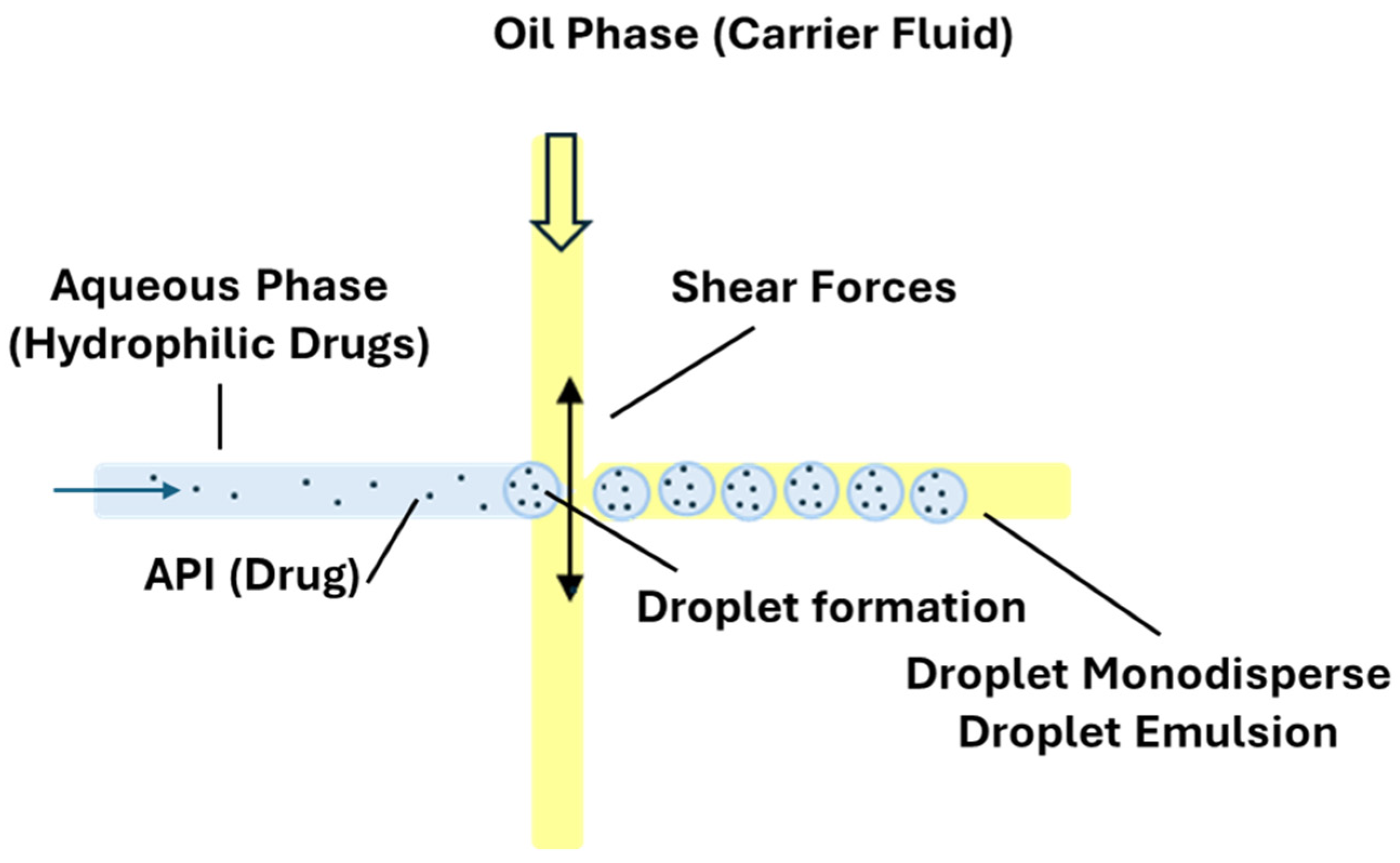
Liposomes can be synthesized using microfluidic platforms (like T-type or Y-type mixers) that allow for the controlled assembly of lipid components. The precise assembly of lipid components often relies on hydrodynamic focusing (Figure 6), where the organic phase is compressed by an aqueous sheath flow to trigger self-assembly. For hydrophilic drugs, droplet-based microfluidics (Figure 7) utilizes shear forces at junctions to create monodisperse emulsions with high encapsulation efficiency.
By manipulating parameters such as flow rate and mixing speed, researchers can precisely tune the physicochemical properties of the resulting liposomes. It offers higher yields and better scale-up feasibility at lower costs compared to traditional large-scale systems and the ability to precisely control particle features leads to improved drug encapsulation efficiency and more predictable pharmacokinetic and pharmacodynamic profiles [24]. Newer modular and cost-effective devices allow for controlled emulsion production, which can be easily repaired or adjusted to change the size of the encapsulated droplets [73]. Beyond synthesis, microfluidic devices can simulate microenvironments (like the tumor environment), offering a more efficient and cost-effective approach for screening the performance of liposomes before they reach human trials [31].
Figure 6.
Hydrodynamic Focusing for nanoparticles generation [74]. The arrows indicate the direction of the core flow (lipid/polymer solution in the organic phase) and the lateral sheath flows (aqueous phase) at the junction point, where controlled mixing leads to the formation of liposomes or nanoparticles.
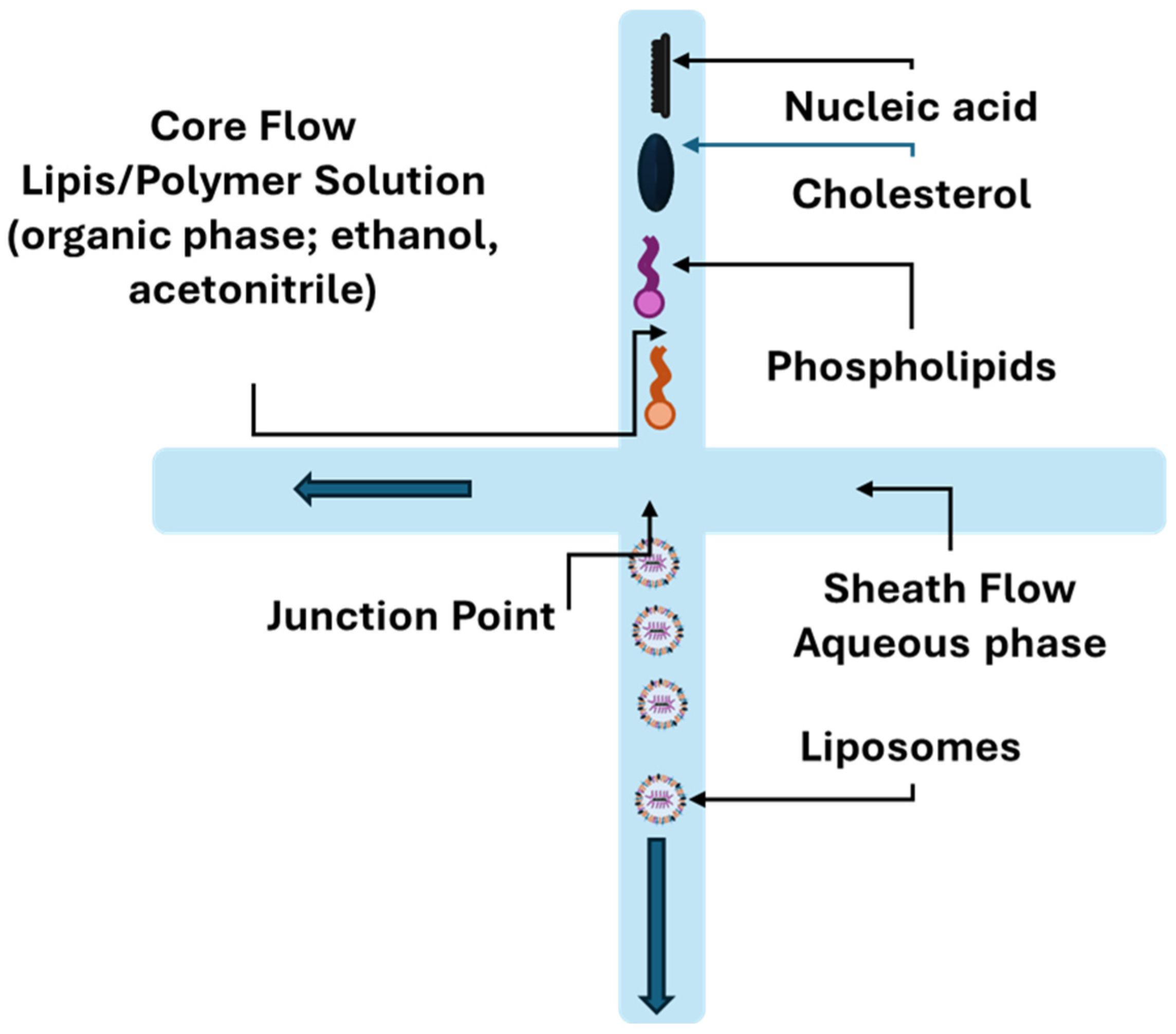
Figure 7.
Droplet-based drug encapsulation [75,76]. The horizontal arrow indicates the flow of the dispersed aqueous phase containing the active pharmaceutical ingredient (API), while the vertical arrows indicate the carrier oil phase. At the junction, shear forces from the oil phase break the aqueous stream into monodisperse droplets, forming a droplet emulsion that serves as the template for drug-loaded particles.
- e.
- Microfluidic Fabrication and Bio-functionalization of Lipid Nanoparticles.
Currently microfluidics is considered the “gold standard” for LNP production. It replaces erratic bulk mixing with controlled laminar flow mixing. Microfluidics ensures, as mentioned before, a narrow size distribution (low polydispersity index). This is critical because the size of an LNP dictates its biodistribution and how easily it can enter a cell [33]. By adjusting flow rate ratios (FRR), researchers can “tune” the size of the LNP to a specific nanometer, optimizing the delivery for different organs (e.g., smaller for tumors, larger for the liver) [24]. Also, integrating Artificial Intelligence with microfluidics allows for the “real-time” screening of LNP libraries, identifying the most effective formulations for personalized medicine [77]. For LNPs production, the components are mixed using chaotic mixing in a microfluidic device. The mixture typically includes an ionizable lipid that facilitates nucleic acid encapsulation through electrostatic interactions, auxiliary lipids that enhance LNP stability and fusogenicity, cholesterol that decreases permeability and increases stability, and polyethylene glycol (PEG) lipid, which prevents nonspecific protein uptake and particle aggregation, exhibits mucus-penetrating properties, and controls LNP size. The inclusion of a biomimetic target molecule (a target cell-specific ligand, e.g., CD47, obtained externally from various cellular sources) aims to bind to a cognate acceptor or surface interactor on a specific cell type. This process, known as nanoparticle surface engineering or functionalization, yields ligand-functionalized LNPs tailored for cell-specific targeting [9].
Table 3.
Comparative of traditional versus microfluidic encapsulation and their performance.
- f.
- Strategic carrier selection
The clinical efficacy of microfluidic-based drug delivery systems is fundamentally dictated by the alignment between the physicochemical properties of the cargo and the architectural design of the carrier (Table 3). According to recent advances (2020–2025), Liposomes remains the preferred platform for hydrophilic APIs due to their versatile aqueous core, whereas Lipid Nanoparticles (LNPs) have established a new benchmark for the encapsulation of lipophilic compounds and fragile genetic material, such as mRNA, by utilizing a dense lipid matrix that enhances payload protection [36,63]. Furthermore, the implementation of Hydrogel Microspheres and core–shell architecture has proven essential for biologics and heat-sensitive proteins, providing a biomimetic environment that prevents enzymatic degradation [53,79]. This strategic selection, facilitated by the high-throughput and precise mixing control of microfluidic devices, not only optimizes encapsulation efficiency but also ensures a predictable controlled release profile, which is critical for mitigating the “Peak and Trough” phenomenon in personalized therapies [34].
To streamline the translational process of drug formulation, a strategic framework for carrier selection is proposed based on the physicochemical signature of the therapeutic cargo (Figure 4). This decision-making workflow prioritizes the solubility and molecular complexity of the active pharmaceutical ingredient (API) to determine the most compatible encapsulation architecture. While hydrophilic agents are ideally suited for the aqueous compartments of liposomes and microgels, lipophilic compounds and genetic materials—such as mRNA—demand the dense, protective environment provided by Lipid Nanoparticles (LNPs). By aligning these requirements with specific microfluidic fabrication paradigms, such as droplet-based or chaotic mixing systems, researchers can ensure optimal encapsulation efficiency and predictable release kinetics, as synthesized in the accompanying decision tree.
The choice of carrier should therefore consider not only the physicochemical properties of the cargo but also the structural architecture of the delivery system, as summarized in Figure 3 and Table 3.
For water-soluble small molecules, He et al. demonstrated that microfluidic production of 5-fluorouracil-loaded chitosan microspheres achieved an encapsulation efficiency of up to 83.4%, offering a more efficient and reproducible alternative to conventional emulsion-based methods. The system maintained a drug loading between 3.20% and 4.17% while achieving excellent mono dispersity, characterized by a coefficient of variation (CV) below 5.0% [80]. Using a three-phase glass-capillary microfluidic device, Dou et al. engineered core–shell PLGA microspheres for leuprolide acetate and showed that increasing shell thickness raised the encapsulation efficiency from 65.5% to 87.7%, while reducing the initial burst release from 59.2% to 23.5% and extending the release duration from ≈30 to 70 days [81].
Recent reports further highlight how microfluidic platforms are being translated from benchtop formulation tools into scalable manufacturing systems and clinically relevant applications. Multi-layer 3D-printed microfluidic chips have enabled ultra-high-throughput production of nanoliposomes while preserving narrow size distributions and excellent batch-to-batch reproducibility, addressing one of the main concerns regarding the throughput of microfluidic synthesis [82]. Likewise, 3D-printed microfluidic devices have been used for the high-throughput production of lipid nanoparticles encapsulating SARS-CoV-2 spike protein mRNA, achieving tight control over particle size, polydispersity and encapsulation efficiency in a vaccine-relevant context [83]. Beyond chip architecture, fully automated microfluidic systems have been designed to standardize the production of lipid nanoparticles for gene delivery, reducing operator-dependent variability and improving run-to-run consistency in key critical quality attributes [84]. Together, these studies provide concrete evidence that microfluidic-assisted encapsulation can meet both the precision and the scalability requirements of advanced nanomedicine manufacturing.
4. Discussion
Several reviews have previously discussed microfluidic platforms for drug delivery, including broad overviews of microfluidic devices for drug screening and carrier production for decade-spanning surveys of microfluidic platforms for the synthesis of enhanced carriers [85]. However, most of these works focus either on device design and general microfluidics trends or on drug screening applications, without systematically dissecting how different microfluidic architectures perform across specific carrier classes (liposomes, LNPs, PNPs, microspheres, hydrogels) and quantitative encapsulation and release metrics. In contrast, the present review applies a PRISMA-based strategy centered on microfluidic-assisted encapsulation and controlled release between 2020 and 2025, explicitly comparing particle size distributions, polydispersity indices, encapsulation efficiencies and release profiles across carriers and platforms. By integrating this quantitative analysis with recent advances in 3D-printed and automated microfluidic systems for scalable manufacturing and clinically oriented applications [71,72,82,83,84], the review provides a mechanistic and application-focused perspective that complements and extends prior narrative reviews.
The migration toward microfluidic platforms represents a paradigm-shift in precision medicine, yet it is not without significant debate. A primary strength of this technology is the unprecedented level of control over drug delivery systems. Empirical data indicates that microfluidic-produced carriers exhibit a 20–30% higher encapsulation efficiency compared to traditional bulk methods, a factor that, combined with the ability to respond to dynamic environments (pH, temperature, and enzyme activity), ensures precise drug efficacy [42]. Furthermore, the democratization of device fabrication via SLA 3D printing has significantly lowered the barrier to entry, allowing research teams to prototype customized chips without the prohibitive costs of traditional photolithography [63,82].
However, several limitations in the current evidence must be addressed. A critical review of the literature reveals a high degree of heterogeneity in the drug models used across studies, which complicates the execution of quantitative meta-analyses. Moreover, most contemporary research is confined to laboratory-scale flow rates (mL/min). The challenge of “massive parallelization” or “numbering-up” for industrial-scale throughput remains partially unaddressed, as the extreme complexity of fluid distribution in parallel systems may hinder the robustness required for mass production [72]. The microfluidic device production methods described in Table 1 are best suited to laboratory scale, where the ability to easily and quickly create multiple prototypes is prioritized over cost per chip. However, for mass production, injection molding is the preferred method. Nevertheless, SLA 3D printing is gaining ground in microfluidic device production because it allows for maintaining the same production system throughout the scaling process. Its main advantages include lower initial costs, as printers are becoming increasingly affordable; the feasibility of producing small batches (between 100 and 1000 units); high resolution (channels up to ~50–100 µm with specialized resins); and the ability to create 3D geometries impossible to achieve with molding. The main disadvantage is obtaining biocompatible resins that do not release material to the flowing liquid, thus contaminating the drug being encapsulated [52]. The transition from laboratory-scale prototyping to industrial-scale manufacturing is intrinsically linked to the evolution of device fabrication methodologies (Figure 8). While polydimethylsiloxane (PDMS) remains the gold standard for high-resolution fundamental research due to its gas permeability and optical clarity, its reliance on specialized cleanroom facilities and manual labor presents significant bottlenecks for mass production. In contrast, emerging additive manufacturing techniques, particularly high-resolution SLA and LCD 3D printing, offer a disruptive alternative by enabling the direct translation of CAD designs into functional devices without the need for expensive master molds. As illustrated in Figure 8, this shift not only reduces capital expenditure (CAPEX) but also facilitates the rapid ‘numbering-up’ of parallelized microreactors, a crucial step for the cost-effective production of standardized drug encapsulation platforms in clinical settings.
Figure 8.
Evolutionary workflow of microfluidic device fabrication. The diagram contrasts the multi-step, cleanroom-dependent process of traditional soft lithography (PDMS) (A) with the streamlined, digital workflow of modern additive manufacturing (3D printing) (B). Key parameters such as prototyping speed, chemical resistance, and the feasibility of “numbering-up” for industrial scaling are highlighted to illustrate the shift toward democratized microfluidic production. The blue arrow indicates “full process”. * CAD or any other microfluidic device design software. Colored boxes are used only to distinguish individual steps within each workflow.
From an economic perspective, the necessity of microfluidics is also debatable. For low-cost drugs with broad therapeutic windows, the precision of these systems may be an unnecessary expenditure. Its true clinical value lies in high-value therapeutics or precision therapies where particle size is the definitive factor for crossing biological barriers, such as the blood–brain barrier [70,83,86]. Furthermore, while mono dispersity is often cited as the “gold standard”, [10] the potential therapeutic benefits of controlled polydispersity to mimic circadian rhythms remain an open question [87]. Finally, biosafety concerns regarding nanotoxicity and the accumulation of degradation byproducts in sensitive areas (e.g., the peritoneal cavity) persist, regardless of the elegance of the manufacturing technique [13].
5. Conclusions
The future of microfluidics relies increasingly on the integration of advanced computational modeling and predictive analytics. These digital tools allow for the precise determination of final particle sizes based on initial flow parameters, effectively replacing traditional trial-and-error synthesis with data-driven optimization [88,89]. As industry shifts toward high-concentration, low-volume, and self-administered formulations, microfluidic platforms provide the necessary standardization to enhance patient adherence and safety.
Although the present review focuses on microfluidic-assisted encapsulation and controlled release, recent work has extended microfluidic platforms toward organoid-based disease models and gene-editing delivery, which are beyond the quantitative scope of this analysis but represent key translational directions.
In summary, while microfluidics provides superior standardization and structural control over traditional methods, the field must still overcome the hurdles of industrial scalability and the unpredictable nature of the “protein corona” in vivo. However, as discussed earlier in this work, numerous strategies exist to minimize this effect, also based on the advantages offered by microfluidics.
The transition from laboratory success to a global therapeutic revolution will depend on balancing this technical precision with scalable simplicity. Ultimately, microfluidics serves not just as a manufacturing tool, but as a gateway to truly personalized, point-of-care medicine.
Supplementary Materials
The following supporting information can be downloaded at: https://www.mdpi.com/article/10.3390/jpbi3020013/s1, Figure S1: PRISMA 2020 flow diagram for updated systematic reviews which included searches of databases, registers and other sources and Table S1: PRISMA 2020 Checklist.
Author Contributions
L.D.B., M.A.C., M.V.D. and M.C.M.C. have contributed equally to all aspects of this work, including conceptualization, methodology, validation, formal analysis, investigation, resources, data curation, writing (original draft, review, and editing), visualization, supervision, and project administration. M.C.M.C. and M.V.D. were responsible for funding acquisition. All authors have read and agreed to the published version of the manuscript.
Funding
Consejo Nacional de Investigación de Científicas y Técnicas, PIP: 11220210100801CO and Universidad de Buenos Aires, UBACyT 20020220100196BA, 2023–2026.
Data Availability Statement
No new data were created in this study. The protocol and PRISMA 2020 documentation for the systematic review are available in the Open Science Framework (OSF) registration at https://osf.io/jk2xv. Additional information extracted from the included studies can be obtained from the corresponding author upon reasonable request.
Acknowledgments
The authors would like to thank the Biomaterials for Prostheses, Tissue Engineering and Microfluidics Group of the Institute of Biomedical Engineering and the Porous Media Group, both belonging to the Faculty of Engineering of the University of Buenos Aires, for their support in the development of this work. L.D.B., M.A.C., M.V.D., and M.C.M.C. are researchers of the CONICET. L.D.B., M.A.C. and M.V.D, are researchers of the IFADyFE IRL 2027.
Conflicts of Interest
The authors declare no conflicts of interest. The funders had no role in the design of the study; in the collection, analyses, or interpretation of data; in the writing of the manuscript; or in the decision to publish the results.
Abbreviations
The following abbreviations are used in this manuscript:
| API | Active Pharmaceutical Ingredient |
| CAD | Computer-Aided Design |
| cGMP | current Good Manufacturing Practice |
| CAPEX | capital expenditure |
| CRISPR-Cas9 | Clustered Regularly Interspaced Short Palindromic Repeats-associated protein 9 |
| CSNP | Core–Shell Nanoparticle |
| CV | coefficient of variation |
| DNA | Deoxyribonucleic acid |
| FGF19 | Fibroblast Growth Factor 19 |
| FRR | flow rate ratios |
| LCD | Liquid Crystal Display |
| LNP | Lipid Nanoparticle |
| LOC | Laboratory-on-a-Chip |
| LPN | lipid–polymer nanoparticles |
| MFFD | Microfluidic Flow-Focusing Device |
| mRNA | messenger Ribonucleic Acid |
| PACA | Poly(alkyl cyanoacrylate) |
| PDI | Polydispersity Index |
| PDMS | Polydimethylsiloxane |
| PEG | Polyethylene glycol (used in PEGylated lipids) |
| PLGA | poly(lactic-co-glycolic) acid |
| PNP | Polymeric Nanoparticle |
| PoC | Point-of-Care |
| PRISMA | Preferred Reporting Items for Systematic Reviews and Meta-Analyses |
| Re | Reynolds number |
| RNA | Ribonucleic Acid |
| siRNA | small interfering Ribonucleic Acid |
| SLA | Stereolithography |
| SLN | Solid Lipid Nanoparticle |
| W/O/W | Water-in-Oil-in-Water |
References
- Adepu, S.; Ramakrishna, S. Controlled Drug Delivery Systems: Current Status and Future Directions. Molecules 2021, 26, 5905. [Google Scholar] [CrossRef] [Scilit]
- Lee, Y.J.; Kim, M.S. Advances in drug-loaded microspheres for targeted, controlled, and sustained drug delivery: Potential, applications, and future directions. Biomed. Pharmacother. 2025, 189, 118244. [Google Scholar] [CrossRef] [Scilit]
- Rojas, K.; Verdugo-Molinares, M.G.; Vallejo-Cardona, A.A. Use of encapsulating polymers of active compounds in the pharmaceutical and food industry. Food Chem. Adv. 2024, 4, 100619. [Google Scholar] [CrossRef] [Scilit]
- Klojdová, I.; Milota, T.; Smetanová, J.; Stathopoulos, C. Encapsulation: A Strategy to Deliver Therapeutics and Bioactive Compounds? Pharmaceuticals 2023, 16, 362. [Google Scholar] [CrossRef] [Scilit]
- Van Eyssen, S.R.; Kavaz, D. Surfactant-driven modulation of protein corona on solid lipid nanoparticles: Insights including molecular docking studies. BMC Pharmacol. Toxicol. 2025, 26, 181. [Google Scholar] [CrossRef] [Scilit]
- Shaw, J.R.; Vaidya, R.; Xu, F.; Dharmaraj, S.; Pearson, R.M. Microfluidics-generated PLA nanoparticles: Impact of purification method on macrophage interactions, anti-inflammatory effects, biodistribution, and protein corona formation. RSC Pharm. 2025, 2, 135–146. [Google Scholar] [CrossRef] [Scilit]
- Kumar, A.; Purohit, B.; Mahato, K.; Chandra, P. Advance Engineered Nanomaterials in Point-of-care Immunosensing for Biomedical Diagnostics. In Immunosensors; Ahmed, M.U., Zourob, M., Tamiya, E., Eds.; The Royal Society of Chemistry: London, UK, 2019; pp. 238–266. [Google Scholar] [CrossRef] [Scilit]
- Page, M.J.; McKenzie, J.E.; Bossuyt, P.M.; Boutron, I.; Hoffmann, T.C.; Mulrow, C.D.; Shamseer, L.; Tetzlaff, J.M.; Akl, E.A.; Brennan, S.E.; et al. The PRISMA 2020 statement: An updated guideline for reporting systematic reviews. BMJ 2021, 372, n71. [Google Scholar] [CrossRef] [Scilit] [PubMed]
- Puccetti, M.; Pariano, M.; Schoubben, A.; Giovagnoli, S.; Ricci, M. Biologics, theranostics, and personalized medicine in drug delivery systems. Pharmacol. Res. 2024, 201, 107086. [Google Scholar] [CrossRef] [Scilit]
- Monika, K.; Vijetha, K.A. Microspheres and their applications in drug delivery system. GSC Biol. Pharm. Sci. 2023, 22, 001–009. [Google Scholar] [CrossRef] [Scilit]
- Pattanayak, S.; Kanthal, L.K.; Afnan, T.; Shukla, S.; Panda, P.K. Preparation and Evaluation of Ketoprofen Loaded Mucoadhesive Microspheres. J. Drug Deliv. Ther. 2024, 14, 4–8. [Google Scholar] [CrossRef] [Scilit]
- Kállai-Szabó, N.; Farkas, D.; Lengyel, M.; Basa, B.; Fleck, C.; Antal, I. Microparticles and multi-unit systems for advanced drug delivery. Eur. J. Pharm. Sci. 2024, 194, 106704. [Google Scholar] [CrossRef] [Scilit]
- Fleten, K.G.; Hyldbakk, A.; Einen, C.; Benjakul, S.; Strand, B.L.; Davies, C.D.L.; Mørch, Ý.; Flatmark, K. Alginate Microsphere Encapsulation of Drug-Loaded Nanoparticles: A Novel Strategy for Intraperitoneal Drug Delivery. Mar. Drugs 2022, 20, 744. [Google Scholar] [CrossRef] [Scilit] [PubMed]
- Wolska, E.; Sadowska, K. Drug Release from Lipid Microparticles—Insights into Drug Incorporation and the Influence of Physiological Factors. Pharmaceutics 2024, 16, 545. [Google Scholar] [CrossRef] [Scilit] [PubMed]
- Aboelela, S.S.; Ibrahim, M.; Badruddoza, A.Z.M.; Tran, V.; Ferri, J.K.; Roper, T.D. Encapsulation of a highly hydrophilic drug in polymeric particles: A comparative study of batch and microfluidic processes. Int. J. Pharm. 2021, 606, 120906. [Google Scholar] [CrossRef] [Scilit] [PubMed]
- Ribeiro, M.M.; Simões, M.; Vitorino, C.; Mascarenhas-Melo, F. Physical crosslinking of hydrogels: The potential of dynamic and reversible bonds in burn care. Coord. Chem. Rev. 2025, 542, 216868. [Google Scholar] [CrossRef] [Scilit]
- Wang, J.; Zhuang, S. Chitosan-based materials: Preparation, modification and application. J. Clean. Prod. 2022, 355, 131825. [Google Scholar] [CrossRef] [Scilit]
- Naranjo-Alcazar, R.; Bendix, S.; Groth, T.; Gallego Ferrer, G. Research Progress in Enzymatically Cross-Linked Hydrogels as Injectable Systems for Bioprinting and Tissue Engineering. Gels 2023, 9, 230. [Google Scholar] [CrossRef] [Scilit]
- Taaca, K.L.M.; Prieto, E.I.; Vasquez, M.R. Current Trends in Biomedical Hydrogels: From Traditional Crosslinking to Plasma-Assisted Synthesis. Polymers 2022, 14, 2560. [Google Scholar] [CrossRef] [Scilit]
- Nanda, D.; Behera, D.; Pattnaik, S.S.; Behera, A.K. Advances in natural polymer-based hydrogels: Synthesis, applications, and future directions in biomedical and environmental fields. Discov. Polym. 2025, 2, 6. [Google Scholar] [CrossRef] [Scilit]
- Hinojosa-Ventura, G.; Acosta-Cuevas, J.M.; Velázquez-Carriles, C.A.; Navarro-López, D.E.; López-Alvarez, M.Á.; Ortega-de La Rosa, N.D.; Silva-Jara, J.M. From Basic to Breakthroughs: The Journey of Microfluidic Devices in Hydrogel Droplet Generation. Gels 2025, 11, 309. [Google Scholar] [CrossRef] [Scilit]
- Velasquez, S.T.R.; Belluati, A.; Tervoort, E.; Mattich, I.; Hertel, B.; Russell, S.; Gouveia, M.G.; Grysan, P.; Mugemana, C.; Studart, A.R.; et al. Microfluidically Produced Microcapsules with Amphiphilic Polymer Conetwork Shells. Adv. Mater. Technol. 2024, 9, 2400109. [Google Scholar] [CrossRef] [Scilit]
- Nunziata, G.; Borroni, A.; Rossi, F. Advanced microfluidic strategies for core-shell nanoparticles: The next-generation of polymeric and lipid-based drug nanocarriers. Chem. Eng. J. Adv. 2025, 22, 100759. [Google Scholar] [CrossRef] [Scilit]
- Jia, F.; Gao, Y.; Wang, H. Recent Advances in Drug Delivery System Fabricated by Microfluidics for Disease Therapy. Bioengineering 2022, 9, 625. [Google Scholar] [CrossRef] [Scilit]
- Yazdian Kashani, S.; Afzalian, A.; Shirinichi, F.; Keshavarz Moraveji, M. Microfluidics for core–shell drug carrier particles–a review. RSC Adv. 2021, 11, 229–249. [Google Scholar] [CrossRef] [Scilit]
- Caddeo, C.; Nigro, I.; Chiummiento, L.; Funicello, M.; Lupattelli, P.; Santarsiere, A.; Fernàndez-Busquets, X.; Valenti, D.; Rosa, E.; Miglionico, R.; et al. A novel aminohydroxy sulfonamide formulated in PEGylated liposomes with potential antitumor activity. J. Drug Deliv. Sci. Technol. 2025, 106, 106739. [Google Scholar] [CrossRef] [Scilit]
- Alaqabani, H.; Hammad, A.; Abosnwber, Y.; Perrie, Y. Novel microfluidic development of pH-responsive hybrid liposomes: In vitro and in vivo assessment for enhanced wound Healing. Int. J. Pharm. 2024, 667, 124884. [Google Scholar] [CrossRef] [Scilit]
- Zhong, J.; Xia, B.; Shan, S.; Zheng, A.; Zhang, S.; Chen, J.; Liang, X.-J. High-quality milk exosomes as oral drug delivery system. Biomaterials 2021, 277, 121126. [Google Scholar] [CrossRef] [Scilit]
- Javid-Naderi, M.J.; Mousavi Shaegh, S.A. Advanced microfluidic techniques for the preparation of solid lipid nanoparticles: Innovations and biomedical applications. Int. J. Pharm. X 2025, 10, 100399. [Google Scholar] [CrossRef] [Scilit] [PubMed]
- Zhang, S.; Sims, J.; Mehochko, I.; Zolovick, R.; Kwak, T.; Staples, A. Design and characterization of 3D-printed hollow microneedle arrays for transdermal insulin delivery. AIP Adv. 2024, 14, 065234. [Google Scholar] [CrossRef] [Scilit]
- Gimondi, S.; Guimarães, C.F.; Vieira, S.F.; Gonçalves, V.M.F.; Tiritan, M.E.; Reis, R.L.; Ferreira, H.; Neves, N.M. Microfluidic mixing system for precise PLGA-PEG nanoparticles size control. Nanomed. Nanotechnol. Biol. Med. 2022, 40, 102482. [Google Scholar] [CrossRef] [Scilit] [PubMed]
- López-Cerdá, S.; Fontana, F.; Wang, S.; Correia, A.; Molinaro, G.; Tello, R.P.; Hirvonen, J.; Celia, C.; Barreto, G.; Santos, H.A. Development of siRNA and Budesonide Dual-Loaded Hybrid Lipid–Polymer Nanoparticles by Microfluidics Technology as a Platform for Dual Drug Delivery to Macrophages: An In Vitro Mechanistic Study. Adv. Ther. 2023, 6, 2300048. [Google Scholar] [CrossRef] [Scilit]
- Vogelaar, A.; Marcotte, S.; Cheng, J.; Oluoch, B.; Zaro, J. Use of Microfluidics to Prepare Lipid-Based Nanocarriers. Pharmaceutics 2023, 15, 1053. [Google Scholar] [CrossRef] [Scilit]
- Cong, H.; Zhang, N. Perspectives in translating microfluidic devices from laboratory prototyping into scale-up production. Biomicrofluidics 2022, 16, 021301. [Google Scholar] [CrossRef] [Scilit]
- Uzakova, A.B.; Yergaliyeva, E.M.; Yerlanuly, A.; Mukatayeva, Z.S. A Systematic Review of Advanced Drug Delivery Systems: Engineering Strategies, Barrier Penetration, and Clinical Progress (2016–April 2025). Pharmaceutics 2025, 18, 11. [Google Scholar] [CrossRef] [Scilit]
- Kara, A.; Ongoren, B.; Anaya, B.J.; Lalatsa, A.; Serrano, D.R. Continuous manufacturing of nanomedicines using 3D-printed microfluidic devices. Appl. Mater. Today 2025, 43, 102672. [Google Scholar] [CrossRef] [Scilit]
- Yue, J.; Liu, Z.; Wang, L.; Wang, M.; Pan, G. Recent advances in bioactive hydrogel microspheres: Material engineering strategies and biomedical prospects. Mater. Today Bio 2025, 31, 101614. [Google Scholar] [CrossRef] [Scilit]
- Lee, J.H.; Yeo, Y. Controlled drug release from pharmaceutical nanocarriers. Chem. Eng. Sci. 2015, 125, 75–84. [Google Scholar] [CrossRef] [Scilit]
- Zhang, H.; Yang, J.; Sun, R.; Han, S.; Yang, Z.; Teng, L. Microfluidics for nano-drug delivery systems: From fundamentals to industrialization. Acta Pharm. Sin. B 2023, 13, 3277–3299. [Google Scholar] [CrossRef] [Scilit] [PubMed]
- Bezelya, A.; Küçüktürkmen, B.; Bozkır, A. Microfluidic Devices for Precision Nanoparticle Production. Micro 2023, 3, 822–866. [Google Scholar] [CrossRef] [Scilit]
- Maged, A.; Abdelbaset, R.; Mahmoud, A.A.; Elkasabgy, N.A. Merits and advances of microfluidics in the pharmaceutical field: Design technologies and future prospects. Drug Deliv. 2022, 29, 1549–1570. [Google Scholar] [CrossRef] [Scilit] [PubMed]
- Terry, S.C.; Jerman, J.H.; Angell, J.B. A gas chromatographic air analyzer fabricated on a silicon wafer. IEEE Trans. Electron. Devices 1979, 26, 1880–1886. [Google Scholar] [CrossRef] [Scilit]
- Hu, X.; Zhang, M.-X.; Xu, F.-W.; Fang, Q.-Q.; Cai, J.-Q.; Chen, Y.-Q.; Ma, J.-J.; Tan, W.-Q.; Wang, Y. Preparation Methods of Hydrogel Microspheres and Recent Advances in Their Application for Treating Diabetic Wounds. Int. J. Nanomed. 2025, 20, 10645–10666. [Google Scholar] [CrossRef] [Scilit]
- Hirohata, Y.; Sai, K.; Tange, Y.; Nishiyama, T.; Minato, H.; Suzuki, D.; Itano, T.; Sugiyama, K.; Sugihara-Seki, M. Experimental and numerical study on the inertial migration of hydrogel particles suspended in square channel flows. J. Fluid Mech. 2025, 1019, A22. [Google Scholar] [CrossRef] [Scilit]
- Leung, C.M.; De Haan, P.; Ronaldson-Bouchard, K.; Kim, G.-A.; Ko, J.; Rho, H.S.; Chen, Z.; Habibovic, P.; Jeon, N.L.; Takayama, S.; et al. A guide to the organ-on-a-chip. Nat. Rev. Methods Primers 2022, 2, 33. [Google Scholar] [CrossRef] [Scilit]
- Mitchell, M.J.; Billingsley, M.M.; Haley, R.M.; Wechsler, M.E.; Peppas, N.A.; Langer, R. Engineering precision nanoparticles for drug delivery. Nat. Rev. Drug Discov. 2021, 20, 101–124. [Google Scholar] [CrossRef] [Scilit]
- Mayordomo, N.M.; Zatarain-Beraza, A.; Valerio, F.; Álvarez-Méndez, V.; Turegano, P.; Herranz-García, L.; López De Aguileta, A.; Cattani, N.; Álvarez-Alonso, A.; Fanarraga, M.L. The Protein Corona Paradox: Challenges in Achieving True Biomimetics in Nanomedicines. Biomimetics 2025, 10, 276. [Google Scholar] [CrossRef] [Scilit]
- Srivastava, V.; Parveen, B.; Parveen, R. Artificial Intelligence in Drug Formulation and Development: Applications and Future Prospects. Curr. Drug Metab. 2023, 24, 622–634. [Google Scholar] [CrossRef] [Scilit]
- Van Der Sanden, N.; Paun, R.A.; Yitayew, M.Y.; Boyadjian, O.; Tabrizian, M. An investigation of the effect of the protein corona on the cellular uptake of nanoliposomes under flow conditions using quartz crystal microgravimetry with dissipation. Nanoscale Adv. 2025, 7, 169–184. [Google Scholar] [CrossRef] [Scilit]
- Li, H.; Wang, Y.; Tang, Q.; Yin, D.; Tang, C.; He, E.; Zou, L.; Peng, Q. The protein corona and its effects on nanoparticle-based drug delivery systems. Acta Biomater. 2021, 129, 57–72. [Google Scholar] [CrossRef] [Scilit] [PubMed]
- Shi, D.; Beasock, D.; Fessler, A.; Szebeni, J.; Ljubimova, J.Y.; Afonin, K.A.; Dobrovolskaia, M.A. To PEGylate or not to PEGylate: Immunological properties of nanomedicine’s most popular component, polyethylene glycol and its alternatives. Adv. Drug Deliv. Rev. 2022, 180, 114079. [Google Scholar] [CrossRef] [Scilit] [PubMed]
- Torres-Alvarez, D.; Aguirre-Soto, A. Polydimethylsiloxane chemistry for the fabrication of microfluidics—Perspective on its uniqueness, limitations and alternatives. Mater. Today Proc. 2022, 48, 88–95. [Google Scholar] [CrossRef] [Scilit]
- Lin, C.-H.; Srioudom, J.R.; Sun, W.; Xing, M.; Yan, S.; Yu, L.; Yang, J. The use of hydrogel microspheres as cell and drug delivery carriers for bone, cartilage, and soft tissue regeneration. Biomater. Transl. 2024, 5, 236–256. [Google Scholar] [CrossRef] [Scilit]
- Filion, R.; St-Georges-Robillard, A.; Chaudoir, H.; Ritch, S.; Ndongo, M.; Chua, X.Y.; Laurent, E.; Mes-Masson, A.-M.; Ajji, A.; Gervais, T. Mass fabrication of PDMS microfluidic devices by injection molding and applications in sensitive 3D spheroid and explant culture. Sci. Rep. 2025, 15, 33218. [Google Scholar] [CrossRef] [Scilit] [PubMed]
- Liu, X.; Sun, A.; Brodský, J.; Gablech, I.; Lednický, T.; Vopařilová, P.; Zítka, O.; Zeng, W.; Neužil, P. Microfluidics chips fabrication techniques comparison. Sci. Rep. 2024, 14, 28793. [Google Scholar] [CrossRef] [Scilit] [PubMed]
- Aralekallu, S.; Boddula, R.; Singh, V. Development of glass-based microfluidic devices: A review on its fabrication and biologic applications. Mater. Des. 2023, 225, 111517. [Google Scholar] [CrossRef] [Scilit]
- Scott, S.; Ali, Z. Fabrication Methods for Microfluidic Devices: An Overview. Micromachines 2021, 12, 319. [Google Scholar] [CrossRef] [Scilit] [PubMed]
- Monserrat Lopez, D.; Rottmann, P.; Fussenegger, M.; Lörtscher, E. Silicon-Based 3D Microfluidics for Parallelization of Droplet Generation. Micromachines 2023, 14, 1289. [Google Scholar] [CrossRef] [Scilit]
- Barbosa, F.; Coutinho, P.; Ribeiro, M.P.; Moreira, A.F.; Lourenço, L.M.; Miguel, S.P. Advancements and challenges in SLA-based microfluidic devices for organ-on-chip applications. Mater. Des. 2025, 256, 114254. [Google Scholar] [CrossRef] [Scilit]
- Gyimah, N.; Scheler, O.; Rang, T.; Pardy, T. Can 3D Printing Bring Droplet Microfluidics to Every Lab?—A Systematic Review. Micromachines 2021, 12, 339. [Google Scholar] [CrossRef] [Scilit]
- Kalantarifard, A.; Alizadeh-Haghighi, E.; Elbuken, C. A microfluidic droplet system for ultra-monodisperse droplet generation: A universal approach. Chem. Eng. Sci. 2022, 261, 117947. [Google Scholar] [CrossRef] [Scilit]
- Fergola, A.; Ballesio, A.; Frascella, F.; Napione, L.; Cocuzza, M.; Marasso, S.L. Droplet Generation and Manipulation in Microfluidics: A Comprehensive Overview of Passive and Active Strategies. Biosensors 2025, 15, 345. [Google Scholar] [CrossRef] [Scilit] [PubMed]
- Xu, S.; Nisisako, T. Polymer Capsules with Tunable Shell Thickness Synthesized via Janus-to-core shell Transition of Biphasic Droplets Produced in a Microfluidic Flow-Focusing Device. Sci. Rep. 2020, 10, 4549. [Google Scholar] [CrossRef] [Scilit]
- Forigua, A.; Kirsch, R.L.; Willerth, S.M.; Elvira, K.S. Recent advances in the design of microfluidic technologies for the manufacture of drug releasing particles. J. Control. Release 2021, 333, 258–268. [Google Scholar] [CrossRef] [Scilit]
- Niculescu, A.-G.; Mihaiescu, D.E.; Grumezescu, A.M. A Review of Microfluidic Experimental Designs for Nanoparticle Synthesis. Int. J. Mol. Sci. 2022, 23, 8293. [Google Scholar] [CrossRef] [Scilit]
- Lee, J.; Kim, J.-W.; Kim, S.-H. Microfluidic production of hydrogel-shelled microcapsules and their applications. Curr. Opin. Colloid Interface Sci. 2025, 78, 101936. [Google Scholar] [CrossRef] [Scilit]
- Alavi, S.E.; Alharthi, S.; Alavi, S.F.; Alavi, S.Z.; Zahra, G.E.; Raza, A.; Ebrahimi Shahmabadi, H. Microfluidics for personalized drug delivery. Drug Discov. Today 2024, 29, 103936. [Google Scholar] [CrossRef] [Scilit]
- Mason, H.G.; Hu, C.-H.; Cordova, L.S.; Hakami, R.M.; Veneziano, R. Rapid Prototyping of Microfluidic Devices with Stereolithographic 3D Printing. 2025; preprint. [CrossRef] [Scilit] [PubMed]
- Kuddushi, M.; Kanike, C.; Xu, B.B.; Zhang, X. Recent advances in nanoprecipitation: From mechanistic insights to applications in nanomaterial synthesis. Soft Matter 2025, 21, 2759–2781. [Google Scholar] [CrossRef] [Scilit] [PubMed]
- Guo, J.; Miao, S.; Sun, L.; Zhao, Y.; Gu, X. Bioinspired micro-structured fibers for biomedical applications. Bioact. Mater. 2025, 53, 218–239. [Google Scholar] [CrossRef] [Scilit]
- Chon, C.H.; Kim, J.H.; On, H.; Choi, J.; Lee, S.; Han, E. A microfluidic application for mass production of drug-loaded polymeric microspheres for a long-acting injectable with IVL-DrugFluidic®, a novel microfluidic microsphere manufacturing platform technology. OpenNano 2023, 12, 100153. [Google Scholar] [CrossRef] [Scilit]
- Wang, R.; Wang, F.; Lu, S.; Gao, B.; Kan, Y.; Yuan, T.; Xu, Y.; Yuan, C.; Guo, D.; Fu, W.; et al. Adipose-derived stem cell/FGF19-loaded microfluidic hydrogel microspheres for synergistic restoration of critical ischemic limb. Bioact. Mater. 2023, 27, 394–408. [Google Scholar] [CrossRef] [Scilit]
- Jiang, H.; Liu, Z.; Tang, F.; Cheng, Y.; Tian, W.; Shi, W.; Zhang, J.M.; Zhang, Y. A Modular and Cost-Effective Droplet Microfluidic Device for Controlled Emulsion Production. Polymers 2024, 16, 765. [Google Scholar] [CrossRef] [Scilit]
- Storti, F.; Bonfadini, S.; Criante, L. Simplified 3D hydrodynamic flow focusing for lab-on-chip single particle study. Sci. Rep. 2023, 13, 14671. [Google Scholar] [CrossRef] [Scilit] [PubMed]
- Fan, R.; Wu, J.; Duan, S.; Jin, L.; Zhang, H.; Zhang, C.; Zheng, A. Droplet-based microfluidics for drug delivery applications. Int. J. Pharm. 2024, 663, 124551. [Google Scholar] [CrossRef] [Scilit]
- Trinh, T.N.D.; Do, H.D.K.; Nam, N.N.; Dan, T.T.; Trinh, K.T.L.; Lee, N.Y. Droplet-Based Microfluidics: Applications in Pharmaceuticals. Pharmaceuticals 2023, 16, 937. [Google Scholar] [CrossRef] [Scilit] [PubMed]
- Qiao, D.; Li, H.; Zhang, X.; Chen, X.; Zhang, J.; Zou, J.; Zhao, D.; Zhu, W.; Qian, X.; Li, H. The Convergence of Artificial Intelligence and Microfluidics in Drug Research and Development. Engineering 2025, 55, 125–174. [Google Scholar] [CrossRef] [Scilit]
- Lin, L.; Chung, C.-K. PDMS Microfabrication and Design for Microfluidics and Sustainable Energy Application: Review. Micromachines 2021, 12, 1350. [Google Scholar] [CrossRef] [Scilit] [PubMed]
- Yang, M.; Shi, Y.; Wang, F.; Zhang, X.; Shao, J.; Yang, F.; Sun, H.; Zhang, C.; Zhou, Z.; Huang, J.; et al. Hydrogel Microspheres as Versatile Platforms for Biomedical Research: Design, Properties, and Applications. MedComm 2025, 6, e70423. [Google Scholar] [CrossRef] [Scilit]
- He, T.; Wang, W.; Chen, B.; Wang, J.; Liang, Q.; Chen, B. 5-Fluorouracil monodispersed chitosan microspheres: Microfluidic chip fabrication with crosslinking, characterization, drug release and anticancer activity. Carbohydr. Polym. 2020, 236, 116094. [Google Scholar] [CrossRef] [Scilit]
- Dou, J.; Wei, R.; Jin, X.; Cen, L. Microfluidic Engineering of Core–Shell PLGA Microspheres with Adjustable Shell Thickness for Long-Acting Delivery of Leuprolide Acetate. Langmuir 2026, 42, 11883–11892. [Google Scholar] [CrossRef] [Scilit]
- Shan, H.; Lin, Q.; Wang, D.; Sun, X.; Quan, B.; Chen, X.; Chen, Z. 3D Printed Integrated Multi-Layer Microfluidic Chips for Ultra-High Volumetric Throughput Nanoliposome Preparation. Front. Bioeng. Biotechnol. 2021, 9, 773705. [Google Scholar] [CrossRef] [Scilit] [PubMed]
- Lin, W.S.; Bostic, W.K.V.; Malmstadt, N. 3D-printed microfluidic device for high-throughput production of lipid nanoparticles incorporating SARS-CoV-2 spike protein mRNA. Lab Chip 2023, 24, 162–170. [Google Scholar] [CrossRef] [Scilit]
- Jung, D.; Jang, S.; Park, D.; Bae, N.H.; Han, C.S.; Ryu, S.; Lim, E.-K.; Lee, K.G. Automated Microfluidic Systems Facilitating the Scalable and Reliable Production of Lipid Nanoparticles for Gene Delivery. Biochip J. 2025, 19, 79–90. [Google Scholar] [CrossRef] [Scilit]
- Siavashy, S.; Soltani, M.; Ahmadi, M.; Landi, B.; Mehmanparast, H.; Ghorbani-Bidkorbeh, F. A Comprehensive Review of One Decade of Microfluidic Platforms Applications in Synthesis of Enhanced Carriers Utilized in Controlled Drug Delivery. Adv. Mater. Technol. 2022, 7, 2101615. [Google Scholar] [CrossRef] [Scilit]
- Kumar Thimmaraju, M.; Trivedi, R.; Hemalatha, G.; Thirupathy, B.; Mohathasim Billah, A. Microfluidic revolution and its impact on pharmaceutical materials: A review. Mater. Today Proc. 2023; in press. [CrossRef] [Scilit]
- Qin, X.; Jiang, N.; Liu, C. Biomimetic rhythm programming and intelligent delivery: The BRIGHT transdermal patch revolutionizes chronotherapy for growth hormone treatment. Biomater. Transl. 2025, 6, 226–229. [Google Scholar] [CrossRef] [Scilit]
- Dehne, M.; Neidinger, S.V.; Stark, M.; Adamo, A.C.; Kraus, X.; Färber, N.; Westerhausen, C.; Bahnemann, J. Microfluidic Transfection System and Temperature Strongly Influence the Efficiency of Transient Transfection. ACS Omega 2024, 9, 21637–21646. [Google Scholar] [CrossRef] [Scilit]
- Bas, T.G. Innovative Formulation Strategies for Biosimilars: Trends Focused on Buffer-Free Systems, Safety, Regulatory Alignment, and Intellectual Property Challenges. Pharmaceuticals 2025, 18, 908. [Google Scholar] [CrossRef] [Scilit]
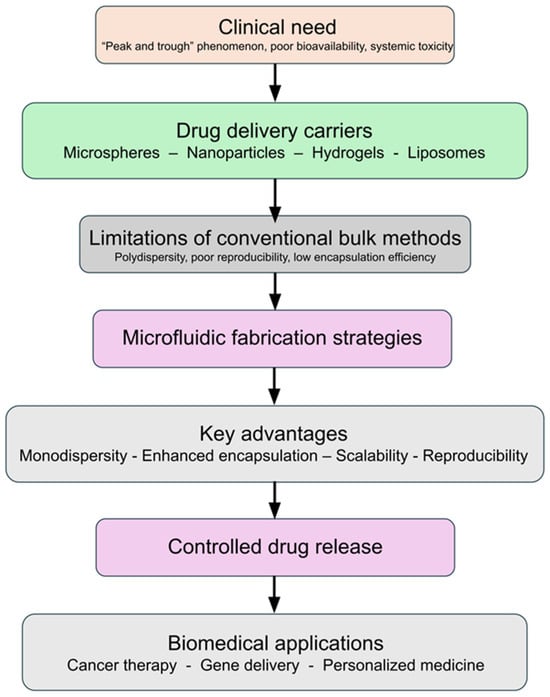
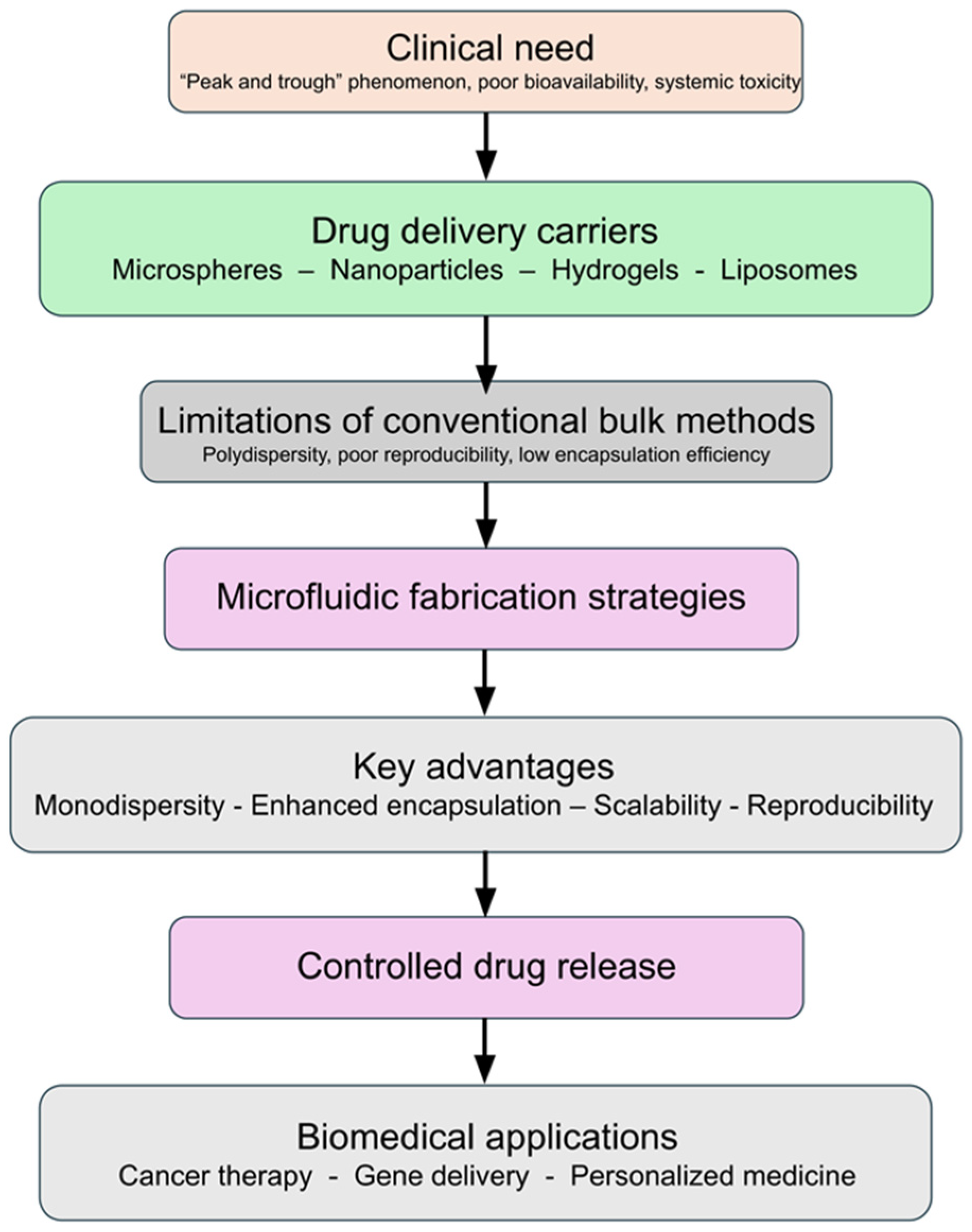
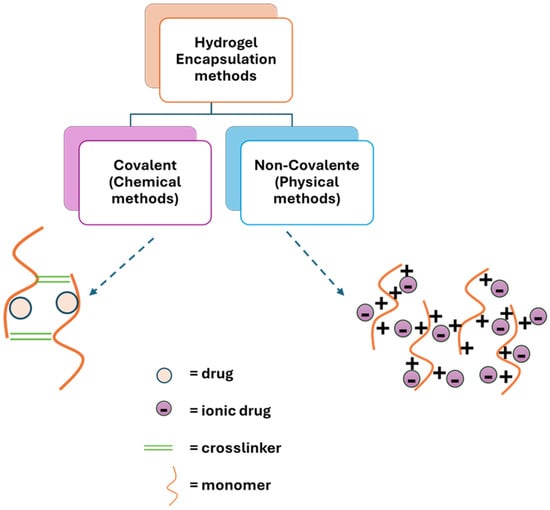
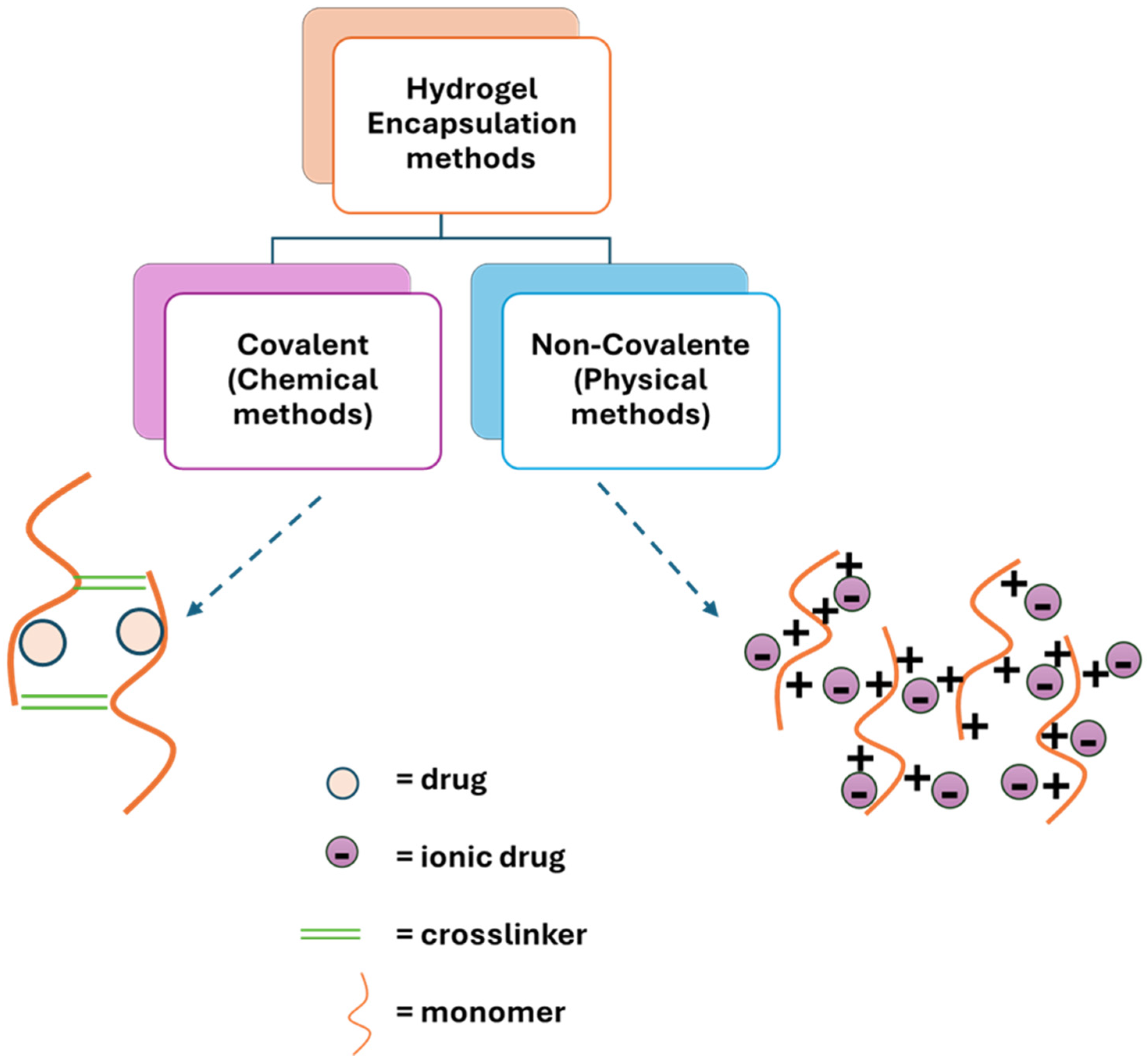
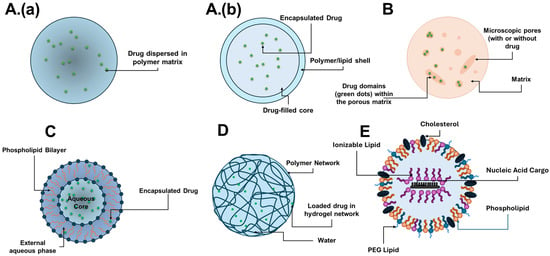
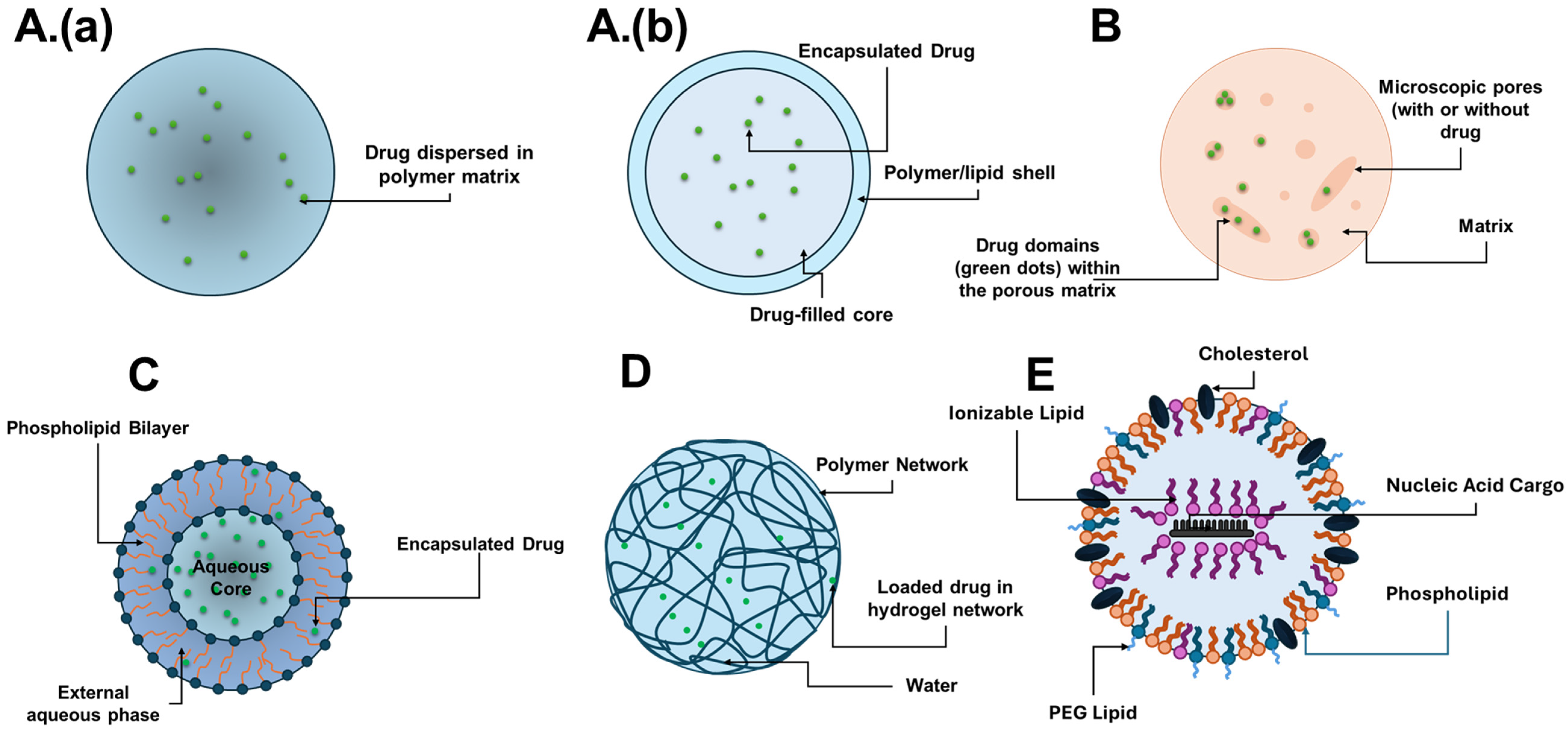
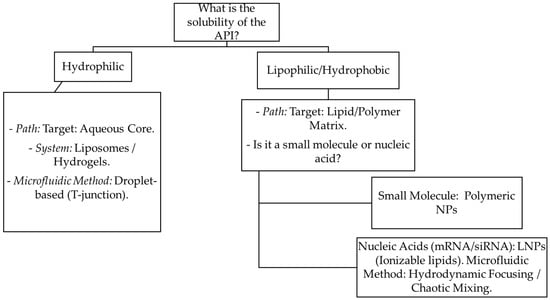
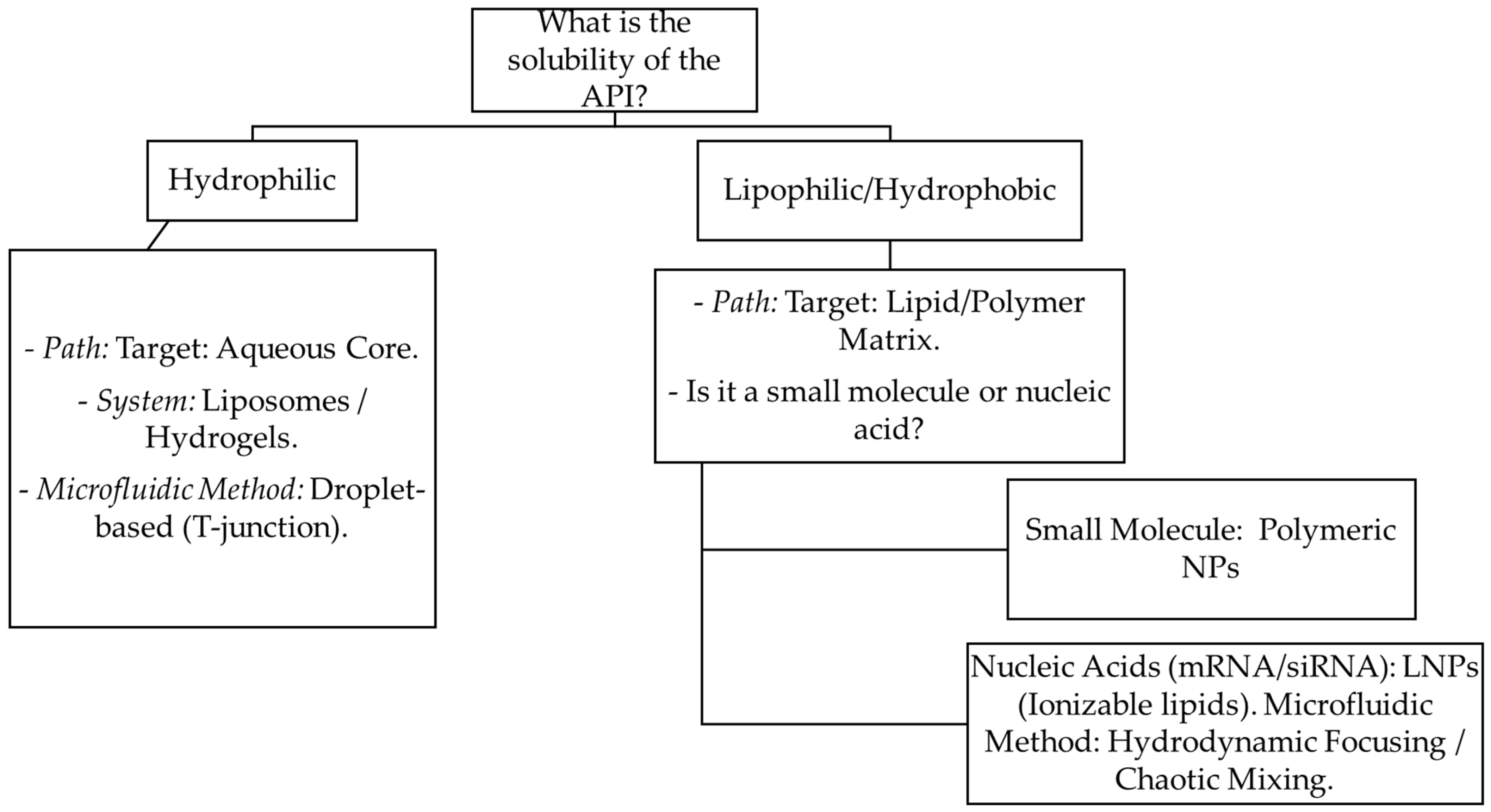
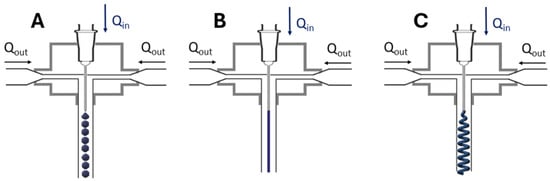
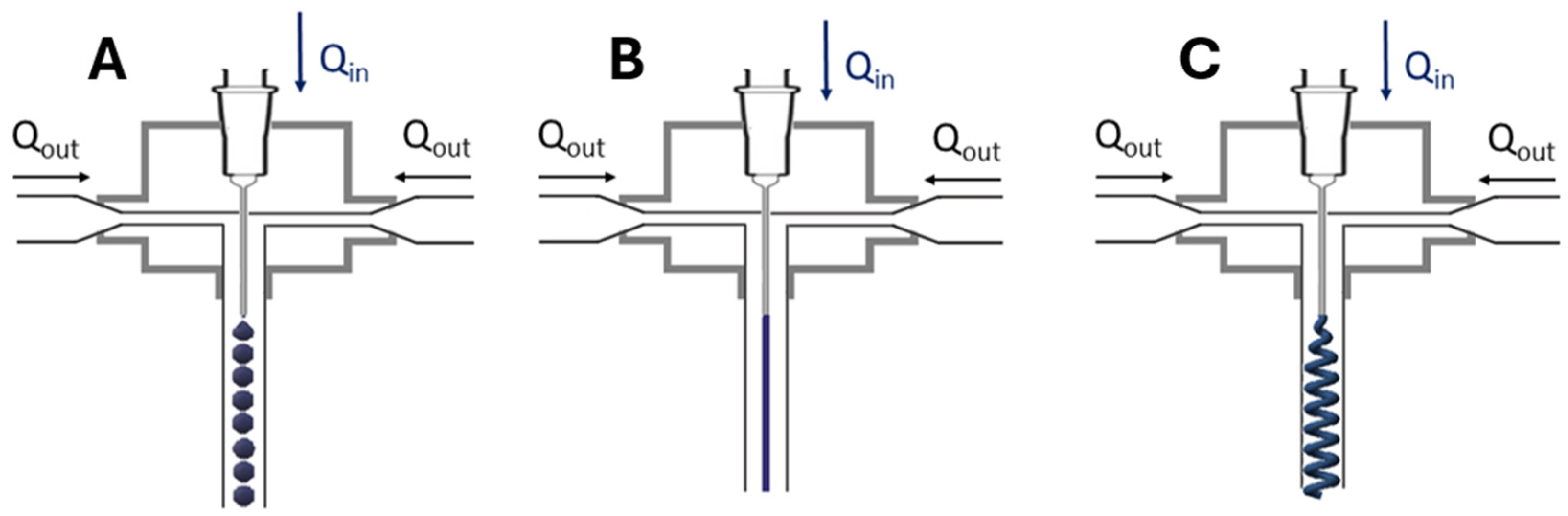
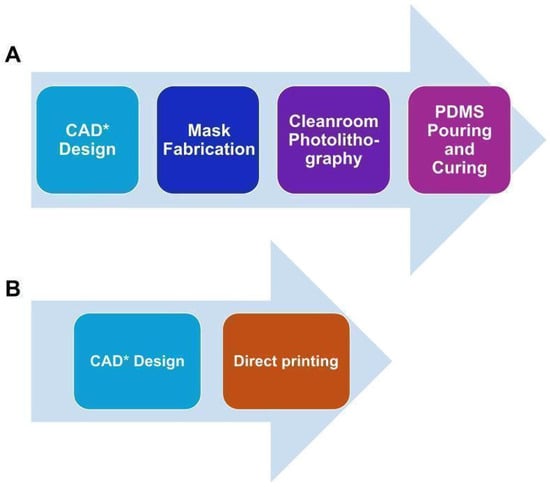
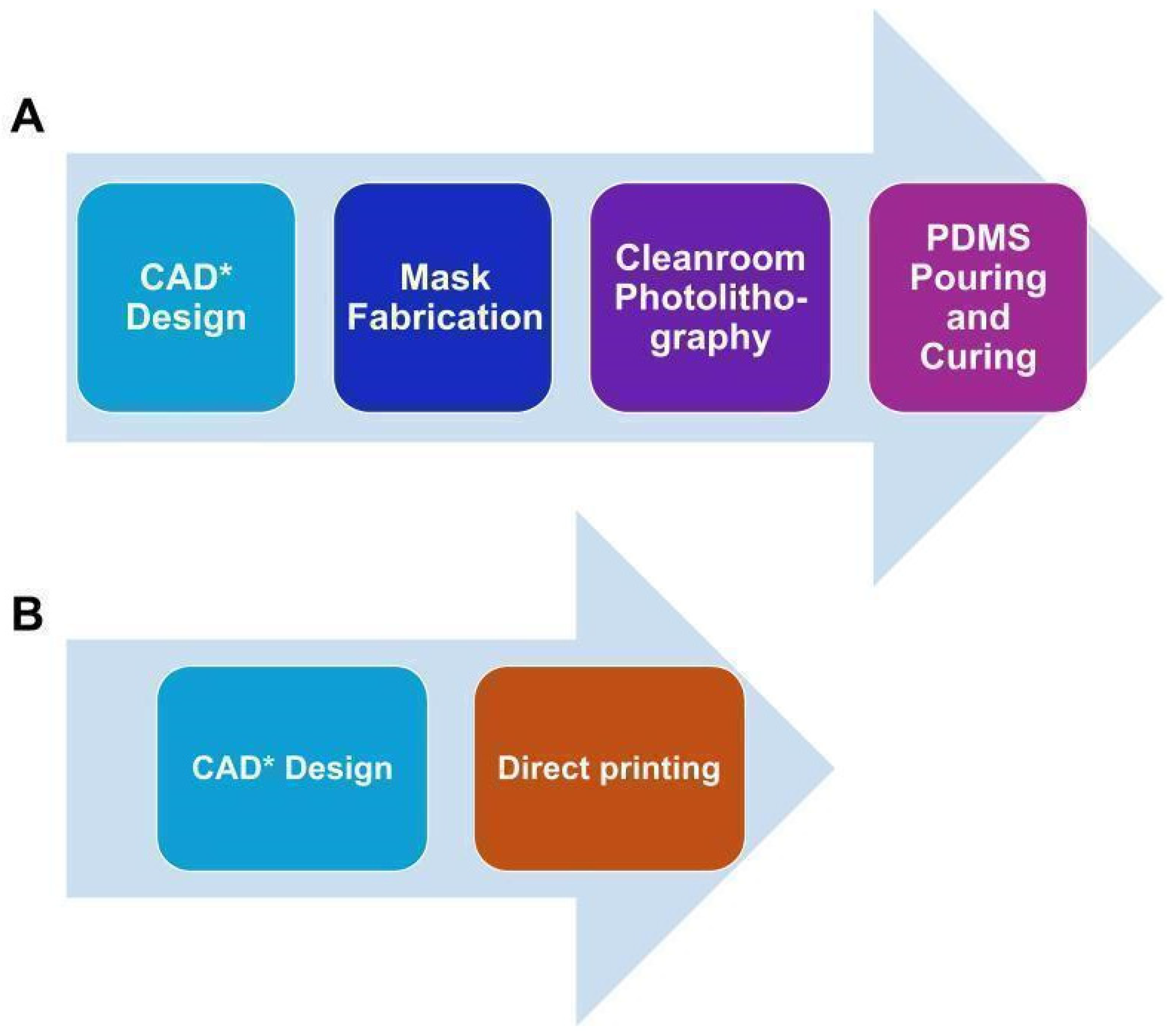

Disclaimer/Publisher’s Note: The statements, opinions and data contained in all publications are solely those of the individual author(s) and contributor(s) and not of MDPI and/or the editor(s). MDPI and/or the editor(s) disclaim responsibility for any injury to people or property resulting from any ideas, methods, instructions or products referred to in the content. |
© 2026 by the authors. Licensee MDPI, Basel, Switzerland. This article is an open access article distributed under the terms and conditions of the Creative Commons Attribution (CC BY) license.