Article

Dogs Under Veterinary Care in Hong Kong (2004–2023): Demographic Changes and Implications of Skull Conformation on Veterinary Service Use

1
Jockey Club College of Veterinary Medicine and Life Sciences, City University of Hong Kong, Hong Kong SAR, China
2
Department of Infectious Diseases and Public Health, Jockey Club College of Veterinary Medicine and Life Sciences, City University of Hong Kong, Hong Kong SAR, China
3
CityU VMC, Sham Shui Po, Kowloon, Hong Kong SAR, China
4
Independent Researcher, Hertford SG14 2TE, UK
5
Department of Veterinary Clinical Sciences, Jockey Club College of Veterinary Medicine and Life Sciences, City University of Hong Kong, Hong Kong SAR, China
6
Centre for Animal Health and Welfare, City University of Hong Kong, Hong Kong SAR, China
*
Author to whom correspondence should be addressed.
These authors contributed equally to this work.
Submission received: 7 November 2025 / Revised: 17 December 2025 / Accepted: 19 December 2025 / Published: 1 February 2026

Abstract

Brachycephalic dogs commonly suffer from breathing difficulties and other chronic health problems, yet strong consumer demand is widely reported. Whether the popularity of brachycephalic breeds persists across different contexts is largely untested. Census data from 1,510,085 canine consultations conducted at a single veterinary hospital from 2004 to 2023 in Hong Kong were collected and analysed. Individual dogs (n = 96,777) were counted once, in the first year of presentation. Males (53.5% to 57.7%) and purebreds (86.2% to 91.2%) predominated each year. Neutered dogs increased from 52% to 70% annually. Poodles were the most popular breed from 2009. Brachycephalic breeds, collectively, declined progressively from 36.3% to 15.4% of the annual population. This trend was exaggerated in dogs < 1-year-old (27.4% to 11.7%). Absolute numbers of common brachycephalic breeds declined, except for French Bulldogs and Pugs. A historical cohort study was conducted with a subset of the data (2016–2023) to investigate the hypothesis that veterinary service use would be higher in brachycephalic breeds compared with other groups. The hypothesis was proven. Relative demand for brachycephalic breeds in Hong Kong is decreasing, with the exception of French Bulldogs and Pugs. Investigating drivers of these observations will inform behaviour change strategies, and facilitate comparisons across different regions.

1. Introduction

Demographic data for owned dog populations serve diverse regional and international stakeholders in public health, planning and policy, veterinary and other animal welfare services. Investigating breed structure is of particular interest because pet choice driven by fashion can promote owner-centric behaviours over the health and welfare of the pet. Such behaviours are exemplified by the increased popularity of brachycephalic breeds reported in UK, parts of Europe, Australia and North America [1,2,3,4,5]. Brachycephalic breeds, including the Chihuahua, Pug, French Bulldog, and Shih Tzu, are at increased risk of serious health problems, including airway obstruction, dental, ophthalmological, neurological, dermatological, and gastrointestinal problems [6,7,8]. The normalisation of resting respiratory distress is one indicator of a concerning disconnect between the human behaviours driving brachycephalic ownership and scientific evidence documenting chronic health problems in dogs with extreme conformation [9,10,11,12]. Brachycephalic breeds also have shorter lifespans than dolichocephalic (long nosed), mesocephalic (medium nosed) and mixed breeds [13,14]. Effective solutions to this complex animal welfare issue are likely to come from multidisciplinary international collaborations informed by research conducted in areas with a variety of cultural, climatic and socioeconomic influences [15].
Hong Kong is an international hub with a population of 7.5 million people [16]. In urban areas, living spaces are generally limited: the median floor area for domestic households is 40 m2, or 15 m2 per person [17]. However, 75% of Hong Kong’s landscape in undeveloped, and protected parks and green spaces comprise around 40% of Hong Kong’s footprint. The population is served by 200 veterinary practices [16], and 1350 veterinarians registered by the Veterinary Surgeon Board of Hong Kong [18].
The extent to which trends in dog ownership in the region reflect those described elsewhere is unclear, with data on dog ownership currently limited. A government survey conducted in 2018 estimated that 221,100 dogs were owned by 5.7% of households [19]. A 2023 industry survey estimated that 7.6 percent of households kept 304,000 dogs [20]. The proportion of dog-owning households in Hong Kong is lower than estimates from the UK (36%) [21], North America (45 to 65%) [22,23] and Italy (25% to 33%) [24,25]. High population density may contribute to lower dog ownership. For example, a UK study reported that dog ownership per capita was lowest in parts of London, the city with the highest population density in the UK [26]. Further, restrictions on dog ownership in public and private housing in Hong Kong may encourage underreporting [27]. However, differences in data sources and methodologies limit direct comparison between studies [28].
Epidemiological tools, such as VetCompass (https://www.vetcompass.org/, accessed on 3 July 2025) and SAVSNET (https://www.liverpool.ac.uk/savsnet/, accessed on 3 July 2025) have been established to obtain data that are broadly representative of pet populations in the UK and Australia (VetCompass only). In the absence of such tools in most regions, including Hong Kong, descriptive analysis of any available sources of population data would be a valuable starting point to gain insights into the demography of dogs presenting for veterinary attention. Extracting long-term, reliable medical records data requires investment in time and expertise for a return that has little direct benefit for the veterinary practice. However, we identified a unique opportunity to access all data available (a census of 20 years) on demographics and some other important variables in one of the longest-running 24 h veterinary hospitals in Hong Kong, that receives pets from across the city. The aims of this study were (a) to describe the dynamic structure of a population of dogs presenting to a single clinic in Hong Kong over 20 years, and (b) to investigate whether the classification of breeds according to cephalic group (brachycephalic, dolichocephalic, mesocephalic or mixed breed) was associated with indicators of veterinary service use.

2. Materials and Methods

2.1. Study Design and Approval

A cross-sectional analysis of deidentified medical records data was conducted for consecutive years over a 20-year period, up to 2023. This dataset was a census of actual observations during the time period and no sampling was involved. In addition, a historical cohort study was designed using a subset of the most recent data (2016–2023) to test the hypothesis that veterinary service use (costs and visit frequency) for brachycephalic breeds would be higher, on average, than for other breed groups. Approval for this research was granted by the Animal Ethics Committee, City University of Hong Kong, (approval number AN-STA-00000336. Date 14 September 2023).

2.2. Data Acquisition and Management

Data were obtained from CityU Veterinary Medical Centre (VMC) (a continuously running business since 1984, established as Peace Avenue Veterinary Clinic) a primary accession and referral centre in Kowloon, Hong Kong. The medical records database (RxWorks; https://software.covetrus.com/apac/veterinary-solutions/rxworks-veterinary-inventory-management/, accessed on 21 December 2025) was searched for canine patients between 1 January 2004 and 31 July 2023 inclusive. The following variables were extracted into Microsoft Excel (version 1808): consultation (visit) identification number (ID), patient ID, breed, date of birth, date of consultation, sex, and neuter status. In addition, for the 7-year period between 1 August 2016 to 31 July 2023 inclusive, the total visit charge, and the charge allocation categories within the invoice for each dog were extracted for each consultation. Data were compiled into a single file and imported into Stata v17 (StataCorp LLC, College Station, TX, USA) for subsequent handling.

2.3. Data Pre-Processing

Data were aggregated at the level of unique patient ID to ensure that each dog appeared only once in the final dataset, in the year of first consultation. Data review was conducted to minimise errors in subsequent analyses. Rows with missing or incorrect “breed” data were excluded, and any misspelling of breed names was corrected. Breed names that indicated crossbreeding of purebreds were classified as mixed breed. Breed size variants (e.g., toy, miniature, giant) were inconsistently recorded so relevant breeds, such as Poodle and Schnauzer, were classified as a single breed category. Breeds were then categorised according to cephalic group—brachycephalic, dolichocephalic, or mesocephalic [2]. Mixed breed was considered as a fourth “cephalic group” to facilitate comparisons.

2.4. Descriptive Statistics and Temporal Trends

The absolute and relative frequency of variables, sex, neuter status, breed and cephalic group, during each year of study were evaluated and presented as tables and figures. To further investigate temporal trends in the acquisition of dogs with different cephalic groups and contributing breeds, a subset of data relating to puppies and juveniles (dogs < 1 year old) over the 20-year study period was examined and relevant graphs were generated.

2.5. Analysis of Veterinary Costs and Visit Frequency by Cephalic Group

An historical cohort study was designed to test the hypothesis that brachycephalic breed would be associated with greater use of veterinary services, both financial and the number of visits, than other cephalic groups, on average. The cohort study period began when the current financial reporting system was adopted on 1 August 2016, spanning seven years until the end of the data collection period, 31 July 2023. Cost categories used in the previous financial reporting system differed from those adopted in the newer system. Hence, a period of seven years was imposed by the requirement to collect data that were consistent across the cohort study. There were four cohorts as defined in Section 2.3; brachycephalic, mesocephalic, dolichocephalic and mixed. The term “veterinary costs” here was intended to reflect health-related financial burden. To generate this outcome of interest (veterinary costs), charge allocation categories unrelated to health issues (specifically, sales items, health certification, and vaccination costs) were subtracted from the total visit charges for each dog to control for the potential confounding effects. The remaining visit charges were summed for all visits for each patient during the study period (2016–2023) as a proxy for lifetime costs. Relative values for veterinary costs were presented rather than absolute, due to commercial confidentiality issues. Veterinary costs were compared among the four cohorts using a linear regression analysis. The median number of visits during the 7-year study period was calculated and compared between the four cohorts using the Median tests.

3. Results

The downloaded dataset contained 1,510,085 consultation IDs relating to 96,777 unique patients over the 20-year period, 2004–2023. A total of 254 patients were excluded during data cleaning because of missing or incorrect breed data. The final dataset for study included 96,523 unique patients. The frequency distribution of individuals by sex, neuter status and cephalic group for each year of study is presented in Table S1.

3.1. Sex and Neuter Status

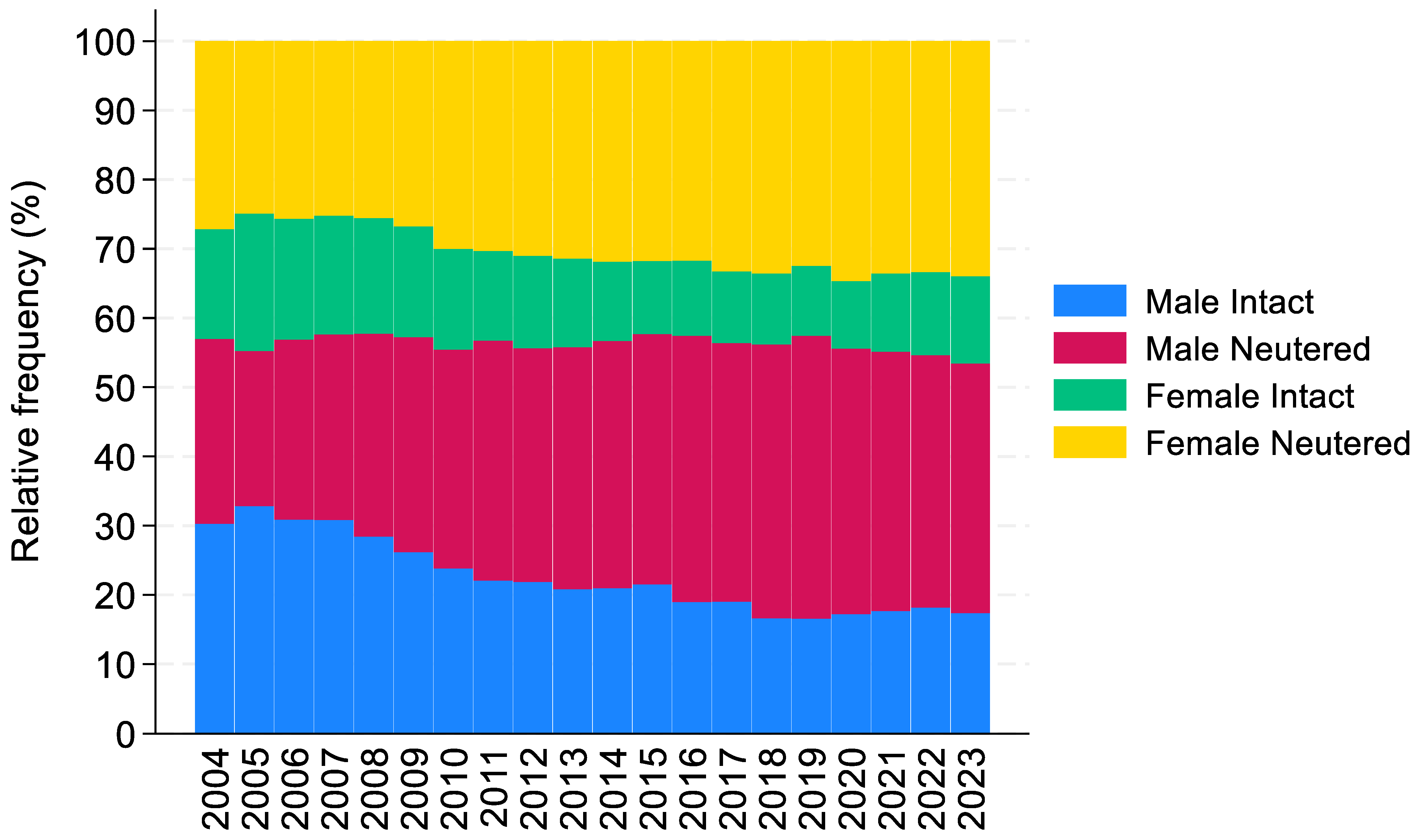
Sex and neuter status data were available for 98.1% of the study population (Table S1). Males were presented more often than female dogs every year of study, with the proportion of males fluctuating between 53.5 and 57.7% of the total (Figure 1). A clear trend for increased neutering was apparent, with the proportion of neutered dogs (male and female) increasing steadily from approximately 52% in 2004 to 70% in 2023 (Table S1).

3.2. Trends by Breed Group

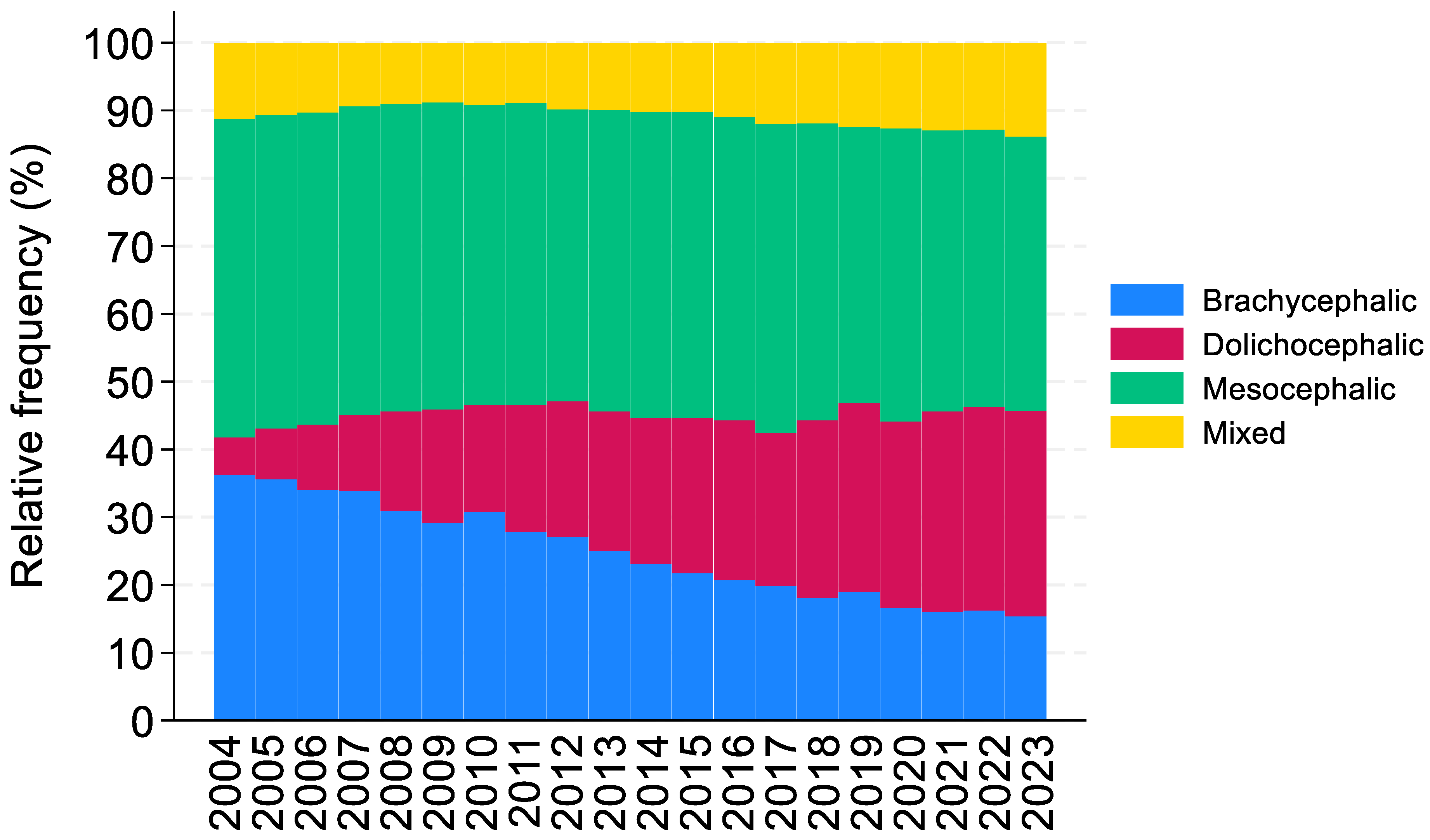
Mixed breeds comprised 10.7% of the entire population, and fluctuated between 8.8% and 13.8% of the population each year (Figure 2). A notable, progressive decline in the proportion of brachycephalic breeds was observed, from 36.3% in 2004 to 15.4% in 2023 (Figure 2). Conversely, dolichocephalic breeds increased consistently from 5.5% of all dogs in 2004 to 30.3% in 2023 (Figure 2). Proportions of mesocephalic and mixed breeds were relatively stable throughout the study period, with mesocephalic breeds comprising between 28.6% and 33.6% (Figure 2).
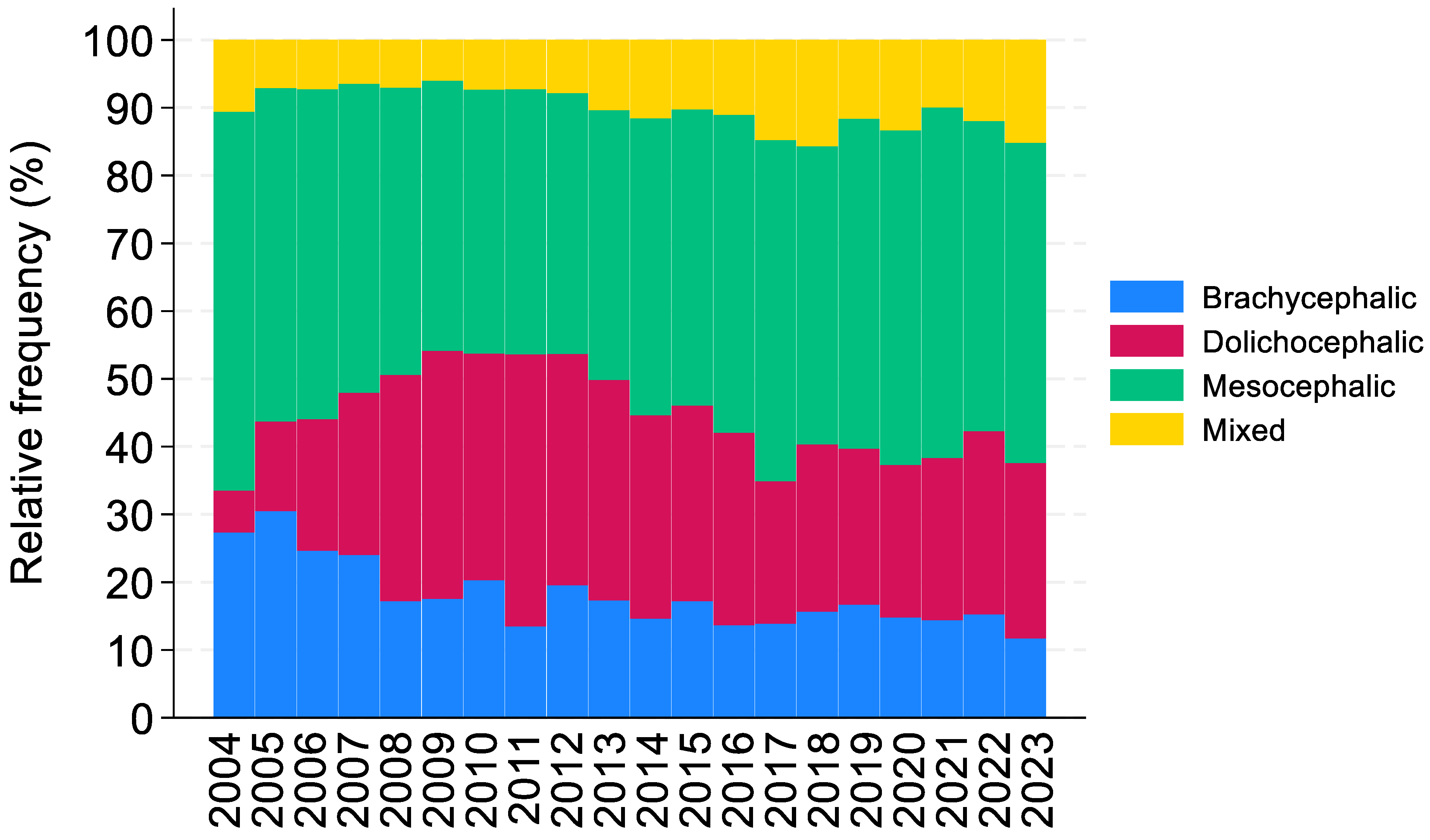
To investigate whether the acquisition of puppies and juveniles (i.e., dogs < 1 year old) might be contributing to the temporal trends in cephalic groups, the analyses were repeated for this subset of the population (n = 16,529) (Figure 3) [29]. Interestingly, the same negative trend for brachycephalic breeds was seen but the trend was even more pronounced in puppies and juveniles. Figure 3 shows the steep decline in the proportion of brachycephalics < 1-year-old, from 27.4% in 2004 to 11.7% in 2023. In fact, in 2023, brachycephalic puppies and juveniles were the least popular group, trailing mixed breed (15.2%), dolichocephalic (25.9%) and mesocephalic (47.2%) in the same age group. Among dolichocephalic puppies and juveniles, a steeper upward trend was observed than that in adults (6.2% to 36.6%) but only in the 5-year period from 2004 to 2009, after which there was a gradual decline to 25.8% (Figure 3).

3.3. Trends in Dog Breeds

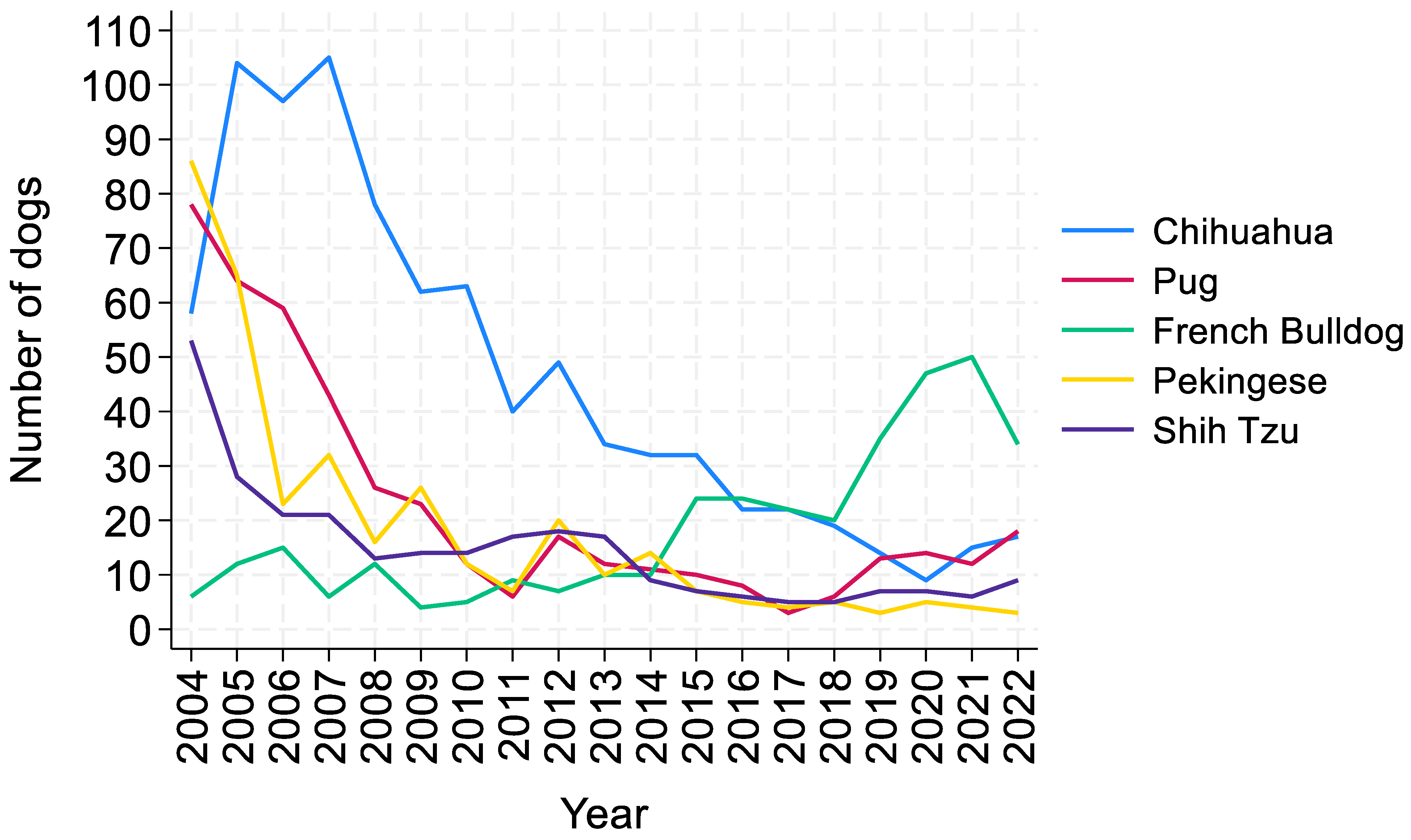
The frequency distribution of common breeds, i.e., those with >1000 visitors in the dataset (2004–2023) by year, is presented in Table S2. In addition, the ranking of the most frequent purebred dogs per year is presented in Table S3. To gain greater insight into the specific breeds that contributed to the declining popularity of brachycephalic breeds overall and the increasing popularity of dolichocephalic breeds, we assessed the frequency of the most common breeds of puppies and juveniles in these cephalic groups by year. Figure 4 depicts the annual frequency of the five most common brachycephalic breeds—Chihuahua, Pug, French Bulldog, Pekingese, and Shih Tzu—excluding 2023, as an incomplete year. These five breeds comprised 73.4% of the total (2291/3121) (Figure 4).
The decreasing trend observed in the relative frequency of brachycephalic puppies was driven by the decreasing numbers of the dominant breeds, with the exception of French Bulldogs, where the overall trend was increasing popularity (Figure 4). From 2019 onwards, French Bulldogs were the dominant brachycephalic breed, even though the relative frequency of brachycephalic puppies and juveniles was falling.
The jump in the relative frequency of dolichocephalic puppies from 2004 to 2009 was predominantly driven by a rapid increase in the number of Poodles in this period, from 17 in 2004 to a peak of 338 in 2008, gradually declining to 155 in 2022 (Figure S1). Poodles were the most popular breed since 2009 (Table S3).

3.4. Comparison of Veterinary Costs and Visit Frequency Between Cephalic Groups

For brachycephalic breeds, the median number of visits was six (IQR: 2–19), compared with a median of five visits (IQR: 2–16) for mesocephalic and dolichocephalic breeds, and four (IQR: 2–14) for mixed breeds. The brachycephalic group, compared to all other groups, had significantly higher median visits (p < 0.001). To meet the normality assumption of the linear regression model residuals, a logarithmic transformation (log10) was conducted on the total veterinary costs. To convert actual costs to relative costs, the mixed-breed group was set as the “base” for calculating and comparing the average costs of the other three groups (Table 1).
As presented in Table 1, brachycephalic dogs, on average, incurred highest costs during their database lifetime compared to the other three groups. In the final model, in pairwise comparisons and using Bonferroni adjustment, the log-mean of total costs was significantly higher in the brachycephalic cohort than in the other three cohorts (p < 0.001) (Table 1 and Table 2). The relative veterinary costs were also significantly higher in mesocephalic breeds compared to dolichocephalic breeds (p = 0.001; Table 2). There was no significant difference in the log-mean of veterinary costs between the other groups (Table 2).

4. Discussion

This is the first study to document changes in the structure of a population of dogs presented to a veterinary clinic in Hong Kong. Our results provide a useful starting point for targeted investigations of human–animal interactions within this region with the goal of improving animal health and welfare.
The higher proportion of males than females in the study population has been observed in similar studies from the UK and the USA [2,30,31]. This may reflect a preference for male dogs among owners in Hong Kong, which is supported by local survey data [32]. A similar ownership preference for males is reported in other regions [25,26,33,34]. Current neutering rates in Hong Kong are at the higher end of those reported worldwide [33,35,36,37]. A bias towards neutering female dogs over males is commonly reported [2,38], and was also evident in Hong Kong [34,39].
Purebred dogs comprised almost 90% of the population. Dominance of purebreds is also reported in hospital-based studies in the UK [2,30], consistent with a 2019 estimate that 85.8% of the UK pet dog population were purebred [26]. However, a 2025 survey of Hong Kong dog owners reported that purebred dogs were owned by only 55% of respondents [32]. The difference between these survey results and the current study likely indicates biases of the different methodologies [40], but could also indicate that mixed-breed dogs are presented less often for veterinary attention than purebreds in our hospital in Hong Kong.
The Poodle has established its position as the most popular breed since 2009. This finding is corroborated by survey data where Poodles were the most popular purebred in Hong Kong and mainland China [32]. In the USA, a surge in Poodle registrations in the 1960s, followed by a decline, is cited as an early example of prevailing fashion driving pet selection [41]. Since 2022, poodles have rejoined the top five AKC breeds, but in the UK, the toy poodle was ranked only 37th in dogs under veterinary care [2,5]. However, in the UK and USA [42], poodle crosses have gained popularity. We did not specifically investigate poodle crosses here since all breed crosses in our dataset were treated as mixed breed.
A marked decline in the relative popularity of brachycephalic breeds during the study period was identified. By 2019, brachycephalic breeds comprised 19% of the population in Hong Kong, which is similar to estimates from the UK (17.6%) in the same year [2]. However, this Hong Kong population had a bigger brachycephalic problem than the UK to start with. The Shih Tzu, the most popular breed overall until 2009, was a major contributor to the decline in brachycephalics in Hong Kong, falling out of the top 10 breeds after 2019. The popularity of Shih Tzus has also declined in the UK and the USA, according to data from their respective Kennel Clubs [4,5]. In our study, the Pekingese fell from the third-most popular breed in 2004 to 17th place by 2022. However, a surge in French Bulldog numbers, from 2014, and Pugs, which fell from 2004 to 2017 but thereafter showed a slight upwards trend, mirrors concerning fashions widely reported in Western regions [1,2,3]. The trend towards increased presentation of French Bulldogs and Pugs is concerning. The French Bulldog is reported to have the shortest life expectancy, and the Pug the third-shortest among popular breeds in the UK [43]. Hong Kong’s subtropical climate with temperatures frequently > 30 °C and humidity > 80% during the summer months is particularly unsuitable for brachycephalics since they are less able to resist heatstroke, which often has fatal consequences [44].
We did not investigate drivers of the observations reported here, but a previous investigation of the behaviours of owners in Hong Kong reported that 62% carried out research before acquiring their dog, with media being the major source consulted [32]. Given the global reach of internet sources, it is possible that the drivers for acquisition and reacquisition of French Bulldogs and Pugs in Hong Kong are similar to those in the Europe, where they have been studied most comprehensively [10,11,45,46,47].
The cohort study was conducted to investigate whether the classification of breeds according to cephalic group was associated with indicators of veterinary service use. Hence, our finding that brachycephalics incurred higher veterinary costs and visit frequency than other breed groups is notable. Importantly, these observations should be interpreted cautiously since our dataset only allowed broad categorisation of costs as either related to or not related to health issues, and this distinction is imperfect. Nonetheless, our data provide a limited comparison of veterinary service use by different breed groups that is indirectly supported by other sources. For example, expense was a negative outcome reported by owners of brachycephalic dogs elsewhere [46]. Further, pet insurance data from Australia showed a 79% rise in surgery for brachycephalic obstructive airway syndrome as a proportion of all brachycephalic dog surgery claims between 2013 and 2018 [48]. Brachycephalic breeds were also over-represented for dermatological, cardiac and ophthalmologic disorders [48]. We note, again, that our data do not provide fine detail on veterinary costs, so we cannot directly attribute these costs to any specific procedures.
Some published evidence regarding drivers of owners’ decision-making regarding choice of dog is available but this generally relates to western regions and does not reflect Hong Kong’s context [49,50]. There exists no structured analysis of the relative importance of veterinary costs as compared with other factors which influence owner behaviour with regard to breed choice. Again, this is likely affected by region, infrastructure and societal factors so it requires specific Hong Kong population investigation. A systematic approach to assessing this could usefully involve application of a recognised Human Behaviour Change framework such as COM-B [51,52].
There are several other limitations of our study that should be considered when interpreting the results. The census dataset was obtained from a single hospital, and the results are neither intended, nor expected, to be generalisable to all dogs under veterinary care in Hong Kong. In addition, cost comparisons were derived from the most recent seven years of data, not from the entire dataset, as a proxy for lifetime costs. As outlined in Section 2.5, the period of seven years was dictated by a change in the financial reporting system used by the clinic. Furthermore, the breed groupings in our study are indicative; an individual dog may have more or less extreme conformation than another, creating a range of risk profiles. Many of the common breeds identified in this study have breed-related health issues. Our study is a starting point for the use of veterinary hospital data to identify health and welfare issues in different cultural contexts. The findings can also inform potential future investigation of the drivers for owners’ choice of breeds, to better understand how factors such as costs of veterinary care contribute to Hong Kong dog owners’ decision-making on breed choice. We hope that this study will encourage collaboration between veterinary providers across Asia to develop systems such as VetCompass and SAVSNET to generate robust evidence to support our industry to continually improve animal health outcomes [53,54].

5. Conclusions

In census data collected for a 20-year period from a single hospital in Hong Kong, purebred dogs were more commonly presented than mixed breeds, and poodles were the most popular breed. A decreasing trend in presentation of brachycephalic breeds, collectively, was noted. However, a recent increase in French Bulldogs and Pugs is concerning from a welfare perspective. The cohort study for a seven-year period demonstrated higher veterinary costs and visit frequency incurred by brachycephalic dogs than other conformational groups in Hong Kong. This finding contributes to evidence from other geographic regions regarding healthcare requirements of brachycephalic dogs and can inform future work to support their welfare.

Supplementary Materials

The following supporting information can be downloaded at https://www.mdpi.com/article/10.3390/pets3010006/s1, Table S1: Sex, neuter status, and cephalic group of canine patients presenting for the first time at a veterinary hospital in Hong Kong by year, from 1 January 2004 to 31 July 2023; Table S2: Frequency distribution of the most common purebred dogs attending a veterinary hospital in Hong Kong from January 2004 to July 2023 by year (all breeds with total numbers of >1000 in the dataset); Table S3: Annual ranking of the most frequent purebred dogs (top 15) attending a veterinary hospital in Hong Kong from January 2004 to July 2023; Figure S1: Frequency distribution of Poodles < 1-year-old attending a veterinary hospital in Hong Kong from January 2004 to December 2022 by year.

Author Contributions

Conceptualisation, J.B.; methodology, O.N. and H.L.; formal analysis, O.N. and H.L.; investigation, H.L., O.N. and J.B.; data curation, Y.M.T.C.; writing—original draft preparation, H.L.; writing—review and editing, J.B., O.N. and M.U.; supervision, J.B. and O.N. All authors have read and agreed to the published version of the manuscript.

Funding

This research received no external funding.

Institutional Review Board Statement

Approval for this research was granted by the Animal Ethics Committee, City University of Hong Kong (approval number AN-STA-00000336, approval date 14 September 2023).

Informed Consent Statement

Not applicable.

Data Availability Statement

The downloaded dataset was provided by a commercial entity of CityUHK for the purposes of research and is not available for wider distribution.

Conflicts of Interest

The authors declare no conflicts of interest.

References

  1. Teng, K.T.; McGreevy, P.D.; Toribio, J.-A.L.M.L.; Dhand, N.K. Trends in popularity of some morphological traits of purebred dogs in Australia. Canine Genet. Epidemiol. 2016, 3, 2. [Google Scholar] [CrossRef]
  2. O’Neill, D.G.; McMillan, K.M.; Church, D.B.; Brodbelt, D.C. Dog breeds and conformations in the UK in 2019: VetCompass canine demography and some consequent welfare implications. PLoS ONE 2023, 18, e0288081. [Google Scholar] [CrossRef]
  3. Steinert, K.; Kuhne, F.; Kramer, M.; Hackbarth, H. People’s perception of brachycephalic breeds and breed-related welfare problems in Germany. J. Vet. Behav. 2019, 33, 96–102. [Google Scholar] [CrossRef]
  4. The Kennel Club Breed Registration Statistics. Available online: https://www.thekennelclub.org.uk/media-centre/breed-registration-statistics/ (accessed on 3 July 2025).
  5. Haid, M. The Most Popular Dog Breeds of 2024. Available online: https://www.akc.org/expert-advice/news/most-popular-dog-breeds-2024/ (accessed on 3 July 2025).
  6. Niinikoski, I.; Himanen, S.L.; Tenhunen, M.; Aromaa, M.; Lilja-Maula, L.; Rajamäki, M.M. Evaluation of risk factors for sleep-disordered breathing in dogs. J. Vet. Intern. Med. 2024, 38, 1135–1145. [Google Scholar] [CrossRef]
  7. O’Neill, D.G.; Rowe, D.; Brodbelt, D.C.; Pegram, C.; Hendricks, A. Ironing out the wrinkles and folds in the epidemiology of skin fold dermatitis in dog breeds in the UK. Sci. Rep. 2022, 12, 10553. [Google Scholar] [CrossRef] [PubMed]
  8. O’Neill, D.G.; Packer, R.M.A.; Francis, P.; Church, D.B.; Brodbelt, D.C.; Pegram, C. French Bulldogs differ from other dogs in the UK in propensity for many common disorders: A VetCompass study. Canine Med. Genet. 2021, 8, 13. [Google Scholar] [CrossRef] [PubMed]
  9. Kenny, D.D.; Freemantle, R.; Jeffery, A.; Tivers, M.S. Impact of an educational intervention on public perception of brachycephalic obstructive airway syndrome in brachycephalic dogs. Vet. Rec. 2022, 190, e1430. [Google Scholar] [CrossRef] [PubMed]
  10. Packer, R.M.A.; Hendricks, A.; Burn, C.C. Do dog owners perceive the clinical signs related to conformational inherited disorders as ‘normal’ for the breed? A potential constraint to improving canine welfare. Anim. Welf. 2012, 21, 81–93. [Google Scholar] [CrossRef]
  11. Packer, R.M.A.; O’Neill, D.G.; Fletcher, F.; Farnworth, M.J. Great expectations, inconvenient truths, and the paradoxes of the dog-owner relationship for owners of brachycephalic dogs. PLoS ONE 2019, 14, e0219918. [Google Scholar] [CrossRef]
  12. Liu, N.-C.; Sargan, D.R.; Adams, V.J.; Ladlow, J.F. Characterisation of Brachycephalic Obstructive Airway Syndrome in French Bulldogs Using Whole-Body Barometric Plethysmography. PLoS ONE 2015, 10, e0130741. [Google Scholar] [CrossRef]
  13. McMillan, K.M.; Bielby, J.; Williams, C.L.; Upjohn, M.M.; Casey, R.A.; Christley, R.M. Longevity of companion dog breeds: Those at risk from early death. Sci. Rep. 2024, 14, 531. [Google Scholar] [CrossRef] [PubMed]
  14. O’Neill, D.G.; Jackson, C.; Guy, J.H.; Church, D.B.; McGreevy, P.D.; Thomson, P.C.; Brodbelt, D.C. Epidemiological associations between brachycephaly and upper respiratory tract disorders in dogs attending veterinary practices in England. Canine Genet. Epidemiol. 2015, 2, 10. [Google Scholar] [CrossRef] [PubMed]
  15. Bonnett, B.N.; Megens, M.; O’Neill, D.G.; Hedhammar, Å. International and national approaches to brachycephalic breed health reforms in dogs. In Health and Welfare of Brachycephalic (Flat-Faced) Companion Animals; CRC Press: Boca Raton, FL, USA, 2021; pp. 127–151. [Google Scholar]
  16. Census and Statistics Department Population Estimates. Available online: https://www.censtatd.gov.hk/en/scode150.html (accessed on 3 July 2025).
  17. Census and Statistics Department. Population Census; The Government of the Hong Kong Special Administrative Region: Website of the Census and Statistics Department www.censtatd.gov.hk: Hong Kong, China, 2021.
  18. Veterinary Surgeons Board of Hong Kong Veterinary Surgeons Registration Ordinance. Available online: https://www.vsbhk.org.hk/english/vsro/vsro.html (accessed on 3 July 2025).
  19. Census and Statistics Department. Thematic Household SurveyReport No 66; The Government of the Hong Kong Special Administrative Region: Website of the Census and Statistics Department www.censtatd.gov.hk: Hong Kong, China, 2019.
  20. Xin, O. Number and Share of Households Keeping Dogs as Pets in Hong Kong from 2018 to 2023. Available online: https://www.statista.com/statistics/1415868/hong-kong-dog-ownership/ (accessed on 3 July 2025).
  21. UK Pet Food UK Pet Population. Available online: https://www.ukpetfood.org/industry-hub/data-statistics-/uk-pet-population-.html (accessed on 3 July 2025).
  22. Leslie, B.E.; Meek, A.H.; Kawash, G.F.; McKeown, D.B. An epidemiological investigation of pet ownership in Ontario. Can. Vet. J. 1994, 35, 218–222. [Google Scholar]
  23. American Veterinary Medical Association 2024 AVMA Pet Ownership & Demographics Sourcebook. Available online: https://ebusiness.avma.org/ProductCatalog/product.aspx?ID=2206 (accessed on 3 July 2025).
  24. Capello, K.; Bortolotti, L.; Lanari, M.; Baioni, E.; Mutinelli, F.; Vascellari, M. Estimate of the size and demographic structure of the owned dog and cat population living in Veneto region (north-eastern Italy). Prev. Vet. Med. 2015, 118, 142–147. [Google Scholar] [CrossRef]
  25. Slater, M.R.; Di Nardo, A.; Pediconi, O.; Villa, P.D.; Candeloro, L.; Alessandrini, B.; Del Papa, S. Cat and dog ownership and management patterns in central Italy. Prev. Vet. Med. 2008, 85, 267–294. [Google Scholar] [CrossRef] [PubMed]
  26. McMillan, K.M.; Harrison, X.A.; Wong, D.C.; Upjohn, M.M.; Christley, R.M.; Casey, R.A. Estimation of the size, density, and demographic distribution of the UK pet dog population in 2019. Sci. Rep. 2024, 14, 31746. [Google Scholar] [CrossRef]
  27. Tilley, H.B.; Ping, H.S.; Fiona, W.; Whitfort, A. Population Estimates and the Effect of Trap-Neuter Return Program on the Free-Roaming Dog Population in Hong Kong SAR. J. Appl. Anim. Welf. Sci. 2025, 28, 135–149. [Google Scholar] [CrossRef]
  28. Applebaum, J.W.; Peek, C.W.; Zsembik, B.A. Examining U.S. pet ownership using the General Social Survey. Soc. Sci. J. 2023, 60, 110–119. [Google Scholar] [CrossRef]
  29. Harvey, N.D. How Old Is My Dog? Identification of Rational Age Groupings in Pet Dogs Based Upon Normative Age-Linked Processes. Front. Vet. Sci. 2021, 8, 643085. [Google Scholar] [CrossRef]
  30. Sánchez-Vizcaíno, F.; Noble, P.-J.M.; Jones, P.H.; Menacere, T.; Buchan, I.; Reynolds, S.; Dawson, S.; Gaskell, R.M.; Everitt, S.; Radford, A.D. Demographics of dogs, cats, and rabbits attending veterinary practices in Great Britain as recorded in their electronic health records. BMC Vet. Res. 2017, 13, 218. [Google Scholar] [CrossRef]
  31. Urfer, S.R.; Wang, M.; Yang, M.; Lund, E.M.; Lefebvre, S.L. Risk Factors Associated with Lifespan in Pet Dogs Evaluated in Primary Care Veterinary Hospitals. J. Am. Anim. Hosp. Assoc. 2019, 55, 130–137. [Google Scholar] [CrossRef] [PubMed]
  32. Yim, H.T.; Flay, K.J.; Nekouei, O.; Steagall, P.V.; Beatty, J.A. Pet Dog Choice in Hong Kong and Mainland China: Exploring Owners’ Motivations, Behaviours, and Perceptions. Animals 2025, 15, 486. [Google Scholar] [CrossRef] [PubMed]
  33. Anderson, K.L.; Casey, R.A.; Cooper, B.; Upjohn, M.M.; Christley, R.M. National Dog Survey: Describing UK Dog and Ownership Demographics. Animals 2023, 13, 1072. [Google Scholar] [CrossRef]
  34. Carvelli, A.; Scaramozzino, P.; Iacoponi, F.; Condoleo, R.; Della Marta, U. Size, demography, ownership profiles, and identification rate of the owned dog population in central Italy. PLoS ONE 2020, 15, e0240551. [Google Scholar] [CrossRef]
  35. Berthoud, D.; Nevison, C.; Waterhouse, J.; Hawkins, D. The prevalence of neutered pet dogs (canis familiaris) across countries of the western world. J. Vet. Behav. 2011, 6, 77–78. [Google Scholar] [CrossRef]
  36. Sallander, M.; Hedhammar, Å.; Rundgren, M.; Lindberg, J.E. Demographic Data of a Population of Insured Swedish Dogs Measured in a Questionnaire Study. Acta Vet. Scand. 2001, 42, 71. [Google Scholar] [CrossRef]
  37. Downes, M.J.; Devitt, C.; Downes, M.T.; More, S.J. Neutering of cats and dogs in Ireland; pet owner self-reported perceptions of enabling and disabling factors in the decision to neuter. PeerJ 2015, 3, e1196. [Google Scholar] [CrossRef]
  38. Guy, N.C.; Luescher, U.A.; Dohoo, S.E.; Spangler, E.; Miller, J.B.; Dohoo, I.R.; Bate, L.A. Demographic and aggressive characteristics of dogs in a general veterinary caseload. Appl. Anim. Behav. Sci. 2001, 74, 15–28. [Google Scholar] [CrossRef]
  39. Kisiel, L.M.; Jones-Bitton, A.; Sargeant, J.M.; Coe, J.B.; Flockhart, D.T.T.; Reynoso Palomar, A.; Canales Vargas, E.J.; Greer, A.L. Owned dog ecology and demography in Villa de Tezontepec, Hidalgo, Mexico. Prev. Vet. Med. 2016, 135, 37–46. [Google Scholar] [CrossRef]
  40. Asher, L.; Buckland, E.L.; Phylactopoulos, C.I.; Whiting, M.C.; Abeyesinghe, S.M.; Wathes, C.M. Estimation of the number and demographics of companion dogs in the UK. BMC Vet. Res. 2011, 7, 74. [Google Scholar] [CrossRef]
  41. Herzog, H. Forty-two thousand and one Dalmatians: Fads, social contagion, and dog breed popularity. Soc. Anim. 2006, 14, 383–397. [Google Scholar] [CrossRef]
  42. Benson, J.; Neff, S.; Tincher, E.M. Oodles of Doodles: Popularity and Health; [White Paper]. Nationwide. 2022. Available online: https://assets.ctfassets.net/440y9b545yd9/2xKSYWnUkxhb0tJGDLNdoI/fe9b401da2d73c6fef7c2a4bd4b8a49e/Nationwide_Oodles_of_Doodles_and_Cancer_Cross_Breed_White_Paper_2022.pdf (accessed on 7 December 2025).
  43. Teng, K.T.-y.; Brodbelt, D.C.; Pegram, C.; Church, D.B.; O’Neill, D.G. Life tables of annual life expectancy and mortality for companion dogs in the United Kingdom. Sci. Rep. 2022, 12, 6415. [Google Scholar] [CrossRef]
  44. Hall, E.J.; Carter, A.J.; O’Neill, D.G. Incidence and risk factors for heat-related illness (heatstroke) in UK dogs under primary veterinary care in 2016. Sci. Rep. 2020, 10, 9128. [Google Scholar] [CrossRef]
  45. Youens, E.; O’Neill, D.G.; Belshaw, Z.; Mochizuki, S.; Neufuss, J.; Tivers, M.S.; Packer, R.M.A. Beauty versus the beast: The UK public prefers less-extreme body shapes in brachycephalic dog breeds. Vet. Rec. 2025, 197, e567. [Google Scholar] [CrossRef]
  46. Packer, R.M.A.; O’Neill, D.G.; Fletcher, F.; Farnworth, M.J. Come for the looks, stay for the personality? A mixed methods investigation of reacquisition and owner recommendation of Bulldogs, French Bulldogs and Pugs. PLoS ONE 2020, 15, e0237276. [Google Scholar] [CrossRef] [PubMed]
  47. Sandøe, P.; Kondrup, S.V.; Bennett, P.C.; Forkman, B.; Meyer, I.; Proschowsky, H.F.; Serpell, J.A.; Lund, T.B. Why do people buy dogs with potential welfare problems related to extreme conformation and inherited disease? A representative study of Danish owners of four small dog breeds. PLoS ONE 2017, 12, e0172091. [Google Scholar] [CrossRef] [PubMed]
  48. PetSure Australia from Family pet to Fur Baby. Pet Health Monitor 2013–2018. Available online: https://petsure.com.au/wp-content/uploads/2023/04/PetSure_Pet_Health_Monitor_2013-2018.pdf (accessed on 25 August 2025).
  49. Mead, R.; Holland, K.E.; Casey, R.A.; Upjohn, M.M.; Christley, R.M. UK Dog Owners’ Pre-Acquisition Information- and Advice-Seeking: A Mixed Methods Study. Animals 2024, 14, 1033. [Google Scholar] [CrossRef] [PubMed]
  50. Holland, K.E. Acquiring a Pet Dog: A Review of Factors Affecting the Decision-Making of Prospective Dog Owners. Animals 2019, 9, 124. [Google Scholar] [CrossRef]
  51. Michie, S.; van Stralen, M.M.; West, R. The behaviour change wheel: A new method for characterising and designing behaviour change interventions. Implement. Sci. 2011, 6, 4250. [Google Scholar] [CrossRef]
  52. Upjohn, M.M. Applying human behaviour change science to achieve sustained welfare improvements for brachycephalic dogs. Vet. Rec. 2025, 197, 238–240. [Google Scholar] [CrossRef]
  53. Royal Veterinary College VetCompass. Available online: https://www.vetcompass.org/ (accessed on 26 August 2025).
  54. University of Liverpool Small Animal Veterinary Surveillance Network (SAVSNET). Available online: https://www.liverpool.ac.uk/savsnet/ (accessed on 26 August 2025).
Figure 1. Annual trend in the proportion of dogs at first presention to a veterinary clinic in Hong Kong, 2004 to 2023, categorised by sex and neuter status.
Pets 03 00006 g001
Figure 2. The relative frequency of dogs (all ages) at first presentation to a veterinary clinic in Hong Kong categorised by cephalic group and year.
Pets 03 00006 g002
Figure 3. The relative frequency of puppy and juvenile dogs (<1-year old) at first presentation to a veterinary clinic in Hong Kong categorised by cephalic group and year.
Pets 03 00006 g003
Figure 4. Frequency distribution of common brachycephalic dog breeds < 1-year-old at first presentation to a veterinary clinic in Hong Kong by year.
Pets 03 00006 g004
Table 1. Results of the cohort study comparing mean total veterinary costs per dog accumulating over 7 years, categorised by cephalic group.
Cephalic GroupNo. of DogsMean Cost per Dog a (USD)
Mixed breeds4599Base
Mesocephalic17,544+32
Dolichocephalic10,947−42
Brachycephalic7895+152
a Relative costs are presented by setting “mixed breed” as the base for comparisons. The mean total veterinary cost for brachycephalic dogs was significantly higher than all other groups (p < 0.001).
Table 2. Pairwise comparisons of the log-means of total veterinary costs for four cephalic groups over 7 years, following the linear regression model and using Bonferroni adjustment.
ComparisonContrastStandard Errorp-Value
Dolicho vs. Brachy−0.0750.0097<0.001
Meso vs. Brachy−0.0450.0089<0.001
Mixed vs. Brachy−0.0580.0123<0.001
Meso vs. Dolicho0.0310.00810.001
Mixed vs. Dolicho0.0170.01160.784
Mixed vs. Meso−0.0130.01090.999
Disclaimer/Publisher’s Note: The statements, opinions and data contained in all publications are solely those of the individual author(s) and contributor(s) and not of MDPI and/or the editor(s). MDPI and/or the editor(s) disclaim responsibility for any injury to people or property resulting from any ideas, methods, instructions or products referred to in the content.