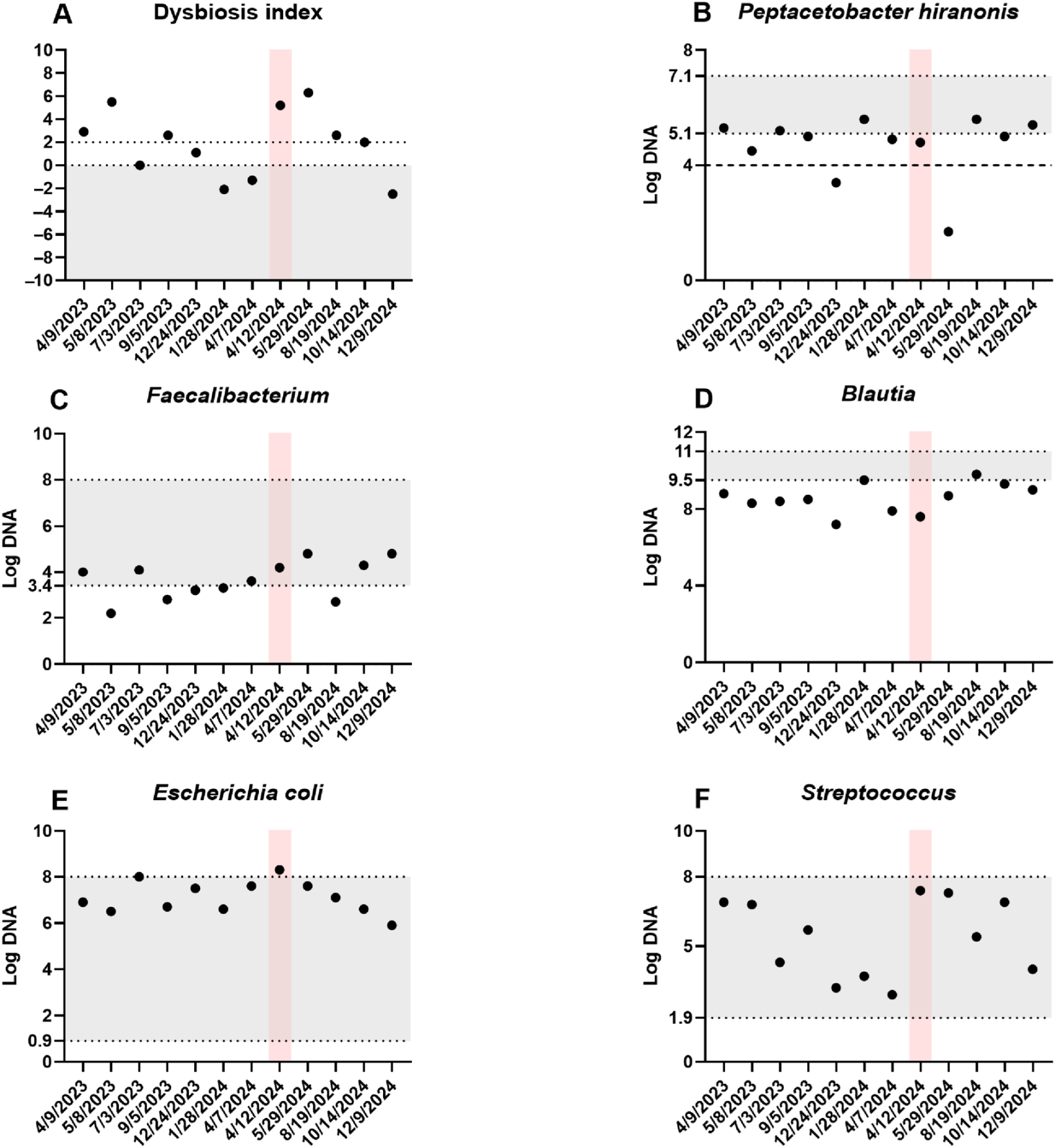

Successful Management of a Dog with Protein-Losing Enteropathy and Concurrent Protein-Losing Nephropathy with Repeated Fecal Microbiota Transplantation


Abstract
1. Introduction
2. Case Description
3. Discussion
4. Conclusions
Author Contributions
Funding
Institutional Review Board Statement
Informed Consent Statement
Data Availability Statement
Conflicts of Interest
Abbreviations
| ACTH | Adrenocorticotropic hormone |
| AHDS | Acute hemorrhagic diarrhea syndrome |
| ALT | Alanine-aminotransferase |
| ARE | Antibiotic-responsive enteropathy |
| BCS | Body condition score |
| BW | Body weight |
| BUN | Blood urea nitrogen |
| CBC | Complete blood count |
| CCECAI | Canine chronic enteropathy activity index |
| CE | Chronic enteropathy |
| CIBDAI | Canine inflammatory bowel disease activity index |
| CIE | Chronic inflammatory enteropathy |
| CKD | Chronic kidney disease |
| CRI | Continuous rate infusion |
| FMT | Fecal microbial transplantation |
| FRE | Food-responsive enteropathy |
| GI | Gastrointestinal |
| HCT | Hematocrit |
| ICGN | Immune complex glomerulonephritis |
| IRE | Immunosuppressant-responsive enteropathy |
| IV | Intravenous |
| LP | Lymphoplasmacytic |
| MCS | Muscle condition score |
| NRE | Non-responsive enteropathy |
| PFS | Purina fecal score |
| PLI | Pancreatic lipase immunoreactivity |
| PLN | Protein-losing nephropathy |
| POCUS | Point-of-care ultrasound |
| PLE | Protein-losing enteropathy |
| PO | Per os |
| RR | Reference range |
| SCFA | Short-chain fatty acid |
| TLI | Trypsin-like immunoreactivity |
| UPC | Urine protein/creatinine ratio |
| USG | Urine specific gravity |
References
- Dossin, O.; Lavoue, R. Protein-losing enteropathies in dogs. Vet. Clin. N. Am. Small Anim. Pr. 2011, 41, 399–418. [Google Scholar] [CrossRef] [PubMed]
- Hall, E.J.; German, A.J.; Ettinger, S.J.; Feldman, E.C. Small Intestinal Diseases. In Textbook of Veterinary Internal Medicine; Ettinger, S., Ed.; Elsevier: Philadelphia, PA, USA, 2024; pp. 4776–4907. [Google Scholar]
- Craven, M.D.; Washabau, R.J. Comparative pathophysiology and management of protein-losing enteropathy. J. Vet. Intern. Med. 2019, 33, 383–402. [Google Scholar] [CrossRef] [PubMed]
- Dandrieux, J.R. Inflammatory bowel disease versus chronic enteropathy in dogs: Are they one and the same? J. Small Anim. Pr. 2016, 57, 589–599. [Google Scholar] [CrossRef]
- Simpson, K.W.; Jergens, A.E. Pitfalls and progress in the diagnosis and management of canine inflammatory bowel disease. Vet. Clin. N. Am. Small Anim. Pr. 2011, 41, 381–398. [Google Scholar] [CrossRef] [PubMed]
- Craven, M.; Simpson, J.W.; Ridyard, A.E.; Chandler, M.L. Canine inflammatory bowel disease: Retrospective analysis of diagnosis and outcome in 80 cases (1995–2002). J. Small Anim. Pr. 2004, 45, 336–342. [Google Scholar] [CrossRef]
- Allenspach, K.; Wieland, B.; Gröne, A.; Gaschen, F. Chronic Enteropathies in Dogs: Evaluation of Risk Factors for Negative Outcome. J. Vet. Intern. Med. 2008, 21, 700–708. [Google Scholar] [CrossRef]
- Dupouy-Manescau, N.; Méric, T.; Sénécat, O.; Drut, A.; Valentin, S.; Leal, R.O.; Hernandez, J. Updating the Classification of Chronic Inflammatory Enteropathies in Dogs. Animals 2024, 14, 681. [Google Scholar] [CrossRef]
- Chen, C.C.; Rachel, P.; Toresson, L.; Sung, C.H.; Blake, A.B.; Lopes, B.C.; Turck, J.; Jergens, A.E.; Summers, S.C.; Unterer, S.; et al. Microbial Gene Profiling and Targeted Metabolomics in Fecal Samples of Dogs With Chronic Enteropathy With or Without Increased Dysbiosis Index. J. Vet. Intern. Med. 2025, 39, e70199. [Google Scholar] [CrossRef]
- Wennogle, S.A.; Stockman, J.; Webb, C.B. Prospective evaluation of a change in dietary therapy in dogs with steroid-resistant protein-losing enteropathy. J. Small Anim. Pr. 2021, 62, 756–764. [Google Scholar] [CrossRef]
- Toresson, L.; Spillman, T.; Pilla, R.; Ludvigsson, U.; Hellgren, J.; Olmedal, G.; Suchodolski, J.S. Clinical Effects of Faecal Microbiota Transplantation as Adjunctive Therapy in Dogs with Chronic Enteropathies—A Retrospective Case Series of 41 Dogs. Vet. Sci. 2023, 10, 271. [Google Scholar] [CrossRef]
- Toresson, L.; Ludvigsson, U.; Olmedal, G.; Hellgren, J.; Toni, M.; Giaretta, P.R.; Blake, A.B.; Suchodolski, J.S. Repeated fecal microbiota transplantation in dogs with chronic enteropathy can decrease disease activity and corticosteroid usage. J. Am. Vet. Med Assoc. 2025, 1, 1–10. [Google Scholar]
- Toresson, L.; Blake, A.B.; Sung, C.H.; Olmedal, G.; Ludvigsson, U.; Giaretta, P.R.; Tolbert, M.K.; Suhodolski, J.S. Fecal and Clinical Profiles of Dogs with Chronic Enteropathies Treated With Bile Acid Sequestrants for 5–47 Months: A Retrospective Case Series. J. Vet. Intern. Med. 2025, 39, e70206. [Google Scholar] [PubMed]
- Dibartola, S.W.; Smith, J.R. Glomerular Disease. In Small Animal Internal Medicine; Ettinger, S., Ed.; Elsevier: Philadelphia, PA, USA, 2020; pp. 672–685. [Google Scholar]
- Schneider, S.M.; Cianciolo, R.E.; Nabity, M.B.; Clubb, F.J., Jr.; Brown, C.A.; Lees, G.E. Prevalence of immune-complex glomerulonephritides in dogs biopsied for suspected glomerular disease: 501 cases (2007–2012). J. Vet. Intern Med. 2013, 27, S67–S75. [Google Scholar]
- IRIS Canine GN Study Subgroup on Immunosuppressive Therapy Absent a Pathologic Diagnosis; Pressler, B.; Vaden, S.; Gerber, B.; Langston, C.; Polzin, D. Consensus guidelines for immunosuppressive treatment of dogs with glomerular disease absent a pathologic diagnosis. J. Vet. Intern Med. 2013, 27, S55–S59. [Google Scholar]
- van Nood, E.; Vrieze, A.; Nieuwdorp, M.; Fuentes, S.; Zoetendal, E.G.; de Vos, W.M.; Visser, C.E.; Kuijper, E.J.; Bartelsman, J.F.; Tijssen, J.G.; et al. Duodenal infusion of donor feces for recurrent Clostridium difficile. N. Engl. J. Med. 2013, 368, 407–415. [Google Scholar]
- Cammarota, G.; Cammarota, G.; Ianiro, G.; Tilg, H.; Rajilić-Stojanović, M.; Kump, P.; Satokari, R.; Sokol, H.; Arkkila, P.; Pintus, C.; et al. European consensus conference on faecal microbiota transplantation in clinical practice. Gut 2017, 66, 569–580. [Google Scholar] [CrossRef]
- Lee, C.H.; Steiner, T.; Petrof, E.O.; Smieja, M.; Roscoe, D.; Nematallah, A.; Weese, J.S.; Collins, S.; Moayyedi, P.; Crowther, M.; et al. Frozen vs Fresh Fecal Microbiota Transplantation and Clinical Resolution of Diarrhea in Patients With Recurrent Clostridium difficile Infection: A Randomized Clinical Trial. JAMA 2016, 315, 142–149. [Google Scholar] [PubMed]
- Kassam, Z.; Lee, C.H.; Yuan, Y.; Hunt, R.H. Fecal microbiota transplantation for Clostridium difficile infection: Systematic review and meta-analysis. Am. J. Gastroenterol. 2013, 108, 500–508. [Google Scholar] [CrossRef] [PubMed]
- Ianiro, G.; Masucci, L.; Quaranta, G.; Simonelli, C.; Lopetuso, L.R.; Sanguinetti, M.; Gasbarrini, A.; Cammarota, G. Randomised clinical trial: Faecal microbiota transplantation by colonoscopy plus vancomycin for the treatment of severe refractory Clostridium difficile infection-single versus multiple infusions. Aliment. Pharmacol. Ther. 2018, 48, 152–159. [Google Scholar]
- Pereira, G.Q.; Gomes, L.A.; Santos, I.S.; Alfieri, A.F.; Weese, J.S.; Costa, M.C. Fecal microbiota transplantation in puppies with canine parvovirus infection. J. Vet. Intern. Med. 2018, 32, 707–711. [Google Scholar]
- Berlanda, M.; Innocente, G.; Simionati, B.; Di Camillo, B.; Facchin, S.; Giron, M.C.; Savarino, E.; Sebastiani, F.; Fiorio, F.; Patuzzi, I. Faecal Microbiome Transplantation as a Solution to Chronic Enteropathies in Dogs: A Case Study of Beneficial Microbial Evolution. Animals 2021, 11, 1433. [Google Scholar] [CrossRef] [PubMed]
- Vecchiato, C.G.; Sabetti, M.C. Effect of faecal microbial transplantation on clinical outcome, faecal microbiota and metabolome in dogs with chronic enteropathy refractory to diet. Sci. Rep. 2025, 15, 11957. [Google Scholar] [CrossRef]
- Chaitman, J.; Ziese, A.L.; Pilla, R.; Minamoto, Y.; Blake, A.B.; Guard, B.C.; Isaiah, A.; Lidbury, J.A.; Steiner, J.M.; Unterer, S.; et al. Fecal Microbial and Metabolic Profiles in Dogs With Acute Diarrhea Receiving Either Fecal Microbiota Transplantation or Oral Metronidazole. Front. Vet. Sci. 2020, 7, 192. [Google Scholar] [CrossRef]
- Gal, A.; Barko, P.C.; Biggs, P.J.; Gedye, K.R.; Midwinter, A.C.; Williams, D.A.; Burchell, R.K.; Pazzi, P. One dog’s waste is another dog’s wealth: A pilot study of fecal microbiota transplantation in dogs with acute hemorrhagic diarrhea syndrome. PLoS ONE 2021, 16, e0250344. [Google Scholar] [CrossRef]
- Jugan, M.C.; KuKanich, K.; Freilich, L. Clinical response in dogs with acute hemorrhagic diarrhea syndrome following randomized probiotic treatment or fecal microbiota transplant. Front. Vet. Sci. 2023, 10, 1050538. [Google Scholar] [CrossRef]
- Sugita, K.; Shima, A.; Takahashi, K.; Ishihara, G.; Kawano, K.; Ohmori, K. Pilot evaluation of a single oral fecal microbiota transplantation for canine atopic dermatitis. Sci. Rep. 2023, 13, 8824. [Google Scholar] [CrossRef] [PubMed]
- Brown, R.; Barko, P.; Ruiz Romero, J.D.J.; Williams, D.A.; Gochenauer, A.; Nguyen-Edquilang, J.; Suchodolski, J.S.; Pilla, R.; Ganz, H.; Lopez-Villalobos, N.; et al. The effect of lyophilised oral faecal microbial transplantation on functional outcomes in dogs with diabetes mellitus. J. Small Anim. Pr. 2025, 66, 567–581. [Google Scholar] [CrossRef] [PubMed]
- Watanangura, A.; Meller, S.; Farhat, N.; Suchodolski, J.S.; Pilla, R.; Khattab, M.R.; Lopes, B.C.; Bathen-Nöthen, A.; Fischer, A.; Busch-Hahn, K.; et al. Behavioral comorbidities treatment by fecal microbiota transplantation in canine epilepsy: A pilot study of a novel therapeutic approach. Front. Vet. Sci. 2024, 11, 1385469. [Google Scholar] [CrossRef]
- Silvestrino, M.; Pirolo, M.; Bianco, A.; Castellana, S.; Del Sambro, L.; Tarallo, V.D.; Guardabassi, L.; Zatelli, A.; Gernone, F. Idiopathic epilepsy in dogs is associated with dysbiotic faecal microbiota. Anim. Microbiome 2025, 7, 31. [Google Scholar] [CrossRef]
- Félix, A.P.; Souza, C.M.M.; de Oliveira, S.G. Biomarkers of gastrointestinal functionality in dogs: A systematic review and meta-analysis. Anim. Feed. Sci. Technol. 2022, 283, 115183. [Google Scholar] [CrossRef]
- AlShawaqfeh, M.K.; Wajid, B.; Minamoto, Y.; Markel, M.; Lidbury, J.A.; Steiner, J.M.; Serpedin, E.; Suchodolski, J.S. A dysbiosis index to assess microbial changes in fecal samples of dogs with chronic inflammatory enteropathy. FEMS Microbiol. Ecol. 2017, 93, fix136. [Google Scholar] [CrossRef] [PubMed]
- Sung, C.H.; Pilla, R.; Chen, C.C.; Ishii, P.E.; Toresson, L.; Allenspach-Jorn, K.; Jergens, A.E.; Summers, S.; Swanson, K.S.; Volk, H.; et al. Correlation between Targeted qPCR Assays and Untargeted DNA Shotgun Metagenomic Sequencing for Assessing the Fecal Microbiota in Dogs. Animals 2023, 13, 2597. [Google Scholar] [CrossRef]
- Tuniyazi, M.; Hu, X.; Fu, Y.; Zhang, N. Canine Fecal Microbiota Transplantation: Current Application and Possible Mechanisms. Vet. Sci. 2022, 9, 396. [Google Scholar] [CrossRef]
- Khoruts, A.; Sadowsky, M.J. Understanding the mechanisms of faecal microbiota transplantation. Nat. Rev. Gastroenterol. Hepatol. 2016, 13, 508–516. [Google Scholar] [CrossRef]
- Quraishi, M.N.; Shaheen, W.; Oo, Y.H.; Iqbal, T.H. Immunological mechanisms underpinning faecal microbiota transplantation for the treatment of inflammatory bowel disease. Clin. Exp. Immunol. 2020, 199, 24–38. [Google Scholar] [CrossRef]
- Quera, R.; Espinoza, R.; Estay, C.; Rivera, D. Bacteremia as an adverse event of fecal microbiota transplantation in a patient with Crohn’s disease and recurrent Clostridium difficile infection. J. Crohns Colitis 2014, 8, 252–253. [Google Scholar] [CrossRef]
- Winston, J.A.; Suchodolski, J.S.; Gaschen, F.; Busch, K.; Marsilio, S.; Costa, M.C.; Chaitman, J.; Coffey, E.L.; Dandrieux, J.R.; Gal, A.; et al. Clinical Guidelines for Fecal Microbiota Transplantation in Companion Animals. Adv. Small Anim. Care 2024, 5, 79–107. [Google Scholar] [CrossRef]
- Brugnoli, F.; Simionati, B.; Patuzzi, I.; Lombardi, A.; Giron, M.C.; Savarino, E.; Facchin, S.; Giada, I. A Protocol for Fecal Microbiota Transplantation Using Freeze-Dried Capsules: Dosage and Outcomes in 171 Dogs with Chronic Enteropathy. Pets 2025, 2, 16. [Google Scholar] [CrossRef]
- Ryu, M.-O.; Lee, S.; Kim, S.; Youn, H.; Seo, K. Fecal Microbiota Transplantation via Commercial Oral Capsules for Chronic Enteropathies in Dogs and Cats. J. Vet. Clin. 2024, 41, 150–156. [Google Scholar] [CrossRef]
- Correa Lopes, B.; Turck, J.; Tolbert, M.K.; Giaretta, P.R.; Suchodolski, J.S.; Pilla, R. Prolonged storage reduces viability of Peptacetobacter (Clostridium) hiranonis and core intestinal bacteria in fecal microbiota transplantation preparations for dogs. Front. Microbiol. 2024, 15, 1502452. [Google Scholar] [CrossRef]
- Niina, A.; Kibe, R.; Suzuki, R.; Yuchi, Y.; Teshima, T.; Matsumoto, H.; Kataoka, Y.; Koyama, H. Fecal microbiota transplantation as a new treatment for canine inflammatory bowel disease. Biosci. Microbiota Food Health 2021, 40, 98–104. [Google Scholar] [CrossRef] [PubMed]
- Gerbec, Z. Evaluation of Therapeutic Potential of Restoring Gastrointestinal Homeostasis by a Fecal Microbial Transplant in Dogs. Master Thesis, University of Ljubljana, Ljubljana, Slovenia, 2016. [Google Scholar]
- Kang, J.D.; Myers, C.J.; Harris, S.C.; Kakiyama, G.; Lee, I.K.; Yun, B.S.; Matsuzaki, K.; Furukawa, M.; Min, H.K.; Bajaj, J.S.; et al. Bile Acid 7alpha-Dehydroxylating Gut Bacteria Secrete Antibiotics that Inhibit Clostridium difficile: Role of Secondary Bile Acids. Cell Chem. Biol. 2019, 26, 27–34. [Google Scholar] [CrossRef]
- Smith, P.M.; Howitt, M.R.; Panikov, N.; Michaud, M.; Gallini, C.A.; Bohlooly-Y, M.; Glickman, J.N.; Garrett, W.S. The microbial metabolites, short-chain fatty acids, regulate colonic Treg cell homeostasis. Science 2013, 341, 569–573. [Google Scholar] [CrossRef]
- Zhang, Z.; Zhang, H.; Chen, T.; Shi, L.; Wang, D.; Tang, D. Regulatory role of short-chain fatty acids in inflammatory bowel disease. Cell Commun. Signal 2022, 20, 64. [Google Scholar] [CrossRef]
- Gershon, M.D. 5-Hydroxytryptamine (serotonin) in the gastrointestinal tract. Curr. Opin. Endocrinol. Diabetes Obes. 2013, 20, 14–21. [Google Scholar] [CrossRef]
- Chaitman, J.G.; Guard, B.; Sarwar, F.; Lidbury, J.A.; Suchodolski, J.S. Fecal Microbial Transplantation Decreases the Dysbiosis Index in Dogs Presenting with Chronic Diarrhea (Abstract). J. Vet. Intern. Med. 2017, 31, 1287. [Google Scholar]
- Waters, C.B.; Adams, L.G.; Scott-Moncrieff, J.C.; DeNicola, D.B.; Snyder, P.W.; White, M.R.; Gasparini, M. Effects of glucocorticoid therapy on urine protein-to-creatinine ratios and renal morphology in dogs. J. Vet. Intern. Med. 1997, 11, 172–177. [Google Scholar] [CrossRef]
- Rose, L.J.; Dunn, M.E.; Allegret, V.; Bédard, C. Effect of prednisone administration on coagulation variables in healthy Beagle dogs. Vet. Clin. Pathol. 2011, 40, 426–434. [Google Scholar] [CrossRef] [PubMed]
- Lennon, E.M.; Hanel, R.M.; Walker, J.M.; Vaden, S.L. Hypercoagulability in dogs with protein-losing nephropathy as assessed by thromboelastography. J. Vet. Intern. Med. 2013, 27, 462–468. [Google Scholar] [CrossRef]
- Goodwin, L.V.; Goggs, R.; Chan, D.L.; Allenspach, K. Hypercoagulability in dogs with protein-losing enteropathy. J. Vet. Intern. Med. 2011, 25, 273–277. [Google Scholar] [CrossRef] [PubMed]
- Wu, Q.; Wang, X.; Nepovimova, E.; Wang, Y.; Yang, H.; Kuca, K. Mechanism of cyclosporine A nephrotoxicity: Oxidative stress, autophagy, and signalings. Food Chem. Toxicol. 2018, 118, 889–907. [Google Scholar] [CrossRef] [PubMed]
- Yoon, H.E.; Yang, C.W. Established and newly proposed mechanisms of chronic cyclosporine nephropathy. Korean J. Intern. Med. 2009, 24, 81–92. [Google Scholar] [CrossRef]
- Haworth, M.D.; Hosgood, G.; Swindells, K.L.; Mansfield, C.S. Diagnostic accuracy of the SNAP and Spec canine pancreatic lipase tests for pancreatitis in dogs presenting with clinical signs of acute abdominal disease. J. Vet. Emerg. Crit. Care 2014, 24, 135–143. [Google Scholar] [CrossRef]
- Unterer, S.; Busch, K.; Leipig, M.; Hermanns, W.; Wolf, G.; Straubinger, R.K.; Mueller, R.S.; Hartmann, K. Endoscopically visualized lesions, histologic findings, and bacterial invasion in the gastrointestinal mucosa of dogs with acute hemorrhagic diarrhea syndrome. J. Vet. Intern. Med. 2014, 28, 52–58. [Google Scholar] [CrossRef]
- Mehdizadeh Gohari, I.; Parreira, V.R.; Nowell, V.J.; Nicholson, V.M.; Oliphant, K.; Prescott, J.F. A novel pore-forming toxin in type A Clostridium perfringens is associated with both fatal canine hemorrhagic gastroenteritis and fatal foal necrotizing enterocolitis. PLoS ONE 2015, 10, e0122684. [Google Scholar]
- Wessely, V.; Suchodolski, J.S.; Cavasin, J.P.; Holz, M.; Busch-Hahn, K.; Unterer, S. Prevalence of Clostridium perfringens Encoding the netF Toxin Gene in Dogs with Acute and Chronic Gastrointestinal Diseases. Pets 2025, 2, 9. [Google Scholar] [CrossRef]
- Leipig-Rudolph, M.; Baiker, K.; Prescott, J.F.; Mehdizadeh Gohari, I.; Hermanns, W.; Wolf, G.; Verspohl, J.; Unterer, S. Intestinal lesions in dogs with acute hemorrhagic diarrhea syndrome associated with netF-positive Clostridium perfringens type A. J. Vet. Diagn. Investig. 2018, 30, 495–503. [Google Scholar] [CrossRef] [PubMed]
- Reisinger, A.; Stübing, H.; Suchodolski, J.S.; Pilla, R.; Unterer, S.; Busch, K. Comparing treatment effects on dogs with acute hemorrhagic diarrhea syndrome: Fecal microbiota transplantation, symptomatic therapy, or antibiotic treatment. J. Am. Vet. Med. Assoc. 2024, 262, 1657–1665. [Google Scholar] [CrossRef]

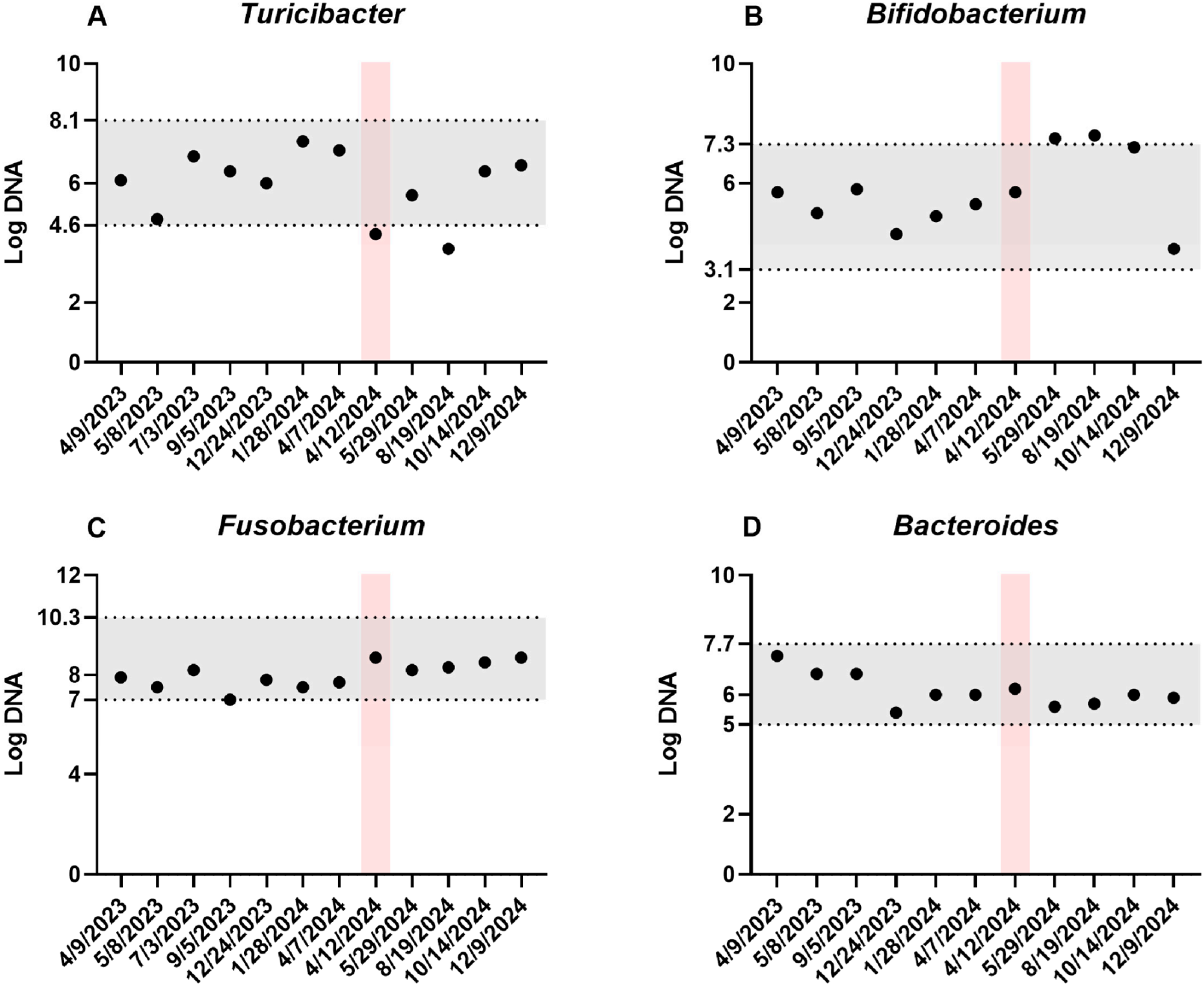

| Date | FMT# | History/Presenting Complaint | Treatment Changes | BW (kg) | Alb (2.7–4.4 g/dL) | Glob (1.6–3.6 g/dL) | CCECAI | DI (<0) |
|---|---|---|---|---|---|---|---|---|
| 23 December 2022 | -- | Lethargy, distended abdomen ×1 week, morning bile vomiting ×1 day, soft stool ×4 day, slower eating | On: telmisartan 10 mg, clopidogrel 37.5 mg PO q24h Started: Visbiome® 450 bcfu, maropitant 30 mg PO q24h | 32.3 | 1.2 | 2.8 | 9 | -- |
| 26 December 2022 | -- | Second opinion consult for PLN | Increased: maropitant to 60 mg PO q24h, telmisartan to 20 mg PO q24h Added 4 Nordic Naturals Omega 3 capsules PO q24h | 31.6 | -- | -- | -- | -- |
| 24 January 2022 | -- | Recheck PLN & suspected PLE Soft stool | Increased telmisartan to 30 mg PO q24h Started folic acid 400 mcg PO q24h, psyllium husk 2–3 tsp q12h | 30.5 | 2.1 | 2.4 | 5 | -- |
| 19 February 2023 | -- | Fecal score 4, malodorous flatulence Licking foot mass | Increased: telmisartan to 40 mg PO q24h, psyllium husk to 4 tsp PO q12h (2 weeks after) Prescribed Douxo® wipes for foot mass | 30.1 | 2.6 | 2.4 | 5 | -- |
| 11 March 2023 | -- | Regurgitation clear fluid & pollakiuria ×1 night, owner gave omeprazole (dose unknown), fecal score 4, gastritis/gastric ileus | Discharged the next day Started cisapride 15 mg PO q8h | 29.5 | -- | -- | -- | -- |
| 20 March 2023 | -- | No regurgitation post-discharge until this AM, fecal score 6 since discharge, nocturnal fecal urgency Non-regenerative anemia, progressive panhypoproteinemia | Increased cisapride to 20 mg PO q8h Added mycophenolate 250 mg PO q24h | 28.1 | 2.2 | 2.2 | 5 | -- |
| 3 April 2023 | -- | Fecal score 4, no regurgitation/vomiting Gastric ileus resolved | Owner increased psyllium husk to 4 tsp PO q8h with feedings decrease to 3 tsp PO q8h Decreased cisapride to 20 mg PO q12h | 28.7 | 1.8 | 2 | 6 | -- |
| 8 April 2023 | -- | Acute regurgitation, vomiting, diarrhea, hyporexia, lethargy, GI ileus | Hospitalized | 26 | -- | -- | -- | -- |
| 9 April 2023 | 1 | Transfer to IM | Discharged the next day Increased cisapride to 23 mg PO q8h Added prazosin 2 mg PO q12h for hematuria Pending urine culture | 25.5 | 1.9 | 2.3 | 15 | 2.9 |
| 24 April 2023 | 2 | No progression of diarrhea, vomited 1× prior week, improved energy | -- | 26.5 | 1.9 | 2.6 | 9 | -- |
| 8 May 2023 | -- | Hyporexia after FMT #2—responded to maropitant | -- | 27.4 | 1.9 | 2.4 | 3 | 5.5 |
| 23 May 2023 | 3 | Fecal score 4, Weight loss, Pruritic paws | Cytopoint® (Lokivetmab) | 26.6 | 2.1 | 2.6 | 4 | -- |
| 13 June 2023 | -- | PLE and paw wound. Increased food intake Fecal score 5, no vomiting | Discontinue mycophenolate. Taper cisapride to 17 mg PO q8h | 27.3 | 2.3 | 2.5 | 1 | -- |
| 3 July 2023 | 4 | Leaking urine and pollakiuria past 48 h No change in energy or GI signs Weight loss over the past 2 weeks | -- | 26.4 | 2 | 2.7 | 3 | 0 |
| 13 July 2023 | -- | Fecal score 5 since last recheck, leaking urine | Add Proin® (phenylpropanolamine) Taipei, China, 50 mg PO q12h | 26.8 | 2.3 | 2.4 | 4 | -- |
| 31 July 2023 | 5 | No urinary incontinence, fecal score 4 | -- | 27.1 | 2.2 | 2.4 | 1 | -- |
| 5 September 2023 | 6 | Fecal score 4–5, increased stool frequency 5 weeks since last FMT | Discontinue cisapride | 26.5 | 2.4 | 2.6 | 3 | 2.6 |
| 2 October 2023 | 7 | Fecal score 4, Defecates 3× daily | -- | 27.2 | 2.4 | 2.4 | 1 | -- |
| 30 October 2023 | 8 | Regurgitated 2× the week prior | -- | 27.7 | 2.2 | 2.2 | 2 | -- |
| 27 November 2023 | 9 | Improved energy | -- | 27.9 | 2.3 | 2.4 | 2 | -- |
| 24 December 2023 | 10 | Self-resolving mixed bowel diarrhea after eating chicken legs from the trash | Increase FMT interval to 5 weeks | 27.9 | 2.3 | 2.4 | 2 | 1.1 |
| 28 January 2024 | 11 | Intermittent softer stool, increased flatulence, licking paws more (owner stopped Apoquel® (oclacitinib) Kalamazoo, MI, USA) | Restart Apoquel® 16 mg PO q24h Start Advantix topical monthly | 27.9 | 2.3 | 2.4 | 5 | −2.1 |
| 25 February 2024 | 12 | -- | -- | -- | -- | -- | -- | -- |
| 12 March 2024 | 13 | Increased defecation frequency on day 5 after FMT (typically at least 2–3 weeks after q4 week FMT), lethargy, pica, possible nausea responsive to maropitant | Started 6 lyophilized fecal capsules/day ×3 weeks | 27.6 | 2.5 | 2.3 | 5 | -- |
| 7 April 2024 | 14 | Nocturnal fecal urgency resolved 1 vomiting episode the week prior | Discontinued folic acid | 27.9 | 2.5 | 2.3 | 2 | −1.3 |
| 12 April 2024 | -- | AHDS hospitalization— Large bowel diarrhea on 4/10/24, vomited undigested food, abdominal discomfort, neutropenia with fever | Started ampicillin/sulbactam and enrofloxacin Gave psyllium husk 1–2 tsp PO q8h via gel capsules | -- | 2.4 | 3.2 | -- | 5.2 |
| 14 April 2024 | -- | -- | -- | -- | 1.4 | 2.9 | -- | -- |
| 15 April 2024 | -- | Persistent diarrhea with mild hematochezia, improved appetite, afebrile | Discharged 16 Apr 2025 | -- | 1.6 | 2.7 | -- | -- |
| 29 April 2024 | 15 | Resolved hematochezia | -- | 27.4 | 2.7 | 2.8 | -- | -- |
| 5 May 2024 | -- | Large bowel diarrhea, vomiting Owner gave loperamide 3 mg, subsequent regurgitation and hyporexia Ate after maropitant and ondansetron | Discussed leflunomide— owner never started as diarrhea resolved | 28.9 | -- | -- | -- | -- |
| 29 May 2024 | 16 | Improved appetite Mild worsening of diarrhea 3–4 d post-FMT, then fecal score 3–4 | -- | 27.8 | 2.8 | 2.8 | -- | 6.3 |
| 26 June 2024 | 17 | -- | -- | 28.3 | 2.7 | -- | -- | |
| 22 July 2024 | 18 | Vomited 2–3× overnight since last FMT, but no vomiting for last 2 weeks, fecal score 4–5 | Restart FMT capsules—6 capsules/day × 3 weeks | 27.8 | 2.9 | 2.6 | 6 | -- |
| 19 August 2024 | 19 | Lethargic ×1 week more soft stool, vomited 2× last week Urinary incontinence | -- | 27.7 | 2.8 | 2.7 | 5 | 2.6 |
| 16 September 2024 | -- | Regurgitation | Restart cisapride 15 mg PO q8h | -- | 2.9 | 2.5 | 0 | -- |
| 14 October 2024 | 20 | Periodically needs freeze-dried cod treat to eat, owner giving cisapride intermittently q12h | -- | 29.4 | 2.9 | 2.3 | 1 | 2 |
| 11 November 2024 | 21 | Fecal score 2, urinated/defecated middle of night 2 nights prior | Taper cisapride | 30.5 | 3.3 | 2.4 | 0 | -- |
| 9 December 2024 | 22 | Nausea on 23/12/24, responded to maropitant & ondansetron ×1 day Owner abruptly stopped cisapride | -- | 30.7 | 3.1 | 2.6 | 0 | −2.5 |
| 6 January 2025 | 23 | Regurgitated 3× since last visit Fecal score 5 at time of regurgitation but improved without intervention | -- | 30.7 | 3.2 | 2.4 | 0 | -- |
| 3 February 2025 | 24 | Hyporexia few days, ate with cod treats as a food topper Fecal score 4 with some undigested food, vomit vs. regurgitation 3 consecutive days post-FMT | -- | 30.4 | 3.3 | 2.5 | 1 | -- |
| 28 February 2025 | -- | -- | -- | -- | -- | -- | -- | -- |
| 3 March 2025 | 25 | Depressed/slower to eat, pollakiuria (no stranguria) | Restart cisapride 16 mg PO q12h | 31.5 | 3.1 | 2.6 | 2 | -- |
| 31 March 2025 | 26 | Regurgitated 2× last week, eating without cod treats | -- | 30.7 | 3.1 | 2.7 | 0 | -- |
Disclaimer/Publisher’s Note: The statements, opinions and data contained in all publications are solely those of the individual author(s) and contributor(s) and not of MDPI and/or the editor(s). MDPI and/or the editor(s) disclaim responsibility for any injury to people or property resulting from any ideas, methods, instructions or products referred to in the content. |
© 2026 by the authors. Licensee MDPI, Basel, Switzerland. This article is an open access article distributed under the terms and conditions of the Creative Commons Attribution (CC BY) license.
Share and Cite
Schreiber, A.; Chen, C.-C.; Suchodolski, J.S.; Chow, B. Successful Management of a Dog with Protein-Losing Enteropathy and Concurrent Protein-Losing Nephropathy with Repeated Fecal Microbiota Transplantation. Pets 2026, 3, 4. https://doi.org/10.3390/pets3010004
Schreiber A, Chen C-C, Suchodolski JS, Chow B. Successful Management of a Dog with Protein-Losing Enteropathy and Concurrent Protein-Losing Nephropathy with Repeated Fecal Microbiota Transplantation. Pets. 2026; 3(1):4. https://doi.org/10.3390/pets3010004
Chicago/Turabian StyleSchreiber, Alexander, Chih-Chun Chen, Jan S. Suchodolski, and Betty Chow. 2026. "Successful Management of a Dog with Protein-Losing Enteropathy and Concurrent Protein-Losing Nephropathy with Repeated Fecal Microbiota Transplantation" Pets 3, no. 1: 4. https://doi.org/10.3390/pets3010004
APA StyleSchreiber, A., Chen, C.-C., Suchodolski, J. S., & Chow, B. (2026). Successful Management of a Dog with Protein-Losing Enteropathy and Concurrent Protein-Losing Nephropathy with Repeated Fecal Microbiota Transplantation. Pets, 3(1), 4. https://doi.org/10.3390/pets3010004