
West Nile Virus: Insights into Microbiology, Epidemiology, and Clinical Burden

 ,
,  ,
,  ,
,  ,
, 
 ,
,  ,
, 
Abstract
1. Introduction
2. Virology and Molecular Biology
2.1. Taxonomy and Phylogenetics
- Lineage 1: This lineage has the broadest global distribution and is historically associated with the most significant outbreaks of neuroinvasive disease. It is found in the Americas, Africa, Europe, Asia, and Australia. Lineage 1 is further divided into sub-lineages; notably, sub-lineage 1a is the strain responsible for the massive epidemic that began in North America in 1999 [10]. Sub-lineage 1b, also known as Kunjin virus, is primarily found in Oceania and is generally associated with a lower incidence of severe neurological symptoms [10].
- Lineage 2: This lineage was traditionally endemic to sub-Saharan Africa and Madagascar and was associated with sporadic, milder disease [11]. However, this static view of virulence has been challenged in recent years. Emergent, highly pathogenic strains of Lineage 2 have been responsible for major outbreaks of neuroinvasive disease in Europe, particularly in countries like Greece and Italy, since 2010 [11,12].
2.2. Virion and Genome Structure
2.3. The Viral Proteome
2.4. The Viral Replication Cycle
- Attachment and Entry: The cycle initiates when the viral E protein on the virion surface binds to cellular attachment factors, such as glycosaminoglycans, and subsequently to specific entry receptors on the host cell [2]. This interaction triggers internalization of the virus particle via clathrin-mediated endocytosis, enclosing it within an endosome [19].
- Fusion and Uncoating: As the endosome traffics into the cell interior, it undergoes maturation, a process accompanied by a drop in luminal pH from neutral to acidic. This acidic environment induces a dramatic and irreversible conformational rearrangement of the E protein dimers into fusogenic trimers. This change exposes a fusion loop that inserts into the endosomal membrane, driving the fusion of the viral envelope with the endosomal membrane and releasing the nucleocapsid into the cytoplasm. The nucleocapsid then disassembles, uncoating the viral RNA genome [2].
- Translation and Polyprotein Processing: Once free in the cytoplasm, the positive-sense genomic RNA is recognized by host ribosomes and immediately translated. This translation occurs on the surface of the endoplasmic reticulum (ER) and produces the single, large viral polyprotein. As it is being synthesized, the polyprotein is co- and post-translationally cleaved by the viral NS2B-NS3 protease and host proteases to release the ten individual mature structural and non-structural proteins [2].
- RNA Replication: The non-structural proteins induce and associate with invaginations of the ER membrane, forming specialized, vesicle-like structures known as replication complexes or “viral factories” [19]. These structures sequester the components of the replication machinery, concentrating reactants and shielding the viral RNA from host innate immune sensors. Within these protective vesicles, the NS5 RNA-dependent RNA polymerase (RdRp) uses the input genomic (+ssRNA) as a template to synthesize full-length, complementary negative-sense RNA intermediates (−ssRNA). These −ssRNA intermediates then serve as templates for the asymmetric and massive amplification of new progeny (+ssRNA) genomes [19].
- Assembly, Maturation, and Egress: Newly synthesized (+ssRNA) genomes are encapsidated by the C protein to form nucleocapsids. These nucleocapsids then bud into the lumen of the ER, acquiring a lipid envelope that is studded with the prM and E structural proteins. This process forms immature, non-infectious virions [19,20]. These immature particles are transported through the secretory pathway, moving from the ER to the Golgi apparatus. Within the acidic environment of the trans-Golgi network, the host protease furin cleaves the ‘pr’ portion of the prM protein. This cleavage is the final and critical maturation step; it causes a structural rearrangement that lays the E proteins flat against the viral surface, stabilizing them in their final, fusion-competent conformation. The now mature, infectious virions are packaged into transport vesicles and released from the cell via exocytosis [14,19].
3. Epidemiology and Transmission
3.1. Historical Emergence and Global Spread
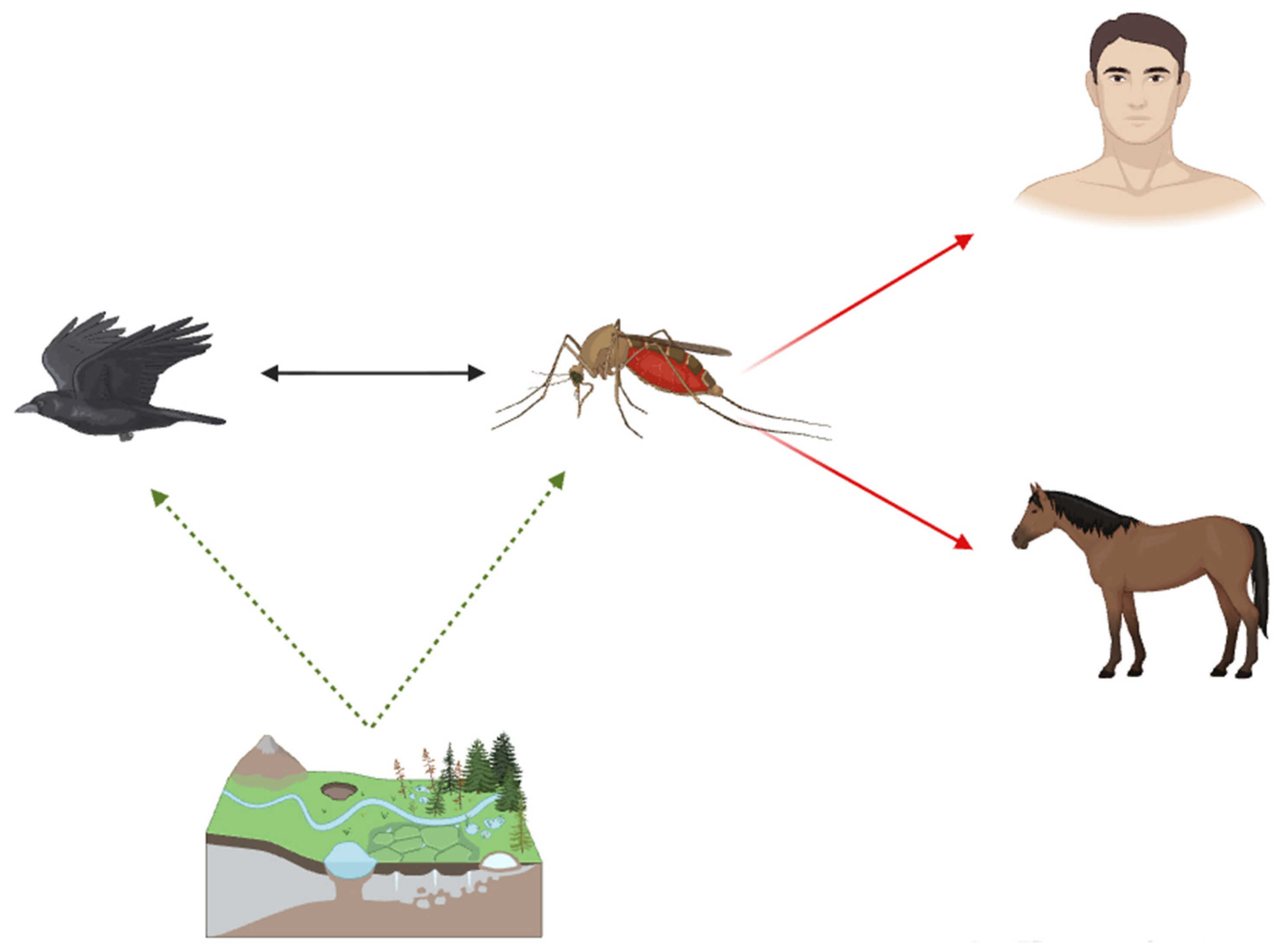
3.2. The Enzootic Transmission Cycle
- Mosquito Vectors: Mosquitoes of the genus Culex are the principal vectors of WNV globally [2]. In the United States, several species are critical to transmission, with their dominance varying geographically:
- Avian Reservoir Hosts: Birds are the cornerstone of the WNV transmission cycle because they serve as amplifying hosts. Following infection, many bird species develop levels of virus in their blood (viremia) that are high enough to infect feeding mosquitoes, thus sustaining and amplifying viral circulation in the environment [2]. While over 320 species of birds in the U.S. have been found to be infected, their roles in the transmission cycle are not equal [29]. Members of the crow family (Corvidae), such as American Crows and Blue Jays, are highly susceptible to WNV, often developing fatal illness. Their deaths serve as a sensitive and highly visible indicator of viral activity, making them valuable sentinels for public health surveillance [22]. However, from a transmission standpoint, species that are highly competent reservoirs—meaning they sustain high viremia but may not die from the infection—are more important for perpetuating the cycle. In much of North America, the American Robin (Turdus migratorius) is considered a “super-spreader” and a primary driver of transmission, as it develops high viremia and is a preferred food source for the primary Culex vectors [30,31,32]. The long-distance dispersal of WNV across continents and along major flyways is largely attributed to the movement of infected migratory birds, which introduce the virus into new regions [33,34,35,36].
3.3. Epizootic Spillover and Human Infection
- Blood Transfusion and Organ Transplantation: The recognition that WNV could be transmitted via the transplantation of solid organs or the transfusion of blood products from viremic, often asymptomatic, donors was a critical discovery in the early years of the U.S. epidemic. This led to the rapid development and implementation of highly sensitive nucleic acid amplification testing (NAAT) to screen the entire national blood supply. This public health intervention has been remarkably successful, virtually eliminating the risk of transfusion-transmitted WNV [38,39,40].
- Occupational Exposure: Percutaneous exposure through needlesticks or contact with infectious tissues or aerosols in a laboratory setting represents a known risk for researchers and healthcare workers [44].
3.4. Epidemiological Determinants and Risk
- Environmental and Seasonal Factors: In temperate climates, WNV transmission is strongly seasonal, with the vast majority of human cases occurring in the late summer and early fall (July through September), coinciding with the peak abundance and activity of adult Culex mosquitoes [36,47]. Environmental factors such as temperature and rainfall can significantly influence vector populations and viral replication rates [36,48]. Warmer temperatures can shorten the mosquito development cycle and accelerate the extrinsic incubation period (the time it takes for the virus to replicate in the mosquito and reach the salivary glands), thereby increasing transmission efficiency [48]. Geographically, the highest incidence rates in the U.S. are found in the central plains and western states [47].
- Behavioral and Occupational Factors: Any activity that increases exposure to mosquito bites elevates the risk of infection. This includes spending significant time outdoors, particularly during the peak biting hours of dusk and dawn [49]. Certain occupations that involve extensive outdoor work, such as agriculture and construction, or direct contact with the virus or its hosts, such as veterinary medicine and laboratory research, have been identified as carrying a higher risk of exposure [44].
- Host Factors for Severe Disease: While anyone can become infected, the risk of developing severe neuroinvasive disease is not uniform across the population. The single most important risk factor is advanced age, with individuals over the age of 50, and particularly those over 60, being at the highest risk for WNND and death [50,51].
Occupational Exposure and Work-Related Risk
4. Clinical Manifestations and Pathogenesis
4.1. The Spectrum of Human Disease
- Asymptomatic Infection: The vast majority of individuals infected with WNV, estimated at approximately 80%, remain completely asymptomatic [4,49,51]. They develop an immune response and clear the virus without ever knowing they were infected. This high rate of subclinical infection is a major factor in the underreporting of WNV prevalence and underscores the importance of blood supply screening, as asymptomatic donors can be viremic [38].
- West Nile Fever (WNF): Approximately 20% of infected people develop a symptomatic, non-neuroinvasive illness known as West Nile Fever [4,50,51]. WNF is typically an acute, self-limiting viral syndrome characterized by the abrupt onset of fever, headache, malaise, myalgia (muscle aches), and profound fatigue [4,50,51]. Gastrointestinal symptoms, including nausea, vomiting, and anorexia, are also frequently reported [4,50,51]. In up to half of WNF cases, patients may develop a transient, non-pruritic maculopapular rash, which characteristically appears on the trunk and extremities as the fever begins to subside [50,51]. While most patients with WNF recover fully within one to two weeks, a significant and often underappreciated aspect of the disease is the potential for prolonged post-viral sequelae. Many individuals, even those with initially “mild” illness, report debilitating fatigue, weakness, and cognitive difficulties (e.g., “brain fog”) that can persist for weeks or even months, significantly impacting their quality of life and ability to return to work or daily activities [54]. This represents a substantial hidden burden of WNV-associated morbidity.
- West Nile Neuroinvasive Disease (WNND): The most severe manifestation of WNV infection occurs in less than 1% of all infected people (approximately 1 in 150 to 1 in 200 infections) [4,51]. WNND results from the virus crossing the blood–brain barrier and infecting the central nervous system (CNS). It carries a case-fatality rate of approximately 10% and can result in severe, permanent neurological damage [15,51]. WNND encompasses three distinct clinical syndromes, which can occur alone or in combination:
- Meningitis: This is the least severe form of WNND and involves inflammation of the meninges, the membranes surrounding the brain and spinal cord. Patients present with fever, intense headache, photophobia, and nuchal rigidity (neck stiffness) but typically have a normal level of consciousness [4,51].
- Encephalitis: This is a more severe syndrome involving inflammation of the brain parenchyma itself. It is characterized by signs of cerebral dysfunction, including an altered mental status that can range from confusion, lethargy, and personality changes to deep stupor and coma [4,51,54]. Other common features include tremors (particularly of the limbs and face), seizures, and focal neurological deficits. The development of extrapyramidal signs, such as parkinsonism-like rigidity and bradykinesia, is a characteristic feature of West Nile encephalitis [51,54].
- Acute Flaccid Paralysis (AFP): This is a poliomyelitis-like syndrome caused by WNV-induced damage to the anterior horn cells of the spinal cord. It presents as the acute onset of limb weakness, which is often asymmetric and can progress rapidly over hours to days. In severe cases, it can affect the muscles of respiration, leading to acute respiratory failure that requires prolonged mechanical ventilation [51,55].
4.2. Immunopathogenesis
- Host Immune Control: The host employs a multi-layered defense against WNV.
- ○
- Innate Immunity: Type I interferons (IFN-α/β) represent the critical first line of defense. They are induced upon cellular recognition of viral RNA and establish an antiviral state in surrounding cells, which is essential for restricting initial viral replication and limiting dissemination to the CNS [58,61,62].
- ○
- Humoral Immunity: B-cell-produced antibodies, particularly neutralizing antibodies that target the viral E protein, are crucial for clearing free virus from the bloodstream (viremia) and preventing cell-to-cell spread [63,64]. The generation of a strong neutralizing antibody response is the primary goal of vaccination and the basis for experimental passive antibody therapies [64,65].
- ○
- Viral Evasion Strategies: To succeed, WNV must counteract these host defenses. The virus has evolved specific countermeasures, primarily mediated by its non-structural proteins. Several NS proteins, including NS1, NS2A, NS4B, and NS5, have been shown to be potent antagonists of the host interferon signaling pathway [61,67,68]. They act at various points in the pathway to block IFN production or the downstream signaling cascade, thereby delaying the establishment of an antiviral state and giving the virus a crucial head start to replicate before the host immune response can be fully mobilized [67,68,69].
5. Diagnosis, Management, and Prevention
5.1. Laboratory Diagnosis
- Serological Testing: The detection of WNV-specific Immunoglobulin M (IgM) antibodies in a patient’s serum or cerebrospinal fluid (CSF) is the most common method for diagnosing an acute infection [4,71,72]. WNV-specific IgM antibodies are typically detectable by ELISA 3 to 8 days after the onset of symptoms and can persist for 30 to 90 days, or occasionally longer [71,72,73]. Therefore, a positive IgM result provides strong evidence of a recent infection. However, if a sample is collected very early in the course of illness (within the first 8 days), an initial IgM test may be negative, and a repeat test on a convalescent sample may be necessary to confirm the diagnosis [72]. The detection of WNV-specific IgG antibodies, which appear shortly after IgM and can persist for years, indicates a past infection and is not useful for diagnosing acute disease on its own [4,72,73].
- The Challenge of Cross-Reactivity and Confirmatory Testing: A major limitation of flavivirus serology is the potential for antibody cross-reactivity [9,73]. Because of the structural similarities among viruses in the JEV serocomplex (like WNV and SLEV) and other co-circulating flaviviruses (like Dengue or Zika virus), an initial positive IgM ELISA result may not be specific to WNV [74]. For this reason, confirmatory testing with the Plaque Reduction Neutralization Test (PRNT) is often required [74]. The PRNT is the gold standard for flavivirus serology; it measures the titer of virus-specific neutralizing antibodies and can reliably differentiate the causative agent [45,75]. A fourfold or greater increase in the neutralizing antibody titer between acute- and convalescent-phase serum samples, collected 2 to 3 weeks apart, provides definitive confirmation of an acute WNV infection [45,75].
- Molecular Testing: Molecular testing using Reverse Transcription-Polymerase Chain Reaction (RT-PCR), particularly real-time RT-PCR (RT-qPCR), is the cornerstone for diagnosis in the early, acute phase of illness, before a robust antibody response has developed [9,45]. While viremia in immunocompetent patients is often transient, making serum a challenging sample [76,77]. RT-PCR remains the preferred method for testing cerebrospinal fluid (CSF) in patients with suspected neuroinvasive disease and for diagnosing immunocompromised patients, who may have prolonged viremia and an attenuated antibody response [45,78]. Furthermore, viral RNA can be detected in urine for longer periods than in blood, sometimes beyond 7 days post-symptom onset, making it a valuable non-invasive specimen for diagnosis [78]. Studies also suggest that whole blood may be a more sensitive specimen than serum for WNV RNA detection [77].
5.2. Clinical Management and Treatment
- Management of West Nile Fever: For patients with the milder, non-neuroinvasive form of the disease, treatment is symptomatic. This includes rest, ensuring adequate fluid intake to prevent dehydration, and the use of over-the-counter analgesics (e.g., acetaminophen) for fever and myalgia, and antiemetics for nausea and vomiting [4,71].
- Management of West Nile Neuroinvasive Disease: Patients with WNND require hospitalization for close monitoring and intensive supportive care [4,14,51]. Management strategies may include intravenous fluids to maintain hydration and electrolyte balance, aggressive pain control for severe headaches, and anti-seizure medications if convulsions occur [4,79]. For patients with severe encephalitis or AFP leading to an inability to protect their airway or progressing to respiratory failure, critical care support with endotracheal intubation and mechanical ventilation may be life-saving [51,79]. Over the past two decades, various experimental therapeutics have been investigated for WNV disease, but none have demonstrated clear efficacy in well-controlled, randomized clinical trials [14,70].
- Monoclonal Antibodies: A high-affinity humanized monoclonal antibody (MGAWN1) targeting the WNV E protein showed promise in preclinical studies [64]. However, a Phase 1/2 clinical trial was terminated early due to difficulty with enrolment, highlighting the logistical challenges of studying therapies for a sporadic, seasonal disease [90].
5.3. Prevention and Public Health Control
- Integrated Mosquito Management (IMM): This is the cornerstone of community-level prevention and aims to reduce vector populations [94].
- ○
- Surveillance: The foundation of any IMM program is robust surveillance. This involves trapping adult mosquitoes to monitor species abundance and test for WNV infection, as well as monitoring sentinel animal populations, such as chickens or dead birds, to provide an early warning of viral activity in a given area [9,95]. This data is crucial for guiding the timing and location of control measures.
- ○
- Source Reduction: The most effective and sustainable long-term strategy is eliminating mosquito breeding sites. This primarily involves public education campaigns that empower residents to remove sources of standing water on their property, such as in discarded tires, buckets, planters, and clogged rain gutters, where Culex mosquitoes lay their eggs [94,96].
- ○
- Larviciding and Adulticiding: When surveillance indicates a high risk to human health, chemical control methods are employed. Larvicides are applied to standing water bodies that cannot be drained to kill mosquito larvae before they emerge as adults [27]. Adulticiding, or “fogging,” which involves the ground or aerial spraying of insecticides, is used as a reactive measure to rapidly reduce the population of infected adult mosquitoes during an outbreak [27,97].
- Personal Protective Measures: Individual behavior is a critical component of prevention [98]. Public health messaging focuses on:
- ○
- ○
- Wearing Protective Clothing: Long-sleeved shirts and long pants can minimize exposed skin available for mosquito bites [98].
- ○
- Avoiding Peak Biting Times: Limiting outdoor activity during the hours of dusk and dawn, when Culex mosquitoes are most active, can reduce exposure [43].
- ○
- Using Screens: Ensuring that windows and doors on homes have intact screens to keep mosquitoes out [43].
- Blood and Organ Supply Safety: To prevent iatrogenic transmission, all blood donations in the United States are screened for WNV RNA using NAAT, a public health success that has virtually eliminated this transmission route. Similar strategies have been adopted across Europe, tailored to local epidemiological risk. For instance, France has implemented a comprehensive strategy that includes systematic screening in high-risk areas during transmission seasons and deferral criteria for donors returning from endemic zones to safeguard both solid organ and hematopoietic stem cell grafts [40,101,102]. Furthermore, individuals with a confirmed WNV infection are deferred from donating blood for 120 days (4 months) following their illness [101].
One Health Approach
6. Future Directions and Conclusion
6.1. Vaccine Development: The Unfinished Race
- The Epidemiological/Logistical Barrier: WNV outbreaks are sporadic, seasonal, and unpredictable in their geographic location and intensity from year to year. This epidemiological pattern makes it extraordinarily difficult and expensive to plan and execute traditional, large-scale Phase III efficacy trials, which require enrolling thousands of participants in a region where a significant outbreak is guaranteed to occur to demonstrate a statistically significant reduction in disease [112,113].
- The Economic Barrier: The primary target population for a WNV vaccine is older adults. From a commercial standpoint, the high cost of conducting large-scale Phase III efficacy trials is difficult to justify for a disease with a sporadic and unpredictable incidence, creating a challenging economic model for pharmaceutical investment and dampening commercial interest in late-stage development [5,114].
- The Scientific/Regulatory Barrier: A major safety concern for any flavivirus vaccine is the theoretical risk of antibody-dependent enhancement (ADE). This phenomenon, best described for dengue virus, occurs when non-neutralizing or sub-neutralizing antibodies from a previous infection or vaccination bind to a different flavivirus and enhance its uptake into immune cells, potentially leading to a more severe infection [115]. Given the increasing co-circulation of WNV with other flaviviruses like Zika and St. Louis encephalitis virus, the potential for vaccine-induced antibodies to worsen a subsequent infection raises the safety bar for regulatory approval significantly [92,116].
6.2. Unanswered Questions and Research Priorities
- Therapeutics: The development of a potent, specific, and orally bioavailable antiviral drug for WNV remains a top priority [119,120]. Targeting the essential viral enzymes, such as the NS3 protease/helicase or the NS5 polymerase, or pursuing novel strategies that target the functional RNA structures of the viral genome, are promising avenues for future research [121,122,123].
- Predictive Modeling: Enhancing the accuracy of epidemiological models to forecast the time, location, and intensity of future outbreaks is critical [124,125]. Integrating climate data, vector surveillance, avian host data, and human case data into sophisticated predictive models could allow public health officials to deploy limited resources for vector control and public education more efficiently and proactively [124,126,127].
- Pathogenesis: A deeper understanding of the molecular mechanisms of viral neuroinvasion and the specific host factors that determine why one individual remains asymptomatic while another develops fatal encephalitis is urgently needed [20,128]. Elucidating the biological basis of the long-term cognitive and physical sequelae that afflict many survivors is also a critical area for future study [128,129,130].
- Ecology and Evolution: Continuous genomic surveillance of WNV strains circulating in nature is essential to monitor for the emergence of new, more virulent mutations or shifts in lineage distribution [131,132] Likewise, ongoing research into vector-host dynamics is necessary to understand how factors like climate change and land use may alter transmission patterns in the future [133,134,135].
7. Conclusions
Author Contributions
Funding
Institutional Review Board Statement
Informed Consent Statement
Data Availability Statement
Conflicts of Interest
References
- Saydam, F.N.; Erdem, H.; Ankarali, H.; El-Arab Ramadan, M.E.; El-Sayed, N.M.; Civljak, R.; Pshenichnaya, N.; Moroti, R.V.; Mahmuodabad, F.M.; Maduka, A.V.; et al. Vector-Borne and Zoonotic Infections and Their Relationships with Regional and Socioeconomic Statuses: An ID-IRI Survey in 24 Countries of Europe, Africa and Asia. Travel. Med. Infect. Dis. 2021, 44, 102174. [Google Scholar] [CrossRef] [PubMed]
- Brinton, M.A. The Molecular Biology of West Nile Virus: A New Invader of the Western Hemisphere. Annu. Rev. Microbiol. 2002, 56, 371–402. [Google Scholar] [CrossRef]
- Hayes, E.B.; Komar, N.; Nasci, R.S.; Montgomery, S.P.; O’Leary, D.R.; Campbell, G.L. Epidemiology and Transmission Dynamics of West Nile Virus Disease. Emerg. Infect. Dis. 2005, 11, 1167–1173. [Google Scholar] [CrossRef]
- Petersen, L.R.; Brault, A.C.; Nasci, R.S. West Nile Virus: Review of the Literature. JAMA 2013, 310, 308–315. [Google Scholar] [CrossRef]
- Barrett, A.D.T. Economic Burden of West Nile Virus in the United States. Am. J. Trop. Med. Hyg. 2014, 90, 389–390. [Google Scholar] [CrossRef]
- Odigie, A.E.; Stufano, A.; Schino, V.; Zarea, A.A.K.; Ndiana, L.A.; Mrenoshki, D.; Ugochukwu, I.C.I.; Lovreglio, P.; Greco, G.; Pratelli, A.; et al. West Nile Virus Infection in Occupational Settings—A Systematic Review. Pathogens 2024, 13, 157. [Google Scholar] [CrossRef]
- Asnis, D.S.; Conetta, R.; Teixeira, A.A.; Waldman, G.; Sampson, B.A. The West Nile Virus Outbreak of 1999 in New York: The Flushing Hospital Experience. Clin. Infect. Dis. 2000, 30, 413–418. [Google Scholar] [CrossRef]
- Colpitts, T.M.; Conway, M.J.; Montgomery, R.R.; Fikrig, E. West Nile Virus: Biology, Transmission, and Human Infection. Clin. Microbiol. Rev. 2012, 25, 635–648. [Google Scholar] [CrossRef] [PubMed]
- CDC West Nile Virus. Available online: https://www.cdc.gov/west-nile-virus/index.html (accessed on 12 August 2025).
- Hubálek, Z.; Halouzka, J. West Nile Fever–a Reemerging Mosquito-Borne Viral Disease in Europe. Emerg. Infect. Dis. 1999, 5, 643–650. [Google Scholar] [CrossRef]
- Visser, I.; Marshall, E.M.; Agliani, G.; Rissmann, M.; van den Brand, J.M.A.; Koopmans, M.P.G.; Rockx, B. In Vitro and In Vivo Characterization of a Novel West Nile Virus Lineage 2 Strain. NPJ Viruses 2024, 2, 61. [Google Scholar] [CrossRef]
- Koch, R.T.; Erazo, D.; Folly, A.J.; Johnson, N.; Dellicour, S.; Grubaugh, N.D.; Vogels, C.B.F. Genomic Epidemiology of West Nile Virus in Europe. One Health 2024, 18, 100664. [Google Scholar] [CrossRef] [PubMed]
- Ulbert, S. West Nile Virus Vaccines—Current Situation and Future Directions. Hum. Vaccin. Immunother. 2019, 15, 2337–2342. [Google Scholar] [CrossRef]
- Habarugira, G.; Suen, W.W.; Hobson-Peters, J.; Hall, R.A.; Bielefeldt-Ohmann, H. West Nile Virus: An Update on Pathobiology, Epidemiology, Diagnostics, Control and “One Health” Implications. Pathogens 2020, 9, 589. [Google Scholar] [CrossRef]
- Gould, C.V.; Staples, J.E.; Guagliardo, S.A.J.; Martin, S.W.; Lyons, S.; Hills, S.L.; Nett, R.J.; Petersen, L.R. West Nile Virus: A Review. JAMA 2025, 334, 618. [Google Scholar] [CrossRef]
- Bignon, E.; Marazzi, M.; Miclot, T.; Barone, G.; Monari, A. Specific Recognition of the 5′-Untranslated Region of West Nile Virus Genome by Human Innate Immune System. Viruses 2022, 14, 1282. [Google Scholar] [CrossRef]
- Terrell, J.R.; Le, T.T.; Paul, A.; Brinton, M.A.; Wilson, W.D.; Poon, G.M.K.; Germann, M.W.; Siemer, J.L. Structure of an RNA G-Quadruplex from the West Nile Virus Genome. Nat. Commun. 2024, 15, 5428. [Google Scholar] [CrossRef] [PubMed]
- Huston, N.C.; Tsao, L.H.; Brackney, D.E.; Pyle, A.M. The West Nile Virus Genome Harbors Essential Riboregulatory Elements with Conserved and Host-Specific Functional Roles. Proc. Natl. Acad. Sci. USA 2024, 121, e2312080121. [Google Scholar] [CrossRef]
- Brinton, M.A. Replication Cycle and Molecular Biology of the West Nile Virus. Viruses 2013, 6, 13–53. [Google Scholar] [CrossRef]
- Suthar, M.S.; Diamond, M.S.; Gale, M. West Nile Virus Infection and Immunity. Nat. Rev. Microbiol. 2013, 11, 115–128. [Google Scholar] [CrossRef]
- Seregin, A.; Nistler, R.; Borisevich, V.; Yamshchikov, G.; Chaporgina, E.; Kwok, C.W.; Yamshchikov, V. Immunogenicity of West Nile Virus Infectious DNA and Its Noninfectious Derivatives. Virology 2006, 356, 115–125. [Google Scholar] [CrossRef] [PubMed]
- Weekly Updates: 2025 West Nile Virus Transmission Season. Available online: https://www.ecdc.europa.eu/en/west-nile-fever/surveillance-and-disease-data/disease-data-ecdc (accessed on 12 August 2025).
- Kramer, L.D.; Styer, L.M.; Ebel, G.D. A Global Perspective on the Epidemiology of West Nile Virus. Annu. Rev. Entomol. 2008, 53, 61–81. [Google Scholar] [CrossRef] [PubMed]
- Matta, N.E.; Gaitán-Albarracín, F.A.; Fuentes-Rodríguez, G.A.; Rodríguez-Fandiño, Ó.A.; Calixto-Botía, I.F.; Correa-Higuera, L.J. Survey of West Nile Virus Infection in Wildlife Species in the Orinoquia Region of Colombia. Front. Microbiol. 2025, 16, 1548538. [Google Scholar] [CrossRef] [PubMed]
- Lorenz, C.; Chiaravalloti-Neto, F. Why Are There No Human West Nile Virus Outbreaks in South America? Lancet Reg. Health–Am. 2022, 12, 100276. [Google Scholar] [CrossRef]
- CDC Transmission of West Nile Virus. Available online: https://www.cdc.gov/west-nile-virus/php/transmission/index.html (accessed on 1 November 2025).
- Turell, M.J.; Dohm, D.J.; Sardelis, M.R.; O’guinn, M.L.; Andreadis, T.G.; Blow, J.A. An Update on the Potential of North American Mosquitoes (Diptera: Culicidae) to Transmit West Nile Virus. J. Med. Entomol. 2005, 42, 57–62. [Google Scholar] [CrossRef]
- Kilpatrick, A.M.; Meola, M.A.; Moudy, R.M.; Kramer, L.D. Temperature, Viral Genetics, and the Transmission of West Nile Virus by Culex Pipiens Mosquitoes. PLoS Pathog. 2008, 4, e1000092. [Google Scholar] [CrossRef]
- Where in the United States Has West Nile Virus Been Detected in Wildlife?|U.S. Geological Survey. Available online: https://www.usgs.gov/faqs/where-united-states-has-west-nile-virus-been-detected-wildlife (accessed on 12 August 2025).
- Riccetti, N.; Fasano, A.; Ferraccioli, F.; Gomez-Ramirez, J.; Stilianakis, N.I. Host Selection and Forage Ratio in West Nile Virus-Transmitting Culex Mosquitoes: Challenges and Knowledge Gaps. PLoS Negl. Trop. Dis. 2022, 16, e0010819. [Google Scholar] [CrossRef]
- Vaughan, J.A.; Newman, R.A.; Turell, M.J. Bird Species Define the Relationship between West Nile Viremia and Infectiousness to Culex Pipiens Mosquitoes. PLoS Negl. Trop. Dis. 2022, 16, e0010835. [Google Scholar] [CrossRef] [PubMed]
- Jahn, A.E.; Koller, K.; Martin, L.B.; Smiley, T.M.; Verrett, T.B.; Ketterson, E.D.; Williams, E.J.; Becker, D.J. Movement-Related Drivers of Exposure to West Nile Virus by American Robins (Turdus migratorius). bioRxiv 2023. [Google Scholar] [CrossRef]
- Owen, J.; Moore, F.; Panella, N.; Edwards, E.; Bru, R.; Hughes, M.; Komar, N. Migrating Birds as Dispersal Vehicles for West Nile Virus. EcoHealth 2006, 3, 79–85. [Google Scholar] [CrossRef]
- Swetnam, D.; Widen, S.G.; Wood, T.G.; Reyna, M.; Wilkerson, L.; Debboun, M.; Symonds, D.A.; Mead, D.G.; Beaty, B.J.; Guzman, H.; et al. Terrestrial Bird Migration and West Nile Virus Circulation, United States. Emerg. Infect. Dis. 2018, 24, 2184–2194. [Google Scholar] [CrossRef]
- Moon, S.A.; Cohnstaedt, L.W.; McVey, D.S.; Scoglio, C.M. A Spatio-Temporal Individual-Based Network Framework for West Nile Virus in the USA: Spreading Pattern of West Nile Virus. PLoS Comput. Biol. 2019, 15, e1006875. [Google Scholar] [CrossRef]
- Reisen, W.K.; Wheeler, S.S.; Garcia, S.; Fang, Y. Migratory Birds and the Dispersal of Arboviruses in California. Am. J. Trop. Med. Hyg. 2010, 83, 808–815. [Google Scholar] [CrossRef]
- Chancey, C.; Grinev, A.; Volkova, E.; Rios, M. The Global Ecology and Epidemiology of West Nile Virus. Biomed. Res. Int. 2015, 2015, 376230. [Google Scholar] [CrossRef]
- Pealer, L.N.; Marfin, A.A.; Petersen, L.R.; Lanciotti, R.S.; Page, P.L.; Stramer, S.L.; Stobierski, M.G.; Signs, K.; Newman, B.; Kapoor, H.; et al. Transmission of West Nile Virus through Blood Transfusion in the United States in 2002. N. Engl. J. Med. 2003, 349, 1236–1245. [Google Scholar] [CrossRef]
- Iwamoto, M.; Jernigan, D.B.; Guasch, A.; Trepka, M.J.; Blackmore, C.G.; Hellinger, W.C.; Pham, S.M.; Zaki, S.; Lanciotti, R.S.; Lance-Parker, S.E.; et al. Transmission of West Nile Virus from an Organ Donor to Four Transplant Recipients. N. Engl. J. Med. 2003, 348, 2196–2203. [Google Scholar] [CrossRef]
- Stramer, S.L.; Fang, C.T.; Foster, G.A.; Wagner, A.G.; Brodsky, J.P.; Dodd, R.Y. West Nile Virus among Blood Donors in the United States, 2003 and 2004. N. Engl. J. Med. 2005, 353, 451–459. [Google Scholar] [CrossRef]
- Alpert, S.G.; Fergerson, J.; Noël, L.P. Intrauterine West Nile Virus: Ocular and Systemic Findings. Am. J. Ophthalmol. 2003, 136, 733–735. [Google Scholar] [CrossRef]
- Hinckley, A.F.; O’Leary, D.R.; Hayes, E.B. Transmission of West Nile Virus through Human Breast Milk Seems to Be Rare. Pediatrics 2007, 119, e666–e671. [Google Scholar] [CrossRef] [PubMed]
- Skupski, D.W.; Eglinton, G.S.; Fine, A.D.; Hayes, E.B.; O’Leary, D.R. West Nile Virus during Pregnancy: A Case Study of Early Second Trimester Maternal Infection. Fetal Diagn. Ther. 2006, 21, 293–295. [Google Scholar] [CrossRef] [PubMed]
- Centers for Disease Control and Prevention (CDC) Laboratory-Acquired West Nile Virus Infections—United States, 2002. MMWR Morb. Mortal. Wkly. Rep. 2002, 51, 1133–1135.
- Lanciotti, R.S.; Kerst, A.J.; Nasci, R.S.; Godsey, M.S.; Mitchell, C.J.; Savage, H.M.; Komar, N.; Panella, N.A.; Allen, B.C.; Volpe, K.E.; et al. Rapid Detection of West Nile Virus from Human Clinical Specimens, Field-Collected Mosquitoes, and Avian Samples by a TaqMan Reverse Transcriptase-PCR Assay. J. Clin. Microbiol. 2000, 38, 4066–4071. [Google Scholar] [CrossRef] [PubMed]
- Komar, N.; Langevin, S.; Hinten, S.; Nemeth, N.M.; Edwards, E.; Hettler, D.L.; Davis, B.S.; Bowen, R.A.; Bunning, M.L. Experimental Infection of North American Birds with the New York 1999 Strain of West Nile Virus. Emerg. Infect. Dis. 2003, 9, 311. [Google Scholar] [CrossRef]
- Eidson, M.; Miller, J.; Kramer, L.; Cherry, B.; Hagiwara, Y. Dead Crow Densities and Human Cases of West Nile Virus, New York State, 2000. Emerg. Infect. Dis. 2001, 7, 662–664. [Google Scholar] [CrossRef]
- Soverow, J.E.; Wellenius, G.A.; Fisman, D.N.; Mittleman, M.A. Infectious Disease in a Warming World: How Weather Influenced West Nile Virus in the United States (2001–2005). Environ. Health Perspect. 2009, 117, 1049–1052. [Google Scholar] [CrossRef]
- Mostashari, F.; Bunning, M.L.; Kitsutani, P.T.; Singer, D.A.; Nash, D.; Cooper, M.J.; Katz, N.; Liljebjelke, K.A.; Biggerstaff, B.J.; Fine, A.D.; et al. Epidemic West Nile Encephalitis, New York, 1999: Results of a Household-Based Seroepidemiological Survey. Lancet 2001, 358, 261–264. [Google Scholar] [CrossRef]
- O’Leary, D.R.; Marfin, A.A.; Montgomery, S.P.; Kipp, A.M.; Lehman, J.A.; Biggerstaff, B.J.; Elko, V.L.; Collins, P.D.; Jones, J.E.; Campbell, G.L. The Epidemic of West Nile Virus in the United States, 2002. Vector Borne Zoonotic Dis. 2004, 4, 61–70. [Google Scholar] [CrossRef]
- Sejvar, J.J. Clinical Manifestations and Outcomes of West Nile Virus Infection. Viruses 2014, 6, 606–623. [Google Scholar] [CrossRef]
- Stufano, A.; Schino, V.; Sacino, G.; Ravallese, R.; Ravallese, R.; De Benedictis, L.; Morea, A.; Iatta, R.; Giannecchini, S.; Stincarelli, M.A.; et al. West Nile Virus Seroprevalence Among Outdoor Workers in Southern Italy: Unveiling Occupational Risks and Public Health Implications. Viruses 2025, 17, 310. [Google Scholar] [CrossRef] [PubMed]
- Sattler, T.; Benka, B.; Zimpernik, I.; Pürrer, S.; Waldner, K.; Duscher, G.G.; Kuffer-Rosewick, A.; Fertey, J.; Ulbert, S.; Schmoll, F. Retrospective Cross-Sectional Study of Occupational Infection Risk with Zoonotic Pathogens in Austrian Veterinary Practitioners in the Year 2022. Vet. Med. Sci. 2025, 11, e70485. [Google Scholar] [CrossRef]
- Murray, K.O.; Garcia, M.N.; Rahbar, M.H.; Martinez, D.; Khuwaja, S.A.; Arafat, R.R.; Rossmann, S. Survival Analysis, Long-Term Outcomes, and Percentage of Recovery up to 8 Years Post-Infection among the Houston West Nile Virus Cohort. PLoS ONE 2014, 9, e102953. [Google Scholar] [CrossRef] [PubMed]
- Leis, A.A.; Stokic, D.S. Neuromuscular Manifestations of West Nile Virus Infection. Front. Neurol. 2012, 3, 37. [Google Scholar] [CrossRef]
- Shrestha, B.; Diamond, M.S. Role of CD8+ T Cells in Control of West Nile Virus Infection. J. Virol. 2004, 78, 8312–8321. [Google Scholar] [CrossRef]
- Klein, R.S.; Hunter, C.A. Protective and Pathological Immunity during Central Nervous System Infections. Immunity 2017, 46, 891–909. [Google Scholar] [CrossRef]
- Hyde, J.L.; Diamond, M.S. Innate Immune Restriction and Antagonism of Viral RNA Lacking 2’-O Methylation. Virology 2015, 479–480, 66–74. [Google Scholar] [CrossRef]
- Shrestha, B.; Samuel, M.A.; Diamond, M.S. CD8+ T Cells Require Perforin To Clear West Nile Virus from Infected Neurons. J. Virol. 2006, 80, 119–129. [Google Scholar] [CrossRef]
- Wang, T.; Town, T.; Alexopoulou, L.; Anderson, J.F.; Fikrig, E.; Flavell, R.A. Toll-like Receptor 3 Mediates West Nile Virus Entry into the Brain Causing Lethal Encephalitis. Nat. Med. 2004, 10, 1366–1373. [Google Scholar] [CrossRef] [PubMed]
- Best, S.M. The Many Faces of the Flavivirus NS5 Protein in Antagonism of Type I Interferon Signaling. J. Virol. 2017, 91, e01970-16. [Google Scholar] [CrossRef] [PubMed]
- Samuel, M.A.; Diamond, M.S. Alpha/Beta Interferon Protects against Lethal West Nile Virus Infection by Restricting Cellular Tropism and Enhancing Neuronal Survival. J. Virol. 2005, 79, 13350–13361. [Google Scholar] [CrossRef] [PubMed]
- Diamond, M.S.; Shrestha, B.; Mehlhop, E.; Sitati, E.; Engle, M. Innate and Adaptive Immune Responses Determine Protection against Disseminated Infection by West Nile Encephalitis Virus. Viral Immunol. 2003, 16, 259–278. [Google Scholar] [CrossRef]
- Oliphant, T.; Engle, M.; Nybakken, G.E.; Doane, C.; Johnson, S.; Huang, L.; Gorlatov, S.; Mehlhop, E.; Marri, A.; Chung, K.M.; et al. Development of a Humanized Monoclonal Antibody with Therapeutic Potential against West Nile Virus. Nat. Med. 2005, 11, 522–530. [Google Scholar] [CrossRef]
- Zhang, S.; Vogt, M.R.; Oliphant, T.; Engle, M.; Bovshik, E.I.; Diamond, M.S.; Beasley, D.W.C. The Development of Resistance to Passive Therapy by a Potently Neutralizing Humanized West Nile Virus Monoclonal Antibody. J. Infect. Dis. 2009, 200, 202–205. [Google Scholar] [CrossRef]
- Sitati, E.M.; Diamond, M.S. CD4+ T-Cell Responses Are Required for Clearance of West Nile Virus from the Central Nervous System. J. Virol. 2006, 80, 12060–12069. [Google Scholar] [CrossRef]
- Liu, W.J.; Wang, X.J.; Mokhonov, V.V.; Shi, P.-Y.; Randall, R.; Khromykh, A.A. Inhibition of Interferon Signaling by the New York 99 Strain and Kunjin Subtype of West Nile Virus Involves Blockage of STAT1 and STAT2 Activation by Nonstructural Proteins. J. Virol. 2005, 79, 1934–1942. [Google Scholar] [CrossRef]
- Keller, B.C.; Fredericksen, B.L.; Samuel, M.A.; Mock, R.E.; Mason, P.W.; Diamond, M.S.; Gale, M. Resistance to Alpha/Beta Interferon Is a Determinant of West Nile Virus Replication Fitness and Virulence. J. Virol. 2006, 80, 9424–9434. [Google Scholar] [CrossRef]
- Pan, Y.; Cai, W.; Cheng, A.; Wang, M.; Yin, Z.; Jia, R. Flaviviruses: Innate Immunity, Inflammasome Activation, Inflammatory Cell Death, and Cytokines. Front. Immunol. 2022, 13, 829433. [Google Scholar] [CrossRef] [PubMed]
- Anderson, J.F.; Rahal, J.J. Efficacy of Interferon α-2b and Ribavirin against West Nile Virus In Vitro. Emerg. Infect. Dis. 2002, 8, 107. [Google Scholar] [CrossRef] [PubMed]
- CDC West Nile Virus Disease Therapeutics: Review of the Literature. Available online: https://www.cdc.gov/west-nile-virus/hcp/treatment-prevention/therapeutics-review.html (accessed on 12 August 2025).
- Prince, H.E.; Tobler, L.H.; Yeh, C.; Gefter, N.; Custer, B.; Busch, M.P. Persistence of West Nile Virus-Specific Antibodies in Viremic Blood Donors. Clin. Vaccine Immunol. 2007, 14, 1228–1230. [Google Scholar] [CrossRef] [PubMed]
- Roehrig, J.T.; Nash, D.; Maldin, B.; Labowitz, A.; Martin, D.A.; Lanciotti, R.S.; Campbell, G.L. Persistence of Virus-Reactive Serum Immunoglobulin m Antibody in Confirmed West Nile Virus Encephalitis Cases. Emerg. Infect. Dis. 2003, 9, 376–379. [Google Scholar] [CrossRef] [PubMed]
- Martin, D.A.; Biggerstaff, B.J.; Allen, B.; Johnson, A.J.; Lanciotti, R.S.; Roehrig, J.T. Use of Immunoglobulin M Cross-Reactions in Differential Diagnosis of Human Flaviviral Encephalitis Infections in the United States. Clin. Diagn. Lab. Immunol. 2002, 9, 544–549. [Google Scholar] [CrossRef] [PubMed]
- Diagnostic Procedures for Viral, Rickettsial and Chlamydial Infections—National Library of Medicine Institution. Available online: https://catalog.nlm.nih.gov/discovery/fulldisplay/alma995260023406676/01NLM_INST:01NLM_INST (accessed on 18 August 2025).
- Vilibic-Cavlek, T.; Bogdanic, M.; Savic, V.; Hruskar, Z.; Barbic, L.; Stevanovic, V.; Antolasic, L.; Milasincic, L.; Sabadi, D.; Miletic, G.; et al. Diagnosis of West Nile Virus Infections: Evaluation of Different Laboratory Methods. World J. Virol. 2024, 13, 95986. [Google Scholar] [CrossRef]
- Lustig, Y.; Mannasse, B.; Koren, R.; Katz-Likvornik, S.; Hindiyeh, M.; Mandelboim, M.; Dovrat, S.; Sofer, D.; Mendelson, E. Superiority of West Nile Virus RNA Detection in Whole Blood for Diagnosis of Acute Infection. J. Clin. Microbiol. 2016, 54, 2294–2297. [Google Scholar] [CrossRef] [PubMed]
- Anastasiadou, A.; Kakoulidis, I.; Butel, D.; Kehagia, E.; Papa, A. Follow-up Study of Greek Patients with West Nile Virus Neuroinvasive Disease. Int. J. Infect. Dis. 2013, 17, e494–e497. [Google Scholar] [CrossRef] [PubMed]
- Carrasco, L.; Utrilla, M.J.; Fuentes-Romero, B.; Fernandez-Novo, A.; Martin-Maldonado, B. West Nile Virus: An Update Focusing on Southern Europe. Microorganisms 2024, 12, 2623. [Google Scholar] [CrossRef] [PubMed]
- Shimoni, Z.; Niven, M.J.; Pitlick, S.; Bulvik, S. Treatment of West Nile Virus Encephalitis with Intravenous Immunoglobulin. Emerg. Infect. Dis. 2001, 7, 759. [Google Scholar] [CrossRef]
- Haley, M.; Retter, A.S.; Fowler, D.; Gea-Banacloche, J.; O’Grady, N.P. The Role for Intravenous Immunoglobulin in the Treatment of West Nile Virus Encephalitis. Clin. Infect. Dis. 2003, 37, e88–e90. [Google Scholar] [CrossRef]
- Hamdan, A.; Green, P.; Mendelson, E.; Kramer, M.R.; Pitlik, S.; Weinberger, M. Possible Benefit of Intravenous Immunoglobulin Therapy in a Lung Transplant Recipient with West Nile Virus Encephalitis. Transpl. Infect. Dis. 2002, 4, 160–162. [Google Scholar] [CrossRef]
- Kalil, A.C.; Devetten, M.P.; Singh, S.; Lesiak, B.; Poage, D.P.; Bargenquast, K.; Fayad, P.; Freifeld, A.G. Use of Interferon-Alpha in Patients with West Nile Encephalitis: Report of 2 Cases. Clin. Infect. Dis. 2005, 40, 764–766. [Google Scholar] [CrossRef]
- Leyssen, P.; Drosten, C.; Paning, M.; Charlier, N.; Paeshuyse, J.; De Clercq, E.; Neyts, J. Interferons, Interferon Inducers, and Interferon-Ribavirin in Treatment of Flavivirus-Induced Encephalitis in Mice. Antimicrob. Agents Chemother. 2003, 47, 777–782. [Google Scholar] [CrossRef]
- Leyssen, P.; Balzarini, J.; De Clercq, E.; Neyts, J. The Predominant Mechanism by Which Ribavirin Exerts Its Antiviral Activity In Vitro against Flaviviruses and Paramyxoviruses Is Mediated by Inhibition of IMP Dehydrogenase. J. Virol. 2005, 79, 1943–1947. [Google Scholar] [CrossRef]
- Moscatt, V.; Marino, A.; Ceccarelli, M.; Cosentino, F.; Zagami, A.; Celesia, B.M.; Nunnari, G.; Cacopardo, B. Possible Role of Low Dose Dexamethasone Administration in Listeria Monocytogenes Meningoencephalitis: A Case Series. Biomed. Rep. 2022, 17, 73. [Google Scholar] [CrossRef]
- Kneen, R.; Michael, B.D.; Menson, E.; Mehta, B.; Easton, A.; Hemingway, C.; Klapper, P.E.; Vincent, A.; Lim, M.; Carrol, E.; et al. Management of Suspected Viral Encephalitis in Children—Association of British Neurologists and British Paediatric Allergy, Immunology and Infection Group National Guidelines. J. Infect. 2012, 64, 449–477. [Google Scholar] [CrossRef]
- Tunkel, A.R.; Glaser, C.A.; Bloch, K.C.; Sejvar, J.J.; Marra, C.M.; Roos, K.L.; Hartman, B.J.; Kaplan, S.L.; Scheld, W.M.; Whitley, R.J. The Management of Encephalitis: Clinical Practice Guidelines by the Infectious Diseases Society of America. Clin. Infect. Dis. 2008, 47, 303–327. [Google Scholar] [CrossRef] [PubMed]
- Hodzic, E.; Hasbun, R.; Granillo, A.; Tröscher, A.R.; Wagner, H.; von Oertzen, T.J.; Wagner, J.N. Steroids for the Treatment of Viral Encephalitis: A Systematic Literature Review and Meta-Analysis. J. Neurol. 2023, 270, 3603–3615. [Google Scholar] [CrossRef]
- Beigel, J.H.; Nordstrom, J.L.; Pillemer, S.R.; Roncal, C.; Goldwater, D.R.; Li, H.; Holland, P.C.; Johnson, S.; Stein, K.; Koenig, S. Safety and Pharmacokinetics of Single Intravenous Dose of MGAWN1, a Novel Monoclonal Antibody to West Nile Virus. Antimicrob. Agents Chemother. 2010, 54, 2431–2436. [Google Scholar] [CrossRef]
- Campbell, G.L.; Marfin, A.A.; Lanciotti, R.S.; Gubler, D.J. West Nile Virus. Lancet Infect. Dis. 2002, 2, 519–529. [Google Scholar] [CrossRef] [PubMed]
- van den Hurk, A.F.; Ritchie, S.A.; Mackenzie, J.S. Ecology and Geographical Expansion of Japanese Encephalitis Virus. Annu. Rev. Entomol. 2009, 54, 17–35. [Google Scholar] [CrossRef] [PubMed]
- Reisen, W.K. Landscape Epidemiology of Vector-Borne Diseases. Annu. Rev. Entomol. 2010, 55, 461–483. [Google Scholar] [CrossRef]
- Rose, R.I. Pesticides and Public Health: Integrated Methods of Mosquito Management. Emerg. Infect. Dis. 2001, 7, 17–23. [Google Scholar] [CrossRef]
- Goddard, L.B.; Roth, A.E.; Reisen, W.K.; Scott, T.W. Vector Competence of California Mosquitoes for West Nile Virus. Emerg. Infect. Dis. 2002, 8, 1385–1391. [Google Scholar] [CrossRef]
- Carney, R.M.; Ahearn, S.C.; McConchie, A.; Glaser, C.; Jean, C.; Barker, C.; Park, B.; Padgett, K.; Parker, E.; Aquino, E.; et al. Early Warning System for West Nile Virus Risk Areas, California, USA. Emerg. Infect. Dis. 2011, 17, 1445–1454. [Google Scholar] [CrossRef]
- Bonds, J.A.S. Ultra-Low-Volume Space Sprays in Mosquito Control: A Critical Review. Med. Vet. Entomol. 2012, 26, 121–130. [Google Scholar] [CrossRef]
- Fradin, M.S.; Day, J.F. Comparative Efficacy of Insect Repellents against Mosquito Bites. N. Engl. J. Med. 2002, 347, 13–18. [Google Scholar] [CrossRef]
- Barnard, D.R.; Xue, R.-D. Laboratory Evaluation of Mosquito Repellents against Aedes Albopictus, Culex Nigripalpus, and Ochierotatus Triseriatus (Diptera: Culicidae). J. Med. Entomol. 2004, 41, 726–730. [Google Scholar] [CrossRef]
- Fonzo, M.; Bertoncello, C.; Tudor, L.; Miccolis, L.; Serpentino, M.; Petta, D.; Amoruso, I.; Baldovin, T.; Trevisan, A. Do We Protect Ourselves against West Nile Virus? A Systematic Review on Knowledge, Attitudes, and Practices and Their Determinants. J. Infect. Public Health 2024, 17, 868–880. [Google Scholar] [CrossRef] [PubMed]
- Zou, S.; Foster, G.A.; Dodd, R.Y.; Petersen, L.R.; Stramer, S.L. West Nile Fever Characteristics among Viremic Persons Identified through Blood Donor Screening. J. Infect. Dis. 2010, 202, 1354–1361. [Google Scholar] [CrossRef] [PubMed]
- Pozzetto, B.; Grard, G.; Durand, G.; Paty, M.-C.; Gallian, P.; Lucas-Samuel, S.; Diéterlé, S.; Fromage, M.; Durand, M.; Lepelletier, D.; et al. Arboviral Risk Associated with Solid Organ and Hematopoietic Stem Cell Grafts: The Prophylactic Answers Proposed by the French High Council of Public Health in a National Context. Viruses 2023, 15, 1783. [Google Scholar] [CrossRef]
- Abbas, I.; Ahmed, F.; Muqaddas, H.; Alberti, A.; Varcasia, A.; Sedda, L. Epidemiology and Surveillance of West Nile Virus in the Mediterranean Basin during 2010–2023: A Systematic Review. Curr. Res. Parasitol. Vector-Borne Dis. 2025, 7, 100277. [Google Scholar] [CrossRef]
- Nash, D.; Mostashari, F.; Fine, A.; Miller, J.; O’Leary, D.; Murray, K.; Huang, A.; Rosenberg, A.; Greenberg, A.; Sherman, M.; et al. The Outbreak of West Nile Virus Infection in the New York City Area in 1999. N. Engl. J. Med. 2001, 344, 1807–1814. [Google Scholar] [CrossRef]
- Cendejas, P.M.; Goodman, A.G. Vaccination and Control Methods of West Nile Virus Infection in Equids and Humans. Vaccines 2024, 12, 485. [Google Scholar] [CrossRef] [PubMed]
- Monath, T.P. Prospects for Development of a Vaccine against the West Nile Virus. Ann. N. Y. Acad. Sci. 2001, 951, 1–12. [Google Scholar] [CrossRef]
- Ledgerwood, J.E.; Pierson, T.C.; Hubka, S.A.; Desai, N.; Rucker, S.; Gordon, I.J.; Enama, M.E.; Nelson, S.; Nason, M.; Gu, W.; et al. A West Nile Virus DNA Vaccine Utilizing a Modified Promoter Induces Neutralizing Antibody in Younger and Older Healthy Adults in a Phase I Clinical Trial. J. Infect. Dis. 2011, 203, 1396–1404. [Google Scholar] [CrossRef] [PubMed]
- Guirakhoo, F.; Pugachev, K.; Zhang, Z.; Myers, G.; Levenbook, I.; Draper, K.; Lang, J.; Ocran, S.; Mitchell, F.; Parsons, M.; et al. Safety and Efficacy of Chimeric Yellow Fever-Dengue Virus Tetravalent Vaccine Formulations in Nonhuman Primates. J. Virol. 2004, 78, 4761–4775. [Google Scholar] [CrossRef]
- Dayan, G.H.; Pugachev, K.; Bevilacqua, J.; Lang, J.; Monath, T.P. Preclinical and Clinical Development of a YFV 17 D-Based Chimeric Vaccine against West Nile Virus. Viruses 2013, 5, 3048–3070. [Google Scholar] [CrossRef]
- NCT06745921: Safety and Immunogenicity of an Inactivated West Nile Virus Vaccine in Healthy Adults. Cochrane Library: Chichester, UK, 2025. Available online: https://clinicaltrials.gov/study/NCT06745921 (accessed on 31 October 2025).
- Beasley, D.W.C.; Barrett, A.D.T.; Tesh, R.B. Resurgence of West Nile Neurologic Disease in the United States in 2012: What Happened? What Needs to Be Done? Antivir. Res. 2013, 99, 1–5. [Google Scholar] [CrossRef]
- Vuitika, L.; Prates-Syed, W.A.; Silva, J.D.Q.; Crema, K.P.; Côrtes, N.; Lira, A.; Lima, J.B.M.; Camara, N.O.S.; Schimke, L.F.; Cabral-Marques, O.; et al. Vaccines against Emerging and Neglected Infectious Diseases: An Overview. Vaccines 2022, 10, 1385. [Google Scholar] [CrossRef]
- Thomas, S.J.; Yoon, I.-K. A Review of Dengvaxia®: Development to Deployment. Hum. Vaccin. Immunother. 2019, 15, 2295–2314. [Google Scholar] [CrossRef]
- Boccalini, S. Value of Vaccinations: A Fundamental Public Health Priority to Be Fully Evaluated. Vaccines 2025, 13, 479. [Google Scholar] [CrossRef] [PubMed]
- Halstead, S.B. Dengue Antibody-Dependent Enhancement: Knowns and Unknowns. Microbiol. Spectr. 2014, 2, 249–271. [Google Scholar] [CrossRef]
- Bardina, S.V.; Bunduc, P.; Tripathi, S.; Duehr, J.; Frere, J.J.; Brown, J.A.; Nachbagauer, R.; Foster, G.A.; Krysztof, D.; Tortorella, D.; et al. Enhancement of Zika Virus Pathogenesis by Preexisting Antiflavivirus Immunity. Science 2017, 356, 175–180. [Google Scholar] [CrossRef] [PubMed]
- Eyal, N.; Lipsitch, M.; Smith, P.G. Human Challenge Studies to Accelerate Coronavirus Vaccine Licensure. J. Infect. Dis. 2020, 221, 1752–1756. [Google Scholar] [CrossRef]
- Screaton, G.; Mongkolsapaya, J.; Yacoub, S.; Roberts, C. New Insights into the Immunopathology and Control of Dengue Virus Infection. Nat. Rev. Immunol. 2015, 15, 745–759. [Google Scholar] [CrossRef]
- Lim, S.P.; Shi, P.-Y. West Nile Virus Drug Discovery. Viruses 2013, 5, 2977–3006. [Google Scholar] [CrossRef] [PubMed]
- Sinigaglia, A.; Peta, E.; Riccetti, S.; Barzon, L. New Avenues for Therapeutic Discovery against West Nile Virus. Expert. Opin. Drug Discov. 2020, 15, 333–348. [Google Scholar] [CrossRef]
- Bollati, M.; Alvarez, K.; Assenberg, R.; Baronti, C.; Canard, B.; Cook, S.; Coutard, B.; Decroly, E.; de Lamballerie, X.; Gould, E.A.; et al. Structure and Functionality in Flavivirus NS-Proteins: Perspectives for Drug Design. Antivir. Res. 2010, 87, 125–148. [Google Scholar] [CrossRef] [PubMed]
- Saeedi, B.J.; Geiss, B.J. Regulation of Flavivirus RNA Synthesis and Capping. Wiley Interdiscip. Rev. RNA 2013, 4, 723–735. [Google Scholar] [CrossRef] [PubMed]
- Li, S.; Li, H.; Lian, R.; Xie, J.; Feng, R. New Perspective of Small-Molecule Antiviral Drugs Development for RNA Viruses. Virology 2024, 594, 110042. [Google Scholar] [CrossRef]
- Barker, C.M.; Niu, T.; Reisen, W.K.; Hartley, D.M. Data-Driven Modeling to Assess Receptivity for Rift Valley Fever Virus. PLoS Negl. Trop. Dis. 2013, 7, e2515. [Google Scholar] [CrossRef]
- Shaman, J.; Day, J.F.; Stieglitz, M. Drought-Induced Amplification and Epidemic Transmission of West Nile Virus in Southern Florida. J. Med. Entomol. 2005, 42, 134–141. [Google Scholar] [CrossRef]
- Farooq, Z.; Rocklöv, J.; Wallin, J.; Abiri, N.; Sewe, M.O.; Sjödin, H.; Semenza, J.C. Artificial Intelligence to Predict West Nile Virus Outbreaks with Eco-Climatic Drivers. Lancet Reg. Health–Eur. 2022, 17, 100370. [Google Scholar] [CrossRef]
- Keyel, A.C.; Timm, O.E.; Backenson, P.B.; Prussing, C.; Quinones, S.; McDonough, K.A.; Vuille, M.; Conn, J.E.; Armstrong, P.M.; Andreadis, T.G.; et al. Seasonal Temperatures and Hydrological Conditions Improve the Prediction of West Nile Virus Infection Rates in Culex Mosquitoes and Human Case Counts in New York and Connecticut. PLoS ONE 2019, 14, e0217854. [Google Scholar] [CrossRef]
- Samuel, M.A.; Diamond, M.S. Pathogenesis of West Nile Virus Infection: A Balance between Virulence, Innate and Adaptive Immunity, and Viral Evasion. J. Virol. 2006, 80, 9349–9360. [Google Scholar] [CrossRef]
- Sejvar, J.J.; Curns, A.T.; Welburg, L.; Jones, J.F.; Lundgren, L.M.; Capuron, L.; Pape, J.; Reeves, W.C.; Campbel, G.L. Neurocognitive and Functional Outcomes in Persons Recovering from West Nile Virus Illness. J. Neuropsychol. 2008, 2, 477–499. [Google Scholar] [CrossRef]
- Carson, P.J.; Konewko, P.; Wold, K.S.; Mariani, P.; Goli, S.; Bergloff, P.; Crosby, R.D. Long-Term Clinical and Neuropsychological Outcomes of West Nile Virus Infection. Clin. Infect. Dis. 2006, 43, 723–730. [Google Scholar] [CrossRef]
- May, F.J.; Davis, C.T.; Tesh, R.B.; Barrett, A.D.T. Phylogeography of West Nile Virus: From the Cradle of Evolution in Africa to Eurasia, Australia, and the Americas. J. Virol. 2011, 85, 2964–2974. [Google Scholar] [CrossRef] [PubMed]
- Mann, B.R.; McMullen, A.R.; Swetnam, D.M.; Barrett, A.D.T. Molecular Epidemiology and Evolution of West Nile Virus in North America. Int. J. Environ. Res. Public Health 2013, 10, 5111–5129. [Google Scholar] [CrossRef]
- Paz, S. Climate Change Impacts on West Nile Virus Transmission in a Global Context. Philos. Trans. R. Soc. Lond. B Biol. Sci. 2015, 370, 20130561. [Google Scholar] [CrossRef] [PubMed]
- Rochlin, I.; Faraji, A.; Healy, K.; Andreadis, T.G. West Nile Virus Mosquito Vectors in North America. J. Med. Entomol. 2019, 56, 1475–1490. [Google Scholar] [CrossRef]
- Kilpatrick, A.M.; Randolph, S.E. Drivers, Dynamics, and Control of Emerging Vector-Borne Zoonotic Diseases. Lancet 2012, 380, 1946–1955. [Google Scholar] [CrossRef] [PubMed]


| Protein | Type | Detailed Function(s) |
|---|---|---|
| C (Capsid) | Structural | Binds to and packages the viral RNA genome to form the icosahedral nucleocapsid. Also traffics to the nucleus and may play a role in modulating host cell processes, including gene regulation through interactions with histone proteins. |
| prM/M (pre-Membrane/Membrane) | Structural | The prM protein acts as a critical chaperone for the E protein during virion assembly, stabilizing its conformation and preventing its premature, acid-catalyzed fusion during transport through the exocytic pathway. The final cleavage of the ‘pr’ peptide from M by host furin in the trans-Golgi network is the essential maturation step that renders the virion infectious. |
| E (Envelope) | Structural | The primary glycoprotein on the virion surface, arranged as dimers. It mediates viral attachment to host cell receptors (e.g., DC-SIGN, integrins) and, following a low-pH-triggered conformational change in the endosome, drives the fusion of the viral and host membranes. It is the principal target for host-neutralizing antibodies. |
| NS1 | Non-Structural | A highly conserved glycoprotein that exists as a dimer within infected cells and is also secreted as a lipid-associated hexamer. It is an essential cofactor for viral RNA replication, likely by organizing the replication complex. Secreted NS1 can modulate the host complement system and has been implicated in promoting vascular leak and neuroinvasiveness. |
| NS2A | Non-Structural | A small, multi-pass transmembrane protein with diverse functions in the viral life cycle. It is involved in the assembly of new virions, modulates RNA replication, and is a key antagonist of the host interferon (IFN) signaling pathway. |
| NS2B | Non-Structural | A small integral membrane protein that serves as the essential cofactor for the NS3 protease. It anchors the NS3 protease domain to intracellular membranes, forming the active NS2B-NS3 protease complex required for polyprotein processing. |
| NS3 | Non-Structural | A large, multifunctional enzyme. The N-terminal one-third constitutes a serine protease (in complex with NS2B) that cleaves the viral polyprotein at multiple sites. The C-terminal two-thirds contains RNA helicase and nucleoside triphosphatase (NTPase) activities, which are required to unwind RNA secondary structures during replication. |
| NS4A | Non-Structural | A small transmembrane protein that functions as a cofactor for the NS3 helicase. It is also responsible for inducing the membrane rearrangements within the host cell that create the replication complexes and has been shown to inhibit IFN signaling. |
| NS4B | Non-Structural | Another hydrophobic, multi-pass transmembrane protein that is a crucial component of the replication complex. It is also a potent antagonist of the host IFN response, blocking the STAT1 signaling pathway. |
| NS5 | Non-Structural | The largest and most conserved of the flavivirus proteins, possessing two distinct enzymatic domains. The N-terminal domain is a methyltransferase (MTase) responsible for adding a type-1 cap structure to the 5′ end of the viral RNA, which is crucial for translation and evasion of host innate sensing. The C-terminal domain is the RNA-dependent RNA polymerase (RdRp) that catalyzes the synthesis of new viral RNA genomes. NS5 also plays a role in suppressing the IFN response. |
| Year(s) | Location | Key Features & Significance |
|---|---|---|
| 1937 | West Nile District, Uganda | First isolation of the virus from a human patient with a mild febrile illness. |
| 1950s | Israel, Egypt | First recognized epidemics; detailed characterization of clinical features, endemicity, and the mosquito-bird transmission cycle. Virus considered a minor pathogen. |
| 1996 | Bucharest, Romania | Major outbreak with high rates of severe meningoencephalitis, signaling a dramatic shift in the virus’s clinical presentation and severity. |
| 1999 | New York City, USA | First introduction to the Western Hemisphere. Outbreak of severe neuroinvasive disease and massive associated mortality in native avian species (e.g., crows). |
| 2002–2003 | United States (nationwide) | Explosive, coast-to-coast epidemics with 4156 and 9862 cases, respectively, establishing WNV as the dominant arbovirus in the US. |
| 2012 | United States (esp. Texas) | Major resurgence in cases (5674 total), with a large outbreak centered in Dallas County, highlighting the continued epidemic potential of the virus in endemic regions. |
| 2010s | Southern/Eastern Europe (e.g., Greece, Italy, Romania) | Recurrent and expanding large outbreaks, driven by emerging virulent Lineage 2 strains, demonstrating ongoing risk and viral evolution in the Old World. |
| 2018 | Southern/Central Europe | Unprecedentedly large and geographically widespread outbreak, with a significant number of cases in Italy and the first autochthonous cases reported as far north as Germany. Demonstrated the northward expansion of the virus’s range in Europe. |
| 2025 | Lazio Region, Italy | A significant summer outbreak of autochthonous WNV neuroinvasive disease, highlighting the persistent endemicity and re-emergence of the virus in previously affected European regions. |
| Test | Specimen(s) | Optimal Timing | Interpretation & Key Considerations |
|---|---|---|---|
| IgM Antibody ELISA | Serum, CSF | 3–8 days post-onset | Primary screening test. A positive result indicates recent infection. Can persist for months. A negative result early in illness does not rule out WNV. Subject to cross-reactivity with other flaviviruses. |
| IgG Antibody ELISA | Serum | >7 days post-onset | Indicates past infection. Persists for years. Not useful for diagnosing acute disease alone. |
| RT-qPCR | CSF, Serum, Urine, Whole Blood, Tissue | <7 days post-onset (ideally <3–5 days) | Detects viral RNA. Primary method for early, acute diagnosis. Preferred for immunocompromised patients and for testing CSF. Urine can remain positive for longer periods. Low sensitivity in serum of immunocompetent patients after symptom onset. |
| Plaque Reduction Neutralization Test (PRNT) | Serum (paired acute & convalescent samples) | Acute: <14 days; Convalescent: 2–3 weeks later | Gold standard for confirmation. Differentiates between cross-reacting flaviviruses. A ≥4-fold rise in neutralizing antibody titer confirms acute infection. Performed at public health labs. |
| Immunohistochemistry (IHC) | Formalin-fixed tissue (autopsy) | Post-mortem | Detects WNV antigen in tissue. Used to confirm diagnosis in fatal cases and to study tissue tropism. |
Disclaimer/Publisher’s Note: The statements, opinions and data contained in all publications are solely those of the individual author(s) and contributor(s) and not of MDPI and/or the editor(s). MDPI and/or the editor(s) disclaim responsibility for any injury to people or property resulting from any ideas, methods, instructions or products referred to in the content. |
© 2025 by the authors. Published by MDPI on behalf of the Hellenic Society for Microbiology. Licensee MDPI, Basel, Switzerland. This article is an open access article distributed under the terms and conditions of the Creative Commons Attribution (CC BY) license (https://creativecommons.org/licenses/by/4.0/).
Share and Cite
Marino, A.; Vitale, E.; Maniaci, A.; La Via, L.; Moscatt, V.; Spampinato, S.; Senia, P.; Venanzi Rullo, E.; Restivo, V.; Cacopardo, B.; et al. West Nile Virus: Insights into Microbiology, Epidemiology, and Clinical Burden. Acta Microbiol. Hell. 2025, 70, 44. https://doi.org/10.3390/amh70040044
Marino A, Vitale E, Maniaci A, La Via L, Moscatt V, Spampinato S, Senia P, Venanzi Rullo E, Restivo V, Cacopardo B, et al. West Nile Virus: Insights into Microbiology, Epidemiology, and Clinical Burden. Acta Microbiologica Hellenica. 2025; 70(4):44. https://doi.org/10.3390/amh70040044
Chicago/Turabian StyleMarino, Andrea, Ermanno Vitale, Antonino Maniaci, Luigi La Via, Vittoria Moscatt, Serena Spampinato, Paola Senia, Emmanuele Venanzi Rullo, Vincenzo Restivo, Bruno Cacopardo, and et al. 2025. "West Nile Virus: Insights into Microbiology, Epidemiology, and Clinical Burden" Acta Microbiologica Hellenica 70, no. 4: 44. https://doi.org/10.3390/amh70040044
APA StyleMarino, A., Vitale, E., Maniaci, A., La Via, L., Moscatt, V., Spampinato, S., Senia, P., Venanzi Rullo, E., Restivo, V., Cacopardo, B., & Nunnari, G. (2025). West Nile Virus: Insights into Microbiology, Epidemiology, and Clinical Burden. Acta Microbiologica Hellenica, 70(4), 44. https://doi.org/10.3390/amh70040044