


Abstract
This research examines how the relationship between cities and rural areas has evolved in light of the profound transformation affecting rural areas of high landscape value, which has been driven by the expansion opportunities granted to the real estate sector by urban planning regulations. The role of the landscape dimension in interpreting the relationship between territorial wealth and landscape value is considered, based on the convergence of two complementary disciplinary perspectives on territory: land planning and valuation science. Against this backdrop, and with a view to containing the progressive contamination of rural and agricultural heritage by the real estate sector, this study proposes a structured observation, valuation, interpretation, and regulatory tool to support the development of territorial planning in areas significantly characterized in terms of rural landscape value. The proposed tool is based on evidence regarding the phenomenon of building expansion in the agricultural territory of a municipality in southeastern Sicily, where favorable conditions for the development of the building sector exist, such as the vastness of the municipal territory and extensive farming as the mainstay of agricultural activity. This wider sub-regional area has also received attention due to the over-tourism phenomenon that has occurred in its cities of art. The evaluation approach experienced is a value-based representation of the evolution of this process over three observation periods: 2000, 2007, and 2012, relating the quantitative observation of the building expansion to the connected qualitative impact on rural landscape. It is the result of coordinating a large set of data in a hierarchical model of indices that converge to construct a synthetic index of rural landscape resilience. This achievement is based on the linguistic progression of “lexicon”, “semantics”, “syntax”, and “pragmatics”, each of which robustly supports “observation”, “valuation”, “interpretation”, and “planning”, respectively. The final stage is based on the convergence of explanatory indices, which are developed by coordinating evidence and assessments (factual and value judgements). This stage enables the proposal of a constraints system that supports a modus vivendi between the interests of the real estate sector and the values of the rural landscape in such a rich and fragile area.
1. Introduction
This study deals with one aspect of territorial capitalism’s drift, which has led to the inversion of the city–countryside relationship [1]. This has disrupted the equilibrium that defined their boundaries, overcoming the constraints of recognizability in the two dimensions of the landscape: urban and rural [2,3,4]. These progressive encroachments are driven by the “inflation of needs”: fictitious desires fueled by the emulation of unattainable lifestyles [5] and anchored to the solid archetype of property [6]. The city overflows.
The focus of this research, which is set in the rural areas of southeastern Sicily, is the “urban surplus”, the by-product of a tertiary economy that is colonizing territories with great potential for ecological and digital transition through an unprecedented convergence of the promotion of agricultural development, the rise in second homes, rural tourism [7], and the auspices of a new generation of agriculture [8,9]. These territories are now subject to a process of urban contamination that can no longer be contained [10,11].
According to Antrop [12], urbanization imposes such complexity on the countryside that it is incompatible with the natural rhythms that harmonize the functional and ecological sequences of agricultural production. This causes irreparable discontinuity in identity.
Efforts to combat urban sprawl through territorial policies have been ineffective in many urban areas across the Mediterranean. The loss of landscape uniqueness and identity has been studied and measured in terms of “landscape homogenization”, which has led to a progressive loss of biodiversity and ecosystem value due to increasing urbanization [13].
With regard to the balance between urban development and the protection of the rural landscape, Sicilian agricultural policies have identified urban development as a possible driver of territorial development and protection, paying only marginal attention to the environmental and ecosystem values of the territory as set out in the Common Agricultural Policy (CAP). The CAP incentivizes the development of farms in prime agricultural areas to make them more competitive on the global markets and the development of farms of higher environmental, landscape, and recreational value to encourage the extensification of agriculture [14].
The rural landscape is the territory that most clearly shows how artifice and nature depend on each other [15]. It tells the story of how the city has evolved, growing out of the territory and, in turn, changing it. The landscape has absorbed these changes to such an extent that it has been possible to trace the coherence between the evolution of needs, the expansion of territorial capital, and the resilience of natural ecosystems [16].
On the other hand, the rhythm of transformations brought about by supra-local needs (such as industrial districts and infrastructures), the use of external and/or public capital, and increasingly efficient technologies, has not been able to establish a pattern that is compatible with the previous ones in terms of continuity and formal unity. The link between the territory’s various natural, technological, and cultural components has thus been broken.
These three dimensions had previously been consistent due to the inertia of the natural environment, technological constraints on human action, and a more authentic relationship between communities and the predominantly rural territory. This territory was once characterized by a strong symbolic framework and traditional practices, some of which were explicitly ritualistic [17].
Despite a superficial interpretation that associates the landscape with perceptive aspects, it is now recognized that it is a unitary system of values rather than a sequence of images. Consequently, the objects that bear these values are considered goods, as are the functions they perform in reconnecting the “experiences flow” that constitute the landscape as a collective “experience of value” [18] of the territory’s essence—its shape [19].
Studies on the rural landscape formal unit have been carried about the landscape syntax out with regard to the semantics and the syntactic relationships between settlements, agricultural production, and road network structure farm typology by Torreggiani et al. [20], particularly proposing an effective analysis tool outlining a planning and meta-design prospect overcoming the perceptive level of appearance and pointing out the physiognomical characteristics of territory.
This perspective on landscape is therefore superordinate to the reality of the territory and to the underlying “environmental question” as an ethical issue, clarifying the relationship between the two disciplinary registers of spatial planning and valuation science: the “science of the norm” and the “science of value”, respectively.
Of these two heuristic apparatuses [21], the territory constitutes the thematic interface, i.e., the privileged field of application through which “norm” and “value” can be distinguished and articulated insofar as questions of norming make an explicit demand for evaluations, which implies the question of value [22,23]. If value is the attribute of objects that makes them goods and they only imply “a due” in the articulation of their qualities, then the science of evaluations also takes on a normative prospect. However, this is not in a prescriptive sense, i.e., according to an object-oriented approach (how things should be), but in an axiological sense, i.e., with reference to the capacity (or narrative power) that objects acquire when considered in terms of their value, identity, or symbolic nature [24].
To clarify, by the symbolic nature of territorial objects, we mean the combination of their anthropological (functional, economic, and testimonial) and cultural (historical, artistic, and formal) value. The former governs the streams of lived experience interwoven with places of ordinary practice, while the latter enriches these experiences with eventual value and significant emotional impact. Translating the rural economy—concrete, slow, and patient—into the sphere of real estate —abstract, turbulent, and restless—has physical consequences for rural territory, resulting in the dismemberment of its formal coherence, the landscape.
While the two dimensions may not be easily distinguishable, the cultural value component is often projected beyond the local sphere. Consequently, tourist interest and the economies associated with it prevail over anthropological value, transcending it into a dimension that is both functionally and symbolically alien to the original [25].
Although this study addresses issues concerning themes and questions of territorial planning, it is placed within the discipline of Appraisal and economic assessment, embodying its general aims, categories of thought, language, assumption models, judgment criteria, perspectives, methods, and operational tools. Through these, the study aspires to establish a coherent approach to the phenomenon of urban expansion in rural areas that is conceptually, methodologically, and operationally sound.
Regarding this topic, this contribution explicitly acknowledges the non-neutrality of the science of value and valuation. This is evident from the outset, as the title highlights the “excesses” of the real estate sector in search of new opportunities [26]. These opportunities should be found in the redevelopment of existing spaces rather than through further land consumption [27].
Although rural areas are generally not subject to constraints, they express a landscape value that is neither generic nor inferior to that of areas of significant natural and unspoilt beauty. Furthermore, rural areas are even more at risk due to the pressures faced by the agricultural sector.
In Italy, the agricultural sector is not only experiencing a structural crisis due to the definitive transition to the manufacturing development model, but it is also suffering the effects of climate change, including progressive temperature increases, meteorological disorder, alternating droughts and floods, pest infestations, and unstoppable desertification in some areas of southern Italy and the islands [28,29,30].
The consequent decrease in land productivity requires an increasing input of capital and technology, as well as construction. The latter constitutes the original driver of landscape change in all three cases. The first involves new buildings constructed as a result of the amalgamation of farms and the concentration of rural buildings in a single operational nucleus. The second one involves adaptations to the original rural buildings in terms of regulations, technology, and dimensions, as well as in response to the need for cultivation techniques and varieties to evolve. The third case involves vertical sectoral integration, whereby the primary and secondary sector functions are combined to transform agricultural products into consumer goods that have a primarily communicative value [31].
In addition to endogenous land consumption linked to the evolution of the agricultural sector and its segments, there is exogenous consumption, which concerns the traditional tertiary sector linked to the retail trade of niche products, as well as the advanced tertiary sector. The latter is particularly concerned with complementary hospitality that extends the experience of rural landscapes to activities linked to personal care and psychophysical well-being [32]. The building sector is within this spectrum and has a specific real estate dimension: the construction of second homes, which is associated with most construction in rural areas, as well as residential and sometimes hotel complexes in rural areas close to the coast.
The convergence of the structural crisis of the agricultural sector and permissive legislation on new ways to cope with it, alongside the transfer of the agricultural landscape’s anthropological value into the cultural sphere, creates an internally contradictory development perspective. This is because it irreversibly erodes the strategic, irreproducible asset that sustains it: the landscape itself.
The reciprocity between the value of capital and the amount of income that can be extracted from it is the fundamental principle of capitalist democracy. Landscape value defines the set of constraints that, if exceeded, cause the essence of rural territory to dissolve. Defining landscape as an asset assumes the value of the formal unity of rural territory as territorial capital, capable of delivering “value experiences” that culminate in contemplative knowledge of the order governing the territory’s complexity.
The colonization of the rural landscape reduces the ratio of capital to income in two ways: an increase in infrastructure and construction capital reduces the consistency of the formal unity of landscape capital, while the sectoral organization of supply increases service provision at the expense of agricultural production, loosening anthropic (natural and concrete) constraints and reinforcing the cultural (artificial and abstract) ones. This effectively transfers agricultural activity into the tourism sector, where hoteliers and restaurateurs replace farmers, outlining a financial profile of the rural territory [33].
As can be seen, while this colonization appears to represent an increase in building on agricultural land, the dissolution of landscape coherence involves industrial, and anthropological aspects due to the dissolution of agricultural districts and trades.
The proposed experiment was carried out in the municipality of Noto in the province of Syracuse, Italy [34]. Spanning 555 square kilometers, it is the largest municipality in Sicily and the fourth largest in Italy. Noto’s historic center is one of eight sites in Sicily that were declared UNESCO World Heritage Sites in 2002. This has led to significant fluctuations in real estate prices and demand for land across the municipality.
This study provides an economic and territorial interpretation of the progressive colonization of rural areas, defining the possible relationships between the different categories of territorial capital—natural, infrastructural, and real estate—and the landscape. The former is characterized by its ability to provide primarily collective services, while the latter constitutes the value framework against which changes in territorial capital are measured and evaluated.
The progressive emergence of individual interests linked to building activity in rural areas has led to an expansionary phenomenon, the interpretation of which draws on cognitive landscape categories as rendered by the official data and the possibilities of transforming this data into information and evaluations using spatial analysis and numerical calculation tools.
Sprawl, defined as the urbanization of rural and/or agricultural areas [35], was the subject of an axiological interpretation within the municipal territory of Noto. This interpretation was based on evidence from a quantitative and qualitative analysis integrating territorial and cadastral data and was presented in a GIS (Geographic Information System) environment. A structured set of queries of a large database, along with correlations between the most significant landscape variables, represents the intersection between building phenomena and rural landscape values. This is based on three observations made over a defined period.
The paper is divided into five sections. Section 2 (Materials) provides a general reflection on the concepts of wealth, value, and landscape that underpin the numerical representation of the Noto rural territory. Section 3 (Methods) describes the methods and tools employed to axiologically represent the intersection between the “overflowing city” and the components of the resilient rural landscape. Section 4 (Application and Results) presents the findings of the application of the assessment procedure. Section 5 (Discussion) highlights the limitations of the study and provides critical observations on the “basic oppositions”, as well as possible syntheses that better explain the “meta-planning” approach proposed. Section 6 (Conclusions) summarizes the main findings and emphasizes the importance of structured critical analysis and continuous monitoring of these phenomena, as well as the potential of this study.
2. Materials
2.1. Wealth, Value, and Landscape
As discussing values in the abstract makes evaluation a purely formal or methodological exercise, this study focuses on rural landscapes in the broadest sense [36], considering the risk of urban contamination. Adopting an evaluation perspective that considers landscape as the synthesis of structural data and superstructural value, this contribution identifies two ‘undercurrents’ as the privileged conceptual ridges: (1) the relationship between the three main determinants of wealth and the formation of territorial identities; and (2) the relationship between wealth and value.
2.1.1. Wealth Drivers
In the classical-Marxian tradition, an axiological-ethical interpretation of wealth [37] identifies its determinants as “labor, land, and capital”: as factors of production and substances of the value of economic goods, to varying degrees. Consequently, due to the bargaining power of each of the three related social classes, these factors of production are taken as the reference categories for determining the distributive variables because of their relation to the engagement and responsibility of the social subjects who make them available for production and demand their corresponding “just” remuneration.
Based on the sociological principle that labor is ‘objectified’ in products, Marx aimed to establish a scientific foundation for the labor value theory in his model of the transformation of value into price. This model posed the question of distributive justice arising from class conflict, one of the many aspects of the complexities of social systems that Lukács [38] declined in light of the terms of value that define the “ontology of social being”. According to Fuchs [39], the notion of teleological positing can reunify the general notion of labor (physical, cultural, and digital) and the associated ideologies (in the positive sense of “idealities” or “values”), such as the ideology of engagement, connection, and sharing, in the current digital era.
The underlying issue here concerns the codes (preference systems or scales of values) through which the social structure distinguishes between good and evil as the concrete referents of “political values”: justice, freedom, inclusion, participation, security, and so on [40]. Insofar as they are political social subjects, communities pursue these ideals in order to overcome the conflict of particular interests.
The increasing complexity of contemporary society, “the demise of grand narratives” highlighted by Lyotard [41], the fragmentation of labor, the dematerialization and financialization of capital, and the multiplication of sources of rent have shifted the issue of class conflict away from social categories such as workers, capitalists, and landowners and towards economic categories such as capital and income, as well as political categories such as public and private. This shift is evident in T. Piketty’s impressive analysis of the evolution of inequality [42]. This new conflict has led to the emergence of new geopolitical players who are coming together based on their level of control over the three primary resources identified by Rizzo [43]: matter, energy, and information. The frenzied hoarding of these resources, especially over the last 3 decades, has intensified environmental issues and given rise to geopolitical tensions, projecting the issue of distributive justice onto a global scale. This has led to an irreversible divergence between the Global North and Global South in the long term.
The characteristic of hypercomplexity recognized by Lukács in social being, thins out the boundaries of territorial imbalance that is no longer based on the relationship between capital and labor but between social systems and ecosystems and thus between “artifice and nature”.
In the “evaluation experience” that we propose, this duality is represented by measuring the extent to which the rural landscape is progressively deprived of its territory—a kind of “second nature”, in the predictive sense introduced by Dewey [44]. Here, environmental issues introduce the question of territorial values, and thus forms of inequality and disadvantage, into the codes of social communication: in short, the issue of territorial poverty [45].
At the structural level, these imbalances relate to environmental issues, whereas at the superstructural level, they concern the landscape dimension. This entity is autonomous with respect to individual perceptions and becomes resilient due to the combination of natural and technological constraints—in a strong sense—and cultural and psychological constraints–in a weak sense. The former relates to the economic and financial constraints of transformations, while the latter relates to the identity constraints of settled communities.
Superstructures consistency—that is the fair combinations between ecosystem cycles and settled community needs as reflected by landscape—resists if, when, and where (written) norms reflects (unwritten) rules and insofar as values and interests converge. This happen in the rare cases of balanced wealth distribution development model and shared consciousness of the fragility of the ecosystem harmony.
A distinction could help on this point. In resilient areas, economic and financial constraints determine transformations driven by special interests and concentrations of wealth, which occur in contexts characterized by low levels of governance and participation. Conversely, the identity constraint is respected when a strong local identity [46] is associated with a high level of socio-economic wealth. On these rare occasions, the landscape assumes the status of a luxury good, an experience good, and a cultural good, and it is enjoyed by the few.
On the contrary, areas affected by structural abandonment do not generate the necessary economic, financial, or human resources or governance to sustain the landscape value of the entire territorial system, for whose loss they are less and less accountable.
In both cases—strong and weak areas—the relationship with places can be easily lost, albeit for different reasons and with different mechanisms.
Strong areas feature large-scale, punctual, and linear transformations, such as residential complexes, major infrastructure projects, shopping and office centers, and tourist facilities and infrastructure. These transformations are highly capital-intensive and directed from above by local authorities.
In contrast, weak areas undergo transformation from below through low-capital-intensity external investment. This results in widespread building transformations in the most sensitive parts of the territory, characterized by fragile landscape harmony.
2.1.2. Landscape
In both cases, this complex of transformations constitutes the infrastructural interface between natural structures and cultural superstructures [47]. As the culminating and “subsuming” cognitive dimension of the three previous ones, landscape emerges as a hyper-structural and/or “meta-structural entity” [48], respectively, for the better or for the worse.
For the better: the hyper-structural dimension of landscape mostly concerns the shape (the essence) of territory, whose symbolic expressions (cultural heritage) show how the surplus of “social product” accumulates in the forms of social fixed capital through infrastructures and institutions, challenging the dissolving action of time. This definition provides a different and broader interpretation of Maghsoudi’s concept of “territorial landscape” [49].
For the worse: the meta-structural dimension of landscape concerns the prevailing of the individual acting as the main driver of the territorial-urban system arrangement, oftentimes uncoordinated, resulting in transformation processes uninspired by the standards of recognizability of established identities. This diverts the evolutionary course away from gradual and spontaneous trajectories that would consolidate its formal unity. Habituation to these violations and the resulting indiscriminate transformations impose themselves as models of behavior that are indifferent to any possible coherence between the structural, infrastructural, and superstructural dimensions that the landscape reveals. New and more complex grammars prevail, along with new semantics, new syntaxes, and new rhetoric of landscape. There is no going back.
The landscape:
- -
- As a hyper-structure, it selects and develops rules capable of metabolizing exceptions.
- -
- As a meta-structure, each new structure rewrites the rules against which new transformations are metabolized more or less indifferently.
This opposition raises one final point for consideration: the way in which spatial policies support landscape resilience. However articulate and adaptive these policies may be, they must identify and classify the constraints on the persistence of the territory’s formal unity. Within this enclosure, planning guidelines can be set. This reflection concerns the type of judgment (value and/or fact) that can be applied to the landscape, paying attention to related issues such as salience and urgency. This axiology of landscape informs our commitment to how, what, and why we should do with it.
All the other questions concern the attributes and measures of landscape value and how it is represented in terms of the motivations that make it the most prevalent, albeit weakest, dimension of territorial policies at all scales, especially proactive policies.
Finally, when discussing what to do with it, the positioning of the concept of landscape is important. Is it identifiable as a distinct entity, on a par with territory and the city, or is it their most fundamental axiological dimension? In other words, is it a set of properties or values that are different and higher in nature than those usually invoked in urban and territorial assessments? Here, too, it is worth taking a stand to underline the disciplinary orientation of this research.
The notion of the home–city–landscape system is relevant as a system of personal–civil–contemplative values (then forces-forms-norms) on which the syntax of value judgment is based:
- -
- The home is the set of ways in which buildings offer themselves to the living experience of family units, where individual personalities take shape.
- -
- The city is the complex of ways in which urban and infrastructural aggregations offer themselves to the relational formation of orderly communities [50].
- -
- The landscape is the complex of ways in which the territory offers itself to the intentional contemplation [51].
Landscape is the set of possible declinations of the space of shared experience: “natural-scape, archeological-scape, cultural-scape, anthropic-scape, agricultural-scape, urban-scape, industrial-scape, economic-scape, educational-scape, and real estate-scape”. The landscape experience involves qualities characterizing the shape of territory [52].
Although this perspective does not coincide with the definition of landscape given in the Consolidated Text on Cultural Heritage and Landscape [53]—which considers it to be “the territory that expresses identity, whose character is the result of the action of natural and human factors and their interrelationships” (a definition also adopted by the European Landscape Charter [54]), i.e., a specifically characterized part of the territory—the idea of landscape as a “complex of ways of being” (of territory, urban fabric, and house) captures the capacity of landscape to be valuable, a potentially omnipresent “motivational force”, and as such capable of detection and measurement [55,56,57].
2.1.3. Wealth and Value
The relationship between wealth and value is a fundamental theme in economic ethics [58], mainly concerning the land economy in terms of landscape risk. This is due to the increasing concentration of property capital value at the expense of land income.
Over time, the progressive production of surplus net product, condensed in the form of social, private, and public fixed capital, has gradually shifted its position between order and disorder in economic and axiological senses (wealth and value, respectively).
Economic order concerns the market side and is measured by the relationship between the value and price of economic goods: the condition of order is given by the overlapping of the value scales and price scales, while their misalignment is given in the two divergent directions:
- Toward the dissolution of value: goods of great value but off the market.
- Toward the concentration of wealth: harmful or dangerous products, such as alcohol, weapons, gambling, etc.; in the case of rare products, the scarcity of supply is reflected in market prices that far exceed the production price (the sum of production costs and normal profit); in the case of equilibrium, the surplus wealth generated is due to the breadth of the relevant markets.
The economic order partially contributes to a balanced distribution of wealth (only in the second case), but it does not guarantee the axiological order, which instead involves a “metaphysics of values” that identifies general and abstract (or absolute) values on the basis of normative intentionality. The latter can be traced back to qualities of value that are superior to particular ones and thus range from dissipative (corpuscular and contingent) values, typically hedonic, and individual, to constructive (structural and permanent) values, typically ethical, esthetic, and socially relevant.
The axiological order is not concerned with the market itself but with its contribution to the socio-economic order [59]. The state assumes non-generic responsibilities for this. In this sense, the axiological order relates to the relationship between value and wealth.
This relationship is measured by the proportion of goods and services made accessible to the largest possible part of the population at a fair price. The latter is the result of redistribution policies implemented by the state through government expenditure, monetary and fiscal measures, taxes and subsidies, and transfers to households.
In addition to the basic goods and services such as safety, health, and education, they include support for the protection of eco-socio-systems, territorial preservation, control of abandonment and depopulation phenomena in inland territories and minor urban settlements of great landscape, and historical, artistic, architectural, urban, and anthropological value that are difficult to access. They also include environmental risk mitigation, support for populations affected by calamitous events, support for the reconstruction and recovery of district economies and tackling different forms of poverty (social, educational, energy, etc.), the protection and promotion of movable and immovable cultural heritage, and so on.
In other words, as the order of values consists of a dialectical correspondence between value and wealth, disorder in territorial values, together with its causes and solutions, should be a key focus of the social commitment of the “science of value and evaluation”. If a landscape represents the integration of the ecological, social, and systemic components of a defined area, then the primary responsibility of the discipline of economic valuation is to recognize the landscape’s value and determine corrective measures that the state and market can implement together.
The economic and axiological orders define the area in which individual and collective intentions coordinate to determine fair prices for private and public goods and services. This is “the space of care” (Figure 1), the size of which measures of the level of “territorial civilization” at all scales—local, regional, and national. The civic function of the science of value and evaluation lies in the expansion of this space, using value judgements to highlight the collective value of individual goods and the individual value of collective goods.
Figure 1.
Wealth and value: disorder vs. care (source [47]). The two main rectangles represent the space of value and the space of wealth. The light shadow areas represent the spaces of the socioeconomic communication characterized by economic and axiological disorder, the dark shadow area represents “the space of care”.
Outside this intersection between value and wealth are:
- Goods and services of great collective value that the state is unable to provide, whose consistency measures the level of axiological disorder. The latter depends on the combination of the country’s economic and financial poverty, as well as the population’s inability to recognize and identify with the experience of the value of public and common goods.
- Goods and services that the market has no interest in allocating and whose consistency measures the level of economic disorder. In particular:
- a.
- Goods and services of high individual value, such as healthy food, personal care, advanced education, and psychophysical well-being, whose demand does not express a willingness to pay at least equal to production prices. These goods and services constitute exclusive “semantic brands” (status symbols) that contribute to socio-economic polarization.
- b.
- Goods and services of little individual value, which are typical of dissipative consumption and are therefore “evils and harms” are offered at low prices. They therefore end up forcibly constituting substitutes for the previous ones and increasing social poverty, which border on deviance in the extreme.
In summary: axiological disorder is reflected in “value without wealth, and economic disorder is reflected in “wealth without value”.
Some aspects of the economic disorder in the rural area of Noto relate to the discrepancy between Tax Asset Value (TAV) and Market Value (MV). This is a symptom of a broader issue that the Italian government has been unable to resolve due to delays in finalizing the property taxation policy. Currently, TAV is determined based on cadastral income, multiplied by fixed coefficients for each property type, with no reference to evidence from the real estate market, which leads to the discrepancy. The Revenue Agency monitors the entire national territory with biannual surveys. Furthermore, cadastral income bears little relation to the rental market, as it is calculated based on outdated surveys and updated periodically using flat-rate coefficients. In the case of the hybridization of the rural landscape through real estate, special attention should be given to the market value of soils, which is now significantly different from agricultural value, which is normally based on land productivity from agricultural production. This is a typical case of “axiological and economic disorder” due to positive private and negative public externalities that the tax system cannot internalize.
2.2. Noto Municipal Territory
The Municipality of Noto covers an area of 555 sq. km in the southwest of the Province of Syracuse. It borders Palazzolo and Canicattini to the north, Avola and Syracuse to the northeast, Pachino to the south, and Modica, Rosolini, and Ispica to the west. The small administrative island of Contrada Cipolla, located between Rosolini and Ispica, is also included in the territory (Figure 2).
Figure 2.
Geographic and territorial frame of the Noto Municipality: (a) the province of Syracuse in the national and regional context; (b) the Noto Municipality within the sub-regional context of the southwestern Sicily.
Noto’s territory comprises 22 hamlets, 17 of which are located in the hinterland and five along the waterfront. Most of these hamlets were developed due to the effects of Regional Law No. 71/1978 [60] and then reintroduced by Law No. 2 of 2021 [61], thus increasing the landscape risk in rural territory [62,63,64].
The urban planning tools that govern the provincial and sub-regional territory of Syracuse are:
- The Provincial Territorial Plan of Syracuse (PTPS—21 December 2021) [65];
- The Territorial Landscape Plan of Syracuse (TLPS—approved on 20 October 2017) [66];
- The “Noto Dossier” from the National Atlas of Rural Territory (NART—2010) [67];
- The Masterplan of the Municipality of Noto (2001) [68];
- The Agricultural Forest Study included in the Masterplan of the Municipality of Noto (2001) [68];
- The Masterplan Technical Implementation Regulations draft [69];
- The Sicilian Region Forest Plan, 2011 [70].
PTPS. As for the rural areas, the Provincial Territorial Plan of Syracuse identifies and classifies their vocations based on the quality of the crops, including those with a Controlled Designation of Origin (CDO), Protected Designation of Origin (PDO), or Protected Geographical Indication (PGI). The examples include red oranges, lemons, tomatoes, extra virgin olive oil, and Moscato grapes. According to the current legislative criteria, Municipal Master Plans may allocate land for specialized cultivation or irrigation or for infrastructure and equipment to support agricultural activity only in exceptional cases.
TLPS. The Territorial Landscape Plan of Syracuse aims to protect the territory’s landscape and environmental values through:
- Analyzing, protecting, and enhancing historical, natural, and cultural resources;
- Ensuring urban and building development is in harmony with recognized levels of value.
The general objectives concern the ecological stabilization of the soil and the protection of biodiversity. The main measures focus on the seven basic components of the agricultural landscape: herbaceous crops, tree crops, vineyards, citrus groves, crop mosaics, and greenhouse crops.
NART. The National Atlas of Rural Territory, published by the Ministry of Agriculture, Food and Forestry supports rural development policies by providing surveys of rural development geographies and assessing the impact of agricultural policies on territories. The Rural Atlas focuses on local development by identifying 600 Local Systems and determining the amount of fixed social capital present in rural areas, including agricultural landscapes, urban resources, accessibility conditions, and human resources. NART provides a list of landscape risk divers the main of which concern the building expansion in the rural territory for each local landscape:
LL 11—Tellaro River Valley: The site’s overall characteristics will not be compromised, since there are minimal risks due to punctual building settlement or infrastructural transformations.
LL 12—Hyblean Plateaus: Hazards stemming from the propagation and dissemination of metropolitan hubs, alongside the implementation of endeavors incongruous with the topography, which only reveals its merits when contemplated and savored at a deliberate pace.
LL 13—Central Coastal Plain: An uninterrupted built barrier will be formed between the hinterland and the sea by the coastal settlements, and the landscape will be intensely transformed and impoverished as a result.
LL 14—Plateaus of Rosolini: The expansion of the built-up area of Rosolini with the formation of scattered settlements, which do not increase Rosolini’s urban qualities but undermine the characteristics of the agrarian landscape.
LL 15—Noto Clay Hills: The rupture of the physical and perceptual connections between the nucleus of Noto and its geographical expanse. The Asinaro river’s ecological continuity has been fragmented and there has been recent widespread urbanization.
LL 16—Tellaro floodplain: Changes to the natural environment and the way living things interact with each other along the Tellaro river.
LL 17—Lower Hyblean Mountains: The risks are from growing lots of plants in greenhouses. This is not common, but it is in the middle and south of the area.
LL 18—Eloro Coast and Vendicari Marshes: Recent settlement proliferation is evident in the south (S. Lorenzo coast). The construction of houses was a significant process, both dispersed and arranged along the road, or arranged into actual plots.
LL 19—Southern Marshes: The risks are from Pachino and Portopalo becoming more built up and from lots of land being used to grow greenhouse crops. The pressure from people settling there also has an effect on the marsh areas.
In this list, the landscape of risk expansion prevails in almost all LLs.
Masterplan. As for the rural areas, the Noto Masterplan rules the building activity according to the combined addresses of the Agricultural Forest Study (AFS) and the Technical Implementation Rules (TIRs).
The AFS divides the territory into three areas based on agronomic aspects, the coastal area, the central southern plains area, the north-central hills zone. Of the territory’s 55,000 hectares, 15% (8261 hectares) is used for cultivating agricultural woody crops, and around 21% (11,900 hectares) is used for growing arable crops. The main crops are fruit trees, including olive, orange, lemon, almond, and vine crops, which cover around 50% of the total cultivated area. These are supplemented by arable crops and greenhouse crops. Of the five main crops, olive trees are more prevalent in hilly areas, while almonds and citrus fruits dominate the flatlands. Vines are more evenly spread. Arable cultivation is widespread, predominantly in the northern and southern areas. Greenhouses are only found in the south, both inland and near the coast, in the municipality of Pachino. Forests cover approximately 18% of the territory (10,400 hectares).
The TIRs, approved by Council Decree No. 634 on 22 November 2001, allow for the construction of residences, restorations, and accommodation, subject to the following conditions and limitations. These conditions distinguish between E1 agricultural safeguard zones and other zones (E2 and E3), with E1 offering a higher level of protection:
For dwellings:
- (a)
- Land buildability index: E1 0.01 m3/m2; E2 and E3 0.03 m3/m2.
- (b)
- Maximum height: E1 4.5 m; E2 and E3 7.5 m, except for technical structures, silos, etc.
- (c)
- The minimum distance from boundaries is 10 m.
Farm holidays are permitted only in the existing buildings.
Farmhouses and rural buildings of environmental value can be renovated in accordance with traditional building techniques, materials, and finishes. New buildings must be located at least 20 m away.
The building asset and its dynamic in the rural territory of Noto was observed combining the data from the Sicilian Regional Technical Cartography [71] and the Syracuse Provincial Office of the Cadastral Property-Land Inventory (CPLI) [72].
In particular, the Syracuse CPLI provided the basic database containing the metric, agricultural, and economic data for the land and property assets in the municipality of Noto. The territory is divided into 420 cadastral units known as cadastral sheets (CSs), which correspond to a total of 95,075 land cadastral parcels (LCPs) and 34,334 building cadastral parcels (BCPs). This database has been identified in this research as the basic and strategic tool for representing the landscape, rural economic, and real estate values involved in the current territorial transformation process. The combination of cadaster’s civil and fiscal equalization functions is consistent with the main issue of real estate hybridization of the rural landscape, i.e., the dialectic between civil and moral issues. This perspective and the associated prospect have inspired and driven the research project. Figure 3 shows the overlap of the cadastral map and the master plan.
Figure 3.
Overlapping of Municipal Masterplan of Noto and cadastral map.
The next figures provide an early factual representation of the phenomenon of building spread in the rural territory of Noto. Figure 4 shows the crop maps in the Cadaster database, revealing a significant concentration of valuable crops, such as almond groves, citrus orchards, and vineyards, in the southern flatlands. In contrast, the central-northern area is dominated by pastures and wooded pastures, with only a few tree species present. The study also notes that wooded areas cover approximately 10,394 hectares, corresponding to 18% of the total municipal area.
Figure 4.
Crop mapping of the Noto rural territory (source: Internal Revenue Service). Cadastral Cartographic Geoportal (accessed on 18 November 2024). The light-to-dark shade of the colors indicate the concentration of each crop within the different territorial units.
Olive groves, arable land, and wooded arable land are widespread throughout the territory. In the south, on the border with the municipality of Pachino, there are numerous agricultural greenhouses. Landscape features such as ponds and reed beds enrich the area’s environmental and landscape quality.
Figure 5 and Figure 6 show the progressive increase in building assets within the municipal territory over the three observation periods, 2000, 2007, and 2012, sharing the same data format. The figures show the overall increase and the local increase in four details. The analysis and representation of building development, shown in Figure 5, Figure 6 and Figure 7 (the latter relating to the period of 2000–2012), confirms the most significant concentration of buildings along the coastline and in some inland areas of the territory.
Figure 5.
Building asset development: (a) 2000 (gray); (b) 2007 black; (c) 2012 (red).
Figure 6.
Building asset development in four sample areas: (a) 2000 gray; (b) 2007 black; (c) 2012 red (source [29]). The numbers refer to the areas delimited in Figure 5.
Figure 7.
Development of buildings over time from 2000 to 2012.
Figure 7 shows the mapping of building asset increasing from 2000 to 2007, from 2007 to 2012, and throughout the entire observation period (2000–2012).
3. Methods
3.1. Conceptual Premises
As mentioned, the phenomenon of real estate colonization of rural territory is meta-structural in nature, as transformations are carried out from below as a result of individual motivations and within the limits of property rights. However, it spreads on a vast scale beyond the scope of governance exercised by institutional bodies [73], thus determining a slow and seemingly imperceptible transformation. The impact of this transformation on the landscape comes from the distortion of the original functions and economies of the underlying territory. In a different sense and with different aims, Brunetta and Voghera use “meta-structure” [74] as the dimension characterizing landscape, assumed here, instead, as a “hyper-structure”.
A superficial perception of this phenomenon cannot grasp the essence of the real estate hybridization of rural landscape, accepting it as an endogenous, natural, and necessary process without considering its spatial and temporal extension—i.e., its pervasiveness and irreversibility. In fact, the vastness of Noto’s territory makes it impossible to grasp the full impact of the construction process at a glance. Furthermore, the progressive physical obsolescence of built heritage will exhaust its property value potential in the medium term. This reveals an inability to encourage sustainable maintenance and redevelopment in the absence of consolidated environmental sensitivity or identity [75,76].
As previously mentioned, the landscape is the primary cognitive and axiological dimension of value judgements about the territory. This is particularly true in the presence of “little-apparent phenomena”, the mere appearance of which conceals the subterranean and progressive nature of the landscape’s decay.
Moreover, the increase in construction in rural areas has consequences that a perceptual approach to the landscape fails to consider. These consequences include the progressive physical, technological, functional, economic, and typological obsolescence of buildings, which is due to significant maintenance costs and likely changes in lifestyles. This obsolescence will lead to the dissolution of the unity of the rural landscape.
The need for an overarching approach suggests outlining a landscape interpretative model that organizes its axiological components according to a linguistic hierarchy: lexicon, semantics, syntax, and pragmatics.
Such an arrangement supports a more coherent axiological contextualization of building development within reference landscape. The latter, in fact, is a place defined by the values and relationships rather than by administrative boundaries or physical consistency. The four levels are as follows: lexicon, semantics, syntax, and pragmatics.
Lexicon involves selecting and defining the signifying units of the territory and building phenomenon, as well as describing how they interact to redefine the landscape context. The lexicon supports the denotative function of the proposed evaluation and interpretation model by facilitating observation and description. It selects relevant data based on its significance in the landscape narrative. Conversely, the landscape’s representation is mediated by a selective code consisting of the database’s extension, articulation, and internal and external consistency.
Semantics define the relationship between the signifying characteristics of an object and its meaning within a given and consolidated communicative context. In this study, semantics connect the characteristics of the territory with the landscape value that they contribute to or affect. Semantics oversee the model’s evaluative function, establishing the “vertical” relationships between signifiers (lexical terms) and significances (their importance), thus connecting factual and value aspects.
Syntax, in general, is the way in which signifying elements are combined into larger units (phrases, clauses, and sentences). In this experiment, reference is made to the structure in which the value terms associated with each territorial unit are arranged according to their contribution to the value system of the landscape unit. Syntax defines the “horizontal” relationships between signs. In this sense, the terms of the evaluation model to which value attributes have been assigned (value bearers) are positioned within the hierarchy of levels of representation. This supports the overall interpretation of the territorial system under study due to the coherence between the fundamental axiological categories it coordinates.
Pragmatics is the branch of linguistics that studies the actions induced by language use in a given communicative situation. The basic unit of study here is the linguistic act [77], which is subject to value judgments concerning not only grammaticality—i.e., good semantic and morphosyntactic formation—but also appropriateness and communicative success. In a participatory planning process, this judgement plays the role of an “illocutionary act”; it then ‘takes effect’ by triggering a set of rights and duties for the participants. The pragmatic aspect of this study concerns the relationship between the axiological profile of a territorial unit and the associated planning pattern, according to the linguistic nexus between “performativity and performance” [78].
3.2. The Model
Consistent with the above conceptual premises, particularly with regard to the four linguistic levels, the cognitive path for the axiological representation of urban sprawl in rural areas within the context of proactive, integrated territorial policies comprises four stages.
Observation and data mapping of rural areas and building asset development over a 12-year period. The Regional Geographic Information System Technical Cartography database (RGISTCdb) and the Revenue Agency Provincial Cadastral database (RAPCdb) are the primary sources of the constitutive and structural database, providing the fundamental information units on which the entire information platform is based. Accordingly, the proposed model was developed. The former contains physical and quantitative data, while the latter provides qualitative and economic information. All relevant data and information units from the above institutional sources have been mapped and are potentially available in a queryable database. The land description involves the mapping and the data of the abovementioned 420 CSs, whose aggregate information come from data concerning the elementary property units, the land cadastral parcels, and the building cadastral parcels. The building expansion description concerns the building asset extent observed in 2000, 2007, and 2012, by assuming each building unit (BU) as the elementary information unit.
Valuation and axiological mapping of the rural landscape. According to the Multi-Attribute Value Theory [79,80], the relevant elementary information units, both observations and valuation scores, have been organized into a hierarchical structure, arranged horizontally by theme and vertically by level of detail. The structure of this information model explicitly shows the axiological content of the rural landscape by distinguishing the extent to which any information unit “is” and/or “has” value (Figure 8). The various observations of the state of the 420 territorial units, each of which is reported in a specific measurement unit, have been normalized to a score within the range 0–2 according to a quadrilinear valuation function based on quartiles that divide the entire spectrum of the observed variable into four intervals [81,82]. As a consequence, each territorial unit is a complex information bearer in terms both of observation (the lowest level of the dendrogram) and valuation (the intermediate levels of the dendrogram, two for rural landscape, three for building expansion). These scores have been aggregated at the different valuation levels according to the following weighted average:
Figure 8.
Dendrogram of the three level of the cognitive, valuative, interpretative pattern, showing the weights of each criterion and indices at each level.
Under the condition:
where at each level of the valuation pattern:
- measures the quality value recognizable to the territorial unit ( = 1, 2, …, 420) across the two branches of the valuation pattern—rural landscape and building expansion—at each of the two landscape valuation levels and the three building expansion levels.
- is the number of the sub-criteria for each overarching criterion, as well as of the criteria for each of the two of the top interpretative indices: the Rural Landscape Complex Value Index (RLCVI) and the Building Real Estate Pressure Index (BREPI).
- is the score assigned to the territorial unit from the perspective of the criterion.
- is the weighting factor of the criterion, measuring its importance to the others in the same group (i.e., the overarching criterion or top index). The weight system was synthetically agreed by a focus group of landscape, rural economics, ecology, and land planning experts, who provided an internally consistent pattern of the relative significance of all the criteria.
- is the index for each criterion and varies for each of the above groups.
Interpretation of the relationship between real estate and rural landscape qualities. According to the general approach of a value-based decision-making process [83,84,85] at this level, the proposed tool provides two top indices, one for each of the two branches: the Rural Landscape Complex Value Index (RLCVI) and the Building Real Estate Pressure Index (BREPI), whose multiplication provides the Rural Landscape Resilience Conjoint Index (RLRCI). In general, the latter measures the capacity of the single land parcel landscape consistency to absorb the impact of the current and expected real estate hybridization process.
According to the MAVT principles, the axiological representation of these indices can be more effective if the results of the evaluation are coherently aligned with the concepts of value and disvalue. In this case, the scores resulting from the valuation step are normalized again according to value functions, with a score of 0 assigned to the lowest RLCVI and highest BREPI and a score of 2 assigned to the highest RLCVI and lowest BREPI.
Consequently, a sample can be considered for interpreting each territorial unit, outlining the real estate/rural landscape profile of each territorial unit according to a sample combination of the three indices.
Planning of landscape conservation measures aimed at mitigating the effects of the real estate hybridization in rural areas. According to the relationship between the two final indices, which represent each territorial unit (the cadastral sheets) by combining landscape value density and building expansion intensity, a set of general rules was established for the protection of rural landscapes. These rules interpret the guidelines outlined by the aforementioned planning tools.
4. Application and Results
The results of applying the proposed method have now been developed according to the four conceptual premises and the corresponding critical, cognitive, interpretative, and planning stages described above.
4.1. Observation and Description
The results of the first step of this articulated critical approach to the axiological representation of the relation between the landscape values of rural territory and building real estate development over the 2000–2012 period is synthesized in the following two synopses, the first concerning the rural territory (Figure 9) and the second one aimed at the urban sprawl phenomenon (Figure 10).
Figure 9.
Rural landscape observations mapping within the hierarchical cognitive-axiological frame.
Figure 10.
Building–real estate development mapping within the hierarchical cognitive-axiological frame.
Both figures show the syntactic placement of each map within the dendrogram according to its role in the overall valuation arrangement. The two strata of the valuations enabled us to consider both total and unit measurements, each of which provides different, yet equally important information.
4.2. Valuation
Here, the results of the valuation are synthesized with reference to the normalized measurements of the variables observed and mapped so far (Figure 11).
Figure 11.
Synthesis of the valuation process maps.
Overall, the synthetic axiological representation of the Noto’s rural territory can also be expressed using some standard measurements concerning the intensity and the extent of the five value contents across the entire study area. These are represented by the five indexes at the top of Figure 8.
4.3. Interpretation
The interpretation of the valuation results can be synthesized in three forms.
The first concerns the synoptic maps of the two three indices the Rural Landscape Resilience Conjoint Index (RLRCI) and the two sub-indices, the Building Real Estate Pressure Index (BREPI) and the Rural Landscape Complex Value Index (RLCVI) (Figure 12).
Figure 12.
The Rural Landscape Resilience Conjoint Index from the combination of the two sub-indices.
The second one concerns the syntactic relationship between the ultimate index, the Rural Landscape Resilience Conjoint Index (RLRCI), and the two sub-indices, the Building Real Estate Pressure Index (BREPI) and the Rural Landscape Complex Value Index (RLCVI). Figure 13a shows the trade-off between the two sub-indices in four different clusters: the lower the RLRCI, the wider the trade-off between the two sub-indices. Figure 13b interprets the same scatter by clustering the territorial units by their position within the cartesian plan according to their minimum, medium, or maximum value, once divided the range of the two axes in three quantiles.
Figure 13.
(a) Relations between RLRCI and the two sub-indices, RLCVI and BREPI. (b) Interpretative pattern of nine axiological sample groups of the territorial units clustered by combining minimum, medium, and maximum levels of BREPI and RLCVI. The size of the bubbles indicates the Rural Landscape Resilience Conjoint Index value for each territorial unit.
The third form synthesizes the two previous elaborations, completing the progressive abstraction process of the axiological representation of the combination of rural landscapes and urban sprawl. Based on Figure 13b, Table 1 lists the characteristics of each territorial unit, explaining the meaning of the overall synthetic index level resulting from the sub-indices. This prospective list is preparatory for the final “meta-planning” process. [86,87] (Figure 14). The combinations of low, average, and high scores in the first three columns of Table 1 provide the overall value profile of each cluster of territorial units displayed in Figure 13b. Each of the three scores is the median of the scores of the territorial units of each cluster from the perspective of each of the three indices [88].
Table 1.
Interpretative profile of the territorial units for each combination of the three indices.
Figure 14.
Map of the combined levels (minimum, medium, and maximum) of the two sub-indices.
4.4. Planning
According to the findings and their interpretation so far, a critical planning pattern has been outlined based on the Technical Implementation Rules (TIRs) draft edited by the Municipality Technical Office on 28 June 2018, which is not yet in force. This TIRs draft supposes very significant restrictions to the building activity in the rural areas, synthesized here in Table 2.
Table 2.
A comparison of the limits and conditions for building development as set out in the 2018 Draft Technical Implementation Rules and as proposed for each territorial unit according to the combination of the RLVCI and BREPI levels.
The main reason for this proposal is concern about the current rules set out in the TIRs, as approved by Council Decree No. 634 on 22 November 2001. These rules impose very weak restrictions on construction and allow significant changes to the rural landscape. This is further supported by speculative expectations in the real estate sector.
The criteria adopted to outline a protection strategy consistent with the observation, evaluation, and interpretation processes carried out so far concern the gradual restriction of the constraints within which construction is permitted for the territorial units marked with the nine different quality classes, according to the combination of the minimum, medium, and maximum levels of the two sub-indices, RLVCI and BREPI (Figure 12).
Table 2 shows a comparison of the parameters set out in the Technical Implementation Rules draft 2018 with those proposed by applying the interpretations of Figure 14.
The first column reports the area classes as defined by the TIRs draft, distinguishing between: 6.2.4—Dwellings in existing and new buildings; and Art. 6.2.8—Greenhouses; and Art. 6.3.1—Restaurants and rural farm holidays; and Art. 6.3.2—Tourist accommodation facilities to promote the use of agricultural land; and Art. 6.3.3—New dwellings for the protection of agricultural land.
As for the different intended uses, the parameters are:
- -
- Dwellings: the minimum agricultural unit surface area (AU S min) in hectares necessary for landlords (only agricultural entrepreneurs) to be allowed to build; the permitted volume for the first hectare (Vu first ha) and additional (Vu add); the maximum volume allowed (Vu max); the maximum height (H max);
- -
- Greenhouses, also to the coverage ratio;
- -
- Restaurants and farm holidays: the maximum increase in existing building ground floor surface area coverage ratio (EB S ground floor max % incr.); the maximum total existing building ground floor surface area (EB S ground floor max); the maximum camping surface area (Camping area S max).
According to the multiple-objective decision-making approach, which is typically used in value-oriented planning, the proposed parameters are graded according to the combined landscape value (RLVCI) and the intensity of building development (BREPI), representing the “rural land value reality”.
Figure 15 summarizes the proposed percentage dimensions of the single (by articles) and overall restrictions as an alternative to those set out in the TIRs Draft 2018 for each territorial unit group corresponding to the different RLCVI and BREPI sub-index combinations. The proposed percentages reveal greater concern for the intended use of dwellings and an increasing concern due to the progressively higher combined value of the two sub-indices.
Figure 15.
Percentage comparison between the proposed restrictions and those set out in the TIRs Draft 2018 for each group of territorial units clustered according to the different conjoint levels of the two sub-indices, RLCVI and BREPI: partial (by the TIM Draft 2018 articles) and average percentages. The green bars provide a graphic representation of the percentage values of the restrictions.
In accordance with the spirit of the TIRs draft 2018, the regulatory proposal focuses on building density. The minimum agricultural unit surface area required for building development approval is the main concern. Consistently, the distinction between the permitted volume for the first and additional hectares has been removed from the proposal due to the overarching restrictions relating to the required minimum agricultural unit surface area for building development approval.
The highest restrictions have been imposed on greenhouses due to two issues: environmental concerns relating to soil impoverishment and esthetic concerns relating to their visual impact, especially when they occupy large areas.
Other significant restrictions concern residential buildings (existing and new Art. 6.2.4), and tourism facilities (Art. 6.3.2), due to their complementary nature and combined impact on real estate contamination. The buildings in these intended use classes are supported by an implicit speculative aptitude due to their typical technological and functional flexibility. Restaurants and rural guesthouses are subject to restrictions in terms of extension, with a low percentage restriction.
The spatial representation of the proposed rules is the final outcome of the planning phase. Figure 16 compares the mappings representing the level of restrictions synthesized for each of the five articles in the TIM Draft 2018 (Figure 16a–e), as interpreted in this experiment, and the average (Figure 16f).
Figure 16.
Synopsis of the restriction level ruled according to the nine combinations of the value level (minimum, medium, maximum) of the RLCI and BREPI indices.
Overall, according to the structure of the TIRs Draft 2018, which considers the combination of territorial characteristics and intended building uses, these multidimensional normative representations translate the multiple layouts of rural territory’s value qualities into “practical issues”, i.e., they answer the question “What should be done?”. This robustly connects the cognitive areas of analysis, valuation, and planning, enabling the administration to outline multiple scenarios, each relating to different weight systems (for valuation criteria) and a different rural landscape protection rate (for the restriction percentage graduation for each level of sub-index combination).
5. Discussions
Here, the rural landscape multilayer representation [90], in terms of data, values, interpretations and planning measures, has raised important issues regarding the civic commitment of the economic-evaluative discipline, as well as highlighted the need to expand, deepen, and update detailed information sources in order to develop a critical understanding of territorial values and effectively define policies for the prevention and containment of landscape risk [91].
In fact, one of the limitations of this analysis concerned the heterogeneity of surveys, in particular: those relating to economic-agricultural and economic-real estate characteristics coming from the Land Registry and therefore referring to cadastral parcels and sheets; those supporting planning, coming both from the Regional Technical Map for details of the building phenomenon that revealed significant compilation issues; and those coming from the Regional Territorial Information System for territorial and urban planning information. Despite its fundamental importance in representing landscape value, detailed mapping of natural and environmental features is lacking. Information on the abiotic, biotic, and anthropic components [92,93,94] of the rural landscape could support a more detailed and nuanced valuation and regulatory framework for each territorial unit than has been considered so far.
The proposed “valuation experience” revealed the different layers of the rural land and its axiological representation [95], as well as the development and spread of the buildings, which are visible on the surface as an internal push regarding urban sprawl due to the phenomenon of second homes for Noto residents, and in-depth as a real estate dimension related to speculative and financial investments from outside the area. In both cases, and particularly in the latter, none of these relate to rural structures, superstructures or their harmonious relationship. At a deeper level, landscape risk arises as a result of an unconscious, self-generated process of a genetic mutation of agricultural investment, which is transforming into speculative real estate investment [96], with very clear gambling elements [97].
The entire cognitive process comprises four layers of conceptual, assumptive, evaluative, and axiological oppositions between the real estate sector’s pressures and the fragile mosaic of values of Sicily’s rural landscape. These are ultimately resolved through possible syntheses that provide significance and perspective (Figure 17).
Figure 17.
Oppositions and syntheses of the axiological evaluative spectrum of the rural landscape real estate hybridization process in Noto.
Conceptual categories. Form, force, norm and the value judgment experience.
- The rural landscape, understood as a cohesive form of agricultural production territory, is one manifestation of the economic landscape. It tells the story of the enduring encounter between natural constraints and technological capacities that has enabled settled communities’ human capital [98] to create wealth. The part devoted to subsistence has replenished the factors of production, while the surplus has increased the volume and value of social fixed capital. Above all, this has created the most enduring “capital of social communication”—a complex of semantic brands that consolidate territorial identities [99] in the hope of possible inclusive sustainability.
- The pressure of real estate development on the rural landscape is one of the forces turning unexpressed potential into the reality of intensive land use in rural areas. Given the extent of this transformation and the “long, slow centuries” that have shaped the rural landscape, it is characterized by low-density value and pervasive relationships between crops and cultures. The transformation of potential into reality and of the future into the present erodes the margin of expectation and of the “unexplored” and “unrevealed”—the part of what is possible that exceeds what is probable. The real estate bet [100]–probably successful—dissipates the hope of the possible identitarian rural landscape.
- The synthesis of form and force is realized in the concept of norm. The norm refers to what is right and not just what is usual, even if it is wrong [18]. Where injustice prevails, this so called “normality” is not “normal”, even if it is widely experienced and unconsciously accepted. What is real is not necessarily normal, but what is normal is real. The norm is the foundation of social reality, which is the reality of values. The norm becomes all the more necessary when it is threatened by the force used to enforce short-term demands that are foreign to the shared horizons of which that form is a clear and indisputable synopsis. The value judgment experience involves constructing a proposition filled with truth by a content of value, which, as authentic, implies a duty—a norm, indeed.
Assumptive categories. Inertia, adaptation, and exaptation: creating with what already exists.
- The notion of landscape as a cognitive concept is formed as the result of a complex set of perceptual and conceptual functions [101] that unfold across the entire spectrum of the affective sphere, where rationality and emotion are synthesized. As mentioned, the esthetic dimension of landscape implies the ethical one, according to the “ethics of motive” and the “ethics of the end” [102]. In the former, the ethical value of an action is judged on the basis of the “goodwill” of the subject directing it, i.e., their intention. In the ethics of the end, the moral value of an action is judged with reference to the result, i.e., “the good and evil of all kinds that we find and bring into the world” [18]. The landscape value experience unfolds through intentional perception—an active cognition rooted in tradition—that makes contemplation a guarantee of the resilience of eco-socio-systems of which the landscape is an expressive and communicative synthesis. This inertia of value constitutes the overriding constraint on all permissible variations in the territory that are compatible with the permanence of its landscape value.
- The rural “landscape hybridization” [103] triggers a process of progressive monetary abstraction through real estate development, whereby the concrete experience of value dissolves into the “abstract measure of price”. The market price is formed unintentionally and unconsciously, i.e., regardless of individuals’ axiological profile and their ability to “act in the world and make things happen”. This measure of value spreads by contagion, indifferent to the ethical and esthetic characteristics of the rural territory, as expressed through the landscape. Consequently, it dissipates the set of constraints that ensure the continuity and orderly development of the fundamental values reflected in the agricultural “forms and forces”. On the other hand, the formation of prices for rare and irreproducible resources, such as the ones related to the experience of the landscape—both in a general sense, i.e., in its formal unity, and in an individual sense, i.e., in its real estate fragmentation—is strongly influenced by the asymmetry between the economic and contractual power of the real estate sector (therefore of external players) and that of the agricultural sector (therefore of local players): the former show a propensity to wait—and consequently to hoard real assets [104]—which crushes the latter, whose productive commitment, especially in the face of progressively shrinking margins in the agricultural sector and the accumulation of environmental issues, cannot withstand the competition. The city advances by adapting rural space [105].
- The combination of inertia and adaptation is exaptation, an evolutionary category introduced by paleontologists S. J. Gould and E. Vrba in 1982 [106] to describe how a trait that evolved for a certain function can be used for a different function during the evolution. In practice, a structure that has evolved for one purpose can be “reused” for another purpose that is new, yet consistent with the limits of the structural link inherent in the physicality of the trait and within whose functional capabilities this purpose falls. The creative reuse or recovery of existing resources [107] is one of the possible ways is one way in which exaptation can occur. From this perspective, the creative dimension of “secondary activities” associated with agriculture involves producing landscapes, possibly through tourism, to compensate for the natural decline in agricultural productivity where necessary but always through alternative uses of the same resources to limit their dissipation and dissolution into exclusive real estate assets [108].
Evaluation categories. Syntactic coherences and semantic redundancies: urgencies and saliences in “social and economic communication”: values and prices.
- By definition, landscape is a cultural entity that can be recognized due to its syntactic coherence. This formal unity is consolidated over time through the long-term selection, combination, and accumulation of ecosystemic and sociosystemic surpluses, resulting in a unique and irreproducible harmony. Consequently—as a condition of the existence of settled communities that spread out over time and space and are characterized by fragile balances due to an increasingly pressing ecological and environmental crisis—the landscape is one of our most urgent resources. Yet it is often dismissed as a “secondary good” or “a luxury”. Although cultural assets have recently been included among the primary goods to emphasize their rarity and fragility, the need to protect them struggles to be recognized in economic and territorial policies, and to be heard by governments and administrations. Rural territory is characterized as an economic landscape with a structural dimension and an essential material component. Syntactic coherence, structural dimension, and material consistency are characteristics that suffice to define the landscape as a primary good, and therefore to recognize the urgency of protecting its territorial medium.
- On the contrary, “the city overflows” as a result of a “semantic surplus”, i.e., an excess of significance over the signifier and therefore, in the real estate sector, of “price over value”. This new, though not unprecedented, form of inflation constitutes an “entropic gap” resulting from the dissolution of use value into exchange price. This dissipation occurs in the short-to-medium term, with stable assets gradually adapting to the evolution of the functions underlying the progress of “technological, axiological, and praxeological coordinations” [109]. Depending on economic and financial cycles, these saliences either amplify or converge, particularly in the territorial field, where those coordinations are typically contingent and differentiated.
- The synthesis of syntactic coherences and semantic excesses, of long and short term, of urgencies and saliences, and of prices and values, is achieved in two areas of social communication: vertically, between community and individual, public and private, state and market; and horizontally, at different levels of communication: politically, between powers, administratively, between institutions, and economically, between players and between consumers, toward the reunification of socio-economic communication.
Axiological categories. Fragility and obsolescence and empathy and apathy. Politeia as a “value experience”
- The landscape is a complex set of constraints that expresses the collective intentionality presiding over the territory’s formal unity. As such, the landscape manifests as an extensive, intersectional whole, comprising different and spread qualities that interact through weak links. The axiological content of judgements concerning the entity of landscape relates to its purposes and the most general categories of value. As such, these judgements are unalterable and cannot be relativized in a historicist or naturalistic sense. This orderly complex of general, abstract criteria outlines the evaluative horizons that constitute the orderly, fruitful coexistence of “beyondness” [110], i.e., technical, scientific, economic, civil, and moral progress. This axiological positioning configures the rural landscape as a whole comprising fragilities that can only be opposed by the movement of empathy—the densest and most demanding area of our “agency” [111].
- On the other hand, the intensification of real estate capital—whose expansion shapes the destiny of the home–city–landscape system through an unintentional, self-referential, entropic process—is expressed through the growing density of technological requirements and performance. This contributes to the rapid obsolescence of manufactured goods and irreversible environmental damage, the result of apathetic economic and financial calculations [112].
- The synthesis of the intentional recognition of widespread landscape values and their formal unity, as well as the unintentional tensions in property prices, is realized in the super-intentional dimension of politeia—the soul of the city. This existential quality [113] transforms the principles of sustainability and inclusion into behaviors and lifestyles and defines the space of the most authentic “experience of value” of the rural landscape [114]. This is the form and norm of combining the original productive factors of labor, land, and capital, to which the soul of the city restores authenticity and relevance.
6. Conclusions
In the broader context of landscape policy, the conflict between “individual and supra-individual interests is a key aspect of current ecological regression” [115,116]. This is most evident at the level of local authorities, which interpret the guidelines of the master plan in varying ways, particularly regarding its adherence to the very essence of the rural landscape.
Accordingly, the study examined the relationship between the city and the countryside [117] with reference to the rural area of Noto, the fourth largest municipality in Italy by area. The relationship was examined through the converging multidimensional representations of the rural landscape [118] and the dynamics of its buildings and real estate hybridization as a driver of territorial competition [119].
The first aspect was addressed using an axiological approach [120], which considers the various natural (ecosystemic) and anthropogenic (crop quality, productivity, and agricultural value) dimensions of the rural landscape. The development of rural landscape indicators has made it possible to derive three indexes that represent the territory’s agronomic, economic, and landscape characteristics:
- The Agricultural Value Index, which is directly correlated to agricultural productivity, shows high values in the southern sector.
- The Economic Value Index is a function of landlord income, agricultural income, and the capital value of land assets.
- The Landscape Value Index is based on the value of the local landscape, the degree of tree coverage, and the configuration of the cultivation mosaic.
Secondly, the development of the construction and real estate sector was discussed in terms of functional and economic motivations. The former are useful for protecting the territory against agricultural entrepreneurs and provincial and regional residents who use it for recreation (second homes) [121]. The latter motivations (productive and speculative) attract investments from outside the region. This process is facilitated by a permissive regulatory regime. Following on from what has been developed for rural areas, two specific indicators have been created to measure the construction of buildings:
The Building Expansion Index considers the quantity and surface area of buildings.
The Real Estate Expansion Index is based on the number of properties and the rate of building cadastral parcels.
In view of the high rate of building development, the Technical Office of the Municipality of Noto proposed a draft of Technical Implementation Regulations in 2018, aimed at containing the continuous expansion of buildings and the colonization of rural areas by real estate. The draft substantially but generically tightened building conditions and possibilities with reference to the landscape value of Zones E1, E2, and E3, the characteristics of future buildings (such as their intended use, typological consistency, and integration into the local landscape), and the construction of residential buildings and tourism facilities with the aim of protecting and enhancing the rural landscape. However, this draft has not yet come into force, meaning construction of large buildings on small plots of land with very high-density limits is still permitted.
This study interpreted the integration of construction activity in rural areas and the resulting bottom-up land use [122] as “constitutive mediation between values and interests”, adopting an axiological approach based on the joint recognition of landscape values and real estate capital requirements. The latter is always looking for new outlets, particularly in monopolistic competitive markets. It targets strategic assets characterized by uniqueness and irreproducibility in markets that are difficult for companies to access but which are widely accessible to users. Except for local owners of second homes, these users include holiday home and resort customers, who concentrate their willingness to pay for a unique “landscape experience” into just a few days of the year.
The relationship between these two inverted axiological realities—the landscape as structure and the desire for a new, multifaceted type of rent as superstructure—has evolved through four complementary stages at the three main cognitive levels:
- -
- At the competence level, this representation was achieved by logically coordinating observation, evaluation, interpretation, and planning to ensure internal consistency throughout the entire critical knowledge process of the building phenomenon in rural areas.
- -
- The following levels of knowledge have been defined: the lexicon (the set of words in use in the formation of propositions); semantics (relations between signifiers and meanings); syntax (relations between signs); and pragmatics (relations between signs and persons/communities). This construct defines the status of goods and processes as objects and circumstances to which qualities of value and constructive perspectives are attributed (vice versa for evils and dissolving drifts having dis-value qualities); their “practical profile” is outlined in the Section 4.4 by answering the question: “What do we do with what we have the responsibility for?”.
- -
- At the level of awareness, a set of oppositions between the qualities of the rural landscape and building pressures were defined, as well as their syntheses, in the following categorial contexts.
- ○
- Concepts. The opposition between the form of the territory and the force of productive/speculative processes converge toward the norm supported by the experience of value judgment.
- ○
- Assumptions. The conflict between resilient traditional values and the pervasiveness of real estate finance could be resolved by reconverting the rural economy to creatively reinterpret the original values.
- ○
- Valuations. The experience of value judgment when measuring the dissolution of the syntactic coherences in the landscape due to semantic exceedances of the real estate market is synthesized in the landscape dimension of the rural land economy through the coordination of individual and present interests, as well as collective and enduring values.
- ○
- Values. The tension between the fragility of rural areas due to the spread of their landscape qualities and the irreversible obsolescence of built heritage due to its high-performance density is resolved through the creative reuse of territorial assets that embody original, authentic values recognized by social communication as the deep soul of the “home–city–landscape system”.
Author Contributions
Conceptualization, M.R.T. and S.G.; methodology, M.R.T., C.M. and S.G.; software, C.M.; validation, M.R.T. and L.N.; formal analysis, M.R.T. and L.N.; investigation, M.R.T. and C.M.; resources, C.M.; data curation, C.M.; writing—original draft preparation, M.R.T. and S.G.; writing—review and editing, M.R.T. and S.G.; visualization, C.M. and S.G.; supervision, M.R.T., S.G. and L.N.; project administration, M.R.T.; funding acquisition, M.R.T. All authors have read and agreed to the published version of the manuscript.
Funding
This research received no external funding.
Data Availability Statement
Data coming from the Revenue Agency related to the land and real estate assets information can be requested by scholars from research institutes. Data coming from Regional Territorial Information System are available on: https://www.sitr.regione.sicilia.it/cartografia/carta-tecnica-regionale.
Conflicts of Interest
The authors declare no conflicts of interest.
References
- Smith, A. An Inquiry into the Nature and Causes of the Wealth of Nations, 5th ed.; W. Strahan and T. Cadell: London, UK, 1793; pp. 405–418. [Google Scholar]
- Smith, N. Uneven Development: Nature, Capital, and the Production of Space, 3rd ed.; University of Georgia Press: Athens, GA, USA, 2008. [Google Scholar]
- van Vliet, J.; Verburg, P.H.; Gradinaru, S.R.; Hersperger, A.M. Beyond the urban-rural dichotomy: Towards a more nuanced analysis of changes in built-up land. Comput. Environ. Urban Syst. 2018, 74, 41–49. [Google Scholar] [CrossRef] [Scilit]
- Davoudi, S.; Stead, D. Urban-rural relationships: An introduction and a brief history. Built Environ. 2022, 28, 269–277. [Google Scholar]
- Łaszkiewicz, E.; Czembrowski, P.; Kronenberg, J. Can proximity to urban green spaces be considered a luxury? Classifying a non-tradable good with the use of hedonic pricing method. Ecol. Econ. 2019, 161, 237–247. [Google Scholar] [CrossRef] [Scilit]
- Salzman, D.; Zwinkels, R.C. Behavioral real estate. J. Real Estate Lit. 2017, 25, 77–106. [Google Scholar] [CrossRef] [Scilit]
- Spagnoli, L.; Mundula, L. Between urban and rural: Is agricultural parks a governance tool for developing tourism in the Periurban areas? Reflections on two Italian cases. Sustainability 2021, 13, 8108. [Google Scholar] [CrossRef] [Scilit]
- Feng, J.; Xie, S.; Knight, D.W.; Teng, S.; Liu, C. Tourism-induced landscape change along China’s rural-urban fringe: A case study of Zhangjiazha. Asia Pac. J. Tour. Res. 2020, 25, 914–930. [Google Scholar] [CrossRef] [Scilit]
- Streimikiene, D.; Bilan, Y. Review of Rural Tourism Development Theories. Transform. Bus. Econ. 2015, 14, 21–34. [Google Scholar]
- OECD. Rethinking Urban Sprawl: Moving Towards Sustainable Cities; OECD: Paris, France, 2018. [Google Scholar]
- Moroni, S.; Minola, L. Unnatural sprawl: Reconsidering public responsibility for suburban development in Italy, and the desirability and possibility of changing the rules of the game. Land Use Policy 2019, 86, 104–112. [Google Scholar] [CrossRef] [Scilit]
- Antrop, M. Landscape change and the urbanization process in Europe. Landsc. Urban Plan. 2004, 67, 9–26. [Google Scholar] [CrossRef] [Scilit]
- Salvati, L.; Sateriano, A.; Bajocco, S. To grow or to sprawl? Land Cover Relationships in a Mediterranean City Region and implications for land use management. Cities 2013, 30, 113–121. [Google Scholar] [CrossRef] [Scilit]
- Piorr, A.; Ravez, J.; Tosics, I. (Eds.) Peri-Urbanisation in Europe: Toward European Policies to Sustain Urban-Rural Futures; Academic Books: Frederiksberg, Denmark, 2011. [Google Scholar]
- Dymitrow, M.; Stenseke, M. Rural-urban blurring and the subjectivity within. Rural Landsc. Soc. Environ. Hist. 2016, 3, 4. [Google Scholar] [CrossRef] [Scilit]
- Robinson, G. Geographies of Agriculture: Globalisation, Restructuring and Sustainability, 1st ed.; Routledge: Abingdon, UK, 2003. [Google Scholar] [CrossRef] [Scilit]
- Cunningham, S.E.; Rosenberger, N.R. Rural Anthropology; Oxford University Press: Oxford, UK, 2014. [Google Scholar]
- De Monticelli, R. Al di Qua del Bene e del Male. Per Una Teoria dei Valori, 1st ed.; Einaudi: Turin, Italy, 2015. [Google Scholar]
- Giuffrida, S.; Trovato, M.R.; Giannelli, A. Semiotic-Sociological Textures of Landscape Values. Assessments in Urban-Coastal Areas. In Information and Communication Technologies in Modern Agricultural Development, Communications in Computer and Information Science; Salampasis, M., Bournaris, T., Eds.; Springer: Cham, Switzerland, 2019; pp. 35–50. [Google Scholar]
- Torreggiani, D.; Ludwiczak, Z.; Dall’Ara, E.; Benni, S.; Maino, E.; Tassinari, P. TRuLAn: A high-resolution method for multi-time analysis of traditional rural landscapes and its application in Emilia-Romagna, Italy. Landsc. Urban Plan. 2014, 124, 93–103. [Google Scholar]
- Trovato, M.R.; Cappello, C. Climate Adaptation Heuristic Planning Support System (HPSS): Green-Blue Strategies to Support the Ecological Transition of Historic Centres. Land 2022, 11, 773. [Google Scholar] [CrossRef] [Scilit]
- Giuffrida, S. City as hope. Valuation science and the ethics of capital. In Integrated Evaluation for the Management of Contemporary Cities; Mondini, G., Fattinnanzi, E., Oppio, A., Bottero, M., Stanghellini, S., Eds.; Springer: Cham, Switzerland, 2018; pp. 411–424. [Google Scholar]
- Giuffrida, S. A fair city. Value, time and the cap rate. In Integrated Evaluation for the Management of Contemporary Cities; Springer: Cham, Switzerland, 2018; pp. 425–439. [Google Scholar]
- Giuffrida, S. The True Value. On Understanding Something. In Appraisal from Theory to Practice. Green Energy and Technology; Stanghellini, S., Morano, P., Bottero, M., Oppio, A., Eds.; Springer: Cham, Switzerland, 2018. [Google Scholar] [CrossRef] [Scilit]
- Castro Noblejas, H.; Rodríguez Escudero, Á.D. Traditional Agrarian Landscapes and Climate Resilience in the Rural–Urban Transition Between the Sierra de las Nieves and the Western Costa del Sol (Andalusia, Spain). Geographies 2025, 5, 78. [Google Scholar] [CrossRef] [Scilit]
- Hudson-Wilson, S.; Gordon, J.N.; Fabozzi, F.J.; Anson, M.J.; Giliberto, S.M. Why real estate? J. Portf. Manag. 2005, 31, 12–22. [Google Scholar]
- Cartier, C. “Zone Fever”, the Arable Land Debate, and Real Estate Speculation: China’s evolving land use regime and its geographical contradictions. J. Contemp. China 2001, 10, 445–469. [Google Scholar]
- Crescimanno, M.; Galati, A.; Bal, T. The role of the economic crisis on the competitiveness of the agri-food sector in the main Mediterranean countries. Agric. Econ. 2014, 60, 49. [Google Scholar] [CrossRef] [Scilit]
- Fusco, F.; Migliaccio, G. Crisis, sectoral and geographical factors: Financial dynamics of Italian cooperatives. EuroMed J. Bus. 2018, 13, 130–148. [Google Scholar] [CrossRef] [Scilit]
- Chiapparino, F.; Morettini, G. Rural ‘Italies’ and the Great Crisis. Provincial clusters in Italian agriculture between the two world wars. J. Mod. Ital. Stud. 2018, 23, 640–677. [Google Scholar] [CrossRef] [Scilit]
- Li, X.; Wu, Y. Research on effects of integration of primary, secondary, and tertiary industries in rural areas of developing countries: An approach of rural capital subsidies. In Research on Characteristic Issues in Current Developing Economies: New Application of the Harris–Todaro Model; Springer Nature: Singapore, 2024; pp. 225–251. [Google Scholar]
- Lerfald, M. Unveiling the impact of second homes on rural development: A scoping review. Scand. J. Hosp. Tour. 2024, 24, 222–243. [Google Scholar] [CrossRef] [Scilit]
- Aleskerova, Y.; Fedoryshyna, L. Financial mechanism in the system of economic vectors of development of hotel and restaurant and agricultural enterprises. Balt. J. Econ. Stud. 2023, 9, 19–30. [Google Scholar] [CrossRef] [Scilit]
- Minioto, C.; Martinico, F.; Trovato, M.R.; Giuffrida, S. Data and Values: Axiological Interpretations of Building Sprawl Landscape Risk in the Rural Territory of Noto (Italy). Land 2023, 12, 1258. [Google Scholar] [CrossRef] [Scilit]
- Basso, M.; Vettoretto, L. Reversal sprawl. Land-use regulation, society and institutions in Proseccotown. Land Use Policy 2020, 99, 105016. [Google Scholar] [CrossRef] [Scilit]
- Wylie, J. Landscape, 1st ed.; Routledge: London, UK, 2007; Available online: https://www.routledge.com/Landscape/Wylie/p/book/9780415341448 (accessed on 25 April 2025).
- Napoleoni, C.V. Enciclopedia Filosofica, 1st ed.; ISEDI: Turin, Italy, 1976. [Google Scholar]
- Lukács, G. Ontologia Dell’essere Sociale, 1st ed.; Formenti, C., Ed.; Maltemi: Milan, Italy, 2023. [Google Scholar]
- Fuchs, C. Georg Lukács as a Communications Scholar: Cultural and digital labour in the context of Lukács’ ontology of social being. Media Cult. Soc. 2016, 38, 506–524. [Google Scholar]
- Rizzo, F. Il Valore dei Valori, 1st ed.; FrancoAngeli: Milan, Italy, 1989. [Google Scholar]
- Lyotard, J.F. La Conditione Postmoderne. Rapport sur le Savoir; Les Éditions de Minuit: Paris, France, 1979. [Google Scholar]
- Piketty, T. Le Capital au XXIe Siècle; Éditions du Seuil: Paris, France, 2013. [Google Scholar]
- Rizzo, F. Valore e Valutazioni. La Scienza Dell’economia o L’economia Della Scienza; FrancoAngeli: Milan, Italy, 1999. [Google Scholar]
- Testa, I. Dewey, second nature, social criticism, and the Hegelian heritage. Eur. J. Pragmatism Am. Philos. 2017, IX, 1–28. [Google Scholar] [CrossRef] [Scilit]
- Trovato, M.R.; Nasca, L. An Axiology of Weak Areas: The Estimation of an Index of Abandonment for the Definition of a Cognitive Tool to Support the Enhancement of Inland Areas in Sicily. Land 2022, 11, 2268. [Google Scholar] [CrossRef] [Scilit]
- Sörlin, S. The articulation of territory: Landscape and the constitution of regional and national identity. Nor. Geogr. Tidsskr. Nor. J. Geogr. 1999, 53, 103–112. [Google Scholar]
- Giuffrida, S.; Trovato, M.R. Why Foundations…? Evaluation as Civil Commitment. In Science of Valuations: Natural Structures, Technological Infrastructures, Cultural Superstructures; Giuffrida, S., Trovato, M.R., Rosato, P., Fattinnanzi, E., Oppio, A., Eds.; Springer Nature: Cham, Switzerland, 2024. [Google Scholar] [CrossRef] [Scilit]
- Minati, G. The meta-structures project. arXiv 2009, arXiv:0903.0592. [Google Scholar]
- Maghsoudi, A.; Mansouri, S.A.; Haghir, S. Territorial Landscape: Explaining the Relationship Between the Concept of Territory and Landscape. MANZAR Sci. J. Landsc. 2024, 16, 48–59. [Google Scholar]
- Neglia, G.A. Urban morphology and forms of the territory: Between urban and landscape design. Land 2023, 13, 37. [Google Scholar] [CrossRef] [Scilit]
- Dearden, P. Focus: Landscape aesthetics. Can. Geogr. Le Géographe Can. 1985, 29, 263–265. [Google Scholar] [CrossRef] [Scilit]
- Shuttleworth, S. The evaluation of landscape quality. Landsc. Res. 1979, 5, 14–15. [Google Scholar] [CrossRef] [Scilit]
- Sandulli, M.A. (Ed.) Codice dei Beni Culturali e del Paesaggio; Giuffrè Editore: Rome, Italy, 2012. [Google Scholar]
- Europe, C.O. European landscape convention. In Report and Convention; Council of Europe: Strasbourg, France, 2000. [Google Scholar]
- Di Bari, J.N. Evaluation of five landscape-level metrics for measuring the effects of urbanization on landscape structure: The case of Tucson, Arizona, USA. Landsc. Urban Plan. 2007, 79, 308–313. [Google Scholar] [CrossRef] [Scilit]
- Sas-bojarska, A. Landscape as a potential key concept in urban environmental planning: The case of Poland. Urban Plan. 2021, 6, 295–305. [Google Scholar] [CrossRef] [Scilit]
- Paquette, S.; Domon, G. Changing ruralities, changing landscapes: Exploring social recomposition using a multi-scale approach. J. Rural. Stud. 2003, 19, 425–444. [Google Scholar] [CrossRef] [Scilit]
- Sen, A. On Ethics and Economics; Basil Blackwell: Oxford, UK; New York, NY, USA, 1987. [Google Scholar]
- Trovato, M.R.; Nasca, L. Territorial Rebalancing from an Axiological Perspective: A Reaction Capacity Index of Sicily’s Inner Areas. Land 2025, 14, 1916. [Google Scholar] [CrossRef] [Scilit]
- Sicilian Region. Regional Law 27 December 1978, No. 71 (1). Norme Integrative e Modificative della Legislazione Vigente nel Territorio Della Regione Siciliana in Materia Urbanistica, Palermo. 1978. Available online: https://www.regione.sicilia.it/sites/default/files/2020-10/Statute%20of%20the%20Sicilian%20Regional%20Government.pdf (accessed on 10 September 2024).
- Sicilian Region. Regional Law 3 February 2020, No. 2. Corrective Action to the Regional Law 13 August 2020, n.19 Bearing Normson the Government of the Territory. Palermo. 2021. Available online: https://w3.ars.sicilia.it/lex/L_2021_002.htm (accessed on 10 September 2024).
- La Rosa, D.; Martinico, F. Assessment of hazards and risks for landscape protection planning in Sicily. J. Environ. Manag. 2013, 127, S155–S167. [Google Scholar] [CrossRef] [Scilit]
- Longo, A.; Martinico, F. The Protection of Agricultural Areas and Urban Legislation. In Reflections on Building Uses of Rural Soils; Documenti Geografici: Rome, Germany, 2019; pp. 87–100. ISSN 2281-7549. [Google Scholar]
- Trovato, M.R.; Giuffrida, S. The Protection of Territory from the Perspective of the Intergenerational Equity. In Green Energy and Technology; Springer: Berlin/Heidelberg, Germany, 2018; Volume F8, pp. 469–485. [Google Scholar]
- AA.VV. Provincial Land Use Plan. Siracuse. 2010. Available online: http://www.provincia.siracusa.it/ (accessed on 18 November 2024).
- AA.VV. General Report of the Landscape Plan of the Regional Scopes 14 and 17 Falling Within the Province of Siracuse. 2010. Available online: https://www2.regione.sicilia.it/beniculturali/dirbenicult/bca/ptpr/documentazione_siracusa/NORME%20E%20RELAZIONI/norme_attuazione_SR.pdf (accessed on 18 November 2024).
- AA.VV. National Atlas of Rural Territory—Dossier of the Local System of Noto. 2001. Available online: https://www.reterurale.it/flex/cm/pages/ServeBLOB.php/L/IT/IDPagina/3567 (accessed on 10 September 2024).
- Municipality of Noto. Masterplan of Noto. Building Regulations. (With Amendments Approved by Decree. Administrative No. 634 of 22 November 2001). 2001. Available online: http://www.gisterr.eu/noto/map_default.phtml (accessed on 24 February 2024).
- Municipality of Noto. Masterplan of Noto. Technical Implementation Regulations Draft. 2018. Available online: https://www.comune.noto.sr.it/it/documenti_pubblici/prg-piano-regolatore-generale (accessed on 24 February 2024).
- Sicilian Region. Regional Department of Land and Environment. Forest Plan. 2011. Available online: https://pti.regione.sicilia.it/portal/page/portal/PIR_PORTALE/PIR_LaStrutturaRegionale/PIR_Assessoratoregionaledelterritorioedellambiente/PIR_Comandocorpoforestale/PIR_Areetematiche/PIR_Altricontenuti/PIR_3243845.2920567095/Documento%20indirizzo%20A.pdf (accessed on 18 November 2024).
- Sicilian Region. Regional Technical Cartography. Available online: https://www.sitr.regione.sicilia.it/cartografia/carta-tecnica-regionale/ (accessed on 18 November 2024).
- Internal Revenue Service. Cadastral Cartographic Geoportal. Available online: https://geoportale.cartografia.agenziaentrate.gov.it/age-inspire/srv/ita/catalog.search#/home (accessed on 18 November 2024).
- Iaquinta, D.L.; Drescher, A.W. Defining Periurban: Understanding Rural-Urban Linkages and Their Connection to Institutional contexts. In Tenth World Congress; IRSA: Río de Janeiro, Brazil, 2000; Available online: https://www.researchgate.net/publication/287613842_Defining_the_peri-urban_Rural-urban_linkages_and_institutional_connections (accessed on 27 May 2024).
- Brunetta, G.; Voghera, A. Evaluating landscape for shared values: Tools, principles, and methods. Landsc. Res. 2008, 33, 71–87. [Google Scholar] [CrossRef] [Scilit]
- Cappello, C.; Giuffrida, S.; Trovato, M.R.; Ventura, V. Environmental Identities and the Sustainable City. The Green Roof Prospect for the Ecological Transition. Sustainability 2022, 14, 12005. [Google Scholar] [CrossRef] [Scilit]
- Tilley, C. Introduction: Identity, place, landscape and heritage. J. Mater. Cult. 2006, 11, 7–32. [Google Scholar]
- Austin, J.L. How to Do Things with Words, 2nd ed.; Harvard University Press: Cambridge, MA, USA, 1975. [Google Scholar]
- Parker, A.; Sedgwick, E.K. (Eds.) Performativity Perform; Routledge: New York, NY, USA, 1995. [Google Scholar]
- Keeney, R.L.; Raiffa, H.; Meyer, R.F. Decisions with Multiple Objectives: Preferences and Value Trade-Offs; Wiley: New York, NY, USA, 1976. [Google Scholar]
- Hostmann, M.; Bernauer, T.; Mosler, H.J.; Reichert, P.; Truffer, B. Multi-attribute value theory as a framework for conflict resolution in river rehabilitation. J. Multi-Criteria Decis. Anal. 2005, 13, 91–102. [Google Scholar] [CrossRef] [Scilit]
- Beinat, E. Value Functions for Environmental Management; Kluwer Academic Publishers: Dordrecht, The Netherlands, 1997. [Google Scholar]
- Darrel Jenerette, G.; Potere, D. Global analysis and simulation of land-use change associated with urbanization. Landsc. Ecol. 2010, 25, 657–670. [Google Scholar] [CrossRef] [Scilit]
- Keeney, R.L. Value-Focused Thinking. In A Path to Creative Decision Making; Harvard University Press: Cambridge, MA, USA, 1993; Volume 2. [Google Scholar]
- Keeney, R.L. Applying Value-Focused Thinking. Mil. Oper. Res. 2008, 13, 7–17. [Google Scholar] [CrossRef] [Scilit]
- Greco, S.; Ehrgott, M.; Figueira, J. Multiple Criteria Decision Analysis: State of the Art Surveys; Springer: Berlin/Heidelberg, Germany, 2005. [Google Scholar]
- van Langevelde, F.; Claassen, F.; Schotman, A. Two strategies for conservation planning in human-dominated landscapes. Landsc. Urban Plan. 2002, 58, 281–295. [Google Scholar] [CrossRef] [Scilit]
- Perminova, T.; Sirina, N.; Laratte, B.; Baranovskaya, N.; Rikhvanov, L. Methods for land use impact assessment: A review. Environ. Impact Assess. Rev. 2016, 60, 64–74. [Google Scholar] [CrossRef] [Scilit]
- Marangon, F.; Visintin, F. Rural landscape valuation in a cross-border region. Cah. d’Economie Et De Sociol. Rural. 2007, 84, 113–132. [Google Scholar] [CrossRef] [Scilit]
- Antrop, M. Why landscapes of the past are important for the future. Landsc. Urban Plan. 2005, 70, 21–34. [Google Scholar] [CrossRef] [Scilit]
- Melo, A.D. Co-creating Places: Human Participatory Dynamics Through Territorial Communication. In Advances in Human Dynamics for the Development of Contemporary Societies, 1st ed.; Raposo, D., Martins, N., Brandão, D., Eds.; AHFE. Lecture Notes in Networks and Systems; Springer: Cham, Switzerland, 2021; Volume 277, pp. 2–14. [Google Scholar] [CrossRef] [Scilit]
- Jain, R.; Kumar, S.; Sood, K.; Grima, S.; Rupeika-Apoga, R. A systematic literature review of the risk landscape in fintech. Risks 2023, 11, 36. [Google Scholar] [CrossRef] [Scilit]
- Briggs, D.J.; France, J. Landscape evaluation: A comparative study (South Yorkshire, UK). J. Environ. Manag. 1980, 10, 263–275. [Google Scholar]
- Molina, J.R.; Silva, F.R.Y.; Herrera, M.Á. Integrating economic landscape valuation into Mediterranean territorial planning. Environ. Sci. Policy 2016, 56, 120–128. [Google Scholar] [CrossRef] [Scilit]
- Trovato, M.R.; Micalizzi, P.; Giuffrida, S. Assessment of Landscape Co-Benefits in Natura 2000 Site Management Plans. Sustainability 2021, 13, 5707. [Google Scholar] [CrossRef] [Scilit]
- Plottu, E.; Plottu, B. Total landscape values: A multi-dimensional approach. J. Environ. Plan. Manag. 2012, 55, 797–811. [Google Scholar] [CrossRef] [Scilit]
- Catalán, B.; Saurí, D.; Serra, P. Urban sprawl in the Mediterranean?: Patterns of growth and change in the Barcelona Metropolitan Region 1993–2000. Landsc. Urban Plan. 2008, 85, 174–184. [Google Scholar] [CrossRef] [Scilit]
- Arthur, J.N.; Williams, R.J.; Delfabbro, P.H. The conceptual and empirical relationship between gambling, investing, and speculation. J. Behav. Addict. 2016, 5, 580–591. [Google Scholar] [CrossRef] [Scilit]
- Trovato, M.R. Human Capital Approach in the Economic Assessment of Interventions for the Reduction of Seismic Vulnerability in Historic Centres. Sustainability 2020, 12, 8059. [Google Scholar] [CrossRef] [Scilit]
- Lam, T.T.M.; Arts, K. Imagining rural landscapes: Making sense of a contemporary landscape identity complex in the Netherlands. Environ. Values 2025, 34, 60–83. [Google Scholar] [CrossRef] [Scilit]
- Jordà, Ò.; Schularick, M.; Taylor, A.M. Betting the house. J. Int. Econ. 2015, 96, S2–S18. [Google Scholar] [CrossRef] [Scilit]
- Frontuto, V.; Corsi, A.; Novelli, S.; Gullino, P.; Larcher, F. The visual impact of agricultural sheds on rural landscapes: The willingness to pay for mitigation solutions and treatment effects. Land Use Policy 2020, 91, 104337. [Google Scholar] [CrossRef] [Scilit]
- Abbagnano, N. Intenzione. In Dizionario di Filosofia, 3rd ed.; Abbagnano, N., Fornero, G., Eds.; UTET: Turin, Italy, 2008; p. 602. [Google Scholar]
- Schönwald, A. Current demands on landscape research by the growing importance of hybridization. In Landscape Culture-Culturing Landscapes: The Differentiated Construction of Landscapes; Springer Fachmedien: Wiesbaden, Germany, 2015; pp. 247–255. [Google Scholar]
- Guthrie, G. Land Hoarding and Urban Development. J. Real Estate Financ. Econ. 2023, 67, 753–793. [Google Scholar] [CrossRef] [Scilit]
- Marsden, T.; Murdoch, J.; Lowe, P.; Munton, R.C.; Flynn, A. Constructuring the Countryside: An Approach to Rural Development; Routledge: New York, NY, USA, 2005. [Google Scholar]
- Gould, S.J.; Vrba, E.S. Exaptation—A missing term in the science of form. Paleobiology 1982, 8, 4–15. [Google Scholar] [CrossRef] [Scilit]
- Hasnain, H.; Mohseni, F. Creative ideation and adaptive reuse: A solution to sustainable urban heritage conservation. In IOP Conference Series: Earth and Environmental Science; IOP Publishing: Bristol, UK, 2021; Volume 126, p. 012075. [Google Scholar]
- Woods, M. Reconfiguring places–wealth and the transformation of rural areas. In Handbook on Wealth and the Super-Rich; Edward Elgar Publishing: Northampton, MA, USA, 2016; pp. 264–286. [Google Scholar]
- Giuffrida, S.; Ventura, V.; Nocera, F.; Trovato, M.R.; Gagliano, F. Technological, axiological and praxeological coordination in the energy-environmental equalization of the strategic old town renovation programs. In Values and Functions for Future Cities; Mondini, G., Oppio, A., Stanghellini, S., Bottero, M., Abastante, F., Eds.; Springer International Publishing: Cham, Switzerland, 2019; pp. 425–446. [Google Scholar]
- Giuffrida, S.; Trovato, M.R.; Ventura, V.; Cappello, C.; Nasca, L. Concepts and Tools for the Emergence of the Axiological Subject in the Prospect of Territorial Rebalancing. In International Symposium: New Metropolitan Perspectives; Calabrò, F., Bevilacqua, C., Spina, L.D., Eds.; Springer Nature: Cham, Switzerland, 2024; pp. 208–217. [Google Scholar]
- Shapiro, S.P. Agency theory. Annu. Rev. Sociol. 2005, 31, 263–284. [Google Scholar] [CrossRef] [Scilit]
- Kastiel, K.; Nili, Y. In Search of the Absent Shareholders: A New Solution to Retail Investors’ Apathy. Del. J. Corp. L. 2016, 41, 55. [Google Scholar]
- Nasca, L.; Giuffrida, S.; Trovato, M.R. Value and Quality in the Dialectics between Human and Urban Capital of the City Networks on the Land District Scale. Land 2021, 11, 34. [Google Scholar] [CrossRef] [Scilit]
- Sable, K.A.; Kling, R.W. The double public good: A conceptual framework for “shared experience” ‘values associated with heritage conservation. J. Cult. Econ. 2001, 25, 77–89. [Google Scholar] [CrossRef] [Scilit]
- Monteduro, M. Le decisioni amministrative nell’era della recessione ecologica. Riv. AIC 2018, 2, 1–74. [Google Scholar]
- Amore, A. L’ordinanza di Demolizione dell’opera Abusiva: L’intreccio Inestricabile tra Processo Penale, Procedimento e Provvedimento Amministrativo. Riv. Giuridica Dell’edilizia. 2025. Available online: https://iris.unipa.it/handle/10447/701768 (accessed on 1 March 2026).
- Bryant, C.R.; Russwurm, L.H.; McLellan, A.G. The City’s Countryside: Land and Its Management in the Rural-Urban Fringe; Longman: London, UK, 1982. [Google Scholar]
- Cerreta, M.; De Toro, P. Urbanization suitability maps: A dynamic spatial decision support system for sustainable land use. Earth Syst. Dyn. 2012, 3, 157–171. [Google Scholar] [CrossRef] [Scilit]
- Chorianopoulos, I.; Pagonis, T.; Koukoulas, S.; Drymoniti, S. Planning, competitiveness and sprawl in the Mediterranean city: The case of Athens. Cities 2010, 27, 249–259. [Google Scholar] [CrossRef] [Scilit]
- Trovato, M.R. An Axiology of Residual Green Urban Areas. Environments 2021, 8, 53. [Google Scholar] [CrossRef] [Scilit]
- Irwin, E.G.; Bockstael, N.E. Land use externalities, open space preservation, and urban sprawl. Reg. Sci. Urban Econ. 2004, 34, 705–725. [Google Scholar] [CrossRef]
- Han, J.; Hayashi, Y.; Cao, X.; Imura, H. Evaluating Land-Use Change in Rapidly Urbanizing China: Case Study of Shanghai. J. Urban Plan. Dev. 2009, 135, 166–171. [Google Scholar] [CrossRef] [Scilit]
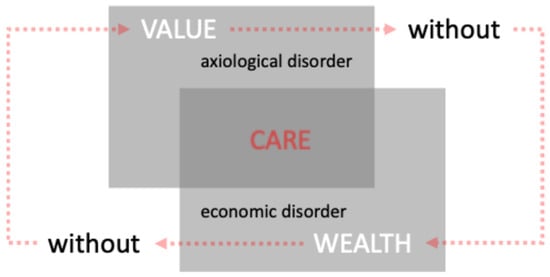
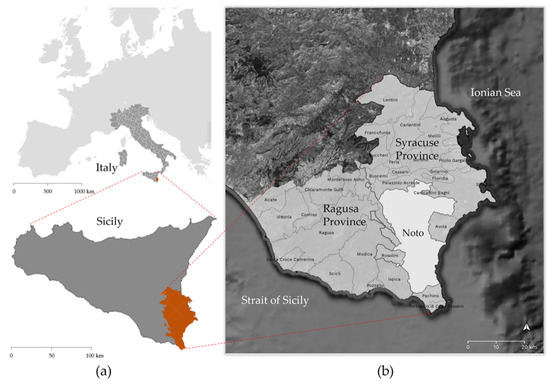
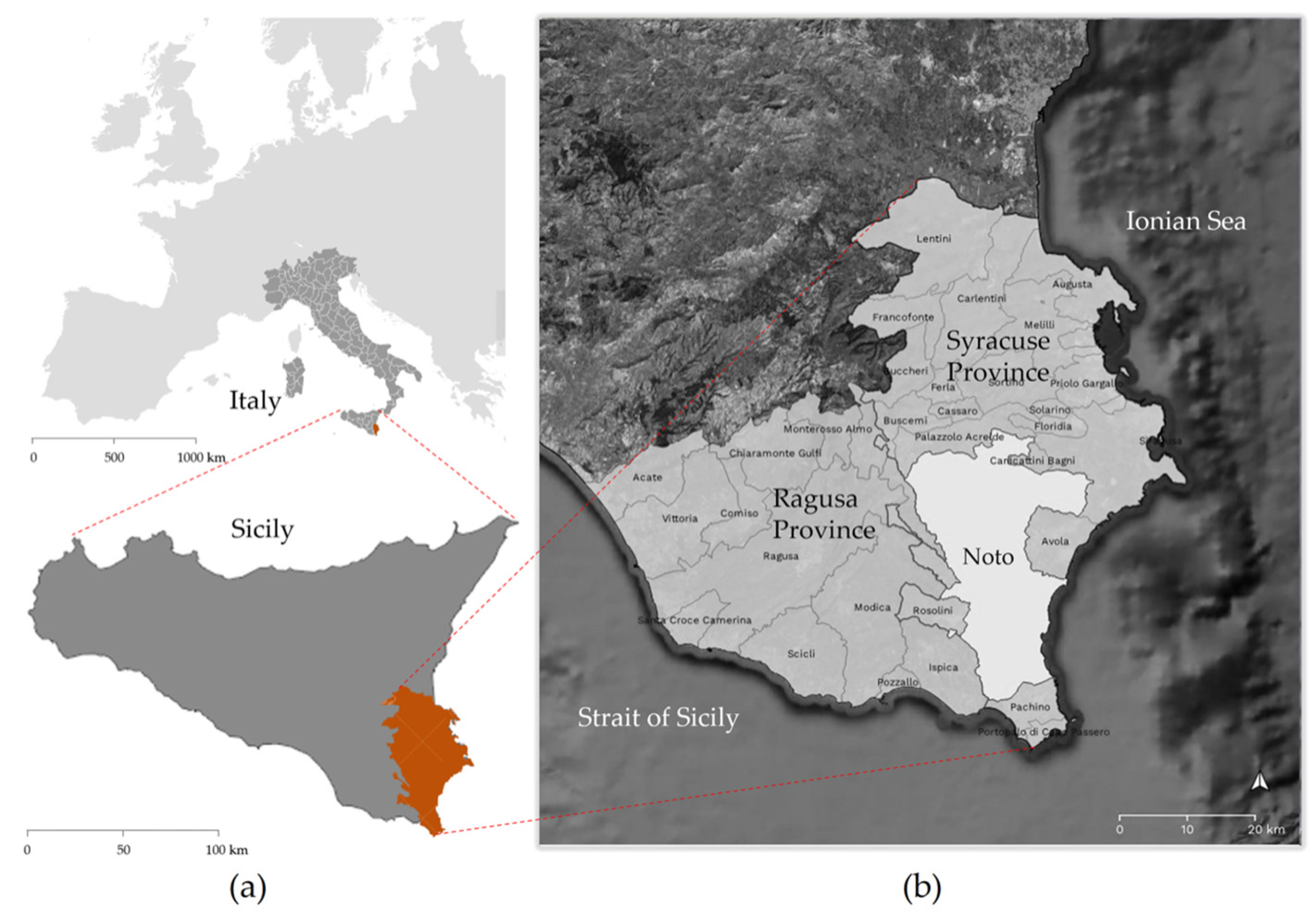
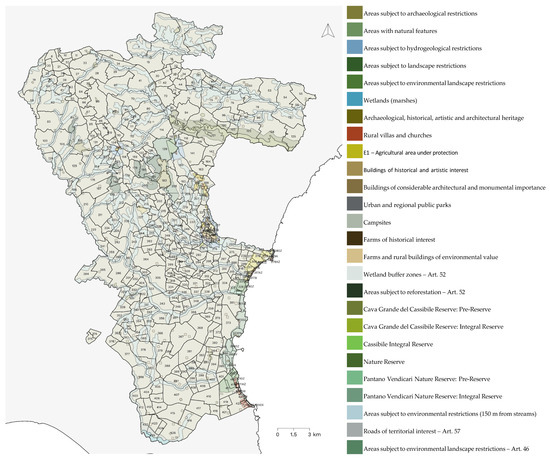
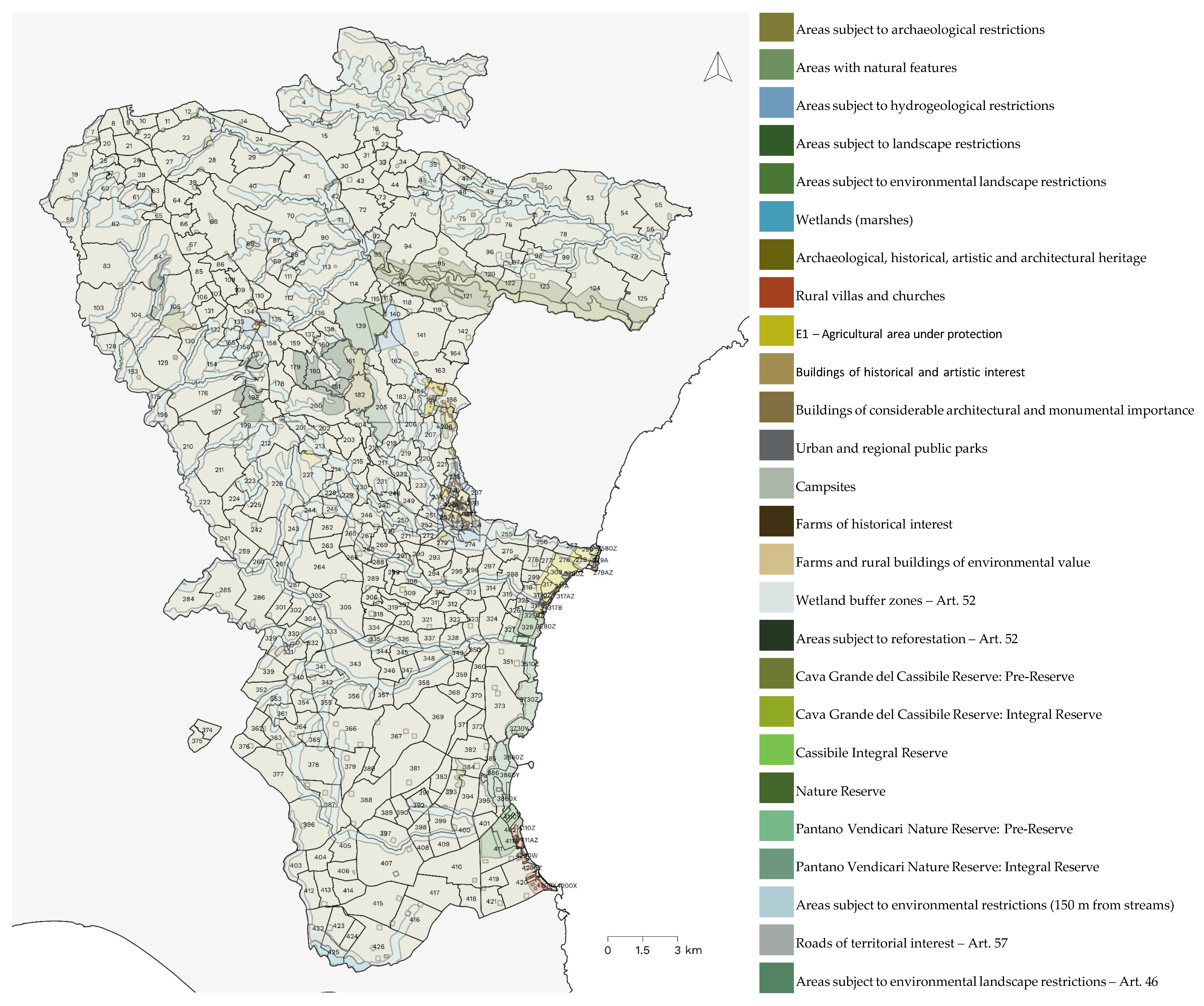
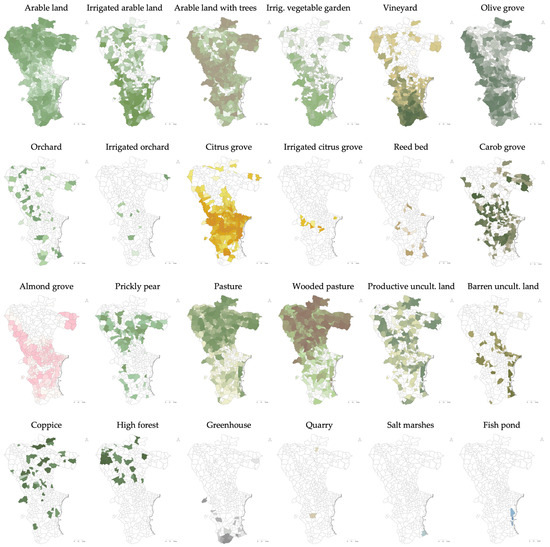
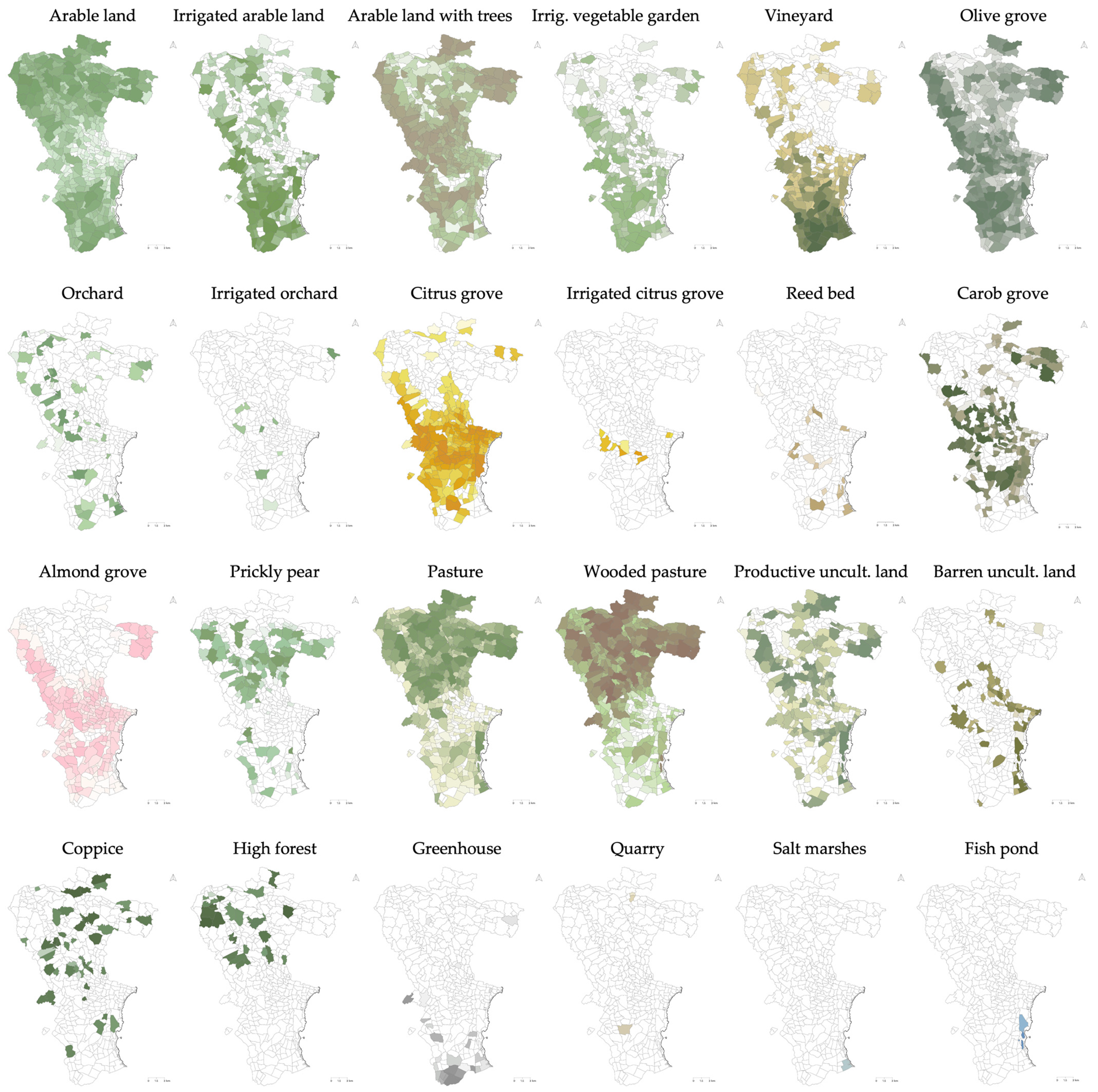
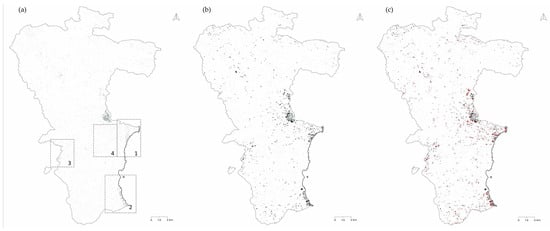
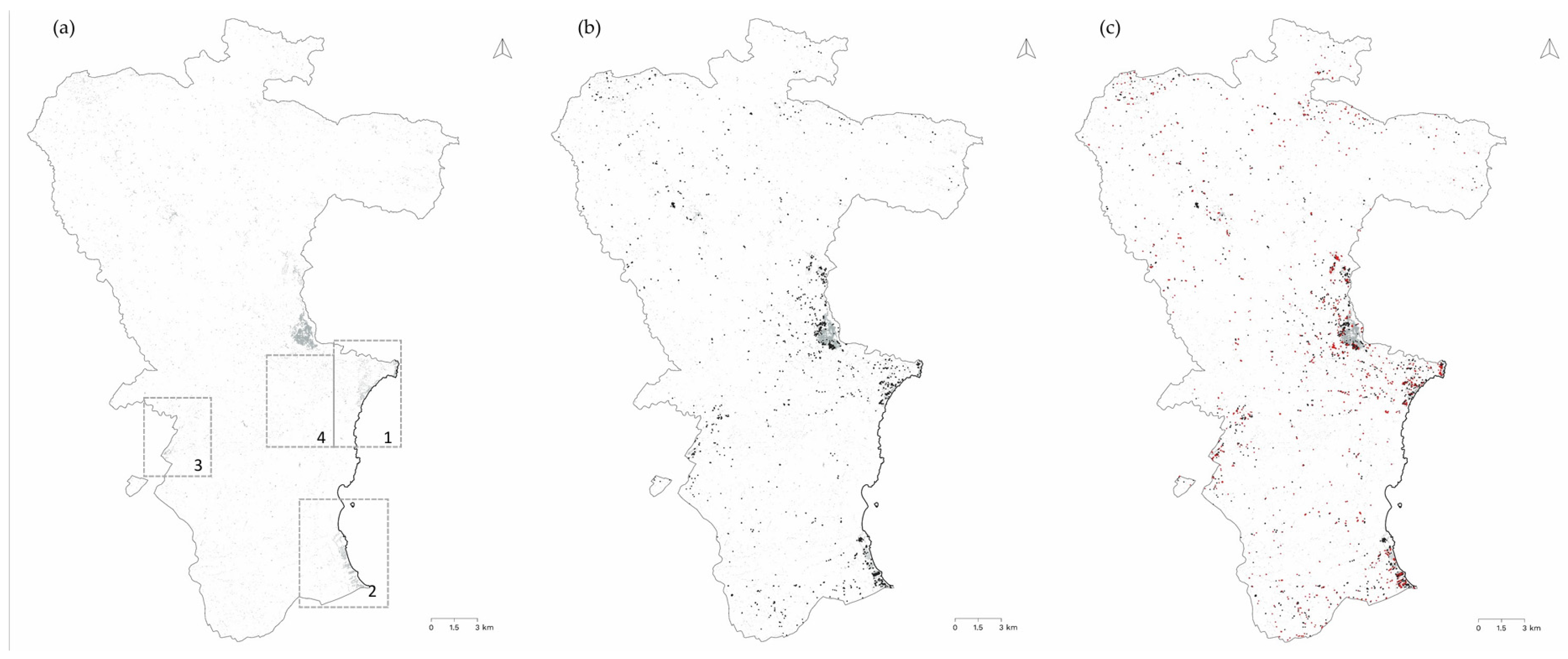
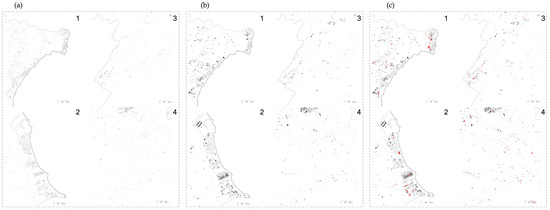
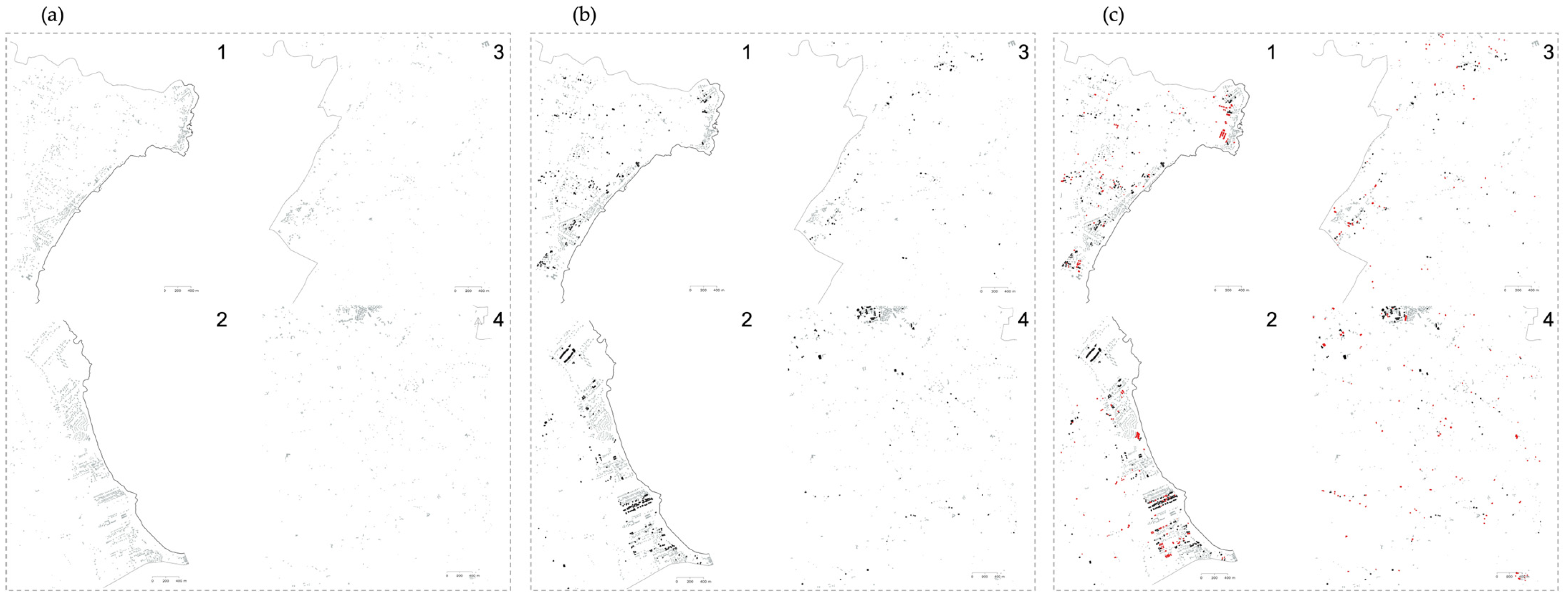
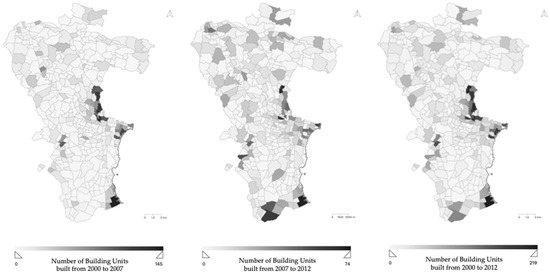
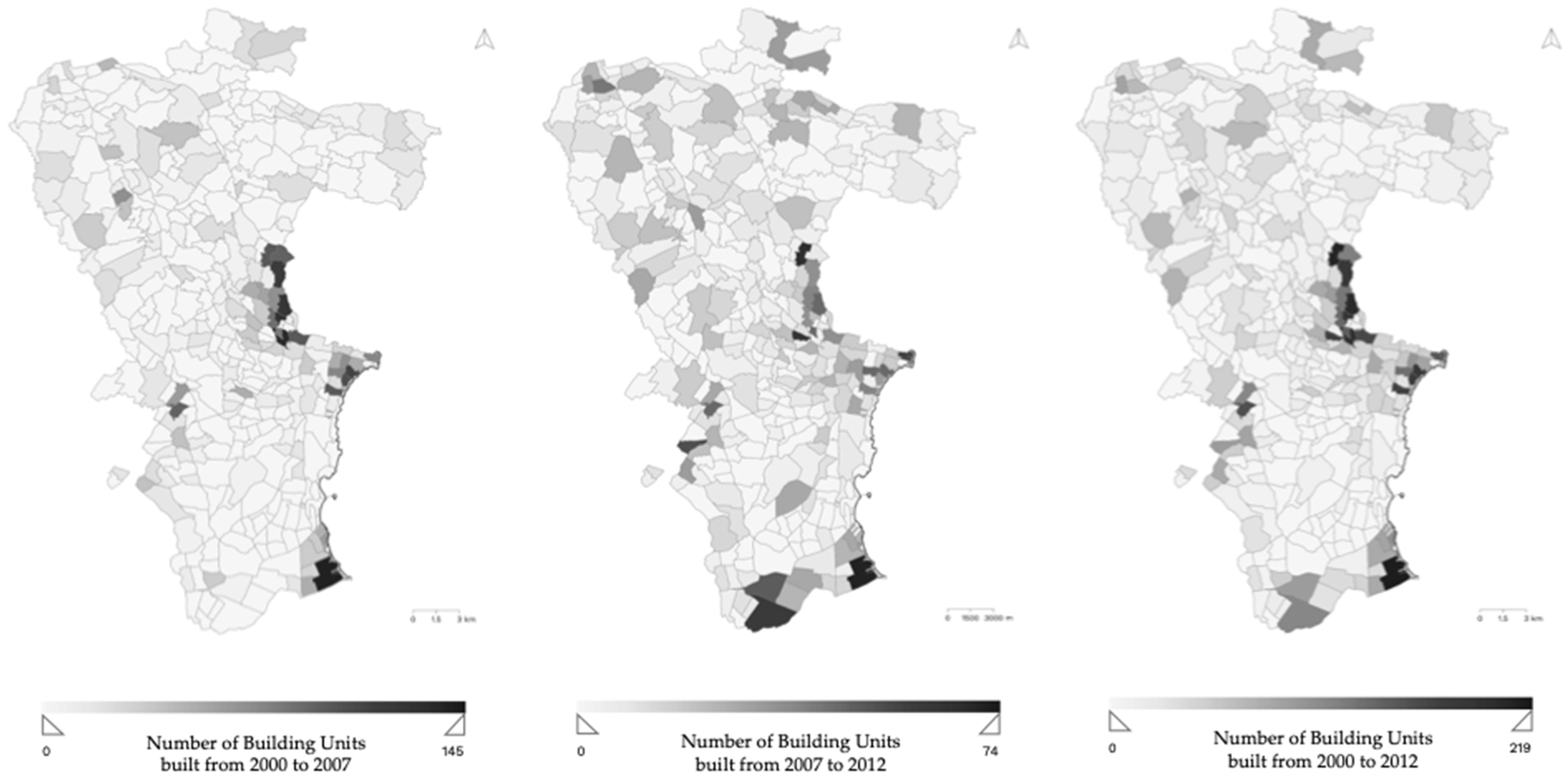
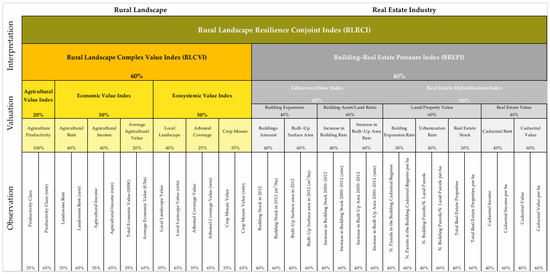
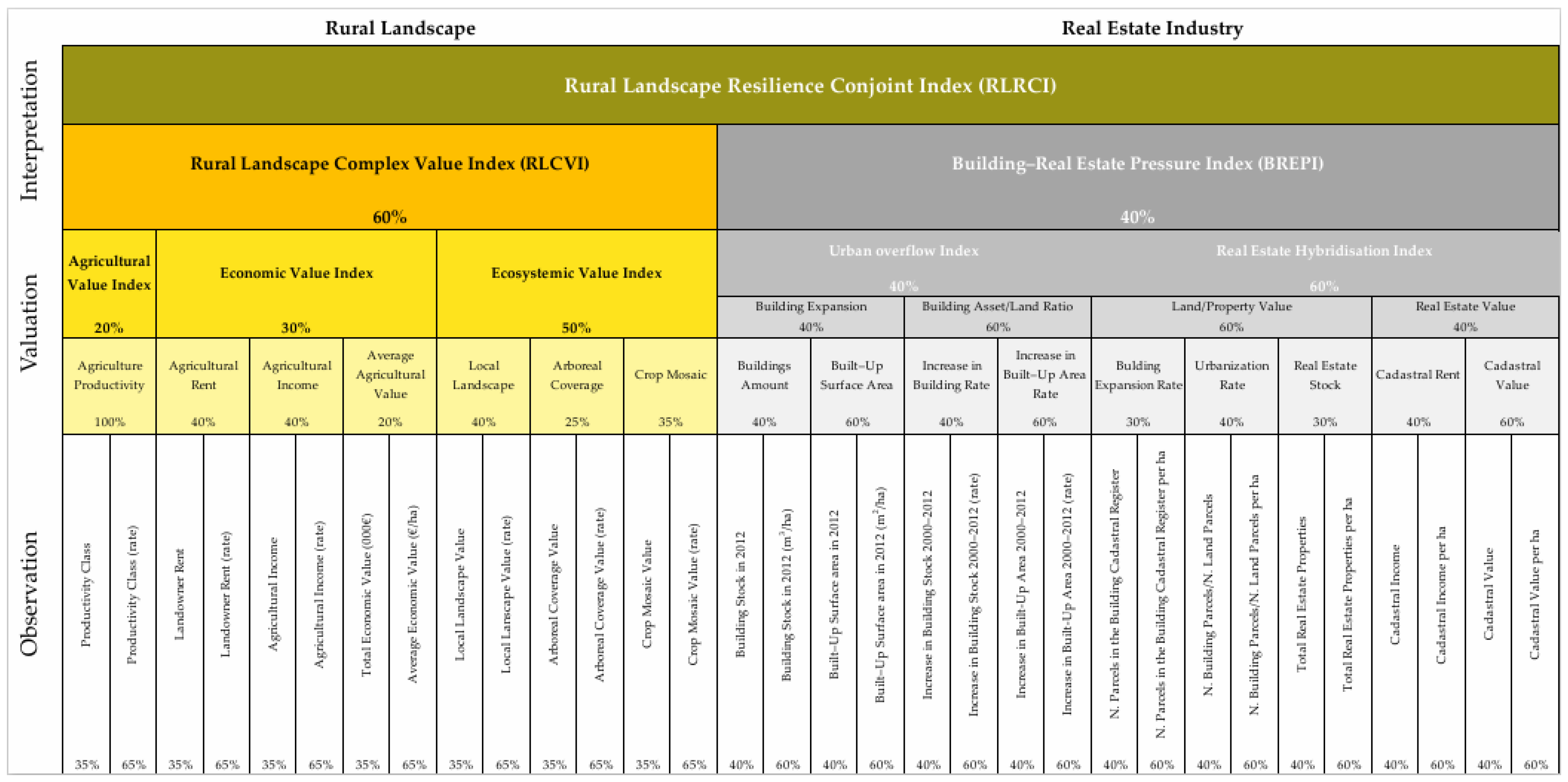
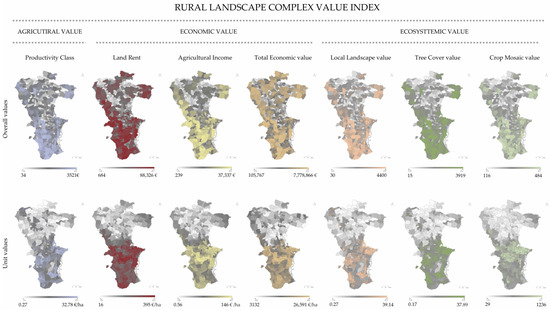
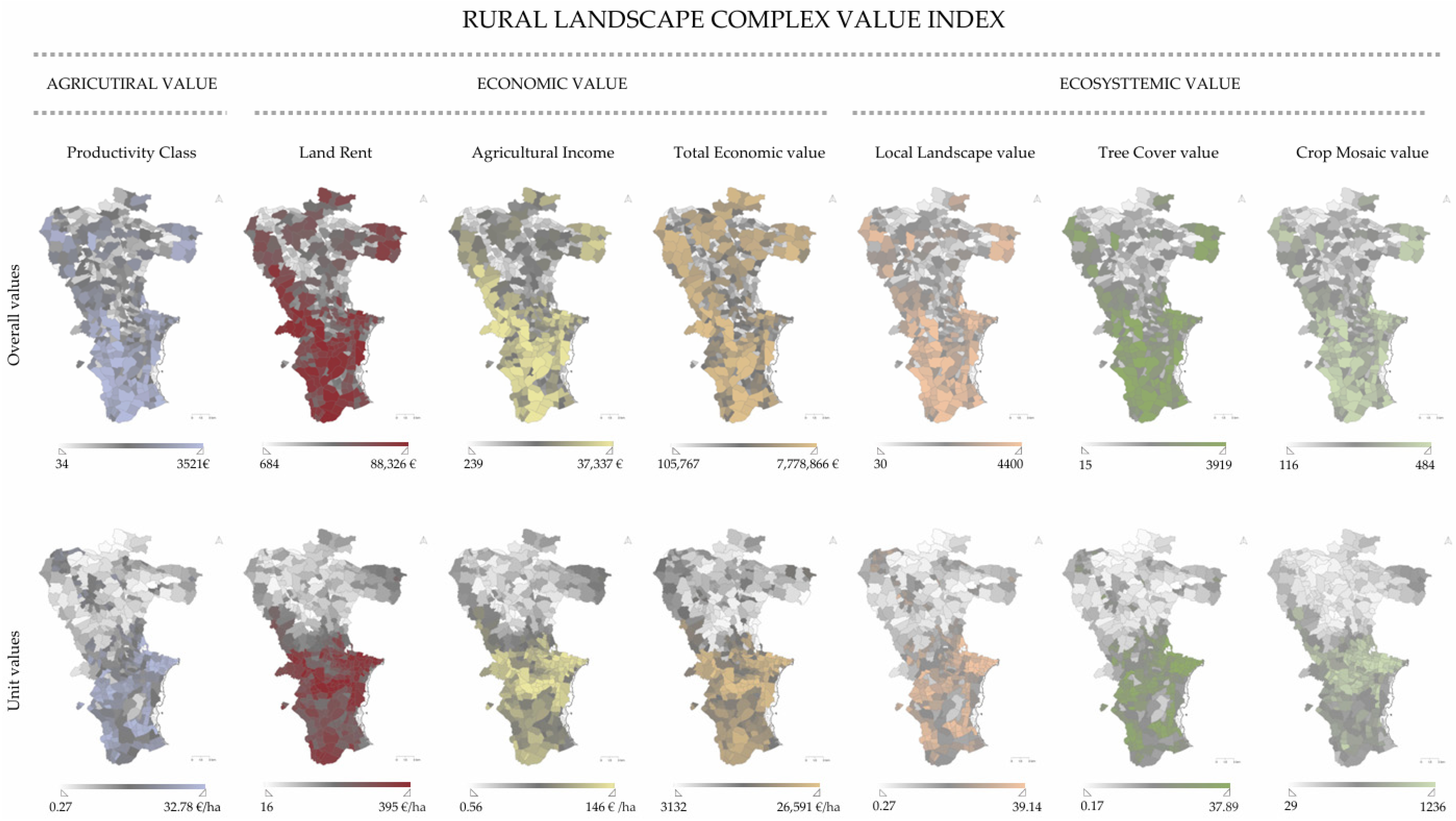
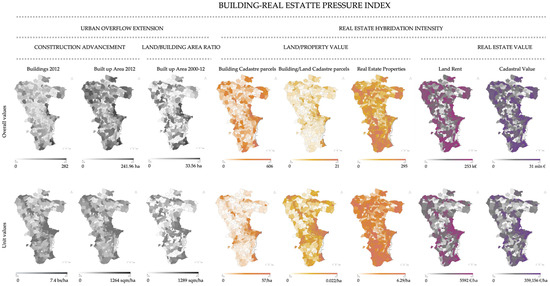
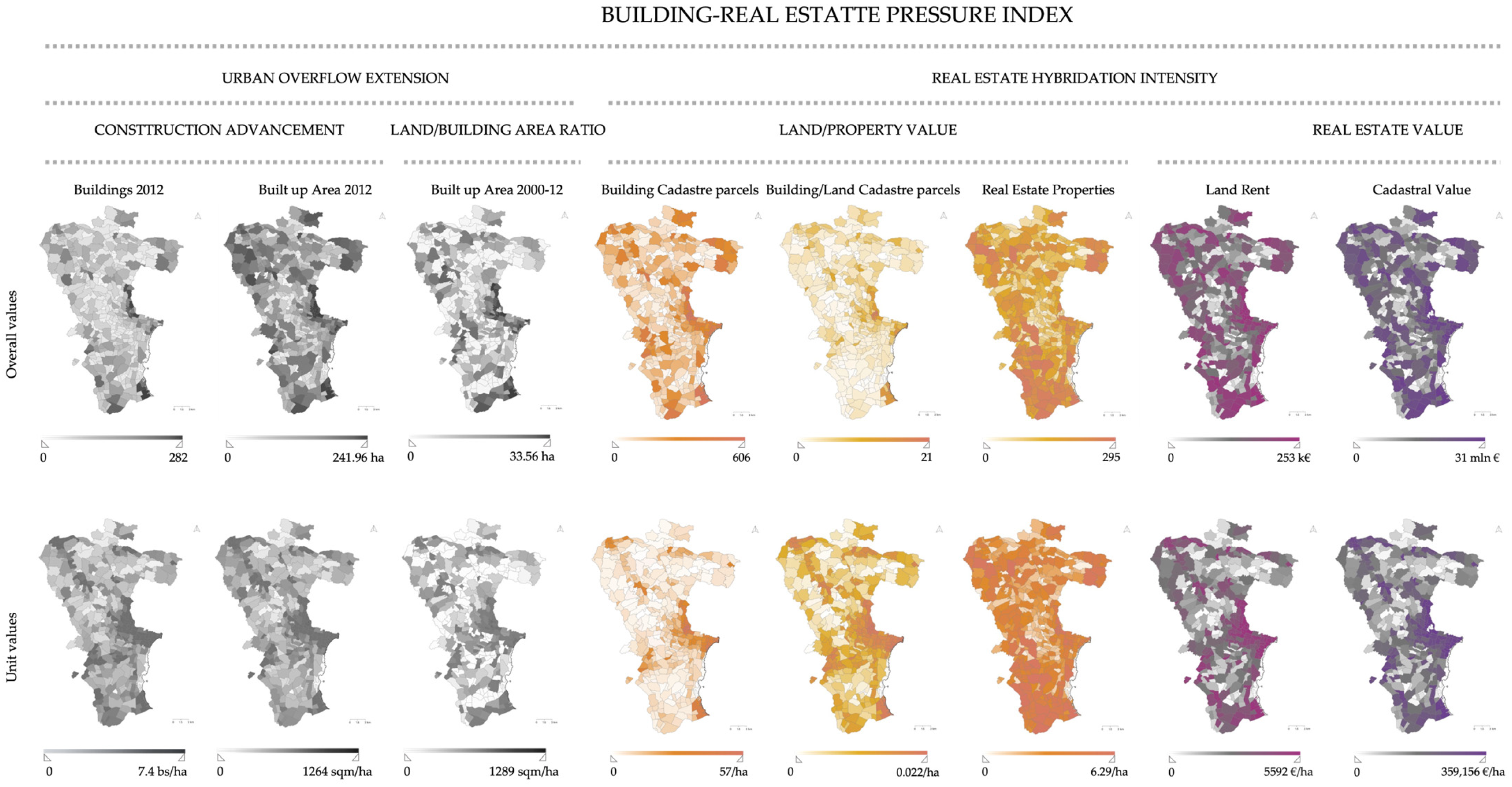
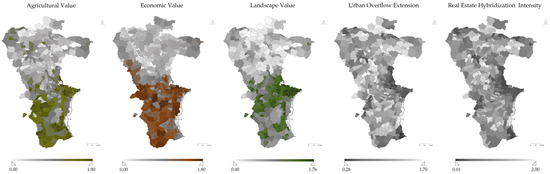
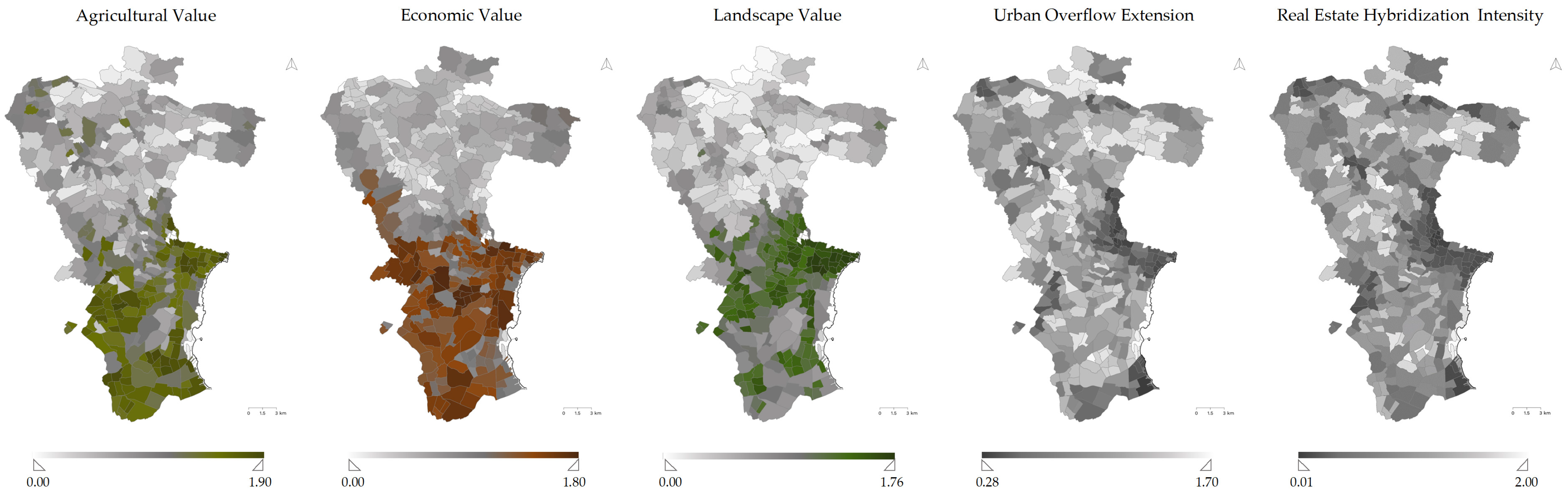
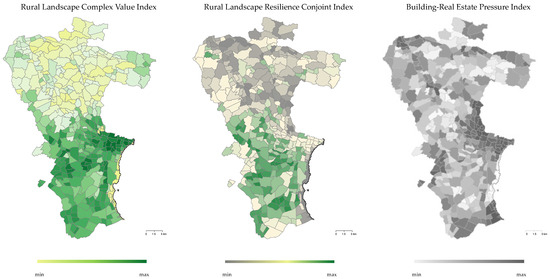
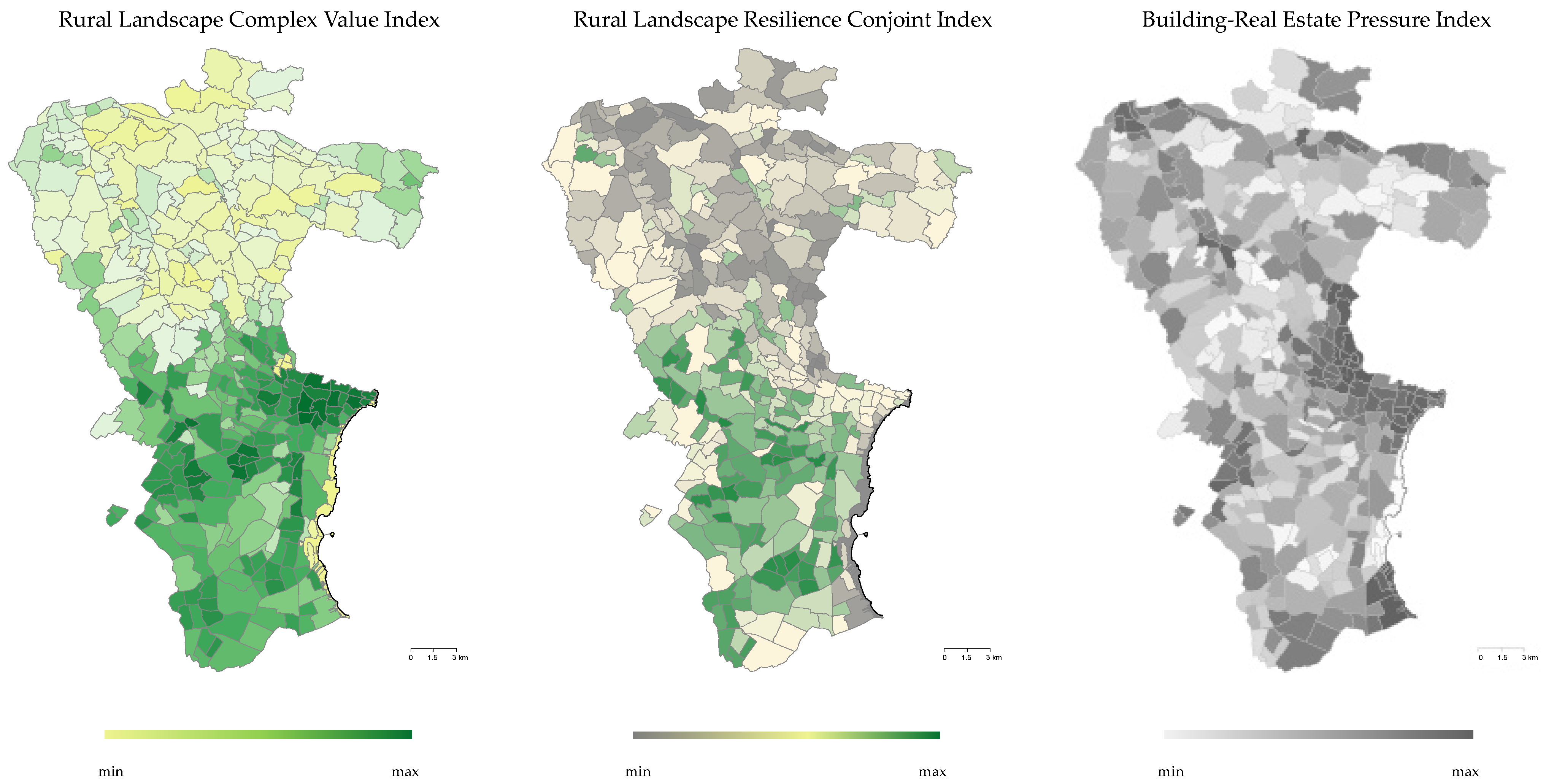
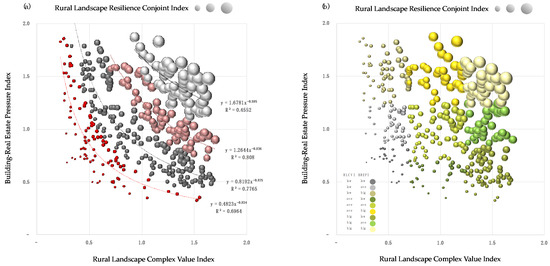
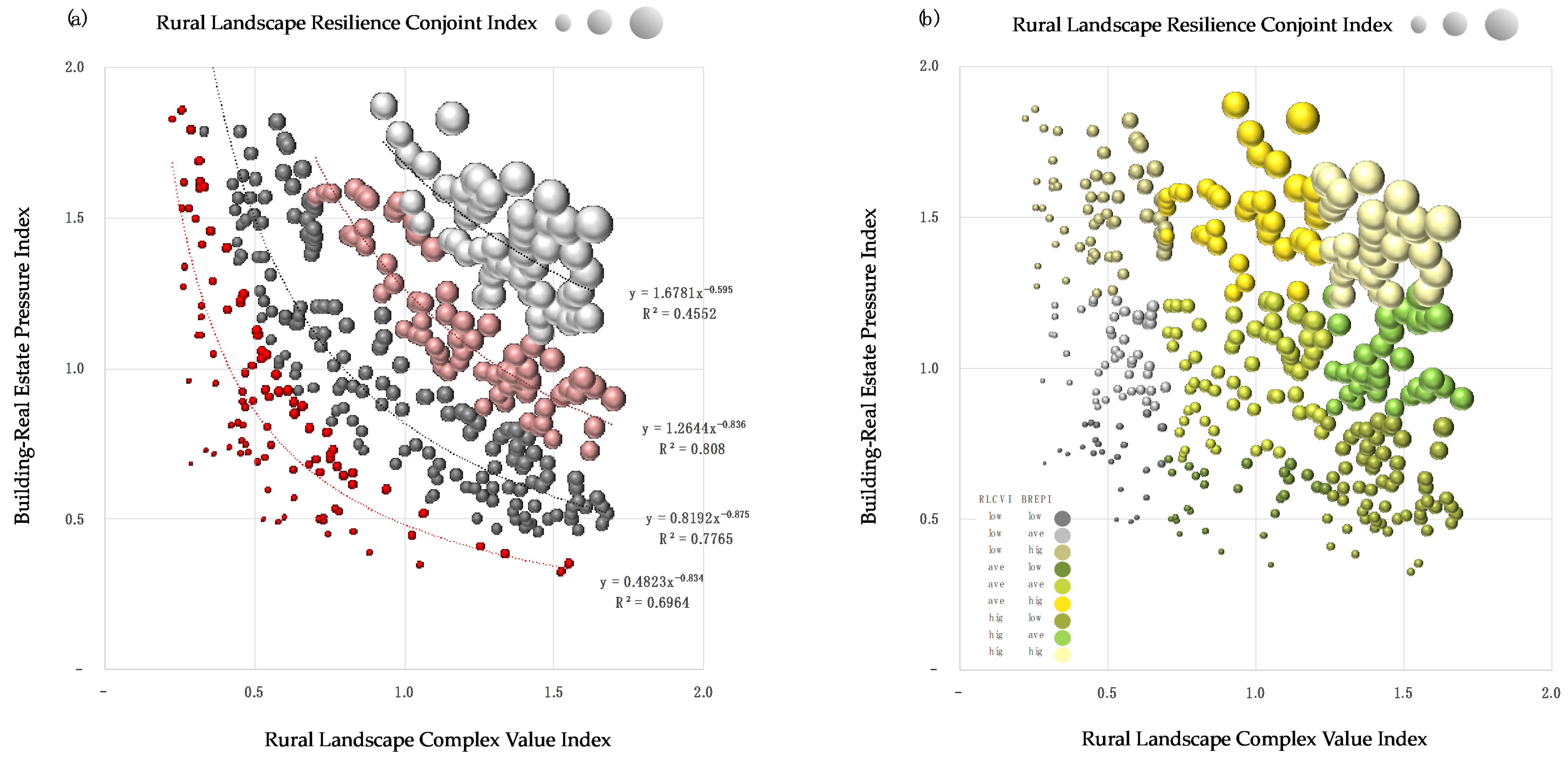
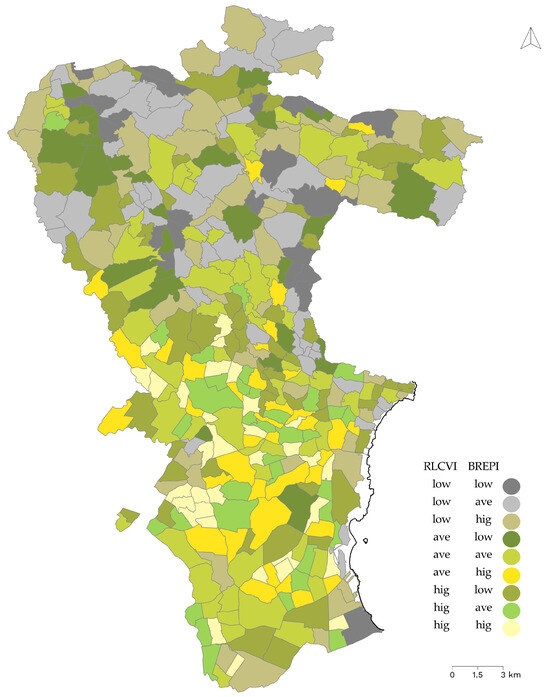
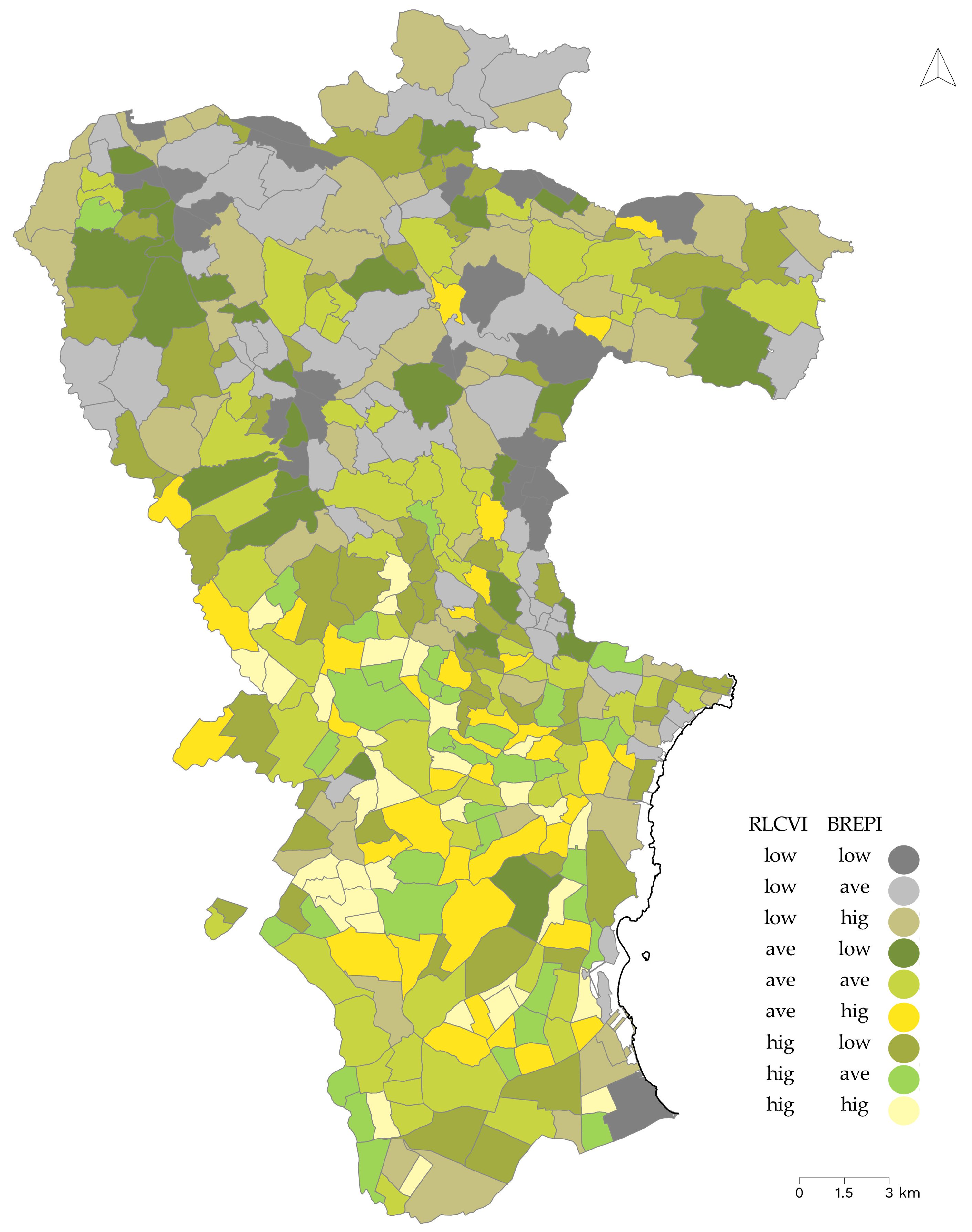
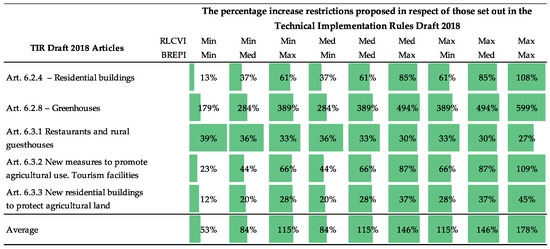
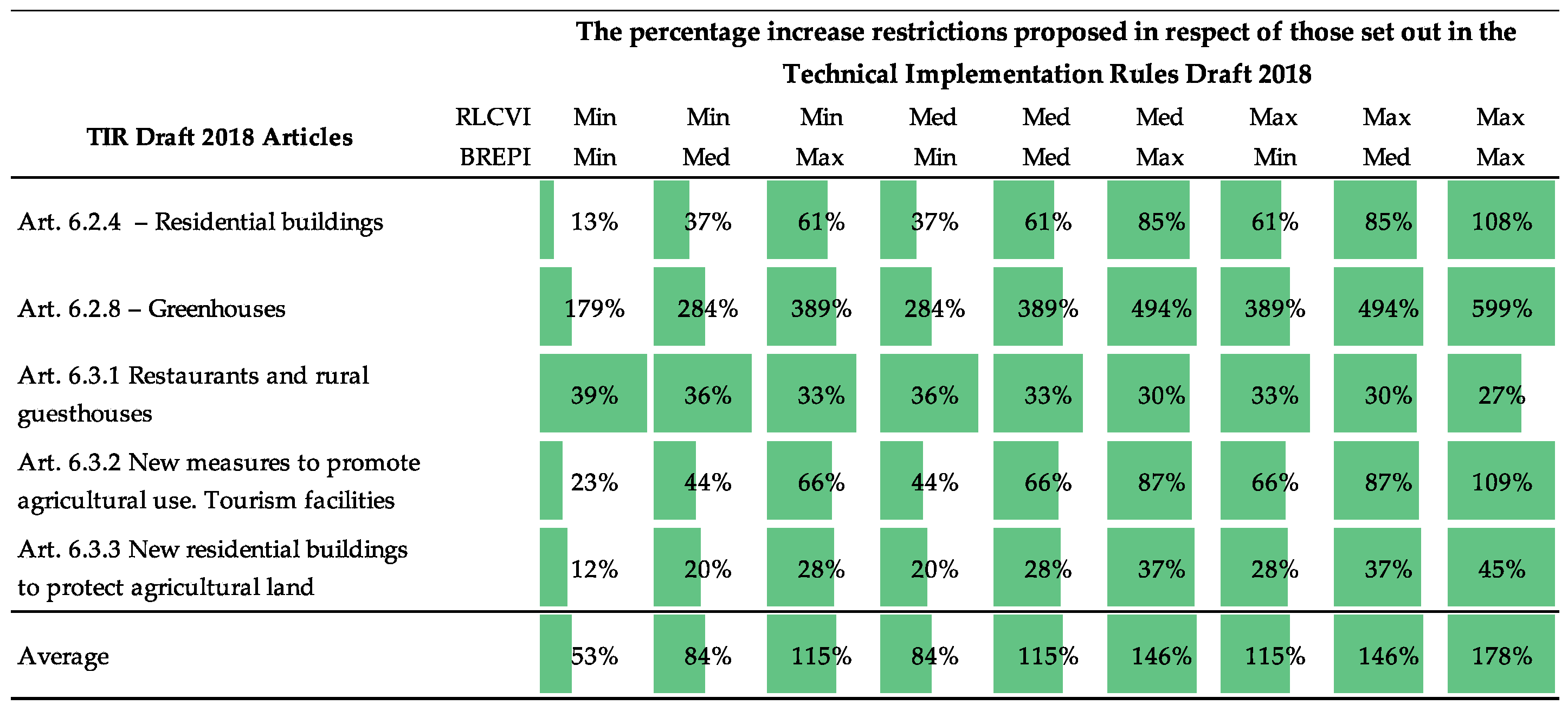
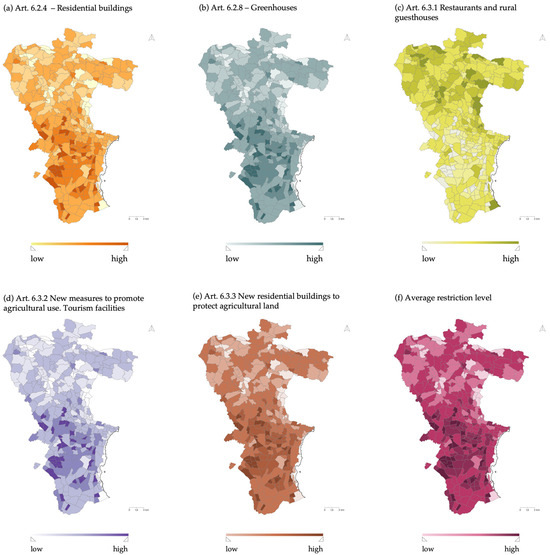
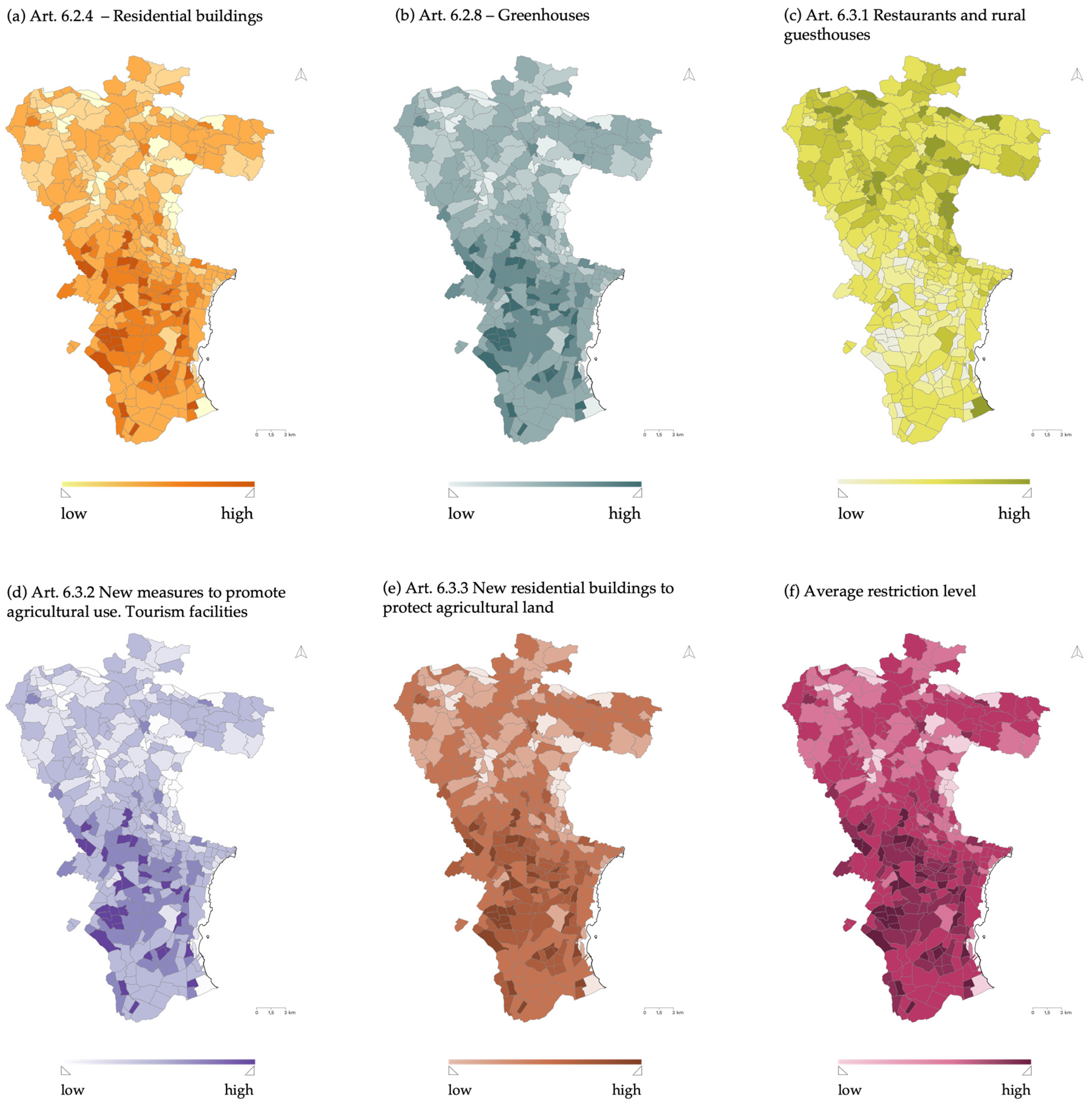
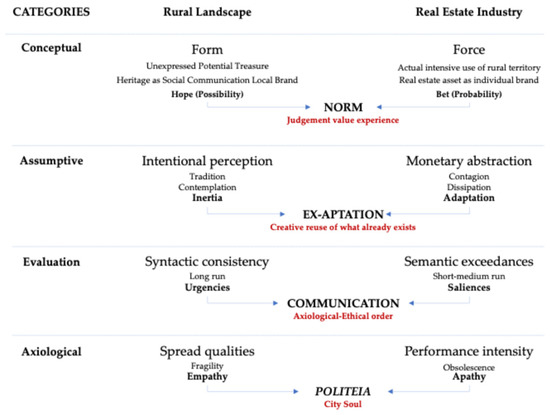
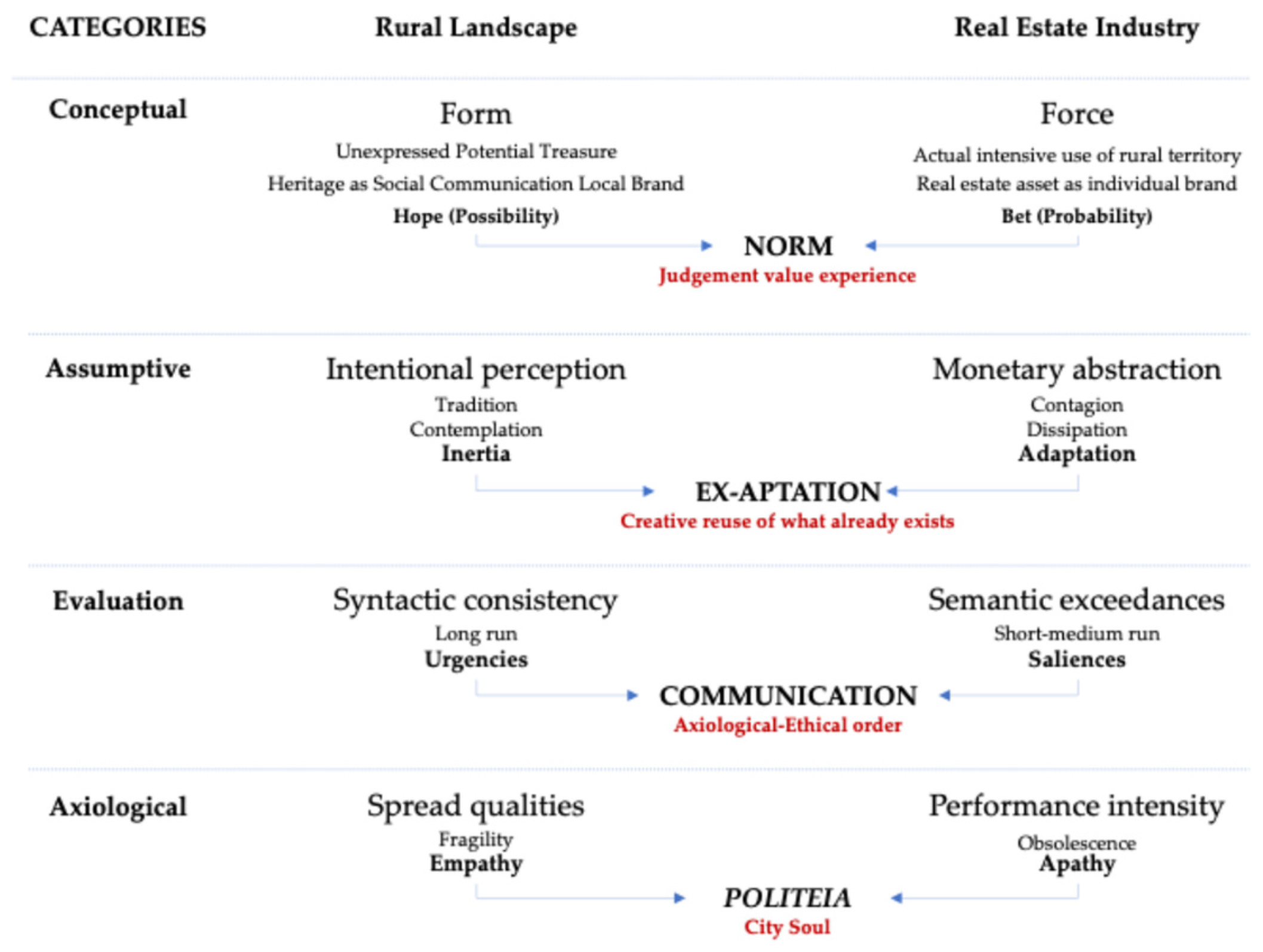

Disclaimer/Publisher’s Note: The statements, opinions and data contained in all publications are solely those of the individual author(s) and contributor(s) and not of MDPI and/or the editor(s). MDPI and/or the editor(s) disclaim responsibility for any injury to people or property resulting from any ideas, methods, instructions or products referred to in the content. |
© 2026 by the authors. Licensee MDPI, Basel, Switzerland. This article is an open access article distributed under the terms and conditions of the Creative Commons Attribution (CC BY) license.