1. Introduction
Proprotein convertase subtilisin/kexin type 9 (PCSK9) is a serine protease primarily produced and secreted by the liver [
1]. PCSK9 is also detected in the intestine, the kidneys, the central nervous system [
2] and the cerebrospinal fluid [
3], as well as in various cell types, including endothelial cells, smooth muscle cells and macrophages [
1]. PCSK9 is also found in atherosclerotic plaques, especially in macrophages residing in the plaques, which contribute to its increased local concentration and to atherosclerosis progression [
4]. A study has demonstrated the existence of PCSK9 in human platelets, which is released upon their activation [
5]. Platelets play a major role not only in thrombosis but also in inflammation and atherogenesis since they contain a variety of active mediators secreted during their activation. PCSK9 is carried in the circulation by low-density lipoprotein (LDL) particles [
6] and our group has demonstrated that PCSK9 is also associated with high-density lipoprotein (HDL) [
7]. Despite this knowledge, the functional consequences of PCSK9 bound to lipoproteins—particularly in relation to platelet biology—remain poorly understood. The potential modulatory effects of lipoprotein-associated PCSK9 on platelet activity and aggregation have not been clearly elucidated.
Therapeutic inhibition of PCSK9 using monoclonal antibodies (e.g., alirocumab, evolocumab) or small interfering RNA-based agents (e.g., inclisiran) has been shown to effectively lower LDL cholesterol levels and reduce cardiovascular risk. Intriguingly, recent clinical and experimental data suggest that PCSK9 inhibitors may exert protective cardiovascular effects beyond lipid lowering, possibly through modulation of vascular inflammation, oxidative stress, and platelet function. Yet, the mechanistic basis of these potential pleiotropic effects remains largely speculative.
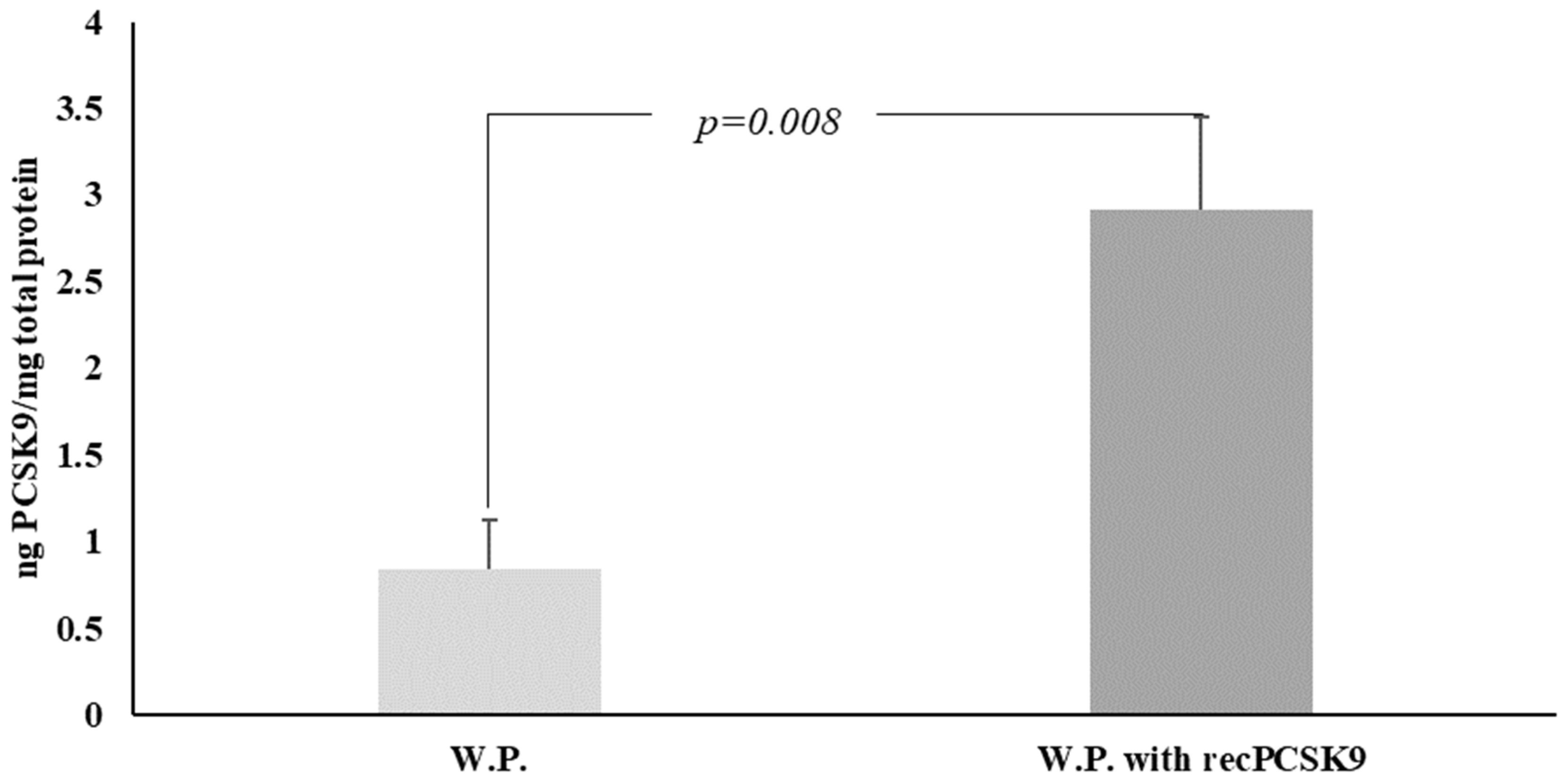
Therefore, the aim of the present study was to quantify PCSK9 levels in human platelets isolated from normolipidemic volunteers, both before and after incubation with recombinant PCSK9 (recPCSK9), in order to assess the platelets’ capacity to absorb circulating PCSK9. Furthermore, we investigated the effects of recPCSK9, as well as PCSK9 associated with LDL and HDL particles, on platelet aggregation responses induced by various physiological agonists. These experiments aim to provide novel insights into the role of PCSK9 in platelet function and its potential contribution to the thrombo-inflammatory processes underlying cardiovascular disease.
2. Materials and Methods
2.1. Study Population Ethics
Seven non-smoking, age- and sex- matched, apparently healthy normolipidemic volunteers, who were not receiving any antithrombotic or anti-inflammatory agents for at least two weeks prior to venipuncture, were also included in this study. The study protocol was approved by the institutional ethics committee, and all participants gave their written informed consent before blood was drawn.
2.2. Chemicals and Reagents
Apyrase, prostaglandin E1 (PGE1), arachidonic acid (AA) and thrombin were obtained from Sigma (St Louis, MO, USA). The Pierce Bicinchoninic acid assay (BCA) kit was purchased from Thermo Scientific (Waltham, MA, USA). The PCSK9 ELISA kit was from R&D Systems (Minneapolis, MN, USA). Western Lightning Plus-ECL (enhanced chemiluminescence) reagents were purchased from PerkinElmer Inc. (Waltham, MA, USA), and hybond ECL-nitrocellulose membrane as well as hyperfilm-ECL were from Amersham International (Buckinghamshire, UK). The sheep polyclonal anti-human PCSK9 antibody was bought from R&D Systems (Minneapolis, MN, USA), and the donkey anti-sheep IgG coupled to horseradish peroxidase (HRP) was from Agrisera Antibodies (Vännäs, Sweden). The recPCSK9 was purchased from Cayman Chemicals (Ann Arbor, MI, USA).
2.3. Preparation and Lysis of Washed Platelets (WP) from Normolipidemic Healthy Volunteers
WPs were isolated from platelet-rich plasma (PRP), prepared from whole blood containing 0.1 U/mL apyrase and 1 μM PGE1, as described above [
8,
9]. PRP was diluted with washing buffer (pH 6.5), containing 0.1 U/mL apyrase and 1 μΜ PGE1, to a final volume of 10 mL and subjected to centrifugation at 975×
g for 12 min at room temperature. The supernatant was removed, and the resulting platelet pellet was re-suspended in 10 mL of the above washing buffer, and centrifuged again at 975×
g for 12 min. After centrifugation, the platelet pellet was re-suspended in suspension buffer (pH 7.35). Platelets were counted using a hemocytometer and adjusted to a final concentration of 2.5 × 10
8 cells/mL using suspension buffer. For the aggregation experiments, the suspension buffer was supplemented with 1 mM calcium chloride. In the experiments performed using platelet lysates, the washed platelet suspension was solubilized with Nonidet P-40 (NP-40) lysis buffer supplemented with protease inhibitors [50 mM Tris-base, 1% (
v/
v) NP-40, 150 mM NaCl, 3 mM EGTA, 100 mM AEBSF [4-(2-aminoethyl) benzenesulfonyl fluoride hydrochloride], 5 mg/mL aprotinin and 5 mg/mL leupeptin]. The protein content of the platelet lysates was determined using the BCA assay with a commercially available kit.
2.4. Light Transmittance Aggregometry
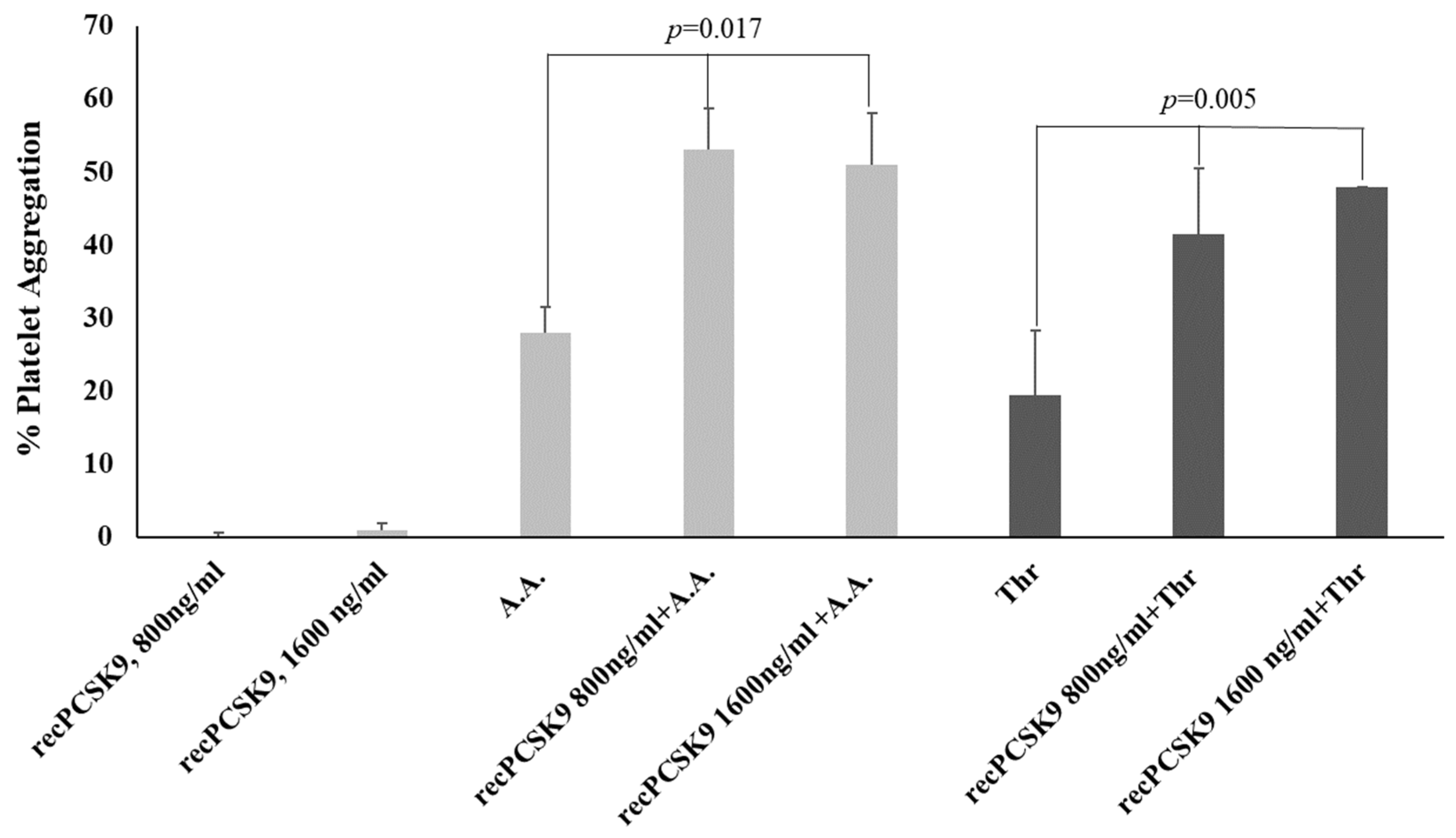
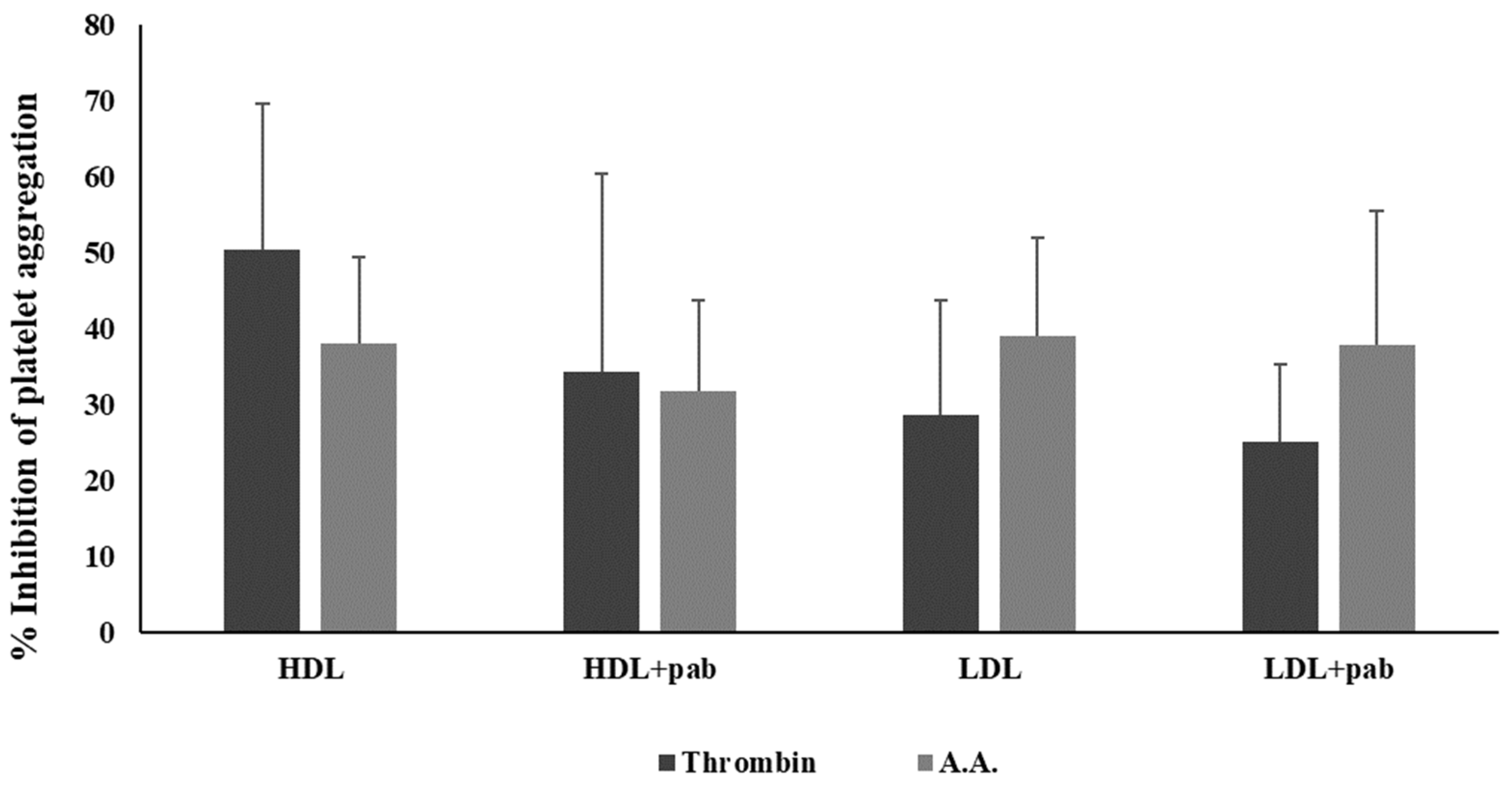
Light transmittance aggregometry (LTA) was performed using a Chrono-Log Lumi-Aggregometer model 700-4DR (Havertown, PA, USA) with the AggroLink (ver. 8.0) software package. LTA was performed on washed platelets using 0.01–0.1 units/mL thrombin and 0.25–0.5 mM ΑΑ as agonists. In certain experiments, platelet aggregation was studied in WPs incubated with exogenous (500, 800 or 1600 ng/mL) recPCSK9 for 5 min or in the presence of 0.1 mg/mL LDL or HDL for 5 min before the addition of the agonists. In other experiments, WPs were incubated for 5 min with LDL or HDL that had been preincubated for 5 min with 1.25 μg/mL of an anti-PCSK9 polyclonal antibody.
Aggregation was expressed as the maximum percentage change in light transmittance from baseline achieved within 5 min after addition of the agonist, using suspension buffer as reference. All LTA assays were conducted within 3 h after blood venipuncture [
9].
2.5. Incubation of WPs from Healthy Volunteers with recPCSK9
Part of the WP suspension prepared from healthy volunteers was pre-incubated with a 500 ng/mL recPCSK9 solution in sterile PBS (pH = 7.4) for 5 min at 37 °C in the absence of calcium chloride, then solubilized with the NP-40 lysis buffer, as described above. The samples were then centrifuged for 12 min at 975× g and the protein content as well as the PCSK9 levels of the supernatant were determined, as described below, using BCA and ELISA methods, respectively.
2.6. LDL and HDL Isolation by Sequential Ultracentrifugation
LDL was isolated from the plasma of healthy volunteers by potassium bromide flotation ultracentrifugation at d = 0.060–1.063 g/mL in a Beckman L70 ultracentrifuge at 40,000 rpm, 14 °C, for 10 h with a type NVT65 rotor, as we have previously described [
10]. The LDL-containing lipoprotein fraction recovered on the top of the tube was dialyzed against 10 mM PBS (pH 7.4) for 24 h at 4 °C. It was then filter-sterilized and stored at 4 °C in the dark under nitrogen for up to 2 weeks. After removing LDL, the density of the remaining sample was adjusted to d = 1.063–1.210 g/mL, and HDL was isolated after ultracentrifugation at 40,000 rpm, 14 °C, for 10 h, as we have previously described [
10]. The HDL-containing lipoprotein fraction recovered on the top of the tube was dialyzed against 10 mM PBS (pH 7.4) for 24 h at 4 °C. It was then filter-sterilized and stored at 4 °C in the dark under nitrogen for up to 2 weeks. The protein as well as the PCSK9 contents of LDL and HDL particles were determined by BCA and ELISA methods, respectively, as described below.
2.7. PCSK9 Measurement
PCSK9 levels in WP isolated from normolipidemic volunteers as well as those associated with LDL and HDL were determined by a commercially available kit (R&D Systems; DPC900) following the manufacturer’s instructions [
11]. The intra- and inter-assay coefficients of variation were estimated to be 5.4% and 4.8%, respectively.
2.8. Protein Assay
Protein was measured using the BCA method [
12]. Briefly, 20 µL of each bovine serum albumin (BSA) standard solution (standard curve) and 20 µL of each sample to be analyzed were added to a 96-well ELISA plate. Then, 200 µL of the working solution was placed in each well of the plate. The plate was covered with an adhesive membrane, gently shaken and incubated for 30 min at 37 °C. It was then inserted into the micro-ELISA counter, and the absorbance was measured at 562 nm.
2.9. Immunoblotting Analysis
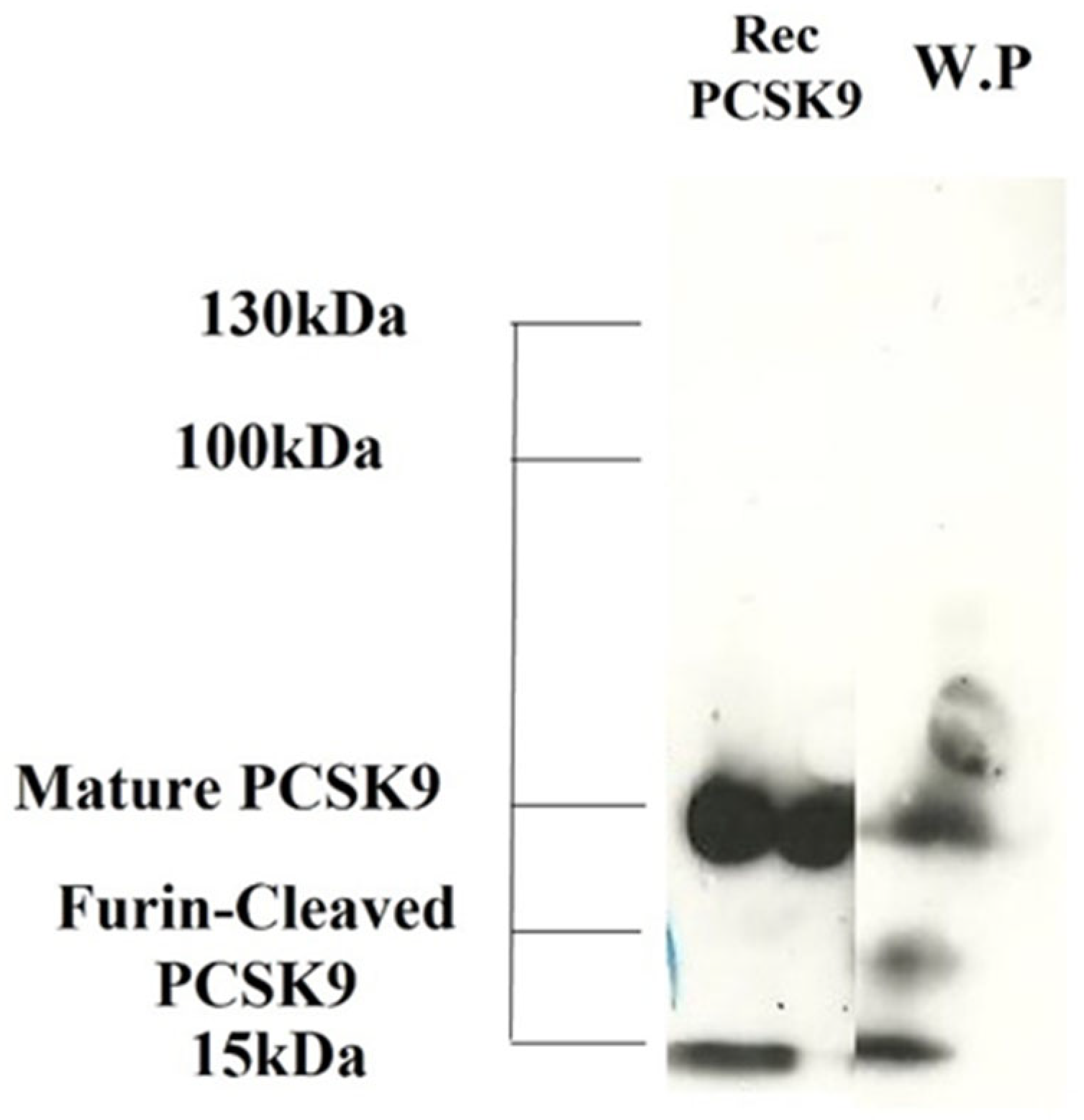
PCSK9 was detected in WPs using a sheep polyclonal anti-human PCSK9 antibody (1:1000
v/
v) and a donkey anti-sheep IgG coupled to HRP antibody (1:2500
v/
v). Specifically, 10–20 μg of total protein from the samples were loaded on an 8% SDS page gel, and proteins were separated by electrophoresis at 150 V for 1.5 h at room temperature. PageRuler™ Prestained Protein Ladder (Thermo Scientific, Waltham, MA, USA) was used, providing the standard bands as reference. The proteins from the samples were transferred to a nitrocellulose membrane at a constant current of 0.15 A for 1.5 h at room temperature. Then, the plots were blocked with 5%
w/
v nonfat milk overnight at 4 °C. The next day, the plots were incubated with a primary antibody against PCSK9 for 4 h at 4 °C and then with a secondary donkey anti-sheep IgG coupled to HRP antibody for 1.5 h at 4 °C. The immunoreactive bands were visualized with Lightning Plus-ECL [
8].
2.10. Statistical Analysis
The results of the present study were analyzed by the SPSS statistical analysis program 23.0, using the independent t-test and one-way ANOVA. Furthermore, Pearson correlation analysis was used to determine the possible association between endogenous PCSK9 concentration and platelet aggregation parameters.
4. Discussion
The present study demonstrates that platelets contain both the mature and furin-cleaved forms of proprotein convertase subtilisin/kexin type 9 (PCSK9), and that their intracellular PCSK9 content significantly increases following incubation with exogenously added recombinant PCSK9 (recPCSK9). This finding indicates the ability of platelets to absorb PCSK9 from their extracellular environment. Given that both PCSK9 forms are present in plasma—approximately 60–75% as the mature form and 25–40% as the furin-cleaved form [
13], in both free and lipoprotein-bound states—it is reasonable to infer that the PCSK9 detected in platelets is predominantly derived from circulating sources rather than synthesized endogenously. The concentrations of recPCSK9 (500–1600 ng/mL) were deliberately selected to recreate concentrations under pathological conditions. Circulating PCSK9 in healthy individuals is typically ~200–700 ng/mL. Substantially higher levels have been reported in pathological conditions such as familial hypercholesterolemia, type 2 diabetes, obesity, inflammatory states, and cardiovascular disease [
14,
15]. In these contexts, plasma PCSK9 concentrations can approach or exceed the upper end of the range used in our experiments. Moreover, plasma measurements reflect systemic averages and may underestimate PCSK9 concentrations at the tissue or cellular level. PCSK9 is produced locally by hepatocytes, vascular cells, and other tissues, and paracrine or autocrine exposure at the cell surface may be significantly higher than circulating concentrations [
16,
17]. Overall, the selected concentration range was chosen to encompass both the upper physiological range, allowing us to assess dose dependency and ensure robust detection of PCSK9-mediated effects. Similar or higher concentrations of recPCSK9 have been used in previously published in vitro studies examining PCSK9 signaling and LDLR regulation.
Importantly, variations in intracellular PCSK9 levels within platelets did not influence their aggregatory responses to classic agonists such as thrombin or arachidonic acid (AA). The lack of effect of intracellular PCSK9 on platelet aggregation is likely multifactorial. Intracellular PCSK9 may be compartmentalized in subcellular locations that limit interaction with key signaling or surface receptors involved in platelet activation. In addition, the proportion of PCSK9 present in an inactive or processing-dependent form within platelets may reduce its functional activity. Importantly, accumulating evidence suggests that PCSK9 exerts many of its biological effects through extracellular interactions with cell-surface receptors, and thus intracellular PCSK9 alone may be insufficient to trigger platelet activation. These factors may together explain why intracellular PCSK9 does not measurably influence platelet aggregation in our system. In contrast, the presence of extracellular recPCSK9 significantly enhanced platelet aggregation in response to thrombin and AA, despite not inducing aggregation on its own. This finding implies that while PCSK9 is not a direct activator of platelets, it can sensitize them to physiological agonists, enhancing their prothrombotic potential. PCSK9 may be internalized through interactions with LDLR family receptors expressed on platelets and/or via CD36, which has been implicated in PCSK9 binding and signaling in other cell types. Such receptor-mediated uptake could result in intracellular accumulation of PCSK9 without necessarily eliciting platelet activation, particularly if functional signaling requires sustained extracellular receptor engagement. A plausible mechanism underlying this effect is the interaction of extracellular PCSK9 with the scavenger receptor CD36, which is known to mediate pro-aggregatory signaling cascades in platelets. Activation of CD36 triggers a series of intracellular signaling pathways, including those involving Src family kinases, ERK5, and JNK, leading to platelet activation [
13]. Additionally, CD36 stimulation contributes to oxidative stress via the generation of reactive oxygen species (ROS) and promotes thromboxane A2 (TXA2) synthesis through activation of the p38/cPLA2/COX-1 axis [
18]. These pathways could collectively amplify platelet responsiveness in the presence of exogenous PCSK9. However, the exact molecular mechanisms by which PCSK9 potentiates platelet activation remain to be fully elucidated, particularly considering that PCSK9 alone does not suffice to trigger aggregation.
Given that a proportion of plasma PCSK9 circulates bound to lipoproteins, we further explored whether lipoprotein-associated PCSK9 influences platelet function. Our findings revealed that LDL particles carried significantly higher levels of PCSK9 compared to HDL. Despite this, both LDL and HDL exhibited inhibitory effects on platelet aggregation induced by thrombin and AA. To discern whether PCSK9 bound to these lipoproteins contributes to this inhibition, we employed an anti-PCSK9 polyclonal antibody during platelet incubation with LDL or HDL prior to agonist stimulation. The antibody treatment did not alter the inhibitory effects of either lipoprotein, indicating that the PCSK9 associated with LDL or HDL does not mediate their modulatory influence on platelet aggregation. This observation, in conjunction with the enhanced aggregation seen in response to free recPCSK9, underscores that it is the unbound, free form of PCSK9 that exerts a functional effect on platelet activation.
In conclusion, the present study provides compelling evidence that platelets are capable of absorbing PCSK9 from the circulation, increasing their intracellular PCSK9 content. Nevertheless, this internalized PCSK9 does not appear to alter platelet reactivity to common agonists under in vitro conditions. In contrast, extracellular, free PCSK9 significantly enhances platelet responsiveness to thrombin and AA, a property not shared by lipoprotein-bound PCSK9. These findings point to a potential prothrombotic role for free circulating PCSK9, which may have important implications for cardiovascular risk, especially in individuals with elevated plasma PCSK9 levels. Further research is warranted to delineate the precise signaling mechanisms involved and to explore the potential clinical significance of PCSK9 modulation in thrombotic disorders.
Limitations
The sample size was relatively small, reflecting the exploratory nature of the study and the use of primary human platelets in vitro. While the observed effects were consistent across donors and statistically reproducible, larger cohorts will be necessary to confirm effect sizes and assess inter-individual variability. Second, although light transmittance aggregometry (LTA) is widely used as a gold-standard functional assay to study platelet activation in vitro, the results of the present study could be further explored using additional platelet activation assays that could provide more mechanistic insight. Third, mechanistic conclusions regarding CD36- and ROS-dependent pathways remain speculative, as receptor expression and signaling were not directly assessed. Similarly, the potential effects of PCSK9 on platelet degranulation or the release of mediators (e.g., PDGF) were not evaluated and require further investigation. Finally, the concentrations of recombinant PCSK9 used in vitro exceeded typical physiological plasma levels, although they are relevant for pathological conditions and tissue-level exposure. These limitations should be considered when interpreting the findings, and future studies addressing these aspects will strengthen the understanding of PCSK9’s role in platelet function.