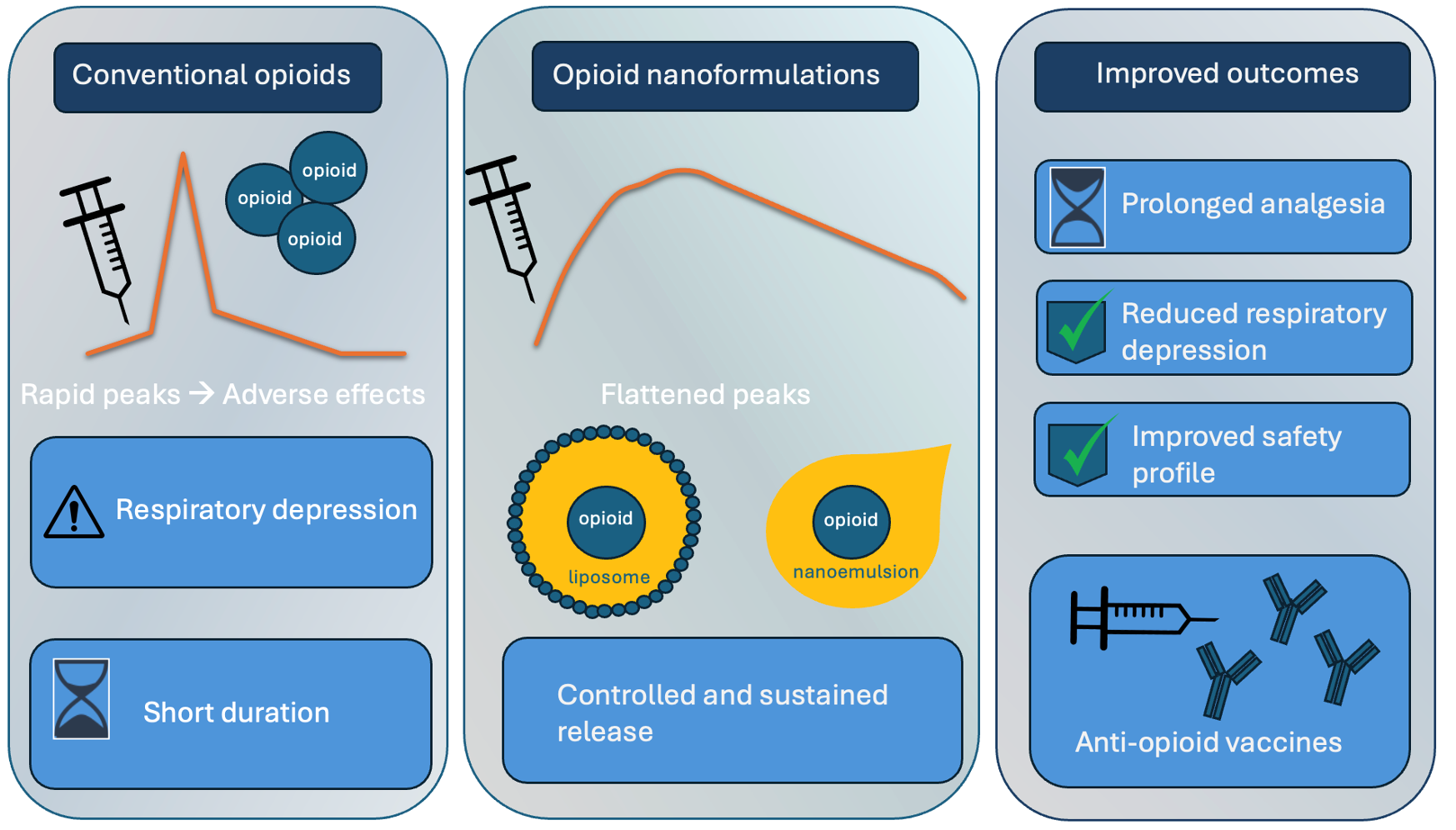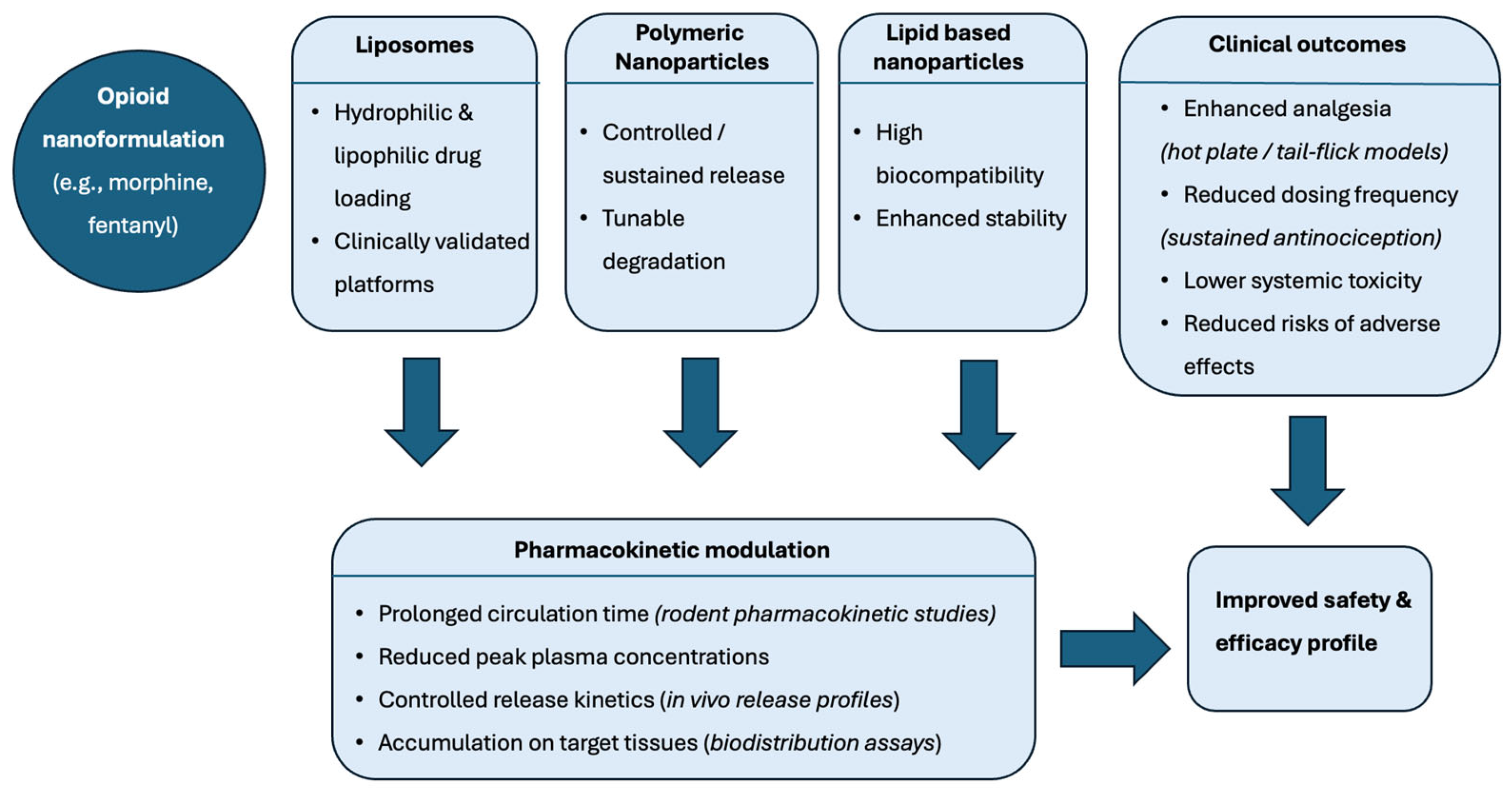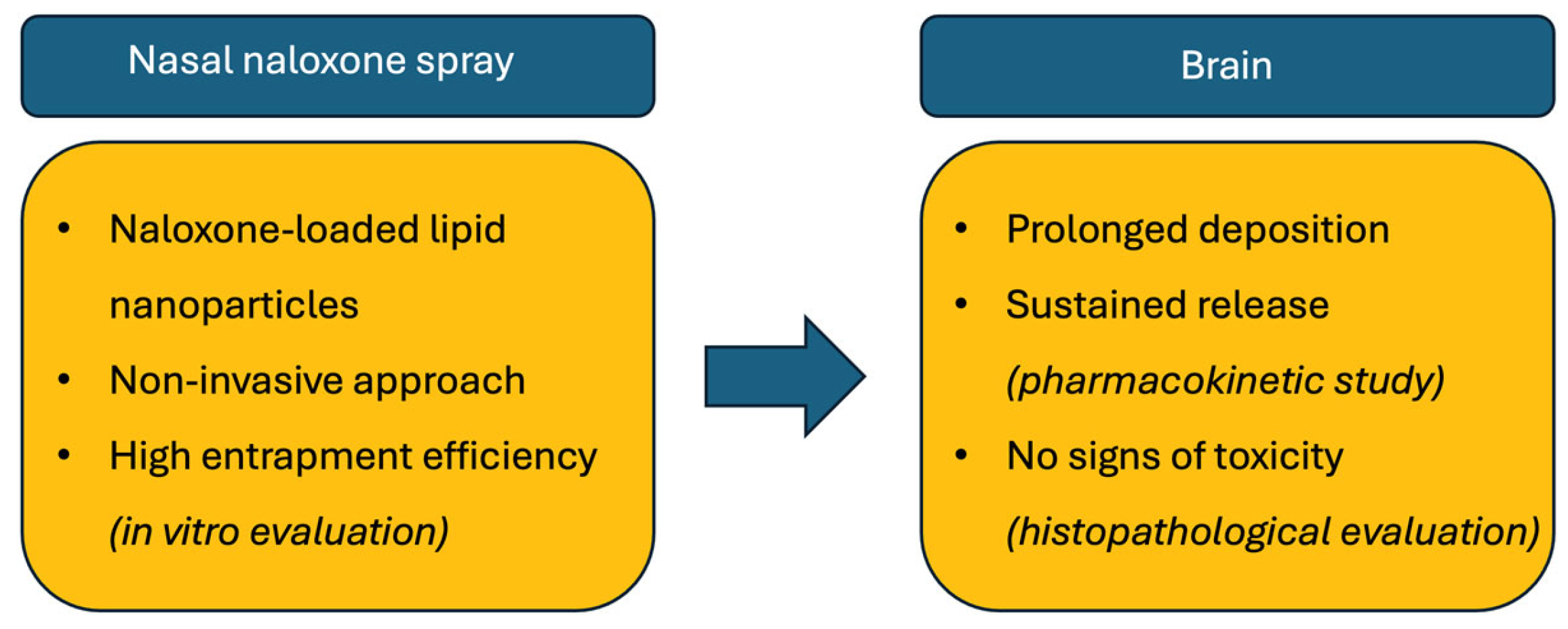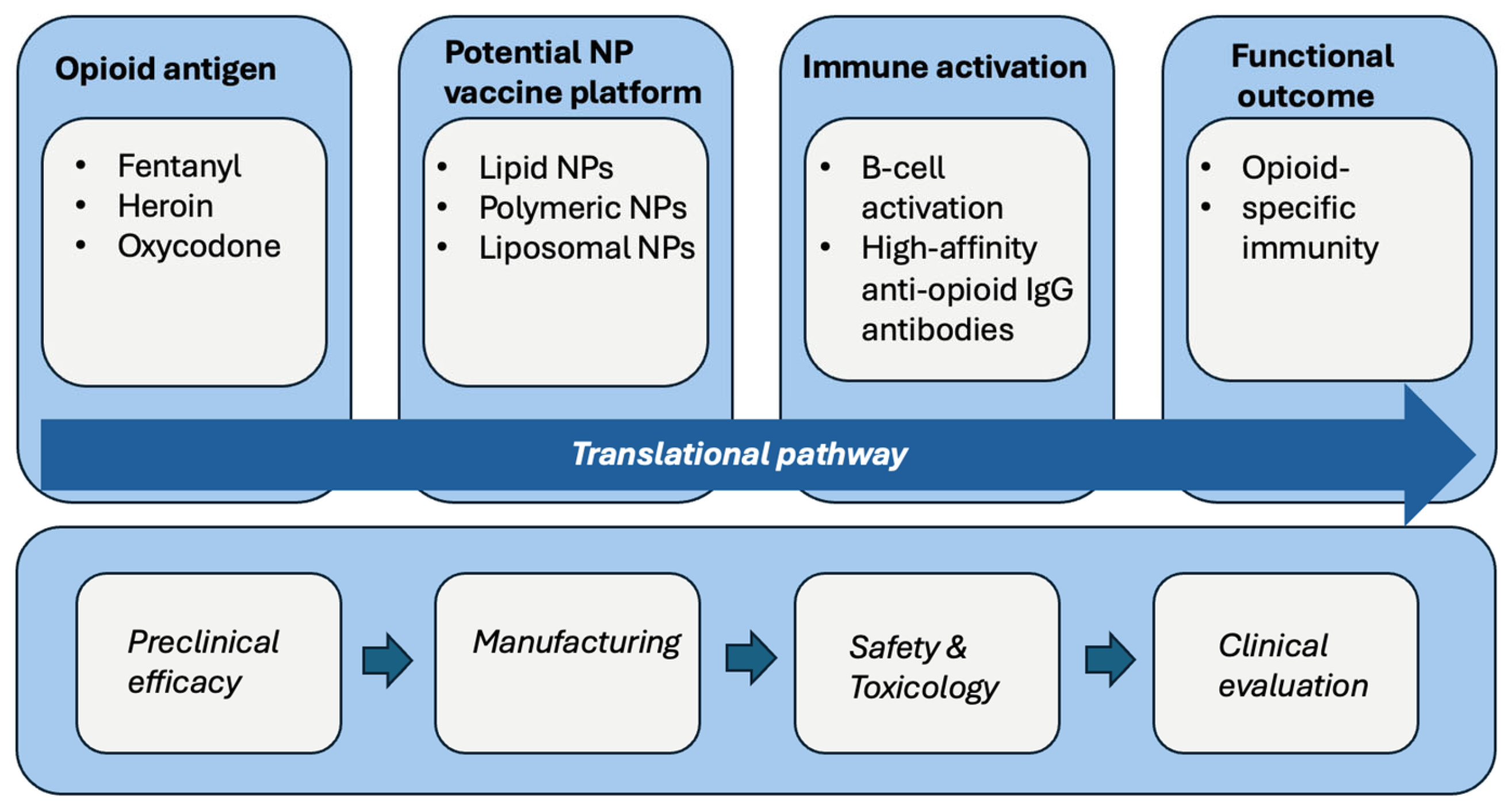

Nanomedicine in the Use of Opioids: Enhancing Analgesia, Mitigating Harm

Abstract
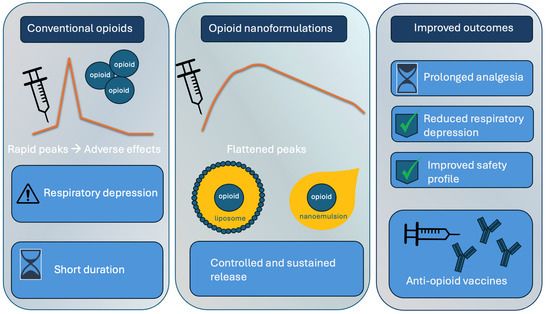
1. Introduction
2. Methods
3. Liposomes as Carriers of Opioids
3.1. Liposomal Morphine
3.2. Liposomal Fentanyl
4. The Unique Properties of Dendrimers
Dendrimers and Morphine for Prolonged Anesthesia
5. Other Nanoformulations
5.1. Solid Lipid Nanoparticles
5.2. Polymeric NPs
5.3. Nanoemulsions
5.4. Hydrogels
5.5. Inorganic NPs
Magnetic NPs
6. Using Nanomedicine to Improve the Efficacy of Naloxone
7. Nanoparticle-Based Vaccines Against Substances of Abuse
7.1. A Fentanyl Vaccine Based on Lipid NPs Could Grant Anti-Fentanyl Immunity
7.2. A Nanovaccine Yielding Anti-Morphine Immunity
8. Clinical Translation of Nanomedicine-Based Opioids
8.1. Currently Available Nanomedicine-Based Formulations
8.2. Current Patent Landscape
8.3. Barriers to Clinical Translation
8.4. In Silico Approaches Are Essential for Effective Clinical Translation
8.5. Perspective on Promising Nanoparticle Strategies for Opioid Delivery
9. Conclusions
Author Contributions
Funding
Institutional Review Board Statement
Informed Consent Statement
Data Availability Statement
Conflicts of Interest
References
- Shafi, A.; Berry, A.J.; Sumnall, H.; Wood, D.M.; Tracy, D.K. Synthetic opioids: A review and clinical update. Ther. Adv. Psychopharmacol. 2022, 12, 20451253221139616. [Google Scholar] [CrossRef] [PubMed]
- Drewes, A.M.; Jensen, R.D.; Nielsen, L.M.; Droney, J.; Christrup, L.L.; Arendt-Nielsen, L.; Riley, J.; Dahan, A. Differences between opioids: Pharmacological, experimental, clinical and economical perspectives. Br. J. Clin. Pharmacol. 2013, 1, 60–78. [Google Scholar] [CrossRef]
- Wiffen, P.J.; Wee, B.; Derry, S.; Bell, R.F.; Moore, R.A. Opioids for cancer pain—An overview of Cochrane reviews. Cochrane Database Syst. Rev. 2017, 7, CD012592. [Google Scholar] [CrossRef]
- Mugabure Bujedo, B. A clinical approach to neuraxial morphine for the treatment of postoperative pain. Pain Res. Treat. 2012, 2012, 612145. [Google Scholar] [CrossRef]
- Wang, Y.; Zhuang, Y.; DiBerto, J.F.; Zhou, X.E.; Schmitz, G.P.; Yuan, Q.; Jain, M.K.; Liu, W.; Melcher, K.; Jiang, Y.; et al. Structures of the entire human opioid receptor family. Cell 2023, 186, 413–427.e17. [Google Scholar] [CrossRef] [PubMed]
- Judd, D.; King, C.R.; Galke, C. The Opioid Epidemic: A Review of the Contributing Factors, Negative Consequences, and Best Practices. Cureus 2023, 15, e41621. [Google Scholar] [CrossRef] [PubMed]
- Centers for Disease Control and Prevention. Understanding the Opioid Overdose Epidemic. 2025. Available online: https://www.cdc.gov/overdose-prevention/about/understanding-the-opioid-overdose-epidemic.html?utm_source=chatgpt.com (accessed on 17 January 2026).
- Beiranvand, S.; Sorori, M.M. Pain management using nanotechnology approaches. Artif. Cells Nanomed. Biotechnol. 2019, 47, 462–468. [Google Scholar] [CrossRef]
- European Science Foundation. Nanomedicine: The ESF Forward Look on Nanomedicine; European Science Foundation: Strasbourg, France, 2005; Available online: http://archives.esf.org/fileadmin/Public_documents/Publications/Nanomedicine.pdf (accessed on 17 January 2026).
- Liu, P.; Chen, G.; Zhang, J. A Review of Liposomes as a Drug Delivery System: Current Status of Approved Products, Regulatory Environments, and Future Perspectives. Molecules 2022, 27, 372. [Google Scholar] [CrossRef]
- Nsairat, H.; Khater, D.; Sayed, U.; Odeh, F.; Al Bawab, A.; Alshaer, W. Liposomes: Structure, composition, types, and clinical applications. Heliyon 2022, 8, e09394. [Google Scholar] [CrossRef]
- Bulbake, U.; Doppalapudi, S.; Kommineni, N.; Khan, W. Liposomal Formulations in Clinical Use: An Updated Review. Pharmaceutics 2017, 9, 12. [Google Scholar] [CrossRef]
- Crommelin, D.; Metselaar, J.; Storm, G. Liposomes: The Science and the Regulatory Landscape. In Non-Biological Complex Drugs; Crommelin, D., de Vlieger, J., Eds.; AAPS Advances in the Pharmaceutical Sciences Series; Springer: Cham, Switzerland, 2015; Volume 20. [Google Scholar] [CrossRef]
- Basak, S.; Das, T.K. Liposome-Based Drug Delivery Systems: From Laboratory Research to Industrial Production—Instruments and Challenges. ChemEngineering 2025, 9, 56. [Google Scholar] [CrossRef]
- Gómez-Murcia, V.; Ribeiro Do Couto, B.; Gómez-Fernández, J.C.; Milanés, M.V.; Laorden, M.L.; Almela, P. Liposome-Encapsulated Morphine Affords a Prolonged Analgesia While Facilitating Extinction of Reward and Aversive Memories. Front. Pharmacol. 2019, 10, 1082. [Google Scholar] [CrossRef]
- Ihmsen, H.; Schüttler, J.; Jeleazcov, C. Pharmacokinetics of Morphine and Morphine-6-Glucuronide during Postoperative Pain Therapy in Cardiac Surgery Patients. Eur. J. Drug Metab. Pharmacokinet. 2021, 46, 249–263. [Google Scholar] [CrossRef] [PubMed]
- Allain, F.; Minogianis, E.A.; Roberts, D.C.; Samaha, A.-N. How Fast and How Often: The Pharmacokinetics of Drug Use Are Decisive in Addiction. Neurosci. Biobehav. Rev. 2015, 56, 166–179. [Google Scholar] [CrossRef]
- Bethune, C.R.; Bernards, C.M.; Bui-Nguyen, T.; Shen, D.D.; Ho, R.J. The role of drug-lipid interactions on the disposition of liposome-formulated opioid analgesics in vitro and in vivo. Anesth. Analg. 2001, 93, 928–933. [Google Scholar] [CrossRef]
- Ramos-Matos, C.F.; Bistas, K.G.; Lopez-Ojeda, W. Fentanyl. In StatPearls [Internet]; Updated 29 May 2023; StatPearls: Treasure Island, FL, USA, 2025. Available online: https://www.ncbi.nlm.nih.gov/books/NBK459275/ (accessed on 17 January 2026).
- Bird, H.E.; Huhn, A.S.; Dunn, K.E. Fentanyl Absorption, Distribution, Metabolism, and Excretion: Narrative Review and Clinical Significance Related to Illicitly Manufactured Fentanyl. J. Addict. Med. 2023, 17, 503–508. [Google Scholar] [CrossRef] [PubMed]
- Zare-Zardini, H.; Saberian, E.; Jenča, A.; Jenča, A., Jr.; Petrášová, A.; Jenčová, J.; Jarrahzadeh, M.H. Development and In Vivo evaluation of liposomal fentanyl nanocarriers using thin-film hydration and AI-based characterization for enhanced analgesic efficacy in anesthesia. Sci. Rep. 2025, 15, 35829. [Google Scholar] [CrossRef] [PubMed]
- Hung, O.R.; Whynot, S.C.; Varvel, J.R.; Shafer, S.L.; Mezei, M. Pharmacokinetics of inhaled liposome-encapsulated fentanyl. Anesthesiology 1995, 83, 277–284. [Google Scholar] [CrossRef]
- Dias, A.P.; da Silva Santos, S.; da Silva, J.V.; Parise-Filho, R.; Igne Ferreira, E.; Seoud, O.E.; Giarolla, J. Dendrimers in the context of nanomedicine. Int. J. Pharm. 2020, 573, 118814. [Google Scholar] [CrossRef]
- Lee, C.C.; MacKay, J.A.; Fréchet, J.M.; Szoka, F.C. Designing dendrimers for biological applications. Nat. Biotechnol. 2005, 23, 1517–1526. [Google Scholar] [CrossRef]
- Pérez-Ferreiro, M.; Abelairas, A.M.; Criado, A.; Gómez, I.J.; Mosquera, J. Dendrimers: Exploring Their Wide Structural Variety and Applications. Polymers 2023, 15, 4369. [Google Scholar] [CrossRef] [PubMed]
- Fadaei, M.R.; Fadaei, M.S.; Kheirieh, A.E.; Hatami, H.; Rahmanian-Devin, P.; Tayebi-Khorrami, V.; Fathabadi, M.F.; Baradaran Rahimi, V.; Askari, V.R. Overview of Dendrimers as Promising Drug Delivery Systems with Insight into Anticancer and Anti-Microbial Applications. Int. J. Pharm. X 2025, 10, 100390. [Google Scholar] [CrossRef] [PubMed]
- Alamos-Musre, S.; Beltrán-Chacana, D.; Moyano, J.; Márquez-Miranda, V.; Duarte, Y.; Miranda-Rojas, S.; Olguín, Y.; Fuentes, J.A.; González-Nilo, D.; Otero, M.C. From Structure to Function: The Promise of PAMAM Dendrimers in Biomedical Applications. Pharmaceutics 2025, 17, 927. [Google Scholar] [CrossRef]
- Ward, B.B.; Huang, B.; Desai, A.; Cheng, X.M.; Vartanian, M.; Zong, H.; Shi, X.; Thomas, T.P.; Kotlyar, A.E.; Van Der Spek, A.; et al. Sustained analgesia achieved through esterase-activated morphine prodrugs complexed with PAMAM dendrimer. Pharm. Res. 2013, 30, 247–256. [Google Scholar] [CrossRef]
- Gandhi, S.; Banga, I.; Maurya, P.K.; Eremin, S.A. A gold nanoparticle-single-chain fragment variable antibody as an immunoprobe for rapid detection of morphine by dipstick. RSC Adv. 2018, 8, 1511–1518. [Google Scholar] [CrossRef]
- Shao, W.; Zeng, Z.; Star, A. Detection of opioids and their metabolites in sweat by carbon nanotube FET sensor array. npj Biosens. 2025, 2, 29. [Google Scholar] [CrossRef]
- German-Cortés, J.; Vilar-Hernández, M.; Rafael, D.; Abasolo, I.; Andrade, F. Solid Lipid Nanoparticles: Multitasking Nano-Carriers for Cancer Treatment. Pharmaceutics 2023, 15, 831. [Google Scholar] [CrossRef]
- Khanna, K.; Sharma, N.; Rawat, S.; Khan, N.; Karwasra, R.; Hasan, N.; Kumar, A.; Jain, G.K.; Nishad, D.K.; Khanna, S.; et al. Intranasal solid lipid nanoparticles for management of pain: A full factorial design approach, characterization & Gamma Scintigraphy. Chem. Phys. Lipids 2021, 236, 105060. [Google Scholar] [CrossRef]
- Spadaro, A.; Pasquinucci, L.; Lorenti, M.; Santagati, L.M.; Sarpietro, M.G.; Turnaturi, R.; Parenti, C.; Montenegro, L. Solid Lipid Nanoparticles as Carriers for the Synthetic Opioid LP2: Characterization and In Vitro Release. Appl. Sci. 2021, 11, 10250. [Google Scholar] [CrossRef]
- Eltaib, L. Polymeric Nanoparticles in Targeted Drug Delivery: Unveiling the Impact of Polymer Characterization and Fabrication. Polymers 2025, 17, 833. [Google Scholar] [CrossRef]
- Hoseinifar, M.J.; Aghaz, F.; Godazi Langroudi, I.; Bagheri, F.; Tahvilian, R. Development of Morphine-Loaded Polymer Nanoparticle Oral Films and Their In Vitro Impact on Fibroblast Cells. BioNanoScience 2025, 15, 455. [Google Scholar] [CrossRef]
- Shen, H.; Hu, X.; Szymusiak, M.; Wang, Z.J.; Liu, Y. Orally administered nanocurcumin to attenuate morphine tolerance: Comparison between negatively charged PLGA and partially and fully PEGylated nanoparticles. Mol. Pharm. 2013, 10, 4546–4551. [Google Scholar] [CrossRef] [PubMed]
- Gupta, A.; Eral, H.B.; Hatton, T.A.; Doyle, P.S. Nanoemulsions: Formation, properties and applications. Soft Matter 2016, 12, 2826–2841. [Google Scholar] [CrossRef]
- Herneisey, M.; Liu, L.; Lambert, E.; Schmitz, N.; Loftus, S.; Janjic, J.M. Development of Theranostic Perfluorocarbon Nanoemulsions as a Model Non-Opioid Pain Nanomedicine Using a Quality by Design (QbD) Approach. AAPS PharmSciTech 2019, 20, 65. [Google Scholar] [CrossRef] [PubMed]
- Wu, H.; Ramachandran, C.; Bielinska, A.U.; Kingzett, K.; Sun, R.; Weiner, N.D.; Roessler, B.J. Topical transfection using plasmid DNA in a water-in-oil nanoemulsion. Int. J. Pharm. 2001, 221, 23–34. [Google Scholar] [CrossRef] [PubMed]
- Wang, J.J.; Hung, C.F.; Yeh, C.H.; Fang, J.Y. The release and analgesic activities of morphine and its ester prodrug, morphine propionate, formulated by water-in-oil nanoemulsions. J. Drug Target. 2008, 16, 294–301. [Google Scholar] [CrossRef]
- Đekić, L.; Primorac, M. Microemulsions and nanoemulsions as carriers for delivery of NSAIDs. In Microsized and Nanosized Carriers for Nonsteroidal Anti-Inflammatory Drugs; Academic Press: Cambridge, MA, USA, 2017; pp. 69–94. [Google Scholar] [CrossRef]
- Segneanu, A.E.; Bejenaru, L.E.; Bejenaru, C.; Blendea, A.; Mogoșanu, G.D.; Biță, A.; Boia, E.R. Advancements in Hydrogels: A Comprehensive Review of Natural and Synthetic Innovations for Biomedical Applications. Polymers 2025, 17, 2026. [Google Scholar] [CrossRef]
- Zöller, K.; To, D.; Bernkop-Schnürch, A. Biomedical Applications of Functional Hydrogels: Innovative Developments, Relevant Clinical Trials and Advanced Products. Biomaterials 2025, 312, 122718. [Google Scholar] [CrossRef]
- Zur, E. Topical Treatment of Neuropathic Pain Using Compounded Medications. Clin. J. Pain 2014, 30, 73–91. [Google Scholar] [CrossRef]
- Mateus, D.; Marto, J.; Trindade, P.; Gonçalves, H.; Salgado, A.; Machado, P.; Melo-Gouveia, A.; Ribeiro, H.M.; Almeida, A.J. Improved Morphine-Loaded Hydrogels for Wound-Related Pain Relief. Pharmaceutics 2019, 11, 76. [Google Scholar] [CrossRef]
- Jansen, M.M.P.M.; Waas, V.P.H.V.; Verzijl, J.M.; Burger, D. Development of a Sterile Morphine Hydrogel for the Local Treatment of Painful Skin Ulcers. Eur. J. Hosp. Pharm. 2021, 28, 331–335. [Google Scholar] [CrossRef]
- Anselmo, A.C.; Mitragotri, S. A Review of Clinical Translation of Inorganic Nanoparticles. AAPS J. 2015, 17, 1041–1054. [Google Scholar] [CrossRef]
- Mahmoudvand, H.; Khaksarian, M.; Ebrahimi, K.; Shiravand, S.; Jahanbakhsh, S.; Niazi, M.; Nadri, S. Antinociceptive Effects of Green Synthesized Copper Nanoparticles Alone or in Combination with Morphine. Ann. Med. Surg. 2020, 51, 31–36. [Google Scholar] [CrossRef]
- Chiguvare, H.; Oyedeji, O.O.; Matewu, R.; Aremu, O.; Oyemitan, I.A.; Oyedeji, A.O.; Nkeh-Chungag, B.N.; Songca, S.P.; Mohan, S.; Oluwafemi, O.S. Synthesis of Silver Nanoparticles Using Buchu Plant Extracts and Their Analgesic Properties. Molecules 2016, 21, 774. [Google Scholar] [CrossRef]
- Kesmati, M.; Torabi, M. Interaction between Analgesic Effect of Nano and Conventional Size of Zinc Oxide and Opioidergic System Activity in Animal Model of Acute Pain. Basic Clin. Neurosci. 2014, 5, 80–87. [Google Scholar] [PubMed]
- Wang, H.; Zhang, Y.; Xu, X.; Wang, A. An Injectable Mesoporous Silica-Based Analgesic Delivery System Prolongs the Duration of Sciatic Nerve Block in Mice with Minimal Toxicity. Acta Biomater. 2021, 135, 638–649. [Google Scholar] [CrossRef]
- Hepel, M. Magnetic Nanoparticles for Nanomedicine. Magnetochemistry 2020, 6, 3. [Google Scholar] [CrossRef]
- Katifelis, H.; Lyberopoulou, A.; Vityuk, N.; Grammatikaki, M.; Pylypchuk, I.; Lazaris, F.; Storozhuk, L.; Kouloulias, V.; Gazouli, M. In vitro effect of hyperthermic Ag and Au Fe3O4 nanoparticles in cancer cells. Beilstein Arch. 2020, 25, 1212–1218. [Google Scholar]
- Konnova, S.; Rozhina, E. Magnetic Nanoparticles for Biomedical and Imaging Applications. Int. J. Mol. Sci. 2024, 25, 5847. [Google Scholar] [CrossRef] [PubMed]
- Santi, A.B.; Muzzio, N.; Gomez, A.; Romero, G. Magnetic Field-Responsive Nanodrug to Regulate TRPV1 Pain Receptor. ACS Appl. Nano Mater. 2025, 8, 7899–7910. [Google Scholar] [CrossRef]
- Valverde, T.M.; Dos Santos, V.M.R.; Viana, P.I.M.; Costa, G.M.J.; de Goes, A.M.; Sousa, L.R.D.; Xavier, V.F.; Vieira, P.M.A.; de Lima Silva, D.; Domingues, R.Z.; et al. Novel Fe3O4 Nanoparticles with Bioactive Glass-Naproxen Coating: Synthesis, Characterization, and In Vitro Evaluation of Bioactivity. Int. J. Mol. Sci. 2024, 25, 4270. [Google Scholar] [CrossRef] [PubMed] [PubMed Central]
- Yousefifard, M.; Vazirizadeh-Mahabadi, M.H.; Neishaboori, A.M.; Alavi, S.N.R.; Amiri, M.; Baratloo, A.; Saberian, P. Intranasal versus Intramuscular/Intravenous Naloxone for Pre-hospital Opioid Overdose: A Systematic Review and Meta-analysis. Adv. J. Emerg. Med. 2019, 4, e27. [Google Scholar] [CrossRef] [PubMed]
- Hasan, N.; Imran, M.; Kesharwani, P.; Khanna, K.; Karwasra, R.; Sharma, N.; Rawat, S.; Sharma, D.; Ahmad, F.J.; Jain, G.K.; et al. Intranasal delivery of Naloxone-loaded solid lipid nanoparticles as a promising simple and non-invasive approach for the management of opioid overdose. Int. J. Pharm. 2021, 599, 120428. [Google Scholar] [CrossRef]
- Jordan, M.R.; Patel, P.; Morrisonponce, D. Naloxone. In StatPearls [Internet]; Updated 5 May 2024; StatPearls Publishing: Treasure Island, FL, USA, 2025. Available online: https://www.ncbi.nlm.nih.gov/books/NBK441910/ (accessed on 17 January 2026).
- Kassick, A.J.; Wu, M.; Luengas, D.; Ebqa’ai, M.; Tharika Nirmani, L.P.; Tomycz, N.; Pravetoni, M.; Raleigh, M.D.; Averick, S. Covalently Loaded Naloxone Nanoparticles as a Long-Acting Medical Countermeasure to Opioid Poisoning. ACS Pharmacol. Transl. Sci. 2021, 4, 1654–1664. [Google Scholar] [CrossRef]
- Ciucă Anghel, D.M.; Nițescu, G.V.; Tiron, A.T.; Guțu, C.M.; Baconi, D.L. Understanding the Mechanisms of Action and Effects of Drugs of Abuse. Molecules 2023, 28, 4969. [Google Scholar] [CrossRef]
- Højsted, J.; Sjøgren, P. Addiction to opioids in chronic pain patients: A literature review. Eur. J. Pain. 2007, 11, 490–518. [Google Scholar] [CrossRef]
- Dydyk, A.M.; Jain, N.K.; Gupta, M. Opioid Use Disorder: Evaluation and Management. In StatPearls [Internet]; Updated 17 January 2024; StatPearls Publishing: Treasure Island, FL, USA, 2025. Available online: https://www.ncbi.nlm.nih.gov/books/NBK553166/ (accessed on 17 January 2026).
- U.S. Food & Drug Administration. Developing a Risk Prediction Engine for Relapse in Opioid Use Disorder. 2025. Available online: https://www.fda.gov/science-research/advancing-regulatory-science/developing-risk-prediction-engine-relapse-opioid-use-disorder (accessed on 17 January 2026).
- Mathieson, S.; Wertheimer, G.; Maher, C.G.; Lin, C.W.C.; McLachlan, A.J.; Buchbinder, R.; Pearson, S.A.; Underwood, M. What proportion of patients with chronic noncancer pain are prescribed an opioid medicine? Systematic review and meta-regression of observational studies. J. Intern. Med. 2020, 287, 458–474. [Google Scholar] [CrossRef]
- Crouse, B.; Miller, S.M.; Muelken, P.; Hicks, L.; Vigliaturo, J.R.; Marker, C.L.; Guedes, A.G.P.; Pentel, P.R.; Evans, J.T.; LeSage, M.G.; et al. A TLR7/8 agonist increases efficacy of anti-fentanyl vaccines in rodent and porcine models. npj Vaccines 2023, 8, 107. [Google Scholar] [CrossRef] [PubMed]
- Zhong, Z.; Deventer, M.H.; Chen, Y.; Vanhee, S.; Lammens, I.; Deswarte, K.; Huang, Y.; Ye, T.; Wang, H.; Nuhn, L.; et al. A Fentanyl Hapten-Displaying Lipid Nanoparticle Vaccine that Non-Covalently Encapsulates a TLR7/8 Agonist and T-Helper Epitope Induces Protective Anti-Fentanyl Immunity. Angew. Chem. Int. Ed. Engl. 2025, 64, e202419031. [Google Scholar] [CrossRef] [PubMed]
- Erkes, D.A.; Selvan, S.R. Hapten-induced contact hypersensitivity, autoimmune reactions, and tumor regression: Plausibility of mediating antitumor immunity. J. Immunol. Res. 2014, 2014, 175265. [Google Scholar] [CrossRef]
- Liang, X.; Liu, R.; Chen, C.; Ji, F.; Li, T. Opioid System Modulates the Immune Function: A Review. Transl. Perioper. Pain Med. 2016, 1, 5–13. [Google Scholar]
- Nanda, S.; Zafar, M.A.; Lamba, T.; Malik, J.A.; Khan, M.A.; Bhardwaj, P.; Bisht, B.; Ghadi, R.; Kaur, G.; Bhalla, V.; et al. A novel strategy to elicit enduring anti-morphine immunity and relief from addiction by targeting Acr1 protein nano vaccine through TLR-2 to dendritic cells. Int. J. Biol. Macromol. 2024, 274, 133188. [Google Scholar] [CrossRef] [PubMed]
- Kennaway, C.K.; Benesch, J.L.; Gohlke, U.; Wang, L.; Robinson, C.V.; Orlova, E.V.; Saibi, H.R.; Keep, N.H. Dodecameric structure of the small heat shock protein Acr1 from Mycobacterium tuberculosis. J. Biol. Chem. 2005, 280, 33419–33425, Erratum in J. Biol. Chem. 2005, 280, 38888.. [Google Scholar] [CrossRef]
- Barenholz, Y. Doxil®—The first FDA-approved nano-drug: Lessons learned. J. Control Release 2012, 160, 117–134. [Google Scholar] [CrossRef] [PubMed]
- Khurana, A.; Allawadhi, P.; Khurana, I.; Allwadhi, S.; Weiskirchen, R.; Banothu, A.K. Role of nanotechnology behind the success of mRNA vaccines for COVID-19. Nano Today 2021, 38, 101142. [Google Scholar] [CrossRef]
- Venditto, V.J.; Szoka, F.C., Jr. Cancer nanomedicines: So many papers and so few drugs! Adv. Drug. Deliv. Rev. 2013, 65, 80–88. [Google Scholar] [CrossRef]
- Gambling, D.; Hughes, T.; Martin, G.; Horton, W.; Manvelian, G. Single-Dose EREM Study Group. A comparison of Depodur, a novel, single-dose extended-release epidural morphine, with standard epidural morphine for pain relief after lower abdominal surgery. Anesth. Analg. 2005, 100, 1065–1074. [Google Scholar] [CrossRef]
- Chelly, J.E.; Goel, S.K.; Kearns, J.; Kopac, O.; Sadhasivam, S. Nanotechnology for Pain Management. J. Clin. Med. 2024, 13, 2611. [Google Scholar] [CrossRef]
- Discepola, P.; Bouhara, M.; Kwon, M.; Siddiqui, B.A.; Whitwell, T.A.; Sanghvi, S.Y. EXPAREL® (Long-Acting Liposomal Bupivacaine) Use for Popliteal Nerve Block in Postoperative Pain Control after Ankle Fracture Fixation. Pain. Res. Manag. 2020, 2020, 5982567. [Google Scholar] [CrossRef]
- European Medicines Agency. Zynrelef. Available online: https://www.ema.europa.eu/en/medicines/human/EPAR/zynrelef (accessed on 17 January 2026).
- Rodriguez-Merchan, E.C.; De Andres-Ares, J.; Delgado-Martinez, A.D.; Ribbans, W.J. Nanotechnology for pain management in orthopedic surgery. World J. Orthop. 2025, 16, 110009. [Google Scholar] [CrossRef] [PubMed]
- Tiberg, F.; Harwigsson, I.; Johnsson, M. Opioid Formulations. U.S. Patent US10912772B2, 9 February 2021. Available online: https://patents.google.com/patent/US10912772B2/en (accessed on 17 January 2026).
- Ravis, W.R.; Lin, Y.J. Buprenorphine Nanoparticle Composition and Methods Thereof. U.S. Patent US9566241B2, 14 February 2017. Available online: https://patents.google.com/patent/US9566241B2/en?oq=US9566241B2+ (accessed on 17 January 2026).
- Đorđević, S.; Gonzalez, M.M.; Conejos-Sánchez, I.; Carreira, B.; Pozzi, S.; Acúrcio, R.C. Current hurdles to the translation of nanomedicines from bench to the clinic. Drug Deliv. Transl. Res. 2022, 12, 500–525. [Google Scholar] [CrossRef]
- Donaldson, K.; Borm, P.J.; Castranova, V.; Gulumian, M. The limits of testing particle-mediated oxidative stress in vitro in predicting diverse pathologies; relevance for testing of nanoparticles. Part. Fibre Toxicol. 2009, 6, 13. [Google Scholar] [CrossRef] [PubMed]
- Paliwal, R.; Babu, R.J.; Palakurthi, S. Nanomedicine scale-up technologies: Feasibilities and challenges. AAPS PharmSciTech 2014, 15, 1527–1534. [Google Scholar] [CrossRef]
- Nawaz, R.M.A.; Raiyaan, G.I.D.; Sivakumar, K.; Arunachalam, K.D. Nanomedicine regulation and future prospects. In Advances in Novel Formulations for Drug Delivery; Keservani, R.K., Kesharwani, R.K., Sharma, A.K., Eds.; Wiley: Hoboken, NJ, USA, 2023; Chapter 4. [Google Scholar] [CrossRef]
- Damm, C.; Long, D.; Walter, J.; Peukert, W. Size and Shape Selective Classification of Nanoparticles. Powders 2024, 3, 255–279. [Google Scholar] [CrossRef]
- Fischer, D.S.; Villanueva, M.A.; Winter, P.S.; Shalek, A.K. Adapting systems biology to address the complexity of human disease in the single-cell era. Nat. Rev. Genet. 2025, 26, 514–531. [Google Scholar] [CrossRef] [PubMed]
- Hosni, Z.; Achour, S.; Saadi, F.; Chen, Y.; Al Qaraghuli, M. Machine learning-driven nanoparticle toxicity. Ecotoxicol. Environ. Saf. 2025, 299, 118340. [Google Scholar] [CrossRef] [PubMed]
- Sánchez Jiménez, A.; Puelles, R.; Perez-Fernandez, M.; Barruetabeña, L.; Jacobsen, N.R.; Suarez-Merino, B.; Micheletti, C.; Manier, N.; Salieri, B.; Hischier, R.; et al. Safe(r) by design guidelines for the nanotechnology industry. NanoImpact 2022, 25, 100385. [Google Scholar] [CrossRef]
- Antunes-Martins, A.; Perkins, J.R.; Lees, J.; Hildebrandt, T.; Orengo, C.; Bennett, D.L. Systems biology approaches to finding novel pain mediators. Wiley Interdiscip. Rev. Syst. Biol. Med. 2013, 5, 11–35. [Google Scholar] [CrossRef]
- Sullivan, K.A.; Kainer, D.; Lane, M.; Cashman, M.; Miller, J.I.; Garvin, M.R.; Townsend, A.; Quach, B.C.; Willis, C.; Kruse, P.; et al. Multiomic network analysis identifies dysregulated neurobiological pathways in opioid addiction. Biol. Psychiatry 2025, 98, 11–22. [Google Scholar] [CrossRef]
- Park, S.G.; Lee, E.; Kim, H.Y.; Yoon, T.H. A systems biology approach to understand temporal evolution of silver nanoparticle toxicity. npj Syst. Biol. Appl. 2025, 11, 80. [Google Scholar] [CrossRef]
- Gregoriadis, G. Liposomes and mRNA: Two technologies together create a COVID-19 vaccine. Med. Drug Discov. 2021, 12, 100104. [Google Scholar] [CrossRef]
- Gatto, M.S.; Johnson, M.P.; Najahi-Missaoui, W. Targeted Liposomal Drug Delivery: Overview of the Current Applications and Challenges. Life 2024, 14, 672. [Google Scholar] [CrossRef]
- Giordani, S.; Marassi, V.; Zattoni, A.; Roda, B.; Reschiglian, P. Liposomes characterization for market approval as pharmaceutical products: Analytical methods, guidelines and standardized protocols. J. Pharm. Biomed. Anal. 2023, 236, 115751. [Google Scholar] [CrossRef]
- Chen, J.; Hu, S.; Sun, M.; Shi, J.; Zhang, H.; Yu, H.; Yang, Z. Recent advances and clinical translation of liposomal delivery systems in cancer therapy. Eur. J. Pharm. Sci. 2024, 193, 106688. [Google Scholar] [CrossRef] [PubMed]
- Castellarnau, A.; Heery, G.P.; Seta, A.; Luscombe, C.A.; Kinghorn, G.R.; Button, P.; McCloud, P.; Paull, J.R.A. Astodrimer sodium antiviral nasal spray for reducing respiratory infections is safe and well tolerated in a randomized controlled trial. Sci. Rep. 2022, 12, 10210. [Google Scholar] [CrossRef] [PubMed]
- Li, X.; Naeem, A.; Xiao, S.; Hu, L.; Zhang, J.; Zheng, Q. Safety Challenges and Application Strategies for the Use of Dendrimers in Medicine. Pharmaceutics 2022, 14, 1292. [Google Scholar] [CrossRef] [PubMed]
- Cèbe, A.; Dessane, B.; Gohier, P.; Bernadou, J.M.; Venet, A.; Xuereb, F.; Crauste-Manciet, S. Hospital Production of Sterile 2% Propofol Nanoemulsion: Proof of Concept. Pharmaceutics 2023, 15, 905. [Google Scholar] [CrossRef]
- Hort, M.A.; Alves, B.S.; Ramires Júnior, O.V.; Falkembach, M.C.; Araújo, G.M.S.; Fernandes, C.L.F.; Tavella, R.A.; Bidone, J.; Dora, C.L.; da Silva Júnior, F.M.R. In vivo toxicity evaluation of nanoemulsions for drug delivery. Drug Chem. Toxicol. 2021, 44, 585–594. [Google Scholar] [CrossRef]
- Hope, M.D.; Hope, T.A.; Zhu, C.; Faraji, F.; Haraldsson, H.; Ordovas, K.G.; Saloner, D. Vascular imaging with ferumoxytol as a contrast agent. Am. J. Roentgenol. 2015, 205, W366–W373. [Google Scholar] [CrossRef]
- Zhang, N.; Xiong, G.; Liu, Z. Toxicity of metal-based nanoparticles: Challenges in the nano era. Front. Bioeng. Biotechnol. 2022, 10, 1001572. [Google Scholar] [CrossRef]
- Hallan, S.S.; Sguizzato, M.; Esposito, E.; Cortesi, R. Challenges in the physical characterization of lipid nanoparticles. Pharmaceutics 2021, 13, 549. [Google Scholar] [CrossRef] [PubMed]
- Bhardwaj, H.; Jangde, R.K. Current updated review on preparation of polymeric nanoparticles for drug delivery and biomedical applications. Next Nanotechnol. 2023, 2, 100013. [Google Scholar] [CrossRef]
- Kroll, A.; Pillukat, M.H.; Hahn, D.; Schnekenburger, J. Current in vitro methods in nanoparticle risk assessment: Limitations and challenges. Eur. J. Pharm. Biopharm. 2009, 72, 370–377. [Google Scholar] [CrossRef] [PubMed]



| Nanoparticle | Size (nm) | Route of Administration | Opioid | Experimental Model/Approach | Main Finding/ Limitations | Ref. |
|---|---|---|---|---|---|---|
| Liposomes | 120 ± 45 | Intraperitoneal | Morphine | In vivo (mouse)/pharmacokinetic analysis | Extended release: morphine was detected in circulating blood 25 h post-injection/Only plasma morphine concentration was investigated, not brain concentration or kinetics | [15] |
| Liposomes | Not reported | Epidural | Morphine | In vivo (pig)/ microdialysis model | Prolonged presence in plasma, epidural, and intrathecal space/No assessment of long-term analgesic effect, toxicity, or repeated dosing. | [18] |
| Liposomes | Not reported | Epidural | Sufentanil | In vivo (pig)/ microdialysis model | Unlike epidural morphine, prolonged presence was not observed/No assessment of long-term analgesic effect, toxicity, or repeated dosing. | [18] |
| Liposomes | 120.4 ± 10.2 | Intravenous | Fentanyl | In vivo (rat)/AI-assisted pharmacokinetic protocol | Prolonged drug release without respiratory depression/Short-term rodent pain model may not fully predict clinical efficacy and safety in humans. | [21] |
| Dendrimers | Not reported | Intravenous | Morphine prodrugs | In vivo (rats and guinea pigs)/pharmacokinetic analysis | Extended release of morphine prodrug, no apparent toxicity/Small sample size (3 rats and 3 guinea pigs). | [28] |
| SLNs | Multiple formulations ranging from 85.61–426.55 | Intranasal | Nalbuphine (intranasal) | In vivo (HEK293 cells) and in vivo (Sprague-Dawley rats)/Gamma Scintigraphy | High encapsulation efficiency, the formulation reached target tissue (brain)/No brain/plasma ratios reported. | [32] |
| SLNs | 29.79 ± 2.06 | - | LP2 (opioid peptide) | In vitro/physicochemical characterization | Low polydispersity index, sufficient stability, and small particle size/No in vivo pharmacokinetic validation. | [28] |
| Polymeric NPs | 25-30 | - | Morphine | In vitro (fibroblast cells)/cytotoxicity assessment | Continuous morphine release, no cytotoxicity observed/No in vivo pharmacokinetic Validation. | [33] |
| Nanoemulsions | 82.7 ± 1.7 106.7 ± 2.1 41.1 ± 0.7 43.9 ± 0.7 196.7 ± 1.5 51.8 ± 2.9 | Subcutaneous | Morphine, morphine propionate | In vivo (rat)/physicochemical characterization and analgesic evaluation | Morphine release can be achieved for up to 36 h; surfactants Span 80 and Tween 80 can prolong analgesia in vivo/Brain morphine levels were not quantified. | [40] |
| Nanoparticle Platform | Key Advantage for Opioid Delivery | Limitations/ Concerns | Current Translational Status | Overall Perspective for Opioid Delivery |
|---|---|---|---|---|
| Liposomes | High biocompatibility, can encapsulate both hydrophilic and lipophilic opioids, prolonged drug release | Stability variability, active targeting requires | Multiple FDA-approved drugs | Most promising and clinically viable nanoformulation |
| Dendrimers | Precise molecular architecture and surface functionalization enable targeting | Complex synthesis, potential cytotoxicity of cationic terminal groups | Largely preclinical | Promising but requires extensive safety validation |
| SLNs | Prolonged opioid release, high drug loading, biocompatible polymers available | Limited toxicological data, long-term safety unclear | Preclinical (cell and small-animal models) | Moderate potential |
| Polymeric NPs | Sustained and controlled opioid release, high drug loading, and available biocompatible polymers | Manufacturing challenges, limited in vivo data | Preclinical | Moderate–low clinical applicability in the near future |
| Nanoemsulions | Simple formulations, prolonged release | Size dependent toxicity, limited safety data | Very limited clinical translation | Limited translational readiness |
| Inorganic NPs | Unique physicochemical properties, potential synergistic analgesic effects | Accumulation and clearance concerns, unpredictable toxicity | Early preclinical | Potential as adjunctive rather than primary carriers |
| Magnetic NPs | Potential for externally controlled stimulus-responsive opioid release | Absence of opioid-carrier studies | Conceptual | Exploratory research stage |
Disclaimer/Publisher’s Note: The statements, opinions and data contained in all publications are solely those of the individual author(s) and contributor(s) and not of MDPI and/or the editor(s). MDPI and/or the editor(s) disclaim responsibility for any injury to people or property resulting from any ideas, methods, instructions or products referred to in the content. |
© 2026 by the authors. Licensee MDPI, Basel, Switzerland. This article is an open access article distributed under the terms and conditions of the Creative Commons Attribution (CC BY) license.
Share and Cite
Katifelis, H.; Poulopoulou, S. Nanomedicine in the Use of Opioids: Enhancing Analgesia, Mitigating Harm. Anesth. Res. 2026, 3, 5. https://doi.org/10.3390/anesthres3010005
Katifelis H, Poulopoulou S. Nanomedicine in the Use of Opioids: Enhancing Analgesia, Mitigating Harm. Anesthesia Research. 2026; 3(1):5. https://doi.org/10.3390/anesthres3010005
Chicago/Turabian StyleKatifelis, Hector, and Sofia Poulopoulou. 2026. "Nanomedicine in the Use of Opioids: Enhancing Analgesia, Mitigating Harm" Anesthesia Research 3, no. 1: 5. https://doi.org/10.3390/anesthres3010005
APA StyleKatifelis, H., & Poulopoulou, S. (2026). Nanomedicine in the Use of Opioids: Enhancing Analgesia, Mitigating Harm. Anesthesia Research, 3(1), 5. https://doi.org/10.3390/anesthres3010005