
Algorithm for Cardiac Vessel Perforation: State of the Art

 , , ,
, , ,  ,
,  and
and
Abstract
1. Introduction
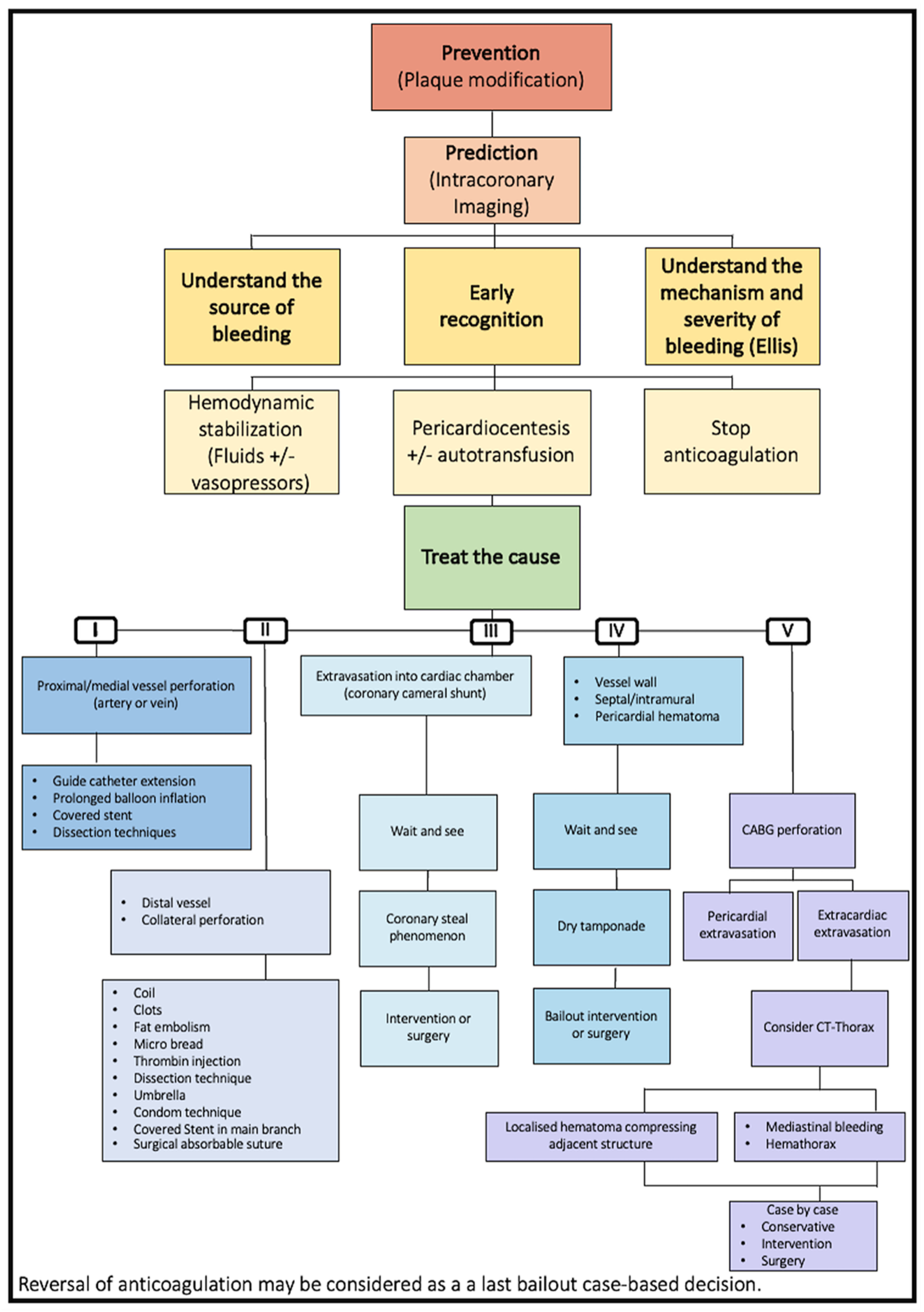
2. Cardiac Vessel Perforation’s Algorithm “State of the Art” (Figure 1)
2.1. Prevention
2.2. Prediction
2.3. Early Recognition by Understanding the Mechanism and the Source of Bleeding
2.4. Hemodynamic Stabilization
2.5. Classification of Cardiac Vessel Injury
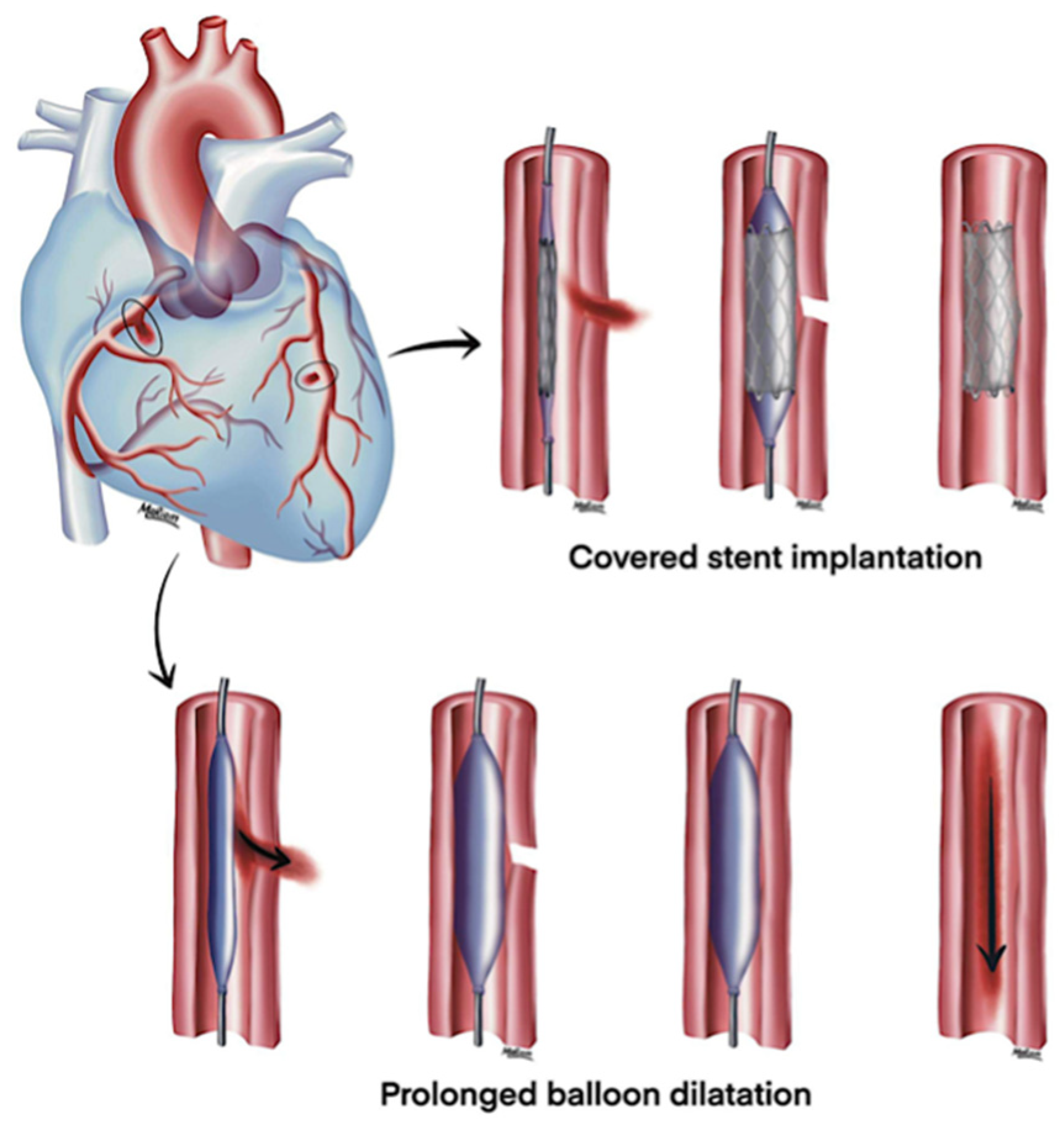
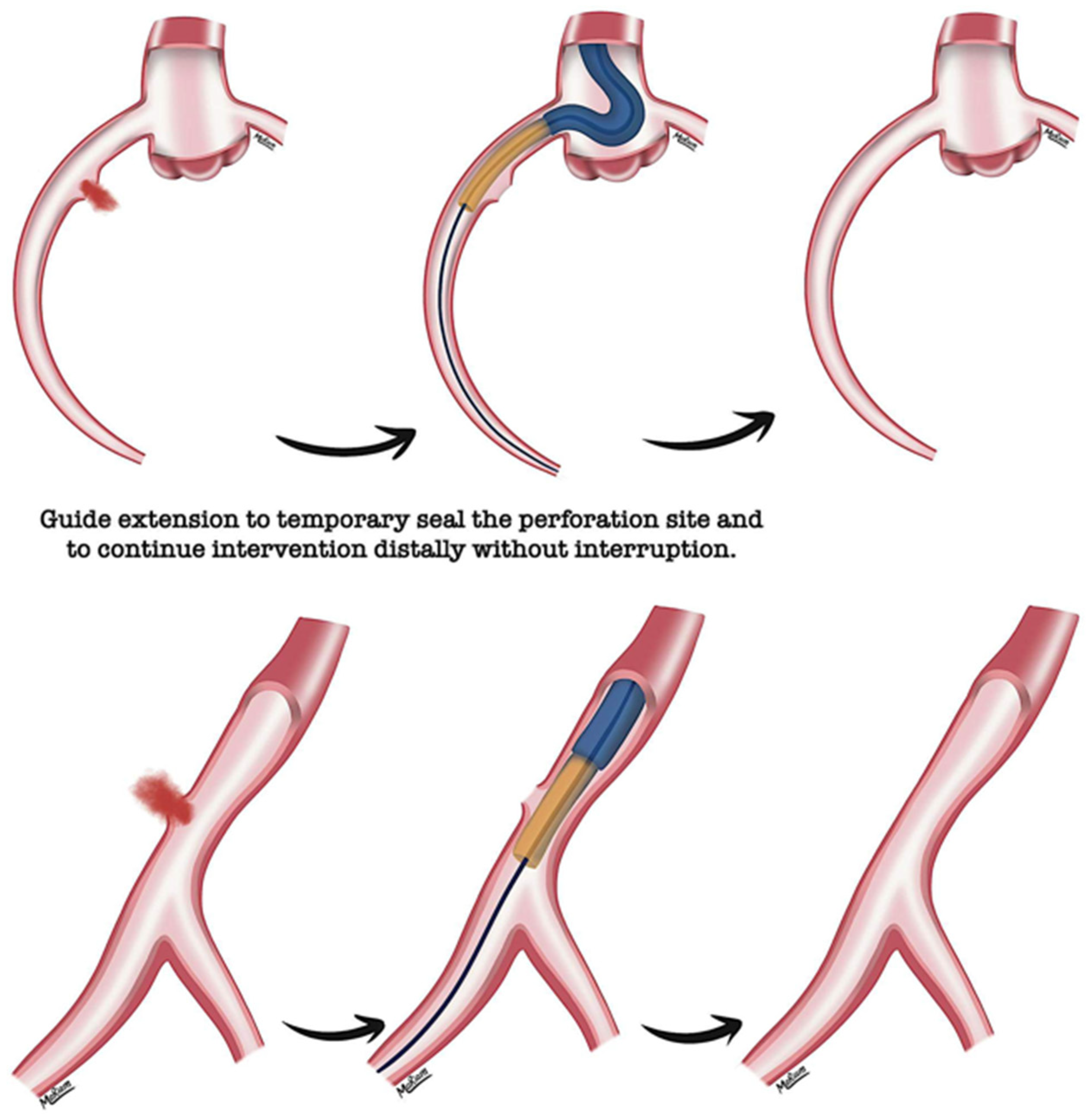
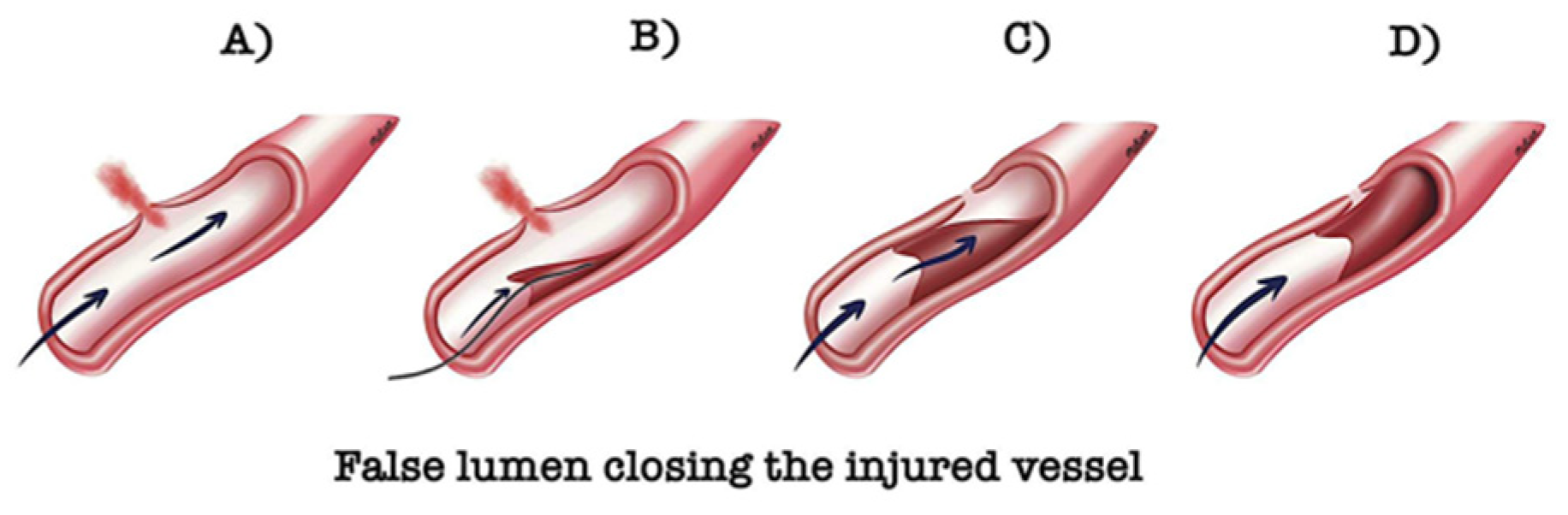
2.5.1. Category I: Proximal or Medial Medium-Sized Vessel Perforation
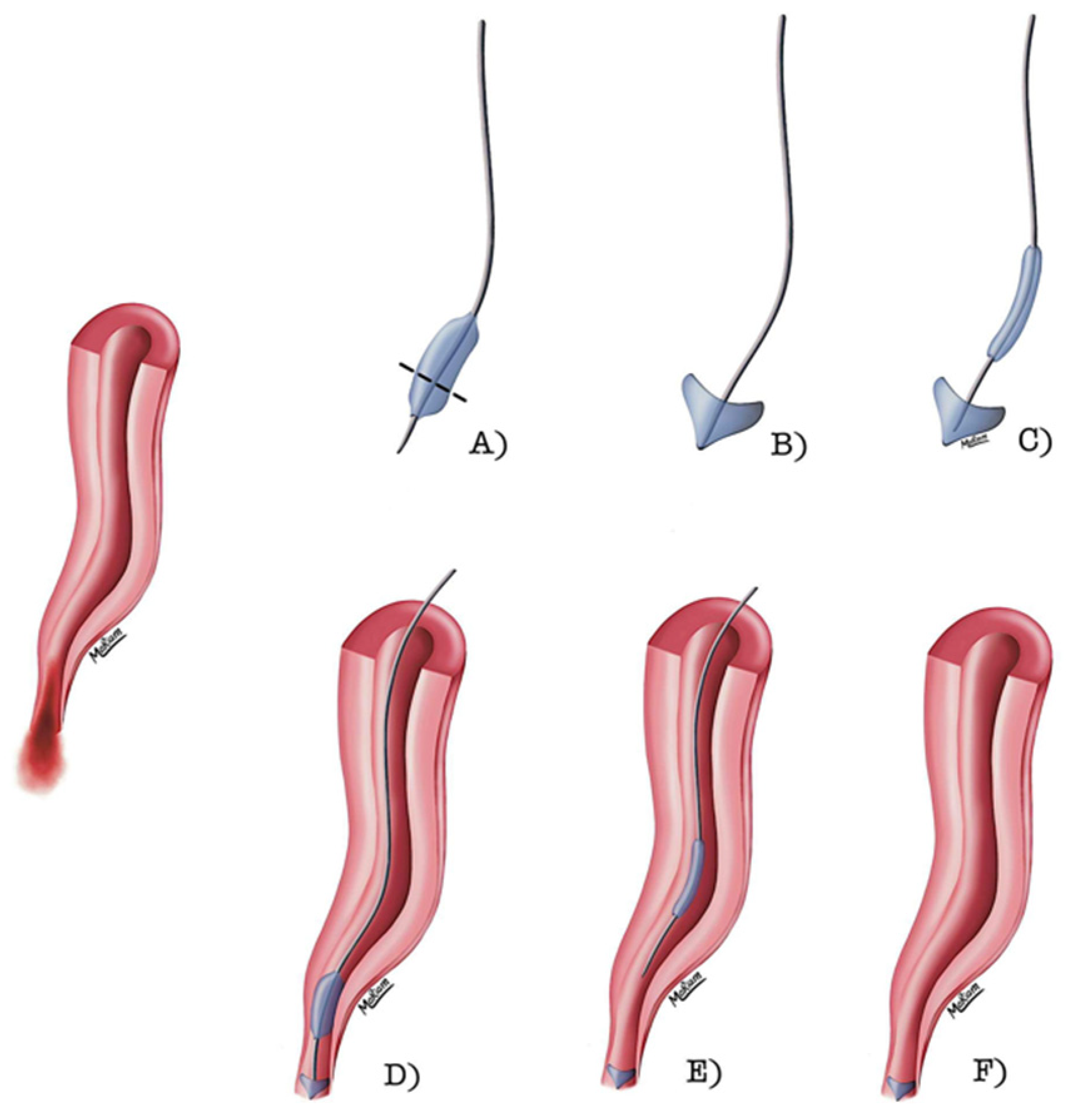
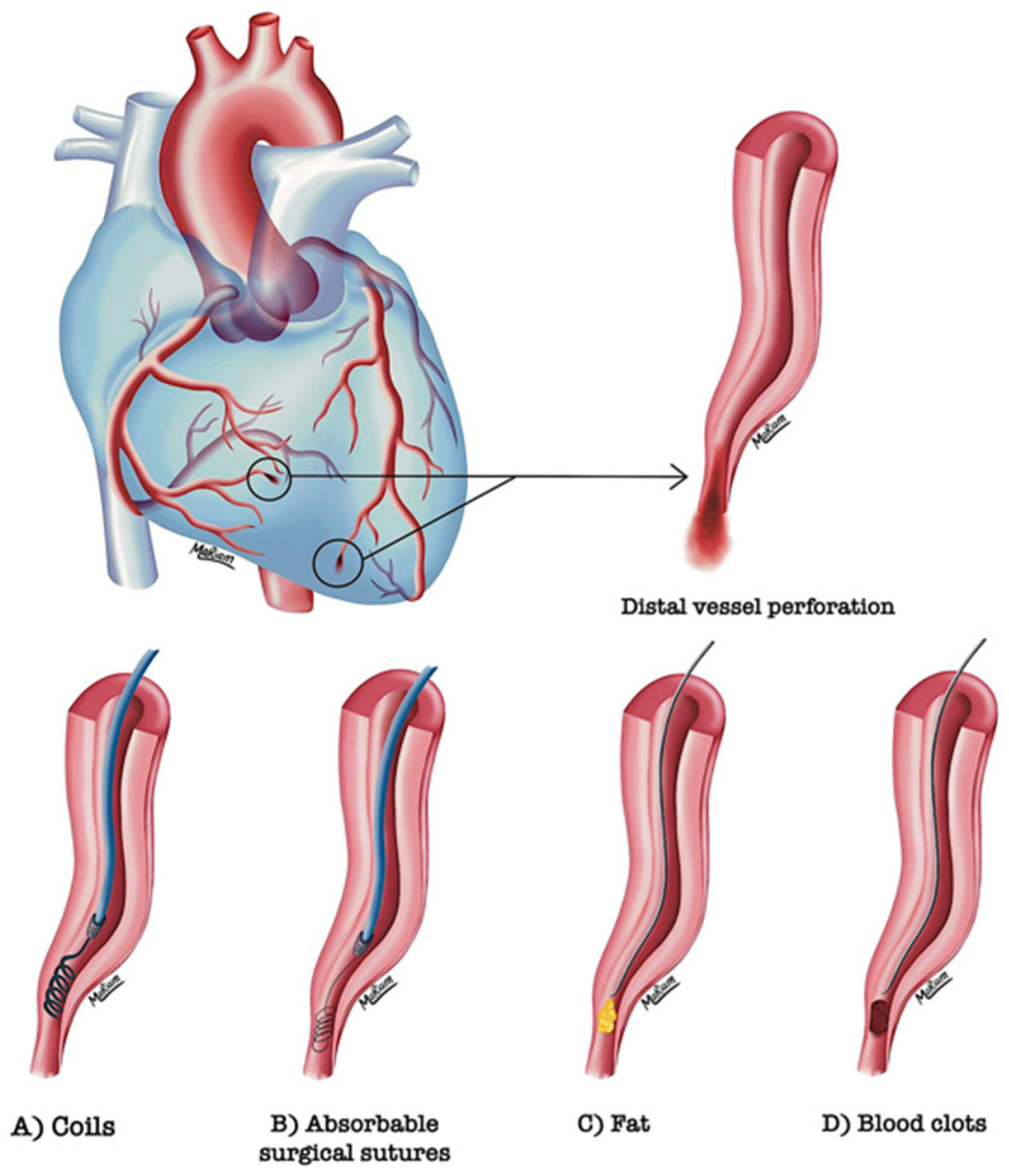
2.5.2. Category II: Distal and Small-Sized Vessel Perforation, Like Collaterals
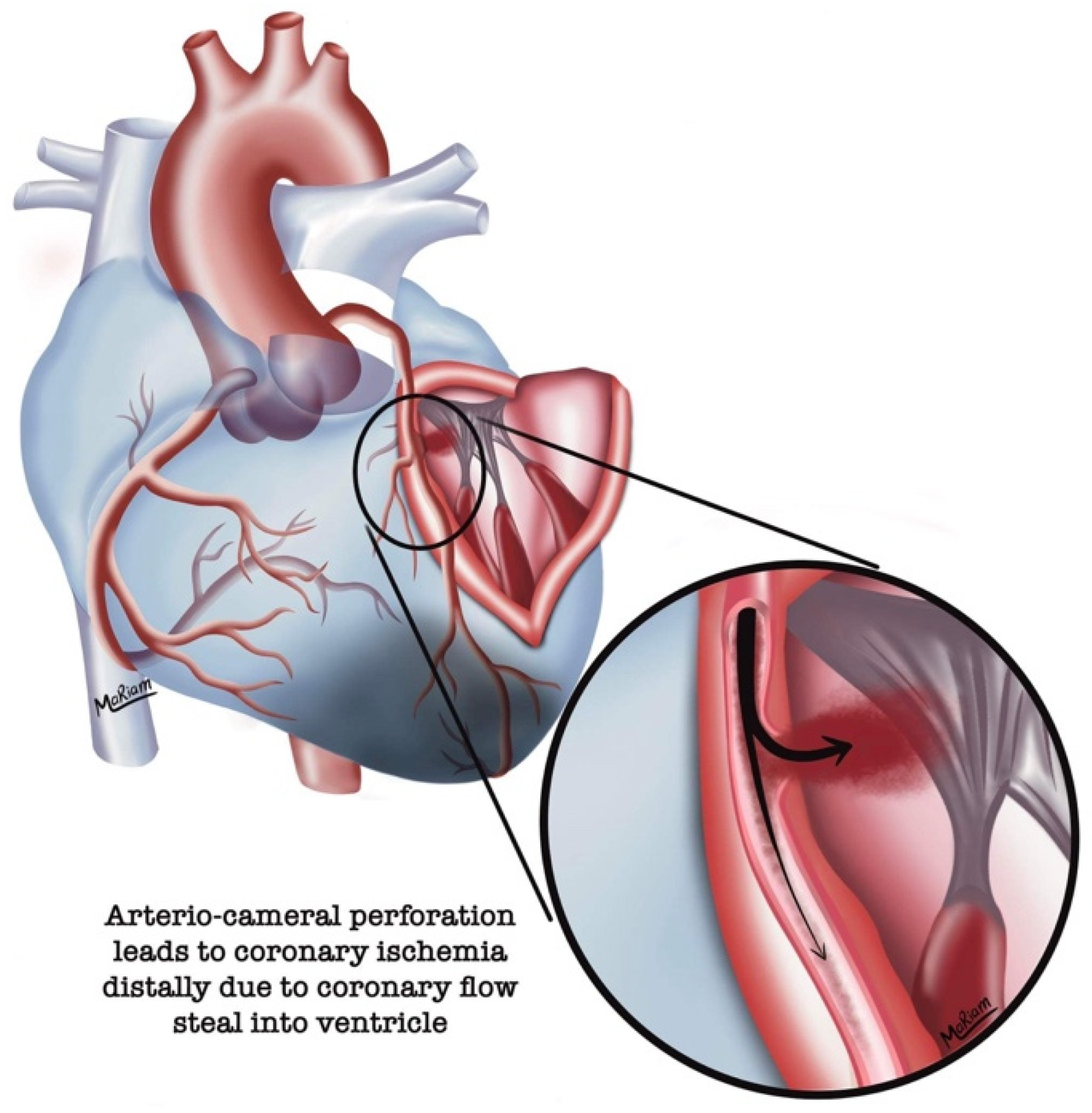
2.5.3. Category III: Coronary Vessel Perforation with Extravasation into the Cardiac Chamber
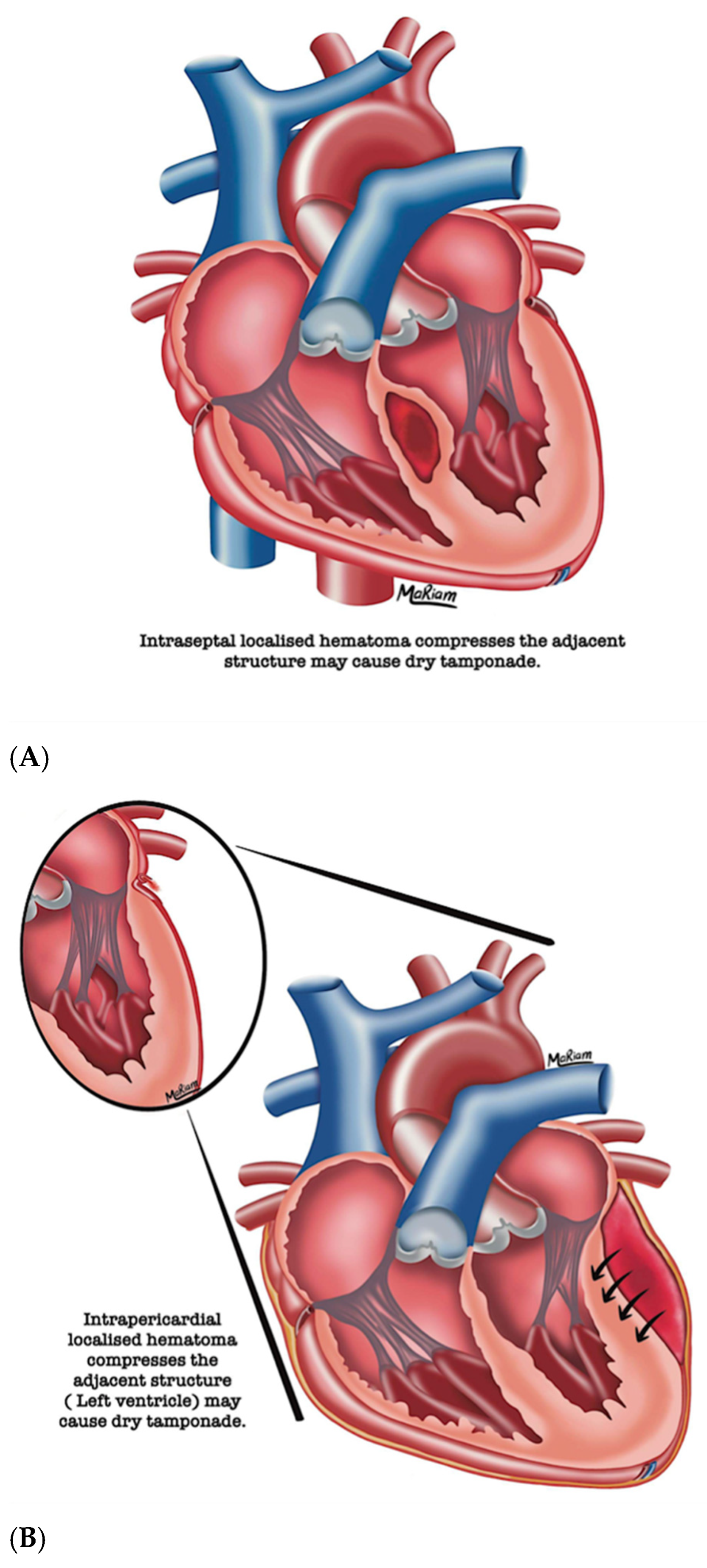
2.5.4. Category IV: Coronary Vessel Perforation with Leaks into the Myocardium or Pericardium Causing Hematomas
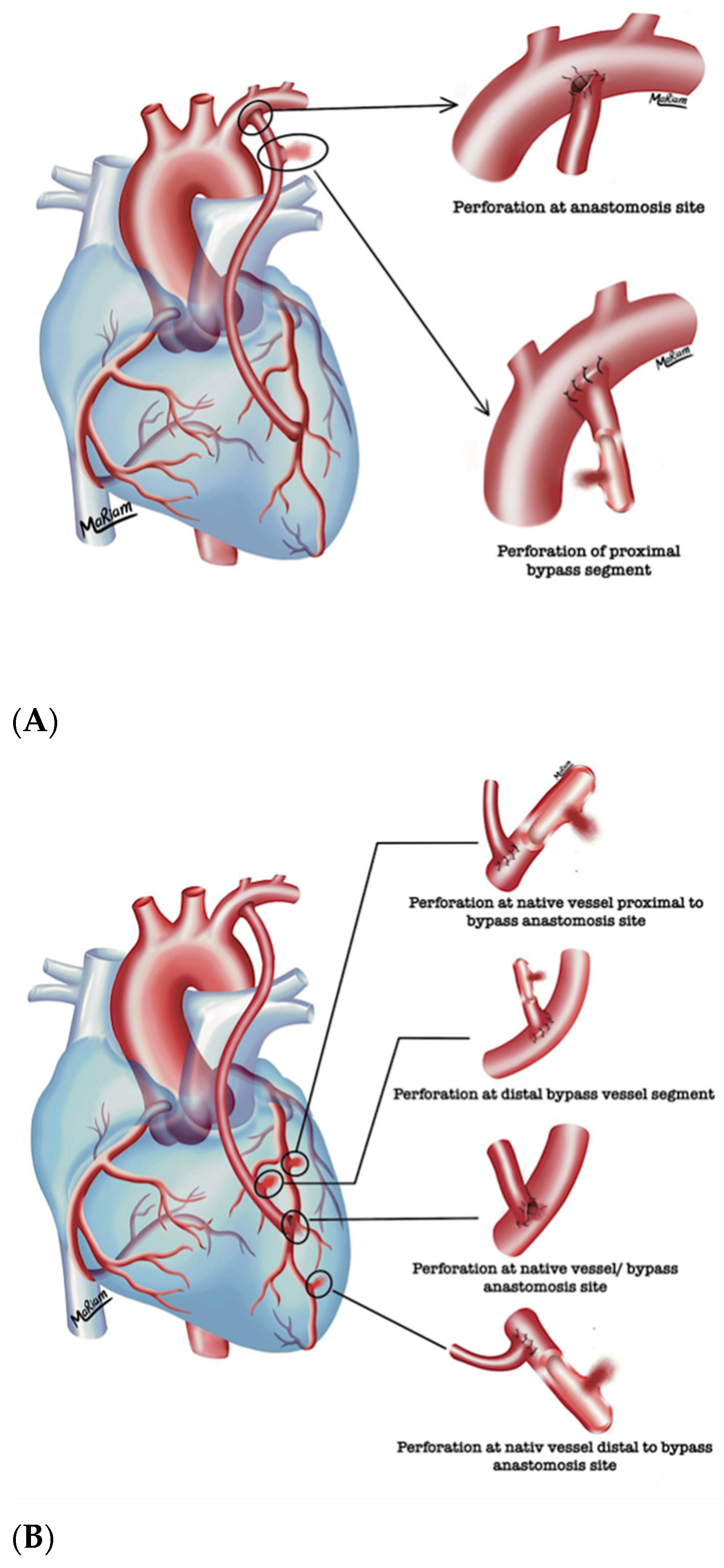
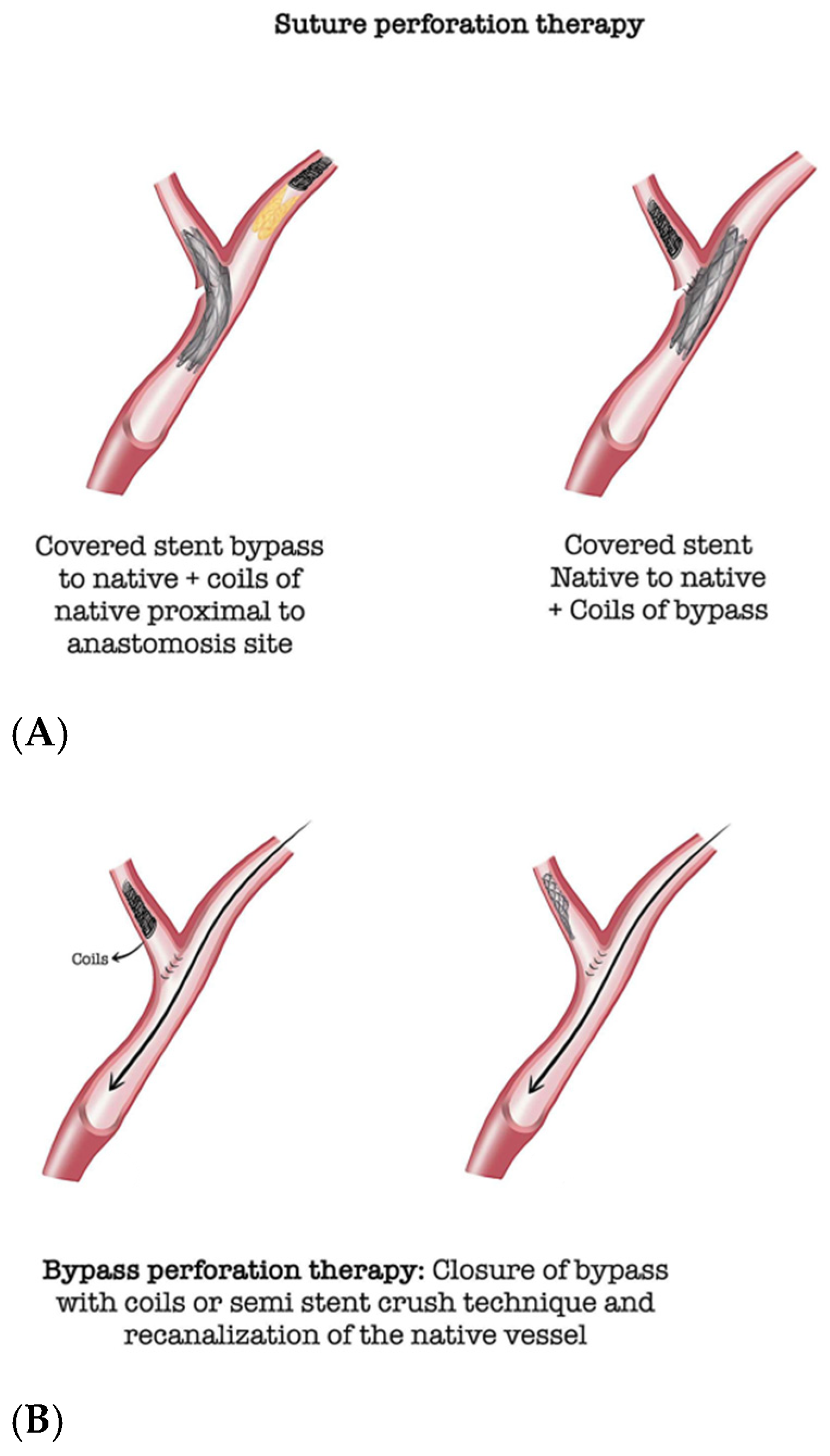
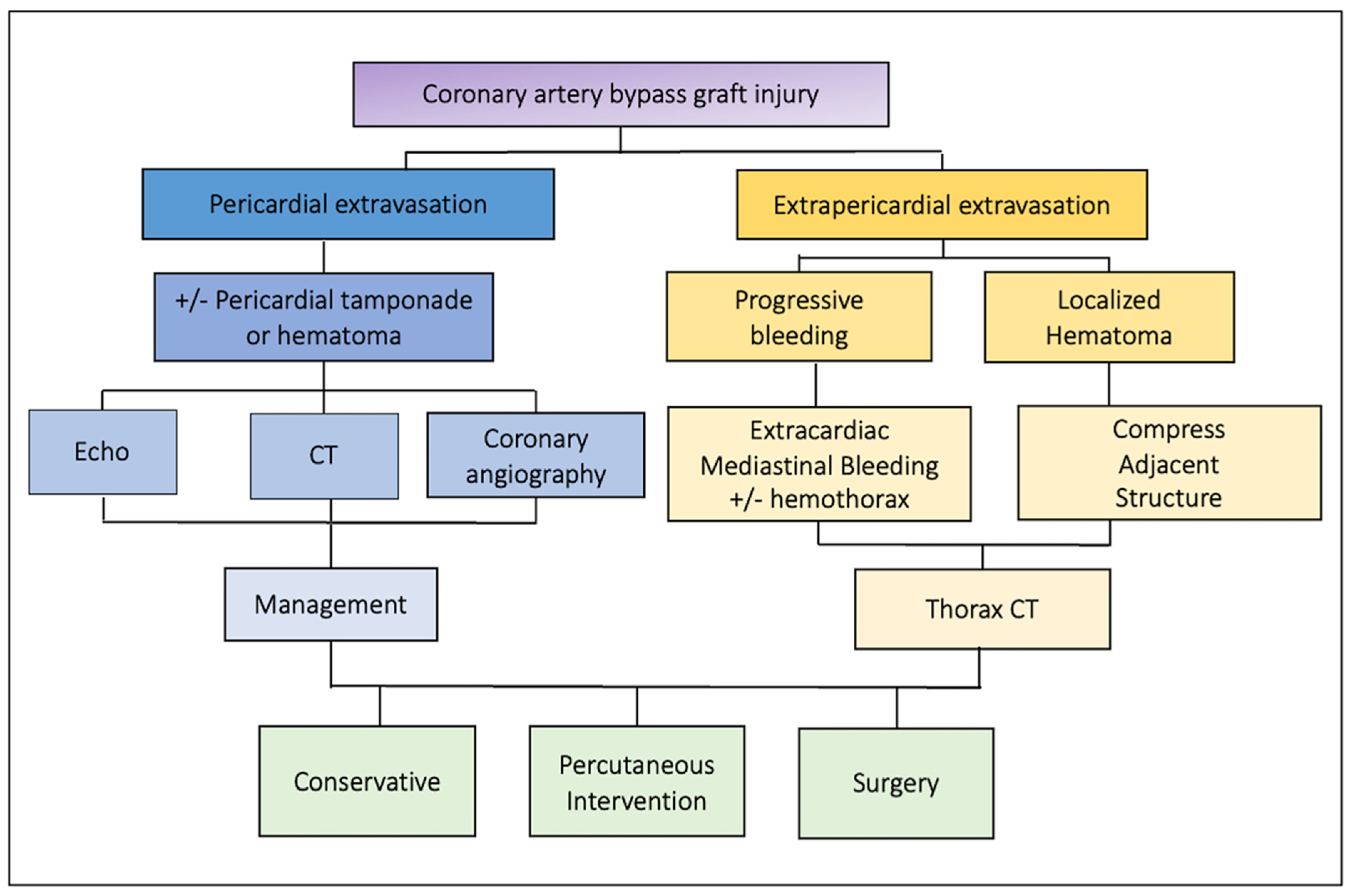
2.5.5. Category V: Perforation of the Coronary Vessel Bypass Graft
3. Discussion
- Is straightforward, more comprehensive and starts with preventive measures;
- Highlights predicting the complication before it happens and preparing the operator to deal with it, as some complications are not preventable;
- Stresses early recognition of perforations to identify the source of bleeding and for understanding the mechanism of bleeding, as these steps will better influence the management strategy and outcome;
- Highlights the crucial role of imaging in prevention, prediction, device selection, understanding the site and mechanism of injury, and accompanying the management strategy;
- Summarizes how to stabilize the hemodynamic status by focusing on pericardiocentesis indication, the reversal of anticoagulation, and hemodynamic support as a case-by-case decision according to the situation, if necessary;
- Classifies the cause of bleeding into five categories, each of which has a different causal mechanism and subsequently differs in management;
- Highlights the challenges and difficulties in diagnosing and managing the cardiac wall hematoma, taking into consideration a hematoma that deteriorates the hemodynamic status without effusion “dry tamponade” and how it can mask the situation with false impressions that there is no source of bleeding or obvious pathology;
- Stresses the importance of early recognition and immediate sealing before the initiation of the self-propagating process (avulsed capillary vessels providing active bleeding that fuels its expansion), regardless of the stable image of staining, as well as the role of close monitoring and a second control image to demonstrate the dynamicity of the injury (diffuse bleeding could persist after successful but delayed percutaneous sealing);
- Highlights coronary steal phenomena and their consequences;
- Stresses CABG perforation as a separate category, as this type of perforation is challenging and differs in management depending on the site of injury (cardiac or extracardiac) [32].
4. Conclusions
- Coronary perforation is a potentially life-threatening complication in all patients undergoing percutaneous coronary intervention. Thus, it is crucial for interventional cardiologists to take precautions to avoid this complication.
- In this context, the cardiac vessel perforation algorithm could be more comprehensive and cover the preventive measures and predictors, take into consideration prompt recognition, implement actions to restabilize the hemodynamic status, highlight understanding the source and mechanism of bleeding, and classify the cause of bleeding into type-specific approaches to manage it adequately, as each causality would necessitate a different management strategy for a successful outcome.
- Invasive coronary imaging may guide a safe PCI strategy in terms of the device.
- What this article adds
- Is more comprehensive and starts with preventive measures;
- Highlights predicting the complication before it happens and preparing the operator to deal with it, as some complications are not preventable;
- Stresses early recognition of perforations to identify the source of bleeding and understand the mechanism of bleeding, as these steps will better influence the management strategy and outcome;
- Summarizes how to stabilize the hemodynamic status by focusing on pericardiocentesis indication, the reversal of anticoagulation, and hemodynamic support according to the situation, if necessary;
- Classifies the cause of bleeding into five categories, each of which has a different causal mechanism and subsequently differs in management;
- Highlights the challenges and difficulties in diagnosing and managing the cardiac wall hematoma, taking into consideration a hematoma that deteriorates the hemodynamic status without effusion “dry tamponade” and how it can mask the situation with false impressions that there is no source of bleeding or obvious pathology;
- Stresses the importance of early recognition and immediate sealing before the self-propagating process initiation (avulsed capillary vessels providing active bleeding that fuels its expansion), regardless of the stable image of staining, as well as the role of close monitoring and a second control image to demonstrate the dynamicity of the injury (diffuse bleeding could persist after successful but delayed percutaneous sealing);
- Highlights coronary steal phenomena and their consequences;
- Uses a guide catheter extension to temporarily seal the proximal or medial vessel injury, allowing the intervention to proceed at the distal part of the vessel without interruption;
- How this algorithm might affect practice:
- We reformatted a new coronary perforation algorithm. It starts with prevention and prediction, goes through understanding the source and mechanism of bleeding, and finally classifies the cause of bleeding into vessel, pericardial, myocardial, and chamber perforation, as each causality necessitates a different management strategy to improve outcomes.
Author Contributions
Funding
Institutional Review Board Statement
Informed Consent Statement
Data Availability Statement
Acknowledgments
Conflicts of Interest
Abbreviations
| CABG | Coronary artery bypass graft surgery |
| CAP | Coronary artery perforation |
| C-CAT | C-type Calcified and residual Thin plaque |
| CT | Computer tomography |
| CTO | Chronic total occlusion |
| CVS | Cardiac venous system |
| GCV | Great cardiac vein |
| PCI | Percutaneous coronary intervention |
| PTFE | Poly-tetrafluorethylene |
References
- Stankovic, G.; Orlic, D.; Corvaja, N.; Airoldi, F.; Chieffo, A.; Spanos, V.; Montorfano, M.; Carlino, M.; Finci, L.; Sangiorgi, G.; et al. Incidence, predictors, in-hospital, and late outcomes of coronary artery perforations. Am. J. Cardiol. 2004, 93, 213–216. [Google Scholar] [CrossRef] [Scilit] [PubMed]
- Abdalwahab, A.; Farag, M.; Brilakis, E.S.; Galassi, A.R.; Egred, M. Management of Coronary Artery Perforation. Cardiovasc. Revascularization Med. 2021, 26, 55–60. [Google Scholar] [CrossRef] [Scilit] [PubMed]
- Kinnaird, T.; Anderson, R.; Ossei-Gerning, N.; Cockburn, J.; Sirker, A.; Ludman, P.; de Belder, M.; Walsh, S.; Smith, E.; Hanratty, C.; et al. Legacy Effect of Coronary Perforation Complicating Percutaneous Coronary Intervention for Chronic Total Occlusive Disease: An Analysis of 26,807 Cases from the British Cardiovascular Intervention Society Database. Circ. Cardiovasc. Interv. 2017, 10, e004642. [Google Scholar] [CrossRef] [Scilit] [PubMed]
- Megaly, M.; Morcos, R.; Kucharik, M.; Tawadros, M.; Basir, M.B.; Pershad, A.; Maini, B.; Khalili, H.; Alaswad, K.; Brilakis, E.S. Complications and Failure Modes of Polymer-Jacketed Guidewires; Insights from the MAUDE Database. Cardiovasc. Revascularization Med. 2022, 36, 132–135. [Google Scholar] [CrossRef] [Scilit] [PubMed]
- De Marco, F.; Balcells, J.; Lefèvre, T.; Routledge, H.; Louvard, Y.; Morice, M.-C. Delayed and recurrent cardiac tamponade following distal coronary perforation of hydrphilic guidewires during coronary intervention. J. Invasive Cardiol. 2008, 20, E150–E153. [Google Scholar] [PubMed]
- Al-Lamee, R.; Ielasi, A.; Latib, A.; Godino, C.; Ferraro, M.; Mussardo, M.; Arioli, F.; Carlino, M.; Montorfano, M.; Chieffo, A.; et al. Incidence, predictors, management, immediate and long-term outcomes following grade III coronary perforation. JACC Cardiovasc. Interv. 2011, 4, 87–95. [Google Scholar] [CrossRef] [Scilit] [PubMed]
- Elhakim, A.; Elhakim, M.; Ismail, I.; Saad, M. Great Cardiac Vein Injury after Circumflex Artery Intervention: A case report. Eur. Heart J.—Case Rep. 2023, 7, ytad335. [Google Scholar] [CrossRef] [Scilit]
- Saremi, F.; Muresian, H.; Sánchez-Quintana, D. Coronary veins: Comprehensive CT-anatomic classification and review of variants and clinical implications. Radiographics 2012, 32, E1–E32. [Google Scholar] [CrossRef] [Scilit] [PubMed]
- Christopoulos, G.; Karmpaliotis, D.; Wyman, M.R.; Alaswad, K.; McCabe, J.; Lombardi, W.L.; Grantham, J.A.; Marso, S.P.; Kotsia, A.P.; Rangan, B.V.; et al. Percutaneous intervention of circumflex chronic total occlusions is associated with worse procedural outcomes: Insights from a Multicentre US Registry. Can. J. Cardiol. 2014, 30, 1588–1594. [Google Scholar] [CrossRef] [Scilit] [PubMed]
- Sawayama, Y.; Sasaki, K.; Taninobu, N.; Ikuta, A.; Osakada, K.; Kubo, S.; Tada, T.; Fuku, Y.; Tanaka, H.; Nakagawa, Y.; et al. Heparin Reversal for Coronary Artery Perforation. Catheter. Cardiovasc. Interv. 2025, 105, 464–474. [Google Scholar] [CrossRef] [Scilit] [PubMed]
- Danek, B.A.; Kearney, K.E.; Chung, C.J.; Steinberg, Z.; Lombardi, W.L.; McCabe, J.M.; Azzalini, L. The contemporary role of protamine in the cardiac catheterization laboratory. Catheter. Cardiovasc. Interv. 2023, 102, 111–120. [Google Scholar] [CrossRef] [Scilit] [PubMed]
- Corona, S.; Sirbu, V. Coronary Artery Perforation, Subepicardial Hematoma, and Cardiac Tamponade After Complex Percutaneous Coronary Intervention. JACC Case Rep. 2021, 3, 1594–1598. [Google Scholar] [CrossRef] [Scilit] [PubMed] [PubMed Central]
- Aggarwal, C.; Varghese, J.; Uretsky, B. Left atrial inflow and outflow obstruction as a complication of retrograde approach for chronic total occlusion: Report of a case and literature review of left atrial hematoma after percutaneous coronary intervention. Catheter. Cardiovasc. Interv. 2013, 82, 770–775. [Google Scholar] [CrossRef] [Scilit] [PubMed]
- Shekar, P.S.; Stone, J.R.; Couper, G.S. Dissecting sub-epicardial hematoma–challenges to surgical management. Eur. J. Cardiothorac. Surg. 2004, 26, 850–853. [Google Scholar] [CrossRef] [Scilit] [PubMed]
- Stathopoulos, I.; Kossidas, K.; Panagopoulos, G.; Garratt, K. Cardiac tamponade complicating coronary perforation during angioplasty: Short-term outcomes and long-term survival. J. Invasive Cardiol. 2013, 25, 486–491. [Google Scholar] [PubMed]
- Rodriguez-Santamarta, M.; Estevez-Loureiro, R.; Cuellas, C.; Benito-Gonzalez, T.; de Prado, A.P.; Lopez-Benito, M.; Fernandez-Vazquez, F. Double guide catheter technique for sealing an iatrogenic coronary perforation. Res. Cardiovasc. Med. 2016, 5, e31388. [Google Scholar] [CrossRef] [Scilit] [PubMed]
- Yong, A.C.; Chieh, J.T.W. Coronary Perforation Complicating Percutaneous Coronary Intervention—A Case Illustration and Review. ASEAN Heart J. 2013, 21, 3. [Google Scholar] [CrossRef] [Scilit] [PubMed] [PubMed Central]
- Xenogiannis, I.; Brilakis, E. Advances in the treatment of coronary perforations. Catheter. Cardiovasc. Interv. 2019, 93, 921–922. [Google Scholar] [CrossRef] [Scilit] [PubMed]
- Fujimoto, Y.; Tonoike, N.; Kobayashi, Y. Successful delivery of polytetrafluoroethylene-covered stent using rapid exchange guide extension catheter. Cardiovasc. Interv. Ther. 2017, 32, 142–145. [Google Scholar] [CrossRef] [Scilit] [PubMed]
- Sanchez, J.S.; Garbo, R.; Gagnor, A.; Oreglia, J.; Mazzarotto, P.; Maurina, M.; Regazzoli, D.; Gasparini, G.L. Management and outcomes of coronary artery perforations treated with the block and deliver technique. Catheter. Cardiovasc. Interv. 2021, 98, 238–245. [Google Scholar] [CrossRef] [Scilit] [PubMed]
- Al-Omary, M.S.; Collins, N.J.; Sung, J.G.; Bhagwandeen, R.; Ho, K.H.; Yam, P.W.; Wu, E.B.; Lam, H. Absorbable Suture Embolization in Distal Coronary Perforation. JACC Case Rep. 2022, 4, 133–136. [Google Scholar] [CrossRef] [Scilit] [PubMed] [PubMed Central]
- Sucharski, M.; Kurpaska, M.; Malinowski, M.; Krzesiński, P. New techniques in iatrogenic coronary artery perforation management including umbrella technique, case report. Cardiovasc. Revascularization Med. 2023, 53, S245–S249. [Google Scholar] [CrossRef] [Scilit]
- Agostoni, P.; Moroni, A.; Scott, B.; Poletti, E.; Benedetti, A.; Zivelonghi, C. An Adaptable, Cheap and Easy-to-Use Interventional Tool to Obtain Vascular Sealing: The Condom Technique. J. Am. Coll. Cardiol. Interv. 2024, 17, 94–96. [Google Scholar] [CrossRef] [Scilit] [PubMed]
- Gasparini, G.; Merella, P.; Mazzarotto, P.; Gagnor, A.; Garbo, R.; Oreglia, J.A. Retrograde approach-related epicardial collateral channel perforation successfully treated with simultaneous bilateral coils embolization: A case illustration and review. Cardiovasc. Revascularization Med. 2018, 19, 879–886. [Google Scholar] [CrossRef] [Scilit] [PubMed]
- Khand, A.; Patel, B.; Palmer, N.; Jones, J.; Andron, M.; Perry, R.; Mehrotra, S.; Mitsudo, K. Retrograde Wiring of Collateral Channels of the Heart in Chronic Total Occlusions: A Systematic Review and Meta-Analysis of Safety, Feasibility, and Incremental Value in Achieving Revascularization. Angiology 2015, 66, 925–932. [Google Scholar] [CrossRef] [Scilit] [PubMed]
- Karatasakis, A.; Akhtar, Y.; Brilakis, E. Distal coronary perforation in patients with prior coronary artery bypass graft surgery: The importance of early treatment. Cardiovasc. Revascularization Med. 2016, 17, 412–417. [Google Scholar] [CrossRef] [Scilit] [PubMed]
- Achim, A.; Johnson, N.P.; Liblik, K.; Burckhardt, A.; Krivoshei, L.; Leibundgut, G. Coronary steal: How many thieves are out there? Eur. Heart J. 2023, 44, 2805–2814. [Google Scholar] [CrossRef] [Scilit] [PubMed]
- Kawaguchi, S.; Takeuchi, T.; Hasebe, N. Pulmonary artery compression by a localized epicardial hematoma in a patient with idiopathic thrombocytopenic purpura after percutaneous coronary intervention: A case report. BMC Cardiovasc. Disord. 2016, 16, 206. [Google Scholar] [CrossRef] [Scilit]
- Kawase, Y.; Hayase, M.; Ito, S.; Ojio, S.; Tahara, H.; Ehara, M.; Kondo, H.; Ito, Y.; Suzuki, Y.; Ishihara, Y.; et al. Compression of right ventricular out-flow due to localized hematoma after coronary perforation during PCI. Catheter. Cardiovasc. Interv. 2003, 58, 202–206. [Google Scholar] [CrossRef] [Scilit] [PubMed]
- Chowdhury, M.A.; Sheikh, M.A. Coronary bypass graft perforation during percutaneous intervention. Cardiovasc. Revascularization Med. 2016, 17, 48–53. [Google Scholar] [CrossRef] [Scilit] [PubMed]
- Frangieh, A.; Klainguti, M.; Lüscher, T.; Galassi, A.R.; Gaemperli, O. Left-sided haemothorax after iatrogenic coronary perforation in a patient with prior bypass surgery. Eur. Heart J. 2015, 36, 128. [Google Scholar] [CrossRef] [Scilit] [PubMed]
- Wyderka, R.; Adamowicz, J.; Nowicki, P.; Ciapka, A.; Kędzierski, B.; Jaroch, J. Perforation of saphenous vein graft with mediastinal haemorrhage leading to near closure of distal graft segment. SAGE Open Med. Case Rep. 2019, 7, 2050313X19838745. [Google Scholar] [CrossRef] [Scilit]
- Chaturvedi, A.; Vargas, D.; Ocazionez, D. CT for evaluation of acute pericardial emergencies in the ED. Emerg. Radiol. 2018, 25, 321–328. [Google Scholar] [CrossRef] [Scilit] [PubMed]
- Ellis, S.G.; Ajluni, S.; Arnold, A.Z.; Popma, J.J.; Bittl, J.A.; Eigler, N.L.; Cowley, M.J.; Raymond, R.E.; Safian, R.D.; Whitlow, P.L. Increased coronary perforation in the new device era. Incidence, classification, management, and outcome. Circulation 1994, 90, 2725–2730. [Google Scholar] [CrossRef] [Scilit] [PubMed]
- Kawamura, A.; Nishino, M.; Tanouchi, J. The C-CAT sign may predict coronary artery perforation in severe calcified lesions during coronary intervention: A case series. Eur. Heart J. Case Rep. 2023, 7, ytad075. [Google Scholar] [CrossRef] [Scilit] [PubMed] [PubMed Central]




Disclaimer/Publisher’s Note: The statements, opinions and data contained in all publications are solely those of the individual author(s) and contributor(s) and not of MDPI and/or the editor(s). MDPI and/or the editor(s) disclaim responsibility for any injury to people or property resulting from any ideas, methods, instructions or products referred to in the content. |
© 2026 by the authors. Licensee MDPI, Basel, Switzerland. This article is an open access article distributed under the terms and conditions of the Creative Commons Attribution (CC BY) license.
Share and Cite
Elhakim, A.; Hamidani, F.; Elhakim, M.; Baraka, M.; Yassin, I.; Mosaad, M.; Hassaan, A.; Saad, M.; Bisht, O. Algorithm for Cardiac Vessel Perforation: State of the Art. Complications 2026, 3, 11. https://doi.org/10.3390/complications3020011
Elhakim A, Hamidani F, Elhakim M, Baraka M, Yassin I, Mosaad M, Hassaan A, Saad M, Bisht O. Algorithm for Cardiac Vessel Perforation: State of the Art. Complications. 2026; 3(2):11. https://doi.org/10.3390/complications3020011
Chicago/Turabian StyleElhakim, Abdelrahman, Fadhel Hamidani, Mohamed Elhakim, Mahmoud Baraka, Ibrahim Yassin, Mohamed Mosaad, Ahmad Hassaan, Mohammed Saad, and Osama Bisht. 2026. "Algorithm for Cardiac Vessel Perforation: State of the Art" Complications 3, no. 2: 11. https://doi.org/10.3390/complications3020011
APA StyleElhakim, A., Hamidani, F., Elhakim, M., Baraka, M., Yassin, I., Mosaad, M., Hassaan, A., Saad, M., & Bisht, O. (2026). Algorithm for Cardiac Vessel Perforation: State of the Art. Complications, 3(2), 11. https://doi.org/10.3390/complications3020011