1. Introduction
The rapid advancement of mobile communication technologies has made handheld mobile devices an integral part of modern life. As of 2023, over 7 billion individuals worldwide use mobile phones, spending several hours daily on these [
1]. While these devices provide essential communication, internet access, and a wide range of applications, concerns have arisen regarding their potential health effects, particularly due to exposure to electromagnetic fields (EMFs) [
2]. Mobile phones emit radiofrequency (RF) energy primarily through their antennas, and the hand, being the main point of contact, is directly exposed during usage [
3].
Current networks operate across 100 MHz to 6 GHz, and with the rollout of fifth-generation (5G) systems extending into the millimetre-wave spectrum (>3.5 GHz), new challenges emerge in evaluating biological exposure [
4,
5]. At these higher frequencies, electromagnetic waves penetrate only superficial layers of tissue, raising concerns about localized energy absorption in the hand. The extent of such interactions depends on the dielectric properties of tissues, permittivity, conductivity, and loss tangent, which govern how RF energy is absorbed, reflected, and transmitted [
6,
7,
8]. Energy absorption is quantified by the specific absorption rate (SAR), a key metric in safety evaluations. Regulatory agencies, including the International Commission on Non-Ionising Radiation Protection (ICNIRP) and the Federal Communications Commission (FCC), have established SAR limits of 2 W/kg averaged over 10 g of tissue. However, these guidelines were primarily derived from legacy technologies and may not fully capture the implications of 5G exposures [
9,
10].
The human hand is structurally heterogeneous, comprising skin, fat, muscle, and bone, each with distinct dielectric characteristics. Factors such as tissue composition, hydration, age, and temperature further influence dielectric behaviour [
11,
12]. Despite this complexity, most existing studies have focused on homogeneous tissues or broader anatomical regions, leaving limited insight into the dielectric response of the hand under realistic exposure conditions [
13]. Experimental techniques such as the open-ended coaxial probe and time-domain reflectometry (TDR) have been applied to tissue samples but are constrained by frequency range and accuracy at higher bands [
14]. Computational modelling, therefore, offers a more robust approach to assess tissue–field interactions across broad frequency ranges with controlled conditions.
Given the increasing prevalence of 5G-enabled devices and the lack of detailed data on hand tissue response at these frequencies, further research is essential. This work is entirely computational in nature and does not involve experimental measurements or human subjects. The analysis relies on validated dielectric property datasets and numerical simulations based on the Finite-Difference Time-Domain (FDTD) method. Such computational modelling enables controlled investigation of tissue–field interactions across wide frequency and temperature ranges that are difficult to access experimentally. The study employs validated secondary data and computational simulations to investigate the dielectric properties of human hand tissues across 0.5–40 GHz, with emphasis on 5G-relevant bands. By characterizing frequency- and temperature-dependent dielectric behaviour, reflection, attenuation, and SAR, the study addresses critical gaps in current knowledge. The findings are expected to improve the accuracy of computational exposure models, inform safety standards, and guide mobile device design. Ultimately, this work contributes to advancing safer telecommunication technologies and strengthening evidence-based regulatory frameworks.
2. Theoretical Framework
2.1. Electromagnetic Wave Interaction with Biological Tissues
Electromagnetic waves interact with biological tissues through three primary mechanisms: absorption, reflection, and transmission. These interactions are governed by the dielectric properties of the tissues, including their permittivity (
ε) and conductivity (
σ), which determine how electromagnetic energy is distributed within the body [
7,
15]. Understanding these interactions is critical for assessing the potential health risks associated with exposure to electromagnetic fields (EMF) from handheld mobile phone devices.
2.2. Simulation of Dielectric Properties of the Tissues
When electromagnetic waves propagate through biological tissues, a portion of the energy is absorbed, leading to the generation of heat. The extent of energy absorption depends on the frequency of the electromagnetic wave and the dielectric properties of the tissue. The specific absorption rate (SAR) is a key metric used to quantify the rate of energy absorption per unit mass of tissue. SAR is typically expressed in watts per kilogram (W/kg) and is used to evaluate compliance with safety standards set by organizations such as the International Commission on Non-Ionizing Radiation Protection (ICNIRP) and the Federal Communications Commission (FCC) [
16,
17]. The dielectric properties of human hand tissues, especially the permittivity and conductivity, have a significant impact on how tissues interact with electromagnetic fields. Research has also shown that human tissues are composed mostly of water and ions, therefore making them dielectric materials with frequency-dependent properties [
18]. In this case, the key dielectric properties simulated are the relative permittivity, the electrical conductivity, and the dielectric loss tangent. The dielectric constant and loss, which indicate how well the tissue can store electrical energy, were simulated using the following equations:
The dielectric loss factor and the electrical conductivity were generated using the following equations.
The attenuation of this electromagnetic wave in the dielectric medium was simulated because biological tissues are closely linked to its dielectric properties particularly the complex permittivity and conductivity as shown in the following equation:
where α = attenuation constant (Np/m or dB/m), ω = 2πf (angular frequency),
c = speed of light in vacuum (3 × 10
8 m/s), μ = permeability (μ
0 for non-magnetic tissue, 4π × 10
−7 H/m),
ε′ = real part of the complex permittivity,
ε″ = imaginary part of the complex permittivity.
2.3. Reflection and Transmission of Electromagnetic Waves
In addition to absorption, electromagnetic waves can be reflected at the interface between different tissues or transmitted through the tissue. The reflection and transmission of waves depend on the impedance mismatch between adjacent tissues, which is determined by their dielectric properties [
19]. The reflection coefficient (Γ) at the boundary between two tissues can be calculated using:
where
.
Here, ω is the angular frequency of the electromagnetic wave (in radians per second), μ is the magnetic permeability of the tissue (typically assumed to be equal to that of free space,
) and
ε is the complex permittivity of the tissue, defined as:
where
ε′ is the real part of the permittivity (related to energy storage) and
ε″ is the imaginary part (related to energy loss) [
20].
2.4. Frequency Dependence of Tissue Interactions
The interaction of electromagnetic waves with biological tissues is highly frequency-dependent. At lower frequencies (below 1 GHz), the penetration depth of electromagnetic waves is relatively high, and energy absorption is distributed over a larger volume of tissue. However, at higher frequencies (above 1 GHz), the penetration depth decreases, and energy absorption becomes more localized near the surface of the tissue [
21]. This is particularly relevant for 5G technologies, which operate at frequencies above 3.5 GHz, where the energy absorption is concentrated in the skin and superficial tissues of the hand [
22].
2.5. Measurement Techniques for Dielectric Properties
The dielectric properties of biological tissues, including permittivity (
ε) and conductivity (
σ), are critical for understanding the interaction of electromagnetic fields (EMF) with the human body. Several experimental techniques have been developed to measure these properties across a wide range of frequencies, from low-frequency (kHz) to microwave (GHz) ranges. Each method has its own principles, advantages, and limitations, making it suitable for specific applications and frequency ranges. Below, we discuss the most widely used techniques for measuring the dielectric properties of biological tissues [
18,
23].
2.6. Open-Ended Coaxial Probe Method
The open-ended coaxial probe method is one of the most widely used techniques for measuring the dielectric properties of biological tissues, particularly at microwave frequencies (100 MHz to 6 GHz). This method involves placing a coaxial probe in direct contact with the tissue sample and measuring the reflected signal.
Principle: The probe emits an electromagnetic wave into the tissue, and the reflected wave is analyzed to determine the complex permittivity of the tissue. The reflection coefficient (Γ) is related to the dielectric properties of the tissue through the following equation:
where
is the complex permittivity of the tissue [
6].
2.7. Resonant Cavity Method
The resonant cavity method is a highly accurate technique for measuring the dielectric properties of biological tissues, particularly at specific resonant frequencies. This method uses a cavity resonator, which is a hollow metallic structure that resonates at specific frequencies when excited by an electromagnetic wave.
Principle: The tissue sample is placed inside the cavity, and the resonant frequency (
) and quality factor (Q) of the cavity are measured. The dielectric properties of the tissue are determined by analyzing the shift in resonant frequency and the change in quality factor using the following equations:
where
and
are the resonant frequency and quality factor of the empty cavity, respectively [
24].
2.8. Time-Domain Reflectometry (TDR)
Time-domain reflectometry (TDR) is a versatile technique for measuring the dielectric properties of biological tissues, particularly at lower frequencies (kHz to MHz). This method involves sending a short electromagnetic pulse through a transmission line connected to the tissue sample and analyzing the reflected signal.
Principle: The dielectric properties of the tissue are determined by measuring the time delay and amplitude of the reflected pulse. The permittivity (
ε′) is calculated using the following equation:
where
c is the speed of light in vacuum,
is the time delay of the reflected pulse,
L is the length of the transmission line [
25].
2.9. Computational Model and Simulation
Computational models are mathematical techniques used to simulate and analyze complex physical phenomena, such as the interaction of electromagnetic fields (EMF) with biological tissues. These methods involve solving partial differential equations (PDEs) that describe the behaviour of electromagnetic waves in different media, it employed two primary methods, Finite Element Method (FEM) and Finite Difference Time Domain (FDTD), and both methods are widely used in bioelectromagnetic applications and offer unique advantages for modelling the dielectric properties of tissues.
Governing Equations: The interaction of electromagnetic waves with biological tissues is governed by Maxwell’s equations, which describe how electric and magnetic fields propagate through space. In the frequency domain, Maxwell’s equations can be written as:
where
E is the electric field intensity (V/m),
H is the magnetic field intensity (A/m),
J is the current density (A/m
2),
ω is the angular frequency (rad/s),
μ is the magnetic permeability (H/m),
ε is the complex permittivity of the tissue (F/m), given by:
where
ε′ is the real part of permittivity (related to energy storage),
σ is the electrical conductivity (S/m).
3. Materials and Methods
The study employed computational modelling to overcome the practical limitations of experimental dielectric measurements at millimetre-wave frequencies and to ensure reproducibility under controlled exposure conditions, investigating the dielectric response of human hand tissues exposed to radiofrequency (RF) electromagnetic fields across 0.5–40 GHz, including the millimetre-wave bands relevant to emerging 5G technologies. Computational modelling was selected because it enables reproducible, non-invasive analysis of electromagnetic interactions with biological tissues at high frequencies where experimental methods are limited. The dielectric properties of human tissues, including skin, fat, muscle, and bone, were obtained from established biomedical datasets and peer-reviewed literature [
23,
26] and validated against published experimental results. The electromagnetic simulations were performed using MAPLE 18 software (Maplesoft, Waterloo, ON, Canada), all simulations were executed on a high-performance workstation equipped with an Intel Core i7 processor using Windows 11 operating system (Microsoft Corporation, Redmond, WA, USA). Where deviations occurred, material properties and meshing resolutions were refined to improve agreement with empirical data. The simulations were implemented using the Finite-Difference Time-Domain (FDTD) method for solving Maxwell’s equations in the time domain, while Maple-18 was employed for analytical calculations of dielectric properties, power attenuation, reflection coefficients, and the specific absorption rate (SAR). The governing equations were based on Maxwell’s framework, with complex permittivity defined as:
where
ε′ is the real permittivity,
ε″ is the imaginary permittivity,
σ is the conductivity, and
ω is the angular frequency.
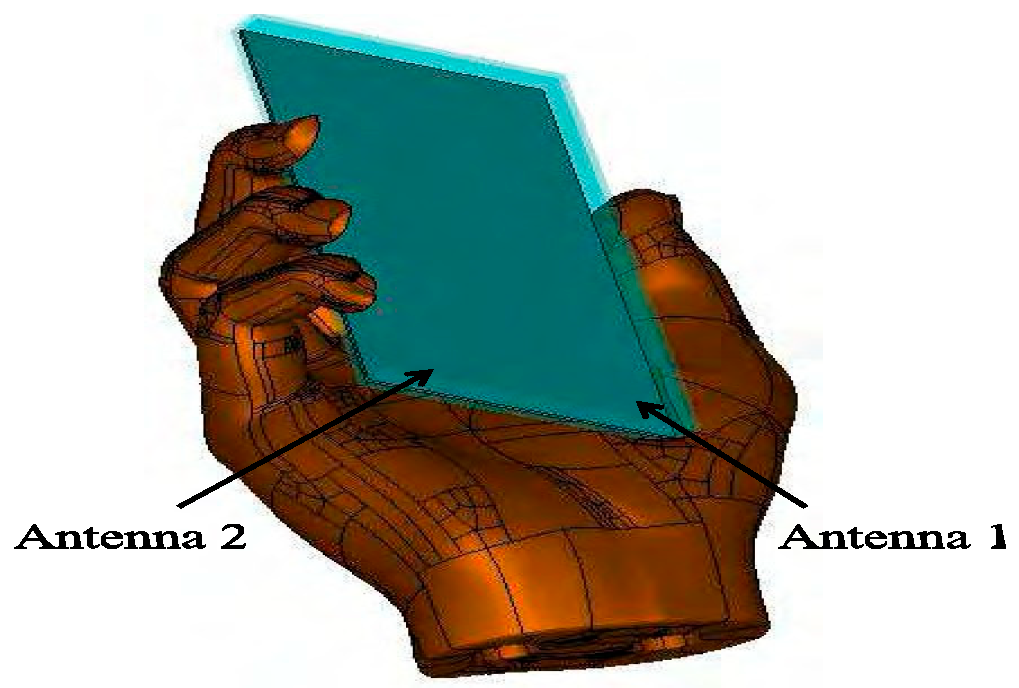
A heterogeneous hand phantom was developed to represent the layered composition of human hand tissue. The skin was modelled as the primary interface, fat as a low-water-content medium influencing attenuation, muscle as a highly conductive layer with significant impact on SAR, and bone as a low-permittivity, low-conductivity medium affecting impedance mismatches. Frequency-dependent dielectric parameters were assigned to each tissue type to reflect physiological variability. The computational model considered three frequency bands of interest: the low-band (0.5–1 GHz), representing legacy GSM communication; the mid-band (1–3 GHz), covering cellular and Wi-Fi services; and the high-band (3–40 GHz), including sub-6 GHz and millimetre-wave frequencies used in 5G networks. A dipole antenna placed near the hand phantom simulated real-world handheld device usage. Input parameters included a transmitting power of 1 W, an antenna gain of 2 dBi, and an incident power density of 5 W/m2, consistent with ICNIRP and NCC safety limits. Simulations were conducted at tissue temperatures ranging from 10–40 °C to capture thermal variations in dielectric properties. The algorithms were written in the interactive environment of Maple-18, and the dielectric properties, intrinsic impedance, reflection coefficient, conductivity, attenuation, and SAR for human hand tissues like the skin, muscle, fat, and bone were generated at various frequencies and temperatures. The experimental parameters were adopted and substituted in the written algorithms. The dielectric properties, thickness, intrinsic impedance, reflection coefficient, conductivity, SAR, and attenuation were obtained based on the assumption that the transient polarization can be represented by a simple exponential with a single relaxation time.
Key metrics analyzed included permittivity (
ε′), dielectric loss (
ε″), conductivity (
σ), dielectric loss tangent (tan
δ), attenuation constant, intrinsic impedance, reflection coefficient, and SAR. The SAR was quantified as:
where
σ = electrical conductivity of the tissue (S/m), ∣
E∣ = magnitude of the electric field inside the tissue (V/m),
ρ = tissue density (kg/m
3). Attenuation was derived from the complex permittivity and frequency-dependent conductivity, while reflection coefficients were determined by impedance mismatches at tissue boundaries. All simulations were executed with adaptive meshing to ensure numerical stability and convergence. Results were validated by comparison with published experimental data, ensuring consistency between the computational framework and empirical findings. This methodology allowed for a robust and comprehensive assessment of electromagnetic energy absorption and dielectric behaviour in human hand tissues under realistic mobile device exposure conditions (
Figure 1).
5. Discussion
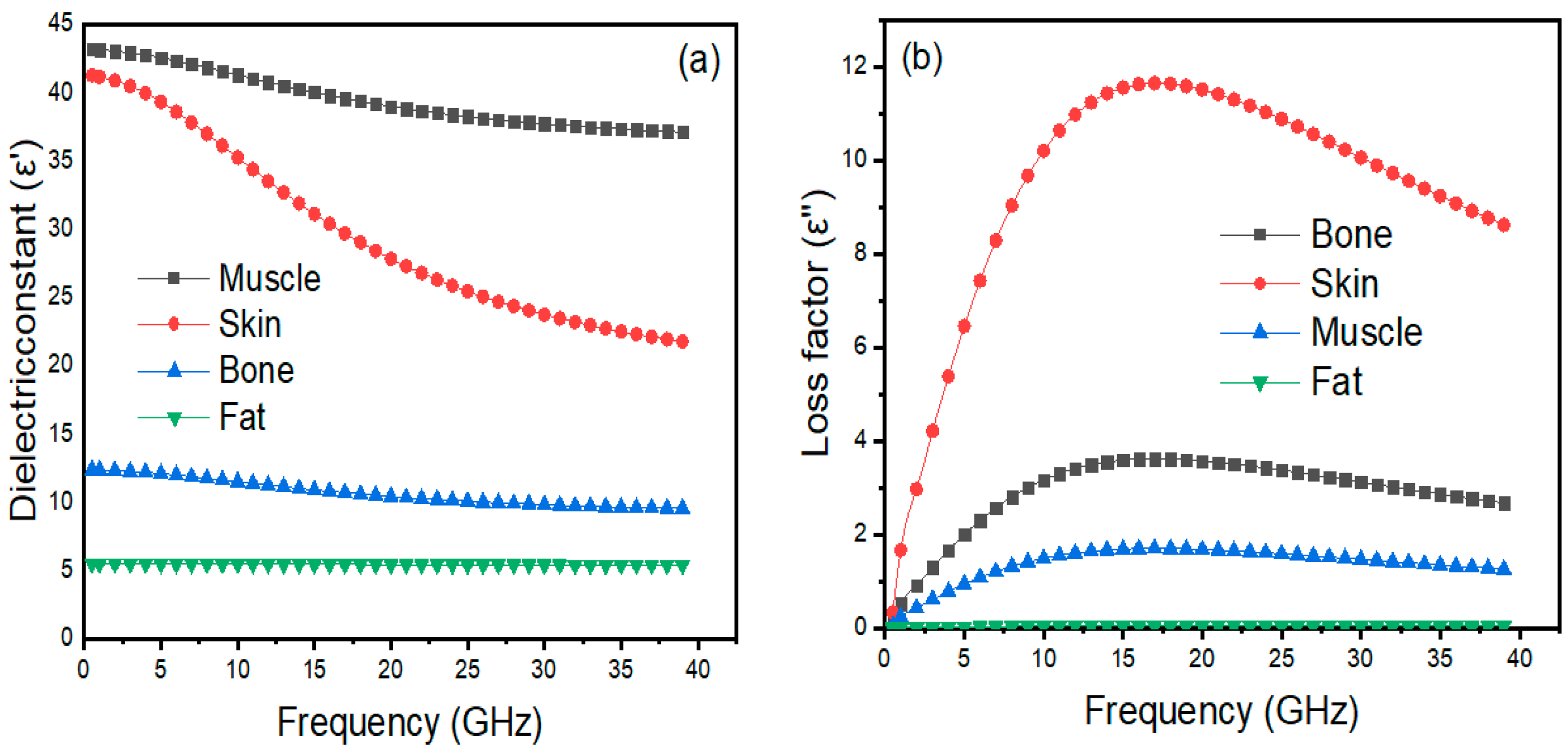
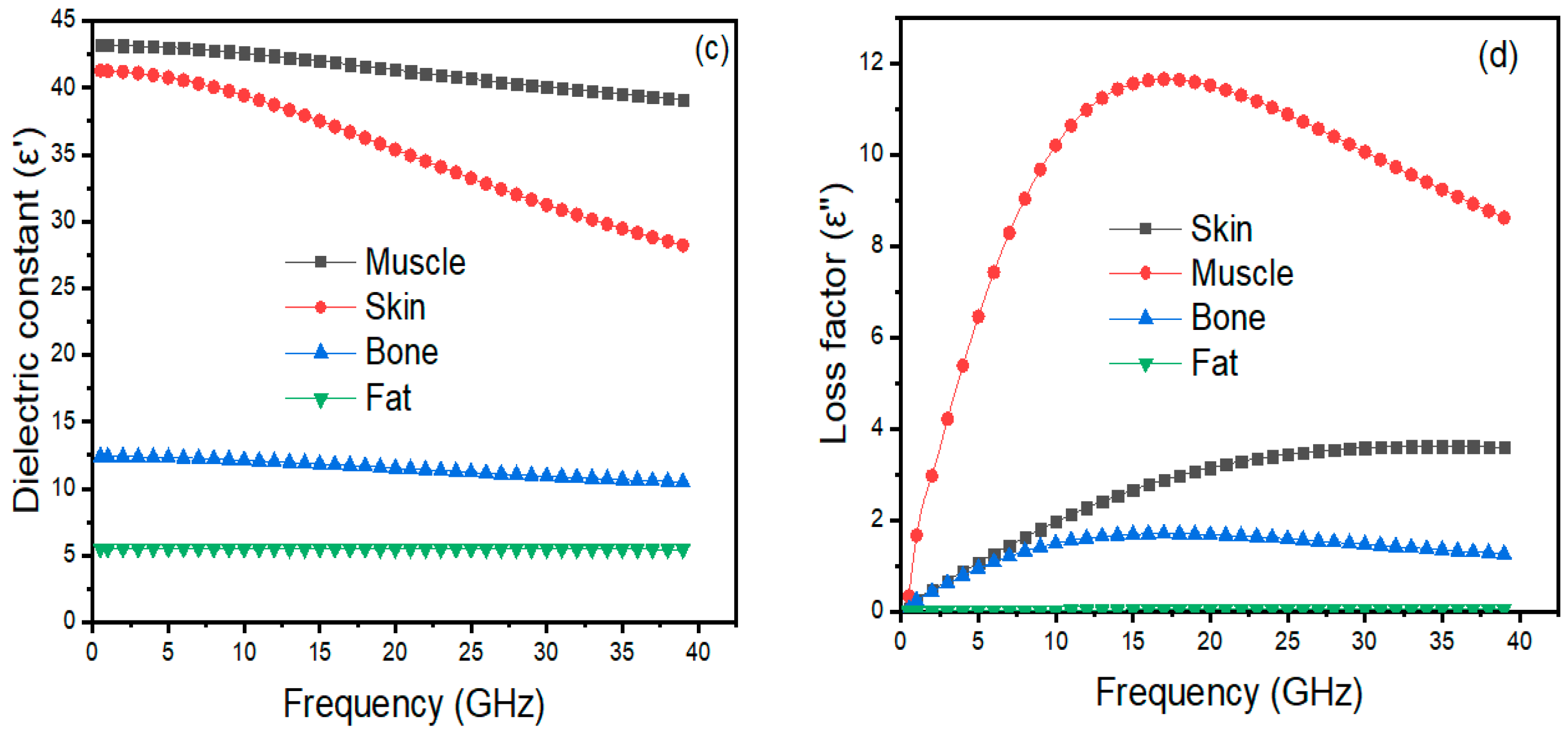
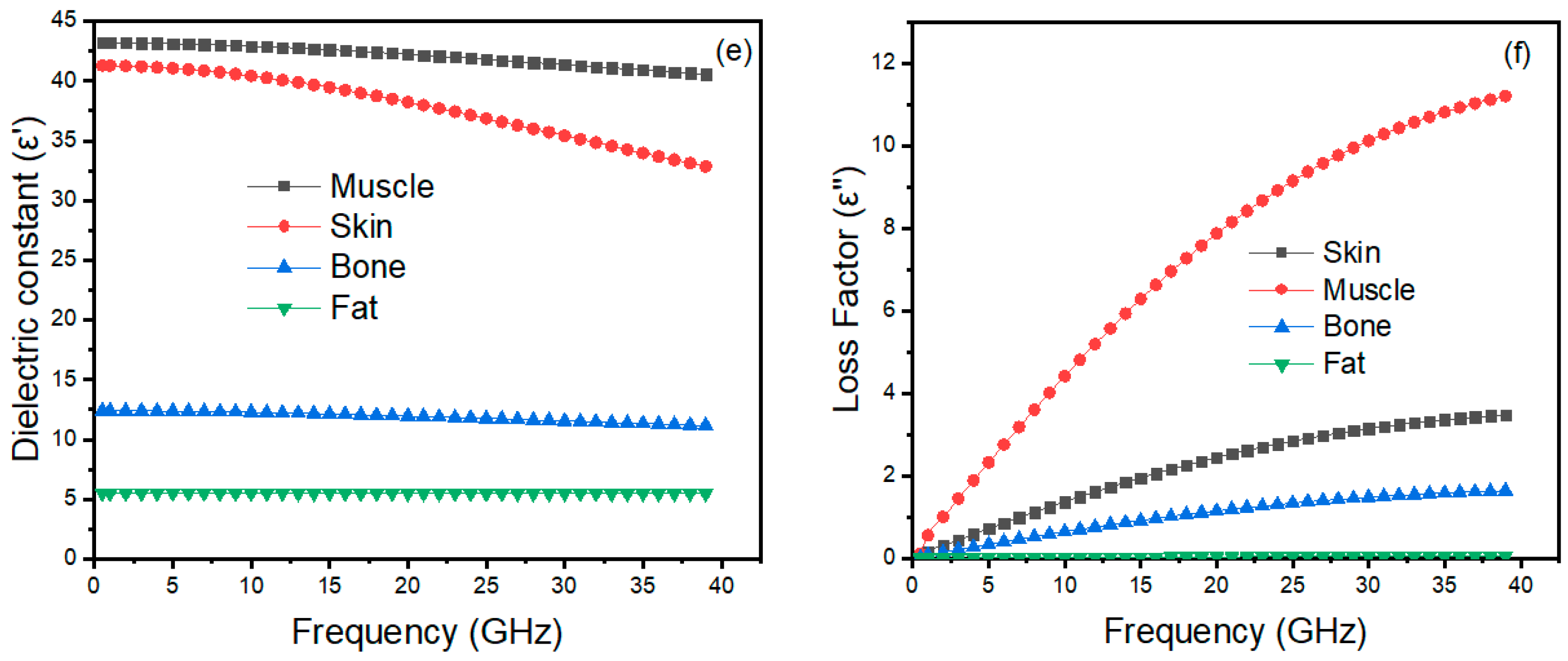
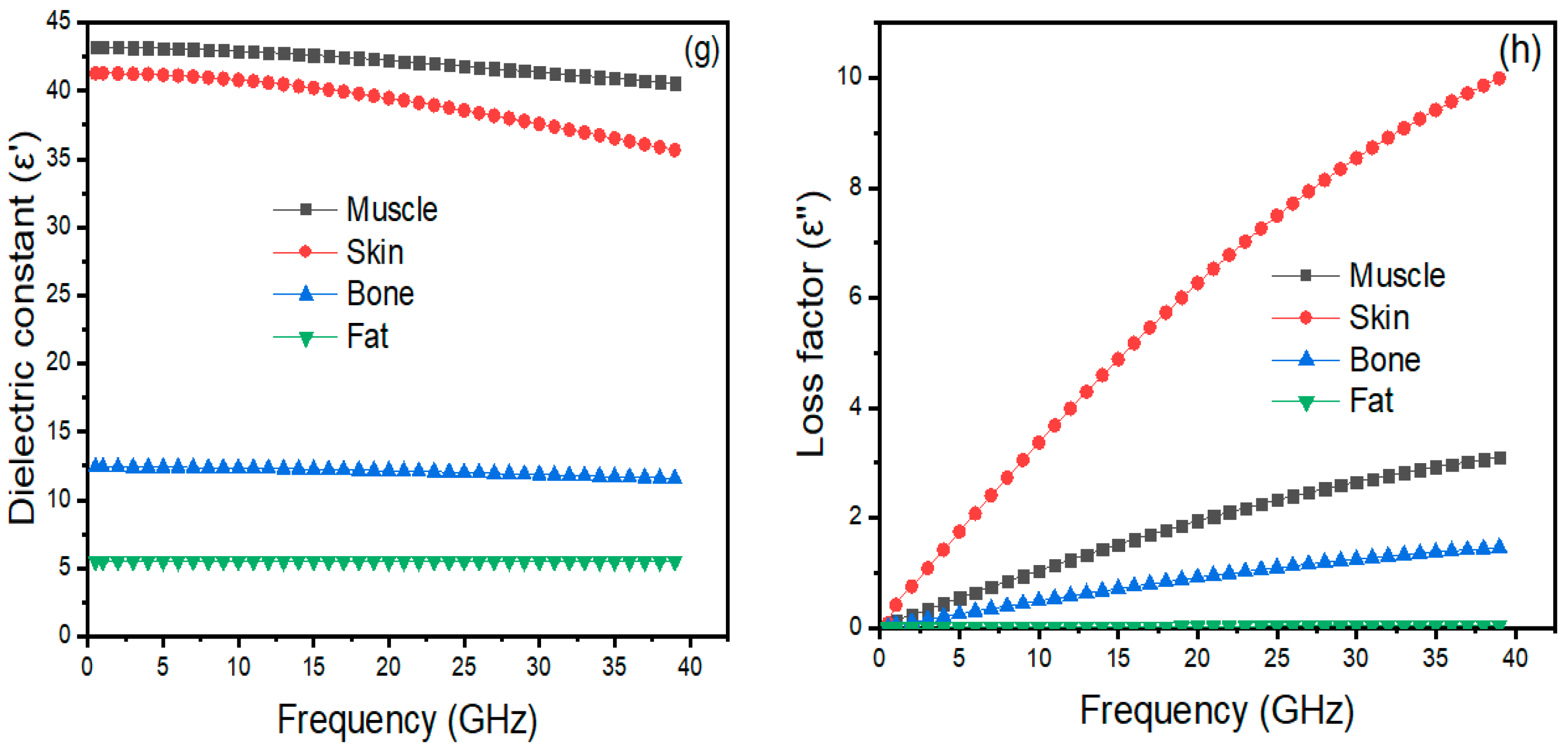
The dielectric response of human hand tissues exhibits strong dependence on both frequency and temperature, as illustrated in
Figure 2, which presents the dielectric constant (
ε′) and dielectric loss factor (
ε″) for skin, fat, muscle, and bone over the temperature range of 10–40 °C. As frequency increases,
ε′ decreases across all tissues, reflecting the reduced ability of dipolar and interfacial polarization mechanisms to respond to rapidly oscillating electromagnetic fields. In contrast,
ε″ increases with frequency due to enhanced ionic conduction and energy dissipation. Temperature effects are clearly evident in
Figure 2, where increasing tissue temperature leads to noticeable increases in both
ε′ and
ε″. Muscle consistently exhibits the highest dielectric constant and loss factor across the entire frequency range, owing to its high water and electrolyte content, while fat shows the lowest values, confirming its weakly lossy dielectric nature. Bone demonstrates intermediate behaviour, consistent with its comparatively lower hydration level. The frequency- and temperature-dependent dielectric behaviour observed in
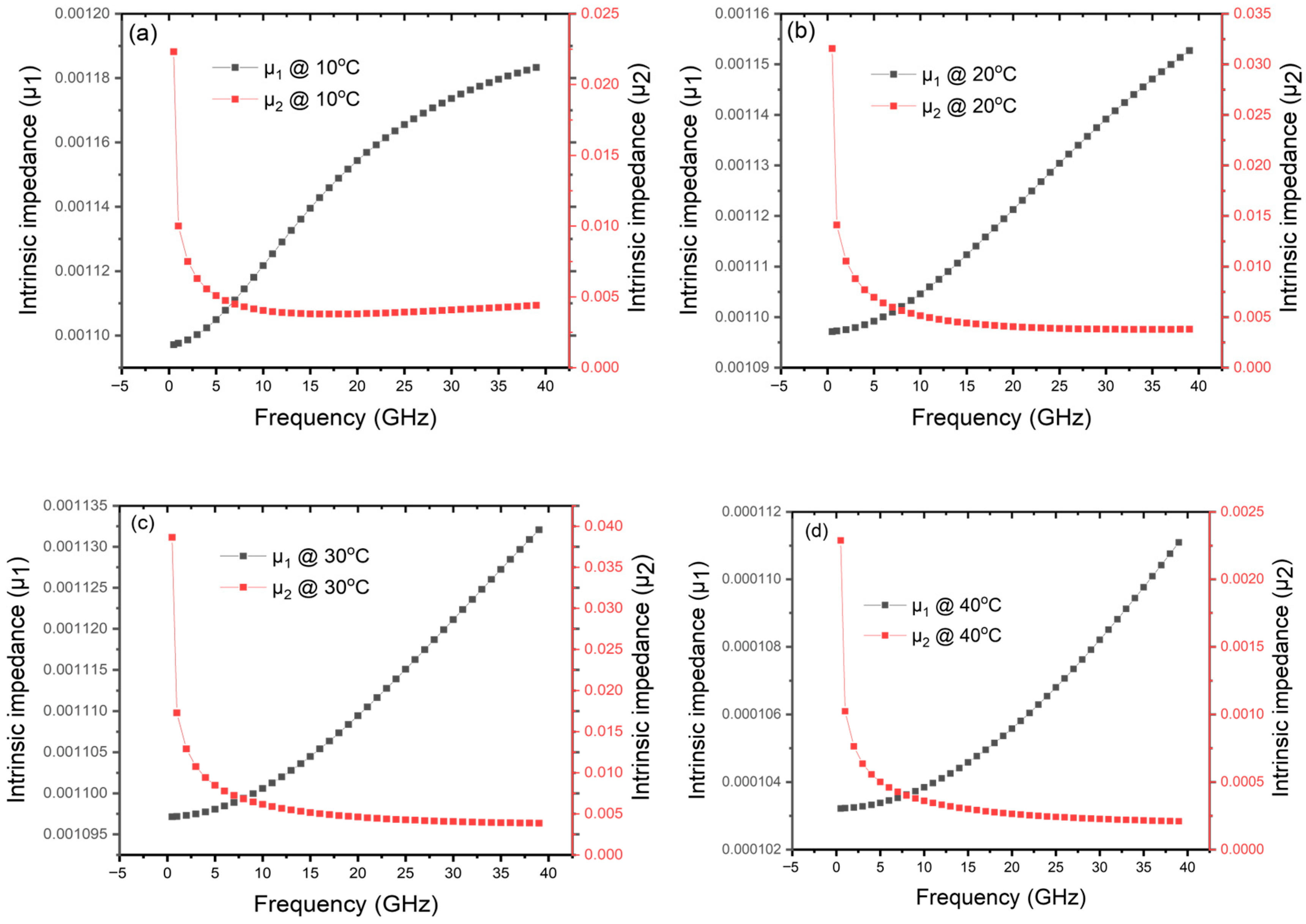
Figure 2 directly influences intrinsic impedance and wave–tissue interactions, as shown in
Figure 3. Increasing frequency results in greater impedance mismatch between tissues and free space, leading to enhanced reflection at tissue interfaces. Temperature elevation further modifies intrinsic impedance by increasing tissue conductivity, thereby reducing impedance magnitude. These effects collectively influence the transmission and reflection of electromagnetic waves within the hand, shaping the spatial distribution of absorbed energy.
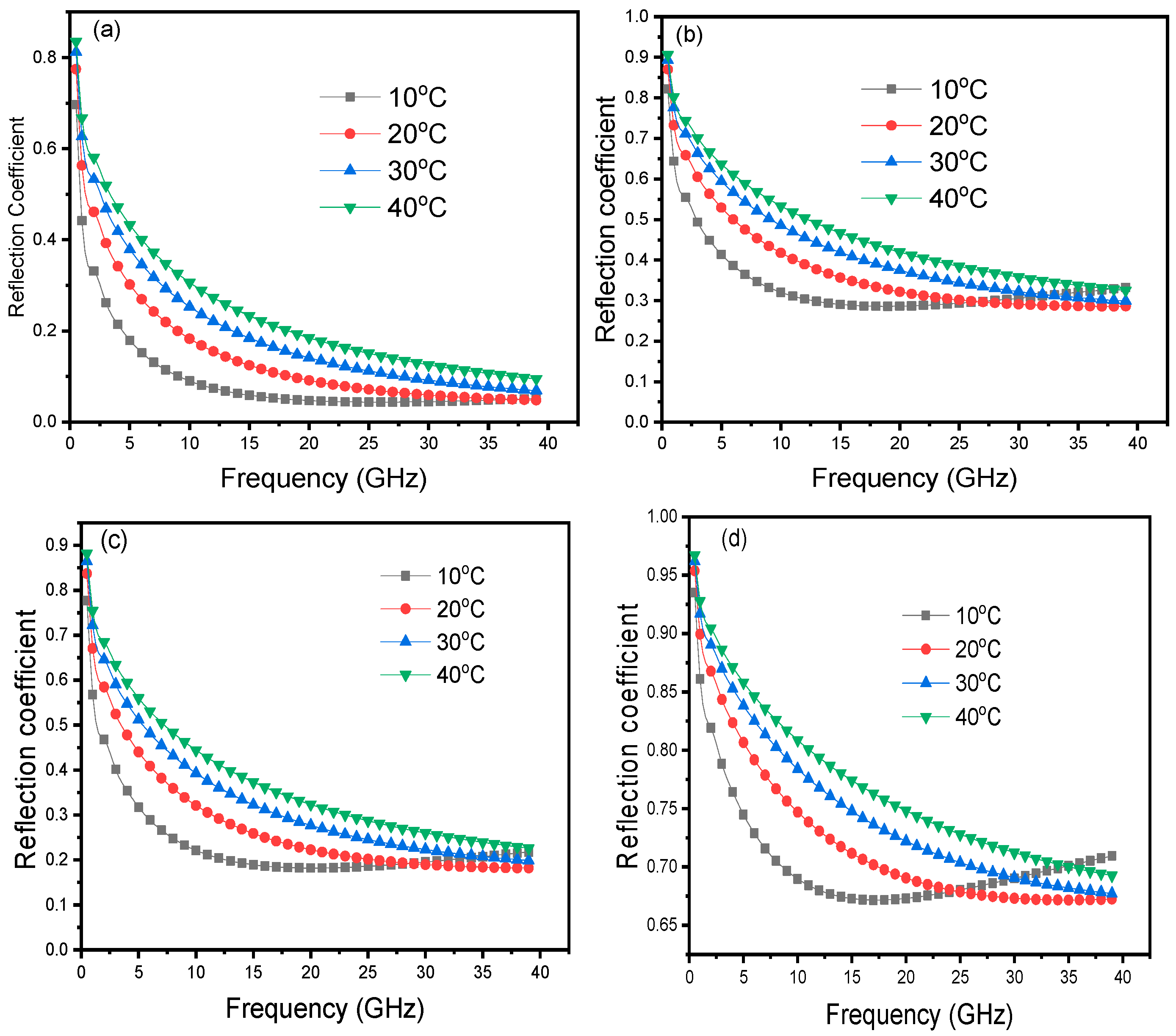
Reflection coefficient trends, illustrated in
Figure 4, further confirm the influence of dielectric contrast and impedance mismatch on electromagnetic wave behaviour. Higher frequencies produce stronger reflections at tissue boundaries due to increased impedance discontinuities, while temperature-induced conductivity enhancement moderates these reflections by facilitating greater wave penetration. These interactions highlight the complex interplay between frequency, temperature, and tissue composition in determining electromagnetic field propagation within biological media. The combined effects of dielectric properties and impedance characteristics manifest clearly in the penetration depth and energy distribution trends shown in
Figure 5 and
Figure 6. At lower frequencies, electromagnetic waves penetrate more deeply into the hand tissues, resulting in distributed energy absorption across multiple tissue layers. As frequency increases, penetration depth decreases substantially, leading to increasingly superficial absorption. Temperature elevation further reduces penetration depth due to enhanced electrical conductivity, reinforcing surface-confined energy deposition under elevated thermal conditions.
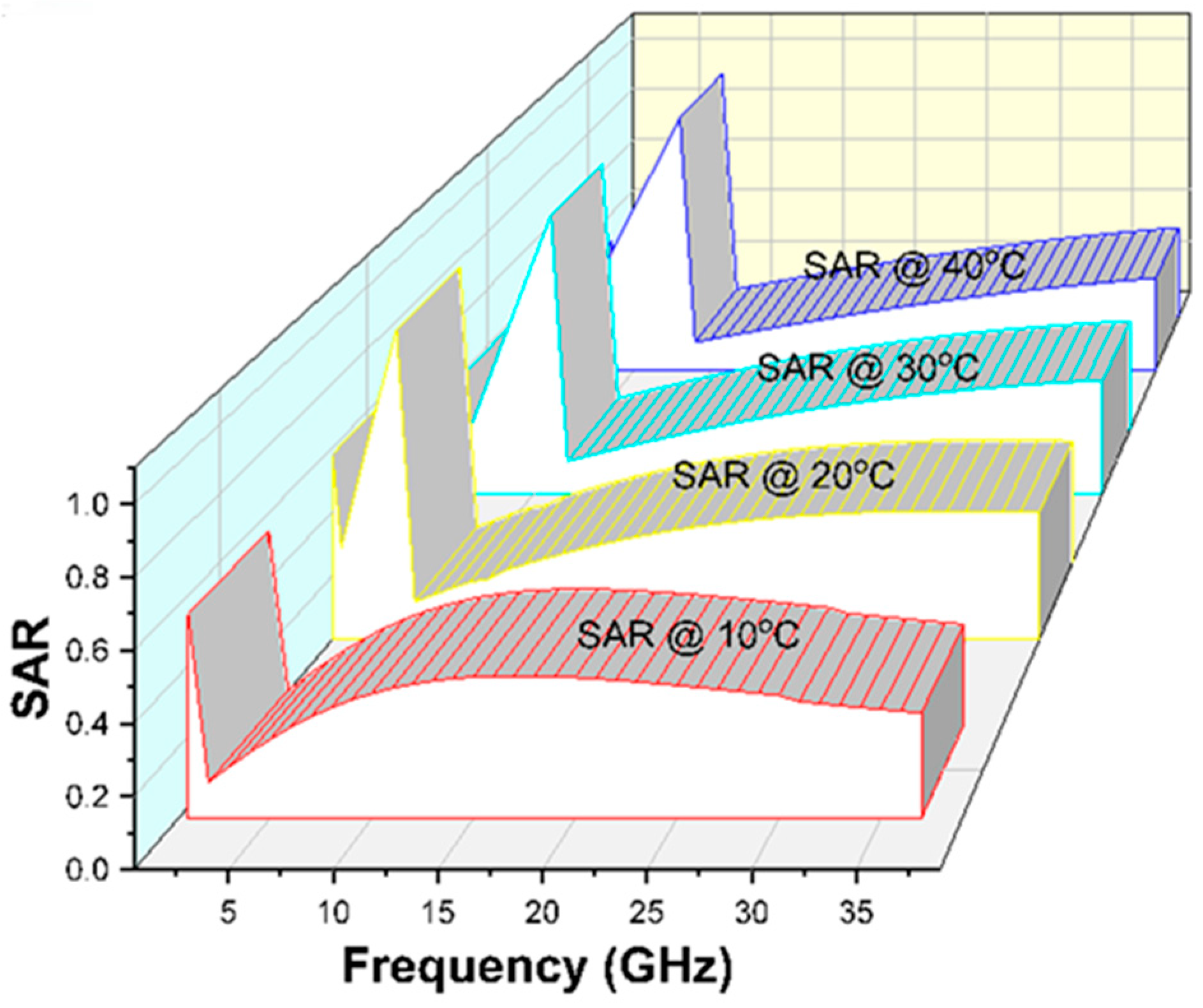
These propagation and penetration characteristics directly influence the specific absorption rate (SAR), as presented in
Figure 7 and
Figure 8. SAR values remain relatively low at sub-GHz frequencies, reflecting deeper wave penetration and spatially distributed absorption. In contrast, higher frequencies, particularly in the millimetre-wave regime, produce highly localized absorption within superficial tissues such as skin and muscle. Muscle consistently exhibits SAR values approximately two to three times higher than fat, attributable to its higher conductivity and dielectric loss. Temperature increases significantly amplify SAR across all tissues, with up to a twofold increase observed between 10 °C and 40 °C. This enhancement arises from increased ionic mobility and reduced tissue impedance at elevated temperatures, which promote greater energy dissipation.
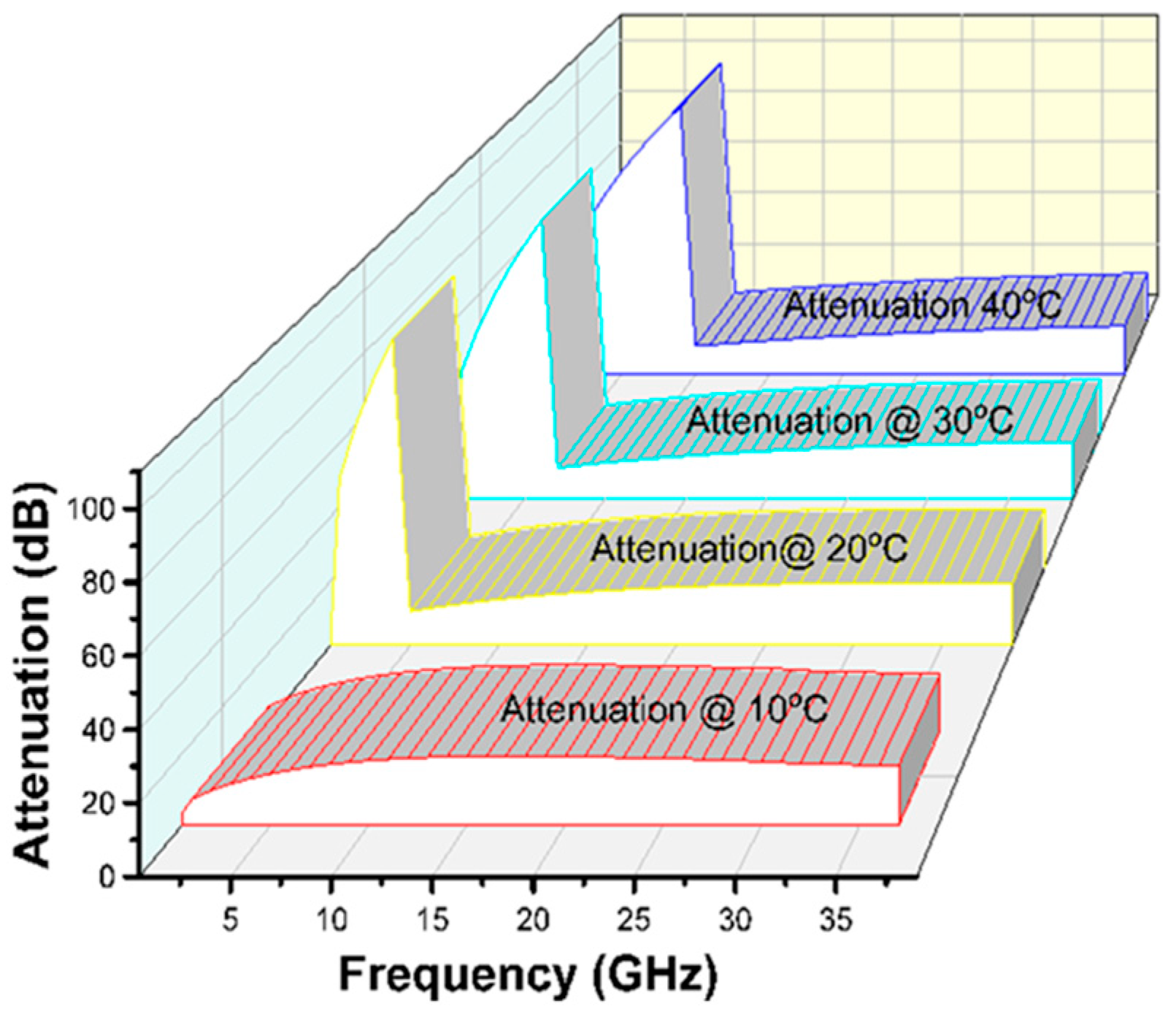
The attenuation behaviour of radiofrequency electromagnetic waves within hand tissues, shown in
Figure 9, provides further insight into the observed penetration and SAR trends. Attenuation increases monotonically with frequency for all tissue types, indicating progressively reduced penetration depth at higher frequencies. Muscle exhibits the highest attenuation due to its elevated conductivity and dielectric loss, while fat shows the lowest attenuation, consistent with its weakly lossy properties. Bone again demonstrates intermediate behaviour. Temperature elevation further increases attenuation across all tissues, reflecting enhanced electrical conductivity and energy dissipation. These attenuation trends reinforce the conclusion that higher-frequency and higher-temperature conditions promote surface-confined electromagnetic energy deposition within the hand. Also, the results demonstrate that frequency, tissue composition, and temperature collectively govern the dielectric response, wave propagation, attenuation, and energy absorption characteristics of human hand tissues. The strong coupling between dielectric properties, impedance mismatch, penetration depth, attenuation, and SAR underscores the importance of integrated computational analysis for RF exposure assessment. The simulation-based framework employed in this study provides a reliable and reproducible approach for evaluating hand–device electromagnetic interactions and offers valuable quantitative insights for antenna design optimization, compliance testing, and the development of evidence-based exposure guidelines for emerging wireless technologies.
6. Conclusions
This study presented a comprehensive computational, simulation-based analysis of the dielectric response and radiofrequency energy absorption characteristics of human hand tissues exposed to electromagnetic fields from mobile devices across the frequency range of 0.5–40 GHz and temperatures between 10 °C and 40 °C. Using validated dielectric property datasets and Finite-Difference Time-Domain (FDTD) simulations, the frequency- and temperature-dependent behaviour of skin, fat, muscle, and bone tissues was systematically investigated. The results demonstrated that the dielectric constant and dielectric loss factor decrease and increase with frequency, respectively, while temperature elevation significantly amplifies both parameters across all tissues. These dielectric trends directly influence intrinsic impedance and reflection behaviour, leading to increased impedance mismatch and altered wave–tissue interactions at higher frequencies. Consequently, electromagnetic wave penetration depth decreases with increasing frequency and temperature, resulting in progressively superficial energy deposition within hand tissues.
Specific absorption rate (SAR) analysis revealed that energy absorption is strongly localized at higher frequencies, particularly in the millimetre-wave regime, with muscle consistently exhibiting SAR values approximately two to three times higher than fat due to its higher conductivity and water content. Temperature increases further intensified SAR across all tissues, with up to a twofold enhancement observed between 10 °C and 40 °C. Attenuation analysis confirmed that higher frequencies and elevated temperatures produce greater electromagnetic wave attenuation, reinforcing surface-confined absorption patterns and reduced penetration depth. Overall, the findings highlight the critical roles of frequency, tissue composition, and thermal conditions in governing dielectric response, wave propagation, attenuation, and energy absorption in human hand tissues. The integrated computational framework developed in this study provides a robust and reproducible approach for evaluating hand–device electromagnetic interactions. These results offer valuable quantitative insights for antenna design optimization, exposure compliance assessment, and the development of evidence-based safety guidelines for emerging wireless communication technologies, including 5G and future high-frequency systems [
33].




 ,
,