Systematic Review

A Systematic Review of Terrestrial Laser Scanning (TLS) Applications in Sediment Management

1
Department of Emergency Management, Patuakhali Science and Technology University, Patuakhali 8660, Bangladesh
2
Department of Environmental Science, Patuakhali Science and Technology University, Patuakhali 8660, Bangladesh
3
Geomatics Engineering Department, University of Calgary, Calgary, AB T2N 1N4, Canada
4
Department of Soil Science, Government Brojomohun College, National University, Barishal 8200, Bangladesh
5
Department of Soil Science, Faculty of Agriculture, Bangladesh Agricultural University, Mymensingh 2202, Bangladesh
6
Department of Soil Science, Patuakhali Science and Technology University, Patuakhali 8660, Bangladesh
7
Department of Civil Engineering, Bangladesh University of Engineering and Technology, Dhaka 1000, Bangladesh
8
Graduate School of Media and Governance, Keio University, Endo 5322, Fujisawa 252-0882, Japan
*
Author to whom correspondence should be addressed.
Submission received: 14 January 2026 / Revised: 23 February 2026 / Accepted: 24 February 2026 / Published: 6 March 2026

Abstract

Sediment management is defined as the strategic monitoring and control of erosion, transport, and deposition processes to maintain environmental and infrastructural stability. Terrestrial laser scanning (TLS) has emerged as a critical high-precision technology for monitoring sediment dynamics, erosion processes, and geomorphic change detection across diverse environments, including riverine, coastal, watershed, and infrastructure-related landscapes. While the field of TLS technology has seen significant advancements in recent years, including improvements in data accuracy, enhanced operational performance, artificial intelligence (AI), machine learning-based processing, and integration with other remote sensing tools such as unmanned aerial vehicles (UAVs) and satellite light detection and ranging (LiDAR), the study has focused on these developments. These advancements have further extended the application prospects of TLS technology. Despite these advancements, there remains a crucial need to systematically identify global research trends to identify the effectiveness, limitations, and knowledge gaps of TLS in sediment management. The methodological advantages and challenges of TLS applications provide insights into its gradual development role in enhancing sediment monitoring and environmental resilience. The objective of this study is to synthesize the current state of sediment management by conducting a systematic review of 108 peer-reviewed research papers retrieved from academic databases, including Google Scholar, ResearchGate, ScienceDirect, Scopus, and Web of Science, from 28 countries, published between 2000 and 2025. The study will evaluate the effectiveness of TLS methodologies in comparison to conventional techniques and management procedures, following the PRISMA 2020 guidelines. It will examine their capacity to enhance measurement accuracy, reduce error margins, and improve structural guidelines, particularly by advancing TLS technology through the integration of AI and machine learning (ML) algorithms. The findings of the study indicate that TLS and Iterative Closest Point (ICP) techniques can enhance the analysis of 3D models of dam deformation, ensuring improved structural monitoring and safety. The findings offer insights into the evolving role of TLS in sediment monitoring, emphasizing its potential for enhancing environmental management and climate resilience strategies. Furthermore, this review identifies future research directions to optimize TLS applications in sediment management through interdisciplinary approaches.

1. Introduction

Sediment management can be defined as the strategic planning and implementation of measures to control the transport, deposition, and erosion of sediment within a fluvial or coastal system, aiming to balance natural geomorphic processes with socioeconomic and ecological needs [1,2]. The fundamental problem of sediment management represents a dual challenge: excessive sedimentation reduces reservoir capacity, increases flood risks, and hampers navigation, whereas the supply of insufficient sediment leads to riverbank instability, coastal retreat, and habitat loss [2,3,4]. Furthermore, anthropogenic activities such as dam construction and land-use changes often disrupt sediment continuity, and the management of sediments involves a variety of practices aimed at controlling the delivery of sediments, reducing the risk of flooding, preventing the erosion of riverbanks, and improving water quality [5]. These practices also include maintaining navigability and habitat quality in water bodies [2,4,5]. The term “sediment” refers to the accumulation of solid particles that are transported by water, wind, or ice and subsequently settle in a new location [6]. Consequently, this review especially focuses on sediment management in environments critically affected by siltation, sediment accumulation, and rapid displacement, ranging from riverine channels to coastal systems [7,8].
A multitude of studies have indicated that diverse environments present challenges in the design and implementation of effective strategies. Several river basins around the world are currently facing both natural evolution and man-made significant challenges related to their geomorphological integrity. These include the Himalayan River basins, the Mississippi River delta, the Loess plateau, the Rhine River (Germany), the Mekong River basin, and the Nile River (Egypt), which face severe management challenges include rapid channel aggradation, floodplain instability, sediment trapping, and transboundary governance issues [9,10]. The Rhine River is confronted with challenges, including interrupted sediment continuity, bed degradation, and restoration conflicts. The Mekong River Basin is confronted with a heightened risk of sediment loss, a consequence of various factors, including dam construction, erosion, and institutional deficiencies in coordinating sediment management across national boundaries [10,11,12]. The Nile River is confronted with challenges such as sediment entrapment, coastal erosion, and diminished contributions to the Mediterranean Sea. The prevailing challenges are characterized by the fragmentation of governance, the scarcity of data, and the incompatibility of engineering solutions with ecological sustainability, climate change impacts, and stakeholder conflicts. Over the course of 38 years, the Bangladesh Ganges-Padma River system has undergone substantial modification due to a combination of natural factors (e.g., frequent flooding, intensive rainfall, earthquakes) and human-induced factors (e.g., dam building, shipping, agriculture) [3].
The Bengal Delta, which covers an area of over 59,570 km2 and is the largest estuary in the world, is formed by the Ganges and the Meghna [6,13]. Delta systems constitute complex depositional environments formed at river mouths, where sediments reach water bodies [2,14]. It has been determined that more than 70% of extensive deltas are confronted with challenges related to rising sea levels, subsidence, and anthropogenic activities [15,16]. A prime example of this phenomenon is the Ganges-Brahmaputra-Meghna (GBM) delta, which boasts the distinction of being both the largest and most densely populated delta system on Earth [16,17]. The movement of sediment and the resulting alterations in the morphology of coastal and riverine systems are complex processes influenced by the interplay between hydrodynamic forces and sedimentary conditions [17]. As demonstrated in Table 1, the accurate and frequent mapping of sediment management is imperative for comprehending and overseeing the continuous geomorphological changes that impact coastal regions [9,13,18].
To address these challenges, the terrestrial laser scanner (TLS) is one of the best tools that can be applied to manage and control the sediment through its effective monitoring. The primary advantage of TLS in sediment management lies in its ability to precisely monitor volumetric changes through high-resolution surface modeling [22]. Furthermore, it enables the recognition of complex 2D, or 3D morphological patterns linked to sediment transport processes. The TLS is a high-precision LiDAR system that accurately measures terrain surfaces, including the accumulation of deposits [23]. Time-of-flight (TOF) laser pulses are utilized in a variety of applications, including LiDAR, 3D imaging, and distance measurement, offering precise and accurate measurements with a resolution down to millimeters. Notwithstanding the progress achieved in monitoring techniques, such as LiDAR and multi-temporal mapping, the accurate prediction of future sediment transport patterns and their impact on shoreline changes remains a formidable challenge [19,24]. The primary objective of this review is the synthesis and critical assessment of the existing literature on the application of TLS in sediment management across diverse geomorphological settings. The objective of this study is threefold: first, to elucidate prevailing research trends; second, to evaluate the methodological robustness of TLS; and third, to critically examine its advantages and limitations in monitoring sediment dynamics. A significant focus is placed on comprehending the extent to which TLS enhances the precision of sediment measurement, facilitates integration with corresponding remote sensing and geographic information system (GIS) technologies, and fosters evidence-based sediment management practices.
This study was guided by the following research questions: How has TLS technology been applied in sediment management, and what are the emerging trends in its usage from 2000 to 2025?
What are the key advantages and limitations of TLS in monitoring sediment dynamics compared to conventional methods?
How effective are integrated approaches (e.g., TLS + UAVs, AI-based processing) in improving sediment transport analysis and geomorphic change detection?
What are the major research gaps in TLS applications for sediment management, and how can interdisciplinary approaches address them?

2. Materials and Methods

2.1. Search Strategy

To synthesize the current state of TLS applications in sediment management, a systematic literature search was conducted covering the period of 2000 to 2025. In this critical evaluation, a range of prominent abstract and citation-related databases of peer-reviewed literature worldwide were utilized, including Google Scholar, ResearchGate, ScienceDirect, Scopus, and Web of Science. The scope of this review was limited to English-language publications. These databases were selected to ensure a comprehensive and reliable retrieval of high-quality academic literature necessary for this systematic review. The search strategy was designed using Boolean operators to combine keywords related to the technology and the application domain. The primary search string was employed as: (“Sediment deposit” OR “Sediment Dynamics” OR “Sediment transport” OR “Morphological changes” OR “Terrestrial Laser Scanning” OR “TLS” OR “LiDAR”) AND (“Central Coast of Bangladesh” OR “Coast”). This systematic review was conducted in accordance with the PRISMA 2020 guidelines ((accessed on 25 February 2025) available at: http://www.prisma-statement.org) [10].

2.2. Inclusion and Exclusion Criteria

A systematic review was conducted to identify relevant publications addressing terrestrial laser scanning (TLS) applications in sediment management. To ensure comprehensiveness of the review, a series of inclusion and exclusion criteria was employed. Data from the selected articles were extracted into a structured database in Microsoft Excel 2019. For each study the variables were cataloged such as: author’s, publication year, study location, TLS instrument used (e.g., RIEGL, Leica, Faro, etc.), specific sediment management issue addressed, and integration with other tools (e.g., UAVs, GNSS etc.). However, the following limitations should be noted to compile the list of publications before 2000 and thereafter to 2025 that are not original research papers in English languages with a regional or global and broad or narrow focus on publications of sediment management, TLS, central coast of Bangladesh partially focused on sediment and TLS.

2.3. Literature Search Results

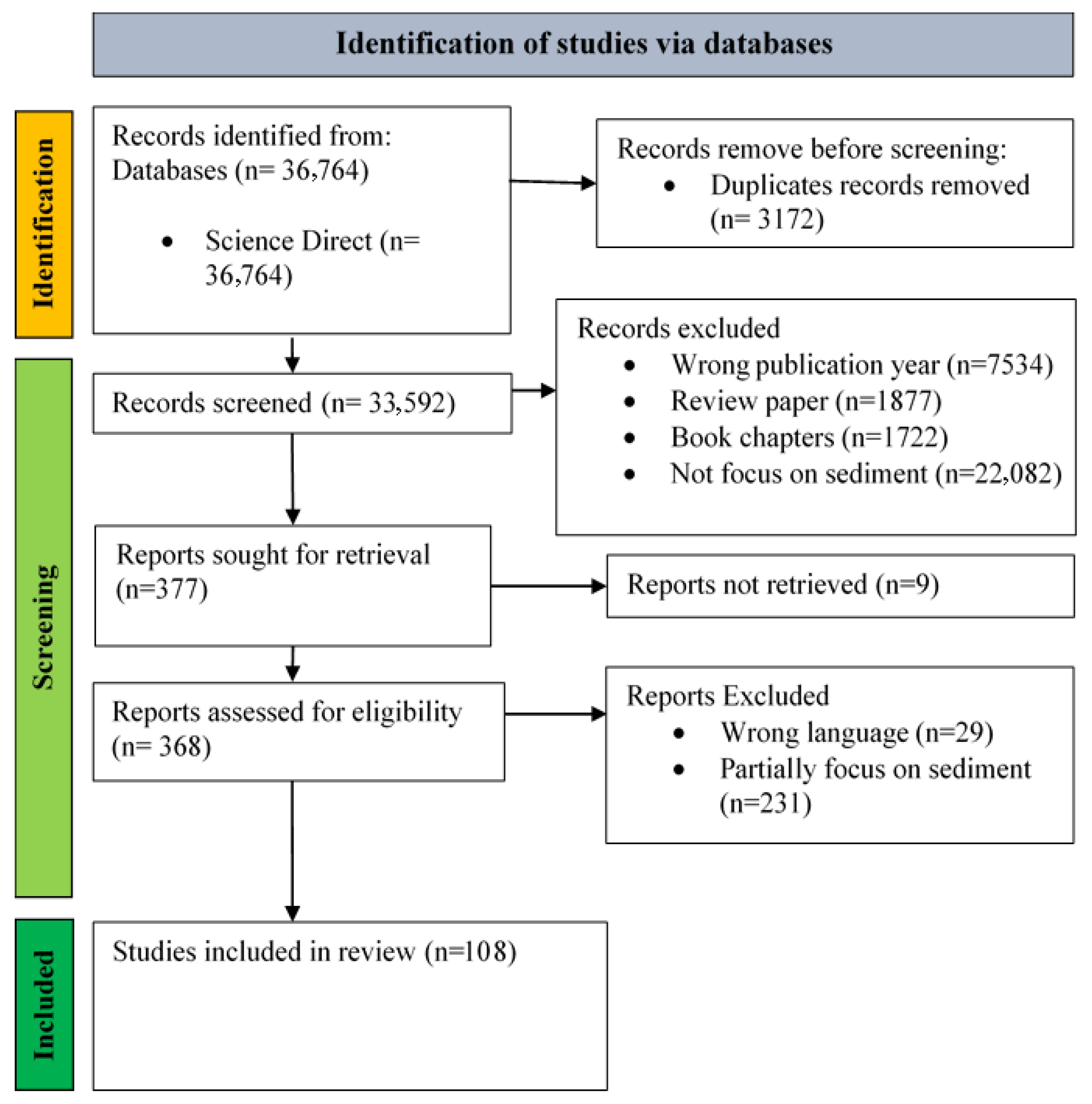
For the present systematic review, the PRISMA 2020 guideline was utilized as a foundation, representing an updated manual for systematically reviewing the existing literature. The three primary phases of this guideline are identification, screening, and inclusion as illustrated in the flowchart in (Figure 1). During the identification stage, a total of 36,764 records were identified from the Science Direct Database and applying strict subject area filters and specific keyword combinations from the initial inclusion of generic terms. The removal of duplicate records was facilitated by employing the “find and remove duplicates” formula in Microsoft Office Excel 2019. At this stage, a total of 3172 records were removed, leaving 33,592 records for subsequent screening. In the subsequent screening phase, a rigorous assessment of inclusion and exclusion criteria is applied. During the exclusion stage, 33,215 records were removed. The predominant justification for the absence of removal records in documents from 2000 to 2025 was the dearth of emphasis on sediment dynamics, morphological changes, and LiDAR technology in review papers, book chapters, and documents. A total of 368 records were assessed for eligibility during full-text screening. Furthermore, 260 records were excluded because they utilized inappropriate language and partially focused on the application of sediment and TLS. In the end, a total of 108 records were selected for inclusion in this systematic review.

2.4. Data Extraction and Analysis

In accordance with the PRISMA 2020 recommendations for methodological rigor, this systematic literature review employs a structured methodology to analyze 108 research publications on the use of TLS in sediment management that were published between 2000 and 2025 [25]. The present approach is principally focused on peer-reviewed literature relevant to the domain of sediment monitoring [26]. Quantitative approaches are utilized for the analysis of data. The TLS is employed in the evaluation of riverine, coastal, and glacier environments as part of the study’s assessment of TLS trends, accuracy, and limitations [21]. The utilization of Geographic Information System (GIS)-based and advanced remote sensing tools, such as the Delft3D model, facilitates hydrodynamic simulations [27], ArcGIS and QGIS for geospatial analysis [28], and ERDAS Imaging OrthoMAX for digital elevation model (DEM) were used [20].
Surveying methodologies such as total station, real-time kinematic global navigation satellite system (RTK GNSS), and acoustic Doppler current profiler (ADCP) are employed in the context of topography mapping and water velocity measurements, owing to their high precision [29,30]. Furthermore, the integration of LiDAR scanning techniques, both terrestrial and aerial, in conjunction with Structure-from-Motion (SfM) photogrammetry, has been demonstrated to enhance the accuracy and precision of topography reconstruction [27,31]. Morphological analysis encompasses the implementation of statistical hypothesis testing for the purpose of evaluating elevation [21,32], enhanced spatial resolution, and Digital Elevation Model Differencing (DoD) for sediment change detection [32]. The evaluation of sediment dynamics necessitates the utilization of specialized models that employ bathymetric mapping and digital elevation model (DEM)-based sediment budgets [20,33]. The analysis of sediment movement is further supported by computational methods, including computational fluid dynamics (CFD) simulations, numerical and morphological modeling, and Python-based data automation [24,34,35]. This analytical framework is a comprehensive instrument that can assess the efficacy of TLS in sediment management. It accomplishes this by highlighting the accuracy of the technology, the difficulties of data collection, the computational constraints, and potential future research areas. Specifically, the keyword clusters identified by VOSviewer guided the thematic structure of the ‘Results and Discussion’, while technical parameters developed the comparative tables. These potential future research areas include AI-based modeling and multi-sensor integration for improved sediment monitoring.

2.5. Bibliometric Network Analysis

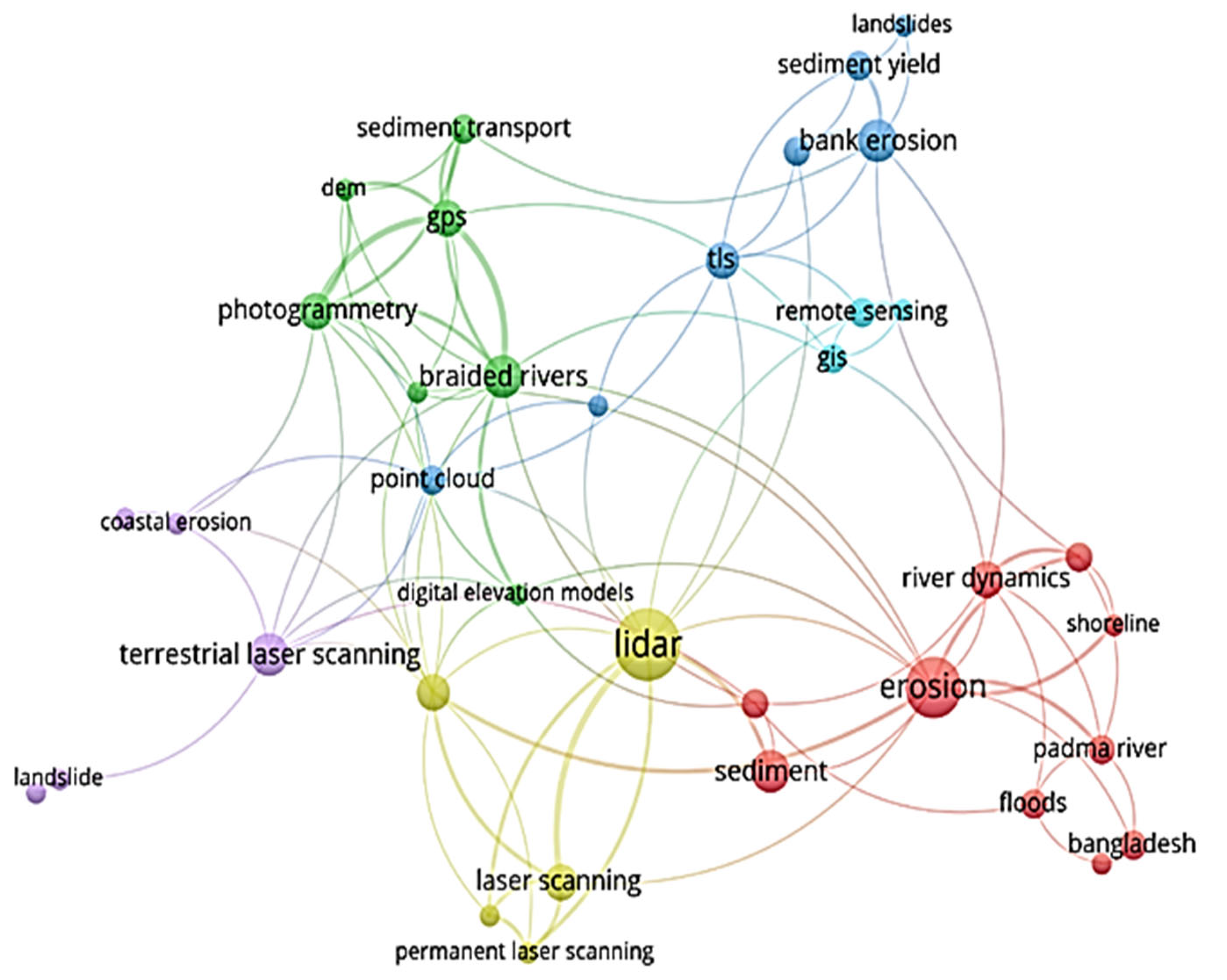
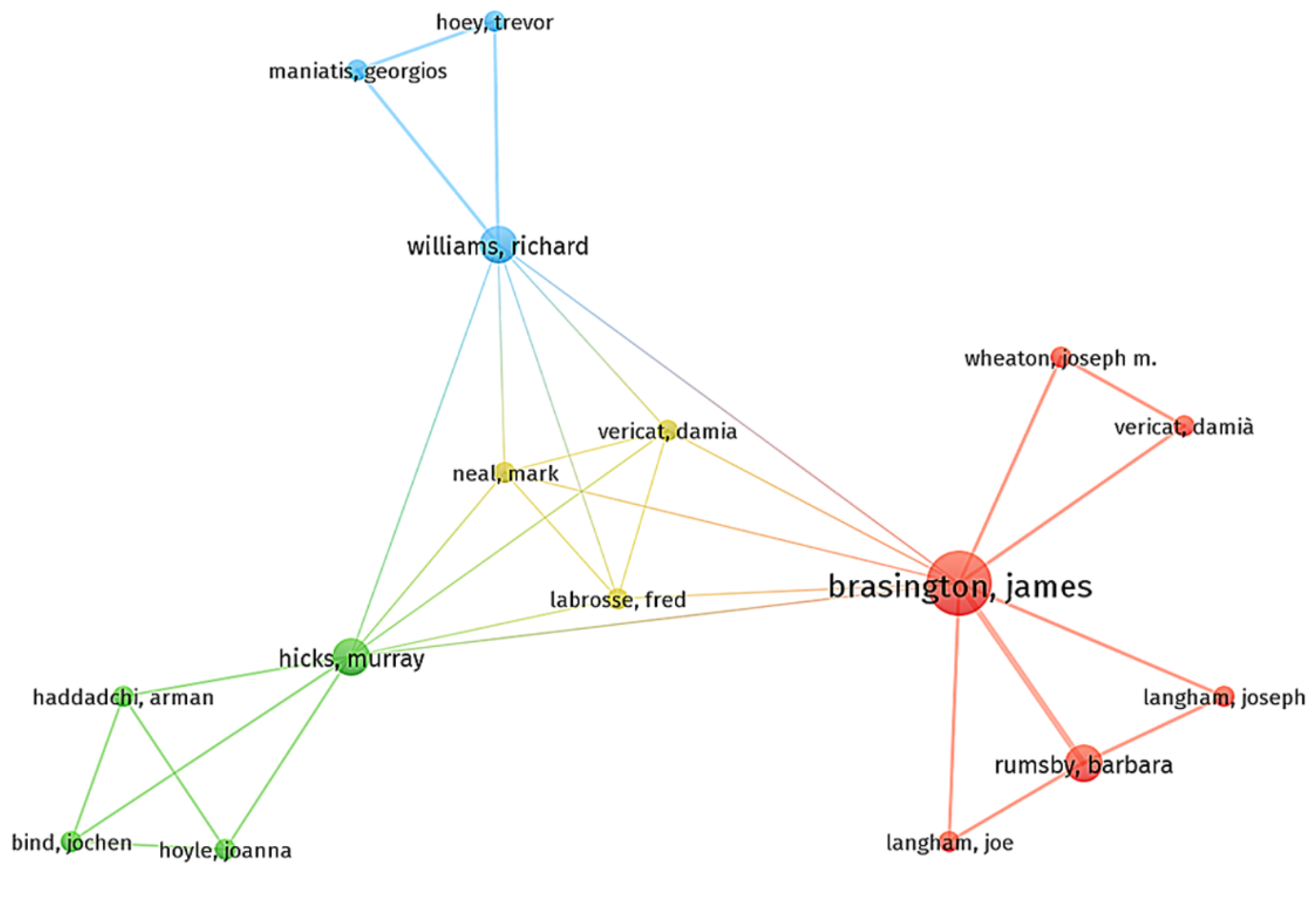
To ensure a systematic and reproducible review, the two-stage analytical approach was employed, combining bibliometric mapping with systematic manual matrix analysis. For bibliometric network analysis, the study employed VOSviewer (v1.6.20) to visualize and examine trends in TLS applications for sediment management ((accessed on 10 March 2025) available at: https://www.vosviewer.com). A search was conducted for research hotspots and multidisciplinary connections using keywords such as “morphological changes,” “sediment transport,” and “terrestrial laser scanning” from a set of 108 articles, as shown in Figure 2, Figure 3 and Figure 4, and Figure 7, respectively. While VOSviewer identified ‘What’ the themes were, the extraction of ‘how’ and ‘why’ was conducted manually. A standardized data extraction matrix was used to systematically record specific variables. This manual screening ensured that the qualitative synthesis presented in the ‘Results and Discussion’ section included the specific technical details of each study. Semantic similarity was employed to standardize and categorize keywords, with a minimum occurrence criterion of five.

2.6. Evolution of TLS in Sedimentology

This section represents a narrative synthesis of the findings derived from 108 selected articles, categorized by the thematic clusters identified in the bibliometric analysis. For many years, a primary focus of geomorphological research has been the study of sediment dynamics, encompassing the processes of erosion and deposition in riverine and coastal environments. The advent of Geographic Information Systems (GIS), Remote Sensing (RS), and Terrestrial Laser Scanning (TLS) has led to a significant augmentation in the capacity to track and examine these processes. To comprehend significant topics such as riverbank erosion, sediment transport, coastal dynamics, and vegetation’s function in sediment retention, the recent literature emphasizes the integration of various technologies.
The morphology of rivers and the way sediments are transported are influenced by the pivotal geomorphological process of riverbank erosion. A growing body of research has demonstrated that erosion measures are more accurate when derived from TLS and RS approaches. For instance, an investigation was conducted into the potential of affordable terrestrial LiDAR sensors to detect hydrogeomorphic changes. The investigation revealed that these sensors possess the capability to do so with both high temporal and spatial resolution [36,37]. In a similar vein, the value of high-resolution (HR) laser scanning in simulating silt flow and riverbed morphology was emphasized [38]. Moreover, anthropogenic activities such as dam construction have been identified as significant contributors to riverbank erosion. The Teesta River (Bangladesh) is the subject of this study [39]. It has been reported that human activities have had a detrimental effect on the erosion rate, and that the use of Landsat imagery has demonstrated how the accumulation of sediment at the Farakka Barrage has led to an exacerbation of erosion downstream [3].
TLS and RS have been extensively utilized in the study of dynamic sediment accretion and erosion patterns observed in coastal regions. Aeolian dunes were examined using laser scanning technology to ascertain their role in dune formation under diverse wind and tidal conditions [40]. The significance of vegetation in stabilizing the coastline through the retention of silt is a well-documented phenomenon. It has been demonstrated that mangrove forests in Malaysia contribute to the accumulation of sediments [41]. This finding is consistent with the observations recorded by the World Health Organization (WHO), which indicated that mangroves in the Sundarbans effectively trap sediments and stabilize shorelines [42]. The management of sediment in reservoirs remains a significant challenge, particularly regarding mitigating the impact of sedimentation on the reservoir’s storage capacity. Research has demonstrated that the incorporation of sediment management techniques into dam design is imperative. The necessity of comprehensive catchment- and reservoir-level management techniques was underscored. A methodology was developed to calculate economically useful dam sizes by taking sedimentation costs into account [14,15].
As demonstrated by the employment of laser scanning for the purpose of modeling sediment transport in response to land-use changes, bandal-like structures are effective in reducing sediment loads [39,43]. The impact of land-use changes (e.g., urbanization, deforestation, and agricultural expansion) on sediment dynamics has also been the subject of study. The topography and climate fluctuation characteristics of mountainous and glacial regions pose unique challenges for the study of sediment dynamics. The use of TLS facilitated the investigation of glacier changes on the Tibetan Plateau, thereby providing evidence of mass loss and accelerated melting [44,45]. Researchers have also examined the impact of extreme weather events on the movement of sediment. For instance, they have demonstrated how storms influence the movement of sediment following wildfires. Additionally, they have highlighted the variability of post-fire sediment movement in relation to plant regrowth and the severity of rainfall [38,46]. This review paper on the application of terrestrial laser scanning (TLS) in the management of sediment has revealed a marked increase in scholarly publications since the early 2000s. A bibliometric analysis of the extant literature indicates a distinct upward trend in research activity in this field. The 108 articles, published between 2000 and 2025, address adaptive management strategies in reaction to shifting environmental conditions.

2.7. Keyword Clusters

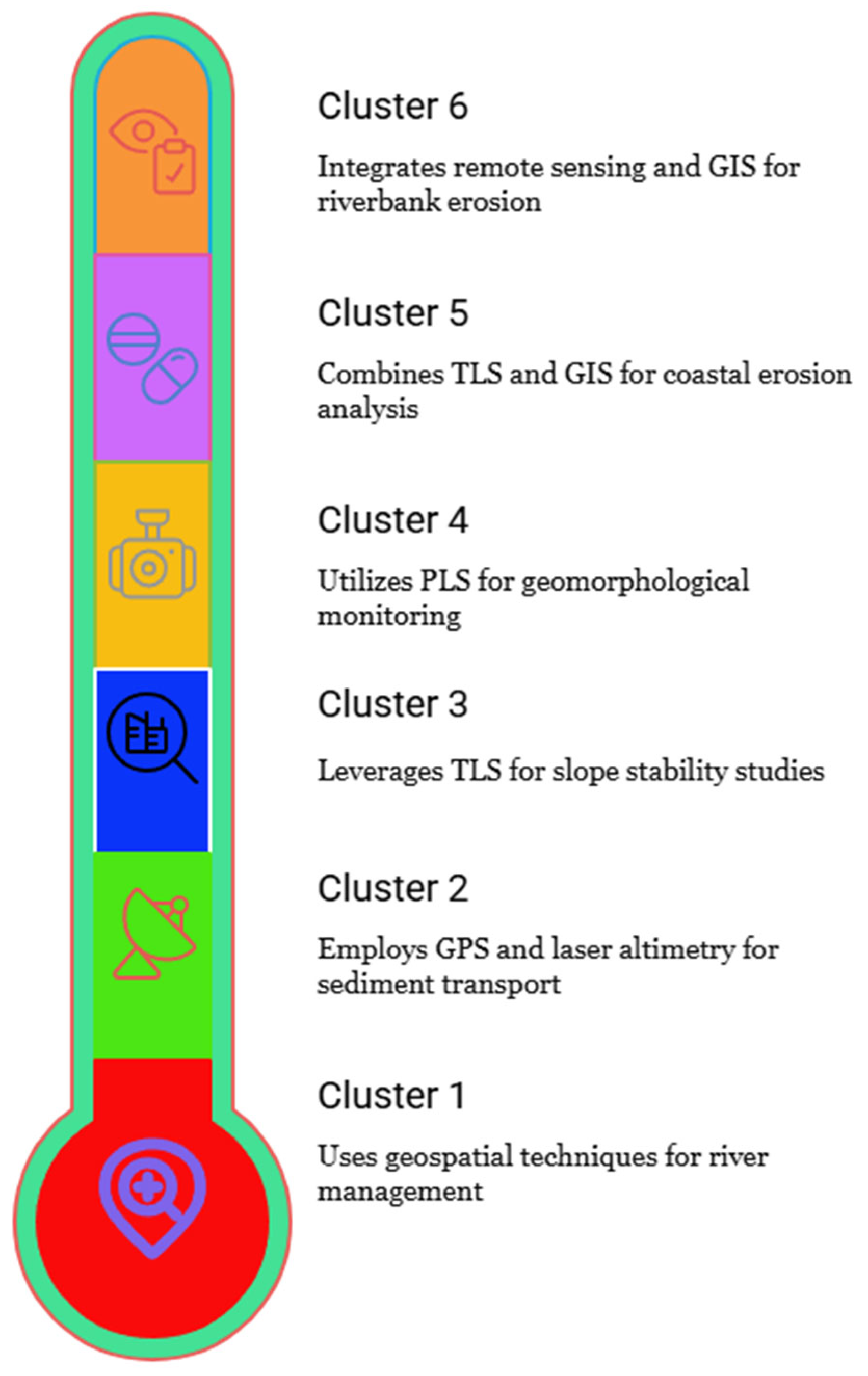
As illustrated in Figure 2 and Figure 4, the keyword cluster with co-occurrence network reveals the evolution of TLS research.
Cluster 1 (Red, Figure 3): The primary subjects addressed in this study are flood resiliency and riverine adaptation. These subjects are approached from the point of the Padma River in Bangladesh, with a focus on the issues of floods, sediment dynamics, and riverbank erosion. The following keywords are of particular importance: “accretion,” “erosion,” “fluvial geomorphology,” “geospatial techniques,” and “shoreline.” The cluster underscores the pivotal role of geographical analysis, sustainable river management, and Disaster Risk Reduction (DRR) in enhancing climate resilience. The article underscores the potential of integrating scientific research, participatory methodologies, and Geographic Information System (GIS) technologies to formulate effective policies aimed at mitigating the risks associated with erosion and accretion. To promote proactive and comprehensive approaches to riverine concerns, emphasis is placed on the necessity of cooperation between researchers, politicians, and local communities [2,3].
Cluster 2 (Green, Figure 3): The study’s primary focus is on the scientific principles of “sediment transport” and “river morphology.” It investigates the application of state-of-the-art geospatial technology in the monitoring of “braided rivers.” The study also explores the significance of “DEM,” “GPS,” “laser altimetry,” and “photogrammetry” as key techniques in this field. While the process of aerial “photogrammetry” yields “digital elevation models” (DEMs), it introduces systematic errors, particularly in submerged areas. Conversely, RTK GPS survey provides precise elevation data. LiDAR-based “laser altimetry” has been demonstrated to enhance the precision of topographic change detection. A seminal method for studying “sediment transport” is “DEM Differencing” (DoD). The collection of high-frequency temporal data, the correction of errors in “DEMs,” and the integration of “DEMs” with predictive modeling are essential for the analysis of the dynamics of “braided rivers” [20,31,42,46].
Cluster 3 (Blue, Figure 3): The research is oriented towards the study of “slope stability” and “sediment dynamics” in riverine environments, with a particular emphasis on the phenomena of “bank erosion,” “landslides,” “sediment yield,” and “river morphology.” The advent of high-resolution geomorphic monitoring is largely attributable to the technological sophistication of terrestrial laser scanning (TLS) and the advent of “point cloud technology.” These methodologies have enabled the capture of sediment transport and instability processes with a degree of precision and detail heretofore unattainable. The utilization of LiDAR-based point cloud data has been demonstrated to enhance the efficacy of landslide monitoring by facilitating the tracking of slope failures. Concurrently, the implementation of TLS surveys has been shown to ensure the precise measurement of riverbank erosion [36,47].
Cluster 4 (Yellow, Figure 3): The keywords emphasize the utilization of “multi-temporal 3D point clouds” and “Permanent Laser Scanning” (PLS) for geomorphological monitoring with high precision. This investigation encompasses the exploration of advancements in “3D change detection,” “laser scanning,” and “LiDAR”. The application of change detection approaches, such as the Iterative Closest Point (ICP) and M3C2 algorithms, has been demonstrated to enhance the precision of surface change analysis in the disciplines of “sediment transport” and “landform evolution.” While “PLS” allows for continuous observation of coastal sand dynamics, sediment flux, and dune migration, “LiDAR” permits comprehensive topography monitoring. To enhance the precision of monitoring, research endeavors must focus on three primary areas: optimizing the placement of sensors, increasing the frequency at which data is collected, and fostering environmental adaptability [42,48,49].
Cluster 5 (Purple, Figure 3): The evaluation of geomorphological changes in coastal and fluvial environments entails the analysis of key phenomena, including “coastal erosion,” “landslides,” “sediment budgeting,” and “terrestrial laser scanning” (TLS) [50]. The phenomenon of “coastal erosion” is exacerbated by storm activity, rising sea levels, and climate change, while coastal retreat is driven by insufficient sediment [51]. The repercussions of diminished river sediment intake, riverbed quarrying, and extreme weather events have been elucidated through the utilization of DEM, bathymetric surveys, and GIS techniques in investigative studies. The role of landslides in sediment transport is substantial. TLS facilitates precise monitoring of cliff retreat and slope failures [39,52].
Cluster 6 (Orange, Figure 3): The keywords investigate the combination of “remote sensing,” “GIS,” and riverbank erosion analysis to investigate “sediment transport,” channel migration, and fluvial geomorphology. These instruments facilitate the management of flood risk and the planning of land use by enabling spatiotemporal monitoring of riverbank erosion processes. Channel shifts, erosion-accretion patterns, and the effects of engineering interventions such as barrages are analyzed using satellite photos, aerial photography, and “digital elevation models” (DEMs). The following advanced remote sensing methods have been demonstrated to improve the evaluation of erosion and forecast future erosion threats: the Digital Shoreline Analysis System (DSAS), the Normalized Difference Vegetation Index (NDVI), sinuosity, and the Braid-Channel Ratio Analysis [1,45,53].
Advancements in technology have contributed to the continuous enhancement of research in the field of sediment dynamics. As illustrated in the subsequent figure, high-resolution TLS effectively captured variations in the riverbank and riverbed [42,54]. Furthermore, the investigation of sediment transport relies heavily on numerical modeling, emphasizing the significance of combining topographic data with numerical simulations. This is achieved by creating a 2D physics-based model to simulate erosion and deposition in braided rivers [50].
Notwithstanding the considerable advancements that have been made, the study of sediment dynamics remains challenging. The temporal and spatial coverage of extant research is inadequate; further research is necessary to address this limitation [55]. The impact of environmental elements, such as wind and precipitation, on measurement accuracy underscores the necessity for enhanced error correction techniques [47,56]. Future studies must prioritize the integration of diverse data sources and modeling approaches to enhance the precision of forecasts [14,57]. Consequently, the integration of TLS, RS, and GIS has led to substantial advancements in our understanding of sediment dynamics in riverine and coastal environments. To enhance the effectiveness of sediment management and conservation tactics, it is imperative to address the prevailing challenges, including data constraints, environmental interferences, and the necessity for advanced modeling techniques.

3. Results and Discussion

3.1. Trends in TLS Applications for Sediment Management

Terrestrial laser scanning is among the most frequently utilized 3D mapping methodologies. The advent of technological advancements has rendered the acquisition of high-resolution and precise data more accessible and straightforward, thereby facilitating the 3D mapping process [58,59]. Laser scanning, an active remote sensing method, determines the distance between the emitter and objects by analyzing the time delay between emitted and received pulses. Nevertheless, the analysis of forest structural dynamics through the use of time series laser scanning data, particularly time series TLS data, remains in its nascent stage of development [60].
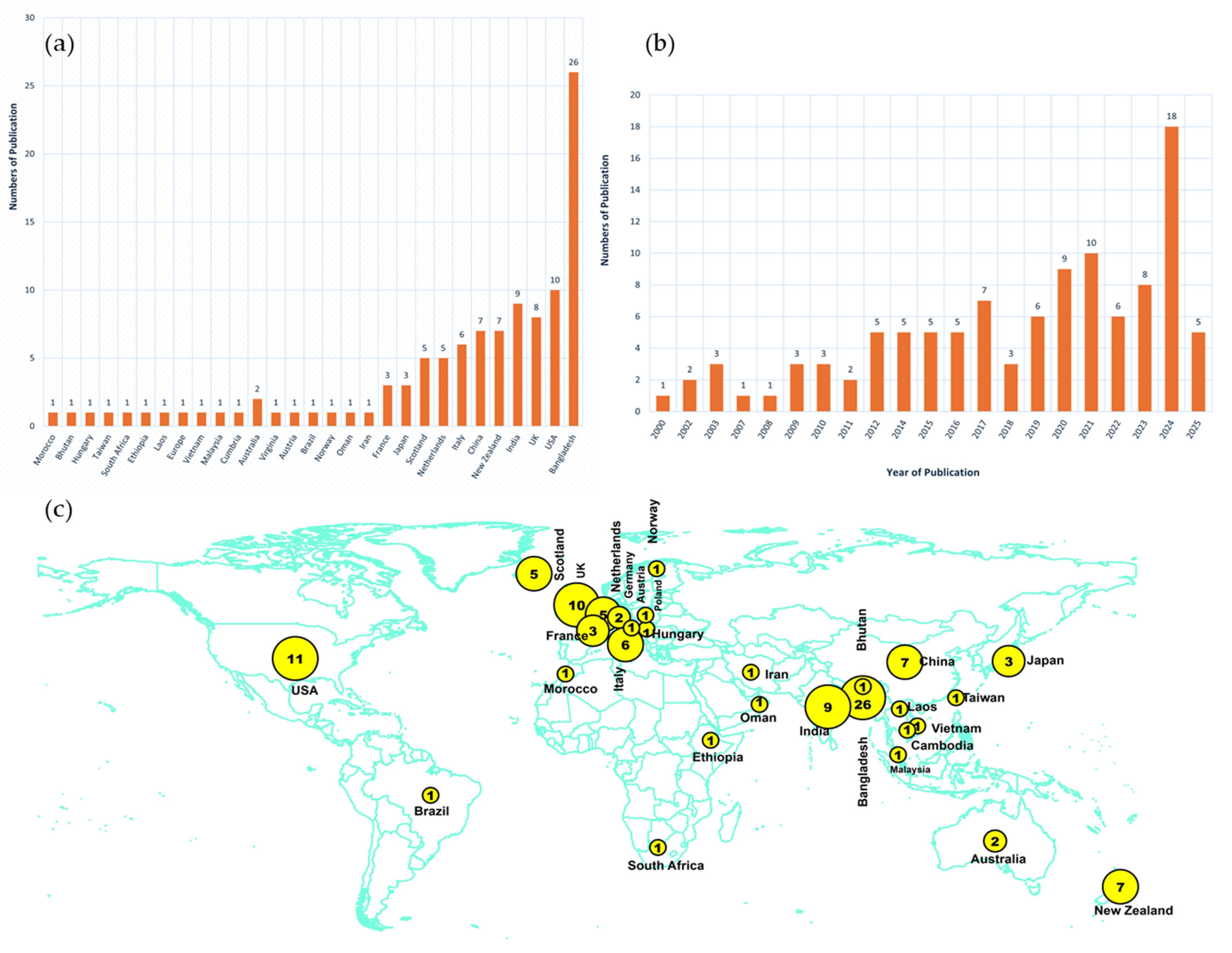
The majority of studies on the topic of tropical savannas have been conducted in Europe, North America, and China, while savannas in Africa and Australia have received comparatively less research attention [1,2,61]. The initial focus of TLS-based vegetation research was in Europe and North America. Nevertheless, since 2009, a considerable augmentation in global research endeavors of this subject has been observed, primarily propelled by an escalation in collaborative endeavors among research groups (Figure 5).
Despite covering rearly 50% of Africa, only 6% of studies were conducted there, mainly in South Africa. A confluence of factors, Terrestrial laser scanning (TLS) has become a prevalent technique in archaeological field surveys and the documentation of tangible cultural heritage. The advent of technological advancements has enabled these devices to scan vast areas with great efficiency in a relatively brief period. Furthermore, the enhanced precision and clarity of the imaging process facilitate the comprehensive documentation of all surfaces within a structure that are accessible for observation [62]. Due to the occlusion of the canopy, TLS has only a limited capacity to acquire comprehensive upper canopy data [53]. The primary strength of the method in question lies in its ability to capture high-resolution data on ground and bank topography. In 2000, the British Geological Surveys (BGS) became the first non-mining organization to utilize terrestrial laser scanning for the purpose of tracking changes. The integration of this technology with a Global Navigation Satellite System (GNSS) has enabled BGS to achieve success in conducting digital measurements, monitoring, and modeling of landslide geomorphological features throughout the United Kingdom [63].
The advancements in remote sensing technology, particularly the emergence of Light Detection and Ranging (LiDAR), have yielded substantial opportunities for the assessment of surface changes, a critical component in the study of sediment dynamics. Recent applications of this technique have demonstrated its efficacy in the capture of intricate three-dimensional forest structures. The derived structural attributes have shown a high degree of correlation with forest inventory data. Furthermore, TLS has been identified as a crucial tool in geomorphic contexts, particularly in riverine and coastal environments, where it facilitates the quantification of vegetation’s role in sediment processes [64,65].
Over the course of five years, TLS, with an accuracy of up to 8 mm, has documented an escalating rate of ice loss. This has manifested as a retreat of the terminus by 13.305 m and a total mass reduction of 2.580 m in water equivalent [43,66]. The Riegl VZ-400i terrestrial laser scanner is employed to scan construction sites, with predefined scanning patterns provided by the device [67,68]. Recently, terrestrial laser scanning (TLS) techniques have been employed with increasing frequency to acquire forest point cloud data for diameter-at-breast-height (DBH) estimation, which is the most common metric method used globally to estimate the growth, volume, and biomass of trees. However, their primary strength lies in capturing high-resolution ground and bank topography data in sediment studies [69,70,71]. In recent years, the advent of innovative earth observation technologies (e.g., airborne, ALS, and terrestrial laser scanning, TLS) has enabled the derivation of high-resolution digital elevation models (DEMs) with vertical and horizontal errors on the order of a few centimeters [72,73,74]. These technologies have seen an increasing utilization in the calculation of geodetic mass balance and alterations in glacier volume [67,75,76]. The Riegl VZ-6000 terrestrial laser scanner is characterized by its high speed and resolution. It has a measurement range that exceeds 6 km and a 60-degree vertical by 360-degree horizontal field of view, which makes it ideal for topographic applications [77,78,79].
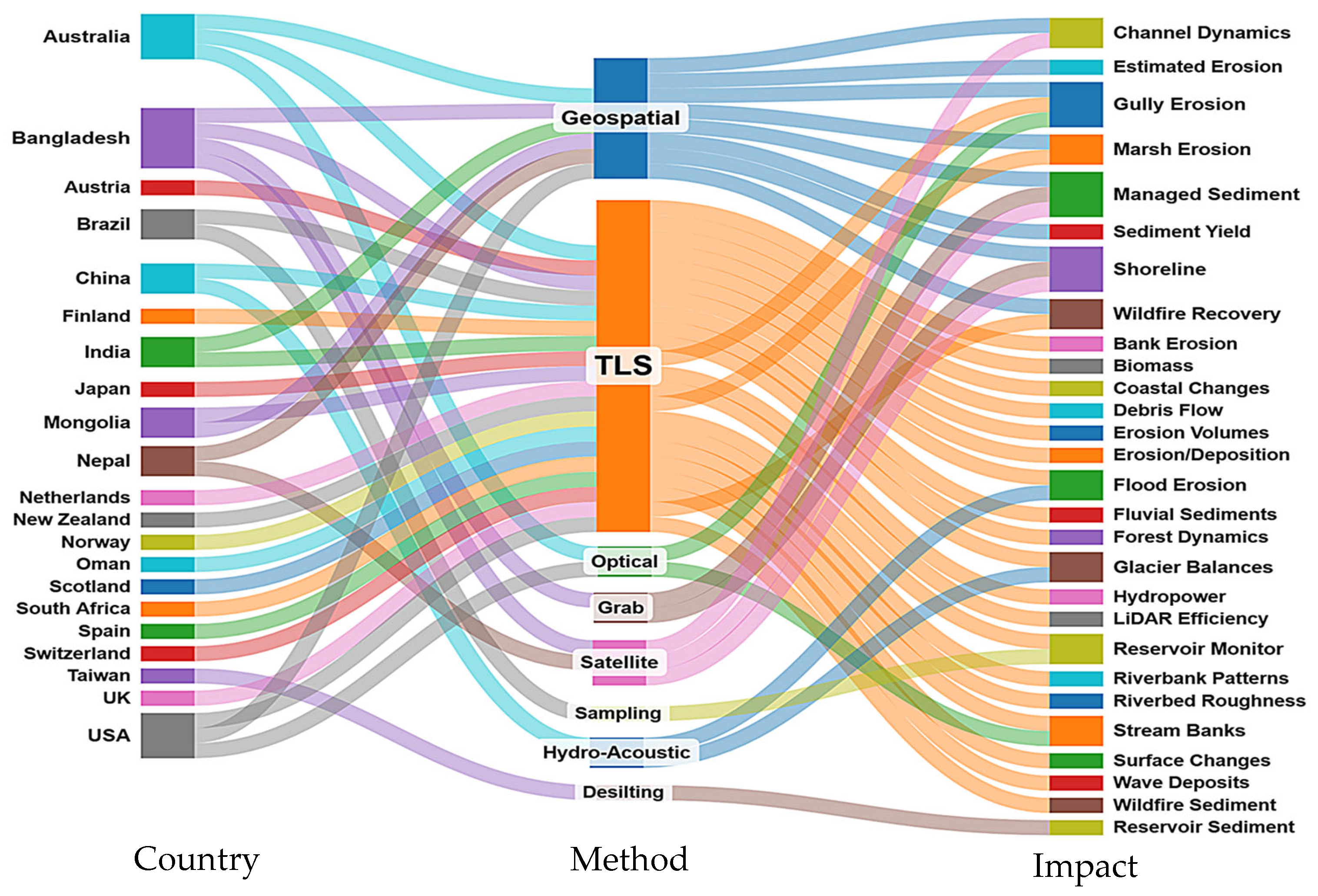
The advanced V-line technology, which utilizes echo digitization and real-time waveform processing, ensures high precision and accuracy, even in challenging conditions such as dust, haze, rain, or snow [80,81]. As illustrated in Figure 6, the data set meticulously delineates the dissemination of information by country, method, and finding, as elucidated in the associated documentation [82]. As illustrated in the figure, data collection techniques constitute the initial section and serve as the foundation for the research study [83,84]. A significant technique for acquiring high-resolution topographic data is terrestrial laser scanning (TLS), a method that has proven particularly effective in the monitoring of sediment flow and riverbank erosion [30,85,86]. In a similar vein, large-scale geomorphological changes, such as river channel migration and coastline erosion, are captured through the use of remote sensing (RS) techniques. These RS techniques include satellite imagery and LiDAR [3,87]. Mobile Laser Scanning (MLS) and hydro-acoustic techniques are employed for the real-time monitoring of river dynamics and the analysis of underwater sediment [88,89]. These techniques complement the aforementioned approaches [27,90]. The effects of coastal cliff erosion and sediment movement have been assessed through the utilization of UAV-based Structure-from-Motion (SfM) photogrammetry and aerial LiDAR [22,91].
In recent years, the implementation of TLS has witnessed a substantial surge, empowering archaeologists to generate high-resolution digital elevation models (DEMs) that unveil micro-topography frequently obscured by vegetative cover. LiDAR technology plays a pivotal role in the field of meteorology, facilitating crucial analyses of atmospheric composition, structure, clouds, and aerosols [92]. At the Aldbrough site, terrestrial LiDAR surveys have been conducted for over 19 years (2001–2020), with 47 surveys focusing on the same cliff and platform section in Table 2, highlighting the author, year, and contributions of TLS in Sediment Management. Since 2012, the advent of the RIEGL VZ-1000 has profoundly impacted the field of scanning technology. This innovative instrument boasts an extended scan range of 1400 m, ±8 mm accuracy, and a high-resolution camera, thereby significantly enhancing scan quality and resolution [31,93].

3.2. Accuracy and Performance of TLS in Sediment Studies

The terrestrial laser scanner (TLS) is a widely utilized instrument for conducting high-precision surveys. Its applications encompass such areas as sediment monitoring, erosion assessment, and geographic change detection in various geographical regions, including Bangladesh, the United Kingdom, and the United States [3,31,85]. The advanced waveform LiDAR technology offers high-resolution 3D point clouds with improved accuracy in a variety of environments, including the Bengal Delta, the Mississippi River floodplains, and the Norfolk coastline [19,86]. Even in complex terrain, such as the riverbanks of the Padma River, the glacial landscapes of Canada, and the mountainous basins of Nepal [77,87]. Significant research has been conducted in major riverine environments to evaluate sediment dynamics in Table 3. For instance, studies on the Mississippi River have focused on morphological changes, while research on the Brahmaputra River has shown sediment transport mechanisms. Additionally, erosion evaluations have been extensively carried out in the Amazon basin [17,23,94]. Furthermore, coastal regions continue to be the site of various scientific initiatives aimed at monitoring sediment processes. These initiatives include the monitoring of salt marshes in the United Kingdom, the study of dune migration in the Netherlands, and the mapping of coastline erosion in the Bay of Bengal [16,53]. The efficacy of this technique is contingent upon the utilization of other TLS and remote sensing methodologies. In arid regions, satellite-based remote sensing is employed. In regions characterized by hilly topography, the implementation of airborne LiDAR is a common practice. Photogrammetry is a geospatial imaging technique that is employed in deltaic environments. This method is typically carried out using unmanned aerial vehicles (UAVs) [70,88,95]. The RIEGL VZ-1000 has demonstrated its efficacy in the identification of micro-topographic variations. These variations include, but are not limited to, tidal flat deformations in coastal Bangladesh, small-scale landslides in the Andes, and sand ripple development in estuarine zones [73,77]. The device’s advanced features, including high range accuracy, waveform processing, multi-target capability, and long-range scanning capabilities, render it suitable for monitoring sediment transport and erosion up to a distance of 1400 m. Notwithstanding the advantages, the system is subject to certain limitations in dynamic sediment environments. The aforementioned limitations encompass, but are not limited to, diminished accuracy in wet surfaces, signal distortion under high humidity, and errors in the mapping of floodplain sediments due to issues with water reflectance [31,96]. A comprehensive consideration of the following factors is imperative: sensitivity to atmospheric conditions, the time-consuming nature of data acquisition, and the limited capability in conducting rapid sediment flux studies [89]. The RIEGL VZ-1000 is a technologically advanced instrument that can be integrated with unmanned aerial vehicles (UAVs), satellite-based LiDAR systems, and hydrodynamic and climate models. This integration facilitates the acquisition of higher-resolution data, thereby enhancing the capacity for large-scale monitoring and trend analysis.

3.3. Software and Processing Techniques

A range of software tools and processing techniques have been employed in this study for data collection, spatial analysis, and modeling (see Table 4). A major contribution was made using remote sensing and Geographic Information System (GIS) techniques, employing ERDAS Imaging OrthoMAX for orthorectification and Digital Elevation Model (DEM) processing [38,97].
Historically, the evaluation of rivers has relied on satellite imagery provided by the Landsat program. Spatial analysis and geoprocessing have been conducted using ArcGIS, a geographic information system (GIS) developed by Esri [31] and QGIS [1,9].
The hydrodynamic simulation was executed using Delft3D, a widely utilized program for modeling the dynamics of rivers and estuaries [32]. The implementation of advanced data visualization was enabled by the utilization of Spyglass Transform [75,98]. The surveyors employed a variety of methods to achieve the desired topographical mapping, including total station surveying [82,90]. Real-time Kinematic-Global Navigation Satellite System (RTK-GNSS) is a satellite-based navigation system that enables precise spatial positioning in real-time [31,90]. The Acoustic Doppler Current Profiler (ADCP) is a tool used to measure water velocity and discharge [33,99]. Furthermore, the generation of high-resolution topographic data was achieved through the implementation of terrestrial and aerial LiDAR scanning methodologies [92]. Structure-from-Motion (SfM) photogrammetry was also employed as a cost-effective method for topography reconstruction [10]. The acquisition of precise elevation measurements during field surveys was facilitated by the implementation of differential GPS (DGPS) [94,100]. The extraction of terrain steepness was accomplished through the implementation of Geographic Information System (GIS) methodologies [1,95]. The utilization of Python scripting for data processing and analysis was instrumental in the estimation of road length and the calculation of gradients [24,96]. The following paper will examine the use of morphological techniques for the estimation of sediment budgets [64,65,83]. The utilization of these elements was executed in conjunction with the implementation of Digital Elevation Model Differencing (DoD) [38,101]. The objective of this study is to evaluate the morphological changes. In terrain models, the implementation of kriging interpolation led to enhanced spatial resolution. Concurrently, statistical hypothesis testing facilitated the identification of significant elevation changes [37,97]. Predictions of sediment budgets based on the DEM (Digital Elevation Model) [20,58,70]. The following is a discussion of bathymetric mapping methods that employ optical and acoustic survey data [39,102]. The elements were incorporated into hydrological and sediment transport models. An evaluation of river dynamics was conducted using supplementary hydrological and sediment transport measurement data [47,99]. The distribution of nutrients in the soil was also investigated using models for estimating phosphorus generation [97]. In order to facilitate comprehension of flow patterns and sediment transport, a range of computational modeling techniques was employed, including numerical and morphological modeling [40,103]. Moreover, it is imperative to employ Computational Fluid Dynamics (CFD) simulations [41,53]. In conclusion, the objective of incorporating bank erosion algorithms was to enhance the accuracy of forecasts regarding bank stability [70].

3.4. TLS-Based Sediment Management Analysis

Terrestrial laser scanning (TLS) is a geospatial technology that has found application in the domain of sediment management. The underlying principle of TLS is high-resolution 3D change detection, a process that enables the quantification of erosion and deposition volumes [36,56,80]. The Morphological Method, which involves the differencing of sequential Digital Elevation Models to create a DEM of Difference (DoD), is the core theoretical model that strengthens this application. The fundamental premise of this model is that the elevation of the Earth’s surface at two distinct temporal points is directly indicative of the dynamics of sediment accumulation [20,45]. The DoD is responsible for providing a spatially:based volumetric budget, which is essential for quantifying landscape change. This budget is derived from qualitative observations of landscape dynamics and is subsequently converted into quantitative data on sediment flux. This quantitative data is fundamental for constructing sediment dynamics and understanding geomorphic system behavior [20,71]. The Multiscale Model to Model Cloud Comparison (M3C2) algorithm has been developed for the purpose of directly comparing point clouds, thereby circumventing the interpolation errors typically associated with digital elevation models (DEMs). This method is predicated on the calculation of local distances between point clouds. It also provides a statistically meticulous uncertainty estimate for each detected change. The result is an enhancement of the reliability of volumetric calculations [22,57,66]. Moreover, the integration of TLS data with other methodologies establishes a synergistic theoretical framework. For instance, the integration of the Transport Layer Security (TLS) protocol with radio-frequency identification (RFID) tracer studies is necessary to authorize the validation of Department of Defense (DoD)-derived sediment rates with direct particle path data [80]. Similarly, the integration of TLS with UAV-based structure-from-motion (SfM) photogrammetry overcomes the limitations of TLS in terms of spatial coverage and occlusion. This results in the creation of a more comprehensive three-dimensional model of complex terrains [21,27]. The utilization of Quantitative Structure Models (QSMs) in the analysis of terrestrial laser scanning (TLS) data has historically been focused on biomass estimation. However, a theoretical extension of this approach involves the quantification of the role of vegetation, such as mangroves and forests, in sediment trapping and bank stability [44,49]. In essence, the utilization of TLS-derived datasets functions as an analytical “ground truth,” facilitating the validation and calibration of numerical models that predict the movement of sediments and the evolution of landscapes. This integration of theoretical predictions with empirical, high-resolution field data serves to bridge the existing gap between these predictions and the observed phenomena [37,70].

3.5. Synthesis of TLS Applications: Case Studies and Integrated Approache

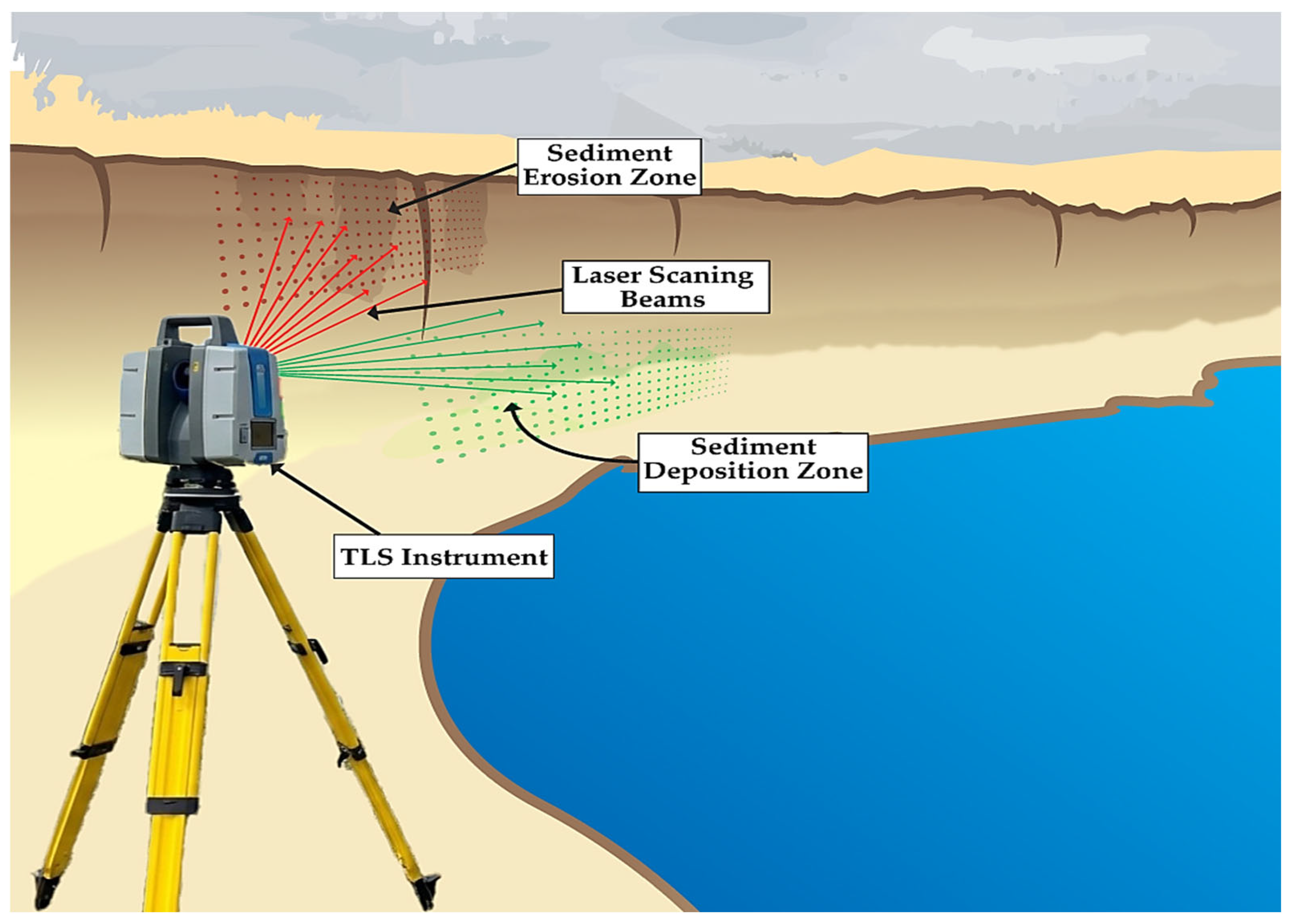
Terrestrial Laser Scanning (TLS) has shown a revolutionary possibility of managing sediment by 3D monitoring in high-resolution of erosion, deposition, and geomorphic change. This operational capability is visualizied in (Figure 7), which depicts the TLS instrument projecting laser scanning beams to distinguish between active sediment erosion and deposition zones near the water’s edge, thereby allowing for precise quantification of morphological shifts that traditional methods often overlook. As an example, ref. [22] used TLS with UAV photogrammetry to measure the soil erosion after fires in Greece, where the volumes of the sedimentation reached 40 m3 and confirmed the usefulness of TLS in the dynamic context of post-disturbance sceneries. Similarly, ref. [21] used TLS to track the advancement of sources of sediments following wildfires, and they found that channel-derived materials are more rapidly sourced than hillslope sources a fact that could not have been established without high-resolution of TLS data. In streams that were converging and had a braided river, ref. [70] have established that the TLS-generated DEMs were able to measure event-scale sediment budgets with a significant degree of accuracy, similar to that of the field and reflecting the reliability of TLS in frequent geomorphic monitoring. Ref. [36] also used TLS in mountain catchments to attribute riverbank erosion volumes (which provide 10–20% of the total sediment yield) to seasonal processes like rainfall and natural-bed freezing in this process.
Also, ref. [80] combined TLS and RFID sediment tracing to track the effects of sediment replenishment and trace the movement of the sediment waves up to 2.3 km with an effective multi-method framework of evaluation of management interventions.

3.6. Research Gaps and Limitations in the Existing Literature

The intricate relationship between hydrodynamic modeling and sediment transport analysis poses a substantial challenge in comprehending the dynamics of coastal and riverine sediments. Notwithstanding the technological advancements in the field of sediment monitoring, the inherent complexity of the phenomenon under study remains unabated [80,101]. The employment of remote sensing methodologies, such as LiDAR and photogrammetry, has been demonstrated to enhance the evaluation of sediment. However, it must be acknowledged that these techniques are not without their limitations. The reliability of measurements obtained through these methods can be compromised by data gaps, variations in point precision, and error propagation [73,102]. While TLS technology has proven valuable worldwide, this bibliometric analysis uncovered significant geographical disparities in research focus. The VOSviewer mapping reveals that a mere 6% of studies have focused on African environments, a figure that can be attributed to funding limitations and infrastructure challenges. In South Asia, particularly in regions deemed critical, such as the Ganges-Brahmaputra delta in Bangladesh, research initiatives are dispersed and lack coordination. The geographical frequency distribution presented in (Figure 5) reflects the academic output indexed in the selected databases (Scopus and Web of Science) under the specific search terms used in this study. So, this distribution may be subject to selection biases, such as the exclusion of non-English publications.
The precision of projections of sediment transport and erosion trends over extended periods of time is also constrained by the prevailing focus of research on short-term morphological changes rather than on the evolution of rivers over extended time frames [61,103]. The emphasis on localized treatments rather than large-scale, system-wide techniques has been identified as a key factor contributing to the inefficiencies observed in sediment management frameworks. The inefficiencies described here can be attributed to the challenges often encountered when implementing large-scale, system-wide techniques. These challenges are frequently hampered by a lack of baseline data and available resources [6,14,19]. The implementation of high-resolution river surveys is hindered by technical limitations, particularly in submerged regions where factors such as water turbidity and signal attenuation compromise survey accuracy. The utilization of conventional sample techniques is accompanied by two notable drawbacks: the presence of low frequency and the potential for survey errors [20,69,103].
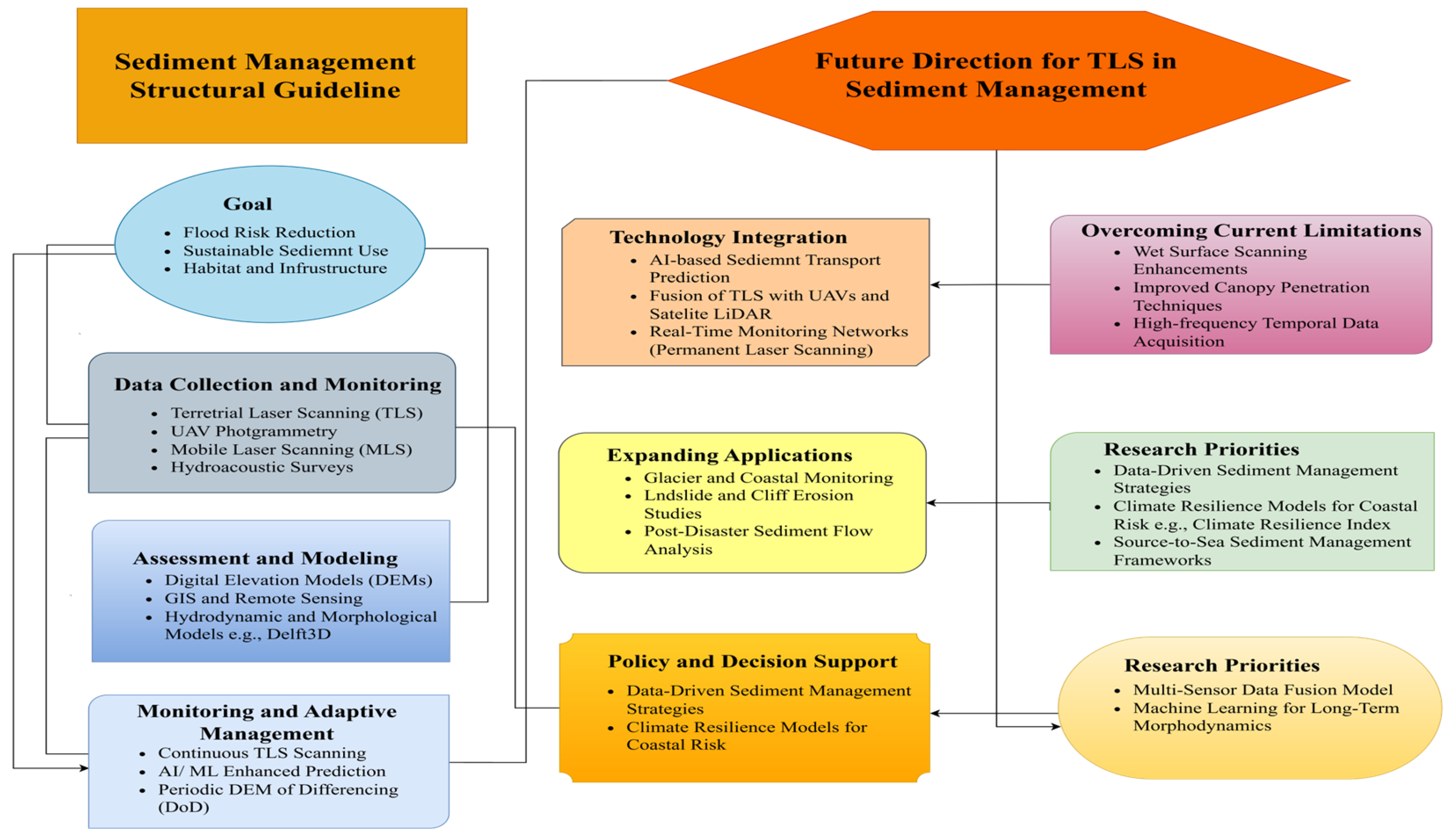
A multi-variable approach is necessary because current models do not adequately incorporate the impact of human activities, such as dam construction and land-use changes. This multi-variable approach must take into account both anthropogenic and climatic aspects [104,105]. The following discussion will address the subject of sediment transport [4,82]. Furthermore, there are residual incongruities between the translation of studies on sediment movement and the formulation of operational policy frameworks. This discrepancy impedes the development of sustainable river management plans [68,106]. Finally, the irregular nature of data collection has been demonstrated to have a deleterious effect on coastal sediment monitoring (see Figure 8). This, in turn, has the effect of impairing the predictive capacities of the relevant parties and of preventing the efficient mitigation of erosion and accumulation processes [64,66,107].

3.7. Comparative Assessment: When Is TLS the Superior Choice?

While TLS provides exceptional data density, it is not universally superior to other surveying methods. This review indicates that TLS is the superior choice in precision, requiring millimetre-level precision over small spatial scales <1 km2, such as monitoring or quantifying river bank erosion rates in complex topographies. Its active sensor capability gives it a precipitable advantage over SfM photogrammetry in varying lighting conditions and crucially in partial vegetation land cover to capture the ground surface [22,102]. Conversely, TLS becomes inferior or less practical for basin-scale monitoring due to occlusion and slow acquisition speeds. In environments where rapid coverage of kilometres of riverbank is required, airborne LiDAR or UAVs photogrammetry offers significantly higher efficiency in vertical accuracy. Therefore, TLS should be viewed as a site-specific diagnostic tool rather than a basin-wide mapping solution.

4. Conclusions and Future Directions

The research under scrutiny underscores the potential of advanced TLS technology to enhance sediment management across diverse geographical regions, particularly in areas where fluvial and coastal morphodynamics are influenced by a combination of natural processes and anthropogenic influences. However, to the author’s knowledge, no one has yet attempted to conduct a systematic review focusing on emerging trends and advanced TLS technology applied in sediment management. The majority of the studies concentrated on GIS and remote sensing-based methods aligned with satellite imagery and photogrammetry of the varying erosion and accretion patterns. The implementation of this technology is disproportionately concentrated in Europe and North America. This concentration is attributable to financial constraints, the high cost of equipment, and the lack of trained personnel. Consequently, the majority of regions in Africa and South Asia persist in a state of vulnerability and under-exploration. The most significant advancement is the integration of TLS with complementary platforms, such as Unmanned Aerial Vehicles (UAVs), which employ Structure-from-Motion (SfM) photogrammetry and airborne LiDAR. This process gives rise to a multi-scale monitoring framework, wherein TLS provides high-resolution ground-truthing, and UAVs ensure extensive spatial coverage. Furthermore, the integration of AI and machine learning is affecting a transformation in data processing through the development of algorithms for automated point cloud segmentation, feature extraction, and near real-time change detection. This, in turn, enhances the analytical depth and operational efficiency of data processing. The dynamic sediment processes occurring at the confluence of the Ganges, the Jamuna, and the Padma-Meghna rivers present significant challenges for effective land management, including the prevention of bank erosion and flooding. Although submerged strips have demonstrated efficacy in the context of sediment control, further advancements in numerical modeling are imperative to enhance the effectiveness of these methods. This review has identified three key research gaps: the unavailability of standardized protocols to propagate errors in mixed-method surveys, the unavailability of long-term, multi-temporal data that are required to understand decadal sediment development and the inadequate connection between physical sediment transport models and ecological effects. As delineated in the proposed structural guideline, TLS provides comprehensive support across all phases of sediment management, encompassing a wide range of applications. To summarize the core findings and directly address the formulated research questions, the conclusive insights of this study are mapped as follows:
  • TLS has become an important, high-resolution technology to measure sediment dynamics, erosion and geomorphic alterations in various river, coastal, and watershed landscapes.
  • TLS can provide precis millimeter resolution to track volumetric change and complex 3D morphological patterns, as well as the ability to make predictions about future sediment transport and address the problem of data gathering in complex landscapes, which are still critical.
  • The combination of TLS and UAVs, SfM photogrammetry, and AI can greatly improve the topographic reconstruction process and the identification of the changes in sediment.
  • To cope with the major gaps, interdisciplinary responses are necessary, with AI-based modeling and integration of multiple sensors as a priority in maximizing the evidence-based management of sediment.
Despite its potential, future efforts must address technological limitations and prioritize interdisciplinary research on sediment transport processes, especially in vulnerable riverine and coastal systems. This approach has the dual benefits of enhancing sediment management and fortifying the basis for environmentally sustainable and climate-resilient urban planning.

Author Contributions

Conceptualization, M.E.S., M.A.R., M.R., M.S. and M.A.A. (Mehedi Ahmed Ansary); Methodology, M.E.S., M.A.R., M.S., A.K.A. and M.S.I.M.; Software, M.E.S., M.A.R., A.K.A., K.I. and M.S.I.M.; Formal Analysis, M.E.S., M.R., A.K.A., K.I. and A.P.; Investigation, M.E.S., M.A.R., A.K.A. and M.A.A. (Md. Anwarul Abedin); Resources, M.R., M.S., A.A., A.P. and M.K.I.; Data Curation, M.E.S., M.A.R., M.R., A.K.A. and M.S.I.M.; Writing—Original Draft Preparation, M.E.S., M.A.R., M.S. and A.K.A.; Writing—Review and Editing, M.S., A.K.A., K.I., M.A.A. (Md. Anwarul Abedin), M.K.I., M.S.I.M. and R.S.; Visualization, M.A.R., M.R., M.S., K.I. and M.K.I.; Supervision, M.R., M.A.R., M.S., M.A.A. (Md. Anwarul Abedin) and R.S. All authors have read and agreed to the published version of the manuscript.

Funding

This research has received no external funding.

Institutional Review Board Statement

Not applicable.

Informed Consent Statement

Not applicable.

Data Availability Statement

The original contributions presented in this study are incorporated into the present review. Inquiries pertaining to this study may be directed to the corresponding author.

Acknowledgments

The authors would like to express their profound gratitude to the following individuals for their invaluable support and guidance. We are deeply thankful to Md. Ashqiur Rahman, Mehadi Hassan, Ayman Ibnat Arifa, and K. M. Arif Azmol for their dedicated efforts and technical support during the preparation of this manuscript. Their skillful work in organizing data and generating the visual elements, including the bibliometric maps, charts, graphs, and tables, was crucial to the successful completion of this systematic literature review. The authors express gratitude for the development of the study protocol for the systematic review, which was duly registered on the Open Science Framework platform at the following address: https://osf.io/4verj [108] (accessed on 26 October 2025).

Conflicts of Interest

The authors declare that there are no conflicts of interest, either financial or otherwise.

Abbreviations

ADCPAcoustic Doppler Current Profiler
LiDARLight Detection and Ranging
UAVsUnmanned Aerial Vehicles
SfMStructure-from-motion

References

  1. Nath, A.; Koley, B.; Saraswati, S.; Choudhury, T.; Um, J.S.; Ray, B.C. Geospatial Analysis of Short Term Shoreline Change Behavior between Subarnarekha and Rasulpur Estuary, East Coast of India Using Intelligent Techniques (DSAS). GeoJournal 2023, 88, 255–275. [Google Scholar] [CrossRef]
  2. Gazi, M.Y.; Roy, H.; Mia, M.B.; Akhter, S.H. Assessment of Morpho-Dynamics through Geospatial Techniques within the Padma-Meghna and Ganges-Jamuna River Confluences, Bangladesh. KN J. Cart. Geogr. Inf. 2020, 70, 127–139. [Google Scholar] [CrossRef]
  3. Dewan, A.; Corner, R.; Saleem, A.; Rahman, M.M.; Haider, M.R.; Rahman, M.M.; Sarker, M.H. Assessing Channel Changes of the Ganges-Padma River System in Bangladesh Using Landsat and Hydrological Data. Geomorphology 2017, 276, 257–279. [Google Scholar] [CrossRef]
  4. Best, J.L.; Ashworth, P.J.; Sarker, M.H.; Roden, J.E. The Brahmaputra-Jamuna River; John Wiley & Sons: Chichester, UK, 2007. [Google Scholar]
  5. Midha, N.; Mathur, P.K. Channel Characteristics and Planform Dynamics in the Indian Terai, Sharda River. Environ. Manag. 2014, 53, 120–134. [Google Scholar] [CrossRef] [PubMed]
  6. SEPA. Engineering in the Water Environment Good Practice Guide: Riparian Vegetation Management. Scott. Environ. Prot. Agency 2009, 1–56. [Google Scholar]
  7. Asadi, M.A.Z.; Mokhtari, L.G.; Naemitabar, R.Z.M. Modeling, Evaluation and Forecasting of Suspended Sediment Load in Kale Shur River, Sabzevar Basin, in Northeast of Iran. Appl. Water Sci. 2025, 15, 44. [Google Scholar] [CrossRef]
  8. O’Neal, M.A.; Pizzuto, J.E. The Rates and Spatial Patterns of Annual Riverbank Erosion Revealed through Terrestrial Laser-Scanner Surveys of the South River, Virginia. Earth Surf. Process Landf. 2011, 36, 695–701. [Google Scholar] [CrossRef]
  9. Najafabadi, E.F.; Ayyoubzadeh, S.A. Effectiveness of Submerged Vanes in Sediment Control to the Intake Channels: A Review and Future Directions. J. Irrig. Drain. Eng. 2025, 1–15. [Google Scholar] [CrossRef]
  10. Lee, F.Z.; Lai, J.S.; Sumi, T. Reservoir Sediment Management and Downstream River Impacts for Sustainable Water Resources—Case Study of Shihmen Reservoir. Water 2022, 14, 479. [Google Scholar] [CrossRef]
  11. Liu, X.; Yu, B.; Cai, D.; Wang, R. Potential Damage Area Detection of Bridges Based on Single-Temporal Point Cloud. Meas. Sci. Technol. 2025, 36, 015214. [Google Scholar] [CrossRef]
  12. Ur, A.; Hoskere, V. Instance segmentation of reinforced concrete bridge point clouds with transformers trained exclusively on synthetic data. Autom. Constr. 2025, 173, 106067. [Google Scholar] [CrossRef]
  13. Geetha, G.K.; Lee, S.; Lee, J.; Sim, S.H. Long-Term Shape Sensing of Bridge Girders Using Automated ROI Extraction of LiDAR Point Clouds. Smart Struct. Syst. 2024, 33, 399–414. [Google Scholar] [CrossRef]
  14. Shrestha, B.; Cochrane, T.A.; Caruso, B.S.; Arias, M.E.; Wild, T.B. Sediment Management for Reservoir Sustainability and Cost Implications Under Land Use/Land Cover Change Uncertainty. Water Resour. Res. 2021, 57, e2020WR028351. [Google Scholar] [CrossRef]
  15. Niu, Y.; Shah, F.A. Economics of Optimal Reservoir Capacity Determination, Sediment Management, and Dam Decommissioning. Water Resour. Res. 2021, 57, 1–18. [Google Scholar] [CrossRef]
  16. Paszkowski, A.; Goodbred, S.; Borgomeo, E.; Khan, M.S.A.; Hall, J.W. Geomorphic Change in the Ganges–Brahmaputra–Meghna Delta. Nat. Rev. Earth Env. 2021, 2, 763–780. [Google Scholar] [CrossRef]
  17. Belrhaba, T.; Aangri, A.; Hakkou, M.; Benmohammadi, A. Morphosedimentary Dynamics of the Moulay Bousselham Coast in Responses to Seasonal and Extreme Hydrodynamic Forces. Ecol. Eng. Environ. Technol. 2025, 26, 1–13. [Google Scholar] [CrossRef]
  18. SEPA. Sediment Management. Delta Life 2018, 1–36. [Google Scholar]
  19. Belete, M.D.; Hebart-Coleman, D.; Mathews, R.E.; Zazu, C. Building Foundations for Source-to-Sea Management: The Case of Sediment Management in the Lake Hawassa Sub-Basin of the Ethiopian Rift Valley. Water Int. 2021, 46, 138–156. [Google Scholar] [CrossRef]
  20. Lane, S.N.; Westaway, R.M.; Hicks, D.M. Estimation of Erosion and Deposition Volumes in a Large, Gravel-Bed, Braided River Using Synoptic Remote Sensing. Earth Surf. Process Landf. 2003, 28, 249–271. [Google Scholar] [CrossRef]
  21. Guilinger, J.J.; Gray, A.B.; Barth, N.C.; Fong, B.T. The Evolution of Sediment Sources Over a Sequence of Postfire Sediment-Laden Flows Revealed Through Repeat High-Resolution Change Detection. J. Geophys. Res. Earth Surf. 2020, 125, 1–23. [Google Scholar] [CrossRef]
  22. Alexiou, S.; Papanikolaou, I.; Schneiderwind, S.; Kehrle, V.; Reicherter, K. Monitoring and Quantifying Soil Erosion and Sedimentation Rates in Centimeter Accuracy Using UAV-Photogrammetry, GNSS, and t-LiDAR in a Post-Fire Setting. Remote Sens. 2024, 16, 802. [Google Scholar] [CrossRef]
  23. Haque, A.; Rahman, D.; Rahman, H. The Importance of Community Based Approach to Reduce Sea Level Rise Vulnerability and Enhance Resilience Capacity in the Coastal Areas of Bangladesh: A Review. J. Sustain. Sci. Manag. 2016, 11, 81–100. [Google Scholar]
  24. Wakwella, A.; Wenger, A.; Jenkins, A.; Lamb, J.; Kuempel, C.D.; Claar, D.; Corbin, C.; Falinski, K.; Rivera, A.; Grantham, H.S.; et al. Integrated Watershed Management Solutions for Healthy Coastal Ecosystems and People—Corrigendum. Camb. Prism. Coast. Futures 2023, 1, 1–17. [Google Scholar] [CrossRef]
  25. Habib, M.A.; Akhi, S.Z.; Khan, R.; Phoungthong, K.; Basir, M.S.; Anik, A.H.; Islam, A.R.M.T.; Idris, A.M. Elevated Levels of Environmental Radioactivity in Fluvial Sediment: Origin and Health Risk Assessment. Environ. Sci. Process. Impacts 2024, 26, 555–581. [Google Scholar] [CrossRef] [PubMed]
  26. Houser, C.; Hamilton, S. Sensitivity of Post-Hurricane Beach. Earth Surf. Process Landf. 2009, 34, 613–628. [Google Scholar] [CrossRef]
  27. Hayakawa, Y.S.; Obanawa, H. Volumetric Change Detection in Bedrock Coastal Cliffs Using Terrestrial Laser Scanning and Uas-Based SFM. Sensors 2020, 20, 3403. [Google Scholar] [CrossRef]
  28. Haddadchi, A.; Bind, J.; Hoyle, J.; Hicks, M. Quantifying the Contribution of Bank Erosion to a Suspended Sediment Budget Using Boat-Mounted LiDAR and High-Frequency Suspended Sediment Monitoring. Earth Surf. Process Landf. 2023, 48, 2920–2938. [Google Scholar] [CrossRef]
  29. Page, M.J.; McKenzie, J.E.; Bossuyt, P.; Boutron, I.; Hoffmann, T.C.; Mulrow, C.D.; Shamseer, L.; Tetzlaff, J.M.; Akl, E.; Brennan, S.E.; et al. The Prisma 2020 Statement: An Updated Guideline for Reporting Systematic Reviews. Med. Flum. 2021, 57, 444–465. [Google Scholar] [CrossRef]
  30. Singh, V.K.; Singh, P.; Karmakar, M.; Leta, J.; Mayr, P. The Journal Coverage of Web of Science, Scopus and Dimensions: A Comparative Analysis. Scientometrics 2021, 126, 5113–5142. [Google Scholar] [CrossRef]
  31. Jones, L.; Hobbs, P. The Application of Terrestrial LiDAR for Geohazard Mapping, Monitoring and Modelling in the British Geological Survey. Remote Sens. 2021, 13, 395. [Google Scholar] [CrossRef]
  32. Steckler, M.S.; Oryan, B.; Wilson, C.A.; Grall, C.; Nooner, S.L.; Mondal, D.R.; Akhter, S.H.; DeWolf, S.; Goodbred, S.L. Synthesis of the Distribution of Subsidence of the Lower Ganges-Brahmaputra Delta, Bangladesh. Earth Sci. Rev. 2022, 224, 1–14. [Google Scholar] [CrossRef]
  33. Cham, D.D.; Son, N.T.; Minh, N.Q.; Hung, N.T.; Thanh, N.T. Hydrodynamic Condition Modeling along the North-Central Coast of Vietnam. Eng. Technol. Appl. Sci. Res. 2020, 10, 5648–5664. [Google Scholar] [CrossRef]
  34. Krapesch, M.; Klösch, M.; ten Brinke, W.; Habersack, H. The Rhine Catchment: A Review of Sediment-Related Knowledge, Monitoring, and a Future Research Perspective. Water 2024, 16, 1121. [Google Scholar] [CrossRef]
  35. Liu, X.; Wang, P.; Lu, Z.; Gao, K.; Wang, H.; Jiao, C.; Zhang, X. Damage Detection and Analysis of Urban Bridges Using Terrestrial Laser Scanning (TLS), Ground-Based Microwave Interferometry, and Permanent Scatterer Interferometry Synthetic Aperture Radar (PS-InSAR). Remote Sens. 2019, 11, 580. [Google Scholar] [CrossRef]
  36. Longoni, L.; Papini, M.; Brambilla, D.; Barazzetti, L.; Roncoroni, F.; Scaioni, M.; Ivanov, V.I. Monitoring Riverbank Erosion in Mountain Catchments Using Terrestrial Laser Scanning. Remote Sens. 2016, 8, 241. [Google Scholar] [CrossRef]
  37. Mir, A.A.; Patel, M. A Comprehensive Review on Sediment Transport, Flow Dynamics, and Hazards in Steep Channels. J. Water Manag. Model. 2024, 1–35. [Google Scholar] [CrossRef]
  38. Pähtz, T.; Clark, A.H.; Valyrakis, M.; Durán, O. The Physics of Sediment Transport Initiation, Cessation, and Entrainment Across Aeolian and Fluvial Environments. Rev. Geophys. 2020, 58, 1–58. [Google Scholar] [CrossRef]
  39. Grove, J.R.; Croke, J.; Thompson, C. Quantifying Different Riverbank Erosion Processes during an Extreme Flood Event. Earth Surf. Process Landf. 2013, 38, 1393–1406. [Google Scholar] [CrossRef]
  40. Nurhayati, N.; Pebnaldy, P.; Achiari, H. A Systematic Literature Review of Tidal Current Energy in Indonesia. Syntax Idea 2024, 6, 617–625. [Google Scholar] [CrossRef]
  41. Cheng, Z. Human-Induced Changes on Sedimentary Environment in a Macro-Tidal Estuary. Ph.D. Thesis, University of New South Wales, Sydney, Australia, 2020; pp. 1–143. [Google Scholar] [CrossRef]
  42. Perks, M.T.; Pitman, S.J.; Bainbridge, R.; Díaz-Moreno, A.; Dunning, S.A. An Evaluation of Low-Cost Terrestrial Lidar Sensors for Assessing Hydrogeomorphic Change. Earth Space Sci. 2024, 11, 19935. [Google Scholar] [CrossRef]
  43. Maurya, P.; Kumari, R.; Ranjan, R.K.; Solanki, J.K.B. Chemometric Analysis and Risk Assessment Indices to Evaluate Water and Sediment Contamination of a Tropical Mangrove Forest. J. Trace Elem. Miner. 2022, 2, 100028. [Google Scholar] [CrossRef]
  44. Muumbe, T.P.; Baade, J.; Singh, J.; Schmullius, C.; Thau, C. Terrestrial Laser Scanning for Vegetation Analyses with a Special Focus on Savannas. Remote Sens. 2021, 13, 507. [Google Scholar]
  45. Brasington, J.; Langham, J.; Rumsby, B. Methodological Sensitivity of Morphometric Estimates of Coarse Fluvial Sediment Transport. Geomorphology 2003, 53, 299–316. [Google Scholar] [CrossRef]
  46. Khan, S.S.; Islam, T. Anthropogenic Impact on Morphology of Teesta River in Northern Bangladesh: An Exploratory Study. J. Geosci. Geomat. 2015, 3, 50–55. Available online: https://pubs.sciepub.com/jgg/3/3/1/ (accessed on 13 January 2026).
  47. Kuschnerus, M.; de Vries, S.; Antolínez, J.A.Á.; Vos, S.; Lindenbergh, R. Identifying Topographic Changes at the Beach Using Multiple Years of Permanent Laser Scanning. Coast. Eng. 2024, 193, 1–13. [Google Scholar] [CrossRef]
  48. Hoque, M.M.; Abu Hena, M.K.; Ahmed, O.H.; Idris, M.H.; Rafiqul Hoque, A.T.M.; Billah, M.M. Can Mangroves Help Combat Sea Level Rise through Sediment Accretion and Accumulation? Malays. J. Sci. 2015, 34, 78–86. [Google Scholar] [CrossRef]
  49. Bose, S.; Pani, P. The Roles of Mangroves in Sedimentation: A Case Study in the Sundarbans, India. SSRN 2024. Preprint. [Google Scholar] [CrossRef]
  50. Starek, M.J.; Mitasova, H.; Hardin, E.; Weaver, K.; Overton, M.; Harmon, R.S. Modeling and Analysis of Landscape Evolution Using Airborne, Terrestrial, and Laboratory Laser Scanning. Geosphere 2011, 7, 1340–1356. [Google Scholar] [CrossRef]
  51. Rahaman, S. Flood and Erosion Flood Management in Bangladesh. 2017. Available online: https://www.researchgate.net/publication/369891021_Flood_and_Erosion_Management_in_Bangladesh (accessed on 15 March 2025).
  52. Rahman, M.M.; Shampa; Haque, A.; Nakagawa, H.; Zhang, H.; Rahman, A.; Dustegir, M.; Hossain, M.; Hussain, M.M.; Islam, J.; et al. Sediment Management Using Bandal-Like Structures as Nature-Based Solution; Springer: Dordrecht, The Netherlands, 2023. [Google Scholar]
  53. Xue, Y.; Hong, X.; He, X.; Kang, S.; Wang, S.; Ding, Y. An Evaluation of TLS-Based Glacier Change Assessment in the Central Tibetan Plateau. Int. J. Digit. Earth 2024, 17, 1–19. [Google Scholar] [CrossRef]
  54. Schneider, B.; Hoffmann, G.; Falkenroth, M.; Grade, J. Tsunami and Storm Sediments in Oman: Characterizing Extreme Wave Deposits Using Terrestrial Laser Scanning. J. Coast. Conserv. 2019, 23, 801–815. [Google Scholar] [CrossRef]
  55. Siraz, M.M.M.; Jubair, A.M.; Alam, M.S.; Rashid, M.B.; Hossain, Z.; Khandaker, M.U.; Bradley, D.A.; Yeasmin, S. Measurement of Radioactivity in Soils of Karamjal and Harbaria Mangrove Forest of Sundarbans for Establishment of Radiological Database. PLoS ONE 2023, 18, 1–17. [Google Scholar] [CrossRef] [PubMed]
  56. Florsheim, J.L.; Chin, A.; Kinoshita, A.M.; Nourbakhshbeidokhti, S. Effect of Storms during Drought on Post-Wildfire Recovery of Channel Sediment Dynamics and Habitat in the Southern California Chaparral, USA. Earth Surf. Process Landf. 2017, 42, 1482–1492. [Google Scholar] [CrossRef]
  57. Rengers, F.K.; McGuire, L.A.; Kean, J.W.; Staley, D.M.; Dobre, M.; Robichaud, P.R.; Swetnam, T. Movement of Sediment Through a Burned Landscape: Sediment Volume Observations and Model Comparisons in the San Gabriel Mountains, California, USA. J. Geophys. Res. Earth Surf. 2021, 126, 1482–1492. [Google Scholar] [CrossRef]
  58. Williams, R.D.; Brasington, J.; Vericat, D.; Hicks, D.M. Quantifying Braided River Morphodynamics through a Sequence of High-Flow Events. Eguga 2012, 14, 849. [Google Scholar]
  59. Vericat, D.; Wheaton, J.M.; Brasington, J. Revisiting the Morphological Approach: Opportunities and Challenges with Repeat High-Resolution Topography; John Wiley & Sons: Chichester, UK, 2017; ISBN 9781118971437. [Google Scholar]
  60. Liu, D.; Gong, X.; Wang, H.; Hu, X.; Zheng, W.; Liu, X. Displacement Field Reconstruction in Landslide Physical Modeling by Using a Terrain Laser Scanner-Part 2: Application and Large Strain/Displacement and Water Effect Analysis. J. Rock Mech. Geotech. Eng. 2024, 16, 4077–4087. [Google Scholar] [CrossRef]
  61. Vandromme, R.; Foucher, A.; Cerdan, O.; Salavador-Blanes, Ś. Quantification of Bank Erosion of Artificial Drainage Networks Using LiDAR Data. Z. Geomorphol. 2017, 61, 1–10. [Google Scholar] [CrossRef]
  62. van IJzendoorn, C.; Boomaars, K.; Vos, S.; Reniers, A.; Kuschnerus, M.; Lindenberg, R. Detection of Aeolian Sand Strips and Their Characteristics on the Beach Using Laser Scanning: Software and Dataset. Geomorphica 2024, 1, 32. [Google Scholar] [CrossRef]
  63. Vos, S.; Anders, K.; Kuschnerus, M.; Lindenbergh, R.; Höfle, B.; Aarninkhof, S.; de Vries, S. A High-Resolution 4D Terrestrial Laser Scan Dataset of the Kijkduin Beach-Dune System, The Netherlands. Sci. Data 2022, 9, 191. [Google Scholar] [CrossRef]
  64. Pranzini, E.; Cinelli, I.; Cipriani, L.E.; Anfuso, G. An Integrated Coastal Sediment Management Plan: The Example of the Tuscany Region (Italy). J. Mar. Sci. Eng. 2020, 8, 33. [Google Scholar] [CrossRef]
  65. Passaro, S.; Tamburrino, S.; Vallefuoco, M.; Tassi, F.; Vaselli, O.; Giannini, L.; Chiodini, G.; Caliro, S.; Sacchi, M.; Rizzo, A.L.; et al. Seafloor Doming Driven by Degassing Processes Unveils Sprouting Volcanism in Coastal Areas. Sci. Rep. 2016, 6, 22448. [Google Scholar] [CrossRef]
  66. Letortu, P.; Costa, S.; Maquaire, O.; Delacourt, C.; Augereau, E.; Davidson, R.; Suanez, S.; Nabucet, J. Retreat Rates, Modalities and Agents Responsible for Erosion along the Coastal Chalk Cliffs of Upper Normandy: The Contribution of Terrestrial Laser Scanning. Geomorphology 2015, 245, 3–14. [Google Scholar] [CrossRef]
  67. Bera, R.; Maiti, R. Quantitative Analysis of Erosion and Accretion (1975–2017) Using DSAS—A Study on Indian Sundarbans; Springer: Cham, Switzerland, 2019; Volume 28, ISBN 2352485518302. [Google Scholar]
  68. Ophra, S.J.; Begum, S.; Islam, R.; Islam, M.N. Assessment of Bank Erosion and Channel Shifting of Padma River in Bangladesh Using RS and GIS Techniques. Spat. Inf. Res. 2018, 26, 599–605. [Google Scholar] [CrossRef]
  69. Brasington, J.; Langham, J.; Rumsby, B. Sensitivity of Morphometric Estimates of Sediment Transport in Large Gravel-Bed Rivers. Remote Sens. Environ. Monit. GIS Appl. Geol. 2002, 4545, 243–254. [Google Scholar] [CrossRef]
  70. Williams, R.; Brasington, J.; Vericat, D.; Hicks, M.; Labrosse, F.; Neal, M. Monitoring Braided River Change Using Terrestrial Laser Scanning and Optical Bathymetric Mapping; Elsevier: Amsterdam, The Netherlands, 2011; Volume 15, ISBN 9780444534460. [Google Scholar]
  71. Maniatis, G.; Williams, R.; Hoey, T. Segmentation of Topographic Change by Geomorphic Units to Assess Physical Habitat Transitions in a Restored River. In River Flow 2020—Proceedings of the 10th Conference on Fluvial Hydraulics; CRC Press: Boca Raton, FL, USA, 2020; pp. 1791–1796. [Google Scholar] [CrossRef]
  72. Stampfer, L. Live Processing and Feedback on a Combined Laserscanning and Photogrammetric Documentation Workflow. Int. Arch. Photogramm. Remote Sens. Spat. Inf. Sci.-ISPRS Arch. 2024, 48, 429–436. [Google Scholar] [CrossRef]
  73. Cheng, X.; Liu, X.; Huang, Y.; Zhou, W.; Nie, J. Efficient Registration of Airborne LiDAR and Terrestrial LiDAR Point Clouds in Forest Scenes Based on Single-Tree Position Consistency. Forests 2024, 15, 185. [Google Scholar] [CrossRef]
  74. Chen, S.; Verbeeck, H.; Terryn, L.; Liu, C.; Disney, M.; Origo, N.; Calders, K. Quantifying Forest Dynamics with Terrestrial Laser Scanning Data. In Proceedings of the IGARSS 2024—2024 IEEE International Geoscience and Remote Sensing Symposium, Athens, Greece, 7–12 July 2024; pp. 1130–1133. [Google Scholar] [CrossRef]
  75. Shevkar, P. Autonomous 3D Scanning of Construction Sites Using Terrestrial Laser Scanner and UGV; Technische Universität Hamburg, Institut für Digitales und Autonomes Bauen: TUHH: Hamburg, Germany, 2024; pp. 163–170. [Google Scholar] [CrossRef]
  76. Wu, Y.; Gan, X.; Zhou, Y.; Yuan, X. Estimation of Diameter at Breast Height in Tropical Forests Based on Terrestrial Laser Scanning and Shape Diameter Function. Sustainability 2024, 16, 2275. [Google Scholar] [CrossRef]
  77. Xu, C.; Li, Z.; Li, H.; Wang, F.; Zhou, P. Long-Range Terrestrial Laser Scanning Measurements of Annual and Intra-Annual Mass Balances for Urumqi Glacier No. 1, Eastern Tien Shan, China. Cryosphere 2019, 13, 2361–2383. [Google Scholar] [CrossRef]
  78. Ning, X.Y.; Zhang, K.; Jiang, N.; Luo, X.L.; Zhang, D.M.; Peng, J.W.; Luo, X.X.; Zheng, Y.S.; Guo, D. 3D Deformation Analysis for Earth Dam Monitoring Based on Terrestrial Laser Scanning (TLS) and the Iterative Closest Point (ICP) Algorithm. Front. Earth Sci. 2024, 12, 1–14. [Google Scholar] [CrossRef]
  79. Krapesch, M.; Hauer, C.; Gmeiner, P.; Haimann, M.; Zauner, G.; Habersack, H. Evaluation of Re-Depositing Hydropower Trapped Sediments at Large Rivers to Improve Flood Protection and Aquatic Habitats—Case Study Danube/Austria. Sci. Total Environ. 2023, 883, 163603. [Google Scholar] [CrossRef]
  80. Brousse, G.; Arnaud-Fassetta, G.; Liébault, F.; Bertrand, M.; Melun, G.; Loire, R.; Malavoi, J.R.; Fantino, G.; Borgniet, L. Channel Response to Sediment Replenishment in a Large Gravel-Bed River: The Case of the Saint-Sauveur Dam in the Buëch River (Southern Alps, France). River Res. Appl. 2020, 36, 880–893. [Google Scholar] [CrossRef]
  81. Water Resources Planning Organization Research on Sediment Distribution and Management in South-West Region of Bangladesh WARPO: Dhaka, Bangladesh, 2021. Available online: https://objectstorage.ap-dcc-gazipur-1.oraclecloud15.com/n/axvjbnqprylg/b/V2Ministry/o/office-warpo/2024/12/fd9c095427b14848a10c742519528202.pdf (accessed on 16 March 2025).
  82. Sinha, R.; Ghosh, S. Understanding Dynamics of Large Rivers Aided by Satellite Remote Sensing: A Case Study from Lower Ganga Plains, India. Geocarto Int. 2012, 27, 207–219. [Google Scholar] [CrossRef]
  83. Munna, G.M.; Alam, M.J.B.; Uddin, M.M.; Rahman, H.; Deb, P.K.; Himel, F.H.; Arif, M. Assessment of Bank Line Shifting of Surma River Using Gis and Remote Sensing Approach. Tech. J. River Res. Inst. 2020, 15, 79–86. [Google Scholar]
  84. Wemple, B.; Estabrook, E.; Hamshaw, S. Quantifying Gully Erosion and Potential for Sediment and Phosphorus Pollution Reductions Achieved by Erosion Remediation Projects on Vermont’s Roads; Vermont Agency of Transportation: Montpelier, VT, USA, 2021. Available online: https://rosap.ntl.bts.gov/view/dot/60110/dot_60110_DS1.pdf (accessed on 16 March 2025).
  85. Meng, X.; Zhang, X.; Silva, R.; Li, C.; Wang, L. Impact of High-Resolution Topographic Mapping on Beach Morphological Analyses Based on Terrestrial LiDAR and Object-Oriented Beach Evolution. ISPRS Int. J. Geoinf. 2017, 6, 147. [Google Scholar] [CrossRef]
  86. Di Silvo, G.; Basson, G. Erosion and Sediment Dynamics from Catchment to Coast. In IHP-VI Technical Document in Hydrology N°82; UNESCO Working Series SC-2008/WS/34; UNESCO: Paris, France, 2008; p. 48. [Google Scholar]
  87. Ankrah, J.; Monteiro, A.; Madureira, H. Bibliometric Analysis of Data Sources and Tools for Shoreline Change Analysis and Detection. Sustainability 2022, 14, 4895. [Google Scholar] [CrossRef]
  88. Nadal-Romero, E.; Revuelto, J.; Errea, P.; López-Moreno, J.I. The Application of Terrestrial Laser Scanner and SfM Photogrammetry in Measuring Erosion and Deposition Processes in Two Opposite Slopes in a Humid Badlands Area (Central Spanish Pyrenees). Soil 2015, 1, 561–573. [Google Scholar] [CrossRef]
  89. Szrek, A.; Romańczukiewicz, K.; Kujawa, P.; Trybała, P. Comparison of TLS and SLAM Technologies for 3D Reconstruction of Objects with Different Geometries. IOP Conf. Ser. Earth Environ. Sci. 2024, 1295, 1–7. [Google Scholar] [CrossRef]
  90. Suzuki, T.; Inami, Y.; Yanagishima, S.; Sakihama, S.; Cox, D.T. Sediment Particle Movements Observed Using Tracers under Accretive Wave Conditions in the Nearshore Zone. Coast. Eng. J. 2019, 61, 472–485. [Google Scholar] [CrossRef]
  91. Birch, G.F.; Lee, J.H.; Gunns, T.; Besley, C.H. The Use of Sedimentary Metals to Assess Anthropogenic Change, Ecological Risk, Model Past and Future Impacts and Identify Contaminant Sources in the Eleven Estuaries of Greater Sydney (Australia): A Review and Critical Assessment. Sci. Total Environ. 2024, 950, 175268. [Google Scholar] [CrossRef]
  92. Gomes, T.; Matias, D.; Campos, A.; Cunha, L.; Roriz, R. A Survey on Ground Segmentation Methods for Automotive LiDAR Sensors. Sensors 2023, 23, 601. [Google Scholar] [CrossRef]
  93. dos Santos, E.E.; Francelino, M.R.; Siqueiraa, R.G.; Schaefer, C.E.G.R.; Santana, F.C.; Filho, E.I.F. Laser Scanner Technology in the Assessment of Mining Tailings Surface Changes and Rehabilitation Interventions after the Fundão Dam Rupture, Brazil. Environ. Earth Sci. 2024, 83, 1–13. [Google Scholar] [CrossRef]
  94. Inoue, T.; Mishra, J.; Parker, G. Numerical Simulations of Meanders Migrating Laterally as They Incise Into Bedrock. J. Geophys. Res. Earth Surf. 2021, 126, 1–17. [Google Scholar] [CrossRef]
  95. Senanayake, S.; Pradhan, B.; Huete, A.; Brennan, J. A Review on Assessing and Mapping Soil Erosion Hazard Using Geo-Informatics Technology for Farming System Management. Remote Sens. 2020, 12, 63. [Google Scholar] [CrossRef]
  96. Morhart, C.; Schindler, Z.; Frey, J.; Sheppard, J.P.; Calders, K.; Disney, M.; Morsdorf, F.; Raumonen, P.; Seifert, T. Limitations of Estimating Branch Volume from Terrestrial Laser Scanning. Eur. J. For. Res. 2024, 143, 687–702. [Google Scholar] [CrossRef]
  97. Nascimento, Â.; Biguino, B.; Borges, C.; Cereja, R.; Cruz, J.P.C.; Sousa, F.; Dias, J.; Brotas, V.; Palma, C.; Brito, A.C. Tidal Variability of Water Quality Parameters in a Mesotidal Estuary (Sado Estuary, Portugal). Sci. Rep. 2021, 11, 23112. [Google Scholar] [CrossRef] [PubMed]
  98. Williams, R.D.; Lamy, M.; Maniatis, G.; Stott, E. Three-Dimensional Reconstruction of Fluvial Surface Sedimentology and Topography Using Personal Mobile Laser Scanning. Earth Surf. Process Landf. 2020, 45, 251–261. [Google Scholar] [CrossRef]
  99. James, J. Quantifying River Response to Landsliding: Experiments in DEM Differencing Using Wide-Area, Structure-from-Motion Terrain Models. Geophys. Res. Abstr. EGU Gen. Assem. Eliisa Lotsari GNS Sci. 2017, 19, 2017–10158. [Google Scholar]
  100. Cheng, Z.; Jalon-Rójas, I.; Wang, X.H.; Liu, Y. Impacts of Land Reclamation on Sediment Transport and Sedimentary Environment in a Macro-Tidal Estuary. Estuar. Coast. Shelf Sci. 2020, 242, 1–68. [Google Scholar] [CrossRef]
  101. Abernethy, B.; Rutherfurd, I.D. Monitoring and Modelling Morphological Change in a Braided Gravel-Bed River Using High Resolution GPS-Based Survey. Earth Surf. Process Landf. 2000, 25, 973–990. [Google Scholar] [CrossRef]
  102. Tzortzinis, G.; Filippatos, A.; Wittig, J.; Gude, M.; Provost, A.; Ai, C.; Gerasimidis, S. Structural Integrity of Aging Steel Bridges by 3D Laser Scanning and Convolutional Neural Networks. Commun. Eng. 2024, 3, 106. [Google Scholar] [CrossRef]
  103. Middleton, L.; Ashmore, P.; Leduc, P.; Sjogren, D. Rates of Planimetric Change in a Proglacial Gravel-Bed Braided River: Field Measurement and Physical Modelling. Earth Surf. Process Landf. 2019, 44, 752–765. [Google Scholar] [CrossRef]
  104. Kottermair, M.; Phinn, S.R.; Roelfsema, C.; Harris, D. Mapping Reef Island Shoreline Changes: A Systematic Review of Data Sources and Methods. Remote. Sens. 2025, 17, 4041. [Google Scholar] [CrossRef]
  105. Lilli, M.A.; Efstathiou, D.; Moraetis, D.; Schuite, J.; Nerantzaki, S.D.; Nikolaidis, N.P. A Multi-Disciplinary Approach to Understand Hydrologic and Geochemical Processes at Koiliaris Critical Zone Observatory. Water 2020, 12, 2427. [Google Scholar] [CrossRef]
  106. Deb, M.; Das, D.; Uddin, M. Evaluation of Meandering Characteristics Using RS & GIS of Manu River. J. Water Resour. Prot. 2012, 4, 163–171. [Google Scholar] [CrossRef]
  107. Islam, M.K.; Rahman, M.M. Establishing Morpho-Dynamic Baseline for Flow-Sediment Management of a Tidal River in the Ganges–Brahmaputra–Meghna Delta System through Field Measurement. Environ. Fluid Mech. 2024, 24, 265–286. [Google Scholar] [CrossRef]
  108. Sardar, M.E.; Rahman, M.A.; Rasheduzzaman, M.; Shamsuzzoha, M.; Akter, A.; Parvez, A.; Ishana, K.; Azad, A.K.; Majumder, M.S.I.; Islam, M.K.; et al. A Systematic Review of Terrestrial Laser Scanning (TLS) Applications in Sediment Management 2025. pp. 1–23. Available online: https://osf.io/4verj (accessed on 26 October 2025).

Figure 1. The PRISMA strategy was applied to identify suitable studies. It has three stages, i.e., (i) the identification stage entails calculating the total number of records present in the pertinent databases (we utilized Google Scholar and Science Direct databases in this instance), (ii) the screening stage entails scrutinizing the records, retrieving them, and assessing their eligibility, and (iii) the stage of inclusion studies for review encompasses the records chosen for the systematic review.
Ndt 04 00010 g001
Figure 2. Keywords network visualization in sediment management. The size of the nodes represents the frequency of keyword occurrence, while the thickness of the lines indicates the strength of the co-occurrence link. The network was generated using VOSviewer (v1.6.20) with a minimum occurrence threshold of 5, divided into 6 clusters.
Ndt 04 00010 g002
Figure 3. Visualization of a clustered keyword network representing the thematic focus of TLS applications in sediment management.
Ndt 04 00010 g003
Figure 4. Co-authorship network map visualization, clusters of the same color represent the groups of authors who often collaborate in research.
Ndt 04 00010 g004
Figure 5. (a) Number of articles per country, (b) Yearly publications of the selected articles, (c) Geographical distribution of the case studies for this review. (Note: This geographical distribution is based on the 108 selected articles retrieved from Scopus and Web of Science and may be influenced by database coverage and language restrictions).
Ndt 04 00010 g005
Figure 6. Integrated geospatial technologies and methodologies for efficient sediment management and river morphological studies.
Ndt 04 00010 g006
Figure 7. Schematic representation of a TLS survey setup for riverbank monitoring (Source: Kottermair et al. 2025 [104]).
Ndt 04 00010 g007
Figure 8. Structural guideline and future directions for TLS in sediment management.
Ndt 04 00010 g008
Table 1. Overview of critical factors and key descriptions in sediment management, highlighting the necessity of evidence-based decisions, adaptive strategies, and ecological considerations for sustainable infrastructure and environmental protection.
FactorsDescription
Evidence-Based Decision MakingUtilizing empirical data and rigorous scientific research is imperative in the formulation of effective sediment management plans [18].
Adaptive ManagementModifying sediment control strategies is imperative in response to environmental monitoring and changes in the environment [19,20].
Ecological ConsiderationsEnsuring measures employed for the management of sediment effectively support biodiversity and the overall health of ecosystems [18].
Data Availability and MonitoringOvercoming challenges related to limited data and dynamic sediment behavior [20,21].
Resource LimitationsTackling the logistical and financial limitations of sediment management [10,14,22].
Sustainable MeasuresPutting practical practice techniques like soil conservation, nitrogen management, and sediment reuse [18].
Flood Risk ReductionControlling sediment levels to avoid flooding and excessive buildup [10].
Infrastructure ProtectionAvoiding damage to water management systems, bridges, and reservoirs caused by sediment [15].
Table 2. Technical instruments and maximum scanning ranges of selected laser measurement systems.
Authors YearTLS InstrumentsMaximum Scanning RangeAccuracy/Precision
Xu et al. (2019), Xue et al. (2024) [53,77].RIEGL VZ-60006000+ mUtilizes a specialized laser wavelength optimized for the acquisition of data from snow and ice-covered terrain which accuracy of 15 mm with precision of 10 mm.
Ning et al. (2024) [78]RIEGL VZ-2000i2500 mRepresents a high-speed evolution of the VZ-2000, incorporating integrated cloud connectivity for an enhanced data management system.
Vos et al. (2022), van IJzen-doorn et al. (2024), Kuschnerus et al. (2024) [47,62,63]RIEGL VZ-20002050 mFunctions as a long-range terrestrial laser scanner characterized by a 1 MHz pulse repetition rate.
Jones and Hobbs (2021), dos Santos et al. (2024) [31,93]RIEGL VZ-10001400 mDemonstrates high reliability for topographic surveys and large-scale open-pit mining operations.
Longoni et al. (2016) [36]RIEGL LMS-Z420i1000 mAn established, robust instrument featuring a vertical field of view (FOV) of 80°.
Brousse et al. (2020) [80]RIEGL LMS-Q680i1000–3000 mAn airborne laser scanning system where the operational range is a function of the selected pulse repetition rate.
Hoque et al. (2015), Shevkar (2024) [48,75]RIEGL VZ-400i800 mAchieves rapid data acquisition via a 1.2 MHz pulse rate and facilitates real-time kinematic registration.
Alexiou et al. (2024) [22]FARO Focus 3D100–350 mThe maximum operational range is contingent upon the specific model configuration, such as the X130 or X330 variants.
Rengers et al. (2021) [57]Leica ScanStation C10300 mMaintains an effective range between 1 m and 200 m, extending to 300 m for targets with 90% reflectivity.
Letortu et al. (2015) [66]RIEGL LMS-Z390i400 mA legacy system (circa 2006) engineered for high-precision measurements at shorter operational distances.
Perks et al. (2024) [42]Livox Mid-40260 mA cost-effective solid-state LiDAR unit: its detection range diminishes to 90 m when encountering targets with 10% reflectivity.
O’Neal and Pizzuto (2011) [8]Trimble GS200200 mA legacy scanning instrument limited by a constrained vertical field of view of 40° above the horizon.
Table 3. Categorization of dominant sediment management strategies and interventions identified across the reviewed studies (n = 108), linking specific engineering and ecological measures to their primary literature sources.
Sediment Management StrategiesAuthors
Artificial berms and sediment replenishment[80]
Management of reservoir sediment (desilting, flushing)[10,14]
Vanes submerged under water to regulate sedimentation[9]
Management of Tidal Rivers (TRM)[81]
Sluicing and sediment bypassing[10,14]
Interventions at the catchment level (vegetation, terracing)[14]
Morphometric analysis and budgeting for sediments[59,69]
Using LiDAR and TLS to monitor sediments[61,66]
GIS and remote sensing for sediment dynamics[3,82]
Management of sediments from source to sea[19]
Management of coastal sediments (nourishment, bypassing)[64]
Reusing sediments and conserving soil[18]
Bedload monitoring and RFID-based sediment tracing[80]
Impact of sediments on the sustainability of dams[15]
Management of sediment-related floodplains[5]
Controlling erosion and retaining sediments[83]
Modeling of sediment transport (Delft3D, HEC-RAS)[2,58]
Reduction in sediment and phosphorus pollution[84]
Table 4. Comparative assessment of TLS vs. traditional surveys and other remote sensing technologies in sediment monitoring, detailing their respective applications, technical advantages, limitations, and representative case studies from the review.
ApplicationsTools/TechniquesAdvantagesLimitationsExample
TLSHigh-res 3D change detection, volumetric analysis, microtopography.Very high accuracy and resolution with direct 3D point cloud data.Cannot scan shadow zones, underwater, or affected by vegetation and costly.Riverbank erosion [8] post-fire sediment dynamics [56] coastal cliff retreat [66].
Airborne LiDAR (ALS)/UAV-SfMLarge-area topographic mapping, regional change detection.Broad spatial coverage, efficient for large areas, UAV-SfM is cost-effective.Lower resolution than TLS, limited under-canopy or shadow zones (SfM).Large-scale morphological change [4] beach-dune recovery [26].
Remote Sensing and GISLong-term, planimetric change analysis (shorelines, land use).Long historical record, global coverage, good for large areas.Low spatial or vertical resolution, poor for small-scale or volumetric change.Shoreline change analysis [1], channel migration [3].
PhotogrammetryThree-dimensional modeling where TLS is not available.Lower cost than TLS, can use standard cameras.Requires good lighting or texture, less accurate than TLS.Braided river morphology [45].
Traditional Surveys (RTK-GNSS)Precise point measurement with ground control points.High point accuracy, well-established methodology.Time-consuming for dense data and not synoptic (only points).Sediment transport estimation [45], topographic profiling [17].
Numerical ModelingPredicting sediment transport, hydrodynamics, and future scenarios.Can simulate unmeasurable events and future scenarios.Requires validation with field data and often simplifies complex physics.Coastal hydrodynamics [33], reservoir sediment management [10].
Disclaimer/Publisher’s Note: The statements, opinions and data contained in all publications are solely those of the individual author(s) and contributor(s) and not of MDPI and/or the editor(s). MDPI and/or the editor(s) disclaim responsibility for any injury to people or property resulting from any ideas, methods, instructions or products referred to in the content.