Article

Higher Education for Sustainability—Intergenerational Comparative Analysis of the Perceptions of Students at the University of the Basque Country Regarding Socioecological Transitions

by
Asier Arcos-Alonso
1,*,
César Carranza-Barona
2 and
Itsaso Fernandez de la Cuadra-Liesa
3
1
Applied Economics Department, University of the Basque Country UPV/EHU, 48015 Bilbao, Spain
2
Faculty of Social and Human Sciences, Central University of Ecuador (UCE), Quito 170521, Ecuador
3
Economy and Management Department, University of the Basque Country UPV/EHU, 48009 Bilbao, Spain
*
Author to whom correspondence should be addressed.
Trends High. Educ. 2026, 5(3), 65; https://doi.org/10.3390/higheredu5030065
Submission received: 4 March 2026 / Revised: 7 July 2026 / Accepted: 8 July 2026 / Published: 16 July 2026

Abstract

Higher education plays a crucial role in equipping citizens to tackle contemporary socio-ecological challenges. However, little research has examined how different generations of university students understand socioecological transitions, or the implications of these differences for sustainability education. This study compares the perceptions of older learners (aged 55–70) enrolled in the ‘Classrooms of Experience’ programme with those of undergraduate students (aged 18–28) from the Faculty of Economics and Business at the University of the Basque Country (UPV/EHU). Qualitative data were collected from approximately 250 participants during the 2023/24 and 2024/25 academic years. The data were analysed using the Grid Elaboration Method and the IRaMuTeQ (Version 0.8 Alpha 7) text analysis tool to identify semantic structures, symbolic associations and patterns of meaning across the two age groups. The findings reveal significant generational differences in understanding socioecological transitions. Older learners tend to frame transitions as regulated processes linked to institutional action, public policy, welfare, and quality of life. In contrast, younger students interpret socioecological transitions as responses to interconnected ecological and social crises, emphasising socioecological justice, responsibility, sustainability, and technological innovation as key drivers of transformation. These results suggest the coexistence of complementary yet distinct socioecological imaginaries within the university context. The study highlights the pedagogical value of intergenerational dialogue and learning in higher education. By bringing together diverse perspectives on sustainability, universities can promote more critical, reflective, and transformative educational processes that are capable of addressing the complex challenges of contemporary socioecological transitions.

1. Introduction

The intensification of the eco-social crisis—manifested through climate change, biodiversity loss, the transgression of planetary boundaries [1,2], and deepening social inequalities—has positioned socioecological transitions at the centre of contemporary academic and political debate. Far from representing a neutral or purely technical process, transitions constitute a contested field shaped by competing imaginaries, normative horizons, and power configurations [3,4,5,6]. As Valencia-Hamilton and Ramcilovic-Suominen [7] argue, transitions may reinforce, replace, or transcend hegemonic structures, depending on their epistemological and political orientation.
Higher education institutions (HEIs) occupy a strategic position within this landscape. Universities are not merely sites for technical training but arenas for the (re)production of knowledge, the formation of subjectivities, and the legitimation—or contestation—of dominant socio-economic paradigms. As Sterling [8,9] argues, the contemporary systemic crisis is linked to fragmented worldviews that make it difficult to understand the interdependent nature of socio-ecological systems. Therefore, education for sustainability needs to be rethought from an ecological ontology that questions the dominant mechanistic paradigm. Higher education, according to this author, can be either accommodative, oriented towards adapting the existing system and therefore serving it; or transformative, promoting profound epistemological and systemic change. This is why education for sustainability is a field of dispute, where tensions persist between technocratic approaches aligned with Education for Sustainable Development (ESD) frameworks [10,11] and critical perspectives that call for ontological and epistemological transformation [12,13].
Within this debate, one dimension remains underexplored: the role of generational diversity in shaping imaginaries of socioecological transition within the same HEI. Although recent research has examined young people’s perceptions of sustainability and transitions—for example, the study by Arcos-Alonso & Carranza-Barona [14] focusing on youth populations—comparative analyses across age groups within university contexts remain scarce. The literature tends either to homogenise “the student body” or to privilege curricular and institutional analyses over the subjective representations of learners themselves [15]. Consequently, little is known about how different life trajectories, historical experiences, and generational socialisations influence the semantic and normative construction of socioecological transitions in higher education.
This article addresses this gap by analysing and comparing the perceptions of two distinct age groups within the University of the Basque Country (UPV/EHU): undergraduate students aged 18–28 from the Faculty of Economics and Business, and older learners aged 55–70 enrolled in the “Classrooms of Experience” lifelong learning programme. Drawing on qualitative data collected during the 2023–2025 academic years (n = 248), the study combines the Grid Elaboration Method [16] with lexical and similarity analysis using IRaMuTeQ. This methodological approach allows not only the identification of the most recurrent concepts but also the reconstruction of the internal semantic architecture of each group’s discourse.
The results reveal significant generational differences both in content and in discursive structure. Older participants articulate a more segmented and normatively ordered representation organised around the axis change–future–person. Transitions are framed as necessary but regulated processes, strongly mediated by public policies, institutional management, and governance structures. Justice appears primarily in redistributive terms, closely associated with well-being, rights, and quality of life—an orientation that resonates with welfare-state logics and anthropocentric frameworks. Technology occupies a peripheral and instrumental role within this imaginary.
In contrast, younger students construct a denser and more interconnected semantic network structured around the axis transition–change–crisis. Here, socioecological transition is not interpreted as gradual evolution but as a response to a multidimensional eco-social crisis. The prominence of the cluster socioecological–justice–responsibility signals an expanded conception of justice that integrates environmental, social, and intergenerational dimensions, aligning with contemporary debates on socioecological justice [17,18]. Simultaneously, the strong presence of the technology–innovation–energy cluster reflects a technosocial orientation in which innovation is viewed as a key lever for systemic transformation. However, this technocentrism is not uncritical; it is discursively embedded within ethical concerns about responsibility, inequality, and sustainability.
These findings suggest that socioecological transitions operate within higher education as a field of symbolic dispute shaped by generationally situated imaginaries. Older learners tend to articulate institutional, stability-oriented and governance-mediated visions of change, whereas younger students foreground crisis-awareness, systemic transformation, and techno-social hope. Importantly, neither orientation can be reduced to simplistic binaries of conservatism versus progressivism. Rather, they represent distinct modes of articulating agency, responsibility, and future horizons in the face of the eco-social crisis.
The contribution of this article is threefold. Empirically, it provides one of the few comparative analyses of generational perceptions of socioecological transitions within a single higher education institution. Theoretically, it connects social representations theory with sustainability transitions research, highlighting how imaginaries are structured and how they relate to broader paradigmatic tensions in higher education. Pedagogically, it underscores the relevance of intergenerational dialogue as a transformative resource within universities. In a context marked by systemic crisis and epistemic uncertainty, understanding how different generations imagine socioecological transitions is not merely descriptive; it is a necessary step toward fostering educational spaces capable of articulating plural, reflexive, and genuinely transformative horizons.
The article is structured as follows. Section 2 develops the theoretical and analytical framework, examining debates on socioecological transitions, paradigmatic tensions in higher education, and the relevance of generational diversity. Section 3 presents the objectives of the study. Section 4 details the qualitative research design, including participants, data collection procedures, and lexical analysis using IRaMuTeQ. Section 5 presents and discusses the results, first through comparative word cloud analysis and subsequently through similarity analysis, highlighting generational differences in semantic clusters and interpretative frameworks. Finally, Section 6 concludes by reflecting on the implications for HEIs as spaces of hegemonic reproduction, critical contestation, and socioecological transformation.

2. Theoretical and Analytical Framework

2.1. Systemic Crisis, Socioecological Transitions and Hegemonic Dispute

The concept of socioecological transitions has become increasingly central in academic literature in response to the multiple and interrelated crises that characterise the contemporary world, of which the environmental crisis—marked by climate change, biodiversity loss and the exceeding of several planetary boundaries—is one of its most visible and pressing manifestations [3,4]. The planetary boundaries framework proposed by Rockström et al. [1] has recently been updated by Richardson et al. [2], who report that six of the nine safe operating boundaries for humanity have now been transgressed. Debates on this issue have moved from the notion of the Anthropocene [19] to that of the Capitalocene, which has shifted the responsibility of humanity ‘in the abstract’, politicising the structural causes of the crisis, towards the energy-intensive and structurally unequal capitalist regime of accumulation [5].
The debate on socioecological transitions is a field of dispute that oscillates between technocentric perspectives and critical approaches. Valencia-Hamilton and Ramcilovic-Suominen [7] propose distinguishing between hegemony-reinforcing, hegemony-replacing, and hegemony-transcending transitions. The former consolidate the dominant regime under new green discourses; the latter replace one hegemonic bloc with another; the third questions and seeks to transcend the onto-epistemic assumptions of modernity through transformative processes (not just outcomes).
Higher education is not a peripheral actor, but rather a strategic space for the (re)production of knowledge, discursive legitimation, and the formation of subjectivities. For Sterling [9], education for sustainability—as a field of dispute and construction of imaginaries—requires a paradigm shift that transforms the cultural and epistemological assumptions that underpin hegemonic rationality. This implies modifying our ‘ways of seeing,’ promoting systemic thinking, reflexivity, and ethical awareness. Transformative learning is not limited to the acquisition of skills, but involves the reconfiguration of interpretive frameworks and the critical problematisation of the cultural foundations that guide our ways of knowing and inhabiting the world [8,9].
The way in which universities conceptualise sustainability influences the configuration of imaginaries of transition, delimiting their scope and guiding what is considered possible, legitimate and desirable. In this regard, Bien and Sassen [20] argue that, beyond explicit statements, the discursive field in which definitions, narratives and priorities are articulated determines which interpretations will be legitimised, which solutions are considered viable and which power relations are maintained or transformed. In turn, Lambrechts & Van Petegem [21] argue that these conceptions influence the way in which competencies for sustainable development are integrated—or fragmented—highlighting organisational and cultural barriers—such as curricular fragmentation, lack of integration between disciplinary areas, and the absence of mechanisms for articulation between research and teaching—that condition the depth of change. Thus, the incorporation of sustainability into the curriculum of higher education institutions (HEIs) can operate as a mechanism for legitimising the hegemonic order; but it can also foster spaces for epistemological criticism and ontological plurality that question the centrality of growth and the instrumental rationality that has sustained the crisis.
When the transition focuses primarily on technological solutions—such as green innovation laboratories, energy efficiency, environmental management, or partnerships between HEIs and companies—it runs the risk of reproducing the dominant regime under a narrative of sustainability, without questioning its structural foundations or underlying power relations. Malm & Hornborg [5] warn that the centrality of technological innovation is not neutral, but rather a political choice rooted in historical power configurations. From approaches that seek systemic and counter-hegemonic transitions, the current crisis constitutes a ‘state shift,’ an epistemic turning point that requires interpretive frameworks beyond the rationality that produced it. In this perspective, Fettes et al. [22], recognising the crucial role of education in cultural change and systemic reconfiguration, propose a transformative educational design oriented towards socioecological praxis, which implies opening up the educational space to emergence, questioning the primacy of measurement, results and profitability, and promoting genuinely systemic ways of thinking. Therefore, the transition cannot be reduced to instrumental or technocentric adjustments, but rather involves rethinking the ways in which we produce, consume and inhabit the world [6,23,24]. In higher education, this means revising paradigms of knowledge and ways of thinking in order to articulate historical-structural horizons capable of sustaining fair and profound transformations in the organisation of collective life.

2.2. Higher Education and Sustainability: Paradigmatic Tensions

The relationship between higher education and sustainability falls within a field of paradigmatic tensions that reflect broader disputes about the meaning of socio-ecological transitions. Various authors [6,7,17,25] have warned that transitions are not inherently emancipatory and that their orientation depends on the power relations that shape them. Higher education thus finds itself at a crossroads. It can act as functional to the dominant socio-economic and political order or as a space for counter-hegemonic transformation. Sterling [8] summarises this tension by stating that “whilst there is increasing acceptance that education must ‘transform’ in order to—in turn—be transformative in effect, there is less clarity about the guiding assumptions and ideas that inform mainstream policy and practice, and about the philosophical value bases that can facilitate transformative educational thinking, policy and practice” (p. 1).
The first approach, widely institutionalised in HEIs, falls within the scope of Education for Sustainable Development (ESD) aligned with the Sustainable Development Goals (SDGs). From this perspective, sustainability is conceived as the development of technical skills aimed at adapting the system and development models to new environmental demands. This requires specific skills and their articulation with pedagogical strategies and assessment tools that generate measurable and assessable learning outcomes [10]. This approach has led to initiatives such as the European project A Rounder Sense of Purpose (RSP) with ESD skills applicable to different educational contexts. Along the same lines, Tomassi et al. [26] propose a European framework structured around cognitive, socio-emotional and behavioural dimensions, emphasising its institutional assessability. Similarly, for Mochizuki and Yarime [11], ESD plays an instrumental role in collective decision-making in the face of socio-environmental crises. They therefore propose linking it to the science of sustainability in order to understand the interactions between natural and human systems, where scientific knowledge takes centre stage in decision-making. Education is thus conceived primarily as a means of generating a ‘shared understanding’ rather than critical emancipation.
While these approaches facilitate their incorporation into university policies, their standardising emphasis can reduce the political complexity of the transition to technical indicators and instrumental skills. Barth [27] documents how sustainability is often integrated into HEIs through gradual strategies compatible with the logic of competitiveness, internationalisation and organisational management. Although he recognises the transformative potential of the university, he also highlights the tendency to absorb sustainability into pre-existing administrative frameworks. In the terms of Valencia-Hamilton & Ramcilovic-Suominen [7], such processes can contribute to hegemony-reinforcing transformations, where the green narrative legitimises the dominant regime without altering its structural foundations.
In contrast, a second school of thought questions the epistemological and ontological foundations of modern education: ‘Our prevailing mechanistic worldview or epistemology […]—which remains partly unconscious—has led to and maintained an unsustainable and degenerative relationship with the ecosphere, and this same epistemology is dominant and perpetuated in Western education systems’ [8] (p. 5). According to this perspective, simply adding environmental content is insufficient; rather, conceptions of knowledge and rationality must be transformed, and the human-nature dualism must be broken, involving a new paradigm of ecological, relational, and systemic teaching and learning.
The strong ecological dimension has been diluted in many ESD programmes in favour of anthropocentric consensuses that are compatible with economic growth, as Kopnina [13] points out in his critique. In her view, unless education recovers an ecocentric ethic that recognises the intrinsic value of nature, sustainability could become a means of legitimising extractivist practices. Similarly, Pedersen et al. [12] offer a radical critique of ESD, situating it within the debate surrounding the Anthropocene and Capitalocene. They challenge the assumptions of incremental reform, the neutrality of HEIs, and the temporal discrepancy between the urgency of the transition and the pace of educational processes. This means that, for these authors, ESD has reached a conceptual and political impasse. This could mean that ESD becomes a perpetual ‘improvement agenda’ that reproduces the very system that generates the crisis.
The notion of agency introduces a further key aspect to the debate on education and sustainability. Monroe et al. [28] call ‘for environmental education practitioners and researchers to contribute to the reimagining of science education, and indeed all education, so that it is fit for the future and meets the challenge of building agency in the Anthropocene’ (p. 353). They challenge the assumption that more information automatically leads to better decisions, arguing that it is necessary to integrate processes of identity construction, democratic participation, and collective commitment into education to enable transformative global action aimed at achieving socioecological justice. Similarly, Fettes et al. [22] argue that environmental education should provide ‘prompts for socioecological transformation’, i.e., questions that challenge power structures and development models.
Critics of the cognitivist approach to transition argue that its limitations cannot be attributed to individual knowledge deficits or mere resistance to change. Gendron [29] emphasises that practices are shaped by infrastructures, regulatory frameworks, and institutional decisions that determine the available options. Therefore, conceiving education as merely cognitive correction obscures the material and political structures that guide action. From the perspective of critical environmental education, Jorgenson et al. [18] highlight a shift towards approaches linked to social justice and social movements. Meanwhile, Meek and Lloro-Bidart [30] propose a political ecology of education that situates learning within territorial contexts and power relations. This approach questions the supposed neutrality of HEIs.
The debate on higher education and sustainability is faced with a structural dilemma that goes beyond curriculum design and relates to the fundamental nature of its social function. It is not limited to a purely technical field. Rather, it is limited to a field of dispute. In this field, the type of knowledge, subjectivity and global social coexistence project that HEIs contribute to reproducing or transforming is defined. The problematisation of sustainability can be oriented towards either the functional adaptation of the current order or the critical examination of the ontological, epistemological, economic and political foundations that have shaped the ecological and social crisis.

2.3. Age Diversity and Socioecological Transition in Higher Education Institutions (HEIs)

Stam et al. [15] argue that the relationship between learning and socioecological transition has not been given enough attention, and that it is important to distinguish more clearly between learning processes and outcomes. These should be considered in the context of regime dynamics, where institutions, networks, and power relations influence the content and direction of education. This issue is particularly relevant when considering age diversity in higher education, as it challenges the traditional view of HEIs as predominantly youthful spaces.
Different historical contexts (such as the generational cohorts examined in this study) shape and influence their interpretative frameworks [8,20]. Whilst younger students have grown up in a world where the climate crisis has become increasingly visible, often through technocratic narratives, older students have experienced processes such as developmentalism and the consolidation of neoliberalism, which have shaped their understanding of development and sustainability [11]. Although these trajectories do not determine homogeneous positions, they do influence the assumptions on which interpretations of the transition are based.
From the perspective of transformative learning, critically reviewing deeply rooted assumptions is central [27]. In young students, these assumptions are still forming, whereas in older students they are more consolidated, albeit enriched by extensive life experiences. Sterling [8] emphasises that paradigmatic transformation involves questioning deeply internalised worldviews, a complex process, but one that can occur at any stage of life.
Analysing student perceptions of socioecological transitions in two distinct age groups within the same HEIs—as proposed in this article for the University of the Basque Country (UPV/EHU)—constitutes a relevant contribution to the debate on higher education and sustainability. Incorporating the generational variable broadens our understanding of how imaginaries, normative horizons, dispositions towards agency, and interpretative frameworks are configured in the face of the eco-social crisis. This issue has scarcely been addressed in academic literature, which tends to either homogenise the student body or privilege exclusively curricular approaches.

3. Objectives of the Study

The study’s objective is to examine and contrast the ways in which two distinct groups of university students, comprising different age ranges, comprehend socioecological transitions. This investigation is founded on the premise that perceptions and representations of such transitions might differ depending on factors such as generational position, life trajectories and educational contexts. The specific objectives are:
(i)
to analyse the perceptions of young students (aged 18–28) at the Faculty of Economics and Business at the University of the Basque Country (UPV/EHU) regarding the meaning and representation of socioecological transitions;
(ii)
to analyse the perceptions of students over the age of 55 participating in the Bizkaia Experience Classrooms of the Basque Country (UPV/EHU) regarding the meaning and representation of socioecological transitions;
(iii)
to compare the semantic nuclei, lexical recurrences and relationships between concepts in both groups, paying special attention to the dimensions of social justice, sustainability and technology.

Research Questions (RQs)

RQ1: What kind of perceptions do students have of the meaning and representation of socioecological change and transitions?
Group 1: Students aged 18–28 at the Faculty of Economics and Business at the University of the Basque Country (UPV/EHU)
Group 2: Students over the age of 55 participating in the Bizkaia Experience Classrooms of the Basque Country (UPV/EHU)
RQ2: What kind of semantic nuclei, lexical recurrence and relationship similarities and differences are there between the perceptions of groups 1 and 2 related to the dimensions of social justice, sustainability and technology concepts?
RQ1 is addressed in Section 5.1, which analyses students’ perceptions of the meaning and representation of socio-ecological change and transitions. RQ2 is addressed in Section 5.2 and Section 5.3, which are divided for analytical purposes. Section 5.2 takes a descriptive/quantitative approach to addressing the semantic nuclei and lexical recurrence, while Section 5.3 takes a more interpretative approach to delving further into the relational similarities and differences between groups. This sequence allows the lexical-semantic foundation to be established first, before proceeding to the relational comparative analysis. This avoids overlap between the two levels of analysis within a single section.

4. Methodology

4.1. Textual Analysis

4.1.1. Participants

The research is based on two distinct groups. The first group consists of young students, aged 18–28, who are enrolled in Economics and Business-related degree programmes at the Faculty of Economics and Business (FEE) at the University of the Basque Country (UPV/EHU). The upper age limit of 28 years was not set as part of a predefined generational category, but rather corresponds to the age range of undergraduate students who participated in the study. This population was selected because it is expected that future economists, managers and business professionals will play a significant role in addressing socio-ecological challenges and shaping future economic and organisational practices.
The second group comprises people over the age of 55 who are participating in the Bizkaia Experience Classrooms programme, which is a lifelong learning initiative run by the university. It promotes continuing education by offering interdisciplinary learning opportunities, attracting participants with a variety of educational, professional, and life experiences. Consequently, the group has a diverse educational and professional profile.
Next, Table 1 shows that the sample consists of 248 participants. Of these, 181 belong to the young student group (aged 18–28), and 67 belong to the older group (aged 55 and over). Both groups have a higher proportion of women than men: 107 and 37 women, and 74 and 30 men, respectively.
This sample design allows for the comparison of two university learning contexts characterised by different life stages, educational trajectories, and accumulated experiences. Such a comparison is particularly relevant for exploring how socioecological transitions are represented and interpreted across distinct social and educational contexts.

4.1.2. Procedure

Information was collected using a semi-structured, qualitative questionnaire. Data were collected between September and December 2023 and 2024 from young students enrolled at the Faculty of Economics and Business at the University of the Basque Country (UPV/EHU). Data for participants in the Experience Classrooms programme were collected between February and May 2025.
The questionnaire was administered in digital format to both groups, ensuring that participation was voluntary and anonymous. Participants were informed about the objectives of the study. They were also informed about the academic use of the data. This was done prior to completing the questionnaire.
The research process was conducted in accordance with the ethical principles for research involving human subjects, ensuring the confidentiality of the information and the informed consent of the participants. Neither group received specific instructional content on socioecological transitions immediately prior to completing the questionnaire. Responses therefore reflect participants’ pre-existing perceptions and knowledge.

4.1.3. Research Design

The study was not designed to obtain a statistically representative sample of the university population. Rather, it sought to compare two educational contexts within the same university institution that differ substantially in terms of life stage, educational trajectory and accumulated experience. The objective was therefore exploratory and comparative rather than inferential.
A qualitative design based on the free word association technique was adopted. This methodology is particularly suited to exploring social representations, as it allows access to spontaneous meanings and cognitive frameworks shared by subjects in relation to a specific object of study.
In this case, the subject of analysis was socioecological transitions, which are defined as processes of social, economic, environmental and technological transformation that are oriented towards sustainability and social justice. The design focused on creating word clouds and developing a similarity analysis to identify lexical recurrences and relational structures in both groups’ discourses.

4.1.4. Instrument

A free-association questionnaire based on the Grid Elaboration Method [16] was used. Participants were asked to indicate the first words or ideas that came to mind upon hearing or reading about socioecological transitions. Participants were asked to briefly explain why they had selected each of the four provided words.
They were presented with the following prompt: ‘Please indicate the first word that comes to mind when you think about socioecological transitions.’ This procedure was repeated until four words had been obtained. After each response, participants were asked: ‘Please briefly explain why you selected this word when thinking about socioecological transitions.’
No word limit was established for the explanations, which were to be as long or short as the writer saw fit. However, participants were informed that concise responses would suffice, as the aim was to capture their initial thoughts and the meanings attached to them.
These responses were then categorised into two distinct textual corpora: one for young students and one for students over 55 years of age. These corpora formed the basis for the subsequent automatic text analysis.
Before analysis, the participants’ responses were reviewed and standardised to ensure lexical consistency. Spelling errors were corrected and simple lexical variants (e.g., singular and plural forms) were grouped under a common term when they clearly referred to the same concept. No stemming procedures or automatic lemmatisation were applied. Synonyms were merged only when they clearly referred to the same concept and their semantic equivalence was unambiguous. This process aimed to minimise artificial lexical fragmentation while preserving the original meanings expressed by the participants. The responses were then organised into two independent corpora, one for each group of participants. Finally, the corpora were formatted according to the IRaMuTeQ software (version 0.8 alpha 7) requirements and imported for lexical analysis.

4.1.5. Data Analysis

Lexical analysis was carried out using the IRaMuTeQ software programme (version 0.8 alpha 7) which is based on the R statistical programming language (version 4.0.3) [31]. Two complementary procedures were applied.
First, word clouds were created and organised according to the frequency with which the terms occurred [32]. These graphical representations made it possible to descriptively identify the most recurrent concepts in each group and facilitated an initial visual comparison between the two groups.
Secondly, a similarity analysis was performed to identify co-occurrence relationships between words and to graphically represent the internal structure of the discourses. This type of analysis is based on the connection properties of the corpus and allows for the visualisation of both the central and peripheral elements of a social representation [33]. This analysis made it possible to identify the core expressions of the two age groups of students analysed and to recognise the lexical associations that structure their representations.
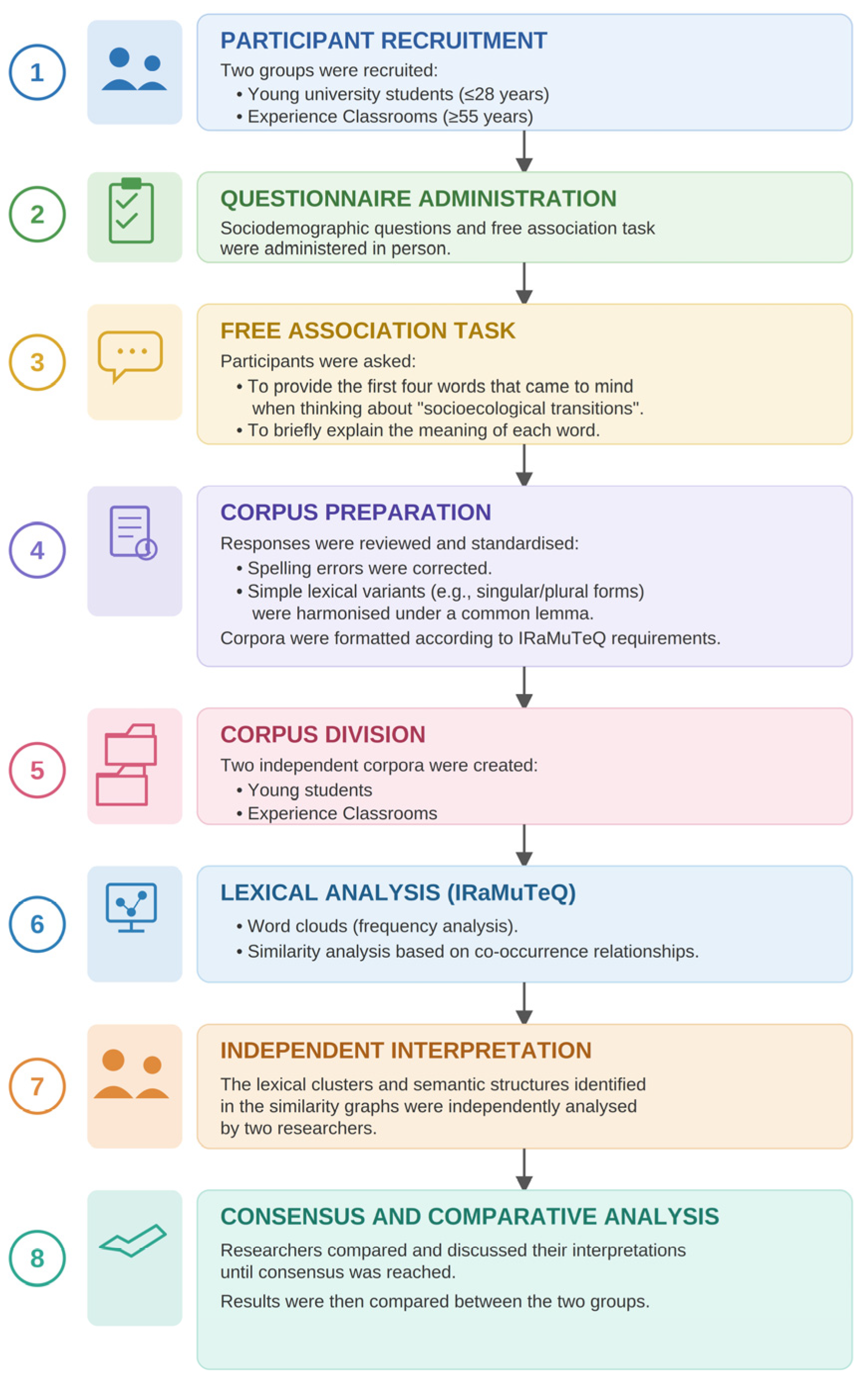
Two members of the research team independently interpreted the word clouds and similarity graphs. The analysis focused on identifying the most frequently occurring lexical forms, the central nodes of the similarity networks, and the main clusters of associated terms. The researchers then compared their interpretations and discussed any discrepancies until a consensus was reached. This triangulation process strengthened the credibility and consistency of the findings. Interpretations were based on four complementary criteria: (i) lexical frequency, which reflects the recurrence of specific terms within the corpus; (ii) node centrality within the similarity graphs; (iii) the strength of co-occurrence relationships between lexical forms; and (iv) the clustering patterns generated by IRaMuTeQ. No analytical categories or thematic axes were defined a priori. Instead, interpretative axes were identified inductively through the examination of recurrent lexical forms, central nodes, co-occurrence structures and semantic proximities observed in each corpus. Figure 1 summarizes the main stages of the research process, from data collection and corpus preparation to lexical analysis and interpretation.

4.2. Word Cloud and Similarity Analysis

The word cloud on socioecological transitions provides an initial, visual, concise overview of the discourse of the different analysed groups. It shows, in relative terms, the words or concepts that each group mentions most frequently, making it easier to identify the predominant semantic themes in their perceptions and interpretative frameworks. The size of each term is proportional to how often it appears, meaning greater concurrence implies greater visual relevance within the cloud. This resource summarises information intuitively and helps detect patterns, priorities, and possible discursive convergences or divergences around socioecological transitions.
The similarity analysis was carried out on the entire corpus of each group, without disaggregating by individual textual units or subjects. With this approach, the greater the co-occurrence between two terms, the greater their semantic proximity within the analysed representation [32].
The results are presented in tree-like graphs, where nodes represent lexical forms and branches indicate the intensity of relationships between them. The size of the nodes is proportional to the frequency with which each term occurs, while the thickness of the branches reflects the degree to which words co-occur. This visualisation enables semantic nuclei and lexical communities, which structure representations of socioecological transitions in each group, to be identified [34].
The connections in the similarity trees were generated automatically by IRaMuTeQ based on the co-occurrence relationships present in each corpus. The research team did not establish these connections manually. Following the methodological procedure described above, the interpretative axes emerged inductively from the structure of the similarity graphs and the lexical patterns observed in each corpus. Therefore, the axes presented in the results should be understood as interpretative syntheses derived from the structure of the graphs, rather than as categories that precede the analysis.
This type of analysis, as highlighted by Marchand and Ratinaud [33], has the capability to simultaneously reveal both the shared components and the distinct characteristics of social representations. This feature enables a comparative interpretation that is in line with the study’s objectives and the results obtained.
In order to complement the visual interpretation of the similarity graphs and to distinguish between lexical frequency and relational connectivity, the following table (Table 2) presents basic descriptive information on the structure of each graph, including the number of lexical forms represented as nodes, the number of co-occurrence links and the average number of connections per node.

5. Results and Discussion

5.1. Generational Differences in Discursive Frameworks on Socioecological Change and Transitions

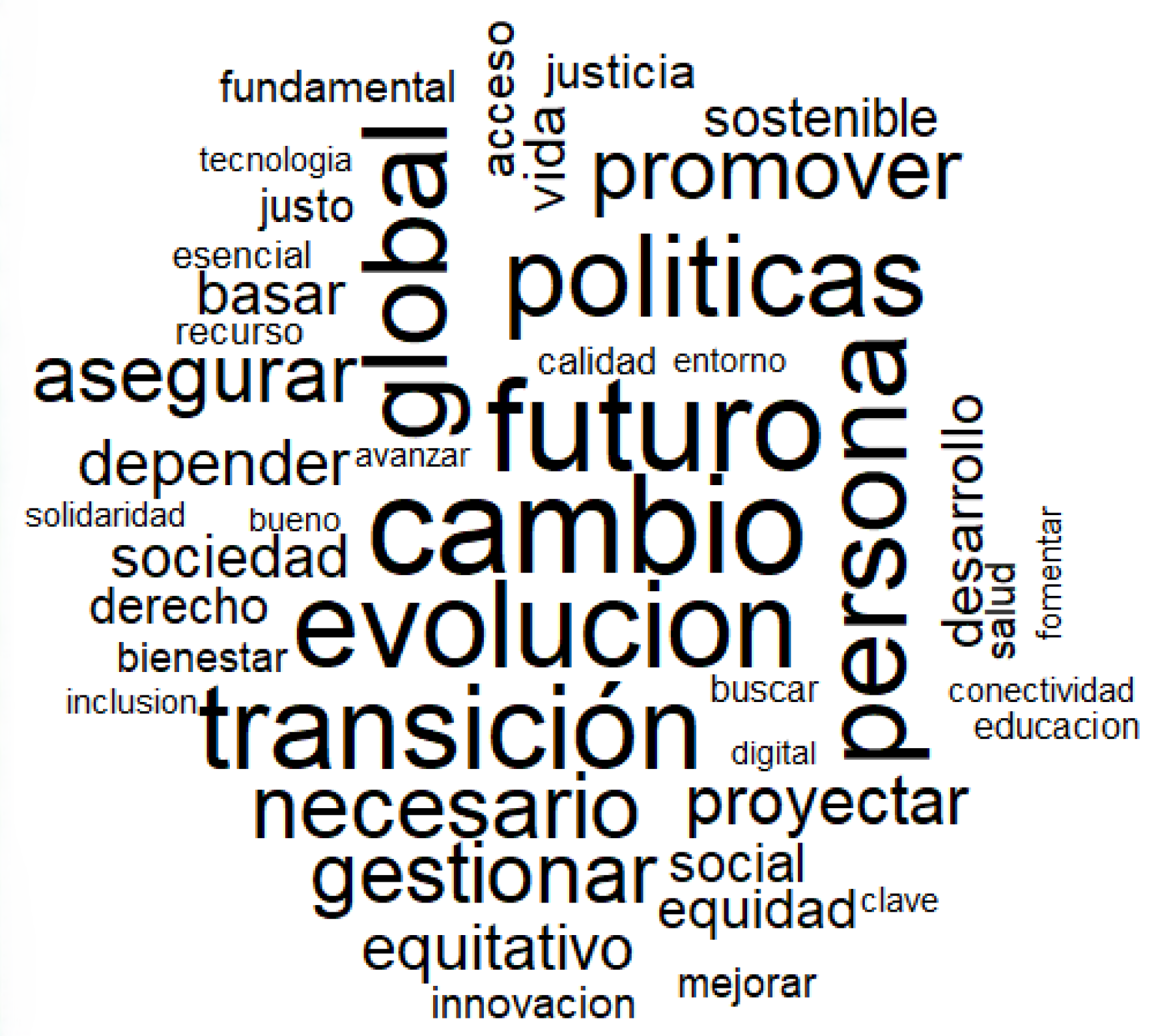
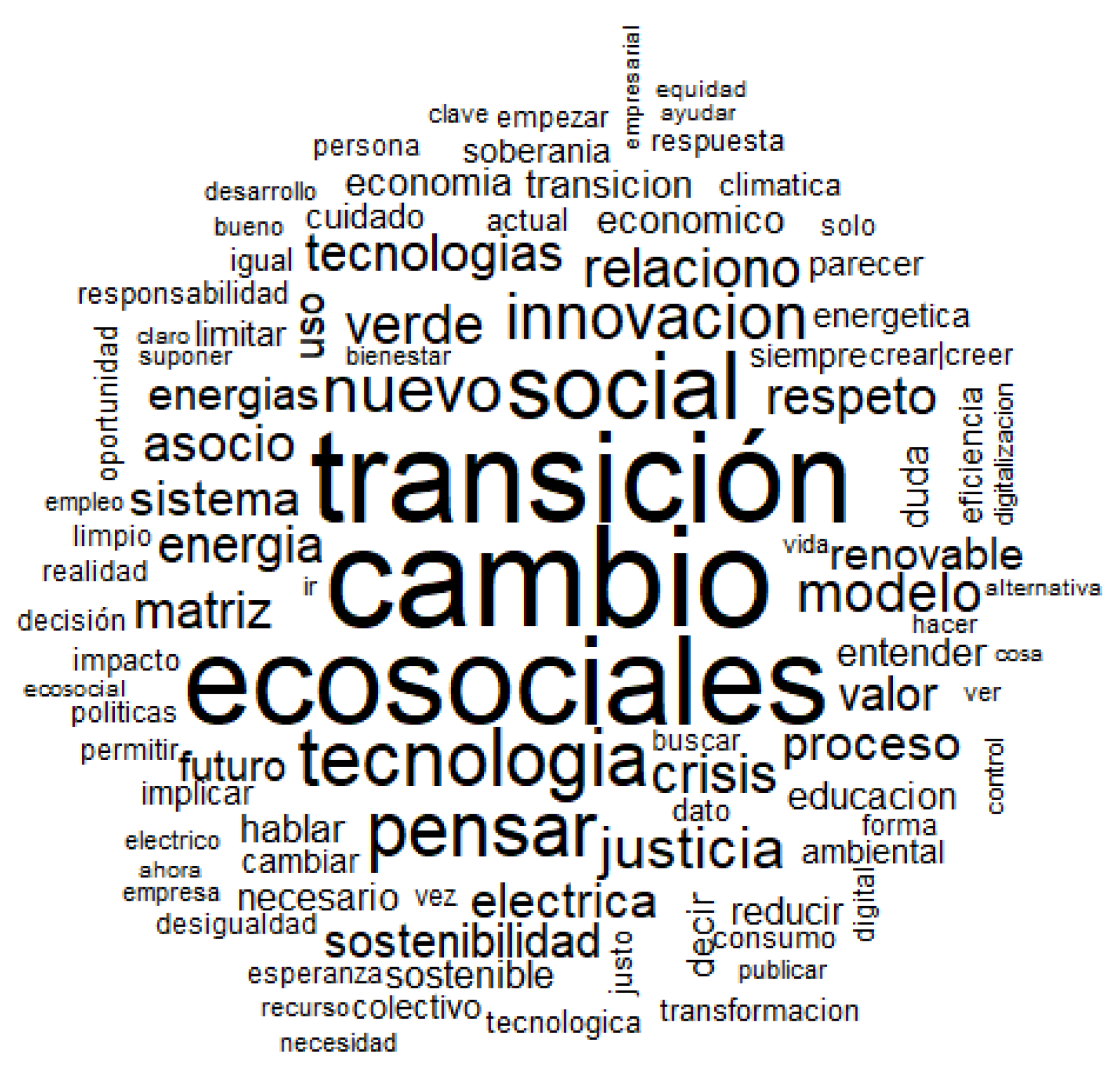
Figure 2 and Figure 3 below show a comparison of the word clouds created from the discourses of the two age groups analysed: people aged over 55 (Figure 2) and young students aged 18–28 (Figure 3). The word clouds show the most frequently occurring terms in each group, providing a concise overview of the concepts most closely associated with social change and transition processes. This graphic representation offers an initial descriptive insight into the differences and similarities in language use between the two generational groups, as well as the key words and concepts most commonly associated with transition in their speeches (the lexicometric analysis (word clouds and similarity trees) was performed on the original Spanish-language corpus using IRaMuTeQ. Since lexico-metric outputs are sensitive to the morphological and frequency properties of the language in which the corpus was collected, figures are presented in Spanish to reflect the actual analytical results. English-language adaptations of these figures are included in the Supplementary Material solely to facilitate readability for international audiences and should not be interpreted as independent analyses).
A comparative analysis of the word clouds corresponding to the two age groups suggests descriptive differences in the lexical and conceptual framing of social change, transition and the future, and in the frameworks used to interpret the relationship between social justice, sustainability and socioecological transformation.
The word cloud associated with people over 55 shows lower lexical diversity and greater prominence of structural, normative and institutional concepts. The most prominent terms such as ‘change’, ‘transition’, ‘future’, ‘policies’, ‘manage’, ‘ensure’, ‘equity’ and ‘global’ form a semantic field in which socioecological transition appears to be linked to institutional processes that are regulated and oriented towards social development planning. This lexical configuration suggests a representation of change as a gradual and managed process, in which public institutions, policies and governance mechanisms play a central role in driving the transition.
The recurring presence of terms such as ‘justice’, ‘rights’, ‘quality of life’, ‘development’, ‘manage’, ‘society’ and ‘well-being’ may be associated with concerns related to social protection, collective and distributive dimensions of justice, themes that have often been linked in the literature to welfare-state frameworks. From this perspective, transitions appear to be more closely associated with the evolution or adaptation of systems than with explicit references to profound socio-economic transformation. Change is therefore considered necessary but must be managed and regulated to prevent social ruptures or imbalances. This group seems to emphasise the need to ensure stability, rights, well-being and the orderly management of resources and transformation processes; therefore, the transition is seen in terms of institutional reforms and public policies aimed at improving efficiency, equity and quality of life.
This representation is close to what various authors have identified as an institutional or adaptive approach to sustainability. In the field of ESD, this type of approach tends to conceive of transition as a process of gradual improvement based on resource management, institutional innovation, and the formulation of policies that guide development towards more balanced environmental and social goals [11,26]. In this framework, sustainability is linked to the capacity of institutions to coordinate collective decisions informed by scientific knowledge and long-term governance criteria.
The results suggest that the group of older students articulates a representation of socioecological transition that combines concerns for social justice and collective well-being with an institutional and gradualist understanding of change. The transition thus appears to be linked to public action, policymaking and the orderly management of future-oriented transformation processes. While this perspective recognises the need for change—as evidenced by the centrality of the term “change”—such change appears to be imagined primarily as a regulated evolution of the system rather than as an explicit paradigmatic break with the dominant socio-economic logic.
In contrast, the word cloud corresponding to young students (aged 18–28) shows greater lexical diversity and a wider range of terms relating to the crisis, technology, justice, sustainability and responsibility, reflecting a more complex, relational and open discourse. While ‘change’ and ‘transition’ remain core concepts, terms such as ‘ecosocial’, ‘crisis’, ‘model’, ‘process’, ‘thinking’, ‘technology’, ‘innovation’, ‘energy’, ‘renewable’ and ‘sustainability’ take on special relevance. This lexical configuration suggests an understanding of change as a response to a systemic eco-social crisis, in line with contemporary approaches to socioecological transitions [6,7,17].
The prominence of the concept of socioecology in the discourse of young students is particularly noteworthy, as it may reflect an approach related to education for sustainability that emphasises understanding the interactions between social and natural systems and the need to address contemporary issues from complex and interdependent frameworks [8,11]. Similarly, the presence of terms such as ‘justice’, ‘inequality’, ‘consumption’, ‘responsibility’, ‘collectivity’ and ‘value’ suggests concerns that extend beyond redistributive dimensions of justice and may also encompass relational, environmental and intergenerational considerations, as seen in socioecological justice movements [17].
A distinguishing feature of younger students’ discourse is the marked presence of terms linked to innovation and technological development—“technology”, “technologies”, “innovation”, “digital”, ‘energy,’ and ‘energy model’—suggesting greater openness to visions of transition in which innovation plays a prominent role in the transformation of production and energy systems. However, this technocentric approach is not presented as a purely technical solution without questions. The coexistence of terms such as ‘crisis’, ‘inequality’, ‘justice’ and ‘responsibility’ suggests a critical view that recognises both the transformative potential of innovation and the need to guide its development through ethical, social and ecological criteria. An overview of this group’s discourse appears to reflect a representation of socioecological change that is more open to structural transformation and the articulation between technological innovation, social justice and sustainability, in line with educational approaches that conceive higher education as a potential space for critical reflection and paradigmatic transformation [8,20].
The results suggest the presence of differentiated perspectives on socioecological transitions across the two groups analysed. While the older group tends to situate change within more institutional, normative and continuity-oriented frameworks, young students appear to articulate a more critical and explicitly socioecological discourse, in which transition appears linked to the need for systemic transformations. In this discourse, that of the young population, technology is central as a source of hope in the face of crisis, but it is integrated into a broader vision of social justice and sustainability. These differences may reflect divergent ways of imagining the future and positioning oneself in relation to contemporary challenges, also reflecting different interpretative frameworks on the role of knowledge, innovation and collective action in transition processes [8,11,20,21].

5.2. Comparative Analysis of Similarity Analyses by Age Group

Similarity analysis enables us to gain a deeper understanding of the internal structure of the groups’ representations of socioecological transitions, identifying the concepts’ semantic nuclei and the relationships between them. The results suggest notable variations in discourse organisation, dominant clusters, and the axes that articulate meaning across the two groups analysed.

5.2.1. Similarity Analysis of Students over 55 Years of Age

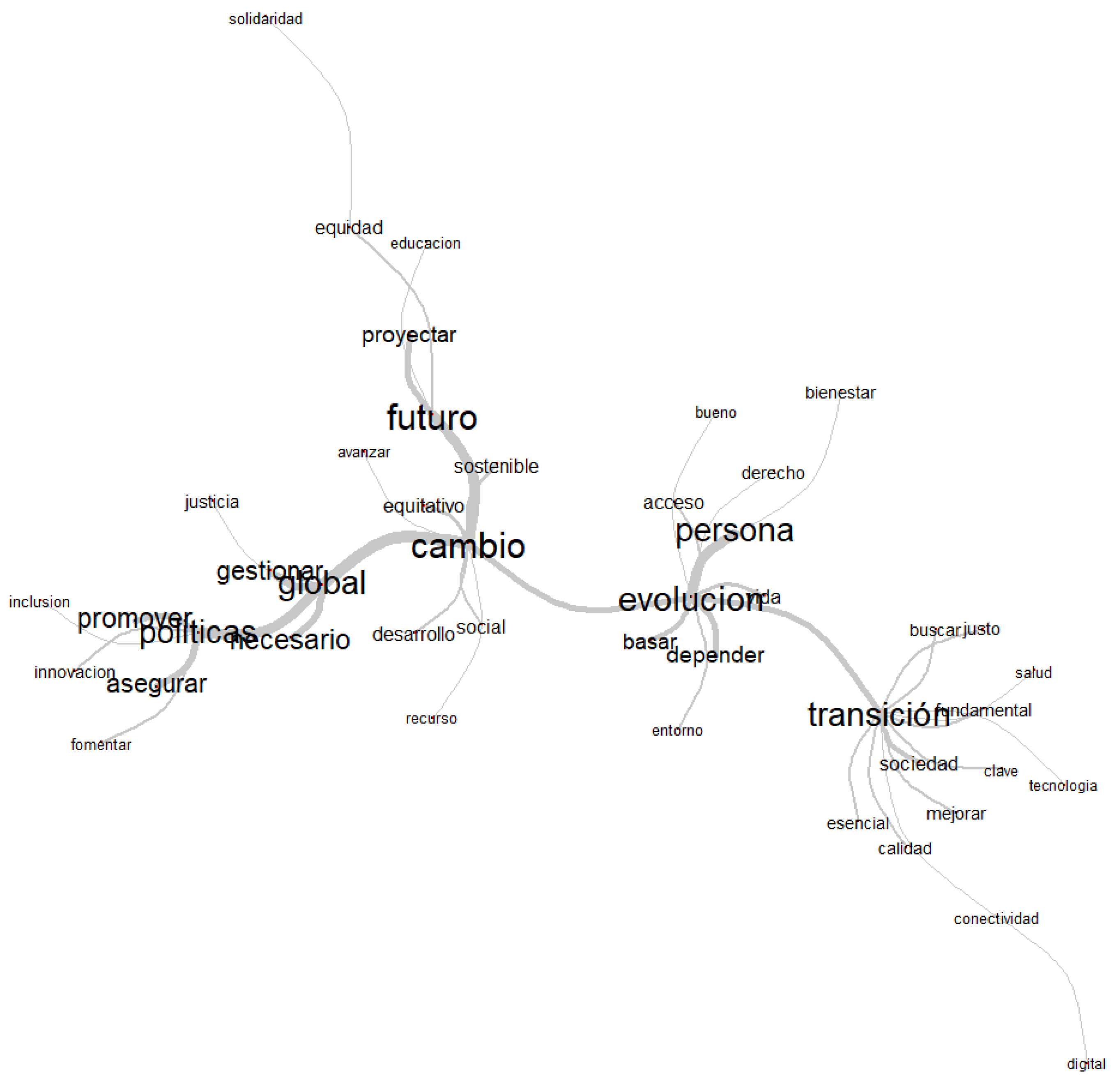
The corresponding analysis (Figure 4) for students over 55 years of age presents a more segmented relational structure, characterised by differentiated clusters and lower average connectivity between nodes. This pattern may suggest a more orderly and hierarchical representation of socioecological transitions. In this case, the term ‘change’ occupies a central position, acting as the axis around which the discourse revolves.
From this central node, a number of distinct clusters can be identified:
(a)
‘Change–Future–Projection’ cluster (teleological orientation).
This cluster links change with future, project, advance and sustainable. Here, the transition appears to be associated with a process aimed at improving the future, with a logic of long-term planning and projection. Unlike among young students, the notion of crisis is either absent or marginal.
(b)
‘Person–Evolution–Well-being’ cluster (centrality of the subject).
A second relevant cluster revolves around ‘person’, ‘evolution’, ‘well-being’, ‘rights’ and ‘access’. This set may reflect a representation centred on human well-being, rights and quality of life, in which transitions are evaluated based on their perceived capacity to guarantee rights and social well-being. This interpretation is broadly consistent with anthropocentric approaches discussed in the sustainability literature.
(c)
The ‘Policies–Management–Global’ cluster (institutional dimension): This cluster links policies, management, ensuring, the global level, the necessary, and promotion. It suggests a conception of change that is clearly mediated by public action, governance and institutional intervention. In this view, transitions depend on political decisions and adequate resource management.
(d)
‘Transition–Society–Quality’ cluster (a normative view of the process): Transition appears to be associated with society, quality, improvement and essentials, which may reinforce the idea that the process is perceived as both necessary and desirable, but within stable normative frameworks. Technology appears peripherally (technology, digital, and connectivity) without occupying a structuring position in the discourse.

5.2.2. Similarity Analysis of Students Aged Between 18 and 28

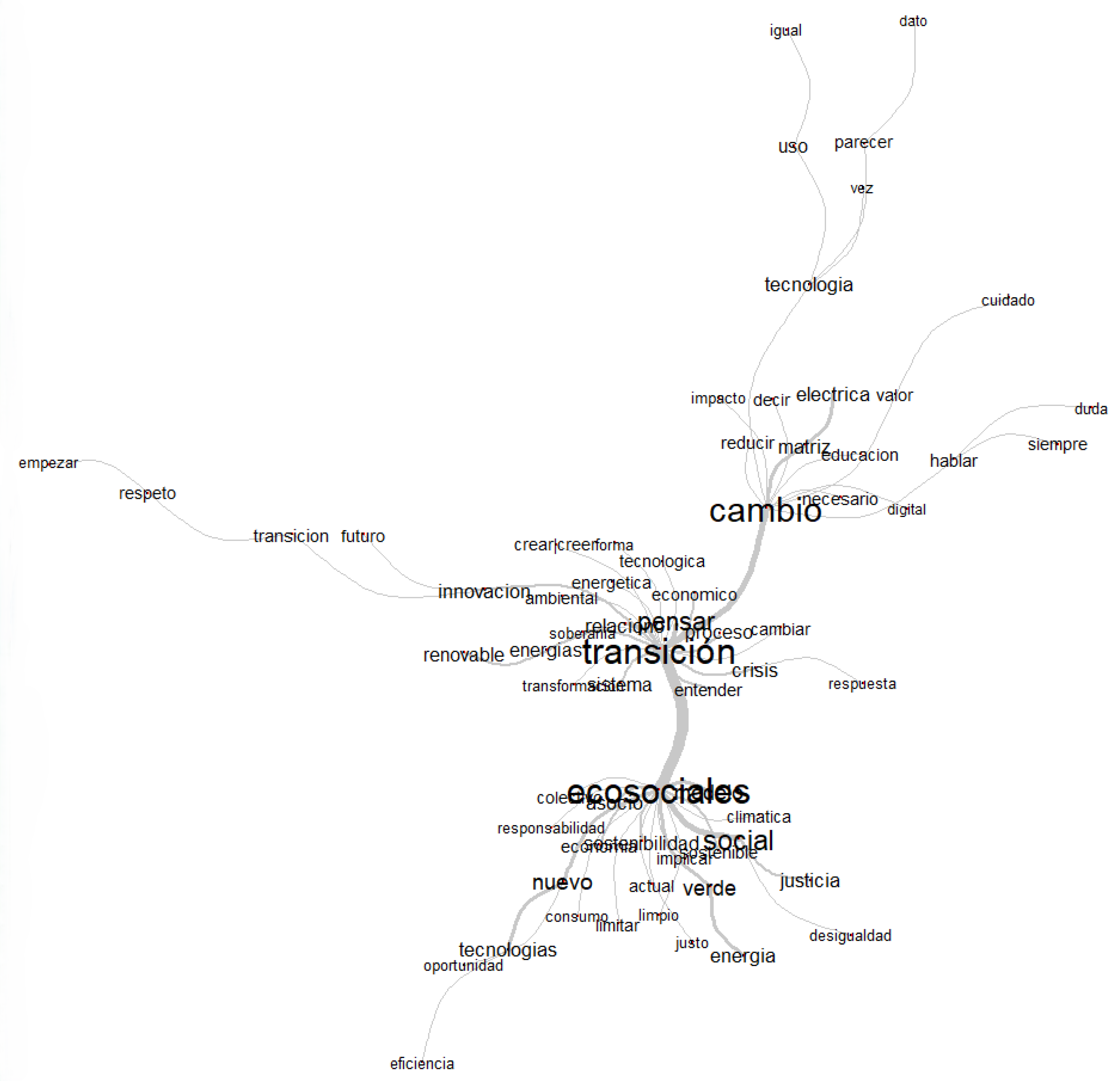
For young students, the similarity graph (Figure 5) suggests a dense, branched and highly interconnected structure, indicating a complex, multidimensional representation of socioecological transitions. The term ‘transition’ acts as a central node, closely linked to ‘change’, ‘process’ and ‘crisis’, forming the backbone of the discourse.
Several relevant clusters can be identified from this central core:
(a)
The ‘Transition–Change–Crisis’ cluster (structural core): This cluster represents the main perspective of young students. Transition appears to be associated with a dynamic process of change motivated by an eco-social crisis rather than a notion of linear evolution. The association with terms such as ‘thinking’, ‘understanding’, ‘response’ and ‘transforming’ suggests a reflective and active vision of change, in which transitions involve rethinking existing systems.
(b)
‘Socioecological–Justice–Responsibility’ cluster (normative-critical dimension): This cluster is directly connected to the central core and focuses on eco-social issues, social justice, responsibility, inequality and sustainability. This cluster suggests that socioecological transitions are closely associated with concerns related to social and environmental justice and may incorporate concerns about inequalities, social impact, and the collective dimension of change.
(c)
‘Technology–Innovation–Energy’ cluster (technocentric dimension): One of the most distinctive features of young students is the emergence of a cluster clearly linked to technology. Terms such as ‘technology’, ‘technologies’, ‘innovation’, ‘energy’, ‘renewable’, ‘efficiency’ and ‘energy model’ are connected to both the core of transition and the socioecological cluster. This configuration suggests that technological innovations occupy a prominent place in the way many young students represent socioecological transitions and future pathways of change.
(d)
‘Education–Change–Use’ cluster (instrumental and formative dimension).
Finally, a peripheral yet significant cluster linking education, use, impact and reduction is identified. This cluster suggests the importance of education and responsible resource and technology use as mechanisms for transition, reinforcing the notion of individual and collective agency.
The similarity analysis of young students suggests a processual, critical and future-oriented representation, in which technology is represented as an important tool for change that is embedded within a framework of socioecological justice.

5.3. Comparing the Two Groups

A comparison of the two similarity analyses suggests two different ways of representing socioecological transitions. While in the older group the semantic structure appears more concentrated on notions linked to management, policies and institutional regulation of change, younger students appear to articulate a more complex and interconnected representation, in which transition is closely linked to the idea of eco-social crisis and the need for systemic transformations. In this representation, change appears to be framed not only as a process of institutional adaptation, but as a broader reconfiguration of the relationships between society, economy and nature.
These differences can be interpreted in light of the theoretical and analytical framework on sustainability and higher education developed previously. In particular, the centrality of the transition–change–crisis nodes and the strong interconnection between different lexical clusters in the group of young students suggests an understanding of socio-ecological transitions as multidimensional and non-linear processes, in which various systemic crises converge. This interpretation is close to approaches that conceive of the contemporary crisis as a civilisational crisis requiring interpretative frameworks capable of integrating ecological, social and economic dimensions [8,22]. Likewise, the relevance of the socio-ecological–justice–responsibility cluster suggests that justice may be understood in broad terms, beyond material redistribution, incorporating environmental, relational and intergenerational dimensions. Although a perspective of global justice and the geopolitical inequalities that the transition may generate between the global North and South is rarely referred to, this could indicate that, while debates on the climate crisis and just transitions are incorporated into the discourse, a political view that challenges hegemonic relations globally, as proposed by Lang et al. [17] and Valencia-Hamilton & Ramcilovic-Suominen [7], is still marginal.
Similarly, the emergence of a robust cluster linked to technology, innovation and energy among the younger group suggests that technological innovation occupies a prominent place in the way transition processes are represented by younger students. This finding echoes theoretical debates on the ambivalent nature of technology in transitions towards sustainability. On the one hand, innovation is often presented in the literature as a key lever for addressing challenges such as decarbonisation or the transformation of energy systems; on the other hand, various authors warn that the centrality of technology is not neutral and is embedded in historical configurations of power [5]. In this sense, the fact that this cluster appears closely linked to notions of justice, sustainability and responsibility suggests that the lexical approach to technology in youth discourse is not separate from broader concerns about justice, sustainability and responsibility, which is close to educational perspectives oriented towards systemic transformation [8,22].
In contrast, students over the age of 55 articulate a more segmented and hierarchical representation in which the central axis is organised around change, the future, and the individual. This configuration appears consistent with more normative and institutional approaches to social change, where transitions are viewed as processes aimed at ensuring well-being, rights, and quality of life. The strong presence of the politics-management-global cluster reinforces the idea that change is mediated by public action and planning. This interpretation is broadly consistent with classic welfare state approaches and a vision of progress based on gradually improving social conditions.
From a theoretical standpoint, this representation may be interpreted as broadly consistent with a predominantly anthropocentric and redistributive conception of social justice, insofar as terms such as ‘well-being’, ‘rights’, ‘access’ and ‘quality of life’ feature prominently in relation to environmental issues in the lexical framework of the older age group. Unlike the group of young students, technology occupies a peripheral position, suggesting that technological innovation occupies a less central position in the representation of socioecological change articulated by this group. One possible interpretation is that this pattern may be related to longer life trajectories and historical experiences in which social transformations have been fundamentally associated with public policies and social rights rather than disruptive technological innovations.
The results of this study suggest that socioecological transitions are not a simple, shared set of meanings, but rather a space for interpretative dispute in which different imaginaries associated with the two educational and experiential contexts converge. While the older group predominantly holds a vision oriented towards institutional stability and change management, the younger group appears to articulate more critical and systemic frameworks that articulate the transition around the eco-social crisis, socio-ecological justice, and the transformation of development models. This coexistence of imaginaries is particularly relevant for HEIs, which are not only spaces for intergenerational dialogue but also spaces where the meanings of sustainability are negotiated and where the interpretative frameworks that guide transition processes are configured [20].
To summarise the findings derived from the word cloud and similarity analyses, Table 3 provides a comparative overview of the semantic clusters identified in each age group, alongside their theoretical interpretation. Rather than merely summarising lexical frequencies, the table systematises generational differences in discursive structure, normative orientation, and socioecological transition imaginaries. It suggests that younger students tend to articulate a processual, crisis-aware, techno-social framework grounded in socioecological justice, whereas participants over the age of 55 tend to frame transition in terms of institutional continuity, welfare-oriented logics, and regulated social improvement. In doing so, the table summarises the analytical process of this section and summarises the differentiated patterns of meaning-making that underpin each generational discourse.

6. Conclusions

This study has shown that socioecological transitions do not constitute a homogeneous semantic framework within higher education. Instead, they are a field of meanings shaped by generational differences, life trajectories, and diverse interpretative frameworks. Lexical analysis using IRaMuTeQ and the Grid Elaboration Method identified different discursive configurations between young (18–28) students from the Faculty of Economics and Business at the University of the Basque Country and older (over 55) students from the Bizkaia Experience Classrooms.
Firstly, the results show that the discourse of older students centres on terms such as ‘change’, ‘future’, ‘person’, ‘policies’, ‘well-being’, ‘rights’ and ‘quality of life’. These can be interpreted as pointing towards a more institutional and gradual conception of socioecological transitions, in which public action, social rights and quality of life play an important role.
In contrast, the analysis suggests that young students employ a discourse characterised by a more heterogeneous lexical composition, with more pronounced patterns of co-occurrence around terms such as transition, change, crisis, justice, technology and responsibility. This suggests that young people’s discourse does not interpret transition as mere evolution, but as a response to a multidimensional eco-social crisis. The strong presence of the ‘socioecological–justice–responsibility’ cluster suggests an expanded conception of justice that incorporates environmental, social, and intergenerational dimensions. Similarly, the centrality of the ‘technology–innovation–energy’ cluster suggests a techno-social orientation in which innovation occupies a prominent place within representations of socioecological change.
Secondly, the study suggests that generational position is linked to variations in the subject matter and internal structure of discourse. While older students present a more hierarchical and differentiated organisation of concepts, younger students exhibit a more complex, relational semantic network. These differences suggest distinct approaches to articulating agency, responsibility and hope in the face of the eco-social crisis: institutional and planned in the former case, and systemic, critical and partially technocentric in the latter.
Thirdly, the findings contribute to the theoretical debate on paradigmatic tensions in higher education. The identified representations can be interpreted as expressions of different attitudes towards transitions: one is closer to approaches involving the regulated adaptation of the system, while the other is more aligned with imaginaries of structural transformation. Neither orientation is inherently emancipatory or conservative; both have their own strengths and weaknesses. Older students’ institutional trust can bring stability and democratic governance, while younger students’ critical and technosocial openness can drive innovation and the revision of hegemonic frameworks.
From a pedagogical perspective, these results highlight the importance of cross-generational spaces in higher education. The coexistence of different visions provides an opportunity for reflective dialogue, the questioning of assumptions and the creation of shared socioecological justice goals. Rather than limiting themselves to the transmission of technical skills aligned with standardised agendas, higher education institutions can play a strategic role as spaces for articulating ethics, innovation, and social transformation.
The findings also suggest several practical implications for higher education institutions. Universities could promote structured intergenerational learning spaces in which younger and older students jointly reflect on socioecological challenges, sustainability futures and questions of social justice. Such initiatives could take the form of shared seminars, project-based learning experiences, deliberative forums or community-engaged activities that intentionally bring together participants with different life trajectories and experiential knowledge. Rather than treating sustainability education as a purely curricular issue, these spaces could contribute to fostering dialogue, critical reflection and the co-construction of collective responses to socioecological challenges.
Finally, this study makes an empirical contribution to the poorly explored area of generational differences in perceptions of socioecological transitions within the same university institution. However, the study does have some limitations. The analysis is based on free word associations, which capture spontaneous representations but do not delve into extensive discursive arguments. Future work could complement this approach with in-depth interviews or focus groups and extend the comparison to other faculties and university contexts.
Moreover, while the comparison is organised by age group, the differences identified cannot be solely attributed to the generational variable. Participants also differed in terms of their educational trajectories, professional experiences, and learning contexts—factors that may have contributed to shaping their perceptions of socioecological transitions. Furthermore, data were collected at various points in time for each group. This may have led to the introduction of contextual influences that cannot be fully ruled out.
Additionally, another limitation of this study lies in its focus on a single institutional context; further research could usefully extend the analysis to other universities and even to different national settings.
In summary, socioecological transitions emerge in the university environment as a field of symbolic dispute in which institutional, technosocial, and normative imaginaries converge. Recognising and articulating this plurality represents both a challenge and opportunity for higher education in the context of the contemporary systemic crisis, particularly in relation to fostering more reflective and potentially transformative forms of learning.


Supplementary Materials

The following supporting information can be downloaded at: https://www.mdpi.com/article/10.3390/higheredu5030065/s1, File S1: Word Clouds and Similarity Trees (available in Spanish and English).

Author Contributions

Conceptualization, A.A.-A. and C.C.-B.; methodology, A.A.-A.; software, A.A.-A.; validation, A.A.-A.; formal analysis, A.A.-A., C.C.-B. and I.F.d.l.C.-L.; investigation, A.A.-A. and C.C.-B.; resources, A.A.-A.; data curation, A.A.-A.; writing—original draft preparation, A.A.-A., C.C.-B. and I.F.d.l.C.-L.; writing—review and editing, A.A.-A., C.C.-B. and I.F.d.l.C.-L.; visualization, A.A.-A.; supervision, A.A.-A.; project administration, A.A.-A. All authors have read and agreed to the published version of the manuscript.

Funding

This research received no specific grant from any funding agency in the public, commercial, or not-for-profit sectors.

Institutional Review Board Statement

This study analyses anonymised textual responses from university students collected in an academic context. Participation was voluntary and based on informed consent, and all data were fully anonymised prior to analysis in compliance with GDPR (EU 2016/679) and the ethical standards of the University of the Basque Country (UPV/EHU). The study received approval from the Research Ethics Committee for Research Involving Human Beings (CEISH), University of the Basque Country (UPV/EHU) (code: PI_2024_009, date 1 March 2024).

Informed Consent Statement

Informed consent was obtained from all participants.

Data Availability Statement

The data supporting the findings of this study were generated through textual analysis using IRAMUTEQ software (version 0.8 alpha 7). The corresponding outputs (word clouds and similarity trees) are available in the Supplementary Material accompanying this article.

Conflicts of Interest

The authors declare no conflict of interest.

References

  1. Rockström, J.; Steffen, W.; Noone, K.; Persson, Å.; Chapin, F.S.; Lambin, E.F.; Lenton, T.M.; Scheffer, M.; Folke, C.; Schellnhuber, H.J.; et al. A Safe Operating Space for Humanity. Nature 2009, 461, 472–475. [Google Scholar] [CrossRef] [PubMed]
  2. Richardson, K.; Steffen, W.; Lucht, W.; Bendtsen, J.; Cornell, S.E.; Donges, J.F.; Drüke, M.; Fetzer, I.; Bala, G.; von Bloh, W.; et al. Earth beyond Six of Nine Planetary Boundaries. Sci. Adv. 2023, 9, eadh2458. [Google Scholar] [CrossRef]
  3. Markard, J.; Raven, R.; Truffer, B. Sustainability Transitions: An Emerging Field of Research and Its Prospects. Res. Policy 2012, 41, 955–967. [Google Scholar] [CrossRef]
  4. Köhler, J.; Geels, F.W.; Kern, F.; Markard, J.; Onsongo, E.; Wieczorek, A.; Alkemade, F.; Avelino, F.; Bergek, A.; Boons, F.; et al. An Agenda for Sustainability Transitions Research: State of the Art and Future Directions. Environ. Innov. Soc. Transit. 2019, 31, 1–32. [Google Scholar] [CrossRef]
  5. Malm, A.; Hornborg, A. The Geology of Mankind? A Critique of the Anthropocene Narrative. Anthr. Rev. 2014, 1, 62–69. [Google Scholar] [CrossRef]
  6. Feola, G. Capitalism in Sustainability Transitions Research: Time for a Critical Turn? Environ. Innov. Soc. Transit. 2020, 35, 241–250. [Google Scholar] [CrossRef]
  7. Valencia-Hamilton, R.T.V.; Ramcilovic-Suominen, S. From Hegemony-Reinforcing to Hegemony-Transcending Transformations: Horizons of Possibility and Strategies of Escape. Sustain. Sci. 2023, 18, 737–748. [Google Scholar] [CrossRef]
  8. Sterling, S. Concern, Conception, and Consequence: Re-Thinking the Paradigm of Higher Education in Dangerous Times. Front. Sustain. 2021, 2, 743806. [Google Scholar] [CrossRef]
  9. Sterling, S. Living in the Earth: Towards an Education for Our Tim. J. Educ. Sustain. Dev. 2010, 4, 213–218. [Google Scholar] [CrossRef]
  10. Vare, P.; Lausselet, N.; Rieckmann, M. (Eds.) Competences in Education for Sustainable Development: Critical Perspectives, 1st ed.; Sustainable Development Goals Series; Springer International Publishing: Cham, Switzerland, 2022. [Google Scholar]
  11. Mochizuki, Y.; Yarime, M. Education for Sustainable Development and Sustainability Science: Re-Purposing Higher Education and Research. In Routledge Handbook of Higher Education for Sustainable Development; Barth, M., Ed.; Routledge International Handbooks, Earthscan from Routledge; Routledge, Taylor & Francis Group: London, UK; New York, NY, USA, 2016; pp. 11–24. [Google Scholar]
  12. Pedersen, H.; Windsor, S.; Knutsson, B.; Sanders, D.; Wals, A.; Franck, O. Education for Sustainable Development in the ‘Capitalocene’. Educ. Philos. Theory 2022, 54, 224–227. [Google Scholar] [CrossRef]
  13. Kopnina, H. Education for the Future? Critical Evaluation of Education for Sustainable Development Goals. J. Environ. Educ. 2020, 51, 280–291. [Google Scholar] [CrossRef]
  14. Arcos-Alonso, A.; Carranza-Barona, C. Curricular and Pedagogical Insights from Higher Education on Eco-Social Transitions and Climate Change Education: Mapping Student Frames to Design for Agency, Justice, and Action. J. Environ. Educ. 2026, 16, 514. [Google Scholar] [CrossRef]
  15. Stam, K.; van Ewijk, E.; Chan, P.W. How Does Learning Drive Sustainability Transitions? Perspectives, Problems and Prospects from a Systematic Literature Review. Environ. Innov. Soc. Transit. 2023, 48, 100734. [Google Scholar] [CrossRef]
  16. Joffe, H.; Elsey, J.W.B. Free Association in Psychology and the Grid Elaboration Method. Rev. General. Psychol. 2014, 18, 173–185. [Google Scholar] [CrossRef]
  17. Lang, M.; Bringel, B.; Manahan, M.A. Introducción. Transiciones Lucrativas, Colonialismo Verde y Caminos Hacia Una Justicia Ecosocial Transformadora. In Más allá del Colonialismo Verde Justicia Global y Geopolítica de las Transiciones Ecosociales; CLACSO: Buenos Aires, Argentina, 2023; pp. 15–48. [Google Scholar]
  18. Jorgenson, S.N.; Stephens, J.C.; White, B. Environmental Education in Transition: A Critical Review of Recent Research on Climate Change and Energy Education. J. Environ. Educ. 2019, 50, 160–171. [Google Scholar] [CrossRef]
  19. Crutzen, P.J.; Stoermer, E.F. “The ‘Anthropocene’’’ (2000). In The Future of Nature: Documents of Global Change; Robin, L., Sörlin, S., Warde, P., Eds.; Yale University Press: New Haven, CT, USA, 2013; pp. 479–490. [Google Scholar]
  20. Bien, C.; Sassen, R. Sensemaking of a Sustainability Transition by Higher Education Institution Leaders. J. Clean. Prod. 2020, 256, 120299. [Google Scholar] [CrossRef]
  21. Lambrechts, W.; Van Petegem, P. The Interrelations between Competences for Sustainable Development and Research Competences. Int. J. Sustain. High. Educ. 2016, 17, 776–795. [Google Scholar] [CrossRef]
  22. Fettes, M.; Cole, L.; Blenkinsop, S. Prompts for Eco-Social Transformation: What Environmental Education Can Learn from Transformative Design. J. Environ. Educ. 2024, 55, 125–137. [Google Scholar] [CrossRef]
  23. Ertelt, S.-M.; Carlborg, P. The Dark Sides of Low-Carbon Innovations for Net-Zero Transitions: A Literature Review and Priorities for Future Research. Sustain. Sci. Pract. Policy 2024, 20, 2335731. [Google Scholar] [CrossRef]
  24. Riechmann, J. Transiciones ecosociales, colapso, decrecimiento: Ya no tendremos tiempo de equivocarnos dos veces. Sist. Rev. Cienc. Soc. 2024, 269, 161–176. [Google Scholar]
  25. Kalt, T. Transition Conflicts: A Gramscian Political Ecology Perspective on the Contested Nature of Sustainability Transitions. Environ. Innov. Soc. Transit. 2024, 50, 100812. [Google Scholar] [CrossRef]
  26. Tomassi, A.; Caforio, A.; Romano, E.; Lamponi, E.; Pollini, A. The Development of a Competence Framework for Environmental Education Complying with the European Qualifications Framework and the European Green Deal. J. Environ. Educ. 2024, 55, 153–179. [Google Scholar] [CrossRef]
  27. Barth, M. (Ed.) Routledge Handbook of Higher Education for Sustainable Development; Routledge International Handbooks, Earthscan from Routledge; Routledge, Taylor & Francis Group: London, UK; New York, NY, USA, 2016. [Google Scholar]
  28. Monroe, M.C.; Eames, C.; White, P.J.; Ardoin, N.M. Education to Build Agency in the Anthropocene. J. Environ. Educ. 2023, 54, 351–354. [Google Scholar] [CrossRef]
  29. Gendron, C. L’acceptabilité Sociale de La Transition Écologique: Au-Delà de La Résistance Au Changement. Rev. Interdiscip. Droit Organ. 2023, 6, 117–126. [Google Scholar]
  30. Meek, D.; Lloro-Bidart, T. Introduction: Synthesizing a Political Ecology of Education. J. Environ. Educ. 2017, 48, 213–225. [Google Scholar] [CrossRef]
  31. IRaMuTeQ. Available online: https://pratinaud.gitpages.huma-num.fr/iramuteq-website/ (accessed on 23 June 2026).
  32. Molina Neira, J. Tutorial Para El Análisis de Textos Con El Software IRAMUTEQ; University of Barcelona: Barcelona, Spain, 2017. [Google Scholar]
  33. Marchand, P.; Ratinaud, P. L’analyse de Similitude Appliquée Aux Corpus Textuels: Les Primaires Socialistes Pour l’élection Présidentielle Française. In Actes des 11es Journées Internationales d’Analyse Statistique des Données Textuelles; UCLouvain: Ottignies-Louvain-la-Neuve, Belgium, 2012; pp. 687–699. [Google Scholar]
  34. Camargo, B.V.; Justo, A.M. IRAMUTEQ: Um software gratuito para análisede dados textuais. Temas Psicol. 2013, 21, 513–518. [Google Scholar] [CrossRef]
Figure 1. Main stages of the research design and analytical procedure. Source: Own elaboration.
Higheredu 05 00065 g001
Figure 2. Word cloud of students over 55 years of age. Source: Own elaboration.
Higheredu 05 00065 g002
Figure 3. Word cloud created using responses from students aged between 18 and 28. Source: Own elaboration.
Higheredu 05 00065 g003
Figure 4. The similarity tree of students over 55 years of age. Source: Own elaboration.
Higheredu 05 00065 g004
Figure 5. Similarity tree for students aged between 18 and 28. Source: Own elaboration.
Higheredu 05 00065 g005
Table 1. Gender distribution of participants across the two age groups (Young Students and Students Aged 55+).
GenderYoung Students (18–28)Students Aged 55+Total
Women10737144
Man7430104
Total18167248
Table 2. Lexical network characteristics by group.
GroupRaw AssociationsLexical Forms After CleaningTotal NodesTotal ConnectionsAverage Connections Per Node
Young students (18–28)274727968162847.91
Students aged 55+42862884585237.87
Source: Own elaboration.
Table 3. Comparative synthesis of semantic clusters and theoretical interpretations by age group.
Age GroupSemantic ClusterCore ConceptsTheoretical Interpretation
Young students
(18–28)
Transition–Change–Crisistransition, change, crisis, process, thinkingSystemic and processual understanding of transition as a response to a multidimensional eco-social crisis; is consistent with perspectives that frame transitions as multidimensional transformations rather than linear adjustments.
Socioecological–Justice–Responsibilitysocioecological, justice, social, responsibility, inequalityConception of justice that integrates social, environmental and intergenerational dimensions, consistent with socioecological and climate justice frameworks.
Technology–Innovation–Energytechnology, innovation, energy, renewable, efficiencyTechnology occupies a prominent position within representations of socioecological transition and is associated with innovation, energy transformation and future pathways of change.
Education–Use–Impacteducation, use, reduce, impactEducation is framed as a driver of behavioural and cultural change, linking knowledge, responsibility and everyday practices in the transition process.
Students
(over 55 years old)
Change–Future–Projectionchange, future, project, advance, sustainableTeleological understanding of change oriented toward gradual improvement and future progress rather than systemic rupture.
Person–Evolution–Well-beingperson, evolution, well-being, rights, accessRepresentation broadly consistent with anthropocentric and redistributive approaches to justice, prioritising quality of life, well-being and social rights.
Policies–Management–Globalpolicies, manage, ensure, global, necessaryStrong emphasis on institutional regulation and policy coordination as the main drivers of social change.
Transition–Society–Qualitytransition, society, quality, improveNormative and regulated vision of transition; emphasis on stability, social cohesion and managed transformation.
Disclaimer/Publisher’s Note: The statements, opinions and data contained in all publications are solely those of the individual author(s) and contributor(s) and not of MDPI and/or the editor(s). MDPI and/or the editor(s) disclaim responsibility for any injury to people or property resulting from any ideas, methods, instructions or products referred to in the content.